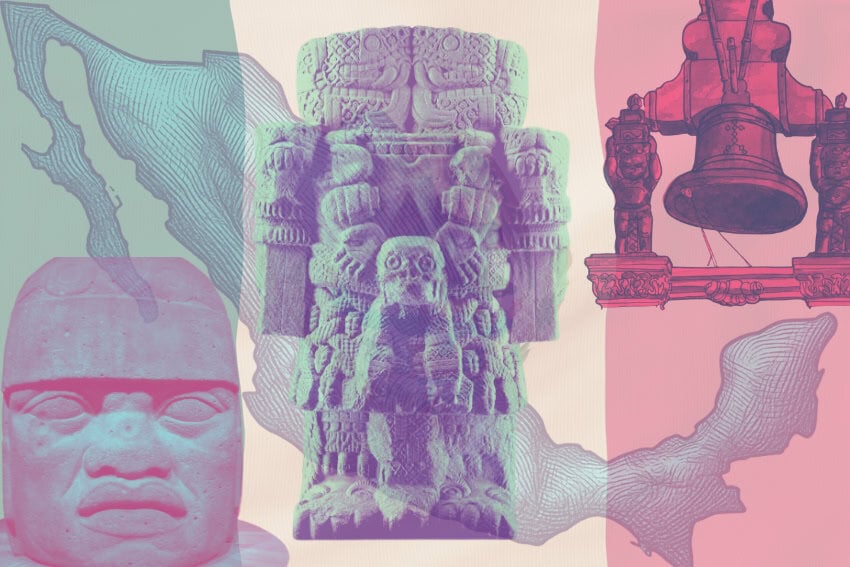
In January 2010, Neil MacGregor of the British Museum started to broadcast his new series, “A History of the World in 100 Objects.” It was a magnificent success, and a bestselling book followed. Since then, there have been numerous other titles, from “The History of Football in 100 Objects” to “A History of Food in 101 Objects.”
The idea is such fun that MND asked contributor Bob Pateman to put together his very own “A History of Mexico in 10 Objects.”
1. The Olmec stone heads — the start of Mexican civilizations
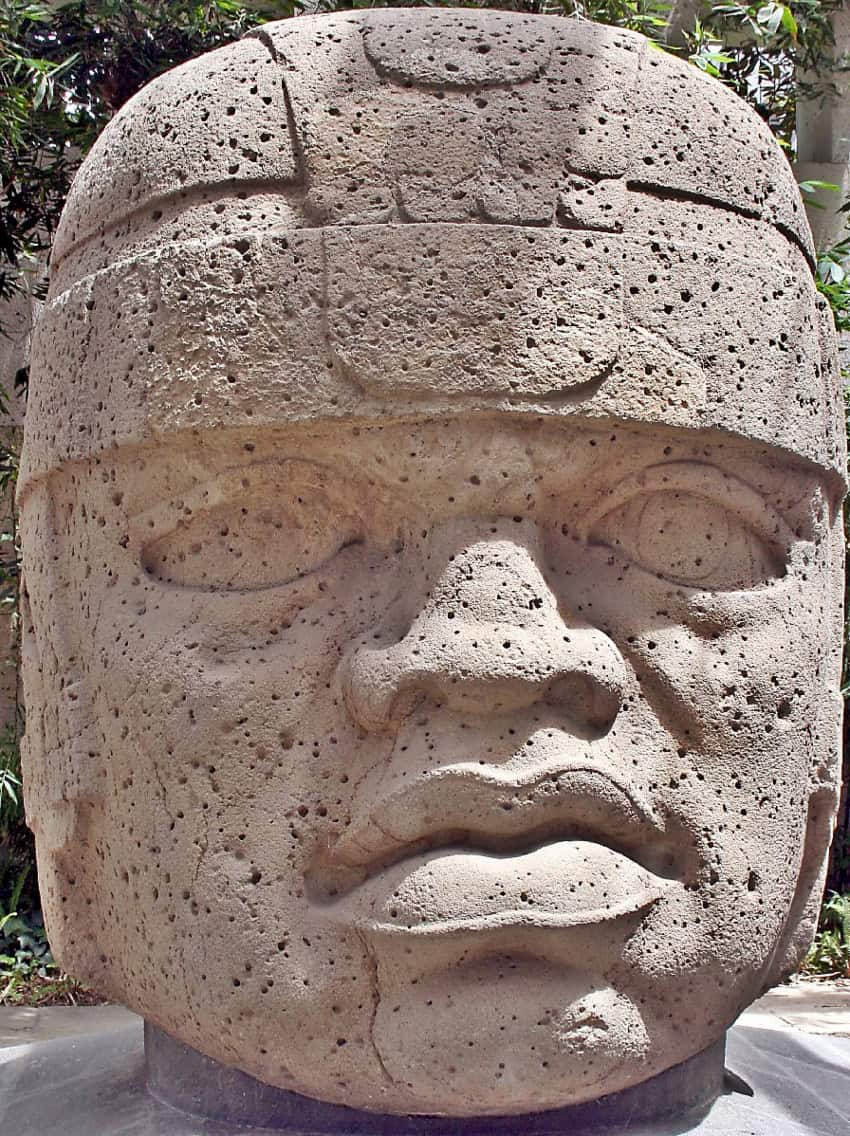
The Olmecs, the Mexican mother culture, thrived in the lowlands of southeastern Mexico between 1500 and 400 B.C. San Lorenzo and La Venta became the biggest communities on the continent, the builders of palaces and pyramids.
The most striking of their artwork was the giant heads carved from boulders that had been brought from the distant Sierra de los Tuxtlas mountains. Mysterious and haunting, 17 of these heads have been discovered.
Item selected: Colossal Head 1 was the first to be discovered and is the largest, at 2.84 meters (9 feet 4 inches) and 25.3 metric tons. With its direct stare and elaborate headdress, it is also one of the most haunting.
Where it is: Colossal Head 1 can be seen in the Xalapa Museum of Anthropology in the city of Xalapa, Veracruz.
2. The Mexica statue of Coatlicue
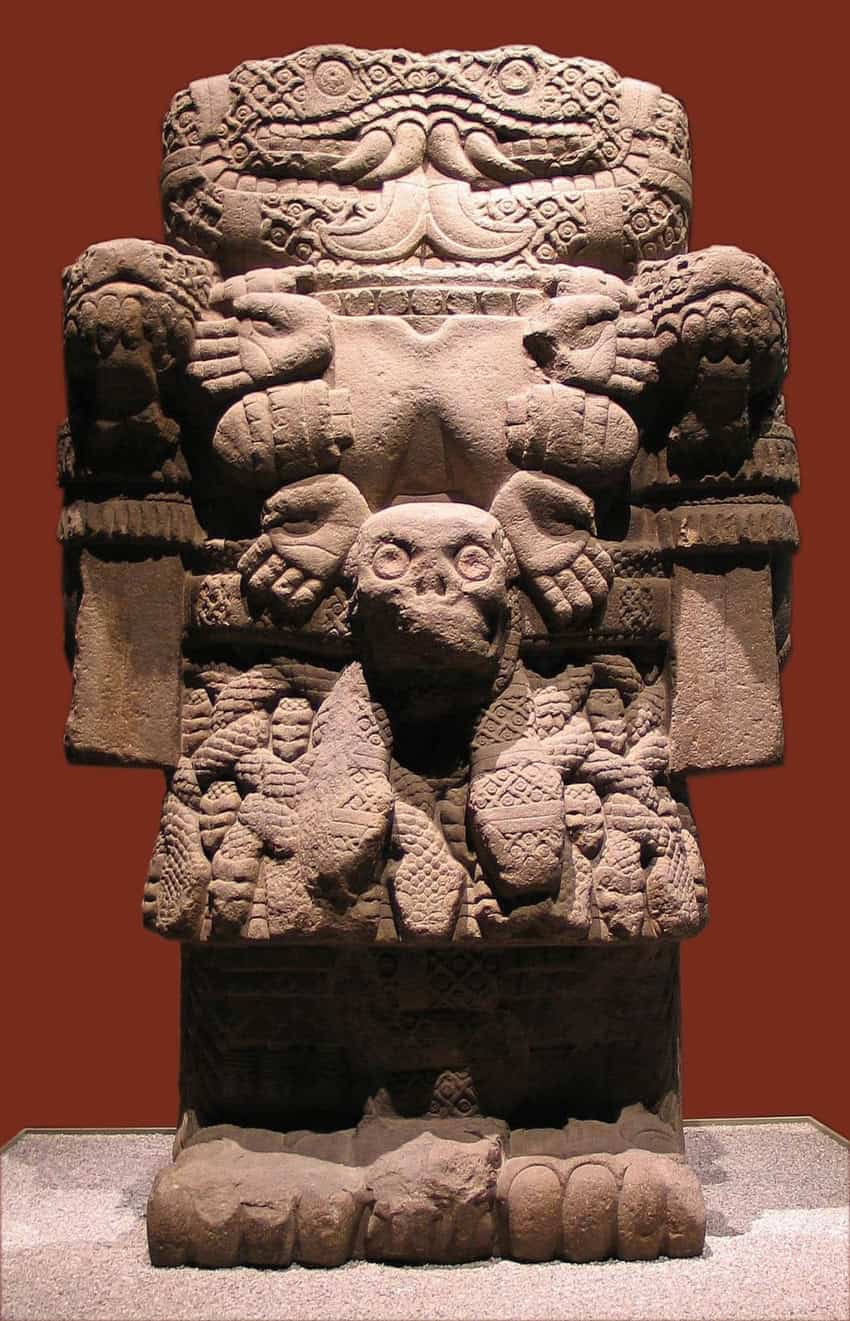
Pre-Hispanic Mexico was a mosaic of different societies that interacted through trade, politics and war. The Mexica flourished for little more than 200 years, but during that time they acquired previously unheard-of levels of wealth and power.

There is no lack of amazing objects to represent them, with gems ranging from feather headdresses to giant stone calendars.
Item selected: The giant statue of the earth and mother goddess Coatlicue. This was carved around A.D. 1500 at the height of Mexica power. It stands 2.5 meters tall and weighs between 2 and 3 metric tons. It is an interwoven collage of snakes, claws, skulls, and human hearts and hands. Threatening and powerful, Coatlicue was clearly a god you didn’t mess with!
Where it is: The National Museum of Anthropology in Mexico City.
3. A memory of a lost empire — the Florentine Codex
See it for yourself: 16th-century encyclopedia on Mexica life made public online
Although the Mexica did not have an alphabetic writing system, they produced wonderful books that recorded their myths, economic records, history and laws in pictograms and glyphs. Written on bark, skin or cloth, they were targeted by the Spanish, and only a handful escaped the flames.
Item selected: Ironically, the Spanish, who tried so hard to burn all the Mexica “books,” produced one of the finest. Franciscan friar Bernardino de Sahagún worked with Nahua elders and artists to document the culture and history of the Mexica people. It was a mammoth work, 2,500 pages organized into 12 books, recording the story of an empire that was in the process of being destroyed.
Where it is: The Florentine Codex is housed in the Laurentian Library of Florence.
4. A Spanish silver dollar

The Spanish colonies in the Americas became rich from their silver mines, and for 350 years Mexico led the way. Much of the raw metal was turned into coins known as the Spanish dollar or, later, the Spanish peso. The amount of silver in each coin was equal to eight Spanish reales, and for smaller purchases, a coin could be cut into bits, which is why pirates referred to them as pieces of eight.
Mexico sat at the center of an international trade network that stretched from China to the Ottoman Empire, and the Spanish dollar became the world’s first international currency.
Item selected: Produced in the millions, the coins can be acquired for as little as US $100. However, everything depends on rarity and the history of the coin, and the highest auction price is US $587,500 for a coin minted in Mexico in 1538. This was the first dollar-sized silver coin ever struck in the New World, and this particular example was salvaged from the underwater wreckage of the Golden Fleece, a vessel that sank in the northern Caribbean around 1550.
Where it is: Only three coins of this standard are known to exist, and all are in the possession of unknown private collectors.
5. Bell of Dolores — Campana de Dolores
View this post on Instagram
On Sept. 16, 1810, the Roman Catholic priest Miguel Hidalgo y Costilla entered the parish church in Dolores and rang the bell to gather the villagers. This is seen as the symbolic start of an 11-year war that would bring Mexican independence from Spain.
Every year, the bell is rung on the night of Sept. 15 as the president of Mexico starts Mexico’s Independence Day celebration.
Item selected: The bell dates to 1768 and was cast in bronze in the small town of Dolores. It is 1.77 meters in height and weighs approximately 750 kilograms.
Where it is: Since 1896, the bell has hung above the central balcony of the Palacio Nacional.
6. The world’s oldest tequila bottle

Tequila can trace its roots back to the drink pulque. The Spanish brought in the technology to distill a clearer, more alcoholic version, which became known as mezcal.
This was displayed at the 1893 World’s Fair in Chicago, where it was labeled as “mezcal from the village of Tequila.” The name was reduced to simply tequila, and a legend was born.
Today, the tequila industry is worth around US $12 billion, and the drink is deeply interwoven into Mexican history and culture.
Item selected: The oldest known tequila bottle. Before 1880, tequila was sold in large wooden barrels to bars or to regional distributors, and you took it home in your own bottle or jug. A José Cuervo bottle dating to 1905 is the oldest verified surviving bottle of tequila.
Where it is: Displayed in The Tequila House in Parral, Chihuahua, as part of a collection of more than 3,000 vintage bottles.
7. Looking good! — A mariachi outfit
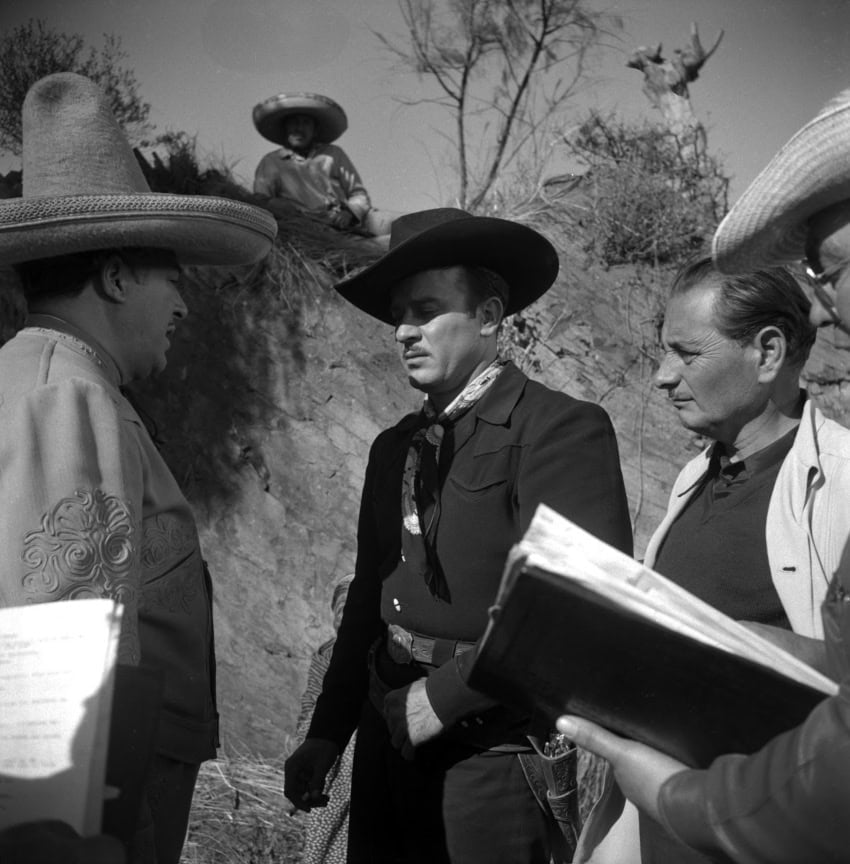
Mariachi music traces its origins to Jalisco, emerging from a combination of Spanish strings and Mexican folk music with just a trace of African influence.
The first mariachi bands performed in the simple white cotton shirts, trousers and leather sandals of the farms, but during the early 1900s, musicians started to adopt the dandy dress of the Mexican cowboy. Costumes reached a new height in the 1940s when mariachi bands appeared in Mexican movies.
Item selected: The iconic mariachi costume is the black charro suit and tejana hat that Pedro Infante wore in the 1955 movie “Los Gavilanes.”
Where it is: A collection of authentic costumes, hats and cinematic memorabilia — including the famous mariachi outfit — is on display in the Museo El Rincón de Pedro Infante, in the actor’s hometown of Mazatlán.
8. A painting from Mexico’s most beloved artist
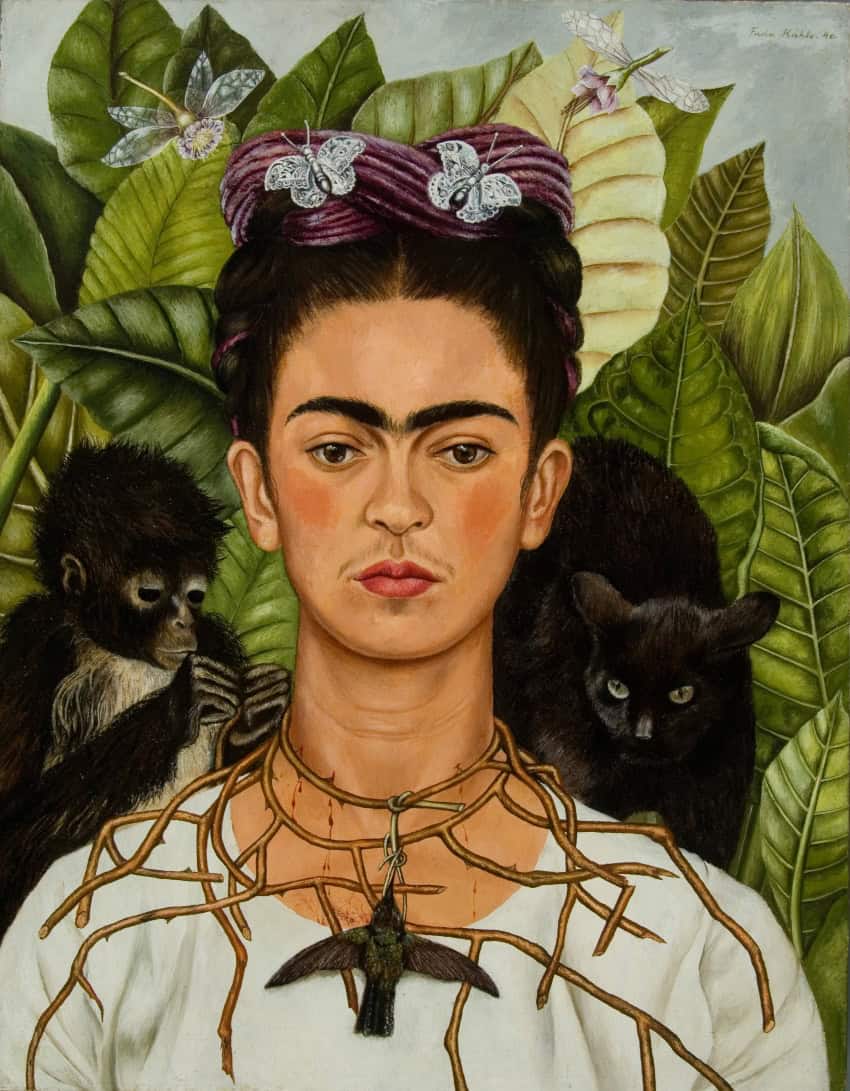
Mexico has produced some wonderful artists, from the masterful landscapes of José María Velasco to the blending of styles and cultures in the work of Rufino Tamayo. However, nobody has captured the love of the country more than Frida Kahlo and Diego Rivera, and, as time goes by, it is Frida who is emerging as the real superstar of the partnership.
Her paintings have pride of place in art galleries around the world, and the auction record for one of her paintings stands at US $54.7 million for her 1940 self-portrait “The Dream (The Bed).”
Item selected: “Self-Portrait with Thorn Necklace and Hummingbird.” Painted in 1940, this is a complex work full of symbols. The thorn necklace is a reference to both Christ and her own pain. While the hummingbird is usually a symbol of love, this one is dead and still, a reflection of Frida’s own disastrous relationships. With its colors, animals and plants and the artist’s simple peasant dress, there is also something notably “Mexican” about the work.
Where it is: “Self-Portrait with Thorn Necklace and Hummingbird” is in the permanent collection of the Harry Ransom Center at the University of Texas at Austin.
9. Tacos — the food that fuels Mexico

The origins of the taco are debated. Some argue that they predate the arrival of the Spanish; others that the idea came across from Spain, perhaps with miners or even with Hernán Cortés himself.
Whatever the origins, there is nothing more Mexican than a small corn or wheat tortilla filled with a piping hot and juicy filling. It is the food that fuels the country every morning.
Item selected: What represents Mexican street food better than small, semi-mobile taco stands? It is not only a place to eat, but a spot to stand and chat.
Where it is: We are looking for a small stand with umbrellas, a few plastic chairs and a bright advertising sign. Shouldn’t be too hard to find!
10. The title belts of Julio César Chávez
View this post on Instagram
Sport has a special place in Mexican society, from bullfights to lucha libre to the passion generated by big soccer games. Sport has also helped Mexico stake its place on the world stage, hosting the 1968 Olympics and three World Cup tournaments.
If there is one sport that is special to Mexicans, it is boxing, and for many, the greatest Mexican fighter of them all is Julio César Chávez. Over a 25-year career, he was a six-time world champion across three different weight classes. To get there, he had to go through many personal challenges, the kind of background that endears a fighter to Mexican fans.
Item selected: A world championship belt. When British fighter Tom Cribb defeated his American challenger, Tom Molineaux, in the early 1800s, King George III presented Cribb with the first championship belt in boxing history. There are no pictures of the gift, but it is said to have been made from lion skin with a silver buckle. This started a tradition that continues today, with boxers receiving a championship belt on winning a world title.
Where it is: Two of Chávez’s six belts are believed to have gone to private collectors. Four remain in his private collection.
Bob Pateman lived in Mexico for six years. He is a librarian and teacher with a Master’s Degree in History.