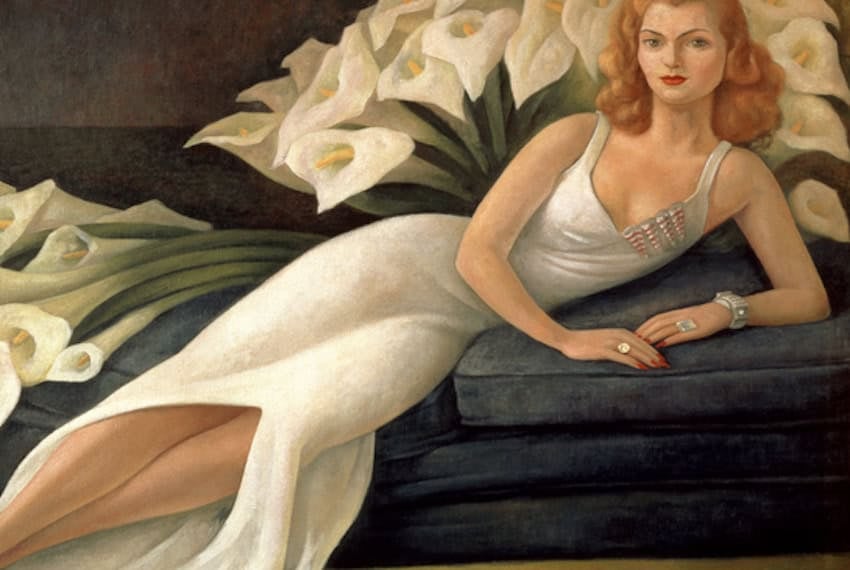
Sixty-eight landmark works from the renowned Gelman Collection of 20th-century Mexican art — including paintings by Frida Kahlo and Diego Rivera — will go on view in Mexico this month for the first time in nearly two decades.
The exhibit is set to open Feb. 17 at the Museum of Modern Art (MAM) in Mexico City’s Chapultepec Park and close May 17.
Después de casi 20 años sin exhibirse en México, @cultura_mx, a través de @bellasartesinba, presenta en el @museoAmodernoMX “Relatos modernos. Obras emblemáticas de la Colección Gelman Santander”: 68 obras clave del arte moderno mexicano que se reencuentran con el público y con… pic.twitter.com/2RhGp5xfSN
— Claudia Curiel de Icaza (@ccurieldeicaza) February 9, 2026
It marks the start of a new international tour for what the Ministry of Culture calls “one of the most representative collections of 20th-century Mexican modern art.”
Assembled by collectors Jacques and Natasha Gelman beginning in the 1940s, the 68 works form part of a larger 160-piece ensemble that was placed under the management of the Madrid-based Banco Santander Foundation just last month.
The collection has largely been out of public view since 2008.

The Mexico City show will feature paintings and photographs that helped define modern Mexican identity, from muralism to avant-garde experimentation. The exhibit’s title is “Modern Narratives: Emblematic Works from the Gelman Santander Collection.”
Jacques Gelman was born to well-to-do Jewish parents in St. Petersburg, Russia, and left in the 1920s after the Bolshevik Revolution, eventually moving to Mexico and meeting his future wife, Eastern European émigré Natasha Zahalka.
Together they built several significant collections, including European modern art, pre‑Columbian sculpture, and, most famously, their collection of Mexican modern art, with key works by Kahlo, Rivera, Rufino Tamayo, María Izquierdo and others.
“It is very significant and symbolic that the itinerary of this new stage begins in the country of origin of the artists who make it up and where the collection was created,” Culture Minister Claudia Curiel de Icaza said in a press release.
Originally, the exhibit was to debut this summer in Spain, where Banco Santander is headquartered. However, 27 of the works are National Artistic Monuments under Mexican law, restricting their mobility and prompting the upcoming Mexico City show.
Frida Kahlo is represented by 10 oil paintings, including “Self-Portrait with Necklace” (1933), “Diego on My Mind” (1943) and “Self-Portrait with Monkeys” (1943).
Rivera’s 1943 oil “Calla Lily Vendor” anchors the section on the tensions between tradition and modernity.
Works by Tamayo, Izquierdo, José Clemente Orozco, David Alfaro Siqueiros, Gunther Gerzso, Carlos Mérida, Jesús Reyes Ferreira and Lola Álvarez Bravo round out the show, which is divided into four sections: portraits, nature, Mexican identity and the paradoxes of modernity.
With reports from El País, La Jornada and The Art Newspaper