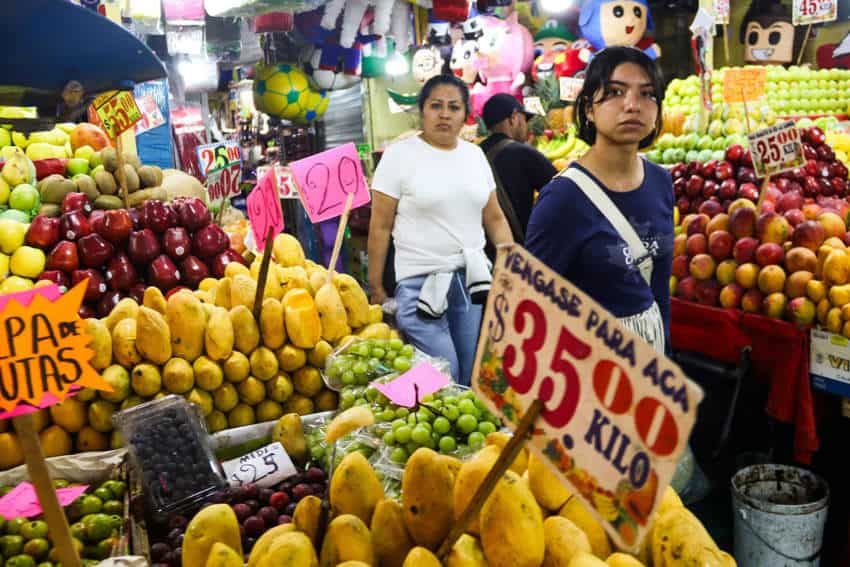
Mexico’s national statistics agency (INEGI) reported in February of this year that the canasta básica — a group of foodstuffs and household goods that the government considers necessary for everyday life — rose to 4,877 pesos a month in Mexico City and 3,494 pesos in rural areas. That represents an increase in food costs of 4.6% in the city and 4.5% in rural areas, in comparison to February’s monthly inflation of 4.02%. Compared to 2025, it’s a 1.2% increase in urban areas, and 1.9% in rural ones.
Reports blame various issues for these hikes: a volatile climate, rising oil prices, local organized crime and recent protests that shut down national highways. We wanted to find out, abstract numbers aside, how food prices are affecting real people — business owners, diners, shoppers and farmers. Is anyone benefiting from the surge in cost?
Rising prices in the restaurant industry
Jaime Henao and his family run Bolero Cafe in Colonia Roma and Cafe Mandarino next door. They are some of the few independent small businesses left in a neighborhood increasingly dominated by big restaurant groups and international chains.
“When prices rise constantly on all the products we need to run the business — meat, produce, spices, beer and liquor — as a small business, it has an outsized effect,” Henao says. “We can’t raise the prices on our menu as quickly as the prices on goods go up. Our regulars pay attention, and constantly raising prices would equal losing customers.”
Bolero, a neighborhood hangout which recently became an Independent Cultural Space, has become famous for its sourdough pizza, served alongside Mexican craft beer and wine.
“We can’t lower the quality of our products,” says Henao, “buy cheaper flour for the pizza, for example, because small businesses win clients over with the quality of what they offer and their level of service. Big chains like Tierra Garat or Starbucks are always lowering the quality of their ingredients. You can tell their menu items are full of sugar, colorants and additives, but people don’t seem to care as long as it’s cheap.”
Dining out has become a casualty of rising food prices
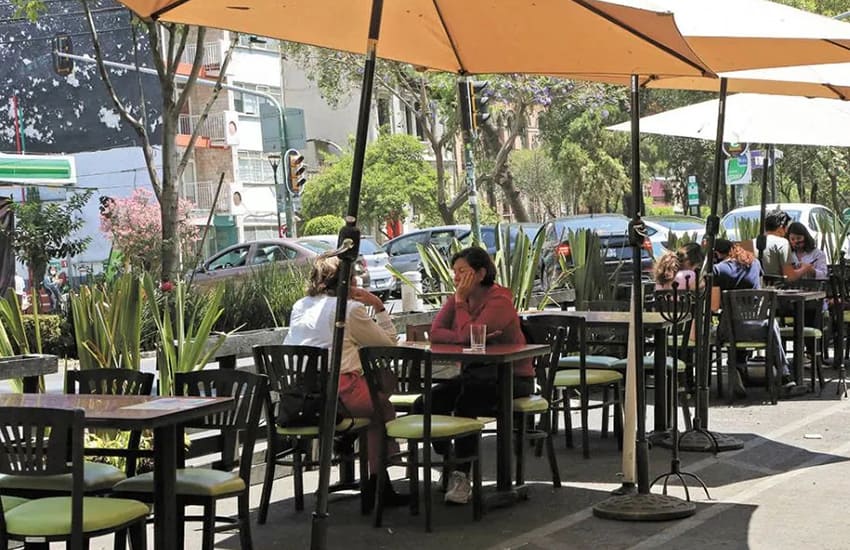
When dining out becomes too expensive for people, they often simply stop doing it, causing a trickle-down effect to everyone along the supply chain. Luza Alvarado, an editor and writer, says she and her partner have come up with a few tricks to make their lunch or dinner bill cheaper when they are out.

“If we are dining out, we try to eat meals closer together,” she says. “So, for example, if we go out for lunch, we try to have a later breakfast so we aren’t starving when we arrive. Sometimes we eat dessert at home instead of ordering it at the restaurant.” They’re also going to more casual places these days, for pizza or tacos, instead of upscale restaurants.
“Before, we could get two main dishes, two glasses of wine and dessert, but now we skip the wine and share a main dish and dessert. I also think that the quality has gone down, the portions are smaller and every place has kind of the same food, without a real concept or much heart.”
She adds that fancy places, especially in more gentrified parts of the city, can feel like a performance instead of a meal.
According to INEGI, even the prices at taquerias, torta stands and fondas are rising, increasing by over 8% in 2025 alone. This means raising the prices on some of the most affordable meals in the city. In addition to the cost of supplies, there is often the cost of extortion and “rents” foisted by organized crime groups on street stands and restaurants.
But while 2026 may not be the year for going out to eat, families still have to feed themselves.
Grocery shopping
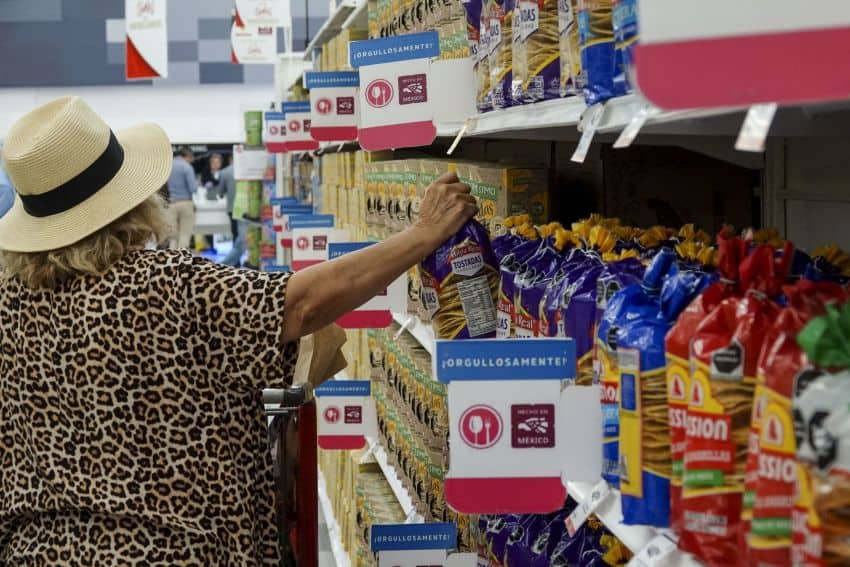
Polo Silberman lives in Colonia Del Valle with his wife and two small children. He says the rising prices haven’t changed their diet yet, but he does feel like the 1,500 pesos that used to buy a week’s worth of groceries a year ago no longer gets him everything on his list.
“I’ve noticed a difference between buying from the grocery store and buying from a butcher shop, for example,” he says. “I usually buy everything in the supermarket closest to us, but we’ve started to buy certain things directly in the local market or wholesale market [because they are cheaper].”
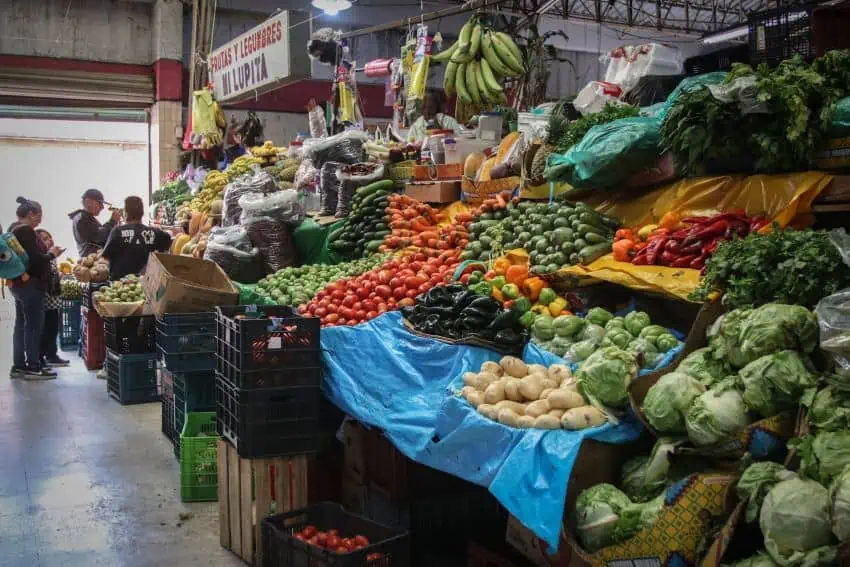
Sometimes this means traveling further for better deals on basic items, says Silberman, possibly even the Central de Abastos, the city’s largest market, which can be anywhere from 20 minutes to an hour away depending on traffic.
In March of this year, reports confirmed that prices would likely continue to rise. The cost of tomatoes and limes has risen 25% from last year. These spikes are at least partially due to rising diesel prices caused by the war between the U.S., Israel and Iran.
@quiqueelbro 23/03/2026 Desde la central de abasto de Iztapalapa le muestro los precios del jitomate y otras verduras por kilo pasillo I/j i 129. #centraldeabastos #jitomate #cdmx #mexico #iztapalapa ♬ original sound – kike
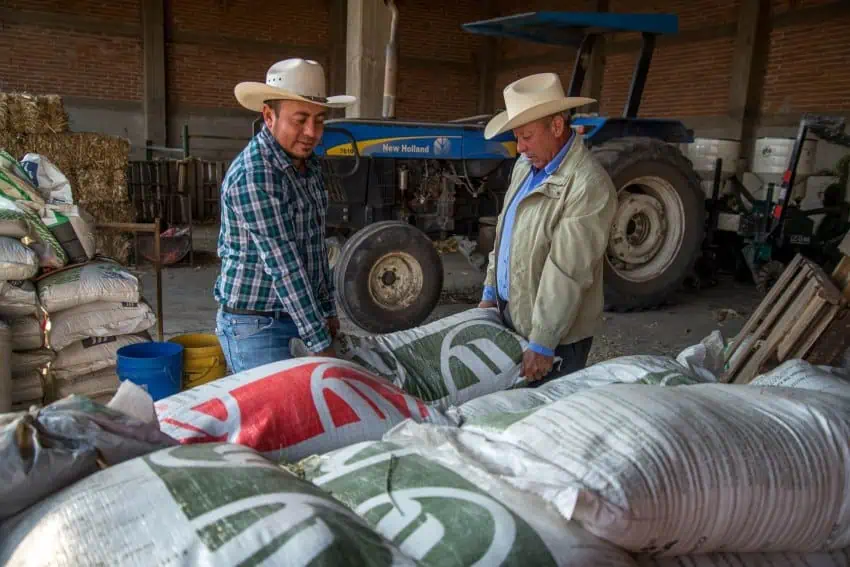
The Middle East also provides Mexico 35% of its urea supply, a vital ingredient in the commercial fertilizers used by industrial agriculture. Recent protests by truck drivers that have shut down the country’s main highways have only exacerbated shortages.
Farming costs
So what about organic producers who don’t depend on chemical fertilizers? It might seem like they would fare better in this economy, but that has not been the case for Lourdes Fuentes and her family’s farm, Granja Aurora, in Xochimilco, in the south of the city.
“Every year, the feed for the chickens goes up and we have to raise the price on our eggs,” says Fuentes. “For produce, it’s not too bad, since we have fewer inputs, but the intense amount of labor that our organic produce requires means we have to sell it at a higher price because we just don’t have the volume of an industrial farmer.”
The biggest blow for them this year came in the form of their main buyer finding another producer further away who is selling the same produce cheaper and in bigger volume in an attempt to sell to his customers a little cheaper and still make a profit. They have also been trying to manage production in the midst of a volatile climate, with entire crops lost due to recent unpredictable weather and changing seasonal patterns — last year was one of Mexico’s wettest in 50 years, and in 2024, heatwaves affected production across the country.
“What we sell is usually more expensive than the grocery store but less expensive than an organic shop, and most of our regular clients are willing to pay a little more because they know the quality of what we sell and the work it takes to produce it.”
Keeping the canasta básica affordable
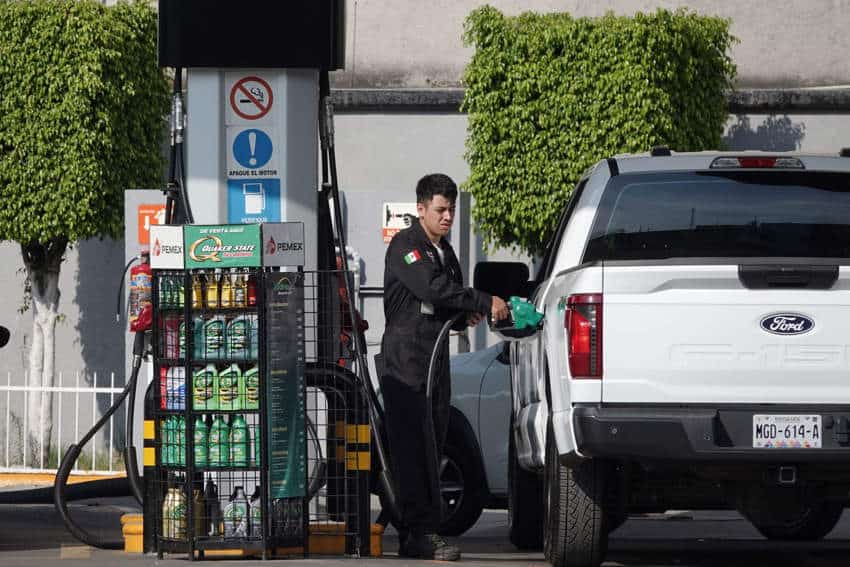
All these factors portend rising food prices for the foreseeable future. As families and businesses try to survive the volatile market of foodstuffs, in April, President Sheinbaum’s administration and the private sector renewed the Package Against Inflation and Shortages (PACIC) for the third consecutive year. This agreement sets the price of 24 basic goods during 2026 at a cost that attempts to keep the canasta básica under 910 pesos (US $52). Through the National Strategy to Promote the Stabilization of the Price of Gasoline, the Federal Consumer Protection Agency is also working to keep a liter of gasoline at 24 pesos (US $1.38) or below.
Time will tell if these strategies will succeed in reducing costs that seem to only increase year after year. In the meantime, most Mexico City residents will have to tighten their belts, dine in more, choose cheaper products and comparison shop between their local supermarket and larger markets. High prices will likely affect us all, except, of course, the ultrawealthy.
Lydia Carey is a freelance writer and translator based in Mexico City. She has published extensively both online and in print, sharing her insights about Mexico for over a decade. She lives a double life as a local tour guide and is the author of “Mexico City Streets: La Roma.” Follow her urban adventures on Instagram and see more of her work at mexicocitystreets.com.