Home Blog Page 1007

Bank of México predicts inflation will drop to near 3% in mid-2023

0
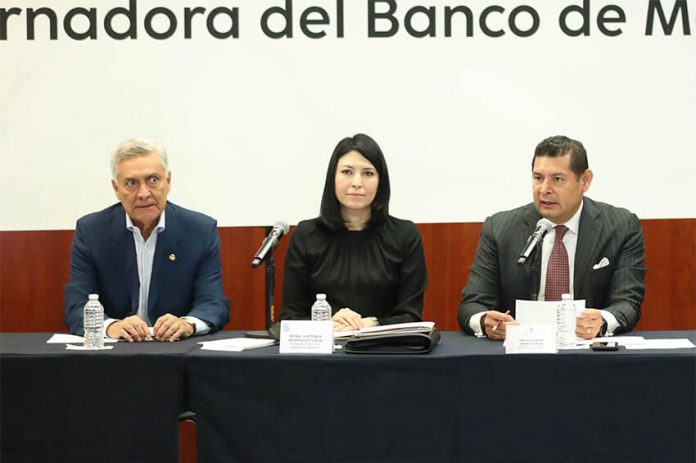
The head of the Bank of México, Victoria Rodríguez Ceja, appeared before the Senate's Finance and Public Credit Committee on Thursday.
The head of the Bank of México, Victoria Rodríguez Ceja, appeared before the Senate's Finance and Public Credit Committee on Thursday. Senado

The Bank of México has predicted that inflation will drop to near 3% by mid-2023.

Central bank Governor Victoria Rodríguez Ceja announced the forecast while appearing before senators on the Finance and Public Credit Committee on Thursday. “It’s expected that general inflation will decline throughout 2022, converging on the 3% target toward the end of the forecast horizon,” she said.

“For annual core inflation, it is anticipated that there will be an increase in the first half of 2022, and then a decrease, converging on levels close to 3% by mid-2023,” she added. Core inflation removes some volatile items from the basket of products used to calculate general price increases.

Rodríguez pointed to inflationary pressures such as the COVID-19 pandemic and the war in Ukraine, but said a population wide consensus was needed to keep prices down.

“The situation presents very complex challenges that have postponed reaching the established inflation target. That’s why we consider it a priority that there is a consensus in our society regarding the importance of the convergence of inflation towards our goal of 3%,” she said.

Rodríguez added that the bank was committed to lowering the rate of inflation. “Although the achievement of the inflation target faces particularly complicated conditions … I want to insist on the unequivocal commitment of the bank’s policy to achieve” the target rate, she said.

Mexico’s inflation rate was 7.62% in the second half of March. The Bank of México has increased the benchmark interest rate by 2.5% through its last seven monetary policy meetings to 6.5% as a means to control price rises. The inflation rate is intimately linked to that in the United States, which rose to 8.5% for the second half of March, its highest since 1981.

Rodríguez also predicted growth rates of 1.9-3% in 2023. The International Monetary Fund (IMF) cut its 2022 economic growth forecast for Mexico from 2.8% to 2% on Tuesday, and some other financial experts recently revised their forecasts downward.

However, some financial experts are more bullish on the Mexican economy due to first-quarter indicators.

The head of economic regional analysis at Banorte, Alejandro Cervantes Llamas, said that bearish sentiments were misplaced.

“Even though there have been a lot of private sector economists that have revised their forecasts downward, the economic situation in Mexico really doesn’t look that bad … [wage growth for formal sector workers] has been greater than inflation in every state of the country … Formal job creation has been strong … Consumption, despite this inflationary spike, continues to be strong,” he said.

Cervantes added that Banorte expected 1.7-1.8% growth in the first quarter of 2022, which would be the highest since the 3.7% surge in the fourth quarter of 2020, when the economy rebounded from the lows of the pandemic.

The president of the Mexican finance executives association (IMEF), Alejandro M. Hernández Bringas, said widespread problems with supply chains from China could benefit Mexico. “Mexico could be the supplier that jumps in to replace these Chinese products and, in this way, get some traction on growth,” he said.

The national statistics agency INEGI said month-on-month growth rates increased for the fourth consecutive month in March.

With reports from Reforma and BN Americas

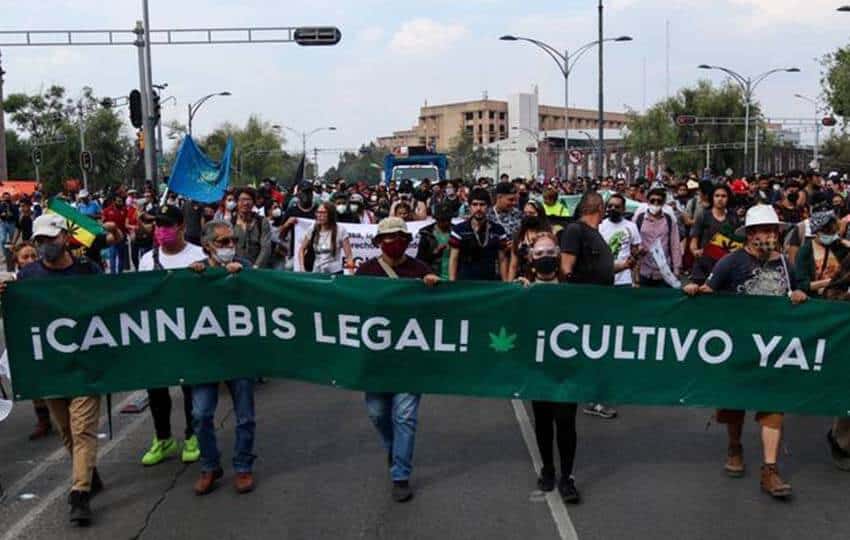
Thousands toke up outside Senate for World Cannabis Day

0
World Cannabis Day Mexico City 2022
The protest was also a party, with many in costume and many smoking marijuana in plain view of police doing crowd control.

Thousands of people toked up outside the Senate in Mexico City’s historic center on Wednesday to celebrate World Cannabis Day until around 9 p.m.

Marijuana smokers rolled joints, drank alcohol and bought drugs in open view on Reforma Avenue. A disc jockey and bands performed, and organizers held a Lucha Libre match in a ring set up on the avenue.

Some people had non-life threatening injuries after falling during a stampede, while other people were pushed into metal barriers. There was also some commotion when some drug sellers were expelled by the organizers.

Police didn’t intervene to prevent the consumption of drugs but helped keep traffic flowing along Reforma and Insurgentes avenues. Four grams of marijuana were being sold for 100 pesos (US $5).

The crowd chanted “There’s a gap in the law. Rights for stoners! … Legal weed raises morale,” and “Earth to sow it, freedom to smoke it,” as floods of people took over lanes of Reforma.

World Cannabis Day Mexico City 2022
Protesters outside the Senate called on lawmakers to vote on the legalization of marijuana as the lower house of Congress did in March 2021.

One of the event’s organizers addressed the crowd at 4:20 p.m, in reference to 420, a symbolic identifying number used in the pro-marijuana community. “We are no longer alone. Peasants, communal landowners, scientists, doctors … cannabis-smoking women and especially today the responsible stoners who are here in peace,” he said.

The organizer added that it was unlikely that there would be any changes in legislation before September.

The Senate has yet to legalize the possession of up to 28 grams of marijuana for personal use and the cultivation of up to six plants in one’s home, despite the motion passing the Chamber of Deputies in March 2021. At his regular morning news conference on March 31, President López Obrador said that there were some plans for wider legalization of “nondestructive drugs with light effects, as is the case with marijuana.”

Former president Vicente Fox is one person who is betting on marijuana legalization: he is the co-owner of a chain of cannabis stores that plan to open 130 outlets in 2022.

With reports from El Universal

Ikea adds two cities to its Mexican online store’s delivery range

0
Ikea Mexico
The home goods retailer's online store has been popular ever since it opened in 2020.

Swedish home and furniture brand Ikea confirmed that it is now able to deliver items from its online store to more locations in Mexico after adding Monterrey, Nuevo León, and Saltillo, Coahuila, to the areas served.

The addition gives 600,000 homes access to the company’s online shopping option. Ikea said that reaching the north of the country had always been one its main goals.

“We’re very excited that little by little our dream of reaching more homes is coming true,” it said on Twitter.

Meanwhile, the retailer confirmed that its planned 11,500-square-meter superstore, to be located in Puebla city in the Vía San Ángel shopping complex, will open in the second half of this year.

The first Ikea store in Mexico opened in Mexico City in April last year. At first, due to COVID concerns, customers had to make an appointment to enter the store to keep occupancy numbers down to safe levels. However, such restrictions at the Mexico City store have since been lifted.

The company’s online store first opened on October 12, 2020, and was far more popular than the company itself expected. It admitted soon after opening that it was having logistical problems and expected to open without making any public announcements and operate under the radar while it learned about the Mexican market.

But Mexican customers found them anyway, and even with limited delivery range, several products on the online site went almost immediately out of stock. Both the online store and the physical one in Mexico City still struggle today with keeping all items consistently stocked.

However, the online store has expanded its delivery capabilities during 2021 and now can ship goods to Mexico City, México state, Puebla, Tlaxcala, Hidalgo, Querétaro and Morelos, as well as Guadalajara and Puerto Vallarta in Jalisco along with its new northern markets.

The company was founded by 17-year-old Ingvar Kamprad in 1943 and has 422 stores in more than 50 markets. It is headquartered in the Netherlands.

With reports from Inmobiliare

Tania Oseguera isn’t just a master tequilier, she’s a tequila ambassador

0
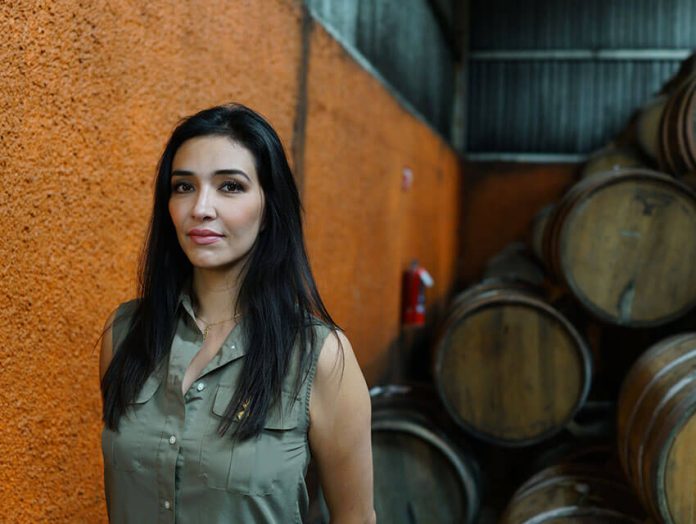
Tania Oseguera of Tequila Cazadores
Tequila Cazadores' Tania Oseguera grew up in Jalisco around tequila production but never thought she'd become involved in the industry. Tequila Cazadores

Tequila has put its association with spring breakers and cheap cocktails behind it.

Connoisseurs today know that quality tequila can be enjoyed at the same level as a fine whiskey or scotch. That international shift in perception is the result of the long and tireless work of its promoters, makers and drinkers around the world, but particularly in the cradle of tequila – Jalisco.

Tania Oseguera, brand promoter and master tequilier at Tequila Cazadores, is part of that newest generation of tequila evangelists.

Born in 1981 in Jalisco, Oseguera was surrounded by tequila but dreamed of becoming a ballerina. However, her parents’ divorce when she was 11 forced her to quit ballet training as her single mother struggled financially. A self-described “nerd,” she made it through school thanks to academic scholarships and started working at a young age to help her family.

“I used to hear my uncles and other adults here in Jalisco talking about tequila, but I never imagined there was so much to learn about it and that I was going to like it so much,” she says.

Tania Oseguera, Tequila Cazadores
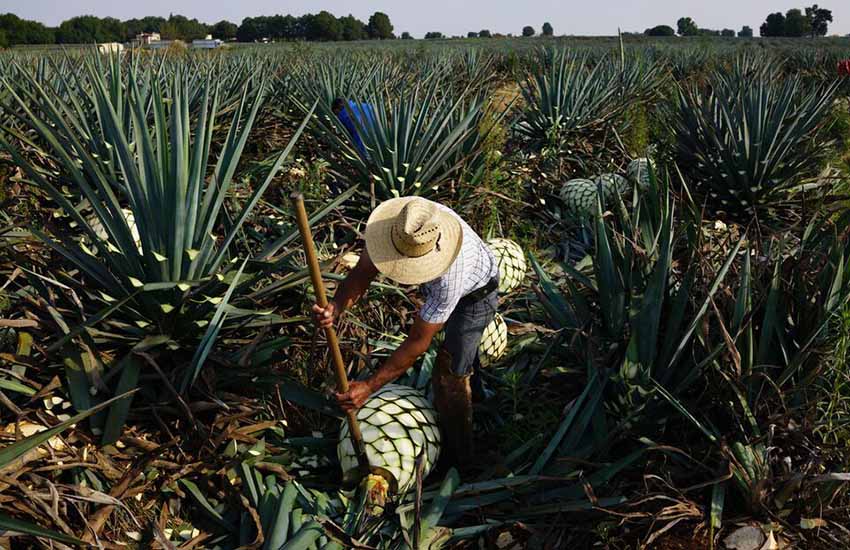
At the start of her career, few people knew how to spot a fine 100% blue agave tequila, Oseguera says. Tequila Cazadores

In the early 2000s, Oseguera graduated with a degree in communication sciences and cultural journalism from the Universidad del Valle de Atemajac.

Like any other graduate, she was hoping to find a job related to her career, but she eventually realized that jobs in her field were not well-paid. “Because of the financial needs of my family, I decided to take a part-time job as a promo model while I found something that better suited my goals,” she says.

In 2005, she heard that Cazadores was looking for models to promote their brand in the United States, and she tried out for a spot.

“I never thought I’d be selected; then I heard that they were looking for Mexican bilingual girls that would know how to sing or dance. Since I had ballet training and had been studying English on my own for a long time, I thought that maybe, just maybe,” she says.

Oseguera ended up being one of the nine girls selected to be the brand’s Chicas Cazadores. The group performed folkloric dances, sang and promoted tequila in the U.S. for six months, traveling on a bus plastered with their pictures.

“As a promo girl, I was used to selling different products, but this time, the product I was promoting … had a different meaning to me, because it symbolized my country, my culture, my people,” she said.

Tequila Cazadores
Tequila is traditionally a male-dominated industry, from the farmworkers all the way up to the owner/producers. Oseguera says she earns respect from them when they see how deep her knowledge goes about the product. Tequila Cazadores

When the tour finished, Cazadores offered her a job as the distillery’s tour guide. Two years later, they made her a national brand ambassador. With the company’s support, she obtained an MBA in marketing and master tequilier certification by the Tequila Academy. She also has a T Award by the Tequila Regulatory Council.

At Bacardi (Cazadores’ parent company), Oseguera was pleasantly surprised to see women working at all levels. She counts female coworkers (and her mom) among her best mentors.

Being surrounded by support is especially important for women in a male-dominated industry like tequila.

“It’s true that men are typically the face of tequila,” says Oseguera, “but I think that has gradually been changing over time. I have felt some initial hesitation about my [tequila] knowledge from some men in the industry, but I see that this perception changes quickly when they listen to me talking about a topic I know and love.”

Oseguera has also had to deal with sexism in her local community and move beyond the stereotype that women are only useful while young and pretty.

“It was upsetting to realize that journalism was so poorly paid while a promo-model job was much better compensated,” she says. “I want to be valued for my skills and for my efforts, not only for the way I look! Even after all these years of work at Tequila Cazadores, there are still friends and family members that have asked me what I’m going to do professionally now that I don´t look as young anymore!

Tequila Cazadores
As climate change affects the industry, Cazadores is trying to introduce more sustainable methods, Oseguera says, including turning the process’s waste products into biofuel. Tequila Cazadores

“I know they mean well, but it is disappointing that in Mexico a lot of people still think that the most important trait that women have to offer is the way they look. Fortunately, these ideas are changing gradually.”

Attitudes about tequila are changing as well. Shot drinkers are becoming aficionados, and high-end tequila is now paired with gourmet food.

“When I started working as a tequila ambassador, few people were aware of the difference between a 100% blue agave tequila and other tequilas that mix agave with other alcohol sources,” Oseguera says.

The industry is also changing: sustainability, for example, is a hot topic among tequila makers.

Oseguera insists that there are sustainable ways to make tequila that respect tradition as well as protect the earth. Cazadores, for example, is working toward zero-waste production by converting the waste from their distillery into biofuel. Its distillery runs on 99% renewable energy.

This year, the company is celebrating the 100th anniversary of the brand’s original recipe with a collector’s bottle and other events.

“[The launch] gives us the opportunity to toast not only to the brand’s anniversary, but it also comes after a time that’s been difficult for everyone due to the pandemic,” Oseguera says. “Having a reason to celebrate is true to who we are as a brand. “We want to continue to bring people together in moments that they are enjoying with family and friends.”

Lydia Carey is a freelance writer and translator based out of Mexico City. She has been published widely both online and in print, writing about Mexico for over a decade. She lives a double life as a local tour guide and is the author of Mexico City Streets: La Roma. Follow her urban adventures on Instagram and see more of her work at www.mexicocitystreets.com.

Hermosillo, Sonora, is first municipality in Mexico to use electric police vehicles

0
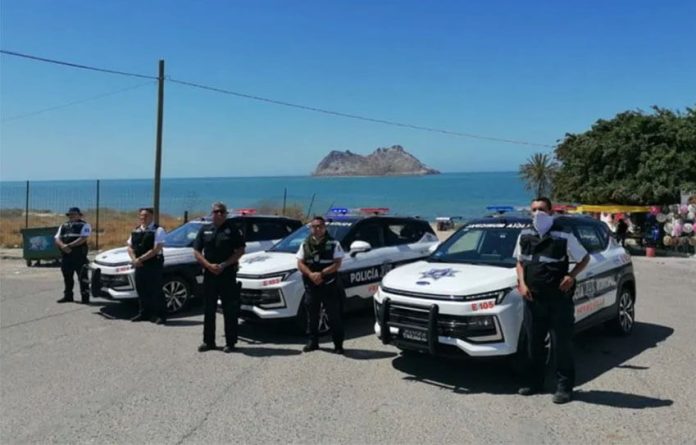
Municipal police pose with their new vehicles.
Municipal police pose with their new vehicles. Courtesy photo

The capital of Sonora has become first place in Mexico where police drive electric vehicles, joining New York City and Windsor, Ontario, in Canada.

Hermosillo Mayor Antonio Astiazarán Gutiérrez confirmed that his government had leased 220 electric sport utility vehicles for municipal police for 28 months. Some six vehicles have been delivered so far, and the rest will arrive before the end of May.

The contract is worth US $11.2 million and the manufacturer guarantees five years or 100,000 kilometers of usage. A fully charged vehicle can travel up to 387 kilometers: in an average eight hour shift, police in Sonora usually drive 120 kilometers.

The state previously had 70 non-electric vehicles, which will still be used.

The Chinese-made JAC SUVs are designed to reduce carbon dioxide emissions and noise pollution. When the brakes are applied, the vehicles convert the by-product energy created by the brakes into electricity. The local government plans to install solar panels at police stations to charge the vehicles.

An example of the new electric patrol vehicles.
One of the new electric patrol vehicles. Courtesy photo

Astiazarán said the new vehicles were symbolic of a fresh approach to security. “In the municipal government we’re betting on innovation and promoting new solutions to old problems such as insecurity. As promised, to provide citizens with the security and well-being that Sonoran families deserve,” he said.

“Hermosillo becomes the first city in Mexico to have a fleet of electric patrol vehicles to take care of our families,” he added.

Astiazarán highlighted that the vehicles are 90% electric-powered, reducing fuel costs, and said that the plan would make police officers more responsible and efficient. “For the first time in the history of Hermosillo, each unit will be managed and cared for by a single police officer, by which we seek to make them last longer. With more training … we intend to reduce the response time of municipal police … to an average five minute maximum,” he said.

Current response time is 20 minutes.

The head of the Public Security Ministry in Hermosillo, Francisco Javier Moreno Méndez, said the municipal government was following an international trend. “In Mexico there is no inventory of electric patrols like we’re going to have. In other countries, I believe there is,” he said.

Moreno added that Hermosillo had leaped into the future. “I feel proud and excited to have the prestige of being the first [security force] in Mexico that has electric patrol cars … that’s the future. We are one step further into the future … we will be pioneers in the use of these vehicles for public safety,” he said.

With reports from El Sol de Hermosillo and El Economista

Navy captures smugglers with 1.7 tonnes of cocaine off Manzanillo

0
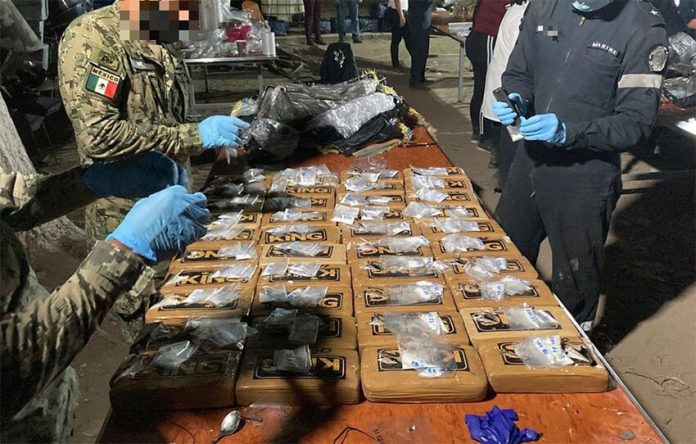
The Navy recovered 35 packages of cocaine
The navy recovered 35 packages of cocaine. Semar

Security forces seized around 1.7 tonnes of cocaine off the coast of Manzanillo, Colima, the Navy Ministry confirmed on Wednesday.

Marines were assisted by an aircraft to detect the small boat with four passengers about 500 kilometers southeast of Manzanillo port.

The suspects tried to escape after noticing the aircraft and navy boats, sparking a chase. They threw packages into the sea as they fled, but were eventually caught and arrested.

A navy patrol secured the packages thrown overboard by the suspects and found a total of 35 packages containing around 1.7 tonnes of cocaine.

The Navy Ministry said in a statement that the operation was carried out with the collaboration of ships, a helicopter and an interceptor vessel.

Footage shared by the military showed parts of the chase and seizure operation.

Defense Minister Luis Cresencio Sandoval detailed the government’s drug seizures in late March in the president’s regular morning news conference. He said 73,834 kilograms of cocaine had been seized during the administration, coming from South and Central America.

While cocaine is transported into Mexico, Cresencio said that synthetic drugs were being produced in laboratories in the country and that 127 labs had been busted by the current administration, mostly in Sinaloa. He added that the base substances for those drugs were arriving via ports on the Pacific, such as Manzanillo.

In the same conference, President López Obrador said the government was considering legalizing “nondestructive drugs with light effects, as is the case with marijuana,” but that an internal agreement hadn’t been struck.

The president put the military in charge of the nation’s ports and customs offices in 2020.

With reports from Milenio

‘We’re buried in sargassum:’ seaweed has arrived early and in massive quantities

0
Workers remove sargassum by the wheelbarrow load
Workers remove sargassum by the wheelbarrow load on Tuesday from a beach in Isla Mujeres.

Record amounts of sargassum – a seaweed that emits a foul odor when it decomposes – have washed up on the coastline of Quintana Roo in March and April, according to the head of the state’s sargassum monitoring network.

“What we’re seeing is that the massive arrivals of sargassum came much earlier than in other years,” Esteban Amaro, a marine biologist and director of the Quintana Roo sargassum monitoring network, told the news website Animal Político.

In previous years, large amounts of the seaweed didn’t reach the Quintana Roo coast until June or July, he said. This year, however, it began washing up in January, while quantities never seen before arrived in March and April, Amaro said.

Some 6 million tonnes of the seaweed washed ashore in March, up from 4 million tonnes in February, he said.

“In other words there was a large increase and in April it will probably be even greater. The figures tell us that this year will be a very big sargassum year,” Amaro said.

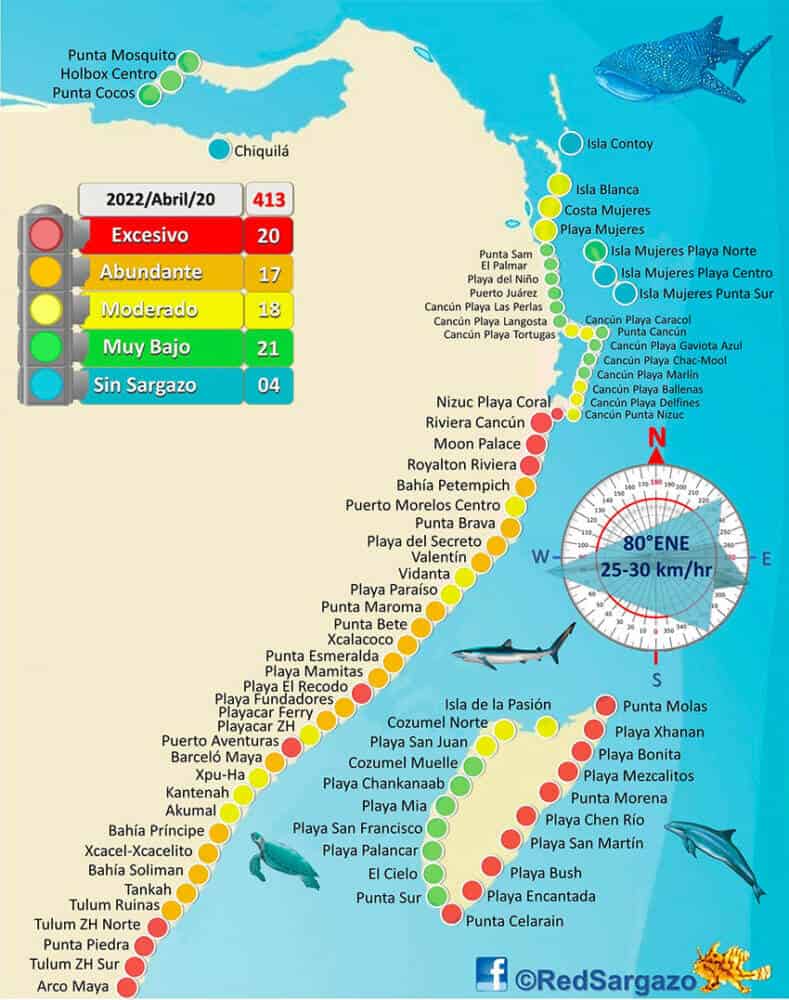
A map published Wednesday by the monitoring network shows that there are currently 20 beaches in Quintana Roo with excessive amounts of sargassum, including 10 on the east coast of Cozumel, an island off the coast of Playa del Carmen. Most of the other 10 are in Tulum and Cancún.

An additional 17 Quintana Roo beaches have abundant amounts of the smelly, brown seaweed, while 18 have moderate amounts, the map shows.

Amaro said the monitoring network warned at the start of the year that large amounts of sargassum would reach the coast this year but authorities “didn’t do anything to prevent this situation.”

“We have seen for years that the [anti-sargassum] strategy doesn’t work – over and over again the same deficiencies have been on display. For example, we’ve already seen that the barriers don’t work because the sargassum goes over [them]. They’re barriers designed for the contention of oil spills,” he said.

The navy uses sargassum-gathering vessels to remove the seaweed before it reaches the shore, but the amount extracted is dwarfed by the quantity that washes up on Quintana Roo’s famous white sand beaches every sargassum season.

The navy removed 1,483 tonnes from the sea last year, a 173% increase compared to 2019, but still only a very small fraction of the total quantity of the weed that reaches the shore. That means that most sargassum removal work happens on shore, with government workers as well as people employed by beachfront hotels doing much of the work manually.

The sargassum map published Wednesday morning
The sargassum map published Wednesday morning by the sargassum monitoring network.

Instead of having an anti-sargassum strategy whose central component is removing the weed from beaches, efforts should be focused on installing longer and more robust barriers at sea, Amaro said. Such barriers would assist the navy’s collection efforts, he added.

Amaro said the positioning of barriers should take sea currents into account so that they are effective in diverting sargassum back out to sea.

“I always say, ‘what is from the sea should go to the sea.’ Why do we want to remove a tremendous amount of  … seaweed [on land]? To contaminate the beaches, jungle and sea? We’ve already seen that isn’t working. We have to rethink the strategy,” he said.

Laura Artemisa Patiño, president of the environmental organization Moce Yax Cuxtal, agrees. “What we’re asking is that the sargassum be collected at sea because the [environmental] impact is much less,” she said.

“Sargassum on the coast becomes mud and the white sand stops being sand because it [becomes] mud, which causes the entire surrounding ecosystem to die. That’s why the first alternative has to be offshore collection,” Artemisa said.

José Burgos, a fisherman and president of a Playa del Carmen fishing cooperative, lamented the impact that excessive sargassum has on the local economy.

“They didn’t resolve this matter in past administrations and now we’re still waiting for something to be done because this affects all of us: restaurateurs, hoteliers, those who give massages on the beach and those of us who have tourist boats,” he said.

“… The foreign tourist is not used to these conditions and can even get sick from breathing the air,” Burgos said.

In July last year, numerous civil society organizations, including Moce Yax Cuxtal, launched an online petition under the title “SOS. We’re sinking in sargassum! Its efficient management in the Mexican Caribbean is urgent.”

The change.org petition, which attracted support from almost 25,000 people, called on all three levels of government to attend to the sargassum crisis through the implementation of 10 different measures, among which were the sufficient allocation of resources for the installation of barriers and the promotion of the use of sargassum for commercial and industrial purposes.

But the response from municipal, state and federal authorities was unsatisfactory, said Fabiola Sánchez, a representative of a Puerto Morelos citizens group that supported the petition.

“They dedicated themselves to passing the buck to one another,” she told Animal Político. “The feeling is that we’re still buried in sargassum. There’s very little progress, … a lot of hot air, a lot of noise but scant action.”

With reports from Animal Político

Canadian sommelier started over in Vallarta with wine school for Mexicans

0
Kami Lee Robb owner of Vino Vallarta, Mexico
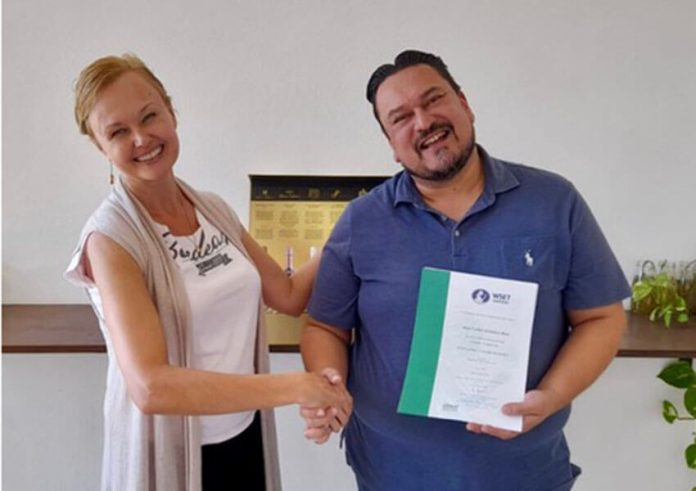
Sommelier Juan Carlos Alcántara Ruiz earned internationally-known certification from the Wine and Spirit Education Trust through Vino Vallarta. Vino Vallarta

Despite having at least three major regions to produce wine grapes, Mexico is not historically a wine-drinking country. This is probably because Spain’s King Charles II forbade wine production in Mexico in 1699 to all but the Catholic Church.

This, and the prevalence of agave, meant that Mexico’s preferred drink for centuries would be mezcal and tequila.

A wine industry did grow in Mexico in the 20th century, and by the end of the 1900s, Mexican vintages, especially from Baja California, had gained international recognition.

However, in Mexico, the pursuit of fine wine is still a nascent interest – though growing. In the past decade, wine consumption in Mexico has doubled, although it is still less than a liter per capita, way under the more than 50 liters a year drunk in countries like Portugal.

Production of good wine requires relatively few people to know how to make it, but its consumption requires a populace educated in selecting the right wine for their tastes and food. Many Mexicans try wine not knowing what they like or, even worse, get wine damaged by poor handling or storage. This can lead people to believe that they do not like wine.

Kami Lee Robb, owner Vino Vallarta, Mexico
Since opening in 2018, Robb has expanded her offerings to both English and Spanish classes, has a second campus and teaches throughout Mexico. Vino Vallarta

Mexico’s interest in finding good wines is driven by three factors: the first is pride in Mexico’s native wines. The second is the tourism and entertainment industry, especially those businesses catering to upscale clientele. The last is that there is a growing segment of Mexicans who can afford the still relatively expensive passion.

Kami Lee Robb worked in the Canadian wine industry for decades and decided to up and leave Canada with her daughter in 2018 after losing a job. Her experiences working as a sommelier in Mexican cities made her realize that wine appreciation classes, common in Canada, are almost unheard of in Mexico. Wine knowledge in Mexico is better than in the past, but there is still much to do, Robb said.

She came to Puerto Vallarta with some inkling that certain Mexican businesses would benefit from wine training, but she assumed that, at least initially, her main clientele would be snowbirds and other foreigners there. It turned out this community was more than happy with margaritas and beer, so the city’s hotels and restaurants quickly became her base.

In Canada, she worked for many years with an English institution called the Wine and Spirit Education Trust (WSET), which has a presence in 70 countries but not in Mexico. Robb navigated the organization’s strict standards and the Mexican legal hoops to officially found Vino Vallarta and offer students internationally recognized certifications.

Her business has two main bases of operations: one in Vallarta and one in Mexico City.

In Vallarta, many of her students are upscale restaurant, hotel and resort employees who need to be able to recommend wines for guests. Many companies pay for the classes as good wine has a better profit margin and more prestige than either tequila or beer. Robb feels she is helping students with their careers, teaching them a valuable and still-rare skill.

Vino Vallarta graduate Joaquin Labrado
Recent Vino Vallarta graduate Joaquín Labrado, who earned a WSET certification in sake, poses at work at the One & Only Mandarina luxury hotel in Nayarit. Vino Vallarta

The business’s other location is near the World Trade Center in Mexico City and partners with Mexican wine aficionado Oscar Lagos Zepeda, who himself is an alum of the school and owns his own wine-related business. In Mexico City, the clientele is quite different, mostly lawyers, engineers and other professionals who have found a passion for wine. One of the company’s goals is to reach out to corporate clients in the capital as many major importers and retailers have headquarters here.

While she’s expanded greatly since opening in 2018, it has had its bumps in the road. Robb’s business was set to take off when the pandemic hit. She suddenly could not give in-person classes.

But a little ingenuity, luck and liberal Mexican laws saved the day. She found a way to do classes online. Getting wine samples to clients turned out not to be a problem since Mexico allows the shipping of wine samples after Robb repackages them. Try doing anything like that in the United States or Canada!

Her business is not the first to offer wine education in Mexico. There are others such as Uncork Mexico, but they tend to focus strongly on Mexican wines. Robb’s focus is international, and often her tastings and classes do not have Mexican vintages. This is important as Mexico still produces only 30% of the nation’s domestic consumption, and wine is often attractive to those with an international worldview.

Per WSET rules, Robb can teach only in English, but she is amazed at how well students in both Puerto Vallarta and Mexico City are able to follow her in this language. And she now has two associates — Ralf Oliver Boschofsky and, soon, Balam García — to teach in Spanish in Mexico City.

Mexico has been very good to both her and her daughter, Robb says. She hopes to leave Vino Vallarta to her someday. And Robb has partnered with exceptional associates who share her passion for wine and have administrative and other skills that she lacks.

Kami Lee Robb, owner Vino Vallarta
Robb giving a class at Vino Vallarta’s Mexico City site. Leigh Thelmadatter

However, she has not completely decided to stay in Mexico, feeling a call to Europe, at least for a time.

But, she says, “Mexico will always have a part of my heart.”

Leigh Thelmadatter arrived in Mexico 18 years ago and fell in love with the land and the culture in particular its handcrafts and art. She is the author of Mexican Cartonería: Paper, Paste and Fiesta (Schiffer 2019). Her culture column appears regularly on Mexico News Daily.

Hospital employee arrested in kidnapping of newborn

0
A surveillance camera captured a woman making off with the baby
A surveillance camera captured a woman making off with the baby on Tuesday.

A hospital employee in Chiapas was arrested for kidnapping a newborn baby on Tuesday.

The one-day-old baby is suspected to have been taken by Yeni Fernanda “N,” who worked in the public hospital in Tapachula as an office assistant.

The baby’s mother alerted hospital staff after she discovered the baby was missing. Security forces later imposed an Amber Alert in the state.

People outside the hospital said they saw a woman carrying a baby and boarding a taxi.

The newborn was found about two hours later some 10 kilometers away from the hospital on the southern outskirts of the city.

Yeni Fernanda started working in the hospital in February, the newspaper El Universal reported.

Governor Rutillo Escandón confirmed the rescue. “We are happy to report that elements of the state Attorney General’s Office recovered, safe and sound, the newborn that was stolen today,” he said.

The head of the Mexican Social Security Institute (IMSS), which runs the hospital, said the search was a collaborative effort. “Thanks to the coordination of many state and federal institutions, the newborn has been recovered and the person who took it from the hospital has been detained,” he said.

With reports from El Universal

Mexico disbanded elite anti-drugs unit that collaborated with DEA

0
dea officers
It was the main conduit for the DEA to share leads on drug shipments with Mexico.

The federal government last year disbanded a United States-trained elite anti-narcotics unit that collaborated with the U.S. Drug Enforcement Administration (DEA) for almost 25 years, according to a report by the news agency Reuters.

A DEA agent with knowledge of the matter told Reuters that the government formally advised the DEA in April 2021 that Mexico’s organized crime-fighting Sensitive Investigative Unit (SIU) had been shut down. However, the unit had been inoperative for some time before that, the agent said.

A second Reuters source who is also familiar with the situation confirmed that the unit had been disbanded.

The news agency said it was unable to establish why the government didn’t publicly announce the dissolution of the elite group, which was formed in 1997.

Made up of over 50 officers, it was one of a number of DEA-trained SIUs that operate in about 15 countries, Reuters said.

According to United States officials, the units are “invaluable in dismantling powerful smuggling rings and busting countless drug lords around the globe.”

The now-disbanded SIU, which collaborated with the DEA but remained under the control of Mexican authorities, was made up of some of the country’s best officers. They received training in the United States on latest surveillance and policing techniques and were vetted by U.S. officials. 

The unit worked on major cases such as the 2016 capture of former Sinaloa Cartel leader Joaquín “El Chapo” Guzmán. 

Reuters said the disbandment of the unit could hinder United States’ efforts to combat Mexican cartels, which ship large quantities of drugs into the U.S., contributing to the drug – and overdose – crisis in that country.

The DEA agent who spoke with the news agency said the government “strangled” the SIU, one of two such units that were established in Mexico.

(The other one is based inside the ostensibly independent federal Attorney General’s Office and continues to operate.)

The demise of the police SIU “shatters the bridges we spent decades putting together,” the agent said. 

The now-defunct unit was the main conduit for the DEA to share leads on drug shipments and tips obtained on U.S. soil with Mexico’s government,” Reuters said.

Mike Vigil, the DEA’s former chief of international operations, told the news agency that the closure of the SIU and President López Obrador’s decision to reduce security collaboration with the U.S. – although the two countries recently reached a new security agreement and Mexico has issued new visas to DEA agents – will have a detrimental effect on both countries. 

“It will mean more drugs going to the United States and more violence in Mexico,” Vigil said. He also said that “Mexico is shooting itself in the foot” given that it disbanded a unit that pursued the criminal organizations that are the country’s main instigators of violence, which remain at near record levels

While it was made up of highly-trained, U.S. vetted officers, the SIU was not beyond beyond reproach. Its former chief, Ivan Reyes Arzate, turned himself into United States authorities in Chicago in 2017 and pleaded guilty to cocaine trafficking conspiracy in a U.S. federal court last October. 

Reyes, known as La Reina (the Queen), was sentenced to 10 years in prison in a U.S. federal court in February. 

Reuters said that alarm bells for the elite Mexico-based SIU rang in 2019 when López Obrador disbanded the Federal Police, in which the unit was embedded, and moved many officers from that force into the newly-created National Guard.

Another portent of the unit’s eventual fate was legislators’ approval of a law that restricts and regulates the activities of foreign agents in Mexico and strips them of diplomatic immunity.

Some observers, including veteran drug war journalist Ioan Grillo, said the legislation was retaliation for the United States’ arrest in October 2020 of former defense minister Salvador Cienfuegos on drug trafficking charges.  Cienfuegos was returned to Mexico and charges against him were dropped but the episode harmed Mexico-U.S. security relations.

Six months after his detention in the U.S. and just a few months after the tougher foreign agents law took effect, the Mexico-based SIU was officially dissolved. The new law was the “nail in the coffin” for the unit, said the DEA agent who spoke with Reuters.

Víctor Hugo Michel, director of information for the Milenio media group, said on Twitter that the decision to disband the SIU was not clearly a bad thing or a good thing.

“Is closing the Sensitive Investigative Unit that the DEA trained for decades positive? Yes and no, I think. … It reduces bilateral cooperation and sends a message of mistrust to Washington. But the unit was involved in scandals such as the Allende massacre [of as many as 300 people in Coahuila],” he wrote before citing several other positives and negatives of the now-defunct SIU.

With reports from Reuters