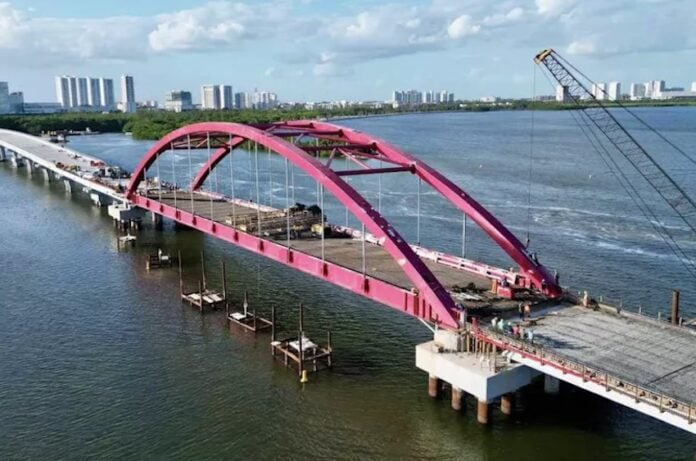
The bridge, planned since 2006, cuts across the lagoon to reduce the transit time to and from the hotel zone and the city of Cancún by 45 minutes. (Mara Lezama)
The Nichupté Vehicular Bridge, connecting the city of Cancún with its hotel zone, is nearing completion and should be open to traffic by the end of this month, federal transportation officials say.
The long-awaited bridge project was once assumed to have been abandoned, since it was proposed as part of Cancún’s 2030 Strategic Plan for Sustainable Development in 2006 but languished there until construction began 16 years later in 2022.
El Puente Vehicular Nichupté, proyecto prioritario del Gobierno de México, avanza firme hacia su conclusión. pic.twitter.com/yS8op6o25t
But now Infrastructure, Communications and Transport (SICT) Minister Jesús Antonio Esteva Medina announced that the bridge is 90% complete and will begin operations in December, though no specific date was given.
With a total length of 11.2 kilometers, including junctions and branches, the bridge will have three lanes of traffic in each direction on its main section, with one of them reversible as needed. There will be a bike lane and a pedestrian path.
The structure is supported by piles driven into the seabed of the lagoon, designed to minimize the environmental impact on the protected natural area of the Nichupté mangroves.
The SICT indicated that by crossing the Nichupté lagoon system, the bridge will reduce transit times by up to 45 minutes. It will also serve as an alternate evacuation route in case of hurricanes or other emergencies.
According to the bidding process, the original investment was just over 5 billion pesos (US $274 million). However, the Budget Transparency Observatory revealed that the amount currently stands at 10.8 billion pesos (US $590 million) and anticipates that, once associated expenses are included, the final amount will reach 11.1 billion (US $603 million).
Mara Lezama, governor of Quintana Roo, Cancun’s state, said that an average of 1.3 million residents, including workers in the tourism industry, and more than 20 million tourists each year will benefit from the project. She emphasized that there will be no toll in either direction, and also pointed out that the bridge will provide spectacular views of the lagoon and mangroves.
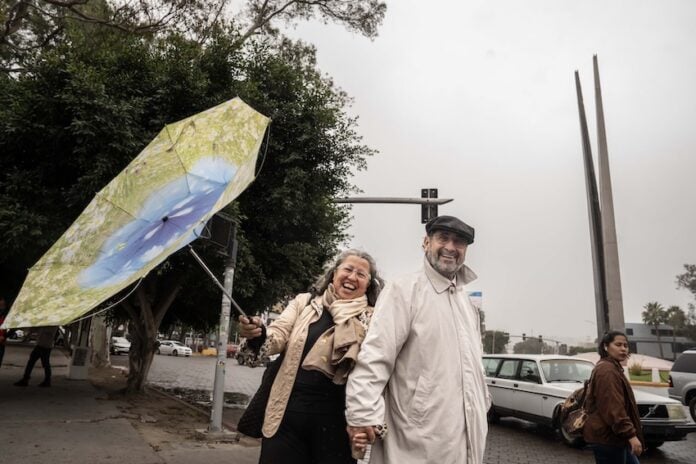
As expected, late fall temperatures have been relatively mild in most of Mexico, but with cold front folowing cold front, winter is right around the corner. (Omar Martínez/Cuartoscuro)
Wintry storms accompanying cold front No. 18 are expected to dump snow and sleet on mountainous areas of northern Mexico on Thursday as cold front No. 17 was still causing isolated heavy rains over northwestern parts of the country.
Meteorologists stay on the lookout for advancing cold fronts meeting with atmospheric rivers, which bring water through the air from tropical regions to northern latitudes, often resulting in cold rain or snow. (SMN)
In combination with a cold front, an atmospheric river — a long, relatively narrow corridor in the atmosphere that carries large amounts of water vapor from tropical regions to mid or high latitudes — can reinforce precipitation, increasing the volume of rain or snow that falls. As a result, the SMN has warned of a risk of floods in the northwest, and cautioned residents to be alert for landslides or snow accumulation in high areas.
A drop in temperature is forecast for the aforementioned regions, along with gusty winds and possible snow or sleet in the mountains of Sonora, Chihuahua, Durango and Sinaloa.
The SMN said sub-zero temperatures and frost are to be expected during the early hours of Friday in mountainous areas of Baja California, Sonora, Zacatecas, México state, Tlaxcala, Puebla and Veracruz. Residents living in the mountains of Chihuahua and Durango can expect temperatures as low as –10 C.
Gusty winds are expected to accompany the chilly conditions, while the new cold front will extend as a stationary front over the northeast and east of the country, potentially bringing heavy showers on Friday. Particularly windy conditions were forecast for the states of Tamaulipas and Veracruz, as well as across the Isthmus of Tehuantepec region
Meanwhile, isolated showers and periods of rain were forecast for Thursday in the central, eastern, southern and southeastern parts of the country, including the Valley of Mexico and the Yucatán Peninsula.
A warm to mild day was forecast for Mexico City, but local civil protection officials advised residents to prepare for a cool-to-cold environment from late afternoon through Friday morning.
Low-pressure troughs, combined with moisture from the Pacific Ocean, Gulf of Mexico, and the Caribbean, were projected to cause lightning storms in the Pacific coast state of Nayarit, the Sierra Gorda region of Querétaro and Hidalgo, the Sierra Alta and Huasteca regions of Hidalgo, and the mountainous regions of Veracruz and Puebla.
The SMN also forecast stormy conditions for the states of Guerrero, Oaxaca, Chiapas and Quintana Roo.
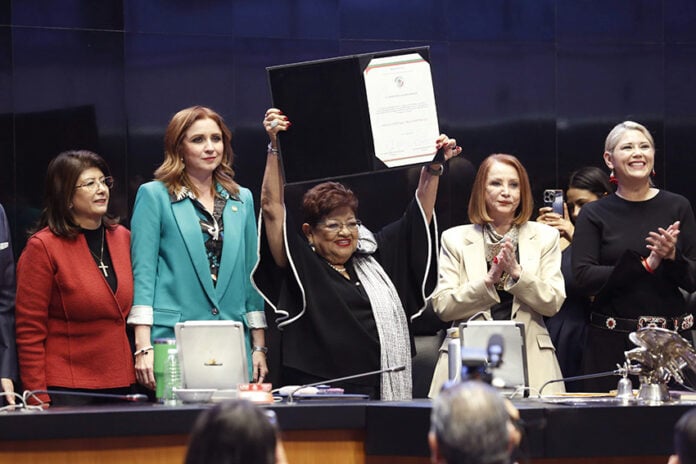
The Mexican Senate confirmed Ernestina Godoy as federal attorney general on Wednesday, with 97 votes in favor, 19 opposed and 11 abstentions. (Cuartoscuro.com)
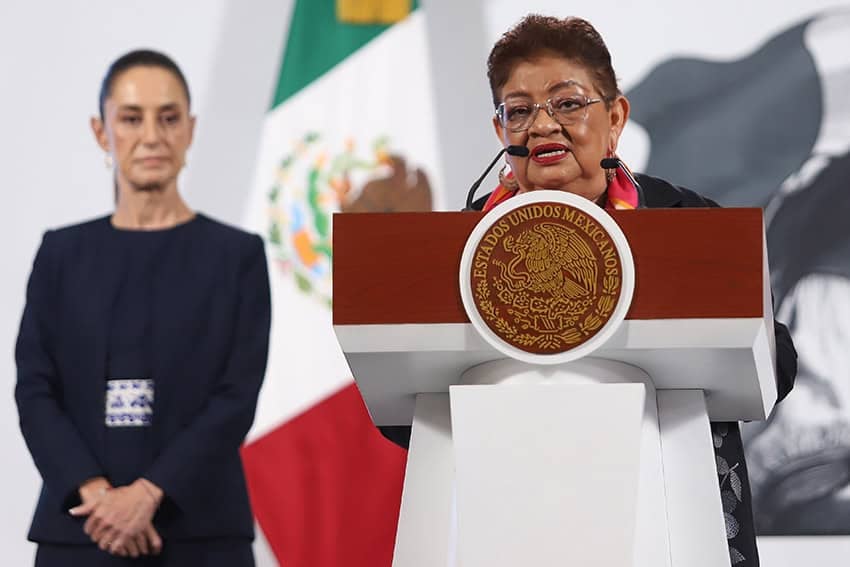
Ernestina Godoy, a former Mexico City attorney general and legal advisor to President Claudia Sheinbaum, was sworn in as federal attorney general on Wednesday after the Mexican Senate approved her appointment.
El día de hoy, tras comparecer ante el pleno del Senado de la República, como parte de un proceso democrático, rendí protesta como Fiscal General de la República (FGR). Desde que decidí dedicar mi vida al servicio público, siempre he tenido claro que la procuración de justicia es… pic.twitter.com/AP6CeCt8Nq
Senators from the ruling Morena party and its allies were joined by the six Citizens’ Movement party senators as well as three National Action Party (PAN) senators in voting in favor of the appointment of Godoy to a nine-year term as attorney general.
The final vote count was 97 votes in favor and 19 against, with 11 senators casting invalid votes.
Lilly Téllez and Ricardo Anaya, both of whom represent the PAN, were among the senators who invalidated their votes. “No to the mafiocracy,” Téllez wrote on her ballot.
Before the Senate voted to appoint her as Mexico’s second female attorney general, Godoy presented her vision for the role.
She said that a Federal Attorney General’s Office (FGR) she leads would have “open doors” and wouldn’t “fabricate culprits” or engage in a campaign of “political persecution.”
“But I tell you now,” Godoy added. “There will be no impunity.”
“An Attorney General’s Office that acts alone is destined to fail,” she said.
“Autonomy is strengthened with coordination, intelligence and the vision of the state,” Godoy said, adding that the FGR would not just collaborate with security authorities, such as the Omar García Harfuch-led federal Security Ministry, but also state Attorney General’s Offices, human rights organizations and commissions, and “other institutions.”
The FGR, however, won’t be subordinated by any authority, she stressed.
She also said that “the conduct” of the FGR “must be humanist” and based on “love for the homeland, honesty, a vocation of service, respect for human rights, professionalism and efficacy.”
The “true challenge,” she said, is to “reestablish citizens’ confidence” in the FGR and the delivery of justice.
“And that’s achieved with transparency, with accountability, with decisions based on evidence, with respect for human rights, with verifiable results,” Godoy said.
She also said that in order to combat organized crime — a huge challenge for the federal government — the country needs an FGR that doesn’t just investigate people, but also “the money trail.”
Opposition questions Godoy’s closeness to Sheinbaum and Morena
Opposition senators asserted that the process to select a new attorney general from the three candidates put forward by Sheinbaum was a “simulation” to install a fiscal carnala, or government-friendly attorney general.
Opposition senators questioned Godoy’s affiliation with Morena, a party she represented in both the Chamber of Deputies and the Senate. She hugged and kissed Morena senators during her appearance in the Senate on Wednesday.
Ernestina Godoy, seen here at a July press conference, was President Sheinbaum’s chief legal advisor until last week, when she resigned to take the position of interim attorney general. She has now been confirmed to lead the attorney general’s office, no longer in an interim capacity. (Daniel Augusto / Cuartoscuro.com)
Godoy emphasized her commitment to holding anyone who has committed a crime to account, and protecting and defending victims.
López Hernández, whose security minister during his governorship in Tabasco is now imprisoned and accused of heading up a criminal organization, was one of the senators who approached Godoy and gave her a hug after she was sworn in as attorney general, the El Universal newspaper reported.
The Reforma newspaper ran a headline that claimed that Godoy is “totalmente Palacio Nacional” (totally National Palace), a play on the “totalmente palacio” marketing slogan of the Palacio de Hierro department store chain.
The implication was that Godoy is too close to Sheinbaum, whose office and residence is at the National Palace in the historic center of Mexico City.
Sheinbaum: Godoy’s appointment will be ‘very good for the country’
At her Thursday morning press conference, Sheinbaum expressed her satisfaction with the appointment of Godoy as attorney general.
“Ernestina is an honest woman, a great professional,” she said before noting Godoy’s experience as attorney general in Mexico City.
Sheinbaum went on to say that she believes that the approval of Godoy as attorney general will be “very good for the country.”
“… There will be a lot more coordination now between the Security Ministry, the Attorney General’s Office, the National Guard, and we also hope that she is a leader that strengthens the relationship with the state Attorney General’s Offices,” she said.
Sheinbaum said that the fact that the FGR is autonomous doesn’t mean there can’t be coordination with other authorities.
“Autonomy means that the [federal] executive doesn’t influence the decisions of the Federal Attorney General’s Office,” she said.
“But we want coordination to guarantee peace and security in the country … and reduce impunity,” Sheinbaum said.
Women's business leadership rates in Mexico are slowing increasing, but major gender parity gaps remain. (Shutterstock)
Under President Claudia Sheinbaum — Mexico’s first female president — more and more Mexican women are stepping into positions of power in government and business. It’s a trend that predates her administration, and that she arguably has benefited from. But while gender parity laws have sped the entry of women into government roles, the change in the business world has been slower.
In Mexico, the number of women on company boards has been slowly increasing. In large companies, 17.5% of current board members are women, according to a recent report by the Mexican Institute for Competitiveness (IMCO). That’s a far cry from the average in other developed countries. Among Mexico’s peer countries in the Organization for Economic Co-operation and Development (OECD), an average of 32.5% of major companies’ board members are women.
Hoy presentamos #MujeresenlasEmpresas2025. Aquí el resumen de los datos. Échenle ojo. La verdad es que México, por más presidenta que tengamos, es uno de los países más cerrados del mundo en ese tema. @imcomxpic.twitter.com/SxxF8VUKBD
In countries like France and New Zealand, female board representation exceeds 47%. Mexico also lags behind other Latin American countries such as Colombia, Chile and Brazil.
The IMCO report found that 19% of boards are composed exclusively of men, while 13% have no women in either board positions or other relevant management roles. Furthermore, only 5.5% of independent directors are women — compared to 28% of men — and just 4% of women serve as board chairs.
Although representation of women in financial and legal management positions has advanced, 64% of companies lack female representation in any of their key leadership roles. According to IMCO, women hold only 3% of CEO positions, 15% of CFO positions and 26% of legal positions.
Progress in achieving gender equality in key positions has been consistent but slow, the report found. At the current rate, Mexico won’t achieve parity on corporate boards until 2043.
SMEs in Jalisco include more women than large companies
The report included an analysis focused on the business sector in the state of Jalisco, which is home to more than 365,000 businesses. It revealed that in small and medium-sized enterprises (which make up the vast majority of Jalisco firms) nearly half of the owners are women. However, disparities are greater in large companies.
Jalisco women tend to lead marketing and human resources departments, while men predominate in operations and technology areas. For every four promotions given to women, five are given to men.
IMCO: Mexico needs more women on corporate boards
IMCO noted that Mexico could benefit from having women in decision-making positions, as it not only strengthens competitiveness but also boosts their productivity and innovation. But to elevate women’s economic participation from the current rate of 46% to the OECD average of 67%, Mexico would need to incorporate 18.6 million women into the labor market.
IMCO anticipates that this change could yield significant benefits, potentially increasing the national GDP by 6.9 trillion pesos by 2035.
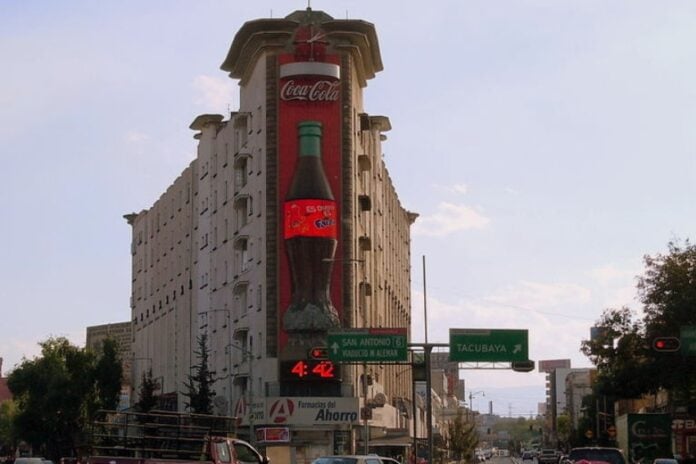
Edificio Ermita, one of the most distinctive of Mexico City's Art Deco constructions. (Matthew Rutledge/Wikimedia Commons)
As I was writing a piece onthe best vintage libraries in Mexico City, I couldn’t help but wander around Avenida Ámsterdam, in the heart of the Hipódromo neighborhood, to walk its elliptical, tree-lined pedestrian walking path: I wanted to catch a glimpse of the long windowpanes, heavy ironwork and organic forms mixed with geometric patterns characteristic of the most beautiful Art Deco buildings to be found in Mexico City.
As is the case in theRoma area, Mexico City’s Hipódromo neighborhood, carved out of the older La Condesa neighborhood, is one of the inheritors of the Art Deco architectural movement in Mexico City.
Some of the best examples of this design style still stand in Hipódromo, even after withstanding some of the most devastating earthquakes the capital has ever experienced. Here are just a few of the highlights.
Edificio Hipódromo
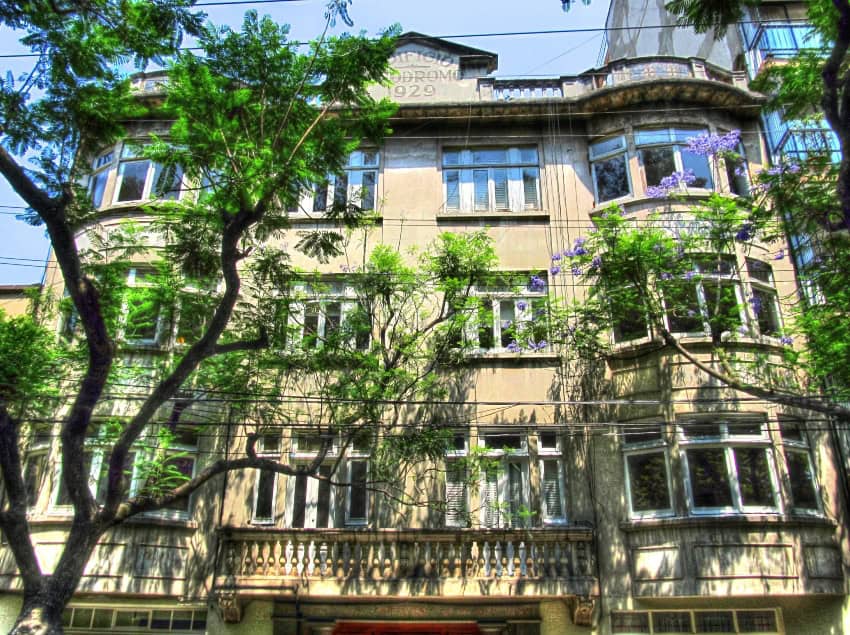
Edificio Hipódromo is an Art Deco landmark in Mexico City. (Octavio Alonso Maya/Wikimedia Commons)
The Hipódromo neighborhood still follows its original design: a racing track. Yes! Present-day Avenida Ámsterdam saw horses run for first place for over a decade, according to the Museo del Objeto’s (MODO) records.
Founded by the Mexican Jockey Club in 1910 as entertainment for the city’s elite, who preferred more European-style sporting events to the popular bullfighting events, the Hipódromo de la Condesa racetrack only lasted 15 years, ceasing to function in 1925. The area soon became purely residential, with Parque Mexico being built on the racetrack site in 1927 and residential lots popping up for sale around it in the years following.
This new neighborhood within Condesa retained its original name, however,
Hipódromo, now often still referred to by people as Hipódromo Condesa.
The Hipódromo Building on Avenida México, an apartment building constructed in 1929 as part of the change to a residential neighborhood, remains one of the most beautiful examples of Art Deco architecture in this area, featuring broad windowpanes, cantera stone balconies on the first floor, and a marble lobby.
Where: Avenida México 87, Hipódromo, Cuauhtémoc.
Edificio Tehuacán
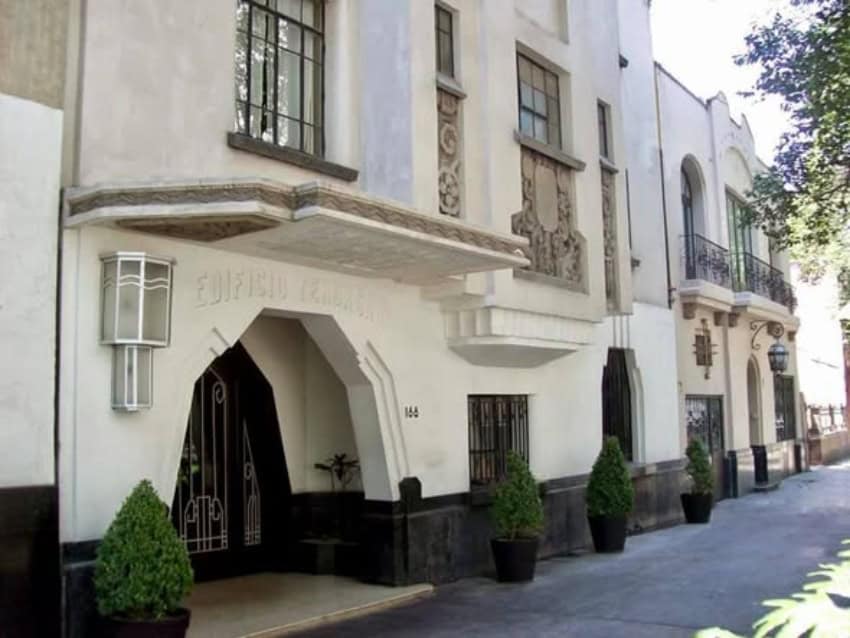
Edificio Tehuacán has now been repurposed as a hotel in Mexico City, but retains its Art Deco facade. (Facebook)
Built in 1937 by Mexican architect Ernesto Ignacio Buenrostro — to whom the neighborhood owes much of its visual identity — Edificio Tehuacán is one of Mexico City’s Art Deco jewels.
This building is probably as old as the neighborhood itself: Originally a 14-story apartment building, its facade features typical Art Deco-style geometric patterns. With its name written on its marquee, its main entrance is framed by two matching stylistic iron lamps of the period.
Today, Edificio Tehuacán is open to the public as the Hippodrome Hotel, where visitors can enjoy its world-class suites and terraces.
Where: Avenida México 188, Hipódromo, Cuauhtémoc.
Edificio San Martín
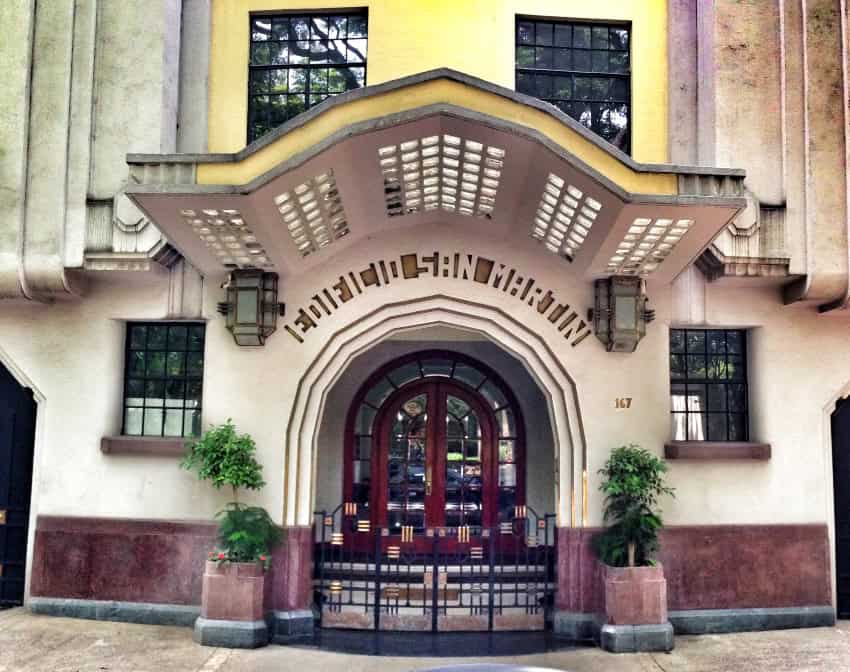
Originally built in 1931, Edificio San Martín still displays its perfect symmetry. (Keizers/Wikimedia Commons)
Also built by Ernesto Ignacio Buenrostro, the apartment building Edificio San Martín displays a seemingly perfect symmetry, which particularly stands out when you look at its stunning main entrance. With concrete reliefs and heavy ironwork on its exterior lamps, the original iron canopy still covers the main entrance.
Built in 1931, the building fell into disuse in the 1940s. It underwent extensive renovation and restoration in the modern era, finished in 1999. To date, it remains an apartment building, housingroughly 216 very lucky families.
Where: Avenida México 167, Hipódromo, Cuauhtémoc.
Plaza Popocatépetl
Plaza Popocatépetl and its fountain have been Art Deco classics in Mexico City since 1927. (Keizers/Wikimedia Commons)
Also known as “Glorieta Popocatépetl,” this plaza, built in 1927, is located on the northern curve of the old Hipódromo de la Condesa. Although this is not exactly a building, it certainly is one of the emblematic examples of Mexico City’s Art Deco movement.
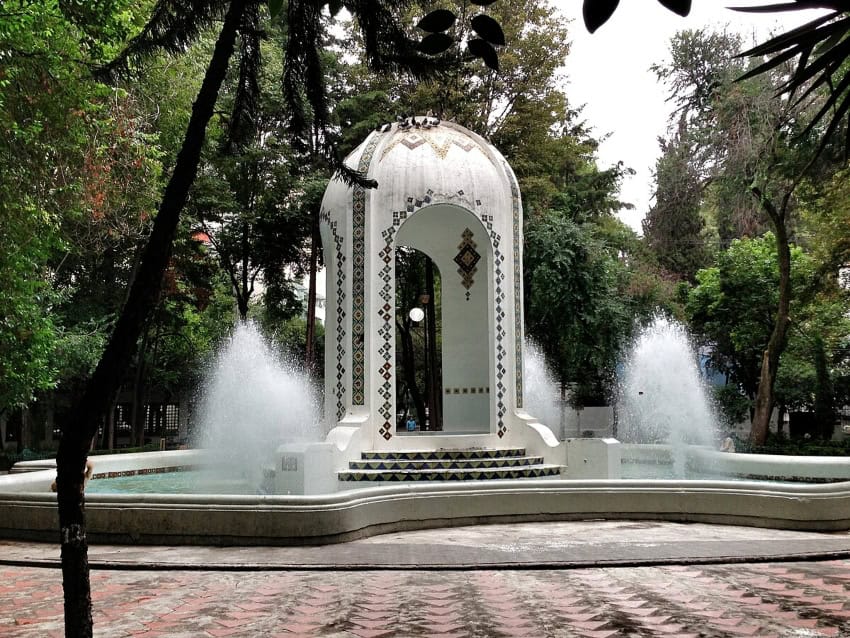
Originally designed as a fountain, passersby can enjoy it today as a tiny park, as it has been left dry for over a century, only coming alive with water on special occasions. Delightfully decorated with Talavera mosaics from Puebla, its centerpiece is also a testament to the late Symbolist movement in Mexico.
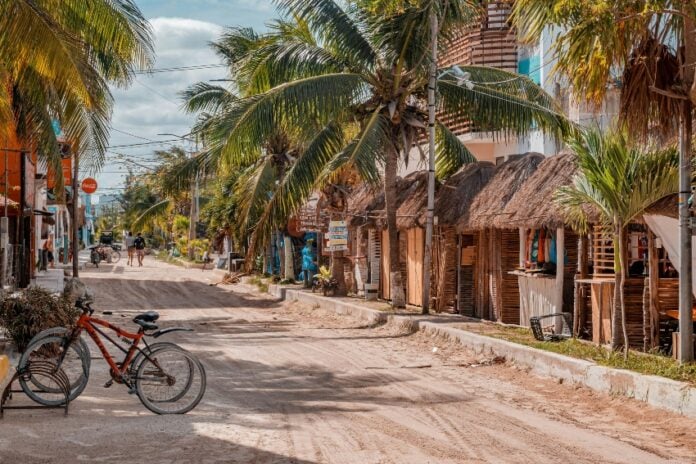
Holbox Island, on the northern coast of the Yucatán Peninsula, is a great place to visit. (Unsplash/The Free Birds)
There’s something really special about standing on land surrounded by water but covered in huge pyramids and natural, deep pools. Beyond the turquoise waters of the Caribbean and the Riviera Maya, the Yucatán Peninsula holds major archaeological sites, ancient cenotes and some of the greatest flavors in Mexico.
The name Yucatán reportedly comes from the encounter of two completely different worlds. When Spanish colonizers arrived in this part of the country, locals were stunned by the conquistadors’ language and said two things in response: “ma’anaatik ka tánn” (I don’t understand you) and “uh yu ka t’ann” (listen to how they speak) — both expressions in the Mayan language. Supposedly, the Spanish misunderstood that the Maya were telling them where they were, but as time went by, Yucatán became the name of the peninsula and one of Mexico’s states.
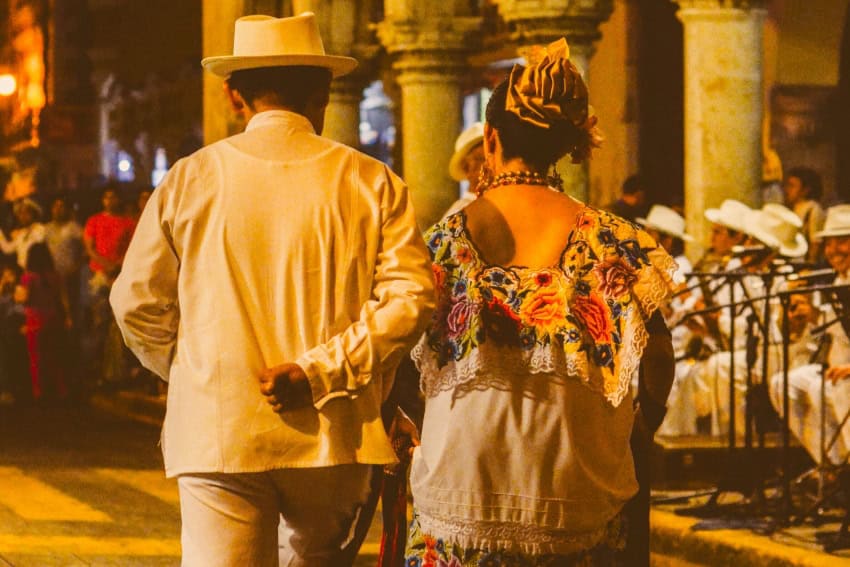
The name Yucatán came from the Mayan language, still spoken today by many residents of Mérida. (Unsplash/Matt Hanns Schroeter)
If you’re planning to stay more than a couple of days around Mérida, the capital of the state of Yucatán, the best idea is to rent a car to explore all the natural and human-made wonders the city and its surroundings have to offer.
Mérida
Among the most stunning Mexican destinations, Mérida is a city with low-rise buildings and high security ratings; it’s consistently listed as the safest city in Mexico. Whether you are a night owl or an early bird, Mérida will keep you safe so you can enjoy everything it brings to the table.
One of the stops that’s a must on your itinerary is the Mercado de Santa Ana, on Calle 47, right behind the park that gave the market its name. The food vendors at this community market offer a menu as broad as the crops that grow in the region. From traditional panuchos to colorful fruits, there’s something for every palate.
Once you’ve had breakfast, you can walk a few steps and find Paseo de Montejo, the Yucatecan “Champs-Élysées.”
Museums in Mérida
Although the “French fever” in Mexico is long gone, this corridor, named in honor of the Spanish conquistador Francisco de Montejo, features buildings such as Las Casas Gemelas, two luxurious mansions whose architectural plans even appeared in the French magazine La Construction Moderne, which highlighted their European style and design. Despite some changes being made, the interiors still resemble Parisian mansions, and they have turned into one of the most visited museums in the city.
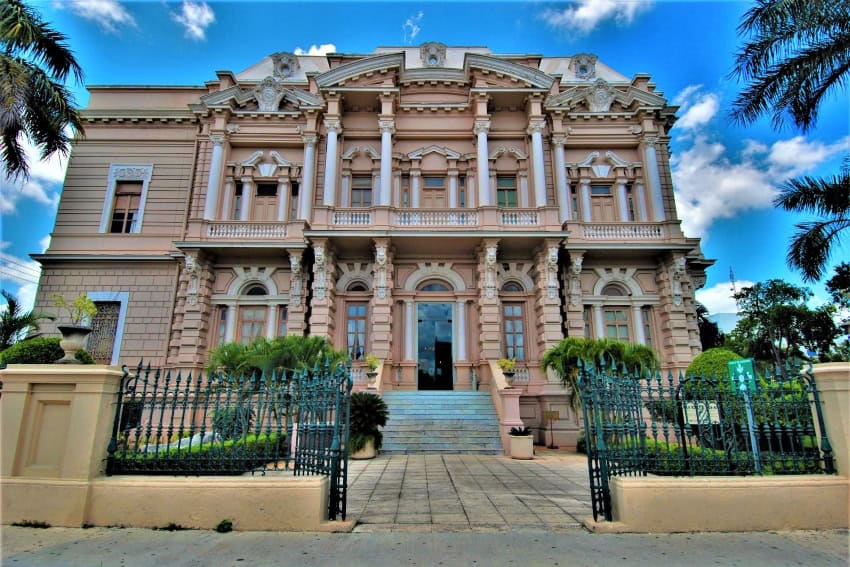
Not far from Las Casas Gemelas, the same architect built Palacio Cantón, a colonial palace that now houses the Museo Regional de Antropología. Entering the building feels contradictory because while the walls and ceilings scream colonialism, the rooms display different temporary exhibits related to Mexican culture, popular traditions and Mesoamerican archaeology. It no longer has a permanent collection, as its treasures were moved to the Gran Museo del Mundo Maya, a 15-minute drive away from Palacio Cantón, on the way to Puerto Progreso.
Palacio Cantón, a colonial palace that now houses an anthropology museum in Mérida. (INAH)
Even though this museum is located a bit far from the city center, the ride is worthwhile if you are a culture and history buff. The permanent collection holds 1,160 pieces from a wide swath of periods of Maya culture, including textiles, ceramics, jewelry and stelae.
Ice cream, dining and more
Back in the city center, enjoy a delicious sorbet at Sorbetería Colón, one of Mérida’s oldest ice cream shops. As you wait for night to fall, you can take a look at Fernando Castro Pacheco’s murals at the Palacio de Gobierno, which depict different stages of Mexican history and portray characters like Jacinto Canek, a Maya hero who rebelled against the landowners who exploited his people.
Before you leave, you must have dinner at the Museo de la Gastronomía Yucateca, a place to learn and eat at the same time. In every bite, you’ll get to know the ingredients that make this one of the best places to taste the peninsula’s cuisine. And, if you are a foodie, keep an eye on their social media to find out when you can witness the unearthing of the traditional cochinita pibil, a regional dish that’s cooked underground.
Merida’s ring of ancient cenotes
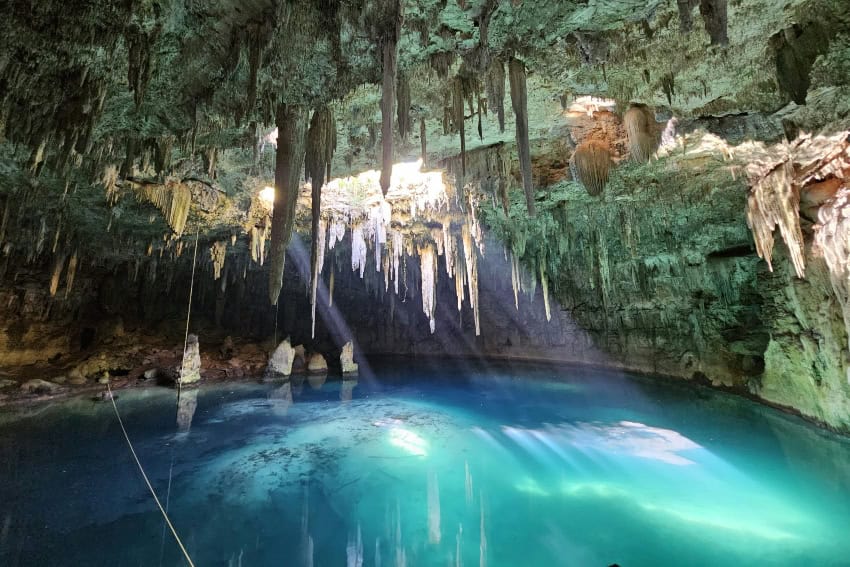
Before you leave the Yucatán peninsula, don’t miss out on seeing the pristine waters of a cenote. The Maya considered these natural underground pools a portal to the underworld, and it’s no wonder why: Cenotes — or sinkholes — are windows to the intricate water system that lies beneath the peninsula.
The formation of this ring of cenotes owes its existence to the same ancient asteroid that wiped out the dinosaurs. Its impact weakened the land around where it landed, leaving a lot of crumbling caves that became these amazing cenotes.
A fun fact: You can tell the age of a cenote by how open it is. The roof of the underground cave collapses with time, so as they age, they look less like a cave and more like a pond.
The Maya consider cenotes like this one portals to the underworld. (Unsplash/Marco Murakami)
One of the best options for visiting various cenotes in a day is heading to the town of Cuzamá. This place is known for its route of three cenotes, with each one offering a completely different experience. Instead of walking, you can travel the route in small mule-drawn wagons, enjoying the natural beauty along the way.
As you enter these deep natural pools, beware of the damage that visiting can bring to them and the ecosystem they support. Avoid using chemical products like sunscreen, makeup or perfume. You’ll be shocked by the wonders cenote water can do for your skin!
Celestún
Puerto Progreso is the closest beach to Mérida, but if you’re willing to drive a little bit further, Celestún is a perfect place to see the ocean, not just for its beautiful sunsets and delicious food but also for the protected mangrove reserve there at Playa Norte.
Although an opportunity to walk in the Caribbean sand should never be dismissed, the mangrove at Celestún will be the highlight of the visit. As you go into this wetland forest, you’ll see all the species living in this ecosystem — from herons to iguanas. But perhaps the main characters of this landscape are the bright-pink flamingos that enjoy the mangrove’s waters.
Izamal
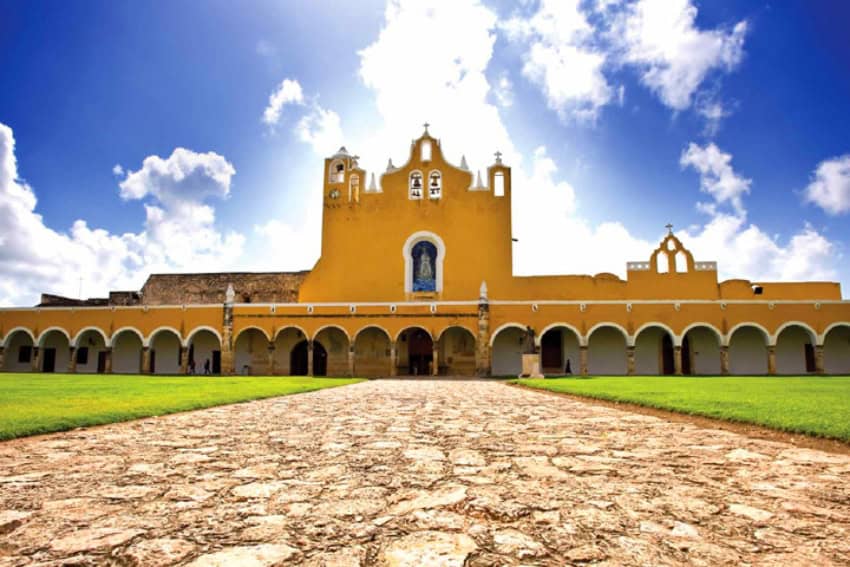
The community of Izamal is a beam of sunlight in the middle of Yucatán’s jungle. Even if you wanted to, it’s impossible to take your eyes off the yellow buildings that give the small town its nickname, “la ciudad amarilla.” It has also been called the “City of Three Cultures,” as it combines Mesoamerican constructions, colonial buildings and contemporary architecture.
A few blocks away from the town’s main square, you can find Kinich Kakmó, a huge architectural complex created by the local Maya between 400 to 700 A.D. This pyramid is one of the tallest Mesoamerican buildings in Mexico, and some interpretations of its name have suggested that it means “fire macaw with sun face,” referring to the unceasing sunlight that covers the town year-round.
This convent in Izamal is as sunny as the destination itself. (Gobierno de Estado de Yucatán)
After a long walk around town, you can make a stop at Kinich Izamal, a restaurant whose menu is full of local recipes. It has a wooden kitchen with a dedicated area for making tortillas from scratch and some of the most traditional dishes of the region.
A week isn’t enough
Whether you come for history, nature or food, a week in Yucatán will not be enough, so be careful: Once you taste the peninsula’s charm, you might find yourself planning your return trip before you’ve even left.
Lydia Leija is a linguist, journalist, and visual storyteller. She has directed three documentary films, and her audiovisual work has been featured in national and international media. She’s been part of National Geographic, Muy Interesante, and Cosmopolitan.
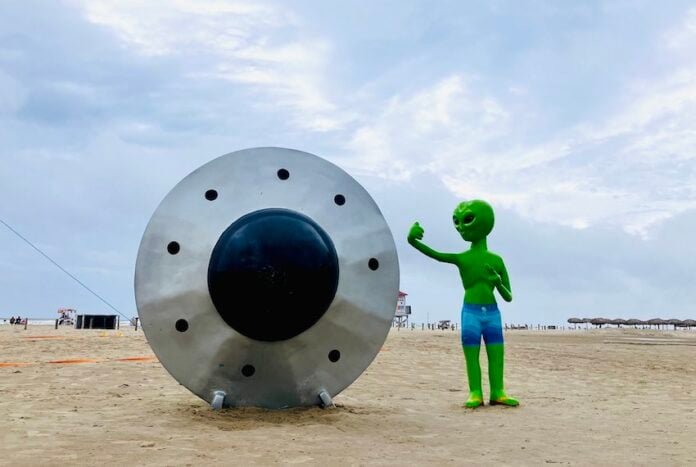
The state of Tamaulipas is already attracting thousands of UFO buffs for conferences, alien-themed festivals and sales of green alien hats, plush toys and T-shirts, along with UFO merchandise and photos.
(@PachitaRex/X)
Plans for a UFO museum are gaining traction in Tampico, Tamaulipas — a northeastern Mexican city on the Gulf of Mexico where alien-themed tourism has grown from a local curiosity into a craze.
Vendors in municipal markets and at Miramar Beach have for a while been reporting strong sales of green alien hats, plush toys and T-shirts, often outpacing traditional souvenirs tied to beach activities and local wildlife.
👽 Desde historias de avistamientos ovnis, musica de otro mundo, hasta lucha libre galáctica. Todo eso y más se vivió en el Marciano Fest 2025 en Ciudad Madero 🛸
Tourists from Mexico and abroad often leave with UFO merchandise and photos from spots associated with alleged sightings.
And some come to the area expressly in search of those things — such as the estimated 20,000 people who in late October attended Marciano Fest, a weeklong UFO- and extraterrestrial-themed festival that concluded with 947 people dressing up as aliens.
Meanwhile, researcher Nembra del Carmen Jiménez is reviving a project she first presented in 2012: to establish a UFO Museum in Tampico built around her archive of images and materials.
She has documented alleged spacecraft and mysterious spheres over Tampico and neighboring municipalities since the 1980s, along with objects she says show unusual electromagnetic behavior.
City officials say they are open to adding a UFO-focused venue; the tourism director has said authorities are willing to hear proposals and view potential exhibits, noting growing public interest in extraterrestrial themes.
Separately, private investors have proposed an alien-themed museum along the Cortadura Canal, as well as a fishing museum, as part of a broader push to redevelop port and customs areas for tourism.
The most recent Marciano Fest was centered at Playa Miramar in Ciudad Madero, which is part of the Tampico metropolitan area.
Moreover, the area is home to the Mexican UFO Reporting Center (CROM), a new digital platform that gathers cases, videos, photos and academic explanations “to provide certainty, understand the events, make the data available to experts and expand its reach beyond Tampico.”
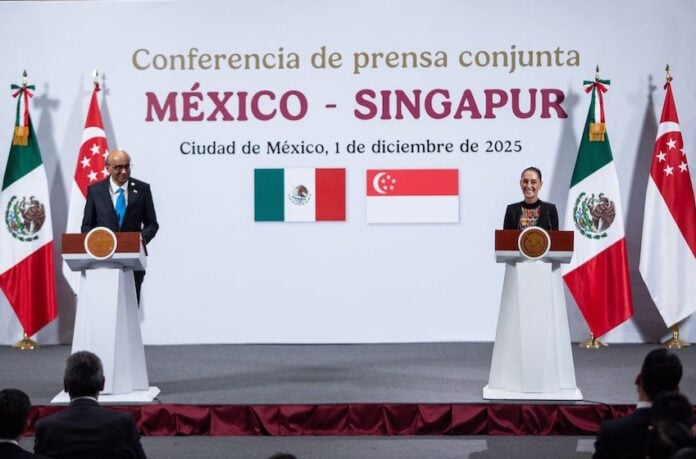
Mexican president Claudia Sheinbaum and Tharman Shanmugaratnam, president of Singapore, share the stage at the National Palace where it was announced that Singapore will have an embassy in Mexico, only its second in Latin America. (Andrea Murcia/Cuartoscuro)
The Republic of Singapore will open its first official embassy in Mexico in 2026, Singapore’s President Tharman Shanmugaratnam announced this week in a joint statement with Mexico.
Singapore’s resident embassy in Mexico will be only its second in Latin America, after its office in Brazil, which opened in 2012. Mexico established a resident embassy in Singapore in 1990.
Agradecemos la visita a México del presidente de Singapur, Tharman Shanmugaratnam (@Tharman_S). Hablamos de las grandes oportunidades de nuestra relación económica, comercial, cultural y académica.https://t.co/z5L2ZxFTzwpic.twitter.com/xS3k89VvDl
Shanmugaratnam made the announcement during a state visit to Mexico from Nov. 30 to Dec. 3 to commemorate the 50th anniversary of diplomatic relations between the nations.
President Claudia Sheinbaum and her Singaporean counterpart reaffirmed their commitment to sustaining the flow of trade and investment between Mexico and Singapore.
Trade and investment should be further strengthened with Mexico’s expected ratification of the Pacific Alliance-Singapore Free Trade Agreement, which was signed in January 2022. Neither Mexico nor Colombia has yet ratified the agreement, which came into effect in Chile and Peru in May this year.
At present, Mexico has a trade deficit with Singapore. In 2024, its imports from Singapore totalled US $2.2 billion, compared to $1.4 billion in Mexican exports, according to data from Mexico’s Economy Ministry.
Sheinbaum lauded the growing interest from Singaporean companies in investing in Mexico, especially in those sectors highlighted in her national development strategy, Plan México, such as technology and innovation, ports, and oil and gas.
The two leaders emphasized their interest in strengthening collaboration in the digital sphere and they aim to facilitate the potential exchange of knowledge and experiences.
During the visit, the two presidents witnessed the signing of two memoranda of understanding on cooperation on coral reef restoration and international cooperation for development.
President Shanmugaratnam also invited President Sheinbaum to conduct a state visit to Singapore at a mutually convenient time.
Sheinbaum said that the Ministry of Foreign Affairs was notified by the U.S. Department of State that "President Trump would be happy to welcome us" at this Friday's World Cup event in Washington, D.C. (Graciela López/Cuartoscuro)
Mexican workers who tuned into President Claudia Sheinbaum’s Wednesday morning press conference had cause for celebration.
Labor Minister Marath Bolaños announced that the minimum wage will increase by 13% in 2026 (read MND’s story here) and presented a proposal to reduce Mexico’s standard workweek to 40 hours by 2030 (read MND’s story here).
Later in the mañanera, Sheinbaum revealed that she is planning to travel to the U.S. this week, and spoke about why she selected three women as candidates to become Mexico’s next attorney general. On Wednesday afternoon, the Senate elected Ernestina Godoy as the attorney general.
Toward the end of her press conference, Sheinbaum commented on a song that has helped disseminate one of her key education priorities.
Sheinbaum to go to DC for World Cup draw, may have ‘brief meeting’ with Trump
Sheinbaum indicated that she will travel to Washington, D.C. for the 2026 FIFA World Cup draw this Friday, telling reporters that she believed she would go and that “everything seems to indicate that we’re going.”
U.S. President Donald Trump and Canadian Prime Minister Mark Carney will be at the draw, which will determine which countries will play each other in the group stage of the 48-team tournament that will be co-hosted by the United States, Mexico and Canada next June and July.
#EnLaMañanera | La presidenta Sheinbaum confirma que asistirá al sorteo del Mundial 2026, a realizarse en Washington D.C. el 5 de diciembre: “es buen momento para estar juntos, dando esta imagen de que América del Norte y nuestro compromiso comercial sigue adelante” pic.twitter.com/gZUyWUx1sv
Sheinbaum said that the Ministry of Foreign Affairs was notified by the U.S. Department of State that “President Trump would be happy to welcome us there.”
She also said that she spoke to FIFA president Giovanni Infantino on Tuesday. Infantino, a Swiss-born football administrator who met with Sheinbaum in Mexico City in August, will also be at the draw.
Sheinbaum said that the draw provides a good opportunity for the presidents of Mexico and the United States, and the prime minister of Canada, to get together and present “the image that North America and our trade agreement are moving forward.”
The USMCA free trade pact will undergo a formal review process in 2026.
Asked whether she would meet separately with Trump in Washington D.C., Sheinbaum said that hadn’t been determined. If a meeting were to take place, it would be “very brief,” she said.
Sheinbaum has not yet met face to face with Trump, although the two leaders have spoken on the telephone on numerous occasions.
Trade and security would likely be the main focuses of a bilateral meeting between the two presidents. The Trump administration has imposed tariffs on a range of imports from Mexico this year, and the Mexican government has been lobbying U.S. officials for months as it seeks to achieve better trading conditions with its largest trade partner.
Sheinbaum selects 3 women as candidates for attorney general role
“I already sent the short list [to the Senate], they’re three women,” she said.
The three women considered for the job were:
Ernestina Godoy, a former Mexico City attorney general and legal adviser to President Sheinbaum. Godoy was appointed interim attorney general after Gertz’s resignation.
Luz María Zarza Delgado, a former legal director at state oil company Pemex.
Maribel Bojorges Beltrán, a former anti-corruption prosecutor in México state.
Ernestina Godoy was formerly the attorney general of Mexico City and will now be the attorney general of the nation. (Cuartoscuro)
Asked why she only considered women to replace Gertz, Sheinbaum — Mexico’s first female president — responded with a succinct phrase that she commonly uses:
“It’s time for women.”
On Wednesday afternoon, Godoy — who is close to Sheinbaum — was elected attorney general by the Senate. Ninety-seven senators supported her appointment, while 19 opposed it and there were 11 invalid votes.
Sheinbaum remarks become viral song
A reporter noted that young people are planning a “perreo por la paz” (twerking for peace) gathering to coincide with the so-called pro-government “Marcha del Tigre” (Tiger March) in Mexico City this Saturday.
He said that those who attend the perreo event will dance to a viral song that includes Sheinbaum saying, “Primero hay que construir más preparatorias que queden cerca de la casa” (First we have to build more high schools close that are close to people’s homes).
The president promptly called for the song to be played.
“This is a girl from Jalisco,” she said, referring to the young woman who appears in the video clip for the song.
“At an event, I don’t even know if it was during the [presidential] campaign or as president, I said: ‘We have to build more high schools that are close to people’s homes.’ That’s exactly what I said at a rally, … I said: ‘We have to build more high schools that are close to people’s homes so that upon leaving middle school you go directly to high school,'” Sheinbaum said.
“… And this girl from Jalisco made this video and it went viral. Now I go places and young people sing the song to me,” she said.
“Why did it go viral? From my point of view [it was] obviously the creativity of this girl who made this video. But secondly, it’s because it’s a necessity,” Sheinbaum said, referring to the need to have high schools that are easily accessible to the nation’s young people.
By Mexico News Daily chief staff writer Peter Davies (peter.davies@mexiconewsdaily.com)
The monthly minimum wage in 2026 will rise to 9,582.47 pesos. (Hazel Cárdenas/Presidencia)
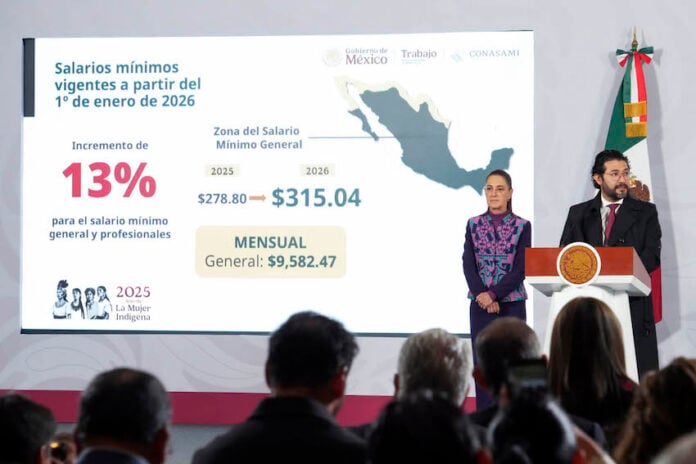
President Claudia Sheinbaum announced on Wednesday a 13% increase in Mexico’s minimum wage for 2026, the second increase since she became president in October 2024.
Sheinbaum has promised that by 2030, the basic wage will be enough to purchase 2.5 canastas básicas— a “basket” of the 24 most essential pantry items — per month.
The increase will lift the minimum wage from the current 278.8 pesos (US $15.30) per day to 315.04 pesos ($17.20) per day starting on Jan. 1, 2026. In the Northern Border Free Zone, the increase will be 5%, with an increase from 419.88 pesos ($23) to 440.87 pesos ($24.10) per day.
El 1.° de enero 2026 subirá el salario mínimo general de 278.80 a 315.04 pesos diarios; en la Zona Libre de la Frontera Norte sube cinco por ciento: de 419.88 a 440.87 pesos.
El segundo piso de la Cuarta Transformación continúa la economía moral y el humanismo mexicano. pic.twitter.com/AA9j75d9DU
“Very good news, an agreement between the business sector and the workers of Mexico,” Sheinbaum said during her Wednesday morning press conference.
The president said that the move had the support of all sectors involved, including the government, unions and employers.
The minimum salary for 61 professions, trades and specialized jobs listed by the government will increase at the same rate as the general minimum wage in their respective geographic areas.
The new general minimum wage calculation is based on the minimum wage in effect in 2025, plus an Independent Recovery Amount (MIR) of 17.01 pesos (90 cents), and a 6.5% adjustment. The MIR was first applied to set the minimum wage in 2017.
In addition to increasing the minimum wage, Sheinbaum’s government has introduced a wide range of welfare programs to help alleviate poverty nationwide.
In August, President Sheinbaum said that the social programs and increases to the minimum wage in recent years were the principal reasons why more than 13 million Mexicans were lifted out of poverty between 2018 and 2024. The U.N. Economic Commission for Latin America and the Caribbean (ECLAC) also credits minimum wage hikes for Mexico’s leadership in reducing poverty in the region.