Home Blog Page 1171

Michoacán rail blockade now over a month old; losses estimated at US $80mn

0
A delivery truck burns at a highway blockade in Michoacán
A delivery truck burns at a highway blockade in Michoacán as teachers continue to protest unpaid wages.

A teachers’ rail blockade in Michoacán has now been in place for more than a month, generating losses for industry to the tune of at least 1.6 billion pesos (US $80.1 million).

Members of the CNTE teachers union began blocking tracks in Caltzontzin, a community in the municipality of Uruapan, on July 31. They claim that the state government has failed to pay wages owed to some 28,000 teachers.

According to the Michoacán industry association AIEMAC, companies are losing a combined total of approximately 50 million pesos each day that the railway is blocked because they can’t get goods to or from the port of Lázaro Cárdenas.

Rail operator Kansas City Southern de México told the newspaper Reforma that eight trains loaded with 36,551 tonnes of goods destined for central and northern Mexico are currently stranded.

Many other freight train services have been canceled due to the long-running blockade, a form of protest that is commonly used by CNTE teachers in Michoacán.
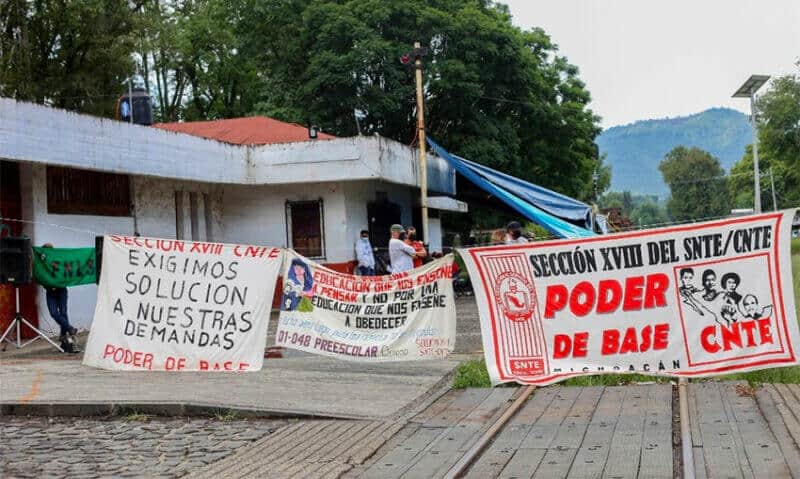
Teachers block tracks in Uruapan.

“They’re trains that should have been scheduled but haven’t been scheduled because we can’t operate, we can’t get through,” said Iker de Luisa, head of the Mexican Railway Association.

“The impact is great because fuel oil, chemicals, steel, cement, containers with general freight and supplies for the agricultural industry can’t be moved,” he said, adding that the state oil company Pemex is one of the affected firms.

Reforma reported that rail tracks in Michoacán have been blocked for a total of 52 days this year.

One group calling for federal intervention to clear the tracks is the Confederation of Industrial Chambers (Concamin), which made an appeal to President López Obrador earlier this week.

Blockades are affecting the transport of goods, certainty for investors, the supply of raw materials for thousands of companies and hundreds of Mexican workers who have been unable to work and see their jobs at risk, Concamin said in a statement.

The group said there have been 21 separate rail blockades in Michoacán this year, causing huge losses for industry and turning the state into an entity where the rule of law doesn’t exist. That affects Michoacán’s capacity to attract new investment and create jobs, Concamin said.

The organization said it had made an “energetic call” to the federal government and López Obrador to end the rail blockades.

“… Shipments by industries such as iron and steel, agro-industry, automotive and fuel are today paralyzed and companies are starting to look for alternative routes to complete the transport of goods and finished products,” Concamin said.

“These blockades have an impact on the entire supply chain for the North America region and thus impact on the trade relationship with the United States and Canada. Mexico should provide guarantees to its trade partners that it is willing to resolve issues that place the integration of supply chains at risk,” it said.

“It’s worrying that these kinds of actions are beginning to be normalized in the country. We can’t afford to continue [allowing] economic losses for Mexico and Mexicans to add up,” said Concamin transport commission president Felipe de Javier Peña Dueñas.

Without the intervention of authorities, the current blockade doesn’t appear likely to end any time soon. Local CNTE leader Benjamín Hernández said the Michoacán government has told the union that it is not in a position to pay the unpaid wages so the blockade will continue.

Union members have also used more aggressive tactics to demonstrate their discontent. The so-called “power base” faction of Section 18 of the dissident union hijacked at least two private delivery trucks on Wednesday and set them alight on the Uruapan-Pátzcuaro highway.

“Silvano, pay us now” was graffitied on at least one of the seized trucks. Silvano Aureoles is the governor of Michoacán.

CNTE teachers also blocked at least two other roads in Michoacán on Wednesday and held a protest march in Pátzcuaro. In addition, disgruntled teachers who say they are owed at least a month’s wages continued to block a state government building in Huetamo, a town about 200 kilometers south of the state capital Morelia.

With reports from Reforma, T21 and Revista Transportes y Turismo
Rights activists challenge AMLO’s assertion that human rights no longer violated

0
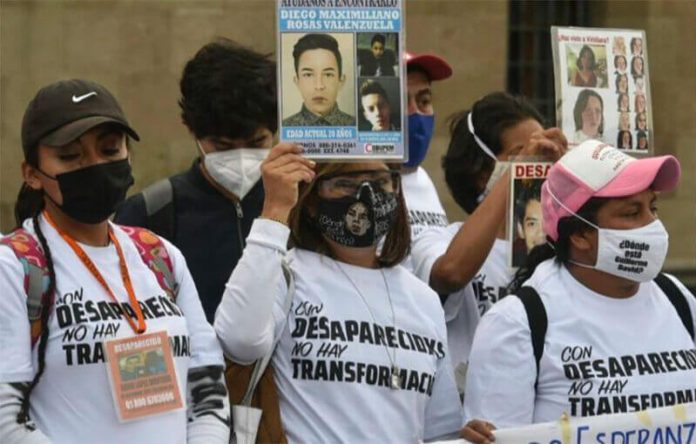
human rights activists.
'With disappearances there is no transformation,' read the t-shirts of human rights activists.

Human rights experts and activists have rejected President López Obrador’s claim that such rights are no longer violated in Mexico, asserting that migrants and journalists are among those who continue to suffer abuses.

The president made the assertion during his third annual report to the nation on Wednesday.

“The constitution is now respected, there is legality and democracy, and freedom and the right to dissent are guaranteed,” López Obrador said.

“There is complete transparency and the right to information [is upheld], nobody is censored, human rights are not violated, the government doesn’t repress the people and electoral fraud isn’t organized from federal power,” he said.

But two human rights experts who spoke with the newspaper El Universal and the Centro Prodh human rights organization described the president’s remarks on human rights as false.

“What he said about human rights matters in his third annual report doesn’t correspond with reality at all,” said Emilio Álvarez Icaza, an independent federal senator and former president of the Mexico City Human Rights Commission.

He said it was concerning that López Obrador appeared to be living in a “bubble” or “alternate reality.”

Álvarez told El Universal that Mexico’s human rights crisis has in fact significantly worsened since the president took office in December 2018.

“One example is the very shameful actions of his government against Central American and Haitian migrants,” he said.

The senator rejected López Obrador’s claim that the brutal violence perpetrated by two immigration agents against a migrant in Chiapas last Saturday was an exception rather than the rule.

The agents were suspended but Álvarez asserted that “there aren’t exemplary punishments for those who brutally attack migrants.”

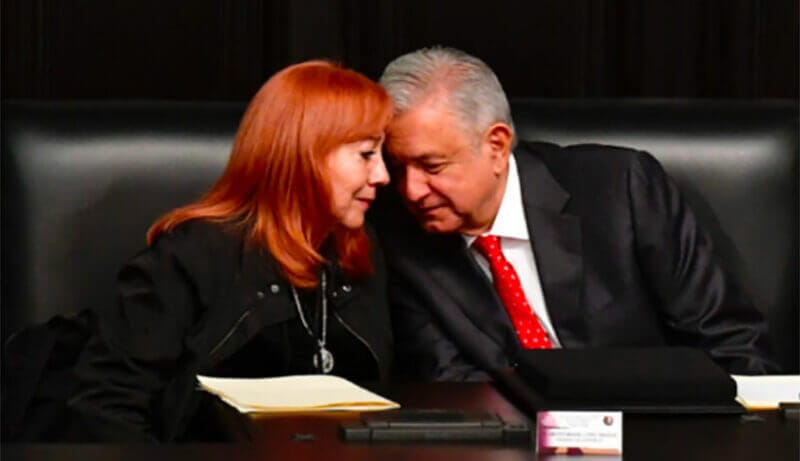
López Obrador and Human Rights Commission head Rosario Ibarra
López Obrador and Human Rights Commission head Rosario Ibarra, whose agency has been largely silent on rights issues.

The treatment of migrants is “so bad that the United States Border Patrol seems civilized compared to the National Guard and Mexican immigration agents,” he said.

Álvarez also noted that numerous journalists have been murdered during the term of the current government – 22 to date – and suggested that López Obrador is partially responsible for the high incidence of acts of aggression against individuals and companies in the Mexican media because he discredits and verbally attacks them on a daily basis.

He also highlighted that a record number of human rights defenders and environmental activists have been murdered in the almost three years since the president was sworn in.

“Forced disappearances are continuing in this six-year term of government,” Álvarez added. “In just three years of the current government there have been almost 23,000.”

The senator claimed that the government has turned its back on and betrayed victims of crime, asserting that the Commission for Attention to Victims has been “disassembled” and the National Search Commission “only does symbolic work.”

Women have been neglected because the government has cut off funding for shelters that offer refuge to victims of crime, Álvarez said.

José Perdomo Galicia, a law academic at La Salle University who specializes in human rights matters, also claimed that Mexico is facing a human rights crisis under López Obrador.

The National Human Rights Commission – which has been accused of covering up crimes against migrants including murder, torture, mass kidnappings and rape – has been effectively absent during the term of the current government, he said.

“In the current six-year term, we’re doing very badly on human rights,” Perdomo said. “… [We have] a country submerged in violence and insecurity with a militarized National Guard that attacks and detains migrants. I don’t believe the [human rights] reality is as pretty and smooth as President López Obrador says.”

The academic described López Obrador’s address as a presidential monologue devoid of self-criticism and containing statements that contradict the reality the country is facing.

For its part, Centro Prodh said bluntly that the president’s assertion that human rights are no longer violated in Mexico is “false.”

In a series of Twitter posts, the human rights organization provided a range of evidence to back up its claim.

It said the army, National Guard and municipal and state police have continued to unnecessarily use “lethal force” in states such as Quintana Roo, Guanajuato, Jalisco and Tamaulipas and that the “serious crisis of disappearances” endures with more than 90,000 missing persons, including over 20,000 who have disappeared since López Obrador took office.

“Recent events, such as those against migrants in Tapachula, provide proof that the [government’s] migration policy continues to be contrary to human rights,” Centro Prodh said.

The group also claimed that the government failed to fully comply with its obligation to consult with indigenous communities in a free and informed way prior to the execution of large-scale infrastructure projects such as the Maya Train, and described the increasing militarization of security and the empowerment of the military as alarming.

It charged that the federal Attorney General’s Office has failed to properly investigate and “reverse impunity” in a range of high-profile cases, including the disappearance of the 43 students in Guerrero in 2014, the army massacre the same year in Tlatlaya, México state, and the use of spyware against journalists, activists, politicians and others during the 2012-18 government led by former president Enrique Peña Nieto.

“In addition, the National Human Rights Commission is in open retreat,” Centro Prodh said. “Not recognizing the [human rights] reality and asserting that profound problems have already been resolved distracts from the tasks that must be undertaken.”

With reports from El Universal and Proceso 

Tourism ministers want incoming travelers to be screened for COVID-19

0
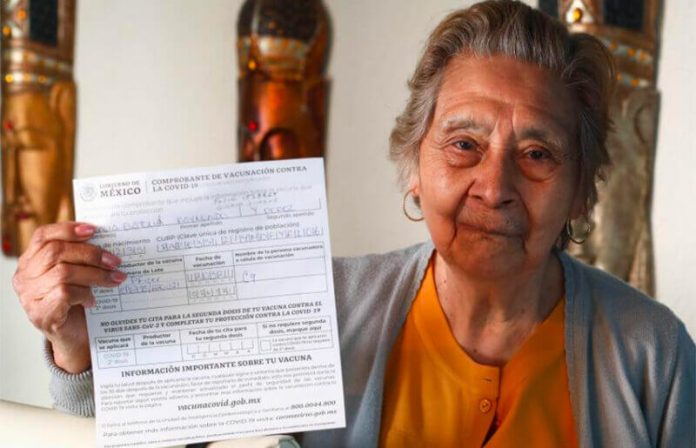
vaccination certificate
A Mexico City woman with her vaccination certificate. States would like them to be a requirement for inbound travelers.

State tourism ministers are going to press for international travelers to be screened for COVID-19.

Mexico’s association of tourism ministers will ask the federal government to implement a policy that requires incoming travelers to present a COVID-19 vaccination certificate or a negative test result.

Oaxaca Tourism Minister Juan Carlos Rivera Castellanos, who heads up the association, said the proposal will be taken to the Ministry of Foreign Affairs next week.

Mexico has never closed its air borders or required incoming travelers to go into mandatory quarantine. The absence of restrictions has been blamed for fueling coronavirus outbreaks in tourism hotspots such as Cancún and Los Cabos.

Rivera said in an interview that the proposal has the support of all state tourism ministers, who believe that the measure will help reduce the spread of the virus in Mexico.

If the federal government approves the proposal, a plan for its execution will have to be developed in conjunction with the Health Ministry, he said. One matter to consider, the minister said, is whether vaccinated travelers will be allowed into the country regardless of the COVID-19 vaccine they received.

Some countries are only allowing unrestricted entry to travelers vaccinated with approved vaccines. The European Union, for example, has only approved those made by Pfizer, Moderna, AstraZeneca and Johnson & Johnson.

In other COVID news:

• The Health Ministry reported 17,337 new cases on Wednesday, lifting Mexico’s accumulated tally to just under 3.37 million.

An additional 1,177 fatalities were reported, increasing the official death toll to 260,503. There are an estimated 107,520 active cases across the country, a decrease of 17% compared to a week ago.

• Almost 60,000 children and adolescents tested positive for COVID-19 in July and August, according to official data. The figure accounts for about 38% of cases detected among children since the start of the pandemic, attesting to the greater risk of infection posed by the highly contagious delta strain.

The National System for Protection of Children and Adolescents reported that 758 minors have lost their lives to COVID-19. Just over 54% were boys.

Deputy Health Minister Hugo López-Gatell said Tuesday that serious COVID-19 illness and death is not a major threat to children, highlighting that fatalities among minors are much more likely to be caused by accidents.

With reports from La Jornada and Reforma 

Expat couple’s Querétaro wine country tours give visitors time to explore

0
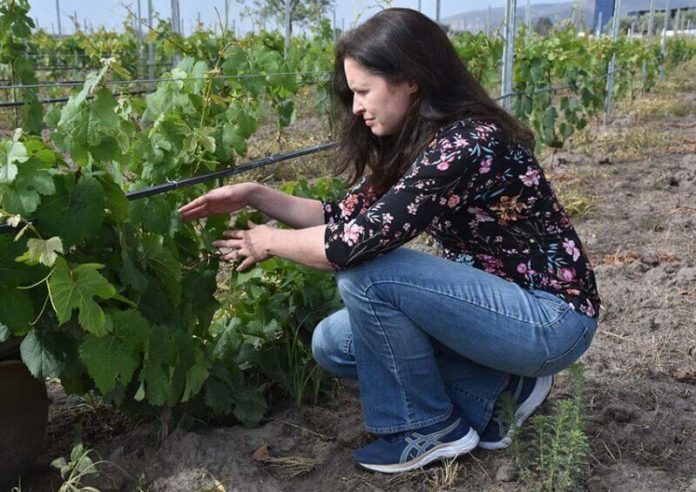
Tiffany Pence
Tiffany Pence checks the grapevines at a Querétaro vineyard. Photos by Joseph Sorrentino

“We wanted to get out of the States for years,” said Tom Pence as he drove down a highway in the state of Querétaro, where he and his wife Tiffany have made a business for themselves giving tours of the area’s vineyards. “Money started to not go as far as it used to.”

In addition, the wine store Pence owned in Orlando, Florida, was losing customers.

“As my customers got older, they were told to stop drinking wine for health reasons,” he explained. “Millennials … wanted to do everything online.”

Less business and a hankering for something different led Tom and Tiffany, who was a wine rep, to look for options. They’d traveled extensively for years and decided in 2018 to make the move to Mexico.

“We decided on Querétaro because of its high standard of living, low crime and its international airport,” Tom said. They also loved the weather, the opportunity to explore the plethora of nearby Pueblos Mágicos (Magical Towns) and its burgeoning wine industry.

Tom and Tiffany Pence
A desire for something different and a better quality of life led Tom and Tiffany Pence to move in 2018 to Mexico.

“We weren’t looking for a wine region to move to,” Tiffany said. “We were looking for something international, so the wine region was a bonus. Basically, we moved here to have a better quality of life.”

Things were going well for them until COVID-19 hit and their revenue streams dried up. “We had to start worrying about how to earn money,” Tom said.

With a combined total of 37 years of experience in the wine industry, it was fairly obvious what they needed to do. “We’re right in the middle of wine country,” he said. “We figured we’d start talking to the wineries.”

A number of companies offer tours of Querétaro’s Art, Wine and Cheese Route, and that seemed like a good way for them to get to know the area and its wineries. “When we first got here, we did take one of the tours,” said Tiffany, “and it was a very nice introductory tour. But we felt that, for us, we wanted to spend more time at certain parts of the tour than they were offering.”

Too much time was spent sitting around waiting for other vans filled with clients to arrive, and the tours were overly structured and moved along too quickly, Tom said. “We didn’t have enough time in the Pueblo Mágicos,” he said, “or any quality time or experience with any of the nicer-quality dairies or wineries.”

They discussed their experiences and decided to start a tour of their own, one that was different, more personalized.

“We wanted to do smaller tours where, even on the fly, if a client says I want to spend some more time here, fine, no problem,” Tom said. “We decided we’d go to smaller wineries, ones that we felt offer a higher quality product.”

And so Heart of Mexico Wine Tours was born.

“Our tours are highly customized, but we have also created wine tours that are already set,” Tiffany said. “We’ve also designed a Pueblo Mágico tour. We spend time in Bernal, have a nice lunch, go to Tesquiquipan [another Pueblo Mágico]. It’s more customized so you can actually spend time where you want.”

They also wanted their tours to be flexible. “If you fall in love with a Pueblo Mágico and you want to stay, you can,” Tom said. If reservations have been made to stop at a winery after that, Tiffany will call them and arrange for a later time.

In addition to the wineries, their tours make stops at some of Querétaro’s artisanal creameries.

Cava de Quesos Bocanegro opened eight years ago. In addition to selling typical Mexican cheeses like quesillo, manchego and queso fresco, they have begun introducing aged, stronger-flavored cheeses. One creamery I found particularly interesting was Queso La Biquette, a small producer that sells only goat cheeses. Their products range from the fresh, mild cheese I was used to, to an aged Tomme, which has a rich, earthy flavor I find particularly tasty.

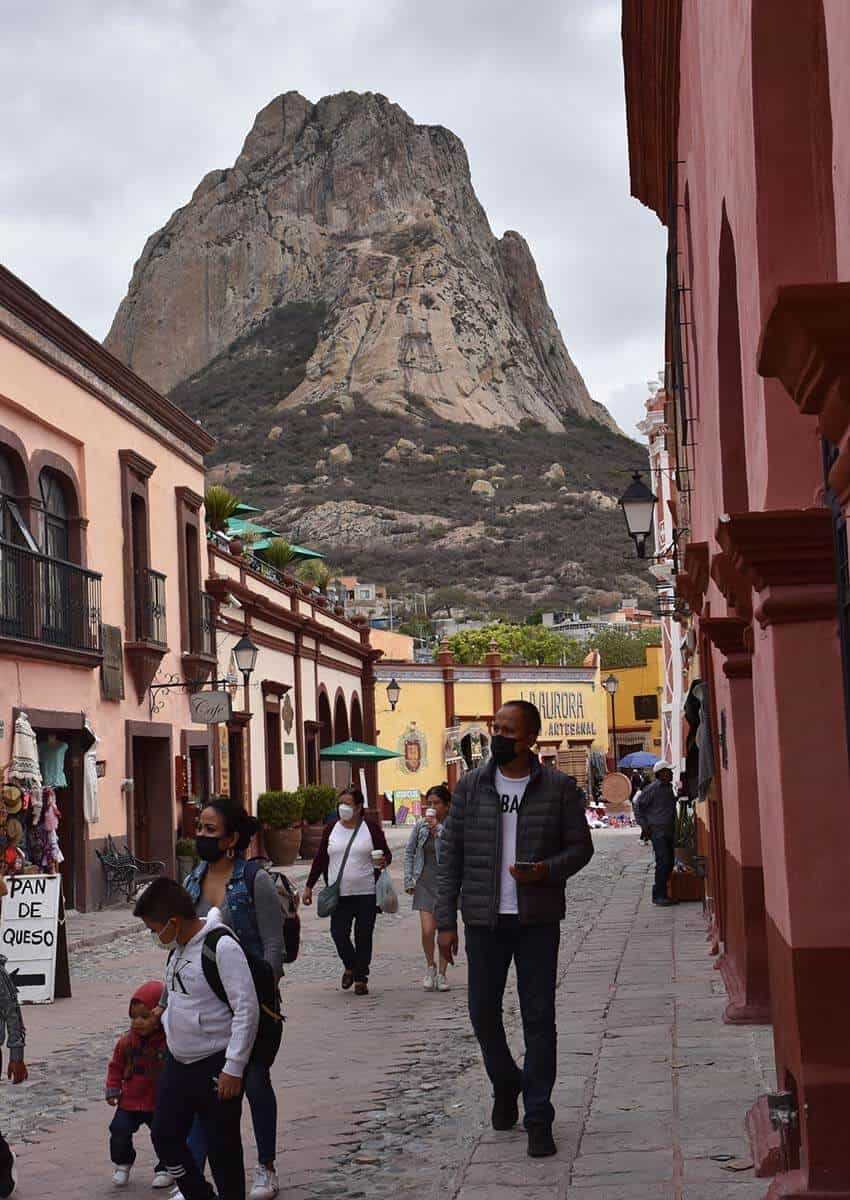
Bernal, Querétaro
The Pences have expanded their personalized tours to include tours of the many Magical Towns in the state of Querétaro, like the village of Bernal, seen here.

The Pences may offer in the future a tour that focuses solely on creameries.

All of the wineries and creameries offer tastings, and I highly recommend them. Sitting at a table on a balcony overlooking a vineyard on a summer afternoon or sitting at a table sampling some delicious cheeses isn’t a bad way to spend some time.

The Pences also have what they call cultural tours. “We can tour the local markets, we can buy food, come back to the house and cook with clients. We can teach them how to make masa (the corn flour dough that tortillas are made from) from scratch.”

Right now, they’re offering smaller tours and taking people around in their car. Four is the maximum number that can fit in the vehicle, although they’re able to rent a van if a larger group wants to book a tour.

Currently, the tours are all in English but, Tom said, “We want to have bilingual guides eventually.”

The Pences have extensive knowledge about wines and have come to know Querétaro well. During a tour, they’ll explain the challenges that wineries face here and how those challenges make the region’s wines exceptional.

They also know the owners of these wineries and creameries well. Accompanying them on a visit is like being among a group of old friends. And the couple knows, and loves, the Magical Towns that dot the state.

But beware: take a tour with them and you’ll start thinking about relocating to Querétaro.

In fact, they can help you with that as well.

• Tours may be booked at the Heart of Mexico Wine Tours website. Tiffany also has a travel blog, Epicurean Expats.

Joseph Sorrentino, a writer, photographer and author of the book San Gregorio Atlapulco: Cosmvisiones and of Stinky Island Tales: Some Stories from an Italian-American Childhood, is a regular contributor to Mexico News Daily. More examples of his photographs and links to other articles may be found at www.sorrentinophotography.com  He currently lives in Chipilo, Puebla.

President celebrates the halting of energy sector privatization as top achievement

0
lopez obrador
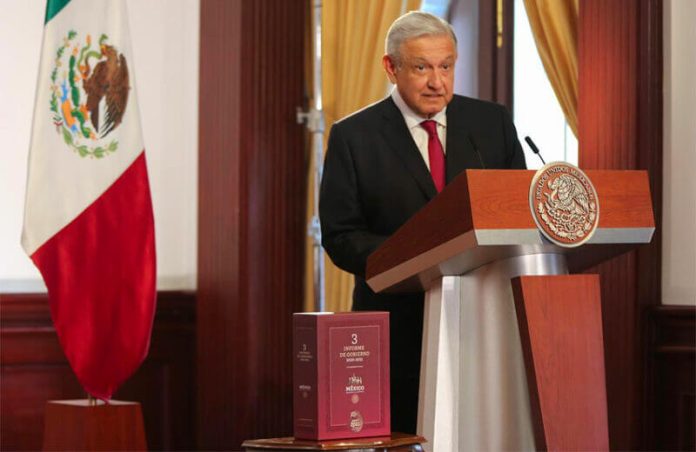
The president delivers his report to a small crowd of invited guests at the National Palace.

The federal government’s cessation of the “privatization trend” favored by previous administrations was hailed as a major achievement by President López Obrador in his third annual report to the nation on Wednesday.

In an almost hour-long address at the National Palace in Mexico City, the president also outlined a range of government achievements, many of which he previously highlighted in his first and second annual reports.

“The transformation [of Mexico] is in progress,” López Obrador declared at the start of his speech before asserting that there is a need to continue exposing “the great neoliberal farce” of previous governments and conceding that more needs to be done to “foster a change of mentality” among the nation’s citizens.

“… We’re banishing vices and dishonest practices in the management of government,” he said.

“A decisive measure was to stop the privatization trend in its tracks. We stopped delivering concessions to private companies in mines, water, hospitals, ports, railways, beaches, jails and public works. But the most important thing is that we’ve stopped privatization in the energy sector – in oil and electricity,” López Obrador said.

The government’s new energy policy aims to make the country self-sufficient in gasoline, he said, pointing to the modernization of Pemex’s six refineries, the construction of a new one on the Tabasco coast and the purchase of one in Texas.

“It’s worth remembering that a new refinery hasn’t been built in our country since the beginning of the neoliberal period 42 years ago. The last one [built] was that in Salina Cruz, Oaxaca, which began operating in 1979,” AMLO said.

With regard to the electricity sector, the president said he would send a constitutional reform proposal to Congress this month that will allow “grave damage” caused by privatization to be repaired.

“… While the market … was opened up … to national and especially foreign private companies with the delivery of subsidies, among other privileges, the Federal Electricity Commission plants were completely abandoned,” he said.

“Now we’re modernizing the hydroelectric plants to reduce the use of fuel oil and coal in the production of electricity. Energy produced with water is clean and cheap,” he said.

López Obrador also highlighted the government’s infrastructure construction agenda, noting that it’s building numerous projects including highways, dams, hospitals, state-owned banks, universities, schools, water treatment plants, bridges, railroads, airports, military barracks, libraries and stadiums. All the projects are being built without entering into partnerships with private companies and without taking on debt, he said.

López Obrador and his wife, Beatriz Gutiérrez
López Obrador and his wife, Beatriz Gutiérrez, before his address in the National Palace.

Just three large infrastructure projects – the new Mexico City airport, the Isthmus of Tehuantepec trade corridor and the Maya Train railroad – are creating more than 143,000 direct jobs and over 277,000 indirect ones, López Obrador said.

Among a wide range of other government initiatives, actions, achievements, policies and agreements exalted by the president were the new North American trade agreement; the creation of a northern border free zone; the national COVID-19 vaccination program; the reopening of schools 17 months after they closed at the onset of the pandemic; the stability of gasoline and electricity prices; welfare and social programs; the delivery of loans to small businesses during the pandemic; improved tax collection; the defense of human rights, including those of migrants; and the absence of conflict with foreign governments.

“There is social peace and governability in our country,” López Obrador said after asserting that stores haven’t been looted during the pandemic because “desperation due to hunger” has been avoided.

He also talked up the recovery of the Mexican economy, which the central bank predicts will grow 6.2% this year.

“The industrial sector is in clear recovery, so is retail, tourism, the restaurant sector, aviation and other services. Almost all forecasts agree that the economy will grow about 6% this year. Foreign investment in the first half [of 2021] was US $18.43 billion, 2.6% higher than in the same period of last year and the highest [level] in the history of the country,” AMLO said.

He touted “historic records” in a range of areas including remittances, foreign investment, the increase of the minimum wage, the stability of the peso, the value of the stock market and central bank reserves.

He noted that his government holds security cabinet meetings every weekday morning and declared that the “fruit of this joint work” is a reduction in the incidence of a range of crimes including fuel theft, homicides (still at near record levels), vehicle theft and kidnappings. However, the president conceded that femicide and extortion are among the offenses that have increased since he took office in December 2018.

It wouldn’t be an AMLO speech without a liberal dose of praise for the government’s corruption-fighting credentials – and, as expected, Wednesday’s address didn’t disappoint.

“From the first year of government we managed, among other measures, to eliminate the cancellation of taxes for large taxpayers [who were] beneficiaries of cronyism, and corruption was categorized in the constitution as a serious crime … in which the accused is not granted the possibility of obtaining bail,” the president said.

“… It’s demonstrable that not allowing corruption and impunity helps to free up funds for the wellbeing [of the Mexican people] and the development of the country. That’s the formula – don’t allow corruption, govern with austerity and don’t allow impunity: moralize the public life of Mexico.”

In the two years and nine months since taking office, the federal government has saved 1.4 trillion pesos (US $70 billion) due to austerity and the elimination of corruption in purchases and contracts, López Obrador said.

“… With this formula of combatting corruption and governing without luxuries or frivolities we’ve been able to meet our commitments to not put the country into debt, not raise taxes and not increase fuel prices,” he said.

Tercer Informe de Gobierno | Presidente AMLO

“And the most important thing [is that the government’s] new economic policy, built on morality, has allowed us to finance social programs for the wellbeing of our people, especially for the poorest and most marginalized.”

The president, a tireless orator and avid traveler, also highlighted that he has held 685 morning press conferences since he was sworn in and visited every state of the country, some as many as 28 times.

“… It’s going well,” López Obrador said, referring to his almost three-year-old government.

“And I’m sure that at the end of March next year the people are going to vote in favor of me continuing my constitutional period [as president] until the end of September 2024. Of course this is not the only thing I need to fulfill my mission: what nature, science and the Creator say is also needed, we can’t be arrogant,” he said.

“But if I’m lucky and I finish [my term], I believe that we’re going to complete the job of transforming [Mexico] and we won’t leave anything outstanding. When I’m handing over the presidential sash I will only say … mission accomplished! I’m going to [my ranch in] Palenque, I leave you my heart.”

Mexico News Daily 

7 police officers accused of kidnapping in Nuevo León

0
Part of the operation to arrest seven municipal police officers from San Pedro Garza García.
State police mount an operation to arrest seven municipal officers from the highly-ranked San Pedro police force.

Even Mexico’s best police force is not immune to corruption.

Nuevo León state police on Tuesday arrested seven municipal officers from San Pedro Garza García on charges they abducted a man and handed him over to an organized crime group.

The police force of San Pedro, an affluent municipality in the metropolitan area of Monterrey, ranked as the best among forces from 70 cities in a survey conducted by the national statistics agency Inegi and published in July.

The seven officers allegedly kidnapped a man from his home on July 22 and handed him over to a criminal organization that sought a 2 million peso (US $100,000) ransom from his family. The criminals failed to obtain the money because their victim escaped.

According to the Nuevo León Attorney General’s Office, the victim called police on July 22 to report criminal damage at his San Pedro home. Officers went to the address where they proceeded to abduct the man. They held him for several hours before handing him over to an unidentified group of armed men. The criminals held the victim hostage for three days before he managed to escape.

Collusion between municipal police and criminal groups is common in Mexico, and officers in San Pedro Garza García have previously been accused of the practice. In early 2019, Nuevo León state police assumed responsibility for policing duties in the wealthy municipality as officers faced control and confidence tests.

However, the Inegi survey suggested that the force had put past problems behind it. In addition, the Institute for Security and Democracy published a study in February that found that the San Pedro police force ranked first in the country for “civic justice.”

The think tank found that its officers are well paid – they receive net salaries of at least 21,074 pesos (US $1,050) a month, have a well-documented work methodology and are accountable to citizens.

With reports from El Universal 

Second station change moves Maya Train out of Mérida

0
Heavy equipment at work on the Maya Train line.

The route of the Maya Train has changed once again, the National Tourism Promotion Fund (Fonatur) said on Tuesday: the train will no longer run through Mérida, Yucatán, but rather will stop at a station in Teya, outside the city.

The change comes just a week after Fonatur director Rogelio Jiménez Pons said the cost of the project would be one third higher than originally anticipated, due to a range of changes. One of those changes moved a planned station in Campeche city out of the capital after encountering resistance from residents.

The Mérida route change was made after a government analysis showed that the change would save construction time. The decision will “avoid problems related to construction and mobility within the city,” Fonatur said, adding that given the 2024 project completion goal, time and resources must be used efficiently.

Some Mérida residents celebrated the announcement that the station would be built outside the city, rather than at its original planned location in the area of Mérida known as La Plancha.

“It’s a victory for the neighbors. It shows that when people unite their voices, they can propose something good for the city, the state … It makes me very happy that all the work we did … has had a good outcome,” said Félix Rubio Villanueva, a member of the collective Gran Parque La Plancha. He said residents and faculty of the Autonomous University of Yucatán were among those who worked to keep the station out of Mérida.

Despite the rerouting, authorities said a future station within the city is not out of the question.

With reports from El Universal, Proceso and La Jornada

Mexican woman gets her UK neighbors dancing in the street

0
Morales, center, introduces her neighbors to some catchy Mexican tunes.

Some Brits have taken a liking to dancing in the street to Mexican rhythms, inspired by a Mexican Zumba instructor.

A woman from Monterrey, Nuevo León, has achieved online fame after posting videos of her lockdown dance classes with her neighbors in Manchester, England.

While living with her English husband-to-be in the British city in the first half of 2020, Tania Morales got her neighbors dancing by teaching them moves to such Mexican classics as La Chona, a song by the norteña band Los Tucanes de Tijuana, and La Vaca, a merengue classic.

She recently posted videos of the socially-distanced classes – held in the street of the Manchester neighborhood where she was living – to her TikTok account and several have gone viral. One showing Morales teaching Mancunians dance moves to La Vaca had 1.3 million views at noon on Wednesday while one featuring La Chona had more than 700,000 views.

The regia, as female natives of Monterrey are known, explained in another TikTok video how she came to give classes to her neighbors in Manchester.

Mexicana pone a ingleses a bailar La Chona

“My husband is English and last year, at the beginning of 2020, when he wasn’t yet my husband … I traveled to England and the plan was to be there for two weeks,” Morales said.

But the coronavirus pandemic started two days after she arrived and she ended up staying in Manchester for six months.

Morales explained that her mother-in-law likes to organize neighborhood events and proposed that she teach a Zumba class, a fitness program for which she is a certified instructor.

“My mother-in-law said to me: ‘Why we don’t we offer a Zumba class because everyone’s shut away,’” she said.

“… I don’t have to be asked to dance twice, do I? So every Sunday during the entire pandemic I gave Zumba classes. Obviously I put on La Chona, I put on La Bamba, I put everything on: salsa, merengue, bachata, even reggaeton,” Morales said. “… The truth is it was a very nice experience.”

Mexico News Daily 

Planeload of 175 Afghan refugees arrives in Mexico City

0
Afghans arrive Tuesday at the Mexico City airport.

A plane carrying 175 Afghans, including journalists, activists and their families, arrived in Mexico Tuesday night, the Ministry of Foreign Affairs said.

The plane, which was one of the last to leave Kabul before the withdrawal of American troops, brought the fourth group of Afghan civilians granted entry into Mexico on humanitarian grounds. In addition to journalists and activists, 75 children were on the flight.

An anonymous source told Reuters that the group included journalists from the Afghan news outlets TOLO TV and Arman FM radio. The social media company Facebook also provided support for the airlift of Afghan journalists to Mexico, Reuters reported.

Last week, a womens’ robotics team and other journalists were among the Afghan refugees who found safe haven in Mexico, after New York Times staff contacted Foreign Minister Marcelo Ebrard, looking for a place to accept Afghan journalists and others.

The flight that carried refugees to Mexico City on Tuesday was the first time Egypt Air had flown to Mexico. The Foreign Ministry said the airlift was coordinated with help from the Mexican embassies in Iran, United Arab Emirates and Egypt, as well as the Egyptian government. Travel costs and accommodations for the refugees are being covered by private donors and nonprofits.

More Afghans are expected to arrive in Mexico in the coming days, the Foreign Ministry said.

With reports from Reuters

Mexico City Metro’s Line 12 repairs expected to take a year to complete

0
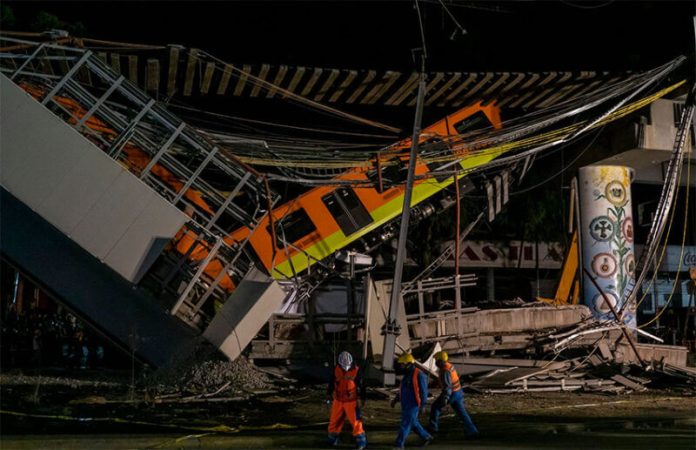
Firefighters and Civil Protection personnel work at the site of the Mexico City metro accident in May.
Firefighters and Civil Protection personnel work at the site of the Mexico City Metro accident in May.

Repairs to Line 12 of the Mexico City Metro system, where an accident in May claimed the lives of 26 people, will take a year, the city government said Tuesday.

On the advice of the government’s Technical Advisory Committee, a range of repairs will be undertaken.

The entire elevated section of the line will be reinforced with metal beams while the part that collapsed – causing a train to plunge toward a busy road below –  will be completely rebuilt.

The underground section of the line, the Metro system’s newest, will also undergo repairs including the replacement of some sections of track and an overhaul of the drainage system. Tracks along the entire line will be re-leveled, all electrical infrastructure will be rehabilitated and wooden sleepers will be replaced by concrete ones, among other repair projects.

Two companies involved in the construction of the so-called Golden Line, which opened in 2012, will complete the repairs and cover their costs. Carso Infrastructure and Construction, owned by billionaire businessman Carlos Slim, will complete the work on the elevated section of the line, while Ingenieros Civiles Asociados will take charge of the subterranean stretch.

The total cost of the repairs and the plan that will guide them will be announced next week. Mexico City Mayor Claudia Sheinbaum said Tuesday that the government would only pay for repairs and maintenance work that was scheduled before the May 3 disaster occurred.

The entirety of the line, which runs across southern Mexico City from Mixcoac in the west to Tláhuac in the east, “will be safe and in a better condition than when we received it,” said Metro director Guillermo Calderón, who took charge of the system eight weeks after the accident occurred.

Sheinbaum said the repair work will begin as soon as possible. “… The topographic survey and a lot of other studies will begin this week,” she said.

President López Obrador said in late June that Line 12 would reopen within a year, but according to the Mexico City government’s timeline that won’t happen until late August 2022.

Sheinbaum said there was some possibility that the underground section of the line would begin operations before the elevated stretch, but noted that the proposition was unlikely because the line’s maintenance workshop is in Tláhuac.

“We would have to look for another place for maintenance; that’s why it’s important that both [sections] open at the same time,” she said.

Line 12, which serves mainly working class neighborhoods in the capital’s southeast, was built while Foreign Minister Marcelo Ebrard was mayor of Mexico City. It suffered some structural damage when a powerful earthquake struck the capital in September 2017.

Ebrard, who has announced he will seek to run for president in 2024, has rejected claims that the project was rushed to ensure that it was completed before his term as mayor ended in 2012.

He suggested in June that the May 3 crash could be linked to maintenance, asserting that it was impossible to know whether his successor as mayor, Senator Miguel Ángel Mancera, “conducted all of the maintenance work required in the event of earthquakes of a certain magnitude.”

With reports from El Universal and El País