The new methodology is expected to boost transparency and make it clearer for issuers, structurers, agents and advisers to understand the main factors used to establish each evaluation. (Shutterstock)
The S&P ratings firm announced Monday that it will be fully implementing its national scale rating methodology in Mexico by basing how it assigns creditworthiness mostly on factors within the country.
While S&P has been assigning ratings in Mexico for over 30 years, the adoption of new tools will help improve its ratings by gathering a more accurate understanding of the current conditions of the unique Mexican credit environment.
“What we are doing is launching methodologies adapted to the reality of the national market,” S&P Global Ratings for Latin America’s commercial leader, María Pérez Cavallazzi, said in an interview.
“The goal is to open opportunities for new companies to obtain ratings and, thereby, strengthen the country’s competitiveness.”
The new approach will use localized criteria, including national regulations and the specific dynamics of the Mexican market. It is expected to boost transparency and make it clearer for issuers, structurers, agents and advisers to understand the main factors used to establish each evaluation.
Using the name S&P National Ratings, the company’s strategy for Latin America — which includes Mexico, Brazil, Argentina and Uruguay — is to establish independent criteria for each country, which will help reduce dependence on global factors that do not necessarily reflect the reality of the domestic market.
Research will be conducted by local analytical teams with a high understanding of each country’s economic context.
“This allows us to more accurately reflect the conditions in Mexico and adapt to changes without compromising the highest international standards,” Pérez said.
S&P National Ratings actualiza sus metodologías en México 🇲🇽
Con más de 30 años de presencia, la firma busca reflejar con mayor fidelidad el entorno crediticio local y abrir oportunidades para nuevas empresas.#SPGlobalRatings#México#MercadoFinanciero#Innovación…
An important feature of the national scale rating methodology is that its findings are not transferable. What is a factor in Argentina is not necessarily a factor in Mexico, and vice versa.
Mexico keeps BBB and BBB+ ratings
On Sept. 8, S&P Global Ratings announced it would be maintaining its “BBB” long-term foreign currency and “BBB+” long-term local currency sovereign credit ratings on Mexico, stating that the outlook remains stable.
S&P expects Mexico’s public finances to stabilize this year despite low economic growth, following several years of prudent monetary policy and growing domestic capital markets.
The Sheinbaum administration is expected to be pragmatic as it manages disputes between Mexico and the United States on trade, immigration and other matters to sustain economic stability, said S&P.
The firm said that under the downside scenario, failure to reduce fiscal deficits fast enough, weaker public finances, and the risk of further extraordinary support to the state-owned oil company Petroleos Mexicanos and the Federal Electricity Commission could lead to a downgrade in the next two years.
Under the upside scenario, S&P could raise Mexico’s rating if effective political and economic management increases investment and raises Mexico’s low rate of per capita economic growth.
Through its TecSalud health system, Tec de Monterrey (officially the Monterrey Institute of Technology and Higher Education) will be working with the University of Oviedo in Oviedo, Spain, and the Fernández-Vega University Institute (IUFV). (Tec de Monterrey)
Tec de Monterrey, one of Mexico’s top universities, has joined forces with two prominent Spanish academic institutions to create a binational medical center focused on ophthalmology research and eye health in both countries.
Through its TecSalud health system, Tec de Monterrey (officially the Monterrey Institute of Technology and Higher Education) will be working with the University of Oviedo in Oviedo, Spain, and the Fernández-Vega University Institute (IUFV), a universally admired center of ophthalmological research, teaching and treatment, also in Oviedo, where the center’s operations will take place.
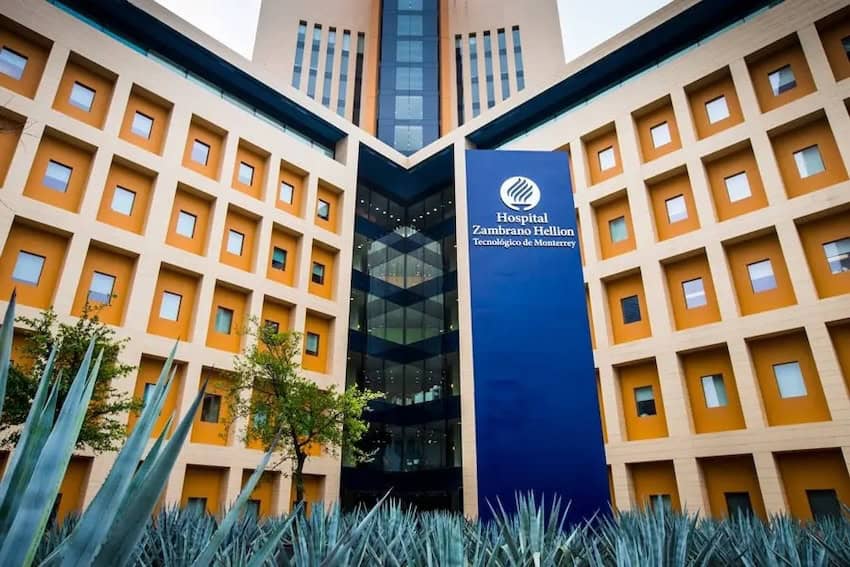
The Zambrano Hellion Hospital is part of Tec de Monterrey’s extensive TecSalud system that represents the university in the new Spain-Mexico ophthalmology project. (Tec de Monterrey)
The center was promoted by José Antonio Fernández Carbajal, executive chairman and CEO of FEMSA, Mexico’s (and Latin America’s) largest bottler.
“The support of José Antonio Fernández Carbajal and his wife, Eva Garza, reflects their firm commitment to science, research and their Asturian roots,” the head of the Fernández-Vega University Institute, Professor Luis Fernández-Vega, said.
According to the agreement, the center will develop high-impact international projects in ophthalmology and related areas of the health sciences. Furthermore, it lays the groundwork for collaboration in the areas of medical training, biomedical research and knowledge transfer between the two countries.
“We want the medical innovation and research center to be an institution of excellence in knowledge, in the generation of new ideas which translate into an improvement in visual health and in the quality of life of thousands of people in Spain and Mexico,” Fernández said.
Under the motto “where research becomes health,” the new collaborative project will be developed along three main lines: academic exchange, joint research and entrepreneurship acceleration.
The first will promote scholarship and training programs for students and healthcare professionals in Mexico and Spain, in collaboration with the University of Oviedo. The second will foster joint research projects. The third, the Business Accelerator Project, will promote and consolidate science and technology-based companies.
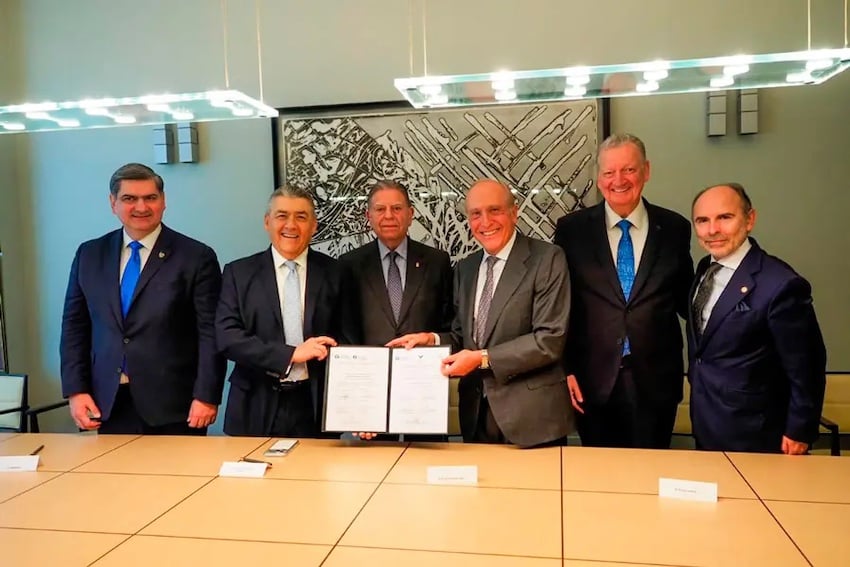
David Garza (far left), executive president of Tec de Monterrey, José Antonio Fernández Carbajal (second from left), CEO of FEMSA, and Ricardo Saldívar (second from right), board president of Tec de Monterrey, help display the recently forged binational agreement to improve the eye health of the people of Mexico and Spain. (Instituto Oftalmológico Fernández-Vega)
The Fernández-Vega Ophthalmological Institute was founded in 1886 and treats 100,000 patients annually for eye problems. It is dedicated to teaching ophthalmology and vision sciences, offering various postgraduate programs.
Meanwhile, TecSalud focuses on medical care, research, innovation and health education in Mexico. Founded in 1969, it comprises the School of Medicine and Health Sciences, the TecSalud Foundation and the San José and Zambrano Hellion hospitals, as well as specialty institutes and affiliated centers.
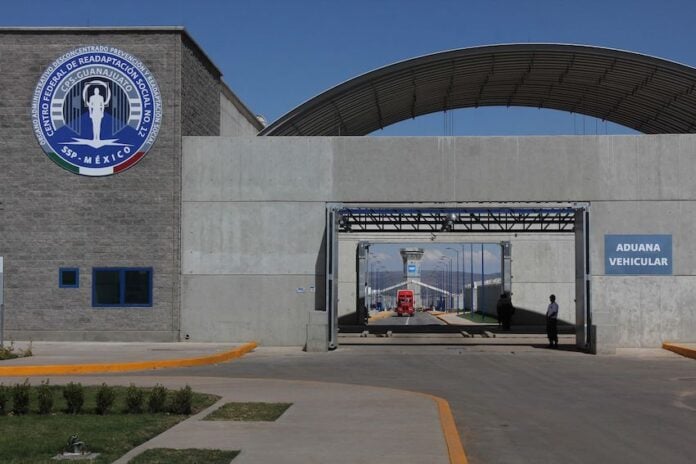
The security minister said that in the first quarter of 2026, the cell phone signals at 14 federal prisons and the 13 Mexico City prisons will be blocked. (Saúl López/Cuartoscuro)
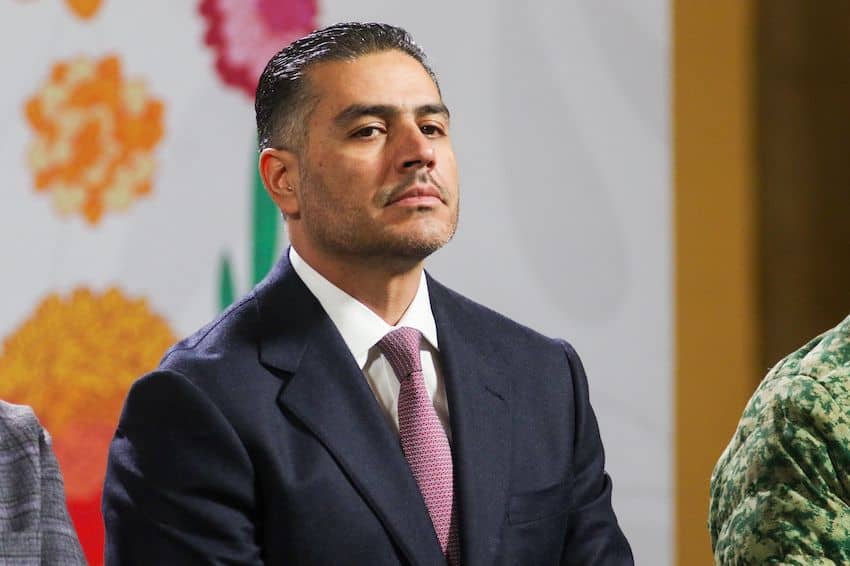
Extortion attempts over the telephone commonly originate in Mexican prisons, Security Minister Omar García Harfuch noted on Tuesday.
Speaking at President Claudia Sheinbaum’s morning press conference, García Harfuch reported that 56% of the “telephone lines” that were used to make extortion attempts in recent months, and which were reported to the federal government via its 089 crime hotline, were located in 12 prisons.
García Harfuch also said on Tuesday that 33% of the almost 2,400 numbers known to have been used in recent extortion attempts have been “blocked.” (Victoria Valtierra/Cuartoscuro)
“To prevent this crime from being committed inside prisons and to protect citizens, joint intelligence actions, signal blocking, technological inspections, and supervision operations have been implemented,” he said.
“For this purpose, signal jammers, advanced closed-circuit systems, motion sensors, security scanners, and technology are being installed in federal penitentiaries,” García Harfuch added.
The security minister said that 33% of the almost 2,400 numbers known to have been used in recent extortion attempts have been “blocked,” including by removing or changing antennas at two prisons in Tamaulipas, and by implementing a “total block” on “3G and 4G services” in Santa Martha Acatitla, a Mexico City neighborhood where men’s and women’s prisons are located.
“In the first quarter of 2026, the [cell phone signals at] 14 federal prisons and the 13 Mexico City prisons will be blocked,” García Harfuch said.
He also said that since the national strategy against extortion began in July, federal authorities have carried out “revisions in the 275 penitentiary centers” across Mexico.
“Modems, telephones, chips, drugs and weapons have been seized in these revisions,” García Harfuch said.
The use of mobile phones by prisoners is supposed to be banned, but enforcement of the law is lax in many cases.
Among the ways criminals seek to extort money is by telling innocent citizens over the telephone that one of their family members has been kidnapped.
“This type of [extortion] call is the most common and the most aggressive, as it threatens direct violence,” wrote academic José Isabel García Requenes in a paper titled “Extortion in Mexico.”
“The criminal indicates that he has kidnapped a family member or close person and threatens to kill or harm them. In some cases, the voice of the alleged abductee can even be imitated through a recording. … Large amounts of money are asked for and a payment period is imposed,” wrote García, an academic at the Autonomous University of Zacatecas.
Government has received more than 80,000 reports of extortion since July
García Harfuch said that the government, via its 089 hotline, has received 83,800 calls from people reporting extortion since the national anti-extortion strategy was launched in July.
He said that 8,682 of those calls — “in other words 10% of the total” — related to acts of extortion that were successfully committed.
Those reports were referred to state-based prosecutors’ offices, García Harfuch said.
“We appreciate the public’s trust in making these reports and contributing to numerous investigations that have allowed us to apprehend those responsible for this crime, and to block the [telephone] numbers [they used] almost immediately,” he said.
García Harfuch said that between July 6 and Nov. 3, a total of 478 people were arrested across 22 states on charges of extortion.
Reported cases of extortion have declined in recent months
Earlier in Sheinbaum’s press conference, the head of the National Public Security System, Marcela Figueroa Franco, reported that there were 27.45 reported acts of extortion in October, a 14% decline compared to July, when the national anti-extortion strategy began.
However, the vast majority of acts of extortion and attempted extortion are not reported, mainly due to fear of reprisal. According to Francisco Rivas, general director of the National Citizens’ Observatory, more than 99% of acts of extortion committed in Mexico are not reported to authorities.
The Olmeca, or Dos Bocas, refinery produced 270,000 barrels of gasoline per day in October, according to Energy Minister Luz Elena González, after producing 195,000 per day in September, making for two straight strong months. (@RefineriaDosBoc/X)
Energy Minister Luz Elena González said the new Olmeca refinery in the state of Tabasco produced 270,000 barrels of gasoline per day last month, making it the most productive refinery in the country.
If that still unofficial October figure is borne out when Pemex releases official results for October, it would mark the second straight strong month for Olmeca, more commonly known as Dos Bocas, after a slump in July and August.
Energy Minister Luz Elena González (left) prepares to address Congress last week, where she revealed an encouraging preliminary figure for Dos Bocas’s production in October. (Cuartoscuro)
Pemex’s official September data indicated that Olmeca processed just under 195,000 barrels of crude oil per day that month, an 87.5% increase over August, and 20,000 barrels more than its top production level set in June, but still second in production to the Miguel Hidalgo refinery in Tula in the state of Hidalgo.
Speaking to Congress as part of the government’s annual State of the Nation hearings last week, González defended the controversial refinery as “a strategic and beneficial investment for the country.”
Striking a positive chord, González echoed the Oct. 24 testimony delivered by Víctor Rodríguez, director of state oil company Pemex, insisting that the Olmeca refinery is fully operational and will continue to increase production.
This prediction is good news for Pemex after the US $20 billion refinery finally started processing crude oil last year, two years after it had been formally inaugurated by then-President Andrés Manuel López Obrador.
González told lawmakers that the Olmeca refinery processed more than 270,000 barrels of gasoline per day in October. Though she provided no official figures, González said Dos Bocas surpassed the Tula Hidalgo refinery as Mexico’s most productive.
The nation’s seven refineries processed a total of 949,800 barrels of crude oil per day in September, in the following proportions: Tula Hidalgo, 26.1%; Dos Bocas, 20.5%; Salina Cruz (Oaxaca), 15.2%; Cadereyta (Nuevo León), 10.3%; Cd. Madero (Tamaulipas), 9.6%; Minatitlán (Veracruz), 9.6%; Salamanca (Guanajuato), 8.5%.
Dos Bocas and Tula were the only refineries operating above 50% of their capacity. While the refinery in Tula was operating at 78.8% capacity in September, Dos Bocas — designed to refine 340,000 barrels per day — is processing just over 57% of this capacity.
For his part, Rodríguez said Pemex expects to soon increase the refining capacity of Dos Bocas to a maximum of 320,000 barrels per day.
Mexico has imposed steep tariffs ranging between 156% and 210.44% on sugar imports, in an effort to protect domestic production and restore conditions of fair competition.
The new import duties are effective Tuesday and will apply to products coming from World Trade Organization (WTO) member countries that do not have standing trade agreements with Mexico.
According to a decree published Monday in the Official Gazette (DOF), a 210.44% tariff will be placed on refined liquid sugar and invert sugar. Other forms of sugar, such as beet and cane sugars, will see new tariffs of 156%.
“In response to falling international prices and oversupply, and in accordance with our country’s international commitments, sugar import tariffs have been updated to protect jobs, strengthen production and the domestic market and ensure the stability of thousands of families who depend on this strategic sector,” the Ministry of Agriculture and Rural Development (Sader) wrote in a post on X.
During the 2024-2025 sugar cycle (October-September), domestic sugar consumption was estimated at 3.9 million tonnes, while production reached 4.7 million tonnes. Added to this are inventories of 1.4 million tonnes, for a total supply of 6.1 million, forcing Mexico to sell its surplus in international markets at very low prices.
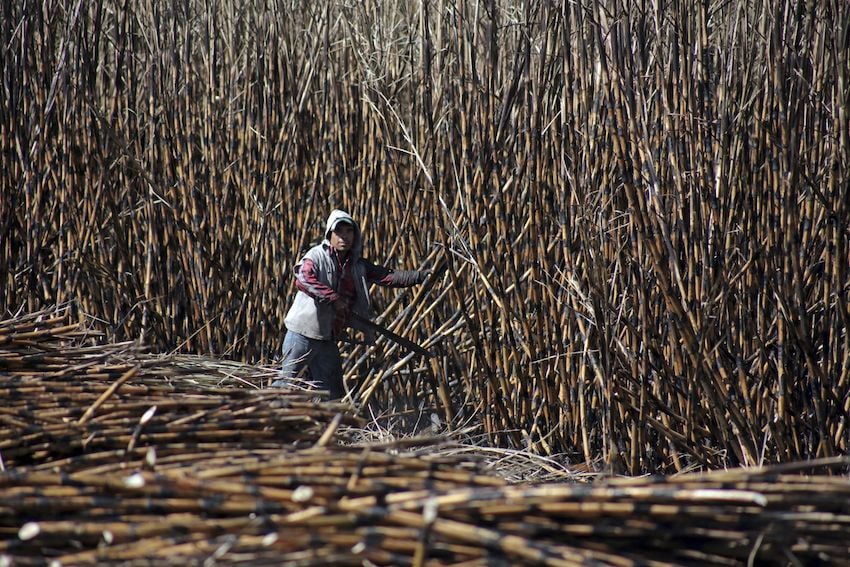
The Mexican sugar industry generates over 440,000 direct jobs and benefits more than 15 million people nationwide. (Margarito Pérez Retana/Cuartoscuro)
“The federal government has the obligation to implement the necessary mechanisms to create stability in national industrial sectors and eliminate distortions in international trade,” the decree says.
The Mexican sugar industry is essential for the country’s economic and social development. According to official data, it generates over 440,000 direct jobs and benefits more than 15 million people across 267 municipalities in 15 states.
The sugarcane production chain — which includes everything from planting to marketing — serves as a vital source of income in rural areas, where few economic activities are as stable or profitable. Furthermore, estimates suggest that the sugar industry indirectly generates over 2.2 million jobs in agricultural sectors, transportation, distribution and associated small businesses.
Next year, the federal government also plans to increase the tax on sugary beverages to 3.08 pesos per liter – a significant increase from this year’s 1.64 pesos. With this increase, Mexico expects to collect approximately 41 billion pesos (US $2.2 billion) in 2026, which the government says will be allocated entirely to the Health Ministry’s budget.
While Ubaldo was killed in Uruapan's central square, two other people were taken into custody in connection with the attack on Manzo, authorities said. (Cuartoscuro)
A 17-year-old boy who allegedly shot Uruapan mayor Carlos Manzo on Nov. 1 was killed after he was arrested, Michoacán Governor Alfredo Ramírez Bedolla said on Monday.
The person who was shot dead by a municipal police officer after allegedly opening fire on the mayor was identified last week as Víctor Manuel Ubaldo Vidales, a 17-year-old youth from Paracho, a municipality that borders Uruapan.
Until Monday, it was not widely known that Ubaldo — a methamphetamine addict, according to authorities — was killed after he was forced to the ground in the Uruapan square and surrounded by police. Initial reports indicated that he was killed while he remained an active threat. It now appears that an extrajudicial killing may have occurred.
Ramírez told a press conference that an investigation into why the alleged gunman was killed after he was arrested is taking place.
“They detain the murderer and moments later there is a struggle and there is a single shot that kills the murderer,” he said.
“… The [state] Attorney General’s Office is investigating this whole issue,” Ramírez said.
The killing of the suspect at the scene of the crime obviously precluded investigators from interrogating him. If Ubaldo had not been killed, investigators could conceivably have extracted vital information from him, such as who ordered and planned the murder of Manzo, an outspoken anti-crime crusader who had urged President Claudia Sheinbaum to ramp up the fight against organized crime in Michoacán.
Michoacán Governor Alfredo Ramírez (center) told a press conference on Monday that the state Attorney General’s Office is investigating why the alleged assassin was killed after he was arrested. (@ARBedolla/X)
‘Who sent you?’
According to the newspaper Reforma, Ubaldo, after attacking the mayor, attempted to flee on foot but was “immediately” detained.
“Amidst blows and screams, a shot rang out and he died,” Reforma wrote.
Before he was killed, Ubaldo lay on the ground surrounded by “bodyguards,” Reforma reported, citing “a video that went viral on social media.”
According to Reforma, a person — presumably one of the municipal police officers tasked with protecting the mayor — asked Ubaldo, “Who sent you, son of a bitch?”
A short time later, the suspect was shot dead. Hours before the attack on the mayor, Ubaldo rented a room at a hotel opposite the square where the crime was committed, according to authorities.
While Ubaldo was killed in Uruapan’s central square, two other people were taken into custody in connection with the attack on Manzo, authorities said. Their identities have not been publicly disclosed.
Michoacán Attorney General Carlos Torres Piña said last Thursday that the murder of Manzo was “related to organized crime groups.”
The attack on Manzo occurred despite the mayor having a security detail made up of eight municipal police officers and 14 members of the National Guard.
Ramírez said on Monday that Manzo’s “more personal security team” — that made up of the municipal officers — was “directly chosen” by the mayor.
He said that authorities were “reviewing … what happened to distract or relax the mayor’s [first] circle of security” before he was assassinated.
State and federal authorities have pledged that “there will be no impunity” in the case. Ramírez said Monday that investigations aimed at detaining those who planned the crime against Manzo are continuing.
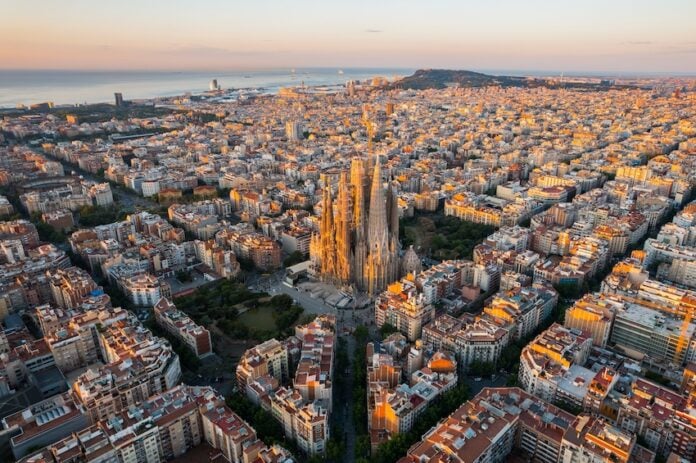
Both the flights to Paris and Barcelona will be seasonal, operating between spring and fall 2026. (Shutterstock)
Aeroméxico announced on Monday two new nonstop flights to Europe starting next year. The northern city of Monterrey, Nuevo León, will have a direct flight to Paris, France, and Mexico City will have a direct flight to Barcelona, Spain.
The flights eliminate the need for layovers in Mexico City or Madrid and improve Mexico’s international connectivity, especially in the lead-up to the 2026 FIFA World Cup.
Nuevo León Governor García announced the new direct route to Paris, which will operate from April 13 through Oct. 22, 2026, during his Fourth State Address on Sunday.
In his speech, García highlighted the progress Nuevo León has made in mobility and airport infrastructure development, which, he said, is allowing the state to attract more international routes and connect Monterrey with major destinations worldwide.
“All the U.S. and Canadian [World Cup] venues now have direct flights to Monterrey (MTY). If you want to fly [here], we’re going to have a new airport. If you want to drive, if you’re coming from Houston or Dallas, you can arrive safely at the stadium via the Gloria-Colombia border crossing,” he said.
The flight announcement coincides with the ongoing renovation of Nuevo León’s main airport, which, according to Samuel García, aims to meet the growing demand from domestic and international passengers and provide improved transportation services before the 2026 FIFA World Cup.
Imagínate tomando una buena copa de vino viendo el atardecer en la Torre Eiffel 🥹 ¡Hazlo posible con nuestra ruta de temporada! A partir del 13 de abril de 2026 volaremos desde Monterrey hasta el 22 de octubre de 2026. pic.twitter.com/xqJcQPeibU
The upgrades to MTY are focused on expanding commercial and private flight capacity in an effort to transform the state into a national airport hub. The project, called “Northern Airport,” includes the construction of two runways, a new commercial flight terminal and the development of a high-end shopping center.
According to the state government, construction will be completed in December this year, but operations are expected to begin in the second half of 2026.
MEX-BCN
Aeroméxico also announced that it will resume its direct flight between Mexico City and Barcelona, starting March 28, 2026, and operating through Oct. 24, 2026.
With six weekly flights on board a Boeing 787 Dreamliner aircraft, the flight responds to the growing passenger flow between the two cities. In 2024, traffic between Barcelona and Mexico City reached 156,000 passengers, of which 44,000 traveled via connecting flights.
Flight AM37 will depart from Mexico City International Airport (MEX) every day of the week, except Tuesday, at 5:20 p.m., arriving in Barcelona International Airport (BCN) the following day at 12:30 p.m.
The return trip will be made via flight AM38, which will depart BCN on Mondays, Tuesdays, Thursdays, Fridays, Saturdays and Sundays at 2:45 p.m., arriving in MEX at 7:20 p.m. on the same day.
The recovery of the route is the result of a collaboration between the Mexican carrier and the Barcelona Air Route Development Committee (CDRA). The CDRA is made up of BCN airport operator AENA, the Generalitat of Catalonia, the Barcelona City Council and the Barcelona Chamber of Commerce, with the support of strategic entities such as Turespaña, the Catalan Tourism Agency, Acció and Barcelona Tourism.
"We're afraid of the night," says Mexican physicist Omar López-Cruz of the National Polytechnic Institute (IPN). This could explain why stars can't be seen from Mexico City. (Jesus Toledo/Pexels)
For researcher Omar López-Cruz,Mexico City “is a peculiar place.” As an astronomer dedicated to observing the celestial vault, the Mexican capital “is completely off the radar,” because it’s impossible to view the night sky as it originally appeared. Light pollution makes it impossible. This is one reason why the stars cannot be seen in Mexico City.
The researcher insists that “there is so much artificial light” that even astronomical research cannot be carried out properly. It seems that billboards, corporate buildings and other luminous elements have suffocated the stars. And, although it may not seem like it, this is terrible news for the capital’s residents. In an interview with Mexico News Daily, López-Cruz explained why.
Mexico City drowned her stars in the night sky
Billboards, corporate skyscrapers and other sources of artificial lights have drowned Mexico City’s celestial vault. (Gobierno CDMX/Wikimedia Commons – Creative Commons Zero, Public Domain Dedication)
Regarding why the stars cannot be seen in Mexico City, López-Cruz has a clear answer. Capital dwellers cannot see the Milky Way “due to the enormous amount of lights inMexico City.” This phenomenon is known as light pollution, the result of the excessive and inefficient use of electricity to artificially light up the capital.
“It is only natural that we’re afraid of the night,” he explained. Evolutionarily, humans had to face their predators in the dark millions of years ago. Although “no one hunts us anymore,” the Mexican astronomer added, the fear of the dark still haunts us. “That’s why we get rid of the night.”
As a mathematical physicist who graduated from the National Polytechnic Institute (IPN) in Mexico, López-Cruz earned his doctorate in astronomy from the University of Toronto (Canada). To explain the phenomenon of light pollution, he draws an analogy with the Sun. “When you go out during the day, you see that the Sun is illuminating the atmosphere.” Because the Sun’s intensity is so great, it’s impossible to see the stars during the day.
In Mexico City, in addition to an excess of suspended particles, “the sky lights up too much [at night].” This has made it impossible to see the stars as they naturally appeared in Mexico City. However, this isn’t the only place where this happens: the world’s major capitals also suffer from this problem. Those who live there are missing out on the natural brilliance of the celestial vault — and perhaps aren’t even aware of it.
Light pollution is a political issue in Mexico City
In April 2022, the Mexico City Congress approved the initiative to reform the Environmental Law for the Protection of the Earth in Mexico City. Specifically, according to anofficial statement, “on the matter of light pollution, proposed by legislator Jesús Sesma Suárez.” Mainly due to the environmental impacts it is causing in the Mexican capital:
It compromises bird migration
It disrupts the circadian cycle of the species that inhabit the city
It inhibits deep sleep for the capital’s residents
Suspended particles and excessive light pollution have made it impossible for capital dwellers to enjoy a clear, starry night. (Rafael Aparicio/Wikimedia Commons – Creative Commons Attribution-Share Alike 3.0)
Since then, restoring natural darkness in the Mexican capital has become a legal issue. As if the inherent well-being that the natural night brings to human beings — and any living being that inhabits Mexico City — were not enough of an argument, the issue was raised before Congress as a political matter.
To support the initiative, a year after its publication, Sesma Suárez pointed out that light pollution in Mexico City prevents astronomical observation for scientific research. Furthermore, he noted that “energy expenditure” is inefficient, since “up to 50% of lighting is used in unwanted or unnecessary areas.” So far, no more recent updates have been made to this reform.
“You have never seen the Milky Way.”
“You belong to a generation,” López-Cruz laments, “that hasn’t seen the Milky Way.” Despite the celestial bodies being there, light pollution caused by humans has created an impenetrable veil, preventing us from seeing them in all their natural splendor.
Although the evolutionary path of our species has encouraged us to follow the cycle of night and day, the alterations we have made to the ecosystem have caused the natural darkness to disappear. Now, “there are people who haven’t experienced dark skies from childhood to adulthood,” the specialist notes. “Now, we have to travel very far to experience them.”
In Mexico, some uninhabited areas of the northern states of Baja California Sur, Coahuila and Chihuahua, the researcher shares, have become dark sky sanctuaries. Devoid of public lighting and population, they are the ideal place for unobstructed astronomical observation. Considering the heavy light pollution that haunts my convoluted hometown, Mexico City will perhaps continue to be blind to the Milky Way, its stars and the cosmos.
Thanks to a clever marketing campaign, the NFL is big business in Mexico, as a recent Day of the Dead themed event proved. (David Villavicencio)
If you ever hear the word “football” in Mexico, it’s more than likely in reference to “fútbol” — or soccer — and not to the other North American sport, which is instead known simply as “Americano.”
Traditionally, the National Football League (NFL) hasn’t merited the same kind of reverence among Mexican fans as it has for those in the United States. But that’s starting to shift in recent years, with the NFL’s increased efforts to reach a Latin American viewership culminating with the recent announcement of Bad Bunny — the Spanish-speaking pop star from Puerto Rico — as the Super Bowl’s coveted half-time performer.
The last time Mexico hosted an NFL game was nearly three years ago, when the Arizona Cardinals lost to the San Francisco 49ers in Mexico City. (Galo Cañas / Cuartoscuro)
In fact, Spanish-speaking fans are the NFL’s fastest growing audience, with Mexico ranking as the largest international market for the NFL, with a reported 39.5 million fans (Brazil ranks second, followed by Germany, China and the United Kingdom). The league’s growth across the border is largely due to strategic initiatives meant to engage Latinos — particularly Mexicans — through ongoing, creative marketing campaigns rooted in Mexican culture and fandom.
For starters, the league has played four games in Mexico City dating back to 2005, when the first NFL regular season game took place at Estadio Azteca. The 2005 game was the first ever NFL game played outside of the U.S., and drew a record-breaking 103,467 fanatics.
Surprisingly, the earliest records of the NFL’s attempts to play in Mexico go much further back to 1968 — for a pre-season clash that was scheduled between the Philadelphia Eagles and Detroit Lions that actually never came to be. In 2026, the NFL has declared they will return to Mexico City after the FIFA World Cup in 2026.
The NFL’s fan engagement in Mexico hasn’t only been limited to playing games on the field, though. Earlier this year, the league partnered with six Kentucky Fried Chicken locations throughout the nation to offer an NFL-themed dining experience (I visited the San Francisco 49ers site in the suburbs of Mexico City; many enthusiastic fans flocked there to take selfies with the museum-like memorabilia, which included a gigantic team helmet and a completely decorated building that was visible from the adjacent freeway).
Most recently, “Hasta La Muerte” — the NFL’s latest collaboration with Mexican fans and artists — once again highlighted the league’s interest in their neighbors to the south. The colorful and festive series included limited-edition clothing and merchandise (created by Mexican designer, Atrapaluz), custom NFL altars, catrinas, and a massive party in Mexico City hosted by NFL México. The campaign involved 10 NFL teams — the Arizona Cardinals, Dallas Cowboys, Denver Broncos, Houston Texans, Kansas City Chiefs, Las Vegas Raiders, Los Angeles Rams, Miami Dolphins, Pittsburgh Steelers, and San Francisco 49ers — each with their own legacy of Latino fandom.
The designs feature classic Dia de Muertos elements like cempasuchil petals, bright colors, papel picado, and calaveras. The graphic print style was inspired by Mexican illustrator José Guadalupe Posada, and plays on the idea of fandom as a tree of interconnected family members.
The work was led by an all-Mexican team — most notably, the designer himself, Atrapaluz, who was tasked with designing the artistic vision for 59 original items. Raised in the state of Mexico, he notes that the NFL’s popularity has grown signficantly in his lifetime, and that it is a way for families to connect.
By embracing Mexican culture, the NFL hopes it will attract more fans to the game. (David Villavicencio)
“The idea was to highlight how in a family-centered country like Mexico, the NFL and its teams are passed down from generation to generation, becoming a symbol of identity for many families, a tradition for getting together and a way to keep our loved ones alive when they’re gone,” he says.
It was all on display at a special event that took place in October at Fronton Bucarelli in Colonia Juarez for an estimated 2,000 attendees, including a range of influencers and local figures like Caro Diaz, Brayan Skabeche and Karen Tapia. Anna Laura Ramirez was one of the many Mexican NFL fans who attended the event. Ramirez flew into CDMX from Veracruz, and has been a fan of the Cardinals because of her father’s fandom of the team.The Arizona franchise (who are coincidentally also Atrapaluz’s favorite team) became the first NFL team to play a regular season game in Mexico in 2005, making them a popular choice among today’s Mexican fans.
Each of the ten NFL teams in attendance collaborated with fans to make unique ofrendas, where fans could add photos of family members, friends, and even former players who are no longer living.
“Although a lot of brands are now creating products around Día de Muertos, we tried our best to stay true to our reasons for making this,” says Atrapaluz. “To represent our tradition in the purest and most sincere and respectful way possible, [to share] our stories and give NFL fans in Mexico a way to celebrate and remember their loved ones who loved the game and created a legacy.”
The NFL shows no signs of switching up their playbook. If anything, they’ve continually increased their offensive surge into the Latin American market, with more and more games being hosted not only in Mexico, but in Brazil. They’re now even blitzing Spanish-speaking audiences outside of the American continents, too, with a 2025 regular season game between the Dolphins and Washington Commanders scheduled for Santiago Bernabéu Stadium in Madrid, Spain on November 16.
Alan Chazaro is the author of “This Is Not a Frank Ocean Cover Album,” “Piñata Theory” and “Notes From the Eastern Span of the Bay Bridge” (Ghost City Press, 2021). He is a graduate of June Jordan’s Poetry for the People program at UC Berkeley and a former Lawrence Ferlinghetti Fellow at the University of San Francisco. His writing can be found in GQ, NPR, The Guardian, L.A. Times and more. Originally from the San Francisco Bay Area, he is currently based in Veracruz.
Luiz Inácio Lula da Silva, president of Brazil, which is hosting COP30, which opened Monday in the Amazonian city of Belém. (UNFCCC)
As COP30 opens Monday in the Brazilian city of Belém, Mexico’s national climate plan still faces criticism, but there is also reason to hope that President Claudia Sheinbaum will continue to strengthen Mexico’s climate change commitments at this year’s conference. She has much to undo.
In 2022, the government of former president Manuel Andrés López Obrador — frequently referred to as AMLO — weakened Mexico’s original 2020 commitments to environmental institutions and infrastructures while boosting fossil fuels usage, a breach of both Mexican law and the Paris Agreement.
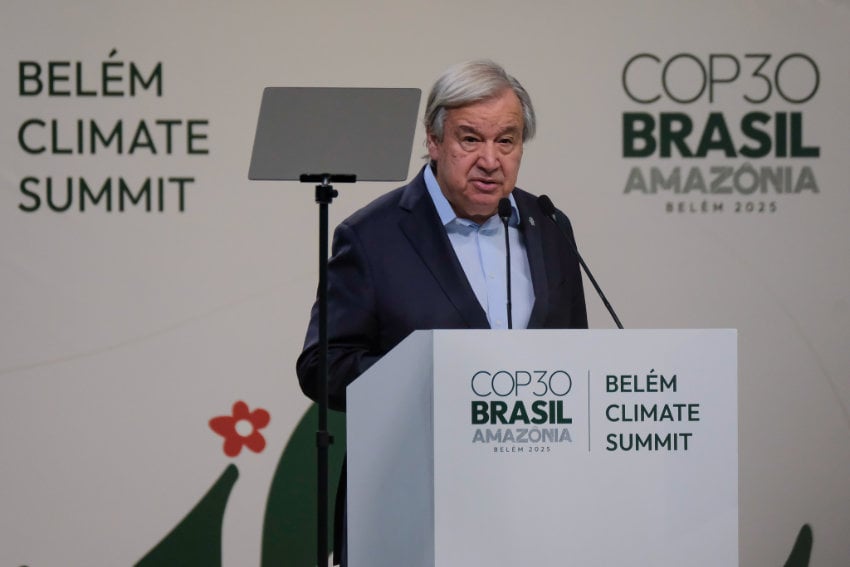
UN Secretary-General António Guterres addresses the COP30 delegates at the opening plenary Monday.
Critics also cried foul on Mexico’s current National Determined Contributions (NDCs) commitment, which they say gives the impression of climate change ambition but is an illusion. They have accused the former administration of manipulating the math to make Mexico’s NDCs appear more effective than they are in reality.
Mexico’s behavior at COP30 is likely to reveal where Mexican President Claudia Sheinbaum — who has a background as a climate scientist — is going long-term in addressing global climate change. She already took some steps at COP29 to strengthen Mexico’s commitments, so there is reason to believe she may authorize further steps forward.
Sheinbaum, however, is not one of the world leaders attending COP30. Like last year, she has sent her Environment Minister, Alicia Bárcena.
What is COP?
The annual Conference of the Parties (COP) is an international summit organized by the United Nations, involving the 198 parties (mostly nation-states) that agreed to the United Nations Framework Convention on Climate Change (UNFCCC), the 1992 international treaty that was the foundation for subsequent international agreements such as the Paris Agreement and the Kyoto Protocol.
The UNFCCC’s primary objectives are the global stabilization of greenhouse gas emissions and finding sustainable solutions to prevent the consequences of human-induced global warming.
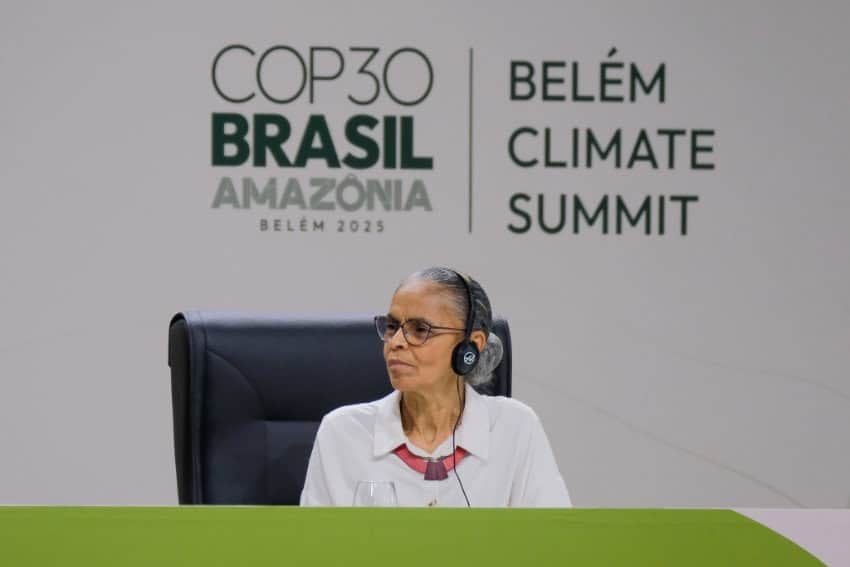
Brazil’s Minister of the Environment and Climate Change, Marina Silva has called COP30 “the COP of implementation.” (UNFCCC)
The annual COP summit — attended each year by world leaders, politicians, U.N. delegates, scientists and activists — is where the UNFCCC’s signatory parties negotiate new climate-change agreements and also hold each other accountable to fulfilling past commitments.
This year’s conference is when the parties, including Mexico, are expected to present their updated national climate plans for 2035 under the 2015 Paris Agreement, which committed parties to a goal of collectively limiting global temperature rise to below 2 degrees Celsius — and ideally 1.5 C.
Mexico was one of many countries to miss the formal deadline to submit its climate plan in February.
What did countries pledge at COP29?
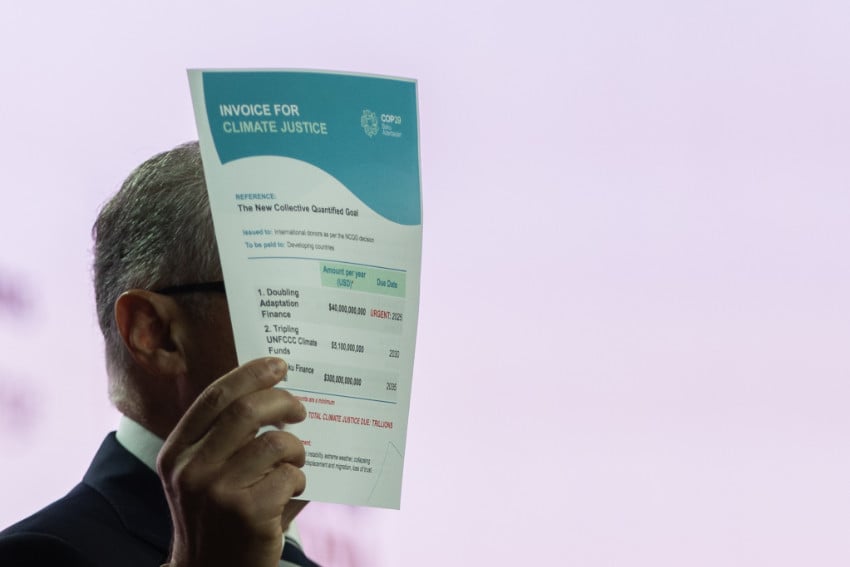
At COP29, which took place in Azerbaijan’s capital, Baku, the parties agreed to the New Collective Quantified Goal (NCQG), allocating an annual collective US $300 billion in international climate financing to developing countries by 2035.
The purpose of this financing is to assist developing countries reach their global climate goals and help them implement strategies to protect from floods, storms and rising temperatures. The financing will also help lower-income countries fund the switch to clean energy and recover from disasters and losses caused by climate change.
President of COP29, Mukhtar Babayev of Azerbaijan, reminds COP30 delegates of their previous climate change commitments via the New Collective Qualified Goals agreement, made at COP29. (UNFCCC)
The NCQG is to be implemented through these methods:
Bilateral finance, a type of corporate lending that involves a single lender and a single borrower.
Multilateral finance, which is corporate lending involving a single borrower but multiple lenders.
Private finance mobilized by the public sector — essentially, incentives to invest offered to private companies by a government.
In signing on to the NCQG, contributing nations agreed to the possibility of “alternative sources,” such as international carbon taxes or solidarity levies, that is generating funding by imposing taxes on business sectors that benefit from globalization and generate significant environmental or social costs.
While marking a threefold increase in money from the previous year, many observers widely regarded the agreement reached at COP29 — known as the New Collective Quantified Goal on Climate Finance (NCQG) — as falling far short of the figure required for the clean-energy sector’s growth and the effective and sustainable protection of people and the environment. Experts calculated this at US $1.3 trillion by 2035 — an amount that COP29 did set as a looser, less binding goal.
Many have also deemed the scaling up of private investment critical if we are to close the $1 trillion gap between the agreed-upon targets and the recommended ones.
AMLO’s numbers game
As stated above, Mexico’s current climate plan faces criticism, thanks to the actions of the previous government. To make its emission reduction percentage target appear higher, López Obrador’s government changed the emissions baseline. This, said activists, gave the impression that Mexico’s emission reduction percentage target was actually higher than it was, when in fact, net emissions would rise.
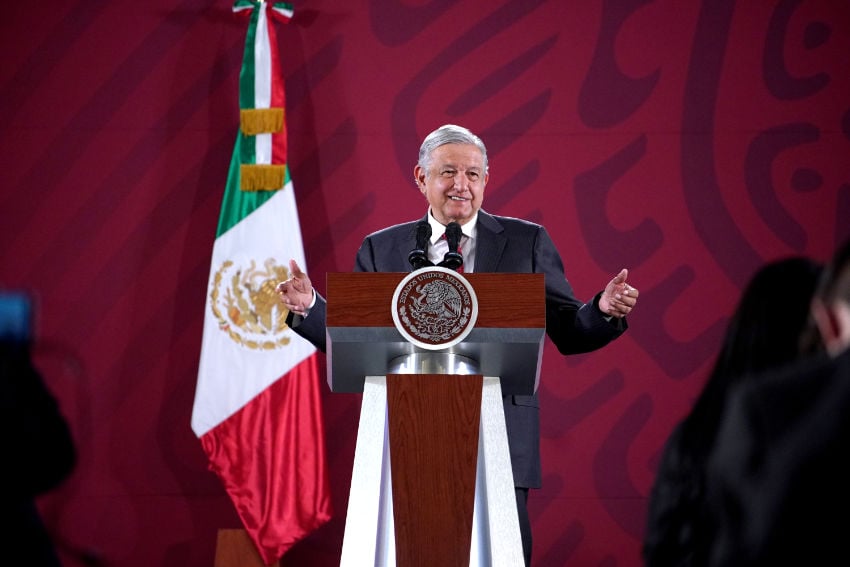
Mexico’s former president Andrés Manuel López Obrador, who was a vocal proponent of fossil fuel use in Mexico, has been accused of fudging Mexico’s numbers on its climate commitments. (Government of Mexico)
Beyond this, NGOs such as Oxfam Mexico have warned of Mexico’s persistent disparity between the authorization of particular laws on climate and the budget Mexico says it’s prepared to commit to the cause. And the Sustainable Finance Index has documented that only 0.47% of the country’s budget goes to climate mitigation.
While Mexico’s calls for humanistic climate change policies were received well enough at COP29, there is currently discussion among observers that President Sheinbaum needs to prove her commitment to climate change with real figures and substantive action, not just words.
The Escazú Agreement
One area in which Mexico could do that is by pushing for the ratification of the Escazú Agreement, a landmark treaty that stemmed from the Rio+20 Conference, pioneering “access to justice” and the legal protection of environmental defenders.
According to the NGO Global Witness, at least 196 environmental activists were killed in 2023 alone, with 85% of those in Latin America. Eighteen of those were in Mexico. The reality is that this number is likely far higher as many attacks on environmental activists fly under the radar or go unpunished.
The Agreement’s ratification could ensure more safety and justice for land defenders in Mexico and across the Americas. Mexico supporting the Escazú Agreement at COP30 would be a way for Sheinbaum to send a powerful statement in support of Mexico’s environmental activists and show that addressing climate change is important to her administration.
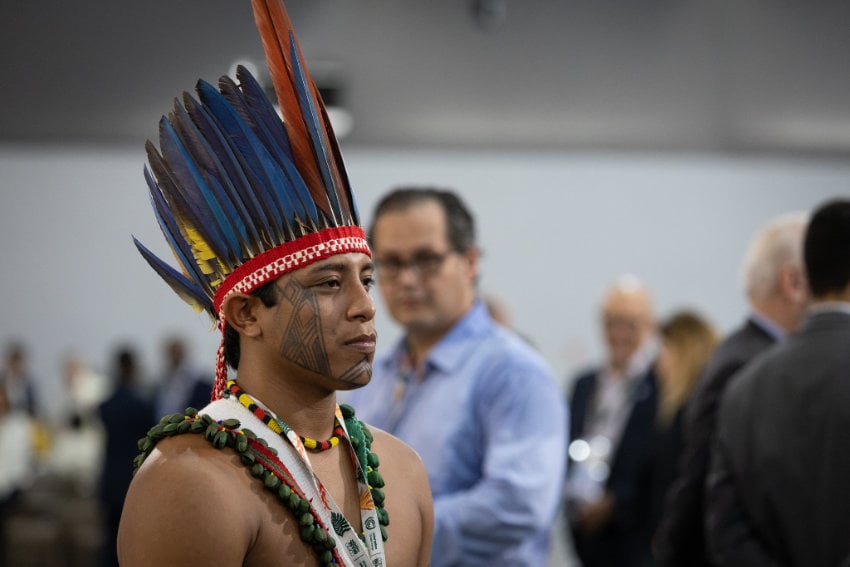
Many Indigenous environmental activists are in attendance at COP23, representing communities that are highly impacted by climate change. (UNFCCC)
Preparations for COP30
In August, representatives from 22 Latin American and Caribbean countries attended a preparatory meeting for COP30, organized by the Mexican government and the COP30 president, André Corrêa do Lago. The goal of the meeting, dubbed The Latin American and Caribbean Ministers’ Meeting for Implementation of Regional Climate Action, was to fortify regional coordination at COP30 in the face of the structural and historical climate inequalities faced by the region’s countries.
The notion of climate inequality in Latin America and the Caribbean is nothing new. According to the Intergovernmental Panel on Climate Change, the region accounts for just 11.3% of greenhouse gas emissions, yet 75% of its nations are facing the brunt of more extreme and frequent climate events. However, the region still needs to increase its expenditures significantly to meet its climate commitments.
“Faced with the multiple crises we are experiencing, it is more important than ever to engage in dialogue on our common challenges,” Bárcena said at this meeting, which ended with a declaration by the parties that could bode well for Mexico’s performance at COP30.
In that declaration, the countries expressed support for the Paris Agreement’s NDCs and the need to transition away from nonrenewable energies. The declaration also highlighted the importance of respecting and empowering Indigenous peoples, local communities and Afro-descendants, as well as supporting climate-affected human rights.
In addition to acknowledging the parties’ agreement that climate change action must address economic, social and environmental inequalities, Sheinbaum identified a fourth pillar necessary for sustainable development: “the sovereignty and self-determination of peoples.”
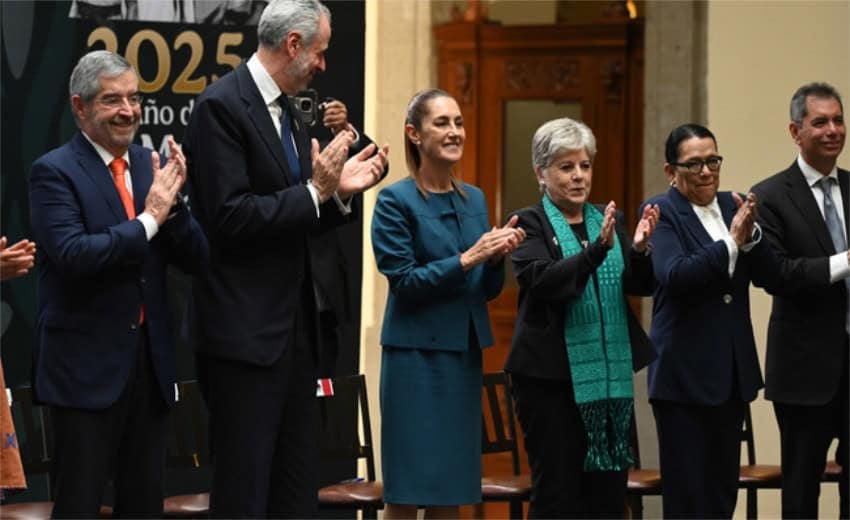
In August, Sheinbaum, center, hosted a meeting of environmental ministers from Latin America and the Caribbean to get on the same page for COP30. (Government of Mexico)
What can we expect at COP30?
As laid out by the U.N., COP30 will focus on:
The efforts needed to limit the global temperature increase to at least 1.5 C.
The presentation of new national action plans (NDCs).
The progress on the monetary pledges made at COP29.
In regard to the NCQG, COP30 will see the delegates finalize the Baku-to-Belém Roadmap to strategize how the finance goal will be mobilized and monitored. Yet, what seems to be clear is the need for accountability and true commitment to cover the costs of loss and damage due to climate change in developing countries.
Brazil’s Minister of the Environment and Climate Change, Marina Silva, has designated COP30 as “the COP of implementation.” Promises of budgets, policies and protection now need to be enacted on the ground.
Mexico had no official space at COP29, but this year, delegates are changing that: Mexico will have a 200-square-meter National Pavilion at the conference, with a press room to boost media coverage on sustainability. Climate investment initiatives and opportunities will be at the forefront: Mexico’s government has already promised over $32 billion of public investment in renewable energy infrastructure.
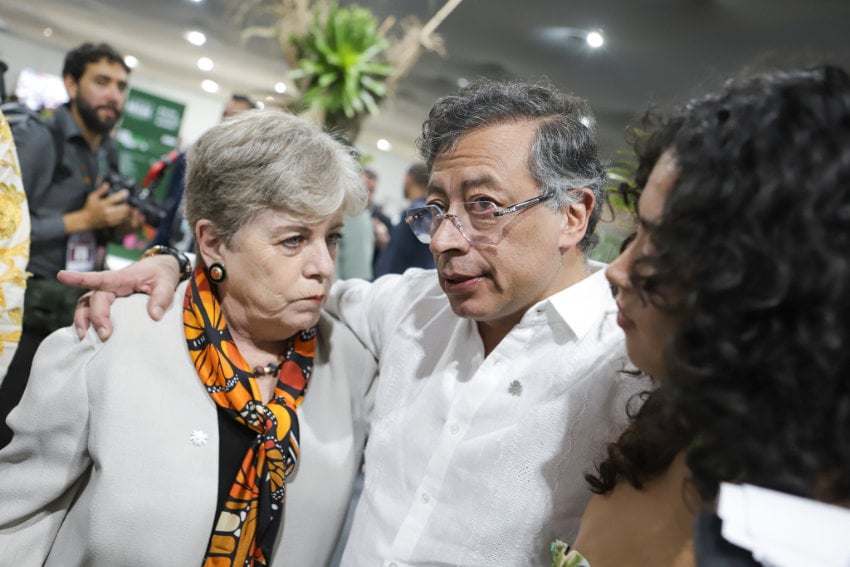
Mexico’s Environment Minister Alicia Bárcena, left, at COP30 with Colombia’s President Gustavo Petro, center. (UNFCC)
A promising start, but while Mexico has also recently made progress on its National Restoration Plan — 30% of Mexico’s land is currently degraded — Climate Action Tracker still terms Mexico’s overall climate progress as “critically insufficient.”
COP30 will hopefully encourage Mexico to increase its financial commitment to its climate goals across public and private sectors — and strengthen its participatory environmental governance with non-state players and Indigenous communities. And based on Sheinbaum and Barcena’s statements at the regional meeting in August and since, there’s hope to be had that Mexico is turning toward a more environmentally proactive course.
But phasing out fossil fuels by 2050, scaling up climate finance for people and the environment and implementing strategies to build a more climate-resilient society remain critical goals for Mexico. These next 12 days of COP30 are likely to tell the world whether Mexico plans to truly step up to the challenges of climate change or continue to rely on numbers games.