Home Blog Page 123

Sheinbaum juggles World Cup questions at FIFA-focused presser: Monday’s mañanera recapped

2
Sheinbaum presents FIFA World Cup
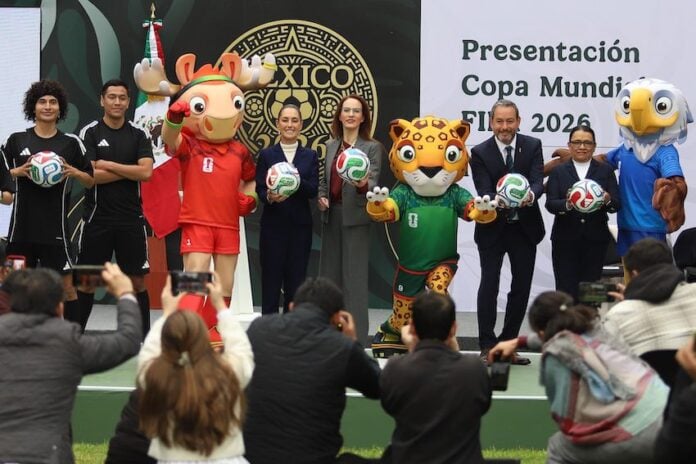
The official 2026 FIFA World Cup mascots — Maple the Moose (Canada), Zayu the Jaguar (Mexico) and Clutch the Bald Eagle (USA) — joined Mexico's president and other officials at a formal presentation of the event on Monday. (Daniel Augusto/Cuartoscuro)

In lieu of a regular press conference, President Claudia Sheinbaum and other federal officials gave a presentation on Monday morning about the 2026 FIFA World Cup, which Mexico will co-host with the United States and Canada.

The presentation, held outdoors at the Los Pinos Cultural Complex on a cold Mexico City morning, had been scheduled for last Monday, but was postponed due to the Nov. 1 murder of the mayor of Uruapan, Michoacán.

Sheinbaum noted that it will be the third time that Mexico hosts a FIFA men’s World Cup, known as la Copa Mundial, or simply “la mundial,” in Spanish. Mexico previously hosted the event in 1970 and 1986, and will co-host the 2031 FIFA Women’s World Cup in 2031.

“This mundial is shared with the United States and Canada, and it represents a very special moment for our country,” Sheinbaum said.

She highlighted that the opening ceremony of the World Cup will be held in Mexico City for the third time ahead of the first match of the tournament at the Estadio Azteca on June 11, 2026.

The president noted that a total of 13 matches will be played in Mexico, including all of the Mexican team’s group matches. In addition to “El Azteca” in the capital, stadiums in Guadalajara, Jalisco, and Monterrey, Nuevo León will also host matches in 2026.

Sheinbaum said that 5.5 million football fans will come to Mexico for the World Cup.

“[It will be] a very special time with a very significant economic spillover,” said the president, who declared that “Mexico is ready” to host the event.

‘A new opportunity to show the world the greatness of Mexico’

Interior Minister Rosa Icela Rodríguez, one of the federal officials closely involved in the organization of the World Cup in Mexico, highlighted that the commencement of the quadrennial event is just 213 days away.

“This is a new opportunity to show the world the greatness of Mexico, its pre-Columbian richness,” she said before noting that the Mesoamerican ballgame has been placed here “since ancestral times.”

When it comes to football (or soccer if you prefer), “we carry it in our roots,” Rodríguez said.

‘We share the same goal: to organize the best World Cup ever’

The federal government’s World Cup coordinator, Gabriela Cuevas Barron, highlighted that Mexico will become the first country to host la mundial on three separate occasions.
Sheinbaum presents FIFA World Cup
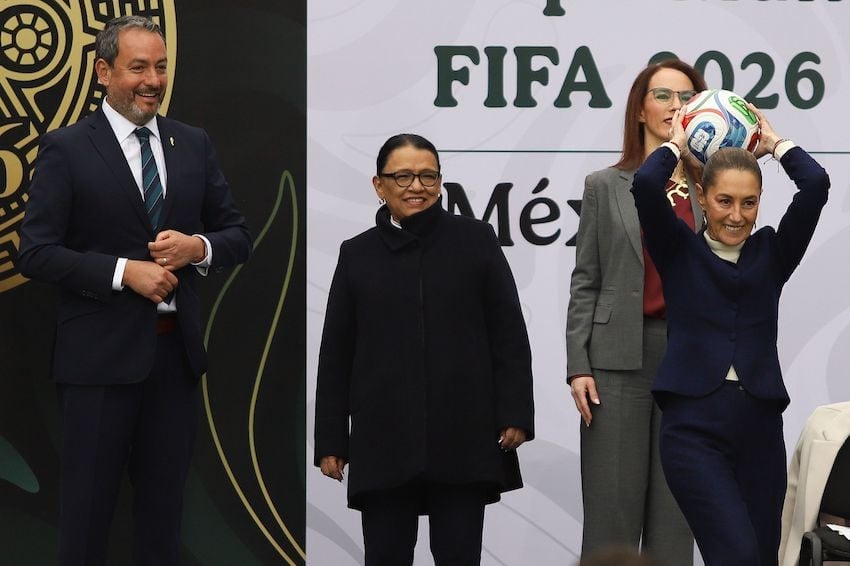
Interior Minister Rosa Icela Rodríguez (center), FIFA’s executive director in Mexico Jurgen Mainka Ruiz (left) and Gabriela Cuevas Barron (back right) joined the president for the FIFA-focused mañanera on Monday held at Los Pinos. (Daniel Augusto/Cuartoscuro)

“Three countries — Mexico, the United States and Canada, [and] we share the same goal: to organize the best World Cup ever,” she said.

“In Mexico, it’s possible. We have the passion and experience, our heart and professionalism set us apart,” Cuevas said.

She said that Mexican authorities from all three levels of government are drawing up a “comprehensive” security plan for the World Cup.

“Our objective is to guarantee that this event is carried out in a safe environment for everyone,” Cuevas said.

FIFA’s Mexico chief claims 2026 World Cup will be ‘most ambitious event in the history of humanity’

Jurgen Mainka Ruiz, FIFA’s executive director in Mexico, thanked Sheinbaum on behalf of FIFA president Giovanni Infantino for her “leadership and daily commitment” to making the 2026 World Cup “a truly shared success.”

“As the general director of FIFA’s Mexico office, but also as a Mexican, I am very excited to be able to report that we’re taking firm steps toward delivering a historic project that will be remembered for many years,” he said.

“This edition of the FIFA World Cup will be the most ambitious event in the history of humanity. We’re talking about 104 matches in 39 days, 48 national teams,” said Mainka Ruiz.

Whether the 2026 mundial will actually be “the most ambitious event” in human history is perhaps debatable, but it will at least be the first World Cup to feature 48 teams, 16 more than the number that participated in recent editions.

Mainka Ruiz said that 28 teams have already qualified. That number includes the Mexican team, known as “El Tri,” which qualified automatically as one of the three hosts of next year’s event.

Mainka Ruiz: FIFA is ‘very confident’ in Mexico’s security plans 

Asked whether FIFA has any concerns about hosting World Cup matches in Mexico due to the insecurity that plagues the country, Mainka Ruiz first noted that the football federation’s Mexico office has been collaborating with Mexican authorities on “the issue of security” for three years.

“We’re very certain, very confident that the protocols and all the plans that are being implemented for the World Cup will provide the security framework [needed] for all the fans, all the teams and all the referees in 2026,” he said.

Sheinbaum: Ticket prices are a matter for FIFA 

A reporter noted that the government is speaking a lot about an “inclusive World Cup,” but asserted that the prices of tickets — in the hundreds or even thousands of US dollars — “are not at all inclusive.”

A person who earns the minimum wage, who lives day-to-day, who gets up at four in the morning to go to work, has no way of paying the price of a ticket, the reporter said.

In response, Sheinbaum emphasized that FIFA sets ticket prices and the government of Mexico and other governments have no power to “intervene.”

“What are we doing so that people can … [watch the matches]? … What we’re doing is working with FIFA so that there can be a lot of [public] spaces in the three [host] cities and in other cities so that people can watch the matches [on large screens],” said the president, who acknowledged that not all matches will be shown on free-to-air television.

As part of the government’s efforts to host a mundial that is as inclusive as possible, Sheinbaum said that her administration is also planning various World Cup-related “activities” in which ordinary citizens will have the opportunity to participate.

Sheinbaum reiterates that she will give away her World Cup ticket 

More than two months after she met with Infantino in Mexico City and announced she would give away the complimentary ticket she received for the opening match of the 2026 World Cup, Sheinbaum reiterated her plan.

“I’m going to give my ticket to a girl, to a young lady who … [wouldn’t] have the opportunity to go and see the opening ceremony [and match] and who is a football lover,” she said.

‘When you step onto the field, think of the great country you represent’

Asked what her message was for the Javier Aguirre-managed Mexican team ahead of next year’s World Cup, Sheinbaum first wished El Tri “a lot of luck” at the tournament.

“And secondly, when you step onto the field think of the great country you represent,” she said.

“Mexico is an extraordinary country with exceptional people. Every time they step onto the field, they should think of that,” Sheinbaum said.

Mexico’s best result at a FIFA men’s World Cup is reaching the quarter-final stage, which it did while hosting the event in 1970 and 1986.

El Tri is currently ranked as the world’s 14th best team. Spain, winner of the 2010 World Cup, is ranked No. 1 followed by Argentina, champions in 2022, and France, which prevailed at the 2018 mundial in Russia.

By Mexico News Daily chief staff writer Peter Davies (peter.davies@mexiconewsdaily.com)
Sinaloa surfer ‘Shutama’ wins bronze at Para-Surfing World Championships

0
Shutama para surfer
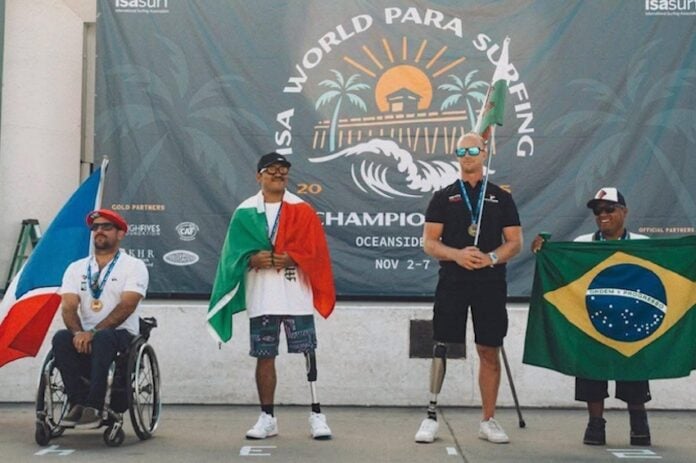
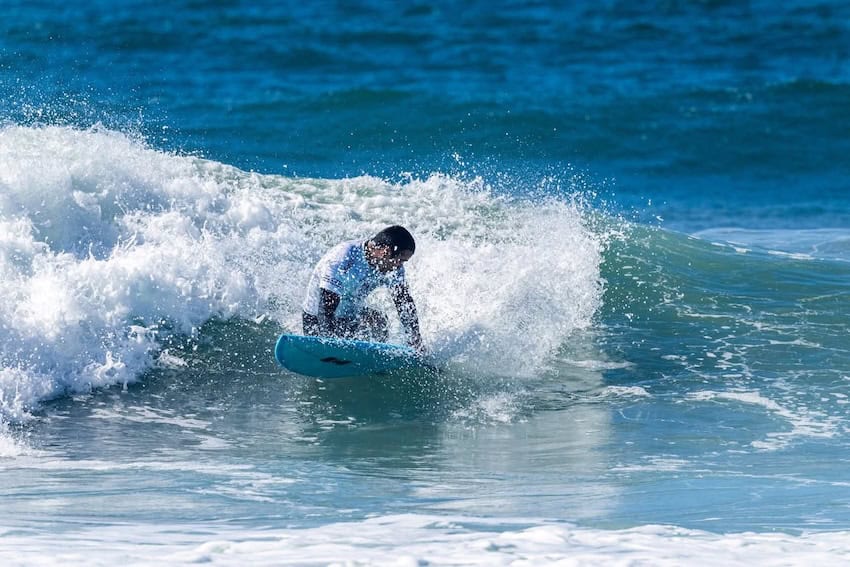
Juan Martín Díaz Martínez, wrapped in the Tricolor, stands on the podium along with the other high finishers in the kneel division of the World Para-Surfing Championships. (Facebook)

The 2025 Para-Surfing World Championships were held in Oceanside, California, last week, and the Mexican flag had a place on the podium thanks to Juan Martín Díaz Martínez taking a bronze in the men’s kneel division.

Díaz, a seasoned surfer from Mazatlán, Sinaloa, scored 9.20 points in the final on Friday to secure third place.

Shutama in action
Martyn Shutama Diaz Martinez (his Facebook name that he prefers to go by) is captured in action at the end of a ride during the Championships. (Facebook)

“It was a very strategic final, but we are happy with this medal,” Díaz said following Mexico’s only top-three finish in the six-day event.

The gold medal went to Wales’ Llywelyn Williams, who dominated the kneel class with a 13.67, earning his fourth consecutive world crown. Brazil’s Dijackson Santos took silver.

Díaz’s achievement, including a strong showing in the semifinals, was especially hard-fought, as he edged out talented Frenchman Maxime Cabanne.

The championship drew 137 para surfers from 24 countries, reinforcing the sport’s push for Paralympic inclusion, according to the International Surfing Association (ISA).

With a total of 12 medals, France became the first nation ever to claim three consecutive team championships.

Díaz, 31, has a left-leg amputation, allowing him to compete in para events, but a press release from Mexico’s National Commission for Physical Culture and Sport (Conade) lauding his bronze made no mention of how or when he lost his leg.

A report last year in the newspaper Noreste said he lost the leg after suffering a motorcycle accident at age 16, and that he has spent more than a decade practicing kneel surfing.

“I used to surf, but it seems that after the accident … I started to delve deeper,” he told the newspaper. “I met new friends and [heard] impactful life stories that helped my emotional development and willpower to keep going.”

Since 2017, the man who goes by Martyn Shutama Diaz Martinez on Facebook has won medals at several international events.

According to his Facebook page, he is a digital creator as well as the founding owner of Blue Therapy Surf, a program in Mazatlán that integrates surfing, meditation, environmental conservation and leadership through surf camps and lessons.

It also says he teaches at Smart Fit México and studied for a bachelor’s degree in physical education and sport at Universidad Autónoma de Sinaloa.

During a week of shifting swells at the Oceanside Pier, Díaz maintained his poise, tackling the often unpredictable break with precision and resilience.

After an intense week of competition, he visited Disneyland with his fiancée of 16 months, Malena Sarabia.

“What we saw this week in Oceanside was truly special,” said ISA President Fernando Aguerre. “These athletes keep pushing the sport to new heights, and the world is watching.”

With reports from Noreste, Contra Réplica, Quadratín and ISA Surf

US chip lobby urges tariff-free treatment for North American semiconductors under USMCA

1
chip
Jalisco is already a leading center of chip design and production, and the new park is expected to help move Mexico to a global leadership poistion in the semiconductor industry. (@SIAAmerica/X)

In late 2023, Mexico and the United States launched a joint “semiconductor action plan” that aims to make North America the world’s “most powerful” chip-producing region.

A central aim of the plan is for North America to reduce its reliance on Asia for semiconductors, vital components in a vast range of products, including computers, smartphones, electric vehicles and advanced medical devices.

The framework of the USMCA free trade pact — which will be reviewed by its three signatories in 2026 — will provide crucial support for that objective.

In that context, the Semiconductor Industry Association (SIA), a Washington, D.C.-based trade and lobbying group, wrote to the Office of the U.S. Trade Representative (USTR) to comment on “specific USMCA provisions of interest to the semiconductor industry,” including the pact’s rules of origin.

In a Nov. 3 letter addressed to Assistant U.S. Trade Representative for the Western Hemisphere Daniel Watson, the SIA wrote that “the USMCA is vital to the success of the U.S. semiconductor industry,” and noted that “Canada and Mexico are close U.S. trading partners in semiconductors,” with each playing “a distinct but important role in North America’s semiconductor supply chain.”

“The USMCA supports a competitive and resilient North American semiconductor supply chain that is tightly linked throughout the production process, with subcomponents and semiconductors crossing between the U.S., Canada, and Mexico before being integrated into a wide range of downstream industries such as automotive, industrial manufacturing, telecommunications and consumer electronics,” the association said.

SIA: Rules of origin should encourage investment in North American semiconductor supply chains 

In order for North America to become the world’s top chip-producing region, significant investment in the semiconductor sector will be required, including from major Asian companies such as Taiwan’s Foxconn.

When launching the joint semiconductor action plan in October 2023, then U.S. secretary of state Antony Blinken noted that among the aims of the initiative were “to accelerate” semiconductor sector integration between the United States and Mexico and “to scale our efforts to attract new investment.”

For its part, the SIA urged the USTR to “ensure the USMCA’s rules of origin strengthen U.S. semiconductor competitiveness, encourage greater investment in North American supply chains, and account for differences in existing and planned supply chain operations to produce different types of semiconductors.”

“Tailored rules of origin can play an important role in encouraging the integration of U.S. semiconductors into various finished goods manufactured in North America,” the association said.

The SIA said that, “should USTR consider any potential changes to rules of origin and related calculations during the [USMCA] review process” in 2026, “we strongly recommend U.S. negotiators hold meaningful consultations with strategic sectors, including the semiconductor industry.”

With regard to “any potential changes,” the SIA said that the “negotiating parties should ensure a realistic timeline for implementation and compliance by North American companies.”

Asian semiconductor companies will invest in North America if it makes economic sense for them to do so. A major incentive to manufacturing in the region is preferential access and proximity to the United States, the world’s largest economy and a leader in technological innovation, including AI, which ensures a huge demand for semiconductors.

Within North America, Mexico can be a particularly advantageous place to manufacture due to factors including its privileged access to the United States market, via the USMCA, and the affordability of labor costs.

However, that privileged access has been undermined to some extent this year by the Trump administration, which has imposed tariffs on a range of imports from Mexico.

The SIA indicated that it would not like to see any U.S. duties on semiconductors and related components that are made in North America and which comply with the USMCA.

“As the U.S. government considers potential tariff actions, we hope the USMCA review process ensures the U.S. semiconductor industry retains its pole position in the race to be the most globally competitive. Given the far-reaching consequences of imposing tariffs on semiconductors, semiconductor manufacturing equipment, and related parts and components, maintaining a straightforward tariff regime for semiconductors and related technologies, including appropriate treatment of products that are compliant under USMCA, is crucially important,” the association said.

Investment in Mexico’s semiconductor sector would create jobs here and help to increase exports. In the first seven months of the year, Mexico’s semiconductor sector exports to the United States declined more than 50% annually to $427 million, leaving it well behind countries such as Taiwan, Malaysia and even Costa Rica as a supplier of the crucial components to the U.S. market.

Trump’s chip tariff poses mixed fortunes for Mexico’s growing semiconductor industry

‘Harmonization is needed across North America’

In response to the USTR’s call for public comment on the USMCA ahead of its scheduled review in 2026, the SIA also referred to a range of other “provisions of interest” in the trade pact that superseded NAFTA in 2020.

With regard to “economic security,” the association encouraged the Trump administration “to align with the governments of Canada and Mexico on … measures to address content from countries of concern.”

“… We encourage the Administration to work with Canada and Mexico to align enforcement and compliance rules that strengthen regional economic security. For example, continued customs cooperation can help combat diversion, prevent trade in stolen IP [intellectual property], and facilitate goods shipments,” the SIA said.

“… Harmonization is needed across North America to avoid costly and diverging economic security regulations and practices. We applaud the Canadian government’s efforts to strengthen its foreign investment screening mechanism in recent years,” the association said, adding that “we hope the U.S. government can continue to make progress in working with the Mexican government on similar foreign investment screening measures.”

In late 2023, Mexico and the United States agreed to cooperate on foreign investment screening as a measure to better protect the national security of both countries. The plan appeared to be motivated to a large degree by a desire to stop problematic Chinese investment in Mexico, which U.S. President Donald Trump and other politicians in the U.S. and Canada have expressed concern about.

Among other comments, the SIA urged the USTR to “preserve the integrity of Chapter 19 (Digital Trade) [of the USMCA] to support North American innovation and competitiveness.”

“The semiconductor supply chain relies on open and secure data flows across international borders, as virtually every step in the value chain involves the electronic transmission of data,” the association said.

With reports from El Economista

Movistar exits Mexico cell service market

0
Movistar
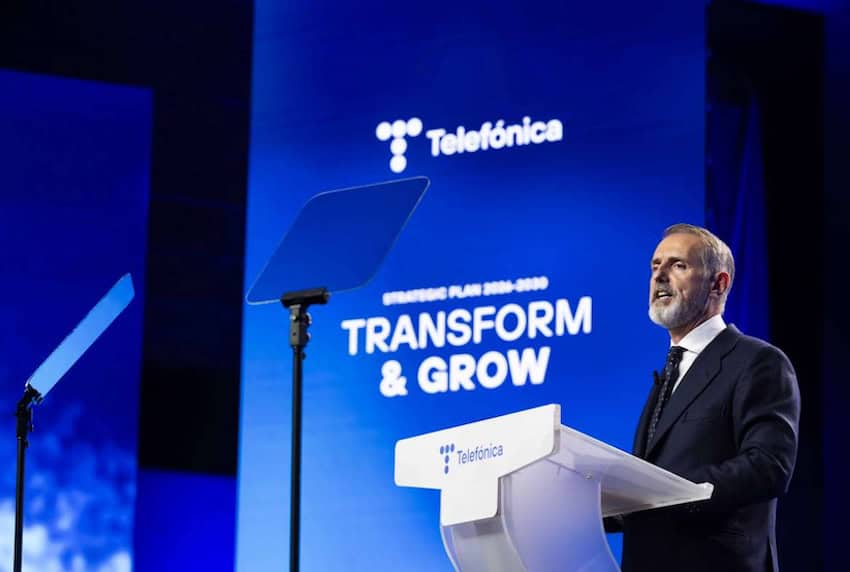
Telefónica and its brand Movistar have publicized the "Transform & Grow" strategic plan, which promises a focus on Spain, Germany and the UK — and a departure from Latin America. (Shutterstock)

Spanish telecom Telefónica, which serves 23 million customers in Mexico under the Movistar brand, will withdraw from the Mexican market to focus on its European business. 

The departure doubles down on Telefónica’s strategic plan, known as Transform & Grow, which focuses on strengthening operations in Spain, Germany and the United Kingdom between 2026 and 2030. 

Telefonica CEO Marc Mortar
Telefónica CEO Marc Murtra says his company is also leaving Chile, Venezuela and Colombia, and has already left Argentina, Peru, Uruguay and Ecuador. (Javier Matuk/X)

Telefónica also plans to exit the Chile and Venezuela markets and is in “an advanced state of exiting” Colombia, according to the firm’s CEO Marc Murtra. It has already sold its operations in Argentina, Peru, Uruguay and Ecuador.

“We are going to leave Latin America,” Murtra said during a conference in which he presented Telefónica’s financial results. 

No specific exit date has been stated for the three remaining Latin American countries, including Mexico, so as not to interfere with negotiations with potential buyers, according to Murtra. 

The revenue of Telefónica’s Latin America unit has fallen in recent quarters, with a 3.6% decrease in the third quarter (Q3) of 2025 compared to the same period last year. However, Telefónica Movistar México’s Q3 results were positive, as service revenues grew 2.7%. 

While Telefónica’s Movistar has a strong user base in Mexico, its market share has fallen in recent years due to the historical dominance of other companies, as well as the growing popularity of mobile virtual network operators (MVNOs). 

At the end of Q3 of 2024, Mexico’s mobile market consisted of 148.3 million lines, 56.18% of which belonged to Telcel, 15% to AT&T and 14.57% to Telefónica. Meanwhile, MVNOs contributed 14.22% of the market share. 

It is currently unclear what will happen to the millions of Movistar users once the company leaves the Mexican market.

Analysts, however, expect that Movistar Mexico users will be automatically transferred to Virgin Mobile’s network, allowing them to keep their phone number and SIM card, as has been the case with other Latin American markets where Telefónica has withdrawn services. 

With reports from La Jornada and Wired

Mexico, France sign agreement to combat transnational drug trafficking

0
Barrot and Morales
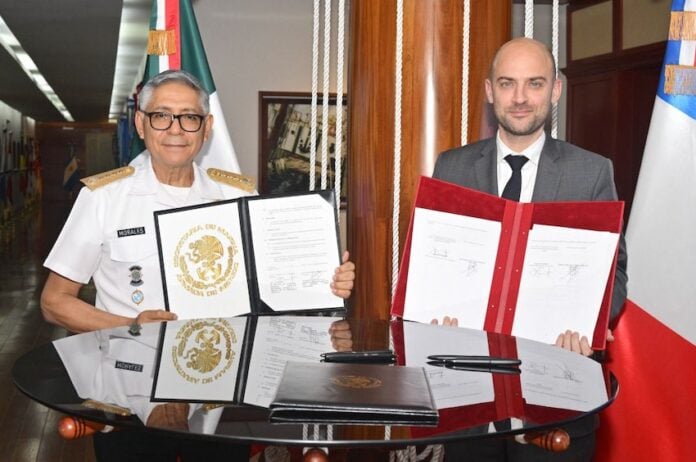
French Foreign Minister Jean-Noël Barrot (right) and Mexican Navy Minister Admiral Raymundo Pedro Morales Ángeles display the bilateral agreement to cooperate in combating transnational maritime organized crime. (@SEMAR_mx/X)

Navy Minister Admiral Raymundo Pedro Morales Ángeles announced Friday an alliance between Mexico and France to confront transnational criminal organizations. 

The announcement came during French President Emanuel Macron’s visit with President Claudia Sheinbaum in Mexico City.

sheinbaum and Macron with delegation
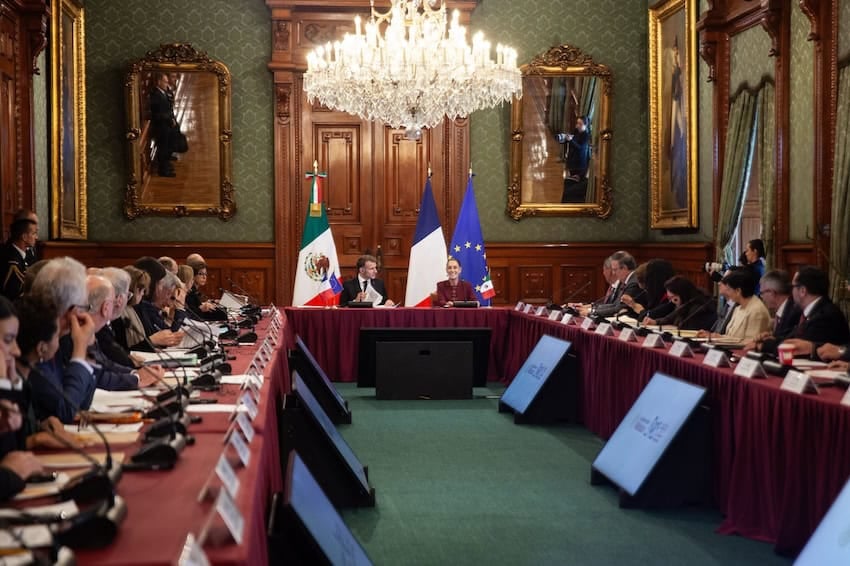
The accords were finalized during a meeting at the National Palace between the Mexican and French presidents, accompanied by their respective delegations. (Andrea Murcia/Cuartoscuro)

Morales and French Foreign Minister Jean-Noël Barrot signed a letter of intent with the aim of strengthening cooperation and joint capabilities in maritime security. Roland Lescure, France’s Economy Minister, also signed the document.

During a press conference alongside Sheinbaum in the National Palace, Macron said the fight against drug traffickers “unites all of us.”

“We are preparing greater cooperation on customs and security matters … but the sovereignty of each country must be absolutely respected,” he said.

Barrot said France will mobilize its diplomatic network in Latin America against drug trafficking, tripling its intervention resources while also increasing the number of specialized personnel in its embassies by 20%.

As France faces an increase in cocaine trafficking and consumption, Barrot said he was getting his ministry “in battle shape to fully assume its role in the fight against drugs.”

Insisting that cooperation between its embassies and drug-producing countries “yields results,” Barrot told the magazine Journal du dimanche that his ministry will create a regional academy for combating organized crime.

The academy — which will be based in the Dominican Republic — “will train 250 investigators, magistrates, customs agents and financial analysts from the security and justice forces of allied countries each year,” Barrot said.

“Latin American countries are at the forefront of the fight against this scourge and against the criminal groups that have turned it into a global industry,” he said. “That is why we want to strengthen our alliances with these countries.” 

The two countries also forged cultural agreements

In addition to the anti-drug trafficking accord, Mexico and France finalized agreements concerning cooperation in science, culture and diplomacy.

The allies agreed to the temporary reciprocal exchange of the Azcatitlan and Boturini Codices as part of a cultural exhibition to be held in both countries next year, the 200th anniversary of diplomatic relations between Mexico and France.

azcatitlan codex
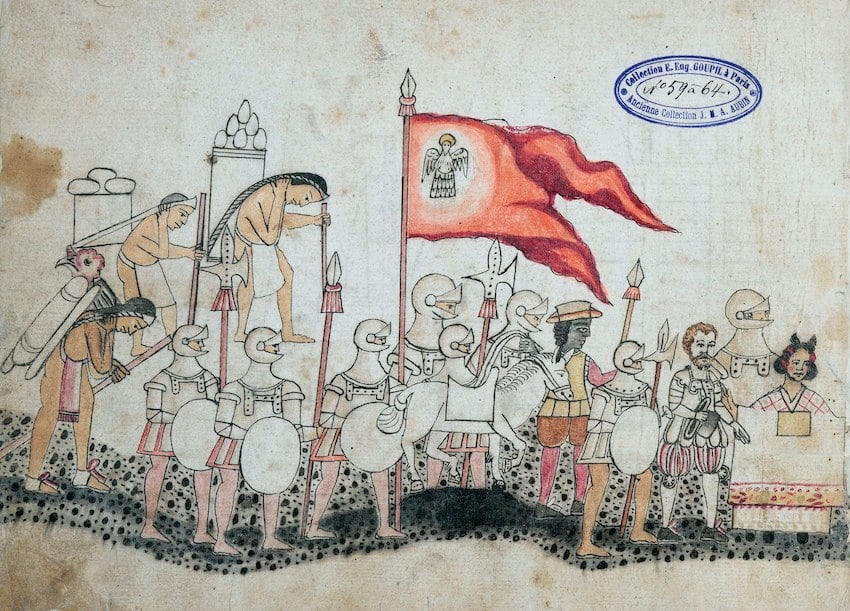
A page of the Azcatitlan Codex, thought to depict Hernán Cortés, la Malinche and possibly Juan Garrido, a conquistador of African descent. (Wikimedia Commons)

“This reaffirms … that there is no future of shared prosperity without acknowledging history,” Sheinbaum said. “Every codex, every stroke, every symbol reminds us that we are heirs to civilizations that flourished long before Western modernity.”

The Azcatitlan Codex — held in the Bibliothèque nationale de France since 1898 — is an Aztec manuscript detailing the history of the Mexica (Aztecs) and their migration journey from Aztlán up to the Spanish Conquest. It is thought to have been produced in the first 100 years or so after the Conquest.

The Boturini Codex — held in Mexico’s National Anthropology Museum — details the origin of the Mexica and is thought to have been produced around the time of the Spanish Conquest.

With reports from El Financiero, La Jornada and El Economista

170,000 fans fill Zócalo for screening of Juan Gabriel’s iconic Bellas Artes performance

3
A fan holds up a poster of aJuanga at the 1990 Bellas Artes concert screening in Mexico City's Zócalo
Saturday’s screening included previously unseen footage from the artist’s personal archive, as well as restored shots from the original concert. (Rogelio Morales/Cuartoscuro)

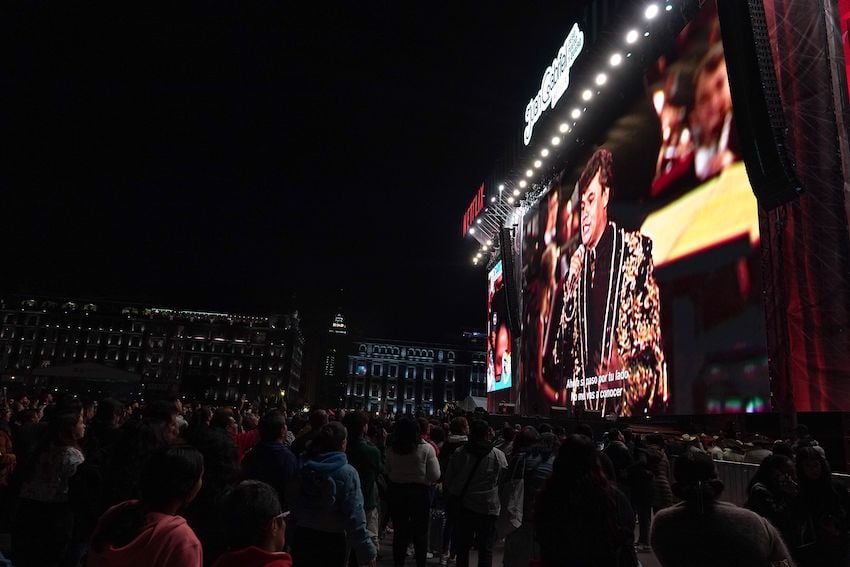
A showing of Juan Gabriel’s iconic 1990 concert at Mexico’s Palace of Fine Arts drew approximately 170,000 people to Mexico City’s Zócalo on Saturday night, making for a special evening for fans of the “Divo de Juárez.”

Mexico City’s Culture Ministry, in collaboration with Netflix, organized the free event, erecting four giant screens and a powerful sound system in the capital’s main plaza.

Attendees — many dressed in the style of the beloved singer — sang along to the rerun of Juanga's culture-shifting performance.
Attendees — many dressed in the style of the beloved singer — sang along to the rerun of Juanga’s culture-shifting performance. (Rogelio Morales/Cuartoscuro)

Juan Gabriel (1950-2016) made history when he performed at Palacio de Bellas Artes in May 1990. Until then, few popular artists had been invited to perform at the distinguished venue, which typically hosted operas, symphonies and classical music performances.

With his unparalleled stage presence and symphonic arrangements, Juan Gabriel’s recital with the National Symphony Orchestra — often called one of the most memorable nights in the history of Mexican popular music — marked a turning point. 

The show — which was preceded by petitions to cancel the “pop concert” at Mexico’s premier cultural venue — demonstrated that the music of the people deserves a place on the country’s most important stages, according to the newspaper Vanguardia.

The concert “not only transformed the way Mexican popular music was perceived, but also opened doors for other artists to cross those same cultural borders,” Vanguardia reported.

The Bellas Artes show was such a smash hit that three additional performances were added. Seven months later, a live recording from the concerts — Juan Gabriel en el Palacio de Bellas Artes — was released.

A year ago, 70,000 people flocked to the Zócalo to see a showing of Juan Gabriel’s 2013 concert “Mis 40 en Bellas Artes.” 

Netflix promotes its Juanga documentary

The Saturday night showing also served as a promotional event for Netflix’s documentary “Juan Gabriel: I must, I can and I want to.” 


View this post on Instagram


A post shared by Netflix Latinoamérica (@netflixlat)

The four-episode series traces the life and career of Alberto Aguilera Valadez from his humble origins in Parácuaro, Michoacán, to his consecration as one of the most beloved figures in the world, known fondly as Juanga.

According to director María José Cuevas, the daughter of famed Mexican artist José Luis Cuevas, the film offers an intimate portrait of the artist, his life and his legacy, while also highlighting his fight against social stigmas and his influence as an icon of diversity and Mexican identity.

The documentary — which went online on Oct. 30 — has become a global hit for Netflix, reaching the top 10 in the non-English language series category. 

Saturday’s screening included previously unseen footage from the artist’s personal archive, as well as restored shots from the original concert. 

The event, which also features a photographic exhibition at the Bellas Artes Metro station, aims to introduce Juan Gabriel’s work to new generations and solidify his presence as a central figure in Mexican culture, said Laura Woldenberg, a member of the team behind the audiovisual project.

Early next year, the photo exhibit — which includes never-before-seen material from Juan Gabriel’s personal archive, photographs of his performances, and portraits captured throughout his artistic career — will move to twin displays along Reforma Avenue at the Angel of Independence Monument and the Diana the Huntress Fountain.

With reports from Billboard, The New York Times and Vanguardia

Plan Michoacán: Sheinbaum presents 12-point, US $3.1B strategy to pacify the state

18
presentation of Plan Michoacán
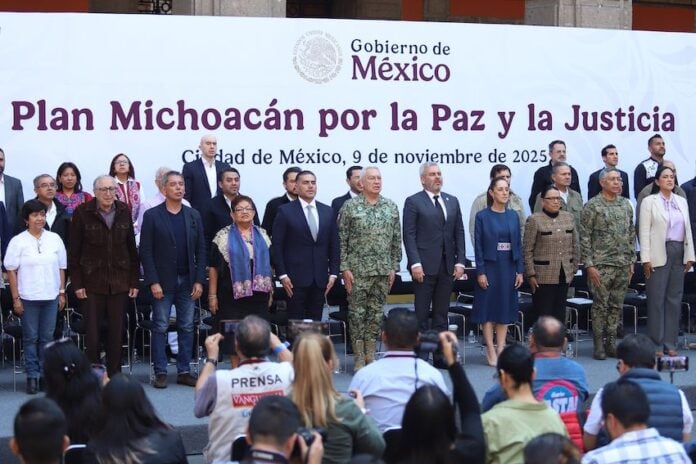
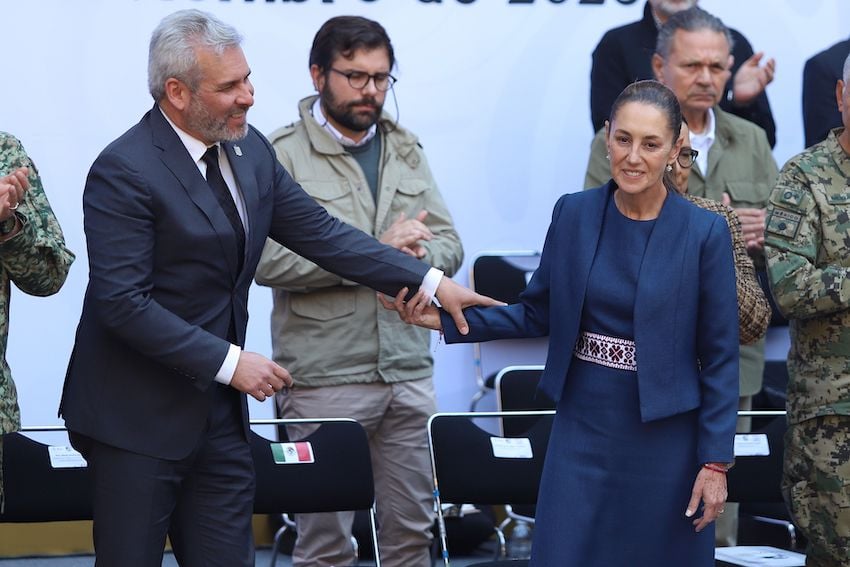
Presented by Michoacán Governor Alfredo Ramírez Bedolla, President Sheinbaum and her cabinet on Sunday, the plan aims to be a whole-of-government response to entrenched crime and violence in the state. (Daniel Augusto/Cuartoscuro)

The federal government on Sunday announced that it would deploy almost 2,000 additional troops to Michoacán as part of a broad plan to pacify the state, one of Mexico’s most violent.

The announcement came during the presentation of the newly-formulated “Plan Michoacán for Peace and Justice,” a 57-billion-peso (US $3.1 billion) initiative that the government devised in response to the murder of the mayor of Uruapan on Nov. 1 and general insecurity in the state.

Speaking at the National Palace in Mexico City on Sunday, President Claudia Sheinbaum described the plan as a “comprehensive strategy,” noting that it is based on 12 central tenets and includes “more than 100 actions.”

She said that the plan, which she first announced last Tuesday, will be funded by “mixed investment” — i.e., public money and resources from private companies, which are slated to invest in a range of infrastructure projects in Michoacán.

“I will personally follow up on Plan Michoacán every 15 days and we will provide public accounts of the progress every month at la mañanera,” Sheinbaum said, referring to her morning press conference.

She has stressed that her government’s plan is not akin to the militarized and highly controversial “war” against drug cartels launched by former president Felipe Calderón in Michoacán almost 20 years ago.

“Peace is not imposed with force,” Sheinbaum said when she first announced Plan Michoacán.

“… “This is very different” from the “war against el narco,” she said. “It’s a comprehensive plan.”

“I will personally follow up on Plan Michoacán every 15 days and we will provide public accounts of the progress every month at la mañanera,” Sheinbaum said from Mexico City on Sunday. (Daniel Augusto/Cuartoscuro)

Michoacán was Mexico’s seventh most violent state in terms of total homicides in the first nine months of 2025, with a total of 1,024 murders, according to data presented by the federal government last month.

The assassination of Uruapan mayor Carlos Manzo — an outspoken anti-crime crusader — triggered protests in various parts of Michoacán and reignited the national conversation about insecurity in Mexico, and the debate over how best to combat it. The person who shot him at a Dead of the Dead event in Uruapan’s central square was identified as a 17-year-old methamphetamine addict, who was killed by a municipal police officer shortly after he allegedly opened fire.

Beyond targeted killings and armed clashes involving rival criminal groups, and cartels and authorities, extortion targeting producers of avocados, limes and other crops is a major problem in Michoacán, the hub of Mexico’s lucrative avocado industry. The state is also coveted by crime groups because precursor chemicals used to make synthetic drugs, including fentanyl, are illegally imported via the Lázaro Cárdenas port on the Pacific coast.

1,980 additional troops

Top officials from departments across the federal government, as well as Michoacán Governor Alfredo Ramírez Bedolla, accompanied Sheinbaum at the presentation of Plan Michoacán at the National Palace. Indeed, as the president indicated, the plan aims to be a whole-of-government response to entrenched crime and violence in Michoacán.

National Defense Minister Ricardo Trevilla Trejo said that his ministry’s contribution to the initiative will include the “Paricutín Operations Plan,” aimed at “preventing extortion and containing homicides and other high-impact crimes,” among which he mentioned the trafficking and production of drugs.

He said that 1,980 additional troops would be deployed to Michoacán on Monday, and highlighted that a total of 10,506 members of the Mexican Army, Air Force and National Guard will participate in “Plan Paricutín,” named after an inactive volcano in the state.

As part of the plan, Trevilla said that the military will carry out an ambitious operation to “seal the state of Michoacán so that crime groups don’t come into or leave the entity.”

“How will it be carried out? Through concurrent operations with the territorial commanders from the states of Colima, Jalisco, Querétaro, Guanajuato, México state and Guerrero,” he said, listing the states that share a border with Michoacán.

The defense minister also said that helicopters, drones and anti-drone systems, among other military resources, will support the beefed-up anti-crime mission in Michoacán.

Navy operations to focus on coastal municipalities and the sea

Navy Minister Raymundo Morales said that almost 1,800 navy personnel supported by aircraft, vessels and more than 100 vehicles will carry out land operations in Michoacán’s three coastal municipalities — Lázaro Cárdenas, Aquila and Coahuayana — and sea missions aimed at combating maritime drug trafficking off the state’s coast.

“These actions will be complemented by operations from Colima, Guerrero and México state in order to act against specific targets, dismantle and neutralize drug production laboratories, locate and neutralize training camps, and counter the tactical vehicles of organized crime,” he said.

The tenets of Plan Michoacán 

Interior Minister Rosa Icela Rodríguez highlighted that the Michoacán Plan was devised following consultation with residents of Michoacán and representatives of “all sectors of society” in the state.

“We listened to requests, concerns and demands, which led to the presentation today of the Plan Michoacán for Peace and Justice,” she said.

Rodríguez said that the plan encompasses 12 ejes, or core tenets:

  • The provision of security.
  • The provision of “economic development with well-being,” including through the establishment of new industrial corridors and supporting farmers.
  • The development of new highway infrastructure.
  • The development of new water infrastructure.
  • The provision of support for citizens via the government’s welfare and social programs.
  • The improvement of education.
  • The improvement of health care.
  • Investment in housing.
  • Investment in culture.
  • Enhanced support for women.
  • Enhanced support for young people.
  • The provision of justice plans for Indigenous peoples.

“Starting next week, on the instruction of the president, there will be territorial presence [of the federal government] in the municipalities of the state of Michoacán,” Rodríguez said.

“Representatives from federal government ministries will be visiting [residents] house by house, municipality by municipality, to provide comprehensive attention to the people of Michoacán,” she said.

Other federal government ministers elaborated on specific Plan Michoacán initiatives and “actions” in a range of areas, including economic development, agriculture, electricity, tourism, employment, infrastructure development, support for women, water, education, health care, culture and welfare. Some of the initiatives are long-term ones that will take years to complete. Others are aimed at enhancing and/or expanding existing government projects.

Security Minister Omar García Harfuch said that “as part of Plan Michoacán for Peace and Justice, we will strengthen the four ejes of the national security strategy in the entity,” among which are attention to the root causes of crime and the enhancement of intelligence and investigative practices.

He said that “the security of Michoacán is a national priority,” and noted that members of the federal security cabinet will visit several of the state’s municipalities in the coming days, including Uruapan at the request of Mayor Grecia Quiroz, who replaced her slain husband while still grieving his death.

Governor: ‘We have to put an end to this violence’

Ramírez, Morena party governor of Michoacán since October 2021, asserted that the people of Michoacán “feel protected due to the solidarity of our President Claudia Sheinbaum Pardo and her great cabinet” — even though the federal government and state authorities faced criticism from protesters who took to the streets of Michoacán last week.

Mayor’s murder triggers protests in Michoacán and a US offer of ‘security cooperation’ against organized crime

The governor said that his government remains “distraught” and in mourning over the death of Manzo, but is also “working” on improving the security situation in Michoacán.

“The protests … are a legitimate cry of pain, but also a starting point,” Ramírez said.

“I’ve already said it and today I reiterate it: I very much regret the death of a young and brave mayor,” he said.

“… On a human level I feel it much more deeply because I know what it means for a family … [to lose] a father due to violence,” said Ramírez, who noted that his own father was murdered in Uruapan when he was 10.

“The murder of Carlos took me back to my past,” he said.

“… I’m convinced that we have to put an end to this violence, but not with more violence,” Ramírez said before expressing confidence in Plan Michoacán.

“… My government will accompany this plan with 2.7 billion pesos for security, young people, culture, tourism, health care, support for the countryside and infrastructure,” he added.

“We know that Michoacán is going through a time of profound social demand. Now is the time to turn that anger into collective action.”

By Mexico News Daily chief staff writer Peter Davies (peter.davies@mexiconewsdaily.com)
Schools in Puebla, Hidalgo move classes online due to cold front

2
A woman bundled up due to cold
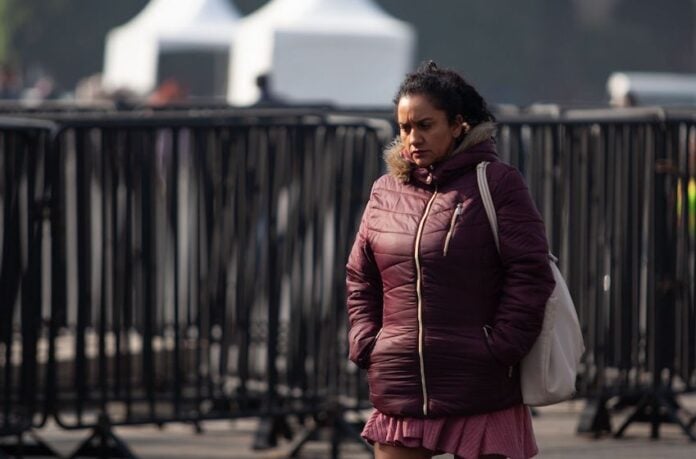
Authorities said Monday that classes will resume as normal once the weather conditions improve. (Andrea Murcia/Cuartoscuro)

The Education Ministry (SE) ordered schools in the states of Hidalgo and Puebla to close on Monday due to cold front No. 13, which will bring low temperatures, heavy rain and frost to several regions of Mexico. 

In Puebla, students across 14,789 public and private schools in the Sierra Norte, Sierra Nororiental, Serdán and Atlixco valleys, as well as in the Mixteca and Angelópolis regions, will take classes online. Schools in the Sierra Norte and Sierra Nororiental regions will resume in-person classes on Wednesday, while the rest are expected to return to classrooms on Tuesday.

Temperatures in these regions are expected to drop to between 2 and 8 degrees Celsius. Meanwhile, in the city of Puebla and the central valleys, temperatures could drop to 5 degrees Celsius at night. 

In Hidalgo, authorities announced that temperatures could drop to 0 degrees, leading SEP to order the closure of schools in at least 34 municipalities. This decision affects all levels of education, from elementary through higher education, including both public and private institutions. Authorities said Monday that classes will resume as normal once the weather conditions improve.

In Veracruz, the Universidad Veracruzana announced the suspension of classes on Monday in the Poza Rica-Tuxpan, Veracruz-Boca del Río, Coatzacoalcos-Minatitlán and Xalapa regions. Municipal authorities in Cosautlán de Carvajal and Ángeles R. Cabada also ordered schools to remain closed. 

How is cold front No. 13 affecting the rest of Mexico?

According to the National Meteorological Service (SMN), some regions of Mexico can expect temperatures as low as -10 to -15 degrees Celsius throughout the week, accompanied by frost in the early hours of the morning.

These are the states that will be most affected by the low temperatures: 

Minimum temperatures of -15 to -10 degrees Celsius: Durango.

Minimum temperatures of -10 to -5 degrees Celsius: Chihuahua.

Minimum temperatures of -5 to 0 degrees Celsius: Baja California, Coahuila, Nuevo León, Zacatecas, Hidalgo, Tlaxcala, Puebla and Veracruz.

Minimum temperatures of 0 to 5 degrees Celsius: Tamaulipas, San Luis Potosí, Aguascalientes, Jalisco, Michoacán, Guanajuato, Querétaro, México state, Mexico City and Oaxaca.

How long will the cold weather last?

The SMN forecasts that cold to very cold conditions will continue in the north, center and east of the country throughout the early part of the week, with strong winds in the Isthmus and Gulf of Tehuantepec and rains of varying intensity in the southeast. 

With reports from Milenio and El Financiero

What to cook in November 

0
A staged close-up photo of a Día de Muertos altar featuring two types of Mexican pan de muerto. One is a large, light-colored loaf dusted heavily with white sugar, the other is dark but with the traditional pan de muerto "bones." Both are surrounded by vibrant orange cempasúchil marigold flowers and small orange and yellow decorative gourds.
(Roberto Carillo/Pexels)

It’s my favorite time of year. Dia de los Muertos, colder weather, the holidays and all those comfort foods we love right along with it. Pozole, tamales and, of course, everyone’s favorite: atole

Apples and peaches, along with those fall vegetables — eggplant, green beans, corn, beets, and artichokes — are currently at their freshest. And don’t forget the humble spinach, my personal favorite and often overlooked. So, in honor of the true arrival of the fall season and the impending holiday, I’ve included here one traditional pozole recipe and two recipes for seasonal produce.

Pozole

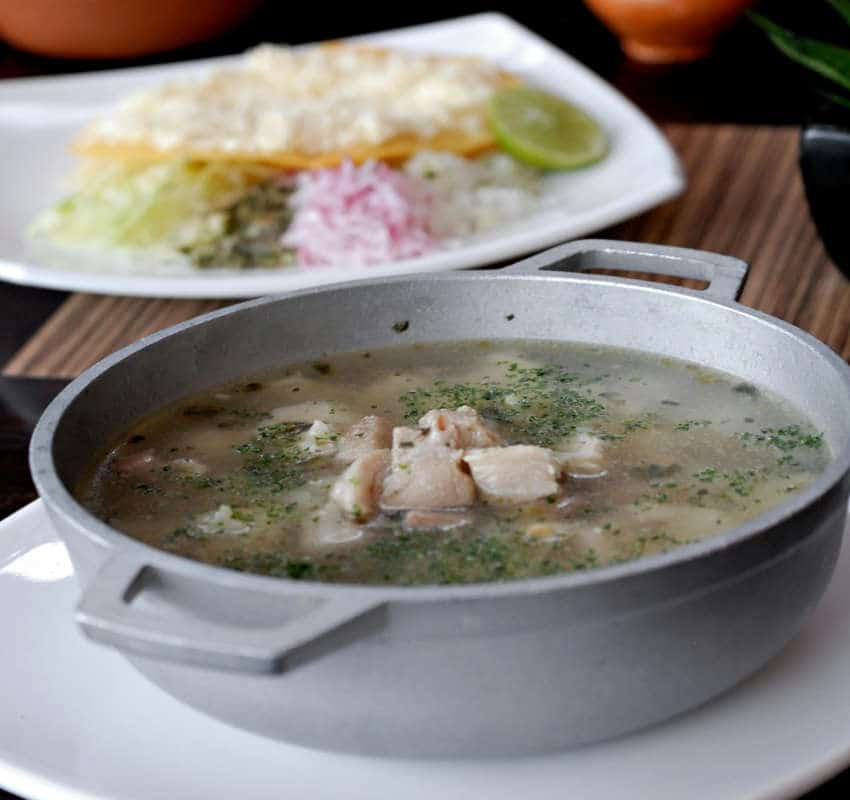
My darling neighbors, whom I’ve adopted as my Mexican daughters, love pozole. Every year around this time, their family tradition is to make a big pot of comforting white pozole.

Their mom was gracious enough to share her recipe with me, so if you’d like to cook traditional Mexican white pozole for this month’s celebrations, this one is tried and true, and a total crowd-pleaser. 

White Pozole

A metal bowl filled with traditional white pozole (clear broth, chunks of chicken or pork, and herbs) served alongside a side dish, perfect for a Dia de Muertos celebration.
Make our authentic white pozole recipe this Dia de Muertos, shared by the writer’s Mexican neighbors. (Dave Garcia/Pexels)

Ingredients:

  • 1 kg cacahuazintle corn (precooked or canned)
  • 1 kg pork (leg or shoulder), cut into large chunks
  • 1 large onion, quartered
  • 4 garlic cloves
  • 2 bay leaves
  • Salt to taste
  • 5 liters of water

Directions:

  1. In a large pot, heat the water with the onion, garlic cloves and salt. 
  2. When boiling, add the corn and cook for 1 hour and 20 minutes, or until tender.
  3. Add the ribs, pork loin and bay leaves; cook for 90 minutes, or until the meat is tender.
  4. Remove the garlic, onion and bay leaves, then shred the pork loin.
  5. Serve the pozole with oregano, chili powder, chopped onion, lettuce, radishes and quartered Mexican limes on the side. 

Peaches

Is there anything as delicious as a fresh, perfectly ripe peach? Gee, I don’t know, it’s pretty hard to beat. Any way you want it — fresh in a salad, grilled with meat or made into a salsa —  it’s just plain delicious.

Here is a quick, easy peach salsa to snack on with tortilla chips or to add to meat dishes or tacos.

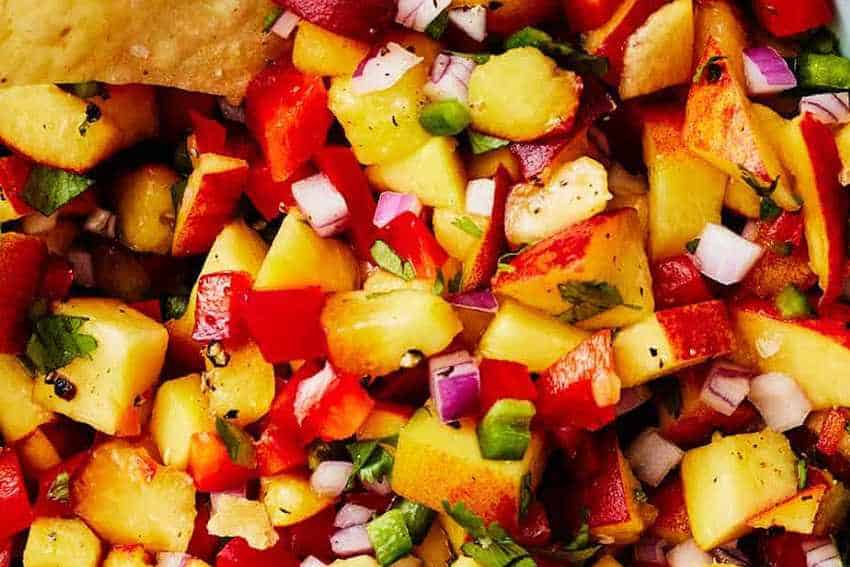
Peach Salsa

Close-up of vibrant, fresh peach salsa with diced yellow peaches, red bell peppers, red onion, and cilantro, served with a chip visible in the top left corner.
This peach salsa may not seem like a very Dia de Muertos dish, but with its season-fresh peaches, you’ll find yourself constantly snacking on it nonetheless! (Mexico in my Kitchen)

Ingredients:

  • 2 to 3 ripe peaches, pitted and diced
  • ½ red bell pepper, diced
  • ¼ cup chopped fresh cilantro
  • ¼ cup diced red onion
  • 1 small garlic clove, grated
  • ½ jalapeño pepper, minced
  • Juice and zest of 1 lime
  • ¼ teaspoon salt, or more to taste

Instructions:

  1. In a medium bowl, add the diced peaches, bell pepper, onion and cilantro.
  2. Squeeze the lime juice on top, then add the zest, garlic, jalapeño and salt.
  3. Mix well, season with a little more salt to taste. Chill until ready to use. 

Spinach 

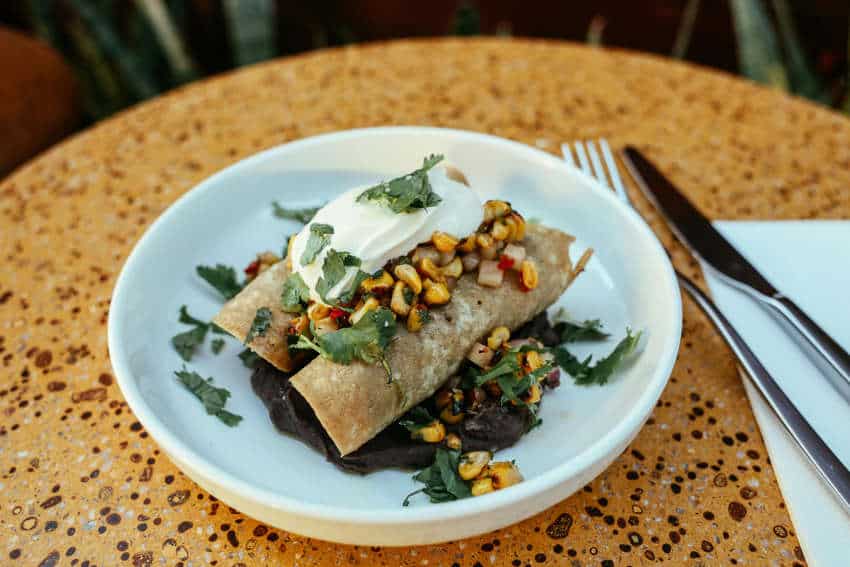
Not to overlook this underrated leafy green, these spinach enchiladas will knock your socks off: creamy spinach-and-mushroom-filled enchiladas topped with delicious salsa verde and cheese. It’s a quick 30-minute meal that’s comfort food at its best, especially for a sour cream lover like me! 

Spinach Enchiladas

Spinach enchiladas on a bed of black beans, topped with roasted corn, red pepper, cilantro and crema, a delicious main course for a potential Dia de Muertos meal.
Quick and easy to make — and totally vegetarian — hearty spinach enchiladas are guaranteed to stick to your ribs! (Rachel Claire/Pexels)

Ingredients:

  • 2 tablespoons olive oil
  • 1 white onion, diced
  • 2 cups mushrooms, chopped
  • 5 ounces fresh spinach
  • 3 cloves of garlic, minced
  • 1 cup sour cream
  • 2 cups shredded Mexican mixed cheese
  • 2 cups salsa verde (homemade or store-bought)
  • 8–12 warm tortillas (8 large wheat, or 12 smaller corn tortillas)
  • 1 teaspoon salt
  • ½ teaspoon fresh ground black pepper
  • ½ teaspoon ground cumin

Instructions:

Make the filling:

  1. Preheat oven to 350 F (175 C). 
  2. In a large skillet over medium-high heat, warm the oil. Add onion and mushrooms, and cook until they soften, 6–7 minutes.
  3. Add garlic and cook until fragrant, about 30 seconds.
  4. Add spinach, cumin, salt and pepper. Cook for about 5 minutes until spinach is wilted. Stir in sour cream and remove from the heat.

Assemble the enchiladas:

  1. Put 2 tablespoons of the spinach mixture onto a tortilla and roll it up. Place in the baking dish with the seam side down. Repeat with the remaining tortillas until the spinach mixture is used up. 
  2. Pour salsa verde over the top, and top with shredded cheese. 
  3. Bake for 15–20 minutes until the cheese has melted and the salsa verde is bubbling. 

Bel Woodhouse, Mexico Correspondent for International Living, is an experienced writer, author, photographer and videographer with more than 500 articles published both in print and across digital platforms. Having lived in the Mexican Caribbean for over seven years now, she’s in love with Mexico and has no plans to go anywhere anytime soon.

El Jalapeño: Costco to open stores on Tulum beach and San Miguel central plaza

7
El Jalapeño is a satirical news service created by Mexico News Daily. Every “fact” published here is intentionally seasoned with exaggeration, parody, and complete fabrication. Nothing should be mistaken for actual news, real quotes, or credible sources. Read, laugh, and remember: enjoy the spice!

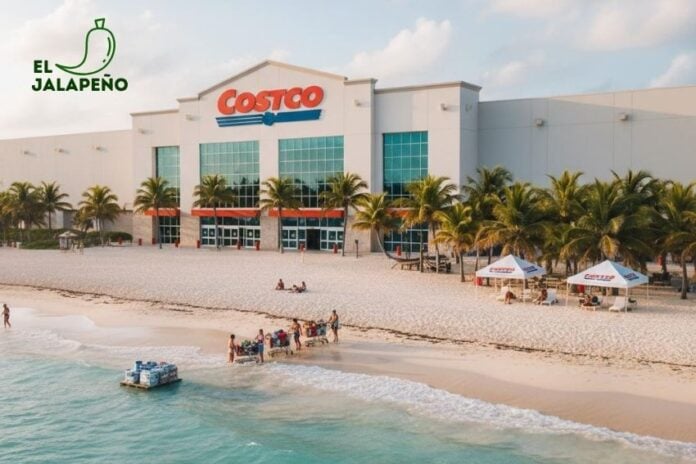
TULUM, MÉXICO — In a move experts are calling “the final confrontation between natural beauty and bulk savings,” Costco announced Monday that it will begin construction of a state-of-the-art warehouse directly on Tulum’s pristine beachfront.

Company executives claimed the initiative aims to “bring affordable tubs of guacamole and 4-liter bottles of sunscreen directly to where they’re most spiritually needed.” The new branch will feature ocean-view forklift parking and a members-only swim-up food court offering $1.50 hot dogs served on biodegradable surfboards.

“We’re bringing convenience to paradise,” said Costco spokesperson Maribel Gómez, proudly standing where sea turtles once nested. “Imagine sipping coconut water while comparing prices on 48-pack toilet paper under the radiant Caribbean sun. That’s progress.”

Company officials say the drive-thru bulk-buy palace will “blend seamlessly with the local environment,” thanks to a planned 40-meter façade featuring a mural of Kirkland Signature products riding dolphins. Construction crews will bulldoze a “reasonable number” of palm trees to make room for the store’s hot dog stand, double-decker parking garage, and state-of-the-art sand-resistant tire center.

“We know Mexico’s population is growing, and so is the need for 120-packs of AA batteries,” said Mauricio Talayero, Costco Mexico’s finance director. “If the ancient Maya returned, they’d probably want a bulk vat of guac for their next ballgame. That’s just economic progress.” Talayero shrugged off critics who question whether towering warehouse stores belong beside places usually reserved for iguanas and Instagrammers, vowing to continue the company’s expansion “despite the authorities, despite the USMCA renegotiations, and despite not finding an extra-large beach umbrella that meets our strict quality standards.”

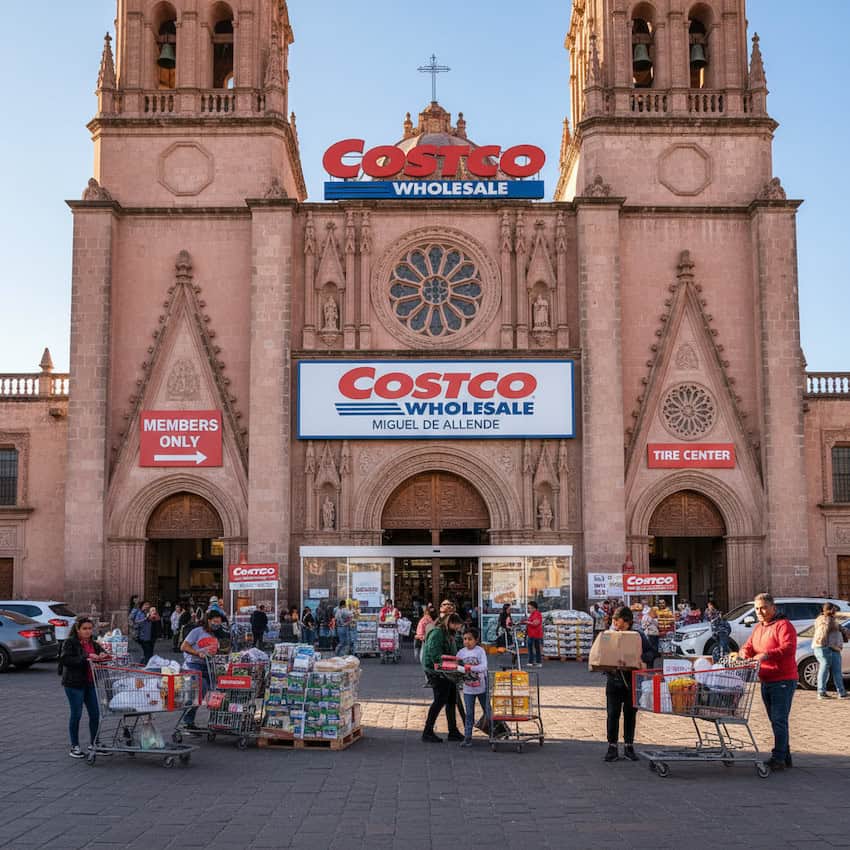
In its boldest move since introducing free samples of lukewarm pizza, Costco has also revealed its plan to cement its concrete legacy directly atop Mexico’s most cherished cultural and natural landmarks: smack next to the Parroquia church in San Miguel de Allende.

​Locals voiced concerns about traffic and the acoustic power of Costco’s opening-day mariachis echoing off centuries-old church walls. However, a representative explained that every shopper will receive a commemorative sandcastle bucket and a “Buy 1 Get 48” coupon for communion wafers.

Analysts predict that these developments mark the beginning of a new era where Tulum’s sea turtles and San Miguel’s parishioners alike can finally unite in the noble pursuit of bulk mayonnaise and discounted patio furniture.

El Jalapeño is a satirical news outlet. Nothing in this article should be treated as real news or legitimate information. For the brave souls seeking context, the real news article that inspired this piece can be found here. Check out our Jalapeño archive here!

Got an idea for a Jalapeño article? Email us with your suggestions!