The December inflow of capital through the foreign purchase of Mexican bonds barely placed a dent in the loss from capital flight for most of the year. (Cuartoscuro)
Foreign capital outflows slowed in December, reversing a flight that had been constant since April 2025.
The Institute of International Finance (IIF) reported that in the final month of 2025, foreign investors bought US $1.322 billion worth of Mexican bonds, the most significant surge in debt acquisition by foreign investors among emerging markets tracked by the IIF.
But the December rebound was minimal in contrast to the US $7.0234 billion that was divested from Mexican bonds throughout 2025, subtracting capital from Mexican coffers. It was one of the largest outflows of foreign capital from government instruments in recent years.
Further tempering the good news is that it only reflects the debt market. Final equity market figures are pending, but the IIF has reported that through November 2025, Mexico’s equity market saw a US $5.0046 billion outflow from Mexico.
Grupo Monex analyst Janneth Quiroz Zamora told the newspaper La Jornada that the outflows do not signify a widespread loss of access to markets or a financing crisis. Instead, she described them as a response to the global increase in risk aversion.
“Episodes of financial volatility, geopolitical tensions and doubts about global growth led to a widespread reduction in exposure to emerging markets,” she said.
Quiroz said Mexico still has “relatively solid macroeconomic fundamentals” and referred to the exodus of capital as a portfolio rebalancing.
“Some international funds reduced their exposure to Mexican bonds … as part of global rebalancing strategies, taking profits after several years of strong performance by the peso,” she said.
The peso went from 20.88 to the US dollar at the end of 2024 to 18 to the dollar by the end of 2025, a noticeable 16% appreciation.
The IIF also noted that while overall Foreign Direct Investment (FDI) in Mexico reached record highs, new investments declined. They accounted for just 9% of the total, with reinvestments and intra-company transactions making up the bulk of the inflows. Also, nearshoring opportunities had not significantly improved the reshoring process as a percentage of total FDI.
The IIF also projected that Mexico’s economy would fail to reach 1% growth for a second consecutive year in 2026, citing “uncertainty surrounding tariffs, the upcoming US-Mexico-Canada free trade agreement review and domestic institutional fragility.”
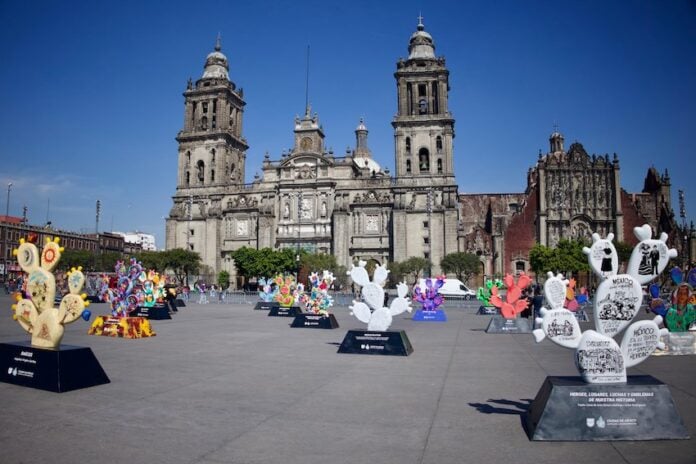
Each nopal was designed by individual artists or collectives from across Mexico City. (@SEPICDMX/X)
Mexico City Mayor Clara Brugada inaugurated the “Nopalera en el Corazón” (Cactus Field in the Heart) exhibition in the capital’s main plaza on Friday, featuring 200 nopal cacti sculptures created by local artists.
The month-long display, running through Feb. 9, celebrates the nopal as both a national symbol and a statement of sovereignty. Each piece was designed by individual artists or collectives from across the city, transforming the Plaza de la Constitución into what Culture Minister Ana Francis López Bayghen described as “a garden of resistance, memory and contemplation.”
La exposición “Nopalera en el corazón” es una expresión artística y también política, porque este símbolo identitario de nuestro país y de nuestra ciudad habla de nuestra historia, de nuestra resistencia y de la manera en que nos miramos como pueblo.
“This exhibition is an artistic and political expression of national sovereignty,” Brugada said during the opening ceremony. “Here is the nopal as an element of our identity, as a symbolic element of our country and our city.”
The project expands on an initial showcase of 50 pieces displayed at the Nopal Fair 2025 at the Monument to the Revolution. Of the 200 new works, 113 were created by male artists, 63 by women and 23 by artistic collectives.
Sculpture artists employed diverse techniques including printmaking, vinyl paint, aerosol and sculptural elements. Their themes range from social justice proclamations to pre-Columbian references and abstract designs.
Brugada announced plans for accompanying cultural programming throughout the exhibition, including music, theater and talks. She also revealed intentions to display the sculptures at emblematic locations during the 2026 FIFA World Cup and called on artists to create a similar exhibition featuring axolotls before Easter.
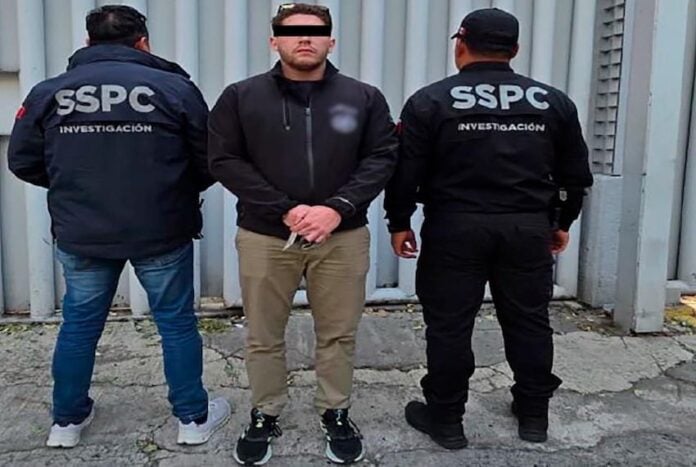
Among the people arrested was Bryan “N,” a financial operator for Tren de Agua who was responsible for providing properties to shelter victims and house members of the criminal group. (@OHarfuch/X)
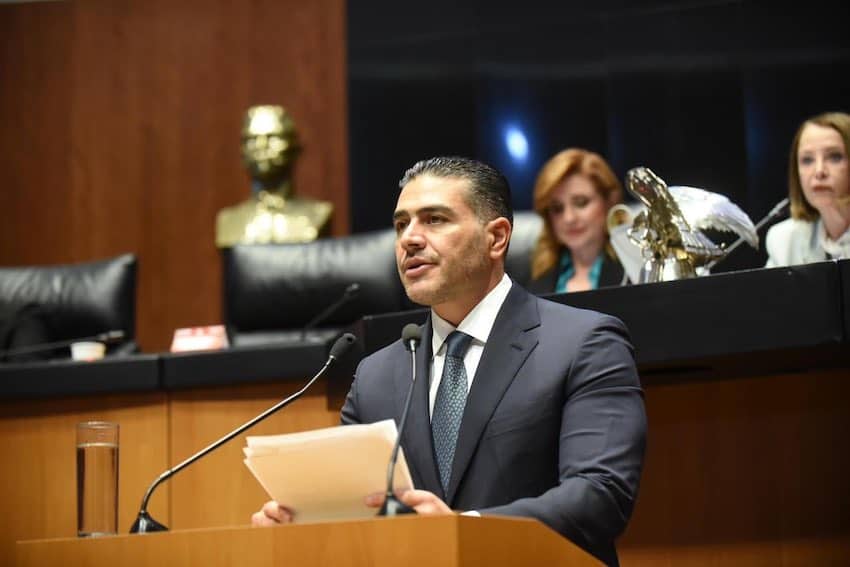
Security Minister Omar García Harfuch announced on Tuesday the arrest in Mexico City of six members of Tren de Aragua, a crime group from Venezuela that the U.S. government has designated as a foreign terrorist organization.
In a social media post, García Harfuch wrote that personnel from federal security forces, including the army and the National Guard, along with Mexico City police, detained six Tren de Aragua members linked to extortion, human trafficking and drug trafficking.
According to a Security Ministry (SSPC) statement, five of the suspects were detained in Valle Gómez, an inner-city neighborhood north of Mexico City’s historic center, and one was arrested in the borough of Iztapalapa on the capital’s eastern side.
Among the five people arrested in Valle Gómez was a woman identified as Lesli Valeri Flores Arrieta.
The SSPC said that she has been “identified as responsible for collecting payments derived from sexual exploitation, drug distribution and control of female victims.”
The ministry also said that the woman acted as a liaison with a local criminal group, reportedly La Unión de Tepito.
The other four people detained in Valle Gómez were identified in media reports as Jorge Donovan Romero Flores, Giancarlo Romero Flores, Valeria Pineda Arredondo and Diana Paola Ortega Pérez. The newspaper Reforma reported that they are collaborators and relatives of Flores Arrieta.
The five suspects arrested in Valle Gómez were located at two homes in the neighborhood. The SSPC said that authorities seized methamphetamine, marijuana, cell phones, a firearm, cash and computer equipment at the properties. It also said that a notebook containing “a list of names linked to the extortion of women in different areas of the city” was seized.
In Iztapalapa, an arrest warrant was executed against a man identified as Bryan Betancourt Olivera.
García Harfuch said that he is a “financial operator” for Tren de Aragua, described by the U.S. Department of Justice as “a violent transnational criminal organization that originated as a prison gang in Venezuela in the mid-2000s.”
According to the SSPC, Betancourt was also involved in facilitating and providing “homes for the protection and lodging of members of the criminal group and foreign women.”
Neither the SSPC nor García Harfuch revealed the nationalities of the six suspects.
Mexico’s president said that in Monday’s call, Trump “understood” her position on military interventionism. (@Claudiashein/X)
After the call on Monday morning, Sheinbaum ruled out the possibility of U.S. military action in Mexico, but her government remains under pressure from the Trump administration to do more to combat cartels and the drugs they manufacture and traffic.
The newspaper reported in September that the crime group operates in 11 states, where it is said to be involved in human trafficking, drug trafficking and extortion, among other crimes. Those states are Chiapas, Quintana Roo, Tabasco, Veracruz, Hidalgo, Puebla, México state, Guanajuato, Mexico City, Tamaulipas and Chihuahua.
El Universal reported that Tren de Aragua collaborates with local crime groups, including the Sinaloa Cartel and the Jalisco New Generation Cartel, both of which were designated as FTOs by the U.S. government last year.
Other alleged Tren de Aragua members have previously been arrested in Mexico, including three men who were taken into custody in Mexico City last October.
Mario Schjetnan is one of Mexico's most accomplished landscape architects. (Mexican Cultural Institute)
It’s almost impossible to envision certain cities without their parks and their unique personalities. How much of our collective imagination regarding New York City is tied to Central Park? What about Hyde Park in London or Bosque de Chapultepec in Mexico City? Landscape architecture is not only a human right but also a cultural treasure that enhances life and mental well-being within urban spaces.
In Mexico, one of the foremost minds behind this art is Mario Schjetnan. “If you want to develop a new site or area, you should start with a park,” is one of his more popular quotes. Schjetnan understands that we are both nature and architecture, and that without nature, architecture can become detrimental to our health.
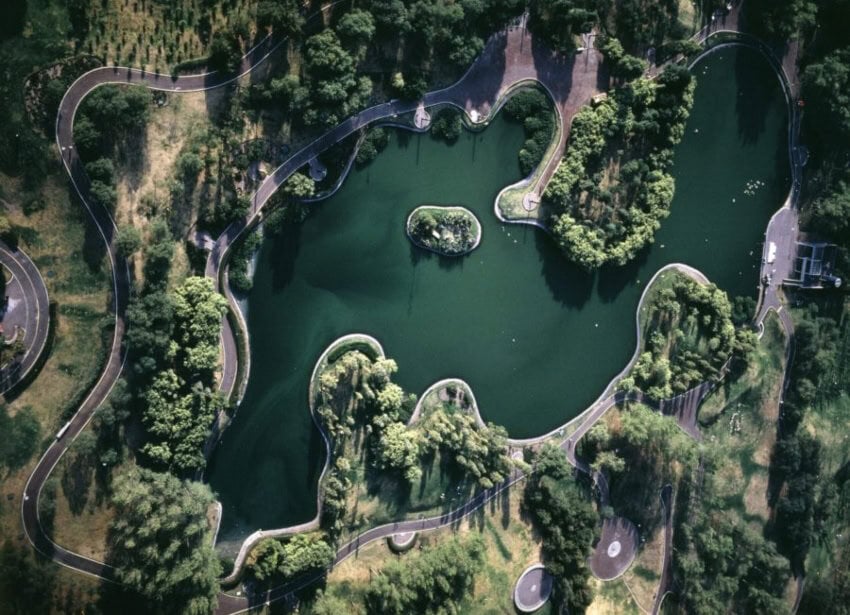
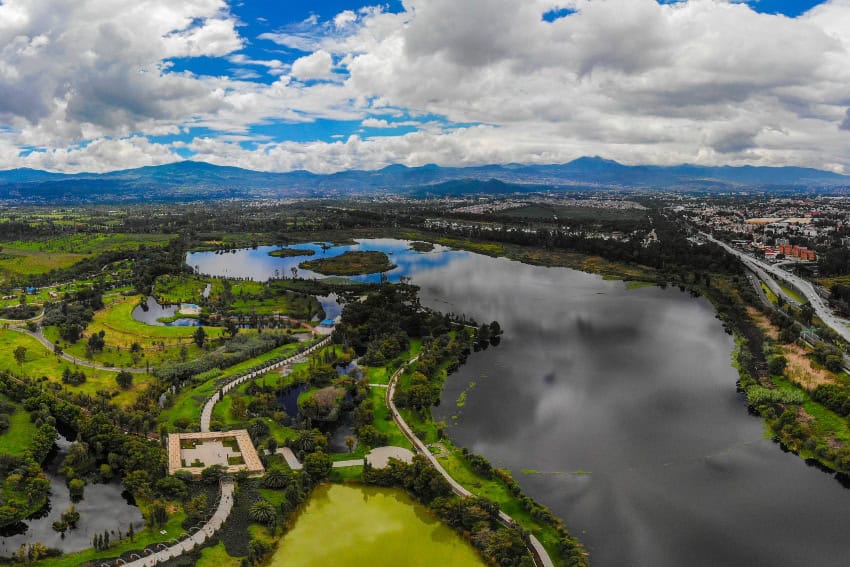
Tezozómoc Park was Schjetnan’s first project in 1979. (Ana Paula de la Torre)
An icon of landscape architecture, Schjetnan has left an indelible mark on the history of the discipline in Mexico, starting with his first project in 1979: the legendary Tezozómoc Park, inspired by the ancient Lake Texcoco. Schjetnan views open spaces as a “human right” and a means to “improve livability in the poorest sectors of Mexico and Latin America, promoting social justice and urban equity, while enriching the wealthiest areas.”
A journey through the work of Schjetnan
Environmental awareness, cultural memory and quality of life all converge in the work of Mario Schjetnan. He studied architecture at the National Autonomous University of Mexico and earned a Master of Landscape Architecture from the University of California, Berkeley. In 1977, he co-founded the Urban Design Group with architects José Luis Pérez, Irma Schjetnan (his wife) and Letty Pérez. The firm has designed numerous parks in Mexico, Latin America, the Middle East, China and the U.S.
To illustrate the breadth of his influence on Mexican urbanism and architecture, he served as the first director of urban and housing design at INFONAVIT, the Mexican government’s social housing institution, in 1972, overseeing projects in 110 Mexican cities and producing approximately 100,000 housing units.
His most significant works include projects that conserve essential ecosystems, such as the restoration of Chapultepec Forest, Xochimilco Ecological Park and Copalita Eco-Archaeological Park. He has also created remarkable urban parks on reclaimed industrial sites, including La Mexicana Park and Bicentennial Park in Mexico City.
For instance, Tezozómoc Park recreates the lake that once surrounded Tenochtitlán in pre-Hispanic times and now serves as a sanctuary for birds and the unique axolotl. The Xochimilco Ecological Park is associated with restoring the productive chinampa area, a pre-Hispanic method of cultivating floating terraces, earning recognition as a World Heritage Site by UNESCO. Additionally, the Copalita Eco-Archaeological Park is invaluable for archaeological and environmental conservation on the beaches of Oaxaca.
Likewise noteworthy is Itzicuaro Park in Michoacán, a groundbreaking example of landscape architecture due to its dual function as an ecological and productive space. It is based on five bodies of water that sequentially treat wastewater, with areas allocated for the commercial cultivation of trees, plants and vegetables.
A multi-award career
Xochimilco Ecological Park has earned recognition as a UNESCO World Heritage Site. (Ana Paula de la Torre)
Mario Schjetnan has undoubtedly impacted contemporary Mexican landscape architecture, and his influence transcends borders. According to The Cultural Landscape Foundation, Schjetnan “belongs to a generation of landscape architects, architects and urban planners who recognized the environmental impacts of urban development and its consequences for life on the planet.”
This year, Schjetnan and the Urban Design Group received the Cornelia Hahn Oberlander International Landscape Architecture Award. This biennial award, established in 2014, aims to increase visibility, understanding, appreciation and dialogue surrounding landscape architecture. Schjetnan and the Urban Design Group are the first Latin Americans to receive this honor.
Additional accolades include the Holcim Foundation Award in 2008 for the Itzácuaro Park project, which created new job opportunities for community farmers, installed an effective flood control system and revitalized a heavily polluted drainage channel. He was also awarded the Sir Geoffrey Jellicoe Award, the highest honor from the International Federation of Landscape Architects, in 2015, and the Elise and Walter A. Haas International Award in 2019, which recognizes Berkeley alumni living abroad who have achieved career success.
Mario Schjetnan’s work is guided by an unquestionable talent and a philosophy that unites humans and nature. His creations resonate with numerous sensitivities, dignifying cultural heritage and emphasizing the power of imagination, as well as the beauty and healing properties of nature, while respecting its balance.
Ana Paula de la Torre is a Mexican journalist and collaborator for various outlets, including Milenio, Animal Político, Vice, Newsweek en Español, Televisa and Mexico News Daily.
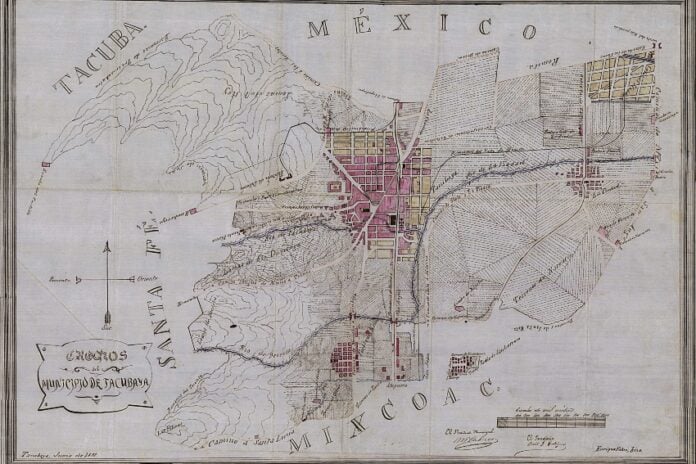
Map of Tacubaya in 1897. The central location of the district has made it a magnet for potential developers in recent years. (Public Domain)
Gentrification is the buzzword going around Mexico City right now, with recent protests encouraging a policy response from Mayor Clara Brugada, but it is showing no signs of slowing. When we talk about gentrification in Mexico City, many think of digital nomads in hipster cafes in Roma, Condesa and Juárez, but the phenomenon is much more complicated. As these three areas get more popular, the gentrification bubble expands, pushing Mexicans out from the traditionally middle-class neighborhoods on the borders of these three in-demand areas, to make room for the demand for new expensive developments, not only by foreigners but also by wealthier Mexican residents.
As the urban center of Mexico City has expanded, driving people beyond Roma and Condesa, Tacubaya has become more attractive to investors who are looking for the next new space to build for the affluent.
A brief history of Tacubaya
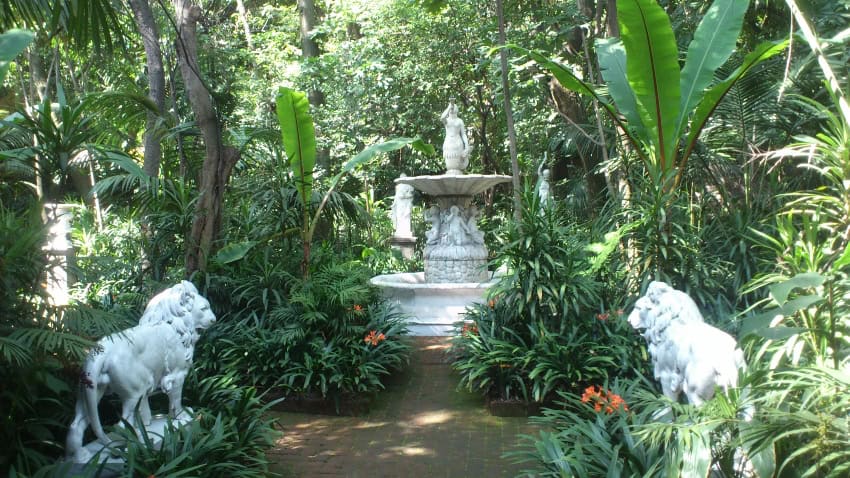
The garden in the museum of Casa de la Bola in Tacubaya. (Henryficar/Wikimedia Commons)
The ancient city of Tacubaya was known for its strategic access to fresh water. It became known as Atlalcuihaya, meaning “where water is gathered” in the Náhuatl language, before becoming the Spanish Tacubaya. It was a suburban municipality of the city in the 19th century, and landlords began to build several churches, water mills and haciendas, including two that still exist — the museum of Casa de la Bola and the government office of Casa Amarilla, with Parque Lira connecting the two.
However, in 1928, the Mexican government reworked Mexico City into one central department that incorporated the municipalities around Mexico City, including Tacubaya. Urban development quickly transformed the area, with large haciendas giving way to mixed-use complexes and multifamily buildings.
Transformation from utopia to urban transport hub
Surrounded by parks and plazas, early developers saw the neighborhood as ideal for walking and socializing. Sprawling avenues quickly appeared, however, as tram lines disappeared to make way for cars. In the 1970s and 1980s, the government ran three new metro lines through Tacubaya, while the Viaductoand Revoluciónroads connected the area to the north, south, east and west of the city.
By the late 20th and early 21st century, however, underinvestment in the once-booming area led it to fall from grace, as Tacubaya became more insecure, with crime rates rising. What had happened?
The Lost City and public investment during COVID-19
One answer is to be found in an irregular settlement, known as the Ciudad Perdida (Lost City), that emerged in the 20th century, housing impoverished families in makeshift structures amidst abandoned mines. This drove Tacubaya’s image of urban decline.
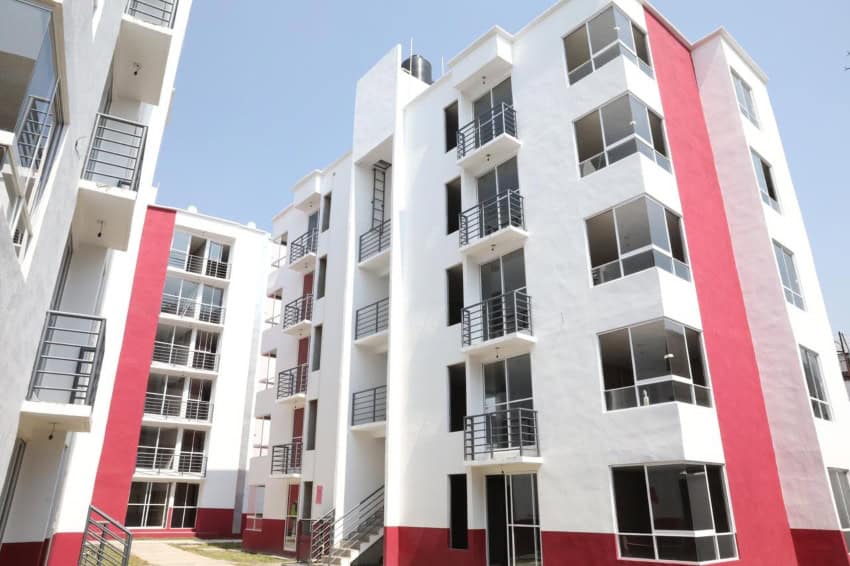
It wasn’t until the pandemic, with government investment in the development of the Ciudad Bienestar project, in place of the Lost City, that things began to change in Tacubaya. The 110-million-peso (US $6 million), 185-apartment complex offered families free homes, and those apartments are thought to have a value of around 759,000 pesos each, or up to 3 million pesos, if land value is taken into account.
The Ciudad Bienestar project was the beginning of change in Tacubaya. (Gobierno CDMX)
This set the stage for Tacubaya’s renaissance.
The new Tacubaya
Over the last decade, Tacubaya has undergone a significant shift. Where there was once a miscelánea (corner store) stands a natural wine store, and just behind that, a popular nightclub. Moving closer to AvenidaRevolución, you will see a white-washed Tacubaya, the “safe” area, which is swept daily and where there are more streetlights. It is the area where “creatives” have flocked over the last century to reside in historic but affordable buildings, such as Edificio Ermitaand Edificio Isabel. It is where I, myself, have lived for the last 11 years. It reflects the first major wave of gentrification, when rent control was scrapped in some buildings and long-term residents were forced out.
However, upon crossing Jalisco road, the true Tacubaya comes into sight. Closer to the metro and bus stations, you see a neighborhood still filled with market stalls, arcades and fairgrounds, one where there are fewer new developments — so far.
As high-rises sneak closer to the border between the two Tacubayas, it seems clear that developers are seeking to erase this Tacubaya, one street at a time, as the potential real estate profits grow ever more attractive.
The seeds of Tacubaya’s gentrification
It should be no surprise that this is happening: Mexico City’s public policy since the 1990s has focused on raising the density of the central boroughs, and developers have been encouraged to build in them. This has gone hand in hand with public investment in communal spaces and transportation in certain areas.
Neighborhoods chosen for improvement, such as Tacubaya, have become more attractive places to live. The perceived beginnings of a transformation in the area spurred developers to construct several large-scale buildings on more affordable land, as they speculated correctly that the area’s housing market would rise in value.
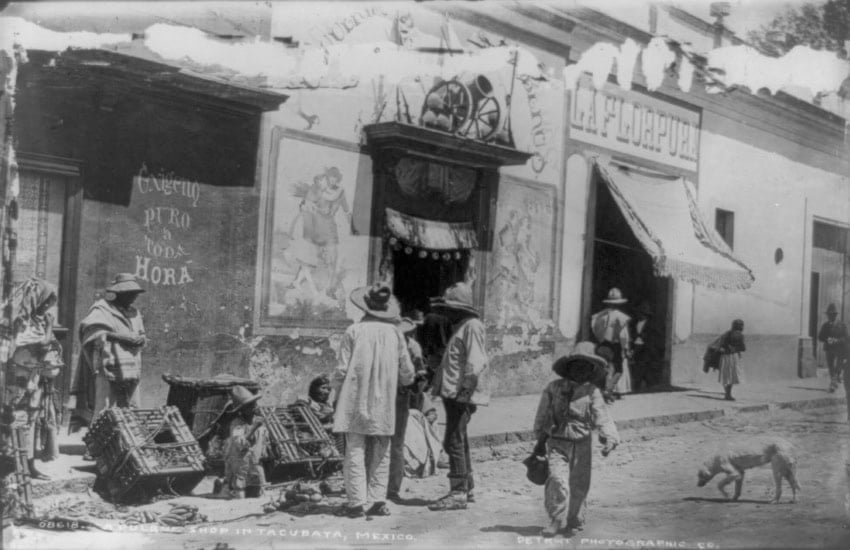
Pulquería “La Flor Pura” in Tacubaya circa 1884. (Public Domain)
But all this has also meant that newer residents, with greater purchasing power, have driven an increase in the cost of living, and that the area’s current longtime residents are being forced out.
A new law ramps up development
In 2021, a new law was established that included an agreement between the city and developers on the administrative procedures for real estate projects within the “Cooperative Action System” (SAC) of Tacubaya. The government aimed to “coordinate the actions of the public, social and private sectors for projects and works to revitalize and requalify the urban area.”
This agreement spurred a boom in development in the area during the pandemic — just as working families and digital nomads from other countries flocked in droves to Mexico City, thanks to work-from-home mandates that freed them to live anywhere. Thanks to the law, developers could now build more stories in exchange for a contribution to the city government for public works — which reportedly never came to fruition. As developers rushing to meet new demand pushed into Tacubaya, locals facing rising prices and mounting pressure from these developers sought a way to discourage further gentrification. By 2024, the San Miguel Chapultepec and Escandón I neighborhoods were removed from the Tacubaya SAC agreement at residents’ request.
Could advertising practices erase Tacubaya’s identity?
This victory, however, has not stopped development in Tacubaya. And as developers look for affluent clients to occupy their projects, they have increasingly resorted to questionable advertisement practices that seek to blur the boundaries between Tacubaya and its more affluent next-door neighbors in the minds of clients.
A good example is a development that arose on Antonio Maceo Street, where the emblematic 1950s Hipódromo Cinema was demolished. A new 16-story building, consisting of apartments, a HS HOTSSON hotel, a gym and several other businesses, took its place. But Homie, the company in charge of its marketing, decided to name the development Condesa Sur (South Condesa), clearly hoping to associate the development with the more affluent Condesa neighborhood nearby.
According to the newspaper NMás, “The construction of new residential developments is accompanied by a strategy of erasing the names of neighborhoods that carry a history of danger and precariousness.”
Removing traditional names
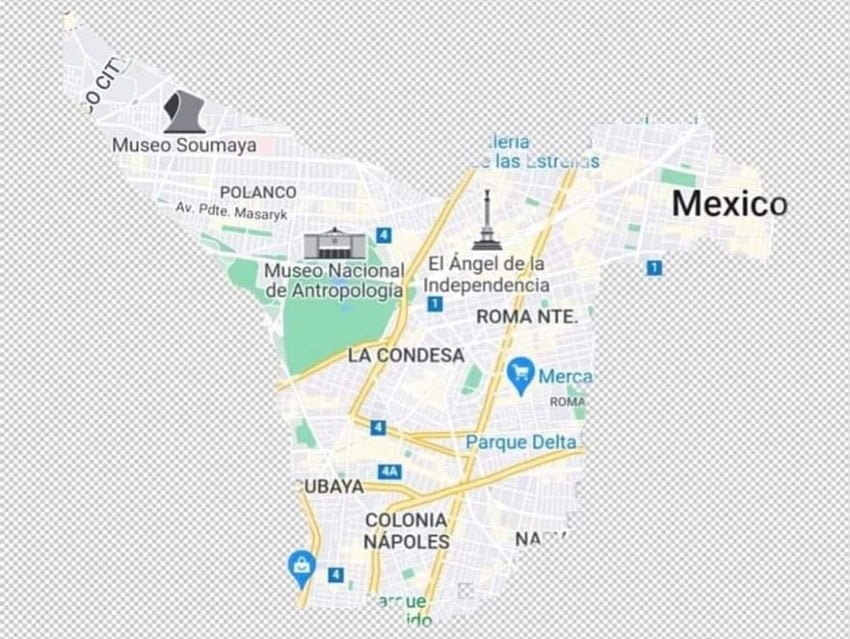
This two-square-mile map of Mexico City’s desirable areas is frequently shared by foreigners. (Facebook)
Journalist Mariana Aguirre wrote in the same article, “The Guerrero neighborhood, next to the rough neighborhood of Tepito, is now ‘Reforma Norte’ in advertisements. The Doctores neighborhood is now ‘Roma Oriente,’” these manufactured names seeking association with the better-regarded adjacent neighborhoods of Reforma and Roma.
Studio apartments in the new Condesa Surdevelopment reportedly cost 14,000 pesos ($776) a month, while two-bedroom apartments with amenities go for 20,500 pesos ($1,410). For context, the minimum daily salary in Mexico City was 278.80 pesos in 2025, meaning it would take a minimum wage worker more than 50 days of labor to earn the money needed to pay for a month’s rent on a studio apartment there.
Other new developments in Tacubaya, located on the borders with the more affluent Escandón and Condesa neighborhoods, also seem to be willing to blur the lines between the different neighborhoods, expanding the bubble where it is acceptableto live, as shown by the circle on the map below, one that many foreigners share when looking for an apartment to rent.
The transformation of an icon
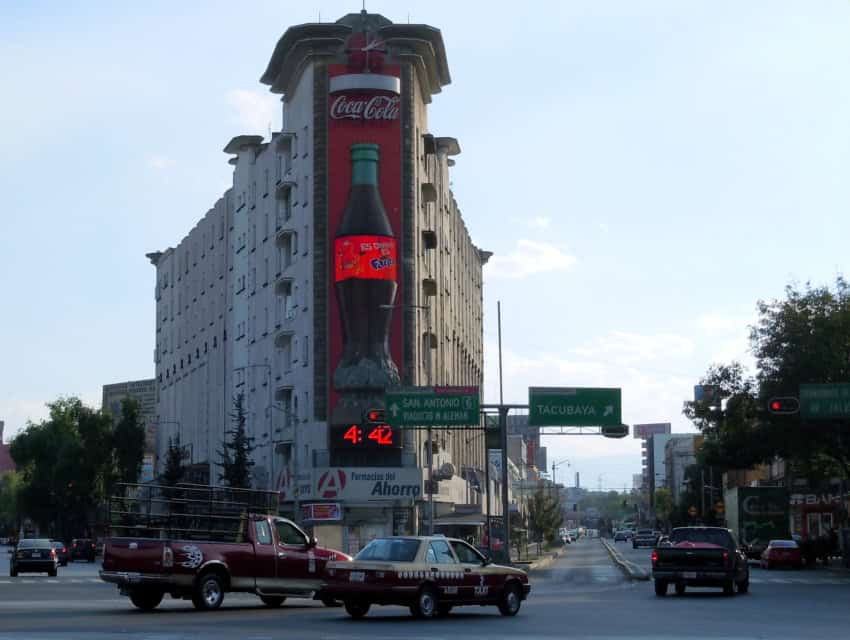
Shortly after the development of the Condesa Sur project, developers began work on transforming Tacubaya’s Ermita Building. Known as Mexico’s answer to New York City’s historic Flatiron Building, the Ermita was a Mexico City icon during the first half of the 20th century, recognizable by the larger-than-life ads for brands such as Coca-Cola displayed on its facade.
During the pandemic, the building’s owner — the Mier y Pesado Foundation, which has owned the building since its construction in the early 1930s — evicted residents from the Ermita, some of whom had lived in the building their whole lives. The foundation planned to carry out a complete renovation of the building to offer new tenants a space on the border of the Condesa neighborhood — at a much higher price than usually found in Tacubaya.
If you’d like a taste of what Ermita living was all about, in 1983, Alfonso Cuaron, the well-known director of the film “Roma,” filmed his short, “Quartet for the End of Time,” in the building. And in 2019, Daniela Uribe produced a documentary on the lives of eight of the building’s residents, entitled “Ermitaños” (which also means “hermits”), giving an insight into their day-to-day lives.
Tacubaya’s iconic Ermita Building has provided a very clear example of the neighborhood’s gentrification. (Matthew Rutledge/Wikimedia Commons)
Evicting residents to make way for wealthier ones
The renovation of the Ermita, with its accompanying eviction notices, felt like the beginning of a broader phenomenon. Instead of simply building new high-rises on empty plots of land, developers were now transforming older historic spaces to make way for wealthier residents, evicting current residents.
Meanwhile, seeing the success of the neighboring Condesa Sur building, Mier y Pesado contracted Homie to do the marketing for the new and improved Ermita, with rental prices starting at 14,900 pesos ($820) — nearly 1,000 pesos more a month than at Condesa Sur — and rising to 31,500 pesos ($1,735) for a two-bedroom penthouse. This is in comparison to rental prices starting at around 4,500 pesos ($250) in 2020, marking more than a 300% increase.
Just across the road from Ermita, and actually inCondesa, Espacio Condesa is now under development, with 31 floors, including offices, apartments, a gym and a shopping mall. Once complete, it will likely increase traffic in the area and drive up housing demand just over the border in Tacubaya.
Meanwhile, the development push continues: A major new apartment complex next to Alameda de Tacubaya Square, Living Enjoy Escandón, is also being advertised. Once again, developers are shying away from the name Tacubaya and opting for the more attractive “Escandón” — since the Escandón neighborhood is located just across the street from the project and shares a border with Condesa as well as with Tacubaya.
The development’s Instagram account shows renderings of an 18-floor building and says that apartments will be available for presale starting at 3.3 million pesos ($182,950) by summer 2027.
The most expensive places to live
These new developments in Tacubaya have driven rental prices throughout the neighborhood sky high. According to data from the most recent real estate market report from the property site Propiedades.com, rental prices in Tacubaya have risen to an average 352.52 pesos (US $19) per square meter, placing Tacubaya at No. 14 among the most expensive neighborhoods in the city — only slightly behind the prestigious Roma, where prices average 362.69 pesos ($20) a month per square meter.
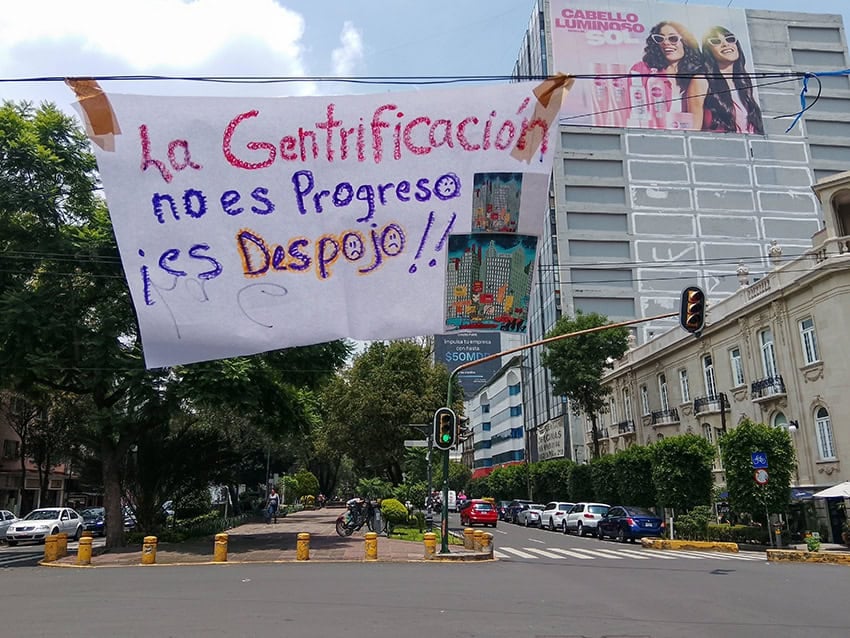
“Gentrification isn’t progress, it’s dispossession,” reads a banner hung in the Roma neighborhood of Mexico City in July. (Moisés Pablo/Cuartoscuro)
By contrast, in 2023, the rental portal listed Tacubaya’s average property prices at 197 pesos ($11) per square meter a month, marking an increase of over 78% in just two years.
With greater investment in the zone, crime rates have also decreased. According to the Hoyo de Crimen website, which uses Mexico City government data, the rate of violent robberies of pedestrians in the area has fallen over the last six years, from 473.4 recorded cases per 100,000 inhabitants in 2019 to 290.1 in March 2020 and 183.2 in March 2025. This has helped to shift the perception of safety in the area, as visitors venture further out of their bubble and into Tacubaya.
Gentrification by design
It would be naïve to think that gentrification in Mexico City is only taking place in Tacubaya, as a century of urban development history shows. But this latest wave of high-rise construction, the destruction of iconic buildings and the rebranding of neighborhood names, which undeniably have more of an impact and threaten to erase Tacubaya’s rich history, are creating a more visually and demographically homogenized space, repeating the trend that has been seen in several other parts of the city.
So, when you suddenly hear about “hot new neighborhoods” in Mexico City you’d previously never heard of, know that this is not by chance; rather, it is by design.
Felicity Bradstock is a writer for Mexico News Daily.
The president described her conversation with Trump as "very good" and "respectful." (Moisés Pablo/Cuartoscuro)
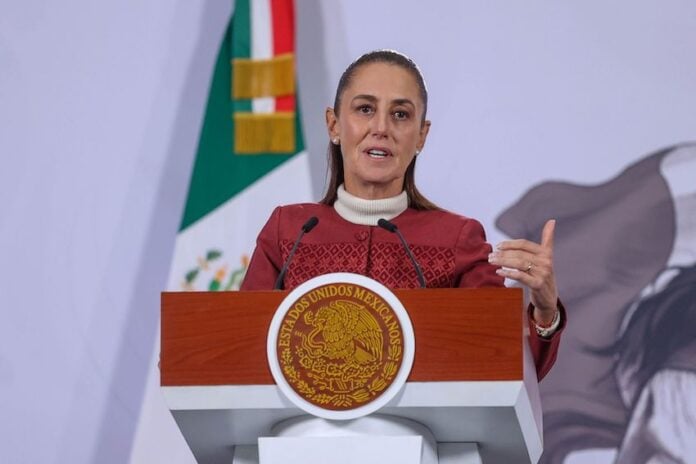
President Claudia Sheinbaum began her Monday morning press conference shortly after 9 a.m. — much later than usual — as she had a telephone call with Donald Trump earlier in the day.
The conversation between the two leaders took place four days after Trump said that the United States was going to start “hitting” cartels on land, a remark that increased expectations that a U.S. military strike on a cartel target in Mexico would occur.
As expected, the call was the central focus of Sheinbaum’s mañanera. (Read Mexico News Daily’s initial report here.)
The president described her conversation with Trump as “very good” and “respectful.”
The outcome appeared to be exceedingly positive for Mexico, as Sheinbaum apparently staved off — at least for now — the prospect of a unilateral U.S. attack on cartels within Mexican territory.
Asked whether a U.S. “military action” in Mexico could be “ruled out” following her call with Trump, the president responded “yes.”
“He said, ‘OK, I understand that’s your constitution,’ and essentially that was the conversation about the issue of Venezuela,” she said.
Sheinbaum sought call with Trump
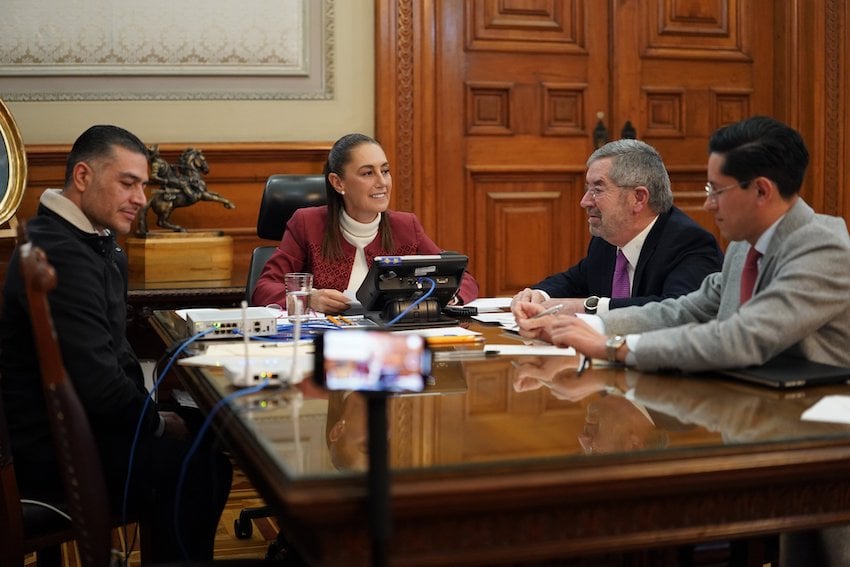
Sheinbaum reminded reporters that in light of Trump’s declaration that the United States would target Mexican cartels on land, she directed Foreign Affairs Minister Juan Ramón de la Fuente to make contact with U.S. Secretary of State Marco Rubio.
“And I also made the decision to reach out to President Trump in a call,” Sheinbaum said, adding that the Trump administration “gave us” the Monday morning slot for the conversation on Friday.
“In these conditions, it’s always better to seek dialogue,” she said.
Sheinbaum said that dialogue with the U.S. has “worked for us” since she took office and “worked today.”
The call was brief, but the leaders plan to speak again soon
Sheinbaum said that her call with Trump lasted around 15 minutes. She said they agreed to another call soon in order to discuss “other issues,” including trade.
“We agreed to continue speaking to discuss all necessary issues in the bilateral relationship,” she said.
Sheinbaum noted that a bilateral security meeting is scheduled to take place on Jan. 22 and 23.
Later in the year, officials from the Mexican, U.S. and Canadian governments will meet to review the USMCA free trade pact, which Trump has undermined by imposing tariffs on a range of products from both Mexico and Canada.
Sheinbaum: Trump didn’t say anything about planned incursions into Mexico
Asked whether Trump spoke about planned U.S. “incursions” into Mexico to combat cartels — as the U.S. president has indicated he is prepared to undertake — Sheinbaum said he didn’t mention the issue.
“He didn’t talk about it, he didn’t talk about it,” she stressed.
Sheinbaum did acknowledge, however, that Trump offered to provide additional assistance to Mexico to combat organized crime within Mexican territory, including with a U.S. military deployment, if the Mexican government wants such help.
“I told him, ‘not that.’ I’ve already said several times that that’s not on the table, but we continue collaborating within the framework of our sovereignties,” she said.
Mexico can do ‘a lot more’ to combat cartels, says Sheinbaum
Sheinbaum said that Trump acknowledged the efforts Mexico has made to combat organized crime, including by arresting a huge number of cartel suspects and dismantling clandestine drug labs. However, she noted that the U.S. president expressed that Mexico could do even more.
“I said, ‘Yes indeed, we can do a lot more, but we’re working, and the important thing is to maintain this relationship of respect and collaboration,'” Sheinbaum said.
From Oct. 1, 2024, through Dec. 31, 2025, Mexico’s security ministry — led by Omar García Harfuch — arrested 40,735 people, dismantled 1,887 laboratories and seized more than 318 tonnes of drugs and 21,357 firearms. (@OHarfuch/X)
Last Thursday, Security Minister Omar García Harfuch reported that more than 40,000 people have been arrested for “high-impact crimes” during the term of the current government, while over 318 tonnes of drugs and 21,400 firearms have been seized.
He also said that the army and navy have dismantled 1,887 methamphetamine labs since Sheinbaum took office on Oct. 1, 2024.
Sheinbaum: ‘We operate in Mexico, no one else’
Sheinbaum said that the U.S. government knows how important sovereignty and territorial integrity are for Mexico.
“So they can give us intelligence information, we work together, but we operate in Mexico, no one else,” she said.
“Even the agents they have … in Mexico know their limitations very well, and they’re marked by law,” Sheinbaum said.
She highlighted that there are four central tenets to the security collaboration between Mexico and the United States, including “respect for sovereignty and territorial integrity” and “cooperation without subordination.”
Sheinbaum: ‘Organized crime can’t be classified as terrorism’
A reporter noted that the U.S. State Department spoke about “narcoterrorism” in a statement it issued on Sunday after Rubio’s call with de la Fuente. She asked the president whether Mexico accepted the use of the term to describe the activities of drug cartels.
“We don’t agree,” Sheinbaum responded.
“Our constitution and our laws speak about terrorism in another sense. Organized crime can’t be classified as terrorism. Terrorism has to do with actions against the government, … and other schemes. So, it’s not in the framework of our legislation to describe [organized crime] that way,” she said.
Sheinbaum added that her government doesn’t agree with the designation of cartel activities as “terrorism” being used as justification for “an intervention in our country.”
She noted that the Mexican Constitution was recently modified to make it clear that “the people of Mexico” are opposed to “any interventionism” by a foreign country.
Sheinbaum: Mexico must maintain a good relationship with US
Sheinbaum noted that her government doesn’t agree with the Trump administration on “many issues.”
Nevertheless, “we want to have a good relationship [with the United States] and that’s the way it must be,” she said.
Sheinbaum said that a good bilateral relationship is necessary “because we’re neighbors [and] trade partners, and because we always have to seek a good understanding without violating our principles.”
She said that her government’s relationship with the Trump administration has been good until now — despite the various differences — and that she wants that to continue to be the case.
A message for the Mexican people
🇺🇸🫷 Llamada de Sheinbaum y #Trump: la presidenta de México afirmó que el mandatario insistió en el envío de militares a #México para ayudar a nuestro país a combatir a los cárteles, sin embargo, recalcó que “nunca negociaré soberanía de México” pic.twitter.com/K6O1rkbzjd
Asked whether she had a message for the people of Mexico in light of Trump’s remarks last week and her conversation with the U.S. president on Monday morning, Sheinbaum said:
“The people of Mexico must firstly know that their president will never negotiate sovereignty or territorial integrity — never. Secondly, that we seek coordination [with the U.S.] without subordination, as equals. And thirdly that … communication [with the U.S.], coordination and the defense of the people of Mexico here and there [in the U.S.] … is permanent.”
Mexico could mediate US-Cuba talks, says Sheinbaum
Asked whether Trump inquired about the oil Mexico sends to Cuba, Sheinbaum responded that “we didn’t speak about the Cuba issue.”
“That could be an issue we speak about later,” she said.
Sheinbaum also said that Mexico could act as an intermediary in talks between the United States and Cuba, a country that Trump, on Sunday, urged to “make a deal” with his government “before it is too late.”
She said that Mexico is in “the best position” to mediate talks between the U.S. and Cuba, but acknowledged that both countries would have to agree to engage with each other before such discussions can take place.
By Mexico News Daily chief staff writer Peter Davies (peter.davies@mexiconewsdaily.com)
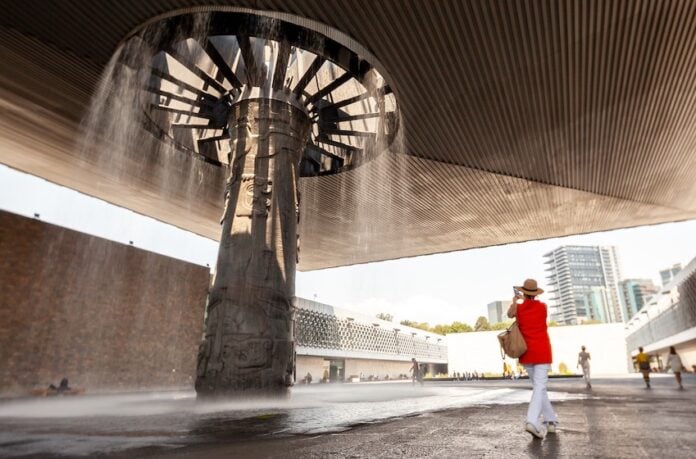
The museum is famous for its collection of Indigenous artifacts, but it is an architectural wonder in and of itself. (Archivo Digital MNA)
The National Museum of Anthropology (MNA) in Mexico City broke its all-time attendance record in 2025, welcoming over 5 million visitors during that year.
The 5 million visitors in 2025 set an all-time record for annual MNA attendance. (Camila Ayala Benabib/Cuartoscuro)
The increase solidifies the museum’s status as one of the most visited cultural venues in Mexico and Latin America, both by national and international guests.
Cultural authorities have noted that this record reinforces the museum’s role as a global benchmark in research, conservation and dissemination of the heritage of Indigenous cultures of ancient and contemporary Mexico.
The MNA has a long history dating back to the old Mexican National Museum of the nineteenth century. Today, it houses the most important archaeological and ethnographic collections in the country. It is located in the capital’s Chapultepec Park and was designed by renowned architect Pedro Ramírez Vázquez.
Among its vast collection, the MNA houses pieces such as the Sun Stone, Olmec sculptures and rooms dedicated to civilizations such as the Maya and the Mexica.
In recognition of the MNA’s contribution to culture, the museum was awarded the Princess of Asturias Award for Concord by the Princess of Asturias Foundation of the Spanish government last year.
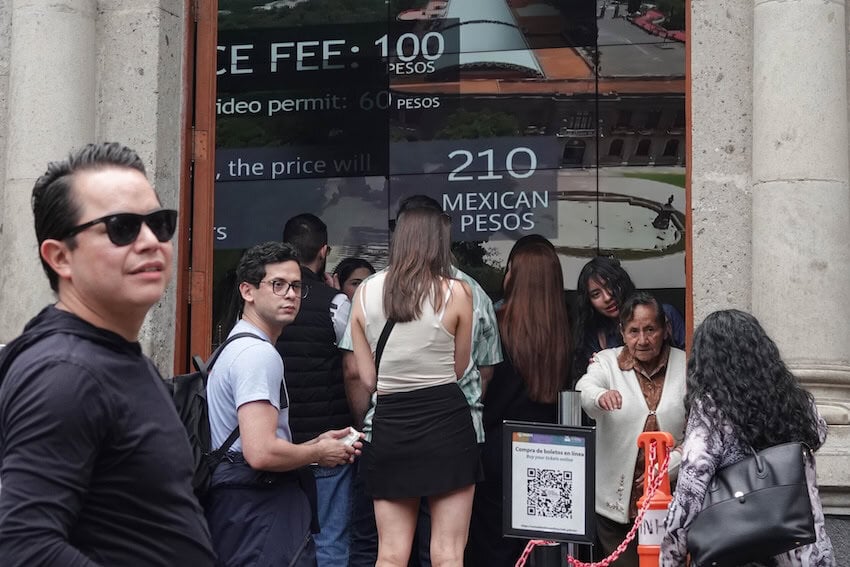
This momentum coincides with changes to the museum’s admission fees. This year, entrance to the MNA goes from 95.58 pesos (US $5.34) to 209.09 pesos (US $11.68), up 119% according to the Federal Law of Rights (LFD). Mexicans and legal residents are eligible for a 50% discount.
The MNA’s visitor figures reflect Mexico’s landscape regarding international tourism, according to the national statistics institute (INEGI), November saw 15.6% more international tourists than in the same month of 2024, bringing the total to just over 8.7 million foreign tourists. In contrast, the previous year, Mexico saw 7.6 million.
These figures also sustain the upward trend in overall tourism in Mexico, which welcomed 45.03 million international tourists in 2024, up 7.4% from 2023. Final 2025 figures for international tourism in Mexico have not yet been released.
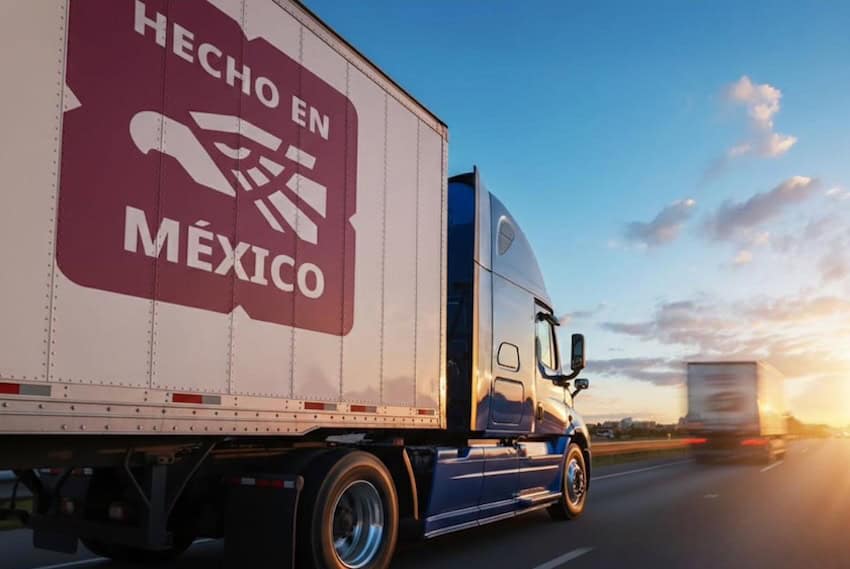
Total exports of heavy vehicles fell 28.6% in 2025, compared to 2024.
(Shutterstock)
It was a light year for heavy vehicles in Mexico as sales, production and exports plummeted in 2025.
Preliminary data released by the national statistics agency INEGI showed that Mexico’s heavy vehicle industry experienced its worst year since the pandemic in 2020, registering historic drops, in large part due to the 25% tariffs imposed on exports by U.S. President Donald Trump.
Production of heavy vehicles in Mexico was down by 34.84%, the largest annual drop ever. (@Anpact/X)
The Trump tariffs impacted the industry across the board.
Mexico exported 113,931 units in 2025, its lowest level since records began to be kept, even lower than the pandemic year 2020’s 115,000. Compared to 2024, total exports fell 28.6%, while production slipped nearly 29% compared to last year.
The United States was the main destination for heavy vehicle exports, accounting for 94.2% of the total; Canada accounted for 3.3%.
The domestic market also shrank as the 14 companies included in the Administrative Registry of the Automotive Industry of Heavy Vehicles reported a sharp decline in sales.
According to the registry, retail sales totaled 39,833 units, the lowest figure since 2021 and a contraction of 31.67% compared to 2024.
In December, retail sales of heavy vehicles reached only 3,306 units, representing an annual drop of 39.27%, the largest month-to-month decrease for any month since records began in 2018.
The situation was even more dire in the wholesale segment. In December, 3,498 units were sold, a year-on-year drop of 62.68%, the largest recorded for a comparable month.
For all of 2025, wholesale sales reached 30,673 units, the lowest figure since 2020 and a decrease of 54.70% compared to 2024, the largest annual contraction on record.
As for production, there was also a sharp decline for heavy vehicles.
Total production in 2025 was 138,954 vehicles, representing a 34.84% decrease compared to 2024, the largest annual drop ever.
In December 2025, 12,547 units were produced, representing a year-on-year drop of 19.80%.
Nearly 98% of total heavy vehicles produced corresponded to cargo vehicles, while the rest were passenger vehicles, demonstrating the high dependence of the sector on the transport of goods.
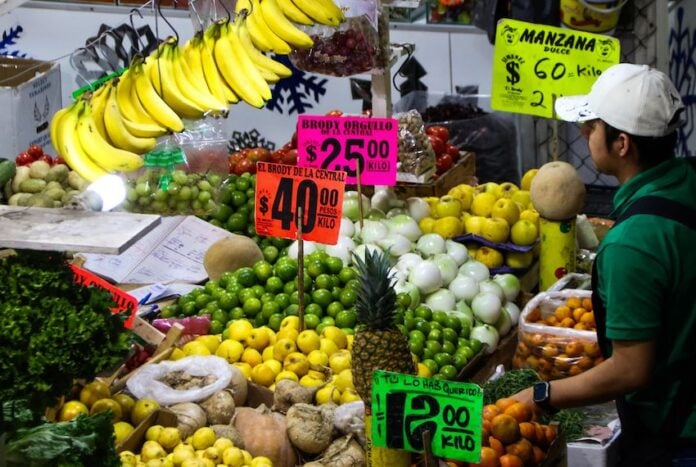
The basic food basket contains 24 products considered essential for Mexican households, such as oil, rice, tuna, sugar, meat, onions, beans, eggs, tomatoes, milk, white bread, potatoes, whole chicken and tortillas, as well as soap and toilet paper.
It is hoped that the recent rise in the minimum wage will more than offset the increase in the cost of the basic food basket, so that every Mexican family can afford it. (Victoria Valtierra/Cuartoscuro)
In urban areas, the basic food basket currently costs approximately 2,467.15 pesos per month vs. 1,854.39 pesos per month in rural areas.
Prices for food and other goods and services increased by 177.98 pesos (US $9.90) in urban regions of Mexico and by 116.89 pesos ($6.50) in rural areas on average over the course of the past year.
Outside the basic basket, personal care products and public transportation saw the biggest price increase in rural areas, rising by 6.2% and 6.6% annually, respectively. Meanwhile, in urban areas, there were significant cost increases associated with education, culture, recreation and personal care.
The price of Mexico’s basic food basket varies significantly according to region, with one of the most expensive cities being San Luis Potosí in the Bajío region, according to the Federal Consumer Protection Agency (Profeco).
Profeco’s “Who’s Who in Consumer Prices” platform shows that one Walmart supermarket in San Luis Potosí was charging 903.30 pesos ($50.30) for the basic basket, just below a Soriana supermarket store in the northern state of Durango, where it cost 939.79 pesos ($52.40).
Meanwhile, the lowest-priced basic basket was found in the northeastern border state of Tamaulipas, in a Chedraui store, at 784.70 pesos ($43.80), showing just how much basic food prices can vary by region.
Profeco reminded consumers that food prices are not static and can vary depending on several factors, such as supermarket operating costs, supply and demand and the conditions of fruit and vegetable harvests.
The agency urged the public to regularly consult its digital platform to compare prices to ensure they are making informed purchases.
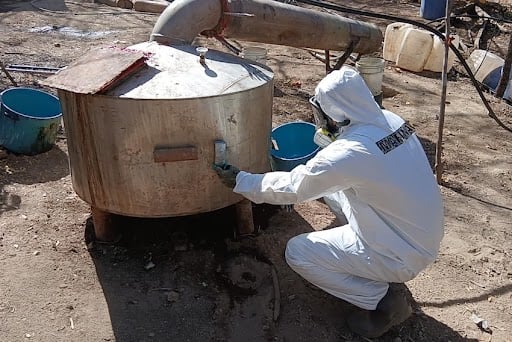
The complete dismantling of three clandestine meth labs represents a significant blow to the logistical structures of organized crime. (@OHarfuch/X)
Federal authorities recently seized more than 700 kg of methamphetamine as well as 12,000 liters and 2 tonnes of chemical precursors in two separate operations.
The information was divulged one day after U.S. Secretary of State Marco Rubio told Mexican Foreign Relations Minister Juan Ramon de la Fuente that there must be stronger cooperation to dismantle Mexico’s violent narco-terrorist networks and their fentanyl trafficking activities.
Besides destroying three labs, the operations netted a haul of more than 700 kg of methamphetamine and 12,000 liters and 2 tonnes of chemical precursors. (Security Cabinet)
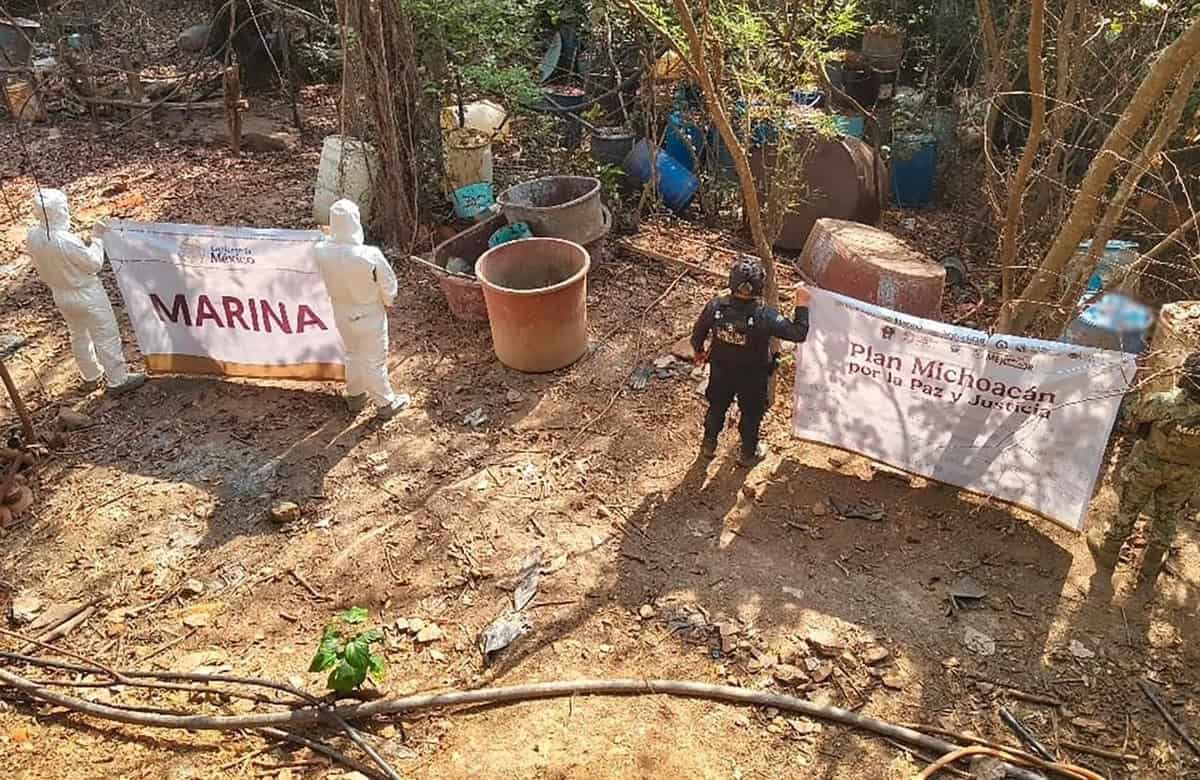
In a Monday morning social media post, Security Minister Omar García Harfuch reported that the Naval Ministry (Semar) dismantled three clandestine meth labs in the states of Michoacán, Durango and Sinaloa, but did not reveal when the operations took place.
Agents from the Security Ministry, the Federal Attorney General’s Office, the Defense Ministry and the National Guard also participated in the raids.
García Harfuch said the complete destruction of the narco-laboratories represents a significant blow to the logistical structures of organized crime, while emphasizing the social benefit of keeping the end product out of circulation.
“These actions directly weaken the financial capacity of criminal organizations and prevent these illicit substances from reaching the population, especially our youth,” Harfuch wrote in his post.
The operations were carried out in strategic areas identified by authorities as synthetic drug production hotspots, reinforcing the operational and logistical impact against organized crime.
In a statement, the federal Security Cabinet said the largest seizure was recorded in Los Cedros, Sinaloa, where authorities dismantled a clandestine laboratory. There, federal agents seized around 750 kg of finished drugs, in addition to 695 kg and 1,150 liters of chemical precursors.
“With these actions … the Security Cabinet reaffirms its commitment to locating and dismantling laboratories and sites where synthetic drugs are concentrated … and preventing these substances from reaching the streets,” the statement said.
In La Escondida, Michoacán, federal and state forces located and dismantled another narco-lab, confiscating 500 kg and 9,700 liters of chemical precursors, as well as laboratory equipment and tools.
In Carricitos, Durango, a clandestine lab with 695 kg and 1,150 liters of chemical precursors was found by agents on foot patrol. Materials used for the production of synthetic drugs were also destroyed.
The authorities confirmed that operations will continue, “prioritizing operational intelligence, territorial control and the protection of the population,” with special emphasis on preventing consumption among young people.