Home Blog Page 153

The creepiest spots to visit in Mexico City during spooky season

1
Spooky stuff in Mexico City
Mexico City is no stranger to horrors. Right from the capital-dweller’s most nightmarish fantasies, these are the spookiest spots in town to visit in October. (Wikimedia Commons/Esparta Palma)

“Every decent house in Coyoacán has its ghost,” my father used to warn my sister and me when we were little. Born and raised in the borough’s colonial area, where estates have housed families for generations, he certainly knew what he was talking about. This ancient wisdom can be applied to basically any centuries-old property in Mexico City, in which family members could still haunt their living relatives.

From Colonial Coyoacán to the capital’s emblematic Historic Center, convoluted CDMX is teeming with haunted manors and eerie passageways. Beware! If you venture into these spooky spots in Mexico City, you might encounter a pre-Columbian spirit, looking for revenge for its deceased children, or an ancient demon hungry for human blood. Here’s our digest of the spookiest spots in Mexico City.

‘La Castañeda’ mental hospital (Mixcoac)
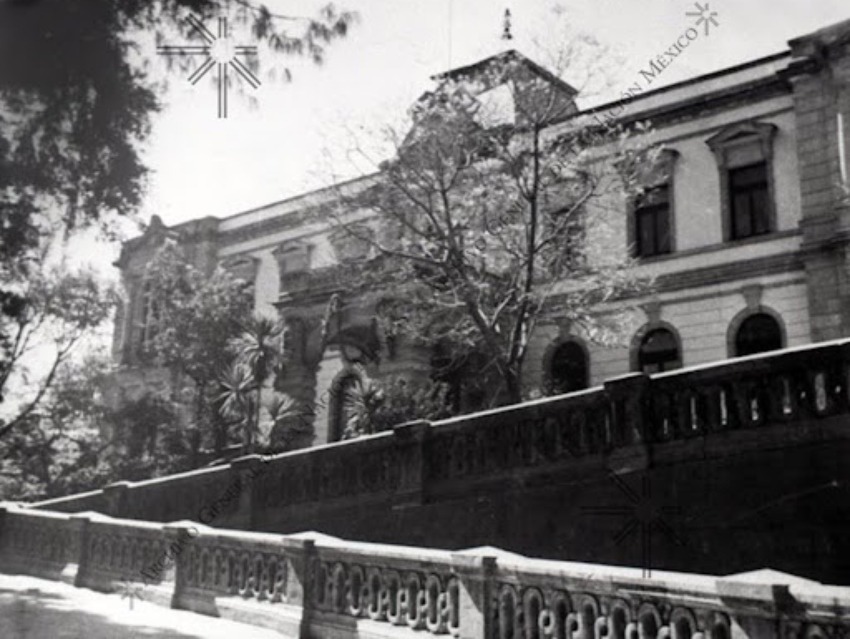
An obscure aura of mistreatment and patient abuse hovers over where ‘La Castañeda’ Mental Hospital once stood. (Archivo General de la Nación/Archivos Fotográficos/Hermanos Mayo/ Sobre/CN 1552-3A)

The 19th century was a time of complex socio-political conflicts in Mexico. Although it was one of the first countries in America to ever build public mental institutions, according to the General Archive of the Nation’s records, during the civil uprisings in the 19th century, patients were relentlessly removed from the psychiatric hospitals and “thrown to the streets.” Mainly, to treat the militia.

However, during dictator Porfirio Díaz’s rule, there was a renewed social compromise with psychiatric patients. That was when the government built “La Castañeda.” Cruelly referred to as “The Palace of Madness,” it is said to have housed a large number of patients, regardless of sex, age, nationality or religion.” However, ominous accusations of mistreatment and abuse from the staff to the patients made “La Castañeda” an eerie place to visit. In 1968, former President Díaz Ordaz ordered its demolition.

  • Where? Calle La Castañeda S/N, Mixcoac, Benito Juárez.

Divino Narciso Hall (Centro Histórico)
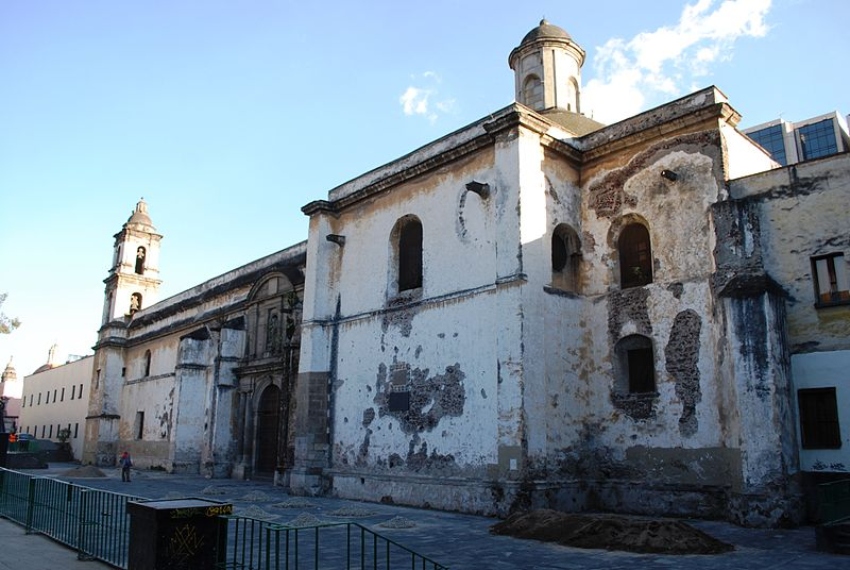
Former convent Mexico City
Baroque poetess Sor Juana Inés de la Cruz was buried in this former convent, which today houses one of Mexico’s most prestigious culinary schools. (Wikimedia Commons/Thelmadatter)

For almost three decades, Sor Juana lived, studied and practiced politics at the San Jerónimo Convent, in present-day calle Izazaga. From her magnificent Baroque chambers, she wrote some of Nueva España’s greatest pieces, along with the time’s most revolutionary gender treaties. “Foolish men who accuse / women without reason,” is to date one of her most famous quotes. No wonder that, in the 17th century, she was a force to be reckoned with.

After her death at the early age of 46, she was buried in one of the convent’s finest halls. When the property was acquired by the López Portillo family in the mid-1970s, this 300-year-old church became an educational institution, dedicated mainly to the culinary arts: the Universidad del Claustro de Sor Juana (UCSJ). Although the hall was desacralized when the López Portillo family bought the convent, Sor Juana’s remains were not exhumed. Students say you can still hear her footsteps when visiting the ‘Divino Narciso’ Auditorium, as her final resting place is known today.  If you’re too scared to visit the hall in real life (I would, of course), you can browse its bowels with this 360 tour online, designed by UCSJ!

  • Where? José María Izazaga 92, Centro Histórico, Cuauhtémoc.

Callejón del Aguacate (Coyoacán)
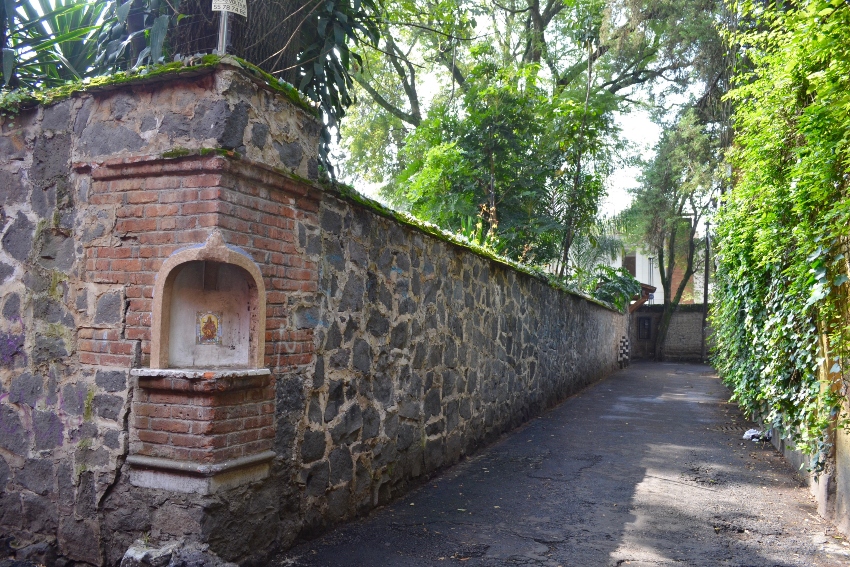
Callejón del Aguacate
Dare to go to Callejón del Aguacate and meet a murdered boy’s ghost? October seems like the time to do it, honestly. (Wikimedia Commons/Ines Suarez R.)

As a Coyoacanense himself, my father took my sister and me to every corner in the borough — and we agreed, oftentimes rather reluctantly. One of those times was when he insisted we go to Callejón del Aguacate, near the borough’s historic center. Tangled between the corners of the Santa Catarina neighborhood, it is said to be the place in which a mentally ill soldier murdered a child by hanging him from an avocado tree. This is thought to have happened in the days of the Mexican Revolution, my father told us.

Ever since then, locals say, supernatural phenomena have been reported in the alley: cars mysteriously running out of gas, cellphones losing signals and the sound of dogs barking in the abandoned houses. As a child, I swore I heard them more than once. The creepy thing is that the tree is still there, standing in the garden of an abandoned house.

  • Where? Aguacate 19-31, Santa Catarina, Coyoacán.

Isla de las Muñecas (Xochimilco)

Isla de las Muñecas
I bet even Lady Gaga was freaked out by what she saw at Isla de las Muñecas when filming her latest music video. (Wikimedia Commons/Wa17gs)

My partner is not a superstitious guy. However, when he first visited Isla de las Muñecas in the Xochimilco canals, he did get “bad vibes,” as he describes it. Run by master chinampero Don Julián Santana, the entire chinampa is decorated with the dolls’ “severed limbs, decapitated heads and blank eyes,” as the attraction’s official website notes.

Legend has it that Don Julián found a drowned girl’s body in a neighboring canal, per the Xochimilco Government, with a doll floating alongside her remains. To honor her spirit, he hung the doll on a tree to mark the girl’s final resting place. Her soul, however, did not rest and continued to haunt him for years. She consistently spoke to him in dreams, telling him to fill his chinampa with wretched doll parts to honor other Xochimilca girls who had been killed by disease or abuse of different sorts. Today, La Isla de las Muñecas is a tourist spot, easily accessible by trajinera.

Andrea Fischer is an editor for Mexico News Daily. She has edited and written for National Geographic en Español and Muy Interesante México, and continues to advocate for anything that screams science. Or yoga. Or both.
Colima beaches evacuated as Hurricane Priscilla gains strength off Pacific coast

0
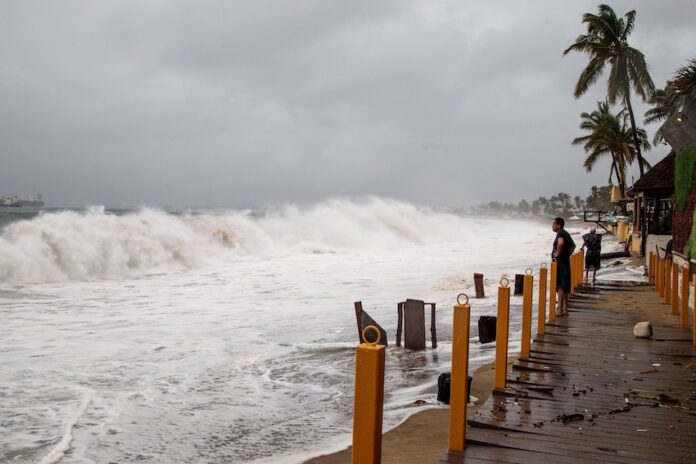
Hurricane Priscilla lashing Colima coast with high waves
Powerful hurricanes are capable of altering the shape of coastlines, but much of Quintana Roo's problem can be traced to construction, poor coral reef health, reduced sea fauna populations and, increasingly, rising sea levels from climate change. (Flor Larios/Cuartoscuro)

Hurricane Priscilla strengthened early Monday as it moved parallel to Mexico’s Pacific coast, prompting authorities to issue storm warnings. 

Priscilla — which is expected to become a Category 2 hurricane in the coming days — is bringing rain to much of mainland Mexico and gusty winds along the western coast, prompting the National Meteorological Service (SMN) to issue a Tropical Storm Watch in five states.

The Watch was issued for the mainland from Punta San Telmo, Michoacán, north to Punta Mita, Nayarit, and from Cabo San Lucas to Colonia Santa Fe in Baja California.

The threat was such that Colima state officials ordered the evacuation of all beachfront areas on Sunday while also shuttering the port of Manzanillo, the country’s most important maritime port.

The Category 1 hurricane, which was tracking slowly north-northwestward at 7 kilometers per hour, was located 350 km south-southwest of Cabo Corrientes, Jalisco (near the resort town of Puerto Vallarta), and 655 km south-southeast of Cabo San Lucas, Baja California Sur at 9 a.m.

The U.S. National Hurricane Center (NHC) said Priscilla’s center “is expected to move offshore of and parallel to the coast of southwestern Mexico and Baja California Sur through the early-to-middle part of this week.” 

In an 8 a.m. experimental cone forecast, the NHC reported that sustained winds of 85 mph (140 kph) — with gusts reaching 105 mph (170 kph) — were expected to cause dangerous surf and rip currents along coastal southwestern and west-central Mexico, as well as southern Baja California.

The National Water Commission (Conagua) posted a warning on social media, urging extreme caution in coastal areas. Conagua said waves of up to 6 meters could reach the beaches of Jalisco and Colima, with breakers of up to 4 meters coming ashore in Michoacán and 3-meter-high waves in the states of Nayarit and Guerrero.


The NHC warned that hurricane-force winds extended outward up to 50 miles (85 km) from the center and tropical-storm-force winds extended outward up to 205 miles (335 km). 

Conagua forecast torrential rains (150 to 250 millimeters) in Michoacán, and intense rains (75 to 150 mm) in Jalisco, Colima and Guerrero on Monday.

As the storm has the potential to reach major hurricane status (Category 3 and above), Conagua and the SMN urge the public to pay heed to state and local authorities as they monitor Priscilla’s progress.

With reports from La Jornada, CBS News, the New York Times and El Financiero

Why doesn’t Mexico have a strong opposition party?

7
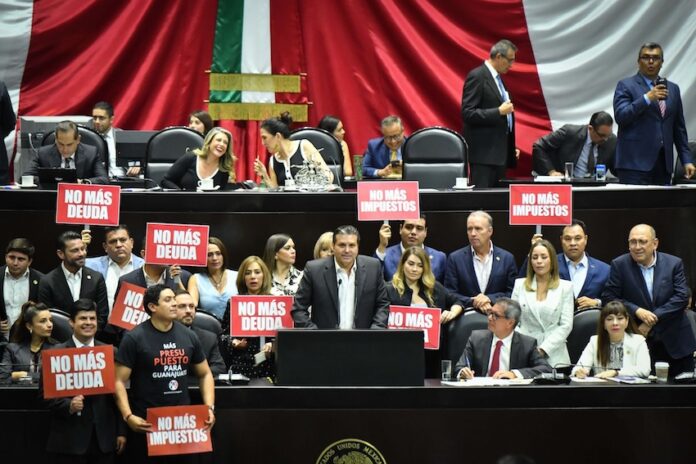
Opposition politicans in hold up protest signs in the Mexican senate
President Claudia Sheinbaum has been in power for one year. Why has there been no meaningful political opposition in that time? (Mario Jasso/Cuartoscuro)

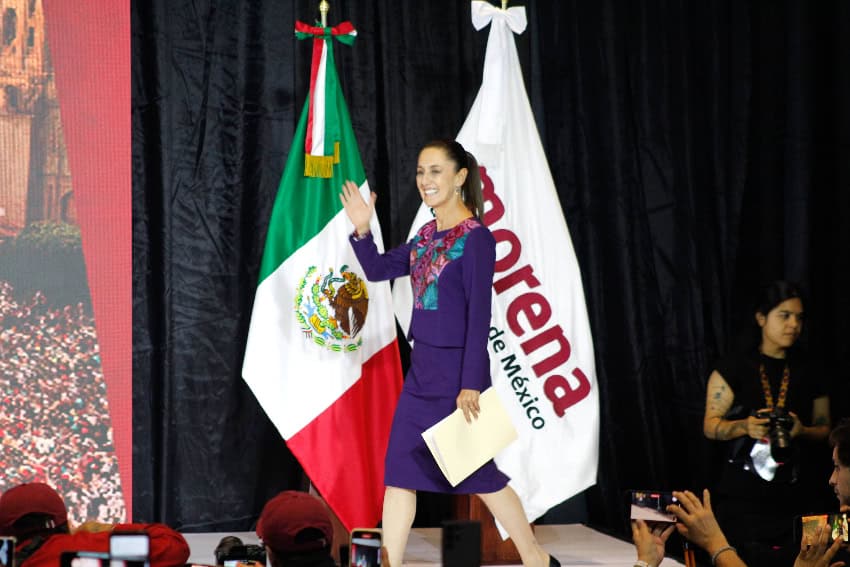
When Claudia Sheinbaum stood on the balcony of the National Palace last month to preside over Mexico’s Independence Day ceremony, the importance of the moment was unmistakable: She was the first woman to hold the presidency, commanding broad support, and her governing party, Morena, has consolidated near-total legislative power in Mexico.

One year into her presidency, the former Mexico City mayor has not only secured a level of political authority that her detractors had questioned, but has also benefited from something else: the disappearance of any meaningful political opposition. Her sweeping electoral win last year also delivered Morena control of both chambers of government, leaving the longstanding parties that once dominated Mexican politics in tatters.

Claudia Sheinbaum on Election Day
Claudia Sheinbaum’s victory in 2024 heralded another six years of Morena control. How has the party remained so dominant after seven years in power? (Cuartoscuro)

Mexico’s political opposition parties

Sheinbaum, formerly mayor of Mexico City, rose on a wave of support for outgoing president Andrés Manuel López Obrador’s so-called “Fourth Transformation” of Mexican society. The Institutional Revolutionary Party (PRI) failed, for the first time since its 20th-century heyday, to produce a viable presidential candidate. The center-right National Action Party (PAN) fractured under ideological and leadership disputes, while its candidate, former senator Xóchitl Gálvez — once a strong opposition bet — saw her campaign unravel in the face of the internal divisions. Another contender, Nuevo León Governor and Citizens’ Movement party candidate Samuel García, withdrew early.

Mexico’s opposition parties, though weakened, represent a range of ideological positions that contrast with the ruling Morena party’s leftist populism. The PAN stands for market-oriented reforms, rule of law and a blend of social and Christian democratic values, emphasizing private enterprise and security.

The PRI, historically centrist, now leans toward moderate economic liberalization and a pragmatic, big-tent approach, trying to uphold stability and incremental reform.
Movimiento Ciudadano (MC), the most dynamic of the new opposition, promotes social democracy, progressive reforms and transparent governance.

However, all three have struggled to offer a compelling alternative to Morena’s broad social spending policies, its anticorruption narrative and its “the poor come first” stance.
The parties’ recent attempts at forming coalitions have been undermined by internal divisions, a failure to mount charismatic leadership, and widespread, enduring public trust in Morena’s promise of transformation.

The populism is coming from the left

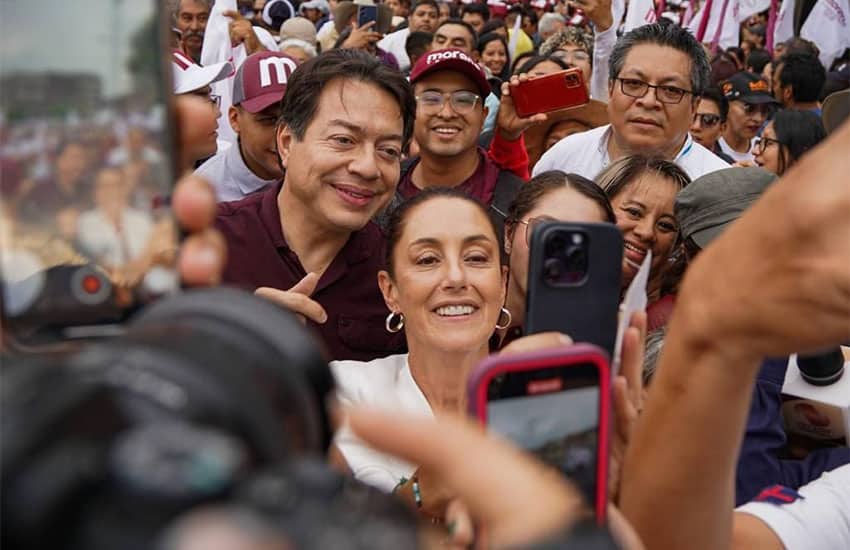
Mario Delgado and Claudia Sheinbaum
(Presidencia)

The marginalization of Mexico’s opposition is not only about personalities or parties. The country’s political culture heavily encourages moderation. Polling from the Latin American Public Opinion Project shows that 51% of Mexicans self-identify as centrist, a far higher share than those identifying with either the left or right. This broad center complicates any attempt to build the sort of polarized, anti-elite right-wing movement seen in other Latin American countries.

The PRI’s historical role as a big-tent party, which absorbed diverse ideologies and smoothed out regional divides, helped create a system with less of the urban-rural and secular-religious tensions seen elsewhere. Even figures attempting a populist, rightward challenge — like celebrity activist Eduardo Verástegui — failed to resonate. Verástegui’s campaign, which borrowed tactics from both Donald Trump and Brazilian right-wing populist Jair Bolsonaro, quickly floundered amid controversy, but mostly due to a lack of mainstream appeal.

Meanwhile, Sheinbaum, like AMLO before her, has managed to co-opt many traditional conservative constituencies. Both their governments have paired progressive social rhetoric with commitments to family and tradition, making them hard targets for the opposition to exploit — especially as her political rivals often also endorse similar social policies, albeit with a less progressive bent.

Morena itself is a broad coalition

Mexico’s electoral rules add another layer of resistance to fragmentation. The country does not employ second-round runoffs, which compels parties to campaign for wide coalitions instead of betting on polarizing or fringe platforms. This dynamic pushes most mainstream figures to the political middle, further depriving right-leaning populists of electoral oxygen.
But Morena’s dominance is not merely a repeat of the old PRI big-tent machine.

Morena has blended AMLO’s tried-and-true methods — such as state-directed spending and ties to local power brokers who control — with left-populist rhetoric for a new era. Many former PRI members and political elites have migrated to Morena, pragmatically following power and opportunity. For now, Morena appears to have stitched together a stable coalition able to withstand elite defections and internal rivalries.

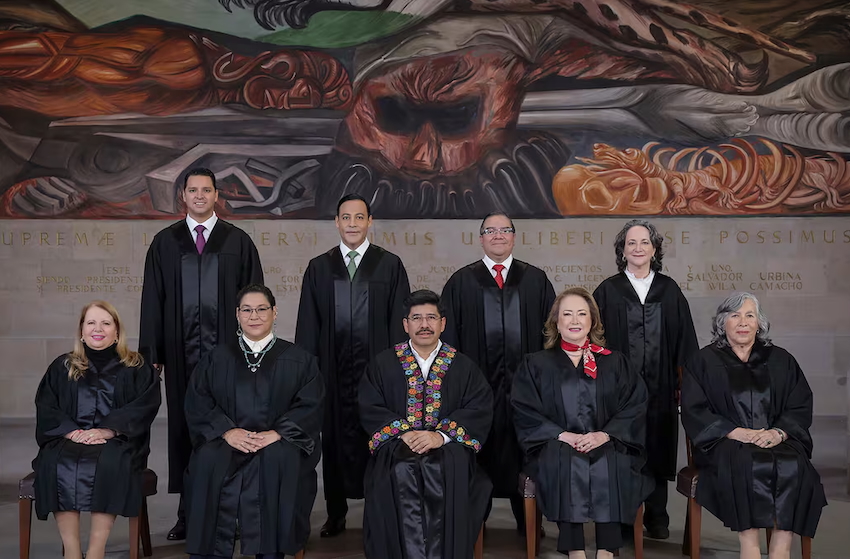
The Mexican Supreme Court
The newly reformed Supreme Court offers additional protections for the current government, while limiting opportunities for opposition candidates to win seats. (Supreme Court)

AMLO’s reforms have cemented Sheinbaum’s position

While Sheinbaum has proved popular in the polls — and with the man on the street — there is an elephant in the National Palace that the new president has benefitted from immensely.

While AMLO’s presidency was generally well received by working-class Mexicans, his sweeping reforms of the military, police and legislative systems has provided a platform that allows Morena and its allies to disarm political opposition.
The recent (and highly controversial) judicial reforms have bolstered her ability to pass controversial legislation, as Sheinbaum’s popularity with the public has allowed the election of key allies to the Supreme Court, at the expense of Mexico’s more traditional conservative justices and institutions.

Supporters of the reform claim it establishes a more authentic rule of law and democratizes justice. Detractors express concern that the changes favor one-party dominance and could damage investor trust and Mexico’s trade relations, particularly with the United States and Canada. The reforms have sparked significant controversy, including nationwide strikes by judicial workers and sharp public debate over the best path for Mexico’s legal future.

The defanging of both the National Electoral Institute (INE) and the National Institute for Transparency, Access to Information and the Protection of Personal Data (INAI) have also limited the number of bureaucratic tools that Mexico’s opposition parties have at their disposal when looking to act against the current government.

Observers caution that such an overwhelming concentration of power — amid weak checks and modest political pluralism — could breed its own long-term perils. Questions about judicial independence, institutional resilience and the prospect of meaningful opposition continue to animate debate in more affluent areas of Mexico, where Morena is less popular.

What’s next?

Mexico’s present, at least, is defined by Sheinbaum’s remarkable mandate. The scale of her victory and the collapse of her rivals mark a resounding victory not just for her personally, but for a pragmatic, technocratic left that, for now, faces little organized dissent.

If and when a new challenger emerges — left, right or otherwise — they will have to confront a system fundamentally altered by Morena’s ascent, and a political center that has, so far, proven remarkably durable in the face of global populist tides.

Chris Havler-Barrett is the Features Editor at Mexico News Daily

If you like surfing in Hawaii, then you will love Puerto Escondido in Mexico

11
A surfer performs a trick in a wave at Zicatela Beach in Puerto Escondido, the 14th World Surfing Reserve
Puerto Escondido has been recognized for its world-class waves and critically important coastal ecosystems. (Shutterstock)

Mention surfing and Hawaii immediately comes to mind. Dubbed the surf capital of the world, Hawaii is a name that echoes with the power of legendary breaks and surfing lore. The North Shore’s iconic, thunderous waves have long been the ultimate prize for surfers. But is it possible that a wilder, more untamed surfing paradise has been waiting for its moment?

As a travel writer who has spent the past 15 years chasing horizons, I’ve learned that the greatest thrills come from discovering incredible, lesser-known places. This series is born from that spirit of discovery, dedicated to uncovering the soul of my beloved adopted home, Mexico. 

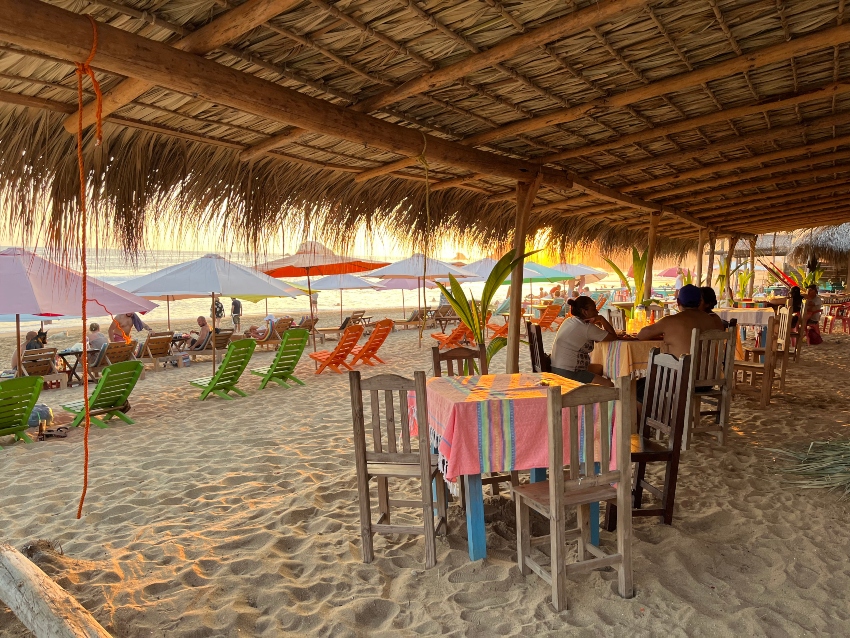
Beach restaurant in Puerto Escondido
Surfers who love Hawaii’s beach scene will also love the one in Puerto Escondido. (Nellie Huang)

In this installment, we’re going on a pilgrimage to the heart of Mexico’s surf culture. On the coast of Oaxaca, the Pacific Ocean carves a coastline with the same raw power and epic scale as Hawaii, but offers a magic of its own. If you’ve ever felt the pull of a Hawaiian swell, prepare to be captivated by Mexico’s most inviting surf town: Puerto Escondido.

Hawaii vs Puerto Escondido

But how can a laid-back beach town in Oaxaca possibly measure up to the surfing mecca of Hawaii? More than you’d think. 

They may have very different cultural backdrops, but the surf scene is strikingly similar. You’ll find the same tribe of sun-bleached surfers, a mix of die-hard locals and international wanderers, all drawn by the call of the ocean. And when the day’s last set has rolled in, you’ll find them in the same kind of place: palapa (thatch-roofed) beach bar, swapping stories over cold beers and watching the sun dip below the horizon.

Both Hawaii and Puerto Escondido offer dramatic coastal scenery and warm, inviting waters year-round. This shared natural playground is also teeming with marine life. It’s not uncommon in either location to be joined on a wave by a pod of playful dolphins or to see humpback whales breaching offshore during their migration season. 

The lure of Hawaiian waves

Hawaii’s reputation as the birthplace of modern surfing is well-earned. It’s legendary breaks, like those on the North Shore of Oahu, are synonymous with massive swells, daring maneuvers and a rich history that has shaped the sport. But Hawaii is also notoriously expensive: the airfare, hotel and food prices are all exorbitant. And the most famous breaks here are fiercely competitive and crowded. 

Enter Puerto Escondido, often dubbed the “Mexican Pipeline” for good reason. This vibrant town on Oaxaca’s coastline is home to some of the most consistent and powerful surf in North America. Here, the Pacific Ocean delivers challenging waves year-round, regardless of the season, particularly at the famous Playa Zicatela.

baby sea turtles in Oaxaca
Playa Zicatela in Puerto Escondido is a nesting habitat for endangered sea turtles. (Nellie Huang)

The 10-kilometer (6.2-mile) stretch on Zicatela has even been chosen as the 14th World Surfing Reserve by the Save The Waves Coalition, a nonprofit dedicated to protecting surf ecosystems around the world. For several years, they’ve been on the ground working with locals to strike a balance between tourism and taking care of the environment.

And there’s so much to protect here beyond the surf. The coastal ecosystem around Zicatela hosts critically important terrestrial and marine biodiversity. In fact, the beach is a super important nesting habitat for three different species of sea turtles: olive ridley, black turtles and the critically endangered leatherback.

Highlights of Puerto Escondido

Of course, Puerto Escondido is just one of the many beach towns poised on Oaxaca’s impressive 530-kilometer (330-mile) coastline. While Playa Zicatela is most suitable for advanced surfers, La Punta at the southern end offers a more mellow point break perfect for intermediate surfers looking to improve their skills. Beginners taking surf lessons or anyone looking for a safe spot to swim and relax should head to Playa Carrizalillo, a picture-perfect cove with calmer waters. 

Beyond the sand, there’s plenty to do in Puerto Escondido. For a true slice of local life, dive into the vibrant Benito Juárez market. It’s the perfect spot to grab some amazing street food and see daily life up close. If you’re an animal lover, you absolutely have to book a boat trip to see dolphins in the wild. Time your visit for winter (December to March) and you might just see humpback whales breaching, which is truly a life-changing sight. 

My favorite adventure of all was releasing baby turtles on Playa Bacocho at sunset with Vive Mar, a non-governmental organization that works tirelessly to protect turtles that nest along this coast. Holding the babies in our hands and then watching them make their way into the ocean was a truly emotional experience for my daughter. We also learned a lot about the turtle species that live in Mexico at the National Mexican Turtle Center in Mazunte, an hour’s drive along the Oaxacan coastline.

How to make the most of your visit

Getting to Puerto Escondido is much more convenient now than ever, with an international airport served by major Mexican cities. But if you have time, I strongly suggest flying into Oaxaca City and combining your surf trip with a cultural exploration of the historical city. Old town Oaxaca is not just the street food capital of Mexico but also a UNESCO World Heritage site brimming with cultural sites and artisanal markets. 

Oaxaca city
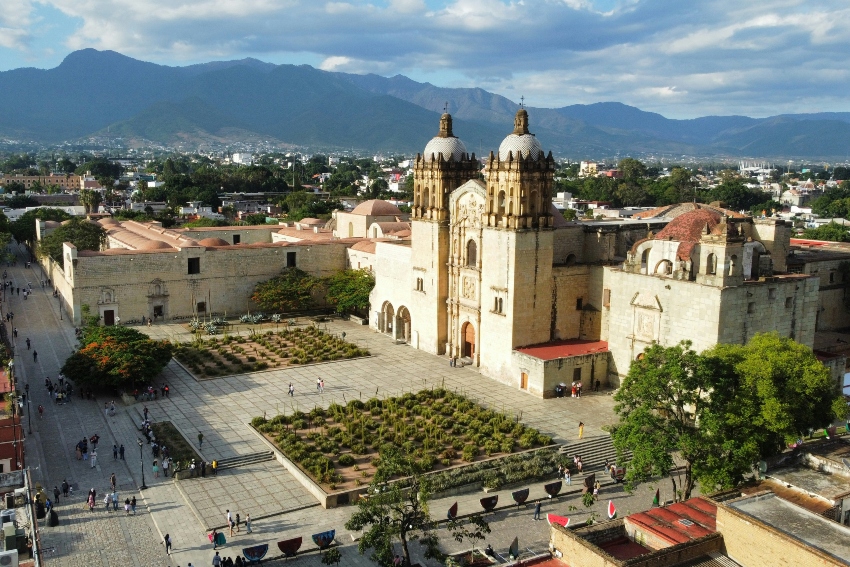
The city of Oaxaca is a great place to fly into (and experience) before heading on to Puerto Escondido. (Unsplash/Ryan Doyle)

The brand new superhighway connecting Oaxaca City to Puerto Escondido has dramatically reduced travel time, transforming a winding 6-7 hour drive into a comfortable 2.5-3 hour journey. You can easily experience the best of both worlds: the vibrant arts, cuisine and history of Oaxaca City, followed by the sun-drenched beaches and incredible waves of Puerto Escondido in one trip. 

A surfing paradise

The bottom line? Puerto Escondido isn’t just a stand-in for Hawaii. It’s the whole epic surf trip — monster waves, rustic beach bars, a buzzing scene and jaw-dropping scenery — but with a refreshingly chill vibe and a price tag that leaves plenty of cash for post-surf tacos and mezcal. 

The draw of Puerto Escondido is no longer a secret in Mexico. However, it’s hardly known outside of the country. You won’t find the crowds of Cancún or Puerto Vallarta, but expect to kick back on laidback strands with world-class swells and thatch-roofed beach huts, wrapped up in the warm, authentic spirit of Mexico. 

Nellie Huang is a self-proclaimed Mexico-holic based in San Miguel de Allende. She’s the author of Lonely Planet’s Mexico guidebook and has written hundreds of articles on Mexico for various publications. Read about her adventures worldwide on wildjunket.com and follow her updates on Instagram @wildjunket.

Puerto Vallarta braces for 2026 and beyond with new infrastructure initiatives

3
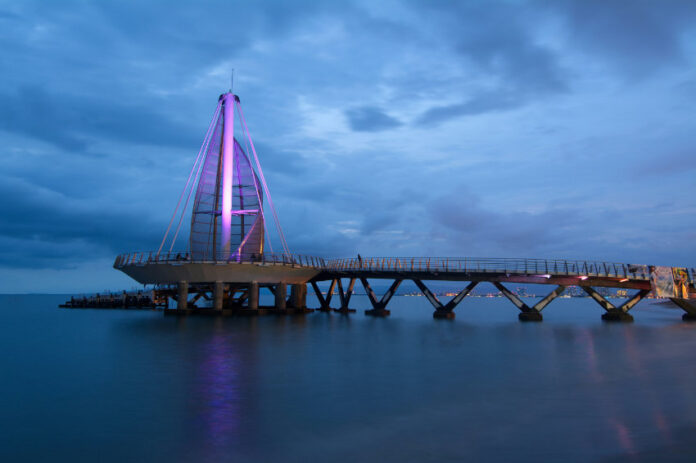
A long exposure night photo of the Muelle de Playa Los Muertos in Puerto Vallarta, Jalisco, Mexico. The iconic sail-like structure at the end of the pier is illuminated with a purple light against a blue twilight sky with dark clouds. The structure is connected to the shore by a long, dark pier extending over the calm ocean water.
Sundown at Puerto Vallarta's iconic Playa Los Muertos pier. (Stephan Hinni/Unsplash)

Puerto Vallarta is smack dab in the middle of a major transition. Across the city, construction crews are breaking ground, council members are debating new fees and residents are weighing in on mobility and development plans.

From the airport to the Malecón, and from mountain roads to neighborhood streets, infrastructure is changing. The question now is how these changes, some ambitious, others controversial, will reshape daily life and the visitor experience in the years ahead.

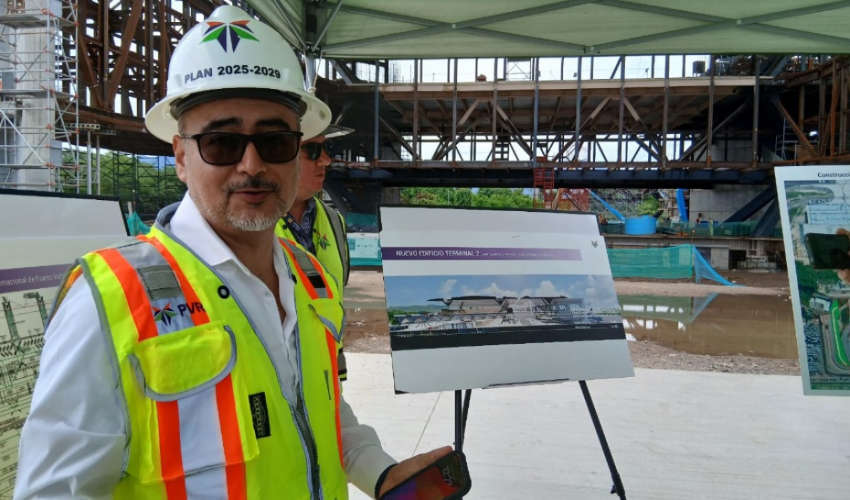
An older man with a goatee and sunglasses wearing a construction hard hat and a high-visibility safety vest stands at a construction site for the Puerto Vallarta International Airport's new Terminal 2. He is holding a smartphone and gesturing toward an easel with a rendering of the new airport terminal building, which is labeled "NUEVO EDIFICIO TERMINAL 2." The hard hat has a logo with the letters "PVR" and the words "PLAN 2025-2029" written on it.
The 9.2 billion peso investment in Puerto Vallarta’s international airport will double the airport’s passenger capacity, an increase of 6 million more travelers per year. (GAP)

A bigger, greener gateway

The most visible project is the long-awaited expansion of the Puerto Vallarta International Airport. Grupo Aeroportuario del Pacifico (GAP) reports that the new terminal has reached 54% completion, with phased operations expected in 2026 and full capacity by 2027.

The 9.2 billion peso investment will add 74,000 square meters of space, doubling the airport’s passenger capacity and allowing 6 million more travelers per year. Once complete, the facility will include eight new jet-bridge gates and seven remote positions, increasing the total gate capacity to 32. 

Sustainability is a centerpiece of the design. The terminal is targeting LEED Gold certification with solar panels, rainwater harvesting and solar-control glass facades. That eco-minded touch is a response to the growing demand for responsible travel, and comes at a time when Vallarta is receiving more international flights than ever, including new services from Porter Airlines and Southwest.

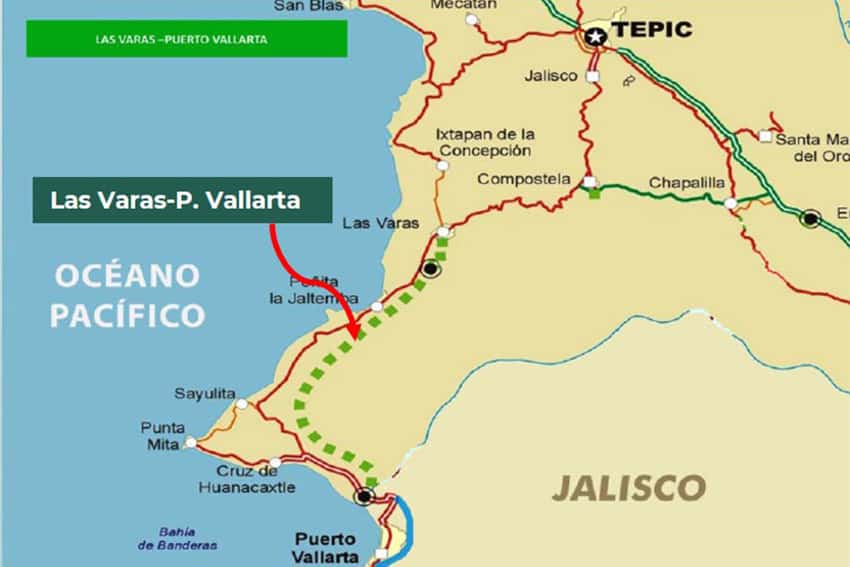
Map of Nayarit leading to Puerto Vallarta
The Tepic-Compostela highway, scheduled to open Nov. 1, will cut the time of the Tepic-Vallarta commute by about two-thirds. (Fonadin)

Highways that shorten distances

Air connectivity is only part of the equation. On the ground, a network of new roads is set to cut travel times dramatically. The most anticipated is the Tepic-Compostela highway, scheduled to open on November 1. Spanning 26 kilometers with 10 bridges, two railroad crossings, and a branch to Tepic Airport, the project will reduce the Tepic-Vallarta drive from three and a half hours to 75 minutes.

In parallel, construction has begun on the Amado Nervo Bridge, linking Puerto Vallarta with Bahia de Banderas by late 2026. Beyond easing vehicular congestion, the bridge will feature pedestrian and bike lanes, aligning with the city’s larger mobility push. Officials estimate the bridge will benefit nearly half a million people across the metropolitan area.

Meanwhile, smaller projects like the new four-kilometer El Jorullo access road are giving long-isolated mountain communities safe year-round connectivity. For travelers, this means easier access to Vallarta’s natural hinterlands for additional canyons, waterfalls, and adventure tourism.

A malecón for the future

Originally built in 1936 and last renovated in 2011, the oceanfront malecón boardwalk is once again set for expansion. The city has approved a northern extension stretching from 31 de Octubre to Argentia, with new lighting, planters, and automated irrigation. 

The addition will create a northern gateway to the waterfront, connecting the Malecón to Parque Hidalgo. 

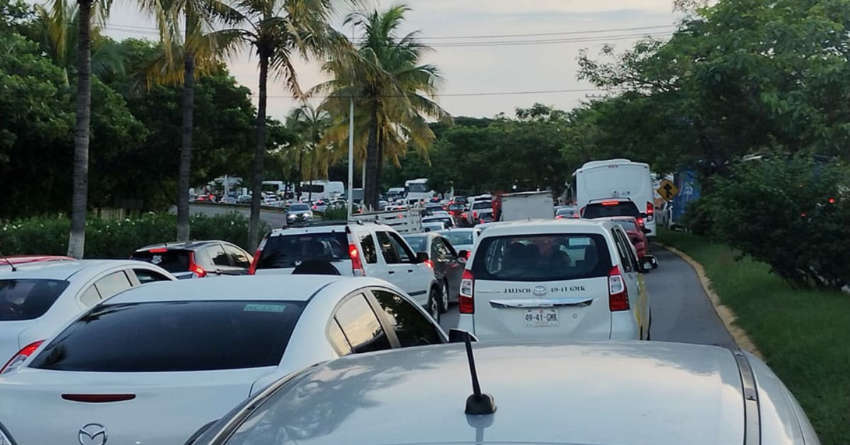
A photo taken from inside a car in heavy, slow-moving traffic on a road in Puerto Vallarta, Jalisco, Mexico, showing a long line of cars, including an ambulance and a bus, bumper-to-bumper. The road is lined with lush green tropical foliage and palm trees under an overcast sky.
Sick of Puerto Vallarta’s traffic congestion? The city’s trying new initiatives to improve the issue, ranging from a free bike rental system to shuttle buses. (Vallarta Independiente)

Tackling mobility: Bikes, buses, and parking

Mobility within the city is a pressing issue, and several projects aim to ease congestion while nudging residents and visitors toward more sustainable options. Puerto Vallarta is preparing to launch a free public bicycle system financed through the city’s lodging tax. The first step will be to rehabilitate the bike lane network; afterward, racks and fleets of bicycles will be introduced across hubs like Plaza Caracol, Plaza Lázaro Cárdenas, and the southern Malecón.

In Marina Vallarta, a free shuttle bus service has returned, offering residents, workers, and tourists no-cost transport through the neighborhood. The loop runs every 18 minutes from early morning until night.

Still, car use remains central, and parking is a flashpoint. City leaders are weighing a digital meter system using QR codes, with proposed rates of 18 pesos per hour across Centro, Zona Romantica, Versalles, and Marina Vallarta.

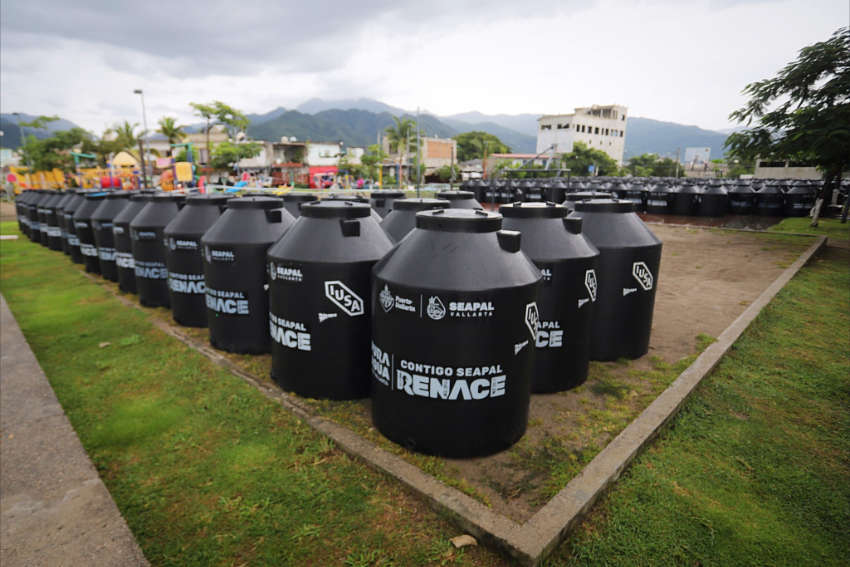
A low-angle photo shows dozens of new, black water storage tanks (likely Rotoplas or similar cisterns) arranged in rows on a grassy field in Puerto Vallarta, Jalisco, Mexico. The tanks are branded with logos for SEAPAL Vallarta and the text "CONTIGO SEAPAL RENACE" (With you, SEAPAL is reborn). In the background are buildings and green mountains under a cloudy sky.
Free water storage tanks ready to be delivered free of charge by SEAPAL, the city’s water utility, to residents in the Puerto Vallarta municipality. (SEAPAL/Facebook)

Investing in water and the environment

Behind the visible projects, Puerto Vallarta is also confronting a less glamorous but essential challenge: water. SEAPAL Vallarta, the city’s water utility, has struggled with financial shortfalls and service disruptions. 

At the same time, environmental initiatives are being tied directly to tourism. A proposed municipal tax on short-term rental platforms like Airbnb would funnel 1-3% of booking fees into clean-water infrastructure, wastewater management, and the preservation of green zones. This would supplement Jalisco’s existing 4% lodging tax.

Puerto Vallarta going forward

Business chambers and civic leaders are urging coordination between all these projects —airport, port, bus station and urban upgrades — so that Puerto Vallarta presents a unified vision for handling tourism growth. Their proposals also emphasize culinary tourism, sustainability, training for restaurants and revitalization of landmarks like the Río Cuale and the Cerro neighborhood. 

For now, the projects paint an ambitious picture of what Puerto Vallarta could become: better connected, easier to navigate and more sustainable. But many of these initiatives are still under construction or awaiting approval, and not all will unfold as envisioned. Budgets can tighten, community pushback can alter plans and maintenance often lags once ribbon-cuttings are over.

But what is clear is that Puerto Vallarta is at a crossroads, investing heavily in infrastructure at a moment when tourism demand is rising and resident needs are pressing. Whether the city can strike a balance between growth, livability, and long-term sustainability remains to be seen.

Meagan Drillinger is a New York native who has spent the past 15 years traveling around and writing about Mexico. While she’s on the road for assignments most of the time, Puerto Vallarta is her home base. Follow her travels on Instagram at @drillinjourneys or through her blog at drillinjourneys.com.

Taste of Mexico: Mushrooms

3
A close-up, shallow depth of field photo of several whole cremini mushrooms (baby portobello mushrooms), or champiñones, scattered across a wooden cutting board with a blurred stainless steel pot in the background.
Mexico produces nearly 47,000 tons of mushrooms annually, and the fungus is beloved in Mexican cuisine. (Pixabay via Pexels)

Remember the saying “You don’t know what you have until you lose it”? For me, the realization came not in experiencing loss but when I was at a quesadilla stand. I was halfway through a bite when it struck me: Mushrooms are everywhere in Mexican cuisine, yet I had never consciously noticed.

Champiñones (mushrooms) with epazote are a classic pairing, for example, but have they always been this central to Mexican culture? I couldn’t remember. The French eat plenty of mushrooms, the Japanese too. Could their use here have been imported? Perhaps. But what about the mushrooms that are tied to ancient rituals?

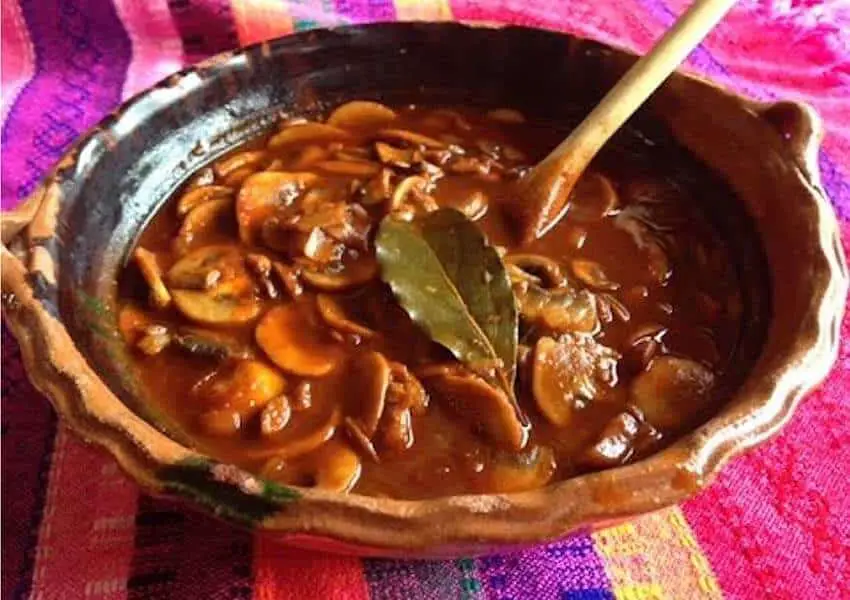
Mushroom in adobo
Mushrooms in an adobo sauce make a great taco filling. (Janet Blaser)

Then I recalled that mushrooms once held a revered place in pre-Hispanic cultures, especially the hallucinogenic varieties. But what about the ordinary ones — the mushrooms that don’t send you hurtling into the depths of your subconscious?

Forgive me, friends, but today’s article emerges from my inability to stop circling this question: Where and why do mushrooms matter so deeply to Mexican cuisine?

The relationship between pre-Hispanic peoples and mushrooms was intimate and layered. Archaeological evidence, the sparse surviving codices and the chronicles of the Spanish conquistadors all confirm that wild mushrooms were central to the Mesoamerican diet — and that hallucinogenic mushrooms, in particular, played a role in ritual and festivity. Like much of pre-Hispanic food, mushrooms also carried medicinal value.

Mushrooms in modern Mexico: An evolution 

With colonization, hallucinogenic mushrooms were suppressed for religious and cultural reasons. Officially, they were prohibited in New Spain; unofficially, traditions endured underground. Nonhallucinogenic mushrooms, meanwhile, found their way into colonial cuisine, folded into stews and seasonal dishes.

In the 20th century, mushrooms entered a new chapter. By the 1930s, efforts began to domesticate them, and by the 1950s, their commercialization had scaled up dramatically. Today, Mexico produces nearly 47,000 tons annually, 95% of which are the ubiquitous white button mushroom.

A table covered with a black and white checkered cloth displays a large, diverse collection of freshly foraged wild mushrooms of different colors, shapes, and sizes from Mexico. The varieties include various brown, white, yellow, and reddish-capped species.
This display at an annual Oaxaca mushroom fair gives a sense of the vast diversity of edible mushrooms that can be foraged in Mexico. Estimates place the number of varieties at 100,000 or more. (Tomzap.com)

Alongside them, oyster mushrooms, cremini, portobello, shiitake and the famed cuitlacoche also appear in markets and kitchens.

But these cultivated species are only the tip of the iceberg: Mexico is home to more than 100,000 mushroom varieties. Of those, only 3,000 have been studied, and just 200 are considered edible. The gap between what is known and what remains unexplored is immense.

Mushrooms’ nutritional value

The current enthusiasm for mushrooms isn’t unfounded. Composed of 80% to 90% water, they are low in calories yet provide a mix of protein, carbohydrates and fiber. Rich in B vitamins — particularly B3 and B2 — and vitamin D, mushrooms can also supply, depending on the variety, potassium, selenium, iron, zinc and other minerals.

The health implications are striking: strengthened immunity, antitumor properties, cardiovascular support, improved gut microbiota, protection against neurological damage, regeneration of nervous tissue, enhanced cognition and impressive antioxidant, antimicrobial and antiviral capacities. For those with liver damage, mushrooms may even be therapeutic.

Champiñones y epazote: a classic combo

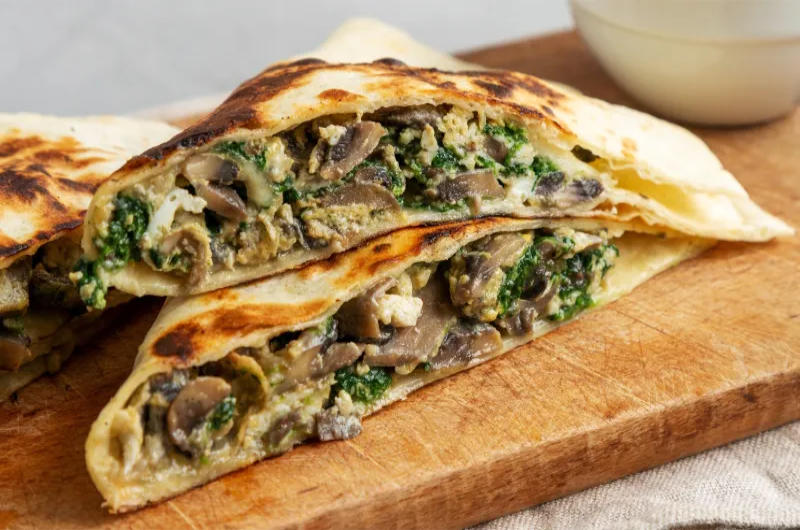
A close-up shot of a halved, folded, and pan-fried quesadilla resting on a wooden cutting board. The visible filling inside the flour tortilla is a savory mix of sliced brown mushrooms (champiñones), green leafy epazote and melted white cheese.
These quesadillas made with champiñones and epazote are a staple anywhere you can buy quesadillas in Mexico. (Cardamomo)

Few flavors call to mind Mexican street food as well as mushrooms cooked with epazote. At almost any quesadilla stand, you’ll find this combination: champiñones sautéed with onion (not my personal favorite, as regular readers know) and brightened at the end with the sharp, resinous notes in epazote. For me, it’s irresistible.

Nutritionally, the pairing is more than a delicious element of Mexican cuisine. Together, mushrooms and epazote amplify antioxidant and cardiovascular benefits, support gut health and offer anti-inflammatory effects in each remarkably nutrient-dense bite.

The versatility of this combination in Mexican cooking is staggering. You can fold it into sopa de milpa, serve it as a simple side dish or tuck it into quesadillas, tacos, sopes or huaraches. Use them as filling for empanadas, tamales and stuffed chiles, or use them as a tostada topping. Outside of Mexican cuisine, add them to pasta sauces and risottos.

A final note


View this post on Instagram


A post shared by Mexico News Daily (@mexiconewsdaily)

 Incorporating mushrooms into your diet is not only culturally resonant but also a proven way to bolster your health; to be clear, I’m recommending edible mushrooms — this portal is not in the business of encouraging journeys to other dimensions of your psyche. But should you choose that path, we won’t judge either.

If you’re curious about edible mushrooms in Mexico, visit your local market and ask about regional varieties. In Mexico City’s open-air food markets — the Central de Abasto or the Mercado de San Juan — you can encounter wild mushrooms from Tlaxcala, Puebla and Oaxaca such as hongos azules, hongo amarillo, hongo borrego, hongo chipotle, hongo yemita, el venado and los tecomates. Each one offers its own story, its own flavor and its own place in the sprawling fungal tapestry of Mexico.

María Meléndez is a Mexico City food blogger and influencer.

Mexico’s week in review: Security challenges and cooperation as Sheinbaum wraps up one year in office

0
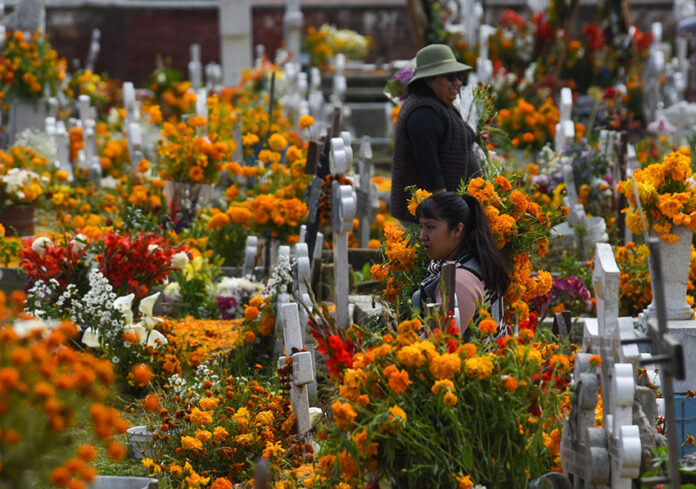
Women in a graveyard filled with orange marigolds
Women in Toluca celebrate Michaelmas (Día de San Miguel Arcángel) amid graves and marigolds on Monday. (Crisanta Espinosa Aguilar / Cuartoscuro)

The week of Sept. 29 to Oct. 3 marked President Claudia Sheinbaum’s one-year anniversary in office, a milestone punctuated by strong public approval, intensified security cooperation with the United States, and persistent challenges in trade and migration. From diplomatic tensions with Israel to new bilateral initiatives combating gun trafficking, the week offered insight into Mexico’s evolving domestic priorities and international relationships as the administration begins its second year.

Didn’t have time to catch all the top stories of the week? Here’s what you missed.

Sheinbaum’s year one: High approval, persistent challenges

President Sheinbaum completed her first year in office with approval ratings exceeding 70%, significantly outperforming her five most recent predecessors. Two major polls found support at 71.6% and 73%, with particularly strong backing from women, housewives and welfare program beneficiaries. During her daily press conferences throughout the week, Sheinbaum reflected on her accomplishments while completing a nationwide accountability tour that drew close to half a million attendees across all 32 states.

President Sheinbaum’s first year in office in 12 numbers: Part 1

The president’s high marks for honesty, leadership and social welfare programs contrast sharply with public dissatisfaction on security issues, where 75% rated anti-cartel efforts as bad or very bad. Sheinbaum also commemorated the 57th anniversary of the Tlatelolco massacre at her Thursday morning conference, expressing solidarity with victims of the 1968 student killings. Later that day, the annual Oct. 2 commemorative march turned violent when approximately 350 members of a black bloc threw incendiary devices, attacked police with hammers and stones, and looted stores in the Zócalo. The clashes left 94 police officers and 29 others injured. Mexico City Mayor Clara Brugada praised police restraint, noting that “unlike in 1968, our police do not repress,” though the violence obscured marchers’ demands: justice in the Ayotzinapa case and an end to the Gaza conflict.

Mexico-US security cooperation intensifies

Mexico and the United States launched Mission Firewall, a bilateral initiative to combat southward gun trafficking, during the inaugural meeting of the Mexico-U.S. Security Implementation Group in McAllen, Texas. The mission aims to increase border inspections, expand ballistic identification technology across all 32 Mexican states, and strengthen information sharing between authorities. Since January, U.S. officials reported opening more than 125 arms trafficking investigations, a significant shift after years of Mexican complaints that Washington failed to acknowledge the problem.

“For the first time, the United States recognizes that it has to do operations to control the illegal trafficking of weapons to Mexico,” Sheinbaum said, calling the agreement “very important.” Separately, a DEA operation targeting the Jalisco New Generation Cartel resulted in 670 arrests and the seizure of nearly US $30 million in assets, though Sheinbaum noted Mexico did not participate because operations occurred entirely on U.S. soil.

Protecting Mexicans abroad

The administration confronted multiple crises involving Mexican nationals in foreign custody. A Mexican man shot at a Dallas ICE facility died after being removed from life support, marking the sixth death of a Mexican in ICE detention since Trump intensified deportation efforts. Miguel Ángel García Hernández, a 32-year-old father who had lived in the U.S. since age 13, was among three detainees shot by a sniper firing into the facility. Sheinbaum pledged financial and legal support to his pregnant widow and four children.

Simultaneously, Mexico demanded the immediate repatriation of six Mexicans detained by Israel after the Israeli Navy intercepted a humanitarian flotilla bound for Gaza. The Mexicans were traveling on vessels carrying aid when they were seized in international waters and taken to Israel. Sheinbaum sent four diplomatic notes to Israel, asserting the Mexicans committed no crime and calling for humanitarian aid to reach Gaza, though she stopped short of breaking diplomatic relations.

Economic headwinds: Remittances, exports and trade tensions

Mexico’s economic picture showed troubling signs as remittances fell 8.3% in August, the fifth consecutive monthly decline and largest contraction in 16 years for the January-August period. Analysts attribute the drop partly to fear among undocumented Mexican workers in the U.S., some of whom have limited movements outside their homes amid Trump’s deportation agenda. With a 1% tax on cash remittances set to take effect in January 2026, the downward trend appears likely to continue.

On a more positive note, Mexico’s exports increased 7.4% in August, putting the country on track for record export revenue despite U.S. tariffs. However, automotive sector exports declined 4.1% in the first eight months of 2025, reflecting the impact of Trump’s 25% tariff on light vehicles. A new 25% tariff on heavy trucks, announced last week, threatens further deterioration since heavy trucks represent nearly 23% of Mexico’s auto sector exports.

Meanwhile, Economy Minister Marcelo Ebrard acknowledged that next year’s USMCA review will be more bilateral than trilateral, with distinct trade relationships between Mexico-U.S. and Canada-U.S. requiring separate negotiations. Former U.S. Trade Representative Robert Lighthizer has indicated the revision will be “far tougher than most investors and strategists expect,” signaling potential challenges ahead for the nearly $2 trillion annual trade relationship.

USMCA review will be ‘more bilateral than trilateral,’ says economy minister

Migration shifts and safety reforms

A new migrant caravan departed Chiapas with a destination that would have been unthinkable in previous years: Mexico City, not the United States. More than 1,000 migrants, primarily Cubans, began the 1,100-kilometer trek seeking to expedite asylum claims in Mexico rather than risk crossing to the U.S. under Trump’s strict immigration policies. Activists at Mexico’s southern border report an 80% drop in migratory flow since January, fundamentally transforming migration patterns through Mexico.

Tourism, infrastructure and World Cup preparations

In Tulum, 15 hotels and beach clubs agreed to provide free beach access following protests over entrance fees at the newly opened Jaguar National Park. Properties including Papaya Playa Project and Ahau eliminated cover charges, reaffirming Mexico’s constitutional guarantee of beaches as public assets.

Looking toward 2026, the NFL announced its return to Mexico City for the first time since 2022, with a regular-season game scheduled at the renovated Estadio Banorte. The announcement comes as Mexican airports prepare for World Cup travelers, with billions of pesos invested in terminal expansions and modernization at Mexico City, Guadalajara and Monterrey airports. Querétaro’s airport is also expanding with a new hotel, shopping plaza and eventually a spaceport.

Preserving heritage, advancing technology

Sheinbaum announced plans to expand seed banks protecting Mexico’s 64 corn varieties, 59 of which are native, following a constitutional reform banning genetically modified corn cultivation. The initiative ensures both food security and cultural identity. Meanwhile, Mexico is developing four Earth observation satellites for launch beginning December 2026, aiming to end dependence on foreign satellite data for monitoring climate change and national security threats.

Looking ahead

As Sheinbaum enters her second year, she faces the challenge of converting strong approval into tangible progress on security and corruption while managing economic pressures from declining remittances and potential USMCA renegotiations. The new bilateral security cooperation with the U.S. represents a significant diplomatic achievement, though navigating Trump’s unpredictable trade policies will test Mexico’s resilience. Investments in agricultural preservation, technological independence and World Cup infrastructure signal long-term strategic thinking, but immediate concerns about safety, migration and economic stability demand urgent attention. Whether Sheinbaum’s popularity proves durable will depend on her administration’s ability to deliver results on the issues Mexicans care about most.

Mexico News Daily


This story contains summaries of original Mexico News Daily articles. The summaries were generated by Claude, then revised and fact-checked by a Mexico News Daily staff editor.

Looking for previous weeks in review?

MND Tutor | Satelite

0

Welcome to MND Tutor! This interactive learning tool is designed to help you improve your Spanish by exploring real news articles from Mexico News Daily. Instead of just memorizing vocabulary lists or grammar rules, you’ll dive into authentic stories about Mexican culture, current events, and daily life… What better way to learn Spanish?

Mexico’s incredible ecosystem boasts mountains, jungles, deserts, lakes and plains. While this means that the country enjoys an incredible level of biodiversity, it is also putting residents at increased risk from the effects of climate change.

To combat this, the Mexican government has announced “Project Ixtli” aims to create and launch a series of locally-built weather satellites to monitor the country. Project organizers hope that it will help reduce the risk of fires, landslides, floods and hurricanes, as extreme weather becomes commonplace. Learn about this exciting new technological undertaking and practice relevant reading and vocabulary skills in this edition of MND Tutor.


Let us know how you did!

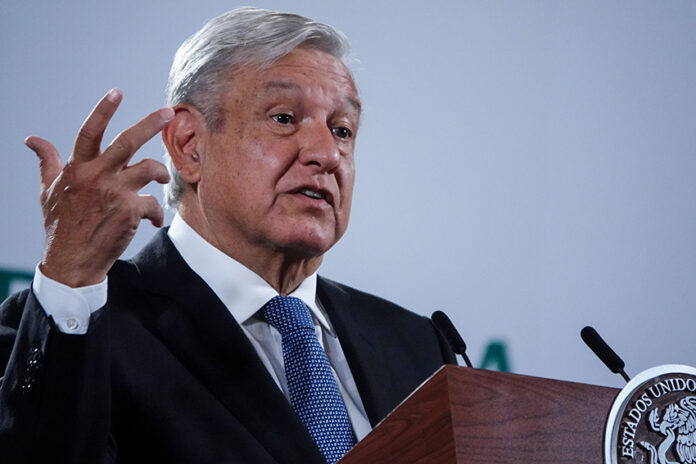
What should AMLO’s legacy be? A perspective from our CEO

34
former president AMLO
As the first Morena party president, Andrés Manuel López Obrador upended Mexico's status quo and ushered in a new era in Mexican politics — for better or worse. (Galo Cañas/Cuartoscuro)

I first attempted to weigh in on how to think about AMLO’s presidency over two years ago. Since he was first elected, I have been constantly asked by foreigners how I feel about his presidency and what I think about him. They tend to hear one of two extremes from their Mexican friends — that he was the “best president ever” or an “absolute disaster” — and they are not sure which version to believe.

With that being said, in the newest version of MND’s “Confidently Wrong” podcast, we tackle that very question: What should AMLO’s legacy be? And was he a net good or bad for the country?

It’s important to remember that the “confidently wrong” predictions leading up to his election were off the charts. The idea that Mexico would “become the next Venezuela,” that the Mexican peso would crash, that foreign direct investment was going to disappear or that Mexico would become a “communist country” were just a few of the predictions by many so-called experts.

Obviously, none of those things happened. So how can we analyze his presidency? Clearly AMLO triggers strong emotions in both directions, but what do the facts and data tell us?

To find out, check out the latest episode of MND’s “Confidently Wrong about AMLO” on our YouTube channel Mexico News Daily TV, below, or on Spotify.

Confidently wrong about AMLO - Episode 5

Travis Bembenek is the CEO of Mexico News Daily and has been living, working or playing in Mexico for nearly 30 years.

The MND News Quiz of the Week: October 4th

0
News quiz
(Mexico News Daily)

What's been going on in the news this week? Our weekly quiz is here to keep you on top of what’s happening in Mexico.

Get informed, stay smart.

Are you ready?  Let’s see where you rank vs. our expert community!

Mexico has unveiled 'Misión Ixtli,' a new initiative to help in the battle against climate change. What is it?

Querétaro International Airport is getting bigger. The planned expansion will eventually include the construction of an onsite hotel, a shopping plaza and what other amenity?

A Mexican state has opened a dedicated nearshoring investment office in Tokyo this week. Which one?

Which major sports franchise has announced plans to return to Mexico this week?

Contestants in the "México Canta" singing contest will face off for the crown this weekend. But what is the show about?

A migrant caravan has crossed into Mexico from Guatemala. Where are they headed?

Protests across the capital occurred on October 2. What historical event were protestors commemorating?

One year into her presidency, how popular is Claudia Sheinbaum with the Mexican public?

The president has also condemned a caricature of Mexicans published by Donald Trump. What stereotype was she rejecting?

Remittances to Mexico were down 8.3% in August, yet another fall. For how many months have remittances now declined?