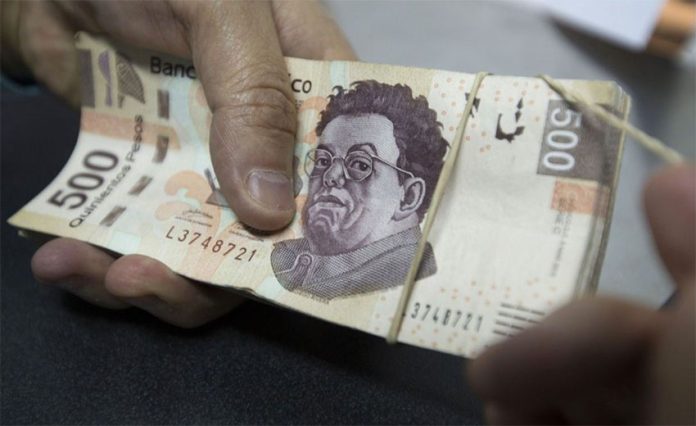
The Mexican peso will lose almost 3% of its value by the end of the year, finishing up at 20.30 to the dollar, according to Gabriel Casillas, president of the Economic Studies Committee at the Mexican Finance Executives Institute and head of economic analysis at Banorte.
In an interview with Bloomberg, Casillas said the peso will decline because of a difficult international situation.
He added that so far this year, the peso’s variance has been minimal because of high interest rates and the fact that President López Obrador’s policies are regaining the trust of international markets.
Casillas also predicted that U.S. President Donald Trump will sign an agreement with China in late December in an attempt to speed up the economy, which will help the peso maintain an average exchange rate of 19.80 pesos per dollar in the first half of 2020.
“Trump needs to avoid a recession,” he said. “That might not lead to a complete agreement with China, but it will lead to some advances in the right direction.”
Casillas added that such an agreement could strengthen the dollar and hurt the peso.
“It’s probable that the Mexican currency will fall to 21.30 pesos to the dollar in the second half of 2020,” he said.
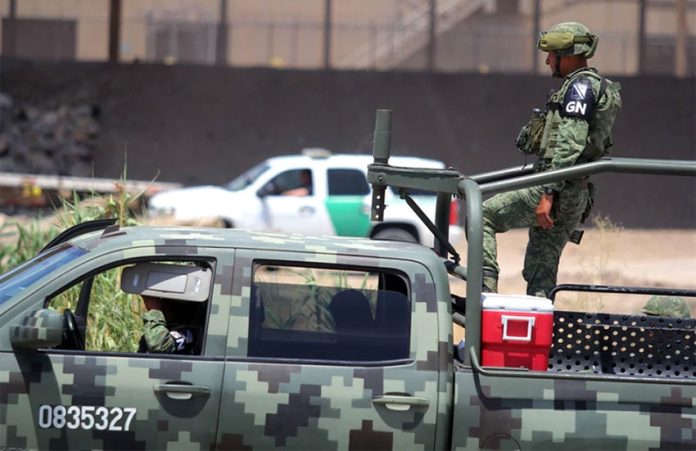
Federal and state security forces have detained 15 members of the Jalisco New Generation Cartel (CJNG) in Michoacán.
The arrests were made by National Guard and state police officers in the municipalities of Sahuayo and Ecuandureo.
In Sahuayo, authorities captured 11 alleged hitmen presumed to be operating in the west of the state.
After street pursuits and shootouts, government forces were able to break up the criminal cell involved in trafficking synthetic drugs, extorsion and kidnapping. They confiscated firearms and ammunition of various calibers.
The operation also seized four automobiles, three of which had been reported stolen.
In Ecuandureo, four subjects believed to belong to a CJNG cell were arrested on Saturday. Authorities confiscated six firearms, 78 magazines, two vehicles and five bulletproof vests.
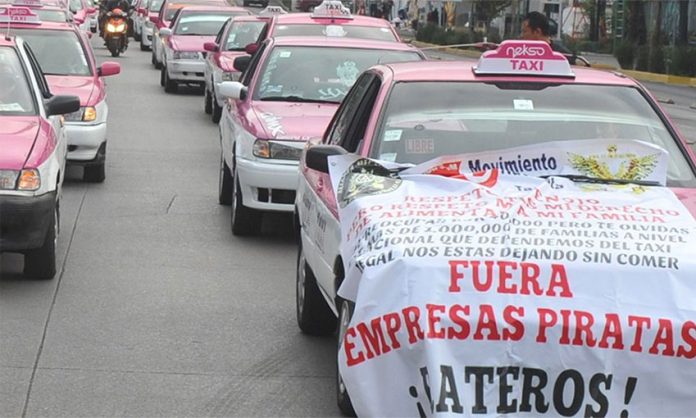
Taxi drivers are protesting across Mexico to demand stricter regulation of ride-hailing services such as Uber, Didi and Cabify.
Taxis affiliated with the National Movement of Taxi Drivers (MNT) began gathering at different points of Mexico City on Monday morning to travel to the Angel of Independence monument on Reforma avenue, from where they were scheduled to converge on the zócalo at 10:00am for a four-hour rally.
The congregation of taxis caused traffic chaos on several roads this morning including Avenida de los Poetas in Santa Fe and the México-Toluca and México-Pachuca highways.
Taxi drivers from the México state municipalities of Ecatepec, Nezahualcóyotl, Naucalpan, Atizapán and Cuautitlán were expected to join their Mexico City counterparts at the protest in the capital’s central square.
Similar protests against the ride-sharing apps were scheduled to take place in cities in 28 states.
Mexico City MNT president Ignacio Rodríguez said in an interview on Monday that ride-hailing services have grown to such an extent that they pose an existential threat to the taxi industry.
“We’re at risk of disappearing as a sector, for us it’s life or death,” he said.
“These services grow without any control. They don’t want to abide by any regulations or any rules and that has an impact on us,” Rodríguez added.
According to the MNT, taxi drivers have to pay a range of fees and fulfill requirements that don’t apply to drivers who work for app-based ride-hailing services.
Rodríguez said that meetings with authorities have failed to yield any progress on establishing a level-playing field for everyone who works in the transportation sector.
“We’ve favored dialogue but seeing the indifference of our authorities, who are still not respecting the transportation law, we decided to protest,” he said.
The MNT leader offered an apology for the “inconvenience” caused by the Mexico City protest but added that taxi drivers “don’t have any other option.”
Mexico City Mayor Claudia Sheinbaum said on Sunday that she didn’t understand why the taxi drivers were protesting again, asserting that authorities have listened to their concerns and are looking at ways they can be addressed.
MNT leaders were scheduled to meet at 1:00pm with federal Interior Secretariat undersecretary Ricardo Peralta to discuss their demands.
The organization’s national leader, Bersaín Miranda, called on President López Obrador to intervene.
“. . . We want him to listen to us, to assist us and not leave taxi drivers in a state of defenselessness . . .” he said.
“We may have neglected . . . the quality of service, we admit and recognize that and apologize to [taxi] users. Our challenge is to improve the quality of service as long as we’re given guarantees [from the government] . . .”
Miranda said that 30,000 taxi drivers in Mexico City alone have stopped working in the transportation sector, the result of competition from multinational ride-hailing services.
Mexico City Security Secretary Jesús Orta Martínez announced his resignation on Thursday after only 10 months in office.
Orta made the announcement in a statement posted to Twitter on Friday.
“Over these 10 months, through consistent, deep efforts, we’ve been able to give the police the capacity it needs to address insecurity in the city,” said Orta.
Orta’s tenure was marked by several high-profile cases, including the murders of Norberto Ronquillo and Leonardo Avendaño. Crime statistics in Mexico City also continued an upward trend during his 10-month tenure.
The Mexico City government said Orta resigned for personal reasons, but the Citizens’ Movement party said that he was pushed out because his security policies had not been successful. In a press release, the Citizens’ Movement celebrated his resignation.
“Allowing Jesús Orta to spend more time in a position with such importance for the residents of the city would have been an even more serious mistake,” they said. “And even though removing him was the right decision, it is worrying that the removal happened without a recognition of the former secretary’s failure to guarantee security in the country’s capital.”
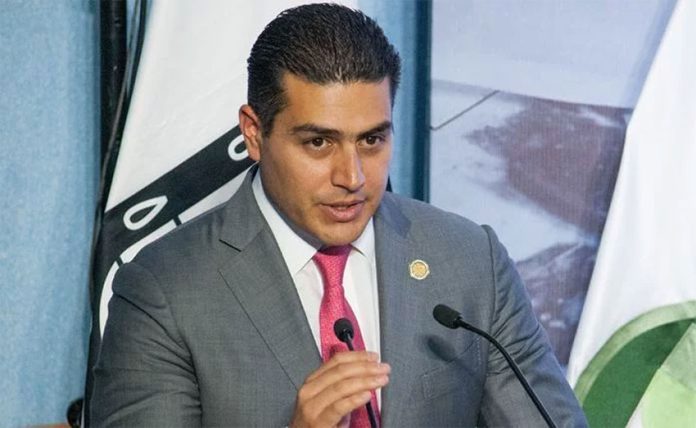
Orta has been replaced by Omar García Harfuch, the head of the Mexico City investigative police. He was sworn in as chief on Friday.
“Omar García Harfuch is the right person with the police experience needed to develop new police capabilities and return peace to the city,” said Orta.
The grandson of the man who was national defense secretary during the 1968 Tlatelolco massacre, in which security forces killed at least 300 students, García, 37, started his law enforcement career in the Federal Police in 2008.
In 2009, he was among a group of Federal Police officers that was investigated by the United States government for involvement in crime, according to information released by Wikileaks.
According to the magazine Proceso, his name turned up in connection with the Guerreros Unidos crime gang, suspected in the disappearance of 43 students in Guerrero in 2014.
His contact information was found in a notebook belonging to gang leader Sidronio Casarrubias.
García has been decorated twice by the Federal Police for merit. He has a degree in law and a master’s in criminal law.
Mexico only has a 4% chance of reducing childhood obesity rates by 2025, according to an organization devoted to addressing the global obesity problem.
The World Obesity Federation (WOF) predicted in the report Atlas of Childhood Obesity that there will be just over 6.5 million school-aged Mexican children with the condition in 2030.
Based on that prediction, Mexico will have the seventh highest number of obese children in a decade’s time, behind only China, India, the United States, Indonesia, Brazil and Egypt. All of the countries except Egypt have higher populations than Mexico.
Published on Wednesday, the WOF report said that 19.9% of Mexican boy aged five to nine were obese in 2016 and that 15% of girls in the same age bracket were suffering from the ailment. The same year, 15.2% of boys aged 10 to 19, and 11.7% of girls, were obese.
The WOF noted that Mexico has policies in place to reduce physical inactivity, reduce unhealthy diet and restrict the marketing of certain foods to children. However, they will not stop obesity rates from rising, the federation predicted.
In 2030, almost a quarter of children aged five to nine, and about one-fifth of youngsters in the 10 to 19 age bracket, will be obese, the report said.
Abelardo Avila, a researcher at the National Institute of Medical Science and Nutrition, warned that the current situation in Mexico is likely even worse because the 2016 statistics cited in the WOF report don’t paint a complete picture of obesity in Mexico.
He said that people who live in poverty are most likely to suffer from the disease, adding that the “metabolic damage” of the disease is six or seven times greater on children who suffered malnutrition while in their mother’s womb.
Avila said that Mexico hadn’t done enough during the past two decades to combat obesity but applauded this week’s approval by the lower house of Congress of modifications to the General Health Law that stipulate that the labels on food and drinks must warn consumers if they contain high levels of calories, sugar, salt or saturated fat.
The researcher said that if additional measures to tackle obesity are implemented, positive results could be achieved during the next 10 years.
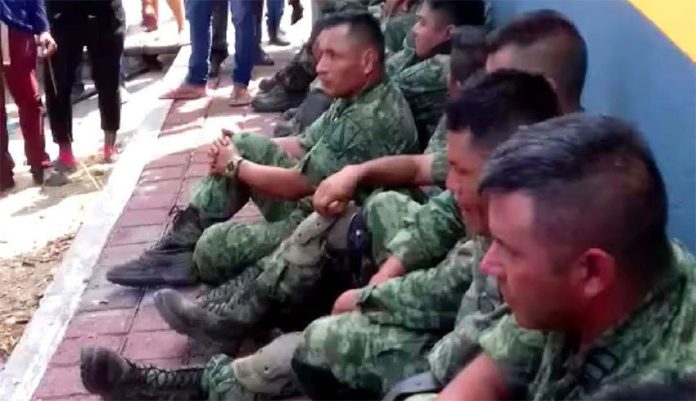
Soldiers were detained by cartel operators in Michoacán in May.
Two incidents last month suggest that a passive response by the military when confronted with acts of aggression by citizens could be coming to an end.
During each incident, and in many other similar situations, the army – following instructions not to be drawn into confrontations that could turn bloody – chose not to fight back
Retired military generals said in September that at least some of the aggression towards soldiers could have been ordered by crime groups, while Juan Ibarrola, a newspaper columnist and expert on Mexico’s armed forces, told the Associated Press that gangs often use townsfolk as human shields.
Again, the troops didn’t retaliate in any way, allowing what many people described as a humiliation.
In contrast, President López Obrador praised the troops, declaring that their attitude “was very responsible, very honorable and very brave” and that “prudence is much better than authoritarianism.”
Indeed, López Obrador – who during last year’s presidential campaign used the slogan “hugs, not bullets” to encapsulate what his strategy to dealing with violence would be – has given the army a clear mandate to avoid civilian casualties.
At a gathering of Nobel Peace Prize laureates in Mérida, Yucatán, last month, the president reiterated that he was committed to finding a peaceful solution to the violence plaguing the country.
“What we want is to achieve total peace but we don’t want a peace achieved with authoritarianism, with the use of force. We don’t want a peace of graves . . .” López Obrador said.
For the first nine months of his administration, military personnel heeded the president’s advice and refused to fight back when confronted aggressively by citizens.
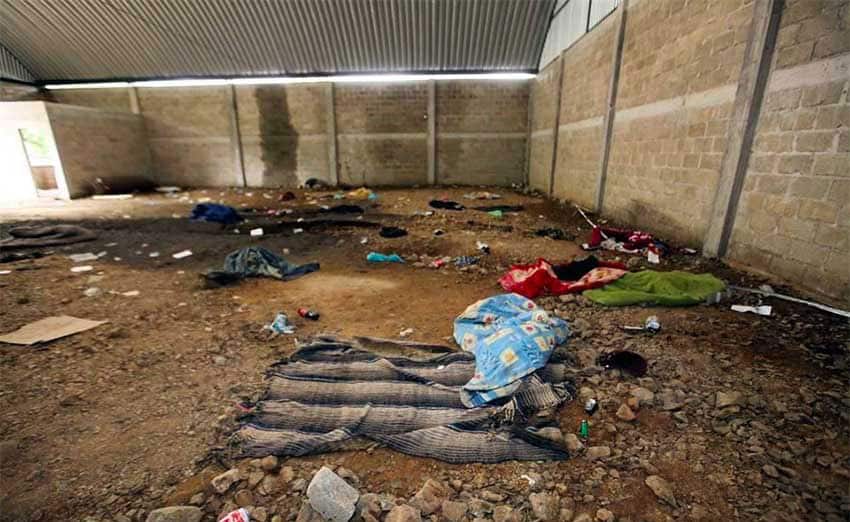
The Tlatlaya warehouse where more than 20 civilians were executed by the military in 2014.
However, the army’s response to violent incidents in Querétaro and Puebla in early September showed that it could be growing tired of turning the other cheek.
When an army patrol showed up in the Querétaro community of La Llave on September 7 to stop the looting of a train, they were met by cudgel-swinging residents who threw stones at them.
Two soldiers were injured and residents attempted to disarm them. As that was occurring, someone – presumably a soldier – fired gunshots, the army said, although it added that it was unclear exactly who the shooter was.
Two civilians sustained gunshot wounds, while “the officer leading the patrol fired at the ground,” the Associated Press said.
The next day, the army fired warning shots after a group of about 150 people in Acajete, Puebla, attacked soldiers with clubs and stones in an attempt to gain access to a warehouse where merchandise seized by the military was stored inside tractor-trailers.
No one was injured but for the second time in as many days, the army showed that, unlike in the previous nine months, it was prepared to retaliate.
Security analyst Alejandro Hope said the two incidents were evidence that the honeymoon period of army passivity could be over.
That possibility has generated fears that the military could once again commit severe human rights abuses such as it did in 2014, when soldiers executed killed a band of criminals in a warehouse in Tlatlaya, México state.
While Hope believes that the response of the army to the two events last month could foreshadow more military violence, Ibarrola, the newspaper columnist, has a different view.
“I think there is a commitment [in the military] to show the president that the armed forces will not be the ones to start a fire,” he said.
Ibarrola said that drug cartels and other crime gangs sometimes pay housewives and farmers to act as human shields to hinder the army and warned that if a soldier were to kill a citizen, the damage to President López Obrador and his government would be significant.
“. . . If a woman or a child dies and it was a soldier who killed them, imagine, that would change the whole narrative . . . It would be madness,” he said.
The Associated Press noted that there is a “third way” for the army to respond to aggression: the use of dissuasive non-lethal force.
However, the use of tear gas and Tasers has barely been explored by the armed forces and it is unclear what training soldiers have received in order to be able to respond with proportional force.
The Secretariat of Defense didn’t respond to questions from the Associated Press about what non-lethal weapons and means soldiers have to respond to violence and what training they have received.
Hope, however, pointed out that a middle ground approach has not been adopted in the past by Mexico’s security forces.
“This is a structural problem of the Mexican government,” he said. “Law enforcement forces either used excessive force, or did nothing at all.”
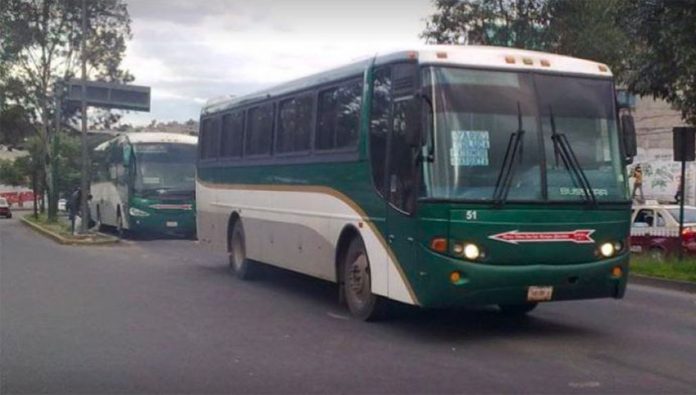
Flecha Roja buses were pressed into service by students this week.
Bus service became complicated for travelers — and the bus companies themselves — after students hijacked as many as 60 buses in México state, leaving passengers in the lurch after they were forced off the vehicles.
Students of the Lázaro Cárdenas Normal School, a teacher training college in San José Tenería, have stolen 46 buses from the transportation company Flecha Roja and another 14 from Línea TEO.
Students began by taking 32 buses from Flecha Roja on Tuesday, but appeared to need more by Thursday when they stole another 14. At that point, Flecha Roja had to suspend service on its Mexico City-Santiago Tianguistenco route, and more suspensions soon followed.
“We don’t know their true motive, but they stopped the buses while en route and forced the passengers off, and the situation is getting complicated, that’s why we’ve decided to suspend routes,” said Flecha Roja legal representative Enrique Quintana.
Buses were also stolen on routes between Mexico City and Ixtapan de la Sal, Tenango del Valle, Chalma and Xalatlaco, all in México state.
Normal school students have hijacked buses for many years to meet their transportation needs.
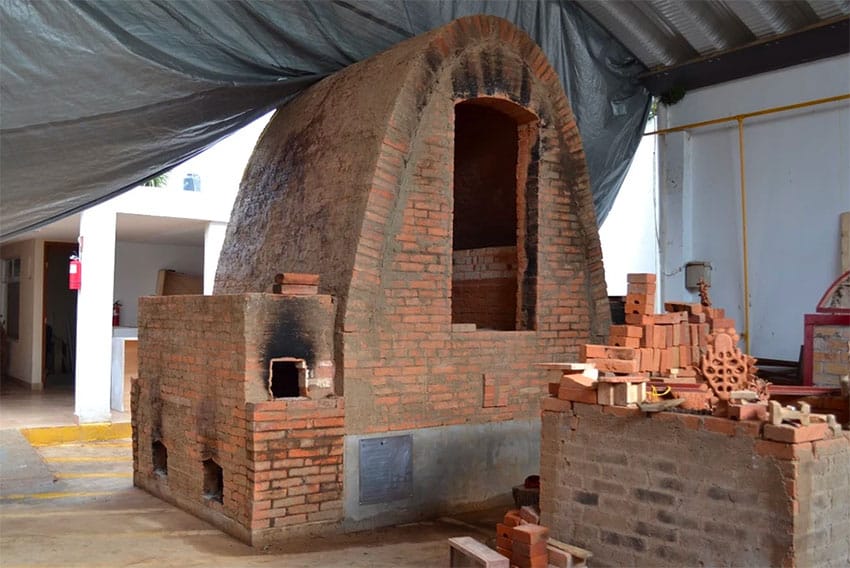
Potters in Oaxaca are addressing air quality problems by building smoke-free, wood-burning kilns in which to fire their ceramic artwork.
The kilns will not only benefit the health of both people and the environment, they will also provide artisans with new knowledge and techniques with which they can renew and strengthen their ceramics traditions.
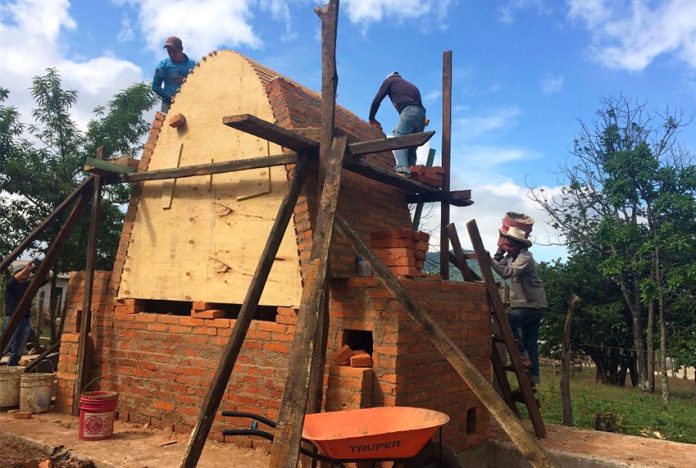
The fourth such kiln was recently installed in the town of Santo Domingo Tonaltepec, in the Mixteca Alta region, where potters are known for their “chorreado” (drip-stained) style of glaze made with tannins from oak tree bark.
The position and size of the firing chamber, as well as its tall chimney, cause it to draw extremely well, providing efficient combustion and optimal ash distribution.
The Alfredo Harp Helú Oaxaca Foundation (FAHHO), in coordination with its folk art gallery Andares del Arte Popular, will monitor the work of the artisans who use the new kilns. The foundation plans to provide artisans with the resources to build the kilns in order to expand the technology statewide.
One of the National Ceramics School’s kilns, in Metepec, México state.
The project was begun by the National Ceramics School (ENC), which in 2017 contacted Japanese master potter Masakazu Kusakabe. In February of that year, he was invited to conduct a smoke-free kiln workshop in Tapalpa, Jalisco.
The workshop saw the construction of the first kiln of this type in Latin America, and since then one of Kusakabe’s students, Yusuke Suzuki, has worked to spread knowledge of the innovation across Mexico.
The ENC was founded in 2016 thanks to interest by the Tajín seasoning company, which sought to create a space for the conservation, innovation, research and instruction of ceramics in Mexico.
This is the third year of the ENC’s smoke-free kilns project. It has also built the kilns in Guanajuato, Chiapas, Jalisco, Chihuahua, Michoacán and México state.
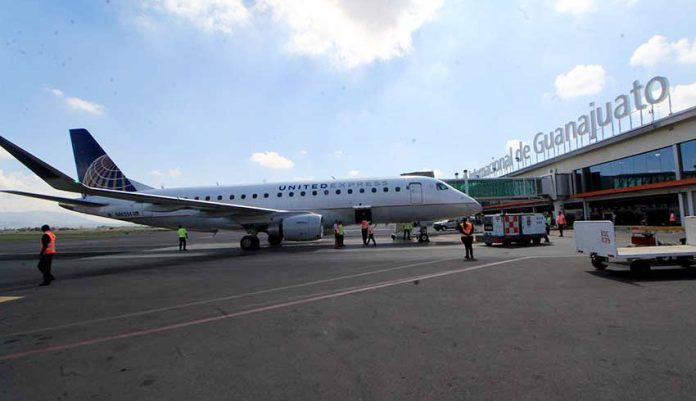
Thieves gained access to runway area to steal the cash.
Six months after a band of armed thieves stole US $2.4 million worth of United States and Canadian dollars in just three minutes at Guanajuato International Airport, the crime remains unsolved.
Even though the brazen heist took place in a federal zone, the federal Attorney General’s Office (FGR) delegated the investigation to its counterpart in Guanajuato, the newspaper Milenio reported on Friday. Neither state nor federal authorities have provided an update about the progress of the probe.
On the night of Wednesday, April 3, between six and eight men carried out what one former security official described as “the perfect robbery.”
Using a truck disguised with a fake Aeroméxico logo, the men breached security to enter the runway area, where they intercepted an airport service vehicle that was in the process of delivering the cash to a waiting plane.
The money had arrived at the airport in a PanAmericano armored truck in order to be sent to Mexico City.
The armed men stole 14 of 18 bags of cash from a sole unarmed PanAmericano guard and two airport employees traveling across the tarmac in a luggage transport vehicle.
The thieves then loaded the money into their truck, drove to the perimeter of the airport property and escaped through a wire fence in which a large opening had been cut.
Airport operator Grupo Aeroportuario del Pacífico said in a statement that the thieves entered the airport, carried out the robbery and left within a period of three minutes.
Shortly after the incident, police found the truck that was used and recovered two of the stolen bags of cash. They later found two more bags of cash in another abandoned vehicle.
Juan Miguel Alcántara Soria, former head of the National Public Security System, claimed that “the perfect robbery” was made possible by “flaws” of the authorities responsible for providing security at the airport – the Federal Police outside the facility and the army in the terminal and runway area.
When the robbery occurred, military personnel were in the baggage collection area. By the time they realized what had happened, the thieves had already left the airport. Federal and state police as well as the army conducted a joint search but made no arrests.
Alcántara told Milenio that the Guanajuato office of the FGR, not state authorities, should be carrying out the investigation into the crime, adding that the absence of progress in the case is an example of the kind of impunity that plagues Guanajuato and the whole country.
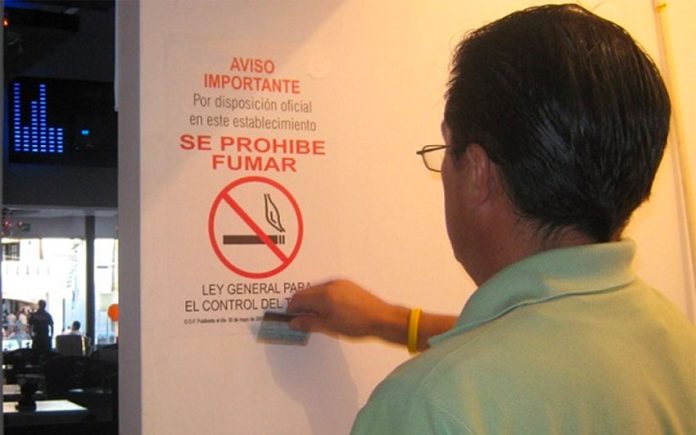
More non-smoking signs will probably be going up in Aguascalientes.
A law passed on September 29 in Aguascalientes bans smoking in work places and indoor public locations.
Under the new law, anyone who allows smoking in public places can be fined with up to 4,000 times the Unit of Measure and Update, or UMA — approximately 340,000 pesos or US $17,000 — and jailed for up to 36 hours. The ban also applies to schools, health centers, libraries, public transit and other public places.
Aguascalientes is the 13th state in Mexico to pass a ban on smoking in public places.
Electronic cigarettes, whether or not they contain tobacco or nicotine, are included in the prohibition.
The law was praised by an anti-tobacco organization, Campaign for Tobacco-Free Kids.
“While the new law marks a great step forward for tobacco control in Mexico, the national Congress must now follow the example of Aguascalientes and adopt a federal law that would grant all Mexican citizens 100% smoke-free environments, as is already the case in 20 countries in the region of the Americas,” the group said in a statement.
There are 210,000 smokers in Aguascalientes, representing 24.7% of the population, which makes it the state with the second-highest rate of smoking, after Mexico City, where 30.8% of people smoke. However, fewer than half of the smokers in Aguascalientes smoke regularly.