Home Blog Page 1754

No protection for witness of alleged police massacre: rights group

0
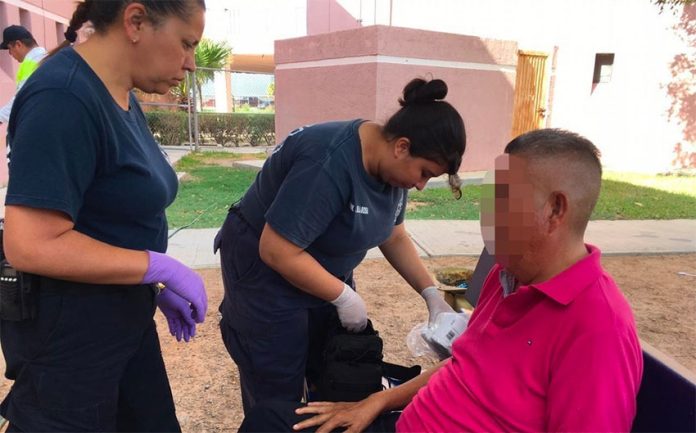
Paramedics treat the witness to an alleged massacre in Nuevo Laredo before transferring him to hospital.

The Nuevo Laredo Human Rights Committee (CDHNL) is accusing authorities of failing to offer protection to a key witness of an alleged massacre by police on September 5.

Identified as Ramón, the witness has spoken to the National Human Rights Commission but fears retaliation from Tamaulipas state police, according to CDHNL president Raymundo Ramos, who said on Friday that arrangements have been made to transfer the man to the United States.

“Emotionally, he’s in a very bad state, he gets very scared, very worried every time he sees a state police officer, and he has no protection,” Ramos said in an interview with Grupo Fórmula. “He has already been interviewed by the National Human Rights Commission, he already gave his testimony, and we’re looking into ways to protect him, so that he doesn’t become the victim of retaliation.”

The murders occurred in the Valles de Anáhuac neighborhood of Nuevo Laredo where police say they killed five men and three women in a shootout. However, witness testimony and video evidence gathered by the CDHNL suggests the victims were shot execution-style after having been arrested, and that police manipulated the scene to support their claim that there had been a battle.

Tamaulipas Governor Francisco García Cabeza de Vaca announced on Twitter that state Attorney General’s Office is looking into the incident, and will request assistance from the United States Federal Bureau of Investigation. He also said that the officers implicated have been suspended, and will face criminal penalties if they are found to have committed extrajudicial killings.

In his morning press conference on Thursday, President López Obrador promised that the federal government will support the investigation into the incident.

“Prosecutors are conducting an investigation, and we will help them with everything,” he said. “We’re not going to allow executions or massacres of anyone, we won’t tolerate it. There will be investigations, and those responsible will be punished.”

Source: Milenio (sp)

37 bodies confirmed in 119 bags of body parts found in Jalisco

0
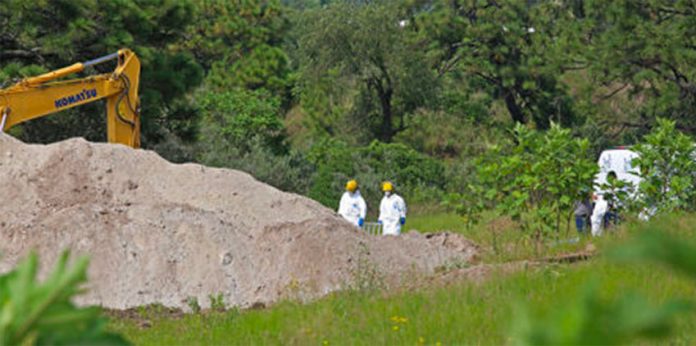
Excavating human remains in Zapopan.

The Jalisco government has confirmed the remains of 37 people have been found among body parts left in 119 plastic bags that were buried on a property in Zapopan, a municipality in the metropolitan area of Guadalajara.

Security cabinet chief Macedonio Tamez Guajardo said that forensic specialists have discovered the complete remains of nine bodies and the partial remains of 16 as well as six heads and six backs.

“It saddens me to speak in this way but society has a right to know what is happening,” Tamez said.

The official said the bodies are in “varying states of decomposition” and therefore some will be easier to identify than others. However, Tamez asserted that identification of all the victims is possible.

He said that the sex and age of the victims have not yet been determined and that authorities don’t know where they were killed or by whom.

However, Tamez added that there could be a connection between the mass grave discovered last week in the neighborhood of La Primavera and an organized crime safe house in Ciudad Granja, Zapopan, where six bodies were discovered on August 12.

While none of the remains of the 37 victims have yet been identified, family members of missing persons have begun approaching the Jalisco Institute of Forensic Science to seek information about the latest discovery, the official said.

“. . . In due course, [information] will be provided to them,” Tamez said.

He rejected a claim made by an organization of family members of missing persons that the state’s morgues are overwhelmed.

“There’s no crisis . . . no saturation [in morgues],” Tamez said, although he conceded that forensic staff face a heavy workload.

The security chief said the process to hire more forensic personnel is underway, adding that bodies are constantly being identified and returned to their families for burial.

Jalisco-based journalist Stephen Woodman said in an interview with Business Insider published on Thursday that state authorities have found 20 clandestine burial sites in the Guadalajara area this year.

In the first seven months of the year, homicides in Jalisco increased by 21% compared to the same period of 2018, and more than 3,000 people are listed as missing in the state.

The western state is the home of Mexico’s most powerful and dangerous criminal organization, the Jalisco New Generation Cartel, which is involved in turf wars with other crime groups in several parts of the country.

Source: Milenio (sp) 

US seeks security guarantees for avocado inspectors in Michoacán

0
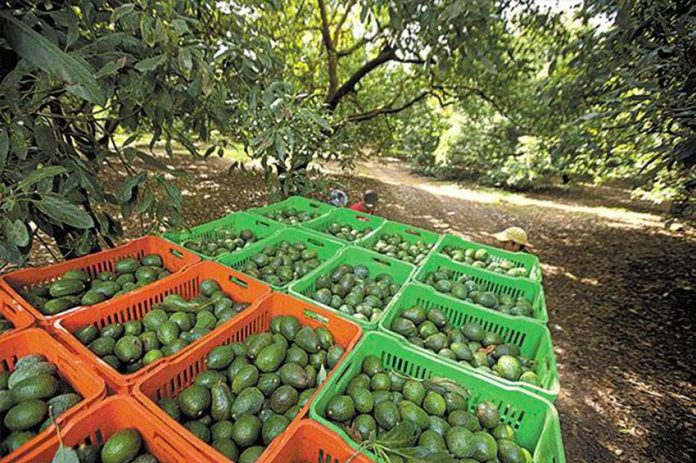
Crime gangs threaten Michoacán's avocado exports.

The United States Department of Agriculture (USDA) is threatening to suspend its avocado certification program after threats and violence against inspectors in Michoacán.

According to military sources who spoke with the newspaper Reforma, the USDA issued a travel warning for 38 Michoacán municipalities, most of which have significant avocado production.

There are 58 USDA employees stationed in Michoacán who are responsible for inspecting conditions on farms that grow avocados for export to the United States.

On August 16, USDA agents were threatened by a suspected criminal gang after cancelling the certification of an avocado farm in the community of Copal in the municipality of Ziracuaretiro.

Last week, a group of USDA agents traveling with local authorities in Ziracuaretiro were robbed and their vehicle was stolen. After the incident, officials from the U.S. Consulate in Guadalajara met with an association of avocado growers to demand better security for USDA agents, threatening to end the export program if the situation does not improve.

On Monday, the USDA issued the travel warning and requested the cooperation of Gabriel Villaseñor, the leader of the Mexican Avocado Producers and Packers Association (APEAM), to improve security.

Marie Martin, USDA director for pre-authorization in Mexico, told Reforma that the avocado export program will be suspended if USDA personnel are put at risk again.

“In future situations that cause a security violation or an imminent physical threat, we will immediately suspend the program,” she said.

Source: Reforma (sp)

Police put to work as construction laborers despite officer shortage

0
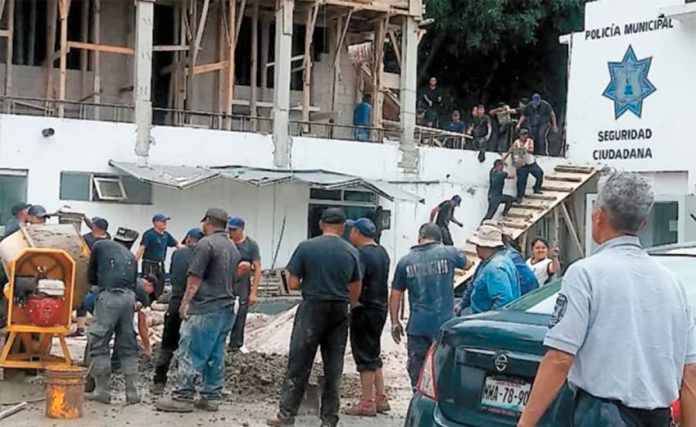
Cops fill in as albañiles.

Despite a shortage of police, officers were called on to do some construction work in Naucalpan, México state, where there appears to be a similar shortage of albañiles, or laborers.

Some 20 officers and academy cadets were seen working on a new floor at police headquarters in the Alce Blanco neighborhood on Thursday.

“Everyone has to pitch in,” police Captain Lázaro Gaytán Aguirre told the newspaper El Universal.

“It’s only eight officers working on it,” he added.

However, El Universal documented at least 20 officers at work on the building.

They were mixing cement and moving it in buckets up to the roof of the station, where they had raised walls to add another story.

“The remodeling work they’re doing is just for today, they’ll finish today. It’s a new story we’re putting in to make space,” Gaytán said.

“We’re using officers to do it because we’re trying to make the best use of the resource,” he added.

Gaytán insisted that crime rates in Naucalpan have dropped, but did not provide specific data. He did, however, admit to a 600-officer shortage in the municipality.

Sources: El Universal (sp), El Heraldo de México (sp)

Discovery Channel photographer murdered in Acapulco; attack called ‘targeted’

0
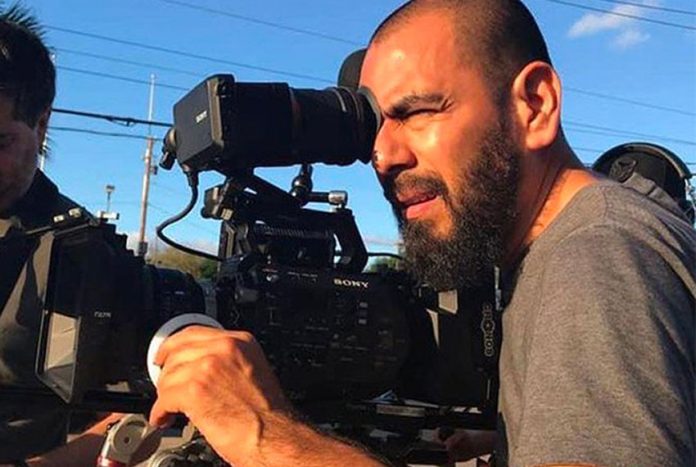
Discovery Channel photographer Castillo.

The director of photography for Discovery Channel in Latin America was shot and killed in Acapulco, Guerrero, on Wednesday night.

According to police, the attack occurred at about 9:00pm after Erick Castillo Sánchez and his wife, Estefanía Carpio Ávila, arrived in their car at an Oxxo convenience store in the Zona Diamante district of the Pacific coast resort city.

When Castillo and Carpio walked out of the store, four men got out of a gray Ford pickup in the Oxxo parking lot and told the couple to get into their car.

“We’re not going to do anything to you,” the men reportedly said.

Carpio ran but Castillo was unable to escape and was shot in the head.

The Guerrero Attorney General’s Office said in a statement that the motive of the aggressors was to steal Castillo’s vehicle.

However, the press defense organization Periodistas Desplazados México (Displaced Journalists Mexico) asserted that the murder was a targeted attack rather than an unintended consequence of an attempted robbery.

Organization president Gildo Garza said in an interview that the fact that the aggressors didn’t steal anything and didn’t pursue Carpio supported that opinion.

“. . . They shot him in the temple but they didn’t take anything from him. Apart from that . . . his wife managed to flee, they didn’t chase her. They were going after him, there’s no other explanation,” he said.

The Mexican Association of Displaced and Attacked Journalists (AMPDA) also asserted that the attack on Castillo wasn’t part of an attempted robbery. The association demanded that all three levels of government carry out a joint investigation that is “corroborated and analyzed by the surviving victim, Estefanía Carpio Avila.”

Her evidence, AMPDA said in a statement, is crucial to determining if the homicide was part of a robbery or a premeditated attack.

The death of the 46-year-old cinematographer, who was on vacation with his wife after completing a Discovery Channel project, triggered an outpouring of emotion on social media.

The Mexican Association of Cinematography, Discovery Channel Latin America and the Mexican Institute of Cinematography (Imcine) were among the many organizations and individuals to mourn the passing of Castillo, who was originally from Chiapas but lived in Mexico City.

“. . . We lament the death of Erick Castillo, Discovery Channel photographer, collaborator on the film Roma and a distinguished member of our community. We share the pain of his family and friends. We join the call for justice,” Imcine wrote on Twitter.

Source: El Universal (sp), Milenio (sp), Noticieros Televisa (sp) 

Tourism fund head goes on offensive against Maya Train critics

0
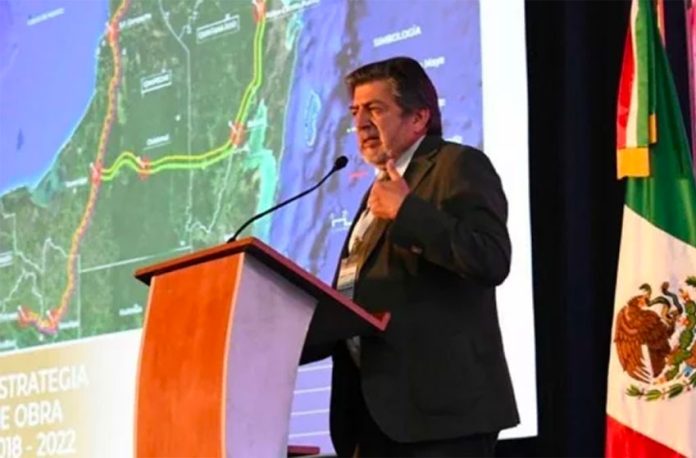
Train opponents are political adversaries: Fonatur chief.

The head of the National Tourism Fund (Fonatur) took aim on Wednesday at critics of the Maya Train, declaring that some of the opinions expressed about how much the project will cost and the impact it will have on the environment are incorrect and designed solely to harm the government.

Asked at a press conference about claims that the cost of the project could double, Rogelio Jiménez Pons responded:

“I’m going to say it in Mexican words – they just want to fuck with us.”

Jiménez accused the Mexican Institute for Competitiveness (Imco), which released a report in March that said that the cost of the Maya Train could increase tenfold to almost 1.6 trillion pesos (US $82.3 billion) “if planning is not optimal,” of failing to approach Fonatur to seek information about the project.

“Why didn’t Imco approach [Fonatur] to ask about the parameters of the design,” he asked, charging that the think tank’s cost estimates were based on guesswork.

Jiménez said the Maya Train won’t cost more than US $7.5 billion, pointing out that the estimated cost per square meter for the project is comparable to that incurred for the construction of a similar railroad in Uruguay.

“. . . Why do they say that [the cost of] everything is going to increase 10 times? It’s an exaggeration,” he said.

The Fonatur chief also addressed concerns that construction of the railroad will cause irreversible environmental damage, dismissing claims from former presidential candidate Gabriel Quadri and environmental conservationist Julia Carabias that the project will devastate jungle.

“These things have a political character. Who says that the jungle will be devastated? Obviously, [only] those who are our political adversaries . . .” Jiménez said.

The official charged that the Maya Train is an “environmentally and socially responsible” infrastructure project that will help to distribute tourism revenue across a wider region in southeast Mexico.

Jiménez also said that the construction and operation of the railroad will create hundreds of thousands of jobs.

Scheduled to begin operations in 2023, the Maya Train will have 18 stations in five states: Chiapas, Tabasco, Yucatán, Quintana Roo and Campeche.

Jiménez said in May that the Maya Train will trigger real estate investment of at least 150 billion pesos (US $7.5 billion).

But experts have warned that its construction poses environmental risks to the region’s underground water networks and the long-term survival of the jaguar.

Source: El Universal (sp) 

Legalizing pot for pain should be a priority given that many could benefit

0
pills and marijuana
Pills or pot?

I’m pretty spacey, a natural and consistent daydreamer. I’m also close to deaf in one ear, so in addition to the spacy-ness, I sometimes just don’t hear what’s going on around me. I certainly can’t detect where sound is coming from, so I have had to train my family to call out their exact locations in our multi-story house in order for me to find them.

Those who don’t know me might assume at first my Spanish isn’t that good and that I simply didn’t understand what was said. For those who do know me, all I can say is that I appreciate their infinite patience with my double-whammy distractedness.

Especially here in the cool, artsy, academic community in which I live, people are usually surprised to learn that I am not a pothead. While I’ve certainly got the look and sound of one, the truth is that I hate to smoke, and my one experience with delicious brownies left me saying: “Wow, that was awful. Never again!”

My only theory regarding my distaste for pot is that I live semi-permanently in that space to which marijuana is supposed to take you. I’m already floating around in my own head and marveling at the colors with a too-calm stupor and a weirdly serene smile on my face.

Marijuana is in a strange legal limbo in Mexico. While the courts ruled that a ban on it was unconstitutional, its regulation and commercialization has yet to be officially legislated. People can possess a certain amount and use it recreationally, but cannot buy or sell it legally. Obviously buying and selling is going on since it’s not very likely the pot smokers of Mexico all happen to be horticulturists.

Like any unregulated and illegal industry, it can be difficult to know what exactly you’re getting when you buy the product. There’s no list of ingredients; no customer service number to call if you think something’s not right. There’s no consume-by date, no origin or purity information,  recommended uses or dosage on the package. Consumers can’t submit a claim to Profeco, Mexico s consumer protection agency, if they think they’ve been cheated.

As drugs go, it’s a pretty mild substance, even when compared to plenty of legal substances available. Marijuana is a sedative and an appetite stimulant, so if you have someone who’s high among you, take heed. If you love your Girl Scout cookie collection in the pantry, lock it up lest it be the first casualty!

As Televisa News put it, to paraphrase: It’s not a question of whether it’s going to happen. We’re simply waiting for the bureaucratic machinery to start churning.

That legislative activity needs to start pronto. While I have no issue with recreational marijuana use, I think our No. 1 priority needs to be for medical marijuana to become widely available as soon as possible. There are many people in pain who could benefit from it, and it’s in the public interest to have as many possibilities for relief of pain as possible.

Do we need more studies regarding its effectiveness? Certainly. Let’s take the lead! The U.S. government, despite widespread public support and various degrees of state-level legalization, won’t reclassify the drug to allow for serious studies. Let’s set an example by fast-tracking those studies using our own first-rate medical researchers here.

Cancer patients, patients with seizures, and patients with chronic pain from all manner of illnesses stand to benefit. If we legalize and regulate its medical use — at the very least — then we can prevent those patients from becoming addicted to much stronger and more harmful substances.

For me, this point is personal. When my mother, now deceased, visited Mexico shortly after the birth of my daughter, she fell and broke her shoulder, ultimately requiring surgery. By that time she was already long-addicted to narcotic pain medicine prescribed in the U.S for an illness. The supposedly strong pain-killers she was prescribed post-op might as well have been mints as far as she was concerned.

A doctor, in a low voice out of earshot of others, said that if we could get hold of some marijuana it would help with the pain and be much safer than the hydrocodone she already had in tow.

I often wonder — if she had access to medical-grade marijuana from the beginning of her chronic and terrible pain could she have avoided the serious side-effects of the stronger drugs and extended her life. Might she have been happier and more at peace while in the throes of her dementia, too? In the end, her illnesses killed her. But I am certain that the perfectly legal medications prescribed to provide relief wreaked havoc as much as help.

In Mexico we have the brain power, the will, and fewer puritanical hang-ups about pot to make sensible use of it. Obviously, plenty of our farmers have the needed experience with the plants to produce a quality medical-grade product.

The only thing at this point that’s missing is well-written legislation and, perhaps more challenging, the rule of law to back it up. I believe we’re well-poised for a transformation on multiple levels — including medical — and that the time is now to be bold and act.

This is the time to start dealing sensibly with the way we treat our patients’ pain. We can help lead the world in that direction. For my mom, it’s too late. But it’s not too late for others.

And for goodness’ sake, life is hard. Let people get high sometimes.

Sarah DeVries writes from her home in Xalapa, Veracruz.

Spanish firm commits to invest in satellite center in Yucatán

0
Yucatán officials sign agreement with Spanish firm for new satellite center.
Yucatán officials sign agreement with Spanish firm for new satellite production center.

Spanish aerospace manufacturer Elecnor Deimos is planning to invest US $130 million to build a satellite production plant in Yucatán.

Executives from the company and Yucatán Governor Mauricio Vila Dosal signed a letter of intent for the project during a meeting at an Elecnor Deimos factory in the Spanish city of Puertollano.

Once feasibility studies have been completed, the plant is expected to be built within two years. It is unclear exactly where in Yucatán it will be located.

Elecnor Deimos will employ about 200 aerospace engineers at the new facility as well as other specialized staff such as programmers. The plant will generate an additional 600 indirect jobs, the Yucatán government said in a statement.

Vila highlighted that Yucatán will be the first state in Mexico where communication and research satellites will be made. The opening of the plant will place the state at the “forefront” of the aerospace industry, he said.

Vila also spoke to Elecnor Deimos executives about the company’s commitment to invest US $700 million in two wind farm projects in the municipalities of Panabá and Sucilá.

Construction of the projects will create 1,000 jobs and once they are operational, the wind farms will have the capacity to generate enough power for 500,000 homes.

Elecnor Deimos’ commitment to invest in Yucatán is the result of Vila’s attendance at the 2019 Paris Air Show, the state government said.

Source: El Universal (sp) 

‘A good phone conversation’ between AMLO, Trump reaffirms Mexico-US friendship

0
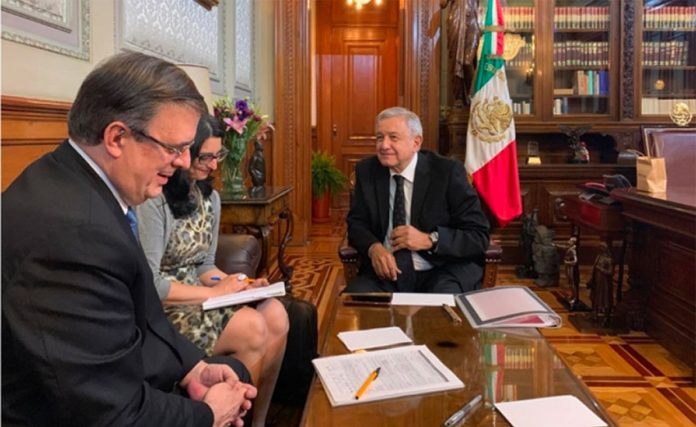
Ebrard, left, and López Obrador after 'a very good conversation' with Trump.
Ebrard, left, and López Obrador after 'a good conversation' with Trump.

President López Obrador said that he and United States President Donald Trump “reaffirmed” their commitment to a friendly bilateral relationship during a telephone conversation on Wednesday.

“We held a good telephone conversation with President Donald Trump,” López Obrador wrote on Twitter in a post accompanied by a photo of himself, Foreign Affairs Secretary Marcelo Ebrard and another official.

“The will to maintain a relationship of friendship and cooperation between our people and governments was reaffirmed,” the tweet continued.

In his own Twitter post, Trump described the conversation with López Obrador as “excellent.”

He said they spoke about “southern border security and various other things of mutual interest for the people of our respective countries.”

In a subsequent post, the U.S. president said that “the southern border is becoming very strong despite the obstruction by Democrats not agreeing to do anything on loopholes or asylum.”

The United States Supreme Court ruled on Wednesday that the Trump administration could enforce its policy of barring most Central American migrants from seeking asylum in the U.S if they didn’t first apply for refuge in a country through which they traveled to reach the southern border.

Under the policy, citizens of El Salvador and Honduras must seek and be denied asylum in Guatemala or Mexico before they can apply in the United States. Guatemalans must seek and be denied asylum in Mexico. Exceptions will only be made for victims of “severe” human trafficking.

Although legal action against the U.S. policy is ongoing in other courts and the case could return to the Supreme Court, Trump described Wednesday’s ruling as a major victory.

“BIG United States Supreme Court WIN for the border on asylum!” he wrote on Twitter.

The conversation between López Obrador and Trump came a day after Ebrard met with United States Vice President Mike Pence and Secretary of State Mike Pompeo at the White House to discuss Mexico’s progress in stemming migration to the southern U.S. border.

“The meeting took place on friendly terms,” Ebrard told reporters in Washington.

“[It was] nothing like what we saw yesterday from the CBP,” he added in reference to a comment from acting Customs and Border Protection Commissioner Mark Morgan that Mexico needed to do more to stop migration.

The foreign secretary said he outlined to United States officials “the Mexican strategy” that has been successful in reducing migration flows “in accordance with the law.”

Ebrard said last week that migration through Mexico to the United States declined 56% between May and August as a result of the deployment of the National Guard to increase enforcement against undocumented migrants as well as the government’s efforts to stimulate economic development in Central America.

At Tuesday’s meeting, the foreign secretary said that he also brought up the issue of arms trafficking from the United States to Mexico. Ebrard said that a binational group has been set up to monitor the issue and provide a monthly report about the illicit flow of weapons.

The Secretariat of Foreign Affairs said in July that firearms from the United States are used in seven out of every 10 high-impact crimes committed in Mexico.

A White House statement about the meeting on Tuesday said that Vice President Pence acknowledged Mexico’s “meaningful and unprecedented steps to help curb the flow of illegal immigration to the U.S. border since the launch of the U.S.-Mexico Declaration in Washington on June 7, 2019.”

It also said that Pence “commended” Mexico’s deployment of the National Guard and that the vice president and Ebrard “agreed that while progress has been made, more work remains in order to further reduce the flow of illegal migrants to the United States.”

In addition, the statement said that the two officials agreed to implement the Migrant Protection Protocols – the United States policy commonly known as the “Remain in Mexico” plan – “to the fullest extent possible.”

As part of the June agreement that staved off a threat from Trump to impose tariffs on all Mexican exports, Mexico agreed to accept the return of all asylum seekers that passed through the country as they await the outcome of their claims in the United States.

However, Ebrard said on Thursday that Mexico didn’t agree with yesterday’s ruling by the United States Supreme Court, which effectively makes Mexico a so-called safe third country.

The López Obrador government has resisted United States pressure to enter into a formal agreement that would commit it to hearing asylum cases from Central America and elsewhere.

Ebrard told reporters this morning that the designation of a safe third country “can’t come about by a court ruling by another country.

“It’s an agreement between two or more countries,” he added. “Mexico won’t accept it under any circumstances.”

Source: El Financiero (sp), El Universal (sp), Reuters (en) 

Teachers present their ‘social struggle’ education plan to AMLO

0
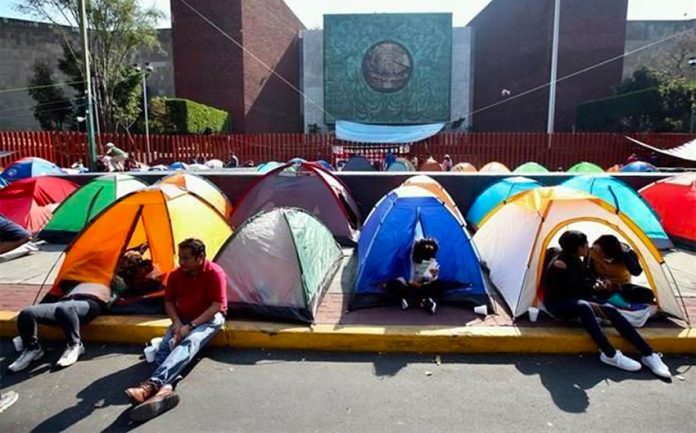
Teachers' blockade at the lower house of Congress in Mexico City.

An alternative education plan presented to President López Obrador on Tuesday by the CNTE teachers’ union includes instruction on social struggle and civil disobedience and resistance.

Public school students must learn to “disobey and resist institutional, cultural and consumerist impositions,” the plan says.

It also states that because CNTE teachers work in Mexico’s poorest and most exploited states they require a curriculum that is critical of the prevailing power structures.

The teachers themselves must have a “humanist” and “emancipatory” perspective that allows them to break the model of traditional education.

The CNTE, a dissident union whose presence is strongest in Oaxaca, Chiapas and Michoacán, has also developed and distributed its own textbooks with a clear leftist ideological bent.

Critiques of the “neoliberal economic model” implemented in Mexico by past governments and biographies of former Cuban president Fidel Castro and revolutionary hero Che Guevara are among the content in the books.

The Education Secretariat last month issued a warning against the use of the alternative, ideologically loaded textbooks, while the conservative National Parents Union said that the CNTE plan was “dangerous” and amounted to indoctrination.

After Tuesday’s meeting with López Obrador and other federal officials, the CNTE said the government had agreed to a range of its demands including the automatic allocation of positions to graduates of teacher training colleges, called normal schools, and the payment of salaries and bonuses owed to teachers.

In Michoacán, where CNTE members staged a month-long strike earlier this year, teachers are owed an estimated 810 million pesos (US $41.7 million), the newspaper Reforma reported.

CNTE teachers and officials said they were confident that the government will sign agreements in the coming days that confirm the commitments it made to the union. The CNTE has maintained pressure on the López Obrador administration by staging protests this week at the lower house of Congress in Mexico City and in Michoacán, Oaxaca and Chiapas.

The president told reporters at his morning press conference on Thursday that the government is committed to opening more normal schools and ensuring that all students receive a job placement upon graduation.

Juan Melchor, a CNTE spokesman, said the president indicated that the automatic allocation of jobs to teaching students could be signed into law, which he said would be a “historic achievement.”

However, Marco Fernández, an education specialist at the Tec. de Monterrey, said that enshrining the right of teaching students to an automatic job upon graduation would violate the constitution.

“. . . Nowhere [in the constitution] does it talk about giving an automatic position to every normal school graduate,” he said.

Source: Reforma (sp)