Home Blog Page 1756

Freed Ayotzinapa suspect’s cellphone reveals murder, amputations and torture

0
Suspect's phone contained some gruesome evidence.

“They’ll never find them, we turned them into dust and threw them into the water.”

According to federal authorities, that was a cell phone message referring to the 43 students who disappeared in Iguala, Guerrero, in 2014, and was sent by Gildardo “El Gil” López Astudillo, a suspected plaza chief for the Guerreros Unidos gang, to his superior, Sidronio “El Chino” Casarrubias Salgado, days after the young men went missing.

The incriminating text is congruent with the past government’s “historical truth.” In that version of events, the 43 students from the Ayotzinapa Rural Teachers College were intercepted on September 26, 2014 by municipal police and handed over to gang members, who killed them, burned their bodies in a municipal dump and scattered their ashes in a nearby river.

The message, one of several pieces of damning evidence discovered by authorities on López Astudillo’s mobile telephone after his arrest in 2015, clearly implicates the alleged gangster in the disappearance and presumed death of the students, who were allegedly mistaken for members of a rival gang.

Yet a federal judge ordered the release of the key suspect on September 2, ruling that much of the evidence presented against López Astudillo by prosecutors of the former government was obtained illegally.

'El Gil' was a key suspect in the disappearance of 43 students in Guerrero in 2014.
‘El Gil’ was a key suspect in the disappearance of 43 students in Guerrero in 2014.

A report published on Tuesday by the newspaper Milenio said that authorities also found photos on López Astudillo’s phone that show victims of both torture – including people with serious wounds whose limbs had been amputated – and murder.

Other images show weapons, burned-out vehicles and crime scenes where Guerreros Unidos members clashed with gangsters from criminal organizations such as Los Rojos and La Familia Michoacana.

Among other incriminating evidence found on the phone were messages he sent to a contact identified only as Tintán.

On October 5, 2014 – nine days after the mass kidnapping – “El Gil” asked Tintán to send him his personal telephone number. The latter responded that he didn’t have one.

López Astudillo subsequently sent Tintán an extract of a newspaper article that said that authorities in Guerrero had discovered hidden graves that they believed contained the remains of the missing students.

“What do you think about this pedo [problem]?” the alleged gangster asked.

The evidence – as damning as it is – couldn’t be used to keep López Astudillo in prison, a Tamaulipas-based judge ruled, because it, or other proof, was obtained illegally, most likely through the use of torture.

The United Nations said in a 2018 report that 34 people were tortured in connection with the investigation into the disappearance of the 43 students, while a video showing the torture of a suspect was published on YouTube in June.

Human rights undersecretary Alejandro Encinas said last week that the acquittal and release of López Astudillo set “a very grave precedent” that could be used to release more than 50 other people who are in custody as a result of their alleged involvement in the students’ disappearance.

Several suspected Guerreros Unidos members, including the recipient of the “we turned them into dust” message, Sidronio Casarrubias, as well as Felipe Rodríguez Salgado and Erick Sandoval Rodríguez have already been released from prison after they were acquitted of involvement in the students’ disappearance.

The “historical truth” presented by the government of former president Enrique Peña Nieto was widely questioned both within Mexico and internationally and authorities were heavily criticized for their handling of the case. Many people suspect that the army played a role in the students’ disappearance and presumed deaths.

Two days after he was sworn in as president, López Obrador signed a decree to create a super commission to conduct a new investigation into the Ayotzinapa case but to date no new findings have been publicly disclosed.

Source: Milenio (sp) 

President’s chief of staff confirms deepwater reserves go to private sector

0
Energy reform is not quite dead after all.

The federal government will cede the business of exploration and oil production in deepwater reserves to the private sector, presidential chief of staff Alfonso Romo said on Monday.

Romo’s remark, made at a business summit in Mexico City, confirms a report published in the Financial Times in late August that said that President López Obrador was poised to reopen private exploration in deepwater oil reserves in the Gulf of Mexico.

Romo also said the government will cede gas production to private companies.

The decision to allow private companies to resume deepwater exploration and production is a major reversal in policy direction for the government of López Obrador.

The president has been a staunch opponent of the previous government’s energy reform, which opened up the oil sector to foreign and private companies after almost 80 years of state control.

It was also intended to bring in expertise that state oil company Pemex did not have, particularly in deepwater drilling.

Pemex officials have said in recent months that the state-owned company would no longer invest in deepwater projects in order to focus on the development of onshore and shallow water reserves.

For private companies to resume deepwater exploration and production, the government will either have to hold new oil block auctions or enter into farm-out agreements. Pemex has already signed one deepwater farm-out agreement with the Australia-based mining multinational BHP.

The government’s apparent willingness to reverse its position and allow greater private participation in the oil and gas sector is welcome news for investors concerned about the slowing Mexican economy and stagnating investment.

According to the Financial Times report, López Obrador’s intention is to kick-start investment and production in the oil sector and prevent the possibility of another credit rating downgrade for the beleaguered state oil company, which has debt in excess of US $100 billion.

New oil and gas block auctions certainly could bring in significant investment to Mexico: one auction held in early 2018 attracted potential investment of almost US $100 billion.

Source: El Financiero (sp) 

Cartel releases video urging citizens to run criminal suspect out of town

0
Masked cartel sicarios in the latest CJNG video.

The Jalisco New Generation Cartel (CJNG) has turned up the heat again in Michoacán with the release of a new video on social media appealing to the citizens of Tepalcatepec to send a crime gang suspect packing.

The video shows a man sitting at a table addressing the camera and flanked by at least 20 masked men, most of them armed with Barrett .50-caliber rifles and wearing military-style uniforms bearing the letters CJNG.

The speaker urges citizens of Tepalcatepec to run Juan José “El Abuelo” Farías out of town. The cartel alleges that he leads a local crime gang.

“We want to make clear . . . that our conflict isn’t against the citizens of Tepalcatepec, but against ‘El Abuelo’ and his cartel. Open your eyes, he is using you to carry out his criminal activities for his own benefit and behind your back.”

The speaker said Farías is believed to be part of the Caballeros Templarios cartel or the Viagras gang.

“He’s started to levy protection fees against businesses in the town, while he and his children spend all the money buying new luxury cars,” he said. “If you get rid of ‘El Abuelo’ and his cartel your town will become calm again. The town belongs to the good citizens, which we know are all of you.”

Fighting in the municipality started on August 30 when CJNG gunmen crossed the border from Jalisco to try to take control. Nine people were killed in ensuing clashes and all of the dead were later identified as members of the CJNG.

On Monday, classes resumed at Tepalcatepec schools after the deployment of 200 army troops Friday.

Source: Radio Fórmula (sp), Animal Político (sp)

Federal budget is overly optimistic about growth and oil production, analysts warn

0
Optimists President López Obrador and Finance Secretary Herrera.

The macroeconomic assumptions and revenue estimates in the federal government’s 2020 budget are overly optimistic, analysts warn.

Financial experts consulted by the newspaper El Economista said the government is overestimating both its capacity to increase tax revenue and the petroleum production potential of the state oil company.

The budget estimates growth of 1.5% to 2.5% in 2020 and oil output of 1.95 million barrels per day by the end of next year.

To achieve the latter, Pemex will have to increase production by about 17%, the news agency Bloomberg said, something that hasn’t been achieved for almost four decades.

Ariane Ortiz of the ratings agency Moody’s said that the “optimistic” economic growth and oil production forecasts will lead to an “overestimate of government revenue for next year.”

She contended that the government has underestimated the financial support needed by Pemex, which has debt in excess of US $100 billion, and claimed that achieving the primary fiscal surplus target of 0.7% of GDP in 2020 will require austere policies that will make it difficult for the government to stimulate economic growth.

Alberto Ramos, chief Latin American economist at Goldman Sachs in New York, agreed that “the assumptions on growth and oil production are definitely on the optimistic side.”

He said the key question for investors is whether the government will be prepared to cut spending if necessary in order to meet its economic objectives, such as the 0.7% primary surplus.

Marco Oviedo, chief economist for Barclays in Latin America, agreed with Ramos but warned that the government has left itself little room to adjust spending.

Carlos Petersen and Daniel Kerner of the research and consulting firm Eurasia Group said the government’s macroeconomic and revenue estimates are “unrealistic” and should be modified before the budget is approved by Congress.

The 2020 Economic Package, which prioritizes spending on social welfare programs, security and Pemex, was delivered to the lower house of Congress on Sunday by Finance Secretary Arturo Herrera.

Source: El Economista (sp) 

Of 5,000 quake-damaged schools, only 80 have been repaired

0
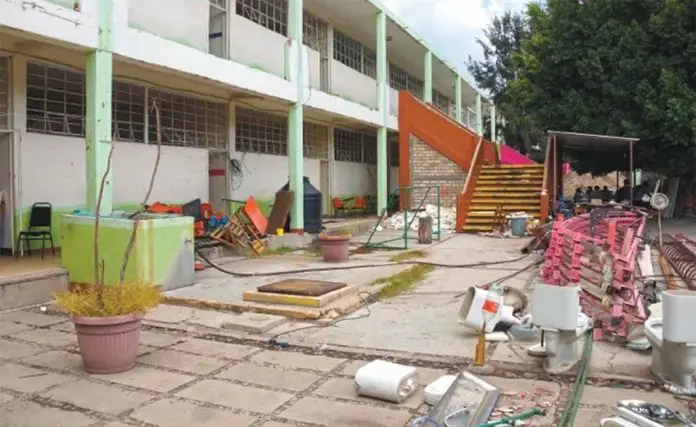
Businesses contracted to repair schools have abandoned the projects and in some cases have disappeared.

Only 80 of 5,000 Oaxaca schools that were damaged by the powerful earthquakes of September 2017 have been fully repaired, according to state lawmakers.

Pavel Meléndez Cruz, president of the Oaxaca Congress special reconstruction committee, said that work is currently being carried out at just 400 of the schools that still require repairs.

Projects at other schools have been abandoned because the builders weren’t paid, he said.

Meléndez said the committee he leads will ask authorities to carry out an investigation to determine what happened to the funds allocated for the rebuilding and repair of damaged schools.

The local branch of the SNTE teachers’ union has also denounced the lack of progress in repairing damaged education infrastructure, pointing out that thousands of students have been unable to return to their schools and have been forced to find alternative arrangements.

Teachers participated in a protest march in Oaxaca city on Friday to demand reconstruction be expedited, the newspaper El Universal reported.

According to a letter sent to the SNTE union on August 29, the federal government is committed to rebuilding and repairing Oaxaca schools damaged by the September 2017 quakes, the first of which caused extensive damage in the Isthmus of Tehuantepec region.

Signed by Agrarian Development and Urban Planning Secretary Román Meyer Falcón, the letter states that reconstruction projects in schools where no work has yet been completed will start either today or in the first week of October.

Projects in schools where work has been suspended will resume on Tuesday, the letter said.

The government also committed to the resumption of payments for the builders undertaking the work but the letter didn’t indicate when the projects will be completed.

However, an undersecretary at the Secretariat of Agrarian Development and Urban Planning indicated that 90% of school repairs are expected to be completed by 2020. David Cervantes also said that the government allocated 2.5 billion pesos (US $127.7 million) for school repairs this year.

About 20,000 schools in several states were damaged in the September 7 and 19 earthquakes that shook southern and central Mexico

President López Obrador announced on July 1 that funds for the construction, maintenance and repair of school buildings will be allocated directly to committees made up of teachers, parents and students after an earlier announcement that the National Institute of Physical Infrastructure for Education would be dissolved.

Pablo Iván Ángeles Guzmán, a structural engineer and academic at the National Autonomous University, warned against the plan because “there is a high risk that the rebuilding of schools will be at the discretion of people who are not professionals in construction and restoration.”

Source: El Universal (sp) 

Petroleum pipeline taps continue at the same pace as last year: Pemex

0
People steal fuel from a pipeline
Fuel theft and smuggling has been a major issue in Mexico for years. (File photo)

Despite claims by the federal government that petroleum theft has declined 95%, state oil company data shows that the number of pipeline taps in the first seven months of the year was virtually unchanged compared to the same period of 2018.

Pemex detected 8,655 taps between January and July, just 51 – or 0.5% – fewer than the number recorded in the first seven months of 2018.

While the number of taps on petroleum pipelines remained steady, those on LP gas lines more than tripled to 623 compared to 206 between January and July last year.

Pemex data published on the National Transparency Platform also shows that fuel carried by 32 tanker trucks has been stolen this year whereas just 14 trucks were held up during all of 2018.

Another statistic that debunks President López Obrador’s claim that fuel theft has “almost come to an end” is that the number of reports of the crime filed by Pemex lawyers in the first seven months of the year – 11,907 – is 60% higher than that recorded in all of 2018.

One figure that has declined significantly is the quantity of stolen fuel recovered by authorities.

The government seized just under 8 million liters of stolen fuel between January and July whereas it secured just under 25.2 million liters last year.

However, there is no data showing the quantity of stolen fuel that wasn’t recovered, the newspaper El Universal said. Therefore, lower confiscation levels don’t necessarily mean that less petroleum is being stolen.

The government has made combating fuel theft a priority, implementing a plan in which 15 government departments and organizations, including the army, navy and National Guard, are participating.

López Obrador claimed on Friday that on his watch, petroleum theft has declined 95% from 80,000 barrels per day to 4,000.

As a result, 50 billion pesos (US $2.6 billion) that would have been lost had theft levels remained the same will flow into government coffers, he said.

The Pemex figures, however, raise significant questions about the reliability of the claims made by the president, who on occasions has dismissed official statistics by asserting that he has “other data.”

Source: El Universal (sp) 

Record number of counterfeit banknotes found despite new security

0
Hot off the laser printer.

A record number of counterfeit 500-peso banknotes was detected in the first half of the year despite the release in 2018 of a new bill with enhanced security features.

The central bank reported that 80,891 fake 500-peso notes were removed from circulation between January and June.

It is the highest number of counterfeit notes of any denomination that have been detected in a six-month period since 2015. The figure exceeds the total number of fake 500-peso notes that were withdrawn from circulation in the entirety of each of the past four years.

According to the Bank of México, 156,278 bogus banknotes were removed from circulation in the first half of 2019. The total value of the phony bills was 54 million pesos (US $2.8 million).

The fake 500-peso bills had a face value of 40.4 million pesos, or 75% of the total, and accounted for 52% of all notes withdrawn from circulation.

Among the counterfeit cash detected were fake versions of all three 500-peso notes: the inaugural bill featuring army general Ignacio Zaragoza, that with the countenances of renowned Mexican artists Frida Kahlo and Diego Rivera – which first appeared in 2010 – and the new blue-colored note featuring former president Benito Juárez on one side and a gray whale on the other.

Released on August 27, 2018, the most recent 500-peso banknote features a range of security features including fluorescent ink, a dynamic thread, embossing perceptible by touch, a watermark and a multicolor denomination.

However, it wasn’t long before the first counterfeit versions of the note were detected.

The newspaper Milenio reported that a man was arrested in Monterrey, Nuevo León, in September 2018 after trying to pay a hotel bill with nine forged 500-peso notes.

In the first half of 2019, almost 57,000 counterfeit bills that were removed from circulation – 35% of the total – were detected in Mexico City.

Almost 17,000 fake notes were detected in México state, 9,442 were discovered in Jalisco and more than 7,000 were found in each of Puebla and Nuevo León.

Bank of México reports indicate that forged banknotes are most commonly produced using inkjet or laser printers.

Source: Milenio (sp) 

German manufacturer inaugurates automotive plant in Coahuila

0
The new turbocharger plant in Coahuila.

The German automotive company BMTS Technology has inaugurated its new turbocharger manufacturing plant in Ramos Arizpe, Coahuila.

BMTS official Gunter Semeja said that because of the support of authorities and conditions for its global growth, the company estimates that the plant will produce two million turbochargers annually for the North and South American markets.

The US $100-million plant employs 500 people.

“These new investments, like this one by BMTS, not only create jobs, they also favor specialization of the workforce, increases in productivity, and the creation of better working conditions,” said Interior Secretary José María Fraustro Siller.

He said the new plant consolidates the automotive cluster of the southeastern region of the state, and that the governor plans to tour China in order to secure other investment projects, as the state has done in South Korea, Germany, Canada and England.

He emphasized the strength of Coahuila’s security forces, as well as its labor reliability, skilled workforce and high educational standards.

“We are among the states with the highest social competitiveness, that is to say, that which has shown the most potential to generate well-being for its citizens through health, education, income and working conditions,” Fraustro said.

“We’re also the second biggest exporting state in the country and the first in exports of transportation equipment,” he added.

Source: El Economista (sp)

Some gourmet cooking oils not exactly as advertised: Profeco

0
cooking oils
They are not necessarily what they claim to be.

The consumer protection agency Profeco has opened proceedings against various different brands of gourmet cooking oils which they say falsely represented their products.

Studies found that eight brands of oils sold as pure sesame, avocado or grapeseed oil had been adulterated with safflower oil.

Five products that were marketed as olive oil or olive oil blends contained no olive oil at all, and another two brands of sesame oil and one of corn oil had a lower net content than was claimed.

The brands selling adulterated oils were San Lucas, Cate de mi corazón, Kaporo, Foreway Sesame Expert, Kum Chum, D’Artana, Navarra, Demor and Olivos Mendoza.

Profeco scientists conducted tests on 32 gourmet oils and 25 standard cooking oils. The results were published in Profeco’s magazine Revista del Consumidor.

In an interview with the newspaper El Universal, Profeco head Ricardo Sheffield said the products will be removed from stores and the companies that produce them could face fines.

In total, Profeco has opened 23 proceedings against cooking oil brands for violations of consumer law in 2019.

Source: El Universal (sp)

Private investment spurs development of fibre optic network

0
cancun beach
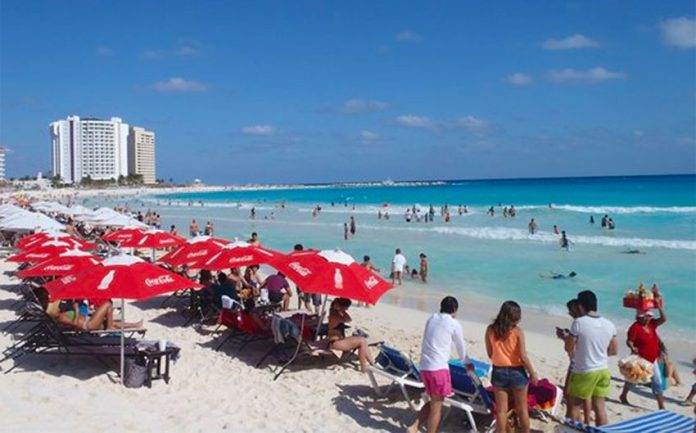
There are laptops beneath all those umbrellas.

Telecommunications companies have invested over 1.5 billion pesos (US $77 million) in Quintana Roo’s fibre optic infrastructure and increased internet coverage.

The director of the state’s Institute for Development and Finance, Bernardo Cueto Riestra, said his department has worked closely with the administration of Governor Carlos Joaquín González on three projects to bring cutting-edge technology to the state.

“The economic development of the state should be robustly interwoven with new trends in technology and telecommunications,” he said at an event on Friday. “These tools don’t just generate better productivity, they also shorten distances and gaps of inequality.”

At the end of 2018, it was announced that companies like Lomas Telecom, Maya Cable, Tele Cable and GigaNet had made large investments and had plans to expand.

Also last year, Atlán Redes invested 260 million pesos in order to guarantee coverage to 95% of Quintana Roo. The company plans to have 206 access points by the end of 2019, bringing its total investment to 400 million pesos.

A third project was a US $60-million investment for the installation of 180 kilometers of broadband fibre optics by Cobalt Holdings, which announced the opening of a new center of operations in Cancún.

Director of the Quintana Roo Institute of Innovation and Technology, Marco Bravo Fabián, said that such investments meet the region’s growing demand for high-speed internet due to trends in coliving and coworking.

He said that Cancún is becoming one of the most well-connected cities in the country, and is therefore attracting more information technology development.

Mexico’s Caribbean coast is popular with remote workers called digital nomads. Bravo stated that there are no concrete numbers as to how many people are working remotely in Quintana Roo, but their importance to the economy can be seen in the modifications hotels are making to optimize their internet speeds.

Source: El Economista (sp)