Home Blog Page 1818

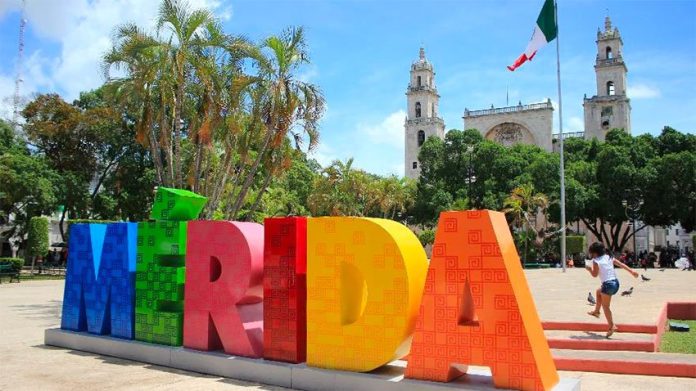
Mérida is third fastest-growing destination for summer vacations

0
Its popularity as a destination for domestic tourism is growing.

Beautiful beaches, cenotes, archaeological sites, Pueblos Mágicos and other attractions are bringing more and more people to visit the city of Mérida this summer.

According to trips purchased on the travel booking portal Despegar, the capital of Yucatán is the third fastest-growing national summer vacation destination for Mexican tourists, showing a 41% growth in domestic trips booked on the service compared to last summer.

Only Ixtapa-Zihuatanejo and Mexico City were ahead of Mérida, growing 77% and 57% respectively. Classic tourist destinations like Puerto Escondido, Huatulco, Puerto Vallarta and Cabo San Lucas showed lower growth than Mérida.

But Mérida is still not on the list of the top seven destinations that account for 47.57% of domestic tourism: Mexico City, Acapulco, Cancún, Guadalajara, Veracruz, Puebla and Mazatlán.

Of all the trips booked on Despegar, 67% were to destinations in Mexico, while the rest were to other countries.

According to Ezequiel Rubin, Despegar’s Mexico country manager, the peak summer season for Mexican travelers is between July 15 and 28.

In an interview with the newspaper Novedades Yucatán, Rubin said that this year Mexicans are looking for new destinations to visit, which he considers a good thing because it will promote domestic tourism.

Despegar is offering a new set of special promotions for domestic travel in Mexico, which will be available between July 1 and 7 and will include options for different budgets.

According to Tourism Secretary Miguel Torruco Marquéz, Mexicans will spend 36.6 billion pesos (US $1.9 billion) on hotels this July and August, 3.6% more than in 2018. And 9.1 million people will take domestic flights, 4.1% more than last year.

Yucatán Tourism Secretary Michelle Fridman Hirsch said the good performance is the result of collaboration between the state government, private companies and other states to connect Mérida to more air travel routes across the country.

Last year, direct flights to Mérida began from Chihuahua City and León, Guanajuato. In 2019, travelers will be able to fly direct to Mérida from Oaxaca city, Hermosillo, Sonora, and Tijuana, Baja California.

Source: Novedades Yucatán (sp), El Economista (sp)
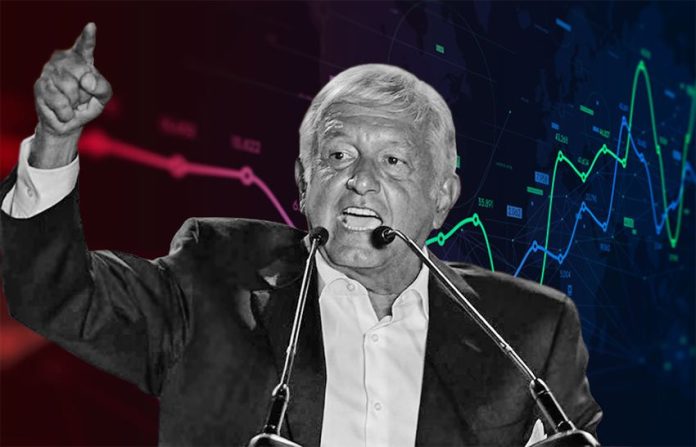
On the first anniversary of AMLO’s win, pessimism over the economy

0
AMLO is upbeat but many analysts are not.

On the first anniversary of Andrés Manuel López Obrador’s election as president, many financial analysts believe that the economy is in worse shape than a year ago – but it’s not all bad news for the leftist leader.

The economy is slowing, investment is falling, job creation is down and private consumption is on the wane but on the plus side, the minimum wage is up, salaries have risen more widely, public finances are stable and Congress approved a landmark labor reform package and ratified the new North American trade agreement.

But according to a report published today in the newspaper El Financiero, the public policy decisions taken by the government have had a negative impact on the economy, leading it to its “worst moment since the financial crisis” of 2007-2008.

Marco Oviedo, chief economist in Mexico for the financial services company Barclays, said that López Obrador’s decision to cancel the new Mexico City airport project – made before he was sworn in as president after a controversial public consultation – was particularly damaging to the economy because it raised doubts about the way the political veteran would govern and generated market volatility and investor suspicion.

Now, seven months into the government’s six-year term, the head of Latin America economics at Goldman Sachs believes that there is clear evidence that the economy has declined.

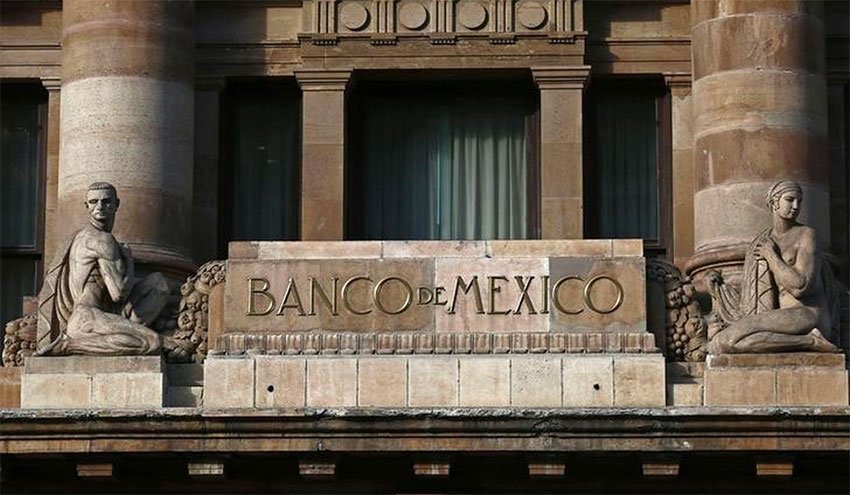
bank of mexico
Specialists surveyed by the central bank in June predicted growth of just 1.13% for this year.

“There is a lot of uncertainty about the direction of macroeconomic policy. There are several factors that have contributed to this, such as the conservatism that the Bank of México has taken with respect to its monetary policies, the credit rating downgrade threatening Pemex and the general employment slowdown. They’re unequivocal signs that the country’s economy has weakened,” Alberto Ramos said.

He acknowledged that there has been an increase in salaries but added “that also has macroeconomic implications as the [pay] rises represent an increase in labor costs for employers.”

If the higher salaries being paid are above productivity gains, they could “lead to less job creation in the medium term,” he said.

In an interview with El Financiero, Fernando López Macari, president of the Mexican Institute of Finance Executives, chose to focus on the positives of the government’s economic management.

He said the commitment shown by López Obrador to financial discipline and the maintenance of a primary surplus are worthy of praise, adding that he should continue that approach for the duration of his presidency.

“The four pillars that will give confidence to investors and analysts that study the country’s public finances are compliance with fiscal discipline, not increasing sovereign debt, not raising company taxes and finally respecting the autonomy of the Bank of México,” López said.

But even as the government complies with those recommendations, the short-term outlook for the economy, especially in terms of growth, looks less than rosy.

The central bank, also called Banxico, said today that private sector economic specialists consulted for its June survey predicted growth of just 1.13% in 2019 compared to 1.32% in the May survey.

“As in May, all of the analysts consulted think that the economy is not better than a year ago,” Banxico said, explaining that they cited concerns about political uncertainty and insecurity.

In contrast, López Obrador asserted yesterday that “the economy is good” and has pledged to deliver average 4% growth during his administration. Despite widespread downgrades of growth expectations, he has also expressed optimism that 2% growth in 2019 remains feasible.

Predictions in Banxico’s June survey for other aspects of the economy make better reading for the government and the people of Mexico.

Analysts predicted that the year will end with an inflation rate of 3.63% compared to a forecast of 3.75% in May, while the peso is expected to finish 2019 trading at 19.85 to the US dollar, up slightly from 19.92.

Source: El Financiero (sp), Milenio (sp) 

Ex-Tabasco mayor gets jail term for persecuting reporter

0
Journalist Jiménez and ex-mayor López.

The former mayor of Centla, Tabasco, was sentenced to 22 months behind bars after she was found guilty of unlawful imprisonment, wrongful persecution and illegal arrest of a local journalist.

Felipe Eladio Jiménez Solís took a series of pictures in December 2016 showing a relative of ex-mayor Gabriela López Sanlucas using an official municipal vehicle for personal use.

After the photos were published, López ordered police to arrest Jiménez.

He later filed formal complaints against López before the federal Attorney General’s Office and the National Human Rights Commission.

Jiménez told reporters he spent 2 1/2 years filing complaints and traveling to Mexico City. Now, he said, Mexico could celebrate the first conviction of a mayor for attempting to violate freedom of expression.

Two municipal police have already been found guilty of taking part in the aggression against Jiménez.

The mayors’s sentence also included a fine of 12,462 pesos (US $652).

Source: ADN40 (sp)

Tabasco crime warning to National Guard: ‘Let’s see how many leave alive’

0
Vehicles burn in Tabasco this morning in warning to National Guard.
Vehicles burn at a blockade in Tabasco this morning.

As the National Guard deploys 70,000 troops to fight crime around the country, criminal elements in Tabasco gave the new security force a message, but not a welcoming one.

Traffic was blocked Monday morning with four burning vehicles left on the Villahermosa-Teapa highway, one of Villahermosa’s busiest thoroughfares.

Along with the vehicles, which were left on the highway around 7:00am, was a threatening message for the National Guard.

“Welcome, National Guard. We know you’re bringing all you’ve got, but let’s see how many leave alive.”

Signed by “El Pelón, from Playas de Rosario,” it also warned the Guard to “get in line, or we will get you in line.”

Firefighters and Civil Defense extinguished the fires and removed the vehicles from the roadway and traffic was moving again by 10:00am.

In addition to the National Guard troops that have already been deployed for immigration enforcement on Tabasco’s border with Guatemala, 300 troops will be deployed to perform security functions around the state.

The priorities of the National Guard in Tabasco will be to fight high-impact crimes like drug dealing and fuel theft.

Source: Reforma (sp), El Financiero (sp), Animal Político (sp)

Police arrest ex-drug lord’s nephew blamed for Tamaulipas violence

0
The suspected gang leader and his companion.

Agents from the federal Attorney General’s Office (FGR) arrested the nephew of the former leader of the Gulf Cartel yesterday in Naucalpan, México state, in the greater Mexico City area.

Mario Alberto Cárdenas Medina, also known as “El Betito,” is the nephew of Osiel Cárdenas Guillén and has been identified by authorities as the leader of a gang called Los Metros. He is accused of arms and drug trafficking and blamed for being a major instigator of violence in Tamaulipas.

Cárdenas Medina was located and arrested in a Naucalpan shopping mall by FGR agents. He was in the company of a woman identified only as Miriam M., who was also placed under arrest.

Agents seized a handgun and a loaded magazine, 23 bags containing a narcotic substance and four burner cell phones.

Cárdenas is the son of Mario Cárdenas Guillén, who became leader of the Gulf Cartel after the arrest of his brother Osiel, and founder of the Metros gang.

Cárdenas Gullén was arrested in Altamira, Tamaulipas, in 2012 and sentenced to 20 years in prison for organized crime. There is also a pending extradition order requested by the government of the United States against him.

Source: El Universal (sp)

AMLO inaugurates National Guard, admits no advances yet in security

0
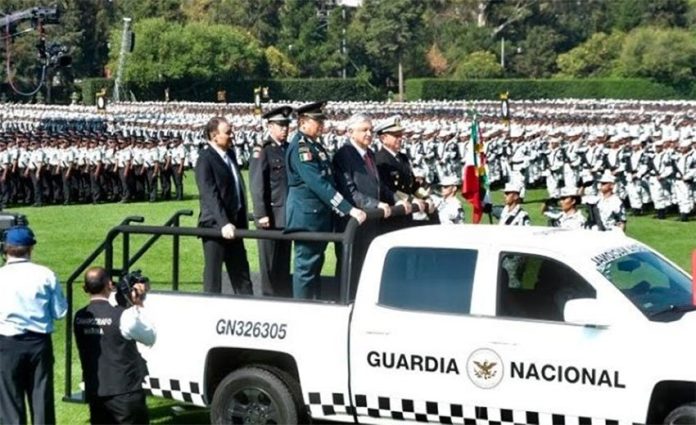
President López Obrador officially launched the National Guard in Mexico City Sunday.

President López Obrador formally inaugurated the National Guard at a ceremony in Mexico City yesterday during which he acknowledged that his government has not yet made progress in combating the high levels of insecurity.

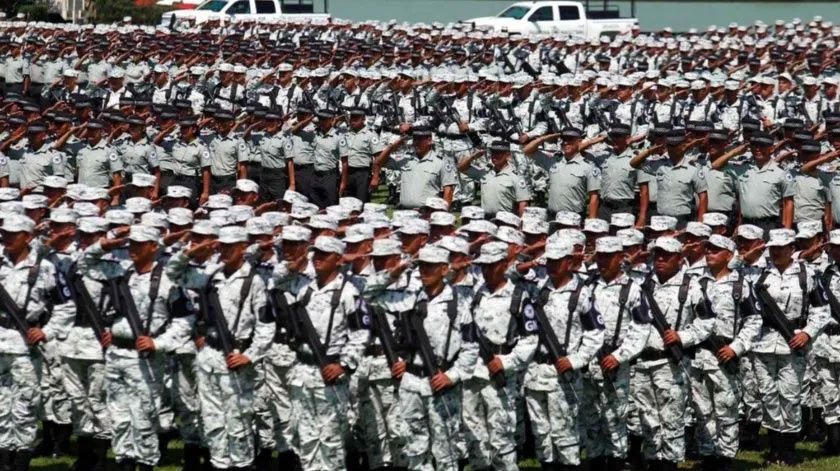
The president said that 70,000 members of the security force will initially be deployed to 150 regions across Mexico and that its ranks will swell to 150,000 by 2021.

Addressing 10,000 new National Guardsmen as well as lawmakers and officials gathered at a military field in the capital, López Obrador said that under his administration “the economy is good, we’re doing well in policy” and corruption and impunity are no longer tolerated.

However, he added that “solving the serious problem of insecurity and violence is something we still have to do.”

“In that area, we can’t say that we’ve advanced. Unfortunately, in that area the same conditions that we inherited from previous governments prevail . . .” López Obrador said.

In fact, they are worse. Homicide numbers for the first five months of the year were just over 4% higher than those recorded in the same period of 2018, which was the most violent year in recent history.

But the government is confident that the National Guard will be successful in reducing crime rates, and the president yesterday told its members that he had faith in them while also urging them to act professionally and with honesty and integrity.

“Don’t forget that the carrying out of the fourth transformation of public life by all Mexicans is going to depend a lot on your work. You, the members of the National Guard, have to . . . be the principal actors of this transformation . . .” López Obrador said.

He pledged that all National Guard members will be paid good salaries and receive attractive benefits – adequate remuneration is considered essential in order to dissuade troops from engaging in corruption.

For his part, Security Secretary Alfonso Durazo described combating the security situation inherited from past federal administrations as the government’s biggest challenge but added that he was optimistic that it is one to which the National Guard will rise.

“The National Guard will mark the beginning of the end of the violence in our country. With complete responsibility, we can say that . . . the darkest days of insecurity will stay in the past,” he said.

The beginning of the end of the violence: Security Secretary Durazo

In contrast, National Guard Commander Luis Rodríguez Bucio urged caution with regards to expectations for the new security force in consideration of the magnitude of the task it faces.

“. . . However, in the medium and long term, the expectations with respect to the National Guard are of the highest level,” he added.

Secretary of National Defense, Luis Cresencio Sandoval, and Secretary of the Navy, José Rafael Ojeda, both expressed their full support for the Guard, which despite being made up chiefly of military personnel is legally considered a civilian security force.

Several human rights groups spoke out against the creation of the National Guard, charging that it its deployment would only perpetuate the unsuccessful militarization model that was implemented by former president Felipe Calderón and continued by the previous government.

To counter concerns, Durazo said in January that the government had asked lawmakers to modify the original plan in order to create a National Guard with a civilian command.

However, in an opinion piece published today in the newspaper El Universal, and in a series of Twitter posts, prominent security analyst Alejandro Hope asserted that the National Guard is a “military institution, whatever the constitution says.”

He pointed out that the force’s commander is a current military general, that all of its regional coordinators are from the armed forces and that 75% of its first members will be soldiers or marines.

Hope also said that induction courses are being carried out at military barracks, that state and municipal governments are donating land for National Guard facilities to the Secretariat of National Defense (Sedena) rather than the Secretariat of Security and that Sedena is purchasing equipment for the new force.

“What more evidence is needed?” he asked.

Source: Milenio (sp) 

After police ambush mayor advises citizens to avoid public spaces

0
Mayor Valle to citizens: stay alert.

In light of a series of violent clashes between police and organized crime in the coastal city of Guaymas, Sonora, Mayor Sara Valle Dessens is asking the city’s residents to avoid congregating in public places.

The latest violence started on Friday afternoon when armed civilians fired their weapons at a Guaymas police station, wounding a police officer.

Then on Saturday, armed men ambushed officers who were buying fuel at a gas station. One officer was killed and three others were wounded. An employee of the gas station was also hurt.

On Monday morning, a group of individuals wearing masks hung a banner near the Jesús García Corona primary school in Guaymas. It bore the names of several men who are allegedly responsible for violence and crime in the city and urged the federal government to take action against the supposed criminals.

It read: “Dear citizens of Guaymas, here are those who are truly responsible for the wave of violence in the port, those who kill every day and poison our children with drugs . . .”

Police quickly removed the banner.

The banner identifying alleged criminals was hung this morning outside a school.

The warnings from the mayor came the same day that tens of thousands of National Guard troops are being deployed around the country, including 1,800 in the state of Sonora.

Sonora Governor Claudia Pavlovich Arellano said the federal troops will support the efforts of state and municipal security corporations to fight crime and violence.

But General Luis Rodríguez Bucio, commander of the new security force, is warning Mexicans that a decline in violence and insecurity may not come as quickly as some would like.

“Because of the magnitude of the task, it’s important that we ration our short-term expectations,” he said. “However, in the medium and long term, our expectations for the National Guard are very high.”

Source: El Heraldo de México (sp), El Universal (sp), Opinión Sonora (sp), El Imparcial (sp)

The other side of plastics bans: tens of thousands of lost jobs

0
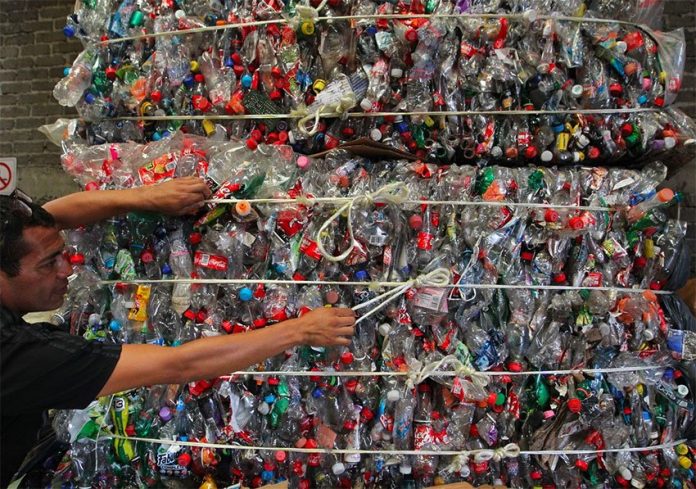
Plastic bottles baled and ready for recycling.

The plastics industry is panicking because of the growing trend for legislation banning single-use plastics, which it says will have unintended consequences for the economy, including the loss of tens of thousands of jobs and lost potential for recycling.

At least 16 states have passed laws limiting or banning single-use plastics, including Mexico City, which will phase out single-use plastic bags by 2020, and other single-use plastics, including cutlery and plates, by 2021.

In an interview with the newspaper Milenio, José Anguiano, president of the Plastic Bag Industry Association (Inboplast), said a ban on plastic bags isn’t a good solution because it will discourage recycling and affect tens of thousands of people who work in the industry.

“With these legal changes, plastic residues that are recycled by companies associated with Inboplast could end up in garbage dumps, in fields, or in the sea, because the law doesn’t promote recycling,” he said. “The bags that are being banned by the law are made with material from other origins.”

According to data from the national statistics institute, the plastic ban could negatively impact more than 20,000 people who collect recyclables in Mexico City, and prevent the recycling of more than 267,000 tonnes of plastic a year, equivalent to filling the city’s Estadio Azteca 200 times.

The industry is already starting to feel the effect of the legislation. According to the National Association of the Plastic Industry (Anipac), which represents 250 plastic companies, the sector is projected to shrink 4.5% this year after many years with an average 4% growth rate.

“We’re in shock,” Anipac president Aldimir Torres Arenas told the magazine Expansión. “The market is starting to contract because some companies are operating at 30% of their capacity, with a direct impact on 300,000 jobs, which are at risk.”

According to Anipac, single-use products account for 47% of the plastic industry in Mexico, which is worth US $30 billion and directly employees 260,000 people.

But many of the 4,100 companies that make up the Mexican plastic industry are already adapting in preparation for the future.

“The businesses have started using more recycled plastics in their containers,” Christiane Molina, professor of business at the Monterrey Technological Institute, told Expansión. “They’re even making bottles with 25% or up to 100% recycled materials . . . It’s a gradual process, and some business are foreseeing more investment and results by 2025.”

Source: Milenio (sp), Expansión (sp)

Unusual storm buries parts of Guadalajara one meter deep in hail on Sunday

0
Winter wonderland in Guadalajara Sunday morning.
Winter chaos in Guadalajara Sunday morning.

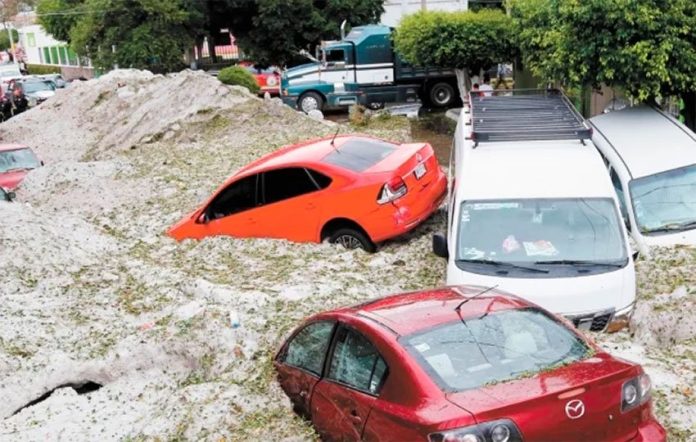
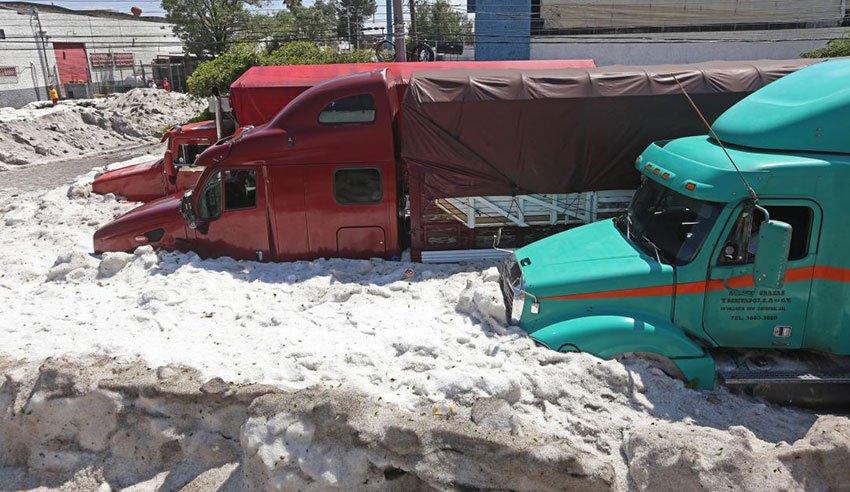
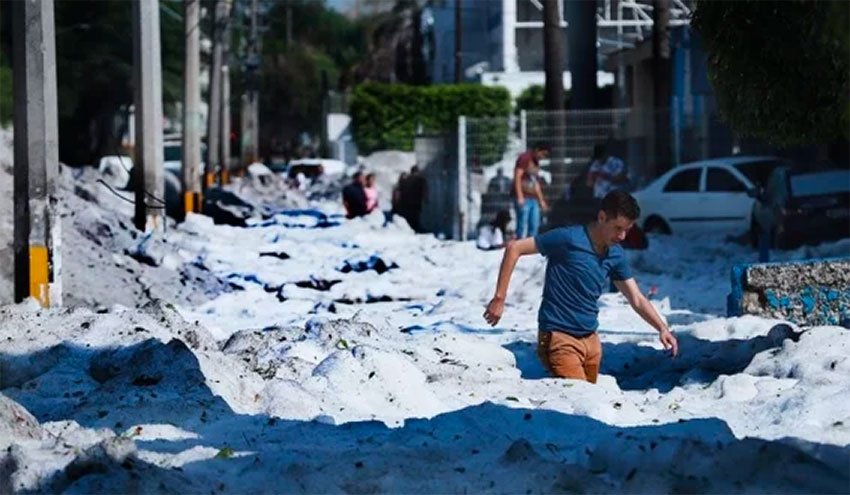
Parts of Guadalajara were buried in ice more than a meter deep yesterday morning after a heavy hailstorm that damaged at least 450 homes and 60 cars.

The storm began at around 1:30am, blanketing streets in neighborhoods in the southwest of the Jalisco capital such as Rancho Blanco, Álamos Oriente and Álamo Industrial in a thick layer of ice.

Some cars parked on affected streets were completely buried in the hail, while scores of other vehicles including large trucks were stranded by the freak storm.

The hail also blocked drains, preventing the escape of rainwater, which caused flooding in several areas of the affected neighborhoods.

Photographs of the masses of hail and the damage it caused began appearing on social media early yesterday morning. Many people expressed incredulity about the situation in which they awoke. Other images showed children playing in what appeared to be a winter wonderland.

The hail was up to a meter deep in some areas.

Jalisco Governor Enrique Alfaro posted several images to his Twitter account of authorities working to clear the hail from streets using both heavy machinery and shovels.

“In coordination with the Mexican army and the municipal authorities of Guadalajara and Tlaquepaque, the Jalisco government is working on the clean-up and removal of hail from public streets as well as supporting citizens who suffered damage to their homes,” he wrote.

In subsequent posts, the governor blamed the storm on climate change. He said there were no reports of any injuries or deaths, although Civil Protection authorities said later that two people were treated for early signs of hypothermia.

“Very early, before going to Mexico City for the launch of the National Guard, I was on the scene to evaluate the situation and I was witness to scenes that I’d never seen before: hail more than a meter high, and then we wonder if climate change exists,” Alfaro wrote.

CNN meteorologist Michael Guy said that low pressure systems extending south from the Mexico-United States border had been forecast to contribute to storms along the boundary separating different air masses.

“Once these storms developed, all the ingredients came together for there to be this strange hailstorm over Guadalajara,” he said.

Unusual summer morning in Guadalajara.

Guy also said that the city’s location at more than 1,500 meters above sea level contributed to the rapid development of the hailstorm.

“. . . This was a case where atmospheric and topographic ingredients came into play to cause a freakish hail storm,” he said.

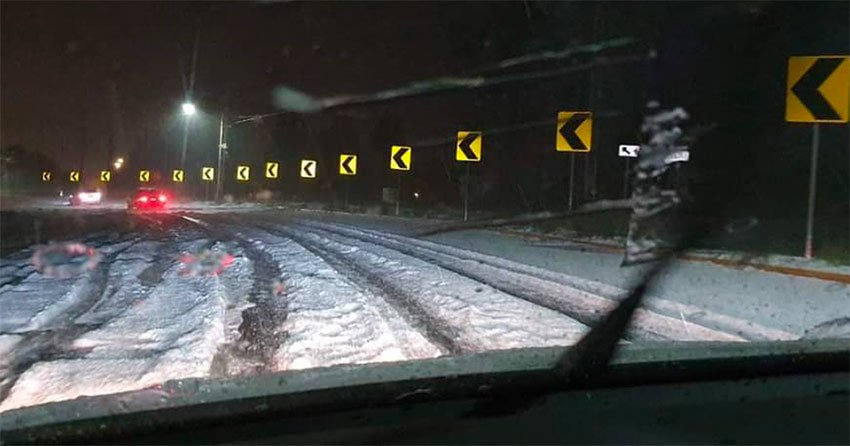
Residents of San Miguel de Allende, Guanajuato, awoke to similar scenes this morning.

Heavy hail fell over the city in the early hours, leaving streets blanketed in white while floodwaters almost half a meter deep have been reported in some streets in the downtown area.

Mayor Luis Alberto Villareal said on Twitter this morning that municipal and Civil Protection authorities are responding to the situation to “protect the well-being of all San Miguel de Allende residents.”

There have been no reports of injuries or casualties.

Source: El Universal (sp), Milenio (sp) 

Hail on a highway Monday morning in San Miguel de Allende.

Sargassum-hunting team of engineers, biologists develop tracking software

0
Four members of the team behind the sargassum monitoring network.
Four members of the team behind the network.

The name Cancún sargassum monitoring network is one that is popping up with more frequency in reports on the Quintana Roo sargassum invasion.

But they have no government connection; they are 12 engineers and biologists who have volunteered their time to create a software program that collates information about the seaweed’s location at sea, and predicts what part of the coastline it will affect.

Esteban Amaro, a marine biologist and chief of the monitoring network, told the newspaper El Universal that the software processes both satellite images and data collected during fieldwork.

The team first began working on the project in 2015, he said.

“We’re a team of 12 people, information engineers, electromechanical engineers, biologists, marine biologists, even geologists and an oceanographer. Each person works in their area and at the end we create a complete report with various points of view,” Amaro said.

Information about ocean currents and tides is also entered into the software program, which along with the satellite images and data collected by biologists at sea, allows the formulation of a prediction about where on the coastline sargassum will arrive.

Amaro said the software-generated prediction is accurate 95% of the time and that the forecast comes up to 72 hours before the sargassum arrives. The software is currently in the process of being patented.

Amaro revealed that since the start of the year the sargassum monitoring network has fed information supplied by members of the public into the software program to help improve the accuracy of its predictions.

“In the beginning, we were a closed network . . . [but] at the start of this year we started to operate in an open way, people started to send us photographs of the places where they detected sargassum. We’ve managed to create a very complete database,” he said.

The biologist said the software is also connected to a range of websites that provide information about weather conditions, ocean currents and other factors that affect the movement of sargassum.

The National Meteorological Service, the United States navy, NASA and even Google Earth are among the suppliers of data.

Sargassum monitoring networks at the University of South Florida and in Caribbean countries including Barbados and Jamaica also provide information that assists the seaweed-tracking team.

Once the software generates a prediction, “we send alerts about where the sargassum will arrive so that the authorities can” prepare to combat it, Amaro said.

The 48-year-old biologist explained that the members of his team, all of whom studied at the Metropolitan Autonomous University in Mexico City, are not paid for their work but do it out of altruism.

“We’re like an NGO, we don’t receive a salary so we work according to each person’s [available] time . . .”

Source: El Universal (sp)