Home Blog Page 19

In video message, Chihuahua governor insists she did not know of CIA’s presence in her state

5
Maru Campos
In her message, Governor Maru Campus declared she did not "arrange, authorize or have knowledge of the presence of foreign people" in an April operation to dismantle a clandestine drug laboratory after which four people, including two CIA agents, were killed in a car accident. (Maru Campos/Facebook)

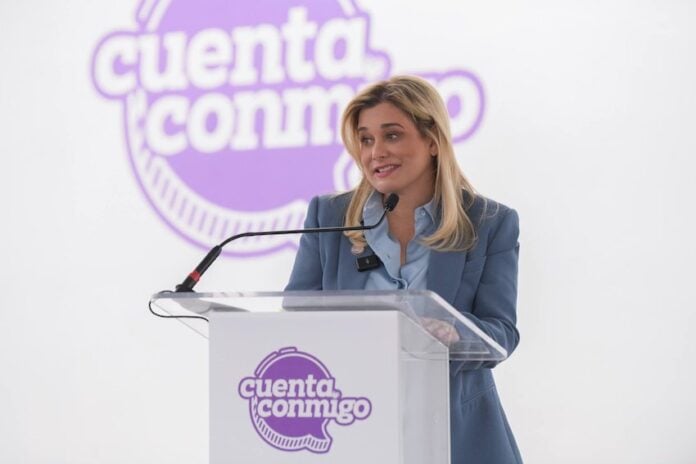
Chihuahua Governor Maru Campos asserted on Tuesday that she didn’t authorize or have knowledge of the presence of “foreign people” — i.e., U.S. Central Intelligence Agency (CIA) personnel — in a drug lab raid in the northern border state in April.

Her declaration in a video message came as the Federal Attorney General’s Office (FGR) conducts an investigation into the alleged participation of CIA officers in the dismantlement of a drug lab in the municipality of Morelos on April 18.

President Claudia Sheinbaum has said that her government didn’t authorize or have any knowledge of the alleged CIA participation in the operation, which was first reported by U.S. media. She has accused Chihuahua authorities of allowing the CIA to participate in the operation in violation of Mexico’s Constitution and National Security Law. Two of four CIA officers who allegedly participated in the drug lab raid — reportedly while wearing Chihuahua State Investigation Agency (AEI) Uniforms — were killed in a car accident on April 19, along with the director of the AEI and a police officer.

Campos — a representative of the National Action Party, Mexico’s main federal-level opposition party — began her video message by saying that she wanted to speak with the “frankness that characterizes us as chihuahuenses” (Chihuahua natives or residents).

“In recent days there has been a lot of noise, misinformation and political attacks regarding the operation in the Sierra Tarahumara, in which a drug laboratory was dismantled,” she said.

“… Unfortunately, there has also been a lot of misinformation regarding the accident that occurred on April 19, as well as the investigations currently underway. I want to say something very clearly: in Chihuahua we are acting with legality, responsibility, full transparency and absolute resolve,” Campos continued.

The governor went on to say that she has always respected the Mexican Constitution and the laws that emanate from it. She also said that the drug lab operation was “designed and carried out” by people with experience and training in policing and criminal investigation — i.e., Chihuahua police.

“At no point did I arrange, authorize or have knowledge of the presence of foreign people in that action,” Campus said.

Her assertion came the same day that Wendy Chávez Villanueva, a special prosecutor in Chihuahua, said that the four CIA agents who allegedly participated in the drug lab raid twice went to a Chihuahua Attorney General’s Office building before the operation took place. Chávez is heading up a state investigation into the CIA officers’ alleged participation in the raid.

Sheinbaum asserted on April 23 that either the Chihuahua government or the Chihuahua Attorney General’s Office requested security collaboration with U.S. authorities before the drug lab raid took place.

Campos takes aim at Morena for alleged criminal links 

Campos — who has been accused by Morena party senators of treason and violating Mexican sovereignty — highlighted the results of the drug lab raid in the municipality of Morelos. She said that some 2,000 liters of methamphetamine were seized along with large quantities of precursor chemicals that are used to make narcotics.

“With this [drug lab] dismantling, we prevented millions of doses of drugs from poisoning young people and Mexican families, and we continued our fight against crime and drugs,” Campos said in her video message.

Sheinbaum blames state officials as new evidence shows CIA joined multiple security operations in Chihuahua this year

The governor also said: “In response to the attacks I have received from Morena, I want to say that dismantling a drug laboratory and confronting crime head-on as my government has done is not the same as being a government like theirs, one with serious accusations of having ties to drug trafficking.”

The remark was an apparent reference to U.S. prosecutors’ drug trafficking accusations against Sinaloa Governor Rubén Rocha Moya — a Morena representative and ally of Sheinbaum — and other former and current officials affiliated with Mexico’s ruling party, including a federal senator.

“While Morena attacks, makes excuses and looks for scapegoats to cover up the [security] crisis and lack of results, we will continue doing our job — fighting crime, protecting families, boosting employment and defending peace,” Campos said.

She also said she has instructed the Chihuahua Attorney General’s Office to proceed with an investigation into the drug lab operation in accordance with the law, no matter who “falls.”

The governor, who has been in office since 2021, appears confident — in public, at least — that investigations will conclude that she did not act illegally in connection with the alleged CIA involvement in the security operation in Chihuahua, one of various issues that have recently strained the Mexico-U.S. relationship.

Mexico News Daily 

S&P downgrades Mexico’s rating and sees just 1% growth in 2026

5
S&P logo
Standard & Poor's cited low economic growth and public debt for its downgrading of Mexico's rating. (Shutterstock)

Standard & Poor’s (S&P) has downgraded Mexico’s rating from stable to negative, citing the risk of slow fiscal consolidation due to low economic growth and rising public debt.

The move, published in a report issued Tuesday, put the long-term foreign currency rating at ‘BBB’ and the local currency rating at ‘BBB+’.

CFE worker
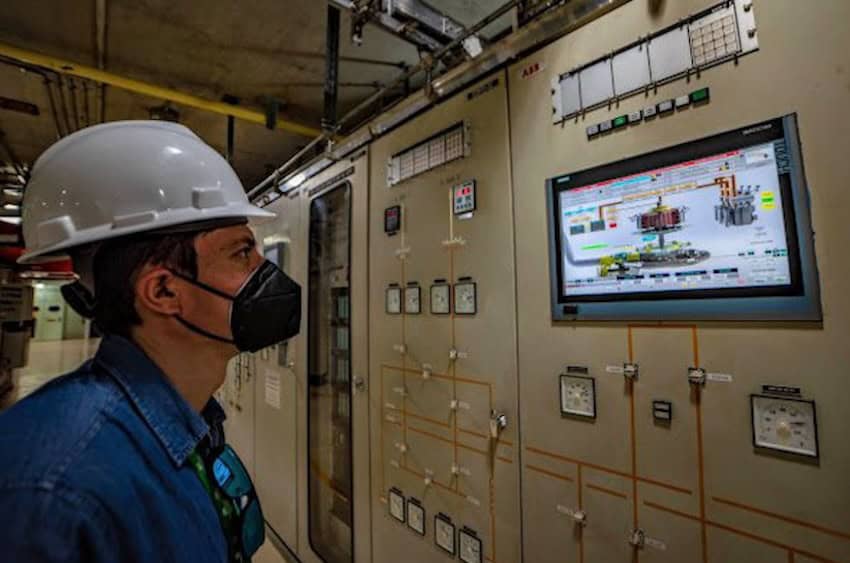
S&P warned that the drain on the public treasury from the support of the Federal Electricity Commission (CFE) and Petróleos Mexicanos (Pemex) could negatively affect future ratings. (Presidencia/Cuartoscuro)

The financial rating agency acknowledged that Mexico’s institutional framework has fostered political stability for more than two decades, and enacted prudent fiscal policies, which together with a floating exchange rate have strengthened the country’s monetary flexibility.

However, “uncertainty” surrounding the renegotiation of the United States-Mexico-Canada free-trade agreement (USMCA) “weakens investor confidence,” which could lead to another downgrade due to unexpected setbacks in international trade, according to S&P. 

The Finance Ministry (SHCP) said that the new rating keeps Mexico within investment grade.

S&P forecasts just 1% economic growth for Mexico in 2026, due to uncertainty surrounding the USMCA review, low private investment and rising energy prices. The SHCP also lowered its growth forecast on Monday from 3% to 2.3%.

S&P stated that financial support for state-owned companies Petróleos Mexicanos (Pemex) and the Federal Electricity Commission (CFE) could exacerbate Mexico’s fiscal rigidity and put pressure on its public finances.

“Pemex’s poor operating results could lead the government to provide more funds to cover future financial losses, which would worsen the fiscal deficit,” the report said. “We will continue to monitor the potential impact of the government’s ambitious infrastructure plans on Mexico’s deficits and debt trajectory.”  

The ratings agency said it may be forced to lower the rating in the next 24 months if Mexico does not reduce its fiscal deficit or if its trade relationship with the United States deteriorates.

Mexico’s ratings by other ratings agencies currently stand at BBB (Fitch), Baa2 (Moody’s) and BBB (DBRS).

With reports from López-Dóriga Digital and El Financiero

Why was U2 performing on top of a bus in Mexico City’s Historic Center?

1
U2 atop bus
The band was in Mexico CIty to shoot a video for “Street of Dreams,” a track from their forthcoming studio album. (U2)

Mexico City’s historic center briefly turned into a live set Tuesday as Irish rock band U2 drew crowds of fans while shooting a surprise music video near Plaza de Santo Domingo.

The band — fronted by 66-year-old lead singer and lyricist Bono — performed atop a graffiti-painted school bus that was moving through colonial streets while onlookers followed and filmed with their phones.

The bus was painted by Mexico City–based artist Chavis Mármol, known for politically charged, often satirical installations such as a blue Tesla crushed beneath a colossal pre-Hispanic stone head in 2024.

The appearance by the celebrated band — which scored two No. 1 hits in 1987 with “I Still Haven’t Found What I’m Looking For” and “With or Without You” — had been kept largely secret, with select fans invited via the band’s website days earlier.

The shoot was for “Street of Dreams,” a new track from U2’s forthcoming studio album expected near the end of 2026, the band said on its official site.

The bus displayed a route sign reading “La Calle de los Sueños” (Street of Dreams), with that line in Spanish also part of the song’s mostly English-language lyrics, alongside themes of justice and hope.

Fans shared videos on social media as the performance unfolded, showing the group playing live while riding through the city’s core near Plaza de Santo  Domingo, a short walk from the Zócalo.

The visit coincided with the 2026 Street Child World Cup in Mexico City, a nine-day youth soccer competition with 30 teams from around the globe, ending Thursday.

“It’s a little NGO with a big kick for kids with all of the talent and none of the access,” said U2’s founding drummer, Larry Mullen Jr., 64. “Our band are proud supporters.” 

Formed in 1976 by classmates in Dublin, Ireland after Mullen posted a “musicians wanted” notice at their high school, U2 has gone on to land six top-10 hits on the Billboard U.S. Hot 100, including the two No. 1 hits noted above.

Their last big hit was “Discotheque,” which peaked at No. 10 in the U.S. and hit No. 1 on the U.K. singles chart in 1997. Inducted into the Rock and Roll Hall of Fame in 2005, the band has also scored multiple No. 1 albums.

U2 is expected to announce its next tour after the new studio album arrives. The group last played Mexico City in 2017, with two shows at Foro Sol, now named Estadio GNP Seguros and honored last year as the world’s top concert stadium.

With reports from El País, Milenio and Billboard

Sheinbaum suggests CIA bombshell is a coordinated media attack on Mexico: Wednesday’s mañanera recapped

3
Sheinbaum May 13, 2026
President Sheinbaum's rejection of two media reports — one by CNN, the other by The New York Times — about the CIA's work within Mexican territory was the most significant development at today's mañanera. (Juan Carlos Buenrostro/Presidencia)

Sheinbaum’s mañanera in 60 seconds

  • 🚫 Sheinbaum rejects CNN and NYT reporting: CNN reported on Tuesday that CIA officers “facilitated” a targeted killing of two alleged Sinaloa Cartel members in México state in late March, while the NYT reported that Mexican authorities carried out the attack with CIA involvement. Sheinbaum denied both accounts, calling the reports false.

  • ⚖️ Sovereignty goes both ways on extraditions: Pushing back on U.S. pressure over the indictment against Sinaloa Gov. Rubén Rocha Moya, Sheinbaum said Washington routinely demands proof before acting on arrest requests from Mexico. She cited her own petition to the State Department for the arrest of two suspects in the 2014 Ayotzinapa case, and highlighted that Mexico has requested the extradition from the U.S. of two dual citizens allegedly linked to a fuel smuggling network. She said that no response to the latter request has been received.

  • 🌐 Coordinated international campaign? Asked whether the simultaneous CNN/NYT reports and Senate testimony by DEA chief Terrance Cole — who called an indictment against Rocha “just the start” of U.S. action against Mexican officials — amounted to a synchronized media offensive, Sheinbaum answered, “Yes.” The president also railed against an “international right-wing movement” that she claimed is agitating for the “defeat” and “failure” of her government.

Why today’s mañanera matters

President Sheinbaum’s rejection of two media reports — one by CNN, the other by The New York Times — was the most significant development at today’s mañanera. She claimed that reporting by the two U.S. media outlets was false. CNN reported on Tuesday that CIA operations officers “facilitated” a “targeted assassination” in late March — an attack in which two alleged Sinaloa Cartel members were killed when the car in which they were traveling in México state blew up. The New York Times reported that Mexican authorities were responsible for the explosion, and that the CIA was “involved in the planning of the assassination.”

Click here to read MND’s story on the reporting by CNN and The New York Times, and Sheinbaum’s rejection of it:

Mexico rejects CNN report accusing CIA of orchestrating cartel assassination on Mexican soil

Also of note at today’s mañanera were Sheinbaum’s remarks regarding U.S. authorities’ apparent demand for proof against criminal suspects that Mexican authorities want arrested and extradited.

The point the president was making is that the U.S. authorities have acted in the same way that Mexican authorities have acted after the unsealing of a U.S. indictment accusing Sinaloa Governor Rubén Rocha Moya — who is currently on leave — and nine other current and former Sinaloa-based officials of drug trafficking in league with the Sinaloa Cartel.

Sheinbaum has endorsed the view of the Ministry of Foreign Affairs and the Federal Attorney General’s Office that there is currently insufficient proof to arrest the 10 suspects for the purpose of extradition to the United States.

Sheinbaum: US has asked for proof when Mexican authorities requested arrests of people wanted in Mexico 

Sheinbaum told reporters that she was informed by Foreign Affairs Minister Roberto Velasco that there are “many cases” in which Mexican authorities have requested the arrest of people in the United States who are under investigation in Mexico.

“And the United States has told us: ‘Within the framework of our laws we need proof,” she said.

“I’m going to give you a case,” Sheinbaum said before telling reporters that she had personally submitted a request to the U.S. State Department for the arrest of two people wanted in connection with the 2014 Ayotzinapa case in which 43 students were abducted and presumably killed in Guerrero.

“And there are other cases,” she said.

“So they know and we know that everything has to be within the framework of respect [for sovereignty] and their laws and our laws,” Sheinbaum said.

The president subsequently said that Mexican authorities are requesting the extradition from the United States of two dual citizens allegedly linked to a “huachicol fiscal” fuel smuggling scheme.

“They are very important in the investigation — businessmen who, among others, put together the network to be able to bring fuel into the country illegally,” she said.

“We don’t yet have a response [to the extradition request],” Sheinbaum said.

An international campaign targeting Mexico?

A reporter noted that in addition to the publication of the CNN and New York Times reports, various U.S. officials, including DEA Administrator Terrance Cole, spoke about Mexico during appearances in the U.S. Senate on Tuesday.

Cole said that “there is no doubt that the narco-traffickers and high-ranking government officials in Mexico have been in bed for years.”

“But all of a sudden, we’re paying attention to it,” said Cole, who asserted that the U.S. accusations against Rocha and other Mexican officials are “just the start about what’s to come in Mexico.”

In light of the publication of the CNN and New York Times reports, and the remarks made by Cole and other U.S. officials on Tuesday, the aforementioned reporter asked Sheinbaum whether she believed “synchronized swimming” was taking place — i.e., an “international media” campaign designed to “impose narratives in Mexico.”

“Yes,” the president responded.

“That’s what we’re saying. There are a lot of people who have come to an agreement. This international right-wing movement we talk about moves in many places in the world and there are a lot of people who are betting on the defeat and failure of the Mexican government for ideological reasons and for political reasons,” she said.

Sheinbaum’s remarks came around two weeks after the publication of leaked audio recordings that suggest that U.S. President Donald Trump, the Israeli government and Argentine President Javier Milei have teamed up to spread fake news in an effort to destabilize Mexico and other progressive left-leaning Latin American governments.

As Mexico News Daily reported on Monday, the allegations — first published by the Spanish digital newspaper Diario Red in late April — also point to former Honduran president Juan Orlando Hernández, current Honduran President Nasry Asfura and his vice president, María Antonieta Mejía, as well as the president of the Honduran Parliament, Tomás Zambrano.

By Mexico News Daily chief staff writer Peter Davies (peter.davies@mexiconewsdaily.com)

Mexico, though free of documented cases, issues hantavirus alert

0
rodent
Viruses in the hantavirus family of pathogens are generally transmitted by rodents. The Andes hantavirus, however, can be transmitted from human to human, making it the focus of preventive measures. (Unsplash)

Mexico has issued a preventive hantavirus alert, although no cases of the emerging deadly virus have been recorded in Mexican territory.

The alert was issued by the National Committee for Epidemiological Surveillance (Conave) to all medical units in the country, following the confirmation of a hantavirus outbreak on May 2 onboard an international cruise ship sailing the South Atlantic Ocean.  

Health MInister David Kershenobich
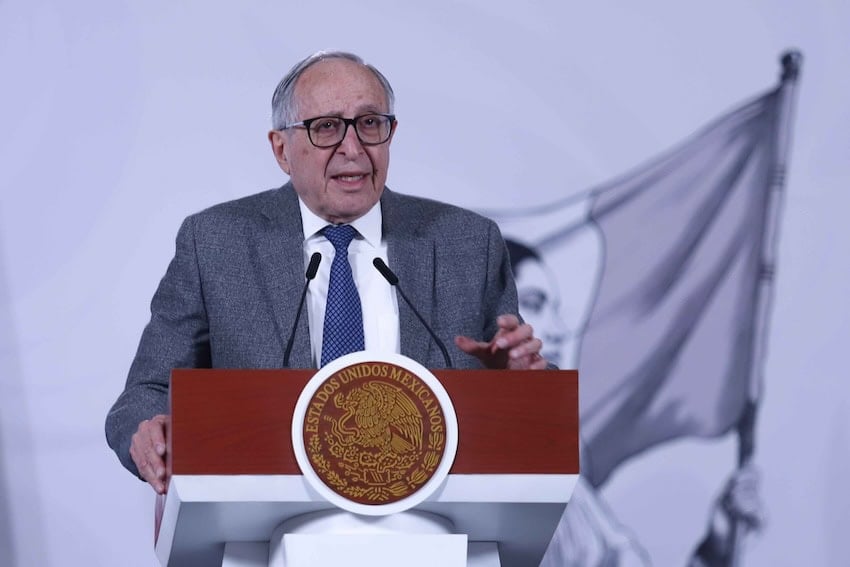
After the preventive hantavirus alert was issued, Health Minister David Kershenobich stressed that no cases have been documented in Mexico and that the probability of a human-to-human-transmitted breakout is very low. (Graciela López/Cuartoscuro)

The purpose of the warning is to help hospitals, laboratories and epidemiological surveillance units to quickly detect any possible imported cases.

“Although the risk to the country is low, timely detection remains crucial due to the high lethality of the disease, its rapid clinical progression, the diagnostic difficulty in early stages, and the need to implement strict isolation measures in suspected cases,” Conave said in its warning.  

Preventive measures such as reinforced surveillance in hospitals and laboratories are vital, Conave said, given how easily a virus can spread from “international mobility, global air traffic, exposure to international travelers and the documented capacity for person-to-person transmission.”  

Following the report, Health Minister David Kershenobich confirmed on his X account on Tuesday that Mexico had no registered cases of the Andes hantavirus to date, and that the country maintains ongoing epidemiological surveillance in accordance with international health protocols. 

What is the Andes hantavirus?

The hantavirus is a zoonotic pathogen primarily transmitted through contact with the urine, feces or saliva of infected rodents. The Andes hantavirus (ANDV) is the only hantavirus with documented evidence of human-to-human transmission.

Although infrequent, human-to-human transmission is associated with close physical contact, exposure to respiratory secretions or saliva and prolonged stays in enclosed or confined spaces.

Hantavirus infection can trigger hantavirus pulmonary syndrome (HPS), a disease characterized by rapidly progressing acute respiratory failure and a high mortality rate. The incubation period can be long, ranging from four to 42 days after exposure.

In its initial phase, patients may experience fever, fatigue, headache, muscle aches and gastrointestinal discomfort, such as nausea and vomiting. Subsequently, between four and 10 days after onset, the condition usually worsens with respiratory distress, cough and chest tightness, and can progress to acute respiratory distress syndrome, multiple organ failure or death.

Health authorities warn that no specific approved antiviral treatment exists, so the medical approach is limited to critical life support measures and oxygen therapy.

Mexico News Daily

Doing business in Mexico is getting more complex, per TMF Group Index

1
Reforma Avenue with a rainstorm overhead
Mexico rose from the fourth-most complex jurisdiction for businesses in 2022 to third in 2025 and second in 2026. (Unsplash)

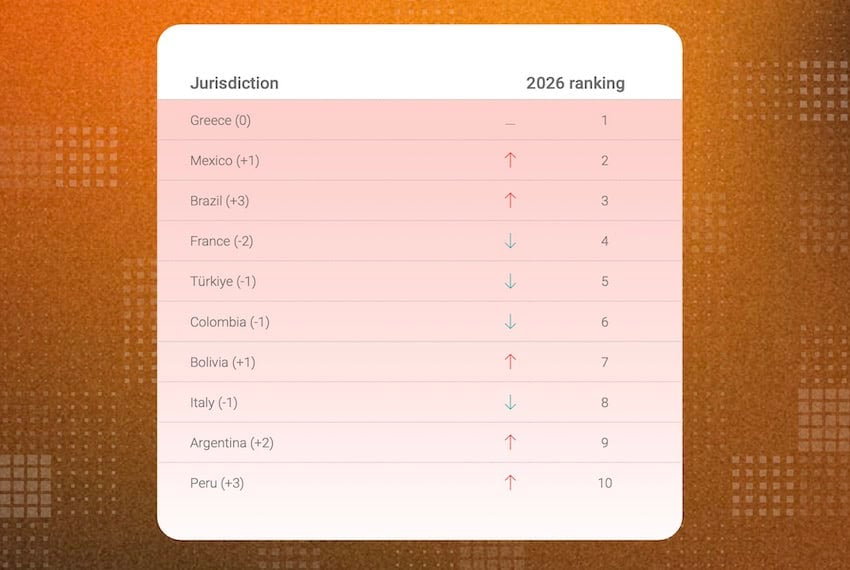
TMF Group, an administrative services provider, launched the 13th edition of the Global Business Complexity Index (GBCI) on Tuesday, ranking Mexico as the second-most complex country for doing business.  

The GBCI analyses 81 jurisdictions representing over 90% of the world’s economy, ranking them from most (1) to least complex (81) for doing business. Based on 292 indicators per jurisdiction, the index assesses challenges businesses face across accounting and tax, entity management and human resources requirements. 

The Global Business Complexity Index (GBCI) assesses challenges businesses face across accounting and tax, entity management and human resources requirements. (TMF Group)

“World political fragmentation and economic spread mean that businesses are adding jurisdictions to their supply chains, increasing the complexity of their governance,” wrote TMF Group’s CEO, Mark Weil, in the report. “It also means that they have to deal with more uncertainty in those regulations.”  

“Investors seek simplicity, but above all, certainty in the rules they operate under. We encourage governments to improve their ranking by acting on both,” Weil added. 

Top and bottom 5 jurisdictions in 2026 (1 = most complex, 81 = least complex) 

  1. Greece        
  2. Mexico        
  3. Brazil           
  4. France         
  5. Turkey        
  1. Netherlands
  2. Hong Kong, SAR
  3. Jersey
  4. Denmark
  5. Cayman Islands

Denmark, Hong Kong and the Netherlands have historically ranked as low-complex jurisdictions and remain in the bottom five this year, thanks to their stable, simple regulatory environments and robust digital infrastructure. 

Several Latin American countries ranked among the most complex jurisdictions this year, with Mexico in second position, Brazil in third and Colombia in sixth. 

Skill shortages are reshaping talent strategies globally, with around 80% of jurisdictions reporting difficulty in attracting and retaining talent, mainly in Europe and the Asia Pacific (APAC), according to the report. While current pressures are not as severe in North America as in other regions, it is the region with the highest increase in the perceived level of challenge.

Technology, on the other hand, is making doing business easier in APAC (86% said it was having a positive impact on administrative processes and compliance) and EMEA (81%), while South America (60%) and North America (71%) show lower rates of agreement.

What makes Mexico’s business environment highly complex?

TMF Group cited frequent regulatory changes, unpredictable administrative requirements, evolving digital requirements and unclear expectations by the tax authorities as the main reasons for Mexico’s high ranking.

While Mexican authorities are embracing digitalization, many procedures still require physical presence or wet-ink signatures. Nevertheless, the Sheinbaum administration has made strides toward simplification, such as the recent creation of a one-stop shop for foreign trade, which will soon integrate 132 administrative procedures into one. 

Moving forward, TMF Group expects Mexico’s accounting and tax to undergo the most change, with an increased government focus on tax collection. The adoption of electronic accounting systems could also improve processes. 

With reports from Globe Newswire

Mexico rejects CNN report accusing CIA of orchestrating cartel assassination on Mexican soil

17
On March 28, a targeted explosion killed two passengers of a vehicle traveling on the Mexico City-Pachuca highway, one of whom was identified as Francisco Beltrán, an alleged mid-level member of the Sinaloa Cartel who was known as "El Payín." (Shutterstock/social media)

The Mexican government and the U.S. Central Intelligence Agency (CIA) have rejected a CNN report that claimed that the CIA “facilitated” a “targeted assassination” of an alleged Sinaloa Cartel member in México state in March.

CNN’s report — published on Tuesday under the headline “Exclusive: CIA escalates secret war on cartels with deadly operations inside Mexico” — claims that the CIA “facilitated” an explosion that blew up a car traveling on a México state highway on March 28, killing the vehicle’s two occupants, one of whom was identified as Francisco Beltrán, an alleged mid-level member of the Sinaloa Cartel who was known as “El Payín.”

Vehicle explodes on highway near Mexico City’s AIFA airport, killing 2

“Mexican authorities have maintained extreme secrecy around the explosion, but multiple sources tell CNN that the attack was a targeted assassination, facilitated by CIA operations officers,” CNN reported.

“An explosive device had been hidden inside the vehicle, the State of Mexico’s Attorney General told CNN,” the report said.

The México state Attorney General’s Office denied that the attorney general had provided such information to CNN.

CNN also reported that the “Beltran operation was part of an expanded, and previously unreported, CIA campaign inside Mexico — spearheaded by the agency’s elite and secretive Ground Branch — to dismantle the entrenched cartel networks.”

The news outlet said that information came from the aforesaid sources as well as “two additional people familiar with the campaign.”

Again citing its sources, CNN wrote that “since last year, CIA operatives inside Mexico have directly participated in deadly attacks on several, mostly mid-level cartel members.”

“… The level of CIA involvement with operations has varied, according to the sources, from more passive intelligence sharing and providing general support to direct participation in assassination operations,” CNN said, making another explosive claim.

The news outlet didn’t specify what it meant by saying that the car explosion in México state was “facilitated by CIA operations officers.” While it (allegedly falsely) quoted México state Attorney General José Luis Cervantes Martínez as saying that an explosive device had been hidden inside the vehicle, CNN didn’t say who planted the bomb. Nor did it say whether the CIA had collaborated with Mexican authorities on the execution of the explosion that claimed the lives of Beltrán and another alleged Sinaloa Cartel member identified as Humberto Rangel Muñoz.

However, CNN suggested in one part of its report that it hadn’t.

“The operations may also be illegal under Mexican law — without the express permission of the federal government, foreign agents are barred from participating in law enforcement operations under the Mexican Constitution,” the media outlet wrote.

However, the CNN also wrote: “While multiple sources acknowledged that not everyone in the Mexican government is briefed on every operation — sometimes by design to maintain deniability — they also stressed that the CIA tends not to conduct operations unilaterally.”

After CNN published its report on Tuesday, The New York Times reported that Mexican authorities killed Beltrán.

“The C.I.A. provided intelligence and planning support for a recent operation against a cartel operative inside Mexico, but was not on the ground when Mexican authorities killed the man, according to a former official and others briefed on the operation,” the Times reported.

Citing the unnamed former official — presumably an ex-U.S. official — and “others briefed on the operation,” the Times wrote that “the C.I.A. provided intelligence on the cartel operative’s location and was involved in the planning of the assassination.”

“It is not clear to what extent the C.I.A. participated in the planning,” the Times reported.

“But C.I.A. officers were not present on the site of the attack and were not advising the Mexicans in person when the operation was carried out, the former official and those briefed said. They spoke under the condition of anonymity to discuss a sensitive operation and intelligence collection.”

The New York Times’ report suggests that Mexican authorities carried out an extrajudicial killing. CNN’s report indicates that U.S. President Donald Trump’s assertion in January that U.S. forces would begin hitting cartels on land was not an empty threat but rather something that has indeed happened — perhaps even before Trump made the aforesaid declaration. However, Trump said last week that the United States would take action against cartels in Mexico if the Mexican government doesn’t do so itself. That remark appeared to indicate that U.S. forces have not been taking their own direct action against Mexican Cartels, six of which the U.S. government designated as foreign terrorist organizations last year. President Claudia Sheinbaum has repeatedly ruled out the possibility of the U.S. taking unilateral action against cartels, and has rejected offers from Trump to send the U.S. military to Mexico.

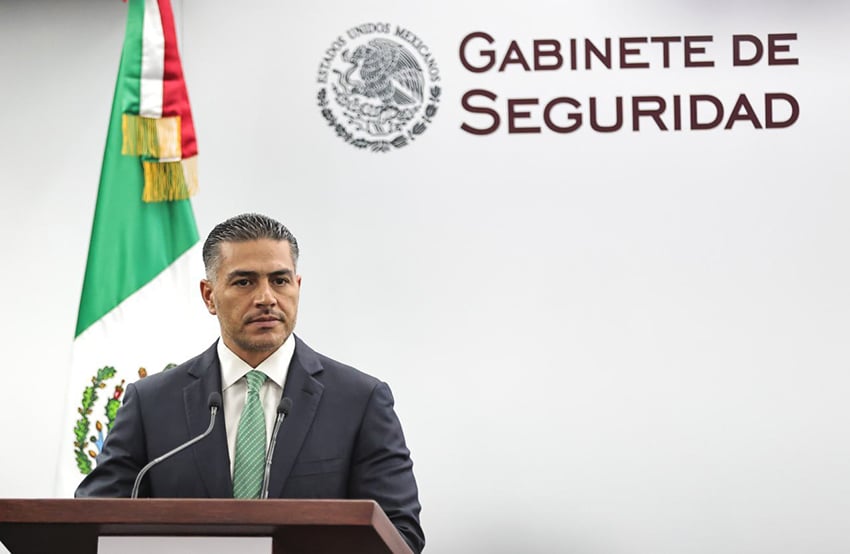
Security Minister Omar García Harfuch at a Security Cabinet podium
Security Minister Omar García Harfuch says his ministry has used U.S. “intelligence” for security operations against Mexico’s cartels, but that the involvement of foreign agents is prohibited. (Mexican Security Cabinet)

The publication of the CNN report comes at a time when the Mexico-U.S. security relationship is already strained. One of the main causes of the tension is the alleged participation last month of CIA agents in a drug lab raid in Chihuahua without the knowledge or authorization of the federal government.

According to The Los Angeles Times, the CIA’s participation in the dismantlement of a lab in Chihuahua was not a one-off. In that respect, the Los Angeles Times’ reporting is not dissimilar from that of CNN.

Another pressure point in the Mexico-U.S. relationship has arisen due to U.S. prosecutors’ accusations that Sinaloa Governor Rubén Rocha Moya and nine other current and former Sinaloa-based officials colluded with the Sinaloa Cartel on a drug trafficking conspiracy. Mexican authorities say that U.S. prosecutors haven’t provided sufficient proof to warrant the arrest of the 10 defendants, including Rocha, who is currently on leave.

Sheinbaum, García Harfuch and CIA reject CNN report 

In a social media post on Tuesday, Security Minister Omar García Harfuch rejected CNN’s report.

“Regarding the version [of events] disseminated by CNN about an explosion that occurred in Tecámac, México state, in which the alleged involvement of the CIA in operations against cartels is claimed, the Government of Mexico categorically rejects any version [of events] that seeks to normalize, justify, or suggest the existence of lethal, covert, or unilateral operations by foreign agencies in national territory,” he wrote on X.

García Harfuch also wrote that “operational actions” in Mexico “correspond exclusively” to Mexican authorities.

“Any international cooperation is limited to the exchange of information, institutional coordination and formal mechanisms established by the government of Mexico, particularly through the Ministry of Foreign Affairs and the institutions of the Security Cabinet,” he wrote.

One example of the exchange of information between Mexico and the United States is that the U.S. provided intelligence for the operation in February against Jalisco New Generation Cartel leader Nemesio “El Mencho” Oseguera Cervantes, who died after being shot by the Mexican military.

CIA spokesperson Liz Lyons also rejected CNN’s report.

“This is false and salacious reporting that serves as nothing more than a PR campaign for the cartels and puts American lives at risk,” she wrote on her official X account.

The denials by García Harfuch and Lyons that the CIA was involved in a lethal operation in Mexico may well be true. But if the CIA was indeed involved in facilitating or planning the explosion in México state in late March, the Mexican government and the CIA itself could have their own reasons to deny that it was the case.

On Wednesday morning, Sheinbaum also responded to CNN’s report.

She first noted that the México state Attorney General’s Office rejected that the state attorney general provided information to CNN.

Sheinbaum subsequently described CNN’s report as “really sensationalist” and false.

“Imagine the size of the fabrication,” she said before accusing CNN of lying.

Sheinbaum said it’s “false that CIA agents operate in [Mexican] territory,” although she acknowledged that there are “permits” that allow U.S. agencies to work in Mexico as long as they comply with Mexican laws.

She suggested that CNN’s report was motivated by a desire to cause problems in the relationship between Mexico and the United States. A CNN spokesperson contacted Mexico News Daily on Thursday afternoon, saying in an e-mail: “We stand by our reporting.”

Sheinbaum also rejected The New York Times’ report claiming that Mexican authorities carried out the operation that killed Beltrán and Rangel in México state.

The claim in the report is “absurd,” she said.

Sheinbaum said that the suggestion that the Mexican government has “a special area dedicated to planting bombs to eliminate criminal groups is a fabrication the size of the universe.”

She asserted that The New York Times has a habit of fabricating stories, and “now” CNN is “as well.”

“… We’re always going to tell the truth,” Sheinbaum added.

“… This is our responsibility to the people of Mexico and we always act within the framework of the law, always,” she said.

With reports from CNN and The New York Times 

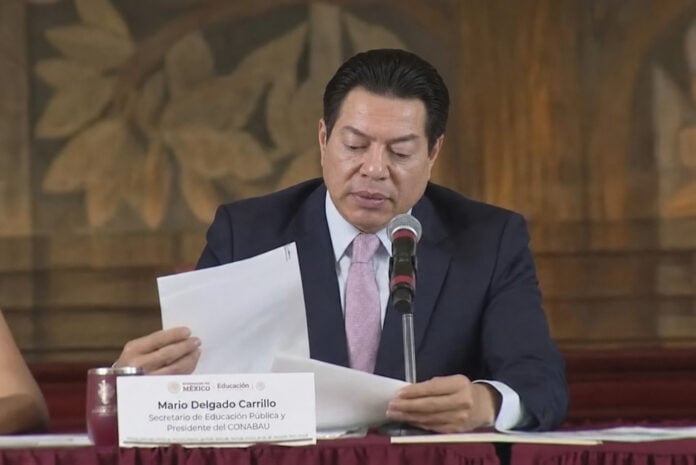
El Jalapeño: Education Minister describes school as pointless waste of time that children still have to attend

8
This is the face of a man who is also, apparently, trying to write his own satirical news column.

All stories in El Jalapeño are satire and not real news. Check out the original story here. 

MEXICO CITY — Education Minister Mario Delgado announced Monday that Mexico’s school year will end on July 15 as planned, reversing last week’s decision to finish six weeks early, while also confirming that the six weeks in question are a waste of everyone’s time but that children must attend them anyway.

“Classrooms are kept open without a pedagogical purpose, just to comply with a count of school days,” Delgado told reporters. “School becomes a forced stay.” He said this at a press conference called to announce that school would continue.

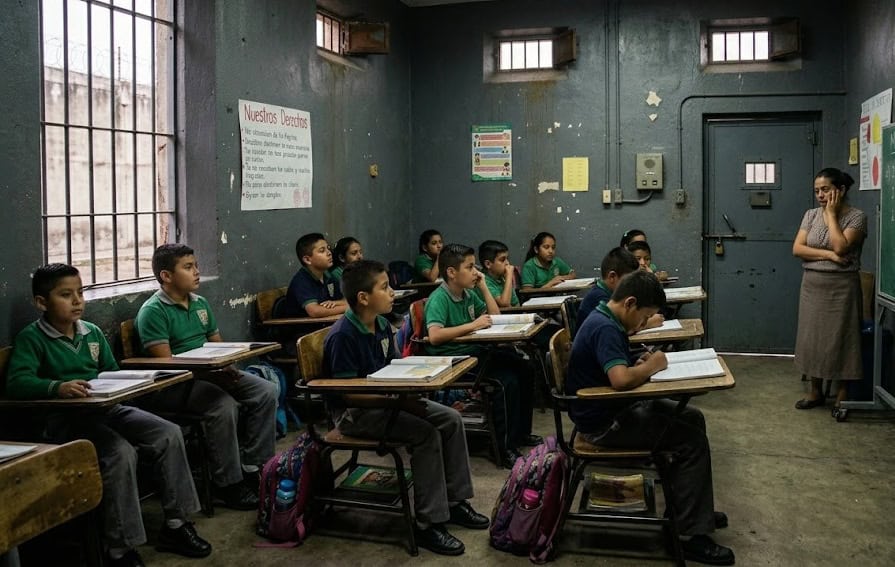
El Jalapeño can report that Delgado had a file labeled “EVIDENCE”, with this picture inside. (This image generated by AI)

Reporters present did not ask Delgado why, if the final six weeks of school are a purposeless indignity to teachers and students alike, he had just spent four days in a national controversy to reinstate them. It is possible they were still processing the opening statement.

To be clear about what Delgado said: the Education Minister of Mexico, addressing the nation on the subject of the national school calendar, described the final weeks of the Mexican school year as a bureaucratic box-ticking exercise with no learning value, in which teachers are stripped of their dignity and children are held in classrooms for no reason beyond satisfying a number on a government form. He said this. Out loud. At a press conference. Having just made the preservation of those weeks the central policy achievement of his week.

He did not appear to notice.

Last Friday, Delgado announced school would end June 5 — six weeks early — for the World Cup and hot weather. President Sheinbaum heard about this the same way everyone else did and said publicly that it was not a final decision. A review was called, which concluded that July 15 stands. This decision was described as unanimous, a word applied to a decision Sheinbaum had already reached on Friday and that Delgado arrived at four days later via a national controversy and two contradictory press releases.

The plan had been pushed by the governors of Mexico City, Jalisco, and Nuevo León — the three states hosting World Cup matches — who were worried about traffic. Their solution to traffic problems in three cities was to close every school in all 32 states of Mexico for 40 days. The other 29 states, which will not host a single match and have also previously experienced summer, were included anyway.

It has since emerged that the 185-day school year is a legal requirement. This means Delgado’s original announcement was not just poorly timed and geographically incoherent but also, technically, illegal. He has not addressed this.

Children across Mexico will return to school tomorrow for eight more weeks of what their own Education Minister has publicly confirmed is a purposeless, forced stay with no pedagogical value. Their teachers, whose dignity Delgado noted is detracted from by the exercise, will be present.

Working parents who had been facing 40 days of unplanned childcare at less than a week’s notice expressed relief at the reversal. The traffic problem in Guadalajara, which started all of this, remains entirely unsolved.

El Jalapeño is a satirical news outlet. Nothing in this article should be treated as real news or legitimate information. Check out our Jalapeño archive here!

Got an idea for a Jalapeño article? Email us with your suggestions!

Meet Mexico’s ‘phygital’ sports world champions who blend on-field skills with video games

1
México Quetzales
México Quetzales are a sports team with a difference — their matches take place on the court and online. (México Quetzales/Instagram)

In the pre-Columbian mythology, a quetzal bird represented the balance between the earthly and the celestial. Its bright colors and ability to fly above the highest trees made the Maya think of it as a messenger between the spiritual and physical world.  

It is no coincidence, perhaps, that Mexico’s “phygital” sports team, Quetzales–Armadillos FC, crowned champion of the 2025 Games of the Future in Abu Dhabi (GOTF), chose to name themselves after this majestic bird. The Quetzales squad is at the forefront of a sporting movement that aims to find balance between two universes that until now seemed to operate completely at odds with one another.  


View this post on Instagram


A post shared by Quetzales México (@quetzales.mx)

“Phygital brings together the physical sports we’ve grown up with and the digital formats that resonate with today’s audiences, creating a single competitive structure that feels both natural and future-facing,” John Hewitt, Communications Director of Phygital International, explained to Mexico News Daily

Mexico’s world champions

Unlike traditional sports teams, Quetzales bring together players from very different worlds. While some members developed their careers in indoor soccer, also known as futsal, others built their careers in competitive esports.

Consisting of eight players who contribute to the team’s performance across both activities — the roster features brother Eder and Aldair Giorgana, as well as Eddie Sanchez, Magaña, Rodrigo Ulibarri, Joksan, Divine CS and goalkeeper Giovanni R. — it is no surprise that Quetzales has established itself as the futsal team to beat, dominating the discipline.

México Quetzales
The Quetzales celebrated their world title in Abu Dhabi earlier this year. (Andrew Jacob/México Quetzales/Instagram)

Winning the 2025 Games Of The Future tournament marked a huge milestone for the Mexican squad, the only one from the country to make it to Abu Dhabi, cementing it as the best team in Latin America. 

Requiring gaming skills and physical movement, preparation for the tournament called on players to break out of their comfort zones and develop new skills — both on the pitch and on the screen. 

“We anticipated that mastering the digital aspect would be one of the main challenges,” Quetzales said in a statement. “However, the phygital philosophy is not about separating the disciplines but integrating them to create new opportunities.”

A hybrid approach

The result was a new kind of training in which athletes and gamers learned about each other’s skillsets.

“This approach encourages gamers to push themselves further in physical sport, while traditional football players are challenged to test their tactical knowledge and skills on digital platforms,” the team explained.  

Moreover, phygital games have merged the enthusiasm for video gaming with the excitement of physical sports, promoting more active habits and counteracting the sedentary lifestyle often associated with gaming.


🇲🇽QUETZALES vs LOS TRONCOS 🇪🇸| FINAL PHYGITAL FOOTBALL | GOTF 2025

“We want to highlight how this balance can positively influence everyday life and health,” Quetzales explained. “Beyond the scoreboard, our strategy focused on the ‘big picture’: Phygital sports as a tool to unite people, expand a global community and encourage a lifestyle that combines the passion for gaming with physical activity.”

The fusion of two seemingly isolated universes has been met with enthusiasm from fans. The Games Of The Future tournament in Abu Dhabi drew over 450 million viewers worldwide and more than 850 participants from over 60 countries.  

Moreover, Hewitt said organizers are also seeing a growing interest in hosting future editions of the tournament, with Serbia, Uzbekistan, Brazil and South Africa having already submitted their bids. 

Quetzales hope to continue to excel in future competitions

The next tournament is set to take place from July 29 to Aug. 9 in Astana, Kazakhstan, where organizers expect to increase last year’s figures and attract 900 athletes from over 50 countries. Organizers also anticipate drawing a live audience of 100,000 spectators, who will experience the surreal atmosphere of players moving from gaming stations to the pitch, as fans cheer for digital plays and physical moves alike.  

Much like the Mexican bird, the squad is focused on continuing to soar in pursuit of their next goal: retaining their championship title in Astana.

Gabriela Solis is a Mexican lawyer turned full-time writer. She was born and raised in Guadalajara and covers business, culture, lifestyle and travel for Mexico News Daily. You can follow her lifestyle blog Dunas y Palmeras.

MND Local: Vallarta’s women soccer players fight for regional glory, plus tourism and water latest

4
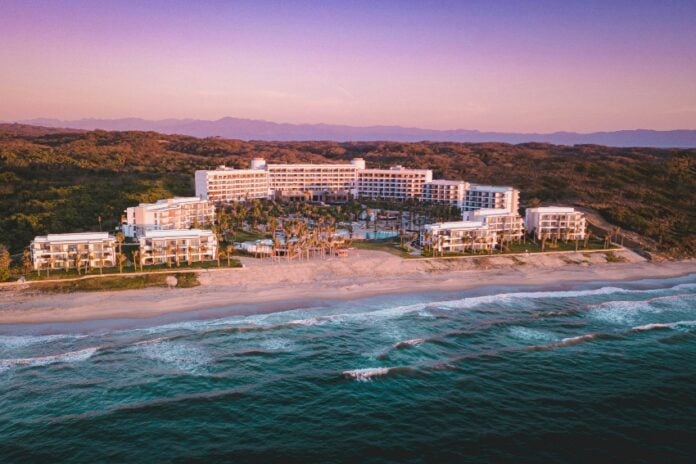
Hotel Conrad in Punta Mita
The Hotel Conrad in Punta Mita. Nayarit is one of Mexico's fastest-growing tourism markets. (Fernando Gutierrez/Unsplash)

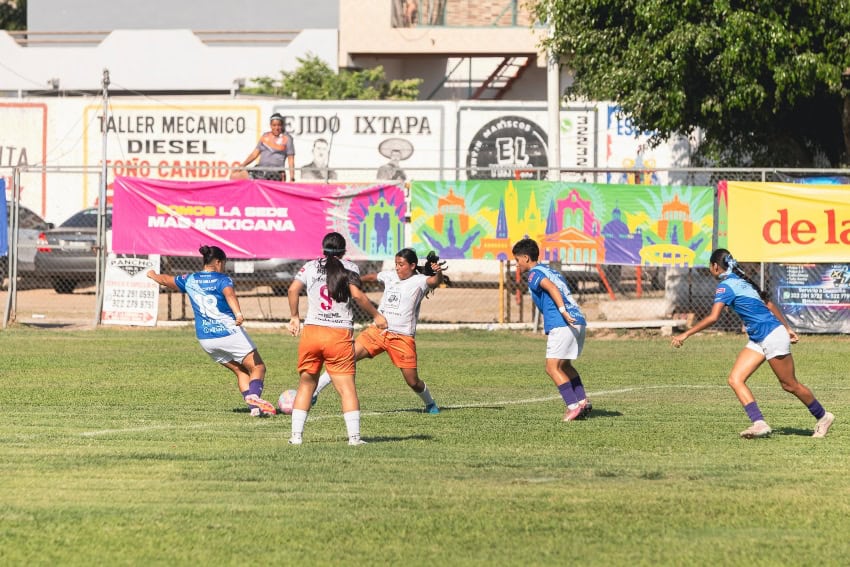
Sporting glory beckons for the Bay of Banderas, as Puerto Vallarta’s women’s soccer team is preparing for one of its biggest challenges of the season as it faces Zapopan in the semifinals of the 2026 Copa Jalisco.  

There are highs and lows for the region’s tourist sector, as the Riviera Nayarit sees continued investment, but as passenger numbers at Puerto Vallarta International Airport continue to decline.

Puerto Vallarta women’s team reaches Copa Jalisco semifinals

Puerto Vallarta women's soccer team
The Puerto Vallarta women’s soccer team (seen here in the blue jerseys) has performed well in this year’s Copa Jalisco, advancing to the semifinals. (Facebook)

The matchup has generated strong expectations as the two clubs were the top-performing teams during the group stage. Zapopan finished in first place overall, while Puerto Vallarta secured second, making this semifinal feel like a championship clash even before the actual final.

Puerto Vallarta advanced to this stage after an impressive performance against Lagos de Moreno in the quarterfinals. The coastal squad earned a 2-0 victory on the road in the opening leg and later secured qualification with a 1-1 draw at home. Their balanced attack and solid defensive play have made them one of the tournament’s strongest contenders.

Tournament organizers have confirmed this year’s Copa Jalisco finals will be played in a home-and-away format at the municipalities represented by the finalists.

Puerto Vallarta passenger traffic in April 2026

Passenger traffic at Puerto Vallarta’s international airport continued to decline during April 2026, reflecting the ongoing impact of the travel disruptions that began earlier this year. According to preliminary figures released by Grupo Aeroportuario del Pacífico, the airport experienced a 17% decrease in total passengers compared with April 2025.

During April, the airport handled approximately 542,600 travelers, significantly lower than the 654,100 recorded a year earlier. In the first four months of the year, Puerto Vallarta accumulated just over 2.46 million passengers, representing an 11.3% reduction compared with the same period last year.

Around 255,100 passengers arrived on national flights, a drop of 8.4% from 2025 levels. However, the decrease in international traffic was much more severe. International arrivals totaled 287,500 travelers, which represented a 23.5% fall compared with April of last year.

Nayarit tourism investment and growth

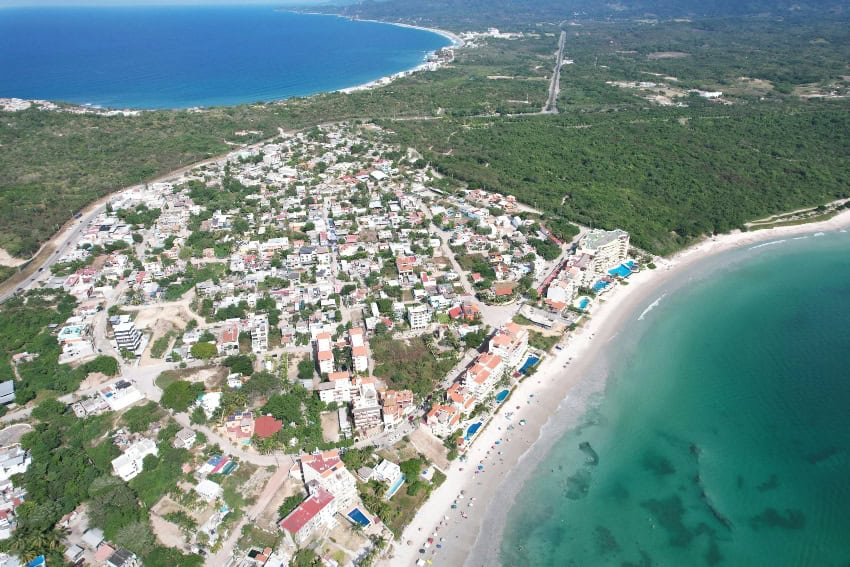
Nayarit continues to strengthen its reputation as one of Mexico’s fastest-growing tourism markets, supported by billions of dollars in upcoming investment projects across the state. 

Punta Mita, Nayarit
Expanding luxury development in places like Punta Mita, Nayarit, is indicative of the massive tourism investments being made across the state. (Emmanuel Appiah/Unsplash)

The state is expected to receive more than US $8 billion in tourism-related development through 24 major projects. Officials believe these investments will further position Nayarit as a key destination for both domestic and international visitors while expanding its economic opportunities over the coming years.

The projects are expected to generate significant economic benefits, including the creation of new jobs and growth in industries connected to tourism. Areas such as hotels, restaurants, transportation, retail businesses and construction are likely to experience increased activity as development moves forward.

In recent years, Nayarit has gained greater visibility thanks to destinations along the Riviera Nayarit and other coastal and cultural attractions. Officials believe that continued investment will help strengthen the state’s competitiveness within Mexico’s tourism industry and improve the quality of life for many residents through long-term economic development.

Clean drinking water for Potrero de la Palmita 

Residents of the Indigenous community of Potrero de la Palmita, located in the Nayarit municipality of Del Nayar, now have access to clean drinking water after the completion of a new purification system promoted by Governor Miguel Ángel Navarro Quintero. The project is part of a broader effort to improve essential services in remote mountain communities across the state.

For many years, local families had struggled with limited access to safe water, making daily life more difficult and increasing health risks. The newly installed system was built with an investment of 13 million pesos and is expected to benefit more than 600 residents. The infrastructure includes a treatment and purification plant, submersible pumps, storage tanks and several public water access points distributed throughout the community.

The project is a long-awaited solution to a basic necessity, with leaders emphasizing that access to purified water will positively affect the health and daily activities of families living in the region. Authorities in Nayarit consider the project an important step toward reducing inequality in rural Indigenous areas.

Charlotte Smith is a writer and journalist based in Mexico. Her work focuses on travel, politics, and community. You can follow along with her travel stories at www.salsaandserendipity.com.