The digital bank Nu was founded in Brazil in 2013 and entered the Mexican market in 2019. (Nubank/Facebook)
Nu México, the subsidiary of Nubank, the largest financial technology (fintech) firm in Latin America, grew its customer base by over 50% in the last year, reaching 12 million users in Mexico by the end of the second quarter of 2025.
With this figure, the company ranked sixth in the number of clients within the Mexican financial system. These include traditional banks and Sofipos, which are financial institutions in Mexico that serve people without access to traditional banking.
Nu was founded in Brazil in 2013 and entered the Mexican market in 2019. It began by offering consumers a no-fee credit card, backed by investors that included Warren Buffett’s Berkshire Hathaway firm. According to data released by the firm, 22% percent of its customer base are people who joined the formal financial system for the first time via Nu.
In an interview with Nu Videocast, Guilherme Lago, CFO of Nubank and Chairman of the Board of Nu Mexico, said that operations in Mexico show stronger indicators than those of Brazil at the same stage of development.
“Today, we serve one in four banked Mexicans. It’s a phenomenal achievement in a very short period of time. But we’re just getting started,” he stated.
For Lago, Mexico represents a key market as it is the second-largest economy in Latin America. It has a higher GDP per capita than Brazil, but with a lower rate of banking and credit card use: around 50% of Mexico’s population does not currently have a credit card.
Nu ranks third in the number of credit cards in circulation
As of the end of June, data from the National Banking and Securities Commission (CNBV) revealed that there were over 37.1 million credit cards in circulation in Mexico, marking the highest number on record. These figures show that Mexico’s credit card portfolio expanded by 1.8 million new accounts over the past year, up 5.1% compared to the same period of 2024.
Nu Mexico recently received its banking license, though for the moment it continues to operate as a popular financial society (Sofipo). (Nu México)
In this context, Nu reported that it had reached 6.6 million credit card customers in Mexico – 52% more than the same period last year, making it the third financial institution in Mexico with the greatest number of credit cards in circulation, just after BBVA México (10.7 million credit cards) and Banamex (9.2. million credit cards).
The increasing use of credit cards by Mexican families is associated with times of economic pressure, such as the back-to-school season. According to HSBC, back-to-school shopping is one of the periods when credit cards are most commonly used, alongside the Christmas season and the Buen Fin (Mexico’s version of Black Friday).
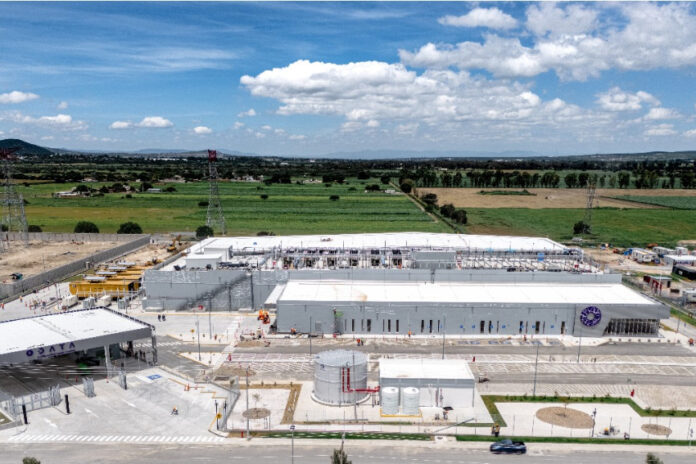
OData, headquartered in São Paulo, Brazil, created over 1,500 temporary local jobs during the construction phase of QR04, 96% of them filled by Mexicans. (X)
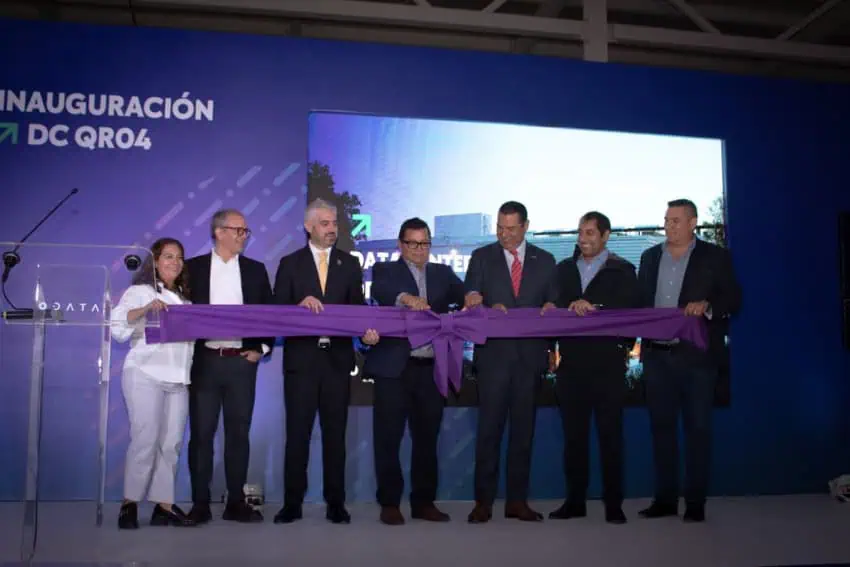
The data center provider ODATA has inaugurated a new campus near the colonial city of San Miguel de Allende (SMA) in Mexico’s Bajío region, its fourth center in Mexico.
Dubbed QR04, the data center is located in the SMA Industrial Park in Guanajuato state, close to ODATA’s three other data centers in the neighboring Querétaro state. The development responds to the growing demand for cloud and artificial intelligence (AI) services.
“With QR04, we reaffirm our investment in Mexico and our commitment to our global customers,” ODATA CEO Ricardo Alário said at the inauguration event on Thursday.
In May, ODATA commenced operations at its US $3 billion campus in Querétaro. Once fully operational, that new campus is expected to have a total information technology capacity of up to 300 MW. QR04 is designed to have a total capacity of 24 MW, with the first phase of 12 MW already operational.
“Our expanded regional presence provides a solid foundation for sustained cloud and AI growth in the country and throughout Latin America,” Alário said. “Just three months after opening DC QR03, we have already begun its expansion and launched DC QR04.”
ODATA, headquartered in São Paulo, Brazil, created over 1,500 temporary local jobs during the construction phase of QR04, 96% of them filled by Mexicans, according to Guanajuato Deputy Economy Minister Luis Andrés Álvarez Aranda.
The Brazilian data center firm ODATA has inaugurated four data centers in Mexico in just three years. (X)
During the inauguration ceremony, Álvarez Aranda emphasized the state’s commitment to becoming a technological leader in Latin America. He said that ODATA’s project promotes innovation, digital infrastructure and a sustainable economy.
Álvarez Aranda said that San Miguel de Allende could become “the next Virginia or Arizona” in terms of data centers.
“With this center, Guanajuato [state] becomes a key point for meeting the growing technological demand in Latin America,” said Álvarez Aranda. “This investment comes at a time when the information technology sector in Mexico has grown by 22%, surpassing Brazil.”
He also recognized ODATA’s commitment to reducing its carbon footprint by using technologies such as free cooling and its Delta Cube technology to optimize energy consumption.
SMA’s mayor, Mauricio Trejo, echoed this sentiment, stressing ODATA’s commitment to “responsible industry” and minimizing its water consumption.
Craving authentic Korean cuisine in Mexico City? Look no further than the capital's Little Seoul district! (Alexandra Tran/Unsplash)
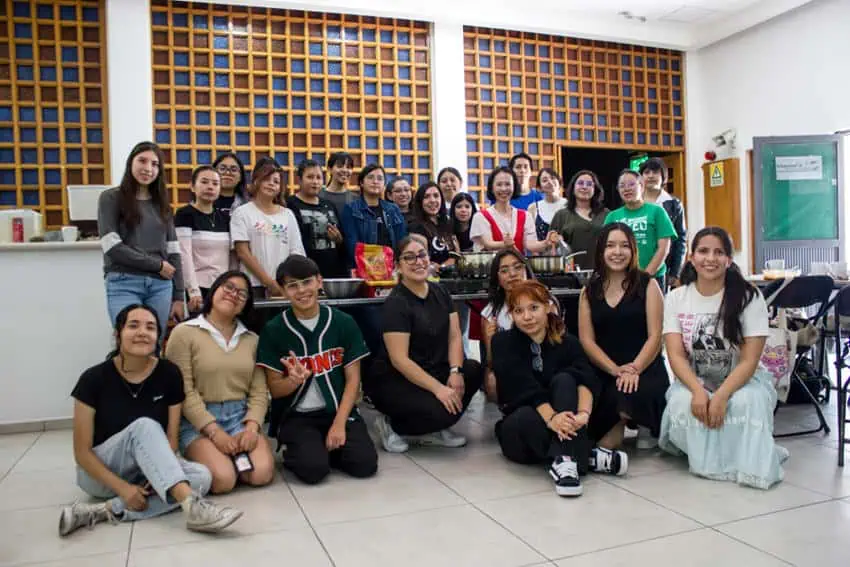
The drums of the sogochum workshop on the Korean Cultural Center’s patio compete with the whir of a metal floor fan to drown out Vivian Oh in the kitchen classroom. As she giggles at her own jokes, we all strain forward to hear the instructions for making spicy Korean chicken soup with noodles, or dak-kalguksu.
Oh has a high-pitched lilting Spanish that after 20-plus years in Mexico is still heavily laced with the sounds of her native Korean.
Vivian Oh, third row, second from left, in red and white, with a group of Mexican students she taught about Korean cooking at the Korean Cultural Center in May. (CCC)
Oh came to Mexico in 2001 at the behest of her best friend, who was already living here in the city. It was her first trip out of Korea, and she came with little knowledge of the place that would soon become her new home.
Oh joined the estimated 9,000 to 11,000 Koreans currently living in Mexico City – a tiny fraction of the immigrants that reside in the capital. This immigrant group has often had out-sized visibility due in part to the wave of Korean culture, or hallyu, of the 1990s and 2000s, when cultural exports like K-pop and Korean soap operas became world-famous.
The Mexico City area known as “Little Seoul” is part of the Juárez neighborhood’s Zona Rosa. The Korean Cultural Center, however, was built in the Polanco neighborhood, where you will find far more Jewish restaurants than Korean ones. Oh explains why.
Koreans, she says, have been moving to Polanco in the last several years as big companies like Samsung and LG have brought their employees to Mexico.
Mexico’s first wave of Korean immigrants
Korean men arriving in 1905 at the Port of Progreso, destined for Yucatán’s henequen fields. (Mexican National Archives)
The first Koreans to arrive in Mexico landed in the Yucatán in 1905, fleeing the mounting dominance of the Japanese empire, which would annex their country only five years later, leaving them stateless.
Many of those first 1,000 or so Korean immigrants intermarried with the Maya of the region, adopting regional customs so fiercely that when several were interviewed years later, they admitted to feeling more Korean-Yucatec than Mexican.
The establishment of diplomatic relations between Mexico and South Korea in 1962 increased the flow of Koreans to the country, but not enough to build much of a community. Restrictive immigration policies in the United States often resulted in Mexico being a fallback choice for Koreans and Chinese citizens.
According to Sergio Gallardo García, who researched the Korean diaspora in Mexico City, the largest wave of Korean immigrants to the city was between the 1980s and 2005, when South Korea’s economy was flourishing and immigrants came with money to invest or start small businesses.
This was when Korean churches, associations, and cultural centers started to really develop. Oh remembers arriving at this time and living in the south of the city near the UNAM campus, where a community of Korean students had formed. During these years, Koreans who had previously immigrated to Argentina or Brazil moved to Mexico in an attempt to escape economic and political instability in South America.
It was in the years of the K-wave and Mexico City’s Korea Town, or Little Seoul, as it’s sometimes called, really started to develop. Even so, when Oh arrived in 2001, she remembers often being confused for Chinese.
“When I arrived, everyone in the street just called me china, but now people say, ‘You’re Korean right? I have a lot of Korean friends.’ In 20 years, it’s completely changed.”
The most recent wave of Korean immigration, Gallardo García says, has been made up of students and workers coming to Mexico to learn Spanish and work in the Latin American headquarters of Korean companies. South Korea, he adds, has made moving abroad easier with institutions dedicated to informing immigrants of the news back home, helping them to send remittances to family in South Korea and helping them mitigate issues in their new countries.
These days, you can find Korean restaurants and grocery stores tucked into many of the Zona Rosa’s side streets, providing a taste of home for those who have made the crossing.
Kuili, one of several Korean restaurants to be found in Little Seoul. (Soy CDMX/Instagram)
In Korea, Oh’s mother taught her to pull noodles when she was 10 years old, and she would gather minari from the edges of the rice field where her parents worked. When she arrived in Mexico, many traditional ingredients were still impossible to find.
“I really want to teach the authentic flavor of Korea,” says Oh, “even though, at times, it can still be difficult to find Korean ingredients. Once people have tasted the original flavors of Korea, then they can adjust the recipes to their own tastes.”
The Korean peninsula’s most well-known culinary exports to the world are probably kimchi (there are hundreds of varieties of this spicy, pickled cabbage dish) and Korean barbecue – a mere fraction of the culture’s culinary lexicon.
Fermented snacks and salsas — often spiced with gochugaru, miso, garlic, ginger or Korean chilli paste — are usually served as part of side dishes or banchan at every meal. Spicy noodle soups, Korean fried chicken, whole fried fish, grilled meats and steamed veggies are almost always served alongside a bowl of rice, with chopsticks and a long spoon for eating.
Where to find authentic Korean food in CDMX
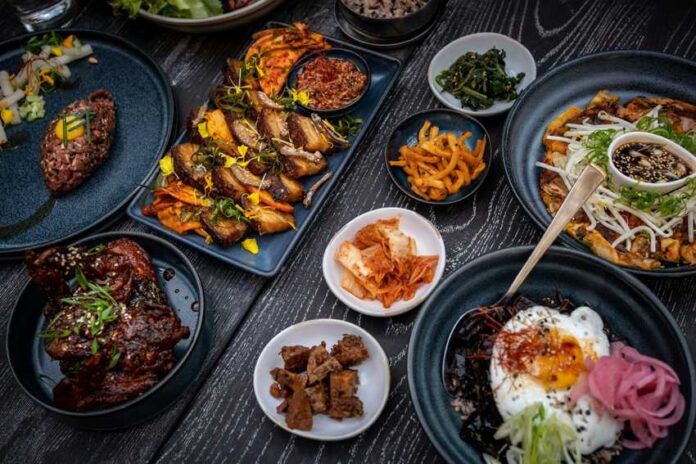
For a traditional Korean feast, order the bossäm platter a day in advance from Angela and her husband, who opened Seoul at 177 Londres Street in the Zona Rosa a few years back. A cornucopia of tiny dishes (banchan) holding things like sweet peanuts sprinkled with sesame seeds, a rolled omelet with onions and peppers, and a creamy cucumber-and-onion salad will be laid out in front of you.
Dabs of this or that fermented salsa, or slices of raw serrano chile are combined with a spoonful of egg souffle, grilled strips of beef or a spicy tofu-and-clam soup. This spread is easily enough for three or four people and will open up your mind to the range of Korean flavors.
Na De Fo is a standout among the city’s Korean BBQ restaurants, managed by the Lee family since 2007 and now part of a Korean restaurant group with various spaces around town.
On the westernmost end of Liverpool Street, each table at Na De Fo has an opening at its center with a grill at table level. Diners can order from a bevy of meats — bacon, beef, pork, fish, tongue — that they cook themselves on the grill in front of them. All are accompanied by grilled greens, spicy kimchi, mung beans and a selection of different vinegary and spicy sauces. The punchy kimchi chigae soup should not be missed.
This video by a Mexican Instagrammer features dishes available at Na De Fo, a Korean BBQ restaurant that has been in Mexico City for decades.
For something less traditional with a bit of Mexican fusion thrown in, try Jowong, a chic, modern bistro in Condesa. The menu is designed to incorporate Mexican ingredients into contemporary versions of Korean dishes. Their mussels are heavenly, swimming in a tangy tomato sauce, and the tender fried eggplant has a deep charred flavor that’s hard not to love. The sweet, mustardy pork belly is a nice contrast to the quick-pickled smashed cucumbers served on their own as a side.
The nice thing about Jowong’s upscale setting is that you can get a Goldboy cocktail (mezcal, yuzu and ginger), a kimchi Gibson (gin, vermouth, and kimchi juice), or other delicious beverage concoctions to accompany your meal.
Jowong’s kimchi-marinated chicken sandwich, bathed in a salsa of smoked pineapple and gochujang, is the ultimate Korean comfort dish. (Jowong/Instagram)
I also highly recommend the cooking demonstrations at the Centro Cultural Coreano. Although there’s no hands-on work for attendees, Oh gives the Korean names for ingredients and shows you which products she uses from the Korean grocery store. She even offers movie recommendations and will always invite you to stay after for the Korean music workshop.
You get to taste whatever delicious thing she happens to be cooking that day, but you have to bring your own bowl.
Lydia Carey is a freelance writer and translator based out of Mexico City. She has been published widely both online and in print, writing about Mexico for over a decade. She lives a double life as a local tour guide and is the author of “Mexico City Streets: La Roma.” Follow her urban adventures on Instagram and see more of her work at mexicocitystreets.com.
Sheinbaum noted that the Mexican women's flag football team won gold on Sunday at the World Games, an Olympics-style event that was held in Chengdu, China, between August 7 and 17. (X)
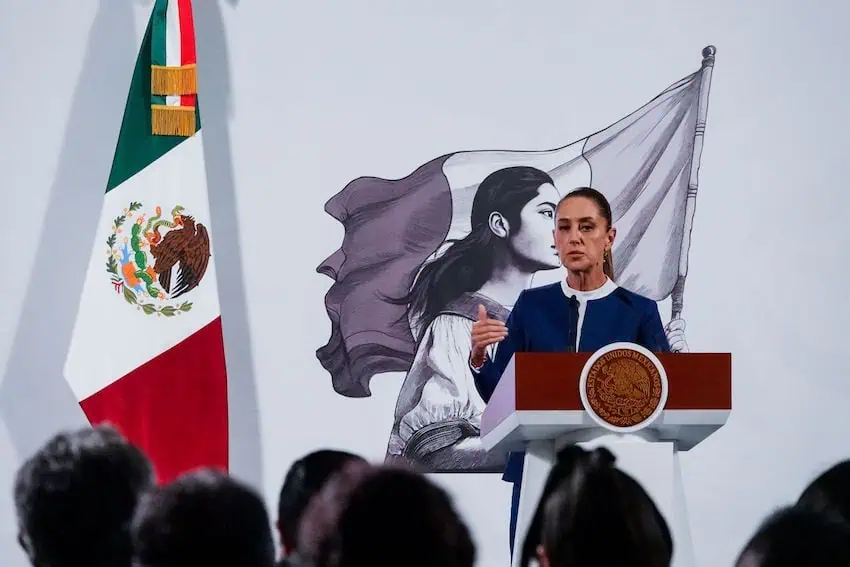
During her Monday morning press conference, President Claudia Sheinbaum congratulated Mexico’s triumphant flag footballers and criticized media outlets for their alleged failure to report on new data on poverty.
In response to one question, Sheinbaum declined to comment, a tactic she regularly uses when she thinks that someone else is better qualified to respond, or when she wants to shut down discussion of a particular issue or scandal.
Sheinbaum congratulates Mexico’s champion flag football team
“What is the name of the sport that is similar to American football? Flag football. The Mexican women won, many congratulations, they beat the United States,” the president said.
It was the second successive World Games at which the Mexican women’s flag football team claimed the gold medal. In both gold-medal matches — in Chengdu this year and in Birmingham, Alabama, in 2022 — Mexico defeated the United States.
¡MÉXICO, BICAMPEONAS DE LOS WORLD GAMES EN FLAG FOOTBALL!🇲🇽🏈
La Selección Nacional brilló en un encuentro trepidante y derrotó a Estados Unidos en una final de alto voltaje con marcador de 26-21.
Un auténtico choque de titanes entre dos potencias que dejaron claro que están en… pic.twitter.com/FUjJj4r8jl
“We say in Mexico, ‘pienso en oro’, that’s our signature, ‘think of the gold’, and we came with that mindset to each play of the game,” Mexico’s quarterback, Diana Flores, said after Sunday’s match.
On Monday morning, Sheinbaum also congratulated Mexican athletes who won medals over the weekend at the Junior Pan American Games in Asunción, Paraguay, and the Masters Indigenous Games in Ottawa, Canada.
Asked about her approval rating, Sheinbaum attacks the media
A reporter highlighted that the president has a 74% approval rating, according to the results of a poll conducted by the company QM Estudios in alliance with the Heraldo Media Group.
He also noted that only 56% of respondents rated her work on health care as very good or good, compared to 84% who endorsed her performance in the area of social programs.
Asked about the different poll results, Sheinbaum declared that her government would “keep working” before expressing her gratitude for “the support of the people.”
She then segued into an attack on the media, railing against “many” outlets for not reporting on new data that showed that more than 13 million people were lifted out of poverty during the 2018-24 presidency of Andrés Manuel López Obrador (AMLO).
Although the president remains popular overall, healthcare represents a weaker spot in her approval ratings. (Galo Cañas/Cuartoscuro)
Still, the president asserted that many Mexican newspapers were unable to bring themselves to publish stories on “something so extraordinary” as 13.4 million people coming out of poverty.
“Instead of saying ‘that’s good,’ it’s not even a newspaper article,” she said.
“Despite this [media] offensive [against the government], … there is recognition from the people,” Sheinbaum said, returning to the question about the poll results.
“… The support of the people is because we haven’t betrayed them,” she said.
Later in her press conference, while responding to an inquiry about a Wall Street Journal column headlined “Don’t Bomb Mexico, Mr. President,” Sheinbaum asked a series of questions of Mexican and international media outlets that she considers opponents of her government.
She said the crime was spoken about in the daily security cabinet meeting, but told reporters that she would leave it up to security officials to report on the case.
The massacre occurred late Saturday in the municipality of Ayutla de los Libres, located in the Costa Chica region of Guerrero. The ambush occurred in an area where the criminal groups “Los Ardillos” and “Los Rusos” are reportedly engaged in a turf war.
As of Monday afternoon, no arrests had been reported in connection with the crime and it wasn’t clear who perpetrated the attack.
By Mexico News Daily chief staff writer Peter Davies (peter.davies@mexiconewsdaily.com)
The announcement of a railway connection between Guatemala and Mexico, with Belize to be added, came after a busy day of talks among the heads of state of the three neighboring countries. (Cuartoscuro)
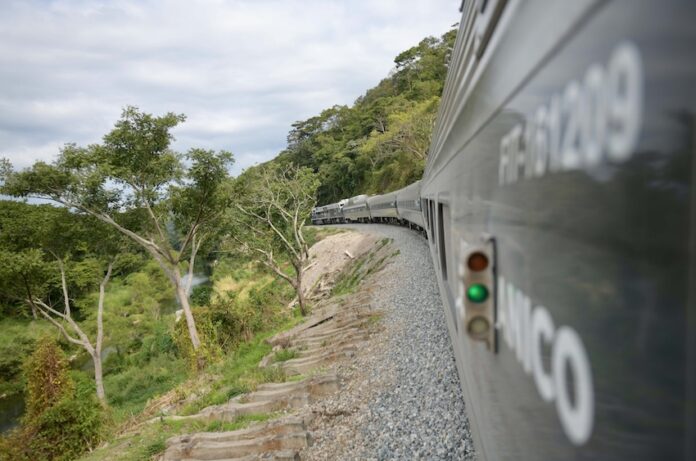
Mexico and Guatemala have confirmed their intention to extend the Maya Train to Guatemala following a series of talks between Mexican President Claudia Sheinbaum and her Guatemalan counterpart Bernardo Arévalo.
“If we, the three countries, manage to build a development hub for the well-being of our people, it will be a completely different vision for Guatemala and Mexico,” Sheinbaum said, adding that she hopes the rail connection into the Central American countries will be used for both passenger and cargo transportation.
Although Guatemala lacks an active rail network, Arévalo said in a press conference that a connection with Mexico would have “enormous potential” for the development of both nations and the region.
“Connecting the Maya Train with Guatemala and eventually Belize is a vision we share, and for this we agreed to promote the start of trinational negotiations, as well as the respective feasibility studies,” he said.
Much of northern Guatemala is protected forest, so the Maya Train would have to connect indirectly via Ciudad Hidalgo in Chiapas, Sheinbaum has said previously. (Pau de Valencia/Unsplash)
“We view the Maya Train as a development solution that not only does not contradict, but rather strengthens the search for a sustainable model that clearly protects the country’s biological, natural and cultural heritage,” Arévalo said, adding that “At all times, it has been very clear that the Maya Train will not cross any existing reserve areas.”
Meanwhile, Belize’s Prime Minister John Briceño said that the Maya Train would facilitate commerce between the three countries, with his country playing a key role.
“We need to continue to make the point that Belize is the link for Mexico and Guatemala,” he stressed.
Overall, the bilateral meeting between the leaders of Mexico and Guatemala addressed public investment in projects aimed at ensuring economic development in regions where northbound migration is prevalent.
“People, in general, don’t migrate for pleasure; they migrate out of necessity,” Sheinbaum noted. “They don’t leave their towns for adventure but rather due to economic necessity.”
INEGI reported that approximately 4.5 million people didn't have running water in their homes in 2024, down 51% compared to the 9.2 million people who didn't have piped water in their homes in 2022. (Dassaev Téllez Adame/Cuartoscuro)
Almost half the residents of Mexico’s three poorest states lack access to at least one basic service in their homes, according to the results of a national survey.
Basic services include running water, electricity, sewerage systems and chimneys in households where wood or charcoal is used for cooking.
In Chiapas — the Mexican state with the highest levels of poverty — 48.6% of residents didn’t have access to at least one basic service in their homes in 2024, according to the results of a survey on “multidimensional poverty” that was conducted by the national statistics agency INEGI.
In Guerrero, 47.4% of residents lacked access to at least one basic service in their homes, the survey found, while the figure in Oaxaca was 46.7%.
Guerrero and Oaxaca have the second and third highest levels of poverty in Mexico, according to the INEGI poverty report published last week. In Chiapas, 66% of residents were living in “multidimensional” poverty in 2024, while the rates in Guerrero and Oaxaca were 58.1% and 51.6%, respectively.
Chiapas, Guerrero and Oaxaca are the only states in Mexico where more than 40% of residents lacked access to at least one basic service in their households.
The other 25 federal entities had rates below 20%, ranging from 18.8% in San Luis Potosí and Puebla to 1.9% in Nuevo León and Coahuila.
In Mexico City, only 2.4% of residents lacked access to at least one basic service in their homes in 2024, the INEGI survey found.
How many people lack basic services in their homes?
Running water
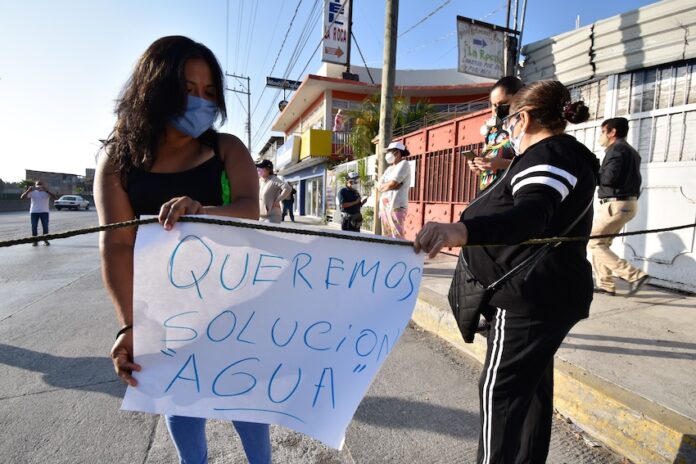
INEGI reported that approximately 4.5 million people didn’t have running water in their homes in 2024. While the figure is high, it declined around 51% compared to the 9.2 million people who didn’t have piped water in their homes in 2022.
In 2024, 3.5% of the Mexican population didn’t have running water in their homes, according to INEGI.
Sewerage
In 2024, some 6.4 million people lived in homes that were not connected to sewerage, according to the results of the most recent survey. That figure increased 0.5% compared to 2022.
In 2024, 4.9% of Mexicans lived in homes that weren’t connected to sewerage, according to INEGI.
Chimneys
The most common basic service that Mexicans lacked in 2024 was a chimney. Approximately 12.6 million who cook with wood or charcoal didn’t have a chimney in their homes, according to INEGI. That figure declined 13.4% compared to 2022.
In 2024, the number of Mexicans who cooked with wood or charcoal but didn’t have chimneys in their homes represented 9.7% of the population.
Electricity
Approximately 300,000 Mexicans didn’t have electricity in their homes in 2024. That figure fell 26% compared to 2022.
In 2024, around 0.2% of the Mexican population didn’t have electricity in their homes, INEGI reported.
As the news made headlines over the weekend, some Mexican newspapers reported that Beatriz Gutiérrez had already moved to Madrid. (Moisés Pablo/Cuartoscuro)
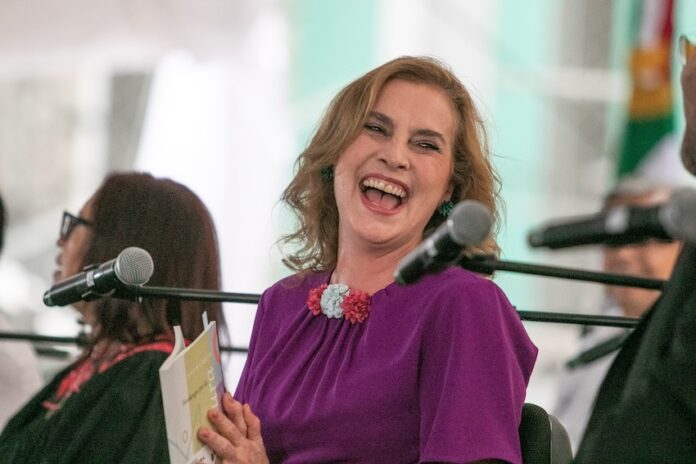
Beatriz Gutiérrez Müller, the wife of former president Andrés Manuel López Obrador, has accused a Spanish newspaper of libel after it reported that she would soon move to Madrid with her son and live in an exclusive neighborhood of the Spanish capital.
The ABC newspaper reported on Saturday that Gutiérrez would “soon” settle in Madrid with her 18-year-old son Jesús Ernesto López Gutiérrez.
“ABC has been able to confirm through diplomatic sources that the wife of the ex-president of Mexico requested in March a residence permit in order to settle in Madrid,” the newspaper said.
ABC said that the same unnamed sources confirmed that Gutiérrez would move to Madrid, “without her husband” but with Jesús Ernesto, who “will start studies at a public university in Madrid, probably the Complutense.”
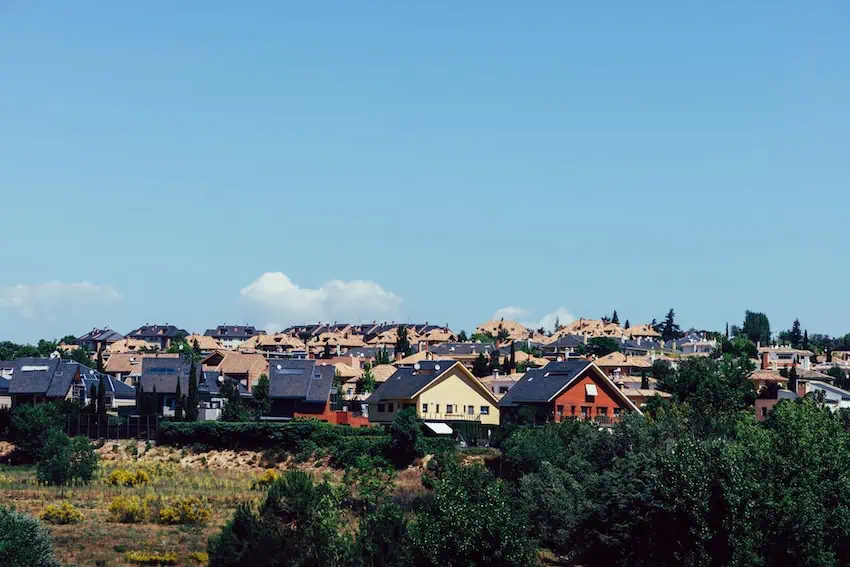
The newspaper also said that “the influential wife” of López Obrador “has chosen” to “establish her residence” in the “exclusive La Moraleja housing development,” located north of central Madrid.
Later in the report, ABC said it appeared “certain” that Gutiérrez would move into the neighborhood. The newspaper said it wasn’t known whether the move would be permanent or temporary.
La Moraleja, outside of Madrid, where Spanish media have reported that AMLO’s wife is planning to live. (Shutterstock)
Incorrectly citing the ABC report, some Mexican newspapers reported that Gutiérrez had already moved to Madrid. SDP Noticias reported more than two weeks ago that she had already moved to La Moraleja.
Gutiérrez — an academic, writer and, according to ABC, the “gray eminence” behind López Obrador’s 2019 letter asking the king of Spain to apologize for the conquest of Mexico — hit back at the ABC report in a statement posted to social media on Monday morning.
She began by asserting that ABC is the “equivalent” of Mexican newspapers such as Reforma and El Universal — “professional libelers of the most rancid and corrupt right [wing of politics].”
Such publications “want to take revenge on you-know-who,” Gutiérrez wrote, referring to López Obrador, best known as AMLO.
Gutiérrez said that neither she nor Jesús Ernesto has moved to Spain or anywhere else. However, she didn’t directly respond to the assertion that she will — future tense — move to Madrid with her son.
Among the other remarks she made in her statement were that:
She is “independent” of politics.
She has worked in “teaching and research” at a public university in Mexico — the Meritorious Autonomous University of Puebla — for decades and continues to do so.
She is “in love” with AMLO and her son.
They are a “very close family” that has been “vilified” because of the “ideals of that beautiful crazy man called AMLO.”
She visited AMLO in Palenque, Chiapas, on the weekend. (Gutiérrez presumably lives in Mexico City.)
Gutiérrez also wrote that López Obrador “achieved at least two historic feats during his presidency: “notably reducing poverty and inequality” in Mexico and returning “to the people of Mexico … the power they have.”
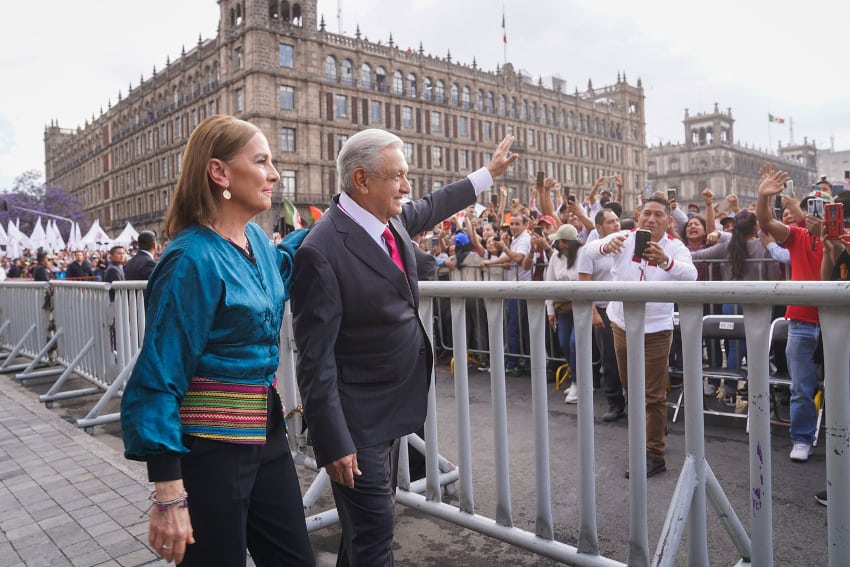
Former president of Mexico AMLO alongside his wife Beatriz Gutiérrez Müller, who is a doctor of Literary Theory and a respected author. (Gob MX)
“Now these non-imaginary citizens have become a very powerful force; in our beloved Mexico, those who considered themselves owners and lords of the nation no longer steal or rule,” she added.
“… Do you want more clarification? Are you going to continue libeling?” Gutiérrez wrote at the end of her statement.
The publication of the ABC report came after Andrés Manuel López Beltrán, one of AMLO’s sons from his first marriage and a high-ranking official with the ruling Morena party, was criticized by opposition politicians and others for vacationing at a luxury hotel in Tokyo.
Extravagant international travel — and a supposed plan to move to an exclusive neighborhood in Madrid — are seen by many Mexicans as incompatible with the public and personal austerity promoted by AMLO, founder of Morena.
Austerity is — or is supposed to be — a hallmark of Morena and its politicians, leading to various Morena officials in addition to López Beltrán, including Deputy Ricardo Monreal and Education Minister Mario Delgado, to come under fire for their recent international travel.
By Mexico News Daily chief staff writer Peter Davies (peter.davies@mexiconewsdaily.com)
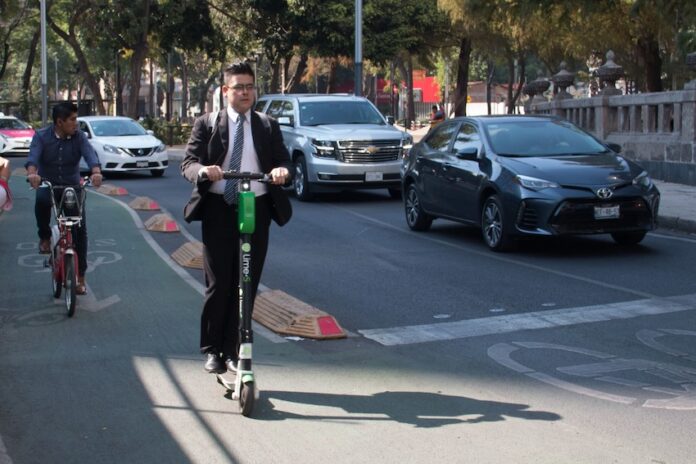
Mexico City lawmakers have responded to the soaring popularity of scooters and other small electric vehicles by imposing rules similar to those of automobiles. (Andrea Murcia/Cuartoscuro)
If you ride an electric scooter or battery-powered motorcycle through the streets of Mexico City, you’re going to have to get your papers in order. Vehicle licenses will soon be required.
Lawmakers last week amended the capital city’s Mobility Law which regulates transportation in Mexico City. Now, if you operate a Personal Electric Motorized Vehicle (VEMEPE) — scooters, motorcycles and electric bikes of a specified size — you will have to get a license plate as well as a driver’s license and you must comply with traffic laws.
El @Congreso_CdMex aprobó una reforma que exigirá licencia y documentos a quienes conduzcan vehículos eléctricos personales (Vemepe) como scooters, bicis eléctricas y bicimotos que superen 25 km/h.
The new law will take effect in one year’s time so VEMEPE operators have plenty of time to apply for a license, acquire a license plate and brush up on traffic rules and regulations.
It didn’t take long for protesters to organize, however. Days after the proposal was passed out of committee on Aug. 7, people on scooters and electric motorcycles demonstrated in front of the Congress building, urging lawmakers to reject the bill.
Opponents of the measure defended VEMEPEs as practical, cheap and ecological means of transportation, decrying the reform as a new tax that will squeeze them off of roads.
Congress unanimously passed the reform on Aug. 15.
When presenting the bill to the floor for consideration, Congressman Miguel Ángel Macedo, president of the Sustainable Mobility and Road Safety Committee, said the inclusion of these vehicles in the Mobility Law “is the first step toward strengthening a regulatory framework that governs their use.”
The new law “will also establish the conditions necessary to safely guarantee the right to mobility for those of us who travel the city’s streets,” he said.
The decision to address the VEMEPEs came about because these vehicles have become increasingly popular, adding to the chaos of city streets. During committee debate, lawmakers cited a statistic that more than a million such vehicles operate within city limits.
Supporters of the amendment argued that many VEMEPE operators ignore traffic rules which prohibit riding on sidewalks, passing between cars and occupying bicycle lanes. These traffic violations endanger pedestrians, cyclists, motorists and VEMEPE riders themselves.
Lawmakers also expressed concern that many VEMEPE riders don’t wear helmets and often ignore traffic lights.
The new law requires those who operate vehicles that are capable of exceeding 25 km/h and are equipped with an electric or internal combustion engine to acquire a driver’s license. Additionally, those operating VEMEPEs that weigh up to 350 kg will require a license.
The Congress authorized two types of licenses specifically for VEMEPEs:
Type A: for vehicles weighing less than 35 kg
Type B: for vehicles weighing between 35 and 350 kg
Vehicles not covered by the new law are those with pedal assistance or human traction (such as a classic motorized bicycle that doesn’t exceed 25 km/h).
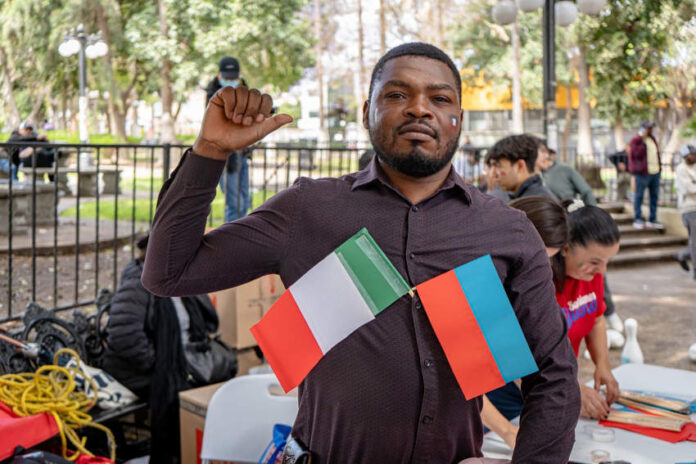
Yessi, a refugee from Haiti living in Mexico, celebrates his native country's independence day in Tijuana. He is an example of many refugees and migrants from Latin America who've settled here rather than in the U.S. (Jose Vargas/Cuartoscuro)
As a U.S. citizen who lives in Mexico part of the year, I pay close attention to the presidents of both countries and their perspectives on immigration issues and border policy. And I’m particularly interested in immigration because I grew up abroad, in a diplomatic family, surrounded by people different from myself.
After President Donald Trump was inaugurated in January, he declared a border emergency in order to prevent anyone from entering the United States illegally. There is no way of knowing exactly how many people would have crossed the border if it had remained open, but according to the Public Broadcasting Service (PBS), U.S. Border Patrol previously encountered unauthorized migrants attempting to cross it thousands of times a day.
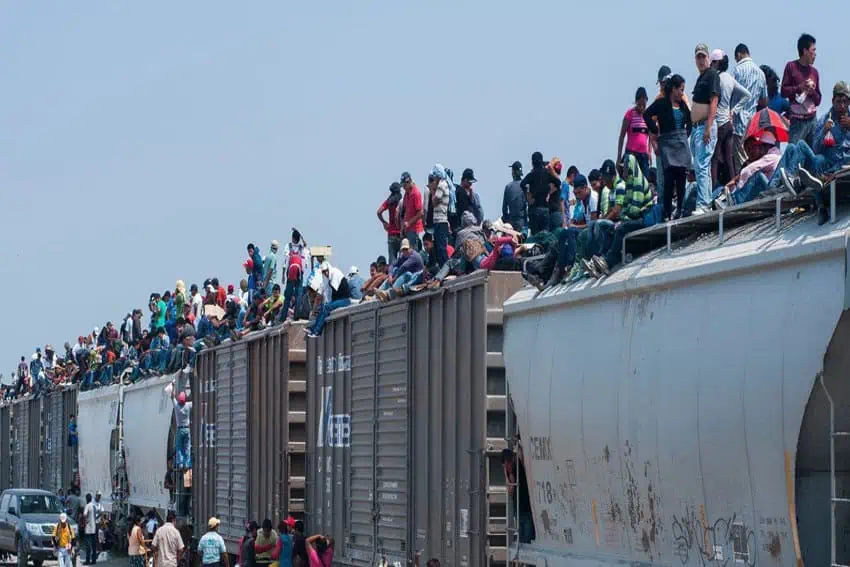
Migrants hitching a ride on a cargo train famously nicknamed “La Bestia.” Its route through Mexico to the U.S. makes it a frequent target for refugees coming from south of Mexico. (Keith Dannemiller/IOM)
I know plenty of people in the U.S. who are fiercely anti-immigration and want a strong U.S. border policy. As an acquaintance said on Facebook in February 2024, “We need a border to keep out all those terrorists from Mexico.”
I suppose we need a border policy, though it’s hard for me to see exactly why. Who crosses our borders? On the northern border, Canadians like their country and have no desire to relocate to the U.S., except those who move to the Sunbelt as part-time snowbirds.
As for the southern border, many of the people who want to cross it are hardworking Latinos willing to do low-paid, backbreaking labor, sometimes in over 100-degree temperatures. They’re well-known culturally for loving their families, being deeply religious, and respecting authority. They want to become legal.
But there’s no way they can complete the laborious paperwork necessary to get even a temporary visa while in their own countries before either starving — due to food shortages and hunger in Venezuela — or being shot or kidnapped by gangs — in El Salvador, Nicaragua, and Honduras.
I’d love those Americans who rage at the idea of foreigners “stealing” our jobs to feel what it’s like to pick strawberries for a season. I know I don’t want to do that, and I bet they don’t either. But picking strawberries for a couple of months just might change their vote.
Research from the nonprofit organization Women for Women International shows that most people forced to flee their country for political or economic reasons would much prefer to stay in their own country if it were safe and economically viable. The common U.S. fantasy that immigrants want what we have is not only misguided but arrogant.
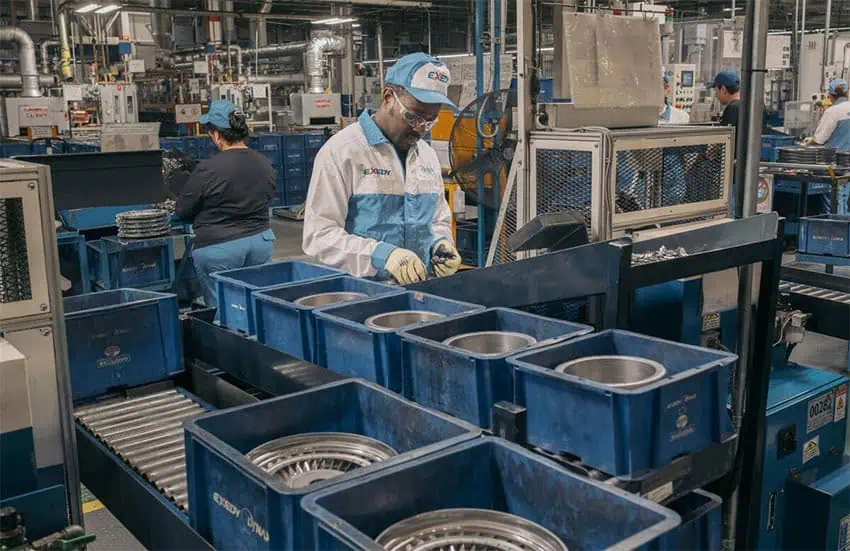
Makendy, a Haitian refugee who participated in the Local Integration Program, at work in an Aguascalientes auto parts factory. (Jeoffrey Guillemard/UNHCR)
Sure, people want the freedoms and the salaries available to Americans, but they don’t want the mass shootings, homelessness, fentanyl addiction, racism or any of the other ills that afflict American society. Like most U.S. citizens do — but, tragically, not enough of our legislators — they simply want the chance to earn a living and enjoy a peaceful life.
Ironically, six months after Trump closed the border, a Gallup poll showed that Americans’ views of immigration have swung dramatically upward in the last year. Seventy-nine percent of American adults now think immigration is good for the country, and the number of Americans who want immigration reduced dropped from 55 to 30 percent since 2024. These shifts reverse a four-year trend of growing concern that the U.S. was admitting far too many migrants.
Meanwhile, Mexico — a Catholic country famous for its machismo — recently elected a Jewish woman as its president, something the U.S. has yet to achieve on either count. But more importantly, she is everything Trump is not: measured, rational, and analytic. A former climate scientist, Sheinbaum’s statesmanship and calm rhetoric remind me of Germany’s former chancellor, Angela Merkel.
According to the United Nations Refugee Agency (UNHCR), if refugees in Mexico are afraid of returning to their country, they can apply for protection. The process is free and confidential. Mexico also provides options for those seeking asylum or facing humanitarian crises, with permits granted for victims of crime, unaccompanied minors, or those with pending asylum claims.
The U.S. also has a tradition of providing refuge to those fleeing persecution, war and violence. The U.S. Refugee Act of 1980 created a process for admitting and resettling refugees, including setting annual ceilings and providing pathways for resettlement both from abroad and asylum claims within the U.S. However, the law doesn’t guarantee a specific number of refugees that will be admitted, and the Trump administration has drastically reduced admissions.
Clearly, Mexico cares about refugees. Its policies aren’t perfect. How could they be, with the country wedged tightly between certain dangerous Central American countries and the aggressive U.S.? But Mexico’s current policies are a lot more humanitarian than ours.
Without the agricultural labor that refugees provide in the U.S., Americans will have less selection in foods and will experience higher prices. As citizen frustration intensifies, my hope is that enough of us in the U.S. will wake up in time to change our national direction. ¡Ojala! Maybe then we’ll allow more refugees in, grateful that they are willing to do the hard, sweaty work that no one else wants to do.
For me, that time can’t come soon enough.
Louisa Rogers and her husband Barry Evans divide their lives between Guanajuato and Eureka, on California’s North Coast. Louisa writes articles and essays about expat life, Mexico, travel, physical and psychological health, retirement and spirituality. Her recent articles are available on her website, authory.com/LouisaRogers
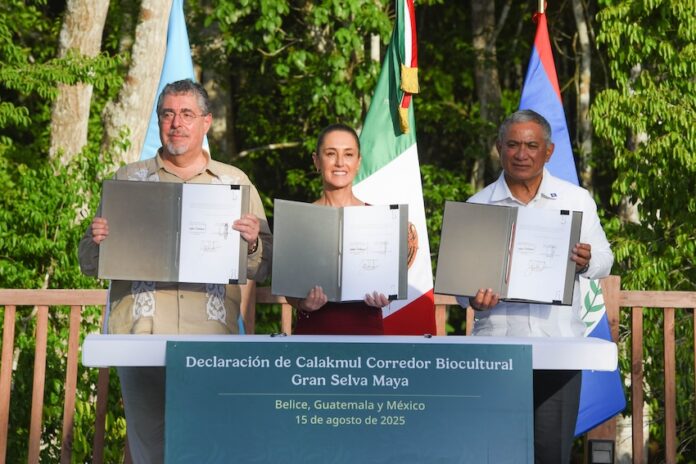
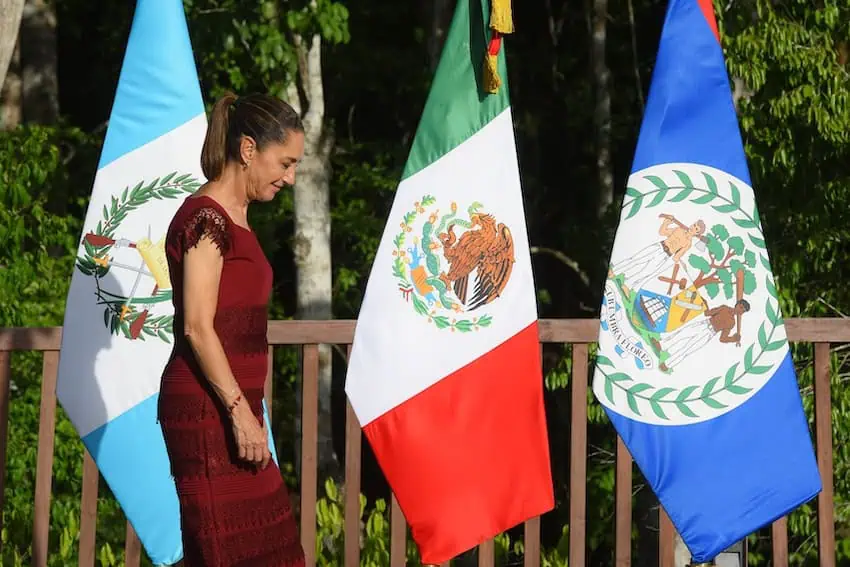
Last week, Guatemalan President Bernardo Arévalo, Mexican President Claudia Sheinbaum and Belizean Prime Minister Johnny Briceño agreed to designate a 5.7 million-hectare trinational region as the Great Maya Forest Biocultural Corridor. (Presidencia/Cuartoscuro)
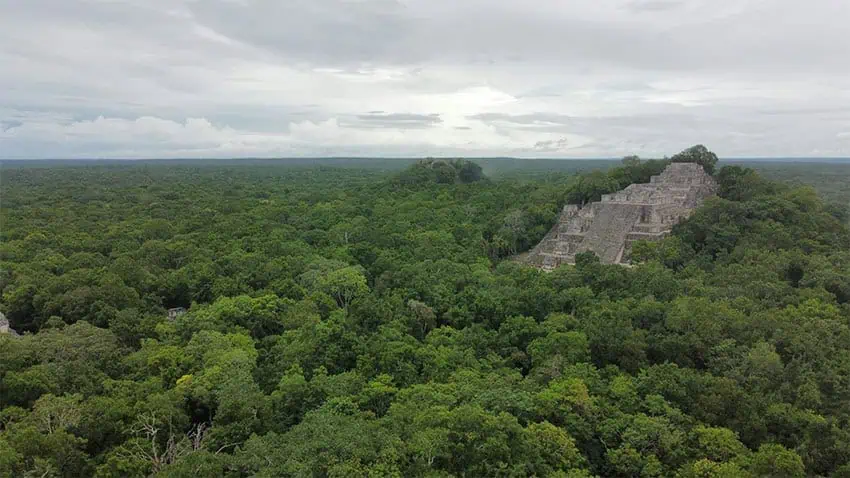
Mexico, Guatemala and Belize have created an international area called the Great Maya Forest Biocultural Corridor, dedicated to protecting and preserving the biodiversity and cultural heritage of the region.
The corridor is the result of a historic agreement between the two Central American countries and Mexico, signed at the Gran Mundo Maya Calakmul hotel in Campeche, the capital of the southeastern Mexican state of the same name.
The three neighbors vowed to cooperate in protecting the Maya legacy that they share. (Presidencia/Cuartoscuro)
“We should be proud to be able to tell the world [that] we have united our will to preserve and restore the legacy of this extraordinary biological and cultural wealth,” President Claudia Sheinbaum said in a statement. “Today’s agreement is historic and beautiful. Thank you, President Arévalo, and thank you, Prime Minister Briceño.”
The corridor spans approximately 5.7 million hectares of tropical rainforest that is part of the legacy of the Maya civilization. It covers 600,000 hectares in Belize, 2.7 million in Guatemala, and 2.4 million in Mexico. An estimated 2 million people live across this area.
Because this region still has a large population of Maya descendants, the leaders of the three countries emphasized the importance of preserving not only the region’s biological wealth but also its living cultural heritage, presenting it as a global example of environmental and social cooperation.
“We are not only protecting an ecosystem, but also honoring the legacy of the civilization that once flourished in these territories,” Sheinbaum said.
The corridor aims to protect regional species such as the jaguar, tapir, spider monkey, and quetzal. As the second largest tropical rainforest in the Americas (after the Amazon) its preservation is key to addressing the climate crisis, regulating the water cycle, and protecting regional biodiversity.
Belizean Prime Minister Johnny Briceño said that this project is not only a commitment to biodiversity, but also “a bridge to a future where sustainable development, regenerative tourism, and ancestral wisdom guide our path.”
Meanwhile, Guatemalan President Bernardo Arévalo stressed that the three countries are working “to respond together to common threats.”
To address such threats to the environment as illegal logging, pollution and fires, the three countries have agreed to take cooperative actions like sharing information, technology, and training. They have also agreed to manage the use of timber and non-timber forest resources in an inclusive manner that benefits the communities in the areas.