Homicide cases fell slightly in July compared to June but Mexico remains on track to record its most violent year in recent history, statistics show.
There were 2,547 homicide cases last month, according to data published by the National Public Security System (SNSP), nine fewer than in June, which has been the most violent month of the year so far.
A total of 2,993 people were murdered in July. The figure is higher than the number of cases because there were two or more victims in some investigations.
The most violent state in Mexico last month was Baja California, where there were 263 intentional homicide cases. México state was next with 215 cases, followed by Chihuahua, Guanajuato and Jalisco, where there were 202, 185 and 169 homicide investigations respectively.
In the first seven months of the year, 20,135 people were killed in 17,164 cases of intentional homicide, a 3% increase compared to the same period of 2018. Last year was the most violent since the SNSP began keeping comparable records in 1997.
The homicide rate increased in 18 of Mexico’s 32 states in the first seven months.
The biggest increase was recorded in Nuevo León, where the number of homicide investigations increased by 59% to 560 from 352 between January and July of 2018.
Homicide cases rose by 48% in Hidalgo, 41% in Sonora, 34% in Morelos, 21% in Jalisco, 19% in México state, 18% in both Tlaxcala and Chiapas and 14% in each of Tabasco and Mexico City.
The other states where homicides have increased this year are Michoacán, Guanajuato, Querétaro, Aguascalientes, Colima, Coahuila, Puebla and Zacatecas.
The biggest decline in violence was recorded in Baja California Sur, where the number of cases in the first seven months fell 59% compared to the same period last year.
Homicide investigations declined by 58% in Nayarit, 40% in Yucatán, 30% in Guerrero and 29% in Tamaulipas.
The other states where homicide numbers have declined in 2019 are Sinaloa, Durango, San Luis Potosí, Chiapas, Veracruz, Baja California, Campeche, Oaxaca and Quintana Roo.
With just 18 intentional homicide cases between January and July, Yucatán has seen the least deadly violence of any state this year.
There were fewer than 50 cases in both Campeche and Baja California Sur, while the number of homicide investigations in each of Aguascalientes, Durango, Tlaxcala and Nayarit was under 100.
Along with homicides, the number of femicides – women and girls who were killed on account of their gender – also rose.
There were 540 femicide investigations between January and July, a 9% increase compared to the 494 cases in the same period last year.
Veracruz recorded the highest number of cases, with 114, followed by México state with 53, Puebla with 36, Nuevo León with 32 and Mexico City with 26.
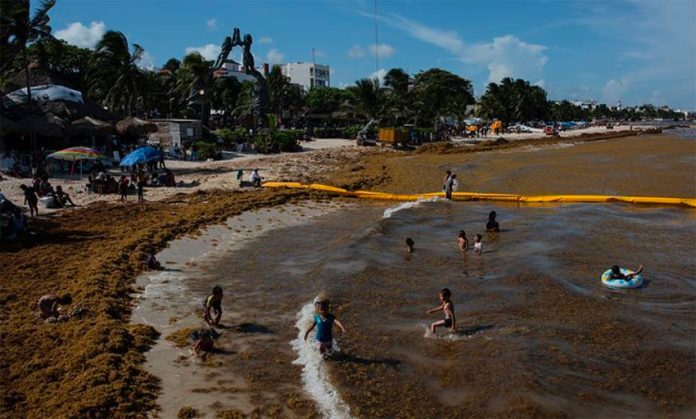
Scientists in Yucatán have developed a laboratory prototype of a system that converts sargassum into a biogas that could be used in the home or to generate clean energy.
Raúl Tapia Tussell, head researcher in the renewable energy unit at the Yucatán Scientific Research Center (CICY) in Mérida, told the newspaper El Economista that work on the project began in 2017 after large quantities of sargassum began washing up on the Yucatán coast.
“The problem wasn’t as big then as it is now but from that time . . . we started to work with the seaweed that arrived at the port of Progreso,” he said.
Tapia explained that once the sargassum is cleaned and dried, it is mixed with a fungus that breaks down the lignin in the seaweed and generates methane.
The biogas could be used as a fuel source for stoves and heaters or to generate electricity using a process that is less contaminating than that powered by fossil fuels.
The CICY researchers are applying for a patent for their prototype system from the Mexican Institute of Industrial Property.
The next challenge, Tapia said, will be to develop the infrastructure needed to generate the sargassum biogas outside the laboratory, and to store and distribute it.
“That is one of the most complex parts of the project because it requires economic resources . . .” he said.
“It’s methane gas and it could even be used for motor vehicles but . . . its use . . . depends . . . on having the molecular transformations systems and storage [capacity] . . .” Tapia explained.
The researcher said that other benefits of using sargassum to generate biogas are that it is free and it arrives on the coastline naturally. Tapia also said that the use of a seaweed as a fuel source would get it out of the sea and off the beach, where it can cause environmental problems and discourage tourism.
The massive arrivals of sargassum on the Caribbean coast of Mexico have led to the development of a variety of uses for the macroalgae such as making shoes, paper, a Mother’s Day message and even houses.
The masses of sargassum on the beaches of Tulum also inspired an impromptu nude photoshoot last year by renowned New York photographer Spencer Tunick.
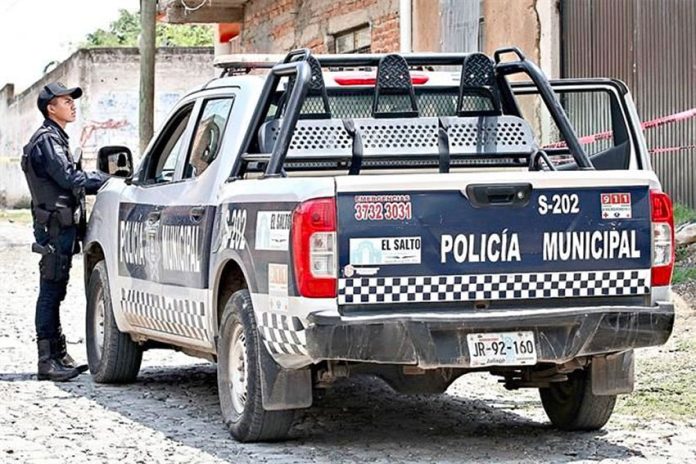
The government has ambitious plans for municipal cops, who will do more than just ride around in patrol vehicles.
The federal government has a new plan for municipal police forces that will take them into completely new territory.
The so-called “super” police will have more to do than just carry out patrols and chasing criminals caught in the act of committing an offense.
They are to be security forces with the capacity to prevent crimes, carry out investigations, analyze evidence and receive criminal complaints. The new model calls for the creation of investigative teams within municipal police departments that will include criminologists, psychologists and legal professionals.
In addition to investigating crimes, the teams will be responsible for identifying criminal patterns and analyzing offenders’ aims and motivations.
“[It’s] urgent that [municipal] police assume a proactive and much more strategic role in order to contain, prevent and reduce security problems . . .” states a document that explains the plan, part of a new National Police Model designed by the National Public Security System (SNSP) and approved last month by the National Security Council.
The SNSP – a division of the Interior Secretariat – proposes the construction or adaptation of municipal police stations so that officers are able to offer personalized attention to victims of crime in an environment that generates trust.
“At the very least, these spaces must include areas for medical, legal and psychological attention as well as a [children’s] play center,” the document says.
In addition to having the capacity to file criminal complaints at police stations, municipal officers should also be able to do so remotely, the SNSP said.
The police model document says that if municipal officers have the capacity to receive criminal reports, the quality and quantity of information they have about security problems will increase.
That, the SNSP argues, will enable municipal police to develop more effective anti-crime strategies and thus reduce the incidence of offenses in the communities in which they work.
Municipal police are generally considered the weakest link in the chain of Mexico’s security forces, and have been implicated in countless cases of corruption and collusion with organized crime.
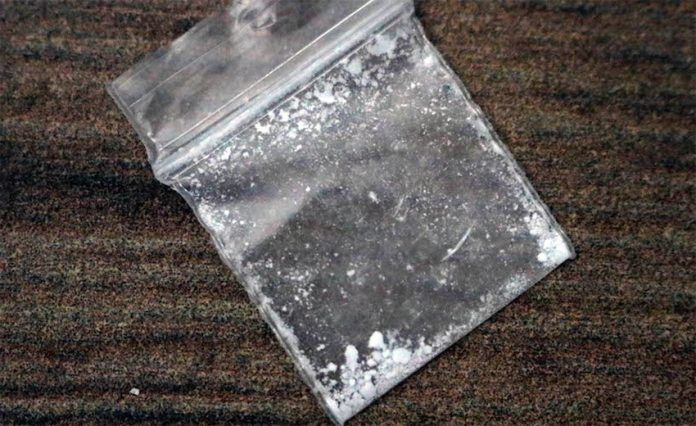
Two historic court rulings that allow the possession of cocaine for recreational and personal use could hasten the debate over decriminalizing drugs.
Víctor Octavio Luna Escobedo, an administrative court judge in Mexico City, made the decisions in response to injunction requests filed on behalf of the applicants by Mexico United Against Crime (MUCD), an organization that opposes the prohibition of drugs.
“Our objective with this and other cases has been to foster public discussion about drugs and force the reorientation of security policy. We want to promote different strategies through innovative means and up to now we’ve been successful,” said director Lisa María Sánchez Ortega.
The judge attached a range of conditions to his “authorization” for the two people to use cocaine.
Consumption is limited to 500 milligrams per day and the users must not drive vehicles, operate machinery or engage in employment while under the influence of the drug. They are also prohibited from using cocaine in public places or in the presence of minors and must not attempt to induce others to consume the drug.
Justifying his rulings, the judge said that cocaine can be used for a variety of reasons including “tension relief, the intensification of perceptions and the desire [to have] new personal and spiritual experiences.”
The injunction requests argued that prohibition of cocaine violates the constitutional right to “free development of personality.”
Luna’s rulings are backed by a report from the National Commission Against Addictions that says that cocaine consumption doesn’t pose a “significant risk to health, except in the case that it is used chronically and excessively.”
But the judge’s decisions could be overturned.
At the request of the health regulatory agency Cofepris, Luna’s rulings are to be reviewed by three collegiate court judges.
If the judges ratify the rulings, the decisions will stand. If they don’t, there is no legal recourse for the applicants. Another possibility is that the collegiate court will refer the matters to the Supreme Court.
But regardless of which court hands down the rulings, they will be definitive and not open to appeal, said MUCD lawyer Víctor Daniel Gutiérrez Muñoz.
Sánchez said that Mexico United Against Crime is not seeking a court declaration that the prohibition of cocaine is unconstitutional, as occurred with marijuana in February.
“We’re not pursuing massive injunctive relief and there won’t be a campaign similar to #CannabisConPermiso [Cannabis with permission] . . . This is the first time that, in the first instance, [an injunction request] has been resolved in the affirmative and what that tells us is that there is a different way to deal with the issue of drugs from the judiciary,” she said.
Sánchez explained that if more judges grant authorization to use cocaine, MUCD could consider calling on lawmakers to legalize it.
“Drug policy reform doesn’t start and end with cannabis, the rest of the markets should also be regulated,” she said.
“[The cocaine rulings] are a step to generate debate. We want to foster discussion about an issue that continues to be taboo and we have to work with [different] sectors of society. . . Current drug policy is a failure in all respects,” Sánchez said, charging that there is too much emphasis on prosecuting drug users rather than traffickers.
Before she was sworn in as interior secretary, Olga Sánchez Cordero said that then president-elect Andrés Manuel López Obrador had given her a “blank check” to explore the possibility of legalizing drugs as well as any other measures that could help restore peace to the country.
However, Congress hasn’t legalized any narcotics since the new government took office in December and violence has increased.
But the MUCD director said she has met with lawmakers of all political persuasions including representatives of the ruling Morena party and expressed confidence that debate about the impact of drugs on society – and court rulings – could ultimately lead to their decriminalization.
“The first rulings related to cannabis in other countries are 20 years old. However, there are no precedents of similar judicial decisions with other drugs. Mexico and its judicial rulings are setting important precedents for other courts,” Sánchez said.
According to the 2016-17 national drug and alcohol survey, 3.5% of Mexican adults have used cocaine, while 9.9% of respondents admitted to having used an illegal substance at least once.
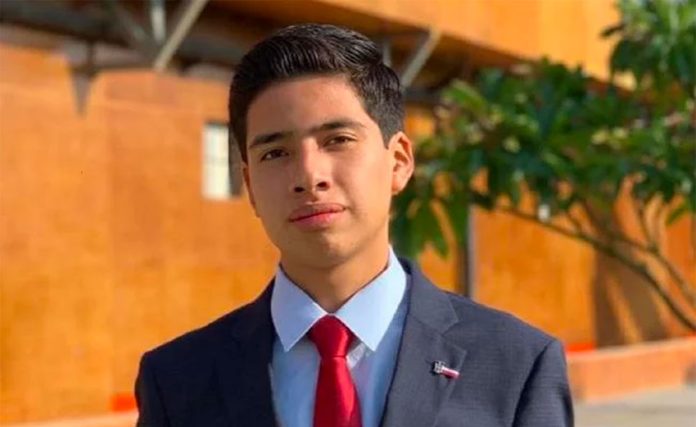
Oaxaca student Eliud Pizarro had a backup plan when he applied for admission at his dream university, the National Autonomous University of México (UNAM), but he needn’t have worried.
Not only was Eliud accepted by UNAM but also by the National Polytechnic Institute of Mexico (IPN), the Metropolitan Autonomous University (UAM) and the Meritorious Autonomous University of Puebla (BUAP) after applying to them all to hedge his bet.
In addition, the Benito Juárez Autonomous University of Oaxaca (UABJO) in his hometown of Oaxaca offered him a spot in its medical school.
“I trusted that if I studied hard, I could accomplish it,” he told the newspaper El Universal, “but I also wanted to have a safety option and chose those five schools.”
Throughout his public education, Eliud never considered himself exceptionally diligent, but his enthusiasm for mathematical physics allowed him to get good grades.
The son of teachers and motivated by his brother’s engineering degree at IPN, Eliud is one of the 15,499 students accepted by UNAM this year. A total of 153,000 applied.
He is also one of an average 500 Oaxacan students who leave their home state each year to further their studies in Mexico City, according to the National Association of Universities and Higher Education Institutions (ANUIES).
“I decided to apply for the economics program because it is a subject that has interested me for many years. I want to develop a career in the private sector, but I’d also be interested in public office,” said Eliud.
“In the case of the medical degree, that field had always appealed to me,” he added.
Four of the five universities that accepted Eliud are the most sought-after schools in the country, according to national rankings. Only 30% of prospective students pass the entrance exams.
Now a couple of weeks into his first semester, Eliud is happy and enjoying his new life.
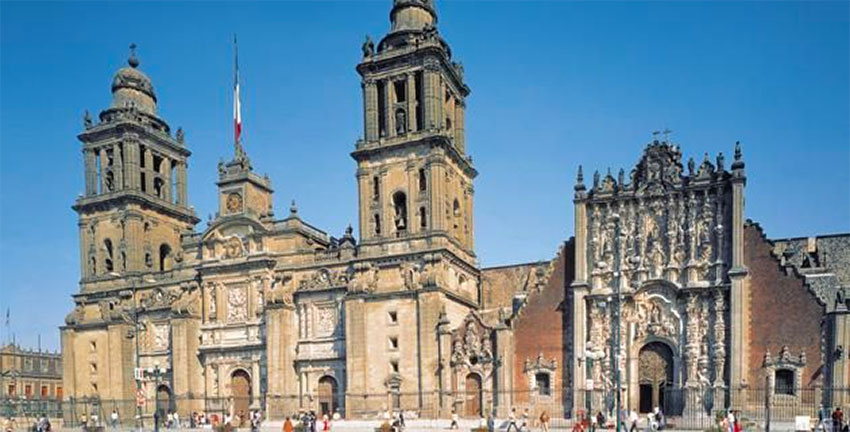
The original plan for the Mexico City Metropolitan Cathedral, dated and signed in 1569, will be sold at auction.
The document is attributed to architect Claudio de Arciniega, who drew up the plan after the building’s construction was mandated by King Philip II of Spain.
Morton Auctions documents specialist Antonio Villa said the 450-year-old plan belongs to a private collector.
“Because of its importance, it has been shown in two exhibitions: one titled Medieval Spain and the Legacy of the West in 2005 in the National Museum of History, in Chapultepec Castle; and the other was the 2015 Michaelangelo exhibition in the Palace of Fine Arts titled An Artist Between Two Worlds,” he said.
Drawn on paper in sepia and grey ink, the historical plan bears the legend: “This is the drawing of the church cathedral that by order of his majesty will be built in this city.”
Mexico City’s Metropolitan Cathedral, whose original architectural plan will be auctioned.
Villa noted that “there are a few flaws, scratches, and folds that mark the document, as well as light humidity stains in the margins, for which it was restored in order to be shown in the exhibitions of 2005 and 2015.”
Morton Auctions said that given its documentary and historical importance, the architectural plan will have an opening price of 1.5 million to 2 million pesos (US $76,000-$101,000).
In the upper left hand corner of the 57 by 42-centimeter piece of paper is the signature of Secretary of the Inquisition of Mexico Pedro de los Ríos, and on the reverse, the signature of scribe and notary Sebastián Vázquez.
Villa noted that there were various attempts to build the cathedral, but the one that stands today was based on the plan that will be auctioned.
“The plan was modified in 1622, as it was originally designed to have four towers and they ended up only building two,” he said. “They wanted to build a lavish cathedral like the one in Seville, with seven naves, but the high cost and the muddy ground wouldn’t allow for it, so they ended up erecting a smaller church with five naves.”
The plan is one lot in an auction of travelers’ and explorers’ books and maps and other items to be sold by Morton Auctions in Mexico City on August 29.
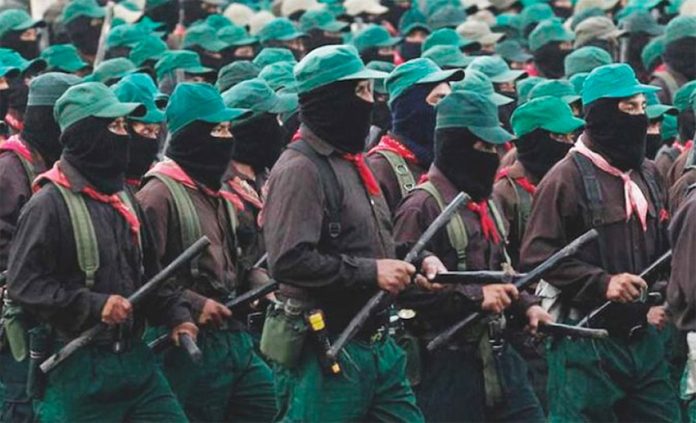
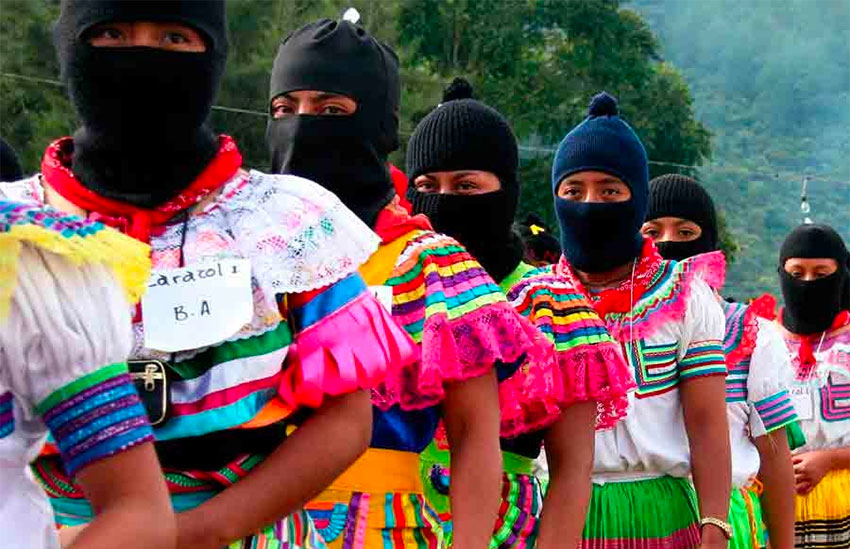
The Zapatistas are on the move in Chiapas, extending their control into another 11 areas of the state.
The Zapatista Army of National Liberation (EZLN) announced in a statement on the weekend it will create 11 new caracoles, or autonomous zones, in the southern state.
Zapatista leader Subcomandante Moisés described the extension as “exponential growth that allows us to break the blockade again,” referring to the Zapatistas’ claim that they have been fenced in by the federal government.
The EZLN already has five caracoles in Chiapas as well as 27 rebel Zapatista autonomous municipalities. The Zapatista army generally doesn’t allow state security forces or government inspectors to enter their communities and children attend schools with their own educational system.
The expansion will give the army 43 rebel areas.
President López Obrador, who has a strained history with the rebel group best known for staging an uprising on January 1, 1994 – the day NAFTA took effect, said on Monday the expansion was “welcome.”
“Go ahead, because that means working to benefit the villages and the people,” he said. “The only thing we don’t want is violence.”
The 11 new autonomous zones, with names including “Esperanza de la Humanidad” (Hope of Humanity), “Floreciendo la semilla rebelde” (The rebellious seed blooms) and “Ernesto Che Guevara,” are located in the municipalities of Ocosingo, Chicomuselo, Motozintla, Amatenango del Valle, Tila, Chilón and San Cristóbal de las Casas.
Despite López Obrador’s reaction to the EZLN announcement, some of the new autonomous zones are likely to be controversial, the Associated Press reported.
One of the new caracoles is to be located in Nuevo Jerusalén, a town amid the ecologically sensitive Lacandon jungle.
Zapatistas have said in the past that nature and farming can co-exist in and around their communities.
However, experts say that slash-and-burn agriculture, the rearing of cattle and thin jungle soil make human settlement and environmental conservation incompatible.
The Zapatistas’ expansion will bring to 43 the number of rebel areas they hold.
The Zapatistas’ announcement came just days after former EZLN leader Subcomandante Galeano (formerly Subcomandante Marcos) said in another statement that a music festival is being planned to protest against the government’s infrastructure projects for the south of the country, which include the Maya Train, the Dos Bocas oil refinery and the Isthmus of Tehuantepec trade corridor.
The rebel army threw down the gauntlet last New Year’s Eve at a ceremony marking the 25th anniversary of the its 1994 uprising, when Subcomandante Moisés outlined the Zapatistas’ commitment to opposing the government.
“We are going to fight. We are going to confront [them]; we are not going to allow [López Obrador] to come through here with his destructive projects,” he said.
In the statement issued on the weekend, Moisés said the “neoliberal mega-projects” will wipe out entire towns, destroy nature and turn the heritage of indigenous peoples into fat profits for investors.
Although the president expressed his respect for the Zapatistas during a visit to Chiapas last month that respect wasn’t reciprocated.
Moisés called the president “the new overseer” and charged that persecution and bloodshed are continuing under his rule.
Since the new government took office on December 1, a dozen members of the National Indigenous Congress and Indigenous Government Council have been murdered, the EZLN leader said.
Foreign direct investment (FDI) in Mexico rose 1.5% in the first half of the year to US $18.1 billion, preliminary figures show.
The Secretariat of the Economy (SE) said in a statement that investment of US $24.06 billion flowed into the country between January and June, while FDI worth US $5.96 billion was lost.
The net FDI result is $258 million higher than the preliminary investment figure reported for the first six months of 2018, which was $17.84 billion.
The SE said that both reinvestments and new investments contributed to the increase. It stressed that the figures are preliminary and could be subject to adjustments.
The ministry said that the FDI recorded in the first half of the year came from 3,104 companies, 1,558 trust agreements and 18 private foreign investors. Just over three-quarters of the total came from reinvestment and just under one-quarter was new investment.
The United States was the largest FDI source country, contributing 37.9%.
Canada, Spain, Germany and Belgium were the next biggest investors, providing 15.4%, 11.1%, 6.5% and 4.1% respectively. The remaining 25% came from other countries, the SE said.
The manufacturing sector was the largest recipient of foreign investment, attracting 42.8% of the total, or around US $7.75 billion.
The commercial sector attracted 12.9%; the financial and insurance industry got 9.9%; mining drew in 5.9%; the electrical energy, water and gas sector received 5.5%; and the media industry took in 5.4%.
The release of the FDI data came four days after the Bank of México cut interest rates for the first time in five years, citing slowing economic growth and lower inflation.
The bank said in a statement that it is important to “promote the adoption of measures that foster an environment of confidence and certainty for investment.”
The Mexican economy narrowly avoided entering into a technical recession after recording growth of just 0.1% in the second quarter of 2019. The economy contracted 0.2% in the first quarter.
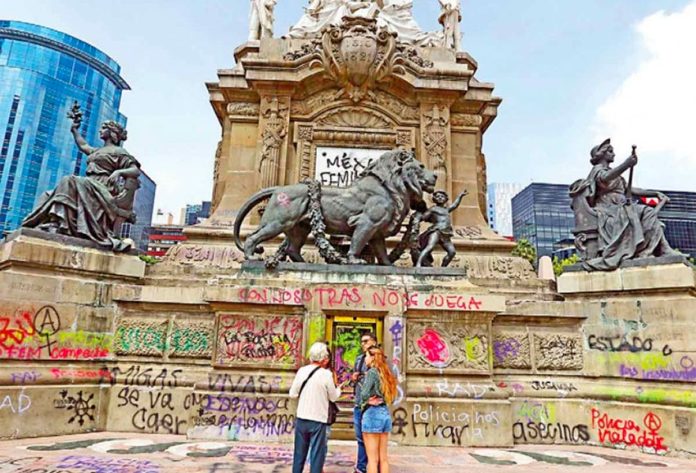
Graffiti damage at the Angel of Independence in Mexico City.
Repairs to Mexico City’s Angel of Independence monument, damaged during a protest on Friday, will cost between 15,000 and 30,000 pesos (US $760-$1,500) per square meter, according to an estimate by restorer Luis Campos Velazco.
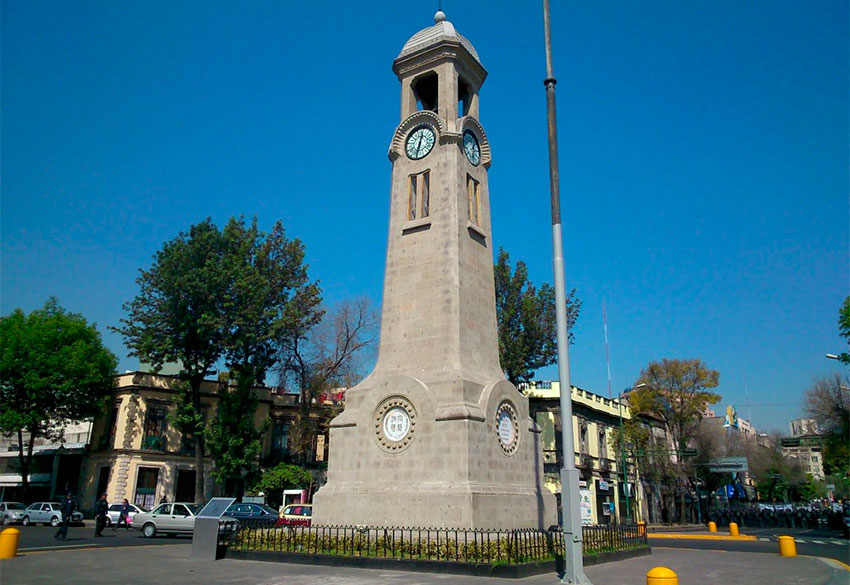
Campos, who participated in the restoration of the Chinese Clock on Bucareli street in 2010 and 2011, said the cost will depend on how badly the monument’s cantera and marble were affected.
The extent of the damage will be known when restorers from the National Center for Conservation and Registry of Artistic Property Heritage (Cencropam) release their report.
“The restoration will be very delicate, take a lot of time, and be very costly. That’s the opinion I have from what we’ve seen in the past, for example, from when I restored the Chinese Clock,” said Campos.
The Chinese Clock was restored by Luis Campos Velazco.
“The damage that the Angel of Independence sustained is permanent,” said Campos, “because the paint penetrated some millimeters into the centuries-old stone.”
From his experience, it is not advisable to use abrasives to remove the paint.
“The first thing to do is carry out a study to know what types of materials are in the paints used and what the restorers think is best to clean the affected areas. Generally, when they begin to restore a monument, the first step is to wash it with Canasol, a non-ionic soap . . .” said Campos.
Meanwhile, the deputy director of the artistic heritage department of the Institute of Fine Arts (INBAL) told the newspaper Milenio that in order to restore the Angel of Independence, the institute will work in coordination with federal and Mexico City authorities.
Dolores Martínez said the exact cost, extent of the damage and the number of specialists required to clean and restore the monument are still unknown.
She also implied there will be finger-pointing for the damage: “The Secretariat of Culture and the administration of INBAL endorse freedom of expression, and of course support actions to eradicate all types of violence against women.”
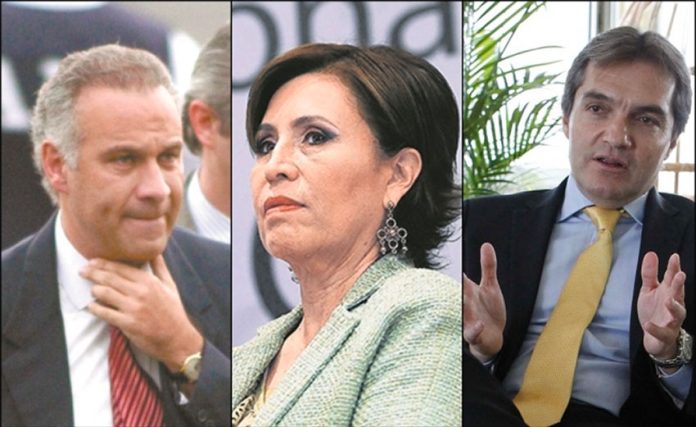
The arrests of three high-profile figures who played a part in a 15-year-old scandal designed to damage then-Mexico City mayor and presidential aspirant Andrés Manuel López Obrador have triggered speculation that the president is taking revenge.
The first to fall was Juan Collado. The lawyer for former president Enrique Peña Nieto was arrested on July 9 while dining at a high-end restaurant in an affluent Mexico City neighborhood with another of his famous clients, Pemex workers’ union boss Carlos Romero Deschamps.
Collado faces charges of involvement in organized crime and money laundering and a judge ordered preventative custody as he awaits trial.
Rosario Robles was next. A judge ruled last Tuesday that the former cabinet secretary must stand trial on corruption charges related to the so-called “Master Fraud” scandal in which billions of pesos in public funds were diverted via allegedly phony contracts with universities and shell companies.
Robles too is in prison as prosecutors prepare the case against her.
Then came the arrest of Carlos Ahumada. The Argentine-Mexican businessman was detained in Buenos Aires on Friday by Argentine authorities acting at Mexico’s request.
The federal Attorney General’s Office alleges that Ahumada failed to pay income taxes of just under 1.5 million pesos (US $75,000 at today’s exchange rate).
Under the terms of an extradition treaty between Mexico and Argentina, the government has a period of two months to complete the documentation required to request the businessman’s extradition.
However, an Argentine judge ordered the release of Ahumada on Sunday, ruling that he is not required to remain in custody as he awaits the outcome of any request.
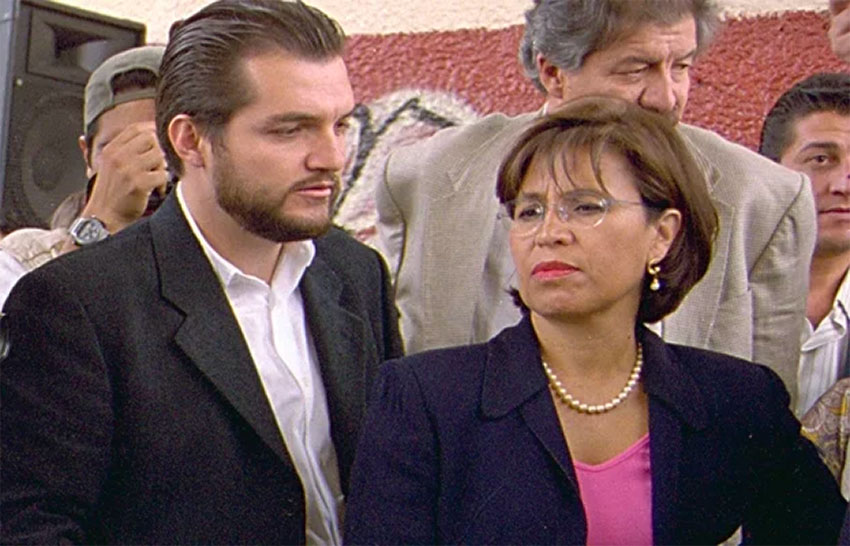
Although the high-profile arrests were for unrelated crimes, the detainees are no strangers to each other: Robles and Collado were once in a romantic relationship, while all three were involved in the so-called videoescándolos, or video-scandals, plot that was designed to damage the electoral chances of López Obrador in the 2006 presidential election.
Ahumada and Robles during better days.
In March 2004, the broadcaster Televisa aired footage secretly filmed by Ahumada which showed him handing over a wad of cash – US $45,000 – to René Bejarano, a Democratic Revolutionary Party (PRD) politician and close confidante of López Obrador. Bejarano served as the now-president’s personal secretary during the first two years of his tenure at the helm of the Mexico City government.
Other videos showing PRD politicians receiving or asking for cash from Ahumada were also broadcast by Televisa, while López Obrador’s finance secretary in his Mexico City administration, Gustavo Ponce, was filmed gambling in a Las Vegas casino.
The implication was that if people close to mayor López Obrador were corrupt, he was too.
According to Ahumada, Collado played an important role in having the videos aired on Televisa.
Bejarano said that Robles – who preceded López Obrador as mayor of Mexico City and served as national president of the PRD from 2002 to 2003 – ordered him to receive the money from her then lover Ahumada to finance PRD campaigns in the 2003 mid-term federal elections.
López Obrador, who represented the PRD in the 2006 election but narrowly lost to Felipe Calderón, accused former president Carlos Salinas de Gortari and National Action Party (PAN) senator Diego Fernández de Cevallos of being the architects of the video-scandals plot.
According to Ahumada, the two men paid 68 million pesos for the videos. The businessman fled to Cuba after theywere screened but was extradited to Mexico in April 2004 and spent the next three years in jail.
In 2014, Ahumada initiated legal action against the PRD, claiming that the party owed him more than 500 million pesos because it never paid back the “loans” he provided. After his arrest, Ahumada said in an interview that Robles threatened to do “everything judicially and extrajudicially possible to destroy” him and his family if he continued to insist on cashing a promissory note issued by the PRD.
After yet more damaging footage surfaced in late 2005, López Obrador – who by that time was a presidential candidate – said the videos had nothing to do with him.
“You are never going to see me in a video where I am receiving money or someone is receiving money in my name,” López Obrador said in November 2005. “It has been demonstrated that I am totally clean.”
Fast forward to August 2019, and some political experts say that the three recent arrests look like an act of revenge on the part of the president.
José Antonio Crespo, a professor at the Center for Research and Teaching in Economics, said it appears that López Obrador has adopted an old Institutional Revolutionary Party (PRI) tactic of going after past or present political enemies using the long arm of the law.
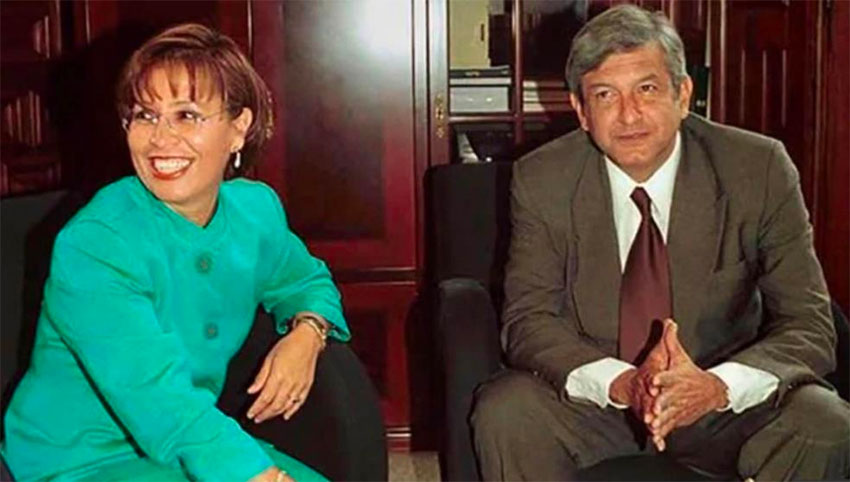
Robles and López Obrador in 2000.
“If [the arrests] – which it just so happens are of people with whom López Obrador has a score to settle – remain as isolated cases, it will be the same scheme that we saw in the PRI years,” he said.
The PRI ruled Mexico uninterruptedly for more than 70 years until it was defeated in the 2000 presidential election by the PAN, which held power for the net 12 years.
Peña Nieto led the PRI back to power in 2012 and Robles reemerged as a force on the political scene, serving as secretary of social development, and later secretary of agrarian development and urban planning.
José Santillán, a professor at Tec. de Monterrey, also charged that the arrests appear to be an act of revenge given that Collado, Robles and Ahumada were all involved in the video-scandals.
He said that Robles’ case is especially suspicious because the judge who remanded Robles in custody, Felipe de Jesús Delgadillo Padierna, is the nephew of PRD lawmaker Dolores Padierna, who is married to René Bejarano.
PAN national president Marko Cortés described the arrest of Robles and Ahumada as revenge and political persecution by the López Obrador administration.
The president, as expected, rejects the accusations.
López Obrador said last week that he gave no order to arrest Robles, while yesterday he rejected any suggestion that the detention of Ahumada was an act of revenge.
“He himself confessed . . . that he met with [Carlos] Salinas and Diego Fernández de Cevallos to damage me, that’s not an invention. However, I don’t have any intention to take revenge on anyone . . .”