The IMSS hospital where a woman was misdiagnosed and died.
The National Human Rights Commission (CNDH) has ordered that the Mexican Social Security Institute (IMSS) pay reparation in the case of a misdiagnosis that led to the death of a 51-year-old patient in June 2015.
The death occurred at the La Quebrada IMSS General Hospital in Cuautitlán Izcalli, México state, after the female patient was diagnosed with acute bronchitis. In reality she was suffering from a heart attack, the CNDH investigation found.
The mistaken diagnosis and inadequate treatment were the consequences of medical staff neglecting to conduct a full protocol of studies, resulting in her death.
“It has been proven that three people — public servants — violated the human right of protection of health, leading to the loss of a life,” the commission ruled.
It also found that the patient’s file was not compiled correctly, as physicians included incomplete medical notes.
The National Disaster Prevention Center (Cenapred) today raised its alert for the Popocatépetl volcano from yellow Phase 2 to yellow Phase 3 due to increased volcanic activity.
Cenapred said in a statement issued at 11:00am today that 61 exhalations had occurred at the volcano during the past 24 hours and warned people to not go near the volcano and especially the crater due to the danger of falling ballistic fragments.
The yellow Phase 3 alert is the highest warning level before the red phase in which people living near the volcano are advised to be ready to evacuate. Around 275,000 people live within a 30-kilometer radius of Popocatépetl, which last recorded a major eruption in the year 2000.
Following today’s elevation of the alert level, Civil Protection chief David Romero urged citizens to remain calm, explaining that the increased activity at Popocatépetl represented a “normal change in the volcano.”
However, he added that authorities will carry out inspections of temporary shelters and evacuation routes to ensure that they are ready should the alert level be raised again. A 12-kilometer “security radius” has already been implemented.
Civil Protection authorities in Puebla warned that falling ash could affect the municipalities of Tochimilco, Atzitzihuacan, Huaquechula, Tepemaxalco, Acteopan, Cohuecan, Tepexco, Tepeojuma and Izúcar de Matamoros over the next 12 hours.
In the case of ashfall, Cenapred recommends that people cover their noses and mouths with a handkerchief or face mask, clean their eyes and throats with water, avoid the use of contact lenses to reduce eye irritation and close windows in their homes.
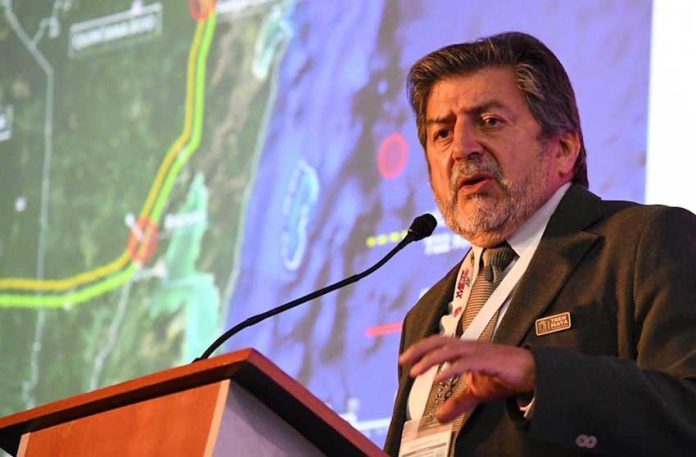
The first contracts have been signed for the Maya Train project, the general manager of the National Tourism Development Fund (Fonatur) announced yesterday.
The consultancy Steer Davies Gleave has been engaged to prepare a master plan for the 1,500-kilometer passenger rail service that will run between Cancún, Quintana Roo, and Palenque, Chiapas.
Fonatur’s Rogelio Jiménez Pons said contracts have also been signed with the professional services firms Deloitte and PriceWaterhouseCoopers. The former will be involved in organizing the real estate investment trusts and the latter will prepare a cost-benefit analysis.
The contracts were signed without going to tender due to a short timeline, Jiménez said, but bids will be sought on other parts of the project that will be undertaken this year.
He said that completion of the initial steps, including the master plan, financial planning, environmental impact studies and consultations with indigenous communities, will require a 1-billion-peso (US $51-million) investment.
The train’s route has been extended more than once since it was first announced, and Jiménez announced another during his presentation about the train at Exporail 2019, an international conference of the railway industry held this week in Mexico City.
The line will be extended some 30 kilometers to reach the port of Seybaplaya, Campeche.
The government has estimated the entire project will cost between 120 billion and 150 billion pesos, although a think tank warned last week that deficiencies in planning could result in a cost 10 times higher.
The Mexican Institute for Competitiveness report was based on an analysis of 23 similar rail projects around the world, including the still-incomplete Toluca-Mexico City commuter rail line.
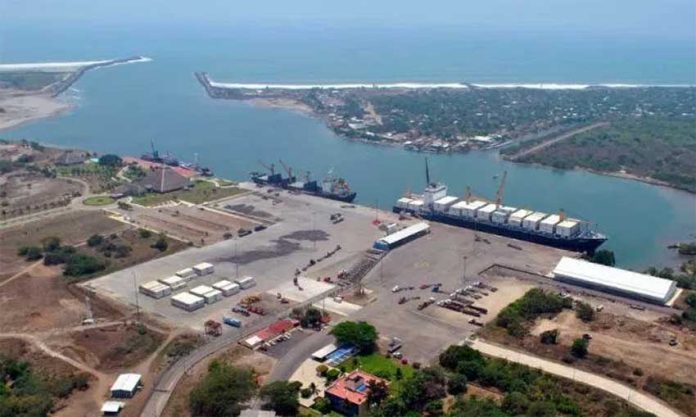
Puerto Chiapas, one of the Special Economic Zones.
The private sector has spoken out against the possible elimination of the country’s Special Economic Zones (SEZs), warning that there is a risk of losing billions of dollars of investment.
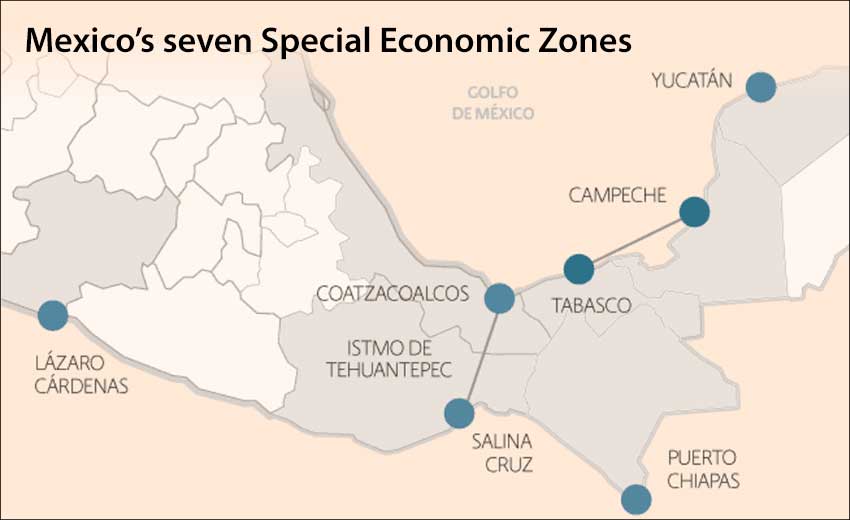
The previous federal government created seven SEZs in Puerto Chiapas, Chiapas; Salina Cruz, Oaxaca; Lázaro Cárdenas-La Union, Michoacán and Guerrero; Coatzacoalcos, Veracruz; Seybaplaya, Campeche; Dos Bocas, Tabasco; and Progreso, Yucatán.
Each zone offers generous financial incentives to attract investment including a company tax rate of zero for a period of 10 years.
Some companies have already committed to an investment of US $3 billion and at least 83 others have expressed interested in business ventures worth an additional $8.6 billion that would create tens of thousands of jobs.
Over the next 15 to 20 years, investment of US $42 billion had been predicted by the former head of the federal agency responsible for the SEZs, Gerardo Gutiérrez Candiani.
The economic zones are intended to encourage economic development in poorer regions. el economista
But his successor said Tuesday that the government is analyzing the viability of maintaining the zones and will make a decision on their future in two months.
Rafael Marín Mollinedo said the Secretariat of Finance (SHCP) has taken the view that it will be more beneficial to concentrate government resources on the establishment of a trade corridor on the Isthmus of Tehuantepec.
“There are experts who have come to speak to us about the SEZs, the World Bank, the Inter-American Development Bank . . . [who say] establishing one SEZ is good, two maximum, but seven? . . . What has to be done is completely develop one area as will be the case with the Isthmus of Tehuantepec,” he said.
Finance undersecretary Arturo Herrera appeared to indicate that the government has already made the decision to cancel the SEZs.
“The [special] economic zones haven’t been working. Little by little, we’re going to move to another model . . . or we’re going to seek different development mechanisms,” he said.
Enoch Castellano Férez, president of the National Chamber for Industrial Transformation (Canacintra), responded to the comments by saying that cancelling the SEZs would be bad news for Mexico’s poorest states because they will lose a huge amount of private investment.
He also contended that the government has a misguided view about how much it will need to spend on the zones.
“I believe that it’s not being measured well. We’ve spoken about it with some officials, [and] I have the impression that they believe that a lot of investment needs to be put into the SEZs,” Castellano said.
“There will be some that do need that but it’s very clear that in Coatzacoalcos, Salina Cruz, Lázaro Cárdenas and even Tapachula [Puerto Chiapas], the investment [required] from the government is a lot less than any of the other projects of this administration,” he added.
Former SZE chief Gutiérrez, who used to be head of the Business Coordinating Council (CCE), told the newspaper Milenio that a lot of investment projects planned for the SEZs are on the verge of beginning and that the government would be unwise not to take advantage of the economic initiative.
He pointed out that the SEZs were designed to create jobs and attract investment and thus close the economic gap that exists between the south and southeast of Mexico and other regions of the country.
Business people and associations in Michoacán and Veracruz also rejected the possible elimination of the SEZs and urged the government to reconsider its intentions.
Jesús Melgoza, secretary of economic development in Michoacán, said he will meet next Monday with his counterparts from all of the states with designated SEZs in order to develop a formal proposal that they will submit to the federal government to advocate for the continuation of the zones.
Michoacán Governor Silvano Aureoles said that if the government cancels the SEZs, it would be shooting itself in the foot, adding that he didn’t understand why “many officials of the current government want to destroy everything.”
Chiapas Economy Secretary Yamil Melgar Bravo said the SEZs will be a trigger for industrial development and expressed confidence that they won’t be cancelled. The SHCP is simply reassessing how to move forward with their development, he said.
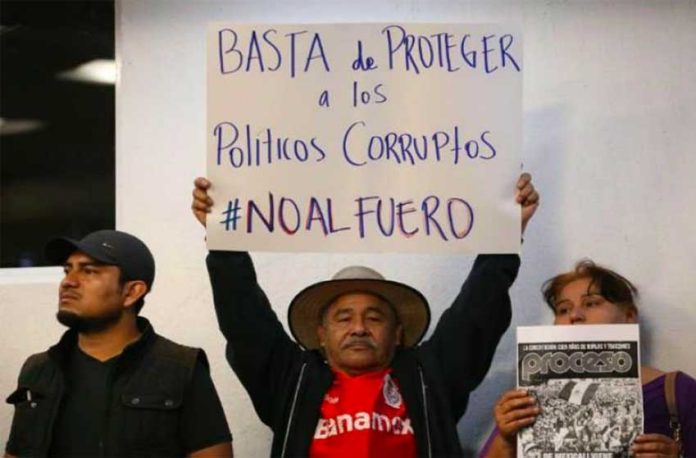
'No more protection for corrupt politicians,' reads the sign of a supporter of eliminating the fuero.
President López Obrador expressed satisfaction this morning with the Senate’s approval of two constitutional amendments that end immunity from prosecution for the president, senators and deputies by eliminating what is known as the fuero,
Yesterday, a nearly unanimous vote by 111 senators approved the amendments, under which the president and members of Congress can be held accountable for treason, corruption, election fraud and other serious crimes such as homicide, rape, kidnapping, involvement with organized crime and human trafficking.
Only one senator voted against the initiative.
The president called the decision, which he first proposed to Congress in December, a landmark.
“This has not appeared [in the law] since the constitution of 1824. With these amendments, after being ratified by the House of Deputies and state congresses, it will be possible to bring criminal charges against a president.”
The president urged lawmakers in the lower house to seize the opportunity to expand accountability even further.
“Since this reform is going on to the Chamber of Deputies, I hope they will add [a clause] so that state governors can be held accountable in this way, too, so that we can put an end to corruption and impunity.”
After a vote by deputies the amendments will need approval by a simple majority of the states, or 17 of the 32, before becoming law.
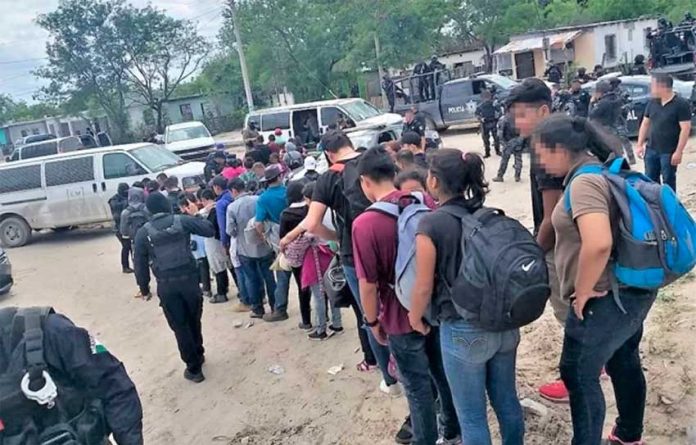
Armed civilians fired on security forces when they detained migrants Saturday in Tamaulipas. One civilian died, and 107 Central Americans were turned over to immigration agents.
A massive cohort of prospective migrants dubbed the “mother of all caravans” is forming in Honduras, the federal interior secretary said today.
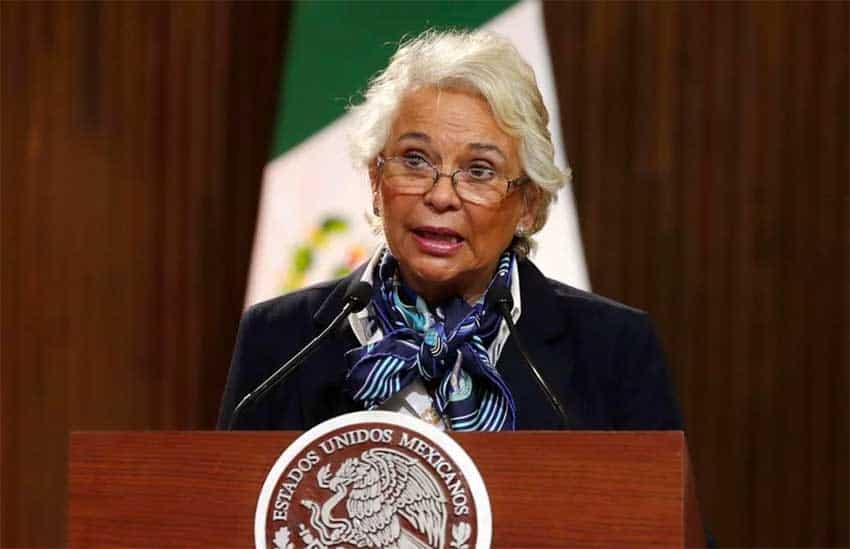
“We are aware that a new caravan is forming in Honduras that they’re calling the mother of all caravans . . . and which could be [made up of] more than 20,000 people,” Olga Sánchez Cordero said.
She didn’t offer any details about when the caravan might leave Honduras to start the journey towards Mexico and on to the United States’ southern border.
The interior secretary told reporters that migration and specifically the formation of the huge caravan was a central issue in talks she held yesterday with United States Secretary of Homeland Security Kirstjen Nielsen in Miami, Florida.
Sánchez said Nielsen told her that United States authorities returned at least 76,000 migrants to their countries of origin in February and expect to deport more than 90,000 this month and a total of 900,000 by the end of the year.
The Department of Homeland Security (DHS) said in a statement that Nielsen and Sánchez “discussed ways the U.S. and Mexico can work together to address irregular migration and the record levels of illegal entries at the U.S. southern border.”
Thousands of migrants fleeing poverty and violence in Honduras, Guatemala and El Salvador have entered Mexico at the southern border since late last year as part of several large caravans.
Despite the federal government issuing more than 10,000 humanitarian visas that allow migrants to live and work in Mexico for up to 12 months, most caravan members have chosen to travel to the United States border to seek asylum.
Yet another migrant caravan made up of around 2,500 Central Americans and Cubans is currently traveling through Chiapas after leaving Tapachula last weekend.
Caravan members walk long distances through Mexico in often hot conditions but also try to hitch rides to reach towns on the well-trodden migrant route more quickly.
Sánchez said today that there is evidence that criminal groups are transporting migrants from Tapachula to the northern border in trucks and charging each person thousands of dollars for the service.
Interior Secretary Sánchez.
“. . . Imagine the size, the dimension of this migration flow, which is sometimes human trafficking by organized crime, the business of this trafficking . . . is several billion dollars,” she said.
“. . . Each migrant represents between US $2,000 and $6,000 for them . . .” Sánchez added.
The interior secretary said that authorities will seek to better patrol the entire 1,020-kilometer stretch of the southern border in order to contain flows of people entering Mexico illegally. She pointed out that there are 370 illegal entry points and just 12 official ones.
However, Sánchez said there won’t be any move to militarize the border.
Instead, migration checkpoints manned by Federal Police and Civil Protection personnel will be set up on the Isthmus of Tehuantepec to halt migrants who have entered Mexico illegally.
“. . . We have to make a response because there cannot continue to be hundreds of thousands of migrants passing through Mexico and arriving at the northern border,” Sánchez said.
She added that as part of the strategy to curb migration the government will no longer issue long-term humanitarian visas.
Irineo Mujica, a member of a migrant advocacy group that accompanies migrants as they travel through Mexico, said Mexico had stopped granting humanitarian visas “to comply with the expectations of [United States President Donald] Trump.”
However, Sánchez said Mexico itself is struggling to cope with so many migrants currently in the country, pointing out that there is an overwhelming number of asylum seekers in shelters in northern border cities.
Due to the United States government’s introduction of a “metering” system that limits the number of asylum requests immigration authorities will hear on a daily basis, migrants face long waits in border cities, many of which have high rates of violent crime.
Even after they have filed claims for asylum, there is no guarantee that migrants will be allowed to wait in the United States for their cases to be heard at immigration courts – as was previously the case – due to the introduction and subsequent expansion of the so-called “Remain in Mexico” plan.
The Secretariat of Foreign Affairs (SRE) said earlier this month that “the Mexican government doesn’t agree with this unilateral measure implemented by United States authorities” but continues to receive people anyway for “humanitarian reasons.”
Secretary Nielsen traveled to Tegucigalpa, Honduras, today to meet with officials from that country as well as Guatemala and El Salvador.
The DHS said Nielsen and Northern Triangle security ministers have been working on “a first-of-its-kind memorandum of cooperation – or ‘regional compact’” – that “focuses on stemming the migration crisis at its source, including preventing the formation of new migrant caravans that set out to reach the United States.”
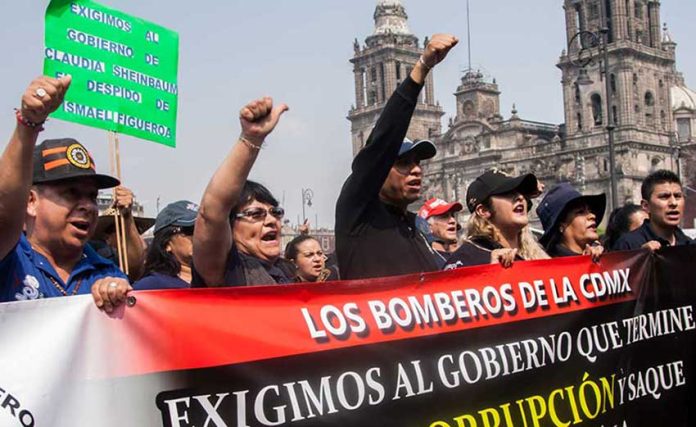
Mexico City firefighters protest earlier this month to demand the resignation of union leader Ismael Figueroa.
Evidence has surfaced that the executive of the Mexico City fire department under the previous city government had administrative responsibility for the sale of 330 jobs.
The city’s director of administrative oversight, Juan José Serrano Mendoza, said in an interview that a special investigation clearly established that the department sold jobs to unqualified candidates despite the presence of clear hiring standards.
The department’s general manager, administrative director and the human resources subdirector are implicated, Serrano said.
Also under the microscope is firefighters’ union leader Ismael Figueroa Flores, who was recorded last October saying that the profiles and health of new hires were not important in the hiring process. At the same time, various fire department employees revealed that they had paid between 150,000 and 200,000 pesos (US $7,700 to $10,300) in exchange for key positions within the department.
“The probe is focused on the fact that these jobs were handed out outside the law. . . . they were warned from the beginning that their hires were not competent, nor were they hiring them in accordance with guidelines,” Serrano said.
The purpose of the probe was to look into administrative practices, and was not a witch hunt, he explained.
“The best example is the case of the firefighters. If the fire chief is involved or not [is beside the point]; this is actually about reviewing the hiring process . . .”
Last November, union leader Figueroa and two firefighters were attacked by a gunman in a restaurant in La Condesa. The shooter later confessed that he had attacked the three men because he was not given the high-ranking position within the fire department for which he had paid 120,000 pesos.
Mexico City Mayor Claudia Sheinbaum said the majority of those who paid for positions at the department never received them.
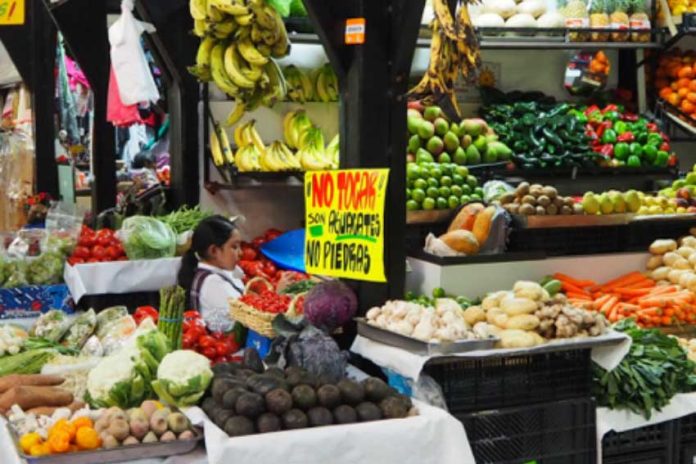
Keep your hands off the avocados at El Regreso de Jr. Díaz, says the sign: they're not stones.
Fresh-cut flowers, fried fish, incense and salon perms – the smells of the neighborhood market. Put a 100-peso bill to your nose, it’s all there.
The newest Marvel movie plays on a flat screen, while a little girl in a plaid skirt works on her homework below, eyes jumping between screen and page. Butchers smack their cleavers into chicken and beef. Sewing machines and blenders whir. Commerce.
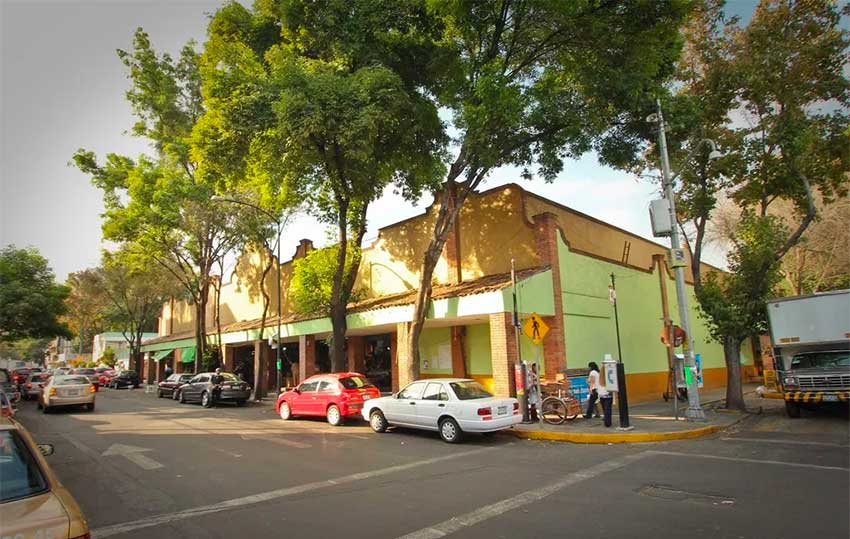
Right at the center of the blissful, upper-middle-class, family-oriented neighborhood of Escandón, just below Jardín Morelos Park, sits Mercado Escandón.
A trip to the Escandón Market is worth it for the regular stuff you might need throughout the week, if only to avoid the pain and confusion of a nearby Soriana Hiper – where first you lose your cart, then you lose your mind.
At the market entrance on Martí, friendly Emilio Flores Romero has been selling children’s costumes at his booth with no name for 20 years.
Escandón Market in Miguel Hidalgo.
He has a wide selection and says people come from all over to buy, “for birthday parties or just because they like to dress up,” he says. “Right now we’re selling a lot of animals and butterflies, because Día de la Primavera [the first day of spring] is coming up.”
Plumbers and handymen have offices at Mercado Escandón. There are flower arrangers, toy salespeople, religious goods and free parking! It’s downright wholesome. Escandón is the only market I’ve ever been to that gives you a city-issued legal receipt for your five-peso bathroom purchase.
Just don’t forget that this is Mexico, and the vendors are still lamenting the loss of 40 million pesos that the government allocated for renovations in 2013, half from the Office of Economic Development (SEDECO) and half from the borough of Miguel Hidalgo.
And what have they done? Barely fixed the roof? Improved the parking garage? Where did the money go? Many point the finger at then delegate and current mayor Víctor Hugo Romo, claiming he simply failed to use the money for improvements.
The roof still leaks in places, and there’s a pretty major crack in the ceiling of the bottom level of the parking garage.
Unfortunately, there are no improvements in sight. Yet, as they continue to fight alleged corruption, vendors continue to do what appears to be a brisk business.
La Perlita has the best flautas in the market and you can pay with gasoline vouchers.
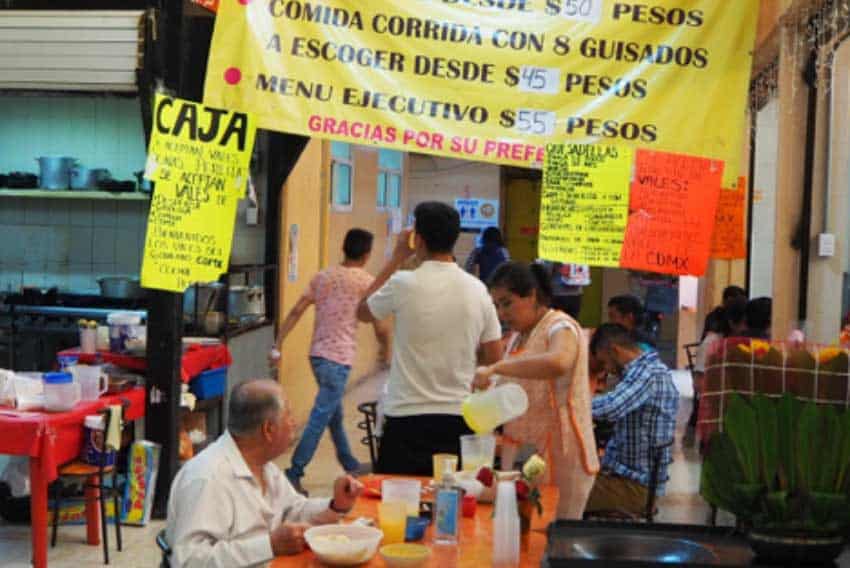
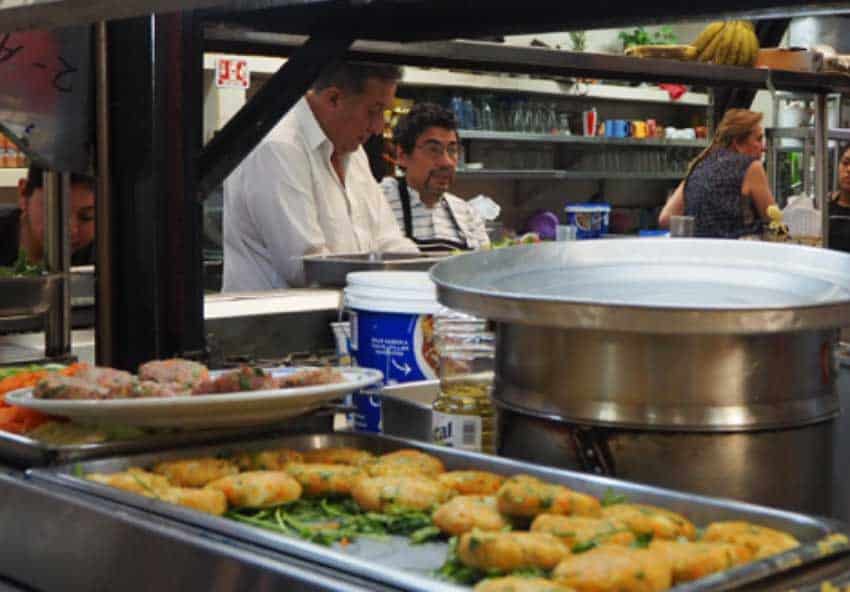
At the popular lunch stand Los Tucanes, known for enchiladas, croquettes and huge chiles rellenos, where a full meal with an agua del día, consommé, rice and salad runs 50 to 70 pesos (US $2.60-$3.60), I meet Miguel Ángel Sánchez, who’s worked at the market for 32 years.
His family has been in Escandón for generations, and his father was one of the founders of the market when it began in 1958. “My dad sold fruits and vegetables before the market was here. People sold out of carts or on blankets. There weren’t any supermarkets, so people came together to sell in this spot.”
Undoubtedly the most popular restaurant, that can be quite the party on weekends, is Marisquería Playa Escondida. Their marlin, shrimp and scallop cocktails are the visible favorites, but the encrusted tuna or grilled salmon steaks are probably among the best you’re likely to find.
Escondida is one of the few consistently full counters and the only place you’re likely to see anyone drinking a michelada on a Monday.
There are always a number of locals enjoying the wares, but the nearby Hotel & Villas Patriotismo brings in a steady line of tourists from Europe and South America.
Mercado Escandón isn’t the weirdest or fanciest of Mexico City’s markets. In fact it’s the market’s ordinary, no-nonsense posture that makes it so enjoyable.
Miguel Ángel Sánchez takes a quick break after the lunch rush at Los Tucanes.
The consistent line in front of Pollería Zani tells you it’s good. Maybe not the cheapest fruits and vegetables you can find, but they’re always available. And you’re likely to get some extra service, like a bit of manteca rubbed on your freshly cut steak to keep it moist on the grill.
As Miguel Ángel Sánchez tells me, “Supermarkets changed our local markets a lot, but here you can still get meats and fish with less preservatives. It’s more natural.”
• Mercado Escandón is located on the corners of José Martí and Agricultura, Colonia Escandón, Mexico City; open Monday through Sunday, 8:00am to 8:00pm.
• Every Tuesday on José Martí, just east of the market, runs Tianguis Escandón, an extended “market on wheels” from 8:00am to 6:00pm.
This is the third in aseries on the markets and weekly tianguis (markets on wheels) of Mexico City.
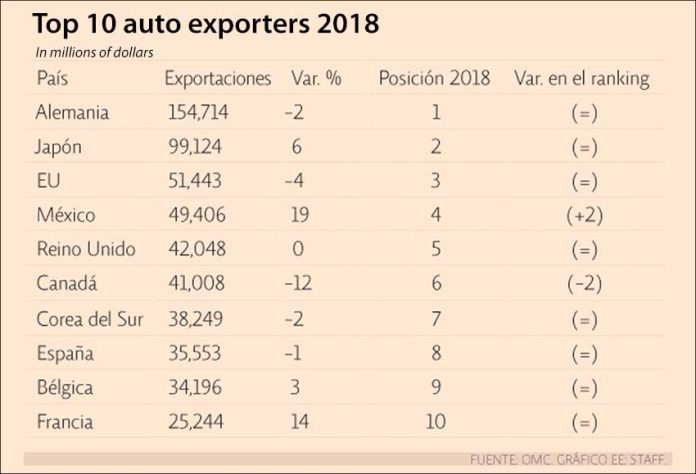
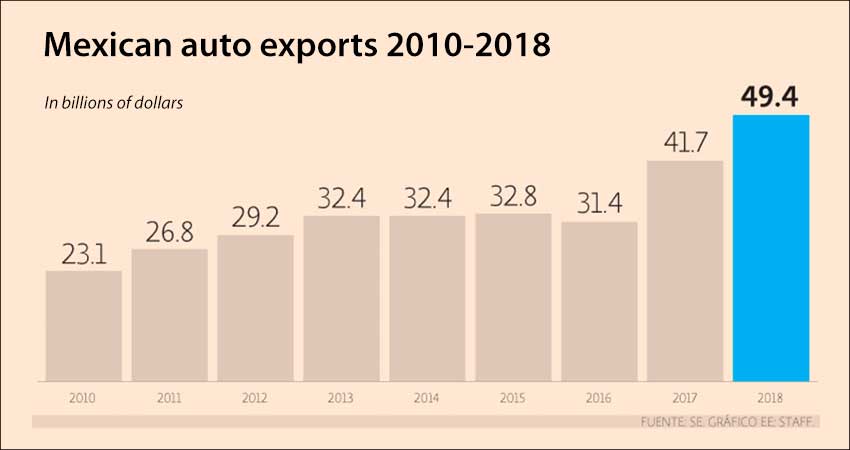
Mexico overtook the United Kingdom and Canada to become the fourth biggest automobile exporter by value in the world in 2018, statistics show.
The value of Mexican-made vehicle exports increased by 19% compared to 2017 to reach just over US $49.4 billion, according to the World Trade Organization (WTO).
Just under 3.5 million vehicles were shipped abroad from Mexico, a 6% increase on 2017 numbers.
Mexico’s ranking of fourth among auto-exporting nations represents an improvement of six places compared to 2008, when it ranked 10th.
Foreign sales of vehicles made in the U.K. remained steady in 2018 at just over $42 billion while Canadian auto exports declined by 12% to just over $41 billion.
Mexico’s exports since 2010. el economista
Germany was the biggest auto exporter, shipping vehicles worth $154.7 billion abroad, followed by Japan and the United States, which achieved foreign sales of $99.1 billion and $54.4 billion respectively.
According to Moisés Zavaleta, director of strategy at the consultancy firm Ansley, “Mexico has the potential to keep increasing its production of vehicles” as a result of the “integration of the North American market.”
Just over 70% of all Mexican auto exports went to the United States last year while 8% went to Germany and just under 6% were shipped to Canada, according to data from the Secretariat of the Economy (SE).
Brazil, Italy and China were among the other destination countries for Mexican-made vehicles.
This year, the Mexican auto sector is expected to benefit from the elimination of tariffs on cars sent to Brazil and Pacific Rim countries which entered into the Trans-Pacific Partnership free trade agreement.
Among the auto makers that have plants in Mexico are Audi, Baic, Fiat Chrysler, Ford, General Motors, Honda, Kia, Mazda, Nissan, Toyota and Volkswagen.
Not even bazookas and AK-47 assault rifles will be capable of penetrating the armored vehicle that the mayor of Los Cabos, Baja California Sur, intends to lease.
Armida Castro Guzmán called on suppliers to bid for a 30-month contract to supply a Class III armored Yukon SUV made by United States auto maker General Motors.
The Castro-led administration is seeking to lease that vehicle and 171 others, according to public tender documents posted online.
Five Chevrolet Suburban SUVs will be available for municipal councilors. Among the other vehicles the government wants to lease are more than 100 pickup trucks, five ambulances and a garbage truck.
According to the news website BCS Noticias, four companies initially made bids to supply the vehicles but two have since pulled out of the tendering process.
The company Umo Financiera del Centro, which said it could supply the 172 vehicles sought for 128.4 million pesos (US $6.6 million), appears likely to win the contract, BCS Noticias said.
Los Cabos government official Uriel Cabrera Flores said the successful bidder will be announced Friday.
Castro took office late last year after winning the 2018 mayoral election for the Morena party.
Los Cabos was ranked as the most violent city in the world in 2017 by the Citizens’ Council for Public Security and Criminal Justice, a Mexican non-governmental organization.
However, violence has fallen in the resort city and it didn’t feature among the 50 most violent cities in the world in the rankings for 2018.