Home Blog Page 2091

Federal prosecutors to investigate journalists’ killings in Quintana Roo

0
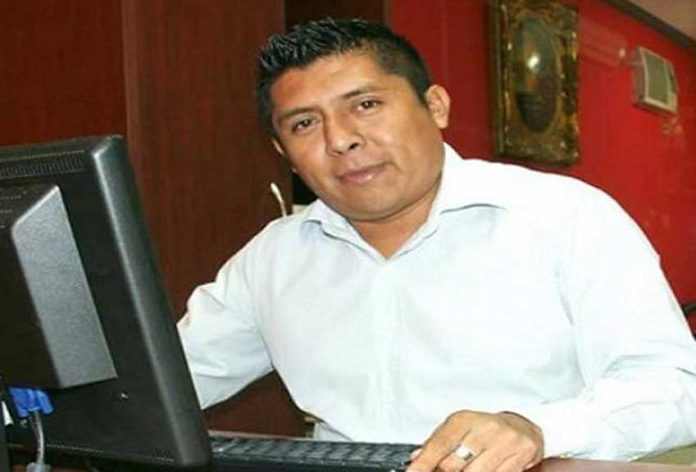
Pat Cauich, second of two journalists murdered in Quintana Roo.

The federal Attorney General’s office is taking over the investigation into the assassination of two journalists in less than a month at an online publication in Playa del Carmen, Quintana Roo.

Publisher Rubén Pat Cauich of the Playa News Aquí y Ahora was shot and killed outside a bar on Tuesday morning when he was attacked by gunmen. By the time emergency services personnel arrived, he was dead.

According to the New York-based Committee to Protect Journalists (CPJ), Pat had been beaten, detained overnight and threatened by local police in June.

He often reported on police activity and prior to his detention had written a story accusing police of colluding with a criminal gang.

Jan-Albert Hootson, CPJ’s representative in Mexico, said Pat had been enrolled in a government protection program at the time of his death.

The Playa News said in a Facebook post that Tuesday was “a black day for journalism”, adding “killing journalists will not silence the truth.”

Pat’s murder was preceded by that of reporter José Guadalupe Chan Dzib, who was slain late last month at a Felipe Carrillo Puerto nightclub.

The state Attorney General’s office reported early today that the Special Prosecutor for Crimes Against Freedom of Expression (Feadle) had taken over both investigations.

Pat was the focus of several investigations between 2011 and 2018, state prosecutors said. In some he was a victim while in others a suspected offender.

Also on Tuesday news surfaced of the murder last week of Luis Pérez García, an 80-year-old journalist and presenter.

According to the Federation of Associations of Mexican Journalists (Fapermex), firefighters discovered Pérez’s body after putting out a blaze at his home in the borough of Iztapalapa in Mexico City.

National media reported Pérez was beaten and asphyxiated before his home was set on fire.

Fapermex denounced the killing and called for government protection for Pérez’s family.

The Mexico office of the International Federation of Journalists (IFJ) issued a statement on Tuesday demanding that Mexican authorities adopt effective measures aimed at ending the violence targeting journalists.

” . . . Death threats against journalist for doing their job are multiplying,” said the global federation of journalists’ trade unions.

At least eight journalists have been killed in Mexico so far in 2018.

Source: El Universal (sp), Al Jazeera (en)
One student dead, two injured, after hazing ritual at Chiapas college

0
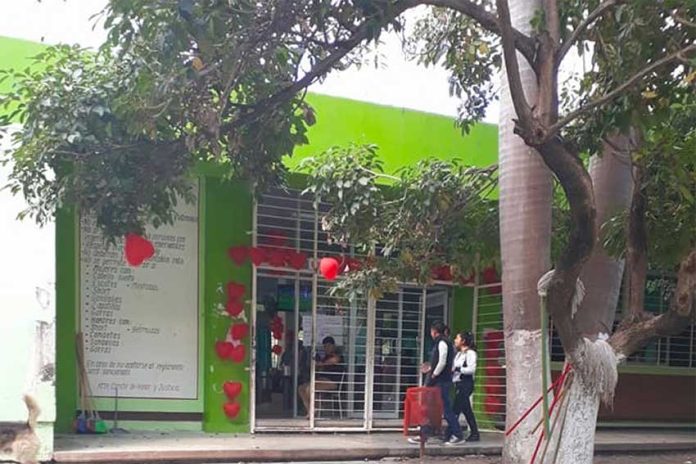
The Chiapas college where the hazing took place.

A hazing gone wrong in Chiapas cost the life of a young man and sent two more to hospital with kidney failure.

Senior members of the student council of the Mactumactzá Rural Teacher Training School of Tuxtla Guitiérrez rounded up the junior students on Saturday for what was to be an induction course.

The freshmen expected to learn about the school’s ideological orientation, but were instead subjected to a hazing ritual in which their heads were shaved and they were forced to perform extreme physical activities.

An official medical report stated that three of the freshmen suffered renal failure, presumably caused by the rupture of muscular tissue. In the case of José Luis Hernández Espinosa, the injuries were so severe that he died.

The condition of the other two students was reported as delicate, and both remain under medical observation.

The Chiapas Interior Secretariat said relatives of the young men have filed several formal complaints and that the state Attorney General’s office is working to determine who was responsible for the incident.

The state government offered its condolences to the family of Hernández and assured there will be no impunity in the case.

Source: Milenio (sp)

Heat wave: weather service predicts temperatures over 45 in 5 states

0
hot weather
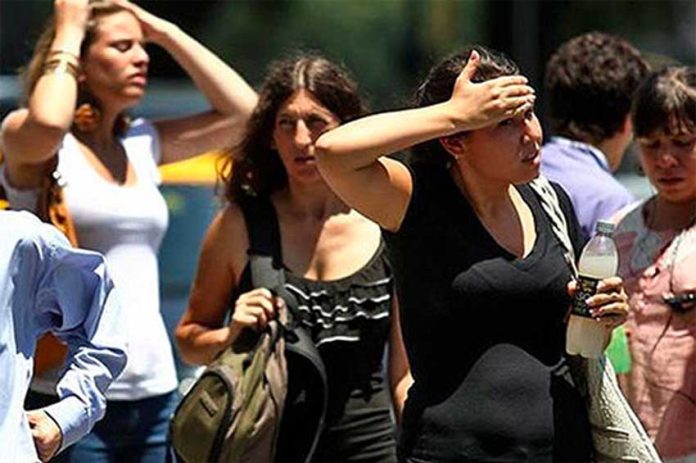
Feeling the heat.

Temperatures are forecast to exceed 45 C in five states today, according to the National Meteorological Service (SMN), continuing a heat wave that saw the mercury hit 49 yesterday at locations in two states.

Residents of Baja California, Sonora, Coahuila, Nuevo León and Hidalgo can expect to swelter through searing heat above 45 while temperatures will reach between 40 and 45 in parts of Baja California Sur, Sinaloa, Michoacán, Guerrero, Oaxaca, Chihuahua and Tamaulipas.

Maximum temperatures between 35 and 40 are predicted in 13 other states.

Yesterday, temperatures of 49 were recorded in both San Luis Río Colorado, Sonora, and Huejutla, Hidalgo, the SMN said.

Municipalities in Nuevo León, Baja California, Coahuila, Michoacán, Baja California Sur and Nayarit recorded temperatures of 42 to 47.

In Los Mochis, Sinaloa, authorities are investigating the death of a two-year-old girl who was found unconscious inside a vehicle in which she is presumed to have spent several hours.

Early reports indicated that the girl had hidden in the parked car while playing with friends near her home and was later unable to get out. Temperatures in the city reached 37 yesterday.

Seven people have also died in Baja California from heat-related illnesses during a sweltering heat wave.

The SMN is forecasting that Tropical Wave 21 will bring strong storms to Sinaloa, Durango and Nayarit today, with rainfall between 50 and 75 millimeters predicted in parts of the three states.

Storms with rainfall of between 25 and 50 millimeters are also forecast for Chihuahua, Jalisco, Michoacán, Veracruz, Guerrero, Oaxaca and Chiapas.

Source: El Universal (sp), Milenio (sp)

Gay pageant winner tortured and assassinated in Veracruz

0
Gay beauty queen Contreras.

The winner of a gay beauty pageant in Veracruz was tortured and assassinated, according to local authorities in the municipality of Martínez de la Torre.

The body of Luis Contrera Ponce, the 2018 Gay Queen in the same municipality, was found yesterday in the Ejidal neighborhood, half nude with signs of torture and wearing a barbed-wire necklace.

A human rights activist described the murder as a hate crime and said it was similar to others. Yazz Yazziel Bustamante said there have been 15 hate-related homicides in the state of Veracruz so far this year.

An anthropologist at the social anthropology research center Ciesas said Veracruz ranks in first place for the murder of transsexuals.

Contrera, who went by the name Alaska Bout, was the second gay pageant queen to be assassinated this year. Yamileth Quintero, who won a beauty contest in Elota, Sinaloa, was killed in May in Culiacán.

Source: El Universal (sp), Milenio (sp)

Celebrations are being readied in seven states for grape harvest season

0
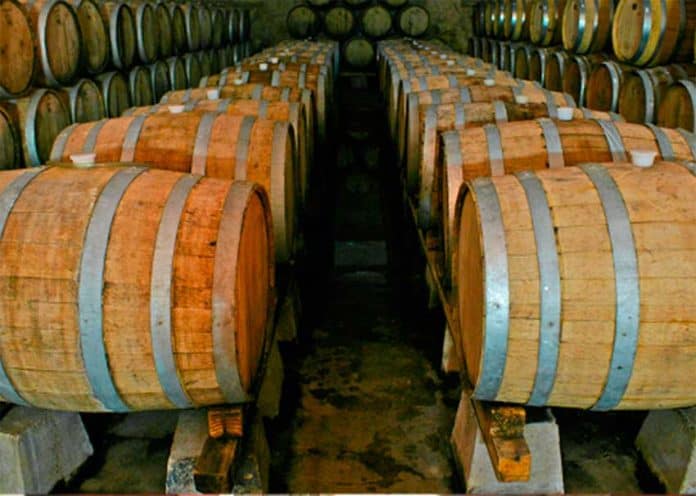
Roll out the barrels, it's grape harvest time.
Roll out the barrels, grape harvest time is coming.

Mexico’s wine-producing regions are gearing up for celebrations to mark the beginning of the annual grape harvest season, giving wine-lovers a great excuse to check out the source of their favorites.

Vineyards in Aguascalientes, Baja California, Coahuila, Chihuahua, Guanajuato, Querétaro and Zacatecas will all hold events during their annual harvest, known in Spanish as la vendimia.

Concerts, festivals, dinners, bullfights, wine tastings and guided tours of vineyards are some of the events that will be on offer.

In Aguascalientes, the festivities kick off this weekend with Fiesta de la Vendimia 2018, in which three local vineyards will participate.

The event will be held at Hacienda San Luis de Letras, 17 kilometers north of the state capital in the municipality of Pabellón de Arteaga.

Attendees will be able to tour the vineyard, see the winemaking process in action and sample local red and white wines.

In Baja California, home to Mexico’s most famous wine region — Valle de Guadalupe — L.A. Cetto and Bodegas de Santo Tomás will hold vendimia events on August 11 and 18 respectively.

Both will feature wine tastings, food and music but the former event costs a hefty 6,100 pesos (US $326) to enter while the latter is free.

Mexico and the Americas’ oldest vineyard, Casa Madero in Coahuila’s Parras Valley, will hold its famous harvest event on August 9.

As usual the celebration will start with a religious ceremony followed by a traditional dance and will conclude with a dinner featuring dishes prepared by acclaimed chef Geoffroy Maillard. Dinner courses will be paired with local wines.

Another vendimia event will be held in Coahuila at the Rivero González winery on August 18.

In Chihuahua, Vinos Encinillas will hold a harvest party in the middle of next month while in Guanajuato, one of the most anticipated vendimia events of the Bajío region will be held at the Cuna de Tierra winery in Dolores Hidalgo.

The latter celebration will take place on August 25 and features a dinner with matched food and wine. A table for 10 costs 22,000 pesos (US $1,200).

Vineyards in Querétaro, especially well known for their sparkling wines, will also join in the harvest celebrations.

Finca Sala Vivé by Freixenet México will hold a three-day event from August 3 to 5 featuring live music, food and, of course, plenty of wine. Entrance is a more reasonable 400 pesos (US $21).

Finally, Zacatecas is not missing out on the fun either.

Located just a 25-minute drive away from the state capital, the Tierra Adentro winery will hold its annual vendimia party on August 25.

The event will feature wine tastings paired to a degustation menu and tours of the vineyard and wine-making facilities.

The state’s symphony orchestra will be on hand to entertain guests and is slated to play a tribute to British rock band Queen.

To quaffers and teetotalers alike: happy vendimia, have fun, stay safe and salud!

Source: El Universal (sp), Milenio (sp)

Treasure trove of Mayan cave paintings discovered in Yucatán

0
Cave paintings discovered in Yucatán.
Cave paintings called an important find.

A team of archaeologists has discovered a treasure trove of Mayan cave paintings in Yucatán, which likely make the cavern the most significant of its kind in the state.

Led by Sergio Grosjean Abimerhi, the team found the cave at a depth of 12 meters in jungle located in the east of Yucatán.

The paintings are on a rock that is approximately 15 meters wide by five meters high.

“It’s not the only cave with paintings in Yucatán but it is the most important because they have many elements: birds, mammals, a cross, geometric figures, human forms and among those that of a warrior as well as [prints made with] the front and back of hands,” Grosjean said.

The director of the Mexican Institute of Ecology, Science and Culture — a non-governmental organization that conducts environmental and cultural investigations — said that like cave paintings found in other parts of Yucatán, the newly discovered artwork “shows the high degree of evolution of the Mayan culture.”

Grosjean explained that the colors of the paintings are derived from a wide range of natural pigments and other materials such as red earth, which is known in the local Mayan language as k’ankab.

He added that neither the age of the paintings nor their exact significance has yet been determined but stressed “they’re the most important we have seen.”

In the coming days the team Grosjean leads will return to the cave with archeologists from the National Institute of Anthropology and History (INAH) to carry out further identification work.

“At the moment, we can’t reveal the exact location [of the cave] because unfortunately in Yucatán, the looters and vandals are one step ahead of us,” Grosjean said.

However, if permission is granted by authorities, the site could open to the public in the future and create employment for local residents, he explained.

“It can’t remain hidden . . . It should be opened [to the public] with all the security regulations that a place with so much cultural value must have,” the archaeologist said before he fired a broadside at Mexican authorities.

“Yucatán is rich culturally speaking, but unfortunately there is no interest from the three levels of government. They don’t value or respect the sacred Mayan sites, they’ve turned some of them into balnearios [water parks],” Grosjean said, referring to cenotes or sinkholes, which Mayans considered to be entrances to the underworld.

The archaeologist also lamented that foreign organizations and media outlets, such as National Geographic  with which he has collaborated, are often more interested in promoting new discoveries than their Mexican counterparts.

“Sometimes there is no interest [in Mexico], not even in the media. They don’t realize that these places are world heritage [sites], Grosjean said.

He said he was confident that Yucatán could become the world’s underworld mecca, which would create thousands of jobs and encourage putting an end to water pollution, but added that the new government that assumes office later this year would have to be on board.

“I hope that the new authorities have the same vision and take advantage of the potential and cultural wealth of Yucatán . . .”

Source: EFE (sp)

Pinturas rupestres en cuevas de Yucatán

Ecoshell has been converting corncobs into plastic alternative for 10 years

0
Ecoshell's plant in the state of México.

Although little has been done to encourage green alternatives and consumers prefer cheaper and well-known non-biodegradable options, a México state-based firm has been successfully producing corncob-based plastics for a decade.

Ecoshell was born in a classroom while founder Carlos Camacho was completing the fourth semester of his industrial engineering course.

“Corn has properties that are very similar to those of plastic, and we found that it was a product that could compete in cost and quality and offer a sustainable alternative to plastic,” the entrepreneur told the newspaper El Financiero.

Camacho’s process crushes corncobs and mixes them with a starch-based biopolymer. The resulting substance is melted down and small pellets are obtained. These can be used to fabricate bags, cups and many other bioplastic-based products and utensils.

The resulting eco-friendly products are also microwave-safe. Depending on how they are disposed of, they can last between 90 and 240 days.

One of Ecoshell’s first clients was Walmart, which currently purchases 300 boxes of its product every week. Other clients are supermarkets Chedraui and Superama, chain drug stores Farmacias San Pablo, restaurants including Olive Garden and Wings and hotel chains One Fiesta Americana and Mayan Palace.

To keep up with demand Ecoshell requires 2,000 tonnes of corncobs per month, which are transformed into 10 to 15 million products in the firm’s México state factory.

Ecoshell’s strongest market is domestic: it operates nine distribution centers and 18 warehouses throughout the country. The company also exports to the United States, Jamaica, Dominican Republic, Guatemala and Chile, and is preparing to enter the European market.

“If one compares, foam plastic is cheap and has been in the market for a long time; people are used to it and it’s not easy for them to opt for an ecological product. Biodegradable products make up 2% of the disposable utensil market,” said Camacho.

The government has fallen behind, he said, and there are no incentives for environmentally-friendly products. On the other hand, Querétaro, Veracruz and recently Guadalajara have made more advances, he added.

Source: El Financiero (sp)

Science council to create research center out of white elephant in Tlaxcala

0
Plaza Bicentenario, from white elephant to research and innovation center.
Plaza Bicentenario in the city of Tlaxcala.

An ambitious cultural project in Tlaxcala that was abandoned in a quarrel between two governors will get a new lease on life.

The National Council for Science and Technology (Conacyt) has come to the rescue, while at the same time breathing new life into the state’s education, science and industry sectors.

The 400-million-peso (US $34 million at the time) Plaza Bicentenario was a project of National Action Party Governor Héctor Ortíz, whose term ran from 2005 until 2011. But after Institutional Revolutionary Party candidate Mariano González succeeded him as governor, the project was all but abandoned.

The last time the 10,000-square-meter complex of theaters, exhibition halls and amphitheaters was used was for Ortíz’s final report as governor in 2011.

In the intervening years the white edifice has fallen prey to the elements and vandalism.

Conacyt said the facility will become the Tlaxcala State Center for Technological Research and Innovation, or Citlax for short.

The cultural facilities are to be modified to house top scientific infrastructure and encourage a collaborative relationship with several industrial firms in the central Mexico state.

Conacyt will operate five research centers in a collaborative effort that will benefit science, technology and innovation.

One of the goals of Citlax is to consolidate Tlaxcala’s human resources and link them with the automotive, chemical and textile industries.

Governor Marco Mena said Citlax will propel education by allowing top researchers from around the country to interact with teachers and students from Tlaxcala.

Source: El Universal (sp)

Four robbery suspects lynched in Tabasco

0
Signs such as this have appeared in several communities to warn criminals they will be lynched if caught.

Four men were lynched yesterday in Tabasco, presumably for stealing a motorcycle.

Police were alerted to the incident after receiving a call that three bodies had been found hanging from a tree in Arroyo Hondo, Macuspana.

A fourth body was found on a road near the scene of the hanging. The man of about 40 appeared to have been dragged for some distance along the road and beaten. The other three men were aged between 16 and 30.

The state government issued a statement reminding the public that everyone has a right to be judged and sentenced by a competent authority, and that those who take justice into their own hands by lynching are responsible for intentional homicide and must answer to the charge.

Source: El Universal (sp)

Driller accuses government of collusion with Pemex over contract corruption

0
An Oro Negro drilling rig.

A Mexican oilfield services company has accused the federal government of using the Attorney General’s office (PGR) to intimidate and destroy it through a criminal investigation.

In an open letter published in The New York Times, Oro Negro charged that an embezzlement probe against it was launched in retaliation for refusing to pay bribes to the state oil company Pemex in order to obtain contracts.

The company said the accusation that it embezzled funds it received from private investors which it should have used to pay bondholders — as charged by the PGR — is “frivolous, lacks foundation and is a manifestation of the permanent campaign [of the government of] Mexico to harass, persecute and destroy Oro Negro.”

The company claimed that Pemex conspired with bondholders to cancel its contracts for oil platforms it operated so that the latter could take over the rigs and negotiate their own agreements with the state-owned company.

Signed by a lawyer for the company and American and European shareholders, the letter also said that Oro Negro has recordings of high-ranking former Pemex officials in which they admit that their company was seeking to destroy Oro Negro because it refused to pay bribes.

In turn, Pemex said in a statement yesterday that Oro Negro’s claims are unfounded and that any recordings should be submitted to authorities so that their authenticity can be assessed.

It also questioned why the information hadn’t been made public earlier.

Pemex refuted Oro Negro’s claim that it had been “destroyed” because it had been locked out of the oil exploration market for refusing to pay bribes.

“The facts refute that version [of events] because in 2016 and 2017 Pemex offered the same terms to Oro Negro as it did to many other suppliers of oil platforms,” the statement said.

“. . . The other companies accepted the terms set by Pemex while Oro Negro decided not to . . . Pemex denies any discrimination against Oro Negro.”

The statement also said that “Pemex will continue to defend itself from the unfounded claims against it and against the Mexican government . . . because in good faith and within its legal rights, it sought to renegotiate its contracts with Oro Negro . . . after the slowing down of the petroleum market.”

Oro Negro, the state oil company said, “took the unilateral decision to reject Pemex’s terms and decided to initiate the process to declare itself bankrupt.”

In addition, it said that “Pemex is of the firm belief that Oro Negro is deploying a strategy in international media to compensate for a series of strategic errors that said company has committed and because of the deficiencies in its legal case against Pemex.”

Oro Negro initiated legal action against Pemex last month for the unfair and unlawful treatment it alleges it received and, according to the public letter, United States shareholders are seeking at least US $700 million in damages while European shareholders are claiming US $300 million in compensation.

“Mexico frequently shows no respect for the rule of law and uses all its organs, including agencies responsible for enforcing the law, at its discretion and to destroy those who refuse to participate in corruption,” the letter charged.

The state oil company said it will defend itself in Mexican and international courts “with full confidence that the result of the legal process will be favorable to it.”

Source: Animal Político (sp), Milenio (sp), El Economista (sp), Forbes (sp)