Home Blog Page 2093

Priority given to 7 infrastructure projects costing 500 billion pesos

0
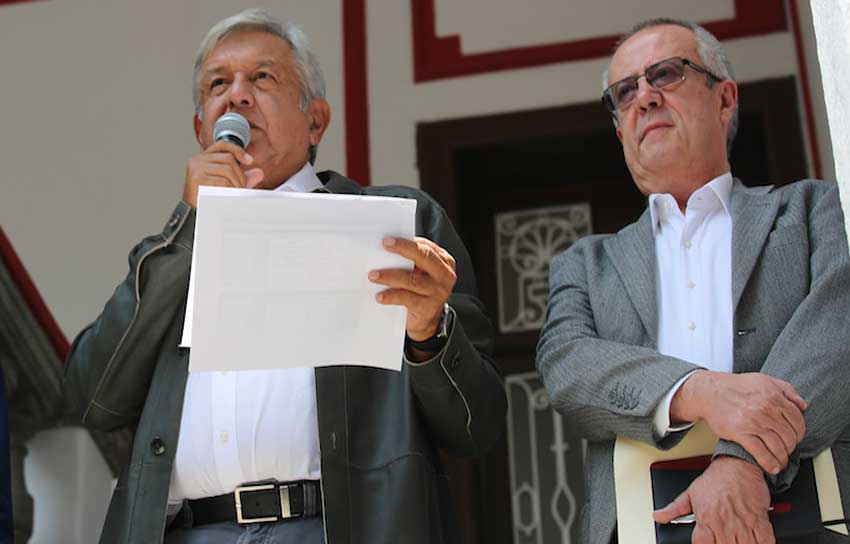
López Obrador, left, and incoming finance secretary Carlos Manuel Urzúa Macías at yesterday's press conference.

President-elect Andrés Manuel López Obrador announced yesterday that the next government will prioritize seven urgent infrastructure projects with an investment of 500 billion pesos (US $26.5 billion).

The projects are the new Mexico City International Airport; a trade corridor in the Isthmus of Tehuantepec; the Cancún-Palenque train; the paving of 300 rural roads; the provision of internet to the whole country; earthquake reconstruction; and support for residents of marginalized neighborhoods.

López Obrador, or AMLO as he is widely known, told reporters outside his transition headquarters that the funds to carry out the projects will come from cost-saving measures his administration intends to adopt such as cutting the salaries of high-ranking officials and consolidating government purchases in the Secretariat of Finance as well as through the elimination of corruption.

With regard to the new airport, López Obrador repeated that there are three options: continue the project as a public-private joint venture, auction it off to the private sector or scrap it completely and use the existing airbase in Santa Lucía, México state, for commercial flights.

The president-elect, who was vehemently opposed to the airport project before softening his position, said his transition team will consult with specialists and the public between August 15 and October 15 as part of the incoming administration’s analysis of the three alternatives.

He said the current government has invested 80 billion pesos (US $4.2 billion) in the project, of which 45 billion pesos have been spent and 35 billion pesos remain in a trust.

In the Isthmus region — where the distance between the Gulf of Mexico and the Pacific Ocean is the shortest in the country — López Obrador said the aim is to “connect the countries of Asia with the east coast of the United States and create jobs in that entire strip of national territory.”

Future transportation secretary Javier Jiménez Espriú said earlier this month that the development planned for the Isthmus of Tehuantepec would include the modernization of the railroad between Coatzacoalcos, Veracruz, and Salina Cruz, Oaxaca, as well as the upgrading of the region’s highways.

The third infrastructure priority is the so-called Mayan Train which will run between Quintana Roo and Chiapas and cost 64.9 billion pesos (US $3.4 billion), according to the incoming government’s National Project 2018-2014 document.

Slated to be completed in four stages, the train line will have nine stops and is intended to boost tourism and the economy in the south of Mexico.

López Obrador said the fourth project would focus primarily on ensuring that all rural communities in Oaxaca and Guerrero are accessible via paved roads, adding that construction would require “the intensive use of labor” and consequently generate much-needed employment for local residents.

The president-elect also said his government will prioritize guaranteeing internet access to all Mexicans, pledging that the entire country will be connected.

López Obrador said he will present a national earthquake reconstruction plan on September 19, the first anniversary of the second of last September’s two major quakes.

The plan will prioritize “victims who are still living in camps, [exposed] to the elements and who have not been supported,” he said.

He pledged that monetary assistance will be fully funded by the federal budget and not provided in the form of loans.

Finally, the president-elect said that residents of Mexico’s poorest neighborhoods will also be afforded support with those living in marginalized areas of border cities, the country’s main tourism destinations and the metropolitan area of greater Mexico City set to be the initial priority.

López Obrador, who won the July 1 election in a landslide, will be sworn in on December 1 while the new federal Congress — in which the next president’s three-party coalition will have a majority in both houses — will sit for the first time on September 1.

Source: Sin Embargo (sp), Milenio (sp), El Economista (sp), El Universal (sp)

Commission issues report on botched medical care that left babies blind

0
The baby who was left blind by botched surgery in Sonora.
The baby who was left blind after surgery in Sonora.

The National Human Rights Commission (CNDH) has issued a report in response to botched medical care that left two babies blind, charging that the infants’ human rights were violated due to negligence.

In the document — which contains recommendations directed to the general manager of the Mexican Social Security Institute (IMSS) — the CNDH said the first case occurred in the Zone 8 General Hospital in Uruapan, Michoacán.

The report charged that doctors failed to make a timely diagnosis that the baby was suffering from retinopathy and that the consequent absence of treatment meant that the condition worsened, resulting in a permanent loss of sight.

The baby was born prematurely after 31 weeks’ gestation and was diagnosed with infant respiratory distress syndrome and also showed clinical signs of early-stage sepsis.

Despite that, the CNDH said, medical personnel failed to carry out blood and urine testing to confirm or rule out the presence of infection nor did they administer any course of antibiotic treatment.

The CNDH detailed that in the second case — which occurred at the Number 2 Specialty Hospital in Ciudad Obregón, Sonora — a surgeon mistakenly removed a baby’s right eye instead of the left eye in which a cancerous growth was present.

With the subsequent removal of the baby’s left eye, the infant permanently lost any chance of ever being able to see.

The CNDH report said that the treating ophthalmologist had not heeded the advice of nurses and an anesthetist who had told him that the left eye was the one that needed to be surgically removed.

The baby’s parents have filed a criminal complaint against the surgeon.

The Human Rights group called on IMSS chief Tuffic Miguel Ortega to compensate the babies’ families with fair monetary reparation and the provision of psychological care.

The report also said the infants should be included on the National Victims’ Registry so they are eligible to access other monetary and medical assistance.

In addition, the CNDH called for medical staff in both hospitals to be given additional training that focuses on the human rights of patients under their care.

In a statement, IMSS said it would implement the CNDH recommendations and that it has implemented a range of preventative measures to ensure that there is no repeat of any similar cases in the future.

Source: Sin Embargo (sp)

Mexico leads medal count at Central American and Caribbean Games

0
Tamara Vega and Mayan Oliver won gold medals yesterday in modern pentathlon at the Barranquilla games.

Taekwondo athlete Victoria Heredia gave Mexico medal No. 100 today at the Central American and Caribbean Games, which are now under way in Barranquilla, Colombia.

By the end of the day, Mexico led the medal count with 108, leading second-place Colombia by 29 medals.

Heredia won bronze in the women’s under 67 kilograms event in taekwondo, in which Mexico has won 20 medals. So far it has won more gold medals in taekwondo than any other sport, with eight.

Mexican athletes have also done well in swimming, picking up 21 medals so far, of which four were gold.

Rowing and shooting have been two other sports in which Mexico has finished well, winning six and five gold medals respectively.

The Mexico delegation at Barranquilla consists of 675 athletes. They have won 38 gold, 39 silver and 31 bronze medals.

There are 21 countries participating in the games, which began July 19 and conclude August 3.

Mexico News Daily

Criminal gang’s extortion triggers formation of self-defense forces in Morelos

0
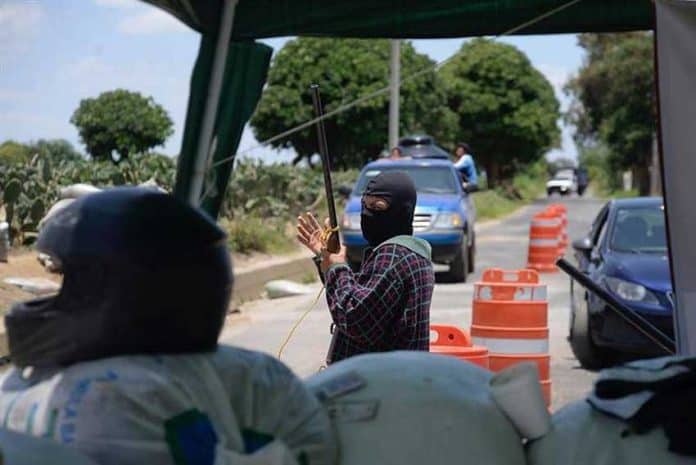
A self-defense force guard mans a Morelos checkpoint.
A self-defense force guard at a Morelos checkpoint.

Extortion, the increased presence of organized crime and overwhelmed police have triggered the formation of self-defense forces in four Morelos municipalities.

In May, several members of a transport union in Nepopualco — a small town in the municipality of Totolapan — received telephone calls from a criminal organization known as La Maña demanding 200,000 pesos (US $10,600) for each of two mototaxi stands in the community.

The charges were not quite as onerous in the municipal seat — also called Totolapan — where the same criminal group was allegedly charging 150,000 pesos (US $7,900) for each taxi stand.

Fearful that the practice would become more widespread, residents decided to stand up to the threat the gang posed. On June 6 they set up checkpoints manned by armed and masked civilians on the main roads leading into the municipality.

[wpgmza id=”39″]

“. . . We thought that La Maña would later go to businesses and homes to ask for derecho de piso [extortion payments] and that’s why we decided at a general meeting to form self-defense groups and we said we’re going to defend [our towns] so that those people don’t come in,” a community guard identified only as Mateo told the newspaper El Universal.

“The police did nothing for us. In Totolapan, where the police base is, they couldn’t do anything and there is [only] one patrol car to take care of six towns. That’s not enough, that’s why we saw the need to form [community] guards with the agreement of the municipal assistant,” he added.

“All citizens aged over 18 have to cover a 24-hour shift as a community guard.”

Mateo also said that in the last week of June most of the members of the Totolapan self-defense force met with Michoacán self-defense force founder José Manuel Mireles, who advised them on strategies to defend their territory.

The new force is the first ever formed in the central Mexican state but it wasn’t long before other groups of disgruntled Morelos residents followed suit.

Beyond Totolapan, La Maña had also increased its presence in the municipalities of Tlalnepantla, Tlayacapan and Atlatlahucan, all of which are located in the northeast of the state, bordering both Mexico City and México state.

Residents of at least eight towns in those municipalities have also formed their own self-defense groups, claiming that officers from the state’s Mando Único (Single Command) force deployed in the region are no longer able to effectively combat the rising levels of crime.

Mateo explained that the groups are separate but they support each other if one asks for extra assistance.

The community guard defended the self-defense group members’ carrying of weapons, charging they could be attacked by the criminals against which they are defending their communities.

He also said the force of which he is a member only disarm — as an army general warned them to do — if their communities were afforded military assistance for public security duties.

“If they don’t want us to take care of [security], they should send us soldiers but they don’t want to. They say that we’re outside the law . . . but how do we defend ourselves from these people?” Mateo questioned.

So far, the new strategy appears to have been a success.

Other community guards who spoke to El Universal said that two weeks after they formed their self-defense groups, La Maña members stopped making extortion calls and no longer appear in their towns.

Source: El Universal (sp)

Supervisor of project at school where students died arrested for homicide

0
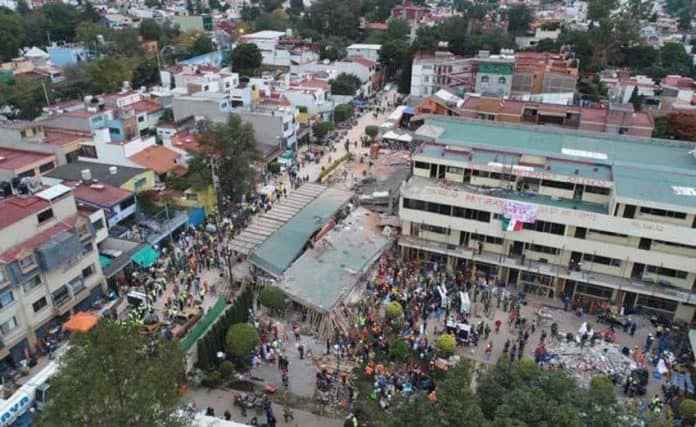
The Mexico City school during rescue efforts last September.

The construction supervisor of a project at a Mexico City school in which 26 people died in the September 19 earthquake has been arrested for homicide.

Police arrested one of the directors responsible for construction, Juan Mario Velarde Gámez, yesterday in Querétaro.

The arrest followed investigations into construction techniques utilized at the Colegio Enrique Rébsamen in Tlalpan, where rescuers worked for days to free victims trapped in the debris, a story that drew international attention.

A wing of the school where an apartment that had been constructed on an upper floor collapsed in the earthquake, killing 19 students and seven adults.

Investigators found the collapse was caused by poor construction of the apartment unit, built by the school’s owner and principal, Mónica García Villegas, for whom an arrest warrant and an Interpol red notice have been issued.

An arrest warrant has also been issued for Juan Apolinar Torales, a second director responsible for construction, or DRO as they are known. Both directors have been accused of helping García illegally build the apartment on top of the school.

Families of those who died are demanding that authorities improve Civil Protection regulations, especially those pertaining to schools.

Source: Milenio (sp), Excélsior (sp)

1 pilot dead after crop-dusting planes collide in Chihuahua

0
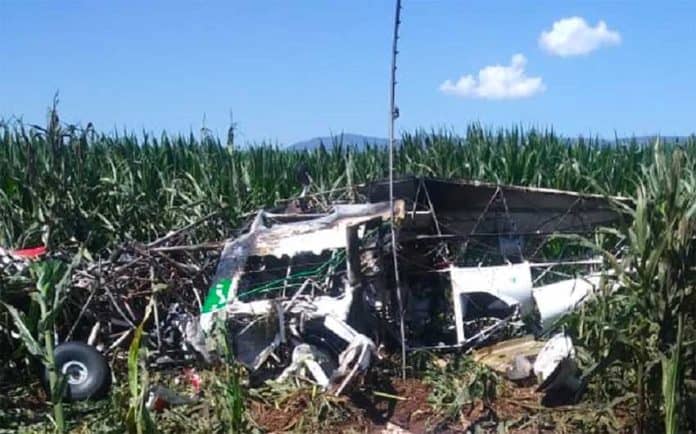
Scene of the wreckage after yesterday's collision.

One pilot died yesterday in a collision between two crop-dusting aircraft over a Chihuahua cornfield.

The accident occurred at 9:00am in the western Chihuahua municipality of Namiquipa. The victim, identified as Jesús Manuel Pacheco Armenta, was found lying beside his plane, while the second pilot was found severely injured inside the cockpit.

Jesús Gumaro López Trevedan was rushed to a nearby hospital in the town of El Terrero.

The civil aeronautics office in investigating.

There were reports of a second plane crash yesterday in the state, triggering a joint air and land search operation by the three levels of government.

Residents of the southern part of the state near the border with Durango reported seeing an aircraft flying low and in flames. The sighting was followed by the report of a crash near an area known as El Campestre y las Cribas.

Three aircraft participated in the search operation covering a 200-square-kilometer area near the Parral-Matamoros highway, but no sign of a crash was found.

Source: Milenio (sp)

Marchers in Monterrey call for death sentence, castration for rapists

0
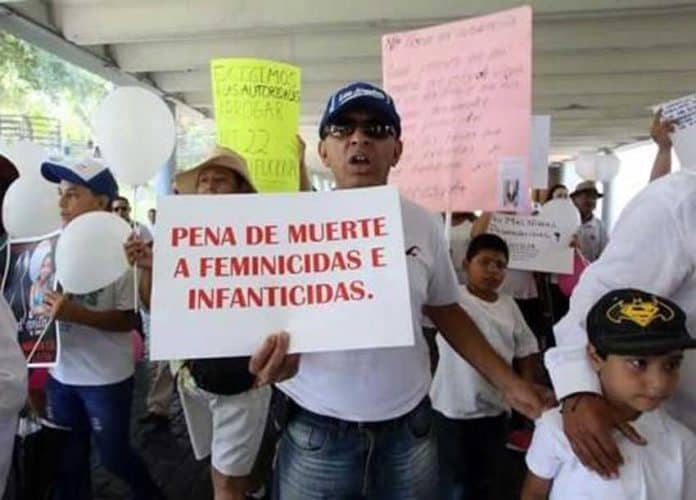
Calls for the death penalty in Monterrey.

Many residents of Monterrey, Nuevo León, took to the streets yesterday to protest against a wave of femicides and to demand justice in the case of the abduction, presumed rape and murder of an eight-year-old girl.

One protest march was organized by the family of Ana Lizbeth Polina Ramírez and the civil organization Empowered Citizen (Ciudadano Empoderado).

The protesters wore white and marched on state government headquarters, their voices joined in a blunt demand: “Not one more, not a single girl more, not a single boy more.”

Pedro Alejo Rodríguez, leader of Empowered Citizen, accused local authorities of apathy and demanded the death sentence and chemical castration for rapists.

Mayra Cobos, a cousin of the young victim, explained that the girl’s mother is being kept under protection and out of the public eye due to threats against her.

She said Dulce Ramírez had been criticized in local media and in social media for not caring properly for her daughter, and threats that she too would die had followed.

Cobos also questioned why Ana Lizbeth’s attacker was receiving “privileged” treatment at the Topo Chico penal facility, where he remains in preventive custody while awaiting trial.

The man, identified only by his first name, Juan Fernando, was reported to have been placed in solitary confinement after he was threatened by other inmates.

A second march was organized by several feminist collectives, and their main complaint was against femicides in the state, including that of Ana Lizbeth.

They too accused the government of apathy.

Source: Vanguardia (sp)

AMLO calls for completion of NAFTA talks in letter to Trump—and sends a hug

0
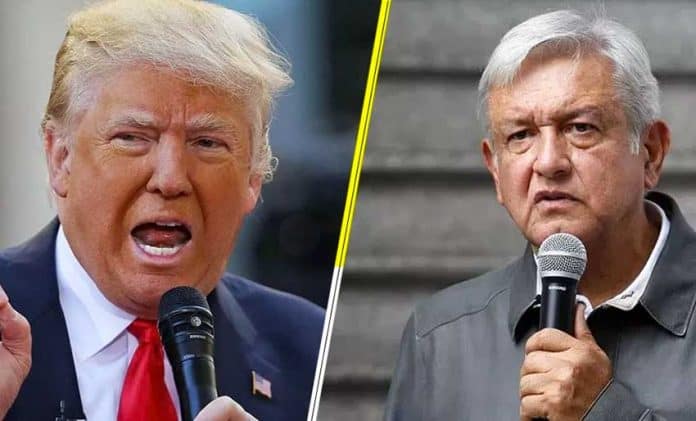
Trump and AMLO: letter seeks NAFTA conclusion.

President-elect Andrés Manuel López Obrador called for a swift conclusion to the negotiations to reach an updated NAFTA deal in a letter to United States President Donald Trump earlier this month.

“Prolonging the uncertainty could slow investment in the medium and long-term, which clearly would hinder economic growth in Mexico,” López Obrador wrote in the seven-page letter delivered to a United States delegation led by Secretary of State Mike Pompeo during a visit to Mexico City on July 13. 

“The strategy of the government I will lead is to seek to create jobs and better living conditions for all Mexicans. At this point, I propose resuming negotiations with the participation of representatives from Mexico, Canada and the United States. Our transition team will participate in coordination with the officials of the current Mexican government.”

López Obrador’s position is consistent with that put forward by Economy Secretary Ildefonso Guajardo last week, who repeated that Mexico will seek to maintain a trilateral trade agreement in North America after Trump once again suggested that the United States could pursue separate trade deals with its two neighbors.

The U.S. president has maintained an often-hostile attitude towards Mexico but Pompeo said during his recent visit to the Mexican capital that “Trump is determined to make the relationship between our peoples better and stronger.”

López Obrador’s letter, which was published yesterday on his website and read aloud by future foreign affairs secretary Marcelo Ebrard at a press conference, said the aim of the new government is to start “a new chapter in the relationship between Mexico and the United States, based on mutual respect.”

Striking a largely conciliatory tone, the missive covered four main issues — trade, migration, development and security — which AMLO, as the political veteran is commonly known, said went to the “essence” of the bilateral relationship.

On migration, López Obrador said “the most essential purpose” of his government will be to ensure that Mexicans are not forced to migrate because of poverty or violence.

“We will strive to ensure that people find work and wellbeing in their places of origin, where their families, their customs, and their cultures are,” the letter said.

Among the measures AMLO proposed so that Mexicans will have greater opportunities at home were greater public investment aimed at the “reactivation of the agricultural, energy, education, culture and health sectors” as well as the “financing of regional development from the south [of the country] to the north.”

He also cited transportation projects and the creation of a free zone in the northern border region as other factors that will help to enable Mexicans to stay in Mexico.

“We will make many changes, Mr. President Trump. And in this new environment of progress with wellbeing, I am sure that we will be able to reach agreements to confront together the migration phenomenon as well as the problem of border insecurity,” López Obrador wrote.

The president-elect’s statements appear to be aimed at placating Trump, who has portrayed Mexico as a poor ally and said in May that “Mexico does nothing for us.”

AMLO also proposed that the migration problem be addressed “in a comprehensive manner through a development plan that includes Central American countries.”

The letter proposed that Mexico, the United States and each Central American nation contribute resources according to the size of its economy and that 75% of the collective funds be allocated to finance projects that create jobs and combat poverty, while the other 25% would go to border control and security.

“At the same time, every government, from Panama to the Rio Grande, would work to make the migration of its citizens economically unnecessary and take care of their borders to avoid the illegal transit of merchandise, weapons and drug trafficking which, we believe, would be the most humane and effective way to guarantee peace, tranquility, and security for our peoples and nations.”

López Obrador conceded that there have been “moments of tension and disagreement” in the bilateral relationship but also said that Mexico and the United States have a unique shared history.

“Many good things bond us. Ties that cannot be broken: culture, language, traditions, and above all, a long friendship and a lot of solidarity.”

López Obrador also said that he was “encouraged by the fact” that both he and Trump “know how to do what we say” and that both had overcome adversity to win their respective nations’ presidencies.

“We managed to put our voters and citizens at the center and displace the political establishment. Everything is ready to start a new stage in our societies’ relationship based on cooperation and prosperity. Let’s do it. I send you a warm hug . . .”

Mexico News Daily

Boy, 13, shows up to exchange kidnapping victim for ransom money

0
The 13-year-old who claimed the kidnapping ransom.

Mexico City police got a surprise Saturday when they mounted an operation to free a six-year-old child kidnapped last Tuesday in Ecatepec, México state.

The kidnapper who showed up to claim the ransom money was 13 years old.

Parents of the kidnapped child had gone to police after they received a ransom request of 50,000 pesos (US $2,600). They settled on 35,000 pesos instead and the kidnappers arranged to exchange the child for the money at the Basilica of Guadalupe just as mass was about to begin.

As per instructions, the cash was left in a trash can, following which the 13-year-old showed up with the kidnapping victim and retrieved the money.

Police intervened and arrested the boy who then identified three associates who were waiting nearby. They too were arrested, and the six-year-old restored to his family.

The youthful kidnapper said he was unaware that he was involved in a crime and had merely agreed to retrieve the cash from the garbage can in exchange for 500 pesos.

Source: El Universal (sp)

14 Magical Towns at risk of being dropped from tourism promotion program

0
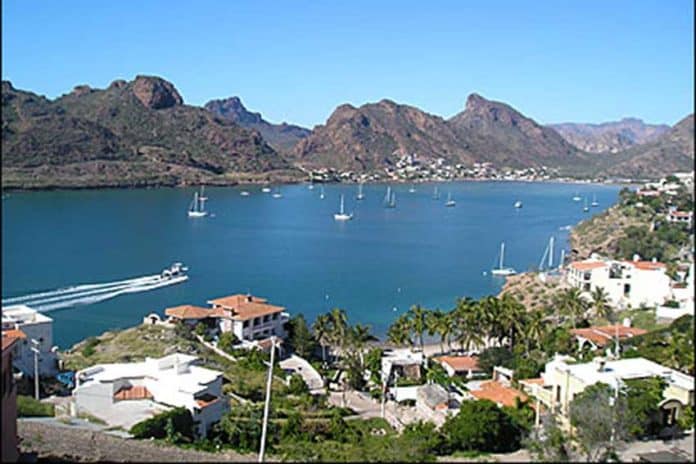
San Carlos, Sonora: magical town candidate.

Fourteen magical towns are at risk of losing their magical designation because they have failed to meet the requirements of the program as set by the federal Tourism Secretariat (Sectur).

Gerardo Corona, undersecretary for innovation and development at Sectur, told the newspaper Milenio that the department had found that the 14 towns — which he didn’t name — were failing to comply with the program’s “operational model” during a review of all 111 of Mexico’s pueblos mágicos.

 “. . . There are vendors and trash in the streets and sometimes the towns lose the urban image [they should have.] Without warning, they put up signs that shouldn’t be there, there’s no development of the tourism product or the committees aren’t working correctly. There are a number of things we noted,” he said.

Corona said that Sectur has given the towns between 180 days and one year to show that they have resolved the problems that were detected and that they deserve to continue to be designated as magical.

He explained that in order to be included in the program, towns have to commit to making a range of improvements, adding that if they don’t follow through with their commitments “maybe there isn’t interest anymore” and the magical designation should be transferred to another town.

New towns were last added to the pueblos mágicos list in 2015 and since then, Corona said, the government has focused on improving the program rather than augmenting it.

The current federal administration is proposing an “incubation model,” he added, in which every town that aspires to be designated magical first works with municipal and state governments to ensure that it is fully prepared to comply with the program’s requirements.

The tourism official also said that Sectur will work with president-elect Andrés Manuel López Obrador’s transition team to determine whether any new towns will be added to the program and decide which, if any, are dropped.

Future tourism secretary Miguel Torruco Marqués said earlier this month that he would carry out an “exhaustive review” of the scheme, charging that its rules and objectives had become unclear.

The president of the Mexican Travel Agency Association, Jorge Hernández Delgado, said last year that the magical towns program is more about politics than tourism, charging that decisions about which destinations receive the designation come down to negotiations between state governors and federal authorities with money being the main motivator.

The magical towns program, which recognizes destinations with special features that are attractive to tourists, was first introduced in 2001 during the administration of former president Vicente Fox.

The first town to be awarded the designation was Huasca de Ocampo, Hidalgo, while Mexcaltitán, Nayarit, Tepoztlán, Morelos, and Real de Catorce, San Luis Potosí, were also named pueblos mágicos in the program’s inaugural year.

Several communities are currently interested in joining the program. Jalisco’s tourism secretary said last week that Ajijic, Tlaquepaque and Jamay are hopeful of obtaining the designation.

Tourism authorities in Sonora said yesterday that they expect Cananea, San Carlos and Cócorit to be added to the list in October.

Source: Milenio (sp), Informador (sp), El Sol de Hermosillo (sp)