Home Blog Page 2144

Police arrest cartel boss believed responsible for missing Italians in Jalisco

0
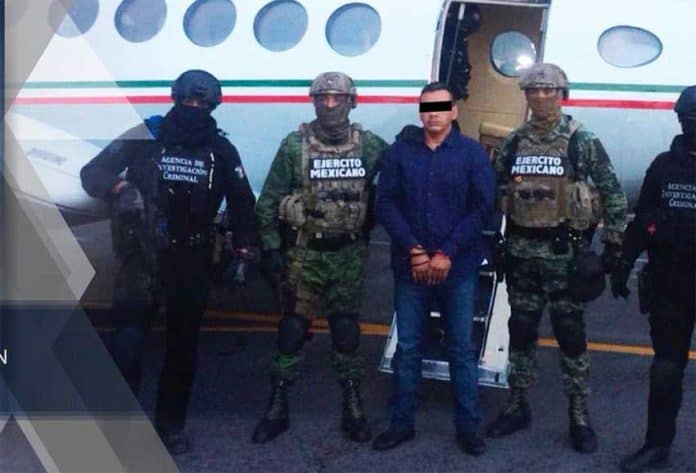
Cartel boss Rodríguez.

A regional leader of the Jalisco New Generation Cartel (CJNG) arrested in Zapopan, Jalisco, is believed responsible for the January 31 disappearance of three Italian citizens.

The arrest of José Guadalupe “Don Lupe” Rodríguez Castillo was the result of a joint investigation by the Federal Police and the National Defense Secretariat and carried out by agents from the Criminal Investigation Agency (AIC).

AIC chief Omar García Harfuch said “El Quince,” as Rodríguez is also known, is believed to have controlled cartel activities in the Jalisco municipalities of Ciudad Guzmán, San Gabriel, Tecalitlán, Tolimán, Tonila, Tuxpan Zapotiltic and Zapotitlán de Vadillo.

The gang leader was also active in neighboring Colima state in the municipalities of Minatitlán and Tecomán, and in the capital, Manzanillo.

García also said that Rodríguez is presumed to be linked to the disappearance six months ago in Tecalitlán of Raffaele Risso, 60, his son Antonio, 25, and his nephew, Vincenzo Camino, 29.

Investigations have indicated that Tecalitlán municipal police were on Rodríguez’s payroll. Four officers were arrested in February.

They gave evidence that the three Italian citizens were intercepted in Tecalitlán and taken to Jilotlán de los Dolores to be delivered to the CJNG. The officers also stated they were under orders of former police chief Hugo Enrique Martínez Muñiz.

The cartel boss Rodríguez was arrested in the company of an accomplice, José Guadalupe Rodríguez Doroteo.

Both have been transported to Mexico City and placed in the custody of the Special Prosecutor for the Investigation of Organized Crime (SEIDO).

Source: Milenio (sp)

Armed civilians wake up Guaymas residents with gunfire

0
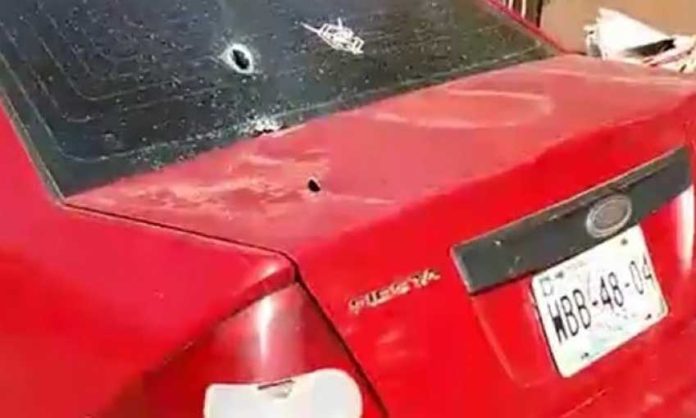
One of 11 vehicles damaged by gunfire in Guaymas.

No explanation has surfaced for a demonstration of fire power by armed civilians early Sunday in Guaymas, Sonora.

Gunfire in San Vicente panicked residents at 6:00am who awoke to a hail of bullets being fired at homes and vehicles in the area, but no one was hurt.

Eleven vehicles were damaged in the process. Police found dozens of spent cartridges of assault rifles at the scene.

They said no one has filed a complaint for fear of reprisals.

Meanwhile, increased crime in both Guaymas and Empalme have triggered a joint operation of vigilance and prevention by federal, state and provincial security forces in the two municipalities.

The operation has been put in place by the Sonora Coordination Group, a security coordinating agency. Checkpoints have been installed to look for stolen vehicles, illegal weapons and drugs.

Increased police patrols have been initiated in high-crime areas and in tourist and commercial areas including Miramar beach, Las Playitas, San Carlos and El Cochorit beach.

Source: El Imparcial (sp)

Narcos appeal, get new sentences: one will serve 107 years instead of 185

0
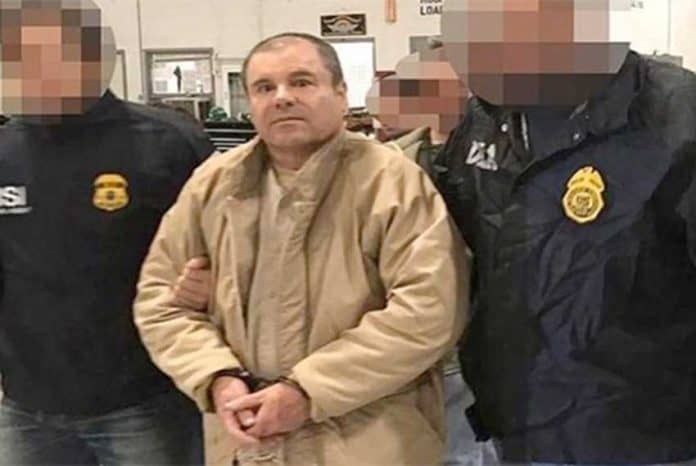
The three convicted gangsters took orders from El Chapo Guzmán.

Three Sinaloa Cartel gangsters who appealed their 2015 convictions for homicide, drug trafficking, kidnapping and weapons offenses didn’t gain much: original sentences of 107 to 185 years in prison were reduced to 77 to 107 years.

Mario León González, Aarón Díaz Hernández and José Luis Hernández Gutiérrez

were handed down new sentences of 107, 97 and 77 years respectively and fines ranging from 12,000 to 19,000 pesos (US $650 to $1,025).

The three took orders from former cartel boss Joaquín “El Chapo” Guzmán, who is awaiting his own trial in a New York jail.

Not in jail and still on the loose are the two Sinaloa Cartel operators who escaped a Culiacán prison a week ago by walking out the front door, armed and wearing prison guard uniforms.

Video footage leaked to journalist Denise Maerker revealed how the two, considered highly dangerous, made their getaway. They had plenty of help.

Surveillance video of their cell shows the two men continually consulting their cell phones — prohibited devices inside the prison — the night of the escape. Later, a guard enters the cell and delivers a black bag containing guards’ uniforms and hand guns.

After changing, one of the prisoners inhales what appears to be cocaine while the other looks up at the surveillance camera and smiles.

A guard arrives and escorts them through several checkpoints. Another guard joins them at the last of these and the four leave the building, board waiting vehicles and drive off toward the city.

Source: Milenio (sp), El Universal (sp)

7 die after 11 passengers thrown from back of pickup in Chihuahua accident

0
Scene of Sunday's fatal accident.

Seven young people were killed in the city of Chihuahua early Sunday morning when they were thrown from the back of a pickup truck after the driver lost control.

Five of the passengers, who were aged 18 to 24, died at the scene; the remaining 11 were rushed to hospital in critical condition. Two later died and the other four were in intensive care late yesterday.

Police said evidence shows the Chevrolet Silverado truck was traveling at an excessive speed when the driver lost control and struck a retaining wall.

The driver and her boyfriend fled the scene, police said.

The occupants of the truck are believed to have been at a party and were on their way to a private home when the accident occurred at the intersection of Nogales and Venceremos streets.

Source: El Universal (sp)

Intelligence reports identify 15 cartels behind the wave of violence

0
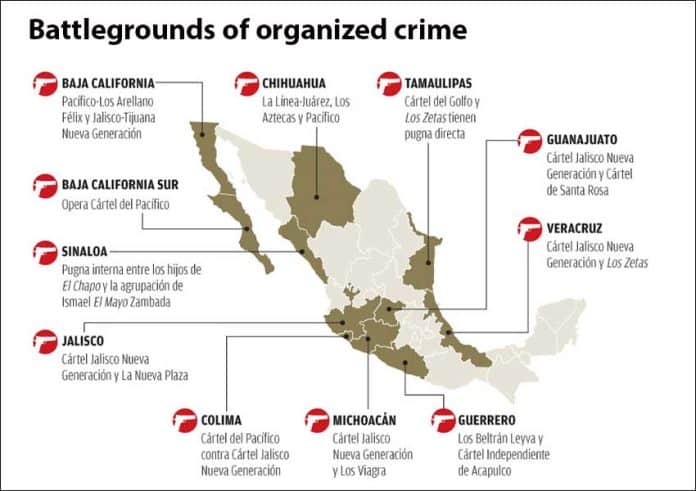
Territorial disputes: 15 gangs are engaged in turf wars.

Fifteen warring drug cartels are behind the wave of violence sweeping across parts of Mexico, according to new intelligence reports from the National Security Commission (CNS).

The reports, updated this month and informed by intelligence provided by the Federal Police and the Secretariat of National Defense (Sedena), identify turf wars between criminal organizations to control the “plaza” — and consequently criminal activity — in different regions of the country as the main reason for rising levels of violent crime.

Internal disputes within cartels and the splintering of criminal organizations into smaller groups are other factors driving up crime rates, National Security Commissioner Renato Sales said.

Guanajuato has become the epicenter of a war between the Jalisco New Generation Cartel (CJNG) and the Santa Rosa de Lima Cartel that is fueled mainly by the ambition to control the lucrative pipeline petroleum theft racket and to a lesser extent drug trafficking, the CNS said.

Violence has surged in the state this year, with more intentional homicides in the first six months of the year than the total number recorded for all of last year, according to the National Public Security System (SNSP).

Farther north, the Sinaloa Cartel — formerly headed by Joaquín “El Chapo” Guzmán — is involved in bloody infighting between one faction headed by the infamous capo’s sons and another led by Ismael “El Mayo” Zambada.

El Chapo was extradited to the United States in January last year and is currently awaiting trial on charges of drug trafficking, money laundering, kidnapping and murder.

In Baja California, high homicide numbers are attributed to a turf war between an alliance made up of the Sinaloa and Arellano Félix cartels and another consisting of the CJNG and the Tijuana New Generation Cartel.

To the east in Chihuahua, and especially in the border city of Ciudad Juárez, a battle between La Línea and Los Aztecas gangs to control the “plaza” is responsible for a large part of the current violence.

The former gang is a unit of the Juárez Cartel while the latter, also known as Barrio Azteca, was previously in alliance with La Línea.

In Guerrero, the port city and tourist draw Acapulco continues to be plagued by violence due to a dispute between the Beltrán Leyva Cartel and the Independent Cartel of Acapulco to control drug trafficking and extortion.

In Jalisco, where violence has also increased this year, the CJNG and the New Plaza Cartel are engaged in a violent dispute.

The former was allegedly responsible for the abduction and murder of three film students near Guadalajara in March and the attack in May on Luis Carlos Nájera, the former attorney general of Jalisco who is now the state’s labor secretary.

Turf wars in Tamaulipas between the Gulf Cartel and Los Zetas; in Veracruz between the CJNG and Los Zetas; in Colima between the Sinaloa Cartel and the CJNG; in Michoacán between Los Viagra and the CJNG; and in Durango between the Sinaloa Cartel and the Cártel del Poniente (West Cartel) are behind a high number of the homicides in those states, the CNS said.

Other cartels the commission cited in its reports are the Cártel del Noreste (Northeast Cartel) — a faction of Los Zetas — and La Familia Michoacana.

Rising levels of violent crime in Ciudad Obregón, Sonora, was the trigger for a large protest in that city yesterday.

Hundreds of demonstrators, mainly dressed in black, marched for two kilometers from the north of the city to the municipal headquarters.

Among the participants were family members of scores of victims of homicide and kidnappings.

Homicide figures for the first six months of 2018 were up 15% compared to the same period last year, making the January to June period the most violent of at least the past two decades.

Source: Milenio (sp)

Mexico continues to lead the medal standings at Barranquilla games

0
Joana Jiménez beams after her gold-medal performance in synchro swimming.
An ecstatic Joana Jiménez after her gold-medal performance in synchro swimming.

Mexico continues to dominate the Central American and Caribbean Games in Barranquilla, Colombia, enjoying a healthy lead in the medal count.

With almost a week of competition still remaining, Mexico had 207 medals as of late this afternoon: 86 gold, 72 silver and 49 bronze.

Host-nation Colombia is in second place with 144 medals followed by Cuba with 113.

Swimmer Fernanda González picked up five medals in Barranquilla this year and in the process became Mexico’s greatest ever performer at the games, which are held every four years.

A 28-year-old backstroke and medley swimmer, González now has 20 medals from four appearances at the Central American and Caribbean Games, including 10 gold.

“The truth is I’m very satisfied that I’ve got 20 Central American medals during my entire sporting career, it sounds easier than it is . . . the truth is that each medal cost me sweat and tears and each medal has a special meaning . . .” she said.

Mexico won a total of 43 medals in the pool, including 15 gold, making swimming the country’s most successful sport so far at this year’s games.

Shooting, in which Mexico’s competitors have won 21 medals including 12 gold, has been the second most fruitful sport while the taekwondo contingent matched González’s career medal tally by winning 20 medals, including eight gold, to make the martial art the third most successful sport so far for the 675-member delegation.

Mexico has also done well in diving, picking up 13 medals including six gold; equestrian, nine medals including five gold; modern pentathlon, six medals including two gold; racquetball, six medals including five gold; rowing, 11 medals including six gold; squash, nine medals including five gold; and weightlifting, 14 medals including four gold.

Among the sports that will feature in the final week of competition and for which medals are still up for grabs are archery, athletics, badminton, baseball, boxing, fencing, judo, tennis and wrestling.

The Mexican women’s soccer team will also be looking to add another gold medal to the tally when they face Costa Rica in the final on Monday night.

The games, which were first held in Mexico City in 1926, will conclude on August 3.

Source: Milenio (sp)

At least 15 deaths in 5 states attributed to two-week-old heat wave

0
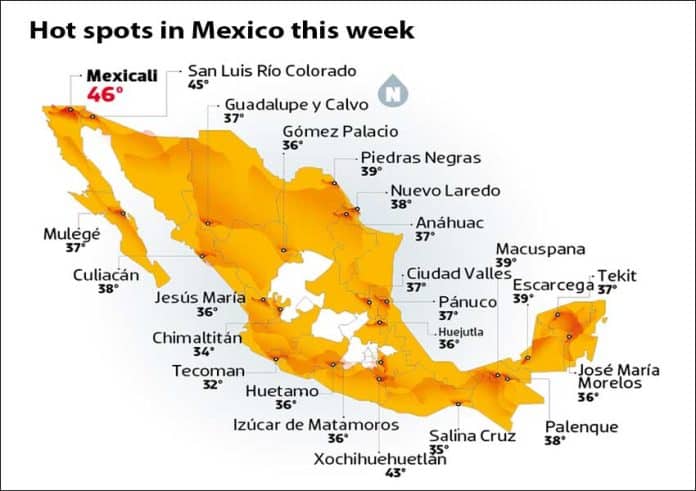
High temperatures recorded around Mexico this week.

In much of Mexico these are the dog days of summer, or canícula in Spanish, but it’s been a brutal period since it began 13 days ago.

At least 15 people have died in Baja California, Sonora, Sinaloa, Tamaulipas and Tabasco due to extreme heat.

Temperatures in Baja California, where seven people have died, have been recorded as high as 54 C.

The northern state reported a total of six heat-related deaths in all of last year. In addition to the seven deaths there have been 29 reports of people falling ill due to the high temperatures.

They have also taken their toll in Sonora, where the Health Secretariat has reported five deaths during the current hot spell.

In Sinaloa, authorities continue to investigate the death of a two-year-old girl who was found unconscious inside a vehicle in Los Mochis. Preliminary reports indicate that the toddler was playing hide-and-seek and chose the SUV as a hiding place.

It is believed that the girl was unable to open the door to get out during midday temperatures of 38 C.

In the Gulf of Mexico state of Tabasco, where temperatures have reached 40 C, a five-year-old girl with cerebral palsy died due to heat stroke.

The hot spell is also affecting an estimated 8,500 families in Teapa that take their water from the Puxatán River, whose levels have seen a drastic drop. A population of 30,000 living in an area around the river could also be affected if the levels continue dropping.

The national Civil Protection office has declared a state of emergency in 640 municipalities in 24 states due to the heat wave, freeing up emergency funds for health and food requirements of people affected.

Authorities advise that the most vulnerable — children and seniors — remain indoors as much as possible.

The National Meteorogical Service forecasts the hot weather will continue in at least 25 states.

Source: El Universal (sp)

Tamaulipas offers 85 million pesos in rewards in 85 missing-persons cases

0
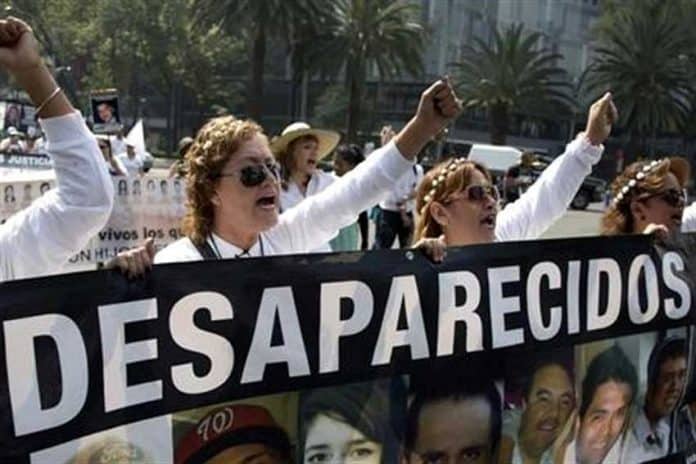
Families protest against disappearances.

The Tamaulipas government is offering 85 million pesos (US $4.5 million) in rewards in the cases of 85 missing persons, most of whom disappeared between 2010 and 2015.

The state’s Attorney General’s office (PGJE) said that 69 of the persons sought are men, 16 are women and 36 of the victims were aged between 21 and 30 when they last had contact with their families.

The government will pay 1 million pesos (US $53,600) to anyone who provides information that leads to any of the 85 being located, the PGJE said.

All but 12 disappeared during the six-year term of former state governor Egidio Torre Cantú, who left office in September 2016.

The remainder of the listed cases occurred during the term of current Governor Francisco García Cabeza de Vaca.

The 85 persons for whom the rewards are offered represent just 1.4% of the 5,999 people who have officially been reported as missing in the northern border state.

According to the National Registry of Data on Missing and Disappeared Persons, no state has more missing persons.

Among those listed in the rewards program are 38-year-old Carlos Ornelas Puga, who was abducted from a church in the municipality of Jiménez in November 2013, Milinaly Piña Pérez, who at age 13 disappeared in August 2014 while traveling on the Ciudad Victoria-Ciudad Mante highway, and journalist and news outlet owner Víctor Calzado González who disappeared in September 2011.

The full list of the 89 missing persons covered by the rewards program is published on the PGJE website.

Another wave of missing persons cases has been reported in Tamaulipas this year.

The United Nations said in May that there are “strong indications” that federal security forces were responsible for the disappearance of 23 people, including at least five minors, in Nuevo Laredo between February and May.

The federal Attorney General’s office launched an investigation and after finding the bodies of nine people who were reported missing, turned its focus to the Zetas drug cartel.

A local activist and member of a collective made up of the family members of disappearance victims claims that the presence of the military on the streets of Tamaulipas has led to more rather than less crime in the state.

“The interference of the army in police duties has worsened the situation, not lowered the rate of violence or drug trafficking, homicides or kidnappings. On the contrary, they’ve increased,” Guillermo Gutiérrez Riestra said.

Across Mexico, there are now more than 37,000 missing persons, a figure that has risen by 40% since 2014.

Source: Reforma (sp)

Manatee rescue plan under way in Tabasco as death toll reaches 27

0
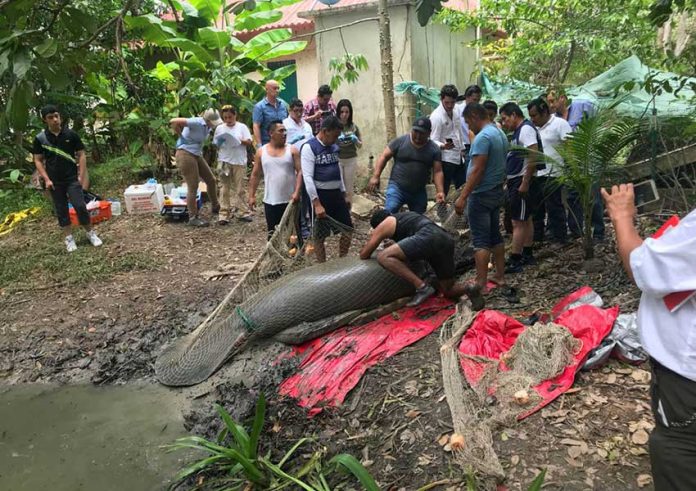
A manatee rescue plan is under way in Tabasco.
Rescue operation has begun in Tabasco.

Seven more manatees have died in the last week in Tabasco, bringing the total to 27 and triggering an official rescue plan.

Twenty-one have been found dead in the Bitzal River and Maluco rivers area in the municipality of Macuspana, where 30 are estimated to remain. The reason for the deaths has not been established.

Specialists from the National Association of Breeding Centers and Zoological Parks (Azcarm) and the Juárez Autonomous University of Tabasco (UJAT) have joined state and federal environmental officials in an effort to locate and capture the mammals, sometimes known as sea cows.

Captured specimens will be weighed and measured, and readings of their breathing and heart rate will be monitored during the transfer.

The specialists will also collect samples of nasal and anal tissue, blood and feces and, if possible, urine for analysis.

The manatees will be transported by water to the Tres Brazos Station at the Pantanos de Centla Biosphere Reserve where they will be kept in artificial pools containing river water until the cause of the deaths can be determined.

Source: El Universal (sp)

Military base won’t be sold; mayor-elect proposes addition to Chapultepec Forest

0
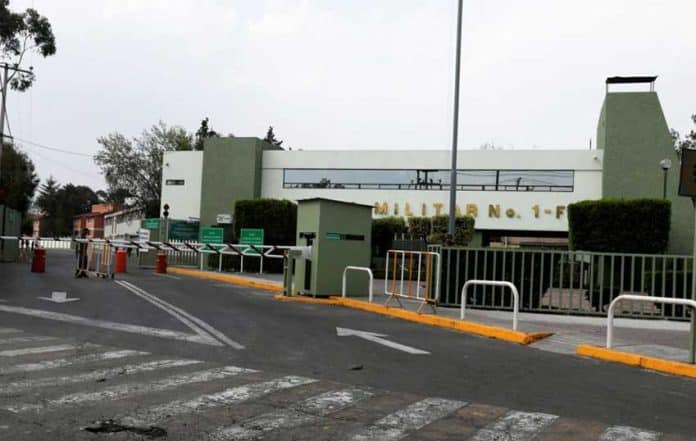
The former military base that was to be put up for sale.

What was slated to become one of the biggest real estate developments in Latin America might well end up as the fourth section of the Chapultepec Forest in the country’s capital.

Valued at US $1 billion and described as the most lucrative land sale in Mexico ever, that sale of the 125-hectare parcel of land in Mexico City was cancelled yesterday by the seller, the federal government.

The government said in January that the land, formerly a military base, was no longer required by the army or any other public institution, and that the monies obtained from its sale would be transferred to the federal treasury.

The land is now in being eyed by Álvaro Obregón borough chief-elect Layda Sansores San Román, who is planning to discuss the property with president-elect Andrés Manuel López Obrador and Mexico City Mayor-elect Claudia Sheinbaum Pardo.

Sansores intends to ask López Obrador to turn over the property to Mexico City to allow it become an additional part of the Chapultepec Forest.

She said she welcomed the cancellation of the sale, which avoided the land being used in a manner “contrary to the common good and at the expense of the environment . . . and the wellbeing of the people of Álvaro Obregón and Mexico City.

The sale of the base had met with opposition from local residents who argued that its development would place further pressure on already stretched infrastructure.

Source: El Financiero (sp)