Home Blog Page 2159

Calakmul jade mask has returned to Campeche after 14 years

0
The jade mask is back in Mexico and will be on permanent display in Campeche.

The Calakmul jade mask, an iconic and representative object of the Mayan culture, has returned after 14 years to Campeche, where it will be on permanent display.

The jade mosaic mask had spent the last eight years traveling around the world as part of an exhibit of Mayan artifacts, and as an ambassador of Campeche and Mexico.

During the previous six years it was on loan to other cultural institutions.

“The mask had been on loan for 14 years in places around the world, and it finally is back in Campeche,” said Claudia Escalante Díaz, director of museums in Campeche for the National Institute of Anthropology and History (INAH)

First discovered in 1984, the jade mask was part of the offerings left in the richest burial area in Calakmul, dedicated to King Yuknoom Yich’aak K’ak’, the last Mayan warrior king.

It was one of a set of 10 found in the tomb, along with other offerings that included jade ear ornaments, shell and bone beads, spiny oyster shells, eccentric obsidian blades, fine ceramics and the remains of wooden objects.

The burial of the king has been dated to the eighth century AD, and the presence of jade items has allowed archaeologists to theorize about the trading relationships the people had at that time.

The well-traveled mask is to be permanently displayed in the Museum of Mayan Architecture, housed in the Baluarte de la Soledad, an 18th-century fortification and the most important on the four gateways of the walled city of Campeche, called Puerta de Mar.

Source: Noticieros Televisa (sp)

Transpeninsular Cancún-Palenque train generates high expectations

0
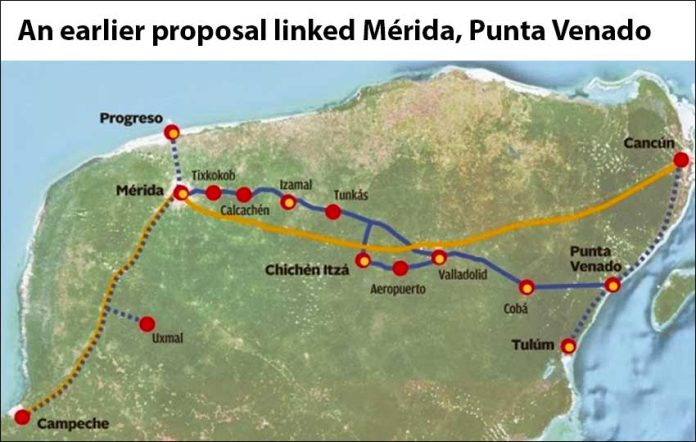
Solid blue indicates the route of an earlier train proposal
Solid blue indicates the route of an earlier train proposal; dotted blue indicates future routes.

President-elect Andrés Manuel López Obrador’s proposed Cancún-Palenque tourist train project has generated a positive reaction from business groups but received a more circumspect response from an environmental organization.

A Quintana Roo-based newly-elected senator for the López Obrador-led Morena party announced Saturday that the project would begin next year and that construction would take six years.

There were reports that the 830-kilometer railway would cost 100 billion pesos (US $5.2 billion) but the incoming government’s National Project 2018-2024 document puts the total investment needed at a more modest 64.9 billion pesos (US $3.38 billion).

The project is slated to be completed in four stages and will require cooperation between the federal government, private companies and communal landowners known as ejidatarios. It is intended to boost tourism and the economy in the south of Mexico.

The first stage would be a double track between Cancún and Tulum with six stations on the route and the second a single track between Tulum and Bacalar, with two additional stations. The third and fourth stages would also be single track and connect Bacalar and Escárcega, with two intermediate stations, and Escárcega and Palenque with another two stations.

Horacio Maya Terán, a vice-president of the Mexican Chamber of the Construction Industry in Quintana Roo, said that an infrastructure project of such magnitude must be welcomed because in addition to the benefits its construction brings, it will have a positive spillover on other parts of the economy.

Miguel Ángel Lemus, vice-president of the Caribbean branch of the Business Coordinating Council (CCE), said the construction of the railway will make investment in the region between Cancún and Tulum even more attractive than it already is and trigger other projects in surrounding areas.

However, the head of the environmental organization Yax Cuxtal looked beyond the project’s predicted economic benefits.

Aniceto Caamal Cocom said land would have to be expropriated and rights of way would have to be obtained, both of which would have an impact on communities on the Yucatán Peninsula.

He said that Yax Cuxtal will ask the incoming federal administration to provide all the relevant information about the project to the communities that will be affected.

The National Project document says there must be a strategy for the acquisition and integration of land and that among the project’s aims will be to “avoid negative impacts that could arise from a lack of planning.”

Roberto Cintrón, president of the Association of Hotels of Cancún and Puerto Morelos, said that once the new government takes office it must provide greater detail about where the funding for the project is coming from and the ways in which the private sector will be able to participate.

A transpeninsular train project was one of the infrastructure projects planned by the current federal administration, but was postponed by budget constraints. Its first phase would have connected Mérida with Punta Venado, Quintana Roo, between Tulum and Cancún.

Source: El Economista (sp)

Wibit Sports’ floating water park is new attraction in Cancún

0
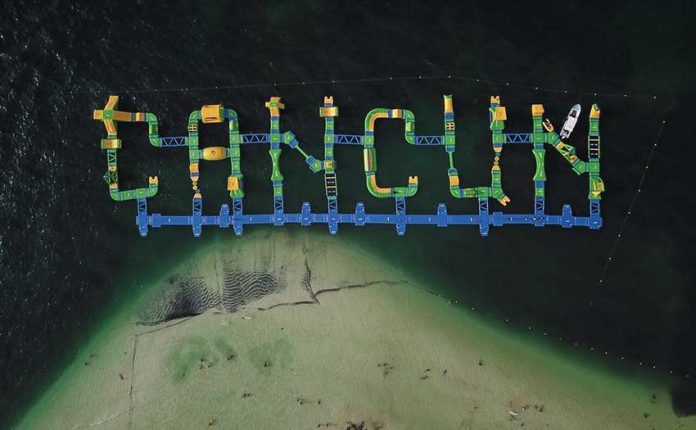
Aerial view of the new water park in Cancún.

There’s more fun on the beach this summer in Cancún with the opening of the city’s first inflatable waterpark.

The floating water park, located at Langosta beach, is operated by the German firm Wibit Sports, whose aquatic playgrounds can be found worldwide.

Known as Float Fun Cancún, the park’s aquatic games spell out the word Cancún, and were enjoyed by adults and children alike when it opened on the weekend.

The Wibit water park experience has been successfully implemented before in Mexico, in Playa del Carmen and Cozumel, as well as in Bucerías, Nayarit. More than 500 similar Wibit Sports parks can be found in 80 countries around the globe.

The semi-portable inflatable platforms are anchored using a low-impact system designed to leave the seabed and its plant and animal life as undisturbed as possible.

The floating park has permits and environmental impact assessments required by Semarnat, the Secretariat of the Environment and Natural Resources.

The project also operates under environmental mitigation and compensation regulations.

Activity on the beach in June sparked citizens’ concerns that it was being privatized, said a report in Riviera Maya News. Fonatur, the nation tourism promotion fund, replied with the assurance that that was not the case.

Preparations were under way for the installation of the water park for which it was necessary to close temporarily the washrooms and parking area.

Wibit Sports submitted a total of 13 sites for the installation of its water parks in Cancún, but the federal authority approved only four of them. Two of those will be located at Chac Mool beach and Plaza Forum while elsewhere in the state three will be installed in Playa del Carmen and one in Tulum.

Source: El Financiero (sp), Riviera Maya News (en)

CFE backs off on legal action over regulations governing sale of solar energy

0
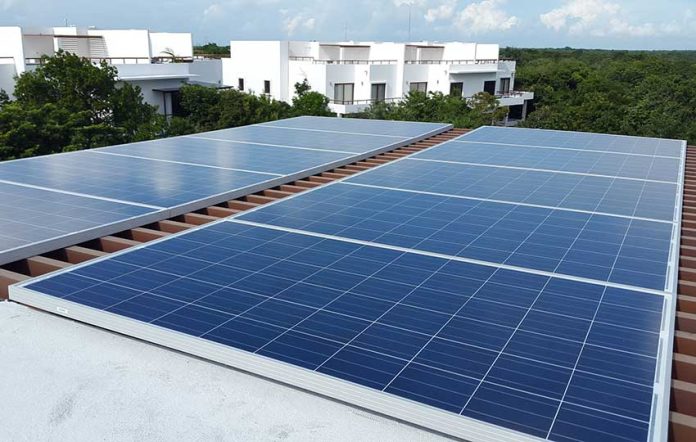
CFE removes disincentive for installation of solar panels.

The Federal Electricity Commission (CFE) has withdrawn its legal opposition to the regulations governing the sale of solar energy up to 500 kilowatts, meaning that people with small solar systems will soon be able to sell electricity they generate back to the state-owned company.

In April last year, the CFE filed an injunction against regulations drawn up by the Energy Regulatory Commission (CRE) for the method used to calculate the rates it would pay to solar energy generators, arguing that they led to a loss of income because of high transmission costs.

The legal action effectively meant that people using small solar systems couldn’t sell the energy they produce to the CFE, a situation which the general secretary of the National Solar Energy Association (ANES) said in April was “holding back investment” in the sector.

It was also a barrier to unlocking the full capacity of the distributed generation market in Mexico, whose potential value is estimated to be more than US $500 million.

With the withdrawal of the CFE injunction, three legally established self-generation electricity schemes can now be implemented.

Under net metering, solar energy which a customer generates is measured so that any excess can subsequently be returned to the same customer to meet future energy consumption needs, likely at a time when conditions for solar generation are less favorable.

Under net billing, solar generators can sell excess electricity they produce to the CFE and receive a payment from the company in cash that is calculated according to the rate set by the CRE.

Thirdly, solar generators who don’t need any of the energy they produce can send all their electricity into the national grid and receive corresponding monetary compensation, again according to the rate set by the regulatory authority.

The ANES said the CFE’s withdrawal of its injunction is a sign of the maturity that the distributed generation market has reached, adding that achieving growth in the sector of 200% or more is now possible.

According to the CFE, it has signed 60,000 net metering contracts with power generators who have installed solar panels with less than 500 kilowatts capacity on the roofs of their homes or on those of commercial premises.

The withdrawal of the injunction will allow those people to benefit financially from the energy they produce.

The CFE also said that 420,000 high-consumption customers could now take advantage of installing solar panels on their roofs with the confidence that by selling the excess electricity they produce, they will get back their initial investment in four to seven years.

It is estimated that by the year 2030, generated distribution capacity in Mexico could reach 19,000 megawatts and that the sector could create one million jobs due to an increased demand to purchase solar systems and have them installed.

The CFE now has a period of 100 days within which it must publish details of its billing and payments for the three energy sale schemes while the CRE has until the end of the year to announce any changes to the existing rate calculation method.

Source: El Economista (sp)

New military police headquarters opens officially in Guanajuato

0
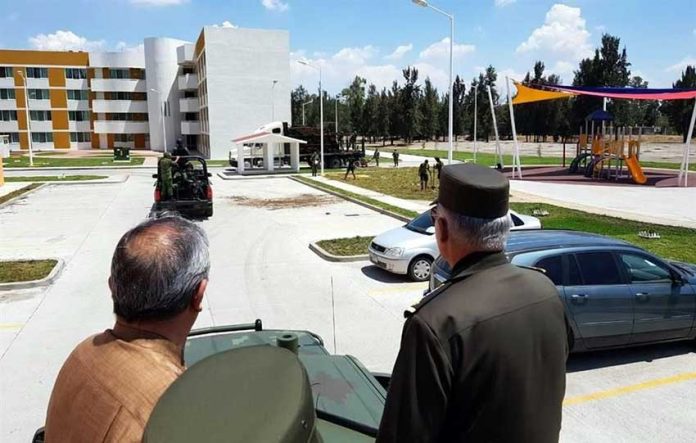
New military headquarters in Irapuato.

A military police brigade will officially start operating in the state of Guanajuato following today’s dedication of a new 450-million-peso (US $23.4-million) headquarters by President Enrique Peña Nieto.

First announced in late 2016, construction of the new facility started last May, financed by the three levels of government and a group of railway companies.

Located in the municipality of Irapuato, the new headquarters has been operational since February. Its contingent of 3,200 personnel are tasked with stopping train robberies and illegal pipeline tapping among other crimes, army officials said.

Both crimes, along with escalating acts of violence, have been on the rise in recent years in the Bajío region state.

The number of intentional homicides has skyrocketed 130% in the first five months of the year compared to all of 2017: there were 436 cases last year but between January and May this year the total shot up to 1,005.

Starting today, the military police will be able to respond to crime reports in any of the 46 municipalities of Guanajuato, and will be in charge of security in the state’s industrial corridor.

They will also be ready to respond to natural disasters, in accordance to the army’s disaster relief DN-III plan.

The new military facility is the creation of Commander Miguel Ángel Patiño, who implemented a similar project in Nuevo León. Operational since 2016 and also manned by 3,200 officials, the Nuevo León brigade oversees security in the state and in neighboring Coahuila, San Luis Potosí and Tamaulipas.

Source: Reforma (sp)

Economic resurgence seen with reduction of IVA at northern border

0
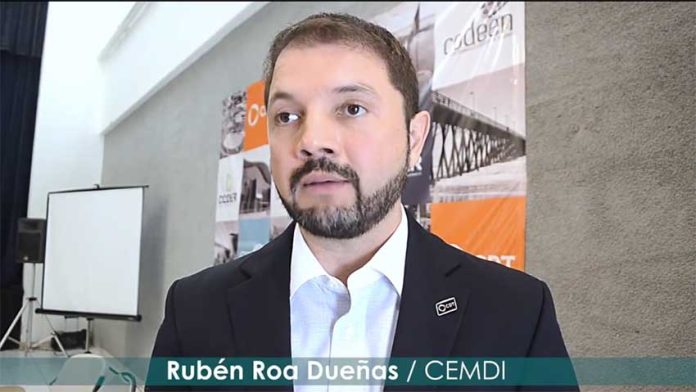
Roa Dueñas: reducing IVA will leave a shortfall.

President-elect Andrés Manuel López Obrador’s plan to cut the value-added tax (IVA) rate from 16% to 8% near the Mexico-United States border could lead to an economic resurgence in the region, according to experts.

Carlos Urzúa, the prospective finance secretary in Mexico’s next government, said Friday that the free zone would extend around 30 kilometers south from the border between the two countries, taking in cities such as Tijuana, Mexicali, Ciudad Juárez and Reynosa.

The free zone is one of a series of measures López Obrador proposed during the election campaign that are aimed at boosting the economy in the north of the country and consequently slowing down migration to the United States.

Domingo Ramos Medina, president of the Baja California State College of Economists, said that after the current federal government raised the IVA in the border region from 11% to 16% at the start of 2014 — bringing it into line with the rest of the country — economic growth initially slowed because production costs went up and residents’ purchasing power went down.

He added that the introduction of a lower tax rate would have a positive effect on factors of production, although he also said that growth in the border region is already generally higher than the national average,

The general director of the Metropolitan Center for Economic and Business Information (Cemdi) said that adoption of the reduced tax rate would translate into families in the area having more money to spend on consumer goods, adding that lower prices would encourage residents to shop at home rather than across the border.

“It would benefit the competitiveness of our region in terms of avoiding the mass exodus of consumers to the United States and it would improve the competitive position of our companies in . . . the export of goods and services,” Rubén Roa Dueñas said.

According to the College of the Northern Border, a university and think tank, Mexicans who live near the border spend US $7 billion annually in the United States, meaning that even if a fraction of that amount is spent in Mexico instead, the benefit to the local economy would be significant.

However, the plan to cut the tax rate doesn’t come without risks for the incoming government, which has been eager to show that it will be a prudent economic manager. 

Cemdi data shows that halving the IVA in the border region would lead to an annual reduction of tax revenue of 30.3 billion pesos (just under US $1.6 billion) if overall economic growth of 2.2% is maintained.

Roa Dueñas said that the government would consequently have to make a choice between three different options: finding additional income from other sources, cutting the federal budget or taking on more debt.

He warned that the government would have to pay close attention to the macroeconomic environment to avoid being placed in a vulnerable situation because experience has shown that a reduction in tax revenues can be particularly harmful during an economic contraction.

According to the document Nation Project 2018-2024, in addition to establishing a duty-free zone, the López Obrador-led administration will seek to drive economic growth in the northern border region by promoting infrastructure security, the establishment of industrial parks and freedom of movement “in an environment of deregulation.”

Within one to three years, the goals of the project are to capture between $5 billion and $10 billion of the services and retail market in the border region of the United States, regain part of the revenue lost to consumption in the U.S., increase investment as a percentage of the regional GDP by 18% to 24% and attract $5 billion to $10 billion in foreign direct investment.

Source: El Economista (sp)

IEnova wins contract for million-barrel fuel terminal in Sinaloa

0
IEnova CEO Sacristán.

The Mexican energy firm IEnova has won a contract to build and operate a US $150-million fuel terminal in Topolobampo, Sinaloa.

A subsidiary of United States-based Sempra Energy, the company said today the first phase of the terminal would feature capacity of one million barrels of fuel, principally gasoline and diesel. Future expansion could allow for additional storage for other products such as petrochemicals.

The contract for the project, which is to be completed by the last quarter of 2020, was awarded by the Topolobampo port administration, a federal port authority.

IEnova CEO Carlos Ruiz Sacristán said the terminal would improve the state’s access to fuel sources, contribute to its energy security and encourage competitive prices for consumers.

It will be IEnova’s fifth fuel storage terminal in Mexico.

Source: Notimex (sp), Reuters (en)

LIghtning strikes kill five people in Michoacán

0
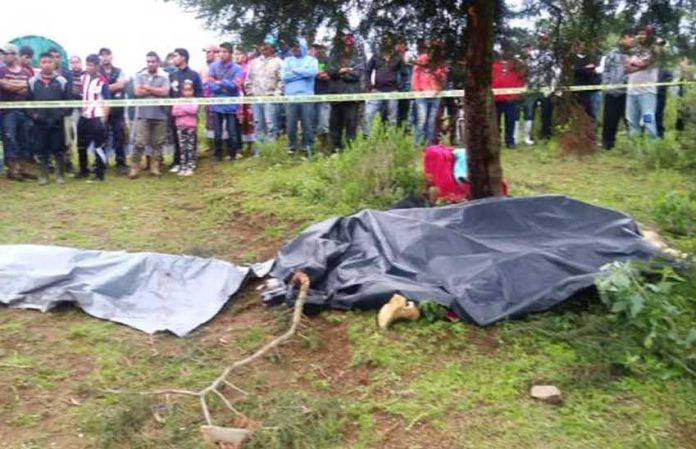
Scene of a fatal lightning strike in Michoacán yesterday.
Scene of a fatal lightning strike that killed four people yesterday.

Five people died yesterday in Michoacán after they were struck by lightning in two separate incidents.

A family of four was killed by a lightning strike yesterday afternoon as they took shelter beneath a tree during an electrical storm near Urapicho in Paracho. The state Civil Protection office said two adults aged 26 and two children aged three and six were herding sheep when the storm suddenly struck.

Pedro Carlos Madujano said they died instantly when a lightning bolt struck the tree.

A 25-year-old man was killed in Zitácuaro when struck by lightning while working outdoors.

Civil Protection authorities issued a warning against sheltering beneath trees during electrical storms and urged people to avoid outdoor activities whenever possible.

Source: El Heraldo (sp), Reforma (sp)

15 people dead after series of attacks on bars in Nuevo León

0
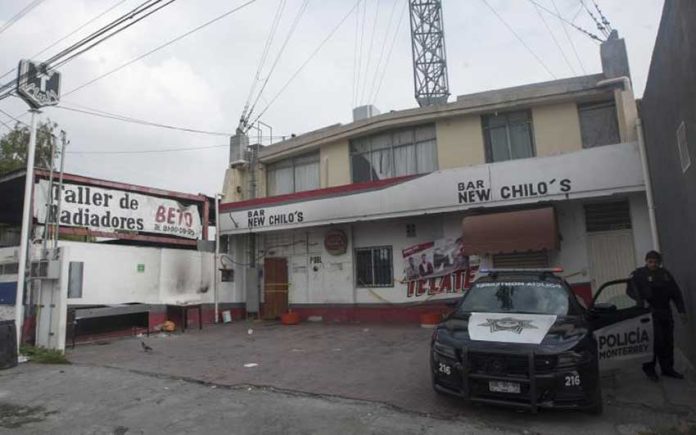
One of the bars attacked on the weekend in Nuevo León.

Extortion is believed to have been behind a night of violence Saturday in three municipalities in Nuevo León in which 15 people were killed. Twelve of the victims died in attacks on bars and cantinas.

Ten people were wounded as suspected organized crime gangs launched attacks on six bars.

Three more people were assassinated in the municipalities of Cadereyta and Linares.

The offensive began just before 10:00pm Saturday at a bar in front of the central bus terminal in Monterrey. It was followed almost immediately by another at a bar some 400 meters away.

More attacks followed in Juárez, Monterrey and Apodaca.

State Security Secretary Bernardo González said yesterday the motive for the attacks appeared to be extortion by organized crime. There will be increased state police presence in the city center of Monterrey in response, he said.

González called on municipal governments to continue working together in coordination to combat crime. He said those efforts have paid off in a reduction in homicides. June saw the least number of homicides recorded so far this year.

Source: El Universal (sp), Expansión (sp), Reforma (sp)

Joys of construction: the mysterious case of the bending security bars

0
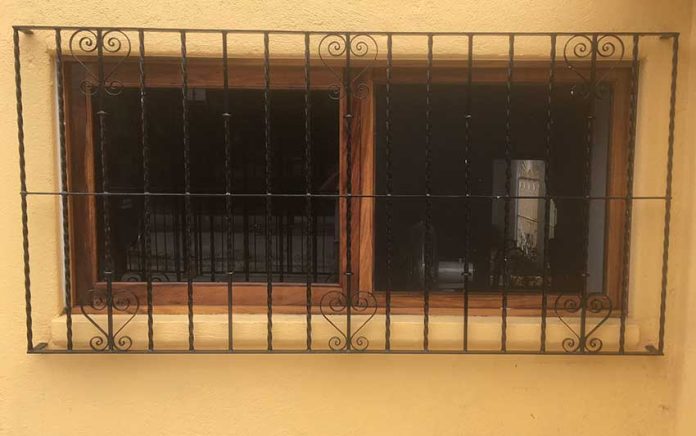
Security bars on a Mexican home. Unlike those in the story, these are mounted outside the frame.

Last year I graced these digital pages with a five-part series entitled The Joy of Construction in Mexico.

My years of construction experience, both here and in the U.S.A., along with 12 years of being a home inspector in Mexico have provided me with fertile ground to propagate my humorous missives.

The number of emails I received was a strong indicator of the huge popularity of this series.

However, last summer my days as a regular columnist here at Mexico News Daily came to an abrupt end when I became involved with a very special construction project. Well, actually it is an elaborate remodel and construction project for the large home chosen by my Captured Tourist Woman, and where we currently reside.

It sat empty and unmaintained for several years after the aged owner died, so occasionally bits of plaster rain down from the ceilings of several rooms. And because the rainy season was the perfect Mexican time to cut large holes in an older house, I traded my keyboard for a cattle prod, and went to work.

Since this is my first column for MND in almost a year, I decided to continue with a similar theme: fun with construction in the land of mañana.

Even though my ongoing renovation project now requires significant time, I still manage a few home inspections on the side.

So about seven months ago I got a call from a man requesting a specific type of home inspection. He said that he and his wife had owned the subject property for several years, but they were quite worried because something was very wrong with the structure.

He would not reveal the nature of the problem he wished me to examine lest I fall into the trap of preconception. How could I pass up something so deliciously mysterious?

Later that day, I met him and his wife in front of a two-story apartment building and learned that their condo made up half of the ground floor of the building. They first asked me to walk around the building and see if I could detect any anomalies; that was the word they used, “anomalies.”

I politely said nothing, but of course I thought to myself, anomalies? I live in Mexico; some days my entire life is anomalous.

As I slowly strolled around the building, I began to notice some of the security bars at the windows looked to be slightly bowed. The bars were inside the windows, and on closer inspection, I saw that all the bars were bowed in the center, about three centimeters out of plumb. This indicated some serious deflection.

As I turned to the owners, my incredulity evident, the husband gave a slight nod while his wife exuded some poorly contained anxiety. Although I don’t think myself cowardly, my heart rate quickened as we entered the apartment, and I kept telling myself that an instantaneous and catastrophic structural failure is a rare event.

Of course, I sucked it up and remained calm, not wanting to show fear in the presence of my new clients, whom I hoped would live long enough to pay me.

They both explained that over the past month they had called in four different engineering companies. Each had examined the structure and each had provided structural solutions for the obvious problem. Of course, each solution offered had a significant price tag.

As we moved around my impending fear of being crushed slowly abated, and I began to take a closer look at the strange phenomena. Since each set of bending security bars was protecting an aluminum framed window, I wondered why the glass was not cracked or broken. I then reached out and slid open one of the aluminum windows expecting it to be bound up by a sagging header; it was not.

The window opened and closed smoothly in its track, as did all the others, without the slightest binding at any point. As I studied the wall tile adjacent to the kitchen and bathroom windows, I saw no cracks, missing grout or buckled tiles . . .curiouser and curiouser.

As I closely examined the bending bars, I noticed a bottom corner at the kitchen window where the steel frame surrounding the bars was rusted through. It looked to have been crushed by a substantial force. Yet, the adjacent walls and the headers above showed no signs of stress or imminent failure. It was then I realized that the bending bars had nothing to do with an impending structural catastrophe.

I asked if the owners had the engineering reports and subsequent proposals from the four alleged structural experts. As I read through the proposals, they all espoused a common theme: the weight of the second story was crushing the bars from above. All four proposed to cut large holes in the floor next to the exterior walls, fill the holes with concrete and steel and then build columns from the new footings to the underside of the ceiling. The costs for this repair ranged from 750,000 pesos to 1.3 million pesos. I promptly appreciated the owner’s palpable apprehension.

After completely perusing the engineering reports, I informed the two nervous Canadians that it was clear to me that the cost of the repair would be substantially less than set out in any of the four proposals. I took them to the corner of the kitchen window and showed them where the cause of the bending bars was most evident.

It appeared the condo had been remodeled eight to 10 years before and the original windows and security bars had been replaced. However, the bottom rail of the previous set of bars was left in place. In this area, a block from the ocean, the corrosive air eats steel like acid and rust is prodigious.

I showed the owners where the new bars were installed on top of the rusty piece of steel. Then when the sills and window surrounds were re-plastered, the old piece of rusty steel was buried and completely out of sight. In the corner of the kitchen window, where the bottom of the newer bars was rusted out, the crumbling steel below was quite evident. I then chipped away some plaster at the sill and more rust became visible to the homeowners.

Oxidation is a chemical reaction which causes ferrous metals to slowly expand as they deteriorate, until only atoms remain. In each window the old piece of steel left behind continued to oxidize and slowly expand. The force generated in this process gradually lifted the bottom plate of the new security bars and made them appear to have been crushed.

Just when you are confident in thinking there might not be many surprises left, life in Mexico throws you a curve ball.

The writer describes himself as a very middle-aged man who lives full-time in Mazatlán with a captured tourist woman and the ghost of a half wild dog. He can be reached at buscardero@yahoo.com.