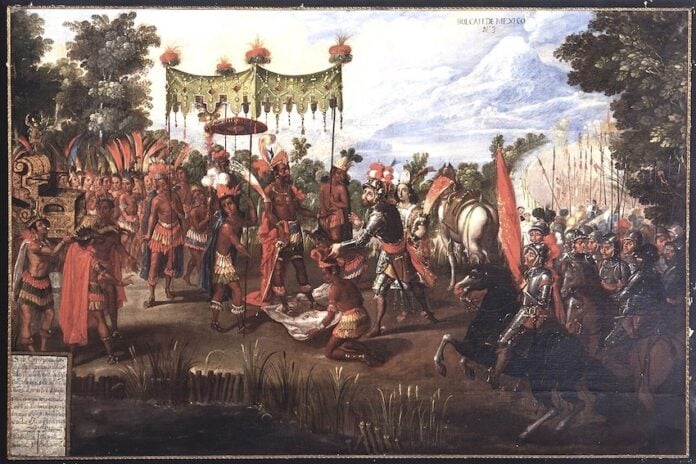
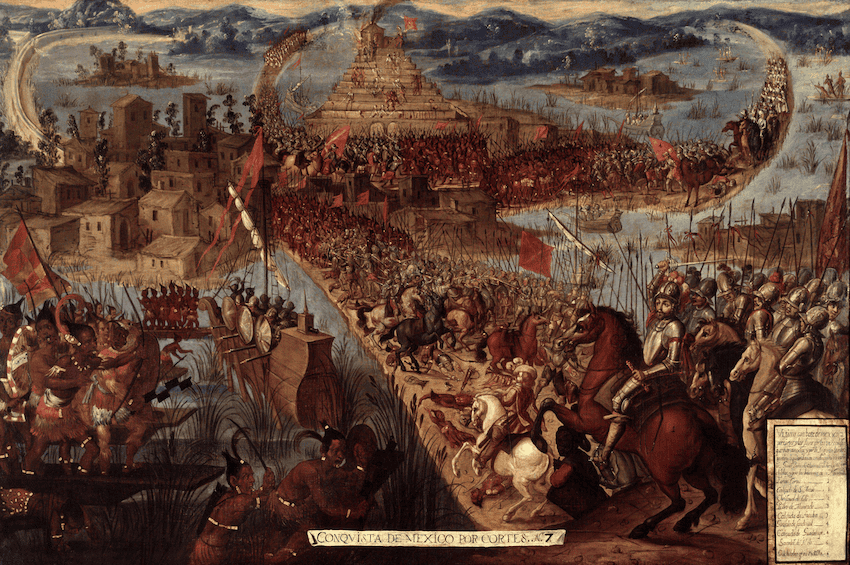
No one believed that Hernán Cortés was Quetzalcóatl, nor that the Spaniards were gods when they arrived in Tenochtitlán. (Jay I. Kislak Collection/Rare Book and Special Collections Division/Library of Congress/Wikimedia Commons)
Francisco López de Gómara never set foot in America, nor had he ever encountered Mexica culture. However, as a Spanish humanist historian endorsed by the Catholic Church, he enjoyed writing chronicles and official records about the discoveries his country’s conquerors had made in the New World.
At the height of his career as chronicler of the new territory, around 1552, he proposed an idea that would change the way Indigenous Americans were viewed.
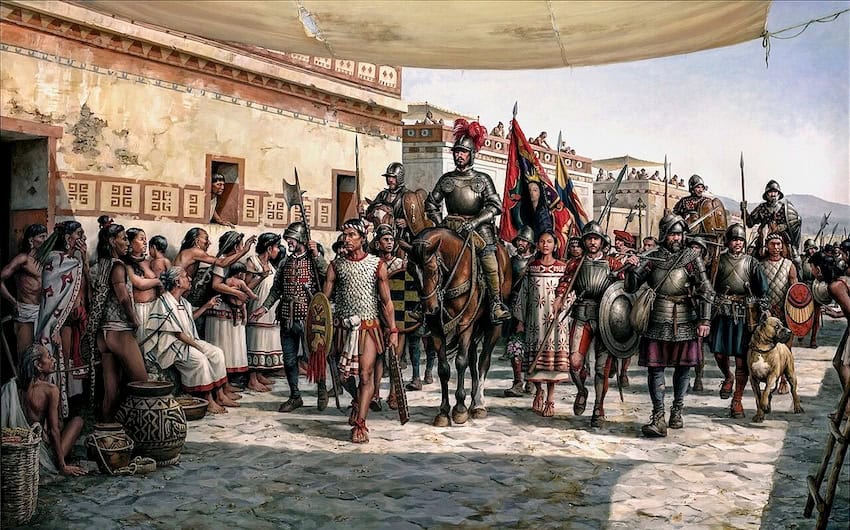
“The story of the ‘white gods’ is a dehumanizing narrative,” historian Camilla Townsend has argued. (Augusto Ferrer Dalmau/Wikimedia Commons)
As Hernán Cortés’ secretary, he thought it appropriate to suggest that the Indigenous people in Mexico had allowed European colonization because they considered the Spaniards to be gods, and specifically that Cortés was the return of the god Quetzalcóatl. A historical review of pre-Hispanic records, however, does not corroborate this assumption.
No mention of ‘gods’ in firsthand accounts
During his years as a conquistador, Cortés wrote many letters to the Spanish monarchs. In them, he reported the most significant events in the process of territorial colonization that the Spanish sought to carry out abroad. In none of them, notes historian Camilla Townsend, does he address the idea that the native inhabitants saw the Spaniards as gods.
Yet, López de Gómara’s “white gods” narrative was so convincing and powerful that many colonizers from Europe adopted it as a banner that delegitimized theexisting ways of life in the Americas. Despite the millennia of scientific, cultural and religious development already possessed by the native inhabitants, the force of arms, foreign diseases and hate speech against the pre-Hispanic world were powerful Spanish tools thatdiminished their power. The idea that the Mexica believed the Spaniards were “white gods” was so effective that it was eventually used to justify the military campaigns waged throughout the Americas to conquer Indigenous peoples, since the myth characterized them as naive and naturally submissive to European conquerors of supposedly superior intellect.
Not only that, it was valid in the eyes of the Spanish invaders to question whether the beings they encountered in the New World were truly human, and therefore, whether theydeserved God’s mercy.
Cortés was never Quetzalcóatl
Eight ominous omens are said to have preceded Cortés’ arrival. All of these manifestations appeared to Moctezuma in the months leading up to the arrival of the Spanish in Tenochtitlán. None of them were related to the ancient Mexica myth that the feathered serpent god Quetzalcóatl would one day walk among humankind again.
In a 2002 article in the INAH journal, Arqueología Mexicana, historian Miguel de León Portillaargued that the belief in “the return of events and people seems to have been a recurring element in Mesoamerican thought.”
Europeans adopted the flawed “white god” narrative as a banner to delegitimize the existing ways of life in the Americas. (Thomas Kole/Wikimedia Commons)
Although the religious ministers of Tenochtitlán indeed preached the myth of Quetzalcóatl’s return, there is no evidence linking this mythological and cultural framework in the minds of the Indigenous peoples of Mexico to the Spaniards’ arrival.
Why were the Spanish able to successfully conquer the Mexica?
While it is true that the Spanish possessed superior weaponry to the Mexica, there is no primary evidence demonstrating that this made the Spanish appear as gods in their eyes. On the contrary, it is well known that Cortés managed to subdue Tenochtitlán with the help of the Tlaxcalans, who had a much larger army than the Spaniards. What’s more, the Tlaxcalans had an in-depth knowledge of the local terrain. Otherwise, the European expansionist campaigns in America would likely have been unsuccessful. Sheer numbers and technology were the decisive factors, not misguided Indigenous beliefs.
Although historical records from the period support this more practical version of events, even in Mexico, the belief that the Mexica thought the Spaniards were gods still lingers.
Centuries after the conquest, this persistent assumption seems rather absurd and is similar to the belief that America was actually discovered when people had been there for millennia.
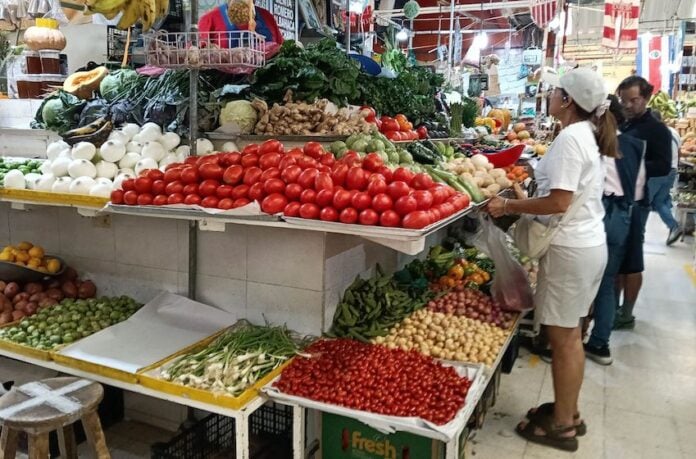
Though inflation eased in April, food prices moved upward, mainly due to a 21.43% increase in fruit and vegetable prices. (Daniel Augusto/Cuartoscuro)
Official data showing a decline in inflation in April was published on Thursday morning and just hours later the Bank of Mexico (Banxico) board voted in favor of cutting the central bank’s key interest rate by 25 basis points.
The national statistics agency INEGI reported that Mexico’s annual headline inflation rate was 4.45% in April, down from 4.59% across March. The decline in April came after the headline rate increased in each of the first three months of 2026.
Among those applauding Banxico’s latest interest rate cut was President Claudia Sheinbaum, who said the move “activates investment.” (Mario Jasso/Cuartoscuro)
INEGI also reported that month-over-month inflation was 0.20% in April, while the annual core rate — which excludes volatile food and energy prices — was 4.26%, down from 4.45% across March.
Later on Thursday, a divided Bank of Mexico governing board voted in favor (3-2) of lowering the central bank’s benchmark interest rate from 6.75% to 6.50%. The 25-basis-point reduction is the bank’s second interest rate cut this year after the key rate was lowered from 7% to 6.75% in March. The Banxico board has demonstrated on various occasions that it is willing to cut the bank’s key interest rate even when inflation is well above the 3% target.
Fruit and vegetable prices increase more than 20%
INEGI’s data shows that fresh food prices increased 7.98% in April compared to the same month last year. The annual spike was the product of a 21.43% increase in fruit and vegetable prices and a 1.05% reduction in the cost of meat.
The annual inflation rates in April for the other categories monitored by INEGI were as follows:
Packaged food, beverages and tobacco: 5.35%
Services: 4.52%
Non-food goods: 2.82%
Energy (including electricity and gasoline): 2.8%
On a month-over-month basis, the price of poblano chiles increased 41.42% in April while tomatoes and high-octane gasoline were 19.25% and 6.16% more expensive, respectively.
In contrast, green tomatoes were 34.8% cheaper in April than in March, while electricity prices fell 14% as lower summer rates commenced in various cities including Mérida, Monterrey and Acapulco.
Banxico interest rate looks set to stay at 6.50% through 2026
In a statement on Thursday, the Bank of Mexico acknowledged that inflation decreased in April “due to a decline in its core component.”
The central bank said that “the balance of risks for the trajectory of inflation within the forecast horizon remains biased to the upside,” but noted that its governing board nevertheless deemed it “appropriate to make an additional reference rate cut and thereby conclude the [monetary policy easing] cycle that began in March 2024.”
“… Looking ahead, the Governing Board estimates that it will be appropriate to maintain the reference rate at its current level. It judges that the monetary policy stance is well-suited to face the challenges posed by the macroeconomic environment, including those associated with an extension and escalation of the Middle Eastern conflict and its repercussions,” Banxico said.
The bank forecasts that the average annual inflation rate in the second quarter of 2026 will be 4.1%. It anticipates that inflation will decline to 3.8% in the third quarter, 3.5% in the fourth quarter, and 3.2% in the first quarter of 2027. Banxico sees inflation converging to its 3% target in the second quarter of 2027 and remaining at that level through next year and the first quarter of 2028.
The central bank said that its forecasts are subject to “various risks.”
On the upside those risks are:
Disruptions due to foreign trade policies or to an inflationary impact from geopolitical conflicts.
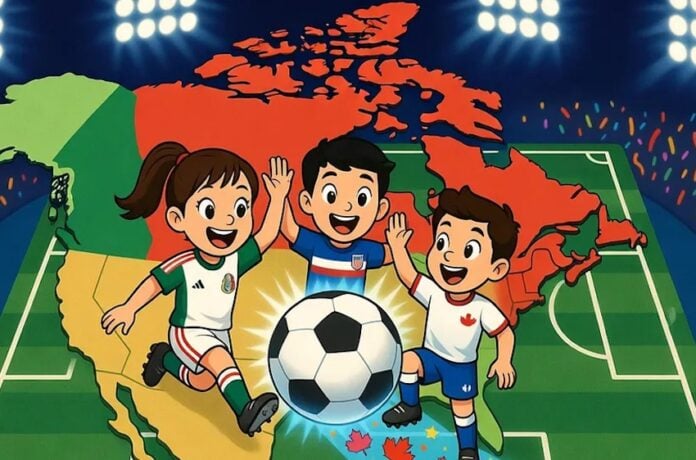
Will we as a region keep kicking the ball back and forth across the border… or finally build the shared pitch we all deserve? (Image courtesy of the author)
I was raised watching, playing and experiencing football — soccer for my American friends, though I’ll use the words interchangeably here.
My dad started taking me to Ciudad Universitaria Stadium in Mexico City to watch Pumas when I was barely old enough to walk. I’ve been going ever since. It was the only time all week I was allowed to swear. I saw people from every corner of the city chanting the same songs, I hugged countless strangers after every goal, and yes, I’ve cried tears of pure joy alongside tough, strong men when the Pumas last lifted a trophy (sadly, it was a long time ago). Believe me: soccer is the ultimate social blender.
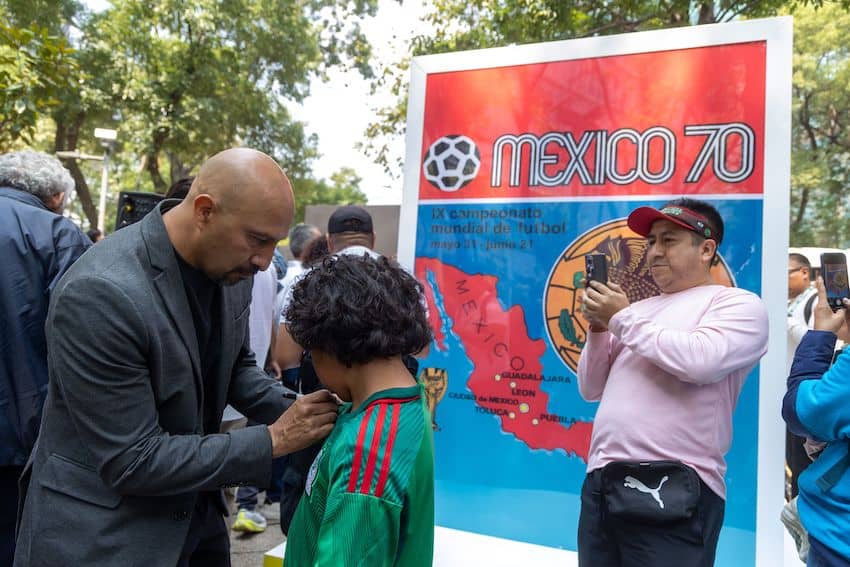
Oscar “El Conejo” Pérez signs a jersey during the unveiling of monumental Panini cards along Mexico City’s Reforma Avenue, featuring soccer players who have played key roles in World Cups throughout history. (Moisés Pablo/Cuartoscuro)
I’m a true fan. A couple of times I’ve traveled to Europe, I’ve made sure to catch a Champions League match (the tournament where the top club teams from every national league face off). I saw Benfica (Portugal) take on Manchester United (England), mainly to watch Javier “Chicharito” Hernández, a Mexican forward, do his thing.
Another time, it was Real Madrid versus Paris Saint-Germain at the Santiago Bernabéu. The magic starts the moment you step onto the subway: fans from every corner of the world, wearing different colors, sharing the same buzz. Soccer has taken me closer to cities, countries, and cultures than anything else ever could. When Rafa Márquez played for Barcelona, I fell in love with Cataluña — just like my parents did with Madrid decades earlier when Hugo Sánchez lit it up for Real Madrid. Players become walking ambassadors. Once, backpacking in Thailand, someone asked where I was from. When I said Mexico, the guy shouted: “I love Chicharito!” Never underestimate the soft power of a football shirt.
So let’s get serious about something fun: soccer — and sports in general — can be a powerful platform for social integration, economic development, talent mobility, cultural mixing and serious revenue. It’s the perfect soft but extremely effective tool to pilot deeper North American integration.
A systematic review of 69 studies on sport for social integration among disadvantaged populations (migrants, refugees, at-risk youth) shows football consistently scores four big wins: interaction through shared play, identification with something bigger than yourself, acculturation (learning the new culture while keeping your own roots) and placement (real pathways to jobs, school and networks).
Grassroots programs like Midnight Basketball in the U.S. or Community Cup in Ottawa prove the pattern — crime drops, social capital rises and “them” quietly turns into “us.” In North America’s super-diverse cities, ethnocentric soccer teams let Mexican-American kids stay rooted while building proud hyphenated identities. Barriers exist (cost, discrimination, old-school gender rules), but when programs are co-designed with the players themselves, soccer turns tension into trust faster than any trade agreement ever could. We need to tackle this systematically. Time to look at Europe…
Economic development & solidarity
The Union of European Football Associations (UEFA) doesn’t just reward the superclubs (like Real Madrid, Paris Saint-Germain or Manchester United), it forces them to subsidize the rest of the pyramid. Ten percent of Champions League revenue is allocated to solidarity payments, with €308 million earmarked this cycle for clubs outside the elite.
That money builds academies, women’s programs and community pitches in places that would otherwise be forgotten. North America can copy the model and improve it: tie a permanent Liga MX-MLS-Canadian hybrid tournament — the Leagues Club, for example — to a legacy fund that channels prize money into border-city leagues, public fields in underserved neighborhoods and youth development where the next stars are born. The result? Broader economic growth, inclusion and a stronger regional talent base that feeds everyone.
Talent mobility
Before 1995, European clubs lived under strict “foreigner quotas”; a capped amount of foreigners per team.
Then the Bosman ruling happened: the European Court of Justice ruled that those limits violated free movement of workers. Overnight, talent flowed freely — Spanish kids in German academies, Polish strikers lighting up the Premier League and Mexican prospects finally getting real shots abroad. We can do the same here without erasing national flags. A “North American youth sports passport” would let kids from Tijuana, El Paso or Windsor cross borders for tournaments the same way players already move in Europe. Liga MX already dominates U.S. Hispanic viewership and packs American stadiums. Imagine formal talent pipelines that turn raw border passion into pro contracts while still feeding strong national teams and a thriving continental league.
Cultural mixing without losing national identity
Europe proved you don’t have to surrender your flag to gain a continent. Fans still scream for Spain, Germany or Poland, but they trade scarves, share memes and build hybrid identities during EURO summers (the national-team continental tournament that feels like a mini-World Cup).
In North America, Mexican national team games in the U.S. routinely outdraw the U.S. team. The more than 40 million Mexicans and Mexican-Americans in the U.S. fill stadiums every time El Tri plays. I saw it firsthand a few weeks ago in Chicago — freezing cold, yet thousands packed Soldier Field for Mexico versus Belgium. Soccer is living proof that regional identity doesn’t replace national identity; it makes both richer, louder and more fun.
Revenue streams
EURO 2024, hosted by Germany, didn’t just fill stadiums — it turned out to be a huge source of revenue: €7.44 billion in economic impact for Germany, with 44% of ticket holders coming from abroad and nearly two-thirds using public transit.
The Champions League is a redistribution machine pulling in €4.4 billion in gross revenue in 2024/25, with €3.4 billion going to clubs. North America has already experimented with this — Leagues Cup finals drew 69,000 fans, and the 2026 World Cup will co-host 104 matches across three countries. Early projections point to hundreds of millions (if not billions) in tourism, media value, sponsorships, hotels and short-term rentals, especially in border cities. Every peso or dollar spent on tacos, scarves and match-day beers stays inside the region, turning soccer from a cost center into a continental cash engine.
That said, a friendly but firm critique: soccer cannot become an elitist sport. It was born in the streets and trenches and must stay accessible. Tickets for the 2026 World Cup cannot price out the very families and working-class fans who make this beautiful game what it is. The whole point is social cohesion, family values, and bringing people of all classes together on the same stands. We missed the mark on pricing this time, but we can — and must — do better going forward.
The 2026 World Cup as catalyst
While 48 teams battle across 16 stadiums in three countries, a parallel score (maybe more important) will be measured in tourism, international fandom, infrastructure upgrades and lasting connections. This is North America’s chance to spearhead a true turning point in our region. It’s the perfect excuse to lock in permanent structures: a continental club tournament, solidarity funds, youth passports and border-city circuits that turn the pitch into the place where Mexico, the U.S. and Canada finally play as one team.
Europe turned 22 guys chasing a ball into a continental identity project. We’ve got the fans, the passion, the infrastructure, the tacos and the 2026 stadiums already installed. The only question left is whether we keep kicking the ball back and forth across the border… or finally build the shared pitch we all deserve.
Let’s use this World Cup as the catalyst for something bigger, more ambitious and more forward-looking. Soccer has always been the best pilot program — and the best excuse — for deeper social, cultural, political and economic integration. We must not miss the chance.
Pedro Casas Alatriste is the Executive Vice President and CEO of the American Chamber of Commerce of Mexico (AmCham). Previously, he has been the Director of Research and Public Policy at the US-Mexico Foundation in Washington, D.C. and the Coordinator of International Affairs at the Business Coordinating Council (CCE). He has also served as a consultant to the Inter-American Development Bank. Follow his Substack here.
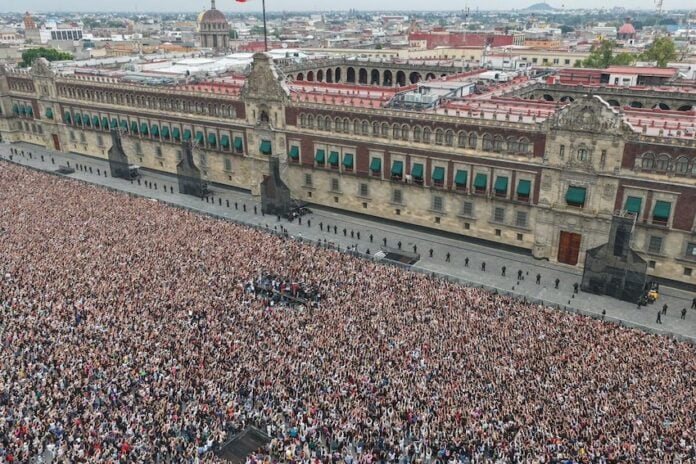
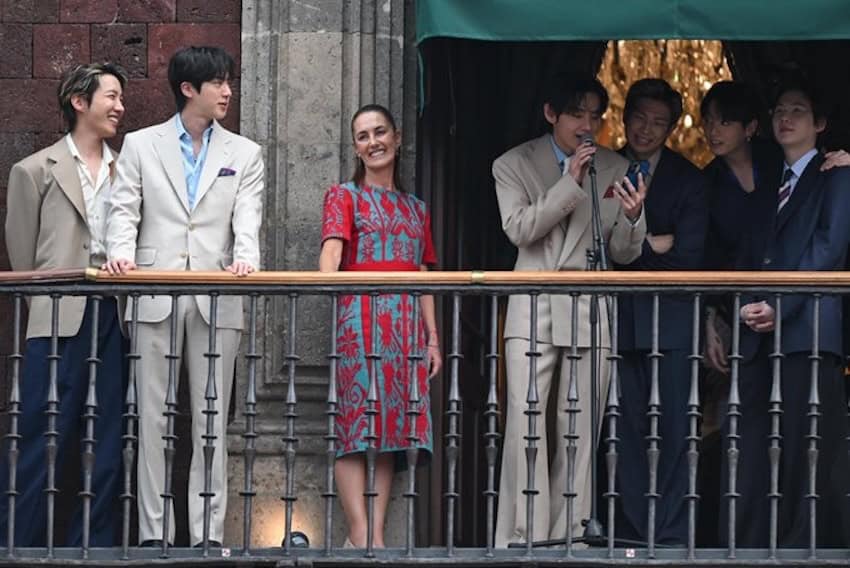
Since the vast majority of the 50,000 BTS fans crowding Mexico City's Zócalo were probably shut out from tickets for this week's concerts, the Korean boys' brief appearance on the balcony of the National Palace was as close as they'll get to their K-pop idols, at least for this year. (Presidencia)
An estimated 50,000 fans of the Korean boy band BTS turned Mexico City’s Zócalo into a sea of purple on Wednesday as the K-pop superstars stepped onto a National Palace balcony alongside President Claudia Sheinbaum.
The appearance — which did not include any singing or music — came one day before the group was to open its “Arirang” world tour at Estadio GNP Seguros. The first of three sold-out shows in Mexico City was set for Thursday night, with others to follow on Saturday and Sunday.
A balcony appearance along with the president was what fans had waited for all day — no music, no singing, no dancing, but a lot of valiant effort at speaking Spanish. (Presidencia)
Fans carrying homemade banners and cardboard cutouts of the band’s seven members began arriving at the Zócalo in the late morning to secure spots for the appearance around 5 p.m.
From the balcony, band member RM, whose real name is Kim Nam-joon, said, “Hello, Mexico. We are BTS. Thank you so much for coming to see us. We can’t wait for tomorrow’s concert. I love you, thank you so much.”
Kim Tae-hyung, known professionally as V, followed by saying, “I don’t speak Spanish very well, but I’ll try.” He then delivered a short message in Spanish thanking fans, saying BTS misses Mexico and praising the crowd’s energy.
Then Sheinbaum spoke, revisiting a statement she had made in March about getting BTS to return to Mexico for more shows. Turning to the band, she proclaimed, “I already told you that you have to come back next year,” prompting a loud roar and exuberant chants from the crowd below.
On Thursday, Sheinbaum took it a step further, saying at her morning news conference that “BTS will return to Mexico in 2027. We will announce the dates soon,” adding that the group agreed to review its schedule.
Virtual queues swelled to more than 1.1 million users worldwide, and fans reported crashes, stalled orders and error messages during presales and general sales.
Sheinbaum said she wrote to South Korean President Lee Jae-myung asking for help securing more dates — and even exploring a free Zócalo concert — to respond to young Mexicans shut out by the stampede for tickets.
City officials said Wednesday’s balcony appearance was coordinated by Culture Minister Claudia Curiel after those exchanges with officials in Seoul.
Recibo con gusto a uno de los grupos más queridos por las y los jóvenes de México: BTS. La música y los valores unen a México y Corea del Sur. pic.twitter.com/OS39Sp0H6g
— Claudia Sheinbaum Pardo (@Claudiashein) May 6, 2026
BTS has performed in Mexico City twice before as part of large, multi-artist K-pop concerts.
In 2014, BTS appeared in the KBS Music Bank World Tour at Mexico City Arena, along with groups including EXO-K, Beast and Infinite. They returned to the same venue in 2017 for KCON Mexico, which also featured Monsta X, Red Velvet and NCT 127.
For this week’s sold-out shows, individual tickets originally priced around 5,000–5,500 pesos (US $290-$318) for mid- to high-tier sections were listed on resale sites Thursday for roughly 24,000 pesos (US $1,390). Better seats were listed at more than 100,000 pesos ($5,788) each.
Indeed, for many fans, Wednesday’s five-minute glimpse from the Zócalo may be as close as they get to BTS this time around.
"We've already indicted multiple government officials out of Mexico ... And so that's something that will continue," acting U.S. Attorney General Todd Blanche said in a NewsNation interview on Wednesday. (@ATFHQ/X)
A week after a U.S. indictment accusing Sinaloa Governor Rubén Rocha Moya of drug trafficking and weapons offenses was unsealed, acting U.S. Attorney General Todd Blanche indicated that U.S. prosecutors will file more charges against Mexican politicians.
NewsNation immigration correspondent Ali Bradley highlighted that the Trump administration has “promised to bring consequences to Mexico when it comes to corrupt politicians that might have ties to the criminal cartels” and asked Blanche what consequences there could be for Mexican officials beyond revocations of their U.S. visas.
“… I think that that’s something we’ve done in the past, but we’re certainly going to continue to do that,” he said.
Asked specifically whether “we could see more indictments” against Mexican officials, Blanche responded:
“Sure, yes, and we’ve already indicted multiple government officials out of Mexico, a judge recently as well. And so that’s something that will continue. One consequence of having a lot of the leaders of some of these cartels brought here over the past year … is some of them will likely want to cooperate and that cooperation could lead to additional charges.”
Since February 2025, Mexico has sent more than 90 cartel figures to the United States in three separate transfers. Beyond the people sent to the U.S. in those transfers, many other Mexicans accused of drug trafficking, including two sons of convicted drug lord Joaquín “El Chapo” Guzmán Loera and Sinaloa Cartel leader Ismael “El Mayo” Zambada, are in U.S. custody.
Rocha — who is currently on leave as the Federal Attorney General’s Office assesses the U.S. allegations against him and conducts its own investigation — is accused of colluding with the “Los Chapitos” faction of the Sinaloa Cartel, which is led by sons of Guzmán Loera. Nine other current and former Sinaloa-based officials, including a Morena party senator and the mayor of Culiacán, are accused of drug trafficking in the same indictment. Rocha, who also represents Morena, denies the U.S. allegations against him.
Blanche: ‘We have a very good relationship with the Mexican government’
After noting that an indictment had been filed against Rocha in the southern district of New York and indicating that more allegations against Mexican officials were likely forthcoming, Blanche added:
“By the way, we have a very good relationship with the Mexican government right now. I mean I think they recognize the importance of their relationship with us, and also that that relationship depends on cooperation and support in the immigration space, combating drug trafficking and things like that.”
Indeed, President Claudia Sheinbaum has repeatedly said that her government is willing to cooperate with the United States on security as long as Mexican sovereignty is respected. However, she has made it clear that said cooperation doesn’t extend to handing over Rocha to the U.S. without hard proof demonstrating his probable guilt.
On repeated occasions, Sheinbaum has said that the superseding indictment published online by the U.S. Department of Justice is almost entirely devoid of “proof” against Rocha and the nine other defendants. Last week, she said that a handwritten list in the indictment that allegedly shows how much officials received in regular bribes from “Los Chapitos” is just “a sheet of paper.”
‘Send proof’: Sheinbaum reiterates her message to US authorities
At her Thursday morning press conference, Sheinbaum was asked to respond to Blanche’s statements indicating that more indictments will be filed against Mexican politicians.
“Proof,” she responded.
“… What have we said? Send proof because the extradition treaty or [the bilateral agreement] on mutual trust and collaboration has to do with sending proof,” Sheinbaum said.
🚨 “Envíen pruebas”, responde Claudia Sheinbaum luego de que el fiscal Todd Blanche advirtiera que habrá más acusaciones contra políticos mexicanos.
La presidenta insistió en que las detenciones deben apegarse a la ley mexicana; “también queremos que ellos cooperen y no han… pic.twitter.com/0ilLTAVybV
A strong first quarter of 2026 was followed by an even stronger April, pushing car sales in Mexico for the four months over the 500,000 mark, a new record. (AMDA)
Car sales in Mexico topped the 500,000 mark in light vehicle sales during the January-April period for the first time ever, according to the national statistics agency INEGI.
The sales figure represented a 4.8% increase over the same period in 2025 and topped the previous record for January-April set in 2017 when 493,823 light vehicles were sold.
Guillermo Rosales, president of the Mexican Association of Automotive Distributors, cites as a key factor in Mexico’s healthy domestic sales a “hyper-competition” among quality manufacturers vying for customers. (AMDA)
Key to breaking the half-million mark was an especially strong April when light vehicle sales reached 118,859, which INEGI said was an 8.6% improvement over April 2025 sales. The 381,632 vehicles in the previous three months had represented an increase of 3.7% over the first quarter of 2025.
Guillermo Rosales, president of the Mexican Association of Automotive Distributors (AMDA), said a primary factor driving car sales is “hyper-competition” among automotive brands. Adding to that healthy competition was the arrival of Chinese electric vehicles that stand out for their level of technology and connectivity.
Also helping, Rosales said, was that the 50% tariff on vehicle imports from countries outside North America has not yet raised vehicle prices.
Among domestic automakers, Stellantis (up 15.8%), Hyundai (up 13.7%), General Motors (up 6%) and Volkswagen (up 5%) enjoyed the biggest sales increases.
Nissan, No. 1 in sales in Mexico with a 17.3% market share, remained stable with just a 0.1% increase in April, while Toyota and Lexus boosted their cumulative market share to 8.1% by selling a combined 10,713 light vehicles in April.
Last month’s sales performance exceeded AMDA’s forecast of 113,124 units by 4.8% and was the best April for light vehicle sales since 2013.
Furthermore, AMDA speculated that since some brands (including Chinese carmakers BYD, GAC and Chirey) do not report their figures to INEGI, the overall April 2026 performance (including imported vehicles) might have actually been closer to 127,000 units. If accurate, this would represent an increase of 8.5% compared to April 2025 and would set a new record for sales in the month of April.
The newspaper El Economista reported that some Chinese brands enjoyed triple-digit growth last month, including Geely (283%), Changan (101%) and Jetour SOUEAST (610%). However, El Economista said Great Wall Motors and MG sales declined.
Rosales said the market share of Chinese brands has increased by up to 1 percentage point, with total volume rising by a similar amount. Total imports from China have increased by a similar amount.
Expansión magazine attributed this to a more competitive offering in terms of price and equipment, as well as a faster expansion of their product portfolio. This combination has allowed some Chinese brands to overcome the original perception of low reliability that marked their entry into the Mexican market.
President Claudia Sheinbaum leads Welfare Ministry press conference earlier this year alongside Guerrero Gov. Evelyn Salgado and former Welfare Minister Ariadna Montiel (now president of the Morena party, as of Sunday). (Presidencia via Cuartoscuro)
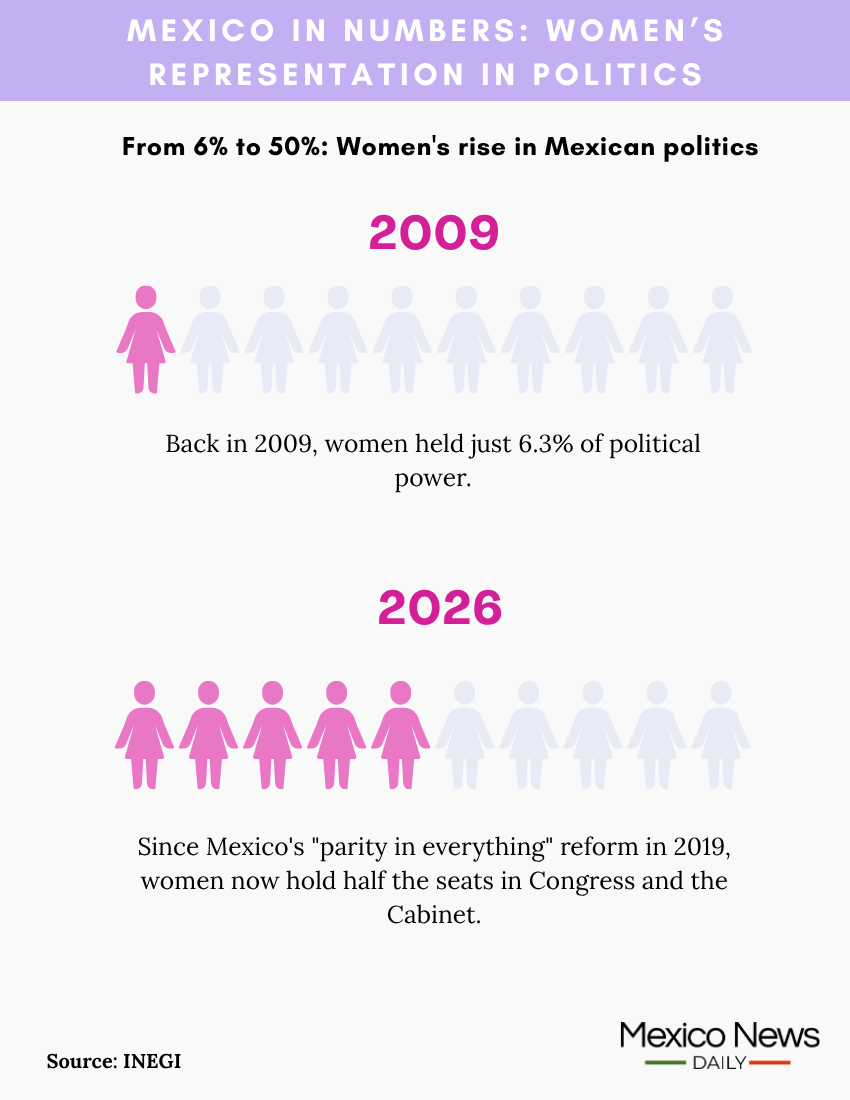
Seventeen years later, the numbers are very different, as major progress has been made in increasing women’s representation in Mexican politics. Federal gender parity laws, including a 2019 constitutional reform dubbed paridad en todo (parity in everything), have supported the progress.
Today, Mexico has achieved virtual parity in women’s political representation, and the country — as everyone knows — has a female president for the first time.
In this week’s “Mexico in Numbers” article, we take a look at women’s representation in President Claudia Sheinbaum’s cabinet, at the head of state governments and in federal Congress. We also compare female political representation in Mexico to that in the United States.
Let’s get into the numbers!
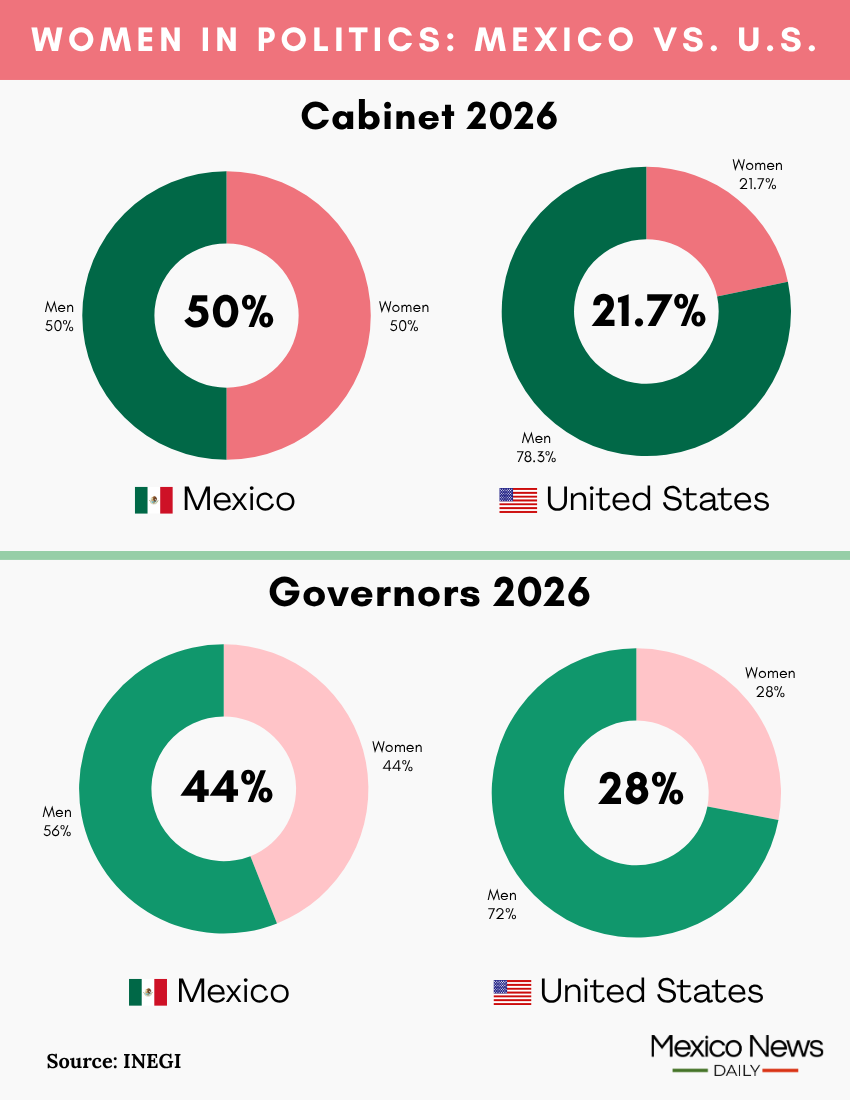
50% of Sheinbaum’s cabinet members are women
Did you know that 11 of the 22 current members of Sheinbaum’s cabinet are women? Women currently serve in the roles of:
Interior minister, generally considered the second most powerful position in the Mexican government.
Welfare minister.
Environment minister.
Energy minister.
Agriculture minister.
Anti-corruption and good governance minister.
Agrarian development and urban planning minister.
Culture minister.
Tourism minister.
Science, humanities, technology and innovation minister.
Legal counsel to the federal executive.
Sheinbaum has not yet appointed a new minister for women after Citlalli Hernández resigned last month, but there is little doubt that the appointee will be a woman. Thus, female representation in Sheinbaum’s cabinet will rise above 50%.
Cabinet-level female representation is much higher in Mexico than in the U.S. Of the 23 people in U.S. President Donald Trump’s cabinet, just five are women, meaning that female representation is 21.7%.
Did you know that 13 of Mexico’s 31 states currently have female governors?
That means that 42% of Mexico’s state governments are led by women. Mexico City is also governed by a woman, Mayor Clara Brugada.
Thus 44% of Mexico’s 32 federal entities have female political leaders.
Morena has 33 female senators out of a total of 67 (49.2% female representation).
The National Action Party (PAN) has 11 female senators out of a total of 21 (52.4%).
The Institutional Revolutionary Party (PRI) has seven female senators out of a total of 13 (53.8%).
The Ecological Green Party of Mexico (PVEM) has seven female senators out of a total of 14 (50%).
The Labor Party (PT) has four female senators out of a total of six (66.7%).
The Citizens Movement Party (MC) has two female senators out of total of six. MC has the lowest proportion of female senators at 33%.
Female representation in the U.S. Senate is just over half that of Mexico’s in percentage terms — 26%, as 26 of the 100 senators are women.
For the first time ever, over 50% of deputies are women
Since the representatives of Mexico’s 66th Congress took office in September 2024, Mexico has had more female deputies than male deputies. Of the 500 seats in the Chamber of Deputies, 251 were occupied by women in September 2024.
Due to changes in the make-up of the lower house since then, Mexico currently has 253 female deputies, according to the Chamber of Deputies website. Thus, 50.6% of Mexico’s federal deputies are currently women. Before the 66th Congress first convened, Mexico had never had a majority of female deputies.
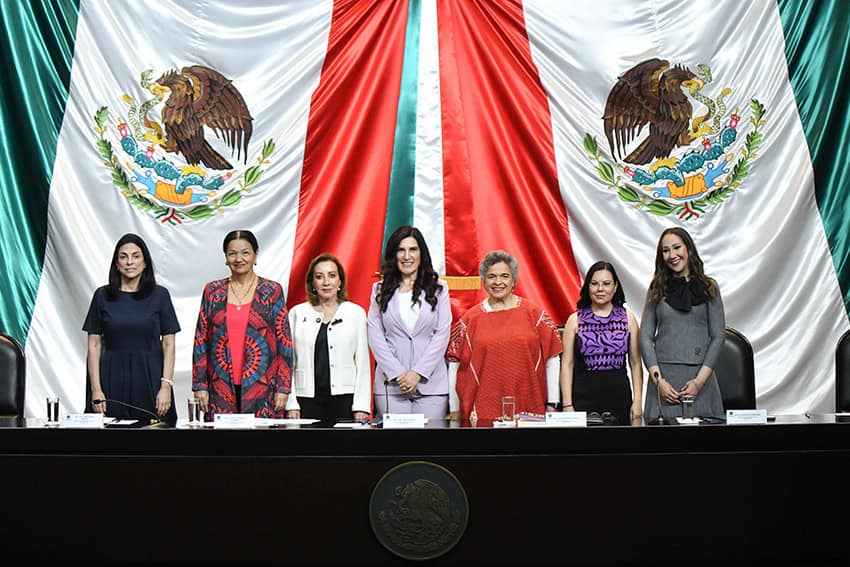
The president of the Mexican Chamber of Deputies, Kenia López Rabadán, stands with current and former female legislators at a March talk on women’s participation in politics. (Mario Jasso / Cuartoscuro.com)
Of the six political parties represented in the Chamber of Deputies, Morena has the highest female representation. Of the ruling party’s 253 deputies, 146, or 57.7%, are women.
Female representation among the deputies of the other parties is as follows:
MC has 14 female deputies out of a total of 28 (50%).
The PAN has 33 female deputies out of a total of 70 (47.1%).
The PRI has 15 females deputies out of a total of 37 (40.5%).
The PVEM has 25 female deputies out of a total of 62 (40.3%).
The PT has 19 female deputies out of a total of 49 (38.8%).
The U.S. House of Representatives currently has 124 female representatives with full voting rights. Thus, 28.5% of the 435 U.S. representatives are women. Female representation in the U.S. House of Representatives is 22.1 points lower than female representation in Mexico’s Chamber of Deputies.
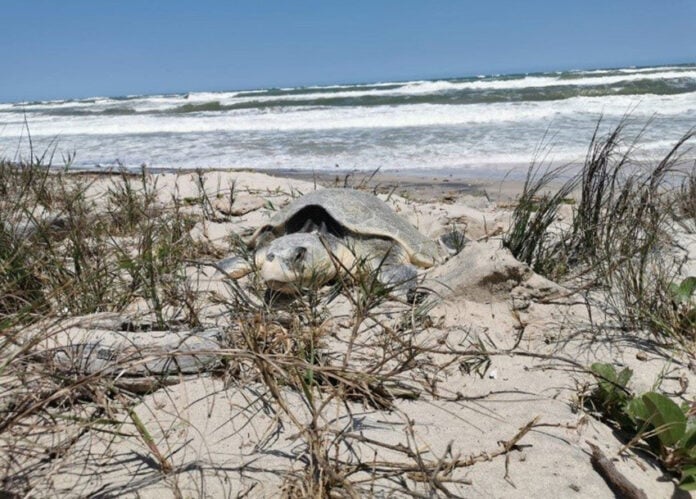
The Kemp's ridley sea turtle, considered critically endangered by the IUCN, is both the smallest and rarest sea turtle in the world. (Conanp)
The 2026 turtle season in Tamaulipas is off to a solid start as authorities in the Gulf Coast state recorded more than 207,000 Kemp’s Ridley sea turtle eggs at the various protected camps along the shoreline.
These conservation and protection efforts are part of the state’s official environmental policy aimed at protecting biodiversity and preserving species in their natural environment.
The policy includes the surveillance of, monitoring of and protection of the nests, so as to guarantee the reproduction and survival of the emblematic Kemp’s ridley sea turtle on the Tamaulipas coast.
The Kemp’s Ridley is the rarest species of sea turtle and is the world’s most endangered. It is also the smallest sea turtle species with adults typically weighing only 75–100 pounds (35–45 kg) and measuring about 2 feet (60–70 cm) in shell length.
In order to prevent egg looting, authorities have implemented 24-hour surveillance protocols. The round-the-clock observation will also serve to protect females during the spawning process, while also ensuring that the reproductive cycle is completed without interference from humans or natural predators in conservation centers.
Protecting these nests is vital for the survival of the species, since the Kemp’s ridley sea turtle is the only sea turtle that nests during the day and does so in large groups, known as arribadas.
The commission’s report says the Altamira camp has the highest number of recorded nests, with 812 nests and 71,495 eggs. The Tepehuajes camp has 533 nests and 47,445 eggs. There are 497 nests and 45,170 eggs at the Ciudad Madero camp; 418 nests and 38,746 eggs at the La Pesca camp; 34 nests and 3,214 eggs at the Playa Bagdad camp; and 13 nests and 1,181 eggs at the Mezquital camp.
The egg count was carried out by monitors — technicians and volunteers from the Secretariat of Urban Development and Environment — who indicated that the massive arrival of the turtles occurred favorably last month.
CPBT spokesman Eduardo Rocha Orozco described the egg count as “extremely positive for the biodiversity of the region.”
President Sheinbaum appeared unconcerned at her Thursday morning presser, saying that Trump's threats to take action against cartels in Mexico were nothing new. She also addressed U.S. allegations against Rubén Rocha Moya, Sinaloa's on-leave governor. (Juan Carlos Buenrostro / Presidencia)
Sheinbaum’s mañanera in 60 seconds
🇺🇸 Trump’s cartel threat: Sheinbaum brushed off Trump’s latest warning that the U.S. would take action against Mexican cartels if Mexico doesn’t, indicating she wasn’t concerned “because we are acting” against organized crime.
⚖️ Rocha Moya defense: The president rejected Chihuahua Governor Maru Campos’ claim that her government is shielding Sinaloa Governor Rubén Rocha Moya from U.S. drug trafficking allegations.
🗳️ Clouthier steps down: Tatiana Clouthier resigned as head of the Institute for Mexicans Abroad to pursue the Morena gubernatorial candidacy in Nuevo León ahead of the 2027 elections, consistent with Sheinbaum’s rule that officials seeking office must first leave their posts.
Why today’s mañanera matters
Today’s mañanera was significant as President Claudia Sheinbaum responded directly to U.S. President Donald Trump, who on Wednesday spoke — once again — about the possibility of U.S. forces taking action against Mexican cartels in Mexico.
Mexico’s security relationship with the United States is currently strained due to the revelation that U.S. Central Intelligence Agency (CIA) agents allegedly participated in a drug lab raid last month alongside Chihuahua State Investigation Agency personnel.
Also of note at the Thursday morning press conference was Sheinbaum’s denial that her government is protecting Sinaloa Governor Rubén Rocha Moya from drug trafficking allegations in the United States.
In addition, the president revealed that another high-ranking member of her government has resigned.
Sheinbaum acknowledged that Trump said on Wednesday that the United States would take action against cartels in Mexico if the Mexican government doesn’t do so itself.
“Drugs coming in by sea are down 97% and now we’ve started the land force which is much easier and you’ll hear some complaints from some people, like representatives in Mexico and other places, but if they’re not going to do the job we’re going to do the job and they understand that,” he said.
On Thursday morning, Sheinbaum said it wasn’t the first time that Trump had made such a statement, and indicated that she was not overly concerned by it “because we are acting” against cartels and drug trafficking.
🔴#Ahora | “Si no van a hacer el trabajo, nosotros lo haremos”, dice Donald Trump sobre el combate al narcotráfico.
El presidente de EU reafirmó que enfrentará el tráfico de drogas con fuerza terrestre, lo que provocará “quejas” de algunas personas de México y otros lugares.… pic.twitter.com/SY0v0mFA1S
“There is a reduction of almost 50% in homicides,” she said, apparently referring to the decline in murders in recent months compared to September 2024, the final month of Andrés Manuel López Obrador’s presidency.
Sheinbaum also said that 2,500 clandestine drug laboratories have been dismantled during her presidency, authorities have arrested alleged criminals (with “high-impact” arrests numbering in the tens of thousands, according to Mexico’s security minister) and the quantity of fentanyl crossing into the United States from Mexico has declined (based on U.S. data showing a reduction in fentanyl seizures).
Sheinbaum rejects claim by Chihuahua governor that government is protecting Rocha
A reporter asked the president about Chihuahua Governor Maru Campos’ remark that she is being criticized for dismantling a drug lab in an operation in which CIA personnel allegedly participated while Sinaloa Governor Rúben Rocha Moya — who is currently on leave — is being protected by the federal government after the U.S. Justice Department accused him of drug trafficking and requested his arrest and extradition.
“What she says is false,” said Sheinbaum, who has argued that the published indictment against Rocha and nine other current and former Sinaloa-based officials lacks hard proof.
She went on to say that “no one is pursued [legally] if there is no proof” against him or her.
“What there is in Chihuahua is collaboration with the government of Mexico [but] they decided to collaborate with the U.S. government outside the constitution and the National Security Law,” Sheinbaum said.
“That’s why the [Federal] Attorney General’s Office opened an investigation,” she said. “It’s as simple as that.”
Tatiana Clouthier resigns from federal government to pursue NL governorship
Sheinbaum announced that Tatiana Clouthier, a former federal economy minister, had resigned as head of the Institute for Mexicans Abroad.
“She did an extraordinary job,” she said, noting that Clouthier worked to support Mexicans in the United States and other parts of the world.
Now, Sheinbaum added, “she wants to go and work in Nuevo León.”
“Remember that I said that everyone [in the federal government] who wants to compete in the 2027 elections has to leave their posts,” she said.
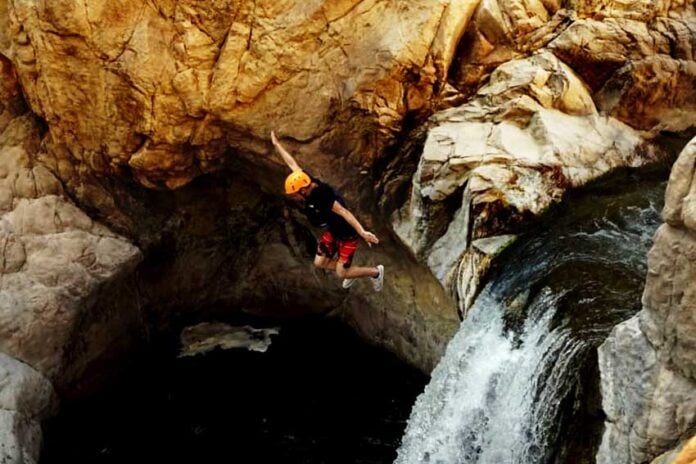
Aventura Camp offers Canyoning for Beginners at El Salto. (Sergi Gómez)
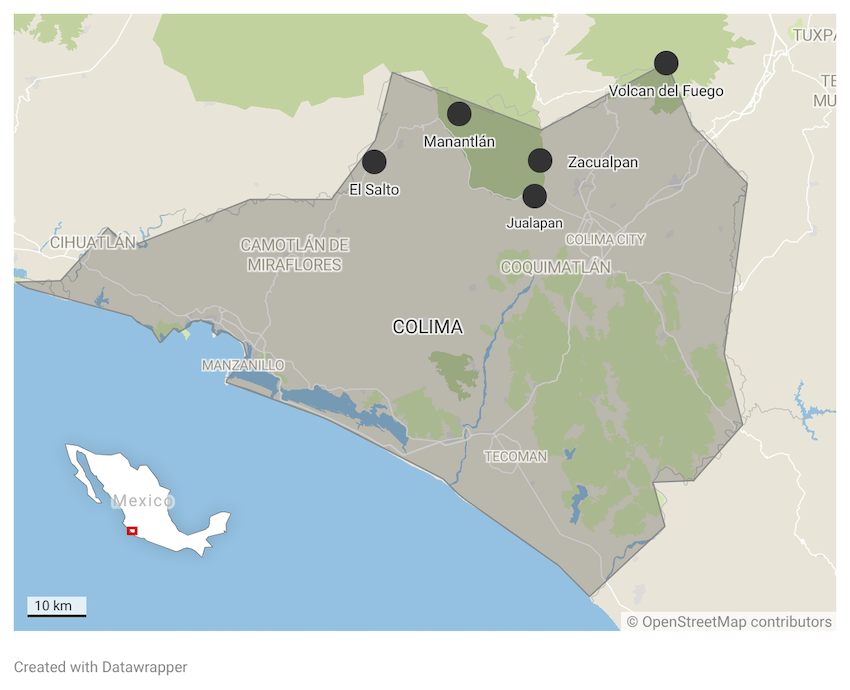
Colima is one of Mexico’s smallest states. In size, it falls between the U.S. states of Rhode Island and Delaware, but harbors enough delightful outdoor sites “to fill a book,” according to local guide Sergi Gómez.
“You have a live volcano, high limestone mountains, jungles, beaches, lakes, waterfalls, canyons and salt flats,” says Gómez, who operates Aventura Camp Colima, which offers excursions of all kinds as well as training in canyoning and caving. Below are a few of Gómez’s favorite spots.
El Salto Cascade
Imagine an absolutely gorgeous waterfall tumbling over a delicately colored sheer cliff, into a pool of cool, crystal clear water, all in full view of an ideal camping spot on a small, sandy beach next to a river made to be swum in. Here you’ll find colorful butterflies, crash-diving kingfishers and flocks of small wild parrots, squawking and clowning. Add canyon walls to give the place privacy, and you’ve got El Salto. Here, Gómez offers a Canyoning for Beginners excursion, including a rappel of 35 meters. Come on a weekday, and you will probably have all of this to yourself.
The Juluapan Piedra: treasure with a view
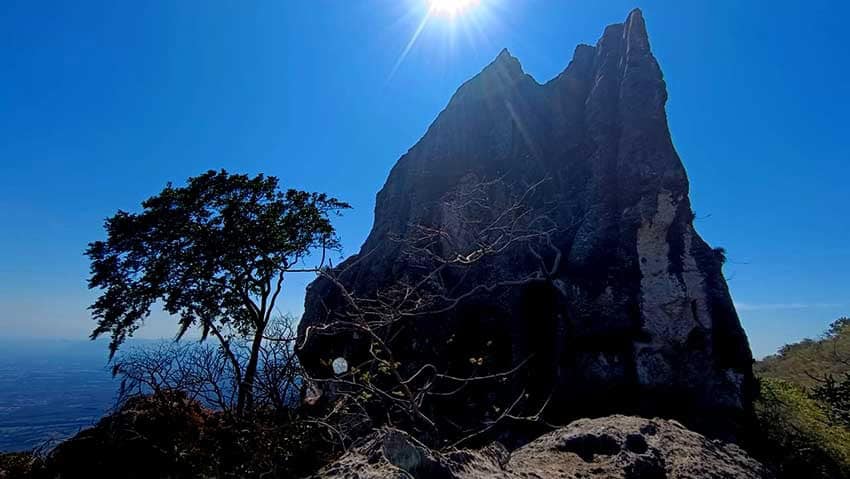
“Many climbers have heard of the Peña de Bernal,” Gómez told me over a cold Noche Buena beer. “It is said to be the biggest monolith in Mexico, but here in Colima, we have the Piedra de Juluapan. It rises to an altitude of 1,466 meters above sea level, and many local people believe it is Mexico’s second-biggest monolith.”
While Bernal is located next to a highway, Gómez pointed out that reaching Juluapan includes a two-hour hike (one way) through a jungle-like environment, with a total elevation gain of 680 meters. “The route is beautiful,” he tells us, “and always green because here only half the trees lose their leaves. You walk through copal, elephant-ear and silk-cotton trees, but the most striking is the árbol de primavera or pink poui tree.
“Of course, the main attraction is the rocky peak, from which you get a magnificent view of the surrounding hills. People in good shape, with a bit of climbing experience, will find this easy.”
It is said that somewhere beneath the Piedra de Juluapan is buried the treasure of el Indio Alonso, a legendary bandit, as well as the body (and treasure, of course) of legendary King Colimán, after whom, they say, Colima is named.
This is a round-trip walk of 7.1 kilometers, perhaps lasting four hours.
La Piedra de Juluapan: climb to the top for a gorgeous view. (Sergi Gómez)
Manantlán, home of the jaguar
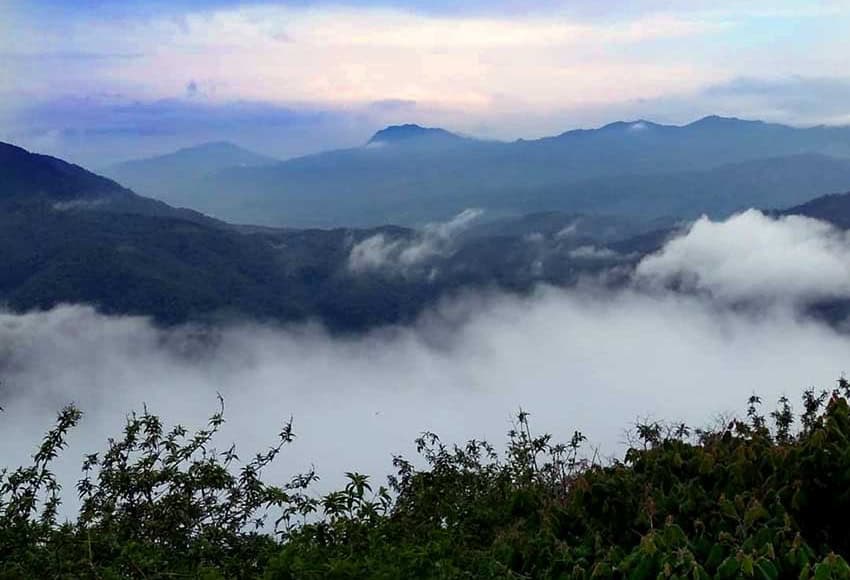
The Sierra de Manantlán Biosphere Reserve is extraordinary. Somehow it combines the qualities of a high-elevation pine forest with the exuberance of a coastal jungle. A 90-minute drive from Colima City takes you to the pueblito of Terrero, where you can rent a cabin in the woods. Walking along a path anywhere up here, you’ll pass through trees covered with lichen and moss, their branches heavy with orchids and bromeliads. Beneath the trees, you will see wildflowers and truly exotic mushrooms of every hue, including blue. When you return to your cabin, you may find it completely shrouded in fog.
The cloud forest of Manantlán offers the best of the mountain and the jungle. (Sergi Gómez)
In these limestone mountains, there are hundreds of caves, most of them vertical pits up to 200 meters deep. This is the home of jaguars, mighty waterfalls and Zea diploperenis, the plant from which native peoples hybridized corn, long, long ago. There are five ecosystems in Manantlán and over 2,900 species of plants have been identified here, as well as 110 species of mammals and 336 species of birds. “This is a truly unique site,” says Sergi Gómez. “I’ve traveled around to all of Mexico’s national parks, and in my book, Manantlán is the most beautiful.”
Want to escape from your daily drudgery? One night in Manantlán will give you a whole new outlook on life. As Aldo Santana, a local villager, says, “Come, touch the land, feel the wind; drink where the deer drink; listen to the melodies of the mountain which change with every season; immerse yourself in a work of art that could only have been created by La Gran Madre who, in this very place, gave us the gift of maize.”
The Fire Volcano
Many points in the Sierra Lalo offer an excellent view of the Volcán de Fuego volcano. (John Pint)
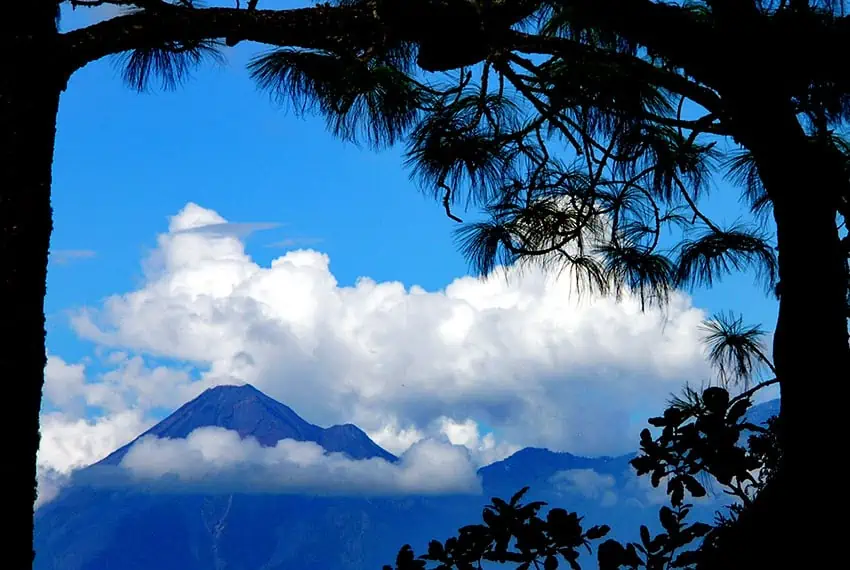
El Volcán de Fuego is Mexico’s most active volcano, its last eruption occurring in 2023. For a good look at the volcano — from a safe distance — you may want to rent a cabin on the shores of lovely Laguna la María, a crater lake only eleven kilometers away. By night, you may see streams of lava coursing down the volcano’s slopes (if it’s in active mode), and by day, you can visit one of many small coffee farms in its shadow. Near here, Sergi Gómez leads a walk through the Suchitlán Barranca (ravine) to a humble organic coffee plantation. A cup of their volcanic java will help soothe your nerves as you cross two hanging bridges on this route. This excursion takes five to six hours altogether, and you walk six kilometers.
The Zacualpan Springs
These are karst springs of crystal-clear water originating in the mountains of Manantlán. This beautiful canyon is a great place for hiking, biking, rock-climbing or horseback riding, and guided tours can be arranged to several picturesque places. All these activities end, of course, with a refreshing splash in the river, where the local people have created pools by building simple dams of rock walls.
To have the place to yourself, Sergi Gómez recommends heading there at 8 a.m. and returning at around 1 p.m. The drive from Colima City takes about 25 minutes.
John Pint has lived near Guadalajara, Jalisco, for more than 30 years and is the author of “A Guide to West Mexico’s Guachimontones and Surrounding Area” and co-author of “Outdoors in Western Mexico.” More of his writing can be found on his website.