Home Blog Page 289

US announces 21% tariff on Mexican tomatoes starting July

5
Tomato prices
The Trump administration is again accusing Mexico of placing "too-low" prices on its tomato exports, making it impossible for U.S. farmers to compete. (Margarito Pérez Retana/Cuartoscuro)

The United States government said Monday that it would impose duties of almost 21% on imports of most tomatoes from Mexico starting in July, but the Mexican government is confident it can reach a deal to avert or suspend the imposition of the tax.

The U.S. Department of Commerce (Commerce) announced on Monday its intention to “withdraw from the 2019 Agreement Suspending the Antidumping Investigation on Fresh Tomatoes from Mexico.”
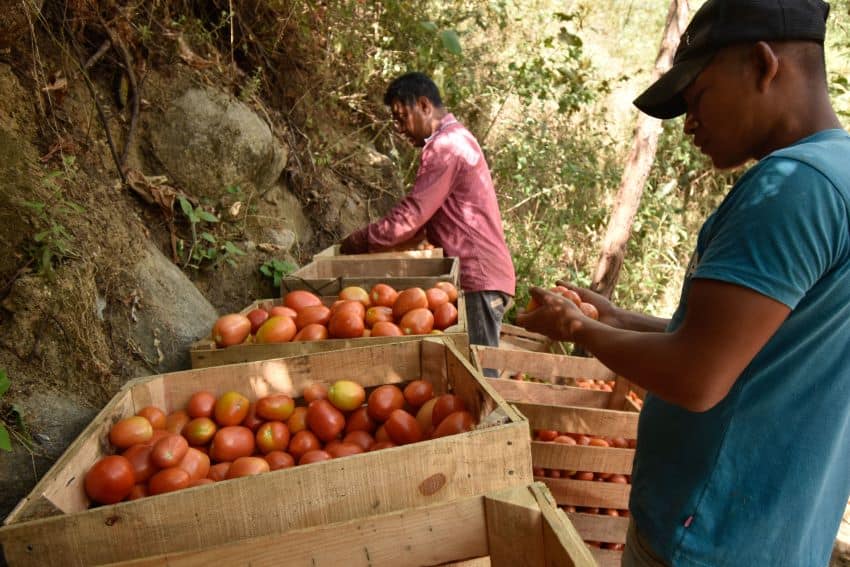
Tomato producers in Mexico
Nearly all of Mexico’s tomato exports go to the United States. (Dassaev Téllez Adame/Cuartoscuro)

In a press release, the department said the termination of the agreement would be “effective in 90 days.”

“The current agreement has failed to protect U.S. tomato growers from unfairly priced Mexican imports, as Commerce has been flooded with comments from them urging its termination. This action will allow U.S. tomato growers to compete fairly in the marketplace,” it said.

“With the termination of this agreement, Commerce will institute an antidumping duty order on July 14, 2025, resulting in duties of 20.91% on most imports of tomatoes from Mexico,” the department said.

“The strict enforcement of U.S. trade law is a primary focus of the Trump Administration,” the statement said.

In 2019, during Donald Trump’s first term as U.S. president, the United States withdrew from a six-year-old agreement on tomatoes that resulted in the imposition of a 17.5% tariff on imports from Mexico in May of that year.

Then U.S. Secretary of Commerce Wilbur Ross said at the time that the withdrawal decision followed complaints from United States tomato producers, including the Florida Tomato Exchange, that they were being undercut by Mexican imports.

In August 2019, Mexican tomato producers and the United States government reached a new agreement that resulted in the suspension of an antidumping investigation in the U.S. and the lifting of the 17.5% duties. The United States now intends to terminate that agreement.

Ag minister: Salads and ketchup will be more expensive in US if tomato duties are imposed   

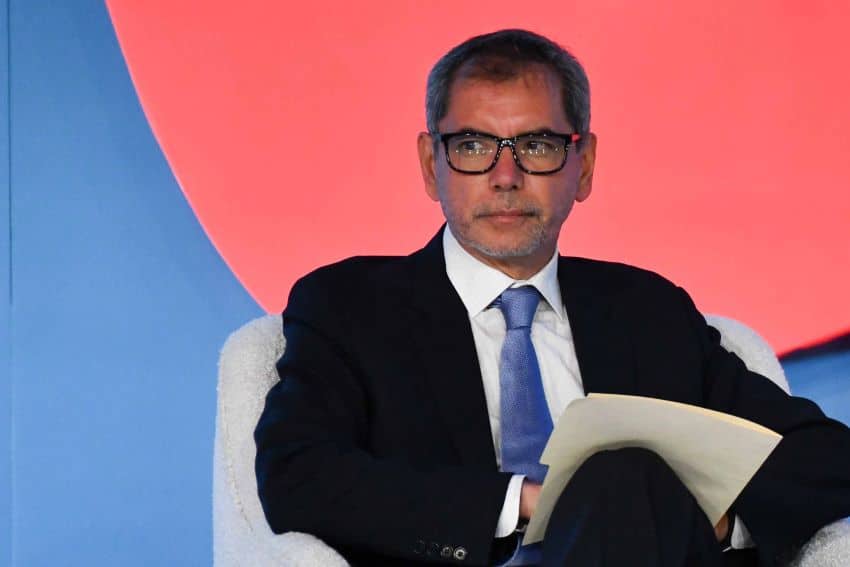
Mexican Agriculture Minister Julio Berdegué responded to the United States announcement at President Claudia Sheinbaum’s Tuesday morning press conference.
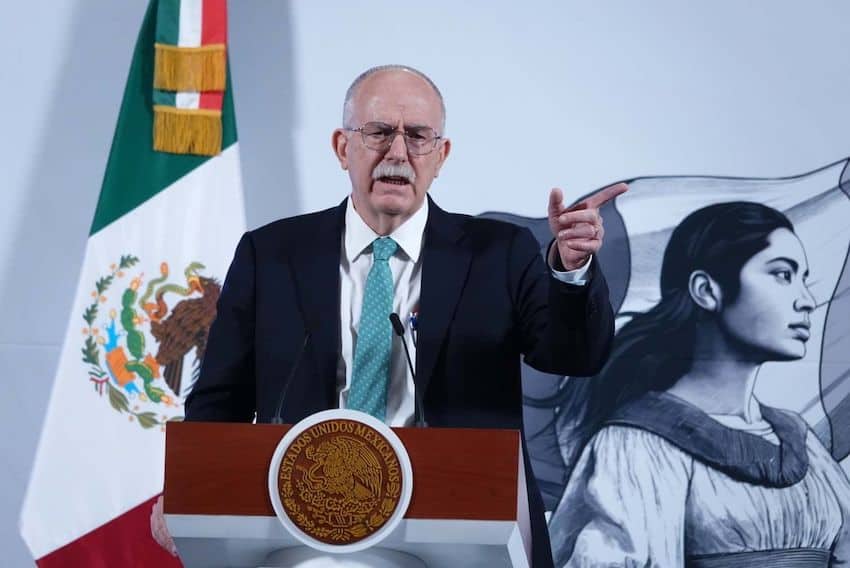
Mexico's agriculture minister
The consequence of the almost 21% duties, if they are imposed, will be more expensive tomatoes in the United States, Mexico’s agriculture minister said on Tuesday. (Graciela López/Cuartoscuro)

He highlighted that tomato producers in the United States have long accused Mexican producers — “in our opinion without reason” — of selling tomatoes in the U.S. at a below-cost price, “which is not true.”

“They’ve been telling this story for decades,” Berdegué said.

He told reporters that five agreements suspending antidumping investigations in the U.S. have been reached since 1996.

“It’s important to say that 90% of the tomatoes that the United States imports … are Mexican tomatoes,” Berdegué said, adding that “six of ten tomatoes they eat” are grown in Mexico.

The “consequence” of the almost 21% duties, if they are imposed, will be more expensive tomatoes in the United States, the agriculture minister said.

“Their salads, their ketchup, everything [with tomato in it] will be more expensive,” he said.

“They can’t replace us because it’s not as if there are a lot of other countries that produce this quantity of excellent tomatoes at a very good price,” Berdegué said.

“If they want to [impose the duties], they’ll simply pay 21% more for their tomatoes,” he said.

Will history repeat itself?

Berdegué highlighted that that there are 90 days until the duties are scheduled to take effect, and said that Mexico will engage in negotiations with the United States in the meantime.

“They already did it in 2019, the same as now, very similar,” he said, referring to the United States announcement more than six years ago that it was withdrawing from a 2013 bilateral tomato agreement.

US pulls out of Mexico tomato agreement over growers’ complaints

Berdegué noted that negotiations followed, “Mexico defended itself” and an agreement “that is valid until now” was reached.

“What’s probably going to happen now is exactly the same thing. We’re going to start to talk … and we’re going to see how it turns out,” he said.

Mexico’s preference, of course, would be to reach a deal with the United States before the duties take effect rather than after, as occurred in 2019.

Berdegué noted that the United States’ proposed duties on Mexican tomatoes are completely separate from Trump’s so-called “reciprocal tariffs.”

He also said that it is “very important” to highlight that antidumping investigations are “common.”

“Mexico has two active investigations, not from now, not from yesterday, but from a long time ago,” Berdegué said, noting that one focuses on imports of chicken from the United States and the other examines imports of pork legs from the U.S.

He noted that Mexico has not imposed any tariffs on those imported products.

In closing remarks, Berdegué reiterated that Mexico will hold talks with the United States over the next 90 days, during which it will seek the renewal of the 2019 agreement the U.S. intends to terminate.

“There are hundreds of thousands of people who work in the production of tomatoes in Mexico. We have to take care of them,” he said.

Berdegué also said that Mexican tomatoes “are very healthy” and “hopefully” they won’t become more expensive for U.S. consumers.

Since Trump took office in January, the United States has imposed tariffs on Mexican steel and aluminum and hundreds of products made with those metals as well as vehicles made in Mexico and Mexican goods not covered by the USMCA free trade pact.

Almost all of Mexico’s tomato exports go to the US

  • Mexico produces around 3.6 million tonnes of tomatoes per year and 56% of total production is exported, according to Mexican Economy Ministry (SE) data reported by the Milenio newspaper.
  • Citing SE data, Milenio reported that 99.8% of Mexico’s tomato exports go to the United States.
  • Mexico’s exports of fresh and chilled tomatoes generated revenue of US $2.56 billion in 2023, according to SE data.
  • Sinaloa is easily Mexico’s largest tomato-producing and exporting state. Tomatoes grown in the northern state brought in export revenue of $1.06 billion in 2023, or more than 40% of Mexico’s total tomato export earnings that year.
  • After Sinaloa, the next biggest tomato-exporting states in 2023 were Jalisco, Sonora, Guanajuato and Puebla.

Mexico News Daily 
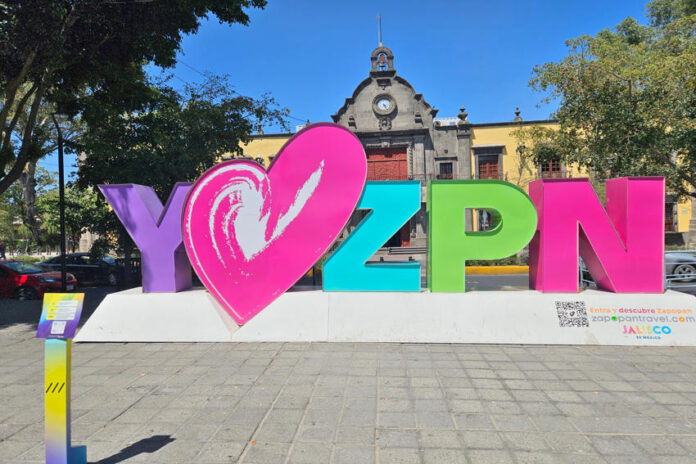
Off the beaten path but never boring: What to do in downtown Zapopan

0
A large sign with the letters Y love ZPN in pink and purple. The sign is on a Square
There's a lot to love about downtown Zapopan, part of Guadalajara's metropolitan area. (ehudson/Shutterstock)

As one of Mexico’s wealthiest municipalities, Zapopan, Jalisco — part of the Guadalajara metropolitan area — is known for its modern shopping malls, lavish residences and lush parks. But beyond its upscale buildings and neighborhoods lies Zapopan’s historic center, home to an impressive basilica that’s Mexico’s third most visited pilgrimage site and a host of cultural and culinary experiences.

From landmarks, art galleries and a contemporary art museum to a wide variety of restaurants, bars and quirky cafés, downtown Zapopan is one of those off-the-beaten-path destinations worth exploring if you have spare time when visiting Guadalajara. 

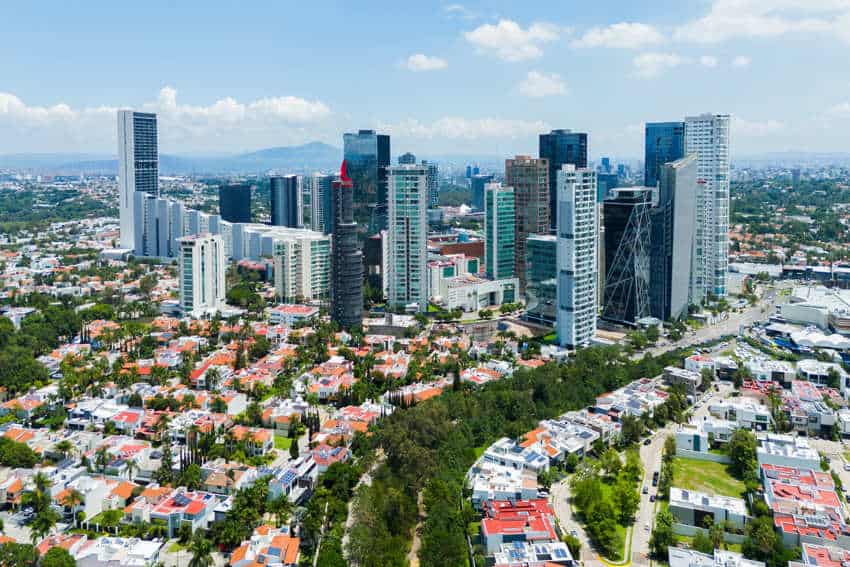
Aerial view of the Guadalajara skyline, with a cluster of skyscrapers in the Business District at the center and mountain range in the background. Tree-lined roads lead from the foreground in a curve, passing the east side of the skyscraper cluster.
Zapopan is part of the urban sprawl that is Guadalajara, seen here. But unlike trafficky Guadalajara, downtown Zapopan is a relative breeze to get to and move around in. (Carlos O. Flores/Shutterstock)

As a Guadalajara native, here’s my guide to things to do in downtown Zapopan.

Easy to get to 

Unlike Guadalajara’s sprawling historic center, Zapopan’s downtown is small, making it easier to move around in and explore over a morning or afternoon. Its culinary options are varied, boasting everything from fondas (casual restaurants serving traditional Mexican food) to fine dining to family restaurants. The streets and sidewalks around the main square are well-maintained, with building facades featuring Mexico’s classic lively colors.   

Downtown Zapopan, located to the west, is accessible by one of the city’s largest roads, the Avenida Patria and conveniently reachable by public bus and the Urban Electric Train System, known as the Tren Ligero.

If arriving by car, there are numerous public parking lots around the main plaza, including one underground.  

What to see and do?

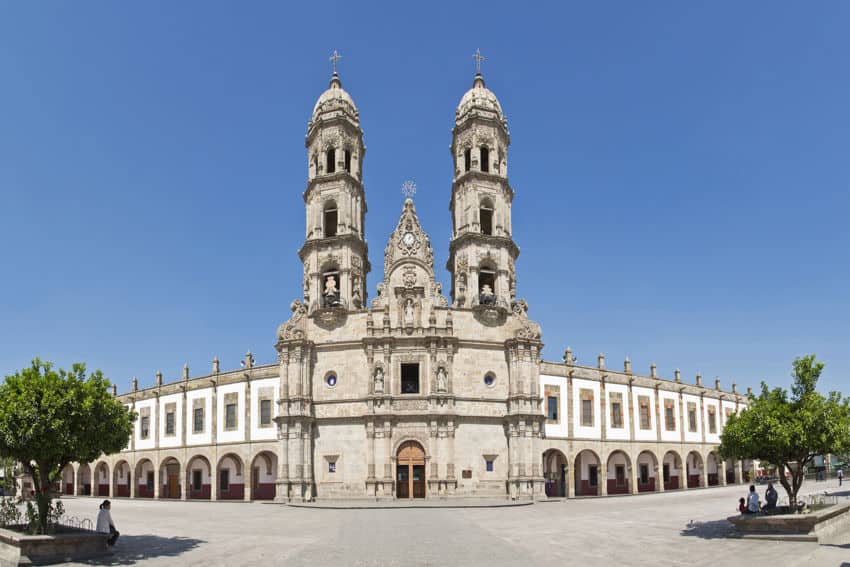
A large cantera basilica in downtown Zapopan with two triple-decker cupolas on either side of the entrance and a verandah spanning either side with repeated arches at the base of the building.
Even if you’re not religious, downtown Zapopan’s Basilica de Zapopan is still impressive, built in the Plateresque architectural style used originally in 15th- and 16th-century Spain. (Jesús Cervantes/Shutterstock)

Basílica de Zapopan
Eva Briseño 152

Known as one of Mexico’s main religious centers, Franciscan friars built the basilica in honor of the Virgin of the Immaculate Conception, currently known as the Virgin of Zapopan. Its construction dates from 1690 to 1730.

The building’s façade is in Plateresque style, and the basilica’s interior uses colonial Doric, Corinthian and Gothic architectural styles.

Zapopan Art Museum (MAZ)
Andador 20 de Noviembre 

The MAZ is a public contemporary art museum known for its temporary exhibitions and projects specifically designed for the museum.

Mexican architects María Emilia Orendáin and Enrique Toussaint designed the building, which opened in 2002. It’s the only Jalisco public institution dedicated exclusively to contemporary art.

Where to eat?

Doña Gabina Escolástica 
Javier Mina 237

This picturesque fonda is one of downtown Zapopan’s most popular restaurants. It gives off a typical Mexican vibe, with vibrantly colored chairs, talavera-covered walls, rows of papel picado hanging from the ceiling and walls decorated with Mexican art.

The menu features everything in the realm of antojitos mexicanos — snacks whose name translates as “little cravings.”  Sample authentic enchiladas, sopes, pozole, tamales, and more. 

People line up to eat here, so I recommend arriving before it opens at 2 p.m.

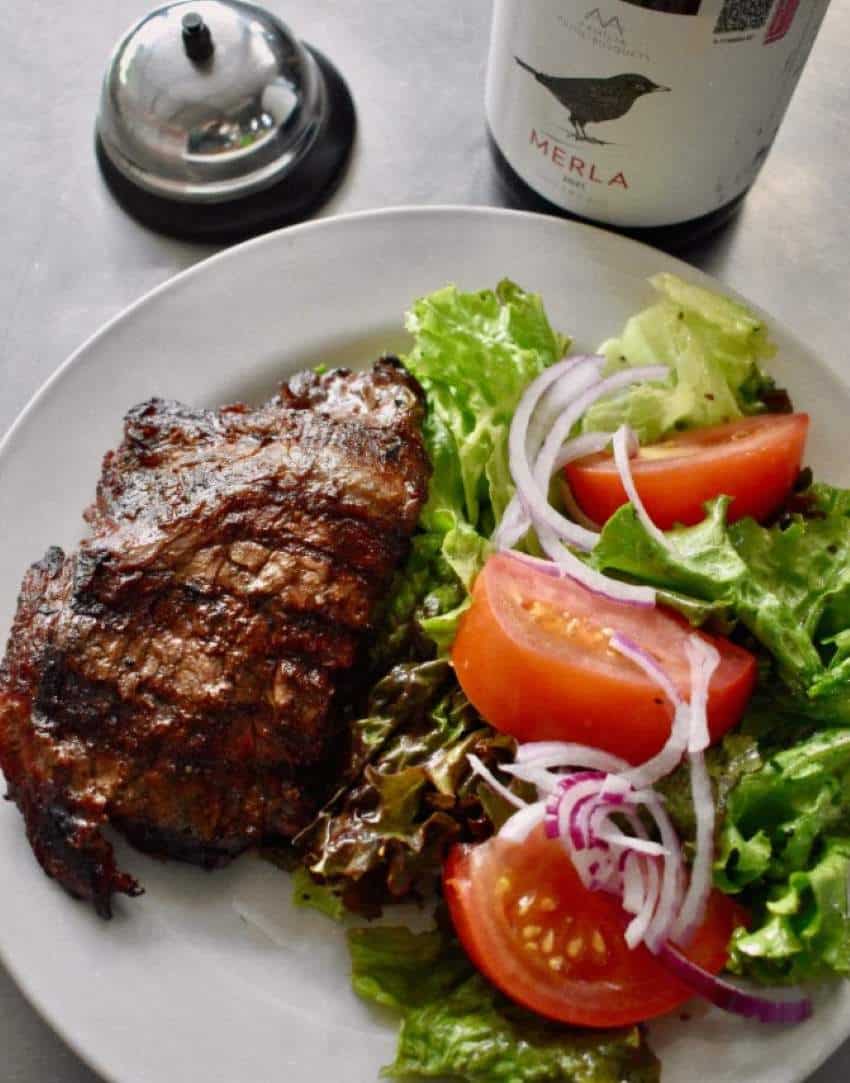
A classic white ceramic plat holds a thick grilled steak accompanied by a simple salad. On the table is a wine bottle with the label for the brand "Merla" and silver and rubber classic service bell
Craving a thick, juicy steak? Get it in downtown Zapopan at Res Pública Parilla, which specializes in Argentine fare. (Res Pública Parilla)

Res Pública Parrilla 
Calle 28 de Enero 291

Ranked by local magazine Players of Life as one of the best steakhouses in Guadalajara, Res Pública stands out for its quality. The menu features Argentine classics: chorizo, freshly baked empanadas and provoleta cheese, plus a variety of steaks accompanied by chimichurri and the classic lettuce, tomato and onion salad.

Res Pública also features an extensive wine menu in line with the restaurant’s motto: “fire, wine and a good life.”

Salón Candela
Javier Mina 183

Just a five-minute walk from the Basílica de Zapopan is Salón Candela, which has been around for two decades. With a casual taberna ambiance and simple but tasty cuisine, Salón Candela also supports local spirits brands, has vegetarian options and opens its doors as a venue to local bands.  

A paper to-go coffee cup with a white paper base and a black plastic lid, and a cardboard heat sleeve on the cub with the El Habito Cafe logo
Need a pick-me-up after exploring the Basilica de Zapopan? El Hábito Café is conveniently right outside. (El Hábito Café/Facebook)

Independent cafés

Forget Starbucks, downtown Zapopan is filled with fun independent cafés, serving coffee from all over Mexico, including the states of Chiapas, Tabasco and Veracruz. 

Some great places to enjoy a cup of coffee downtown include Taller de Espresso, which also sells wholesale and retail coffee and even offers coffee courses.

El Hábito Café, located in a cozy terrace outside the Basílica de Zapopan’s souvenir shop, is another great spot to unwind with a cup of coffee and a pastry.

Café Zapopan features delicious coffee and an all-day breakfast menu known locally for its homestyle menu.

Where to shop?

People walking along a pedestrian market with vendor stalls that have large umbrellas on either side. Hanging over them are vibrant fabric decorations in cornflower blue, mint green and white to provide shade.
The Andador 20 de noviembre market in downtown Zapopan. (ehudson/Shutterstock)

Downtown Zapopan has been undergoing a major transformation in the last two years, with street renovations and new attractions making it easier and more appealing to unearth your latest shopping find. Here are a couple of options:

Andador 20 de Noviembre pedestrian market
Andador 20 de Noviembre

Art galleries and shops line the Andador 20 de Noviembre, a pedestrian-only street adorned with colorful translucent decorations that create beautiful reflections across the sidewalk. On Saturdays, the street hosts an antiques and art market and live music. Take a breather at one of several bars and restaurants also located here.

Centro Zapopan shopping mall
Avenida Hidalgo #352

Located a few meters from the Arcos de Zapopan historic landmark, this new shopping mall features Mexican and international stores, as well as popular food chains like Starbucks, Carl;s Jr, York Pub and Sushi Central.

There is also a wealth of Mexican ice cream parlors in the mall, including trusted franchises like Santa Clara and Helados Dolphy. Also, sample decadent Mexican pastries at Guadalajara’s popular bakery chain, Cuca y Lupe.

Gabriela Solis is a Mexican lawyer turned full-time writer. She was born and raised in Guadalajara and covers business, culture, lifestyle and travel for Mexico News Daily. You can follow her lifestyle blog Dunas y Palmeras.

Mexico battles over 100 active forest fires: Monday’s mañanera recapped

1
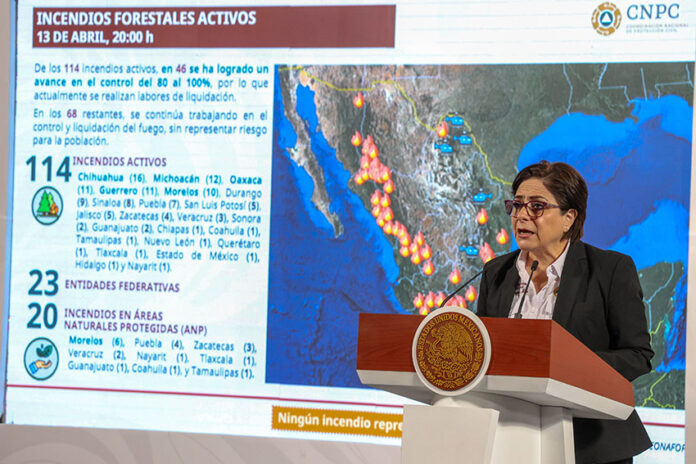
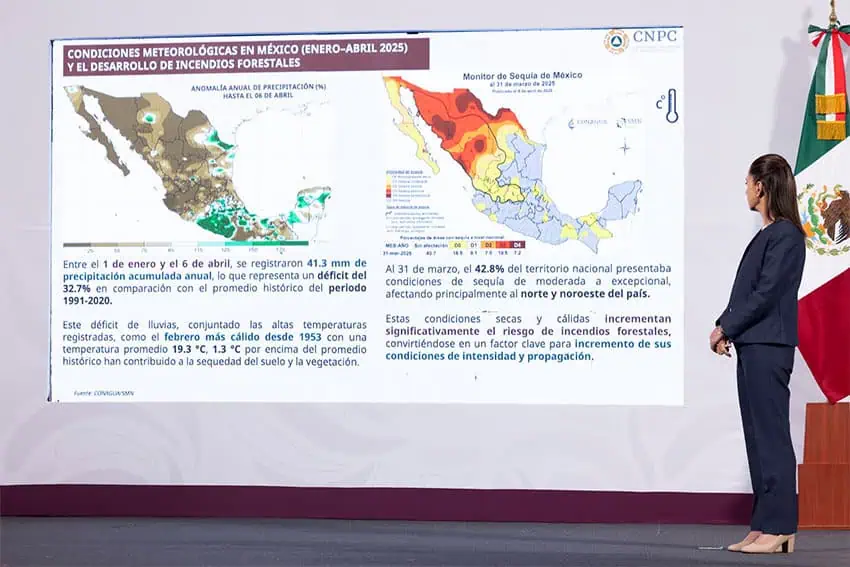
Federal Civil Protection Director Laura Velázquez Alzúa stands in front of a map of Mexico showing the location of wildfires around the country
Federal Civil Protection Director Laura Velázquez Alzúa said that while the largest fires are in Morelos and Oaxaca, smaller fires in more densely populated areas pose a greater threat to human life. (Moisés Pablo Nava/Cuartoscuro)

After presenting the government’s home construction program at events in Tamaulipas, Zacatecas and Aguascalientes on Friday, Saturday and Sunday, President Claudia Sheinbaum presided over her regular morning press conference at the National Palace in Mexico City on Monday.

Early in the mañanera, Sheinbaum ceded center stage to the national Civil Protection chief, who provided an update on the more than 100 wildfires burning in Mexico.

Later in the press conference, the president spoke about a task she has entrusted to new Finance Minister Edgar Amador Zamora, who took over the job from Rogelio Ramírez de la O last month.

Civil Protection chief: 114 wildfires burning across 23 Mexican states 

National Civil Protection Coordinator Laura Velázquez reported that there were 114 active wildfires across Mexico at 8 p.m. Sunday, according to the National Forestry Commission (Conafor).

She said that 46 of those fires are at least 80% under control while the other 68 are less contained, but don’t currently represent a risk to human life.

Velázquez said that the 114 fires are burning in 23 different states, and 20 are in Natural Protected Areas. Citing information from Conafor, the Civil Protection chief said that approximately 38,405 hectares of land are affected by the fires.

An image she displayed showed 16 active fires in the northern state of Chihuahua, 12 in Michoacán, 11 in Guerrero, 11 in Oaxaca and 10 in Morelos. Among the blazes in Morelos are four in the municipality of Tepoztlán, where fires also consumed forest in March.

Velázquez traveled to Tepoztlán later on Monday to monitor the firefighting efforts.

The other states where forest fires were burning Sunday evening are Durango (9), Sinaloa (8), Puebla (7), San Luis Potosí (5), Jalisco (5), Zacatecas (4), Veracruz (3), Sonora (2), Guanajuato (2), Chiapas (1), Coahuila (1), Tamaulipas (1), Nuevo León (1), Querétaro (1), Tlaxcala (1), México state (1), Hidalgo (1) and Nayarit (1).

Velázquez said that just under 4,000 firefighters are working to extinguish the blazes. They include Conafor and military personnel as well as firefighters employed by state and municipal governments and volunteers.

“It’s very important to highlight that there are eight planes and eight helicopters that are helping to combat the fires,” Velázquez said.

Later in the press conference, the Civil Protection chief said there were “signs” that some of the fires were deliberately lit.

President Claudia Sheinbaum looks back at a map of drought in Mexico
Drought conditions in large swaths of the country have contributed to the blazes. (Presidencia)

Velázquez said that law enforcement authorities are investigating and that when “official and reliable data” is available she will announce it.

She also noted that three firefighters have lost their lives this year while working to extinguish forest fires, including one in Oaxaca last month.

Rainfall in 2025 well below the average in recent decades 

Before presenting the information about the 114 active forest fires, Velázquez highlighted that the accumulated amount of rainfall in Mexico between Jan. 1 and April 6 was 32.7% lower than the average for the same period between 1991 and 2020.

She also noted that 42.8% of Mexico’s territory was experiencing drought ranging from “moderate to exceptional” as of March 31, the date Mexico’s most recent “drought monitor” map was published.

“These dry and hot conditions significantly increase the risk of forest fires,” Velázquez said.

Government wants banks to lower borrowing costs 

A reporter asked the president whether she would attend the Mexican Banking Association’s annual Banking Convention in Nuevo Nayarit (formerly Nuevo Vallarta) in early May and if so what message she would convey to bankers.

“Yes, I’m going to the convention,” Sheinbaum said.

She didn’t disclose any message that she would personally send to bankers, but noted that she has given Finance Minister Edgar Amador Zamora the task of asking banks in Mexico to lower their interest rates.

Edgar Amador Zamora will be the new head of Mexico's Finance and Public Credit Ministry.
The president said she asked Edgar Amador Zamora, Mexico’s new finance minister, to work with banks to lower interest rates. (Mario Jasso/Cuartoscuro)

Even though the Bank of Mexico has cut its key interest rate — it is currently 9% compared to 11% a year ago — “access to a loan for a small or medium-sized company continues to be very complex,” Sheinbaum said.

She said that lower borrowing costs in Mexico would help to “invigorate” the economy.

“So that is an important part of what we’re asking the finance minister, [we’re asking] that he speak with the banks,” Sheinbaum said.

As part of its Plan México economic initiative, the federal government is aiming to increase the percentage of small businesses that have access to credit ever year this six-year period of government to reach 30% in 2030.

By Mexico News Daily chief staff writer Peter Davies (peter.davies@mexiconewsdaily.com)

Mario Vargas Llosa, giant of Latin American literature, dies at age 89

0
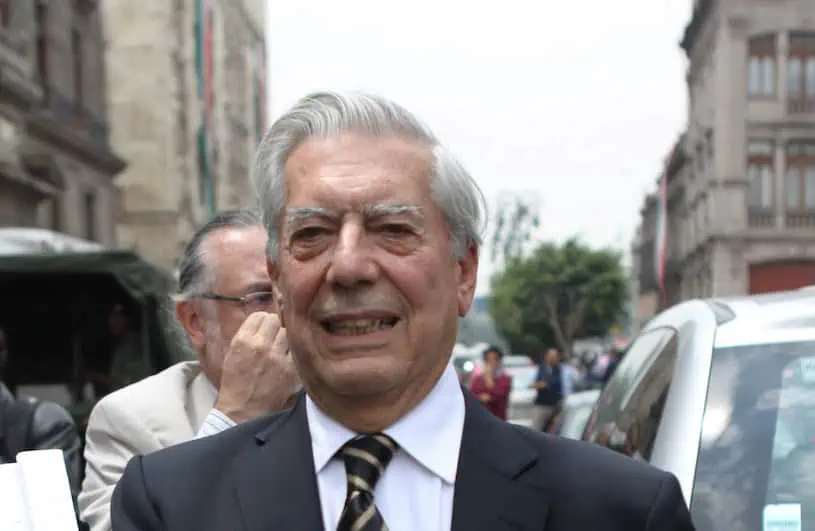
Mario Vargas Llosa
Vargas Llosa was the last surviving member of the four leading lights of the Latin American Boom in literature of the 1960s, which also included the Mexican Carlos Fuentes, the Argentinan Julio Cortázar and the Colombian Gabriel García Márquez. (Rodolfo Angulo/Cuartoscuro)

Mario Vargas Llosa, the Peruvian Nobel Prize–winning novelist and outspoken critic of Latin American authoritarianism who famously labeled Mexico a “perfect dictatorship,” died Sunday in Lima.

His son Álvaro reported that the writer, who had turned 89 on March 28, died peacefully surrounded by family.

Vargas Llosa at Bellas Artes
Vargas Llosa frequently visited Mexico to participate in literary or political events. In 2011 he provided narration at a presentation of the Thousand and One Nights at the Palacio de Bellas Artes in Mexico City. (Guillermo Perea/Cuartoscuro.com)

Vargas Llosa was a prolific author and essayist with such celebrated novels as 1963’s “La ciudad y los perros” (published in English as “The Time of the Hero”) and 1969’s “Conversación en la catedral” (“Conversation in the Cathedral”).

In winning the 2010 Nobel Prize in Literature for his body of work, Vargas Llosa was recognized by the committee “for his cartography of structures of power and his trenchant images of the individual’s resistance, revolt and defeat.”

With novels that dissected authoritarianism, societal violence, war and political corruption, he was a leading voice of the emergent Latin American Boom literary movement of 50-60 years ago.

Mexicophiles and bibliophiles might recall Vargas Llosa as a frequent guest at the Guadalajara International Book Fair (FIS), the largest literary event in the Spanish-speaking world.

He opened the 2014 literary program with a dialogue with Israeli writer David Grossman, presented his novel “Cinco esquinas” (“Five Corners”) and was honored for his 80th birthday in 2016, and appeared for a final time at age 83 in 2019 to present his novel “Tiempos recios” (“Harsh Times”).

But Vargas Llosa’s main relationship with Mexico was defined by his 1990 declaration that its one-party rule under the Institutional Revolutionary Party (PRI) constituted a “perfect dictatorship.”

Vargas Llosa
In 2010, Vargas Llosa was in Mexico City to receive an honorary doctorate from the National Autonomous University of Mexico. (Moisés Pablo/Cuartoscuro.com)

Decades later, he criticized then-President Andrés Manuel López Obrador for “sliding toward authoritarianism,” accusing him of undermining press freedom through daily attacks on journalists during his mañanera press conferences.

“I don’t think that’s the role of a president; it violates that role,” Vargas Llosa said in 2021.

López Obrador dismissed the novelist’s critiques as conservative rhetoric, asserting the writer misunderstood Mexico’s realities. 

But AMLO also took aim at the president and founder of the Guadalajara book fair (FIS), Raúl Padilla, for inviting writers and intellectuals whom the president felt were opponents of his administration — citing Vargas Llosa by name.

Undeterred, an 87-year-old Vargas Llosa opened a book fair bearing his name, the Mario Vargas Llosa Biennial, in 2023 by saying that “populism, demagoguery, statism, intolerance and ideological extremism are causing much damage” in Latin America.

Those comments — which Vargas Llosa claimed were about his native Peru and not Mexico — occurred in Guadalajara, where the every-other-year event is usually held, although later this year it will take place in Spain for the first time.

That festival, in conjunction with the FIS and other entities, also hands out the Mario Vargas Llosa Biennial Novel Prize — a US $100,000 award considered one of the most prestigious in the Spanish-speaking world.

Mexican President Claudia Sheinbaum acknowledged Vargas Llosa’s death in her Monday morning press conference, stating, “Beyond political differences, we must recognize the greatness of a writer. Our condolences go to his family.”

Former President Felipe Calderón honored him as a “universal voice” for renowned novels such as 1981’s “La guerra del fin del mundo” (“The War of the End of the World”) and 2000’s “La fiesta del chivo” (“The Feast of the Goat”), while novelist Xavier Velasco recalled his wit and social consciousness.

In his later years, the author opposed inclusive language reforms, calling efforts to replace gendered terms like todos with todxs “a stupidity by modern feminists.” He argued Spanish’s grammatical structure was “natural” and warned against “denaturalizing language.”

Born in Arequipa, Peru, in 1936, Vargas Llosa spent decades in Europe before returning to Peru, where he ran unsuccessfully for president in 1990. He reportedly spent his final months revisiting Lima landmarks featured in his novels. 

With reports from Infobae, Milenio and Associated Press

Whooping cough outbreak prompts new alert from health officials

1
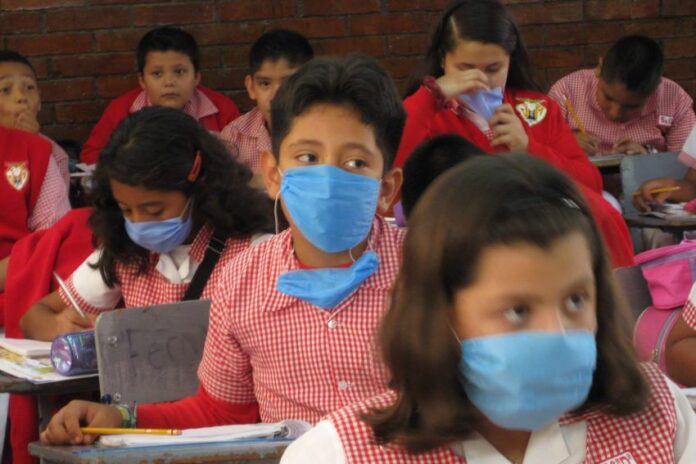
schoolchildren with masks
Six weeks after the Health Ministry issued an alert based on increasing cases of whooping cough, the outbreak has escalated, with 696 confirmed cases in Mexico as of the first week of April. (Oscar Alvarado/Cuartoscuro)

Mexico’s National Committee for Epidemiological Surveillance (Conave) issued an emergency alert for whooping cough, or pertussis, over the weekend. 

Through the first week of April, health authorities across the nation had reported 2,549 probable cases of whooping cough, of which 696 had been confirmed. So far, 37 people have died from pertussis in 14 states.

Vaccination prep
A decline in vaccination coverage has been cited as a factor in the global rise of whooping cough cases. (Galo Cañas/Cuartoscuro.com).

The April 12 alert advised hospitals and clinics to report all positive and probable cases, and to conduct clinical studies and follow-ups in all probable cases. 

The notice comes six weeks after the Health Ministry (SSA) issued a similar alert following the confirmation of 133 cases in 20 of Mexico’s 31 states and in Mexico City. At the time, the number of confirmed cases had nearly matched the total number of cases recorded in 2024, with health authorities blaming a shortage of vaccines.

If pertussis is actively circulating in a community, there is a possibility that even a fully vaccinated person could catch the disease. 

According to Johns Hopkins Medicine, whooping cough is very contagious and mainly affects infants and young children. The illness — caused by a bacterium called Bordetella pertussis — is characterized by violent coughing spells that end with a characteristic “whoop” as air is inhaled.

The disease — which can last up to 10 weeks and lead to pneumonia and other complications — starts like the common cold, with a runny nose or congestion, sneezing, and sometimes a mild cough or fever. Usually, after a week or two, severe coughing begins. 

Symptoms also include sneezing, nasal discharge, fever and sore, watery eyes.

Babies too young to be vaccinated are at risk of catching pertussis. Instead of coughing, infants may have a pause in their breathing, called apnea, which is very serious. The illness can sometimes be fatal in young infants. 

According to the SSA, the illness has been confirmed in the majority of Mexican states. The entities with the highest number of confirmed cases through the first week of April are:

  • Chihuahua: 77 cases
  • Mexico City: 74 cases
  • Aguascalientes: 69 cases
  • Nuevo León: 62 cases
  • Coahuila: 46 cases
  • Jalisco: 39 cases
  • México state: 33 cases

Across the Americas, pertussis is on the rise after years of decline, according to the newspaper El Debate. The highest number of cases reported in the Americas came in 2012, with 72,000 cases of whooping cough confirmed across the two continents. 

Cases fell over the next 10 years, reaching a low of 3,238 confirmed cases in 2022, only to see the trend reversed in 2023.

In July 2024, the Pan American Health Organization issued an epidemiological alert for Latin America, citing a decline in vaccination coverage during the COVID-19 pandemic and an increase in whooping cough cases globally.

With reports from El Universal, El Debate and El País México

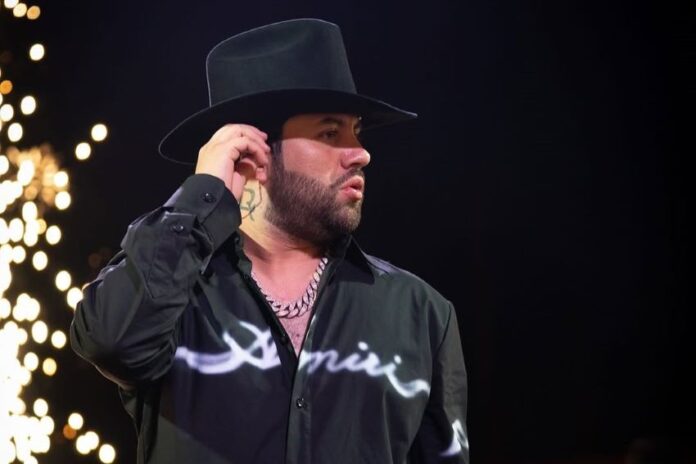
Fans riot after leading regional musician refuses to play narco ballads, yielding to pressure at home and abroad

4
Luis R. Conriquez in black shirt and cowboy hat
The popular regional musician Luis R. Conriquez opted to eliminate his hit narcocorridos from his set list, much to the chagrin of concert attendees. (Luis R. Conriquez/Instagram)

When popular regional musician Luis R. Conriquez declined to perform his hit narcocorridos (drug ballads) at his April 11 concert in Texcoco, México state, the crowd began to riot, trashing the stage and fighting with security.

Conriquez, who specializes in corridos bélicos (songs whose lyrics are mainly focused on drug trafficking and the ongoing cartel turf battles) and other Sinaloa-style genres, told the audience he was adhering to the state’s regulations against such narcocorridos.

The riot in Texcoco occurred just two weeks after the regional band Los Alegres del Barranco caused a stir by performing a corrido that pays homage to a drug lord. That prompted President Claudia Sheinbaum and other authority figures to condemn songs that advocate violence and glorify crime.

In light of the incident, the United States canceled the visas of Los Alegres, and has threatened to do the same for other groups that perform narcocorridos. The threat takes aim at the livelihoods of global stars like Peso Pluma and others, who often make much of their earnings in the U.S. market.

Conriquez, whose songs regularly chart on Billboard’s Hot Latin list in the U.S., may be keeping an eye on his bottom line as well: The next stops on his current tour include New York, Pennsylvania and Arkansas.

In Mexico several states, México state among them, responded by issuing or enforcing regulations and decrees prohibiting the performance of corridos bélicos in public events.

México Governor Delfina Gómez issued a ban on songs glorifying violence, specifically informing the authorities in the cities of Texcoco, Metepec and Tejupilco where concerts were scheduled. The decree hinted at hefty fines for performers, producers and promoters.

According to Conriquez and his manager Freddy Pérez, those in attendance were not informed in advance of the restrictions to the performer’s song list. When the artist explained that he was simply obeying the protocols established by local and state authorities, the crowd booed.

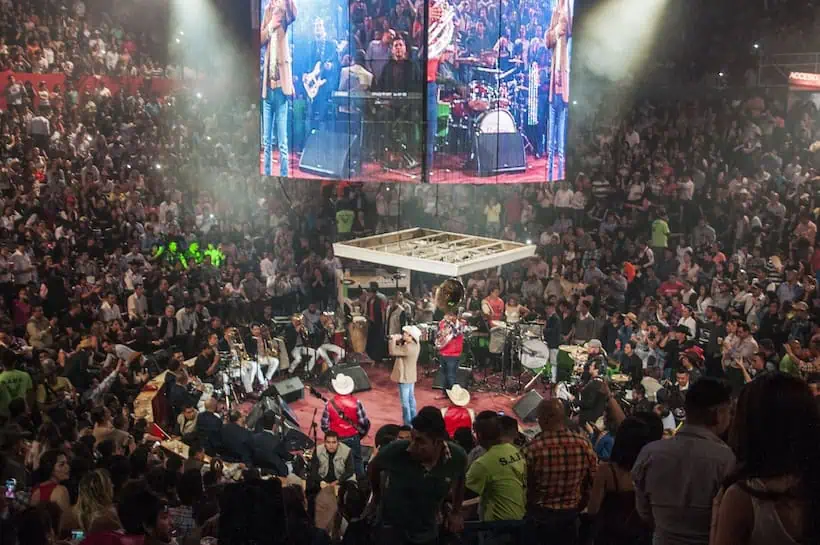
Some audience members then became aggressive, hurling objects at the band on the stage located in the middle of the arena. Shortly thereafter, the musicians fled the stage and rioters began destroying the instruments and equipment abandoned by the performers.

“We feared for our lives,” Pérez said in a public apology issued the following day, “and we left the arena without any security.”

Musicians on stage
The circular layout of the venue, with the stage in the center, added to the risk faced by Conriquez during the disturbance. Other acts performed there over the weekend with no trouble. (Diego Sánchez/Cuartoscuro.com)

Conriquez also issued a statement, saying that “this is a new era, my friends. It feels awful not being able to perform the songs that the public wishes to hear, but we support the ‘no corrido’ policy and want to move forward.”

On Sunday, Sheinbaum condemned the violence but sought to make clear that despite regulations imposed in some states, she is not in favor of prohibiting narcocorridos.

“We are not looking to regulate narcocorridos, nor are we in favor of censorship,” she said. “We simply would like to promote alternative musical content through an educational process to which we can all contribute.”

Sheinbaum also emphasized that she opposes the glorification of violence in popular culture.

The México state government declared that it will continue to enforce the “no narcocorridos” policy, insisting that authorities will charge those who violate the decree with glorifying violence.

With reports from Infobae, El Financiero and El Gráfico

Mexican peso starts the week strong as the US dollar weakens

1
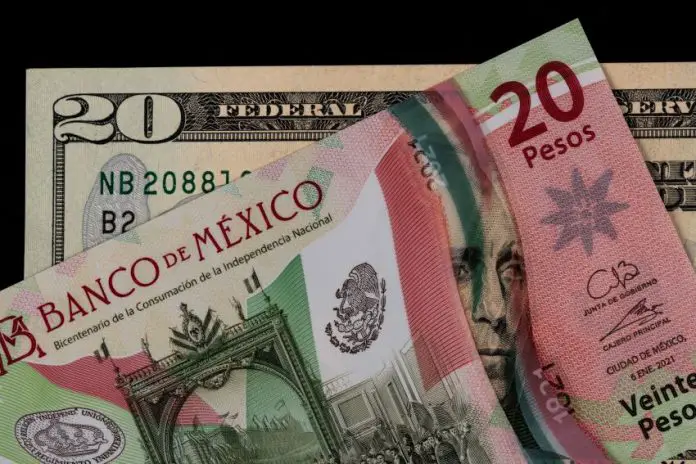
A Mexican 20-peso bill and a U.S. 20-dollar bill on an abstract black background. The Mexican bill is laying over the U.S. bill.
The peso kicked off Semana Santa (Holy Week) at nearly 20 to the dollar. (Shutterstock)

The Mexican peso appreciated against the US dollar on Monday morning due to increased appetite for riskier assets after United States President Donald Trump exempted smartphones, computers and some other tech products from his so-called “reciprocal tariffs,” including a 125% duty on imports from China.

After closing at 20.29 to the greenback on Friday, the peso strengthened to 20.02 to the dollar on Monday morning, according to Yahoo! Finance, representing an appreciation of just over 1.3%.

At 1 p.m. Mexico City time, the peso was trading at a slightly weaker 20.11 to the dollar.

The strengthening of the peso to close to 20 to the dollar on Monday came five days after the currency weakened to above 21 to the greenback amid an escalating trade war between the United States and China. As the strengthening came at the beginning of Semana Santa, or Holy Week, the El Financiero newspaper described it as a “santa apreciación” or “holy appreciation” in a headline.

The Trump administration’s announcement on Friday that it was dropping “reciprocal” tariffs on tech products including smartphones, computers, semiconductors and flat panel TV displays — at least temporarily — increased investors’ appetite for riskier assets such as the Mexican peso.

Analysts from Mexican bank Banco Base said that the appreciation of the peso was due to “a decrease in risk aversion” after Trump dropped 125% tariffs on cell phones, computers, semiconductors and other electronic devices imported from China.

A 20% “fentanyl tariff” on goods sent to the U.S. from China remains in effect.

The DXY index, which measures the US dollar against a basket of six major currencies, declined on Monday morning, indicating a general weakening of the greenback.

The peso has mostly traded at above 20 to the US dollar this year, although it strengthened to below the 20-to-the-greenback level for a brief period in March. Trump’s on-again, off-again tariffs have caused volatility in the USD:MXN exchange rate.

In April last year, the peso reached an almost nine-year high of 16.30 to the dollar, but depreciated significantly later in 2024 due to a range of factors including the ruling Morena party’s comprehensive victory in Mexico’s 2024 elections, Congress’ approval of a controversial judicial reform and Donald Trump’s victory in the U.S. presidential election last November.

With reports from El Financiero and El Economista

Mexico announces plan to build 1.1M new homes by the end of Sheinbaum’s term

3
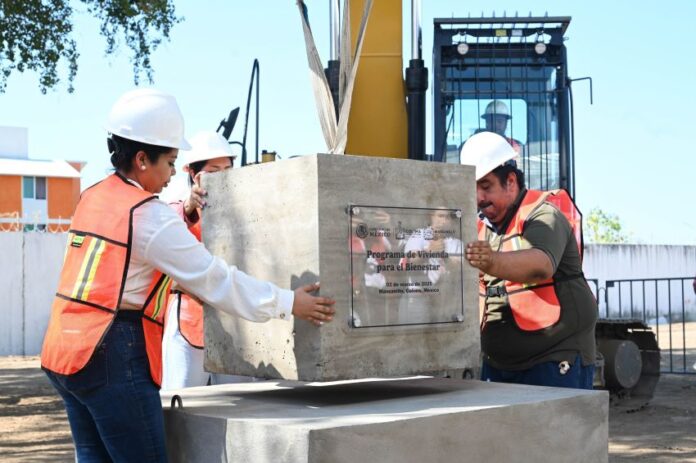
Officials in construction vests and hard hats place a block of cement to celebrate a new phase in Mexico's affordable housing plan
In the face of surging prices to rent and buy homes in Mexico, the program aims to make housing more accessible. (Presidencia/Cuartoscuro)

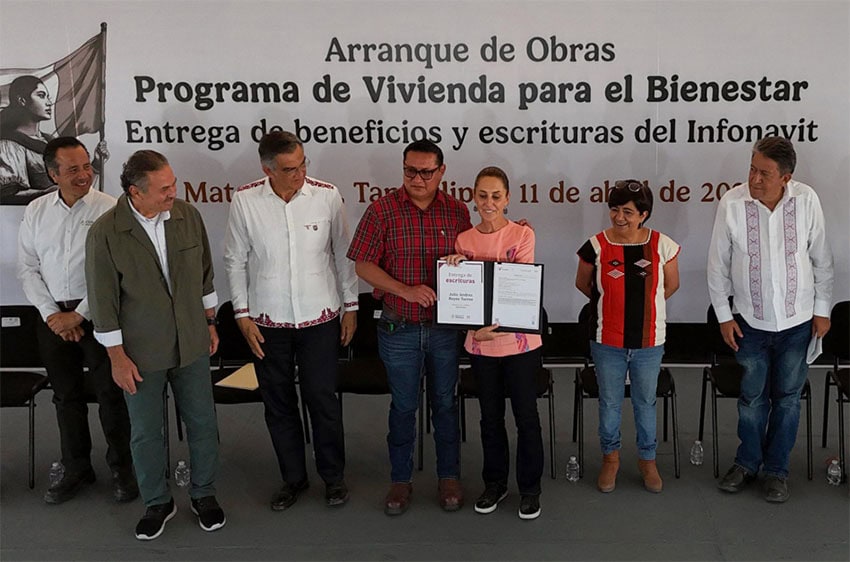
The federal government is now aiming to build 1.1 million new homes across Mexico during this six-year term of government (2024-30), increasing its goal by 100,000 dwellings.

Octavio Romero, general director of the Institute of the National Housing Fund for Workers (Infonavit), announced the more ambitious target at an event in Matamoros, Tamulipas, on Friday.

Sheinbaum and other politicians stand on a stage, displaying a house title to the crowd
Octavio Romero, President Sheinbaum and other officials gave new home owners the titles to their government-financed affordable housing at the Tamaulipas event. (Presidencia)

“At the beginning of the administration we had a goal of building 1 million homes. Now that global circumstances propel us to accelerate [the] Plan México [economic initiative] we will build 1.1 million homes during this six-year period of government,” he said.

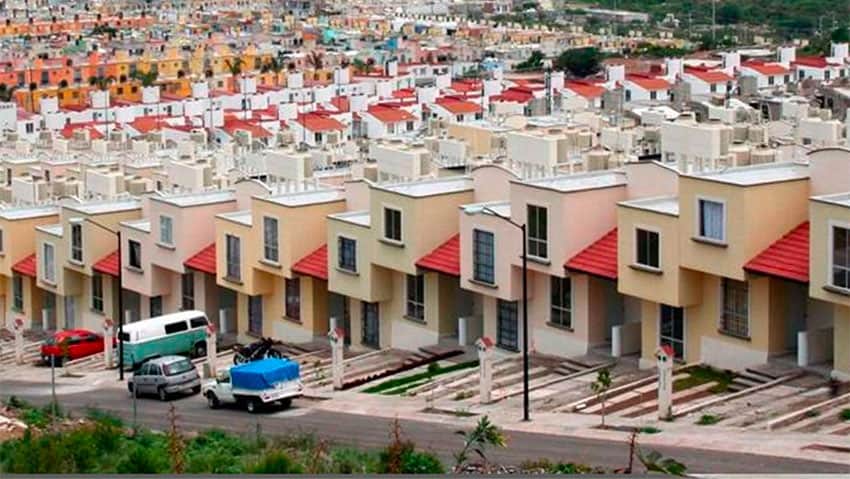
The government’s home-building initiative is officially called the Housing for Well-Being Program. Improvements to more than 1.5 million existing homes will also be carried out as part of the program.

The plan aims to increase the supply of affordable housing in Mexico, where rental and home prices have skyrocketed in recent years. Each of the new homes will cost between 700,000 and 1.2 million pesos (about US $35,000-$60,000), President Claudia Sheinbaum said in late 2024. Zero-interest or low-interest loans will generally be repayable over a period of 15 to 20 years.

Romero’s announcement in Matamoros came a week after Sheinbaum announced a range of “programs and actions” related to Plan México, initiatives whose ultimate goal is to strengthen the Mexican economy and make Mexico more self-sufficient amid the uncertainty generated by the United States’ on-again, off-again tariff policies under President Donald Trump.

One of the 18 initiatives announced by the president on April 3 is aimed at accelerating the construction of new dwellings and increasing access to government-backed home loans.

Speaking at another housing-focused event in Guadalupe, Zacatecas, on Saturday, Romero said that Infonavit will oversee the construction of 600,000 new homes during the current period of government, while the National Housing Commission (Conavi) will manage projects to build 500,000 dwellings.

Infonavit’s target has been increased by 100,000 while Conavi’s remains the same.

Romero, CEO of state oil company Pemex during Andrés Manuel López Obrador’s 2018-24 presidency, said in Zacatecas that the new Infonavit homes will be 60 square meters and built in locations “close to work centers.”

“They will be safe, efficient, comfortable and affordable,” the Infonavit chief said.

“They will have all the basic services, with the required infrastructure [including] green areas and sporting and social facilities,” Romero said.

An Infonavit housing development.
Formally employed workers registered with the Mexican Social Security Institute (IMSS) can receive assistance from the housing institute Infonavit to buy or build small, affordable homes. (Casas Infonavit)

At a third housing-focused event in as many days, Sheinbaum said in Rincón de Romos, Aguascalientes, on Sunday that the new homes are “for those who have the least, for those who have never had the never had the opportunity to have a home in our country.”

Zero-interest loans to purchase the homes will be available to hundreds of thousands of people on low salaries.

Sheinbaum said workers who earn a maximum of two times the minimum wage — or around 17,000 pesos (about US $850) per month — will be eligible to buy the new homes.

“We’re making housing a human right, a social right, because for many years social housing was seen as a business,” she said.

Conavi general director Rodrigo Chávez said that seniors, single mothers, people with disabilities, Indigenous persons and young people will be among those who will have first dibs on the homes to be built by the institution he leads.

“Sixty square meter apartments will be built for families, [we’re] thinking about three bedrooms and [there will be] a special prototype [home] for young people of 40 square meters,” he said.

In Matamoros on Friday, Sheinbaum railed against corruption in Mexico’s housing institutes prior to the López Obrador administration. She also denounced the construction of homes “without services” in locations far from urban centers.

President Sheinbaum waves at the crowd during an affordable housing event in Tamaulipas
Sheinbaum distanced herself from the administrations that preceded former President López Obrador, saying rampant corruption undermined Mexico’s previous affordable housing initiatives. (Presidencia)

Many government-built homes across Mexico are abandoned due to a range of factors including their location, insecurity and homeowners’ inability to service the loans they took out.

More than 4 million “unpayable loans” were issued by government housing institutes before 2018, Sheinbaum said.

Workers “paid and paid and paid” but their debt only grew, said the president, whose government is providing debt relief for mortgagors who were granted loans whose terms are now considered unfair.

“Before 2018, Infonavit provided loans and supposed access to housing with unpayable loans. People asked for an Infonavit loan and had access to a home on some occasions but not others because there was a lot of corruption in those times,” Sheinbaum said.

“And the workers continued paying and paying and paying and they never stopped paying … [but] in the majority of cases more and more was owed. … That’s not a loan, that’s usury, that’s theft,” she said.

Sheinbaum: construction of homes will create 600,000 jobs this year 

Sheinbaum said in Aguascalientes on Sunday that the government will build 200,000 homes this year, 20,000 more than the figure she cited during her April 3 announcement of the 18 “programs and actions” associated with Plan México.

The construction projects will create 600,000 jobs, she said.

The new homes will be built across Mexico, including in the three states — Tamaulipas, Zacatecas and Aguascalientes — where the government held housing-focused events over the past three days.

With reports from El Economista and El Financiero

Who were the stars of the golden age of Mexican cinema?

4
A photoshopped image of a strip of of old-fashioned film, with images of various Mexican actors and stills from movies.
La Época de Oro, or The Golden Age of Mexican Cinema, had stars and films your Mexican neighbors still recognize, even those neighbors not yet born when the movies were made. (Archivo General de la Nación)

There was a time when Mexico made movies better than just about anybody. Mexico calls it La Época de Oro, the Golden Age, which makes it sound like everyone involved was rich and handsome and having a hell of a time. Some of them were. But most of them were sweating under hot lights in makeshift studios, turning heartache and tequila into art, because that’s what you do when history won’t let you take a break.

La Época de Oro started in the 1930s and ran through the 1950s, when the world was still recovering from one war and preparing for another, and Mexico was doing what it did best: improvising. The country had just figured out how to have a revolution without immediately falling apart, which was no small feat. Meanwhile, Hollywood got distracted by World War II and rationing celluloid, so Mexican filmmakers stepped in, scooped up the talent and got to work.

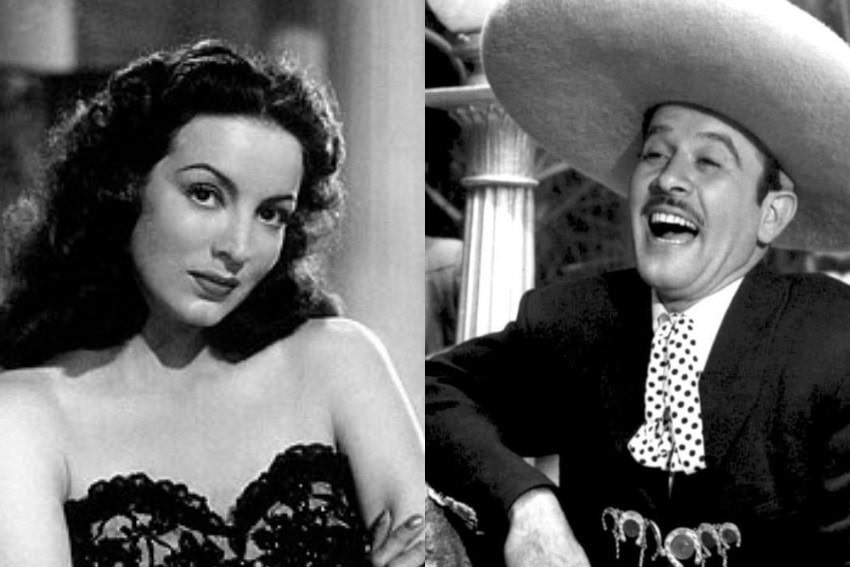
Two of the age’s biggest stars: María Félix and Pedro Infante. (Wikimedia Commons)

This was a time when movies meant something, when people packed into theaters to watch larger-than-life characters drink, fight, cry and sing. And sing they did. Ranchera music filled the soundtracks, swelling with violins and heartbreak because no self-respecting Mexican movie could get through an hour and a half without somebody singing about how love had ruined their life.

The leading men were the kind of guys who looked like they could fix your car, break your nose and steal your girlfriend all in the same afternoon. Pedro Infante, Jorge Negrete and Cantinflas — men so famous in Mexico that if you walked into a bar and said their names, someone would buy you a drink just for having good taste.

Pedro Infante was the heartbreaker, the motorcycle-riding, silver-throated charmer who could cry on cue and make the whole country weep with him. He played the kind of men who fought for love and lost, but lost beautifully. He died too young, of course — his plane went down in 1957 — and half the country wore mourning black like they’d lost a brother.

Jorge Negrete was different. He was a trained opera singer who looked like he could win a duel just by raising an eyebrow. If Pedro Infante was the guy you fell in love with, Jorge Negrete was the guy you married if you had any sense. He had dignity, presence and the kind of voice that made people straighten their backs when they heard it.

Then there was Cantinflas. No one really knew what he was saying, but it was hilarious. He could talk circles around anyone, slipping between nonsense and genius so fast that even politicians feared him. Charlie Chaplin called him the best comedian alive, and Charlie Chaplin knew a thing or two about comedy. Cantinflas made fun of everyone, but somehow everyone still loved him.

The movies themselves were something else — part melodrama, part social commentary, part wish-fulfillment. There were the charro films, where men in wide-brimmed hats and silver-buttoned jackets rode horses, played guitars and shot each other over women. There were the cabaretera films, smoky and tragic, where women in tight dresses sang their sorrows in dimly lit nightclubs before inevitably making a bad decision involving a man with a mustache.

And then there was María Félix, “La Doña” (The Lady), who didn’t just play strong women — she was a strong woman, with a glare that could kill a man at 20 paces and a mouth that could bury him right after. She turned down Hollywood because she didn’t want to play maids or mistresses. In Mexico, she was royalty, and she made sure everyone knew it.

But nothing golden lasts forever. By the late 1950s, television was eating away at cinema’s audience, and the government — always quick to ruin a good thing — tightened its grip on film production. The studios, once bursting with talent and ideas, became mediocrity factories. The world moved on.

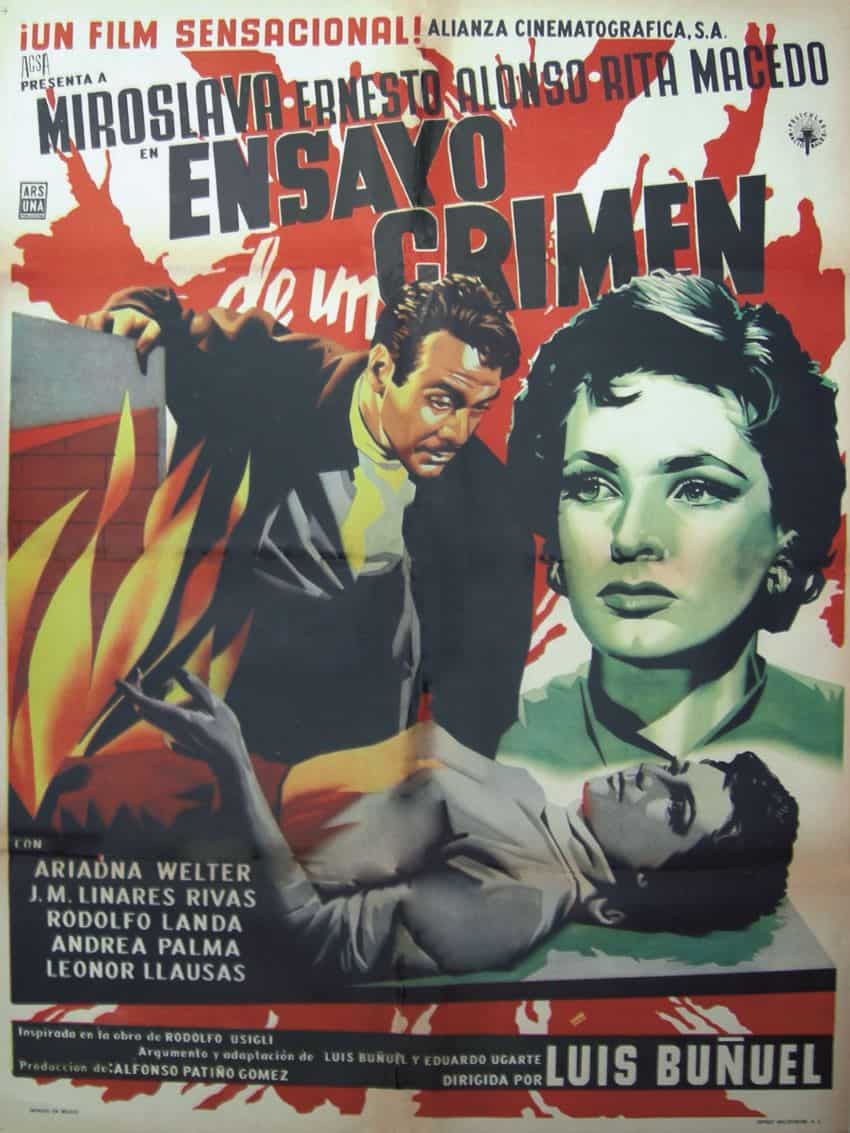
Poster for Luis Buñuel's 1955 movie "Ensayo de un Crimen," staring actors from Mexico's Golden Age of Cinema
Poster for 1955’s “Ensayo de un Crimen” (Rehearsal for a Crime), a Mexican black comedy about a would-be serial killer. It was adapted for the screen and directed in Mexico by legendary filmmaker Luis Buñuel. (Archivo General de la Nación)

Yet, here’s the funny thing about the Golden Age of Mexican Cinema: it can start, end and start again. There are plenty of modern examples of Mexican greatness in movies, my favorite being “Y tu mamá también” because I’m a sucker for a good road trip flick. The ghosts of Golden Age films linger in black and white, forever singing, forever suffering, forever golden. And forever inspiring a new generation of filmmakers.

What’s your favorite Mexican movie?

Stephen Randall has lived in Mexico since 2018 by way of Kentucky, and before that, Germany. He’s an enthusiastic amateur chef who takes inspiration from many different cuisines, with favorites including Mexican and Mediterranean.

In Mexico’s unique Holy Week processions, Indigenous tradition continues amid Catholic ritual

0
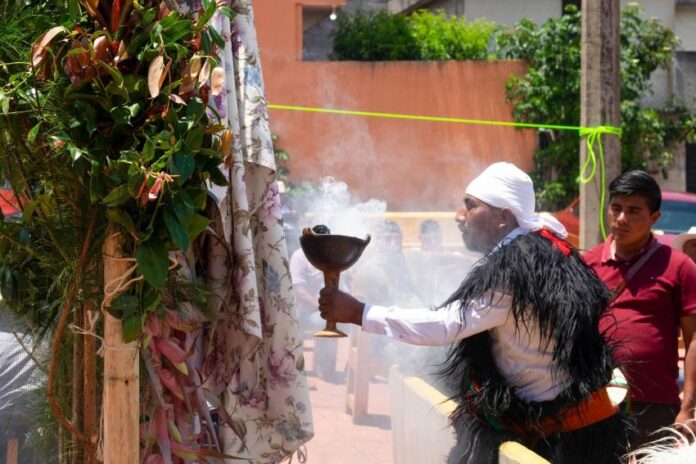
An Indigenous Mexican man in traditional dress holds a smoking large goblet in his right hand and offers it ritualistically to a shrine covered with vegetation and a large sheet of fabric with birds and plants printed on it. Behind him, a man in non-traditional clothing looks on with his eyes closed.
Indigenous authorities open Holy Week festivities in San Juan Chamula, Chiapas. (Isabel Mateos Hinojosa/Cuartoscuro)

Mexico — home to the world’s second-largest Catholic population after Brazil — boasts unique traditions to mark the end of Lent during Holy Week. Influenced by a blend of pre-Hispanic customs and Hispanic culture — in addition to cultural modern elements like Coca Cola – these rituals vary widely by region. 

Here are four of the most authentic Holy Week rituals and processions around Mexico to catch during Holy Week.

Dance of the Judases in Pajacuarán, Michoacán

In a colorful and lively display of faith, Pajacuarán, a small town in northeastern Michoacán, celebrates Holy Week with a procession known as the Dance of the Judases. 

Combining Indigenous and Christian elements, the parade’s origins date back to the 19th century, when the priest Secundino Bautista evangelized the region’s Indigenous inhabitants by fusing their agricultural dances with Christian mysticism. 

During the parade, which occurs on Holy Wednesday, dancers wear elaborate masks and tunics decorated with embroidery. They also carry sandals and a chirrión, a whip, they crack during their walks.

Roosters and Coca-Cola for Jesus in Chiapas

San Juan Chamula, a municipality located in the Chiapas highlands, is home to a distinctive and perhaps surprising practice that combines roosters, Coca-Cola and Indigenous beliefs. 

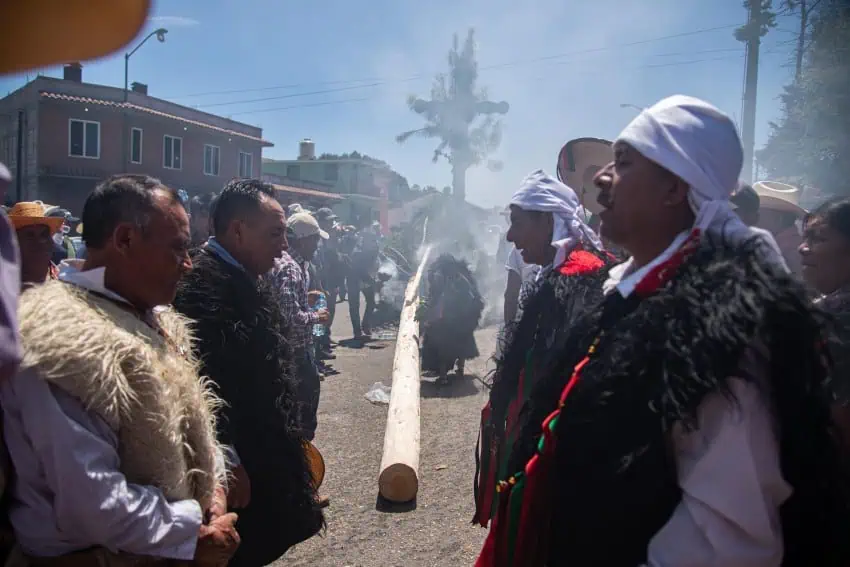
Men in San Juan Chamula, Chiapas standing in two lines facing each other as a massive log with no bark is pulled through between them and beyond them to bring to the main church where Holy Week celebrations and rituals take place.
One of San Juan Chamula’s many Holy Week traditions includes the chopping down of the municipality’s largest cypress tree that year and bringing it to the community’s main church. (Isabel Mateos Hinojosa/Cuartoscuro)

In preparation for Holy Week, villagers walk into the forest to cut down a cypress tree after offering a prayer asking for permission and forgiveness from the tree. The giant log is then brought to the main church. 

Then, on Holy Thursday, a rag doll representing Judas Iscariot is “punished” by being imprisoned and hanged for betraying Jesus. 

But one of the most distinctive rituals happens inside the dim, incense-filled San Sebastián church, where roosters are sacrificed as offerings in an act believed to cleanse the faithful of evil and illness. 

Bottles of Coca-Cola are placed at the altar and offered to the saints. Villagers believe the cola’s fizziness expels bad spirits and purifies the soul. 

The presence of Coca-Cola in the ritual reflects cultural syncretism, as the soft drink has become deeply engraved into locals’ daily lives and religious practices.

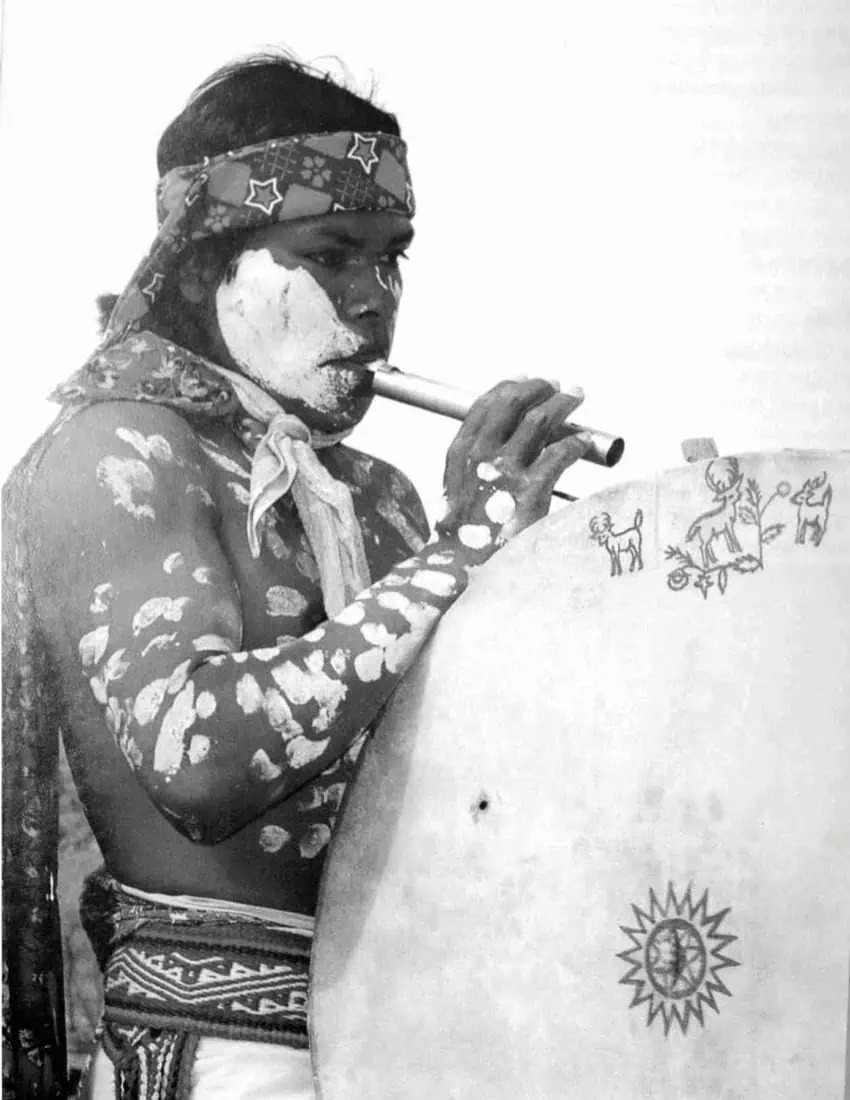
A Raramuri man cin traditional dress and white, lime body paint in Chihuahua, Mexico, blows into a pipe. He is also carrying a large drum with the leather head facing to his right side.
The Holy Week traditions of the Raramuri in Chihuahua’s Sierra Tarahumara are a syncretic mix of Indigenous beliefs and later Christian ones imposed by Spanish colonizers. (INAH)

How the Chihuahua Rarámuri defend God

Known in the Indigenous Rarámuri language as Comonorirawachi (“when we walk in circles”), this Holy Week celebration in the Sierra Tarahumara mountain range is a deeply spiritual event that combines ancestral beliefs with Christian elements.

Symbolizing the eternal struggle between good (God) and evil (the devil), the celebration centers around solemn processions encircling temples, symbolizing a “cordon of belief” in God’s defense.

Throughout the week, staged battles take place between the “Pharisees,” who represent the forces of evil, and the “soldiers,” the defenders of God.

One of the most visually striking processions is the pintos dance, in which participants paint their bodies with small circles using lime (the mineral form of limestone).

To wrap up, participants burn a Judas effigy in a ceremony that symbolizes betrayal and the ultimate triumph of good over evil.

According to local customs, the local religious authority of the Rarámuri needs to grant permission to outsiders.

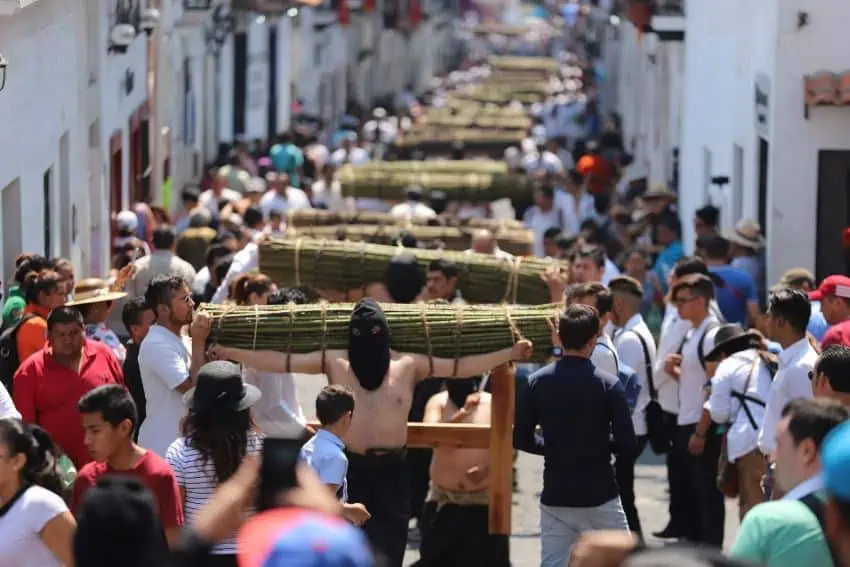
A long single-file procession of bare-chested men in black hoods with large "logs" made up of long, thin, thorny stalks tied together with twine and also tied atop their arms and shoulders. Attendees are on either side of them as the men walk through Taxco's city streets
Hooded penitents participating in Taxco, Guerrero’s Holy Tuesday procession carry on their backs thorny brambles tied together, the city’s most-attended Holy Week event. (Bernandino Hernández/Cuartoscuro)

Penitence and purgatory in Taxco, Guerrero

Taxco is home to some of the most visually striking processions of the country: the procession of the blessed souls of purgatory.  

Taking place on Holy Tuesday (April 15 this year), participants are divided into three groups that weave their way through the town’s streets: the cross bearers, the flagellants and the souls.

The cross bearers are typically men walking barefoot and bare chested, while they shoulder coils of thorny brambles weighing over 40 kilograms pressing into their skin that often causes it to bleed. The flagellants whip their own backs with nail-tipped scourges. The third group — women who represent souls — wear black cloaks and walk slowly, wearing heavy metal chains bound to their hands and feet. 

The flagellants and the souls appear again the following day at the atrium of the church of Santa Prisca during a representation of Christ’s agony at the Garden of Gethsemane.

While some attendees get unsettled by the sight of the hooded figures and self-inflicted suffering, many others see these processions as a powerful expression of faith and a reminder of Christ’s agony.

Gabriela Solis is a Mexican lawyer turned full-time writer. She was born and raised in Guadalajara and covers business, culture, lifestyle and travel for Mexico News Daily. You can follow her lifestyle blog Dunas y Palmeras.