Home Blog Page 296

Are 22,000 Oxxos in the country a blessing or a curse? A perspective from our CEO

32
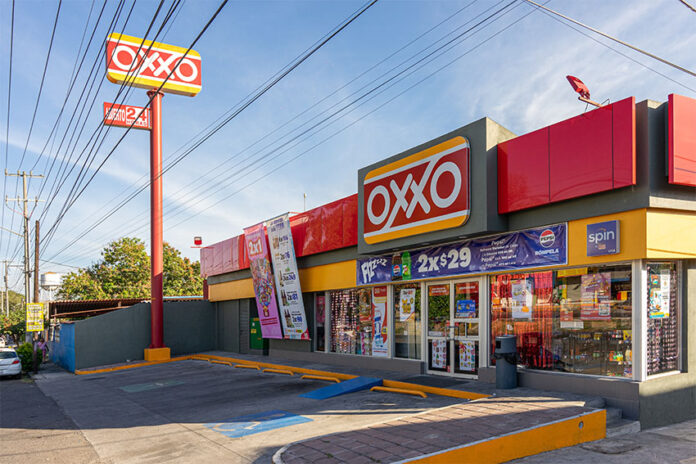
An Oxxo storefront in Guadalajara
Oxxo's convenience store franchises have become ubiquitous across Mexico. (Shutterstock)

We recently ran an article that talked about how Coca Cola in Mexico was going to stop advertising in schools. We also had one this week about how Mexico, starting March 31, prohibited the selling of junk food in schools.

This is a great first step, but as one of our readers commented, “They will just go across the street and buy it in an Oxxo instead.” And unfortunately, that reader is probably right.

I want to make clear that I have absolutely nothing personal against Oxxo. I am frequently a customer of their stores and find them to be exceptionally convenient. I think most of us would admit that the stores often come in handy for a quick snack, drink or cerveza fría. That being said, I have increasingly seen some troubling trends that concern me.

As most of us know, Mexico has incredible fresh fruit available throughout the year. It amazes me to see fruit vendors lining Mexico City’s Paseo de la Reforma in the heart of the financial district selling fresh cut mango, watermelon or coconut (sprinkled with lime and chile, of course).

I am also fascinated that in our office in San Miguel de Allende, every morning two local women (who walk throughout the city) stop by our office selling fresh fruit. The Mexicans in our office always buy from her. I, sadly, do not have the same discipline.

I actually have bought large packs of snacks for the office — things like granola bars, Snickers bars and Oreo cookies — and for the most part, the only person that eats them is me. The rest of our team prefers fruit.
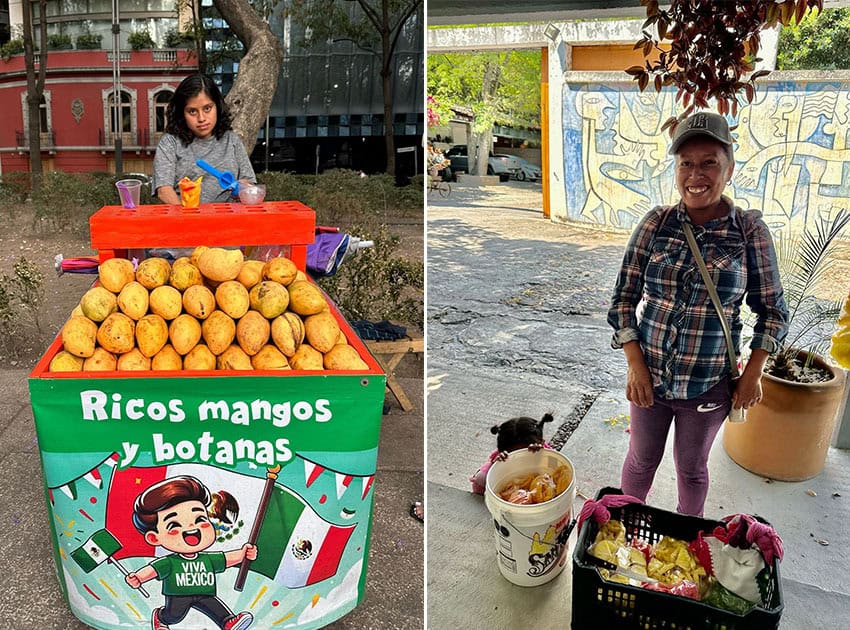
Two photos of street vendors selling mango and other fruit
Street vendors selling fresh fruit are still common in Mexico, and even make office visits. (Courtesy of Travis Bembenek)

Another great tradition in Mexico is eating from the many street vendors selling local foods like tamales, tortas, pozole and tacos de canasta. Warm, fresh, homemade food that you can eat while chatting with friends or colleagues — what more could one ask for?

Yet another custom that I admire is that of drinking refreshing and healthy aguas frescas — fresh fruit water drinks with flavors ranging from horchata to watermelon to lemon, and everything in between.

Which brings me back to Oxxo. None of these amazing fresh local foods can be found in an Oxxo. Before Oxxo (and increasingly 7-Eleven) stores took over the country, the local mom and pop “mini-supers” had a great mix of these local foods. They were often filled with fruits, coolers to keep tamales or tacos warm, and large 25-liter containers of fruit water juice that you could buy by the bolsa or glass.

Sadly, many of these stores have been put out of business. Oxxo brings an entirely different model with a hyper-efficient distribution chain and due to the nature of their stories, its difficult to have these kinds of products. Nearly everything is in a glass, plastic or metal container. Almost nothing is fresh. The vast majority of the food and drinks would not be considered healthy by anyone.
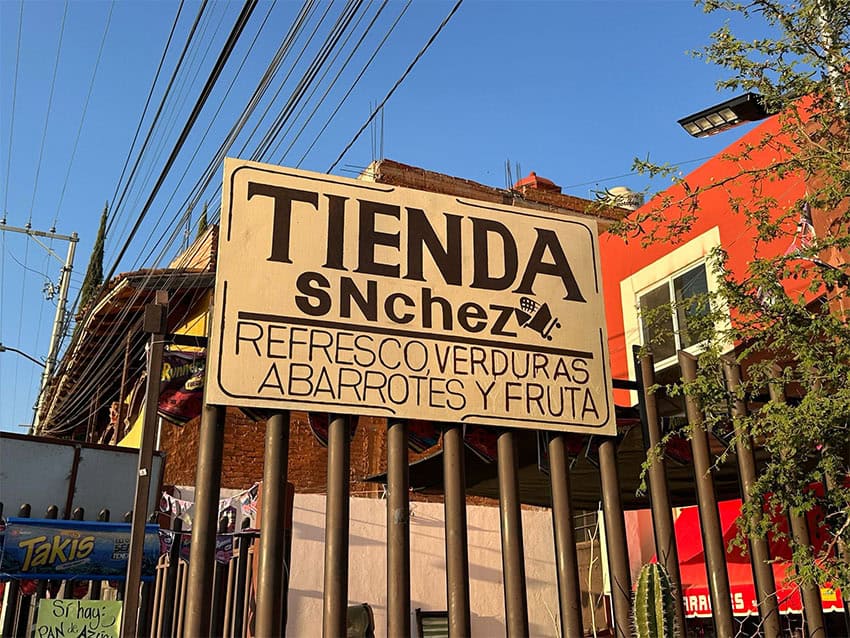
A brown sign reads "Tienda Sanchez: Refrescos, verduras, abarrotes y fruta"
Family-owned corner stores offering a variety of fresh, healthy products are increasingly being replaced by Oxxos and other chain convenience stores. (Courtesy of Travis Bembenek)

But convenient, they are. In Tulum, where my wife and I have traveled frequently for many years, we have seen a complete change in the diet of the locals with what has been a literal explosion in the number of Oxxos opened up on nearly every block in the past few years.

What used to be an almost entirely 100% fresh food diet (including fruits, breads, tacos, meats, etc.) has been mostly replaced with an “Oxxo diet.” It is very common to see construction workers, school children and others eating Oxxo food for breakfast, lunch and dinner. As a likely result, we have also seen a significant increase in the obesity rate of the local population.

Of course none of this is a surprise to Americans who have seen a similar phenomenon happen in the United States — with many cities having “food deserts” where little if any fresh or healthy food options are available.

What seems different to me about Mexico is that there is so much affordable fresh food very readily available, as well as such a rich, deep, long tradition of eating and of having a connection with healthy food. Highlighting this is precisely the motivation behind our “Taste of Mexico” video and article series in which we bring you the stories behind traditional Mexican foods and ingredients. Corn, beans, tomatoes, potatoes, mangos, papayas — they all have generations of logic behind when, why and how to eat them.

Taste of Mexico: Quelites

The increasing proliferation of chain-style restaurants popping up in wealthy neighborhoods of Mexico’s cities is a troubling sign of “progress.” It’s quite common now to see Dunkin’ Donuts, Dairy Queen, Krispy Kreme and Tim Hortons chain stores all over the place. Given the lessons learned from the health issues in the United States, is this really the right path for a developing Mexican population to be taking?

I don’t have the answer to this worldwide problem, but in my own little way I am trying to do what I can. I am increasingly eating fresh food for my own health and nutrition, but at the same time doing so to try to help sustain the local vendors of fresh foods in my neighborhood. I understand it’s an uphill battle, but I think we each have to try to do our part.
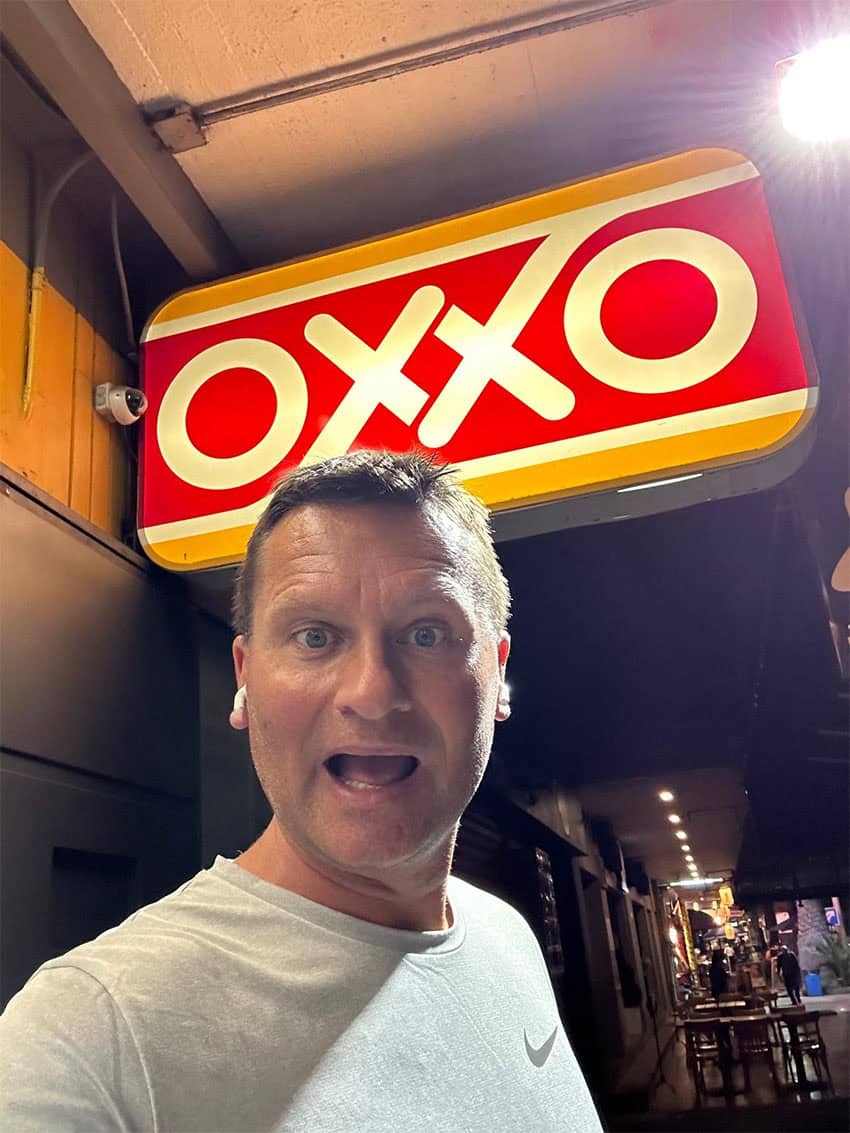
Travis Bembenek takes a selfie with an Oxxo store sign
Mexico News Daily CEO Travis Bembenek finds himself back at Oxxo, again. (Courtesy of Travis Bembenek)

Of course this doesn’t mean that I will never go to an Oxxo again, but I certainly am trying to be more conscious of the impact of so many Oxxos dotting the Mexican landscape and what I can do. Just a few weeks ago, my favorite local tamale saleswoman, who has sold for years at the same corner near our home, told me, “Ya no es negocio” (“It’s no longer a good business for me”) and abruptly stopped selling them. Perhaps not unrelatedly, about a year ago an Oxxo opened a block from where she always set up her stand. Once traditions like these are gone, its unlikely they will ever come back.

Travis Bembenek is the CEO of Mexico News Daily and has been living, working or playing in Mexico for nearly 30 years.


Funny Mexican phrases that will brighten your day

16
A woman wearing a trout costume to represent funny Mexican sayings
Ponte what? Like this? Perhaps it's time for a crash course in strange Mexican slang phrases! (Geru/X)

“Pues ya, amiga, ¡ponte trucha!”

I’m sorry — what was that?

I’ve now been alive more time in Mexico than I have in my home country, but I still frequently come across phrases that I need someone to explain to me. I know that I’ll never learn them all — they seem infinite! But oh, there are some good ones, even so. Let’s learn some!

These are just a few that I hear on a somewhat regular basis, which surely has mostly to do with my own inner circle and the region where I live. I’ll add a translation, an explanation, and an example. If there’s an English equivalent, I’ll include it as well. If you’ve got some more fun ones, toss them in the comments for us!

¡Ponte trucha!

Let’s make like a trout and swim upstream. Or is that salmon? (Grok)

Translation, sort of: Make like a trout! English equivalent: Look alive!
A “trucha,” of course, is a trout. And trouts, at least around here, are known for their swiftness and agility. They’ve got to be paying attention and be ready lest they miss a current or get snagged in a net or on a hook!

I won’t lie, this advice annoys me, because what do you think I’m doing with my day anyway? But as my partner says…

Lo que te choca te checa

Are you shocked? Well, good, I guess. At least according to this saying. (Adi Goldstein/Unsplash)

Translation: What bothers you… This is a hard one to explain. “What shocks you checks you?” I guess is the direct translation, and I’m not sure if we have a cutesy equivalent phrase in English for it. Basically, it means that if something really annoys you, it’s because it’s an example of something about yourself you really don’t like. “We’re all hypocrites,” I suppose.

Case in point: I love to get mad at other drivers. If I have an audience in the car, I might narrate all the bad things they’re doing — a super lovable quality, I know. When I break a road rule, though, I obviously believe it’s justified. Dang it!

Tengo mal del puerco

It has to be said, this pig does not look like it’s having a bad time in the slightest. (ChatGPT)

Translation: Pig illness. I can’t think of an equivalent English phrase, but we should!

“Mal de puerco” is that almost comatose feeling that you get after eating a meal. I confess that I know this feeling well, though I’m trying to get better! But it happens to everyone once in a while, doesn’t it? Best thing you can do, I guess, is roll around in some nice, cool mud for a bit as you wait for your body’s entire energy store to stop digesting.

¡Échale aguacate!

You wouldn’t believe what it cost us to get Leo DiCaprio to model this shot. (Facebook)

Translation: Put some avocado on it! This is a kind of updated version of “tirar la casa por la ventana” (throw the house out the window). English equivalent: Spare no expense!

If you’re on an extravagant spending spree and want every single detail exactly how you want it, no matter the expense, then this is the phrase for you. This one is a bit more recent and actually harks back to a meme just a few years back. The meme is a shot from the movie The Wolf of Wall Street, and it shows Leonardo DiCaprio gleefully tossing money off a yacht. In some memes, they make them avocados!

Avocados were expensive, and we were all online during the pandemic. The perfect storm!

Dar el avión

Ironically, this man is not dandoing any aviones in this conversation. (ChatGPT)

Translation: To give the plane. Adorable, right? Basically, this means nodding and smiling while someone’s talking. If you’re “dándo el avión,” then you’re not really listening; rather, you’re biding your time before you can leave the conversation. It could also mean you simply say anything to get out of a conversation!

The times I most do this is when I unwittingly open the door to my assigned Jehovah’s Witnesses. I don’t wish them ill, but I usually kick myself when I do — I’ve got work to do! But they’re human, they have good intentions, so unless I’m working on something urgent, I’ll just let them talk and nod along. I accept their pamphlets, and they’re on their way!

¡A darle, que es mole de olla!

Not this sort of mole in an olla, though. (Bombera Oakland/Facebook)

Translation: Get to it, it’s mole! Let’s take this in parts: “A darle” means “get to it,” and it’s something you’ll likely hear often on its own. “Que es mole de olla” — mole is one of Mexico’s most prized and complex dishes. You basically have to do it well, but not only that: Mexicans take pride in doing it well.

So this is saying, “Let’s get to it, this is important!” which is also a phrase that kind of annoys me along with “ponte trucha.”

“Lo que me choca me checa,” right?

Más sabe el diablo por viejo que por diablo

Zacualpan mask
I, on the other hand, know more because I’m young. (Archive)

Translation: The devil knows more because he’s old than because he’s the devil. This is one of my favorites, which is why I saved it for last.

In the end, there’s no substitute for experience.

Ain’t that the truth?

Sarah DeVries is a writer and translator based in Xalapa, Veracruz. She can be reached through her website, sarahedevries.substack.com.

Reciprocal tariffs and Mexico’s plans for food sovereignty: Friday’s mañanera recapped

12
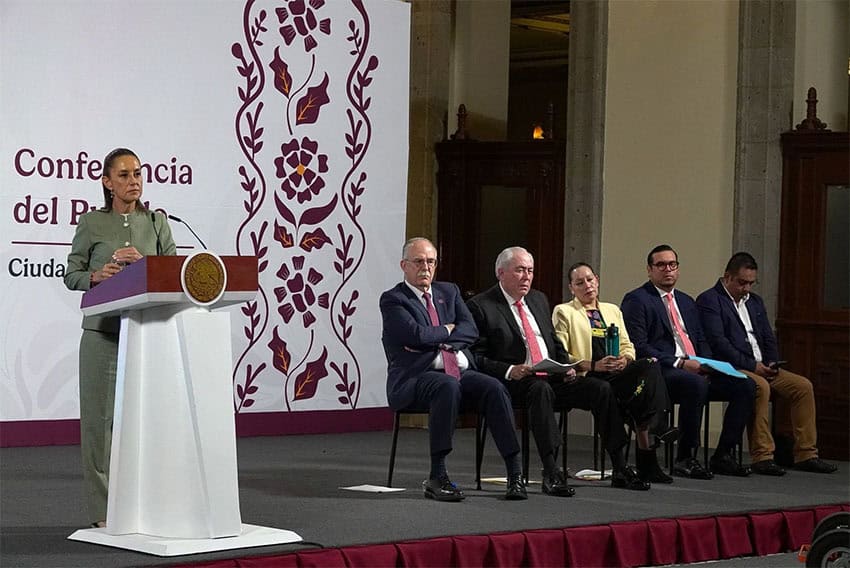
President Claudia Sheinbaum stands at a podium in front of a banner showing a Mexican flag and the words "Conferencia del Pueblo"
Food sovereignty, tariffs and CELAC plans were topics of discussion on Friday. (Presidencia)

Will Mexico benefit from the high “reciprocal tariffs” United States President Donald Trump imposed on imports from scores of countries around the world?

Can Mexico achieve its ambitious food production goals?

President Claudia Sheinbaum addressed the first question at her Friday morning press conference while her agriculture minister considered the second. Sheinbaum also revealed that she will briefly leave the country next week.

Here is a recap of the president’s final mañanera of the week.

On trade with US, Mexico is in ‘a better position’ than other countries 

A reporter asked the president whether she believes Mexico will benefit from the high “reciprocal” tariffs the United States has imposed on imports from various countries around the world.

Sheinbaum stressed that she doesn’t want Mexico to benefit at the expense of other countries, but effectively responded in the affirmative.

President Sheinbaum stands at a podium during her morning press conference, next to a group of professionally dress men and a woman
(Rogelio Morales Ponce/Cuartoscuro)

“We don’t wish ill to anyone, and we want there to be prosperity in the entire world,” she said.

Sheinbaum subsequently noted that Mexico can ship “all products, with the exception of cars, steel and aluminum,” to the United States tariff-free if the products comply with the rules of the USMCA free trade pact.

“Up until now, that is the situation,” she said.

Even if a Mexican product faces the same tariff as the same good shipped to the United States from Asia or Europe — as is the case with steel and aluminum — Mexico has an advantage because “transport costs are lower” due to its proximity to the U.S., Sheinbaum said.

“What other advantage do we have? Many products that aren’t within the steel, aluminum and automotive [categories] continue to have zero tariffs if exported under the United States-Mexico-Canada Agreement,” she said

“Companies that want to invest in Mexico [to sell their products] in the domestic market …and to export, have this [beneficial] characteristic,” Sheinbaum said.

“… So in that sense we’re in a better position than other countries in the world, at least at the moment,” she said.

Mexico food security targets are ‘ambitious’ but achievable, says agriculture minister 

Agriculture and Rural Development Minister Julio Berdegué addressed Sheinbaum’s Friday morning press conference a day after the president announced 18 “programs and actions” related to the Plan México economic initiative, including one aimed at increasing food sovereignty and self-sufficiency.

He said that the domestic production targets for corn, beans, milk and rice that Sheinbaum outlined on Thursday are “ambitious, but possible to achieve because we’re going to do things well.”

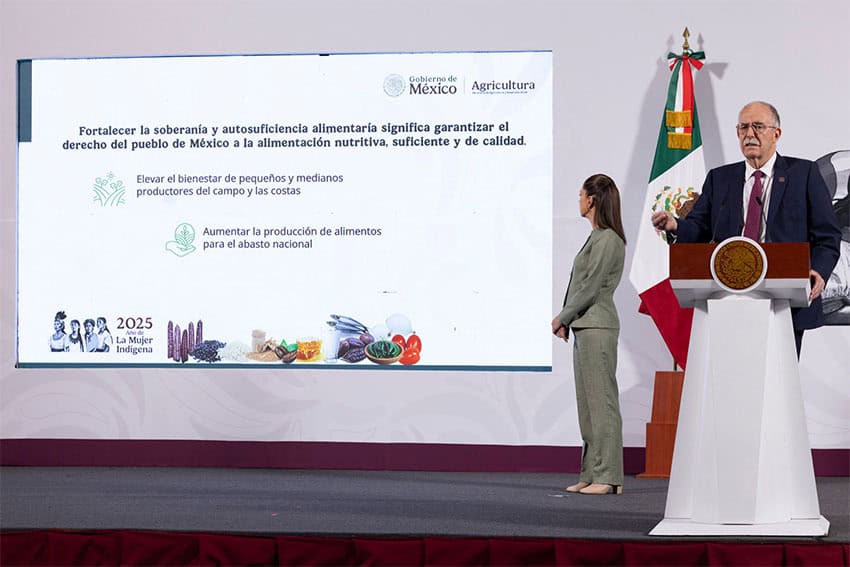
President Claudia Sheinbaum looks on as Agriculture Minister Julio Berdegué shares a slide about Mexico's food production goals
Mexico aims to increase food sovereignty and self-sufficiency with the new production goals. (Presidencia)

The goals — as cited by the president on Thursday — are as follows:

  • Increase annual production of corn to 25 million tonnes by 2030, a 17% increase over current levels.
  • Increase annual production of beans to 1.2 million tonnes by 2030, a 64% increase over current levels.
  • Increase annual production of rice to 450,000 tonnes by 2030, a 103% increase over current levels.
  • Increase annual production of milk to 15 billion liters by 2030, a 15% increase over current levels.

Berdegué said that the government has “various programs” to support the achievement of the targets.

Through the programs, including the new Coseschando Soberanía (Harvesting Sovereignty) scheme, farmers will receive a range of government support, including the provision of high-quality seeds and fertilizers, access to loans and assistance to use new agricultural technologies.

Berdegué said that the government will spend almost 54 billion pesos (US $2.64 billion) this year on the different programs that support progress toward the attainment of the 2030 food production targets.

Sheinbaum to go to CELAC summit in Honduras … but only for 2 hours

Sheinbaum confirmed she would attend the summit of the Community of Latin American and Caribbean States (CELAC) in Tegucigalpa, Honduras, next Wednesday.

It will be her second international trip since taking office in October. Her first was to Brazil for the G20 Leaders’ Summit in Rio de Janeiro in November. She flew commercial to Rio via Panama — and in economy class, no less.

Sheinbaum told reporters that she will only spend a short time in Honduras, where her fellow leftist leader, President Xiomara Castro, has been in office since early 2022.

“I won’t be able to stay the whole time. We’re looking at the schedule to see if I can make it to the inauguration on April 9,” she said.

From left to right, President Gustavo Petro of Colombia, President of Brazil Luiz Inácio Lula da Silva, President of Mexico Claudia Sheinbaum and President of Chile Gabriel Boric stand in front of a wall with the 2024 G20 Leaders Summit logo on it. They are standing side by side, smiling, with their hands on top of one another to show unity.
Next week’s CELAC trip will be Sheinbaum’s second international conference, after the G20 summit in November. (Presidencia)

Sheinbaum said she would be in Tegucigalpa, the capital of Honduras, for “around two hours or something like that” in order to be with “Presidenta Xiomara and President Petro [of Colombia] who is assuming the president of CELAC, and other presidentes and presidentas of Latin America and the Caribbean.”

She indicated that Castro convinced her to attend the summit, describing the Honduran president as “very persuasive.”

“As you know we have a lot of work here, but we’re going to go for two hours, more or less,” Sheinbaum said.

She said she wouldn’t take a commercial flight due to time constraints.

“In fact, to Tegucigalpa there are only flights with stopovers so we wouldn’t have the time. So we’re going to go in a Ministry of National Defense plane,” the president said.

Unlike many heads of state, Sheinbaum doesn’t have a presidential plane at her disposal.

Former president Andrés Manuel López Obrador sold Mexico’s presidential jet — which he never used — to the government of Tajikistan in 2023.

By Mexico News Daily chief staff writer Peter Davies (peter.davies@mexiconewsdaily.com)

‘Killer granny’ goes viral after shooting alleged squatters in México state

4
An elderly woman in a pink coat stands behind a table with a gun and packets of powder, next to two younger handcuffed people and several police agents
Carlota "N" was arrested on charges of double homicide and attempted bribery. (Fiscalía Edomex/X)

A 74-year-old grandmother identified by authorities as Carlota “N” has become the center of national controversy after a violent property dispute this week ended with two deaths and one injury in México state.

Dubbed “abuelita sicaria” (the killer granny) and “abuelita justiciera” (the vigilante granny) on social media, Carlota’s actions have sparked polarized reactions across Mexico and a bucketload of memes — ranging from praise to condemnation.

The incident, partially captured by security cameras, occurred Tuesday in the Ex Hacienda de Guadalupe housing complex in the town of La Candelaria Tlapala, about 45 kilometers southeast of Mexico City in the municipality of Chalco.

According to officials, an armed Carlota arrived at the disputed property, accompanied by Eduardo “N” and Mariana “N.”

Without warning, she opened fire and killed a 19-year-old man on the spot and injured two others — a 51-year-old man who later died in the hospital and a teenager who needed medical attention — according to the Attorney General’s Office of the State of Mexico (FGJEM).

Carlota and her companions were arrested on Wednesday, reportedly charged with double homicide — and also bribery after allegedly attempting to pay off the arresting officers.

A wanted poster for Mexico's "killer granny" Carlota "N", showing an elderly woman in a pink jacket with her eyes blacked out for privacy
The “killer granny” allegedly shot and killed two men in México state in an attack that was caught by security cameras. (FGJEM)

According to initial investigations, Carlota claimed ownership of the property and accused those living there of being squatters, known in Mexico as paracaidistas.

In a country where disputes over land ownership are commonplace due to weak enforcement mechanisms, tenants’ rights laws in Mexico make it very hard for property owners to push squatters off their property — as noted in a Mexico News Daily article about the rigors of renting in Mexico.

Frustrated by what she perceived as inaction from authorities, Carlota reportedly took matters into her own hands.

However, conflicting accounts have emerged. The victims’ family stated they were tenants with a rental agreement provided by a third party, though they admitted uncertainty about whether that person was himself a squatter.

Moreover, images of one victim posing with firearms have fueled speculation about potential criminal ties among those attacked. Despite this, no definitive evidence has linked them to organized crime.

Carlota’s arrest has triggered widespread debate online. Memes, caricatures and even a corrido a traditional Mexican ballad — have been created to immortalize her actions.

The corrido portrays her as a figure of justice reclaiming her home: “An angry granny went to get rid of the thugs. They invaded her house. The granny wanted justice.” (See the full lyrics here.)

While some hailed Carlota as a hero who took matters into her own hands in response to systemic failures, others criticized her as a cold-blooded murderer, arguing that violence cannot be justified under any circumstances.

Across the nation, her story has raised questions about justice, property rights and the limits of self-defense.

One dissenting voice on social media stated, “Those who romanticize the old murderer… [she] is neither a vengeful grandmother nor a righteous grandmother; [she] is a hit woman.”

Meanwhile, supporters shared sentiments like,  “A new Mexican superhero… none other than the avenging granny.”

Carlota’s legal status remains unresolved; as of Friday morning, she and her accomplices were being held in detention, but authorities reportedly had until the end of the day to transfer them to state prison for an initial hearing.

During her morning press conference Friday, President Claudia Sheinbaum confirmed investigations into Carlota and the incident.

“We need to review it carefully,” she said. “We’ll await all the information from the state prosecutor’s office and then give our opinion.”

The incident brought to mind the case of Juana Barraza Samperio, a former professional wrestler who was dubbed “La Mataviejitas” (The Little Old Lady Killer) after she was arrested in 2006 for the killing of 17 women — “although she likely killed many more,” wrote Mexico News Daily.

With reports from Excélsior, El Universal, Meganoticias, Parriva and Aristegui Noticias

After disastrous flooding, Tamaulipas is picking up the pieces

0
Workers for disaster relief agency clear floodwaters in Reynosa
Various government agencies, including the national water agency Conagua, are coordinating relief efforts in Reynosa. (Conagua/Facebook)

Authorities are assessing the damage in Reynosa, Tamaulipas, as the city recovers from heavy rainfall and flooding that hit the Mexico-U.S. border last week. 

Local authorities in Reynosa rescued nearly 2,000 people affected by the severe flooding — victims who were either in high-risk areas or trapped in their vehicles. According to the Associated Press, four individuals were reported dead.

Officials are now working to understand the scale of the destruction, clearing out waterlogged furniture, and working to sanitize affected homes, schools and streets. 

Luis Gerardo González de la Fuente, head of Tamaulipas Civil Protection, said that Reynosa was the most affected city. However, parts of the border towns of Río Bravo, Miguel Alemán and Matamoros, across from Brownsville, were also impacted.

To aid victims, authorities have established temporary shelters offering refuge, basic services, and medical care. Additionally, the Defense Ministry and National Guard set up a community kitchen to provide food for those in need.

The National Meteorological Service reported 316 mm of rain in Reynosa on March 26 and 27 — meaning the city received 80% of its average annual rainfall in just two days. 

State Congressman Humberto Prieto Herrera said that the Tamaulipas legislature may request that Reynosa — Tamaulipas’ largest city — be declared a federal disaster zone.

Prieto Herrera added that local government will propose tax reforms and waive the payment of public road usage fees for three months. The measures, he said, are intended to support street vendors from April through June, in order to help them get back on their feet after the crisis.

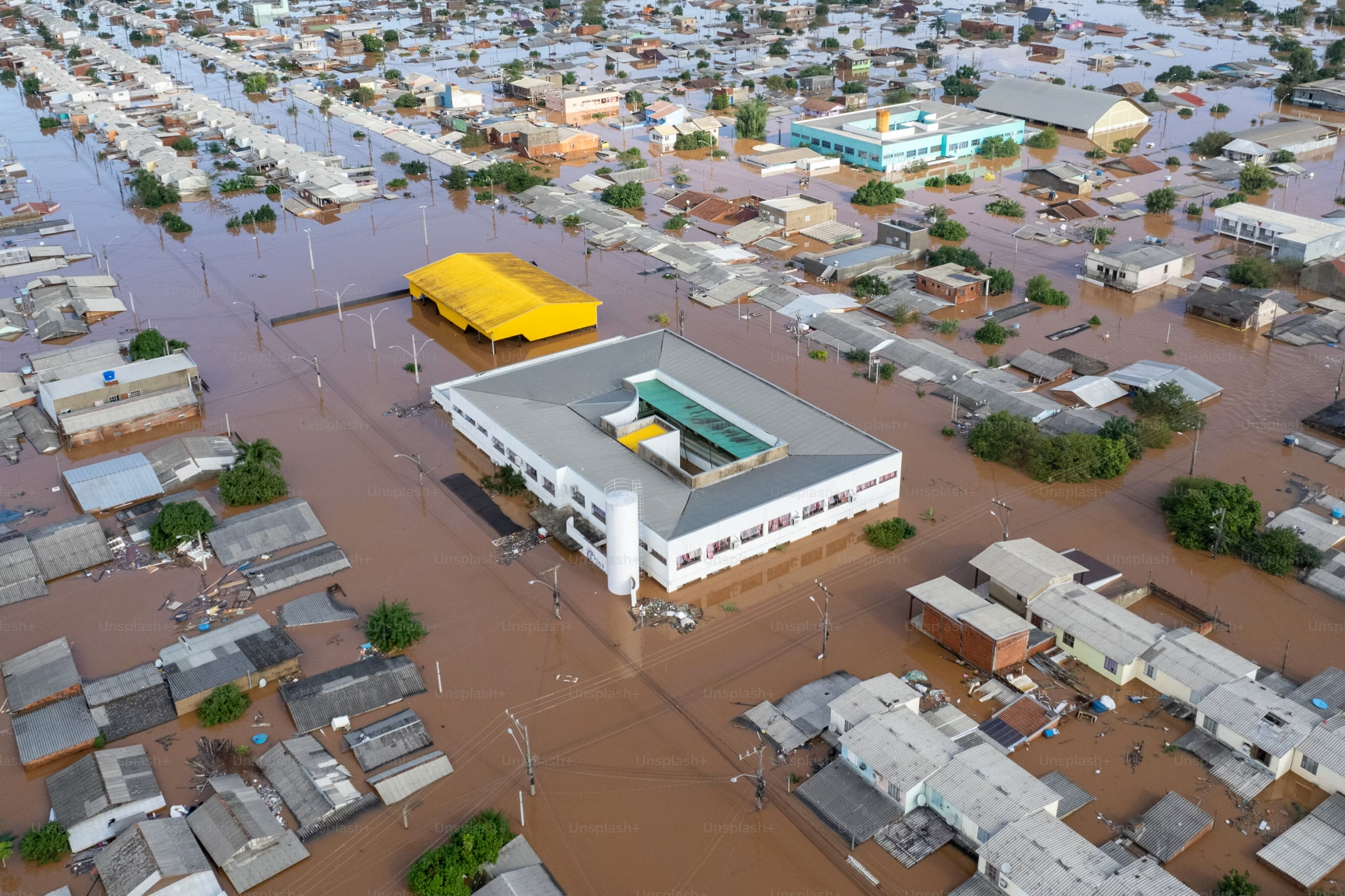
Flooded downtown Reynosa
Reynosa’s street vendors hope to return soon after the flood water recedes. (Unsplash)

Tamaulipas is no stranger to flooding. In 2010, Hurricane Alex caused the Rio Grande to overflow its banks and saw the Reynosa Customs warehouses flood.

However, last week’s rainfall was not the result of a hurricane. Instead, it was due to unusual weather patterns caused by a storm system that passed over the border town of Díaz Ordaz, triggering flash flooding that extended to the Rio Grande and Reynosa. 

 With reports from ABC Tamaulipas, Associated Press, La Jornada and Mas Tamaulipas

Stellantis to pause production on some models amid auto sector shake-up

0
A white Jeep with the logos of Dodge, Ram and Jeep - all Stellantis brands - in the background
Stellantis, which manufactures brands including Jeep and Dodge, is halting production of some models in Mexico. (Shutterstock)

Although Mexico avoided additional auto tariffs when U.S. President Donald Trump announced his reciprocal tariffs plan on Wednesday, the car manufacturer Stellantis has now announced a partial suspension of its Mexico operations.

Stellantis — one of the “Big Three” U.S. automakers — on Thursday announced it was pausing production at two of its plants in Mexico and one of its factories in Canada in response to previously announced tariffs. Stellantis has seven manufacturing operations in Mexico.

In a letter sent to employees, Stellantis said it is “continuing to assess the medium- and long-term effects of these tariffs on our operations, but also have decided to take some immediate actions.”

While imports from Mexico and Canada that comply with the U.S.-Mexico-Canada trade agreement (USMCA) are largely exempt from tariffs under Trump’s most recent order, auto exports as well as steel and aluminum face import duties under separate tariff policies.

Mexican President Claudia Sheinbaum on Friday said her administration continues working with the U.S. government to address the duties on cars, steel and aluminum, while also talking with automakers about how to maximize the number of USMCA-compliant products.

She also said the pause in operations announced by Stellantis is just temporary, and suggested that the vehicles the company makes in Toluca are simply not selling in Mexico.

A Ram 2500 moves along the production line in a Stellantis factory in Mexico
A Ram 2500 moves along the production line at Stellantis’ truck factory in Saltillo, Coahuila. (Stellantis)

Stellantis ranked third in total vehicle production in Mexico in 2024, after General Motors and Nissan. However, it was seventh in light-vehicle sales in the domestic market last year.

“[Stellantis has] a small market for their cars independent of the tariffs,” she said Friday. “So, they are reviewing whether or not to continue producing … electric vehicles.

Stellantis started production of electric vehicles at its Toluca factory in August 2024, after spending US $1.6 billion to adapt the plant for EV production. The company also produces its Jeep Compass and Jeep Wagoneer S in Toluca, 65 kilometers west of Mexico City.

“The company has assured [Economy] Minister [Marcelo] Ebrard that they have no plans to eliminate jobs,” Sheinbaum said “Instead, this is a temporary stoppage while they evaluate the market conditions.”

Reuters reported that the work stoppage would continue for the entire month of April. Stellantis said that while production would indeed be paused, all employees would stay on to carry out maintenance tasks and receive training.

On the other hand, Sheinbaum said, Swedish automaker Volvo announced Thursday that it is increasing production of one of the vehicles it produces at its plant in the state of Nuevo León.

Logo of Swedish car manufacturer Volvo.
Volvo has announced plans to increase production in Nuevo León. (Adam Cai/Unsplash)

Sheinbaum also said that Nissan — the top-selling brand in Mexico — appears to be ratcheting up production of one of its models. “So far, it seems that the impact is not as bad as it might have been,” she said, “and we are expecting conditions to improve.”

In December, Stellantis announced plans to increase its investments in Mexico in 2025 in expectation of double-digit growth in the Mexican market. The company even suggested it could launch up to 15 new vehicle models this year.

Stellantis counts only two models among the 10 most exported vehicles produced in Mexico — the RAM 2500 pickup truck (built in Ramos Arzipe, Coahuila) and the Jeep Compass (assembled in Toluca).

As for the domestic market, the RAM 2500 is quite popular here. Of the 6,915 Stellantis vehicles sold in Mexico in March, 3,118 were RAM 2500s.

In other tariff-related auto news … 

German carmakers Mercedes-Benz, Volkswagen, Audi and BMW are seeking shelter from the Trump tariffs via the USMCA, according to President Sheinbaum. The president said Thursday that company executives have been in touch with Economy Minister Marcelo Ebrard, adding that the carmakers would have to increase the North American content in their vehicles to earn a measure of protection from the tariffs.

Japanese automaker Nissan announced on Thursday that it would halt production of two “luxury” models it makes in Mexico for the U.S. market. The two vehicles — the Infiniti QX50 and the QX55 — are assembled in the Cooperation Manufacturing Plant Aguascalientes (COMPAS) which is a joint venture manufacturing plant between the Mercedes-Benz Group and Nissan, located in the city of Aguascalientes.

With reports from El Financiero, Reuters and Infobae

Mexican peso and stock market dip as China tariffs spark fears of global recession

14
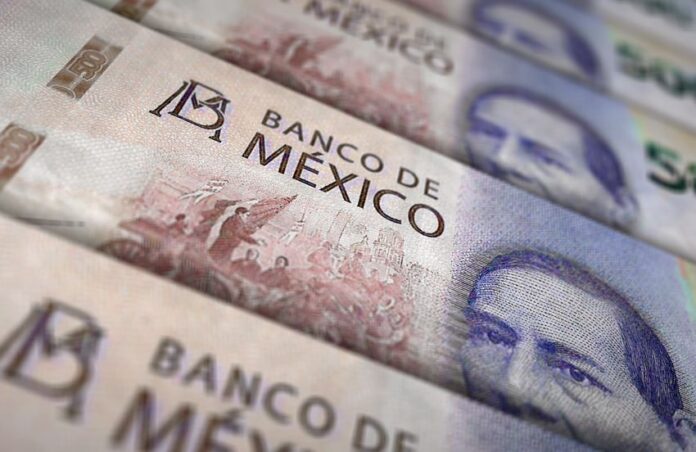
A close-up shot of Mexican 500-peso bank notes
The peso held steady after Mexico was spared from this week's "reciprocal" U.S. tariffs, but dipped after China announced retaliatory import duties. (Shutterstock)

The Mexican peso wobbled and the nation’s stock market exchange plunged early Friday after China announced retaliatory tariffs against the United States, fanning fears of a global recession.

Markets around the world plunged for a second day after Beijing escalated a trade war ignited by U.S. President Donald Trump’s sweeping “reciprocal tariffs” which were made public on Wednesday.

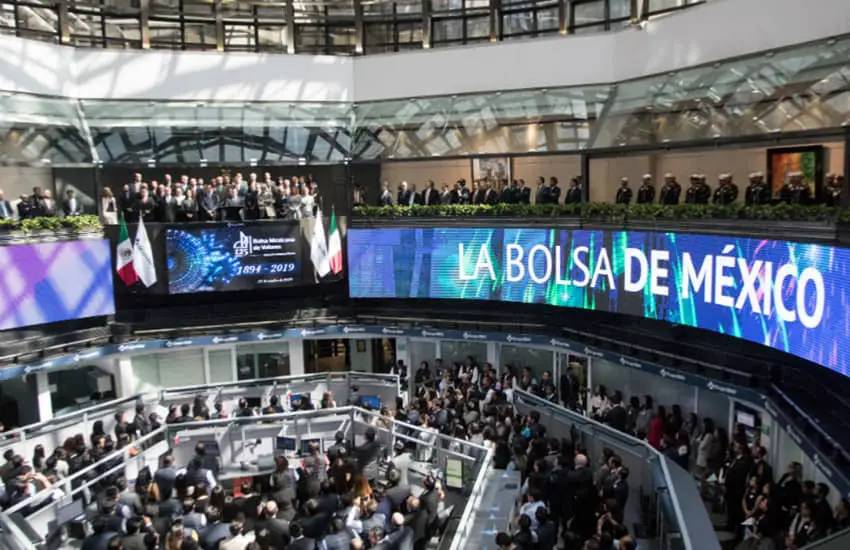
Mexican stock exchange, the Bolsa Mexicana del Valores
As stock markets around the world tumbled, the Bolsa Mexicana de Valores was no exception. (File photo)

In mid-morning trading Friday, Citibanamex reported that the peso was trading at 20.99 to the US dollar at bank windows, significantly weaker than its 19.94 opening value.

After dipping to 19.91 early on, by 2 p.m. Friday the spot rate for the Mexican peso had recovered to 20.46. At the same time, the main index of the Mexican Stock Exchange had lost 5.18%.

Before its Friday instability, the peso started the week strong. After Mexico was left off Trump’s global tariffs list, announced Wednesday afternoon, the peso gained value against the dollar on Thursday.

While global markets tumbled, the peso appreciated to less than 20 pesos to the dollar for the first time since mid-March,as investors speculated that Mexico had emerged relatively unscathed, according to the news agency Reuters.

Christian Admin de la Huerta, an economist at Finamex, was less sanguine, however, telling Reuters earlier this week that “an announcement implying a significant deterioration in the trade outlook could put additional pressure on the exchange rate.”

China’s retaliatory strike — punitive 34% tariffs on all goods imported from the U.S. — served as that announcement, and global markets again went into a tailspin. The peso did not escape the effects.

“The peso depreciated owing to risk aversion as there is a higher probability of global recession due to Trump’s tariff policies,” Gabriela Siller, director of economic analysis at Banco Base, told newspaper El Financiero.

Friday’s release of a stronger-than-expected U.S. jobs report — 228,000 jobs added in March — further weakened the peso against the U.S. dollar.

A volatile scenario for Mexico’s currency

Earlier in the week, Reuters forecast that the peso would experience a stable trading environment through the summer. This was welcome news because Mexico’s currency was battered in 2024, dropping nearly 23% over the course of the year.

As Mexican President Claudia Sheinbaum negotiated moderate terms in Trump’s initial tariff pushes in January and February, the peso recovered, rising 1.8% through Monday.

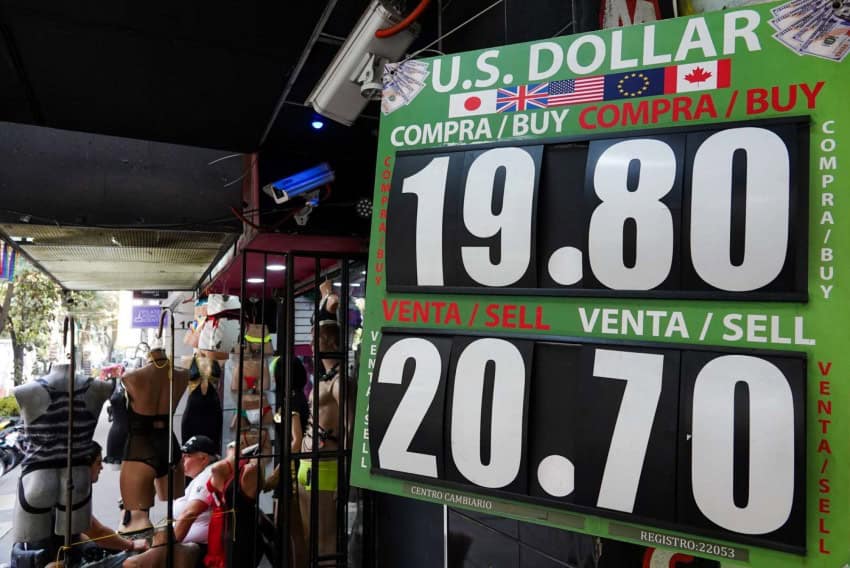
A sign showing the rates for buying and selling US dollars in Mexico
Constant changes to U.S. tariff policies this year have sent the peso on a wild ride. (Graciela López Herrera/Cuartoscuro)

But it has been a roller-coaster ride. On Feb. 2, the peso depreciated to 21.30 before Trump paused a 25% tariff on all Mexican imports.

The peso steadily strengthened through mid-March, hovering around the 20-to-1 mark until Trump threatened to impose a 25% tariff on imports of Mexican automobiles, weakening the currency by 1% to 20.30 on March 27.

The peso depreciated modestly last week, opening Monday at 20.46. On Tuesday, Reuters reported that foreign exchange specials projected that the local currency would depreciate marginally 0.4% to 20.55.

But that was before China roiled markets, and investment bank J.P. Morgan stated that it foresees a 60% chance of a global recession by year-end, up from 40% previously.

With reports from El Financiero, El Economista and Reuters

Totalplay announces new bandwidth limits, prompting a consumer watchdog warning

0
A modem with the TotalPlay internet logo
Under the new policy, TotalPlay's customers would receive symmetrical internet, a plus for video calls and livestreaming — but there's a catch in the fine print. (Technitech/Unsplash)

On Thursday, internet provider Totalplay took a step back from a plan to institute bandwidth limits after the Federal Consumer Protection Agency (Profeco) warned users about the company’s new terms of use.

The revised policy, which was set to go into effect April 15, granted all TotalPlay users symmetrical internet, allowing them to both upload and download content at maximum speed. While this feature was previously available in the company’s business plan, offering speeds of up to 1,000 megabytes, residential packages had only received temporary and limited access to these conditions.

Two women stand at a booth labelled, "Profeco, consumer watchdog agency," in Spanish, outside a store
After the TotalPlay announcement, consumer watchdog Profeco reminded consumers that businesses must respect the terms of their clients’ original contracts. (Crisanta Espinosa Aguilar/Cuartoscuro)

Shortly after announcing the policy, TotalPlay revealed that the package would also include a “fair use policy” that imposed bandwidth limits according to the contracted package, with additional charges applied if those limits were exceeded.

Following users’ complaints about the new measures on social media, Profeco issued a press release reminding consumers that contracts can’t be modified once signed.

“[…] under no circumstances, may providers modify the conditions originally agreed upon in their membership contracts,” Profeco said, “although these modifications could be considered a benefit for consumers, providers must respect the terms that consumers initially agreed to.”

After Profeco’s statement, TotalPlay released a clarification on its official X account, saying that the new terms of use were causing “a lot of confusion on social media” and that customers could opt out of the new plan.

“Rest assured, if this benefit is not of interest to you, we will return your internet to the same characteristics as it is today,” the statement said.

Meanwhile, business tycoon Ricardo Salinas Pliego, owner of TotalPlay — as well as TV Azteca, Banco Azteca and Elektra — and who frequently finds himself in the middle of controversies, responded to complaints on his official X account.

“Have I ever let you down?” he wrote. “Give me a chance.”

Then he went on to advise users to try the new symmetrical internet package for a month to discover its benefits, or choose one of two options: go back to their original package or cancel their contract. He further added that the “fair use policy” only affects those who resell TotalPlay’s service.

TotalPlay’s competitors, including Megacable, Telmex, Telnor and Izzi,  also offer symmetrical connections through fiber optic intenet, each with different speed and pricing options.

Immediately after Profeco’s statement, Telmex took the opportunity to post on X advertising its product.

“Browse unlimitedly, upload and download, always for the same price,” highlighting that the company would not change its packages and would keep its original rates.

With reports from El Universal and Xataka

Zihuatanejo’s magnificant oceangoing yacht is an unforgettable evening of fun

2
The Picante sailing yacht in Zihuatanejo
The Picante is more than just a typical Mexican tourist boat, as the gorgeous sailing yacht is quick to demonstrate. (All photos by Picante)

Sailing into the sunset is appealing to many people and is often on the must-do list of adventures to experience while in Mexico. In Zihuatanejo, The Picante — a Fountaine Pajot Tahiti to those in the know — is a 75-foot sailing catamaran with a mast height over the water of over 100′. Built specifically for the day charter business, it is the perfect choice for the adventurous sea lover.

It all began when the late Captain Tony Piazza and his wife Claire came to Zihuatanejo at the urgings of Apple Vacations, with whom they had a business arrangement to sail charters in Cancun from 1985. The tour company assured them that this part of Mexico was the place to be, given its location, beautiful waters and little competition. But it wasn’t all smooth sailing.

A woman jumps off a yacht in Zihuatanejo
The calm waters and smooth sailing of the Zihuatanejo coast make it the perfect destination for a boat trip. (Picante)

Despite the setbacks, the Piazzas persevered. Their first boat in Zihuatanejo was The Tristar, and they partnered with three others. The cockpit caught on fire, setting them back until Piazza, a shipbuilder, rebuilt it a few weeks later. In 2001, they made an agreement with the owners of another boat, the Vitava, an 85-foot wooden schooner until 2004. After doing maintenance in Mazatlan, they realized it was taking on water. Since it needed further repairs, the owner returned it to the shipyard, and the Piazzas searched for another boat to continue.

Their last purchase was The Picante, which Piazza and three partners bought in the Caribbean in 2004, sailing through the Panama Canal to Zihuatanejo, where it sits today.

With the passing of Tony Piazza in April 2023, Claire was in the unenviable position of deciding whether to continue with the business. Luckily for the thousands of tourists and locals alike, she decided to keep going and, with a great team beside her, has been running it ever since.

Our sunset cruise started at 5 p.m., when we met on the pier across the bay from the main beach where the boat docks. You can see it nearly everywhere on Playa Municipal, the main beach in downtown Zihuatanejo.

It was a lively crowd that day, with a mixture of foreigners and Mexican tourists. One young woman was celebrating her birthday with a fairly large group of friends, and there were a couple of local families I recognized as well. Our captain, Carlos Ríos, welcomed everyone on board, and as we puttered out from shore, he went over the customary safety guidelines. I chose to sit on the comfortable net where I could be on the lookout for sea life.

A crewmember of a yacht gives the thumbs up
Mexico’s legendary hospitality is ever present as part of the experience. (Picante)

As we left the bay, Rios pointed out Bara de Potosi and the white Islands of Potosi — white because of bird poop — and spoke about the bird-watching sanctuary located there and began an interesting narrative starting from the rim of the bay at the Faro Viaje, one of two lighthouses we would see. As the high investment in Punta Garrobo’s development came into view, he mentioned the infamous Kau Kan Restaurant, which had moved there from Ixtapa a few years ago.

The Picante headed west now towards Ixtapa, passing by a beautiful beach known as Playa Majahua and the Caves of the Majahua. Luckily, the sea was calm this evening, and we could slow the engines, sit back, and admire the cliffs. “Otherwise,” Rios said, “It’s too risky and we could get sucked into the rocks.”

From there, we crossed in front of Playa Palmar, which has numerous rows of hotels, including The Fontan, Sunscape, and Barcelo, and residential complexes like the BVG, which have stood for many years.  Just past that was the Ixtapa Marina, a 480-slip marina, the largest in Mexico and home to the yacht of billionaire Carlos Slim, Mexico’s richest man.

The sun began a slow but spectacular descent to the music of Andres Botticelli’s “Perfect Symphony.” As the rays dipped below the horizon, to appreciative cheers from everyone aboard, the energetic and very entertaining staff sprang into action, offering a meal service consisting of a light dinner of chicken, vegetables and rice, included in the price, along with an open bar serving a variety of drinks, including local tequila and cocktails.

The Picante quickly turned inside the Bay of Ixtapa and headed straight to the islands. It was a bird watcher’s delight. Various species of seagulls, pelicans, Boobies, and Cormorants swooped in and around Torrecillas Island and where we were able to witness the phenomenon of one of two blow holes in Mexico (a blow hole, I learned, is formed as sea caves grow landward and upward into a vertical shaft, which can result in hydraulic compression of seawater that then releases through a port from the top of the blowhole).

With food service out of the way, the ever-changing music changed to upbeat Latin pop and requisite tequila bottles. With the help of the fun-loving crew, the sombreros and serapes appeared, and soon, the crew was pouring tequila straight from the bottle into the open mouths of willing participants and encouraged by onlookers to chant, “drink, drink drink!” The music, the costumes donned by the staff and the tequila all added to the festive atmosphere of the cruise.  

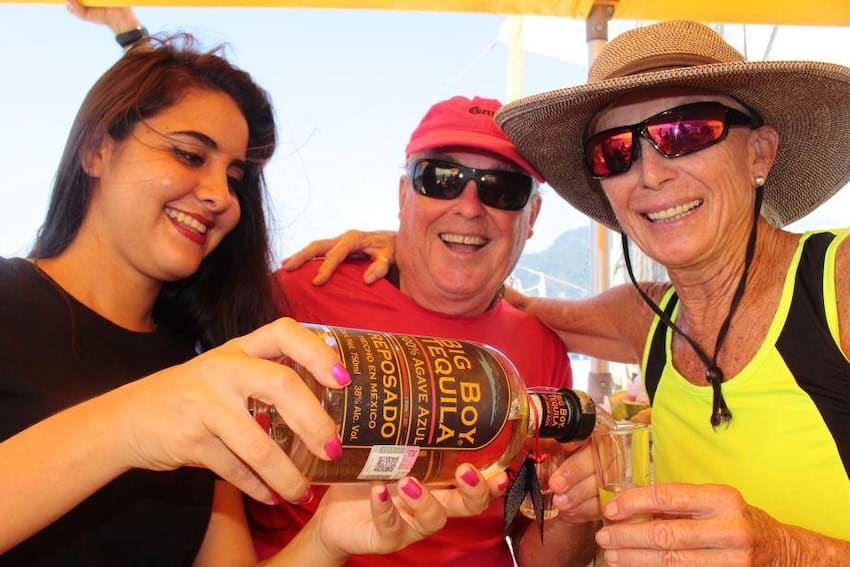
A woman pouts shots for two brightly dressed American tourists.
Would it be a Mexican boat trip without tequila? Probably not. (Picante)

“We want to make sure you have a great time on The Picante, “said Rios. “So, after the sunset we create the fiesta. If you have a birthday or an anniversary, we want to make sure it is a special experience for you.”

In addition to the breathtaking sunset tours, The Picante also offers snorkelling and whale-watching tours. For added excitement, you can try their Spinnaker Flying Adventure, a unique experience where you get into a harness connected to an A-line. The wind catches it, and the spinnaker fills up with wind and pulls you up about 25 to 30 feet high.  When you want to come down, you shimmy to the end of the line to a waiting crew in the water below. It’s an adventure that’s sure to get your heart racing!

The Picante offers several other options of interest. With the advantage of size, the Picante, is perfect for private charters for weddings, engagements or corporate events.

“It has been used by the city of Zihuatanejo for promotional events and even rented by people spreading the ashes of loved ones.” said Piazza. “We participate in two of the city’s known charity events as well, the annual Sailfest and Guitarfest held annually in Zihuatanejo in the months of February and March respectively.”

Information on the sunset cruise, as well as everything else they offer, can be found on their website.

The writer divides her time between Canada and Zihuatanejo. 

Ceasefire in Mazatlán: Chronicle of a wartime Carnival

3
The Mazatlán malecón during carnaval
Mazatlán has been shaken by infighting in the Sinaloa Cartel since October 2024. But it's also home to one of Mexico's largest Carnival celebrations, but earlier this year, the show had to go on. Did it? (Gobierno de Sinaloa)

There was no time to lose. We were running late to the Alejandro Sanz concert, which followed the crowning of the princess of the 2025 Mazatlán Carnival. Luckily, we found parking only four blocks away from the venue. We got out of the car and began walking quickly. A few meters away from our parking spot, we ran into a group of heavily armed state police in tactical gear, with two extended cab pickups and a Black Mamba SandCat. The armored personnel carrier looked like a battle tank.

I approached the masked police, who were chatting outside a house in the residential area, and asked permission to take a photo in front of the armored vehicle. The officers went quiet and looked at each other before one responded: “Yes, but don’t show the serial number.”

A man poses in front of an armoured personnel carrier
Security at the event was high, with military-grade police vehicles deployed to protect partygoers. (Eduardo Esparza)

Thirty minutes later, we got into the concert. Despite being an international artist and winner of more than 20 Latin Grammys, Alejandro Sanz wasn’t able to fill the venue, even after organizers offered a two-for-one discount due to low ticket sales.

A different kind of Carnival

The public’s absence was the result of the ongoing crisis of violence in Sinaloa. More than six months into a fierce war between the Sinaloa Cartel factions known as Los Chapitos and Los Mayitos, there have been 913 intentional homicides and 1242 people kidnapped, according to the Executive Office of Sinaloa’s State Public Security System (Sesesp). In turn, the administration of Claudia Sheinbaum has detained 899 people in Sinaloa and has confiscated 112.8 metric tons of drugs across the country, according to the Security Ministry (SSPC).

The show must go on, but what kind of show would it be? The Mazatlán Carnival has been staged since 1898 and draws hundreds of thousands of visitors every year. This year’s edition was marred by multiple controversies, including the crowning of Ángela Salazar, age nine, as the 2025 Carnival Princess. For years, Mazatlecos have complained that the crown has gone to the contestant who raises the most funds — a record 4,293,815 pesos in the case of little Ángela — and that where the money goes remains a mystery.

Then Grupo Firme canceled their show because of death threats, followed by Jorge Medina and Josi Cuen, who canceled just 24 hours before they were scheduled to perform the Carnival’s opening show. However, Mazatlán Mayor Estrella Palacios and Sinaloa Governor Rubén Rocha Moya announced that the Carnival would continue and announced a new program of artists to replace the canceled shows. Their announcement was overshadowed by the arrest of four armed civilians in the Hotel Zone on the first day of Carnival. A handgun, three long guns, 11 full magazines and two bulletproof jackets were seized. The heavy military presence in the city and along the highways confirmed the government’s commitment to maintaining peace, whatever the cost.

Sights set on Sinaloa

Traditionally, Carnaval in Mazatlán is one of the biggest parties in Mexico. (Carnavál de Mazatlán)

The government of Rocha Moya announced that over 3,000 security agents would be present to protect the city during Carnival. What better way to celebrate the joy of Carnival than with a security deployment worthy of a major conflict zone?

While the Sinaloa government vaunted the party, the tension between Mexico and the Trump administration in the United States grew. Three months into his second term, Trump has placed tariffs on Canada, Mexico and China, blaming them for the deadly fentanyl overdose crisis in the U.S. — the same fentanyl that has been found in Sinaloa narco-laboratories.

On top of that, the Trump administration designated the Sinaloa Cartel and five other Mexican cartels as “foreign terrorist organizations.” Adding to the tension, on Feb. 4 an RC-135 Rivet Joint spy plane belonging to the U.S. Air Force flew around the Baja Peninsula and into the Gulf of California, passing along the coast of Sinaloa.

On the morning of Feb. 27, as Mazatlán prepared for the first day of Carnival, President Claudia Sheinbaum announced the historic transfer of 29 prisoners from Mexico to the United States, a gesture of good faith towards that country’s leaders.

The Sinaloan government’s operations to prevent any outbreak of violence practically converted Mazatlán into a fortress. The party had to continue so, as we say in Sinaloa, fierro pariente — let’s go.

Dancing in the streets, keeping an eye out for danger

Alejandro Sanz peforms live in Mazatlán
Even the draw of Alejandro Sanz was not enough to fill Mazatlán’s stadium. (Eduardo Esparza)

An hour into the Alejandro Sanz concert, there was a pause in the music. Sanz called out to the audience.

“Pa’ fuera lo malo” (“Out with the bad energy”), the singer yelled repeatedly as the stage lights painted the stadium red. Was it planned? I’m not sure, but he appeared to be aware that he was giving a performance in a violent area.

The music resumed and the public continued to sing along. But the concert didn’t end with the force it had started with. Despite the excellent musicians onstage with him, Sanz sang with just a piano. After the last song, we waited to see if there would be another, but that was it. Sanz had left the stage and didn’t return. A weak finish, but what else could we expect from a concert with 2-for-1 tickets? As we left, the National Guard, carrying high-caliber weapons, pointed the way out. We walked back to the car. The state police had already left.

The spirit of Carnival was still alive, but the general insecurity, the troops in the streets and their armored tactical vehicles made us wonder to what point it was possible to keep celebrating in such a tense environment. It’s been six months since the start of the narco-war in Sinaloa and the economic fabric of the region is irreparably damaged: according to journalist Marcos Vizcarra, Sinaloa has lost 12,000 jobs since the war began.

The ephemeral joy that surrounded the city has faded, the tourists have returned home and nightlife has died down. However, the marches led by mothers and family members of the disappeared continue to grow. I live with fear in my city. The army patrols the streets and my only souvenir of this year’s Carnival is a photo with an armored vehicle ready for war.

This story was translated by Mexico News Daily senior news editor Rose Egelhoff.


Eduardo Esparza is a professor, filmmaker and professional photographer from Mazatlán, Sinaloa. His first feature film, “Con un pie en la gloria,” will premiere this summer.