A year after severe drought and lack of rainfall took the Mexico City metropolitan area to the brink of a water crisis, conditions appear much improved in 2025.
The National Water Commission (Conagua) reported that as of April 1, the Cutzamala reservoir system — which provides almost a third of the capital’s water and supplies several suburban areas within neighboring México state — was at 56% capacity.
A year ago on April 1, 2024, supplies were at 34.7% capacity, more than 20% less than current water levels.
Although this is a relief to the millions of people that rely on the Cutzamala for its water, Conagua data shows that the current situation is considerably below average. In 2020, supplies were at 73.3% capacity and, in 2019, the Cutzamala was 82% full.
While the 56.4% figure at the beginning of April is somewhat reassuring, Conagua reported that 5.98 million cubic meters of water was drawn out of the reservoirs during the last week of March. At the same time, no precipitation had been recorded across the extent of the system, which stretches northwest across México state and into the state of Michoacán.
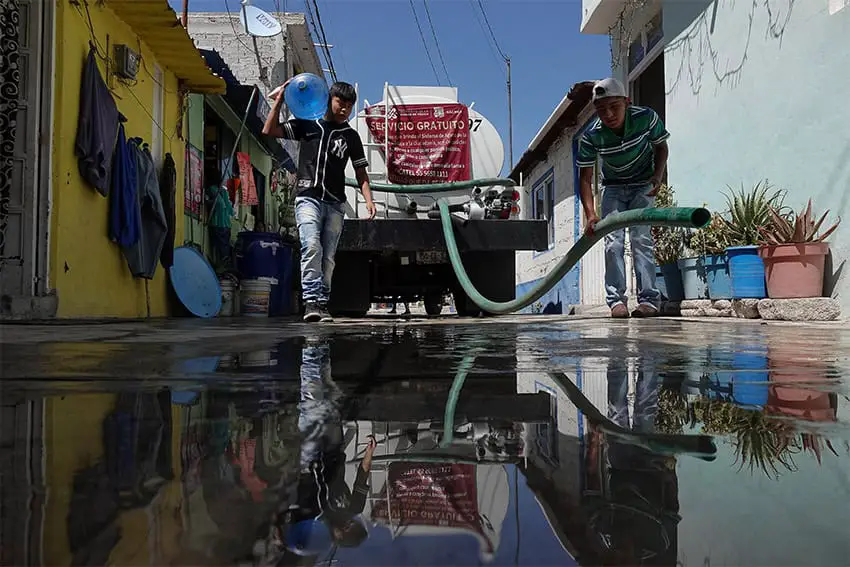
A water truck makes deliveries in Mexico City’s Iztapalapa borough during the 2024 water shortage. (Graciela López Herrera/Cuartoscuro)
On March 25, the Water Basin Organization of the Valley of Mexico (OCAVM) said the Cutzamala system was at 57.2% of capacity, down from 64% in December and nearly 67% in November.
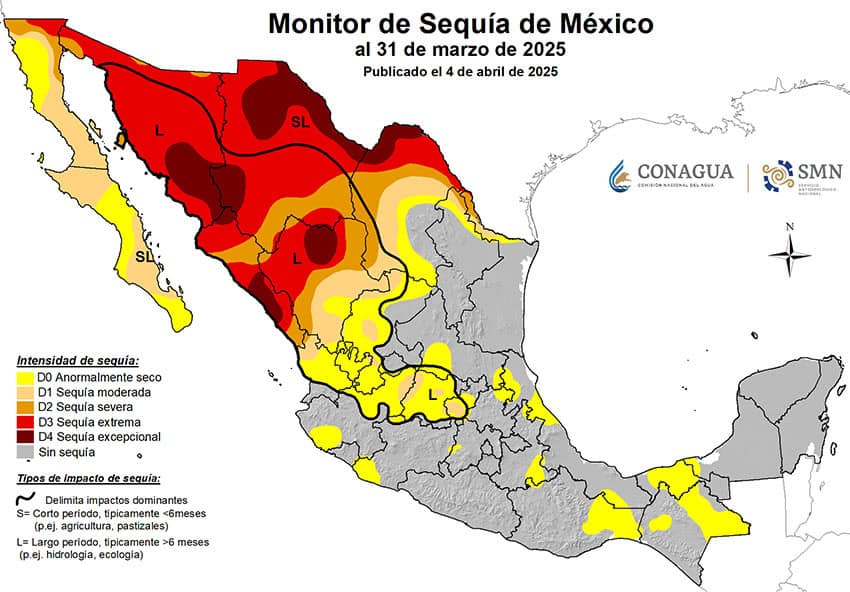
As such, Conagua warns that the panorama remains delicate, especially if the threat of drought rises again. For now, however, Mexico’s Drought Monitor reported that none of Mexico City’s 16 boroughs was experiencing drought.
Additionally, the four-decade-old Cutzamala system is aging badly and earthquakes have caused damage to the pipes. Studies show that more than 40% of the system’s water is lost through leaks.
As part of the plan, Brugada inaugurated a water purification plant that will provide jugs of purified water at reduced price to low-income families who reside in areas — such as the boroughs of Iztapalapa and Xochimilco — that suffer chronic water shortages.
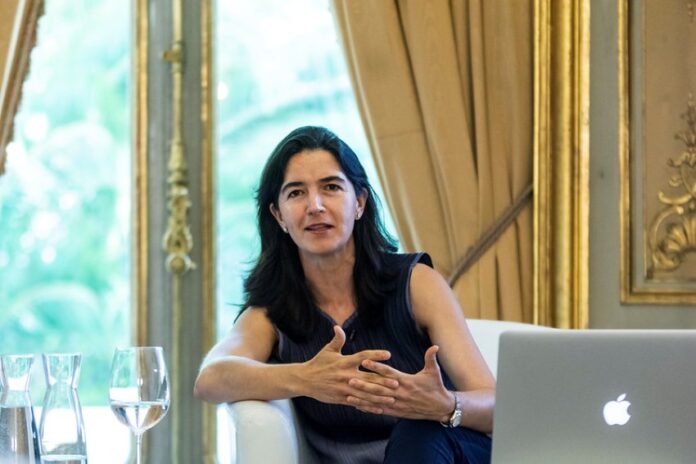
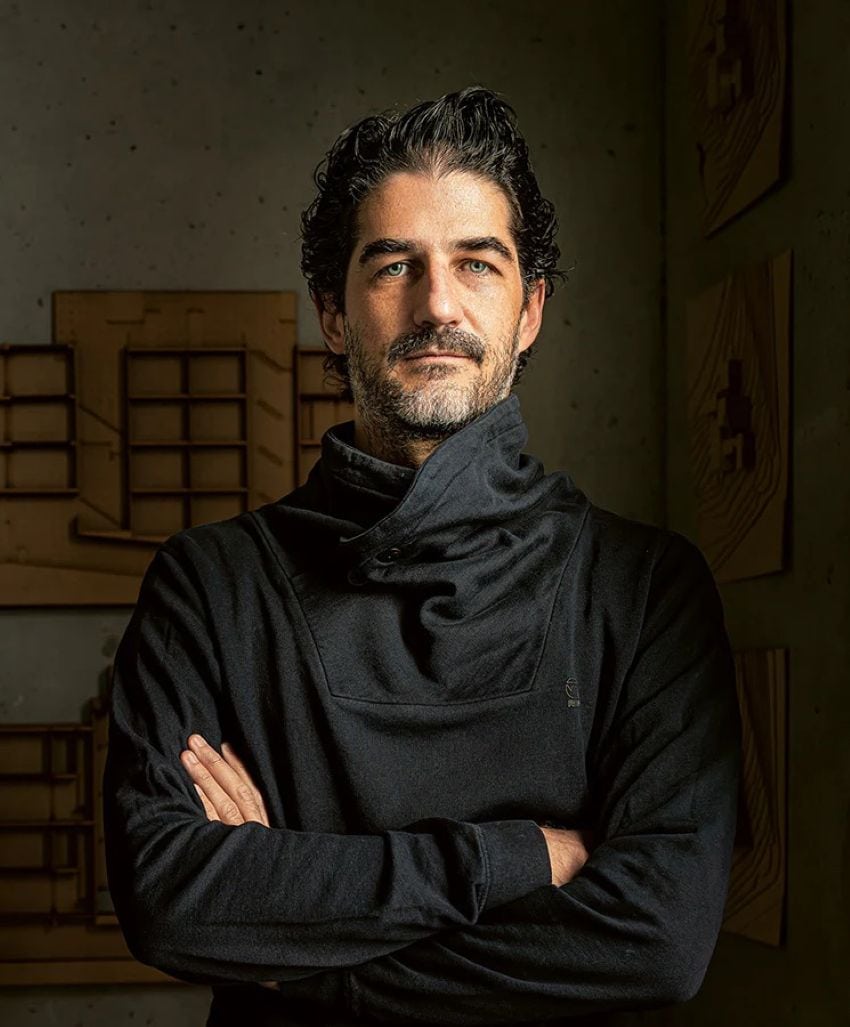
One of Mexico's most internationally recognized architects of the moment is Fernanda Canales, part of a movement of younger Mexican architects who favor natural materials and pay attention to how a space fits into its environment and how it will be used. (Wikimedia Commons)
Mexico has always been rich in architecture. In the last century, this country gave to the world remarkable talents such as Luis Barragán, Pedro Ramírez Vázquez, Teodoro González de León, Abraham Zabludovsky and Mario Pani.
And over the past 15 years, outstanding minds like Tatiana Bilbao, Frida Escobedo, Alberto Kalach and Mauricio Rocha Iturbide have also contributed their unique expertise to the Mexican and international architectural scene. Now, a new generation of young architects is emerging with exciting ideas.
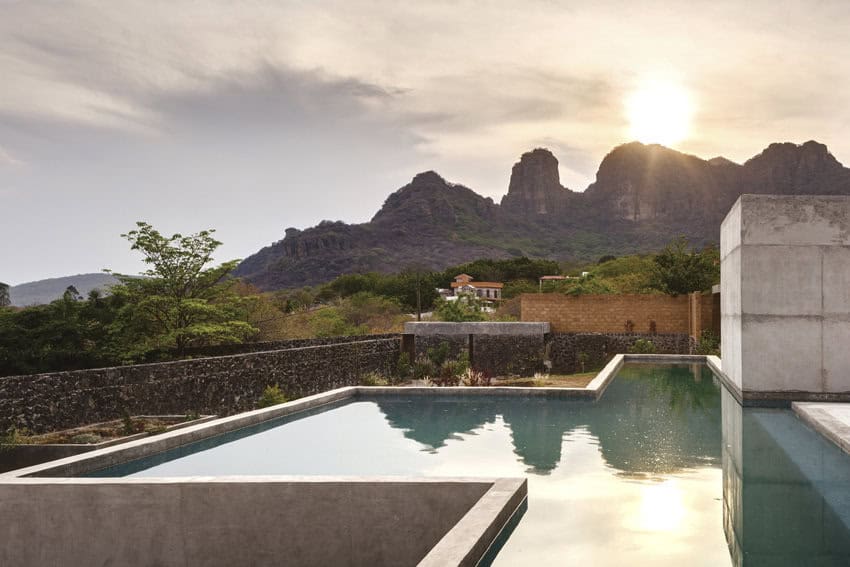
Many younger Mexican architects are interested in building with more natural materials and taking into context a project’s surrounding environment, as well as the people who will engage with the space. (Gabriela Etchegaray)
Movements such as the transformation of traditional houses into modern spaces and the resurgence of Brutalism have placed Mexican architecture in a remarkable position. New talents are establishing their creative studios, earning significant global awards and prompting reflections on the role and function of architecture.
So here we share a selection of some of Mexico’s rising-star architects, who inspire with their talent and fresh perspectives.
Fernanda Canales
Recognized for her personal approach to architecture, Fernanda Canales is also a prolific architecture theorist and critic. She has published significant works, including “Architecture in Mexico 1900-2010: The Construction of Modernity” and “100×100+: Architects of the 20th Century in Mexico.”
Among her notable projects are the Elena Garro Cultural Center in Mexico City and the UDG Performing Arts Center, created in collaboration with the Mexico City architecture firm Arquitectura 911sc and with architect Alejandro Hernández in Guadalajara. Canales has received prestigious awards, including the Dorfman Award by the Royal Academy of Arts in London.
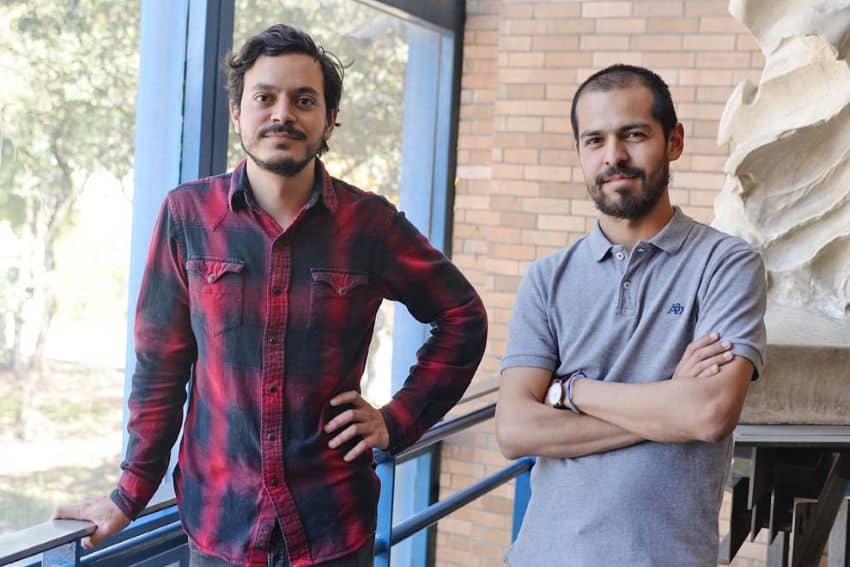
From left to right, Pavel Escobedo and Andrés Solíz. (Escobedo Soliz.net)
Andrés Soliz and Pavel Escobedo
Pavel Escobedo (1988) and Andrés Solíz (1990) founded the Escobedo Solíz studio in 2016. These young architects possess an exceptional vision for architecture, deeply attuned to the sociocultural context and the memory embedded in their projects, making their work both profound and socially responsible.
Their architectural firm has garnered numerous awards, including the Holcim Awards for Sustainable Architecture (2014), the MoMA Young Architects Program (2016), Emerging Voices 2020 from the Architectural League of New York and the Fritz Hoeger Prize Grand Prix award in 2020.
Their work has been showcased at prestigious venues, including the Museum of Modern Art in New York, the MAXXI Museum in Rome and the Venice Architecture Biennale.
Notable projects include the Casa Nogal in México state, designed with a low budget to reflect the realities of many Mexican families, and Casa Nakasone, built using common and economical materials to create a beautiful home on the outskirts of Mexico City.
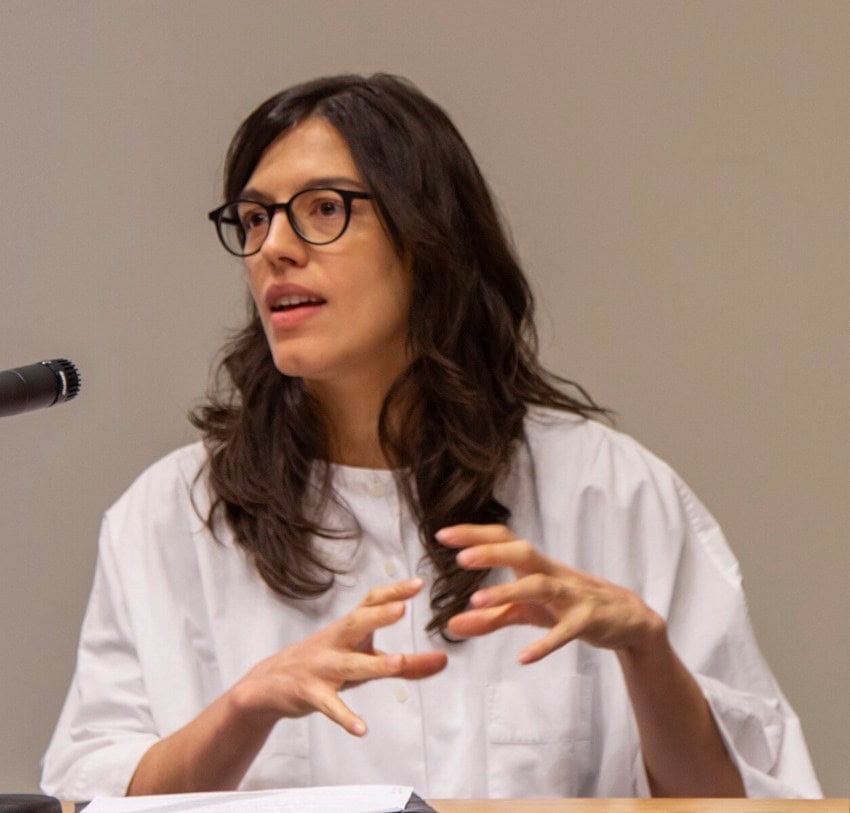
Architect Gabriela Carillo’s designs pay close attention to a space’s social context and its environment. (gabrielacarillo.mx)
Gabriela Carrillo
This talented architect began her career in 2011 at the renowned Taller de Arquitectura Mauricio Rocha. Her outstanding contributions led to her becoming a partner in 2011, at which point the firm was renamed Taller Mauricio Rocha + Gabriela Carrillo.
She currently leads Taller Gabriela Carrillo and has received significant accolades, including the Dorfman Prize and the International Women in Architecture Award in 2017.
Her designs are characterized by a keen sensitivity to context and environment, with notable works including the San Pablo Cultural Center (2013) in Oaxaca, the School of Plastic Arts of Oaxaca (2009) and the Library for the Blind and Visually Impaired of the Citadel (2013).
Héctor Barroso
Héctor Barroso is also known for his desire to integrate his designs with the surrounding environment, considering elements like surrounding vegetation, soil composition and geographic features.
Hector Barroso sees air as a fundamental element of architecture, shaping structures. (Alta Habitat)
His awards include the Silver Medal from the Colegio de Arquitectos de la Ciudad de México and the Sociedad de Arquitectos Mexicanos (CAM-SAM), as well as the Gold Medal from the Segunda Bienal de Jóvenes Arquitectos organized by the Federación de Colegios de Arquitectos de la República Mexicana.
Among his projects are the Salara Residences in Pescadero, Baja California Sur and the Los Helechos housing project in Valle de Bravo in México state.
Gabriela Etchegaray
Acclaimed architect Gabriela Etchegaray is remarkably versatile, designing everything from buildings to jewelry. She is also a critic and curator, viewing architecture as a social and artistic tool that creates experiences within buildings, landscapes, and cities.
Etchegaray has collaborated with notable architects such as Mauricio Rocha and Michel Rojkind and in 2011, cofounded the art and architecture studio Ambrosi|Etchegaray with Jorge Ambrosi. She is also part of the AMET studio, which focuses on real estate projects that engage in dialogue with their surroundings and promote urban development.
Among her accolades are the Moira Gemmill Award for Emerging Architecture from the Women in Architecture Awards and the Emerging Voices award in 2015 from the Architectural League of New York for Ambrosi|Etchegaray.
Among Mexico City architect Gabriela Etchegaray’s views is that architectural projects create experiences for people engaging with them. (Wikimedia Commons)
Notable projects include the Edificio IT apartment building in Mexico City’s Hipódromo neighborhood, the EM house, a private residence in Querétaro, the pavilion for the Friendly Cultures Fair in 2016, the Antonio Sola apartment complex in Mexico City’s Condesa neighborhood, and the Milagrito Industrial Palenque in Oaxaca, an outdoor facility for making traditional tequila.
Carlos Faci and Marina Leboreiro
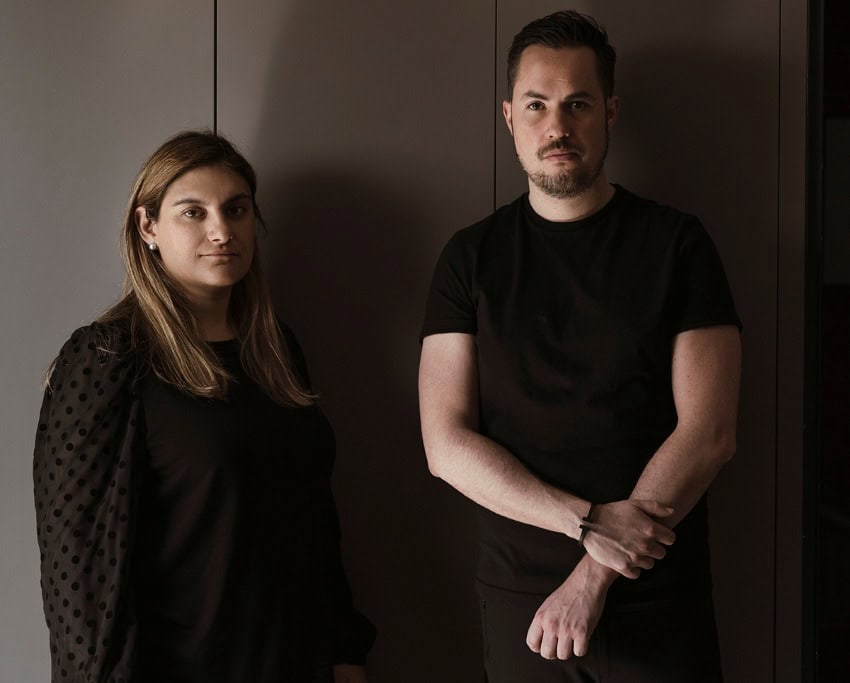
Architects Carlos Faci and Marina Leboreiro’s Faci Leboreiro Studio, founded in 2011, is an architecture and interior design studio focused on creating sensory experiences through meticulous space design.
Their project, Estudio Basalto, characterized by the use of basalt stone, oak wood, and marble, won the Grand Prix du Design in Québec, Canada. They have also earned awards such as Mexico’s PRISMA award for interior design and the DNA (Paris Design Awards), the latter of which also recognized their Estudio Basalto project.
Other notable projects include Zeru restaurant in Miami, the 2024 Cesantoni pavilion at the Obra Blanca Expo in Mexico City, and the lobby bar at the Presidente InterContinental hotel in Mexico City’s Polanco neighborhood.
Marina Leboreiro and Carlos Faci are interested in how architecture provides sensory experiences. (facileboreiro.com)
For Faci and Laboreiro, architecture is defined as the spaces carried in the soul, and they describe their style as contemporary, warm and timeless.
At their Mexico City architectural firm Comunal, their approach emphasizes functional, formal and aesthetically appropriate designs that resonate with the essence of a place and the culture and the people surrounding it.
Their accolades include a 2020 honorable mention in the Oscar Niemeyer Award for Latin American Architecture and recognition at the AR Emerging Architecture Awards (AREA) in London.
Mariana Ordóñez and Jesica Amescua emphasize functional designs that resonate with the place where a structure exists, as well as with the culture and the people there. (National Museum of Architecture)
One of their most recognized projects is Social Housing Production: Exercise 01, a communal home in a rural community in Oaxaca built using underutilized natural resources such as bamboo, wood and stone — and credited on their website as being built by the firm and the community of Tepetzintan. They also designed the Bachillerato Rural Digital School in Tepetzintan, a rural school in a Nahua community.
Architectural creativity is undoubtedly thriving in Mexico. What other talents would you add?
Ana Paula de la Torre is a Mexican journalist and collaborator for various outlets including Milenio, Animal Político, Vice, Newsweek en Español, Televisa and Mexico News Daily.
"We have the pedal to the metal," the CEO of Nissan México told reporters following last week's presentation of the automaker's 2024 performance. (Nissan México)
Nissan is sticking to its current production and investment plans for Mexico despite the United States’ imposition of tariffs on imported vehicles last week, according to the head of the Mexican subsidiary of the Japanese automaker.
“There is no modification to short-term plans because to a large extent those decisions aren’t short-term ones,” Rodrigo Centeno, president and general director of Nissan Mexicana, told reporters after the presentation of the company’s 2024 results.
Rodrigo Centeno, president and general director of Nissan Mexicana. (Nissan México)
“Moving production tooling is not so easy, it’s a matter that requires a lot of planning and strategy,” he said.
“We don’t have any change on the table at this time. We have the pedal to the metal.”
Centeno’s assertion that Nissan isn’t making any immediate change to its plans in Mexico serves as reassurance for the Mexican auto sector as the company’s CEO Makoto Uchida said in February that the automaker could leave Mexico if 25% tariffs proposed by U.S. President Donald Trump were to take effect.
Nissan has three plants in Mexico — two in the state of Aguascalientes and one in Morelos — from which it exports about 320,000 vehicles to the U.S. each year. The company sold more cars in Mexico last year than any other automaker.
“She’s leading in an assertive, correct, moderate and adult way. I believe we’re doing well and the results are tangible,” Centeno said.
Sheinbaum said on Friday that Mexico is “in a better position than other countries in the world” because the United States didn’t impose so-called “reciprocal tariffs” on its exports, while many goods can still be shipped to the U.S. tariff-free if they comply with the rules of the USMCA. She said that Mexico avoided reciprocal tariffs on its exports to the U.S. due to “the good relationship we’ve built between the government of Mexico and the government of the United States.”
Nissan México’s CEO said “It’s time to work for and with Mexico,” while praising President Sheinbaum for her leadership amid uncertain trade relations with the United States. (Presidencia)
Economy Minister Marcelo Ebrard said last Thursday that Mexico has “preferential treatment” from the United States, and declared that the government’s “goal in the next 40 days is to achieve the best conditions among all countries of the world for the [Mexican] auto industry.”
Centeno said “it’s time to work for and with Mexico” and asserted that Nissan is committed to the country while also having “a significant global vocation.”
Nissan sold more than 255,000 vehicles in Mexico last year, while it made just under 670,000 units at its three Mexican plants, an 8.8% increase compared to 2023.
Cereal-milk ice cream was created in New York City, but we reimagine this nostalgic treat with the flavors of Mexico! (Canva)
The idea for cereal-milk soft serve ice cream was conceived by American Christina Tosi, a James Beard award-winning pastry chef who was intrigued by the milk that infused her cereal. The milk’s incomparable sweetness (you must admit that nothing comes close!) brought back “sweet” memories of her childhood and the cereal and milk that went along with it.
She used it as an ingredient in panna cotta and other desserts, and then she got the notion that it would make a fabulous soft serve ice cream. She opened Milk Bar in New York City with cereal-milk soft serve, which became one of its signature items. The ice cream became a hit, an innovative dessert that appealed to the nostalgia in her patrons, who were also impressed by her use of varied cereal flavors.
If you love this delicious cereal-milk ice cream, it’s Christina Tosi you need to thank. (Christina Tosi)
The original recipe involved soaking toasted cornflakes in milk, straining them, and using the sweet milk as the base for the luxuriously rich ice cream. To top it off, there were also crushed, caramelized cornflakes to go with it.
Tosi then expanded her repertoire, offering packaged pints of ice cream and developing cereal-milk lattes and milkshakes. Even Ben & Jerry’s and Burger King copied her concept. What Tosi did was take a simple idea and turn it into a cult favorite and a modern culinary trend — pretty impressive!
Although cereal-milk soft serve isn’t a staple of Mexican desserts, La Michoacana’s ice cream shops (located throughout Mexico) feature cereal-inspired flavors like Cinnamon Toast Crunch and yogurts inspired by cereal flavors. If you search TikTok videos from Mexico, you’ll find originators making cereal-based ice creams using popular brands like Fruity Pebbles.
So, how do we make our own cereal-milk soft serve? It’s easy, and the recipe I’m including here is for a no-churn variety. I also took the liberty of making it Mexican, by adding Mexican products and spices, etc., which I think is far more tantalizing than the plain sweetness of simple, milk-infused cornflakes. Disfruta!
No-Churn Mexican cereal milk soft serve ice cream
This recipe makes about 4 cups of ice cream. (Canva)
* Mexican brands noted for intense flavor: Villa Vainilla; Vainilla Totonac’s; Molina Vainilla
Pinch (0.36 g) cayenne pepper or chile en polvo
For the ice cream base:
2 cups (480 ml) heavy cream (most frequently found in Mexico as crema para batir)
1 can (14 oz.) (397 g) sweetened condensed milk (leche condensada or lechera)
Pinch (0.36 g) salt
For the toppings:
Dulce de leche, caramel or butterscotch sauce, honey or maple syrup
Crushed Maria (Galletas Marias) cookies or other sweet cookies
Toasted coconut flakes
Lime zest
Fresh fruits like strawberries or mangos
Instructions:
Prepare the cereal milk:
In a bowl, combine cereal, milk, cinnamon, vanilla and cayenne or chili powder.
Let soak for about 30 minutes so that the milk absorbs all the spices and cereal flavors.
Strain through a fine sieve. Press out as much liquid as possible.
Discard the soggy cereal.
Whip the cream:
In a large mixing bowl, using a hand-held or stand mixer, whip the cream until soft peaks form.
Gently fold the sweetened condensed milk and salt into the whipped cream.
Gradually add milk and mix until fully incorporated.
Pour the mixture into a freezer-safe container.
Cover with plastic wrap or parchment paper to prevent ice crystals.
Freeze four hours for soft serve and 6 hours for firm ice cream.
Serve:
Drizzle sauces/syrups over ice cream.
Sprinkle crushed Maria cookies, pan dulce, fruits, toasted coconut flakes or lime zest on top.
Deborah McCoy is the one-time author of mainstream bridal-reference books who has turned her attention to food, particularly sweets, desserts and fruits. She is the founder of CakeChatter™ on FaceBook and X (Twitter), and the author of four baking books for “Dough Punchers” via CakeChatter (available @amazon.com). She is also the president of The American Academy of Wedding Professionals™ (aa-wp.com).
Bike rides in Paseo de la Reforma on Sundays? Yes, please (with all due precautions, though)! (Graciela López Herrera/Cuartoscuro)
I remember it clearly. I was about 12 or 13 years old and still did not know how to ride a bike. Neither did my sister. My dad thought this was simply unacceptable at that point. One Sunday, early in the morning, he loaded his truck with water, electrolytes, helmets and other things he thought we could use. “We are going to Reforma,” he said, “and you will learn how to ride a bike once and for all.”
Paseo de la Reforma Avenue stretches from Polanco to the Historic Center of Mexico City. (Fausto Hernández/Pexels)
That was the first Sunday my family was a part of theMuévete en Bici program, a government initiative to get people to enjoy their city without the need of a car or a bus ride. Many weekends followed, in which my sister and I learned — not without some tears of frustration — to ride a bike at the ripe old ages of 10 and 13, respectively. After many attempts, I finally got rid of the training wheels and was able to race across Reforma amidst a swarm of entire families, professional racers and other folks who awaited every weekend just to hop on a bike andsightsee our historic center — potholes and all.
Muévete en Bici is so much more than just bikers
Little did I know that this same track was a part of the Cycleway Network of the Americas, an international organization of “urban interventions,” as they describe themselves on theirofficial website, aiming to “transform cities through recreational cycleways.”
In their childhoods, my parents would have never imagined the capital’s government shutting down one of the city’s main avenues just for people to enjoy themselves on a weekend. But that is exactly what Muévete en Bici does: across town, several arteries of the capital are completely or partially closed for bicycle users to ride freely.
Across town, the streets that lead to major tourist attractions are closed from 8 a.m. to 4 p.m. every Sunday. Paseo de la Reforma, the Historic Center,Hipódromo Condesa andRoma Norte figure among some of the most popular areas. However, the initiative is not limited to tourist hot spots. Patriotismo Avenue and Calzada de Guadalupe are closed, too, which has allowed families like mine to take the Centro Histórico-Lagunilla route. Some people take this as a devotional opportunity and undertake an urban pilgrimage toBasílica de Guadalupe. Others, as a chance to explore their own city in a bike-friendly environment.
Into the depths of Reforma and beyond
At La Lagunilla market, you can find old analog camera film, Leonora Carrington lithographies of dubious origin and mind-blowing living room sets. (Alejandro Linares García/Wikimedia Commons)
I remember my mother guiding us across Reforma all the way toMercado de la Lagunilla, a traditional antiquities market blocks away from Tepito, commonly referred to as the “barrio bravo” of theCuauhtémoc borough. Local merchants have adapted their businesses to receive foreigners, and sell every kind of trinket directly on the street, from LP records, to Super 8 cameras and gorgeous pieces of Bauhaus furniture. Diego Rivera and Rafael Coronel fakes are scattered among the puestos on the street, too.
If you’re not an antiques nerd like me, do not miss the opportunity to try a licuachela: the legendary beer served in a blender. They usually have ‘escarcha’, a layer of lemon with chili powder and salt on the edges. You can also add gummies and other sweet toppings to your drink. And yes, that’s haute Mexican cuisine, for sure.
It’s worth clarifying that getting to La Lagunilla takes at least 40 minutes by bike from Centro Histórico. Despite the fact that it has been integrated into the Muévete en Bici activities, it’s also worth mentioning that the antiquities market is only available on Sundays. If you truly want to go, please consider arriving before noon and leaving before dusk, as the neighboring streets can get dangerous after dark. I would strongly advise not going too deep into the market, too, especially if you’re a newcomer.
Where? One block east of the monument to José de San Martín, on Paseo de la Reforma.
This, of course, is just one of the many routes available. Over 55 kilometers (34 miles, approximately) in Mexico City are currently destined for the Muévete en Bici program every Sunday, as per the Environment Ministry’srecords. Moreover, there is no set of rules as to which route to follow. Riders are free to enjoy the designated streets and avenues every weekend, according to their personal interests and goals.
Not a rider? No problem!
My mother often says that the historic center of Mexico City is “a whole ‘nother animal.” By that, she means that there is no other neighborhood that compares to it in the entire capital. If you’re not really into an antiquities adventure, it’s a safe choice to just stay at Centro Histórico. There, you can find free yoga and zumba lessons, challenging chess matches and even capoeira exhibitions. If you’re coming with children, kids can learn how to ride a bike for free with professional coaches, who usually just expect a tip at the end of class. Take a look at the schedules and available activities on the Mexico City Government’s website.
Women walking with strollers, people training for marathons and children mastering their bikes without training wheels: that’s what Sundays are like in Reforma Ave. (María Martínez/Cuartoscuro)
If you’re simply not in the mood for exercise on a Sunday, you can take it easy and just have a lovely stroll across Paseo de la Reforma. Especially in April, jacaranda trees are in full bloom, and the avenue is thriving in a light purple canopy. Spring is warm in Mexico City, and given that it’s thedriest season in town, consider bringing a bottle of water and a parasol with you. Always wear sunblock, and please, rest whenever’s needed — and yes, that’s a yoga teacher’s advice.
Andrea Fischer contributes to the features desk at Mexico News Daily. She has edited and written for National Geographic en Español and Muy Interesante México, and continues to be an advocate for anything that screams science. Or yoga. Or both.
But with the benefit of historical perspective, it now appears to be little more than an appetizer for what was to come. In part two of this series on the history of boxing in Mexico, we’ll look at the nation’s infamous second Golden Age, as well as some of the fighters and events that established the modern-day mythology which surrounds the sport in this country.
The second Golden Age of Mexican boxing
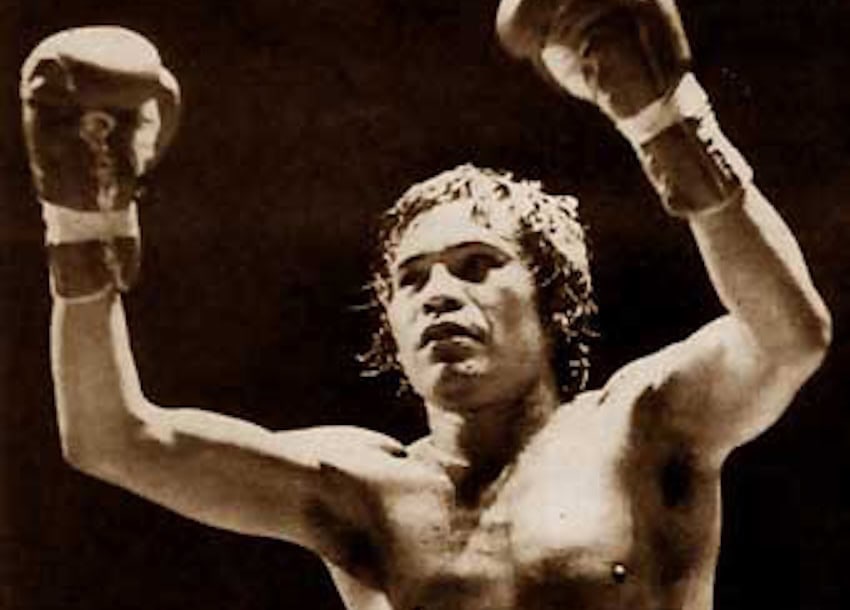
Rubén “El Púas” Olivares (UNAM)
The second Golden Age of Mexican boxing extended from the late 1960s to the early 1980s. Mexican boxing’s latest glorious epoch possessed a significant distinction from its first: though the nation once again boasted an assortment of world-class fighters, those fighters were now competing almost exclusively in the United States.
One such individual was Rubén “El Púas” Olivares. The four-time, two-weight world champion was beloved in Mexico, both for his aggressive and entertaining fighting style and the boisterous persona he projected outside of the ring, Notably, Olivares was equally popular in the more lucrative market north of the border, where he made millions fighting the most significant bouts of his career in Los Angeles and was outdrawn in attendances only by Muhammad Ali.
Nonetheless, Mexico gained greater significance in the sport on a global level, as evidenced by the 1968 rebirth of the World Boxing Council (WBC). Initially founded at a 1963 convention in Mexico City — in part to protect Mexican boxers from increasingly venal managers and promoters in the U.S. — the organization was resurrected to challenge the US-centric power structure of the World Boxing Association. The WBC was established by representatives from Europe, Latin America and Asia and expressed an institutional shift in the international regulation of boxing.
Nobody symbolized the increasingly internationalist element of Mexican boxing better than José “Mantequilla” Nápoles. Born and raised in Cuba, Nápoles left his home for Mexico City in 1962 after Cuban prime minister Fidel Castro banned professional boxing. Over a 17-year career, he held the world championship twice, while his proud and public adoption of Mexican culture won him the love of the nation. His assimilation and celebrity status even earned him a co-starring role in the movie”La Venganza De La Llorona” with Mexican lucha libre icon El Santo.
Mexican boxers take the world stage
Significantly, Olivares and Nápoles also embodied the start of an era in which Mexico often claimed multiple world champions at once. With the simultaneous advancements in satellite technology that enabled overseas contests to be televised at home, this sporting success elevated boxing’s popularity to new heights, paving the way for even bigger icons to follow.
Salvador Sánchez vs Wilfredo Gómez. Histórica pelea con la narración de LMB
Of those icons, one was undoubtedly immortalized too soon; Salvador Sánchez amassed a professional record of 44-1-1, holding the WBC Featherweight Championship from February 1980 to August 1982. Tragically, Sánchez did not relinquish his title in the ring, but after losing his life in a car accident less than three weeks after convincingly defeating subsequent hall-of-famer Azumah Nelson.
Aged just 23, Sánchez had already accomplished more than the majority of boxers privileged with much longer careers, earningthe unwavering love of fans across the globe. At the moment of his death he was still entering his prime, already world champion and considered one of the best pound-for-pound fighters in the sport. He was inducted into the International Boxing Hall of Fame in 1991. As a line from his biography on the Hall of Fame website evocatively says, “the boxing world will forever wonder: what if?”
While Sánchez was propelled into legend by his premature demise, one of his contemporaries built his reputation through longevity. Today, Julio César Chávez remains arguably the most iconic and beloved fighter in Mexico’s history. The three-division world champion made his professional debut just three days after Sánchez claimed the world featherweight crown, as he embarked upon a career that would span 25 years and take him to the highest echelons of the sport.
Chávez, known for his relentless attacking pressure, violent body punches and one of the best chins in the sport’s history, made it through his first 90 fights undefeated ,accruing 89 victories and one draw. A six-time world champion, he retired with an astounding 107 professional victories to his name. It was “El César” who made the weekends of Cinco de Mayo and Mexican Independence Day immutable dates in the global boxing calendar, and his 1993 title defense at Mexico City’s Estadio Azteca still holds the world record attendance for a ticketed boxing match.
On Feb. 21 of that year, 132,274 spectators crammed into the Azteca to witness Chávez’s fifth-round demolition of the American Greg Haugen. Millions more tuned in to watch the bout, and the rest of the Sonora native’s illustrious career, on television sets all over the world. Today Chávez is universally regarded as one of the greatest boxers of all time, and perhaps Mexico’s proudest sporting export.
Mexican boxing in the new millennium
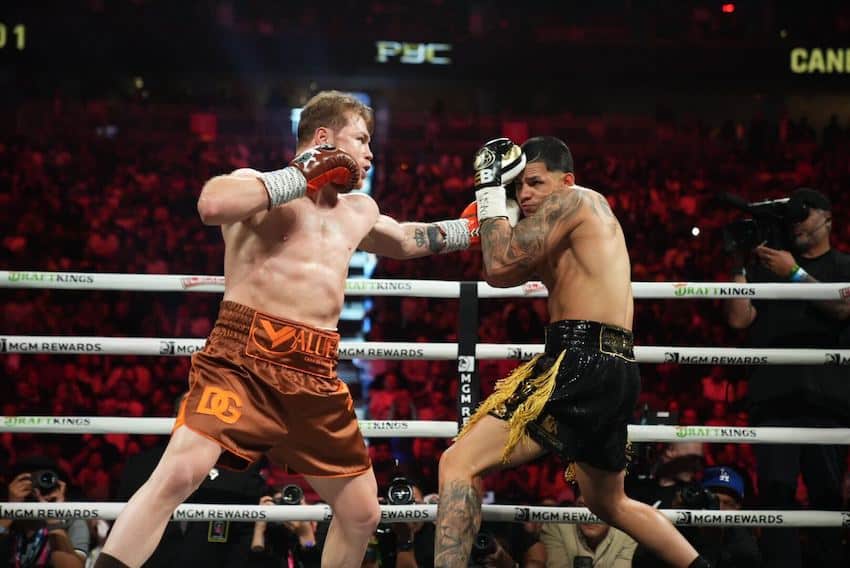
Mexico’s modern golden boy, Canelo Álvarez is nearing the end of his (@premierboxing/X)
Mexico continued to produce world-class fighters into the 2000s. Boxers like Juan Manuel Márquez, Israel Vázquez and Rafael Márquez were lauded as champions on the world stage. And the venomous rivalry between Tijuana’s Erik “El Terrible” Morales and Mexico City’s Marco Antonio Barrera culminated in an iconic trilogy of fights that epitomized the immaculate skill and barbarous appeal of Mexican boxing while becoming a symbolic battleground of regional and class warfare.
The Barrera-Morales trilogy preceded an arguably more compelling quartet of fights between Vázquez and Rafael Márquez— a series notable for claiming both the 2007 and 2008 Ring Magazine Fight of the Year awards. And the latter stages of all four fighters’ careers flowed almost seamlessly into the ascendancy of Saúl “Canelo” Álvarez.
History tells us that the next one is never far away.
Ajay Smith is a freelance journalist and ghostwriter from Manchester, England, now based in Mexico City. His areas of specialization include boxing, soccer, political history, and current affairs. Samples of his work can be found at ajaysmith.com/portfolio.
The verdant Pacific coast of Nayarit is home to several seafood delights — and a hot sauce legend. (Northgate Market)
The island of Mexcaltitán is a remarkable place — not only because it has been designated a pueblo mágico and nicknamed “La Venezia Mexicana” but also because it has been posited as one of the most legendary sites in Mexican history and the birthplace of one of the country’s signature culinary dishes, pescado zarandeado.
Nayarit’s Mexcalitán is considered by many to be the ancestral home of the Mexica, the so-called Aztecs who left their legendary homeland of Aztlán after the god Huitzilopochtli told them to seek out a new one. They were told the new location would be revealed via symbol: an eagle perched atop a nopal cactus with a serpent in its beak. This prophecy ultimately led them to Tenochtitlán, now Mexico City.
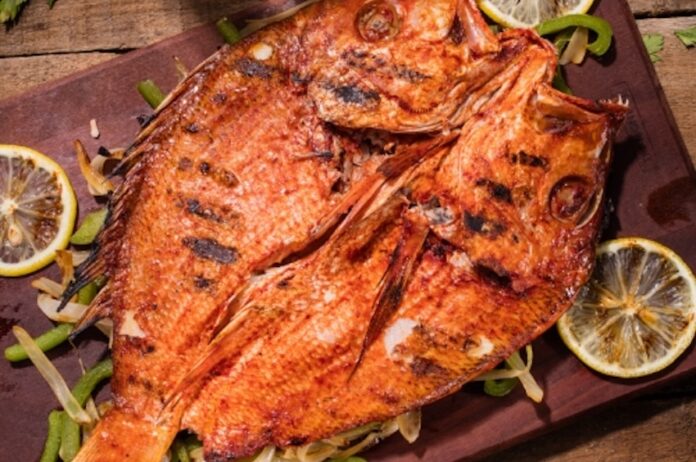
When it comes to Mexican fish, zarandeado is perhaps the most ubiquitous style of all. (TT Seng/Flickr)
As if that weren’t enough to distinguish Mexcaltitán as one of Mexico’s cultural landmarks, the island town is also believed to be the original home of pescado zarandeado, an iconic Pacific Coast seafood specialty.
The history of pescado zarandeado and how to make it
Pescado zarandeado has a 500-year history in Sinaloa and Nayarit, with pre-Hispanic roots. Indigenous peoples of the region, like the Totorame, were the progenitors of this cooking method, with Mexcaltitán identified as the first place where it flourished.
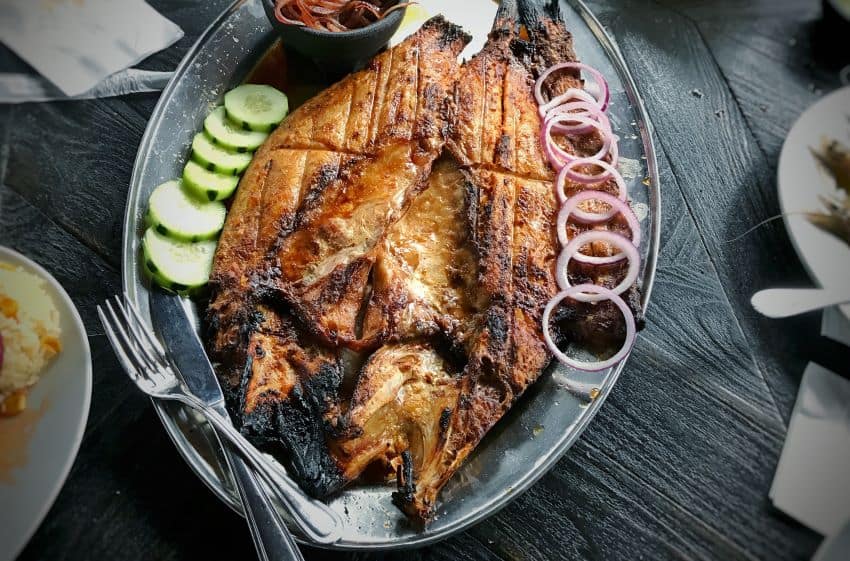
To make zarandeado, one needs a zaranda, or basket, to encase the butterflied fresh fish so that it won’t fall apart while being grilled. Indigenous chefs utilized mangrove wood for these baskets and as fuel for the fire. However, the quest to protect mangrove ecosystems has led to environmental regulations in recent decades. Thus, cooks now mostly use metal baskets to hold the fish, grilling them over charcoal.
Marinades have likewise evolved. Once fish like huachinango (red snapper), róbalo (sea bass), or pargo (Mexican barred snapper) have been hooked, they are traditionally marinated with ingredients such as achiote, garlic, lime juice, and salt and pepper. However, in modernity, other potential flavoring options have been added to this list, including mustard, mayonnaise, and salsa inglesa (Worcestershire sauce).
Grilling time varies according to the size of the fish, but it shouldn’t take longer than about 15 minutes. Once done, the fish is plated whole so that pieces can be flaked off with a fork and eaten. Cucumber, tomato, and onion are served with the fish, as are tortillas and a salsa picante (more on the brand to choose later).
Other iconic seafood dishes in Nayarit cuisine
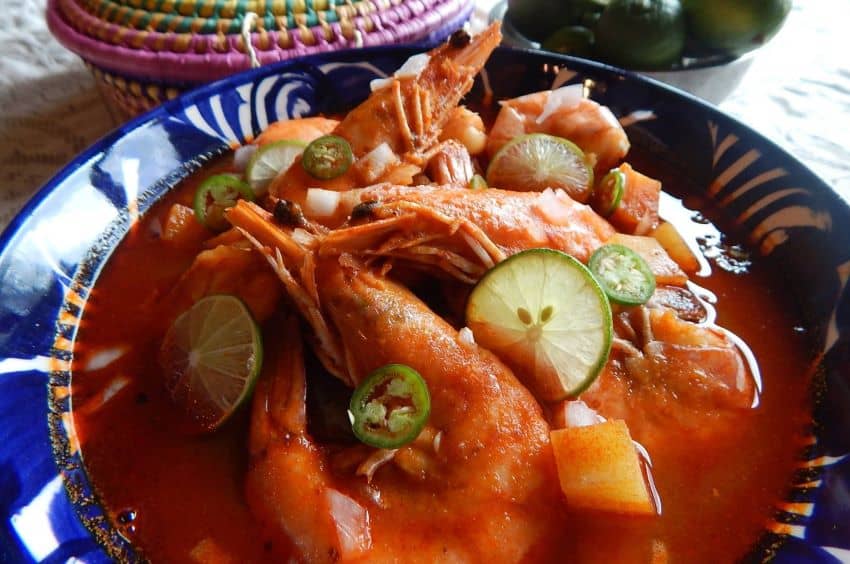
Tlaxtihuilli is a shrimp and chile seafood soup. (Canal 22/Facebook)
The Totorames are also credited with another seafood staple in Nayarit and Sinaloa: tlaxtihuilli. This traditional soup, also born in Mexcaltitán, is made with boiled shrimp but flavored with ingredients like guajillo and serrano peppers, cilantro, epazote, and lime juice. It’s given a thicker texture courtesy of nixtamalized corn dough (masa), which has led to its labeling as a kind of “shrimp atole.”
If it’s not already apparent, seafood is ubiquitous in Nayarit. Because of its over 180 miles of coastline, dishes like aguachile and ceviche form the backbone of Nayarit’s gastronomy, with shellfish such as shrimp and oysters and fish like sea bass, snapper, tuna, dorado, and wahoo caught and eaten in abundance.
Aguachile is a Sinaloan invention, so its glories will be extolled when that state is in the spotlight. But ceviche, chicharrón de pescado, and shrimp pozole all merit mentions as distinctive and delicious regional dishes. Ceviche estilo Nayarit, for example, is made with either minced fish or shrimp and is immediately identifiable via the inclusion of carrot along with the standard tomato, cucumber, and onion.
Of course, Nayarit’s beloved pozole doesn’t feature pork or chicken as the protein but shrimp. However, fish or shellfish like clams and octopus can also be used. As in all pozoles, hominy is a signature ingredient. But rather than using corn varieties like cacahuazintle, Nayaritas prefer regional heirloom maíz of the bofo or tabloncillo type.
Chicharrón in Mexico usually means pork rinds, but there is a seafood version in which fish species like cabrilla, róbalo, and tilapia are cut into strips and deep-fried after being coated with flour and perhaps even dipped in egg batter. Ideally, these delicacies are served in taco form with salsa and a squeeze of lime.
The story of Salsa Huichol
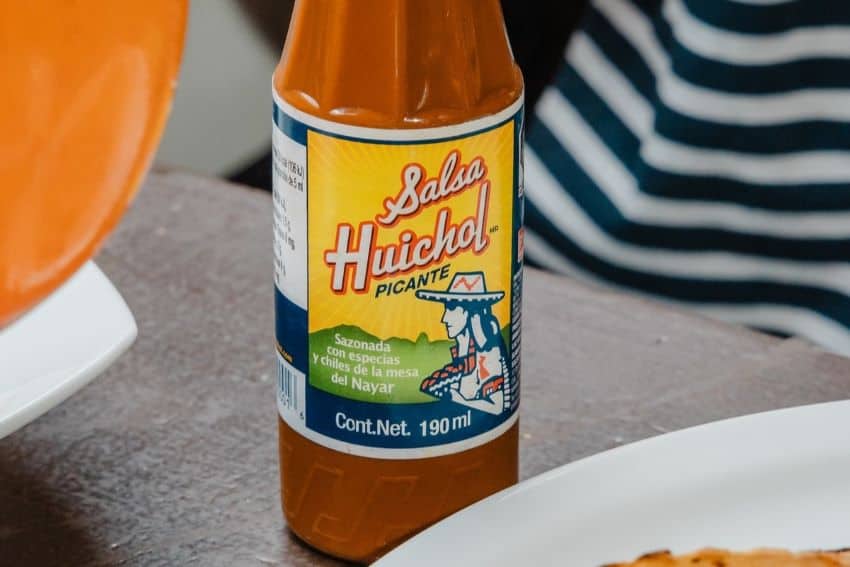
Salsa Huichol: The little Nayarita sauce with a big flavor. (Salsa Huichol/Facebook)
The one thing all Nayarita culinary delicacies have in common is that they taste better with a little Salsa Huichol added. The brand began from humble beginnings in Tepic in 1949. However, founder and former bricklayer Don Roberto López Flores managed to build an empire with the aid of a family recipe and 40 pesos of capital, with the first outlays for a hand grinder and a few kilos of cascabel chiles sourced from Indigenous Huichol growers from Mesa del Nayar, plus a hand capper to close the empty Pacífico beer bottles he was using for packaging.
Once the bottles were filled, he would pedal around on his bicycle to sell them to local bars and restaurants. It’s hard to imagine he ever had much difficulty. The sauce is beautifully textured, and its spiciness — courtesy of cascabel and habanero chiles — is balanced by several sophisticated flavors.
According to legend, he got the recipe from his great-grandmother. If so, she had exquisitely cosmopolitan tastes. Some ingredients are secret, but the ones we know include Brazilian pink pepper, Madagascar cloves, Iranian cumin, and an oregano variety from Durango, which is earthier, more pungent, and citrusy than the Mediterranean version. Iodized salt and vinegar also play significant roles.
“We can change the image on the box, the lid, the production technology, but the formula is untouchable!” Don Roberto told Animal Gourmet.
By the time he passed away in 2019 at the age of 86, he was a hot sauce legend as indelibly associated with Nayarit and the state’s beloved pescado zarandeado. Today, the company continues to sell its products around the globe, turning out over 100,000 bottles daily from its headquarters in Xalisco.
Smoke ‘em if you’ve got ‘em
Nayarit is also notably the largest tobacco-growing state in Mexico, producing a robust 84% of the national total. This includes tobacco rolled in some of the world’s most famous cigarette brands, like Marlboro. So, if you’re fond of the old saying, “después de un taco, un buen tabaco,” you can light one up after your next Nayarit-style feast.
Chris Sands is the Cabo San Lucas local expert for the USA Today travel website 10 Best, writer of Fodor’s Los Cabos travel guidebook and a contributor to numerous websites and publications, including Tasting Table, Marriott Bonvoy Traveler, Forbes Travel Guide, Porthole Cruise, Cabo Living and Mexico News Daily. His specialty is travel-related content and lifestyle features focused on food, wine and golf.
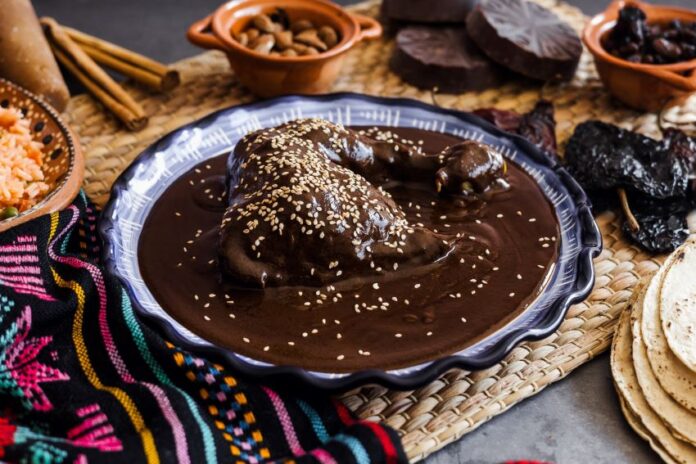
“Mulli,” from which the modern word “mole” is derived, means “sauce” in the ancient Nahuatl language. (Shutterstock)
Mulli in náhutal means “sauce” or “ground mixture”, and pre-Hispanic cultures were great at creating them. Driven by necessity and culinary creativity, they had an exceptional talent for combining different ingredients. Different types of mulli were created by grinding various ingredients such as chili peppers, tomatoes, pumpkin seeds, and herbs. Once cooked, they covered different meats like armadillo, duck, iguana, or even xoloitzcuintli (yep, the dog).
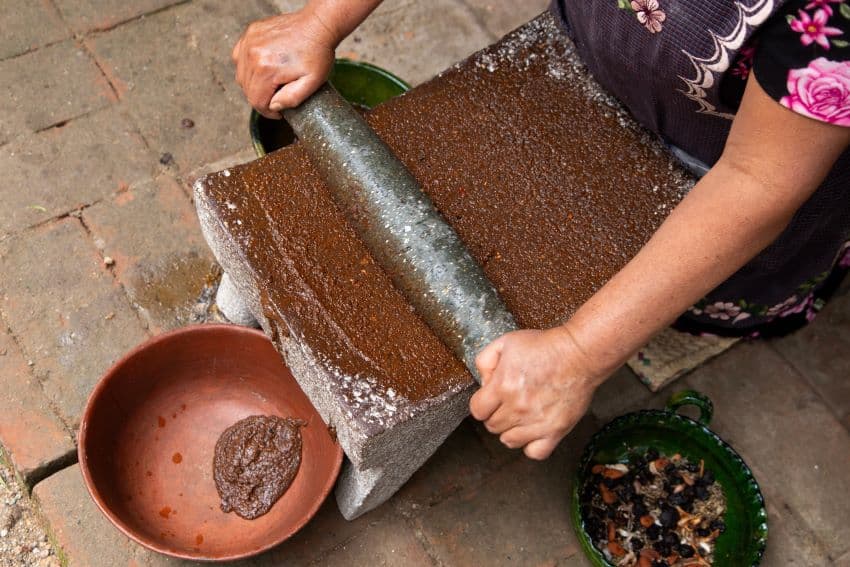
I want to turn your attention away from the dog, though, and back to the physical challenge that grinding mulli used to be. Long before the convenience of a Ninja blender, the tool of choice was a “metate,” a flat stone slab used with a smaller hand-held stone for grinding. Given the physical effort required to prepare mole, it’s no surprise that it was often made for religious ceremonies or extremely special festivities.
Mole in Spanish
Without the arrival of the Spanish, mole would have remained a much simpler combination of ingredients. However, due to the vast trade networks the Spanish had already established, many mole recipes became far more interesting.
During the 300 years that Mexico was a Spanish colony, mole — and Mexican cuisine as a whole — integrated new flavors from around the world. Ingredients such as garlic and pepper came from the Middle East, cilantro from the Caribbean, anise from Egypt, cinnamon from Sri Lanka, cloves from Indonesia, saffron from Spain, and sesame seeds from India met chilis, maize, tomatoes, and quelites. The flavors of Mexican cuisine, especially the flavor of mole, changed forever. Almost at the end of the colonial period, in 1817, chocolate was invited to this ever-growing list of mole ingredients.
300 Moles
Mole wouldn’t be a true Mexican food if there weren’t countless local variations. (Joyce García/Cuartoscuro)
“300 Moles” might sound like the title of a corny novel or a trendy restaurant in Mexico City that serves tiny portions, but it actually refers to the number of documented mole recipes we have today.
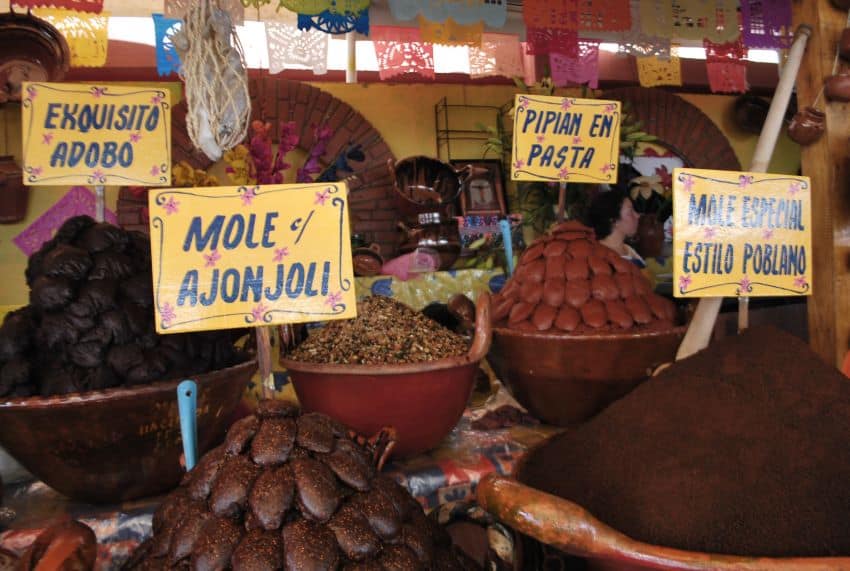
Moles can be classified into several types: light, brothy, thick, clemoles, manchamanteles — which is my personal favorite — and pipianes. Now, I know there are purists who argue that pipián isn’t really a mole, but I don’t feel qualified to settle that debate, so I’ll just leave it in this list.
Many of these recipes have intriguing origin legends that historical records have debunked.
Which mole should I try?
I would say all of them, but if I had to give you my list of must-try moles, these would be my top five:
1.Mole Poblano: This is one of the most famous varieties. Its ingredient list includes almonds, walnuts, plantains, chocolate, chile pasilla, chile ancho, chile mulato and chipotle. You can find it in any supermarket or local market. Don’t worry— despite its long list of ingredients, a well-made mole shouldn’t upset your stomach.
2. Manchamanteles: If I see this on a menu, I’m definitely ordering it. Originating from Puebla and Oaxaca, this mole was created for festive occasions. It offers a unique blend of sweet and savory flavors, featuring ingredients such as tomatoes, chile ancho, almonds, peanuts, raisins, plantains, pears, apples, pineapple, peaches and sweet potatoes.
3. Mole de Olla: Typical of Hidalgo, Tlaxcala, Puebla and Mexico City, mole de olla is perfect for cold weather. This means, of course, that Mexican moms love to serve a steaming bowl of it on the hottest summer days. This dish is more of a soup than a sauce and is 100% Mexican. Its ingredients include green beans, corn, chayote, xoconostle, squash, potatoes, dried chili peppers and epazote.
4. Mole Negro: I have no concrete evidence, but I firmly believe that visiting Mexico and not trying mole negro — Oaxacan mole — is a crime. This mole is the most complex variety, made with burnt tortillas and a combination of chilies, including chilhuacle negro, chilhuacle rojo, chile mulato, chile pasilla oaxaqueño and chile pasilla de México. It also contains plantains, raisins, tomatoes, miltomate, almonds, peanuts, walnuts, pumpkin seeds, spices, chocolate and avocado leaves. It is undoubtedly one of the most flavorful moles in Mexico.
5. Pipián Verde: This dish was a favorite of Mexica nobility, and I could enjoy it every single day; perhaps I too am Mexica nobility. This mole is made from toasted pumpkin seeds, squash or chilacayote (a type of squash we will discuss in future articles), green tomatoes and either chile poblano or chile serrano. The additional ingredients can vary by region, town and even household. Eating green mole is a luxurious experience and an absolute must-try.
A dish that defines Mexico
Friends, mole is more than just a dish — it’s an experience. I might be exaggerating, but I truly believe that mole reflects who we are as Mexicans: a complex mix of many elements sourced from both near and far. Making mole is an act of love; it requires a laborious effort to please those we care about most. We celebrate the living with mole and honor our ancestors with it on Día de Muertos.
Mole, much like Mexico itself, is something that should be experienced at least once in a lifetime.
Have you tried any mole? Which one is your favorite or the weirdest?
María Meléndez is a Mexico City food blogger and influencer.
April beckons starlight camping, sailing and more. (Popol Vuh)
Scavenger hunts, sexy yacht parties and International Film Festivals beckon travelers and residents of the Riviera Maya because as the weather warms up, so do the activities this April. Throw in some wine tastings and a full moon ceremony for some indulgence and you’ll soon find that what’s on this month in the Riviera Maya and Yucatán state in April is nothing short of magnificent.
Sip & Sail Sundaze Cruise
(Sip and Sail Sundaze)
For this Sunday Funday booze cruise, enjoy a welcome punch, great food (with veggie options), and an open bar. Singles or groups are welcome to enjoy a karaoke hour, fun games, and water activities. Set sail with a mix of R&B, Hip Hop, Soca, 90s and Afrobeat to set the mood.
Date: 6 April, 10a.m. – 1p.m. Location: Marina Puerto Aventuras, Puerto Aventuras. Cost: from US $39 and up when including transport.
Lunada at Cenote Popul Vuh
(Popol Vuh)
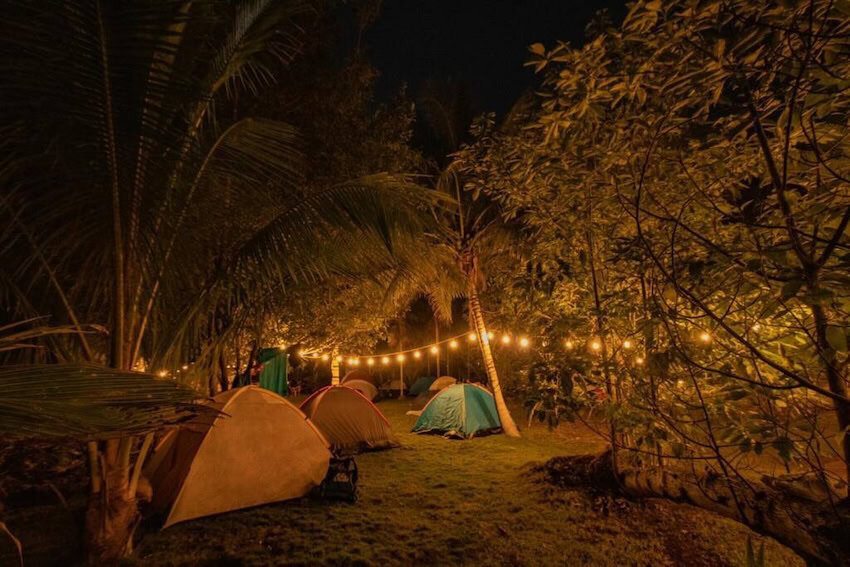
Grab your tent and head to the beautiful Cenote Popul Vuh. Camp under the stars and listen to live music with a complimentary drink while sitting by the campfire. All the while, get up the courage to try the zipline or to take the Mayan Sacrifice Jump! Do you dare?
There’s restrooms and showers, grills to cook on, and lifejackets provided. All you need is your food and drink and of course, your tent.
Full Moon Ceremony with cacao, ecstatic dance and sound bath
(Eventbrite)
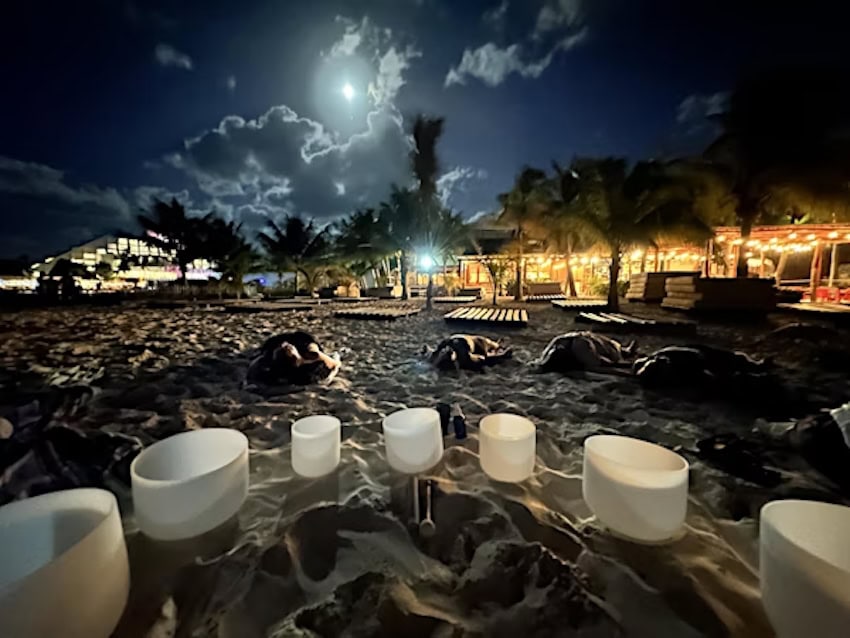
Isla Mujeres is the perfect place for a full moon ceremony. Commune with the island’s goddess Ixchel, goddess of the moon, as the sun sets and the moon rises. Release what no longer serves you. The event is run by a Reiki Master and Yoga Instructor who invites local healers, light workers, musicians, and artists to craft a unique journey on the shores of this beautiful island.
Date: 13 April Location: Playa Norte, Isla Mujeres Cost: 400 pesos, $25 US suggested donation.
Farm to Table Experience
(TripAdvisor)
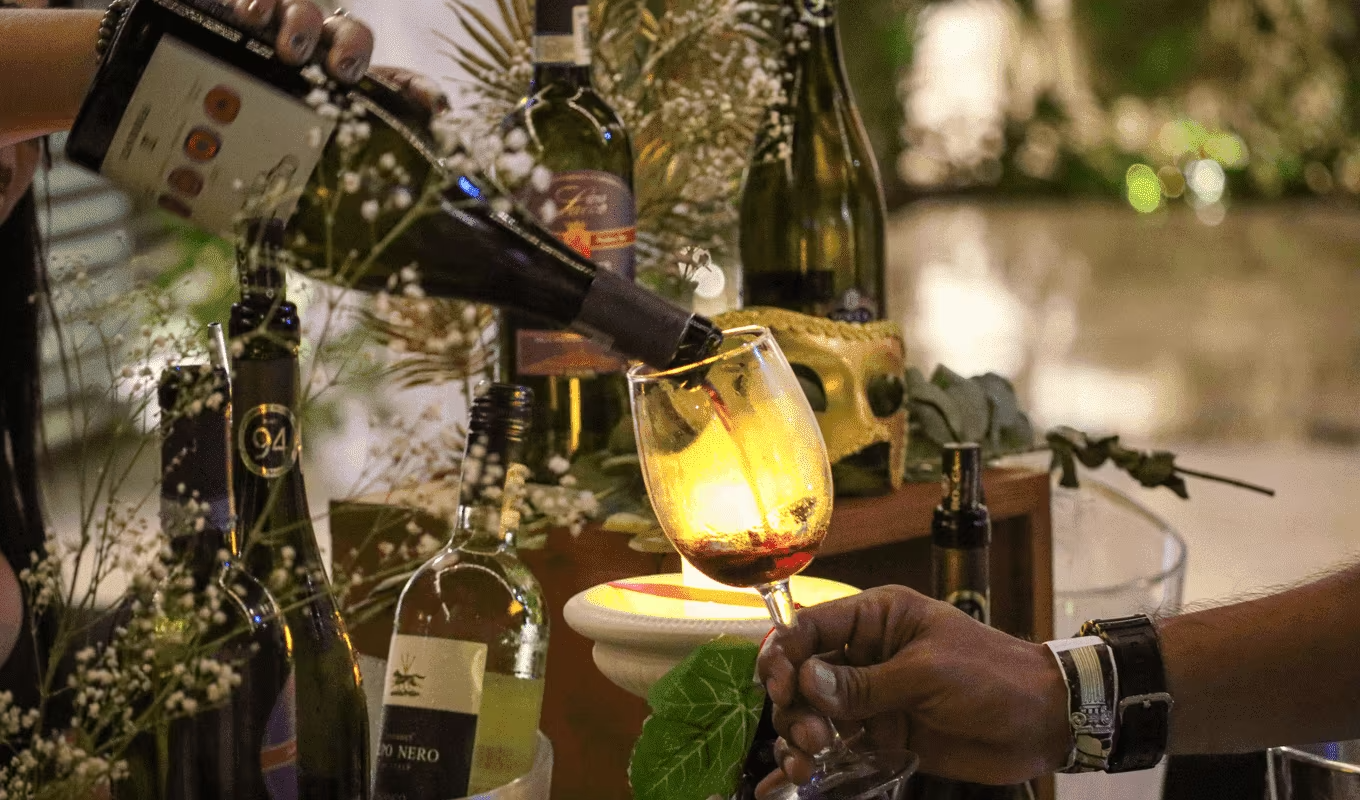
Thankfully, transport is included so you can really enjoy this gastronomical delight — a six-course meal with wine and cocktail pairings that’s more than just a luxurious foodie experience. Explore the farm, walk through the Mayan jungle, and learn about local wildlife. And don’t forget your swimmers, there’s a pool filled with cenote water to relax and heal in as well.
Date: 15 April, 12 p.m. – 7 p.m. Location: Meet for pick up at El Pirata Restaurant, Puerto Morelos Cost: $149
Harmonic Flow Aquatic Healing Arts
(Harmonic Flow/Facebook)
An aquatic experience like no other, Harmonic Flow’s instructor Damla Yaku is visiting Tulum. This unique experience blends music, dance, meditation, massage, and stretching movements to create deep relaxation and transformation. Held in a private lagoon and rooted in the wisdom of water, it helps guide you into stillness, fluidity, and dynamic movement.
Date: 19 April, 6pm to 11pm Location: The Fives Downton, 10 Norte Ave, Playa del Carmen Cost: Presale 1,800 pesos
Tulum Salsa Lovers meet up and dance class
(Salsa Lovers Worldwide)
Salsa lovers worldwide can go out dancing in Tulum. You’ll meet up with your host in the center of town, along with a group of other Latin dance fans to make friends and party with. Your host will teach you some moves, including salsa, bachata, hip-hop, and reggaeton. Dancers of all levels can learn something new and get lost in the music.
Date: 23 April Location: Muelle Constituyentes, Playa del Carmen. Cost: 400 pesos
Scavenger Hunt
(Natalie/Unsplash)
Grab friends, family, and loved ones to explore San Miguel de Cozumel on a scavenger hunt. Suitable for every age, fitness level and timeframe. It’s a self-guided tour, so start when you want and take as long as you want. The scavenger hunt is also a fun way to learn the history, culture, see sights, and get to know this Mexican Caribbean island’s treasures.
Date: 27 April (choose your day) Location: San Miguel de Cozumel, Cozumel Island. Cost: US $12.99.
Mexico Correspondent for International Living, Bel is an experienced writer, author, photographer and videographer with 500+ articles published both in print and across digital platforms. Living in the Mexican Caribbean for over 7 years now she’s in love with Mexico and has no plans to go anywhere anytime soon.
It's the coolest spot in the Baja California peninsula, and it's got plenty to do this month. (Miikka Luotio/Unsplash)
The biggest seasonal attraction in Los Cabos (literally, since it involves watching whales) ends on April 15. But event-wise, the month still has plenty to offer for locals and visitors, from culinary and cultural to-dos to music concerts and off-road racing.
San José del Cabo Art Walk
(María Ruiz)
As always during the high tourist season, San José del Cabo’s vibrant Art District takes center stage each Thursday evening from 5 to 9 p.m. Residents and visitors alike are invited to stroll its cobblestone streets and peruse the many eclectic fine arts galleries. Nearby bars and restaurants, many of which are excellent, are an added benefit since the event finishes around dinnertime.
Dates: April 3, 10, 17, 24
Location: Gallery District, San José del Cabo
Cost: Free
Mexican spirits class at The Woods Cabo
(The Woods Cabo)
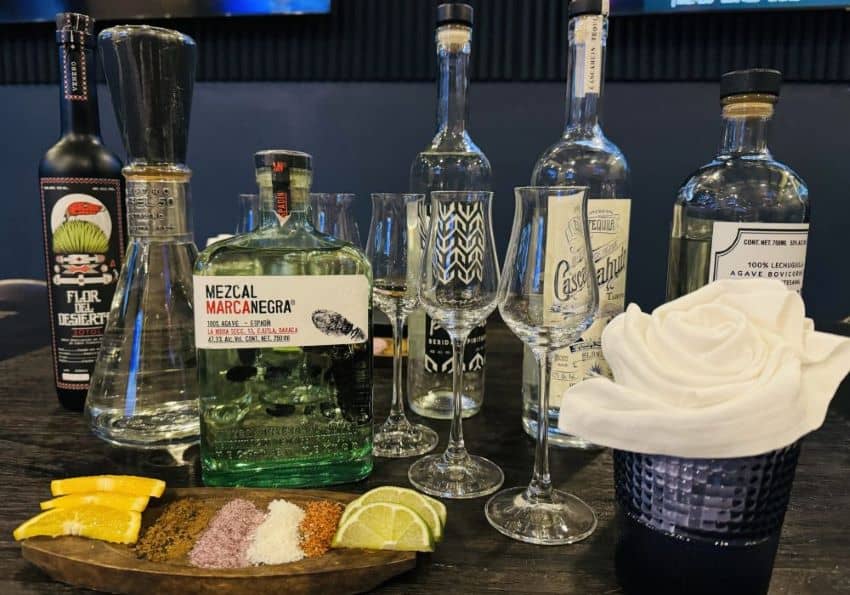
Golf legend Tiger Woods probably won’t be on hand to teach you the ins and outs of premium Mexican spirits. However, the acclaimed chef of his local restaurant, Larbi Dahrouch, will provide canapés to snack on as you sip top-shelf offerings from iconic domestic liquor brands during this weekly event on the Pacific coast of Cabo San Lucas.
Dates: April 4, 11, 18, 25
Location: Diamante Blvd. Cabo San Lucas
Cost: US $75 per person
Venus’s Voyage: Radiant Rebirth Retreat at Viceroy Los Cabos
(Radiant Rebirth/Facebook)
The host of this female-friendly holistic wellness retreat will focus on the pillars of identity, intuition, longing and inner peace in service of a transformational experience. Guests can expect luxury, too, given the stunningly designed and situated Viceroy resort in San José del Cabo boasts pampering accommodations and amenities such as spa treatments. Cooking, salsa dancing and yoga classes are also on the itinerary.
Dates: April 7 to 13
Location: Viceroy Los Cabos, Paseo Malecón San José, Zona Hotelera, San José del Cabo
During Semana Santa, the Catholic Holy Week between Palm Sunday and Easter, many Mexican families travel en masse to beachfront locales on the Atlantic and Pacific Coasts, including Los Cabos. Important things to note about Semana Santa for U.S. and Canadian travelers include the week-long closure of most banks and virtually all government offices, plus increased competition for hotel rooms.
Dates: April 13 to 20
Location: Throughout Mexico
Cost: N/A
DJ Escape 2 Cabo
(Whole Tel Events)
Whole-Tel, a boutique hotel in Cabo San Lucas, is bringing the beats in April with four days of events featuring visiting DJs pumping techno and house beats. Events range from late-night round table DJ sessions and a DJ takeover at a local club to an Official(ish) 4/20 Celebration. All-inclusive food and drinks are included in the package, as are activity outings like a day at Médano Beach with private cabanas and a catamaran cruise to Land’s End.
Dates: April 17 to 21
Location: Sunset District, Libertad 432, Cabo San Lucas
Cost: 3,500 to 4,800 pesos, depending upon room preference
Easter Dinner at Don Manuel’s at the Waldorf Astoria Los Cabos Pedregal
(Visit Los Cabos)
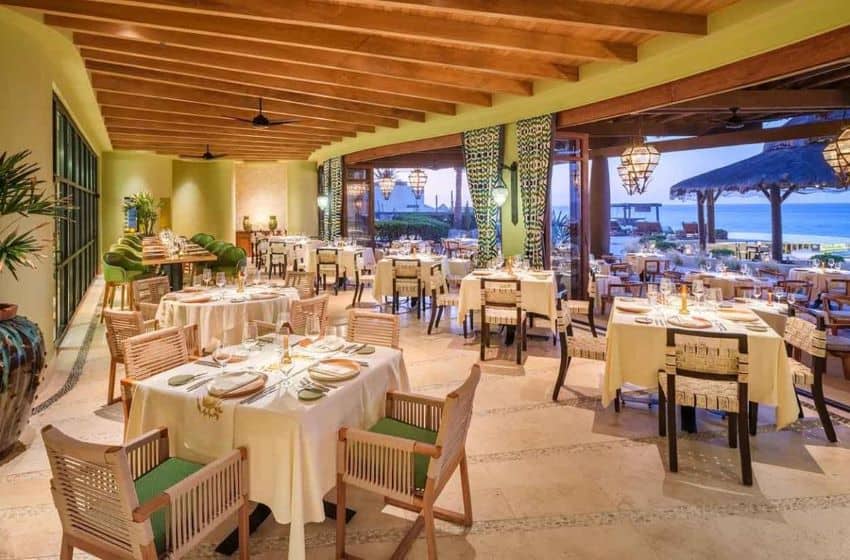
Hungry for a traditional dinner in Los Cabos to celebrate the Christian holiday? A visit to Waldorf Astoria Los Cabos Pedregal offers an opportunity to see the longest privately built tunnel in Mexico and enjoy a family-friendly repast in one of the region’s premier dining spots, courtesy of à la carte menu items and seasonal and holiday-specific specials.
Dates: April 20
Location: Camino del Mar 1, Pedregal, Cabo San Lucas
Cost: Dependent upon the food and drink items ordered
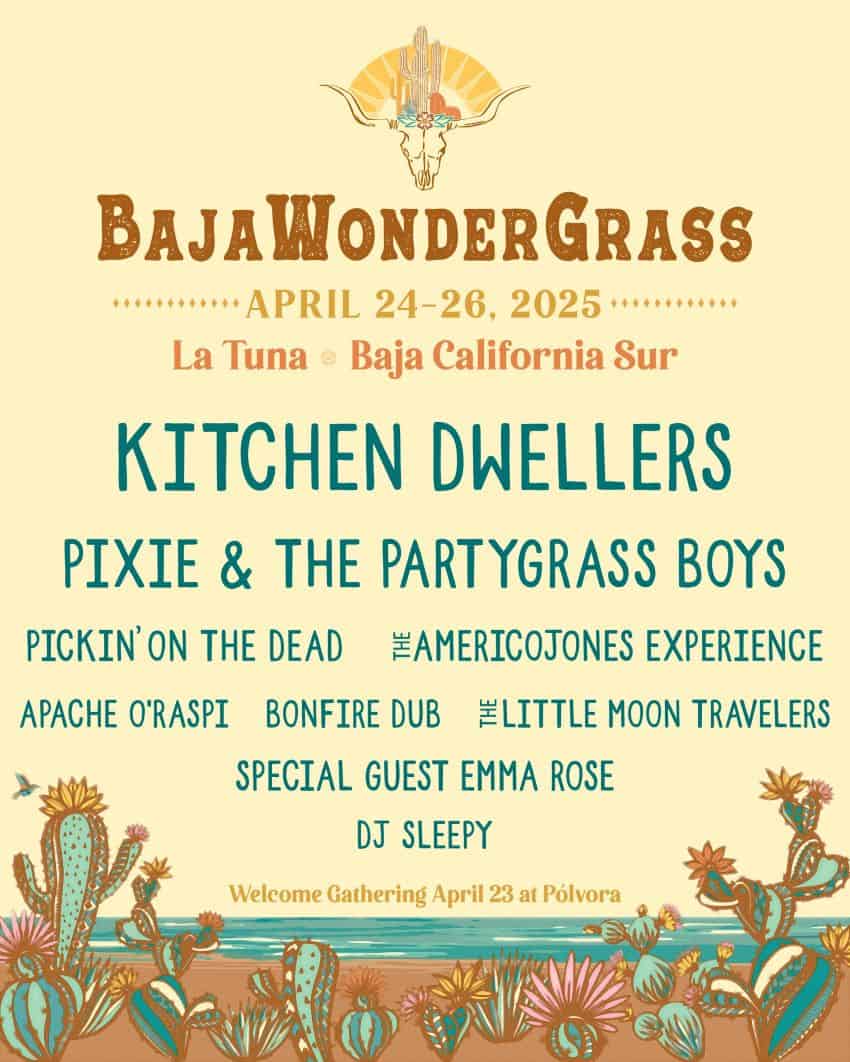
BajaWonderGrass
(BajaWoderGrass)
If you’re a fan of WinterWonderGrass or just appreciate beautiful Baja California Sur beachfront scenery, this multi-day music festival from the same organizers should be highlighted on your calendar. Following a welcoming gathering at Pólvora on the 23rd, the festivities will kick off with Kitchen Dwellers, Lindsay Lou, Pixie & the Partygrass Boys and others at the La Tuna restaurant and beach bar overlooking the Sea of Cortés.
Dates: April 23 to 26
Location: La Tuna, El Sargento, BCS
Cost: US $25 for the welcome gathering, $289 for a three-day pass
NORRA MEXICAN 1000 2021 TECH DAY 2 / Revisión Mecánica Día 2
Back when the legendary Baja 1000 was inaugurated in 1967, it was organized not by SCORE, as it is today, but by the National Off-Road Racing Association (NORRA). NORRA returned to action in 2010 when it kicked off the first Mexican 1000, a fun, vintage-style rally race meant to evoke the flavor of the early Baja 1000s. The race starts in Ensenada and finishes in San José del Cabo with a festive after-party and awards ceremony.
Dates: April 24 to May 2
Location: Ensenada to San José del Cabo
Cost: Registration costs US $2,967 to $6,267, depending upon vehicle class
January through March is whale watching season in Baja California Sur. These are the best spots to get a glimpse of them! (Baja Expeditions)
Only 10 days remain in April before activities companies around Los Cabos shutter whale-watching tours until next December. Whale numbers are typically lower by this point of the season, but there are still opportunities to see humpbacks, gray whales, and other massive cetaceans.
Dates: April 1 to 15
Location: Throughout Los Cabos
Cost: Varies according to the tour operator
Chris Sands is the Cabo San Lucas local expert for the USA Today travel website 10 Best, writer of Fodor’s Los Cabos travel guidebook and a contributor to numerous websites and publications, including Tasting Table, Marriott Bonvoy Traveler, Forbes Travel Guide, Porthole Cruise, Cabo Living and Mexico News Daily. His specialty is travel-related content and lifestyle features focused on food, wine and golf.