Agustín Barrios Gómez is a founding partner of International Capital Partners, a former Mexican Congressman, and a member of the Mexican Council on Foreign Relations (COMEXI).
I was recently asked by two large companies with manufacturing operations in Mexico whether I thought that Mexico would be the victim of the United States’ “beggar thy neighbor” protectionism.
Everyone seems to be playing a game of “will he, or won’t he,” which plays perfectly into a strategy that seeks to inject uncertainty into the trade relationship. Keeping everyone guessing increases the cost of doing business with Mexico (and Canada and China, etc.), which is what the current U.S. president wants.
Trump remains committed to imposing 25% tariffs on Mexican exports to the United States — at least for today. (X)
According to the Wall Street Journal, “some companies, including networking-equipment company Cisco Systems, fashion company Tapestry and clog and sandal company Crocs, have included the impact of tariffs in their latest guidance. Others, including Mexican-inspired restaurant company Chipotle Mexican Grill, consumer-products maker Clorox and cereal maker WK Kellogg have excluded it.”
My advice is to ignore the tariffs. If they do come to pass, the market will be shocked out of its complacency and will correct on three fronts.
First, the peso will devalue, thereby negating much of the impact of the increased costs.
Second, the stock market will send a signal that it never expected the government to shoot American competitiveness in the foot.
Third, the move will immediately impact inflationary expectations (which are already at their highest level since the pandemic), thereby making the cost of borrowing more expensive. That means higher costs for mortgages and higher costs for the federal government to service its gargantuan debt. Faced with this reality, it is unlikely that tariffs, if imposed, will last.
In terms of actual economic impact on Mexican-based manufacturers, companies will have part of their cost absorbed by devaluation and the rest will be borne by their clients and, ultimately, the consumer. When there is full employment, companies have pricing power, which the current crop of CEOs remembers well, having raised prices during the supply chain crisis of the pandemic. Even companies that weren’t affected took advantage of the opportunity to both make their wares more expensive and to impose “shrinkflation” on their customers (i.e. you now get 8 units for the price of 10).
But a strange fetish for tariffs has captured the imagination of the man Americans elected to lead them. Ignoring the lessons of history, especially the Smoot-Hawley tariffs that plunged the U.S. into the Depression in the 1930s, President Trump thinks that Americans can somehow benefit from everything being more expensive and scarcer.
Reality will force the system to self-correct. In the meantime, the best advice is the old British admonition to “keep calm and carry on.”
Agustín Barrios Gómez is a founding partner of International Capital Partners, a former Mexican Congressman, and a member of the Mexican Council on Foreign Relations (COMEXI).
Drink, dance, cycle and contemplate art in Los Cabos this March. (El Squid Roe)
The largest monthlong event during March in Los Cabos is Spring Break, the annual migration of college students to bars and beaches mostly around Cabo San Lucas. Mango Deck on Playa El Médano is ground zero for those who want to witness this seasonal bacchanal — or avoid it.
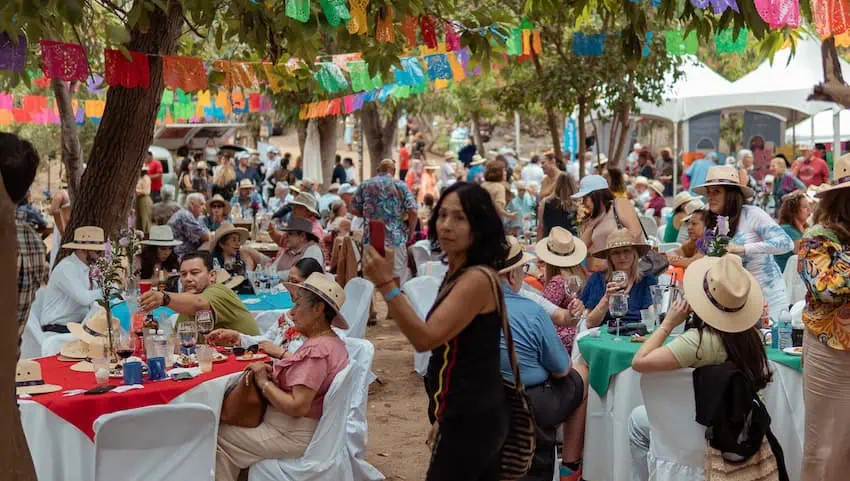
Events celebrating art, culture, and cuisine are also abundant this month in Los Cabos and take place at locations around the municipality.
Sabor a Cabo, Los Cabos’ largest food and wine festival, already took place in February 2025. However, the accompanying rural edition held annually to celebrate the municipality’s acclaimed farm-to-table scene and traditional regional culinary culture, is still yet to come.
Dates: March 2
Location: La Huerta Escondida, San José del Cabo
Cost: 1800 pesos for adults, 200 pesos for kids 6 to 12, and free for those younger
The historic Art District in San José del Cabo takes center stage each Thursday
evening from 5 pm to 9 pm during high tourist season — November through June — when residents and visitors alike are invited to stroll its cobblestone streets and peruse the many eclectic fine arts galleries. For an event within the event, check out acclaimed local artist Ivan Guaderrama’s interactive exhibits, which bring art to life in new and interesting ways (Thursdays, 5:30 – 9:30 p.m.).
Dates: March 6, 13, 20, 27
Location: Álvaro Obregón No. 20, Gallery District, San José del Cabo
The ingredients used by Los Cabos’ best chefs largely come from Miraflores, the municipality’s famed organic farming community. However, few tourists visit Miraflores. This festival is a great opportunity to do so, as it provides a fresh and delicious introduction to regional gastronomy and the flavors that make it so memorable.
What’s a Mexican vacation without mariachis? Local hotel Hacienda del Mar has ensured family-friendly mariachi fun for March with a themed fiesta featuring abundant food and drinks, and two hours of entertainment courtesy of Mexico’s most iconic musical style.
Dates: March 14
Location: Hacienda del Mar, Carretera Transpeninsular Km. 10.5, Tourist Corridor
Cost: 1090 pesos for adults, 590 for kids ages 5 to 12
The annual festival honoring San José del Cabo is always held in and around March 19, the feast day for its patron saint, although the name of the original mission in 1730 (San José del Cabo Añuití) included a nod to another patron, José de la Puente, the man who funded it. The weeklong celebration of the city’s rich history includes events both sacred (the mass in honor of St. Joseph) and secular (the crowing of a festival queen and food, drink, and music).
Dates: March 15 – 22
Location: Centered around Plaza Antonio Mijares, San José del Cabo
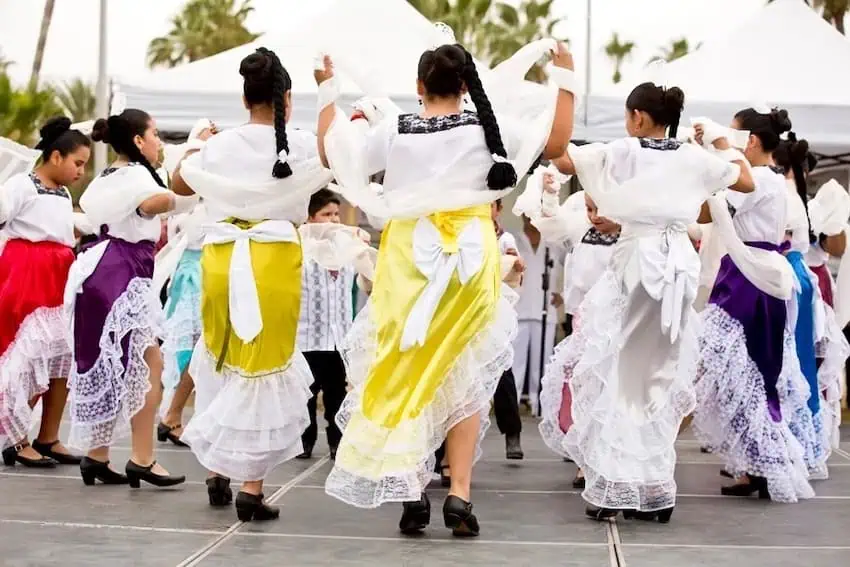
The 30th anniversary of this regional arts and culture extravaganza will be held in La Ribera instead of the traditional location at Hotel Palmas de Cortez in Los Barriles. However, as always, the festival will showcase with the work of regional artists, with food and drink courtesy of local restaurants, winemakers, and craft brewers, and folkloric Mexican dancing from dance troupes representing Los Cabos and La Paz.
Dates: March 16
Location: La Ribera Community Plaza, La Ribera, East Cape of Los Cabos
One of the can’t-miss events on the local calendar, this small mountain hamlet about 35 miles south of La Paz was once the richest town on the Baja California peninsula thanks to its rich mines (closed since the 1920s). Its always well-attended annual arts festival features music and folkloric dancing, arts and crafts, food vendors, and a chance to see local attractions like the Museo de la Música and the 35-meter smokestack “La Ramona” said to have been designed by Gustave Eiffel (yep, that Eiffel).
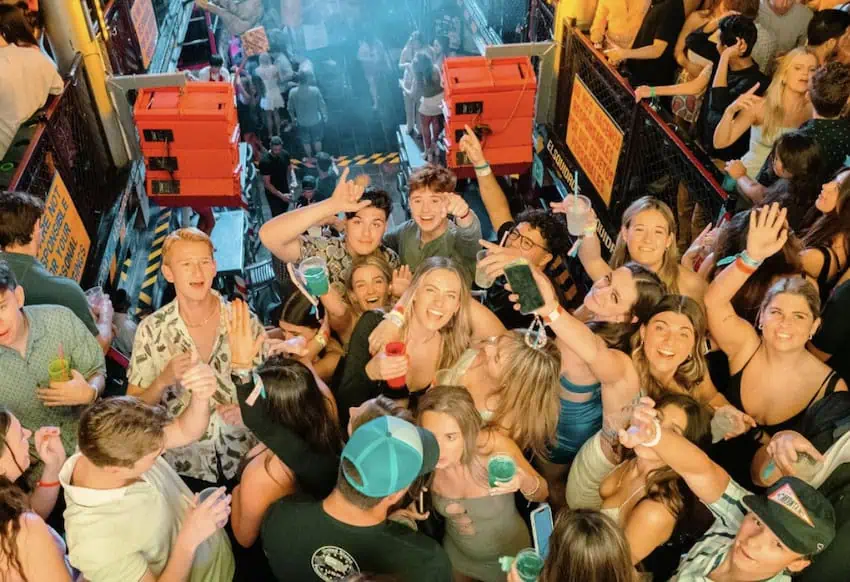
Don’t forget to pack your “kiss me, I’m Irish” shirt. St. Patrick’s Day, in Cabo San Lucas as in the U.S., is an occasion for festive fun, food and drinks, and a celebration of all things green. The biggest party is thrown by iconic local bar, El Squid Roe, complete with DJs to keep the music pumping. Downtown bar San Patricio Irish Pub is also worth a stop, even though the Guinness isn’t served on tap.
Dates: March 17
Location: El Squid Roe, Blvd. Lázaro Cárdenas 1112,Cabo San Lucas
Cost: US $103 for three hour open bar, plus giant cup and official t-shirt
If you’ve ever thought the Tour de France bicycle race would be even more scenic if it were held in La Paz, Baja California Sur’s capital city, now’s your chance to find out. Picturesque coastal routes covering 40, 73.8, and 126.2 kilometers (about 25, 46, and 78 miles, respectively) are open to entrants, with the start and finish line set on the city’s seaside malecón.
Dates: March 30
Location: Kiosko del Malecón, Paseo Álvaro Obregón, Zona Central, La Paz
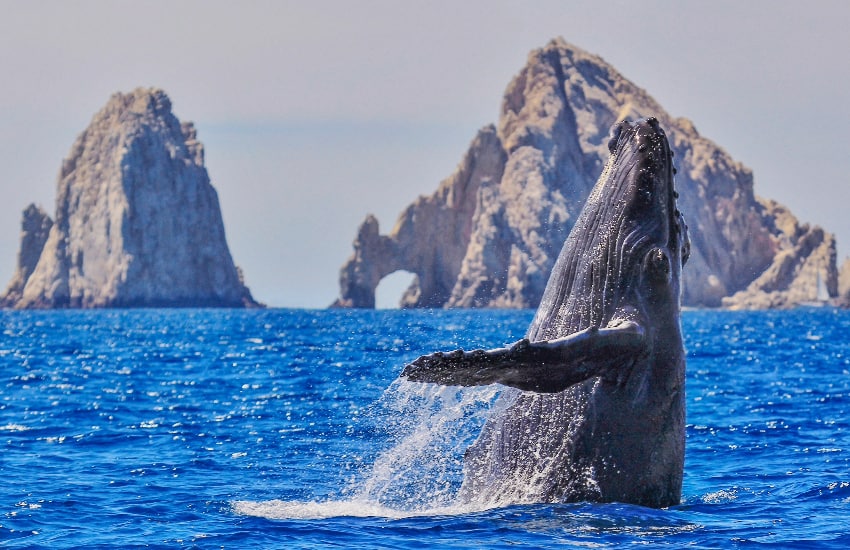
Whale watching season is rapidly drawing to a close, meaning there’s only a little more than a month left this spring to see some of the more than 5,000 blue, gray, humpback, and other whales that have migrated from their arctic feeding grounds to breed in the shallow water coves and inlets of beautiful Baja California Sur.
Dates: December 15 – April 15
Location: Sea of Cortés and Pacific Ocean
Cost: Free, with tours available at various price points
Chris Sands is the Cabo San Lucas local expert for the USA Today travel website 10 Best, writer of Fodor’s Los Cabos travel guidebook and a contributor to numerous websites and publications, including Tasting Table, Marriott Bonvoy Traveler, Forbes Travel Guide, Porthole Cruise, Cabo Living and Mexico News Daily. His specialty is travel-related content and lifestyle features focused on food, wine and golf.
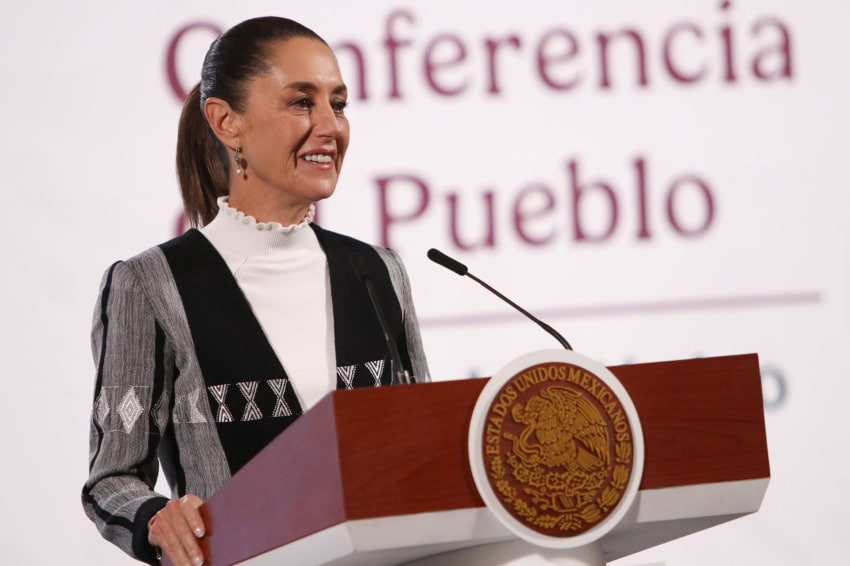
Mexico's President Claudia Sheinbaum reponds to reporters' questions at her daily press conference on Tuesday. (Gustavo Alberto/Cuartoscuro)
Mexico’s request for the extradition of alleged Sinaloa Cartel leader Ismael “El Mayo” Zambada from the United States and the Mexican government’s quest for a deal that staves off U.S. tariffs on Mexican exports were among the issues discussed at President Claudia Sheinbaum’s Tuesday morning press conference.
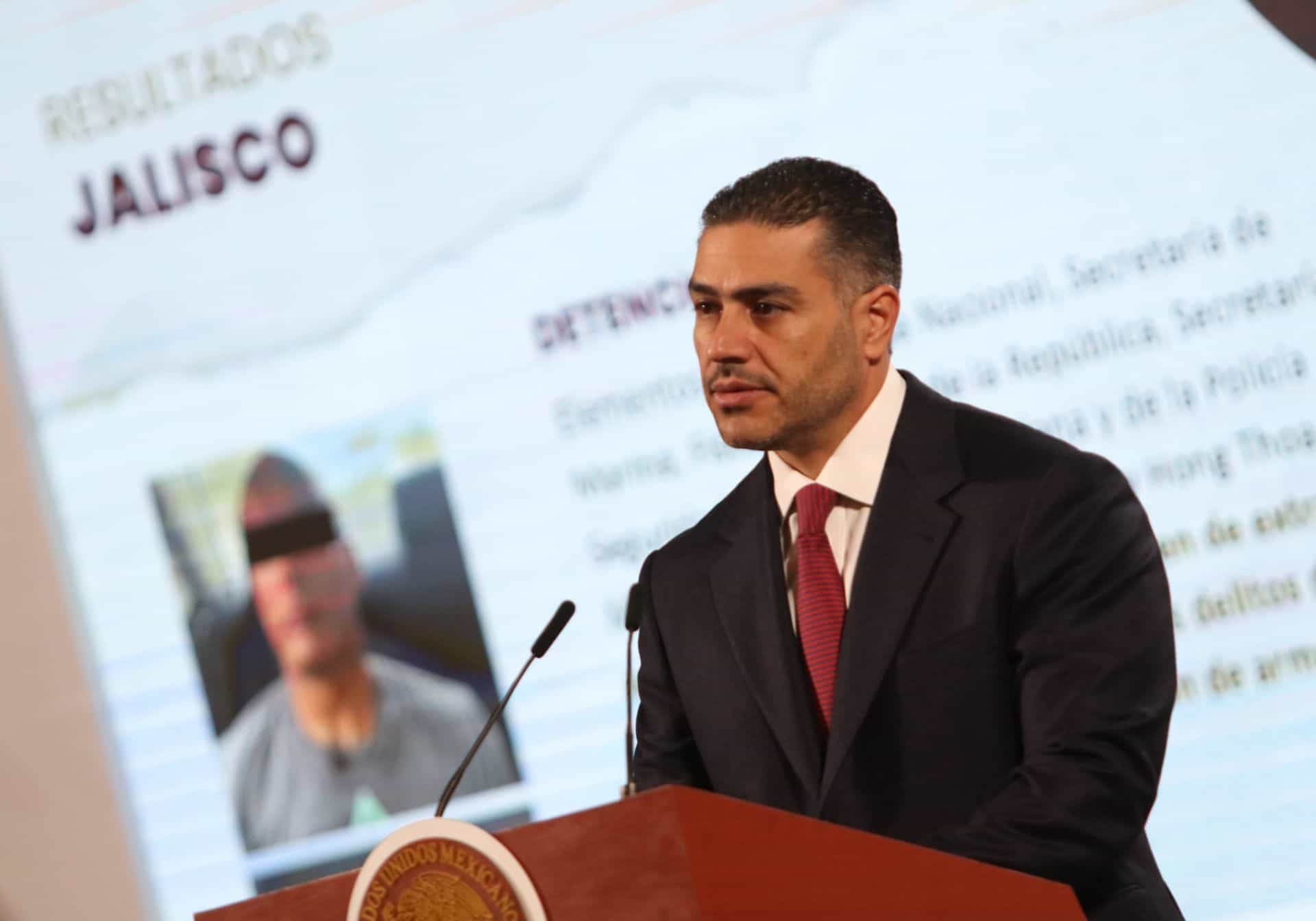
Security Minister Omar García Harfuch reported Tuesday that more than 13,000 people have been arrested for high-impact crimes since Claudia Sheinbaum took office in October. He also said that Mexico’s new northern border enforcement program has so far resulted in 54.9 kilograms of fentanyl and 1,200 illegal weapons being confiscated. (Gustavo Alberto/Cuartoscuro)
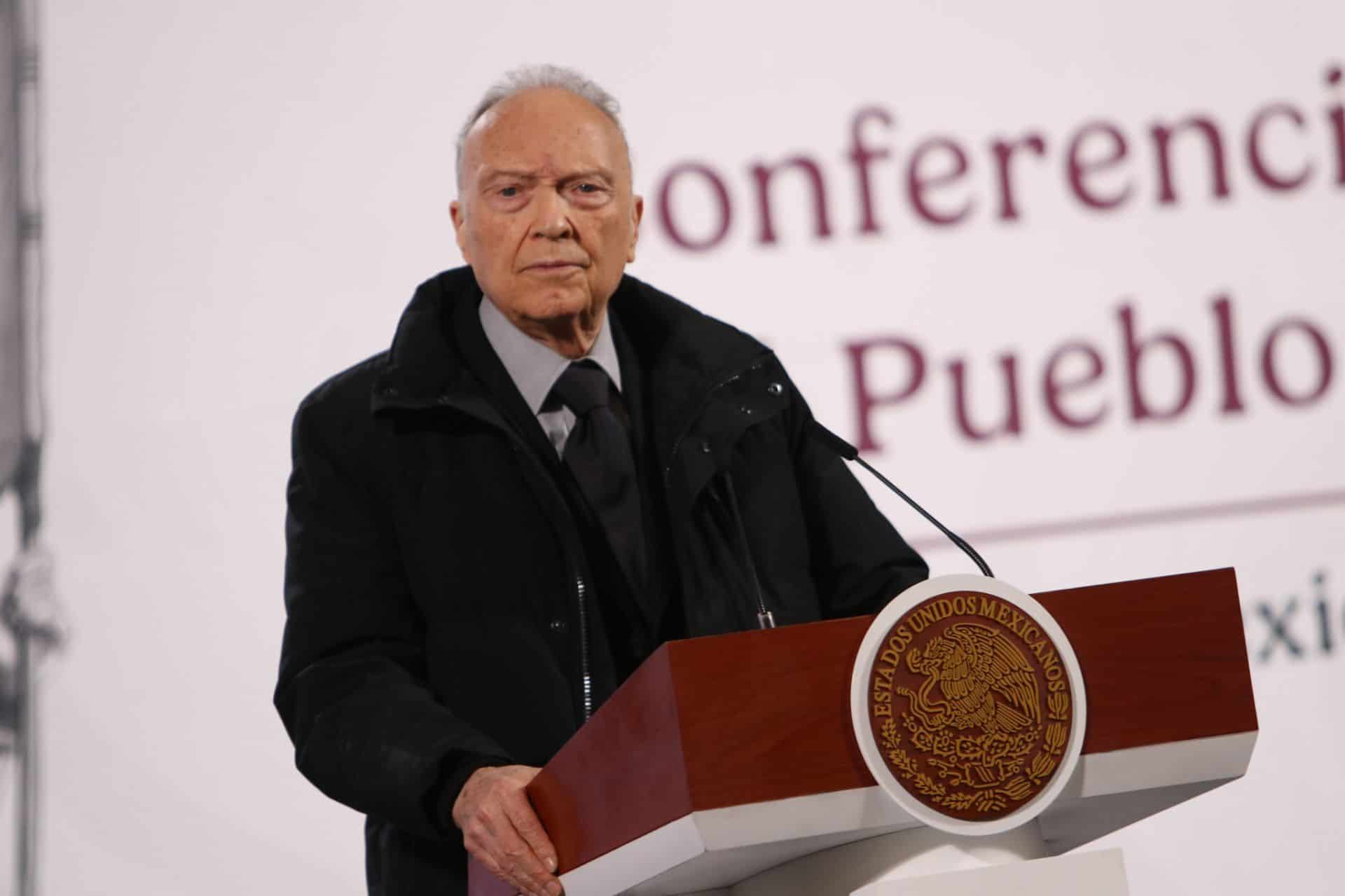
Attorney General: US hasn’t responded to Mexico’s extradition request
Gertz Manero said that his office requested Zambada’s extradition shortly after he was arrested by U.S. authorities upon arriving at a New Mexico airport on a private plane last July.
Given that there are three current warrants for Zambada’s arrest in Mexico, the Mexican government had an “obligation” to seek his extradition, Gertz said.
He said that the federal Attorney General’s Office (FGR) “insisted” on Zambada’s extradition on four occasions but received no response from the administration of former U.S. president Joe Biden.
Gertz’s remarks came four days after Sheinbaum confirmed that the Mexican Consulate in New York had received Zambada’s request for repatriation.
Reporters also asked federal Attorney General Alejandro Gertz Manero if the United States has been shown to have been involved in Zambada’s arrest. (Gustavo Alberto/Cuartoscuro)
El Mayo alleges he was kidnapped in Culiacán last July and forced onto a plane by another alleged Sinaloa Cartel leader, Joaquín Guzmán López, who also traveled to the United States and was arrested in New Mexico at the same time.
On Tuesday, Gertz noted that the FGR had opened an investigation into the crime of kidnapping in connection with Zambada’s departure from Mexico. He said Zambada left the country “against his will.”
No ‘direct proof’ of US involvement in Zambada’s removal from Mexico
“You have to review everything that President Trump says. … I always say you have to keep a cool head and not take isolated phrases [as gospel],” Sheinbaum said.
Sheinbaum noted that Trump also spoke about tariff “reciprocity” on Monday.
President Sheinbaum seems to be pinning her hopes for Mexico avoiding tariffs on having a direct discussion with U.S. President Donald Trump to “close the agreement.” (Gustavo Alberto/Cuartoscuro)
“What he states is that … if United States products upon entering Europe face a tax, a tariff, then, he says, ‘in reciprocity, the United States is going to impose a tariff’ [on goods from Europe],” she said, offering one example of Trump’s “Fair and Reciprocal Plan.”
“We don’t have any tariffs between the United States and Mexico. So if we go on the reciprocity issue, we’ll remain as we are now,” she said.
At a joint press conference with French President Emmanuel Macron on Monday, Trump said that “all we want is reciprocal.”
“We want reciprocity, we want to have the same. So, if somebody charges us, we charge them. It’s very simple,” he said.
However, Trump also said that the tariffs on Mexico and Canada “will go forward.”
“We are continuing to talk to them about the issue of security and on the issue of trade we have to close the agreement,” she said, adding that she hoped to speak directly with Trump to seal the deal, possibly later in the week.
By Mexico News Daily chief staff writer Peter Davies (peter.davies@mexiconewsdaily.com)
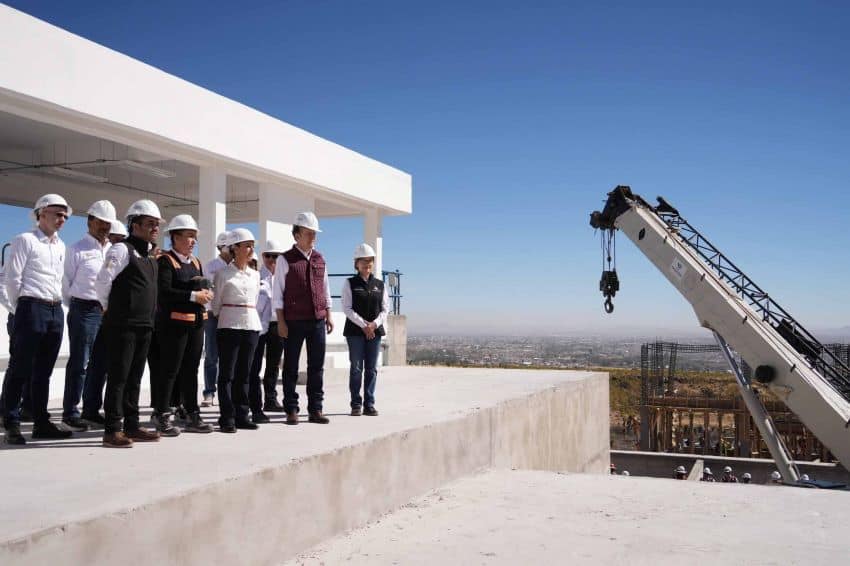
The plant will provide badly needed potable water to Durango city, which suffers from water shortages and contaminated water due to overexploitation of aquifers. (Presidencia/Cuartoscuro)
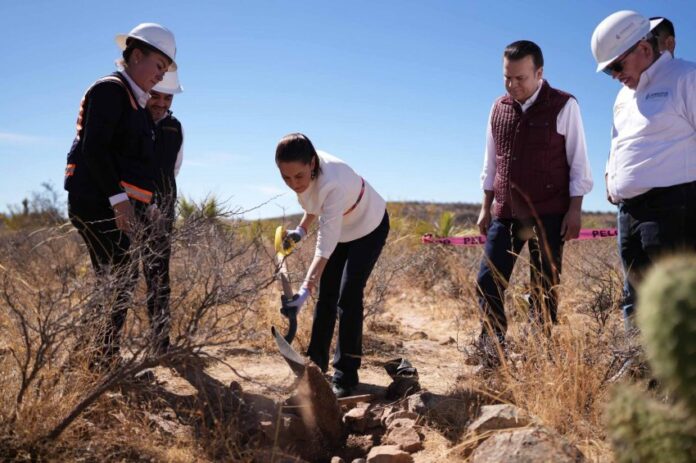
President Claudia Sheinbaum on Saturday visited Durango’s new Guadalupe Victoria water treatment plant construction site. The plant will provide clean water to Durango city in the northern Mexican state of Durango. The facility is set to begin operations on March 25.
Sheinbaum was mainly in Durango to launch the Mujeres Bienestar (Womens’ Well-Being) pension program for women between ages 60 and 64. During her visit, she announced new programs and investments for the state in water and roads and also a program to turn Durango into one of Mexico’s major grower of beans, as part of a food self-sufficiency initiative for the country.
Sheinbaum toured the plant on Saturday, while in Durango to launch the Mujeres Bienestar program in the state and announce other federal programs benefitting residents. (Presidencia/Cuartoscuro)
“We visited the construction site of the Guadalupe Victoria water treatment plant, which will provide quality water to the city of Durango. We announced that this year construction will begin on the El Tunal II dam to guarantee water of quality and quantity for the region,” Sheinbaum wrote on the X social media site.
The “Healthy Water for La Laguna” program was launched by former Mexican President Andrés Manuel López Obrador in a bid to deliver clean water, free of contaminants such as fluoride and arsenic, to people living in the Durango and Coahuila states. La Laguna is a metropolitan zone including the cities of Francisco I. Madero, Matamoros and Torreón in Coahuila and the cities of Gómez Palacios and Lerdo in Durango.
The program has been rolled out in four municipalities in Durango to date – Mapimí, Tlahualilo, Lerdo and Gómez Palacio, with more to follow in 2025.
The water treatment plant has “a very innovative technology, developed by [The National Water Commission] Conagua itself, which will allow the water that comes from the Guadalupe Victoria dam to pass through this water treatment plant and to reach the city of Durango,” said Sheinbaum in a video explaining the project.
This will also allow “the wells that are currently contaminated, mainly by fluoride, to stop being used and for there to be better quality water and more water” for that city, stated Sheinbaum.
The director of Conagua Efraín Morales and Durango’s governor Esteban Villegas accompanied the president at the Guadalupe Victoria site.
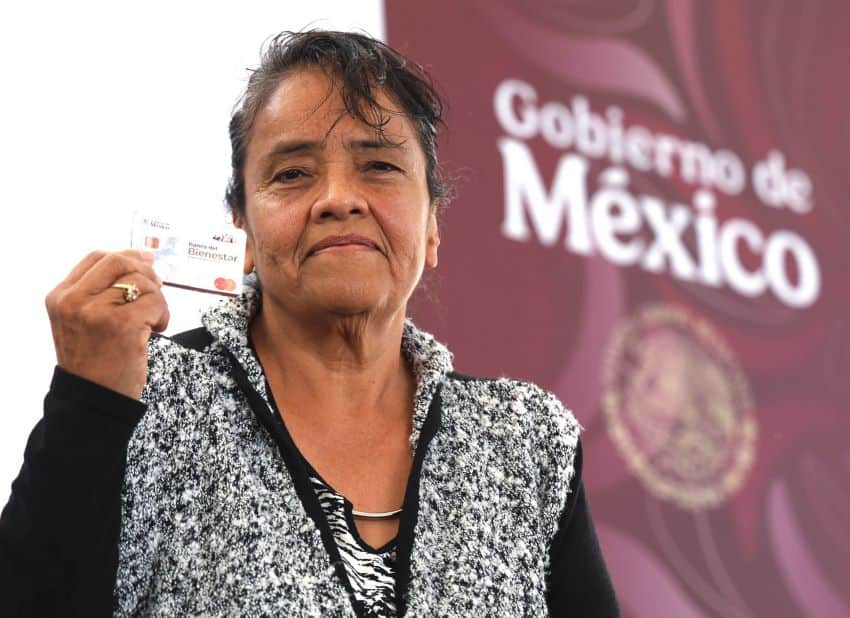
A Durango woman displays her new card for the Mujeres Bienestar program, which gives women just below Mexico’s retiremement age of 64 access to a pension.
During the visit, Morales said he expects the water treatment plant to supply over 200,000 inhabitants in Durango City with clean water. The program supports Sheinbaum’s government’s aim to improve access to water, he said.
The federal government has earmarked over 7.3 billion pesos to improve Durango’s water infrastructure during Sheinbaum’s six-year term. It will collaborate with the state government to carry out works in the 39 municipalities, prioritizing access to drinking water and flood prevention.
Morales stressed that 76% of Mexico’s water is currently destined for the agricultural sector. The government is also investing in an irrigation technology program aimed at producing more food with less water.
The Tunal II Dam
In addition to the Guadalupe Victoria facility, Sheinbaum and Morales discussed the development of the El Tunal II dam, which is part of the 2025 National Water Plan.
The dam will be built over three years and is expected to supply Durango with drinking water for the next 50 years.
The government will invest an estimated 4 billion pesos in the project, which is expected to help bolster Durango’s economy.
Capitalinos can chow down on burgers, cha-cha and come to terms with their own mortality in Mexico City this month. (Plan B)
Purple jacaranda blossoms bloom across Mexico City skies as the metropolis awakens from its winter slumber. March is nothing less than a burst of color and energy, with warm, sun-drenched days beckoning residents and visitors out of hibernation and into the capital’s vibrant atmosphere.
Whether you’re swaying to the rhythms of Mexican history at cultural festivals or savoring innovative takes on meat at local hotspots, March’s packed calendar of events promises a light-hearted and happy introduction to spring.
Malinche, the musical
MALINCHE MÉXICO, un espectáculo musical de Nacho Cano
Few women have made an impact on Mexican and world history like La Malinche, the Nahua woman who served as interpreter to Hernán Cortés. Now is the time to experience the magic of Nacho Cano’s captivating musical celebrating Malinche’s mark on Mexico’s development and its rich heritage. This family-friendly spectacle blends flamenco, pop and rock to tell the story of a woman, courageous and dividing, who united two worlds. With fantastic choreography and unforgettable melodies, it’s a must-see celebration of love and cultural fusion.
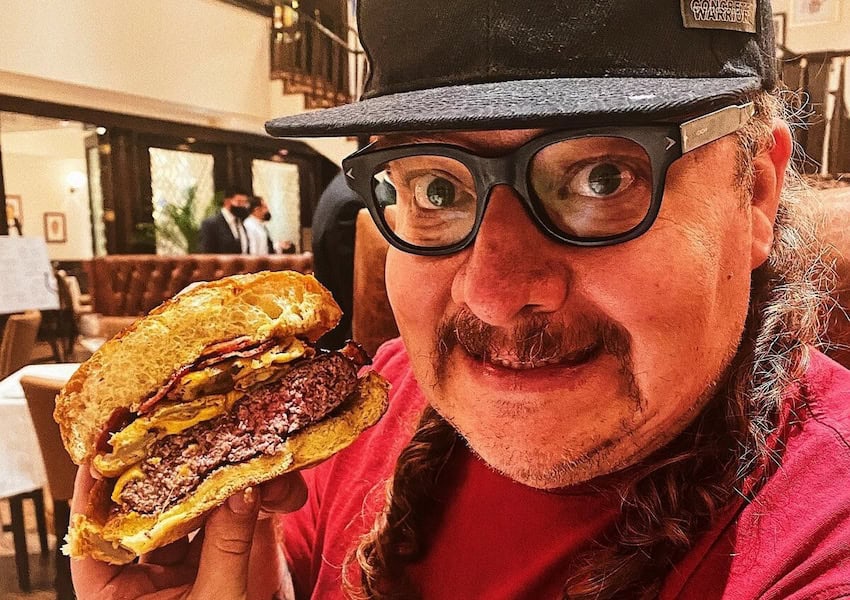
Do you tremble with joy at the mere sight of a Shake Shack? Then it’s high time you join Burgerman, the burger-loving alter ego of Moderatto’s guitarist Marcello Lara, at Burger Fest 2025. Indulge in the creations of more than 25 top burger joints, from classics to innovative fusions coming from Mexico City’s top burger slingers. Your ticket includes three food items, two drinks and a dessert. Experience live music, lucha libre and culinary challenges in this mouthwatering celebration.
Feria Internacional del Libro en Coyoacán III edición (Resultados obtenidos)
Book lovers and Japan enthusiasts will delight in the 2025 Feria Internacional del Libro en Coyoacán, which features Japan as its guest country. This vibrant event offers a deep dive into Japanese literature, culture and traditions. Enjoy author talks, calligraphy workshops and traditional tea ceremonies, as well as an unforgettable J-rock concert by Bakemono. With over 500 authors and 200 activities, it’s perfect for all ages.
Dates: March 7-16 Location: Jardín Hidalgo, Villa Coyoacán, Coyoacán Cost: Free to enter
XOCLO Pop Up
(Eventbrite)
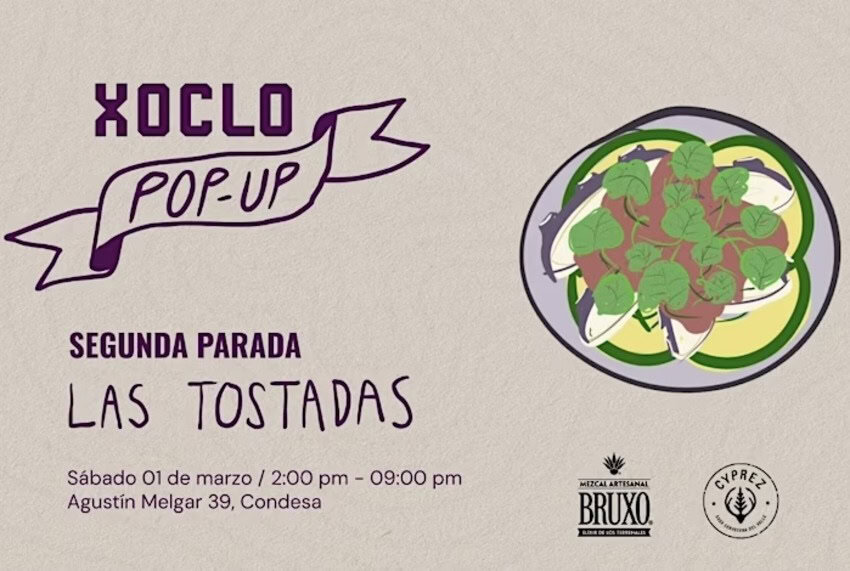
XOCLO Pop Up returns for its second culinary adventure in CDMX, transforming tostadas into a canvas of Peruvian-Mexican fusion. Food enthusiasts and culture lovers will relish this unique gastronomic experience, featuring bold flavors, live music and vibrant atmosphere. Enjoy artisanal mezcal from Bruxo and craft beers by Cyprez while savoring innovative dishes under the sun. Perfect for those seeking something unique and lively for a Saturday outing with friends.
Dates: March 1 Location: Agustín Melgar 39, Condesa, Cuauhtémoc Cost: Free to enter
Sting Mexico City Concert
(Sting)
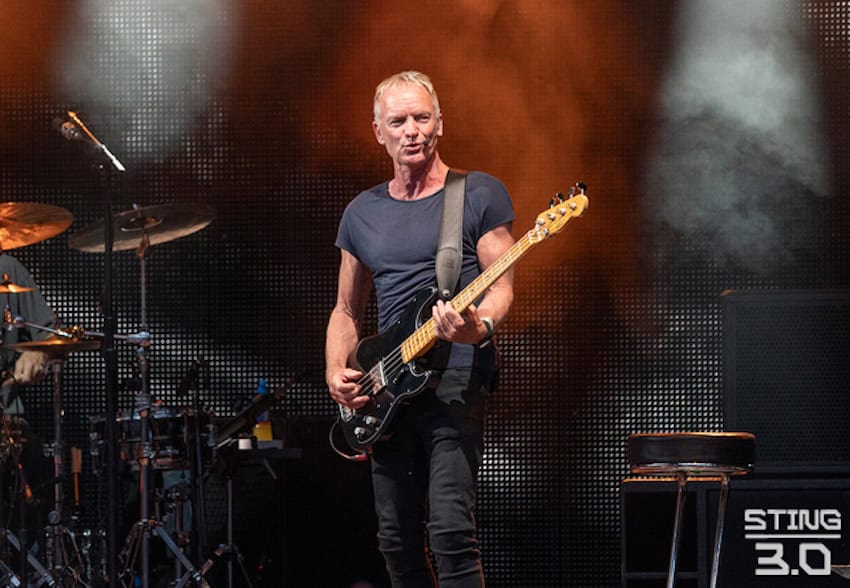
Every little thing he does is magic, and now Sting brings his 3.0 tour to Mexico City’s Auditorio Nacional! Watch the former Police frontman send an SOS to your soul with classics like “Roxanne” and “Fields of Gold”. With 10,000 seats, it’s hardly a one-on-one concert, but Sting’s performance will still feel wonderfully intimate.
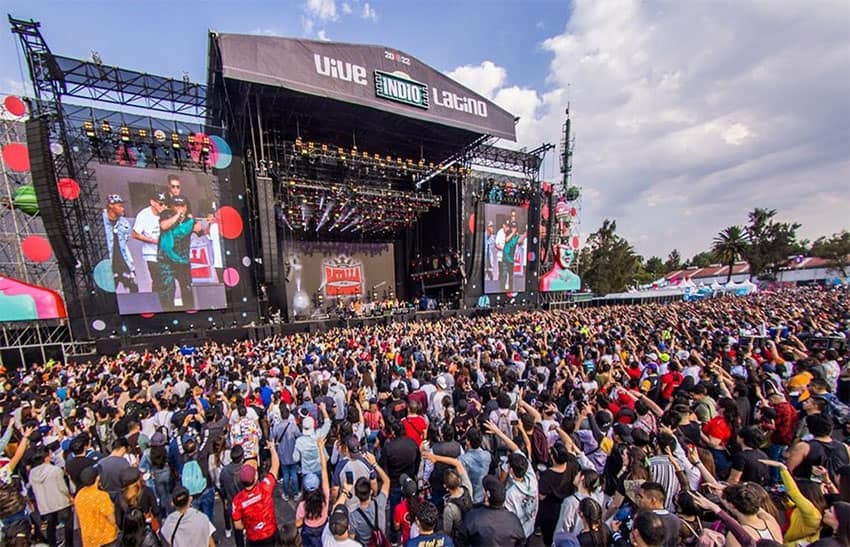
Vive Latino, Mexico’s premier music festival, celebrates its 25th anniversary with a bang! Rock enthusiasts and music lovers will revel in banger performances by Scorpions, Zoé, Keane and Rüfüs Du Sol across multiple stages. Experience diverse genres, from rock to Latin beats, plus comedy shows and lucha libre. Don’t miss this cultural extravaganza featuring over 60 bands, food trucks and unforgettable memories.
D Todo - "Our Body: El Universo Dentro" (30/07/2024)
Embark on a captivating journey inside the human body with “Our Body: The Universe Within,” a FeverUp production. This immersive exhibition is perfect for curious minds of all ages, blending the fascinating worlds of science and art to reveal the wonders within us. Where else will you get the chance to observe 10 complete bodies, three torsos and more than 150 real human organs? If the thought makes you gag, don’t worry: each body part is plastinated and presented in an artistic manner. FeverUp, a leading global live-entertainment discovery platform, brings this unique experience to life through educational activities and displays that appeal to families, students and biology enthusiasts alike.
Get your meat fix while giving back to the planet with “Sabores Sostenibles”! Twelve of Mexico City’s hottest restaurants, including Fónico in Roma Norte and XUVA in Santa Maria la Ribera, are cooking up something special. Ten talented local chefs will be crafting 14 mouthwatering dishes with U.S. red meat as the focal point. For every dish sold, U.S. Meat Export Federation will plant a tree with Naturalia A.C., so you can savor sustainable flavors and help re-leaf the planet.
Dates: March 21 – April 21 Location: Various, including Fónico, Kroket, La Barraca Valenciana, La Llorona, ONA, Palmares Restaurantes, Parilla Paraíso, Sesame, Temporal, Terraza Chachacha, Treze con Z, Xuva Cost: Various
Relive the magic of Mexican pop icon Selena in this symphonic tribute to the Queen of Tejano Music! You’re sure to be enchanted as the National Autonomous University’s (UNAM) Filarmónica de las Artes and its full orchestra reimagines her greatest hits, including “Bidi Bidi Bom Bom,” “Como la Flor” and “Dreaming of You.” This unforgettable experience blends Selena’s pop-cumbia style with the rich, emotional tones of a symphony, creating a unique celebration of her enduring legacy and timeless appeal, 30 years later.
Bethany Platanella is a travel planner and lifestyle writer based in Mexico City. She lives for the dopamine hit that comes directly after booking a plane ticket, exploring local markets, practicing yoga and munching on fresh tortillas. Sign up to receive her Sunday Love Letters to your inbox, peruse her blog or follow her on Instagram.
The surge in egg smuggling attempts comes as large Grade A egg prices in the U.S. have reached all-time highs. (Andrea Murcia/Cuartoscuro)
U.S. Customs and Border Protection (CBP) is reporting a significant increase in egg smuggling attempts from Mexico as U.S. egg prices continue to rise due to a bird flu outbreak, among other factors.
Since January, CBP officers in the El Paso region have intercepted over 90 individuals attempting to bring raw eggs into the U.S. illegally, according to a Feb. 21 CBP press release.
Over the past two weeks, in addition to arresting 30 fugitives, CBP officers in El Paso, TX seized:
• 64lbs of meth
• 180 rooster gaffs
• 7,500 animal steroid tablets
• raw eggs
From drug smuggling to ag violations, our officers stay busy.
The surge comes as large Grade A egg prices in the U.S. have reached an all-time high average of US $4.95 per dozen in January. In some areas, prices soared to as high as $12 per dozen.
CBP data showed a 29% increase in egg detentions at U.S. ports of entry from October 2024 to February 2025 compared to the same period last year. In the El Paso area alone, CBP agriculture specialists have issued 16 civil penalties totaling nearly $4,000 for attempts to smuggle eggs and other prohibited items.
Importation of raw eggs from Mexico is prohibited due to concerns about diseases such as Highly Pathogenic Avian Influenza (HPAI) — which is one form of bird flu — and Virulent Newcastle Disease (ND).
While the price surge in the United States “is primarily due to supply chain disruptions,” according to Newsweek, other factors are the ongoing bird flu outbreak that has led to the culling of millions of chickens and new regulations in some states mandating cage-free eggs.
Newsweek quoted a U.S. Department of Agriculture projection saying that egg prices will rise another 20.3% in 2025. Already, a dozen eggs in January cost an average of $4.95 — nearly double the $2.52 they cost in the same month last year — according to the U.S. Bureau of Labor Statistics.
US egg prices continue to rise as inflation increases | BBC News
An NBC San Diego report noted that bringing eggs across the border, which could result in fines up to US $10,000, is usually not a matter of “smuggling.” Mostly, it’s people simply not knowing that eggs are on the same list as poultry, meat, vegetables and fruit.
Still, Mexico’s national statistics institute INEGI indicated Monday that egg prices in Mexico had climbed 5.28% this month, “driven mainly by the strong demand in the neighboring country,” Juan Carlos Anaya, general director of Grupo Consultor de Mercados Agrícolas (GCMA), told the newspaper El Financiero.
Eduardo Verástegui, born in Tamaulipas in 1974, was a singer and soap opera actor before getting involved in politics. (Pedro Anza/Cuartoscuro)
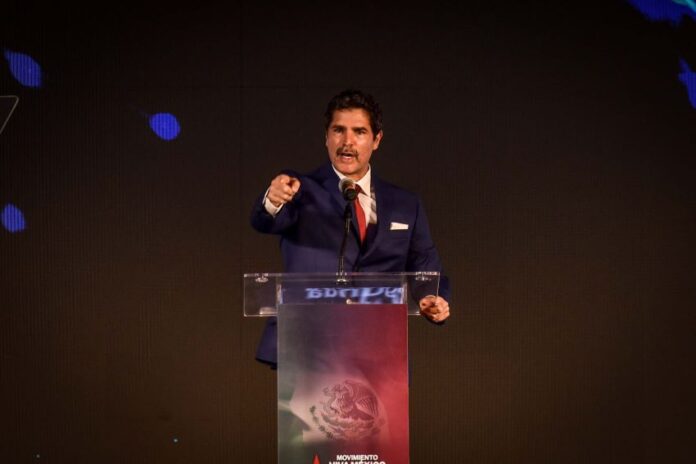
The National Electoral Institute (INE) on Monday approved the application of a new political party promoted by Eduardo Verástegui, a right-wing actor and producer with ties to U.S. President Donald Trump.
“Today, Feb. 24, on National Flag Day, a symbol of our identity, history and sovereignty, we are beginning a grand mission — the construction of the Movimiento Viva México (Long Live Mexico Movement) party,” Verástegui said in a statement.
In March, INE will formally recognize the approved applications after which all aspiring parties will have one year to accumulate membership equal to 0.26% of current federal voter rolls, which amounts to 256,000 people.
Each aspiring party must also carry out formal party assemblies in at least 20 states or 200 election districts.
Upon meeting these requirements, Movimiento Viva México will be eligible to register as an official party in 2026.
The 50-year-old native of Tamaulipas first gained notoriety in the 1990s as a member of the pop music group Kairo before trying his hand at acting. He had some success in Mexican soap operas and landed several acting roles in Hollywood in the early 2000s.
While in the U.S., Verástegui says he rediscovered his Catholic faith, eventually becoming deeply involved in the anti-abortion movement, according to a report published by the Catholic News Agency.
Verástegui unsuccessfully tried to run for president in Mexico in 2024, but the INE rejected his candidacy after he failed to accumulate the total number of signatures to meet the eligibility requirements.
And while Mexican President Claudia Sheinbaum was not invited to Trump’s inauguration on Jan. 21, Verástegui was among four Mexicans — including Carlos Slim — who attended the festivities in Washington, D.C.
The Movimiento Viva México’s party website says it is “building a citizens’ front determined to defend life, family and the fundamental freedoms that define us as Mexicans” and invites supporters to “give it all for the love of God and for the love of Mexico.”
The daily average 65.29 homicides in Mexico in February has been 24.9% lower than the 86.93 murders per day in September, the last month of Andrés Manuel López Obrador's presidency. Overall, daily average homicides are down nearly 30% compared to 2018, when AMLO took office. (Presidencia)
Homicides in Mexico are down almost 25% so far in February compared to the month before President Claudia Sheinbaum took office, preliminary data shows.
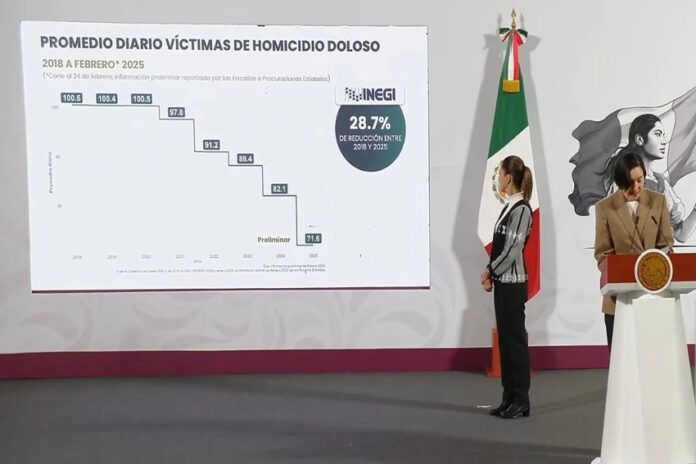
At Sheinbaum’s Tuesday morning press conference, the head of the National Public Security System, Marcela Figueroa Franco, presented data that showed there was an average of 65.29 homicides per day between Feb. 1 and Feb. 24.
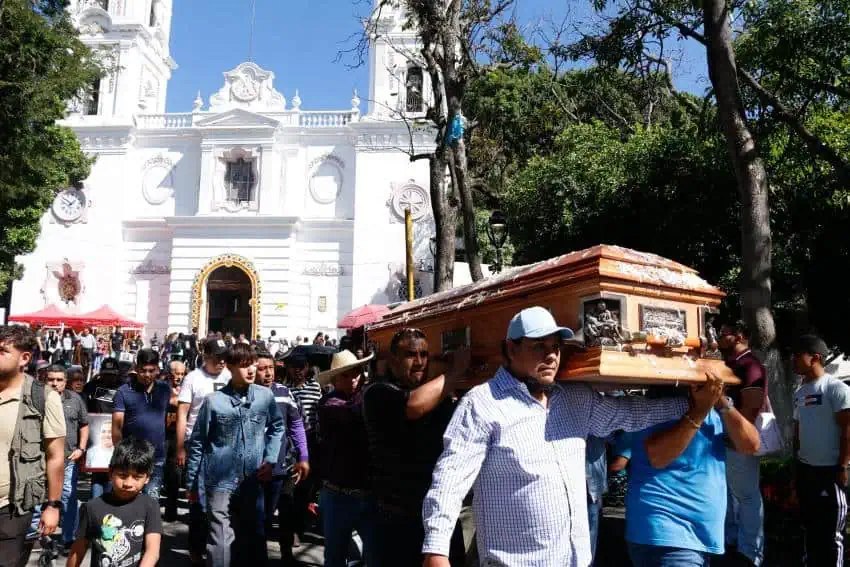
Family and friends hold a funeral procession for Martín Ramírez, a local official who was killed in downtown Chilpancingo, Guerrero, in December.
She highlighted that the daily average so far this month is 24.9% lower than the 86.93 murders per day in September, the last month of Andrés Manuel López Obrador’s presidency.
Figueroa also noted that the average daily murder rate so far this year — 71.6 — is 28.7% lower than the 2018 rate of 100.5.
She explained that the preliminary data she presented is derived from information provided to the federal government by Mexico’s 32 state Attorney General’s Offices. Final data invariably shows that the number of homicides committed in any given period of time was in fact higher than the number shown by preliminary statistics.
Over 50% of homicides this month occurred in just 7 states
Figueroa presented data that showed there were 1,567 homicides in Mexico between Feb. 1 and 24.
Just over 54% of those murders occurred in seven states: Guanajuato, México state, Baja California, Sinaloa, Michoacán, Tabasco and Sonora.
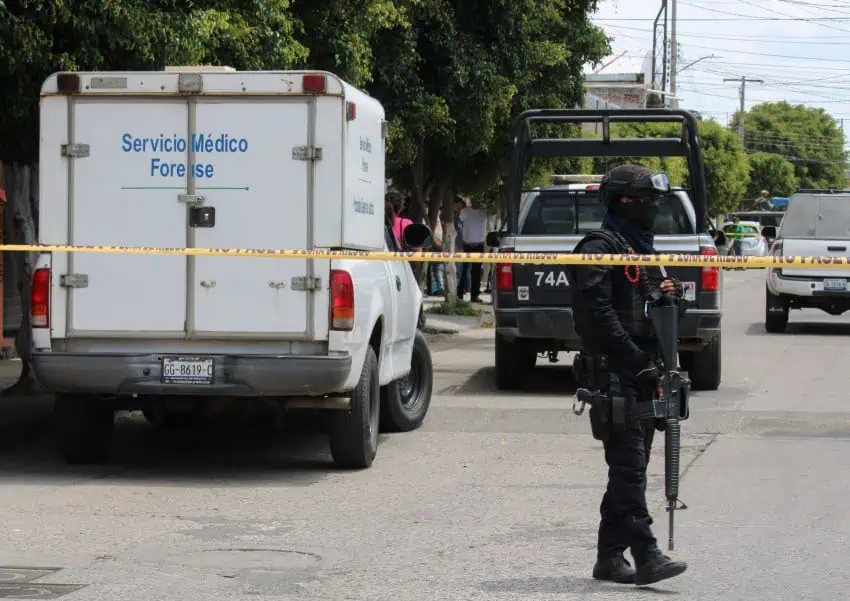
Police guard a crime scene after an armed attack by organized crime in Celaya, Guanajuato. Organized crime is responsible for the majority of crime in Mexico, and in terms of homicides, Guanajuato state, which is a stronghold for multiple cartels, consistently records the most. (Diego Costa/Cuartoscuro)
The majority of murders in Mexico are linked to organized crime. In Guanajuato, for example, the Jalisco New Generation Cartel and the Santa Rosa de Lima Cartel have been fighting a turf war for years. In Sinaloa, fighting between rival factions of the Sinaloa Cartel has claimed hundreds of lives in recent months.
The preliminary data presented by Figueroa shows that Guanajuato — Mexico’s most violent state in recent years in terms of total murders — recorded 241 homicides between Feb. 1 and Feb 24, accounting for 15.4% of all homicides in Mexico in the period.
On average, each of Mexico’s 32 states recorded 49 homicides in the first 24 days of this month. The murder count in Guanajuato so far in February is almost five times the national average.
At the other end of the spectrum are eight states that have recorded fewer than 10 homicides so far this month.
Querétaro, which borders Guanajuato among other states, hasn’t recorded a single homicide in February, according to preliminary data. The other states with fewer than 10 murders so far this month are:
Yucatán (1 murder)
Durango (3)
Coahuila (5)
Baja California Sur (5)
Nayarit (6)
Aguascalientes (7)
Campeche (8)
Mexico City ranks as the 11th most violent federal entity this month, with 64 homicides between Feb. 1 and 24.
More than 13,000 arrests for high-impact crimes since Oct. 1
Continuing the federal government’s fortnightly security update, Security Minister Omar García reported that 13,139 people have been arrested for high-impact crimes such as murder, kidnapping and extortion since Sheinbaum took office on Oct. 1.
He said that authorities have confiscated 6,582 firearms and seized 112.8 tonnes of drugs in the same period.
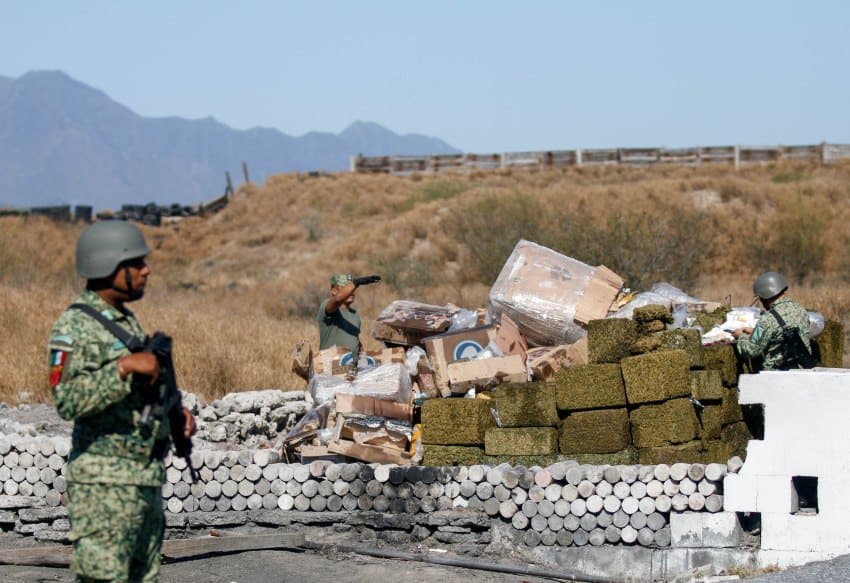
Mexico’s military prepare in January to incinerate 790 kilos of different illicit drugs confiscated from cartels.
In addition, 329 clandestine methamphetamine labs located across 13 states have been dismantled, García said.
The losses for criminal groups related to drug seizures and illegal lab shutdowns over the past five months exceed 300 billion pesos (US $14.7 billion), the security minister said.
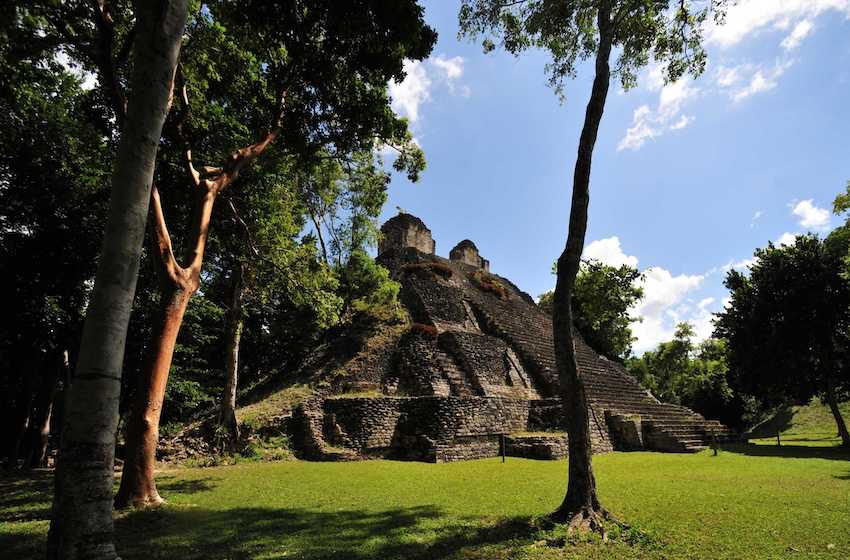
This once-powerful city, located in the southeastern state of Quintana Roo, was founded in the Late Preclassic period (300 BC) and was occupied as late as the 16th century.
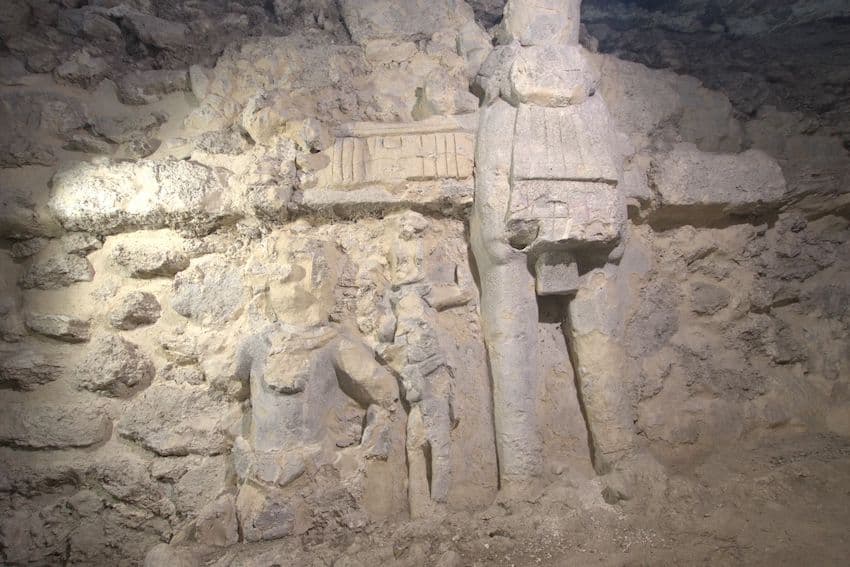
Three reliefs dating back to the Kaanu’l dynasty are now on view at Dzibanché following their discovery in October 2024. (INAH)
Its status peaked during the Classic period (250-900 A.D.) when it was the capital of the ancient Maya civilization and the seat of the powerful Kaanu’l dynasty whose rule dates to the 5th century A.D., before power was moved to Calakmul.
Dzibanché was given a major facelift as part of the Promeza program, a government initiative specifically designed to improve and preserve archaeological sites located along the route of Mexico’s Maya Train.
The conservation effort and archaeological work revealed new information about the site, and deepened the understanding of Dzibanché’s cultural and historical significance.
Among the more remarkable findings was the discovery of three facades with stucco reliefs in October 2024. The intricate carvings allude to the power of the Kaanu’l dynasty through representations of ancestors, mythical animals and other traits of power — such as stone images of snakes, said to be typical of the Kaanu’l.
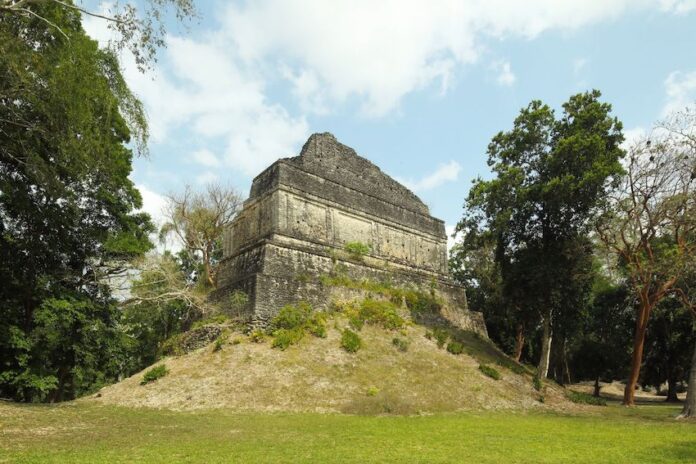
Temple of the Owl at Dzibanché archaeological zone in Quintana Roo, Mexico. (INAH)
The most important structures at the site include the Temple of the Captives, where excavations uncovered a hieroglyphic stairway depicting sculpted representations of bound captives, the Temple of the Lintels and the Temple of the Owl.
Two pyramids are also featured, and the largest — the Cormoranes Pyramid — served as the funerary temple of Sky Witness, a king of the Kaanu’l dynasty who ruled from 561-572 A.D.
The expansive site has four distinct monumental architectural complexes in the Petén style: the Main Group (Dzibanché), the Lamay Group (Central), Tutil and Kinichná. These complexes are now easier to explore thanks to improved trails.
Dzibanché is just the latest Maya site in Quintana Roo to reopen following renovations, joining the likes of Kohunlich, Oxtankah, Chacchoben, Ichkabal and El Meco.
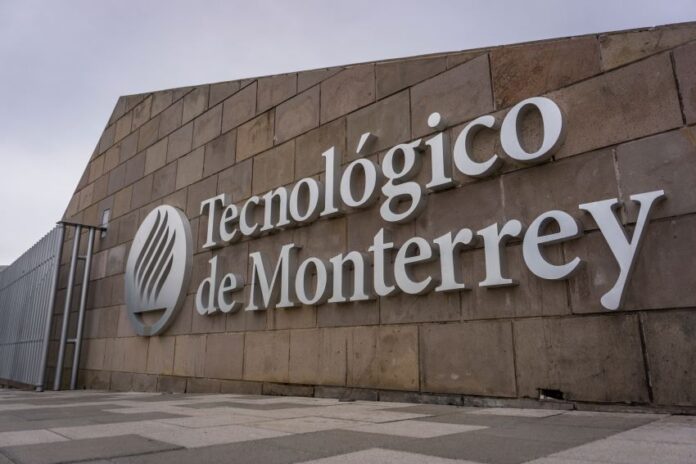
According to an administrator at the Tecnológico de Monterrey, “all programs in the School of Engineering and Science, regardless of the subject matter, must include AI at some point in their curriculum." (Shutterstock)
Universities in Mexico are incorporating Artificial Intelligence (AI) in their courses of study in response to the growing global demand for professionals trained in the field.
To date, higher education institutions in the country offer some 43 degree programs directly related to AI, data from the National Association of Universities and Higher Education Institutions (ANUIES) revealed.
There are about 3,600 students across Mexico who are currently enrolled in an undergraduate or graduate-level AI degree program. (Unsplash)
According to the General Coordinator of Strategic Linkage at ANUIES, Gustavo Cruz Chávez, these programs have emerged in the last five years. Of the 43 total AI-focused degree programs, 24 cater to undergraduate or bachelor-level students, while 19 are available at the graduate level.
Cruz told the newspaper El Sol de México that there are about 3,600 students across the country who are currently enrolled in one of these programs. This figure, he said, will multiply in the coming years as this field continues to develop.
AI engineering, innovation and development engineering and computational technologies are some of the new degree titles that have emerged in Mexico in recent years. Cruz added that universities in the northern and central regions of the country have made the most progress in creating AI programs to respond to the needs of the industries based in that region.
Some of these states include San Luis Potosí, Guanajuato and Querétaro, focused on the automobile industry, as well as Baja California, home to several aerospace companies, among others in the northern region.
Querétaro Sustainable Development Secretary Marco Antonio del Prete during a visit to a factory that supplies the aerospace sector, which is a growing part of Mexico’s economy. (Marco del Prete/X)
Public institutions such as the National Autonomous University of Mexico (UNAM), the University of Guadalajara (UdeG) and the University of the National Polytechnic Institution (IPN) have developed AI degree programs for their students.
Some private institutions have also created AI programs, including Tec de Monterrey, Ibero American University (Ibero), the Autonomous Technological Institute of Mexico (ITAM) or the Autonomous University of Nuevo León (UANL).
Renato Salmerón, director of the AI and Data Science Program at Tec de Monterrey, told El Sol de México that “all programs in the School of Engineering and Science, regardless of the subject matter, must include AI at some point in their curriculum.”
According to the National Institute of Statistics and Geography (INEGI), more than 40% of Mexican companies are currently using AI-based solutions for their daily operations.