Home Blog Page 34

Grupo México merges power assets with BlackRock-backed Saavi Energía in 4,500 MW deal

1
BlackRock
BlackRock Energy is the ultimate parent company of Saavi Energía, with whom Grupo México has created a new company looking to insert itself into Mexico's energy sector. (Saavi Energía)

The Mexican conglomerate Grupo México announced plans on Monday to combine its power generation assets with Saavi Energía, a company controlled by Global Infrastructure Partners (GIP), a subsidiary of the world’s largest asset manager, BlackRock. 

According to a Grupo México press statement, the merger covers 14 power plants located in high-demand areas across Mexico, with a total capacity of 4,510 megawatts (MW). Further, the firm will take on a project pipeline of an additional 5,000 MW. 

“Grupo México hopes that this alliance will lead to a long-term relationship with GIP, allowing the parties to explore new opportunities for collaboration in the infrastructure sector, both in Mexico and abroad,” the firm’s press statement reads. 

The new entity will operate under the name Saavi Energía, with Grupo México holding a 70% share and retaining operational control of the company, and GIP holding the remaining 30% share. 

The merger will expand Grupo México’s portfolio and position it as one of the leading private electricity providers in Mexico. 

On April 7, BlackRock’s CEO Larry Fink and GIP’s CEO Adebayo Ogunlesi met with President Claudia Sheinbaum at the National Palace, in a meeting attended by Mexican Finance Minister Édgar Amador Zamora and other officials. 

On April 16, Mexico’s Energy Ministry published three new sets of regulations as part of the President’s energy reform, covering voluntary migration of existing energy permits to the new legal framework, cogeneration, and the integration of electricity storage systems into the national grid. Taken together, the rules open the door to greater private sector involvement in Mexico’s energy industry, provided the state-owned electricity company CFE retains a 54% share of the country’s electricity generation. 

The Grupo México-GIP transaction is now subject to regulatory approvals and is expected to close in the third quarter of 2026. 

Grupo México is mainly known for its mining operations, and is one of the world’s largest integrated copper producers, with operations in Mexico, Peru and the United States.

It is also a major player in infrastructure and transportation, with major highway, railway and oil drilling services projects.

With reports from Expansión, El Financiero and Bloomberg Línea

Labor Ministry hails steady job growth, but economists urge against too rosy an interpretation

1
workers
Economists point out that increases in "precarious" or informal jobs do not make up for job losses in the formal sector. (Graciela López/Cuartoscuro)

Mexico’s latest employment figures were cheered by the government on Tuesday, with Labor Minister Marath Bolaños reporting that the National Survey of Occupation and Employment (ENOE) shows that 60.2 million people were employed in Mexico and 422,000 more jobs had been created during the first quarter this year than during Q1 2025. 

Also focusing on favorable figures, President Claudia Sheinbaum said more people were employed in March 2026 than in any previous March in Mexican history. 

Labor Minister
Labor Minister Marath Baruch Bolaños presented figures Tuesday showing that 422,000 more jobs had been created during the first quarter of this year than during the same period in 2025. (Galo Cañas/Cuartoscuro)

Still, economists warned that a deeper dive into the data reveals some worrisome underlying trends. In fact, they say, the Mexican job market may actually be deteriorating

For example, while March 2026 employment may indeed have been historically high for March, the ENOE report revealed that fewer people held jobs this March than in February. Also, the economists point out, employment in the formal sector fell by 230,119 in Q1 2026, the worst drop since 2009.

Part of the good news/bad news confusion is caused by the definition of “actively employed population” (either holding a job or actively looking for one) used to calculate the job market data. Thus, if a person loses a job but continues to seek employment, the overall numbers don’t change, but the lost job is reflected in the “formal employment” data. 

The ENOE report revealed that 116,016 formal jobs were lost in March, which Sheinbaum acknowledged on Monday, attributing the drop to U.S. President Donald Trump’s decision to discontinue incentives for electric cars. This impacted the automotive sector in particular and the manufacturing sector in general, an especially disturbing trend for Mexico that has long leaned on its manufacturing prowess.

Furthermore, ENOE data shows 148,885 fewer people were employed in manufacturing industries last month as compared to March 2025. That’s a concern, no matter how high overall March employment was historically, since manufacturing serves as the cornerstone of the Mexican economy (21.4% of Mexico’s total GDP).

In his presentation on Tuesday, Bolaños said the services, restaurants and professional services sectors contributed an additional 240,000 jobs to make up for the losses in the manufacturing sector.

Economists were less sanguine about that fact, pointing out that 88% of the job losses recorded during Q1 2026 were in the formal sector, while employment in the informal sector increased to 33 million in March, up from 32.7 million in January.

Describing a shift towards more precarious or informal occupations, Janneth Quiroz, an analyst with Monex, told the newspaper El Economista, “[This] dilutes the positive impact that job creation could have in terms of income and consumption.”

With reports from Infobae, El Economista, Eje Central, La Jornada and México ¿cómo vamos?

Judge reopens criminal case against former leader of Mexico’s Luz del Mundo Church

0
Nassón Joaquín García, shown here welcoming guests from 54 countries to a convicatiuon of his
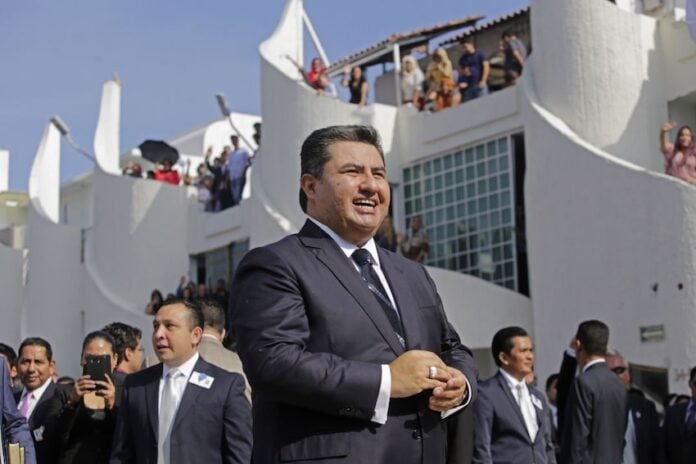
Nassón Joaquín García, shown here welcoming guests from around the world, including then-Jalisco Governor Jorge Aristóteles Sandoval, to a convocation of his Luz del Mundo Church in 2017. (Fernando Carranza García/Cuartoscuro)

A federal judge has ordered prosecutors to reopen the Mexican case against convicted child sex offender Naason Joaquín García who is serving a 16-year, eight-month prison sentence in California.

Judge Juan José Rodríguez, based in the Puente Grande Prison Courtroom in the state of Jalisco, on Monday revoked the December decision by the Federal Attorney General’s Office (FGR) not to file criminal charges against Joaquín in relation to the case of Sóchil Martín.

Luz del Mundo sede
Faithful followers of Naason Joaquín spelled out the word “innocent” at the international headquarters of Joaquin’s Luz del Mundo (Light of the World) Church in Guadalajara while the then-leader was on trial for child sex-abuse charges in California, on which he was ultimately convicted. (Fernando Carranza García/Cuartoscuro)

The FGR must now reopen the case against the former leader of the Luz del Mundo Church, which is headquartered in Guadalajara, western Mexico. 

Earlier this month, President Claudia Sheinbaum told reporters that Attorney General Ernestina Godoy supported reopening the case that her predecessor, Alejandro Gertz, shelved. 

Sochil Martín and her husband, Sharim Guzmán, also accuse Joaquín and his church of money laundering, human trafficking, sexual exploitation and child pornography. 

An initial hearing to reopen the case was held on April 16, but Judge Rodríguez paused it until Monday so that prosecutors and the defense could further study the 2,500 pages in the case file.

With the reopening of the investigation, “the victims and their representatives will push for a thorough investigation against all members of the criminal organization formed by the leaders of La Luz del Mundo,” Martín’s legal team said in a statement.

In June 2022, Joaquín pleaded guilty in California to three counts of child sexual abuse, thus avoiding 19 additional criminal charges, including sexual assault of minors, possession of child pornography and human trafficking.

Last September, Joaquín pleaded not guilty to charges brought against him by a U.S. district attorney’s office in New York. Among the charges were organized crime conspiracy, sex trafficking and child exploitation of members of his church. Five other defendants — including his mother Eva García de Joaquín and his nephew Joram Núñez Joaquín— were included in the indictment.

Family of Naasón Joaquín García, leader of La Luz del Mundo, charged with sex trafficking

Prosecutors allege that Joaquín followed “a deeply disturbing tradition established by his father (Samuel Joaquín Flores) and his grandfather (Eusebio Joaquín González), who founded the church in Guadalajara around 1926.”

Counsel for the defense rejected the charges against Joaquín — known in the church as “God’s Apostle on Earth” — as “unfounded, false, and slanderous” and accused prosecutors of “twisting the law.”

The Luz del Mundo Church boasts nearly 2 million followers in Mexico and another 3 million around the world.

With reports from El Financiero, 24 Horas, La Jornada, Infobae, SDP Noticias and BBC  

US $1.2B nautical community breaks ground in Nayarit

4
The development is located in the municipality of Compostela, Nayarit.
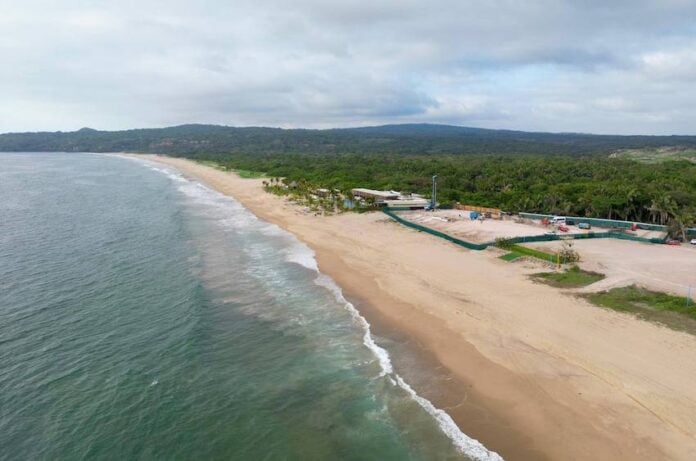
The development is located in the municipality of Compostela, Nayarit, approximately 60 kilometers from Puerto Vallarta. (Miguel Ángel Navarro/Facebook)

The government of Nayarit has officially launched Costa Nayarit, a landmark tourism and residential development built around a network of interior canals that developers say will make it one of the most ambitious nautical communities in Mexico.

Governor Miguel Ángel Navarro Quintero formally presented the project on Thursday at the Costa Canuva complex in the municipality of Compostela, describing the announcement as a historic day for both the state and the country.

The development carries an investment of over 21 billion pesos (US $1.2 billion) and is being spearheaded by a consortium of firms, including Prodi, Life Properties International (LPI) and GFA. The developer partnership is structured as a 50-50 arrangement between Mota-Engil México and the Fasja family.

The project’s defining feature is its nautical focus: a network of interior canals will give waterfront residences private docks, alongside a full-service marina and specialized infrastructure for vessels. Additional amenities will include a championship golf course designed by Tom Fazio, a wellness center and a racquet sports complex with tennis, padel and pickleball courts.

Over a 10-year horizon, the development is expected to generate over 10,000 direct jobs and produce an economic spillover exceeding 180 billion pesos ($8.6 billion), according to Governor Navarro.

The land will remain state property under the Fideicomiso Nuevo Nayarit framework, with the government set to receive returns of up to 18%, channeled into the state savings fund for workers’ pensions.

With reports from El Financiero, El Economista and La Jornada 

Mexican Navy captures top CJNG commander ‘El Jardinero’ in Nayarit

8
"El Jardinero" surrounded by Mexican naval special forces
"El Jardinero" was a former security chief for "El Mencho," and was likely the next-in-line to lead the powerful Jalisco New Generation Cartel. (SSPC/Cuartoscuro)

The Mexican Navy on Monday detained Audias Flores Silva, an alleged high-ranking member of the Jalisco New Generation Cartel (CJNG) who was considered a possible successor to slain cartel leader Nemesio Rubén “El Mencho” Oseguera Cervantes.

Flores, known as “El Jardinero” (The Gardener), was detained in Nayarit, authorities said. The 45-year-old was wanted in Mexico on homicide charges. A man identified as his “financial operator” was arrested by the Mexican Army and National Guard in a separate operation on Monday in Zapopan, Jalisco.

a wanted poster from the the U.S. State Department offering US $5 million for information leading to Audias Flores Silva's arrest
The U.S. State Department was offering US $5 million for information leading to Audias Flores Silva’s arrest. (SSPC/Cuartoscuro)

Flores is wanted in the United States, where he faces drug trafficking charges. The U.S. State Department was offering US $5 million for information leading to his arrest.

Flores was a former security chief for “El Mencho,” who died after he was shot in a military operation in Tapalpa, Jalisco, on Feb. 22. He was among various people considered as possible successors to Oseguera, who founded the CJNG and led the powerful criminal organization until his death.

Flores, a native of the state of Michoacán, was reportedly a Nayarit-based regional commander for the CJNG. He was allegedly involved in illicit activities in Nayarit, Jalisco, México state, Guerrero and Zacatecas.

El Jardinero arrested in ‘surgical’ operation  

The arrest of Flores was first announced on Monday by federal Security Minister Omar García Harfuch, who wrote on social media that the suspect was detained in an operation “planned, developed and executed” by naval special forces. He also posted video footage of the arrest to his X account.

The Navy Ministry (SEMAR) said in a statement that Flores was arrested near the community of El Mirador, located northeast of the Nayarit capital of Tepic in the municipality of Del Nayar.

SEMAR said that the suspect is “one of the main generators of violence of a criminal group with a national level presence” — i.e., the CJNG.

“After 19 months of monitoring this high-priority target, the operation was planned, developed and executed by personnel from the Ministry of the Navy, in coordination with the Ministry of Security and Citizen Protection (SSPC) and the Federal Attorney General’s Office (FGR). As a result of field and desk intelligence work, as well as information sharing with U.S. agencies, the possible location of the priority target was identified in the vicinity of the community of El Mirador, Nayarit, where an operation was deployed to locate him,” the Navy Ministry said.

“During the operation, it was determined that the target was holed up in a cabin, protected by a security presence consisting of multiple vehicles (approximately 30 pickup trucks) and armed personnel (more than 60 people). In response to this situation, a tactical deployment was implemented that included intelligence, surveillance and reconnaissance (ISR) aircraft, four close-support helicopters, two troop-transport helicopters, four fixed-wing aircraft, 120 direct-action troops, as well as 400 naval personnel in support roles,” SEMAR said.

The ministry said that when the Navy arrived in the area where Flores was hiding, the suspect’s bodyguards “dispersed in different directions” as a distraction tactic.

“However, through aerial and ground surveillance, the priority target was located as he attempted to hide in a drainage pipe, and he was subsequently arrested,” SEMAR said.

The ministry said that the operation was carried out in a “surgical manner,” highlighting that not a single shot was fired and no deaths or injuries occurred.

SEMAR said that the arrest of Flores is an “important security achievement” that “directly contributes to the dismantling of criminal structures and the reduction of violence in the country.”

U.S. Ambassador to Mexico Ron Johnson acknowledged the arrest on social media.

“I recognize the courage and precision of @SEMAR_mx in the operation that led to the arrest of Audias Flores Silva, ‘El Jardinero,'” he wrote.

“Actions like this strengthen security and help dismantle criminal networks that threaten our communities. Together, we deliver results that make our nations safer.”

In a separate post, Johnson wrote that the arrest of Flores “marks an important step against those who profit from fentanyl and drive violence in our communities.”

Arrest triggers violence in Nayarit and Jalisco 

The arrest of Flores triggered various acts of violence in Nayarit and Jalisco on Monday, including arson attacks on businesses and the burning of vehicles. However, the scale of the cartel response was nowhere near as extensive as that which followed the operation against “El Mencho” on Feb. 22.

Nevertheless, the Nayarit government called on residents to stay at home as a precautionary measure.

A business was burned to the ground in Tecuala, Nayarit, following the capture of “El Jardinero” on Monday. (Facebook)

In a video message on Monday night, Nayarit Governor Miguel Ángel Navarro Quintero said that the situation in the state was “normal.”

“The population is calm, highways and toll booths are operating as usual,” he said, adding that educational, commercial and social activities were taking place peacefully.

The federal Security Cabinet said on social media just after 8 p.m. Monday that no highways were blocked in Nayarit. It said there were reports of six vehicles being set on fire and six shops targeted in arson attacks. The Security Ministry said that no deaths or injuries had been reported. It also said that federal security forces were in Nayarit and collaborating with state and municipal authorities.

‘El Jardinero’ was charged in the US in 2020

In April 2021, the U.S. State Department announced a reward of up to $5 million for information leading to the arrest of Flores, who it described as a “high-level member” of the CJNG.

Flores “is very closely aligned with the leader of the CJNG, Nemesio Rubén Oseguera-Cervantes, alias ‘El Mencho,'” the State Department said at the time.

It noted that Flores “was charged in a federal indictment returned on August 13, 2020, in the U.S. District Court for the District of Columbia.”

“The indictment charges Flores Silva with conspiracy to distribute five kilograms or more of cocaine, and one kilogram or more of heroin for importation into the United States, as well as carrying, using, and possessing a firearm in relation to a drug offense,” the State Department said.

In a wanted notice published in April 2021, the State Department said that Flores “controls several methamphetamine laboratories in the central region of Jalisco and in southern Zacatecas.”

“In controlling the movement of illegal drugs for importation to the United States, Flores Silva oversees the operation of several airplanes and clandestine airstrips for illicit use. In addition, Flores Silva controls tractor-trailer trucks for transporting cocaine from Central America to Mexico, as well as passenger vehicles to transport various illicit narcotics from Mexico to CJNG’s U.S. distribution cells in California, Texas, Illinois, Georgia, Washington, and Virginia,” it said.    

‘El Güero Conta’ detained in Jalisco 

García Harfuch announced on social media on Monday afternoon that Mexican Army special forces and the National Guard had detained César Alejandro N, “identified as the financial operator of Audias Flores Silva, alias ‘El Jardinero,’ regional boss of the CJNG.”

The arrest occurred in Zapopan, part of the metropolitan area of Guadalajara.

García Harfuch said that the suspect, known as “El Güero Conta” (The Blond Accountant), is accused of laundering money obtained from “illicit activities” as well as purchasing planes, boats, houses and ranches with those resources and “investing in tequila producers.”

“This arrest represents an important blow of the financial structure of said criminal group,” the security minister wrote.

“The institutions of the Security Cabinet maintain permanent actions to weaken criminal organizations and bring those who generate violence to justice,” he added.

With reports from El Financiero, El Universal, Reforma and López-Dóriga Digital

MND Local: Protests grow as luxury projects expand along Nayarit coast

3
Punta Mita, Nayarit
Protests in Nayarit are growing over expanding luxury development in places like Punta Mita. (Emmanuel Appiah/Unsplash)

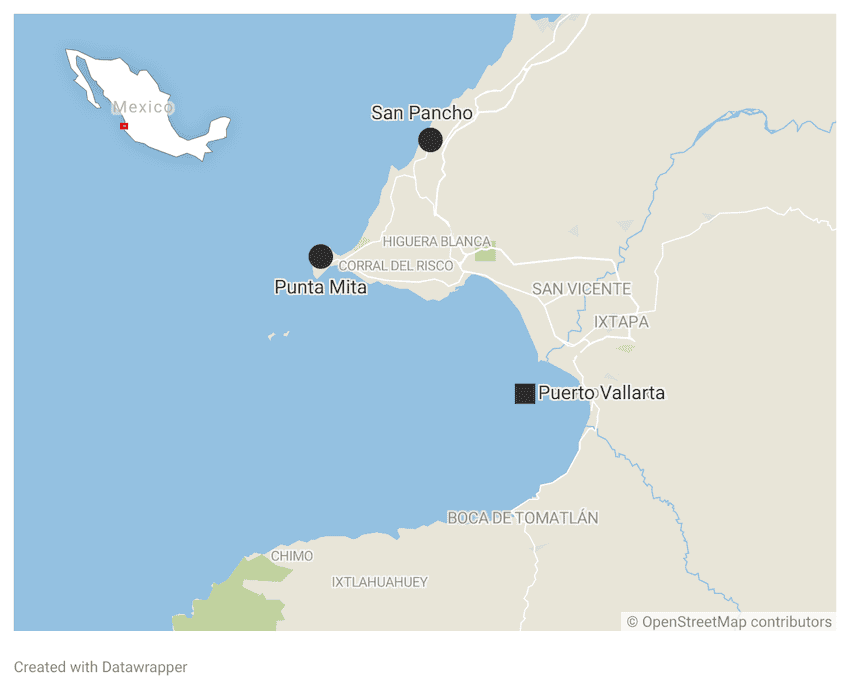
A surge of luxury developments along the coast of Nayarit is triggering a growing backlash from residents and environmental defenders, who accuse high-end tourism projects in the town of San Pancho and in the luxury resort peninsula Punta Mita of violating environmental law, damaging fragile ecosystems and eroding public access to federally protected beaches.

What had been a largely underreported conflict has escalated sharply in recent weeks, fueled not only by protests and legal complaints but also by violence and a wave of public outrage spreading across social media.

Environmental activist shot

On March 11, environmental defender Erik Saracho was shot twice at his home in San Pancho by a hooded gunman. The attack came just two days after he met with authorities and representatives linked to proposed coastal developments.

Saracho survived. But despite security footage capturing the attack, no arrests have been made, and the developments he opposed continue moving forward.

A leading advocate for conservation, Saracho has been instrumental in protecting the Sierra de Vallejo Biosphere Reserve, a 225,000-hectare ecosystem home to jaguars, green macaws and other threatened species. His shooting has become a flashpoint in what activists describe as a pattern of intimidation faced by those who challenge powerful real estate interests.

In San Pancho, activist opposition has focused on planned condominium projects, including proposals tied by residents to Aldea Peñón. Activists allege these projects threaten wetlands and could disrupt natural water systems, while environmental impact processes remain opaque or insufficient.

Activists accuse developers of environmental degradation in Punta Mita

Further south in Punta Mita, the controversy takes on a broader scale but reflects the same underlying conflict.

Punta Mita is a coastal community, but much of the peninsula is occupied by the gated, master-planned Punta Mita Resort, a long-running luxury development that continues to expand with hotels and residential projects. Within and around this enclave are high-end properties such as the Four Seasons Resort Punta Mita, St. Regis Punta Mita Resort and the newer Conrad Punta de Mita. They’re all part of an expansion footprint that critics say is placing increasing pressure on coastal ecosystems and public access.

The St. Regis Punta Mita is one of many luxury resorts in an area that protesters say is placing increasing pressure on coastal ecosystems. (St. Regis Punta Mita)

Residents and environmental groups accuse developers within Punta Mita of clearing vegetation, moving rocks and reshaping coastal areas to build new amenities and residences, all activities they say are degrading sea turtle nesting habitats and altering natural coastal systems. 

At the same time, they argue that the gated nature of the development has created de facto restrictions on beach access, despite Mexican law guaranteeing that all beaches remain public.

Public frustration is increasingly visible. 

Growing voices of protest on social media

In widely shared social media posts, residents have begun voicing concerns over both environmental damage and strained infrastructure.

“How many more rooms do we need in the area? Absurd! There are already empty hotels and enough rental houses. To build one more hotel — there is no water. In Sayulita, we have a serious water problem!”

Another commenter added: 


View this post on Instagram


A post shared by Pieter Fischer (@nyboertjie)

“It’s not right to destroy this way… without sustainable development and killing our beaches.”

A third post was directed at the Mayor of Bahía de Banderas, Nayarit, Hector Santana.

“Didn’t you say the beaches can’t be privatized, Hector Santana? How is it possible that other times they go and stop the construction and you yourself say the beaches aren’t privatized, and now you haven’t faced the people?” the post said.

Sentiments such as these reflect a deeper issue for many of Nayarit’s residents: that rapid growth is outpacing the region’s ecological limits.

President Sheinbaum weighs in 

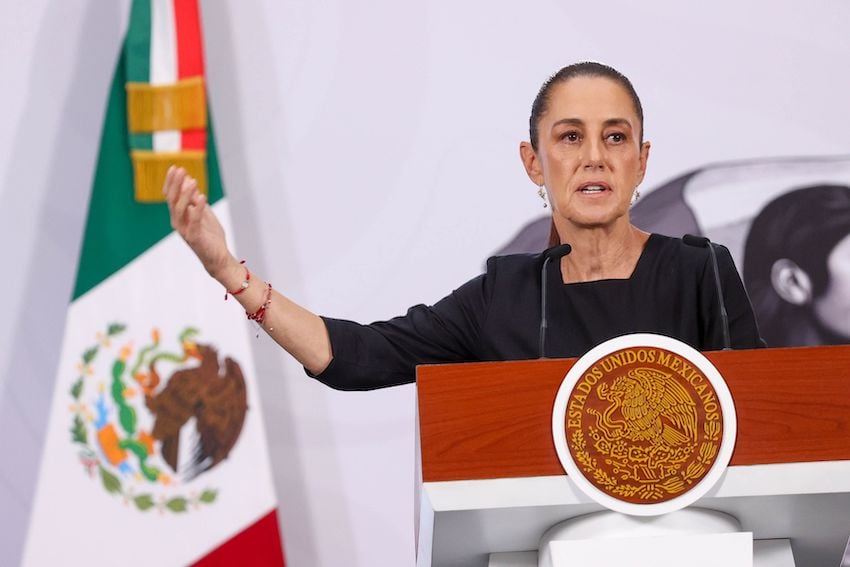
The federal government has acknowledged the tension. During a March press conference, President Claudia Sheinbaum emphasized that tourism growth must be balanced with environmental protection, highlighting a territorial strategy intended to preserve biodiversity while ensuring public access to beaches.

But on the ground, critics argue that enforcement remains weak and that development is advancing faster than oversight.

President Claudia Sheinbaum
President Claudia Sheinbaum has spoken on the issue, noting that luxury development must be balanced with environmental protection. (Moisés Pablo/Cuartoscuro)

The attempted killing of Saracho has only heightened those concerns. The state prosecutor’s office has offered a 100,000 peso reward for information leading to the attacker’s arrest.

As protests intensify and national attention grows, the conflict unfolding in Nayarit is becoming a stark test of environmental governance in Mexico. 

At stake is more than development. It’s the future of coastal ecosystems, the integrity of public beach access, and the safety of those willing to defend both.

Charlotte Smith is a writer and journalist based in Mexico. Her work focuses on travel, politics, and community. You can follow along with her travel stories at www.salsaandserendipity.com.

Mexico lands 11 bars on North America’s 50 Best

2
Bar Mauro in Mexico City.
Bar Mauro in Mexico City. (World's 50 Best)

The 2026 ranking of North America’s 50 Best Bars is now live, and Mexican bars occupy one-fifth of the list with a total of 11 mentions, including three in the top 10.  

The winners were announced at a ceremony in Vancouver, Canada, where bartenders from Canada, the United States, Mexico and the Caribbean came together to recognize the best bars in the region. 


View this post on Instagram


A post shared by TLECĀN (@tlecan)

The accolades were selected by a diverse panel of industry experts who voted anonymously for the places where they have had their best experiences in the last 18 months.

Overall, the United States boasted the highest number of bars with 28, followed by Mexico with 11, Canada with eight and the Caribbean with three.  

Remarkably, Mexico City got the largest number of mentions just after New York, including two bars in the top 5, reinforcing the city’s lively and evolving cocktail scene.  

Other Mexican cities in the ranking include Guadalajara with two bars and San Miguel de Allende and Oaxaca, with one each. 

The best bars in Mexico 

Following New York’s Sip & Guzzle, which came in as the winner, the No. 2 spot went to Mexico City’s Bar Mauro, marking the bar’s impressive debut on the list. Beyond its Italian-inspired offering of aperitifs, vermouths and amaros, the best bar in Mexico has also built up a strong kitchen reputation, with locals highlighting its “humble cheeseburger as a must-try,” the 50 Best said.  

Next on the list is Tlecān at No. 5. Also in Mexico City, this pre-Columbian-inspired bar offers signature cocktails featuring Mexican spirits.

El Gallo Altanero in Guadalajara, which in 2024 became the first bar in the city ever to make the list, came in at the No. 10 spot, while the elegant and minimalist Handshake Speakeasy in Mexico City was ranked No. 12.  

Its innovative processes and custom-made lab earned Mexico City’s Form + Matter a spot at No. 13, followed by Mecenas in Guadalajara at No. 18, a bar that honors the region’s cane alcohol tradition. 

At No. 20 is Licorería Limantour in Mexico’s capital, regarded as the birthplace of cocktail culture in Mexico, followed by Bekeb in the UNESCO World Heritage City of San Miguel de Allende. At No. 24, this bar stands out for its drinks that incorporate Mexican fruits, plants, flowers, seeds, roots and traditional elixirs.


View this post on Instagram


A post shared by BEKEB (@bekeb_sma)

Returning to Mexico City is Kaito del Valle at No. 25, a Japanese izakaya serving Nippon-inspired drinks with a Mexican twist.  

Moving south is Selva, in Oaxaca, which at No. 43 impressed the voters with its concoctions that invoke local flora and fauna.  

Finally, Baltra in Mexico City took the No. 48 spot, offering an elegant and playful menu with nuanced takes on the classics.  

Mexico News Daily

Sheinbaum says US agrees to respect Mexican law following CIA scandal: Tuesday’s mañanera recapped

2
Cuauhtémoc, Ciudad de México. 28 de abril 2026. La presidenta constitucional de los Estados Unidos Mexicanos, la Doctora Claudia Sheinbaum Pardo en conferencia de prensa matutina en el salón de la Tesorería de Palacio Nacional.
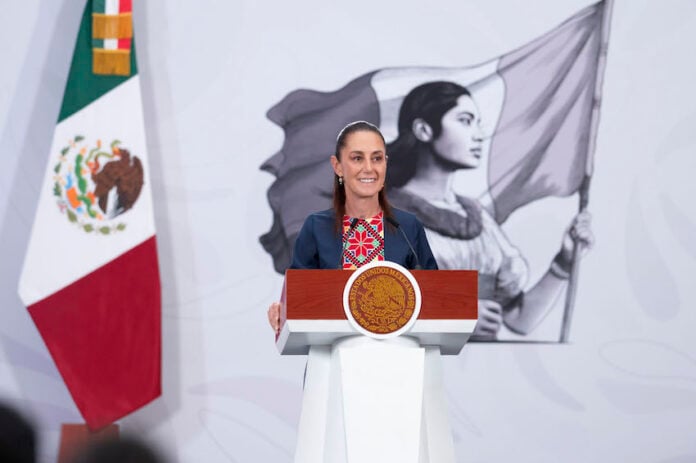
Sheinbaum said that her government received a response to the diplomatic note that the Ministry of Foreign Affairs sent to the U.S. Embassy in Mexico regarding the CIA's illegal activities in Chihuahua. (Saúl López Escorcia/Presidencia)

Sheinbaum’s mañanera in 60 seconds

  • 🛒 Labor poverty hits record low: Labor Minister Marath Bolaños noted that Mexico’s labor poverty rate has reached its lowest point ever, with 32.3% of Mexicans living in households unable to cover basic food needs as of Q4 2025.

  • 🔍 Chihuahua AG resigns amid CIA raid fallout: Attorney General César Jáuregui stepped down as the controversy over alleged CIA participation in a Chihuahua drug lab raid deepens. Sheinbaum declared that the federal investigation must continue, framing the case as a matter of national sovereignty.

  • 🇺🇸 U.S. responds to Mexico’s diplomatic note: The Trump administration told the Mexican government it will respect Mexican law and the constitution following a formal protest over U.S. personnel joining a domestic security operation. Sheinbaum stopped short of expelling CIA agents, saying the message to the U.S. is simply: “Mexico must be respected.”


Why today’s mañanera matters

The alleged participation of U.S. Central Intelligence Agency (CIA) officers in a drug lab raid in the northern state of Chihuahua earlier this month continues to be a major news story and point of discussion in Mexico. President Sheinbaum addressed two new developments related to the saga at her Tuesday morning press conference.

Mexico sends protest note to US ambassador over CIA activities in Chihuahua: Monday’s mañanera recapped

Also of note at today’s mañanera was the focus on labor poverty data. The government is touting that the labor poverty rate has fallen to its lowest level on record, but almost one-third of Mexicans live in households with income that is insufficient to cover their basic food needs. Therefore, it is clear that the Sheinbaum administration still has much work to do to combat poverty.

Labor poverty rate at lowest level on record 

Labor Minister Marath Bolaños highlighted that Mexico’s labor poverty rate is currently at its lowest level on record.

According to data from the national statistics agency INEGI, in the fourth quarter of 2025, 32.3% of Mexicans lived in households where combined labor income was insufficient to cover a basic monthly food basket per person.

“In simple concrete terms,” Bolaños said, “more families can cover their basic needs with their income.”

Chihuahua AG resigns 

Sheinbaum acknowledged that César Jáuregui, attorney general of Chihuahua, resigned on Monday amid the ongoing fallout related to the alleged participation of CIA agents in a drug lab raid in the northern state without the knowledge of the federal government.

César Jáuregui, attorney general of Chihuahua, resigned on Monday. (chihuahua.gob.mx)

Jáuregui initially claimed that CIA agents didn’t participate in the raid, an assertion that is almost certainly incorrect.

Sheinbaum has assigned most of the blame for the apparently secret, allegedly illegal security collaboration between Chihuahua and the United States to the Chihuahua government, although her administration also requested information from U.S. authorities.

“[For] us and all Mexicans, what matters in this case is the defense of sovereignty,” the president said on Tuesday morning.

The Mexican constitution and the National Security Law have to be respected, she added.

“That’s why the clarification of this case is very important. Yesterday there was a resignation, but … the investigation has to continue,” Sheinbaum said, noting that the Federal Attorney General’s Office is conducting a probe into the alleged participation of CIA officers in an operation in Chihuahua earlier this month.

Two CIA officers and two Chihuahua security officials were killed in a car accident after the operation on the weekend of April 18 and 19.

US responds to Mexico’s diplomatic note 

Sheinbaum said that her government received a response to the diplomatic note that the Ministry of Foreign Affairs sent to the U.S. Embassy in Mexico expressing the Mexican government’s opposition to the participation of U.S. personnel in security operations in Mexican territory.

“In the reply, they clearly tell us that they want to respect the law and the constitution in Mexico,” she said.

Asked whether CIA agents in Mexico would be expelled from the country, Sheinbaum responded:

“No, not right now. What we’re saying to the United States is Mexico must be respected. … In this case, there were U.S. citizens in an operation that corresponds solely to Mexican authorities. So we tell them this is outside the law and they respond, ‘We’re going to adhere to the agreements we have, and the framework of the law and the constitution in Mexico.'”

By Mexico News Daily chief staff writer Peter Davies (peter.davies@mexiconewsdaily.com)

How a cab ride introduced me to a world of Mexican music

13
A chance encounter with a taxi driver opened Bruce Sarbit's eyes and ears up to a whole new world of music. (María Ruíz)

Rare is the time that I don’t have music playing in my homes in San Miguel de Allende and Winnipeg. And when I’m away from the machines that play it, especially in San Miguel de Allende, I might seek it out in restaurants and coffee shops. When there’s no music to be heard, it, nonetheless, continues to “play” in my head.

But after a couple of years wintering in Mexico, I realized that almost all the music with lyrics I listened to was in English. I knew some music in Spanish, some of the verses in José Feliciano’s songs, the Ry Cooder recording of the “Buena Vista Social Club,” the folk song “Guantanamera,” the Richie Valens hit “La Bamba” and Santana’s “Oye Como Va.” Other than that, I knew nothing Mexican. And I was ashamed.  

Discovering José Alfredo Jiménez

El Rey (Original Version)

At the end of March 2019, our time in Mexico had come to an end, and we headed by bus to Puerto Vallarta, from which we’d take the plane to  Winnipeg. Ten hours straight on the bus was too much for us, so we booked a hotel halfway, in Guadalajara.  

The journey started well enough, the cab driver who picked us up being a pleasant fellow. In the 10-minute drive to the bus station, I tried, as usual, to make small talk, asking him who his favourite singer was: “¿Quién es su cantante favorito?”  

“José Alfredo Jiménez” was his quick but sincere answer. He proudly announced that Jiménez was born in Dolores Hidalgo, very near San Miguel de Allende. He boldly stated that nobody could hold a candle to Jiménez.  

I had heard his name but didn’t know Jiménez’s work. I promised myself that I’d listen to him at the first opportunity. That opportunity presented itself a mere five hours later when we caught a cab for the half-hour drive to our hotel in downtown Guadalajara. The driver, Hector — a very friendly, late middle-aged fellow — wanted to try out his limited English vocabulary. He was as fluent as I was in Spanish, which is to say, not very. 

We soon ran out of words for conversation. Noting that his radio was on, I again asked, using my well-practiced question, who his favorite singer was. Was it, perchance, José Alfredo Jiménez? 

A new list of favorites

I’d struck a chord. Jiménez was, indeed, among those he loved. He enthusiastically agreed with our previous driver that Jiménez — a singer-songwriter of over 1,000 mariachi, ranchera and corrido songs — was among Mexico’s greatest composers. Then, Hector started listing others of his favorites. I scrambled to get out my notebook and then wrote as he listed them: Pedro Infante, Vincente Fernández, Juan Gabriel and Javier Solís.

Pedro Infante Historia De Un Amor

But listing names wasn’t enough to satisfy Hector’s excitement. He reached into the car’s glove compartment, pulled out a cassette tape and put it in the slot. I can’t remember who the singers were, nor which songs were played, but I’m sure that they were all mariachi, not surprising given that Guadalajara is mariachi’s “home.” 

At the second song in, he cranked up the volume and rolled down both front windows. When he stopped for a red light, so loud and so catchy was the music that some people on the sidewalk — many of them waiting for a bus — began singing along. A couple of exuberant fellows actually began to dance.

Learning about mariachi

The most characteristic style of music in central Mexico — Jalisco and Guanajuato — seems to be mariachi, songs about love, betrayal, death, politics, revolutionary heroes and country life, songs that speak to the core of the human experience: joy, heartbreak, heritage and passion. 

Mariachi bands typically consist of five or more musicians wearing charro suits, the charro being a kind of horseman originating in Jalisco in the early 1900s, essentially a Mexican equivalent to the cowboy. The instruments, some having  Spanish influence, are usually a violin, a vihuela (a 15th-century fretted instrument that’s shaped like a guitar and is plucked), a modern-day guitar, a guitarrón (a large, deep-bodied, Mexican six-string bass guitar) and a trumpet.  

Memory and nostalgia

In my younger days in Canada, I sang along with some Mexican songs. There was “La Cucaracha.” I heard it on the “Hit Parade,” sung by Bill Haley and the Comets.  

There was “Guantanamera” by The Sandpipers, “Oye Como Va” by Santana and, of course, the rollicking Richie Valens song, “La Bamba,” its gritty vocals and irresistible blend of sax, guitar, percussion and trumpet encouraging listeners to dance and let go. The two-minute whirlwind incorporating traditional Mexican folk rhythms has filled Canadian dance floors for 66 years. 

Chavela Vargas - La Llorona

Most of the songs we hear in Mexico are unfamiliar to me, and I can repeat the words of only a few of them. For even fewer, do I know what the words mean. And, yet, there are songs that I know, songs that, somehow, make me feel I’m right at home.  

Mexican songs everyone should know

“Cielito Lindo” is one of them, considered by some to be Mexico’s unofficial national anthem. With its sweeping strings, bright horns and lyrics evoking the blue skies and natural beauty of Mexico, “Cielito Lindo” fills listeners with joy and pride, even though it’s a love song in which a man asks, or maybe orders, the woman he loves not to kiss anybody else.  

The elegiac tango song, “Volver,” beautifully conveys the profound nostalgia and longing experienced when — after many years of absence — one returns home to once familiar childhood places and people. The nostalgic melody and lyrics capture feelings of grief and sadness, yet also joy, over unforgettable memories of youth, even as the singer realizes how much places and people have changed.  

“Bésame Mucho” is a romantic bolero, where the singer begs his sweetheart for a kiss. First recorded in the early 1940s, this passionate ballad written by teenage songwriter Consuelo Velázquez was quickly picked up by non-Mexican singers, including Nat King Cole, Frank Sinatra, The Beatles and Andrea Bocelli, making “Bésame Mucho” a truly global Latin pop standard. 

Standards have many versions

The playful, yet melancholic, “Cucurrucucú Paloma,” utilizes rich metaphors, poetically referencing doves to express the profound anguish and agony of a painful breakup. The lyrics tell of palomas (rock doves or common pigeons) that no longer sing and a broken heart that cries out. 

One of Mexico’s most cherished songs, made famous in 1955 by Pedro Infante in the movie “Escuela de Vagabundos,” “Cucurrucucú Paloma” has been recorded by other Mexican greats, including Vicente Fernández. My favourite version, sung in the Pedro Almodovar movie, “Habla Con Ella” (“Talk to Her”), is by Brazilian Caetano Veloso.

Cucurrucucu Paloma by Lola Beltran

Two days after our wonderful musical taxi ride with Hector, we took another cab back to the bus depot for the remainder of our trip to Puerto Vallarta. It was similarly entertaining. 

Our driver, Oscar, looked so much like Hector — short, late-forties, slicked-back hair, white shirt — that both Celia and I did a double-take. And, like Hector, Oscar was passionate about Mexican music. As we started the half-hour ride, we named singers, including the ones from Hector’s list, all of whom Oscar loved. And he played a  CD of some of his favorites.  

A Mexican cab driver’s musings

Then, conjuring up all the names of Mexican singers I knew, I asked if he liked Costa Rica-born but naturalized Mexican citizen Chavela Vargas, especially her song “La Llorona,” which I’d first heard on the “Talk to Her” soundtrack. Even though I was sitting behind him, it was obvious to me that he didn’t care for her. How about, I asked, Lila Downs, whom I had seen at the Winnipeg Folk Festival and in the role of Tina Modotti in the movie “Frida”? He recognized her name but didn’t know her music. How about Linda  Ronstadt, whose album, “Canciones de mi Padre,” had impressed me greatly? Or Violetta Parra, whose iconic song “Gracias a la Vida” has been interpreted by singers worldwide.

But I wasn’t done. “How about Richie Valens? You must know Richie Valens!” Of course! Oscar knew and loved him! Celia joined us in a rousing chorus of “La Bamba.”  The three of us were pumped!  

And so, I had to ask one more: “How about José Feliciano?” whose 1969 album,  “Feliciano/10 to 23,” had been among my Latin favorites. Well, yes, he was one of the worthy ones, even though Feliciano, Oscar informed me, was Puerto Rican. But the songs  Oscar knew weren’t the ones I was expecting. He sang, in English — and much better than I had done in Spanish — the refrain from “Light My Fire,” Feliciano’s brilliant interpretation of The Doors’ hit. We joined him, of course.  

Then, despite it being late March, months away from Christmas, Oscar launched into “Feliz Navidad,” both the English and Spanish parts, imitating Feliciano’s unique way of singing it. We were enthusiastically belting out the Christmas classic as we turned into the bus depot.  

From cab to bus

We knew we’d never see Oscar and Hector again. But we also knew that the music had served as a bridge between us. It had fostered a sense of connection and unity, had brought us together in song, despite our cultural and linguistic differences. 

We boarded the bus to Puerto Vallarta and began the next leg of our trip home, our connection to the country and its people reinforced and buoyed by the music and sounds of Mexico. 

Bruce Sarbit has wintered in San Miguel de Allende for many years.

Sheinbaum inaugurates train connecting CDMX with Felipe Ángeles International Airport

1
inauguration CDMX-AIFA
President Sheinbaum inaugurates Sunday the Buenavista-AIFA train line that will take passengers to and from Mexico City's newest airport. (Gabriel Monroy/Presidencia)

Getting to and from Mexico City’s Felipe Ángeles International Airport (AIFA) got a lot easier Sunday with the launch of a new suburban train line connecting Buenavista station, north of the city center, with the airport, which lies some 40 kilometers north of the city. 

The train link opens just over four years after the inauguration of the AIFA airport, and forms part of the Morena government’s strategy to recover Mexico’s passenger rail services, which started during the López Obrador administration (2018-2024) and has accelerated with the current Sheinbaum government.

new train line to AIFA
The new train line will benefit the public buildings at both ends of its journey. AIFA is expected to attract more passengers than it has in its brief existence, and the Buenavista train station will further establish itself as the hub of the Sheinbaum administration’s rapidly expanding passenger train system. (Presidencia/Cuartoscuro)

“Today we can say, as the armed forces say: ‘Mission accomplished,’” President Claudia Sheinbaum stated in her address during the inaugural ceremony held at the AIFA-Clara Krause terminal. 

Sheinbaum had requested that the director of AIFA, Isidoro Pastor, name the airport terminal’s train station after Clara Krause, whom she called “an extraordinary woman.” Krause, the U.S.-born wife of the revolutionary general Felipe Ángeles, was a multilingual teacher in Mexico City but had to flee to New York when the Revolution broke out and never saw her husband again.

She died of a heart attack shortly after he was executed. Her ashes were only recently repatriated to Mexico.

The new route has six stations: Cueyamil, La Loma, Teyahualco, Prados Sur, Cajiga, Xaltocan and the AIFA-Clara Krause Terminal. It is expected to transport over 57,000 passengers a day, with a capacity of more than 80,000 people. 

The trip takes around 50 minutes from Buenavista to AIFA, a time that will be reduced to 43 minutes once the service is fully operational. Passengers typically spend one-and-a-half to two hours to reach the airport by automobile or bus.

Initially, the route will operate with four of its 10 trains, running every half hour, with the aim of increasing frequency to every 12 minutes. 

For the first month of operation, a fare of 45 pesos (US $2.60) has been set, which could increase as soon as next month. The planned fare is significantly lower than the fee quoted by ride-hailing taxis, of between 600 and 900 pesos ($35 and $52) each way, and buses, which charge between 200 and 300 pesos ($12 and $17).

The new route is expected to help re-establish the Buenavista railway station as the epicenter for the National Railway System.

With reports from El Financiero and La Jornada