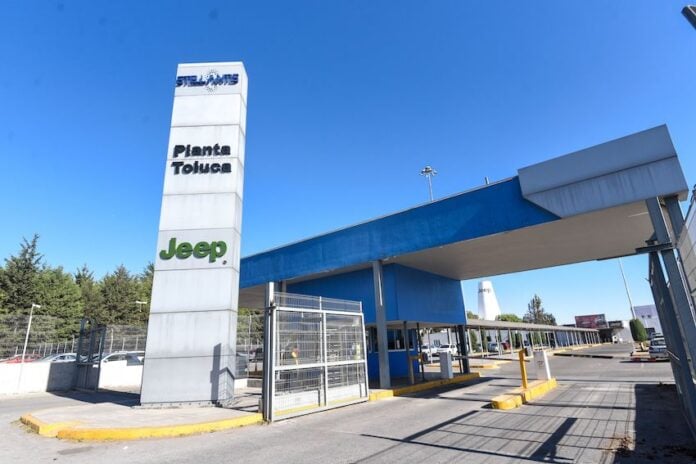
The Mexican automotive industry, modeled here by the Stellantis plant in Toluca, Mexico state, slipped from fifth place globally in 2024 to seventh in 2025. (Crisanta Espinosa Aguilar/Cuartoscuro)
After cracking the top five of global automotive manufacturers in 2024, Mexico has lost its grip on that elite ranking, a victim, it is believed, of U.S. President Donald Trump’s imposition of tariffs on cars and heavy trucks.
The International Organization of Motor Vehicle Manufacturers (OICA) reported on Wednesday that the two countries that Mexico had surpassed in 2024 — South Korea and Germany — had scrambled back up to the fifth and sixth position, producing 4,102,200 and 4,148,836 cars in 2025, respectively.
According to the International Organization of Motor Vehicle Manufacturers (OICA), the top seven auto producers in the world are, in order, China, the United States, Japan, India, South Korea, Germany and Mexico. (Unsplash)
Mexico took seventh place, producing 4,092,488 units, 2.6% fewer than in 2024.
China is the leading auto manufacturer in the world, producing 34,530,738 units (up by 10.4% over 2024), followed by the United States, with 10,243,844 (-2.6%); Japan, with 8,410,232 (+2.1%); and India, with 6,490,810 vehicles.
In April 2025, the United States implemented a 25% tariff on light vehicle imports, which was followed by a 25% tariff on auto parts in May. Then, in November, it introduced a 25% tariff on heavy truck imports and a 10% tariff on bus imports.
While the 25% tariff is only levied on the non-U.S. content in exported vehicles, the total tariff rate still stands at around 15%.
As it introduced higher tariffs on Mexico’s auto industry, the United States reached agreements with various countries to lower tariff rates to 15%, from around 30% to 40% previously. This has made other countries, such as Japan, South Korea, and the European Union, more competitive.
Mexico also attracted less gross fixed investment in its heavy vehicle sector last year.
Heavy truck assembly in Mexico decreased by 34.8%, to 138,954 units, representing almost 75,000 fewer vehicles, according to figures from Mexico’s National Institute of Statistics and Geography. Meanwhile, light vehicle manufacturing fell by 0.9%, to 3,953,494 units.
North America’s share of global automobile production decreased from 17.3% to 16.2% in 2025, while Asia-Oceania’s share rose from 59.3% to 61.4%, with China alone increasing its share from 33.7% to 35.8%.
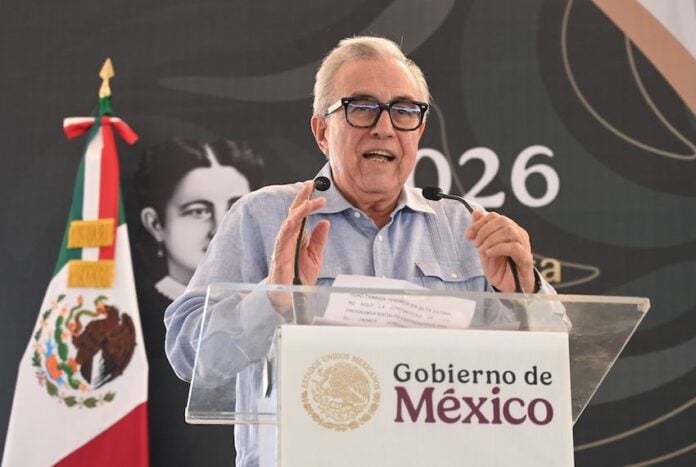
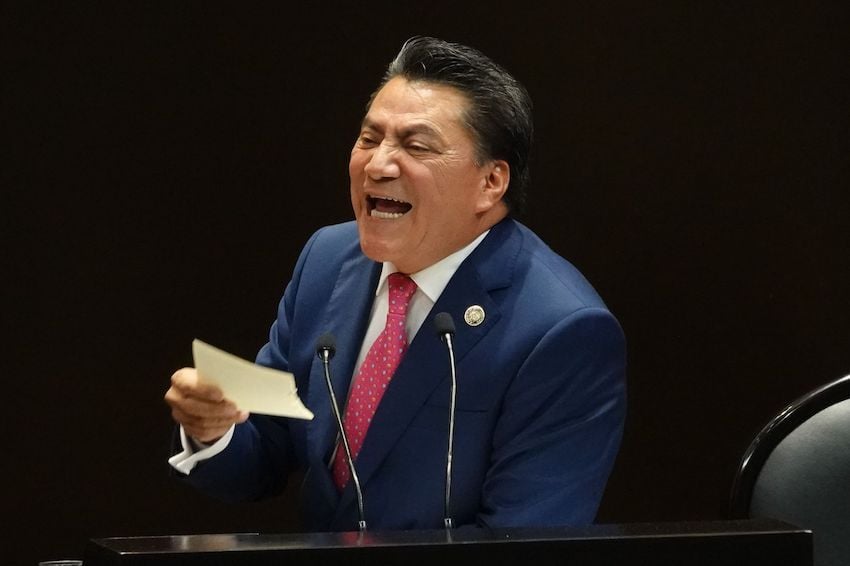
Sinaloa Governor Rubén Rocha Moya is accused of narcotics importation conspiracy; possession of machine guns and destructive devices; and conspiracy to possess machine guns and destructive devices. (Presidencia/Cuartoscuro)
Prosecutors in the United States have formally accused Sinaloa Governor Rubén Rocha Moya and nine other current and former Mexican officials of drug trafficking and related weapons offenses, alleging that they colluded with the Sinaloa Cartel, one of six Mexican criminal groups designated as foreign terrorist organizations by the U.S. government.
The U.S. Department of Justice announced the charges in a statement released on Wednesday. It said the governor has allegedly attended meetings with “the Chapitos” — sons of convicted drug trafficker Joaquín “El Chapo” Guzmán — and has allowed the Sinaloa Cartel faction they lead to “operate with impunity in Sinaloa.”
Rocha, who represents the Morena party, promptly rejected the accusations against him.
The Justice Department statement — attributed specifically to the U.S. Attorney’s Office in the Southern District of New York — notes that an indictment unsealed on Wednesday charges the 76-year-old governor and nine other men with trafficking and related weapons offenses.
Those nine men are:
Enrique Inzuna Cazarez, a Morena senator who represents Sinaloa in federal Congress.
Enrique Díaz Vega, a former finance minister in Sinaloa.
Dámaso Castro Zaavedra, deputy attorney general in Sinaloa.
Marco Antonio Almanza Avilés, former head of the Sinaloa Investigative Police.
Alberto Jorge Contreras Núñez, another former head of the Sinaloa Investigative Police.
Gerardo Mérida Sánchez, a former Sinaloa security minister.
José Antonio Dionisio Hipolito, a former deputy director of the Sinaloa State Police.
Juan de Dios Gámez Mendívil, the current mayor of Culiacán.
Juan Valenzuela Millán, a former high-level commander in the Culiacán Municipal Police.
All 10 suspects face sentences of up to life imprisonment if convicted on the charges they face.
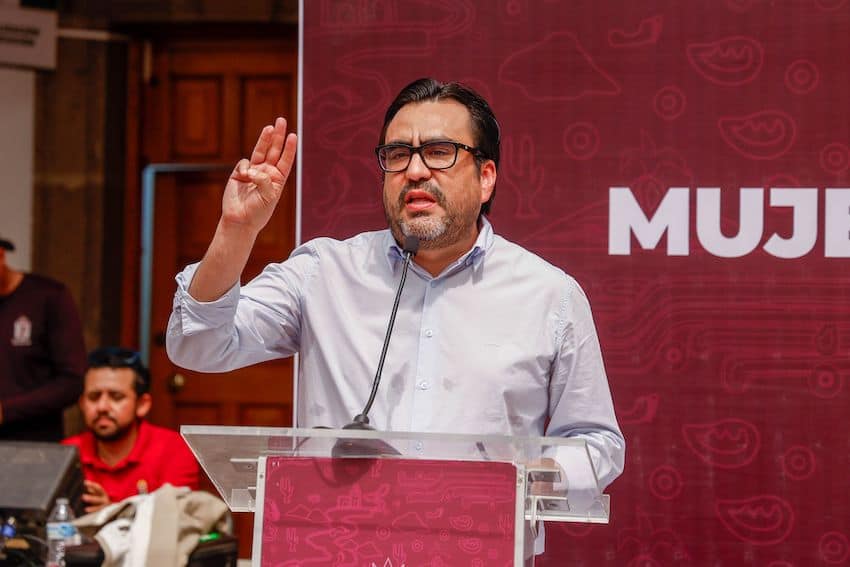
Mayor of Culiacán Juan de Dios Gámez Mendívil is one of four sitting Sinaloa officials who were charged with drug trafficking and weapons offenses by the U.S. Department of Justice on Wednesday. (José Betanzos Zárate/Cuartoscuro)
U.S. Attorney Jay Clayton said in New York on Wednesday that “the Sinaloa Cartel is a ruthless criminal organization that has flooded this community with dangerous drugs for decades.”
“As the indictment lays bare, the Sinaloa Cartel, and other drug trafficking organizations like it, would not operate as freely or successfully without corrupt politicians and law enforcement officials on their payroll. The support of corrupt foreign officials for deadly trafficking of drugs must end,” he said.
The charges against Rocha
The Justice Department said that Rocha — a former federal senator and university rector who has been in office since 2021 — is accused of narcotics importation conspiracy; possession of machine guns and destructive devices; and conspiracy to possess machine guns and destructive devices.”
It said that Rocha was elected governor “after the Chapitos allegedly helped him get elected by, among other things, kidnapping and intimidating his rivals.”
“In exchange, both before and after he became governor, Rocha Moya allegedly attended meetings with the Chapitos, at which he promised to protect the Chapitos as they distributed massive quantities of drugs to the United States,” the Justice Department said.
“… As Governor, Rocha Moya has allowed the Chapitos to operate with impunity in Sinaloa,” the statement added.
“I categorically and absolutely reject the charges brought against me by the U.S. Attorney’s Office in the Southern District of New York, as they lack truth and any foundation.”
The Department of Justice of the United States claims Rocha Moya has allowed the Chapitos to operate with impunity in Sinaloa. (José Betanzos Zárate/Cuartoscuro)
The governor said his innocence will be proven beyond doubt in due course.
“This attack isn’t solely against me, but also against the movement of the Fourth Transformation, its emblematic leaders and the Mexican women and men who represent that cause,” Rocha wrote.
The Fourth Transformation, or 4T, is the Morena-led political movement spearheaded by President Claudia Sheinbaum.
Rocha also wrote that the charges against him are part of a “perverse strategy to violate the constitutional order, specifically the national sovereignty enshrined in Article 40 of the Political Constitution of the United Mexican States, which our movement defends as an invariable and non-negotiable principle.”
The governor concluded his post with a message “to the people of Sinaloa.”
“I say to you that, with the courage and dignity that characterize us, we will demonstrate the lack of foundation of this libel.”
During a large anti-violence march in Culiacán last September, protesters demanded the resignation of Rocha, whose popularity fell due to his government’s failure to contain violence related to the Sinaloa Cartel infighting. There has long been speculation about his alleged involvement with the Sinaloa Cartel.
Justice Department accuses all suspects of colluding with the Chapitos
In its statement, the Justice Department said that “each of the defendants has participated in a corrupt and violent drug trafficking conspiracy with the [Sinaloa] Cartel to import massive amounts of fentanyl, heroin, cocaine, and methamphetamine from Mexico into the United States.”
Current Morena senator for Sinaloa Enrique Inzuna Cazarez is among the officials accused of assisting the Sinaloa Cartel conduct its drug trafficking activities. (morena.senado.gob.mx)
It said that “the defendants have played a variety of essential roles for the Cartel.”
The Justice Department said they have:
Allegedly shielded Cartel leaders from investigation, arrest and prosecution.
Caused sensitive law enforcement and military information to be provided to members of the Cartel and allied drug traffickers to assist the Cartel’s criminal activities.
Directed members of state and local law enforcement agencies, such as the Sinaloa State Police, the Investigative Police for the Sinaloa State Attorney General’s Office and the Culiacán Municipal Police, to protect drug loads stored in and transiting through Mexico to the United States.
Allowed brutal drug-related violence to be committed by members of the Cartel without consequence.
In exchange for that alleged collusion, “the defendants have collectively received millions of dollars in drug money from the Cartel,” the Justice Department said.
It also said that “as alleged, the defendants have been most closely aligned with the faction of the Cartel run by the sons of Joaquín Archivaldo Guzmán Loera, aka ‘El Chapo,’ the Cartel’s notorious former leader, who are themselves known collectively as the ‘Chapitos.'”
“The defendants have operated at all levels of government and law enforcement in Sinaloa and each abused their positions of trust and authority to help facilitate the Chapitos’ operations,” the Justice Department said.
“… For example, [Castro] Zaavedra, who is the Deputy Attorney General for the Sinaloa State Attorney General’s Office, has received approximately $11,000 U.S. dollars each month from the Chapitos and, in exchange, has protected Chapitos members from arrest and informed the Chapitos of planned U.S.-backed law enforcement operations.”
The Justice Department said that Millán, the former Culiacán Police commander, is also “charged with offenses related to his participation in kidnappings of a DEA source and the source’s relative that resulted in their deaths.”
“… In or about October 2023, Millán allegedly helped the Chapitos kidnap a DEA confidential source and the source’s relative, who the Chapitos then had tortured and killed, because the source was suspected of providing information to the Government in connection with this investigation.”
US ambassador responds to criminal charges against Rocha and other officials
U.S. Ambassador to Mexico Ron Johnson issued a statement in response to the unsealing of criminal charges against Governor Rocha and the other nine defendants.
“While we cannot comment on the individual facts of these indictments, and the legal process will need to play out, one thing is certain: corruption that enables organized crime and harms both our countries will be investigated and prosecuted wherever U.S. jurisdiction applies,” the statement said.
During a visit to Sinaloa last week, Johnson said that the private sector “needs certainty, security and an environment free of corruption” in order for investment in Mexico to “prosper.”
President Sheinbaum responded to that report by saying that “the fight against corruption” in Mexico is the responsibility of the Mexican government, the Federal Attorney General’s Office and state Attorney General’s Offices. As of 3 p.m. on Wednesday, she hadn’t commented on the U.S. accusations against Rocha and the nine other suspects, all of who hold or formerly held positions of power and influence in Sinaloa, one of Mexico’s most violent states.
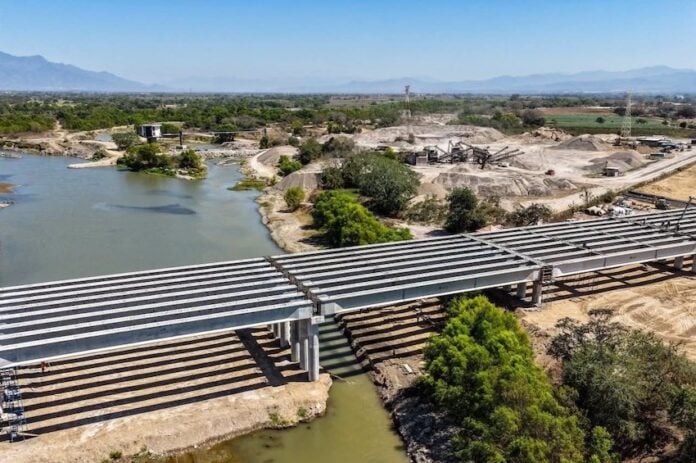
The Amado Nervo Bridge over the Ameca River had been projected to be ready in November but the current estimate is a July opening. (Gobierno Municipal de Puerto Vallarta)
The Amado Nervo Bridge, which will connect the states of Jalisco and Nayarit over the Ameca River, has reached 70% completion, according to the most recent reports.
With an investment of 930 million pesos (US $54.7 million), the 2-kilometer overpass is expected to benefit 480,000 residents by lopping 25 minutes off the commute times between the Riviera Nayarit and Puerto Vallarta.
With two lanes in each direction, the bridge will be able to handle some 20,000 vehicles per day. It will also have a bike lane and a pedestrian walkway. (gob.mx)
The bridge will have two lanes in each direction, authorities have decided, in addition to a bike path and pedestrian walkway. It is expected to improve traffic flow toward Federal Highway 200 and State Highway 544, speeding up transit for those whose origin or destination is the metropolitan area of Puerto Vallarta and Banderas Bay.
It will be toll-free and is expected to be completed by July of this year.
Named at President Sheinbaum’s behest after the turn-of-the-century Mexican poet and diplomat born in Tepic, Nayarit’s capital, the Amado Nervo Bridge is considered a priority project of the current administration, given that it will meet the demand of thousands of people who cross the Ameca River daily. The Infrastructure, Communications and Transport Ministry anticipates an average annual daily traffic of between 20,000 and 21,000 vehicles.
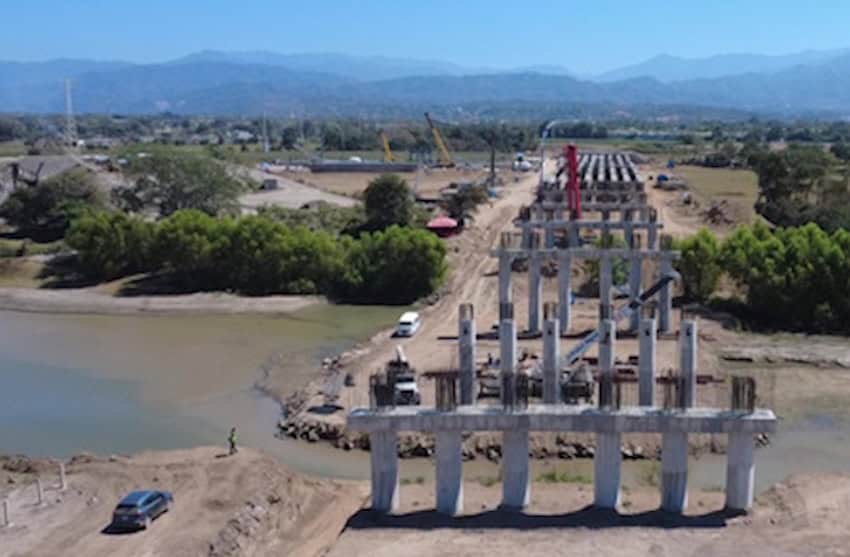
The major construction project includes 20 spans, each 40 meters long, forming a total of 800 meters of main structure. There are 1,220 meters of access roads, with 364 meters on the Nayarit side and 856 meters on the Jalisco side.
It includes key elements such as 21 pile-column supports, 126 piles with a diameter of 1.5 meters, and 160 beams. In total, some 2,970 tons of steel and 18,500 cubic meters of concrete are being used.
The project is part of President Claudia Sheinbaum’s National Road Infrastructure Plan 2025 to 2030, whose objective is to carry out modernization, expansion, rehabilitation and construction works of roads, highways and freeways in addition to 21 bridges and road interchanges.
Notable projects that are also expected to be completed this year include the Rizo de Oro Bridge in Chiapas — measuring 405 meters in length and featuring a unique “mixed arch” design — and the Nichupté Bridge in Quintana Roo, which involves the construction of five highly complex bridges.
Governor Campos is in hot water over her government's allegedly illegal involvement with the CIA. (Cuartoscuro)
Morena Senator Óscar Cantón Zetina on Tuesday accused Chihuahua Governor Maru Campos of treason due to her government’s alleged approval of the participation of U.S. Central Intelligence Agency (CIA) personnel in a drug lab raid in the northern state earlier this month.
Other senators with the ruling party also took aim at Campos, with one dubbing the governor “Lady CIA.”
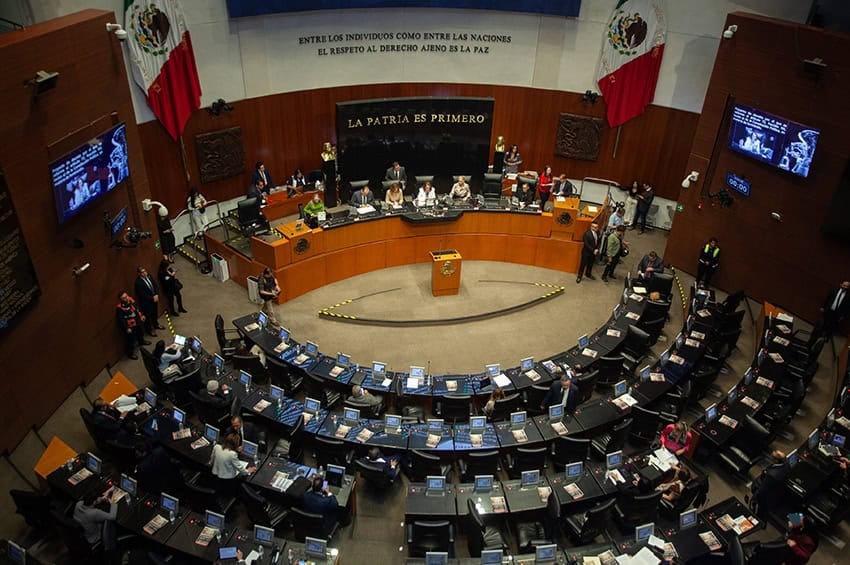
Speaking in the Senate on Tuesday, Morena Senator Óscar Cantón said that the alleged approval of the participation of CIA officers in the methamphetamine lab raid on the weekend of April 18 and 19 “could constitute the crime of treason as defined in article 123 of the federal criminal code.” (Cuartoscuro)
The alleged participation of four CIA officers in the Chihuahua operation without the knowledge or authorization of the federal government allegedly violated Mexico’s Constitution and National Security Law. Two of the CIA agents, and two security officials from Chihuahua, were killed in a car accident early on April 19. The CIA agents reportedly wore Chihuahua State Investigation Agency uniforms while working alongside state and federal security forces in the raid on the lab allegedly operated by the Sinaloa Cartel.
Speaking in the Senate, Cantón said that the alleged approval of the participation of CIA officers in the methamphetamine lab raid on the weekend of April 18 and 19 “could constitute the crime of treason as defined in article 123 of the federal criminal code.”
“It’s up to the Senate of the Republic … to establish with clarity that any conduct of local authorities that compromises sovereignty, encroaches on federal powers or places national security at risk must be exhaustively investigated, and, where appropriate, lead to political, administrative or criminal accountability,” he said.
Asked in an interview whether Campos had really committed treason, Cantón, president of the Senate’s Constitutional Points Committee, responded:
“Yes, yes, totally. This is the case because the Constitution explicitly states that anyone who deals with foreign agents or serves the interests of other countries is guilty of treason. That is why we in the Senate are carefully considering how we should respond to these attitudes, actions, deeds … by Chihuahua Governor María Eugenia [Maru] Campos.”
The Senate summoned Campos to appear before the Constitutional Points and Public Security Committees on Tuesday, but the governor declined to do so. In a letter to the Senate, Campos said she has always conducted herself in accordance with “the principles of legality and transparency,” and highlighted that she ordered the creation of a “Specialized Unit for the Investigation of the Events related to the Dismantling of the ‘El Pinal’ Drug Laboratory, in the municipality of Morelos, Chihuahua.”
She said that the specialized unit “has already sent information” to the Federal Attorney General’s Office, which is conducting its own investigation into the alleged participation of CIA agents in the drug lab operation.
“Due to all of the above, in order to safeguard the appropriate development of the ongoing investigations, … I inform you that at this time it is not possible to attend to the invitation [to appear in the Senate] in the terms set out,” Campos said.
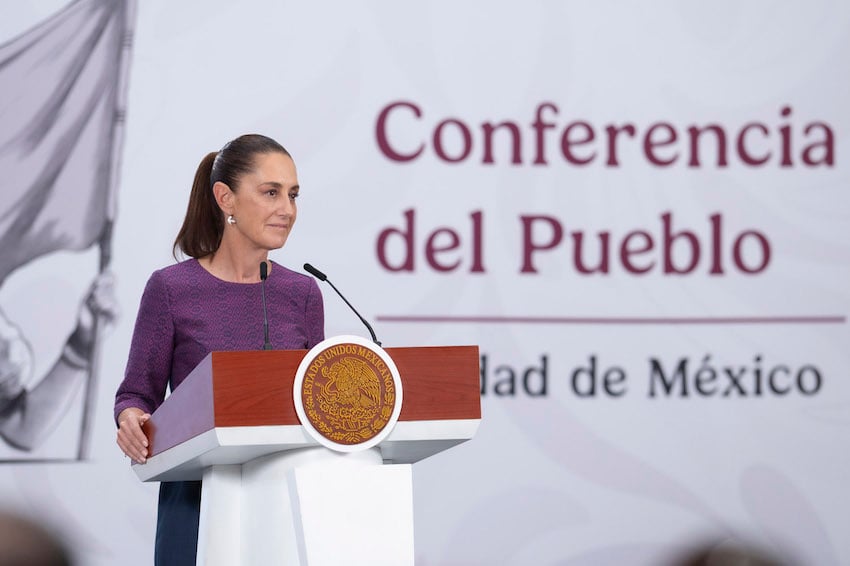
Sheinbaum has said repeatedly that her government wasn’t aware of any collaboration between the state of Chihuahua and U.S. authorities, which is a breach of Mexico’s National Security Law. (Saúl López/Presidencia)
President Claudia Sheinbaum has assigned most of the blame for the apparently secret, allegedly illegal security collaboration between Chihuahua and the United States to the Chihuahua government. She said on Tuesday that the U.S. government had committed to respecting its security agreements with Mexico and Mexican law after her administration sent a protest note to U.S. Ambassador Ron Johnson.
Other Morena lawmakers rebuke Campos
Senator Lucía Trasviña, president of the Public Security Committee, said Tuesday that the participation of U.S. personnel in the drug lab operation in Chihuahua amounted to a violation of national sovereignty. She accused Campos of disrespect for Mexico’s laws and said that her failure to appear in the Senate impeded accountability.
Senator Martha Lucía Mícher referred to the governor as “Lady CIA.” The terms “lady” and “lord” are used mockingly in Mexico to call out people — particularly the privileged — caught on video behaving arrogantly or abusively in public.
“About the lady who, in addition to not coming [to the Senate], … gives herself the luxury of violating Article 40 and other articles of the Constitution,” she said.
While Morena senators verbally attacked Campos, National Action Party (PAN) senators defended the governor, who also represents the PAN.
Senator Mario Humberto Vázquez Robles defended Campos’ decision not to appear in the Senate, asserting that Tuesday’s session “lacked conditions of institutional balance.”
He accused Morena of politicizing the issue of the alleged CIA involvement in the operation in Chihuahua, despite the operation resulting in the dismantlement of a large clandestine drug lab.
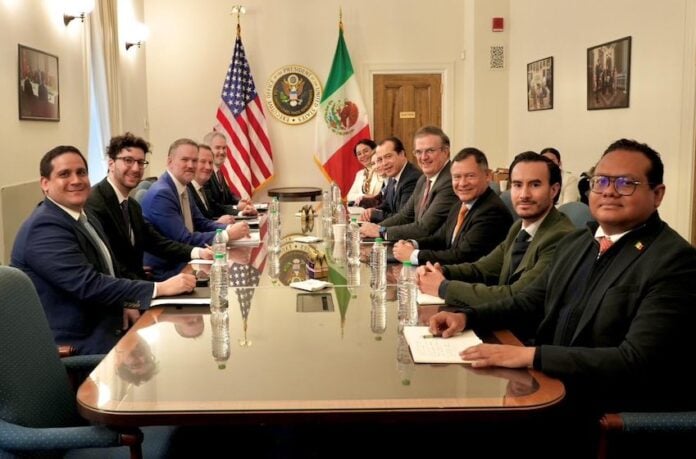
Representatives of Mexico and the Economy Ministry hold discussions regarding the review of the USMCA with the U.S. Trade Representative and his team in March 2026. (@m_ebrard/X)
Every time I sit down with American government officials, thought leaders and think-tankers in D.C., I come away more convinced: U.S. global economic priorities have shifted for good. The sooner we all grasp that shift and start building a new North American paradigm together, the less self-inflicted damage we’ll inflict on ourselves.
In previous essays, I’ve sketched the outlines of the regional utopia we could create — if we fully leverage our shared border, our complementary demographics, our small and medium-sized enterprises and our integrated energy platform. But before I write anything else, we need to talk about the single most important “contract” binding our three countries: the United States-Mexico-Canada Agreement (USMCA).
Nothing I’ve proposed is realistic unless the legal framework actively encourages it.
Trade deals come in two basic flavors. One type simply lowers barriers so cheaper goods can flow between distant economies; the CPTPP or the Free Trade Agreement between Mexico and the European Union, for instance, connects countries separated by oceans with little hope of deep productive integration. The other type aims to knit economies together at the factory floor. That’s what the USMCA (and its predecessor, NAFTA) was meant to be.
Right after NAFTA took effect, intra-regional exports exploded. Anyone writing at the turn of the century would have bet that North America was on track to become more integrated than Asia — and maybe, if you were feeling bold, as tightly woven as Europe. It didn’t happen. Integration plateaued, then slipped. The reason is painfully simple: China entered the game.
The United States pivoted toward a purely commercial relationship with Asia instead of doubling down on productive integration with its closest allies. We all know how that story ended.
U.S. Imports. The thicker the arrow, the higher the amount of imports from that country to the U.S. Source: McKinsey Global Trade Explorer
So where do we stand today? First, we need to agree on a basic premise: the U.S.-Mexico economic relationship is fundamentally different from any other the United States has. Mexico is America’s largest buyer of goods worldwide. In manufacturing, we trade mostly intermediate goods — we are literally co-producing the final product. As a result, our bilateral “deficit” looks very different from the one-way flows with countries that buy little or nothing from the U.S.
Goods made in Mexico increasingly incorporate U.S. inputs, and vice versa. OECD TiVA data drives the point home: U.S. value-added in Mexican manufacturing exports stands at 14.9%, compared with just 1.6% for China (co-producing vs. simple trading). The bilateral deficit, when viewed through a value-added lens, shrinks dramatically — by as much as 82% in the automotive case — because so much of what crosses the border is co-produced, not one-way dumping.
As Dr. Luis Foncerrada states, the needs of our two countries are deeply complementary. Mexico should no longer be viewed merely as a trading partner, but as an integral component of the U.S. productive system, a key element in any effective Asian containment strategy, a stabilizing force for regional macroeconomic stability, a vital partner in recovering the Western Hemisphere’s economic momentum and a trusted ally in advancing shared security goals across North America.
For more than two decades, however, we ceded ground to China and its partners, letting them steal technology, integrate vertically and compete against North America — essentially for free. Enough lamenting. It’s time to look forward.
What’s still holding us back
The current tariff regime often rewards competitors outside the region while weakening our own incentives. Sections 232 and 301 apply equally to allies and adversaries alike; they do little to reward regional content or vertical integration.
Take the auto sector: as a region, we lost roughly 2% of global market share to Asia last year. Uncertainty about the USMCA’s duration and the terms of its 2026 review makes companies reluctant to commit to long-term investments. Persistent irritants — non-tariff barriers, uneven energy regulations and unfair Chinese competition — continue to drag on us.
Trade volumes have soared, yet per-capita GDP convergence has lagged. Pure trade integration, it turns out, is not enough. We need joint industrialization.
How to rewrite the rulebook in 2026
The upcoming USMCA review — set for its first formal milestone on July 1, 2026 — gives us the perfect moment. A clean 16-year extension is still possible. Major surgery is improbable; targeted, high-impact upgrades are realistic and overdue.
1. Make tariffs work for regional integration, not against it.
Grant genuine preferential treatment to goods that meet (or exceed) Rules of Origin — especially in strategic sectors — by shielding them from Section 232-style national-security tariffs. Today, Mexico faces a disadvantage versus Japan, South Korea and the EU, which enjoy relatively flat tariffs despite lower North American content and often higher Chinese inputs.
2. Create real-time transparency on external risks.
Build a shared, public-facing dashboard tracking all significant Chinese (and other non-market) investments in Mexico and the U.S. — amounts, employment, input sources, final products and trade regimes used. True investment screening is the best disinfectant against circumvention.
3. Extend the agreement with teeth.
Extend the USMCA for at least another 16 years while monitoring compliance, measuring progress on non-tariff barriers and keeping pressure on irritants. Predictability is the oxygen for long-term investment needs.
4. Deepen vertical integration across the board.
Move explicitly from trade to joint industrialization. Prioritize binational investment in semiconductors, critical minerals, advanced manufacturing and the digital/AI ecosystem. Formalize a U.S.-Mexico Critical Minerals Partnership to counter China’s dominance. Harmonize energy regulations in a non-discriminatory way consistent with the agreement, unlocking more investment and revenue opportunities for U.S. firms while improving reliability for everyone.
5. Rebrand and reposition.
Launch a fresh, high-profile rebrand of the agreement that explicitly aligns it with U.S. national and economic security priorities. Call it what it is: the cornerstone of North American productive resilience in a world that no longer rewards unsupervised globalization.
The utopia within reach
Imagine a North America where a simple capacitor’s journey no longer zigzags through Asia for compliance theater — it flows smoothly from Michigan design to Juárez assembly to Ontario finishing, faster and cheaper every time. Where data centers and AI server plants in Guadalajara and Querétaro function as natural extensions of the U.S. tech ecosystem. Where supply-chain resilience is measured not in distance but in shared prosperity, strategic autonomy and immunity to shocks from outside our territory. Bringing jobs and production back to the hemisphere.
We already co-produce more than most regions dream of. With a slightly sharper rulebook — smarter tariffs, real transparency, predictable enforcement and a bias toward vertical integration — we can close the gap with Asia, deliver stronger GDP convergence, and build the world’s most dynamic, secure, and competitive bloc.
Pedro Casas Alatriste is the Executive Vice President and CEO of the American Chamber of Commerce of Mexico (AmCham). Previously, he has been the Director of Research and Public Policy at the US-Mexico Foundation in Washington, D.C. and the Coordinator of International Affairs at the Business Coordinating Council (CCE). He has also served as a consultant to the Inter-American Development Bank. Follow his Substack here.
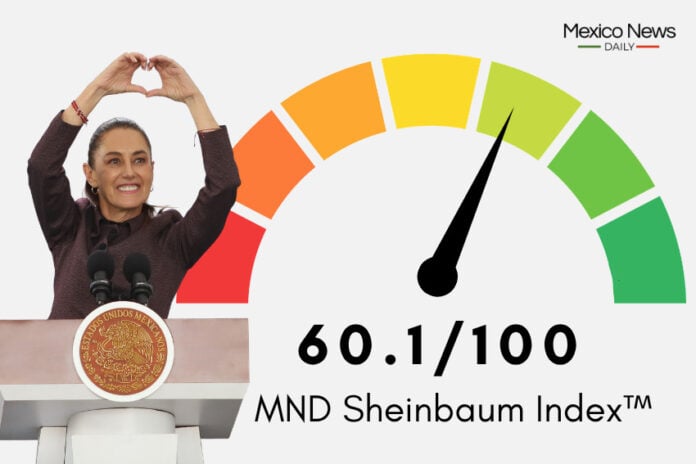
The Sheinbaum Index™ for March 2026 is 60.1/100. (Mexico News Daily)
THE MND SHEINBAUM INDEX™
Measuring Mexico’s president beyond the polls
MND Intelligence · Inaugural edition
Most of what you hear anecdotally about Claudia Sheinbaum fits into one of two buckets: breathless admiration or reflexive dismissal, often without a lot of evidence or data to support the opinion expressed. Neither tells you much about how Mexico is actually doing on her watch. The MND Sheinbaum Index™ was built to fill that gap.
The MND Sheinbaum Index™ takes eight of the most important government performance indicators and scores each one against a consistent methodology. Eight scores are then combined into a single monthly composite score — not to tell you what to think about Sheinbaum, but to give you, our readers, a more complete picture — backed by data — of how Mexico is actually performing under the president’s leadership.
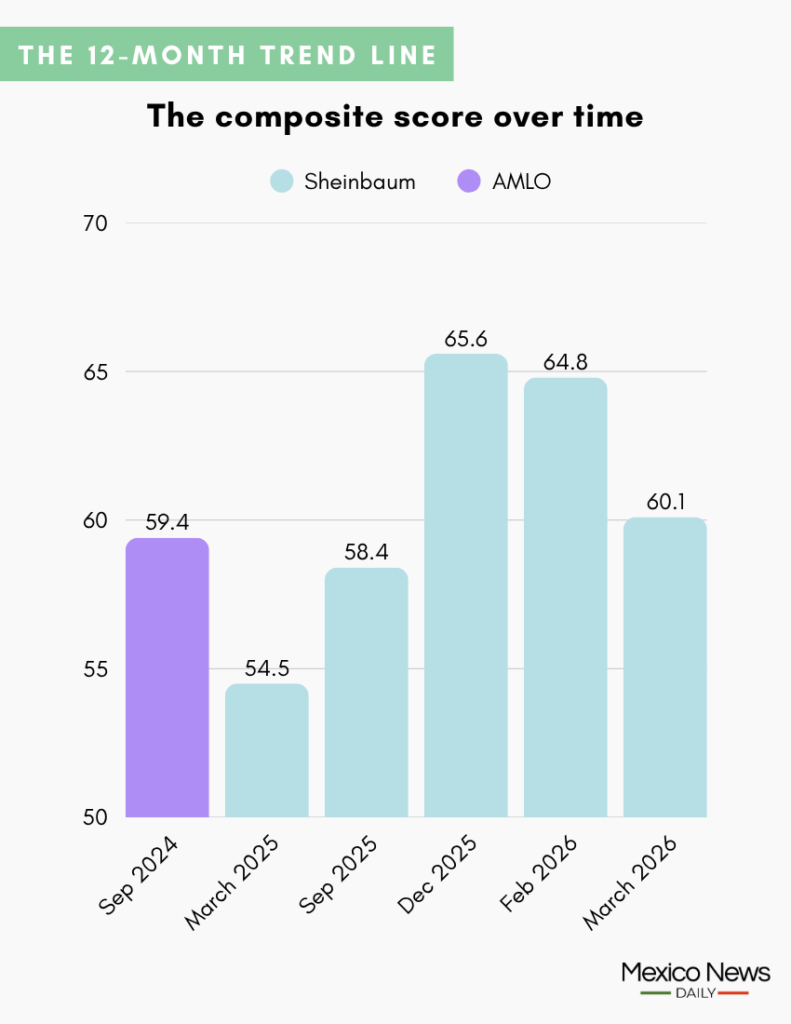
For reference, former president Andrés Manuel López Obrador (AMLO) scored a 59.4 in the final month of his presidency (September 2024).
How the Index Works
Each month, we use the MND Sheinbaum Index™ methodology to calculate a single score out of 100. The Index has eight equally weighted pillars — each contributing a score of up to 12.5 points to the final composite out of 100.
85–100: Exceptional — administration performing at a high level across nearly all indicators.
75–84: Excellent — administration performing well across most indicators.
60–75: Room for improvement — meaningful strengths, some areas of concern.
50–60: Mixed — passing marks overall.
Below 50: Broad underperformance — more indicators below benchmark than above.
The 8 pillars and how they are scored
1. Inflation:
In this pillar, we measure how close Mexico’s headline inflation rate is to the Bank of Mexico’s 3% target. On-target scores 100; each percentage point above costs 20 points.
2. Approval rating:
The score for this pillar is derived from the presidential approval ratings yielded by two leading polls, those conducted on a monthly basis by El Financiero and Mitofsky/El Economista. The average of the two approval ratings produces a percentage score, which is then converted into a score out of 12.5. For example, an average approval rating of 70% yields a pillar score of 8.75 out of 12.5 (70% of 12.5).
3. Economic growth:
Annual GDP growth benchmarked at 2%, which scores 60. Each percentage point above adds 20 points; each point below deducts 20. Contraction scores zero.
4. Security:
This pillar tracks the year-on-year change in the national homicide rate, per the National Public Security System data reported at President Sheinbaum’s morning press conference. A 0% annual change scores 30 — because stagnation on violence is not good enough. A 50% reduction scores 100.
5. Employment:
Equally weighted between year-on-year changes in unemployment and informality. A score of 50 means no change; above 50 means improvement, below 50 means deterioration.
6. Business confidence:
This pillar is equally weighted between INEGI’s monthly business confidence score and the most recent available foreign direct investment growth rate. FDI indicates whether the international business community believes in Mexico’s trajectory; business confidence data reflects domestic private sector sentiment.
The business confidence sub-component anchors at 50 — a neutral INEGI reading scores 50, with each one-point index shift adding or deducting 5 points. FDI anchors lower: zero growth scores only 40, with each 10 percentage points of growth adding 20 points, capped at 100 for growth of 30% or above.
7. Tourism:
Year-on-year growth in international arrivals. Zero growth scores 50; ±20% growth hits the 100/0 ceiling and floor. Updates on a one-month lag.
8. Labor poverty:
Equally weighted between the share of Mexicans living in households where combined labour income is insufficient to cover a basic monthly food basket per person, and real per capita income growth. Updates quarterly.
A score above 50 means progress is being made toward reducing labor poverty and wages are rising. A score below 50 means the opposite.
* MND acknowledges that President Sheinbaum does not directly control outcomes in all eight pillars. For example, global commodity prices and tariff decisions in Washington affect Mexico’s inflation and growth rates. The Index measures what is happening in Mexico on Sheinbaum’s watch.
A note on education and healthcare
Two pillars conspicuously absent from the Index are education and healthcare — not because they don’t matter, but because official data on them is not published monthly, or even quarterly.
The Sheinbaum Index™ over the past year
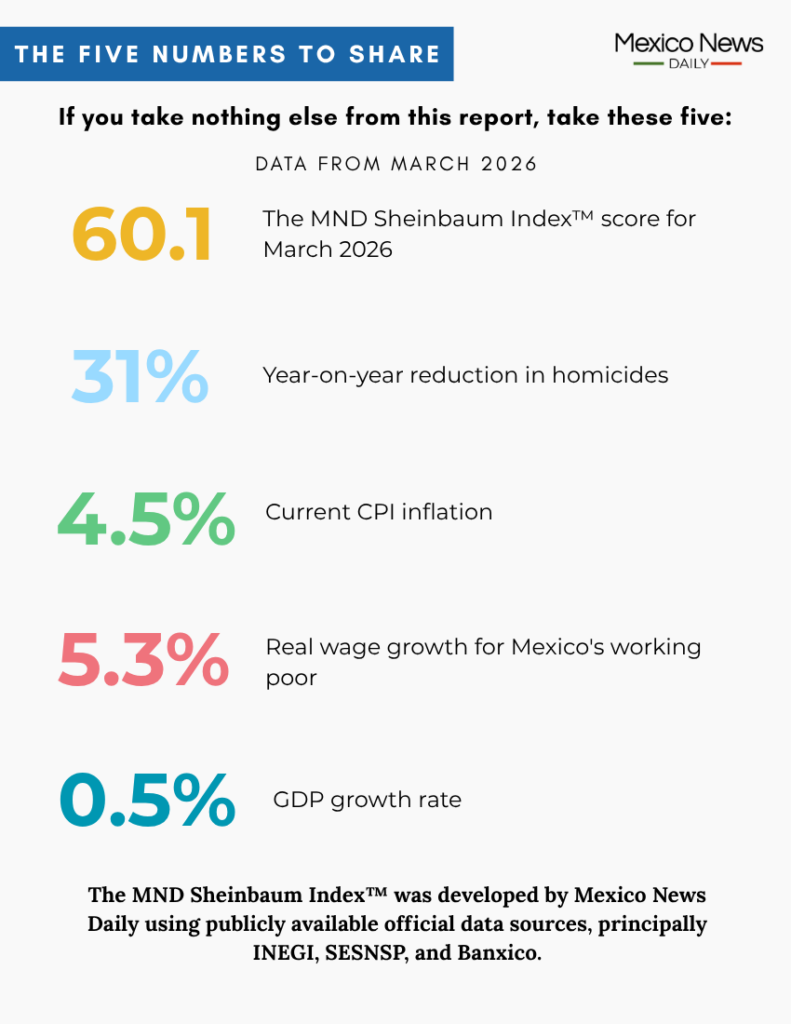
In March 2025, the MND Sheinbaum Index™ score was 54.5 — above the neutral threshold of 50, but held back by negative economic growth, which scores zero under the index’s methodology and weak security gains.
The Index score climbed steadily through the year as homicides fell sharply, peaking at 65.6 in December 2025 when annual GDP growth rose to 2.4%.
By March 2026, the composite had retreated to 60.1. Inflation climbed to 4.59% — well above Banxico’s 3% target — and annual growth slowed to just 0.5%, dragging both pillars down.
The security and labor poverty pillars remained relative strengths, but could not offset economic headwinds.
In March 2026, the MND Sheinbaum Index™ score of 60.1 was below its December peak of 65.6, but a score above 60 indicates solid overall performance — reflecting an administration with genuine strengths, but facing significant headwinds.
SHEINBAUM INDEX™ PILLARS FOR MARCH 2026
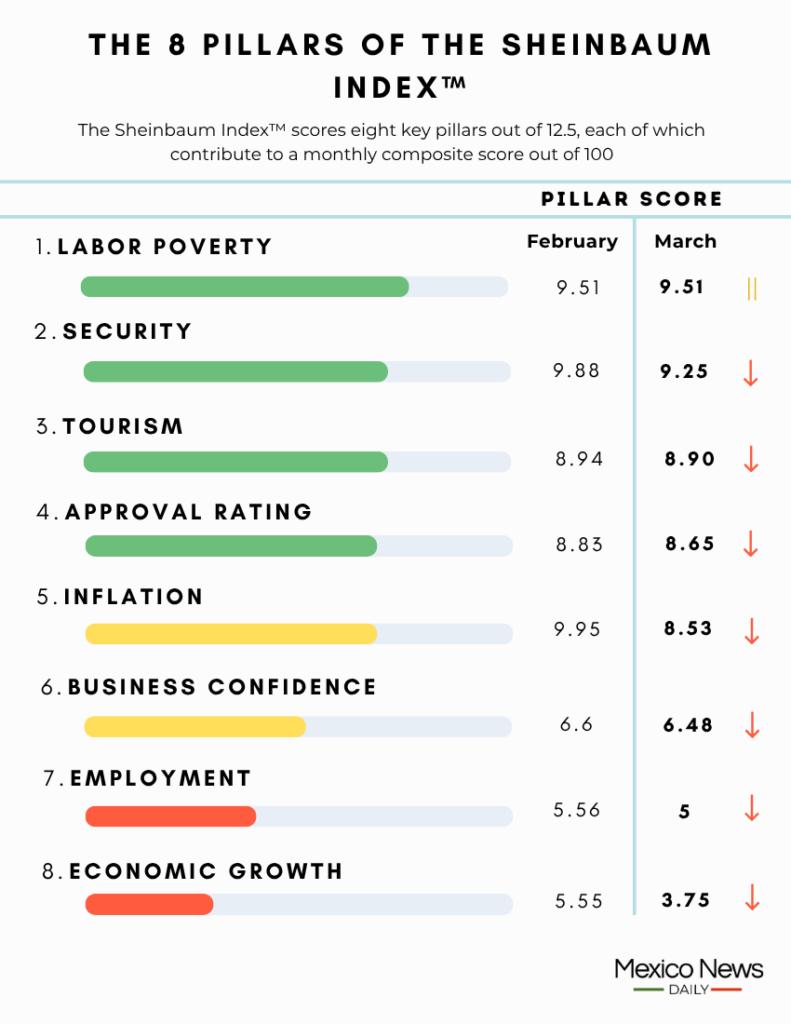
Scores for seven of the eight Sheinbaum Index™ pillars declined in March compared to February. Economic growth had the sharpest drop, followed by inflation.
🟢 ⏸️ LABOR POVERTY:
Top contributor to overall index score. The number of working Mexicans living in poverty declined 3.1 points annually to 32.3%, while incomes grew 5.2% year-over-year. NO CHANGE in pillar score compared to February as labor poverty data is published quarterly. Pillar score remained steady at 9.51 out of 12.5.
🟢 ⬇️ SECURITY:
Second-best pillar for the Sheinbaum administration in March. Homicides declined 31.4% annually in March, a slightly lower reduction than the 35% decline in February. Pillar score fell from 9.88 out of 12.5 in February to 9.25 in March.
🟢 ⬇️ TOURISM (This pillar has a one-month lag):
Third-highest contributor to overall index score. International arrivals increased 8.5% in February, down from 8.6% in January. Pillar score fell from 8.94 out of 12.5 in February (based on January data) to 8.90 in March.
🟢 ⬇️ APPROVAL RATING:
Fourth-best pillar for the Sheinbaum administration in March. The president’s average approval rating fell to 69.2% in March from 70.6% in February. Pillar score fell from 8.83 out of 12.5 in February to 8.65 in March.
🟡 ⬇️ INFLATION:
Fifth-highest contributor to overall index score. Mexico’s headline inflation rate rose to 4.59% in March from 4.02% in February. Pillar score fell from 9.95 out of 12.5 in February to 8.53 in March.
🟡 ⬇️ BUSINESS CONFIDENCE:
Third-lowest contributor to overall index score. Mexico’s business confidence score, as measured by a monthly INEGI survey, fell to 48.4 in March from 48.8 in February. There was NO CHANGE in foreign direct investment between February and March, as the most recent data for both months was the yearly total for 2025 (+10.8%). Pillar score fell from 6.6 out of 12.5 in February to 6.48 in March.
🔴 ⬇️ EMPLOYMENT:
Second-worst pillar for the Sheinbaum administration in March. Mexico’s unemployment rate increased by 0.2 percentage points annually to 2.4%. The informality rate increased by 0.5 percentage points compared to March 2025. Pillar score fell from 5.56 out of 12.5 in February to 5 in March.
🔴 ⬇️ ECONOMIC GROWTH:
Worst pillar for the Sheinbaum administration in March. Annual GDP growth fell to 0.5% in March from 1.2% in February. Pillar score fell from 5.5 out of 12.5 in February to 3.75 in March.
What to watch
The next MND Sheinbaum Index™ will be published in late May using data from April.
Here are three things to look out for in the April Index:
Inflation: Data already shows that inflation eased slightly in the first half of April, falling to an annual headline rate of 4.53% from 4.59% across Mexico in March. It remains to be seen whether the downward trend will be maintained across April and result in an improved index score.
Tourism: International arrivals increased more than 8% annually in January and February, but March numbers could be affected by the widespread outbreak of violence that followed the killing of cartel leader Nemesio “El Mencho” Oseguera Cervantes in a military operation in Jalisco on February 22. The unrest came late enough in February to leave that month’s arrivals data largely unaffected — but its impact on traveller confidence in March may show up in the next index. Numbers for March — which will be included in the April index due to a reporting lag — will be published in early May.
Economic growth: This pillar was the worst performer on the MND Sheinbaum Index™ in March, as the economy expanded just 0.5% annually. Will GDP growth rebound in April and give the president’s overall score a boost?
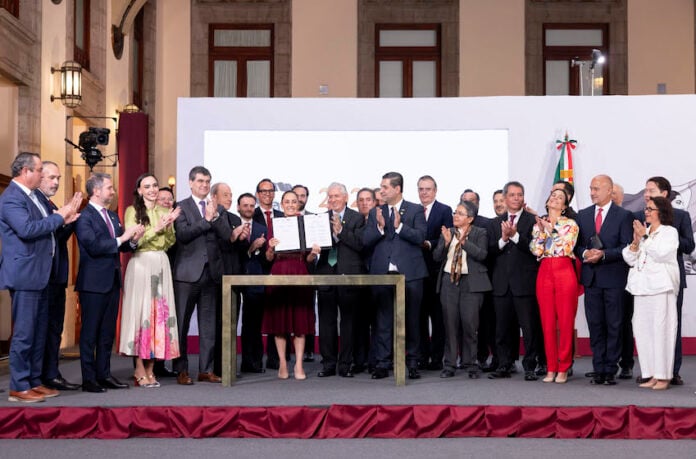
The president was accompanied on Wednesday by members of her cabinet and the president of the National Chamber of the Iron and Steel Industry. (Gabriel Moroy/Presidencia)
Sheinbaum’s mañanera in 60 seconds
⛓️ Steel deal: Sheinbaum signed a landmark agreement committing the federal government to purchase only Mexican steel for public infrastructure projects, with Anti-Corruption Minister Raquel Buenrostro designated as the deal’s enforcer.
🇲🇽 Plan México push: Economy Minister Marcelo Ebrard framed the pact as a strategic move for national autonomy, stressing that Mexican steel underpins nearly every major industrial supply chain in the country.
🤝 Industry on board: Canacero chief Sergio de la Maza called the agreement a “decisive step” for import substitution, saying it protects around 90,000 direct jobs and provides certainty for over $8 billion in ongoing investment.
Why today’s mañanera matters
At today’s mañanera, the federal government presented what President Claudia Sheinbaum portrayed as a landmark pact with the Mexican steel industry. The agreement includes a commitment from the government to purchase Mexican steel for public infrastructure projects.
It also recently renewed tariffs on steel from China and other Asian nations as it seeks to protect a strategic national industry. The announcement of the steel deal today was another way in which the government is aiming to ensure the long-term survival of the Mexican steel industry.
Agreement for the Promotion of the Mexican Steel Industry
At the start of her press conference, Sheinbaum announced that the government was entering into an agreement aimed at boosting the Mexican steel industry.
The “historic” agreement — which was signed at the conclusion of the mañanera — is “for the promotion of the Mexican steel industry,” she said.
“The objective, as you know, is Plan México. Plan México has the goal of strengthening national production and strengthening supply chains within our economy,” Sheinbaum said.
🔴 La presidenta firmó un acuerdo para impulsar la industria siderúrgica y fortalecer el mercado interno.
El plan busca que las compras públicas prioricen proveedores nacionales, con la participación del gabinete económico y de Raquel Buenrostro.pic.twitter.com/AxrOQ2cVDr
The president said that what the federal government is “essentially” committing to is to purchase only Mexican steel for public infrastructure projects. The government is an important customer for the steel industry, purchasing large quantities of the alloy for a range of purposes, including construction, rail and defense projects.
Sheinbaum said that Anti-Corruption and Good Governance Minister Raquel Buenrostro will be the “guardian” of the agreement, or the person who will ensure that the commitment to buy only Mexican steel is met.
Buenrostro said that “a collaboration agreement between the public sector and the steel and construction industries” has been established.
“With what aim? Well, with the aim of developing mechanisms that guarantee the strengthening of employment, economic growth and the industrialization of our country,” she said.
Buenrostro explained the details of the public-private agreement, noting that the government and the Mexican steel industry will reach deals to guarantee the supply of high-quality steel at “fair prices.”
She indicated that private companies and private-public joint ventures would qualify for government support if they use Mexican steel in their projects.
“We want public, private and mixed investments to receive support … in such a way that the Mexican steel industry is strengthened,” Buenrostro said.
“… Where the government buys [Mexican steel], the people win,” she said.
The narrator of a short video Buenrostro presented said: “In the face of a complex international environment, we’re betting on Plan México to strengthen the internal market and support national employment. Today, the Agreement for the Promotion of the Mexican Steel Industry is the [government’s] response to strengthen national content in public works.”
Ebrard: The Mexican steel industry is ‘extraordinarily important for autonomy’
Economy Minister Marcelo Ebrard noted that the agreement announced on Wednesday came after a meeting between Sheinbaum and representatives of the National Chamber of the Iron and Steel Industry (Canacero).
“An evaluation of where we are was done,” he said.
“It’s an extraordinarily important industry for [Mexican] autonomy, for the security of our productive chain, I would say,” Ebrard added.
“In other words, the Mexican steel industry is responsible for the production of many inputs for almost all the industrial chains of Mexico,” he said.
“That’s why we have to take great care of it. In addition, it is of great importance to employment, it generates value,” Ebrard said.
The economy minister noted that “the agreement presented today” is “in essence” a commitment from the government to prioritize the purchase of Mexican steel and other locally produced goods.
Economy Minister Marcelo Ebrard noted that the agreement announced on Wednesday came after a meeting between Sheinbaum and representatives of the National Chamber of the Iron and Steel Industry (Canacero). (Gabriel Moroy/Presidencia)
“We have to import some things, but we have to make the effort to first look at what we make in our country,” Ebrard said.
The economy minister last month presented a new policy of increasing government purchases based on Mexican content, which will direct federal entities to prioritize national content over lower costs.
Canacero chief: Agreement is a ‘decisive step’
Sergio de la Maza, president of the National Chamber of the Iron and Steel Industry, expressed his satisfaction with the establishment of the Agreement for the Promotion of the Mexican Steel Industry.
The agreement, he said, is a “decisive step to strengthen our sector, increase national content and make progress in the substitution of imports within the framework of Plan México.”
After expressing his gratitude to Sheinbaum, de la Maza declared that the steel industry agrees with this “shared effort” and takes on the “assignment” of supplying high-quality steel to the Mexican government “with the responsibility and commitment that Mexico demands.”
“This agreement is key to supporting around 90,000 direct jobs, giving certainty to ongoing investments of over US $8 billion and strengthening the competitiveness and sustainability of our industry,” he said.
Last month, de la Maza said that cooperation with the government will allow Mexican steel to compete “in a complex trade environment featuring market distortions primarily due to overcapacity and unfair trade.”
By Mexico News Daily chief staff writer Peter Davies (peter.davies@mexiconewsdaily.com)
San Miguel de Allende sees conflict in May, as concerns over construction projects flare up. (Ria Talken)
April has brought strife to San Miguel de Allende, as city residents object to construction projects and public works, as well as concerns about the upkeep of the city’s Parque Juárez. In good news however, the city celebrates both a large international investment and the opening of a brand new health facility.
Dispute heats up over green space in Los Frailes
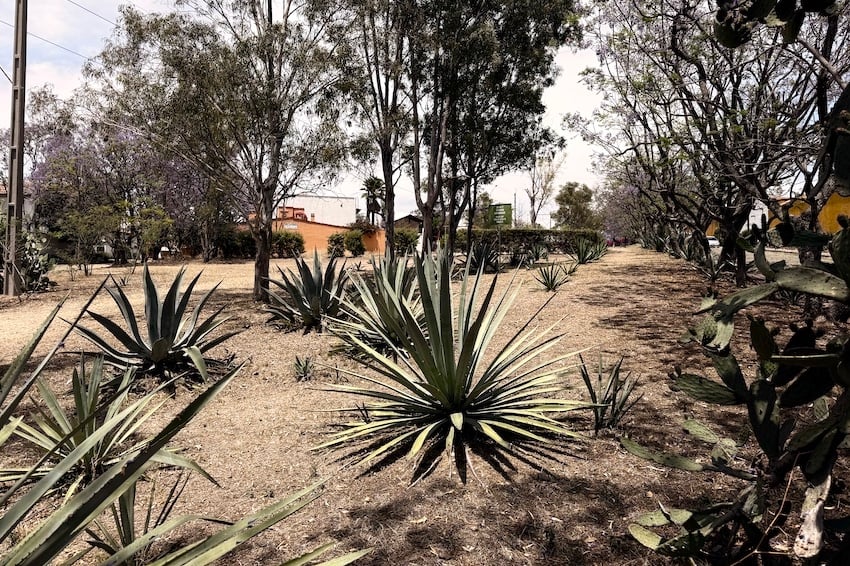
Parque Rodrigo in the Los Frailes green space has native trees and plants.
Some long-term residents of the 700-home Villa de los Frailes subdivision southwest of San Miguel have organized to oppose condo construction on the largest green space there. They say the original developers deeded it to the municipal government back in the 1970s because of existing high-voltage electric lines.
The space contains a children’s park named Parque Rodrigo for a resident family’s son, who died at age 17. The residents say his parents have paid to maintain the park for many years, and that what “began as one family’s tribute became a gift to our entire community.”
Despite the history, the residents say developers received permission from the previous municipal administration to put lots on the green space and build a number of condos there. Two years ago, they say, a backhoe showed up at the park and destroyed stairs, a walkway and two planters before being stopped.
The residents recently posted a petition on change.org, where more than 560signatures of the goal of 2,500 have currently been recorded. It asks the current municipal government to acknowledge the original agreements creating the green space and the legal owner of the property, the Comisión Federal de Electricidad, which the petition says doesn’t want the space sold or developed.
The residents plan to present the petition signatures and accompanying testimonials to Mayor Mauricio Trejo and ask him to declare Parque Rodrigo a permanently protected green space.
Mexico’s first hospice inaugurated in San Miguel
Architect’s rendering of Mitigare Hospice Care, the first of its kind in Mexico. (All photos courtesy of Mitigare Cuidados Paliativos A.C.)
San Miguel now has an inpatient and outpatient hospice facility, which was inaugurated March 29 at Prolongación Cuesta de San José 93 near the turnoff to the El Charco del Ingenio Botanical Garden.
The citydonated the land for the Lee Carter Center’s Hospice Care Mitigare for 100 years, with taxes and permit fees included, and construction began in 2024. The Rotary Club of San Miguel de Allende-Midday provided some of the initial and ongoing funding.
Care is provided depending on ability to pay based on a scale developed by Guanajuato state. For more information, the hospice facility can be reached via email at contacto@mitigare.org or by calling 415 152 5202. Hours are Monday through Friday from 9 a.m. to 4 p.m.
Falling trees and limbs in Parque Juárez spark concern
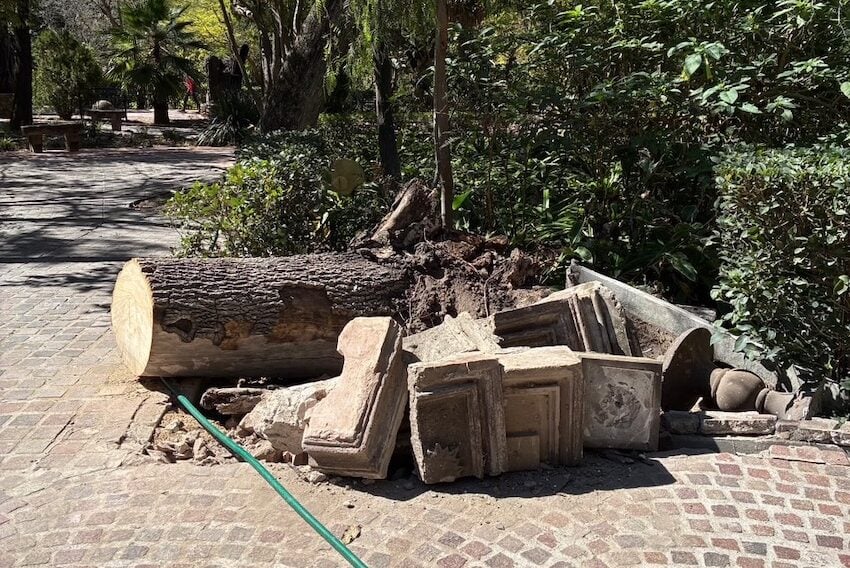
City workers cut up a tree that recently fell in Parque Juarez and destroyed a concrete feature.
Residents near Parque Juárez in Centro are expressing concern about dead trees and limbs falling in and around the park. One told Mexico News Daily that city workers will remove fallen trees and branches but won’t commit to prevention activities to avoid future problems.
“The large ash in the corner of the lavaderos is dead, and it has dropped three major branches over the past two years, with [the] most recent roughly six months ago,” one nearby resident, who asked not to be named, told Mexico News Daily.
Some of the ash trees in the park show evidence of pests or woodpeckers, the resident said, and large limbs and sometimes an entire tree will fall down and land on public pathways or near areas where people sit or on streets where they drive.
“I have seen a few dead trees removed over the past few months from the park, but I fear we will see something much worse in the days ahead if nothing happens,” the resident said.
El Charco asks state governor to halt sports project expansion
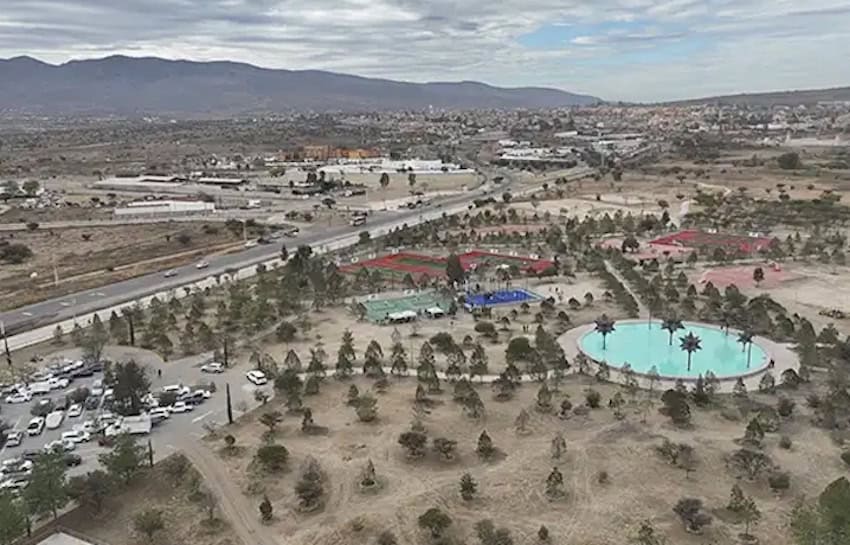
The Bosque Deportivo project has drawn ire from local residents, who have petitioned Guanajuato state governor Libia García to get involved. (Bosque Deportivo)
Managers of the El Charco del Ingenio Botanical Gardenhave reportedly asked the governor of Guanajuato to stop expansion of the “Bosque Deportivo” sports facilities project due to concerns that it encroaches on the zone of ecological preservation where El Charco is located.
The president of El Charco’s board and its director recently told Guanajuato Gov. Libia García that state funding should not be used for the project, and that San Miguel’s mayor had allowed the municipal government to construct roads, plant non-native trees and remove natural vegetation without going through the proper legal procedures.
Constructionbegan in 2022 at the 42-hectare Bosque Deportivo, which now includes tennis, pickleball and basketball courts, walkways, a large parking area and a fountain. It is said to be the largest sports complex in San Miguel at 14 times larger than Parque Juárez.
Conagra makes major investment in Bajio-area plant
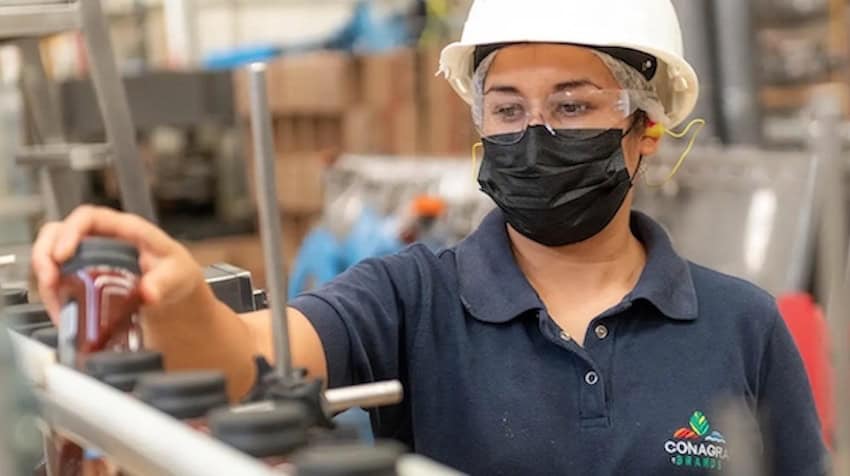
A worker at Conagra’s Irapuato plant about an hour southwest of San Miguel. (Conagra Brands)
Conagra Brands Mexico is investing 550 million pesos (about US $31.6 million) to upgrade and expand its Irapuato production plant about an hour southwest of San Miguel de Allende. The facility manufactures products sold under the ACT II, Del Monte and Hunt’s brands and is responsible for nearly all of the U.S. company’s sales in Mexico.
The company called the Irapuato plant a “strategic pillar” for Conagra in Mexico, where it employs more than 800 people. The facility, which opened in 1962 and was acquired by Conagra in 2000, is in an area of the Bajio region with access to important raw materials such as corn, potatoes and carrots, the company said.
“Mexico is a key market for Conagra Brands, and this investment reaffirms our confidence in the country and its talent,” said Alberto Cavia, CEO of Conagra Brands Mexico.
Cathy Siegner is an independent journalist based in San Miguel and Montana. She has journalism degrees from the University of Oregon and Northwestern University.
MEXICO CITY — Following the discovery of two unauthorised CIA agents operating in Chihuahua last weekend, the Mexican Ministry of Security launched a nationwide audit Monday to determine whether additional undisclosed US intelligence personnel might be present on Mexican soil.
The audit, which cross-referenced entry records, diplomatic registries, and what a spokesperson called “certain patterns of behaviour that in retrospect seem obvious,” identified 34 individuals operating without authorisation across eleven states. None of them had informed the federal government of their presence. Several had been in Mexico long enough to acquire loyalty cards.
A full enquiry is taking place into the extent of the infiltration. (Andrea Murcia/Cuartoscuro.com)
Among those identified:
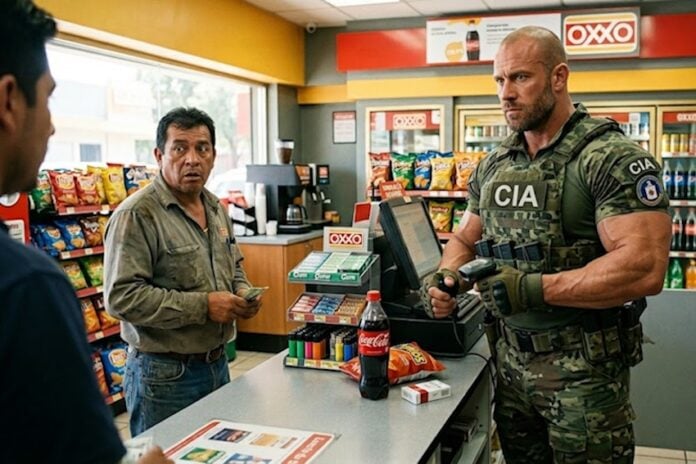
A man operating a register at an OXXO in Monterrey, Nuevo León, since approximately 2023. He was found to have memorised the inventory system, learned conversational Spanish with a Regio accent, and developed what colleagues described as “a genuine friendship with the Sabritas delivery driver,” which investigators noted was either impressive field craft or a man who had simply been there too long.
Two individuals employed at a Pemex station in Ciudad Juárez — one on the pump, one in the attached mini-mart — who entered Mexico as tourists in 2024 and apparently decided the cover was working well enough to extend indefinitely. The pump attendant had, by the time of his identification, received an employee of the month certificate. It is displayed above his locker. He asked if he could keep it.
A woman working at a Farmacias Similares in Culiacán who had, over eighteen months of unauthorised intelligence gathering, also qualified as a licensed pharmacy technician under Mexican federal health regulations. Farmacias Similares said she was one of their best staff members and asked if there was any way to resolve this administratively.
A man identified at a taquería in Hermosillo, Sonora, where he had been working the comal since early 2025. Investigators noted his intel reports, recovered from an encrypted device, contained unusually detailed observations about regional narco movement patterns and also, separately, the correct ratio of fat to lean for ideal al pastor, which he had apparently perfected over several months of unauthorised field work. Local customers, informed of the situation, said they were sorry to see him go and asked if he had left the recipe.
The CIA declined to comment on any of the individuals identified. The US Ambassador described all thirty-four as “embassy personnel,” a statement the embassy has now applied to individuals whose most recent professional activity included mopping a Soriana in Saltillo.
Sheinbaum, at her morning press briefing, confirmed that she hopes this represents the full extent of the situation. Investigators said they were still going through the OXXO records. There are 22,000 OXXO locations in Mexico. The audit is ongoing.
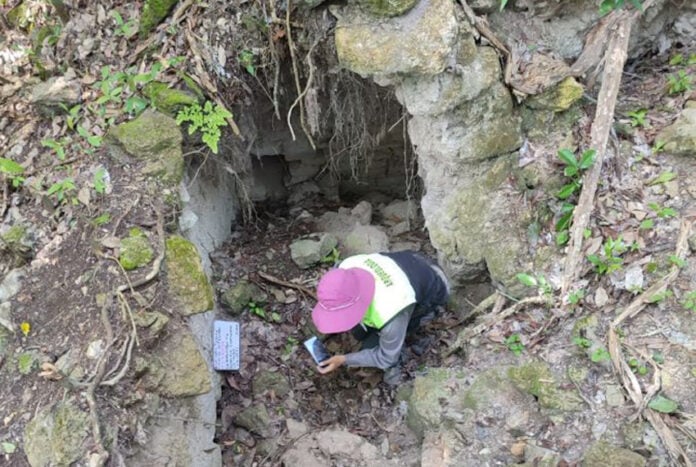
INAH officials were alerted to the site of the Classic Maya city by locals during the construction of the Maya Train line. (INAH)
Mexican archaeologists have registered a sprawling ancient Maya city in southern Quintana Roo after local residents flagged the site during work on the Maya Train project.
According to the National Institute of Anthropology and History (INAH), the settlement includes around 80 structures and Petén‑style architecture spread across at least 100 hectares in Othón P. Blanco, a municipality including coastal and jungle areas south of the Bacalar Lagoon. INAH publicly announced the registration of the site on Monday.
El Jefeciño
Specialists say the city — named El Jefeciño (meaning roughly “the Little Boss”) for the monumental scale of its ruins — likely dates to the Early and Late Classic periods, between A.D. 250 and 900, when Petén-style Maya architecture flourished in the region.
Petén is a lowland jungle region centered in northern Guatemala, part of a wider basin that extends into Mexico and Belize; it’s home to major Maya cities such as Tikal and Calakmul.
In archaeology, “Petén style” refers to a Classic Maya architectural tradition from the region.
In the case of El Jefeciño, the new city — discovered via a resident report submitted during 2023-24 work on the Maya Train — is marked by large vaulted buildings, rounded and recessed corners and apron moldings.
Culture Minister Claudia Curiel de Icaza noted that the finding is a good example of how INAH’s work “recognizes the value of the communities in safeguarding a historical memory that belongs to everyone.”
Several archaeologists led the registration work as part of the Tren Maya Archaeological Salvage Project on Section 7. Their survey suggests the city may extend beyond the 100 hectares already mapped.
At the site’s core, they documented an area of five large structures forming a C-shaped plaza. The buildings are between 11 and 14 meters high (36 to 46 feet) and 16 to 40 meters long (52 to 131 feet).
In one building, they recorded stucco fragments with murals painted in white and orange with red stripes, along with pieces of a human skeleton that may belong to a burial context.
Since no excavation has begun, the evidence remains in place. It includes three well-preserved Maya vaults — stone-roof structures inside temples, palaces or other buildings.
INAH plans future airborne LiDAR mapping to refine the city’s layout and guide conservation, consolidation and further exploration.
A pre-Columbian settlement with a similar number of structures was located in the same municipality, Othón P. Blanco, about six or seven years ago, near the coastal village of Mahahual. However, while El Jefeciño includes large, monumental buildings, Mahahual is mainly domestic structures such as homes and walls.
Experts say both settlements could help clarify how ancient Maya communities in southern Quintana Roo were linked through political, social and trade networks.