Home Blog Page 40

Opinion: What would a regional utopia look like? Part 5

1
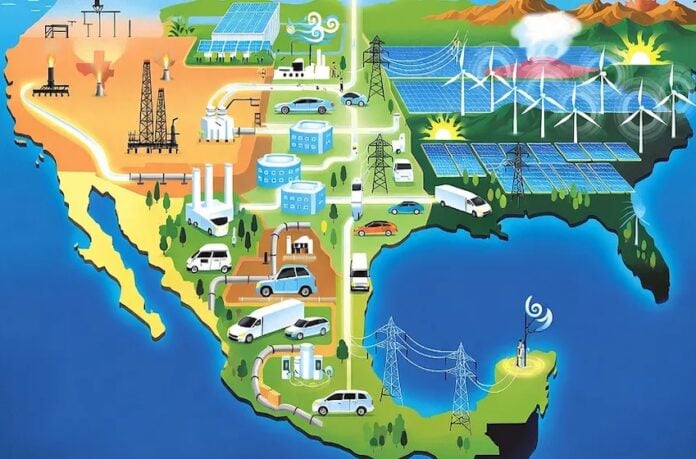
Imagine a true North American energy platform: pipelines and power lines that treat the border like an extension cord, Mexican solar-plus-batteries firming up U.S. grids during peak demand, joint LNG terminals turning our combined gas into a global export weapon and harmonized rules that make investment boringly predictable. (Image courtesy of the author)

If we’re serious about painting the North American future we keep talking about — the one where Mexico supercharges U.S. growth, nearshoring turns into a continental manufacturing renaissance and we stop worrying about distant supply chains — then we have to start where everything else begins: energy.

Without it, there are no factories, no AI servers, no data centers, no EVs, no production, no jobs, no growth. Nada.

When we look at what’s happening in the Middle East and its implications for Asia, Europe and basically the entire planet, we’re facing a classic “tsunami moment.” The ocean pulls way back, the beach looks weirdly inviting and most people just stand there taking selfies instead of running for higher ground.

That’s exactly where we are with global energy. Tomas Pueyo laid it out in chilling detail: by 2050, the Middle East will be a geopolitical mess — civil wars in Iran, Kurdish breakaways, Iraqi splintering, Azerbaijan in flames — because the oil that funded everything is drying up. Europe and Asia, still hooked on those distant barrels, are about to get slammed (really, read Mr. Pueyo here). And if Mexico sits on its hands, Venezuela and Guyana (with their own massive reserves) will happily step in and become the region’s new energy and petro-suppliers.

Wake-up call, folks. The ocean is already receding.

But here’s the beautiful part: North America doesn’t have to play that game. We have something no other bloc can match: genuine regional complementarity that feels almost unfair.

The United States sits on world-leading natural gas production and enough reserves to power domestic needs and exports for decades. Canada holds the planet’s third-largest proven oil reserves. And Mexico? NREL’s numbers still blow my mind: more than 28,000 GW of technical renewable capacity across solar, wind, geothermal, and hydro. That’s enough to meet Mexico’s electricity needs a hundred times over. Put those three together and you get a perfectly balanced continental battery: U.S. gas for baseload reliability, Canadian oil for the heavy stuff, Mexican sunshine and wind for the cheap, scalable, zero-fuel-cost future.

Energy security? Check. Industrial competitiveness? Check. A real energy transition that doesn’t bankrupt anyone? Double check.

We’re already living the first draft of this story, and it’s working better than most people admit. Mexico imports 73% of its natural gas — 99% of that via pipeline straight from Texas. Those pipelines have grown 8.3% a year since Trump’s first term. Flip the script, and Mexico is America’s top export market for petroleum products, natural gas, refined fuels, and the fourth-biggest buyer of upstream oil-and-gas equipment. Texas producers literally need Mexican demand to keep associated-gas prices from cratering; U.S. liquefaction capacity covers only 9.5% of production. The old “U.S. deficit with Mexico” narrative? It flipped into a surplus years ago. You can read more about this in my previous essay on energy.

Opinion: Could Mexico make America great again? The energy equation

The Ember reports make the math deliciously clear.

Hitting 45% clean electricity by 2030 would cut Mexico’s gas imports for power generation by 20% and save US $1.6 billion a year. Falling battery prices turn Mexico’s world-class sunshine into dispatchable power that can replace imported U.S. gas entirely in many places.

Cheaper, cleaner energy in Mexico makes every nearshored factory more competitive. It powers semiconductor plants (Foxconn/Nvidia’s giant Guadalajara server assembly), the auto industry and the exploding data-center boom (Microsoft’s $1.3 billion, AWS’s $5 billion, ODATA’s 400 MW campus). Mexico needs energy capital investment ASAP!

Energy is the multiplier for everything else in our series. Dr. Luis de la Calle brings the argument home. He constantly highlights how Asia knows this game cold: they do 65% of their intermediate-goods trade inside the region; we’re stuck at 48%. If we want to compete with Asia, we must integrate vertically as a region. Energy is one of the three non-negotiable conditions (along with logistics and talent) for making that happen.

Without competitive, abundant, regionally sourced power, the rules-of-origin incentives in USMCA stay half-baked — even counterproductive. Asia’s dense energy-and-supply web keeps factories humming at low cost. We have the pipelines, the complementary resources, the rulebook and the geography — we just haven’t flipped the switch to “continental platform” yet.

That brings us to the rulebook itself: USMCA, our legal backbone. The agreement already treats energy trade as a complementary system, not a zero-sum fight. But Mexico’s latest energy reform has created real ambiguity in interpretation, and investors hate ambiguity more than they hate tariffs.

We need to use the 2026 review to lock in clarity: make sure the recent Mexican reforms align with USMCA, fast-track cross-border electricity and renewable projects and create joint incentives for transmission and distribution upgrades.

If Mexico sends the right messages on energy in the coming months, investment flows to the region will be unprecedented.

Mexico doesn’t just want to be the U.S.’s cheap assembly shop; it wants to be the reliable, high-value enabler that attracts the full nearshoring wave. That requires growing the energy matrix, hardening reliability and building the wires that let electrons flow both ways without drama.

So here’s the vision — the “Regional Utopia” part we keep circling back to in this essay series.

Imagine a true North American energy platform: pipelines and power lines that treat the border like an extension cord, Mexican solar-plus-batteries firming up U.S. grids during peak demand, joint LNG terminals turning our combined gas into a global export weapon and harmonized rules that make investment boringly predictable. Factories on both sides of the border run on the cheapest, cleanest electrons anywhere. American families pay lower prices at the pump and on their electric bills (American politicians, remember: “It’s the economy, stupid” — this actually yields votes). Mexican communities get jobs, tax revenue and a diversified economy that doesn’t rise and fall with oil alone.

It is obvious, besides, that energy cooperation strengthens U.S. economic and national security.

While the rest of the world fights over dwindling barrels and geopolitical tsunamis, North America builds something bigger: a shared energy future where the only “petrostate” left standing is the whole continent, humming along on solar, gas, wind, and sheer integration swagger. The powerhouse doesn’t need more power — it needs the right kind, sourced together, governed together, and grown together.

That’s not a utopian daydream. It’s the logical next chapter of the story we’ve already started writing. The documents are there, the pipelines are built, the money is ready and the 2026 USMCA review is the perfect moment to hit “publish.” Let’s not waste it.

Pedro Casas Alatriste is the Executive Vice President and CEO of the American Chamber of Commerce of Mexico (AmCham). Previously, he has been the Director of Research and Public Policy at the US-Mexico Foundation in Washington, D.C. and the Coordinator of International Affairs at the Business Coordinating Council (CCE). He has also served as a consultant to the Inter-American Development Bank. Follow his Substack here.
How safe is Mexico according to its foreign residents? The survey results

34
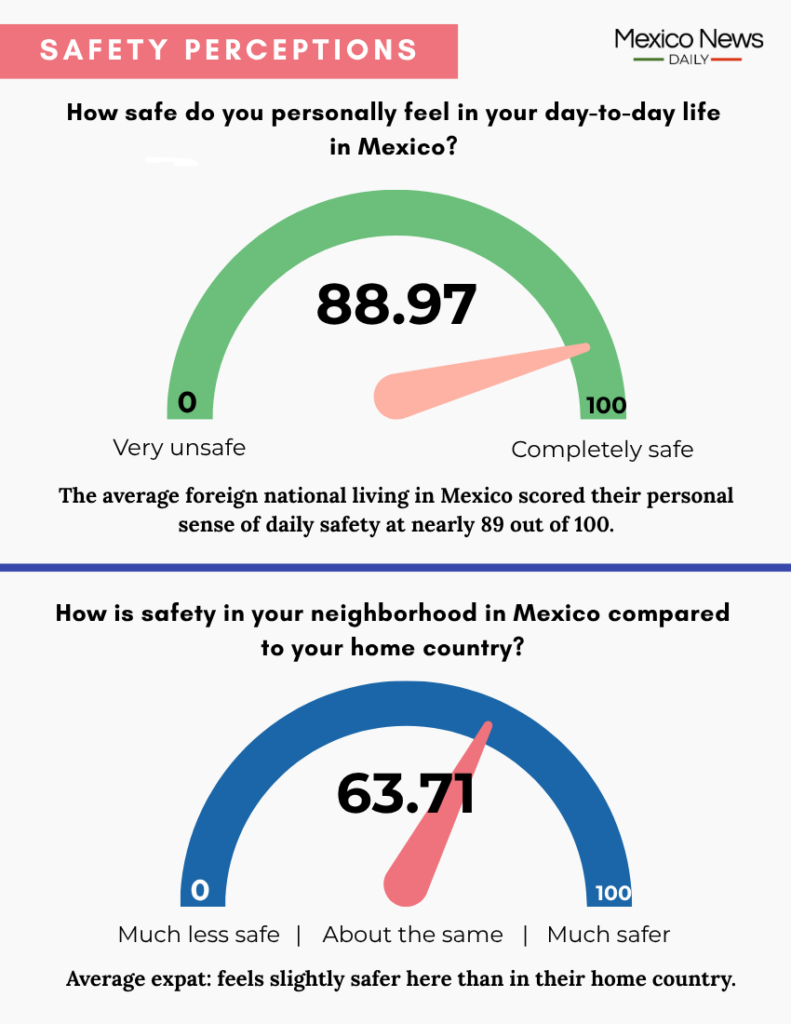
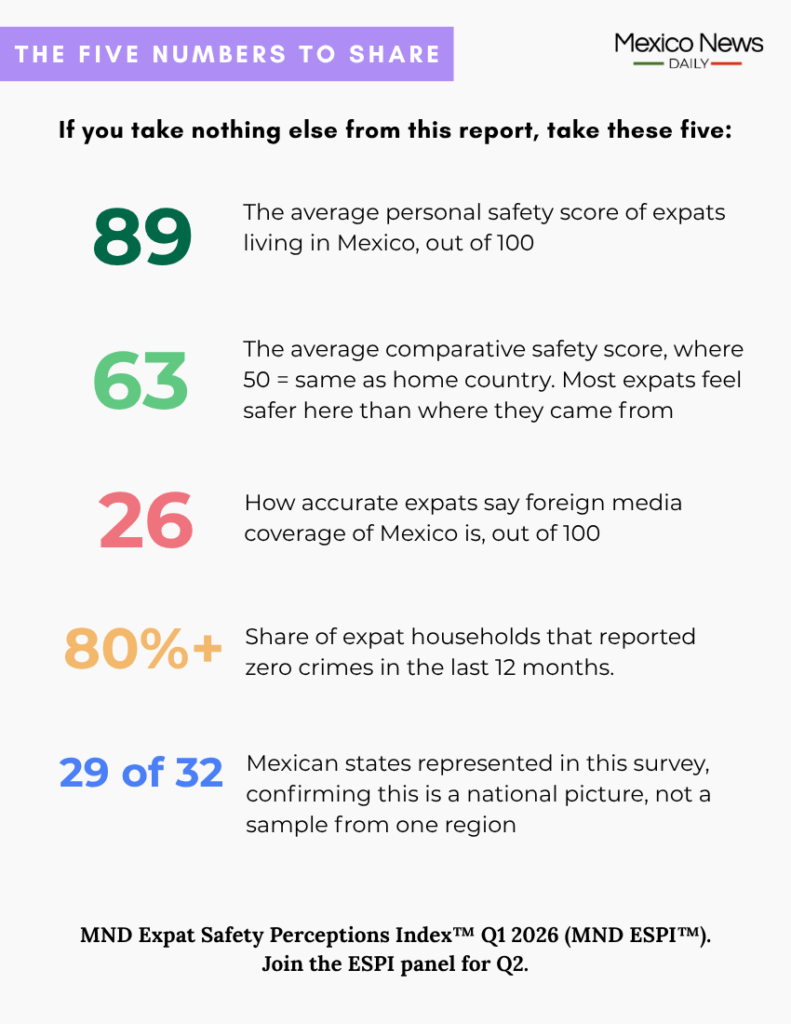
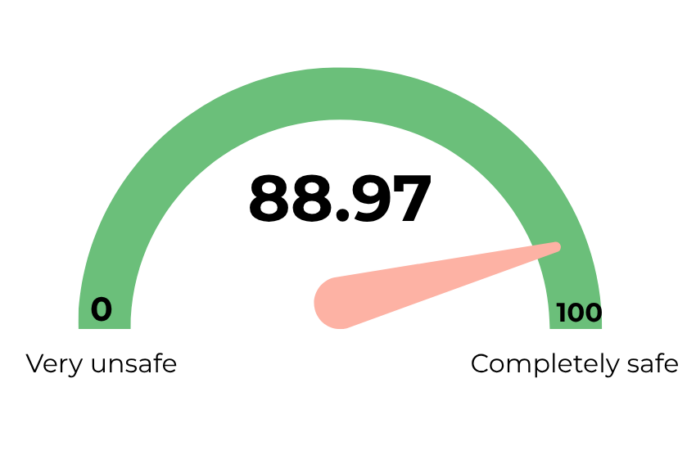
The MND ESPI score for Q1 2026 — was 88.97.
The MND ESPI score for Q1 2026 — was 88.97. (Mexico News Daily)

MND ESPI™ Q1 2026

Welcome to Mexico News Daily’s Inaugural Expat Safety Perceptions Index

The MND Expat Safety Perceptions Index (MND ESPI™) is a quarterly survey conducted exclusively with foreign nationals living in Mexico. It measures personal, lived safety experiences and perceptions — not Mexico’s general security situation or national crime statistics. The distinction matters: this survey asks how safe YOU feel in YOUR daily life in the community where you live, not how you feel about headlines from places you have never visited.

Why this survey exists and why it matters to you

If you have ever tried to explain to a friend or family member back home that you feel perfectly safe living in Mexico, you know the frustration. You describe your morning walk to the market, your evening out at a restaurant, your life, and they respond with a news clip about something violent that happened 800 miles away from where you live.

That gap between perception and reality is precisely what the MND ESPI™ was built to measure. With data from hundreds of foreign nationals living across Mexico, we can now replace anecdote with evidence. This is the first edition of what will become a quarterly benchmark. Every three months, we will ask the same questions of expats living across the country, building a trend line that documents how safety perceptions evolve over time. This survey does not intend to gloss over the prevailing security issues that impact a large sector of the Mexican population, such as organized crime, gender-based violence and kidnapping.

Who responded?

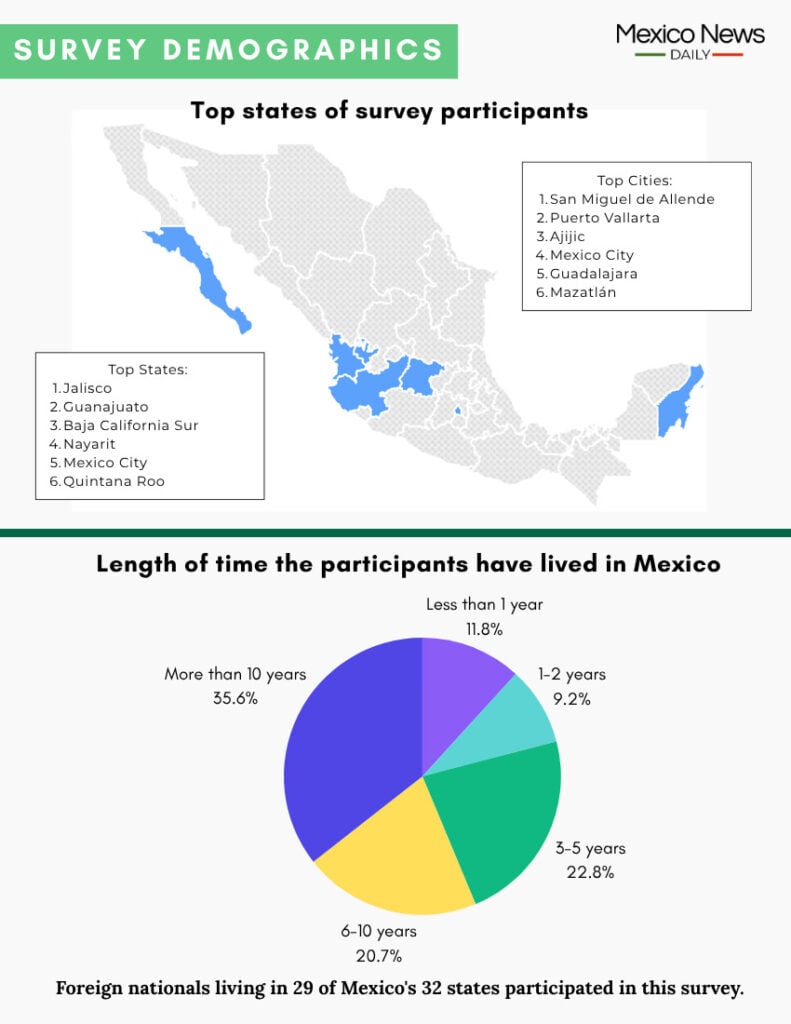
  • By our cutoff time, 773 people living in 29 of Mexico’s 32 states had responded to Mexico News Daily’s inaugural Expat Safety Perceptions Index (ESPI) survey.

  • The top six states where respondents live are Jalisco, Guanajuato, Baja California Sur, Nayarit, Mexico City and Quintana Roo. The top six cities/towns where respondents live are San Miguel de Allende, Puerto Vallarta (and nearby areas), Ajijic, Mexico City, Guadalajara and Mazatlán.
  • Over half of the respondents have lived in Mexico for 6+ years and more than three-quarters have lived here for 3+ years.
  • More than three-quarters of the respondents are aged 60 or over, while the remainder are younger. Fifty-five per cent of the respondents are men, while almost 45% are women.

The headline number: 88.97/100

  • The vast majority of respondents feel very safe in the Mexican city or town where they live. The average personal safety score — i.e., the MND ESPI score for Q1 2026 — was 88.97.
  • On a spectrum where 0 represents feeling completely unsafe and 100 represents feeling completely safe, the average foreign national living in Mexico scored their personal sense of daily safety at nearly 89 out of 100. That number sits firmly at the safe end of the scale — and it comes from people who live here, not people who are visiting.

How safe is Mexico compared to your home country?

  • Respondents, on average, generally feel safer in the Mexican town or city in which they live than in the place they most recently lived in their home country. The average score respondents chose on a 0-100 spectrum measuring their personal sense of safety in Mexico was 63.71. A score of 50 indicated that a person’s personal sense of safety in Mexico was “about the same” as in their home country, while a score of 0 represented “much less safe” and a score of 100 indicated “much safer.”
  • The data does not say Mexico has no crime. It says that for the foreign residents surveyed — the majority Americans — the daily experience of personal safety in Mexico compares favorably to what they left behind.

On Mexican police: Room to improve

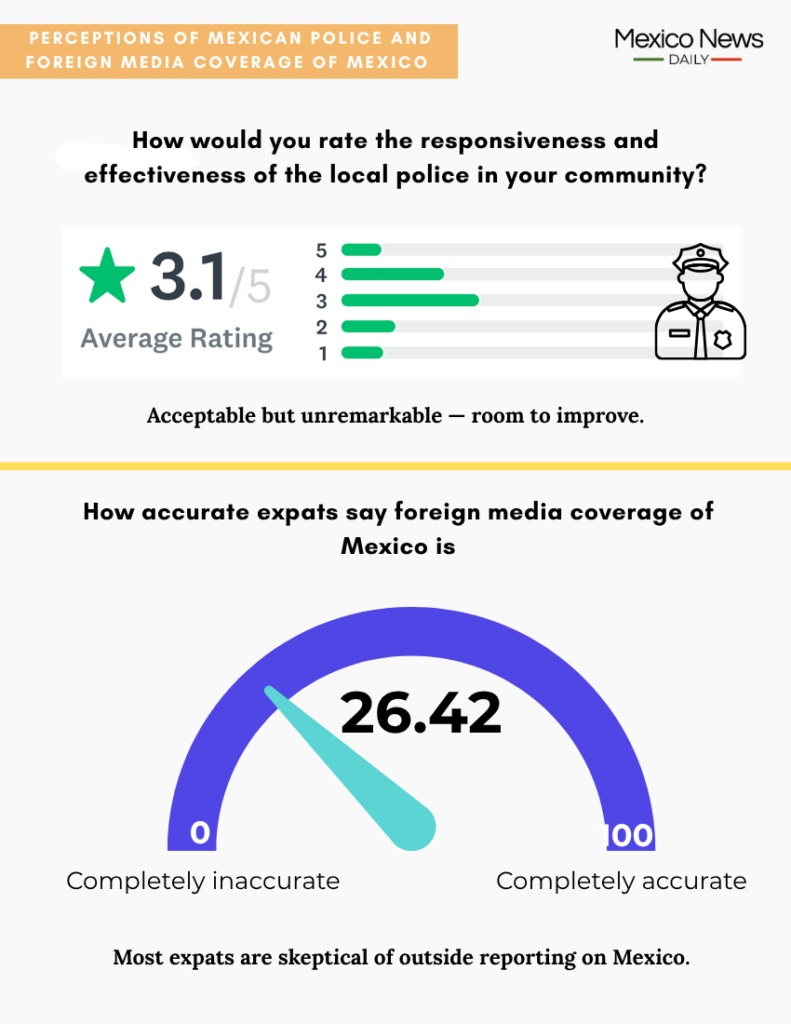
  • Respondents, on average, think that Mexican security forces, including their local police, are only doing an average job. Asked to rate the responsiveness and effectiveness of police and other security forces in their community, the average rating of survey respondents was 3.1 stars out of five. While not a poor rating per se, it indicates that police and other security forces have plenty of scope for improvement. Many Mexicans would agree with that assessment.

The media gap: 26.55 out of 100

  • Most respondents think that the foreign media’s portrayal of Mexico is inaccurate.
  • On a scale where 100 means “foreign media coverage of Mexico is completely accurate” and 0 means “completely inaccurate,” the average score among survey respondents was 26.55.

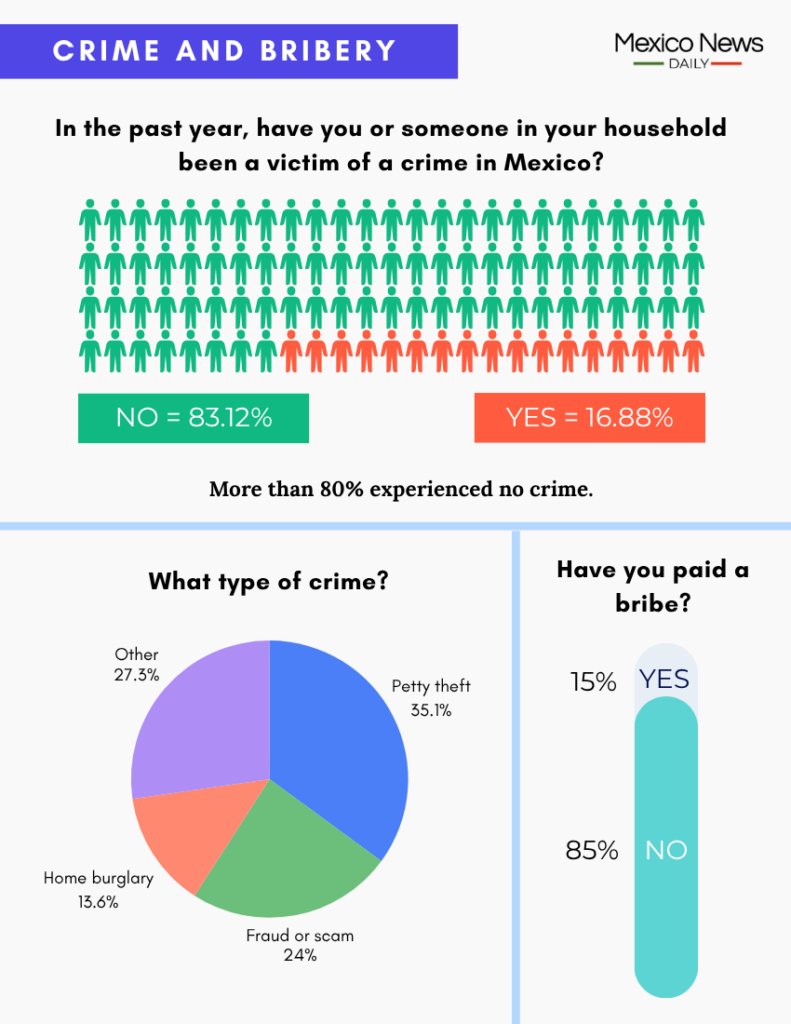
What crimes do expats in Mexico report?

  • More than four in five respondents haven’t been a victim of crime in Mexico in the past 12 months, and neither has anyone in their immediate household.
  • Among those who did experience crime, the most common by far was petty theft — phone, wallet or bag. Smaller numbers reported fraud, home burglary, extortion, vehicle theft, verbal harassment and robbery with a weapon.

  • On bribery: Approximately 85% of respondents had not been asked to pay a bribe to a government employee or police officer in the past 12 months. Mexico’s reputation for bribery is well-established historically, but this data suggests the practice, at least as it affects the expat community, may be less prevalent today than the reputation implies.

What comes next

The MND ESPI™ will be published every quarter. Each edition will:

  1. Track whether the composite safety score is rising, falling or holding steady.
  2. Add city-level breakdowns as the respondent pool grows.
  3. Connect the data to current events — including the Sheinbaum administration’s security initiatives — to provide context.
  4. Expand the respondent base to make the findings more geographically representative with each edition. The more people who participate, the more powerful and credible the data becomes. A survey of 773 people is a strong start. A survey of 3,000 people, spread evenly across Mexico’s major expat communities, becomes something that real estate companies, government agencies, insurance firms, and international media organizations cannot ignore.

Participate in the next survey

The Q2 2026 MND ESPI™ survey opens in June. It takes less than five minutes and is completely anonymous.

If you live in Mexico — whether you responded to this survey or not — your participation in the next edition directly improves the quality of data available to every expat considering or already living here. You are not just answering questions. You are building the record that replaces sensationalized headlines with lived reality.

👉 [JOIN THE ESPI SURVEY POOL — BE NOTIFIED WHEN Q2 OPENS]

Know another expat who should see this report? Forward it. The conversation this data can start is only as wide as the people who know it exists.

The MND Expat Safety Perceptions Index™ (MND ESPI™) is a proprietary quarterly survey product of Mexico News Daily, published under MND Intelligence. Media organizations, research institutions and relocation companies wishing to cite or license MND ESPI data should contact nayelli.sanchez@mexiconewsdaily.com.

Mexico News Daily

No sign of fourth miner as rescue mission in Sinaloa enters second month

0
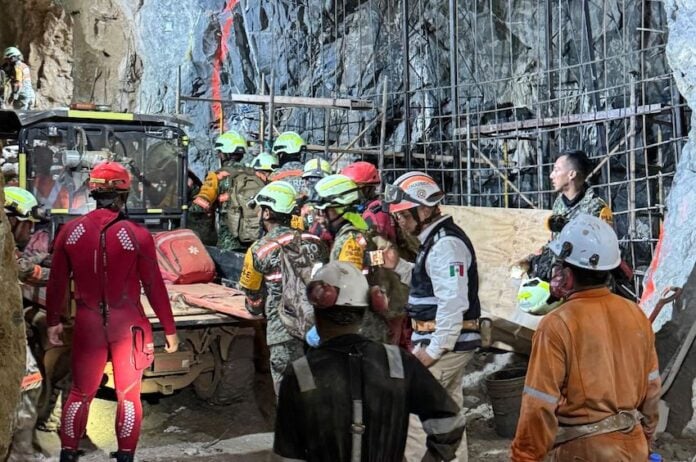
Two miners have been rescued from a mine in Sinaloa where a tailings dam collapsed in late March, and one other miner was found dead. The search continues for a fourth miner.
Two miners have been rescued from a mine in Sinaloa where a tailings dam collapsed in late March, and one other miner was found dead. The search continues for a fourth miner. (Coordinación Nacional de Protección Civil/Cuartoscuro)

Two miners have been rescued from a mine in Sinaloa where a tailings dam collapsed in late March, and one other miner was found dead. But almost a month after the March 25 disaster at the Santa Fe silver and gold mine in the municipality of El Rosario, a fourth miner still hasn’t been located.

Álvaro Vargas Miranda, administrative manager of the company that operates the mine, said on Tuesday that attempts to find mine supervisor Leandro Isidro Beltrán Reséndiz have been unsuccessful.

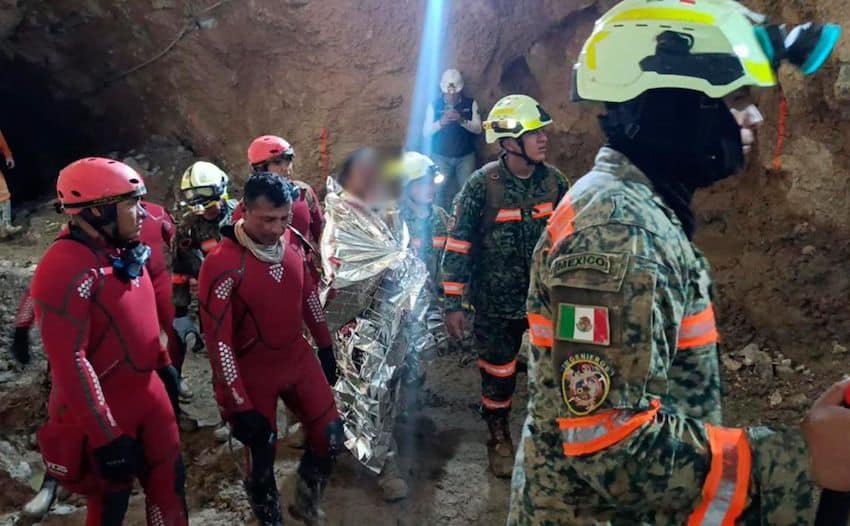
Francisco Zapara Nájera, 42, was rescued alive from the mine on April 8, 2026. He is one of two survivors of the collapse that occurred on March 25.
Francisco Zapara Nájera, 42, was rescued alive from the mine on April 8, 2026. He is one of two survivors of the collapse that occurred on March 25. (Coordinación Nacional de Protección Civil/Cuartoscuro)

Vargas said that rescuers have only managed to find parts of the mining utility vehicle used by Beltrán, a 50-year-old miner originally from the state of Hidalgo.

Efforts to locate the missing mine supervisor are ongoing, and an emergency response battalion of the Mexican Army remains hopeful that he can be found alive. Aldo Córdoba Galicia, the battalion’s operations chief, said that the battalion is searching for Beltrán 24 hours a day, seven days a week.

“We’re doing three shifts … looking for the fourth worker,” he told the newspaper El Universal.

Four Belgian shepherds are assisting the army battalion in their search efforts. Córdoba said that all rescue operations involve risk, but stressed that the risks his battalion takes are “calculated.”

Vargas highlighted that efforts to rescue trapped miners began immediately after the collapse of the tailings dam occurred. Authorities of all three levels of government have participated in the search efforts.

The first miner rescued was 44-year-old José Alejandro Cáustulo, who was pulled from the mine on March 29.

Vargas said that the first thing Cáustulo said after his rescue was, “I want a cigarette.”

Another miner, 42-year-old Francisco Zapata Nájera, was rescued on April 8. He was located at a depth of 300 meters surrounded by large quantities of water. A third miner, 33-year-old Abraham Aguilera, was found dead.

The Santa Fe mine is operated by Industrial Minera Sinaloa. It is located in the town of Chele, which is about 70 kilometers east of Mazatlán.

With reports from La Jornada and El Universal

Sheinbaum confronts US over unauthorized CIA operation in Chihuahua: Wednesday’s mañanera recapped

4
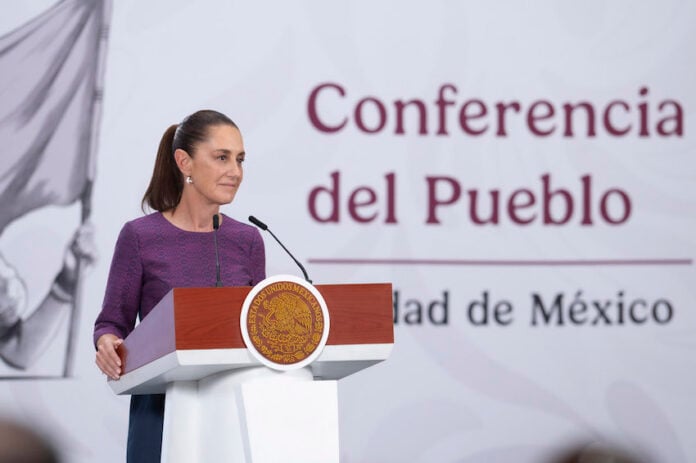
Cuauhtémoc, Ciudad de México, México, 22 de abril de 2026. La doctora Claudia Sheinbaum Pardo, presidenta Constitucional de los Estados Unidos Mexicanos en Conferencia de prensa matutina “Conferencia del Pueblo” en el Salón Tesorería de Palacio Nacional
Sheinbaum said Monday that her government wasn't aware of any collaboration between the state of Chihuahua and U.S. authorities, which is a breach of Mexico's National Security Law. (Saúl López/Presidencia)

Sheinbaum’s mañanera in 60 seconds

  • 🇺🇸 CIA in Chihuahua: Sheinbaum said she would speak with Chihuahua Governor Maru Campos about a drug lab operation in which CIA officers allegedly participated without federal authorization. She also revealed that the Foreign Ministry sent a letter to U.S. Ambassador Ron Johnson demanding answers, and reiterated that U.S. involvement in Mexican security operations falls outside agreed protocol. “What happened is not a minor matter,” she said.
  • ⚖️ New top lawyer: Sheinbaum announced she has asked Morena party president Luisa María Alcalde to take over as her chief legal adviser, following the departure of Esthela Damián Peralta, who is stepping down April 30 to pursue a gubernatorial race in Guerrero. Alcalde has yet to formally accept the role.
  • World Cup school holiday? Education Minister Mario Delgado said authorities are considering suspending classes on days when FIFA World Cup matches are played in Mexico, though no decision has been reached. Mexico hosts 13 matches across Mexico City, Guadalajara and Monterrey starting June 11.

Why today’s mañanera matters

The alleged involvement of CIA officers in a security operation in the northern state of Chihuahua continues to be a major talking point in the national conversation.

Today’s mañanera was significant as President Sheinbaum revealed that she will speak to the governor of Chihuahua about the issue, and disclosed that her government has sent a letter to the U.S. ambassador seeking information.

Also of note at Wednesday’s mañanera was the president’s revelation that there will soon be yet another change in the upper echelons of her government. Sheinbaum has already lost two cabinet ministers this month.

Sheinbaum to speak with Chihuahua governor about US involvement in security operation 

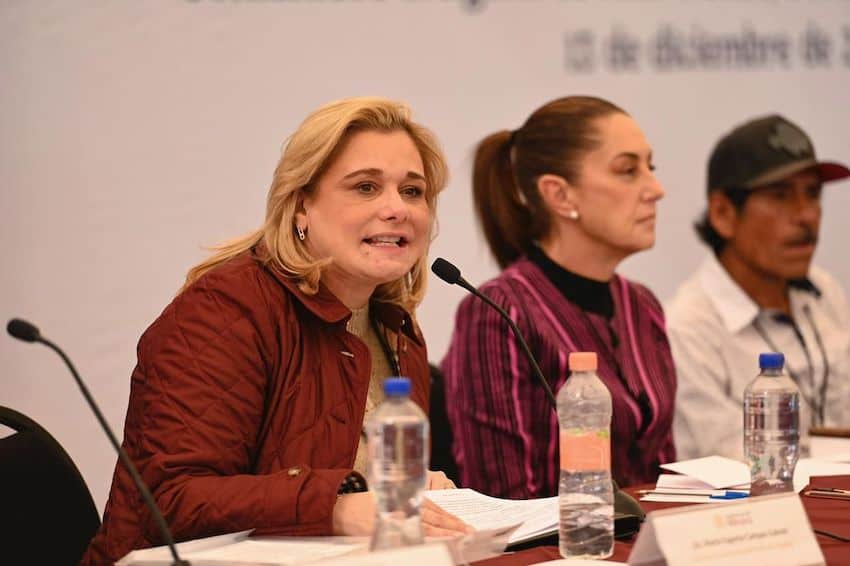
Sheinbaum told reporters that she would speak with Chihuahua Governor Maru Campos about a security operation in the northern state in which U.S. officials — reportedly CIA officers — allegedly participated.

“Dialogue and communication are always necessary,” she said.

Sheinbaum said that Interior Minister Rosa Icela Rodríguez had already spoken with Campos, whose government allegedly allowed U.S. officials to take part in an operation to dismantle a clandestine drug lab. The U.S. officials and two Mexican security officials were killed in a car accident early Sunday.

Sheinbaum said Monday that her government wasn’t aware of any collaboration between the state of Chihuahua and U.S. authorities. She has stressed that such collaboration cannot legally take place without the authorization of the federal government.

Sheinbaum reiterated that point on Wednesday morning, as well as her government’s opposition to U.S. participation in security operations in Mexico. She said that the Ministry of Foreign Affairs sent a letter to the U.S. ambassador in Mexico, Ron Johnson, requesting information about the U.S. officials’ work in Chihuahua and highlighting that U.S. involvement in security operations in Mexico “is not part of the security protocol to which we’ve agreed.”

“… What happened is not a minor matter,” Sheinbaum said.

The Governor of Chihuahua Maru Campos told President Sheinbaum that the army agents who led the counter-cartel operation did not know that U.S. officials were also participating.
The Governor of Chihuahua Maru Campos told President Sheinbaum that the army agents who led the counter-cartel operation did not know that U.S. officials were also participating. (Presidencia/Cuartoscuro)

She acknowledged that Campos said that the Mexican Army took part in the dismantlement of the drug lab, but asserted that the army didn’t know that U.S. officials were also participating.

Asked about reports that CIA officers in Chihuahua were wearing State Investigation Agency uniforms, Sheinbaum said the federal Security Ministry would respond.

“The whole case is being reviewed and after we can provide all the information to you,” she said.

Sheinbaum asks Morena party president to be her top legal adviser

“I’m going to give you a story,” Sheinbaum remarked before revealing that she told top officials in her administration that if they want to contest upcoming elections, they have to leave the federal government.

She said that her top legal adviser, Esthela Damián Peralta, subsequently told her that she wants to “go and work in Guerrero” — one of 17 states where gubernatorial elections will be held next year.

Sheinbaum said that Damián would leave her current position on April 30.

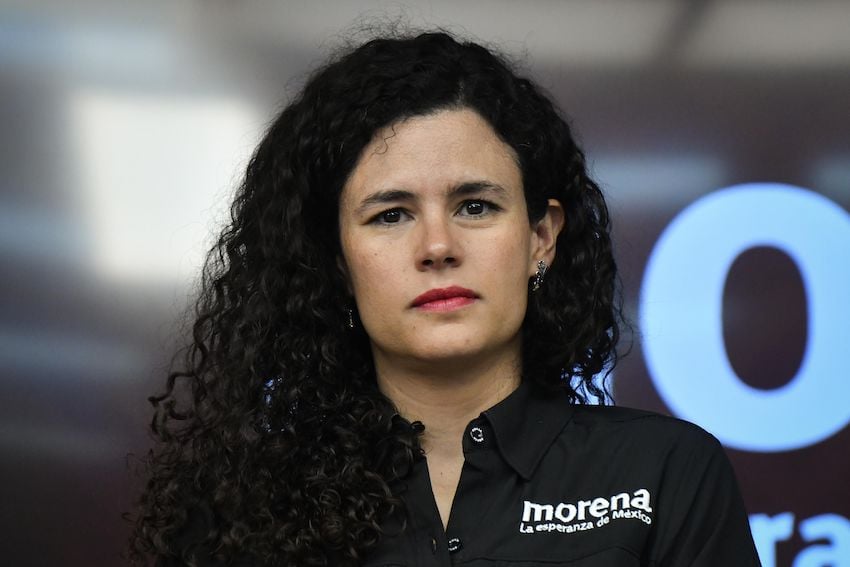
She subsequently said that she decided on Tuesday to ask current Morena party president Luisa María Alcalde to replace Damián at the helm of the federal executive’s legal department.

CIUDAD DE MÉXICO, 16ABRIL2026.- Luisa María Alcalde, dirigente nacional de Morena, ofreció conferencia para anunciar la incorporación de Citlalli Hernández, quien recientemente renunció a la Secretaría de las Mujeres, como la nueva dirigente de la Comisión Nacional de Elecciones del partido.
Luisa María Alcalde took over the party’s leadership in 2024 after serving as the labor minister under former president Andrés Manuel López Obrador. (Mario Jasso/Cuartoscuro)

“Why Luisa María? This is important. I think she has played a great role at the helm of Morena. Luisa is an excellent lawyer, a very good lawyer. And she participated in a lot of issues in the government of Andrés Manuel López Obrador, first as labor minister and then in the Interior Ministry [as interior minister]. She was very important in all the planning for the judicial reform … and some other issues,” Sheinbaum said.

She said that Alcalde told her that she would think about the job offer in the coming days and get back to her.

No school on World Cup match days?

Education Minister Mario Delgado told reporters that there is a “request” that classes be suspended on days that FIFA men’s World Cup matches are played in Mexico.

“We’re reviewing, we’re analyzing, we’re speaking to teachers to see what they think,” he said.

“… We don’t have a conclusion [yet],” Delgado said.

He didn’t say whether schools could be closed just in the Mexican cities that will host matches — Mexico City, Guadalajara and Monterrey — or across the whole country. Canceling classes on match days could help reduce traffic in host cities.

A total of 13 World Cup matches will be played in Mexico in June and July, including the Mexican national team’s three group matches. Mexico and South Africa will contest the first match of the quadrennial tournament in Mexico City on June 11.

By Mexico News Daily chief staff writer Peter Davies (peter.davies@mexiconewsdaily.com)

El Jalapeño: Mexican president’s entire visit to Spain costs less than the pretzels on Air Force One

2
President Sheinbaum disembarked in Barcelona for roughly the same cost as connecting the air stairs to Air Force One. This is probably not a joke. (Presidencia)

All stories in El Jalapeño are satire and not real news. Check out the original article here.

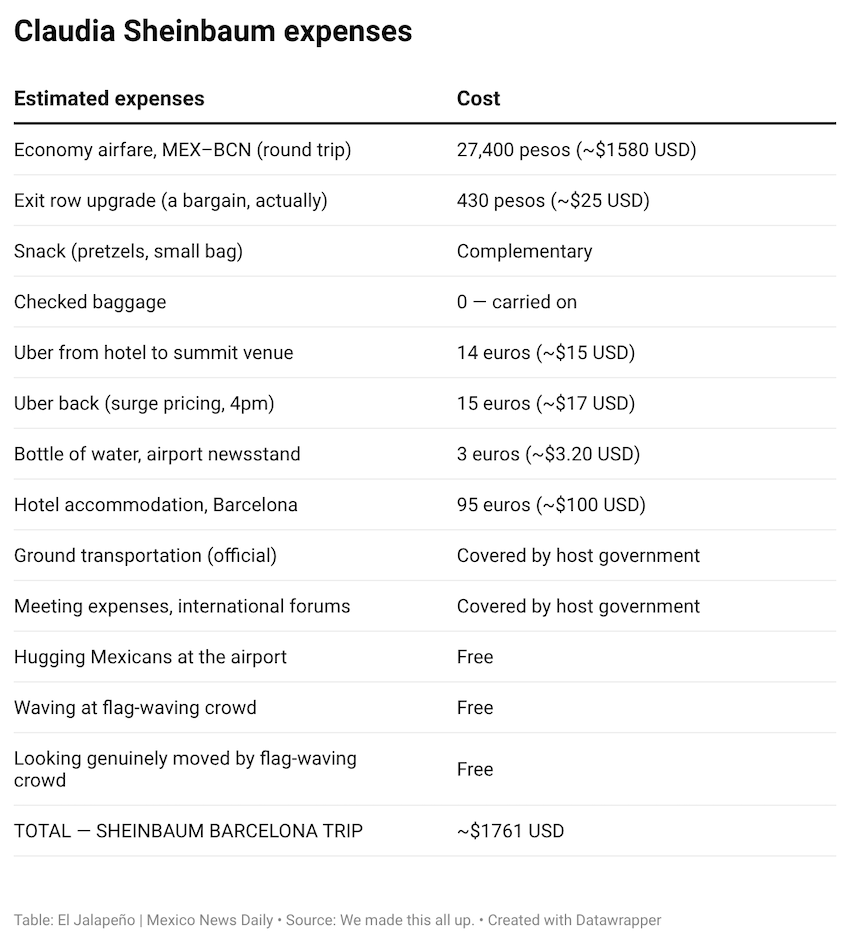
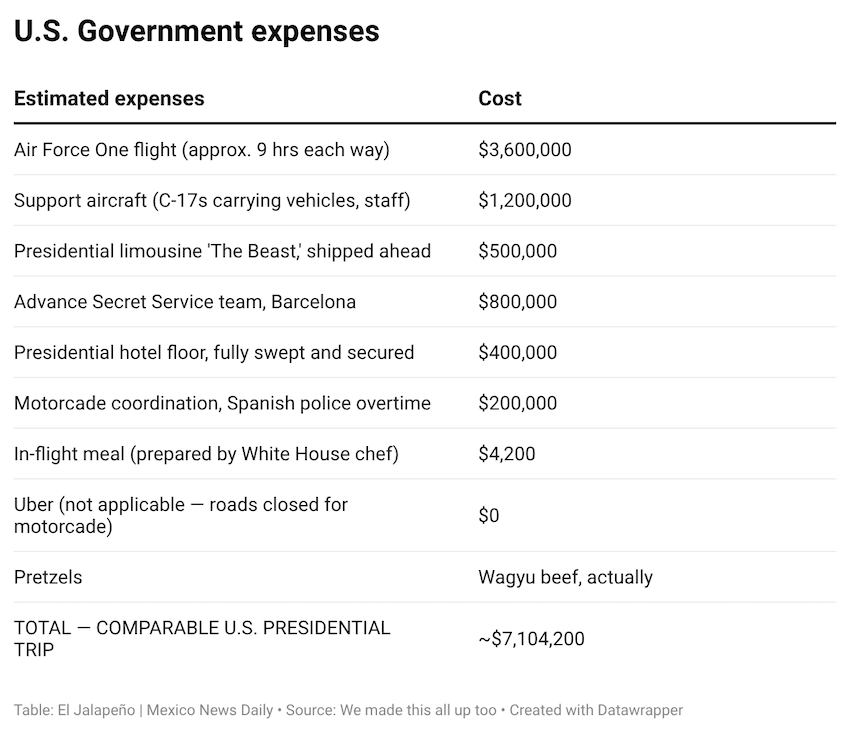
MEXICO CITY — The office of President Claudia Sheinbaum has released what officials are describing as a full accounting of expenses incurred during her state visit to Barcelona, Spain, this week. The document, reviewed by this publication, raises several questions — none of which concern overspending.

For comparison, a single Air Force One flight hour costs approximately US $200,000. The U.S. presidential motorcade — known as “The Beast” — requires advance teams, Secret Service coordination, cargo aircraft, and a support convoy that, sources confirm, does not fit in the overhead bin.

Sheinbaum’s total expenditure represents approximately 0.005% of the comparable U.S. trip cost, a figure her communications team has not promoted, possibly because they are still processing it themselves.

The president has now flown economy class three times since taking office — to the G20 in Rio, the G7 in Canada, and now Barcelona — each time generating international coverage, each time at a cost that would not cover a single hour of the aircraft required to generate that coverage.

At press time, Sheinbaum had completed her meetings, requested an Uber Pool to the airport, and was understood to be at the return gate, boarding group three.

Check out our Jalapeño archive here.

Got an idea for a Jalapeño article? Email us with your suggestions!

MND Local: Savoring springtime in Guadalajara with happenings and events

0
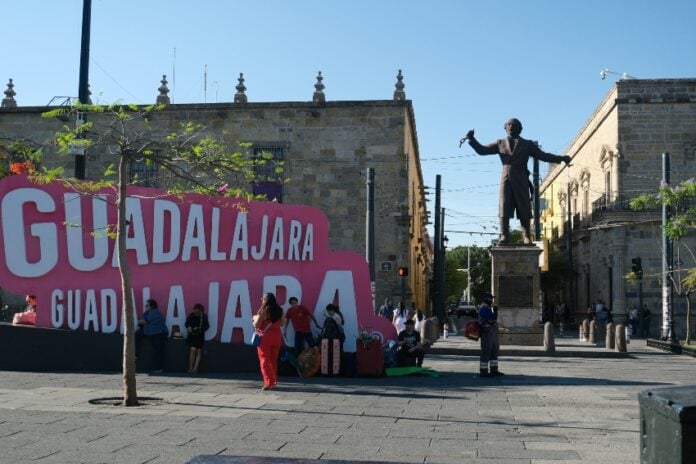
Guadalajara street scene
It's springtime in Guadalajara and there are plenty of places to visit and things to see. (Anil Baki Durmus/Unsplash)

Spring has arrived in Guadalajara, bringing intense heat and brilliant sunshine. Fortunately, there are plenty of ways to keep your attention off the rising temperatures. The best options include strolling through the newly remodelled Parque de la Revolución, taking in some modern art or grabbing seasonal fruit from a local market. 

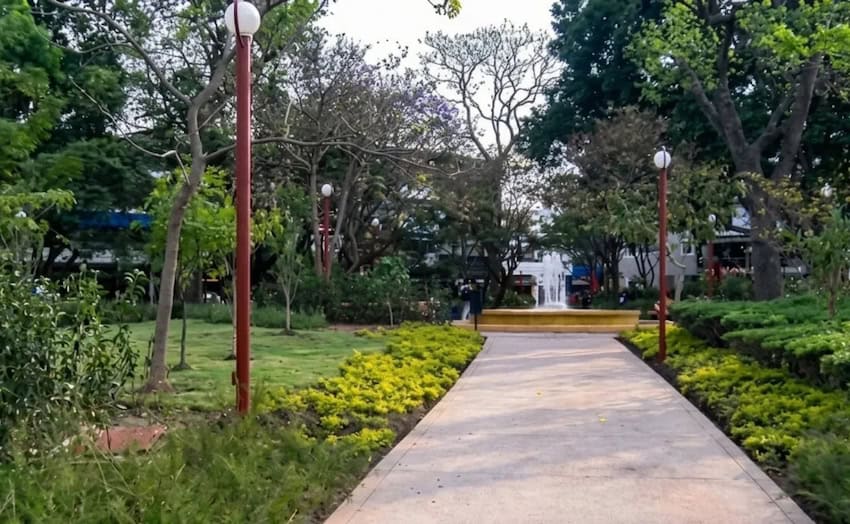
A revamped Parque de la Revolución has reopened 

The new Parque de la Revolución in Guadalajara. (quierotv_gdl/X)

After nearly one year of rehabilitation work and 20 million pesos in public investment, the Luis Barragán-designed Parque de la Revolución in the center of Guadalajara has finally reopened. 

Updates include improvements to the benches, fountains, lighting, playground equipment and flooring, as well as restoration work on the mosaic walls in the light rail station on the park’s east side. In addition, more than 160 new trees were planted, along with myriad new plants and shrubs.

This was a project that we kept expanding because of the level of impact it has on the city. It wasn’t just about fixing up and restoring our park, but also about being able to intervene in the social dynamics of the surrounding area,” said Juan Carlos Arauz, the Director of Public Works for Guadalajara, in a recent interview with local press.

Touring the newly reopened park during Holy Week, Guadalajara Mayor Verónica Delgadillo noted that the City Council has voted to turn Revolution Park into a protected public space. This move has prompted some controversy, as it means commercial activity inside the park will no longer be allowed, preventing the popular Saturday Tianguis from returning.  

In response to protests from locals unhappy with that change, Mayor Delgadillo noted the affected vendors have been relocated to other markets such as the Tianguis Cultural near Parque Agua Azul, Mezquitán, and the esplanade of El Refugio. 

Going forward, the park will instead be a hub for cultural, artistic and sporting activities for the neighboring community.

A new art exhibit asks what our attachment to screens has cost us

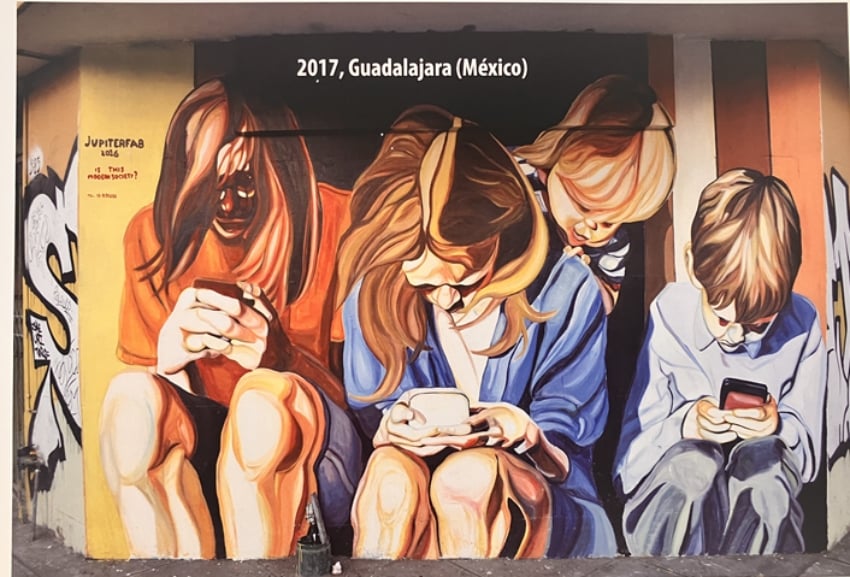
In our current landscape saturated with digital influencers, TikTok videos and Instagram reels, a new art exhibit, “Is This Modern Society?” challenges us to examine what has happened to human connection when experiences are constantly mediated through technology. 

Through his vibrant paintings, the artist Jupiterfab (Italian Fabrizio Bianchini) poses some pointed questions. Perhaps the most obvious being: At what point did everyone stop looking each other in the eye and talking face-to-face?

The exhibition’s underlying message is that true connection isn’t measured in posts, signals or likes (hallelujah), but in being present with those around us. By rediscovering how to communicate without screens or simply sitting in silence, we just might rediscover our shared humanity. 

Jupiterfab is a multimedia artist based in Guadalajara, known for creating street art, murals and installations. His work has previously been exhibited at the National Center for the Arts in Mexico and Can Felipa in Spain.

Dates: Through April 30, 2026

Location: Museo de la Ciudad de Guadalajara (2nd floor), Calle Independencia 684, Colonia Centro, Guadalajara

Tickets: Free

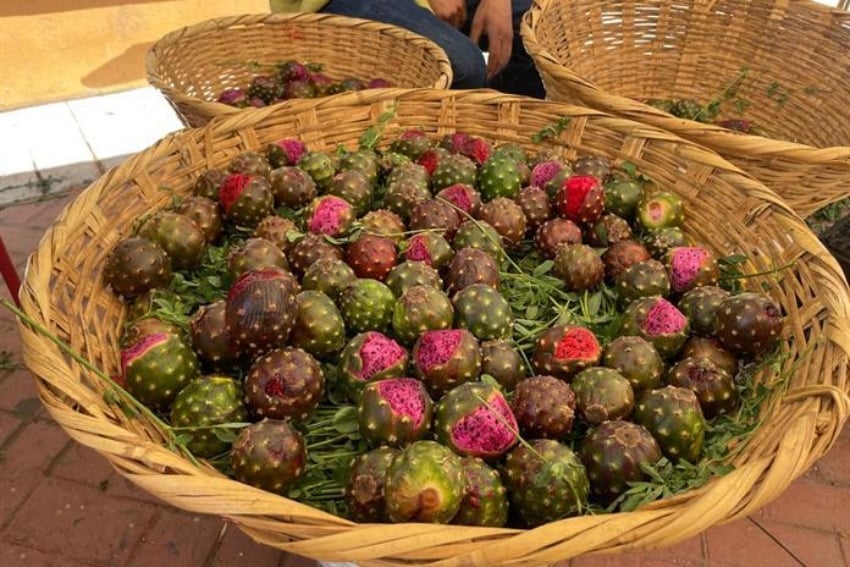
Pitahaya season is upon us, with an abundant harvest expected

The pitahaya fruit has been cultivated by Indigenous people in Mexico and Central America for centuries. These days, the prickly, drought-tolerant fruit’s spring harvest is a major happening across Jalisco.

Locally, farmers haul their harvest from outlying towns like Techaluta to popular gathering spots around Guadalajara, like Plaza de las Nueve Esquinas in the city’s historic center, and Avenida Aurelia Ortega near Villa Fantasia in north Zapopan. 

For many locals, the sight of pitayas in local markets signals the arrival of springtime. And this year’s harvest looks to be bountiful for Jalisco’s producers due to uncharacteristic rains earlier this month, followed by intense heat.

Pitahayas are picked from cactuses and come in various colors, with the green or red-skinned fruit and bright magenta flesh most common in area markets. On the palate, tiny black seeds offer a crunchy counterpoint to the soft, fleshy fruit. Sort of like a kiwi in texture, minus the tartness. 

Prized for their nutritional benefits, pitahaya fruits are rich in iron, fiber and Vitamin C.  Locals enjoy them raw or blended into breads, jams and syrups.

At the moment, the fruit is rather pricey, fetching up to 20 pesos per piece, as the season is just beginning. As supplies increase over the coming weeks, prices should improve for those who can’t get enough of this fleeting delicacy.

Dates: From mid-April to mid-June

Where: Check local markets. You might also see pitayas mixed into seasonal cocktails at trendy bars like De La O Cantina.

Festival Akamba returns with music, art and regional cuisine in Tequila

Aftermovie: Akamba 2025

The Festival Akamba is an immersive electronic music, art and food festival held annually in the blue agave fields of Tequila, Jalisco, now recognized as a UNESCO World Heritage Site.

Akamba is the word for “agave” in the native Purépecha language. Now in its seventh year, the festival’s guests will be treated to a multi-sensory experience celebrating these native lands.

A talented roster of DJs from Mexico, the U.S., Europe and Israel is scheduled to perform. So enjoy a glass of tequila while dancing the night away in one of Jalisco’s most iconic landscapes.

Date: April 25, 2026, from 3 p.m. to 2 a.m.

Where: The tequila fields at the Jose Cuervo Estate. Guests can drive or access the festival site using the Jose Cuervo Express train, which departs from Guadalajara’s Colonia Moderna.

Tickets: Available from Passline from 1,890 pesos.

MND Writer Dawn Stoner is reporting from Guadalajara.

The Mexico City restaurant serving the ‘world’s worst pizza’

2
Cavatappi Pizza
Is this the world's worst pizza? It sure doesn't look like it. (Instagram)

If it’s true that no publicity is bad publicity, then a Mexico City restaurant wants you to know it makes the world’s worst pizzas. It even has a “Michelin Guide” plaque to prove its claim.

Cavatappi Pizza, just south of the popular Condesa neighborhood, held a party in mid-March to celebrate its questionable achievement, complete with a Dr Simi mascot in attendance, some “Peor Pizza” merchandise and a Domino’s delivery served to guests during the festivities.


View this post on Instagram


A post shared by Cavatappi Pizza (@cavatappipizza)

“This is truly the worst pizza,” declared the restaurant’s owner, Pablo Irurita, as the speechless Domino’s delivery driver handed four large pizzas over to the kitchen staff for plating. “But you’d better eat it, because our kitchen has closed.”

Savvy marketing disguised as a joke

It all started on social media. Irurita, who opened his restaurant in 2022, has gained a large online following by breaking the mold of traditional social media promotion.

“I’m bored by the constant need to surprise on social media,” he told Mexico News Daily in the days following his bonanza. “I just decided to be myself, and if possible, not to talk about food.”

Cavatappi’s Instagram and TikTok posts respond to one-star online reviews, Irurita sings songs for those who can’t remember the restaurant’s address, performs sketches lampooning the restaurant business and, most recently, invited viewers to come and try the “worst pizza in Mexico City.”

The video, which went viral, went on to list his food’s virtues — no gaudy edible gold or dry ice influencer-friendly gimmicks here, just simple pizza that’s actually made very well.

The video was a hit, earning likes from leading Mexican figures, including Laura Esquivel, the best-selling author of “Like Water for Chocolate.” But it also caused controversy, which the owner was hoping for.

Is it really that bad?

Cavatappi Pizza
Cavatappi Pizza staff and a Dr Simi mascot celebrate their supposed Michelin Guide achievement. (Instagram)

“My closest friends hated the post, even professionals in the marketing industry told me I was doing everything wrong,” he said. “But what do they know?”

“The response from the majority of our followers was great. People got the joke,” he says. “I got messages back saying ‘how disgusting; a cheese that tastes like cheese,’ and ‘I’ll never go there; what’s the address?’ People took it and ran with it.”

“I think it’s funny,” says Australian customer Yvette McPherson, “But you need a sense of humor. It works in Mexico as the people have a good sense of humor, and it would probably get a laugh in Australia. But definitely not in France, Europe or in the U.S.”

“I don’t believe it,” says Mexican diner Yosh Rivas. “The place is stylish, and the award is funny.”

“The positive response has been like gasoline to me,” says Irurita, who added: “It encourages me to go and do more stupid things”.

For some guests, it’s a joke that has gone too far.

Is the joke funny?

Cavatappi Pizza CDMX
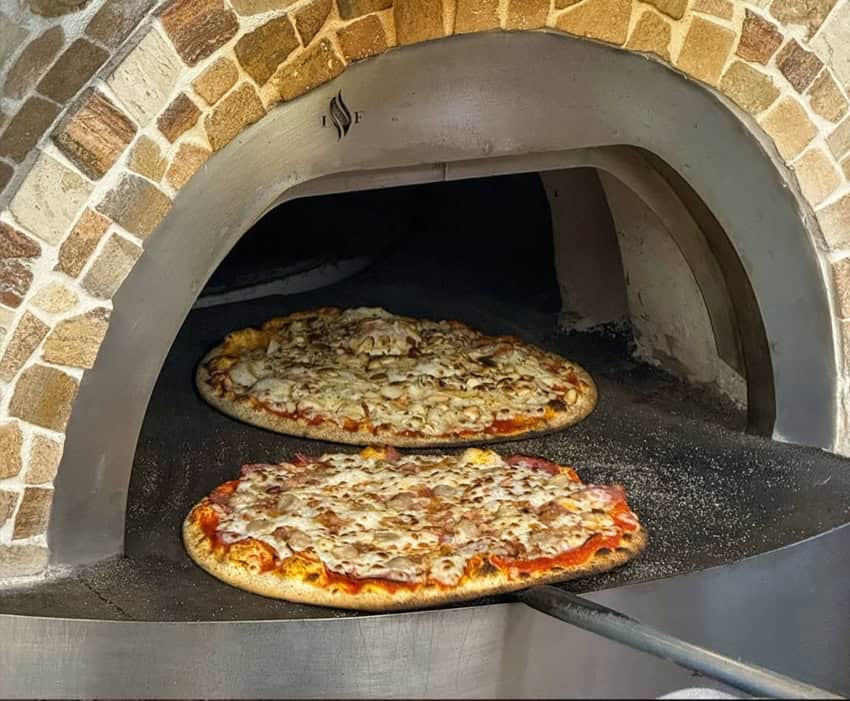
This is an awfully nice oven in which to make the “world’s worst pizza,” which is why the joke is funny to many customers. (Instagram)

“I took him seriously,” said Miguel Irurita Tomasena at the “worst pizza” plaque’s unveiling ceremony. He had invited his friends and posted congratulatory messages on social media for what he had thought was his cousin’s first Michelin star. “That’ll teach me not to read things fully, or believe anything Pablo tells me.”

Regular clients and passers-by might all be forgiven for not looking more closely. The plaque, now bolted to the restaurant’s entrance, has been designed to look like the real thing. The iconic Michelin star and stack-of-tires Michelin Man logo embellish the accolade, which reads “Worst Pizza 2025.”

“I don’t want awards, and if I were given a Michelin star, I think I’d reject it,” says Cavatappi’s owner. “The only thing that interests me is that my clients enjoy their experience here.”

Regular clients say that’s fair enough. “If they’re giving Michelin stars to ordinary taquerías,” said one guest, referring to the awarding of a Michelin Guide star to El Califa del León, “then why not a joke one here?”

“People have been taking pictures, laughing about it, while others have taken it seriously,” says Pablo. “I’ve been congratulated a lot, but it’s better not to correct them. That takes the fun out of the joke. I just accept their congratulations and get on with it.”

Daring Michelin Guide to sue

One fear might be reprisals from the Michelin Guide itself. The plaque may advertise “Worst Pizza 2025,” but it uses the French guide’s branding to attract interest.

Cavatappi Pizza CDMX
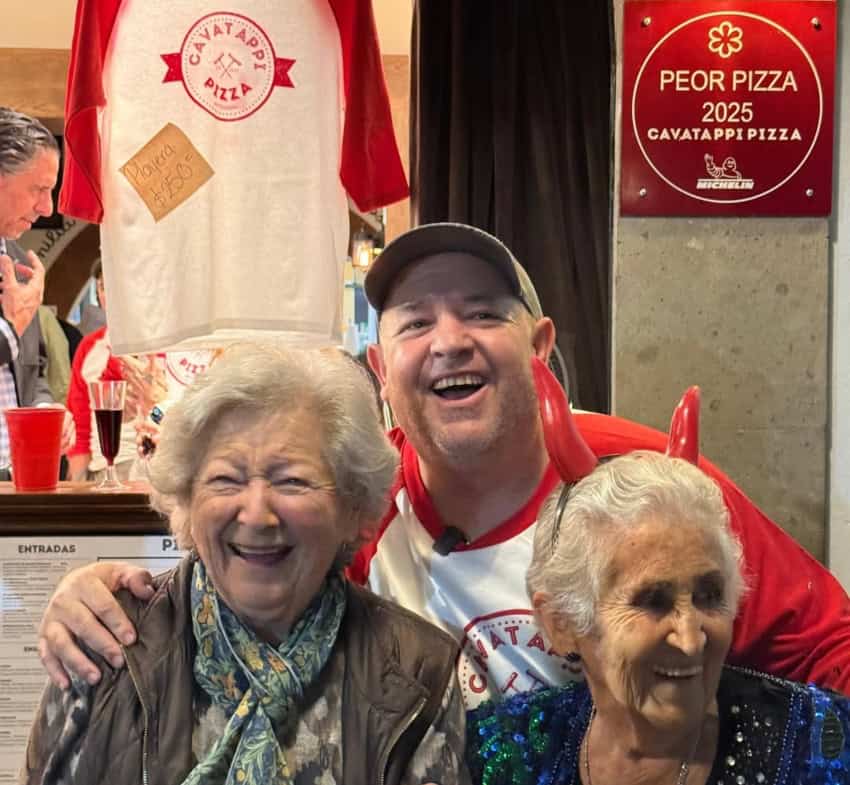
Owner Pablo Irurita and two of his favorite customers pose in front of the alleged Michelin Guide award. (Instagram)

“It’s a provocation to Michelin, for sure, and I’d enjoy it if they took legal action. Getting sued by the Michelin Guide would be a huge benefit to my restaurant,” says Irurita. “If they’re reading this, I’m right here.”

The Cavatappi owner is prepared either way. He has a long history of causing online controversy. Before his career change to restaurateur, Irurita was a music promoter who used online controversy to create buzz around his concerts.

In the end, it was the Covid-19 pandemic rather than the online furore that led to his career change, but he has brought much of the same philosophy into the restaurant business.

“People responded to my videos saying that they would never visit my restaurant, I respond saying ‘great, please don’t come’, says Pablo. “If those people are like that online, imagine what they’re like as clients!”

Around 33% of new restaurants go out of business within the first 12 months, and as Cavatappi Pizza enters its fourth year, promoting the “world’s worst pizza” may be a modern recipe for success.

“If you come here, you won’t be surprised,” says the owner. “But you will be comfortable.”

Alisdair Baverstock is the Mexico City-based author of “The Mexican Slang Dictionary.”

Sheinbaum orders probe into whether CIA operation in Chihuahua violated Mexican law

8
On Tuesday morning, Sheinbaum highlighted that a Mexican state is not legally permitted to "directly" enter into a security agreement with a U.S. government agency.
On Tuesday morning, Sheinbaum highlighted that a Mexican state is not legally permitted to "directly" enter into a security agreement with a U.S. government agency. (Galo Cañas/Cuartoscuro)

President Claudia Sheinbaum said Tuesday that federal authorities are investigating what two U.S. officials were doing in Mexico prior to their death in a car accident in Chihuahua on Sunday.

At her Tuesday morning press conference, Sheinbaum was asked to respond to a Washington Post report that stated that “two U.S. embassy officials who died in an automobile accident in northern Mexico as they returned from the scene of a counternarcotic operation worked for the Central Intelligence Agency (CIA).”

2 US embassy employees and 2 Chihuahua officials killed in car accident following anti-cartel operation

“We’re investigating what these people were doing and what agency they were from,” the president said.

“So far, the information we have is that they were working jointly [with Chihuahua authorities]. … So the whole investigation has to be done by the Federal Attorney General’s Office [FGR] to see if the constitution or the National Security Law was violated,” Sheinbaum said.

Two Chihuahua security officials, including the director of the State Investigation Agency, were also killed when a vehicle in which they and the U.S. officials were traveling plunged into a ravine early Sunday.

On Monday, Sheinbaum said that her administration was asking the Chihuahua government and U.S. authorities for information about their security collaboration in the northern border state. She said her government was unaware of the collaboration. The president is steadfastly opposed to the participation of U.S. officials in security operations in Mexico, although her government and the Trump administration do cooperate on security issues and share intelligence. She has declined offers from U.S. President Donald Trump to send the U.S. Army into Mexico to combat cartels.

Citing two unnamed sources, The Washington Post reported on Tuesday that the deceased U.S. officials “worked for the Central Intelligence Agency [CIA] as part of a significantly expanded role in battling narcotics trafficking in the Western Hemisphere.”

The Post noted that “Chihuahua’s attorney general, César Jáuregui Moreno, told Mexico’s El Universal newspaper that the Americans did not directly participate in the Mexican raid” on a “clandestine drug lab in a remote area” of Chihuahua.

“Jáuregui, the attorney general in Chihuahua, said Sheinbaum’s office was not notified because only Mexican agents — about 40 in all — participated in the seizure of the drug lab, which took about three months to plan,” the Post reported.

Jáuregui “said the Americans, whose agency affiliation he did not identify, were doing training work ‘about eight to nine hours away’ from the location of the operation against the drug lab. After that operation, they met with personnel from Chihuahua’s state investigation agency, known as AEI, which participated in the raid,” the Post wrote.

The New York Times also reported that the U.S. officials killed on Sunday were CIA officers.

The Times reported that “Mexico’s national security law forbids foreign agents, including U.S. military and law enforcement officials, from operating in the country without authorization from the government.”

“American officials working directly with state-level authorities without federal approval would be a breach of the Constitution,” the newspaper wrote.

Sheinbaum: Mexico will send protest note to US if investigation confirms joint operation with Chihuahua  

On Tuesday morning, Sheinbaum highlighted that a Mexican state is not legally permitted to “directly” enter into a security agreement with a U.S. government agency. Such an agreement has to be authorized by the federal government, she stressed.

Sheinbaum also emphasized that joint security operations with the United States are not allowed within Mexican territory.

She said that if the FGR investigation confirms there was a joint operation between the United States and Chihuahua, Mexico would send a protest note to the U.S. government and request that such collaboration cease.

“Any activity that U.S. agencies carry out in our territory has to adhere to the National Security Law,” she said.

Sheinbaum also said that if an investigation finds that the state of Chihuahua and the CIA were carrying out a joint security operation without federal approval, her government would seek “explanations” from the U.S. Embassy in Mexico and the government of Chihuahua, which is currently governed by the opposition National Action Party.

She said that she spoke to U.S. Ambassador to Mexico Ron Johnson on Monday, but their conversation focused on conveying condolences to each other over the deaths of the U.S. and Mexican security officials in Sunday’s car crash.

Sheinbaum said that she, Security Minister Omar García Harfuch and other officials would speak with Johnson again about the events in Chihuahua.

The U.S. ambassador acknowledged the deaths of the U.S. and Mexican officials in a social media post on Sunday.

“We are deeply saddened by the tragic loss of two U.S. Embassy personnel, the Director of Chihuahua’s State Investigation Agency (AEI), and an AEI officer in this accident. We honor their dedication and tireless efforts to confront one of the greatest challenges of our time. Our thoughts and prayers are with them and their loved ones,” Johnson wrote.

“This tragedy is a solemn reminder of the risks faced by those Mexican and U.S. officials who are dedicated to protecting our communities. It strengthens our resolve to continue their mission and advance our shared commitment to security and justice, to protect our people.”

With reports from N+, El País, The Washington Post and The New York Times 

Mexico-Taiwan trade, already growing steadily, has surged this year

1
Taiwan flag
U.S. tariffs and Mexico's nearshoring advantages have helped boost Taiwan's relationship with Mexico, both in trade and investment. (Shutterstock)

Mexican imports from Taiwan increased by 400% in February, compared to the same month last year, to reach US $7.5 billion, according to the most recent data from the Bank of Mexico. 

Taiwanese exports to Mexico had begun climbing significantly in March of 2025, when the introduction of U.S. tariffs on Asian imports encouraged several Asian countries to seek new markets just as Mexico was carrying out its ambitious nearshoring plans.

chip manufacturing
The recent rise in trade between Taiwan and Mexico is in a large part within the semiconductor industry, where Taiwan is a global leader in chip manufacturing. (Unsplash)

As a result, Taiwanese imports contributed an estimated 6.93% of Mexico’s total imports in 2025, according to the Senior Project Manager at Taiwan Trade Center, Mexico City, Brenda Camargo.

Bilateral trade between Mexico and Taiwan has been growing for several years, exceeding $18 billion in 2024. The new figures from the central bank, however, indicate a sharp jump.

The increase is not purely due to increased domestic consumption but to shifts in global supply chains, as Mexico, the United States and Canada look to strengthen regional supply chains in response to ongoing geopolitical issues and disruptions to manufacturing countries, particularly in Asia. 

“Trade between Asian countries and Mexico isn’t just about simple products like televisions or electronics; much of it is part of supply chains,” the president of the Asia and Oceania section of the Mexican Business Council for Foreign Trade (Comce), Stephane Michel, told the newspaper El Financiero. 

Much of the recent significant rise in trade between Taiwan and Mexico is in the semiconductor industry. Taiwan, a global leader in chip manufacturing, has established itself as a strategic supplier in the technology and manufacturing industries. 

Furthermore, the expansion in Mexico’s manufacturing clusters in states such as Jalisco, Chihuahua and Baja California has driven Taiwanese investment. 

Taiwan-based tech company Foxconn, which first launched operations in Mexico in 2004, now has 14 manufacturing plants across nine cities, including Ciudad Juárez, Monterrey and Guadalajara. In 2025, Foxconn announced plans to invest $168 million in its Mexican subsidiary as part of a global expansion focused on AI server production.

The spike in imports from Taiwan was also observed in the United States, reflecting a bilateral shift away from China. In 2025, U.S. imports from Taiwan rose by US $59.6 billion compared to 2024, the largest increase among all trade partners of the United States.

With reports from El Financiero, Mexico Business News and Taiwan News

After 6 years of closure and rumors, Mexico’s largest collection of Frida Kahlo works reopens to the public

7
Museo Dolores Olmedo
The reborn museum will continue to occupy the former La Noria hacienda, home to art collector Dolores Olmedo, who turned it into a museum of Mexican art. (Museo Dolores Olmedo/Facebook)

The Dolores Olmedo Museum, which houses Mexico’s largest collection of Frida Kahlo’s paintings, will reopen after a nearly six-year closure marked by uncertainty about its future.

The museum is scheduled to reopen on May 30 in its traditional location at the La Noria hacienda in the southern borough of Xochimilco, a site it has occupied since its founding in 1994.

Dolores Olmedo
Dolores Olmedo was a woman ahead of her time, both in her success as a businesswoman in the first half of the 20th century and in her appreciation of the lasting value of contemporary Mexican art. Today, the Mexican people are the beneficiaries of her life’s passion. (Museo Dolores Olmedo/Facebook)

The reopening will usher in a “renewed vocation” focused on artistic expression and community values, according to the museum, while honoring the property as the former residence of Mexican collector Dolores Olmedo, from whom the museum takes its name.

The reopening is one of Mexico’s most anticipated cultural events after years of rumors about the site, including its possible permanent shuttering or relocation. In fact, after it closed in 2021, there were plans to move a significant part of the collection, including works by Kahlo and Diego Rivera, to a new space within Aztlán Park, at the former Chapultepec Fair.

After that plan became known, artists, intellectuals, and cultural personalities sprang into action. In 2025, residents of Xochimilco and the collective “Let’s Defend the Dolores Olmedo Museum” filed a complaint with the National Human Rights Commission (CNDH) for violation of cultural rights, arguing that losing the museum in the borough would seriously affect its residents’ access to art.

The CNDH investigated the case, requested reports from the trust and cultural authorities, and finally announced that the move to Aztlán Park had been cancelled.

General admission tickets are priced at 162 pesos (US $9.50) for Mexican residents, and 432 (US $24.50) pesos for foreign visitors, a price point that places it above other museums in the city. Tickets for the grand opening can be bought online, although some reports say that due to the high demand, the first batches have already sold out .

Who was Dolores Olmedo?

María de los Dolores Olmedo (1908-2002) was an important Mexican art collector, a patron of the arts and a dedicated promoter of Diego Rivera’s works. She was a successful businesswoman and real estate investor, a rarity for a woman in the first half of the 20th century.

In 1994, she opened her residence as the Dolores Olmedo Museum, and in her will she bequeathed the property and the collection to the people of Mexico, consolidating her image as a great patron.

With reports from Yahoo, El País, Wradio and Excélsior