Home Blog Page 48

MND Local: Jalisco’s skyrocketing measles cases and updates on Guadalajara’s new bus line construction

0
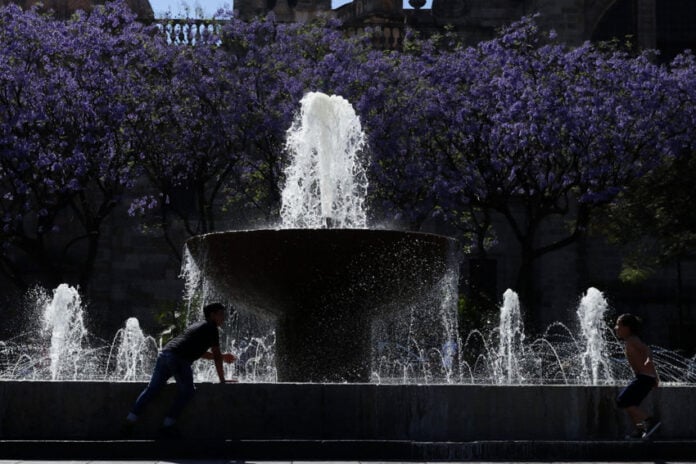
Children in silhouette playing on a bright day by a fountain in the historic center of Guadalajara, Mexico.
Children playing in Guadalajara's historic center. (Galo Cañas Rodríguez/Cuartoscuro)

Construction teams are now in a race against time to complete key mass transit initiatives to connect the Guadalajara International Airport to the metro area’s existing infrastructure network, with the World Cup kicking off in less than eight weeks.

In other news, state fines went up a bit if you’re caught using a mobile device while driving, Zapopan’s Centinela Forest may get environmentally protected status and federal authorities have reported that Jalisco is the state with the highest number of total measles cases in 2026.
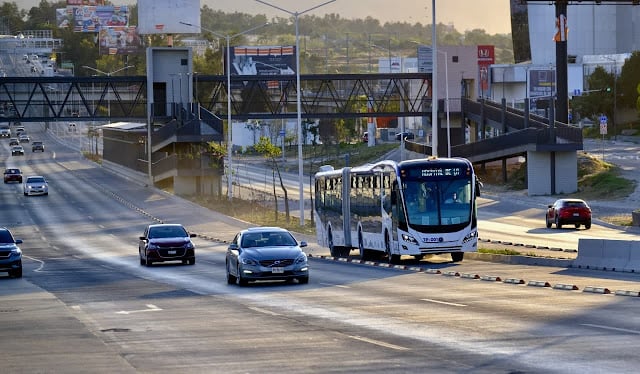
A bus with the Mi Macro rapid transit system in Guadalajara traveling in traffic in the Guadalajara metro zone
Guadalajara’s rapid transit bus system is getting a new line that will connect Guadalajara’s metropolitan zone to the international airport. But the million-dollar question is, will it be ready in time for the arrival of the 2026 FIFA World Cup games happening here? (Siteur/Wikimedia Commons)

Construction update on new transport lines to GDL airport 

This spring, significant progress has been made on the new Line 5 of Guadalajara’s Macrobús, known as the Macro Airport line, running along the Chapala highway. However, there is still severe traffic congestion around the entrance to the Guadalajara International Airport, especially during peak hours.

Last October, the Secretary of Infrastructure and Public Works of Jalisco, David Zamora Bueno, confirmed that the Guadalajara International Airport station for Line 5 of Guadalajara’s light rail system would be located on the airport grounds and not on the Chapala Highway, as initially planned.

Moving the station onto airport property was intended to ensure that visitors could transfer from the platform to the terminal quickly and safely. But this plan required building an overpass from the Chapala Highway dedicated to buses.

Work on this new overpass is still a long way from being finished. Lately, it’s been the main cause of traffic delays heading into the Guadalajara airport. About 500 meters from the airport’s entrance, traffic has been reduced from six lanes to three, causing backups that can stretch for kilometers on weekdays.

As of last weekend, when this reporter surveyed the progress in person, there were a few pylons in place, a dirt ramp and little else to suggest a future overpass. 

Off airport grounds, six of the eight planned bus stations along the Chapala Highway are nearly finished, including La Gigantera, La Piedrera, San José del 15, and Montenegro. This piece of the work, which is integral to the Line 5 project, has a committed delivery date of the end of April. 

Further north, where the Chapala Highway meets the Periférico (Guadalajara’s ring road), another overpass is under construction and causing a separate bottleneck for vehicles headed south from the city. This new structure will eventually connect Line 5 to Mi Macro Periférico transit service.

Authorities are increasingly coy regarding the expected completion date of the entire project, saying in recent weeks only that it “could be” completed before the World Cup starts.

Jalisco’s measles cases accelerated sharply in 2026

Despite Jalisco’s efforts to expand vaccination access, the state’s measles infection rate has accelerated sharply in 2026 compared to last year. 

Through April 10, Jalisco has recorded three deaths from measles this year, and 5,282 confirmed cases, according to the Federal Health Ministry. For all of 2025, Jalisco had 665 confirmed cases. 

A look at the top five states for total measles cases in 2026. Jalisco has taken the unenviable top spot away from Chihuahua, thanks to a major reduction in the northern state’s cases. (Hover over a state’s bar to see numbers not visible.)

The most recent death, on March 24, was a 24-year-old Tonalá man who was not vaccinated. He was the first adult to die from measles here since the outbreak began last year.

While Mexico’s earliest measles cases occurred in the northern state of Chihuahua, the disease has since spread to all of Mexico’s 32 states. Jalisco has now become the Mexican state with the highest number of infections, accounting for 60% of Mexico’s total cases per 100,000 inhabitants. 

The virus typically infects unvaccinated children and adults, as well as people with weakened immune systems. An infection typically starts like many other viral infections, with a high fever, nasal congestion, red eyes and cough. If not treated promptly, it can progress from a severe rash to life-threatening complications. 

Given the escalating problem, local health officials are stepping up their statewide vaccination campaign, urging citizens to get the shots, and conducting epidemiological surveillance to identify and contain new cases.

Zapopan’s Centinela Forest may gain protected status

The Environmental and Sustainability Commission of the Jalisco State Congress voted a few weeks ago to designate the 254-hectare El Bosque Centinela a Natural Protected Area (ANP). The Zapopan City Council presented the initiative in an effort to protect the public park from development. 

During the session, Tonantzin Cárdenas, a legislator from the state political party Futuro, highlighted the importance of protecting this still-wooded area of Zapopan, as well as other valuable green spaces that lack protection, like Parque Eca Do Queiroz along Avenida Patria.

“The El Centinela and Cañadas forest… represent a vital lung for Jalisco. It borders the Nixticuil Forest, which, unfortunately, has been lacerated and sacrificed for green and real estate development,” he said.

But the effort is not yet a done deal. For El Bosque Centinela to become a Natural Protected Area, it must still be voted on in a plenary session of the state Congress.

Fines rise for improper cellphone use while driving 

A woman in a car, driving one-handed in traffic, which is in bokeh around her in the photo, while her other hand is holding a Samsung cell phone to her ear.
The fine for getting caught driving while on a mobile phone in Jalisco is now even costlier. (Breakingpic/Pexels)

Following the introduction of fines last year for the use of mobile devices while driving, the state government has increased the penalties by roughly 3.7%.

The increase, which took effect on February 1, is based on an update of Mexico’s  Unit of Measurement and Update (UMA), a federally determined value used by governments to calculate fines, taxes and other civil charges. The UMA is currently 117.31 pesos, up from 113.13 pesos last year. 

The new penalties for using a cell phone while driving range from 1,759 to 2,932 pesos, depending on the severity of the offense. 

According to Jalisco Traffic Police Commissioner Jorge Alberto Arizpe García, approximately 27,706 drivers were sanctioned for mobile use while driving in 2025. Through February 2 of this year, more than 2,400 additional fines have been assessed.

Which behaviors can earn drivers a fine? Any of the following:

  • Holding the phone in your hand to talk, text or use an application (social media, GPS, etc.). 
  • Interacting with the device even when not talking, e.g. texting or touching the screen.
  • Using any electronic device not integrated into the vehicle that requires touch.

These activities are not only a violation when driving but also when the vehicle is stopped at a traffic light or stop sign. Drivers may still use mobile devices with a headset, through integration with their vehicle or when fully parked.

MND Writer Dawn Stoner is reporting from Guadalajara.

Pemex activates emergency protocols after diesel spill at Deer Park refinery in Texas

2
Deer Park refinery
Pemex acquired full control of the Deer Park refinery in 2021 after buying Shell’s 50% share in the facility for US $600 million. (Shell/Facebook)

State oil company Pemex said Monday that a diesel spill at the dock of its refinery east of Houston, Texas, had been contained.

In a statement, Pemex said that the spill at the dock of its Deer Park refinery on Sunday was caused by an “interaction” — i.e., a collision — between two private vessels, one of which was carrying diesel and the other of which had delivered a load of an unspecified material and “was heading to the channel’s exit.”

The refinery is located on the Houston Ship Channel, which includes Buffalo Bayou, a slow-moving river.

Pemex said that “specialized personnel” at the Deer Park refinery contained the diesel spill.

“The Deer Park refinery immediately activated its protocols and informed the community and the relevant authorities through a level 3 CAER (Community Awareness Emergency Response) message,” the state oil company said, adding that it was estimated that the full cleanup would take approximately two days.

Pemex also said it was in close contact with the U.S. Coast Guard, and declared that there is “currently no impact on the navigation channel.”

In its CAER message on Sunday, Pemex said that the leak site had been “isolated” and that its oil spill team was “working to deploy oil booms to contain the spill.”

In another CAER message on Monday morning, the state oil company said “the diesel spill at our dock area remains fully contained, with no impacts to the surrounding community.”

Pemex acquired full control of the Deer Park refinery in 2021 after buying Shell’s 50% share in the facility for US $600 million. Last October, a gas leak at the refinery claimed the lives of two workers and hospitalized 13 more.

Sunday’s diesel spill at the refinery’s dock came three days after a fire broke out at Pemex’s Olmeca Refinery on the Tabasco coast. There were no injuries or fatalities last Thursday, but another fire just outside the refinery in March claimed five lives.

Pemex is Mexico’s largest company by revenue, but has debt in excess of US $80 billion. The state oil company operates seven oil refineries in Mexico in addition to the Deer Park facility.

With reports from López-Dóriga Digital and ABC 13

Michoacán town makes Guinness World Record-breaking guacamole

4
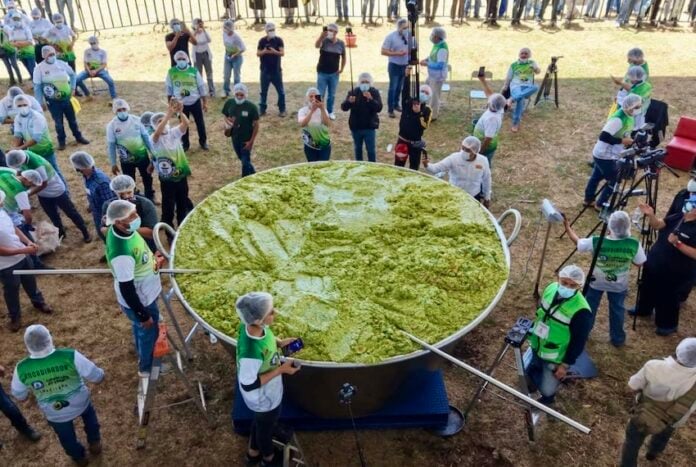
A giant vat of guacamole weighing 7.2 tonnes with volunteers scattered around it
The guacamole weighed over 7 tonnes. (Michoacán Tourism Ministry)

The city of Tancítaro in the state of Michoacán — the world’s largest exporter of avocados — earned a Guinness World Record after whipping up the world’s largest serving of guacamole on Friday, weighing 7.2 tonnes. 

The feat was achieved by 800 volunteers that included students and administrative staff of the Tancítaro campus of the College of Scientific and Technological Studies of Michoacán (Cecytem), in a mashing and mixing session that lasted approximately two and a half hours.

During the event, participants mixed fresh avocados in hundreds of containers while attendees witnessed the guacamole grow in real time on screens installed across the venue. Its final weight, including the container, was 7.2 tonnes, though its qualifying weight was recorded at 6.8 tonnes.

Cecytem Principal Luis Enrique Toscano Servín noted that the students’ and staff’s participation reflected the strong commitment and sense of identity of Tancítaro.

“Our students demonstrated teamwork, dedication and pride in their hometown,” Toscano said. “We also recognize the support of the teaching and administrative staff who coordinated and guided this important activity.” 

In addition to avocados, the guacamole included massive amounts of onion, tomatoes and cilantro. Some images of the experience also show the participants adding large containers of lime juice to the mix. 

This extraordinary achievement took place during the 13th edition of the Avocado Fair, an event that brings together producers, buyers and the public in general to celebrate the region’s most famous produce.

At the end of the event, the record-breaking guacamole was distributed among the attendees, who were able to taste this emblematic dish smeared on tostadas, thus closing a historic day for Tancítaro and for Mexico’s culinary scene. 

Known as the “avocado capital,” Tancítaro consistently ranks as the largest avocado exporter in Michoacán, representing around 30% of the state’s total avocado exports. 

With this achievement, Tancítaro gained the world record which previously belonged to the municipality of Peribán, another large avocado producer in Michoacán, which made 4,972 kilograms, or nearly five tonnes, of guacamole in 2022.

With reports from Quadratín, La Jornada and Eje Central

Sheinbaum praises Pope’s Christianity following Trump’s attack: Monday’s mañanera recapped

0
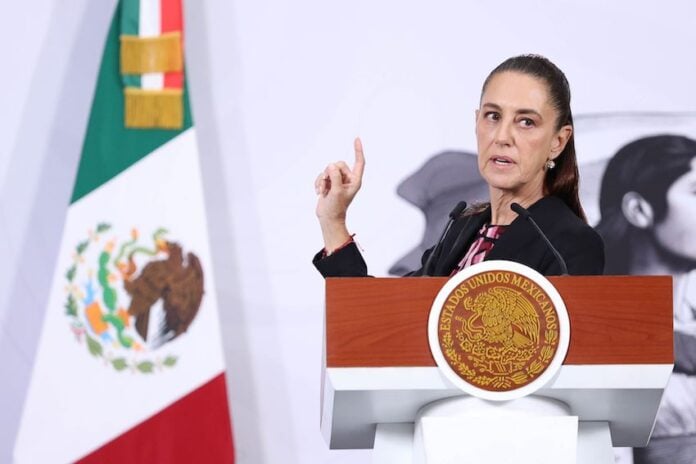
Sheinbaum Apr. 13, 2026
Sheinbaum also lamented on Monday that the United States and Iran did not reach an agreement to bring a definitive end to their war over the weekend. (Moisés Pablo/Cuartoscuro)

Sheinbaum’s mañanera in 60 seconds

  • 🌍 Mexico’s foreign policy stance: Sheinbaum reaffirmed Mexico’s constitutional commitment to non-intervention, self-determination and peaceful conflict resolution, after noting the U.S.-Iran talks in Pakistan failed to reach a definitive agreement to end their war.
  • Pope vs. Trump: Sheinbaum praised Pope Leo XIV’s calls for peace amid his public spat with Trump, calling the pontiff’s peacemaking stance “very Christian” — an implicit contrast with Trump’s social media broadside against the pope.
  • 🏆 World Cup worries brushed off: With the tournament two months out and the possibility of protests intensifying, Sheinbaum insisted there will be “no problem” while defending the right to protest as a hallmark of Mexican democracy.

Why today’s mañanera matters

In the 18 months since President Claudia Sheinbaum took office, Mexico’s engagement with the wider world has increased.

While former president Andrés Manuel López Obrador limited his international travel, preferring to stay at home to focus on domestic issues, Sheinbaum has already visited six foreign countries as president and will touch down in a seventh — Spain — later this week.

On Monday morning, she held up Mexico’s foreign policy as a beacon for the world, and weighed in on a war of words between two of the world’s most prominent U.S. citizens — President Trump and Pope Leo XIV — while being careful not to explicitly criticize the leader of a country that is Mexico’s largest trade partner and foremost security collaborator.

Also of note at the first mañanera of the week was Sheinbaum’s declaration that protests won’t affect Mexico’s capacity to be a successful host of this year’s FIFA men’s World Cup, whose first match is now just over eight weeks away.

‘Mexico’s foreign policy is an example to the world’

Sheinbaum acknowledged that the United States and Iran held talks in Pakistan over the weekend, but lamented that they didn’t reach an agreement to bring a definitive end to their war.

“As you know, Mexico’s position is always what our constitution stands for. Mexico’s foreign policy is an example to the world,” she said.

“And we follow it to the letter of the law,” Sheinbaum said, explaining that her government is in favor of people’s right to self-determination, the principle of non-intervention and the peaceful resolution of conflicts.

“And that will always be our position,” she said.

Sheinbaum praises the Pope amid the pontiff’s spat with Trump

Asked about recent “exchanges” of points of view between U.S. President Donald Trump and Pope Leo XIV, Sheinbaum praised the position of the latter.

“The Pope has been constantly calling for peace, which is something that we praise,” she said.

“… It’s a very Christian position,” Sheinbaum added.

Trump took aim at Pope Leo in a social media post on Sunday, calling him “weak on crime,” “terrible for foreign policy” and “weak on nuclear weapons.”

On Monday, Pope Leo said he has “no fear of the Trump administration,” and declared that he believes “in the message of the Gospel, as a peacemaker.”

Sheinbaum: Protests won’t affect the World Cup in Mexico 

A reporter noted that the start of the World Cup is just two months away, and said that “everything indicates” that protests by Mexico City metro workers, madres buscadoras (searching mothers) and other groups will intensify in the coming weeks.

He asked Sheinbaum whether the government is “working” with such groups to ensure that protests don’t affect the World Cup in Mexico, during which matches will be played in Mexico City, Guadalajara and Monterrey.

“There won’t be any problem at the World Cup, none,” the president responded.

“Now, Mexico is a free, democratic country,” she added.

“Regardless of international events, we guarantee the right to protest, the right to free speech,” Sheinbaum said.

“We’re always going to guarantee that,” she said, adding that the government attends to protesters and responds to “legitimate” demands.

Sheinbaum asserted that protests are not going to “intensify” in the lead-up to the World Cup, before noting that demonstrations have always occurred in Mexico.

The opening ceremony of the World Cup, and the first match (between Mexico and South Africa), will take place at the Estadio Azteca in Mexico City on June 11.

By Mexico News Daily chief staff writer Peter Davies (peter.davies@mexiconewsdaily.com)

Did you bring me anything? Where to find unique souvenirs from Mexico

4
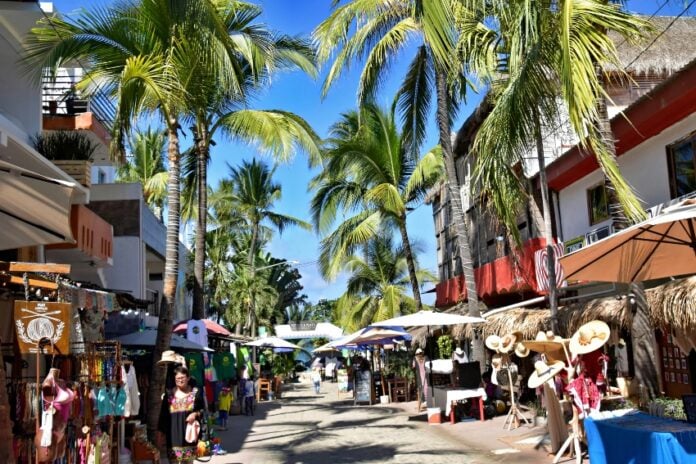
Souvenirs market in Sayulita
Buying souvenirs, like those displayed here in Sayulita, is an essential part of the tourist experience in Mexico. (Jeffery Eisen/Unsplash)

Every time I come home from Mexico, I have to do my rounds. After a day or two, I see my parents and have dinner with them. When I post to my Instagram stories confirmation that I’ve returned to Canada, I meet up with friends at a bar somewhere to debrief on my latest adventure. But no matter who I’m with during this reintroduction period to reality, this question always comes up: Did you bring me anything? 

Half of what you’ll find in my suitcase if you’re a customs officer at the Montreal airport is predictable for someone who just spent three weeks on Mexican soil: touristy T-shirts or fridge magnets to make my friends happy. But the other half is made up of unique things I brought home for myself. 

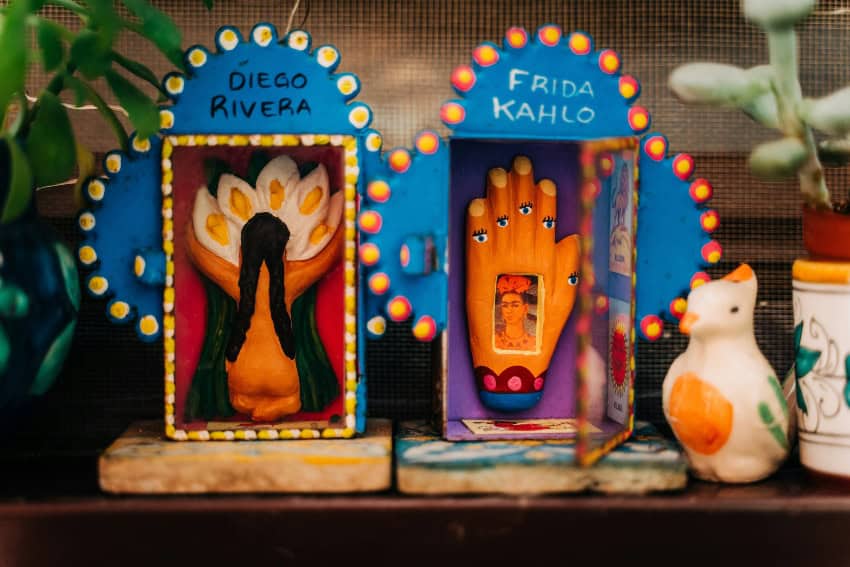
Diego Rivera and Frida Kahlo-related sculptures made by a Mexican artisan, examples of unique souvenirs from Mexico
Your friends and family will want souvenirs from your vacation. But don’t forget to buy some for yourself. (Gabriella Clare Marino/Unsplash)

Homemade tortillas

What usually makes a great taco starts with the quality of the tortilla. It’s the base of the whole dish, and that’s something Mexicans understand more than anyone. In fact, most food stalls in Mexico I’ve visited have a designated tortilla-making station. You can also buy fresh tortillas at commercial supermarkets like Chedraui and La Comer. If you’re a home chef like me, the possibilities of what you can do with the tortilla are endless. 

That’s why I always bring home at least an order of between 20 and 50 tortillas to pack in my suitcase before returning to Montreal. I enjoy making breakfast quesadillas, which began as a fun hobby but is now a regular occurrence in my kitchen. My favorite combination recently has been eggs, avocado and baby spinach, wrapped between two flour tortillas and an even amount of cheese on both sides. 

Of course, you can find store-bought tortillas anywhere in the world. But the art of tortilla making is a thousands-year-old Mexican tradition. There’s just no way tortillas produced in any other country are going to have the same authentic taste. Homemade tortillas should be celebrated and supported by everyone who visits Mexico. I’ve even gone to a tortilla-making class in the past to learn the process from professional chefs. 

Artisanal crafts

Whenever I explore flea markets in Mexico, I’m amazed at what I find. As we all know, artisanal vendors can be found everywhere in the country, whether you’re at a park, a busy street corner or even in the middle of traffic. 

One of my earliest memories as a child is my grandparents buying me a trompo at Chapultepec Park. And over the years, I’ve gone to lots of flea markets in several different Mexican states and found several gems: a Michael Jordan jersey near Mitla, a colorful rug I thought my mother would like in Mérida, freehand artworks from Mexico City, Acapulco and Oaxaca city. If you also include the hundreds of volcanic and evil eye bracelets I’ve bought, my suitcase is always full of artisanal crafts on my flight home. But I also take back the stories of where I went to buy them. 

I have one freehand artwork from a vendor that captured her grandfather harvesting agave plants on his farm, as well as an evil eye bracelet from a nice old man who sold it to me at a discount for speaking to him in Spanish, and then gave me a list of instructions on how to “bless” it for extra protection. Then there’s the story of the woman who shouted “Justin Bieber” at me when I was looking at her Frida Kahlo art pieces. Every time I go to the flea markets, I leave with a new story along with a bag full of new stuff. It’s an experience in itself that I wouldn’t trade for anything. 

New photo albums

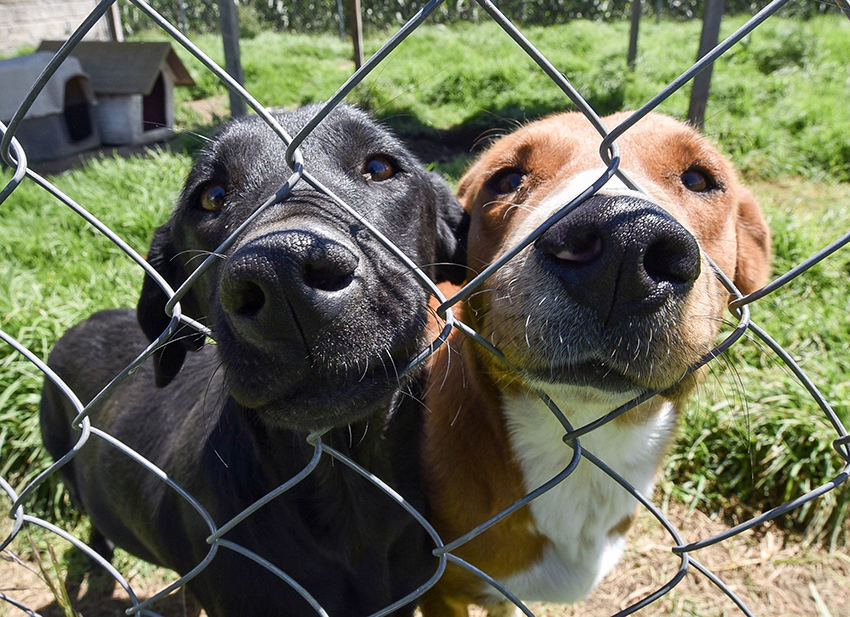
Two shelter dogs press their noses through fence holes
The urge to adopt a street dog has struck before, and may strike again. There are certainly worse souvenirs to take home. (Crisanta Espinosa Aguilar / Cuartoscuro.com)

Reliving my trips to Mexico through the photos I’ve taken has become a tradition of mine. On my flight home, I look at them one by one and remember the trip I just experienced. It’s my little moment of gratitude. 

Some of them I post on my Instagram highlights, but most of them remain on my phone for nostalgic purposes. I have photos from parties, family gatherings, spontaneous hangouts with new friends, beach days, surf trips and last-minute taco runs. Landscapes, sunsets, mountain top views and photos from everyday life in Mexico that make me feel like a professional photographer are also things I cherish. 

It’s also fun to reminisce about good times with people I’ve met in Mexico and then remember a pic from the year we met. Every time I meet up with the friend group I had in Playa Del Carmen back in 2022, we all share pics from the month we stayed there. And since we all have different photo albums, it makes that chapter in my life a lot more special. 

An application to adopt a street dog

When I arrived in Bacalar for the first time with my brother, we got lost trying to find our Airbnb. It’s such a peaceful little town, with beautiful lagoons, Mayan ruins and a cute downtown center that was under construction when we were wandering around like chickens with their heads cut off in February 2022. But during our first half hour in this hidden Mexican gem, we didn’t have time to appreciate it. Instead, we were sweaty, tired and trying to reach our accommodation. 

We eventually figured it out after asking a few locals. Once we finally got there, two street dogs greeted us. I gravitated most toward a beagle mix that reminded me of Snoopy. Of course, I gave him treats and pets during the two days I was there, and immediately began googling how to adopt a street dog once I had a Wi-Fi connection. 

To my great disappointment, Snoopy had owners who lived less than a block away from my Airbnb. He just wandered around with the real street dogs and liked the attention I gave him. But, although I felt betrayed, the seed was planted in my head: Someday, I would adopt a dog in Mexico

After talking to friends in Playa Del Carmen, I ended up at a place called Playa Animal Rescue. Since I live in Canada, they explained it’d be better if I connected with agencies like Mex-Can Pet Partners, since they’re more equipped to coordinate my future adoption of a dog like Snoopy. 

Despite the logistics and paperwork involved, I took an application form before I left Playa Animal Rescue, just in case I ever moved to Playa and wanted a furry companion. 

What’s in your suitcase?

Honestly, I could go on about the many things I’ve brought to Canada from Mexico over the years, but then this article would be twice as long.

So, what would we find in your suitcase when you’re on your way home? Let us know, and tell us the unique stories behind your souvenirs in the comments below. 

Ian Ostroff is an indie author, journalist, and copywriter from Montreal, Canada. You can find his work in various outlets, including Map Happy and The Suburban. When he’s not writing, you can find Ian at the gym, a café, or anywhere within Mexico visiting family and friends.

El Jalapeño: Mexico to reduce deficit by renting out National Palace; tanning salon and quinceañera hall now accepting bookings

0
Opening the doors of a national treasure and making a dent in the national debt? If it sounds too good to be true, it's probably because we made this story up. (This image generated with AI)

All stories in El Jalapeño are satire and not real news. Check out the original article here.

MEXICO CITY — President Claudia Sheinbaum announced Monday a new fiscal diversification initiative in which underutilised spaces within the National Palace will be made available for private use, generating revenue streams that officials described as “complementary to existing budget mechanisms” and economists described as “not what we expected from this administration but fine.”

The initiative follows confirmation that a member of the public successfully used a National Palace window as a personal tanning balcony for an unspecified period without detection, prompting officials to conclude that if the space was going to be used anyway, it might as well contribute to GDP.

someone tanning from Mexico's National Palace
(Screenshot of video taken from Mexico City’s Zócalo)

As a result, the following areas of the palace have been opened up to enterprising local businesses:

Room 4B, South Wing — The Tanning Balcony. Full southern exposure. Excellent natural light. Views of the Zócalo. Available by the hour, Monday to Friday, excluding press conference days. Towels not provided. Users are advised that the balcony is visible from street level to anyone with a mobile phone and that going viral is, at this point, a known risk of the booking.

The East Courtyard — Quinceañera and Event Venue. Cobblestone flooring, colonial archways, and Diego Rivera murals provide a backdrop that no event planner in the private sector can replicate. The package includes tables, chairs, and a DJ power outlet. The murals are not available for photography without written permission, though the government acknowledges this has never once been enforced.

Room 12, First Floor — Domino Hall. Four tables. Available Thursday evenings. Bring your own dominoes. Coffee provided. Plastic chairs. The specific plastic chairs that are somehow simultaneously the most uncomfortable and the most ubiquitous seating in the entire country. The chairs were sourced specifically for authenticity.

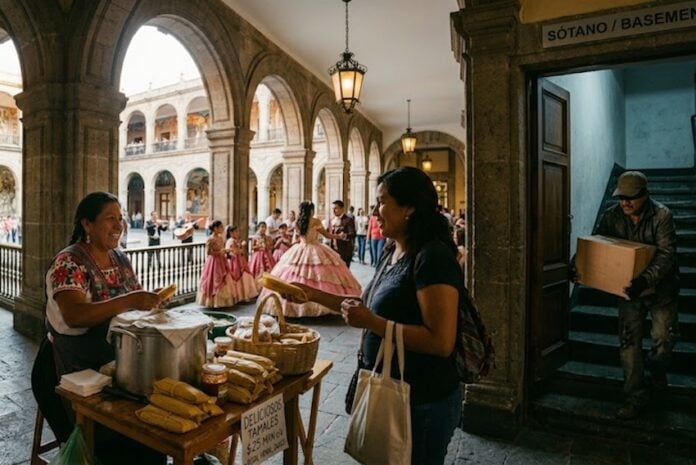
The Main Corridor — Tamalera, Weekends Only. A vendor will be present Saturdays and Sundays from 7 a.m. until the tamales run out, which officials confirmed will be before you arrive, regardless of what time you leave home. The corridor’s acoustics have been certified by the National Institute of Anthropology and History as ideal for the phrase “¡hay de rajas, de elote, y de mole!” delivered at full volume. One flavour will always be unavailable.

The Presidential Antechamber — Photoshoot Studio, Sundays 2–4pm. Available for family portraits, XV años pre-shoots, wedding photos, and influencer content. The chair behind the desk is included. Sitting in the chair is 200 pesos extra. Demand for the chair has been “significant.”

The Basement — Storage. Available for boxes, furniture, appliances, and items described by their owners as “things I’ll deal with later” that have been there since 2019. Monthly rate. No questions asked. The government asks that renters do not ask about the other things already in the basement. Both parties will be more comfortable this way.

Sheinbaum confirmed the initiative is expected to generate sufficient revenue to offset a modest but meaningful portion of the national deficit, depending on tanning balcony occupancy rates, which early projections suggest will be high given that the space has apparently been in informal use for some time at no charge.

“We must have great respect for what the National Palace represents as a historical landmark,” she said, before confirming that the tamale vendor had already been booked through December.

Check out our Jalapeño archive here.

Got an idea for a Jalapeño article? Email us with your suggestions!

Mexican dad jokes: Harder than ours

5
Dad joke about Mexican food
Dad jokes in the U.S. can cause an eye roll but also a smile. The Mexican version, on the other hand, hit much harder. (Amazon)

Here’s a dad joke I haven’t yet heard from a Mexican dad.

Setup: “Hey, can you tell me what time it is?”

Punchline: “Time for you to get a watch!”

Ha. Ha!

That, my friends, is what I call a classic dad joke. “Dad jokes,” of course, are the kinds of jokes that are so bad, they make you roll your eyes. But they also — don’t lie — make you smile. They’re not necessarily hilarious; they simply exist to help you loosen up. (And if you ask me, we could all use some loosening up.)

This Mexican dad has probably savaged at least three generations of children with his brutal jokes. (The Free Birds/Unsplash)

And guess what? Mexico’s got its fair share of dad jokes, too. And legitimately hilarious jokes. Funny is in the eye of the beholder, I suppose, but if you don’t find Mexican humor objectively hysterical, then you, my friend, are missing out.

The land of laughs

Mexico, as you surely know, is well known for its humor. Actually, it’s one of the things I love best about living here.

It’s true, there are situations in which people take themselves much too seriously. But overall, your average Mexican’s ability to crack a joke about pretty much anything is paralleled by few others in the world.

Many jokes are often a fascinating cross between hopelessly juvenile yet unexpectedly complex. They crack up the 12-year-old in you while making your adult brain work hard to connect the dots. All humor is “complex,” I suppose, but certain aspects of Mexican humor, like the albur, have been elevated to an art form. They even have competitions that make Eminem’s rap battle scene in “8 Mile” look like child’s play by comparison.

I could probably (maybe) beat these kids in a rap battle. That’s where my skills end. (Artemio Guerra Baz/Cuartoscuro)

Participatory, competitive, hilarious battles of wit: sign me up! (Just to watch, though, not compete. I’m not quick on my feet and need 2-3 business days to come up with a single clever comeback.)

The art of humor in Mexico: los albures

Ask any Mexican about homegrown humor, and they’ll say the same thing. Nothing beats albures.

What are albures, you may ask? They all share these features: 1) they’re plays on words, i.e., have double meanings, 2) the funny meaning is always sexual, and almost always references a sexual organ (usually the penis, because machismo), and 3) you got to be real smart to catch them, and smarter still to answer them with an albur of your own.

Also important: you must remember this common wisdom: El que se enoja, pierde. (“He who angers, loses.”) You can’t be all intense and worked up about it. It’s for laughing. Laugh. Loosen up, relax those shoulders.

Just ease right on in. (See? I just did it in English! Kind of.)

Disculpe, ¿tiene huevos?

The most important thing to remember? It’s all about sex.

Let’s talk about all the good things, and the bad things that could be — let’s talk about albures. (Enrique Ordoñez/Cuartoscuro)

I mean, what isn’t, amiright? But to successfully tell or understand an albur, you must have a dirty mind. Imagining everything as phallic or … vagina-like? Do we have an equivalent to phallic? — is the first step (Editor’s note: The word you want is yonic).

For some reason, this is especially true with food. That’s why, too, you’ve got to be careful with what you say, lest you accidentally alburear.

Asking someone at the store or a market if they “have” eggs — or milk, or bananas or papaya — is going to get you a reaction. It might be a stifled laugh, it might be an incredulous ¿Ora? (“What did you just say?!”). The sky’s the limit!

If you don’t want to do that, might I suggest the verb haber (“there is/there are”). ¿Hay huevos? This is a good way to ask without inadvertently referencing the attendant’s genitals. You’re welcome!

Not all jokes

Believe it or not, there are a few jokes people tell that aren’t about sex. There is a lot about alcohol, too!

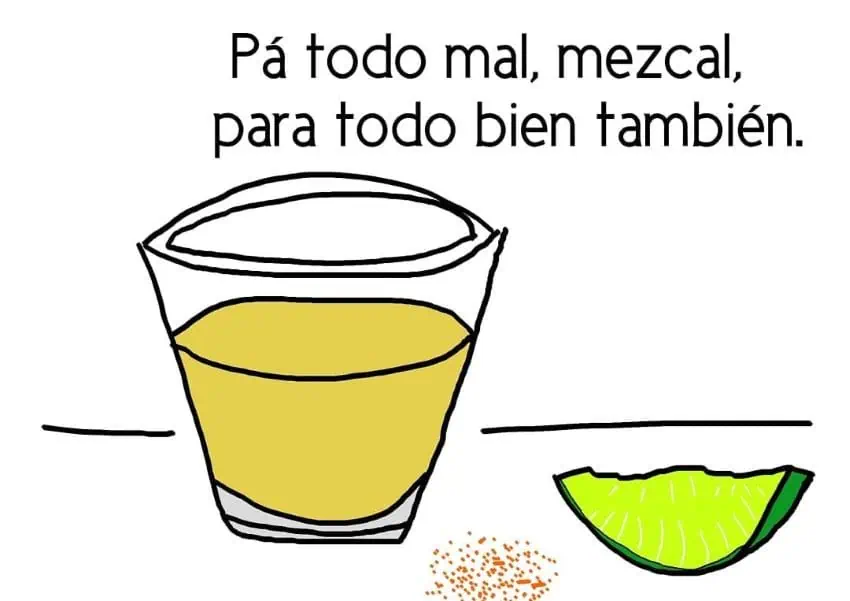
“For everything good, drink some tequila. And for all the bad times too.”(@elmadero_)

Here’s an example of one that people love to tell over and over again. If you have a sore throat, tequila (sometimes with lime and honey) is a suggested remedy. And they always add, Y si no se te cura, se te olvida! which cracks them up. (English translation: “And if it doesn’t cure you, you’ll forget about it!”).

Another: Para todo bien, mezcal, y para todo mal, también. (“For good times, mezcal, and for bad times, too.”)

To wrap things up, here’s a more classic dad joke I recently saw. Dicen que para ser feliz hay que tener fé, pero entonces solo sería Liz. (“They say to be happy you have to have faith, but then I’d only be Liz.” The joke: fe-liz. Get it? Don’t let your eyes get stuck in your head when you roll them.)

This article was originally published in 2024. It has been lightly edited for updates and clarity.

Sarah DeVries is a writer and translator based in Xalapa, Veracruz. She can be reached through her website, sarahedevries.substack.com.

3 authentic Mexican recipes (and secret cooking tips) from my abuelita

11
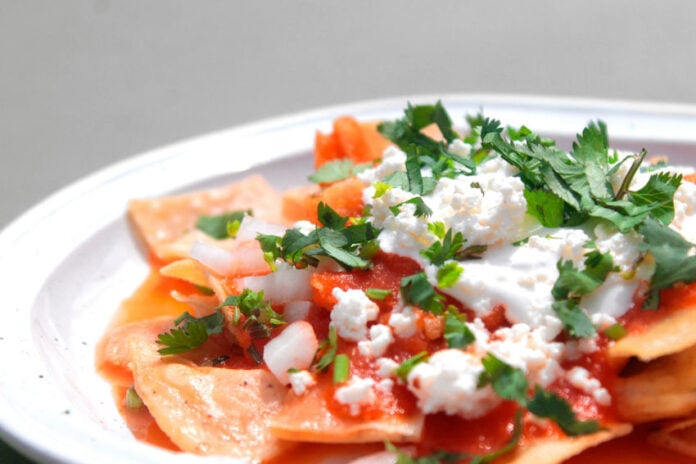
A close-up shot of a plate of red chilaquiles, a staple authentic Mexican recipe, topped with fresh crema, crumbled queso fresco, diced onions and cilantro.
Mexico News Daily writer Gabriela Solis learned to make chilaquiles, enchiladas and more from the best cook she knows: her Mexican grandma. (Fernando Andrade/Unsplash)

My grandmother on my mother’s side is the best cook I know. She married at 18, had 10 children, and spent over half her life cooking for her family, only stopping at age 93. 

As the family grew and her children got married, my abuelita always had food ready on the stove in case one of my aunts, uncles or cousins stopped by to have lunch. That was the case with my sisters and me, who had lunch at her house at least twice a week while we were young. 

Abu Ene (short for Abuelita) with one of her great-granddaughters in 2019. (Courtesy of Gabriela Solis)

Having grown up very close to my grandmother’s cooking, I asked her to teach me how to cook her best Mexican recipes before I got married. Today, I prepare these recipes almost every week. 

Frijoles refritos

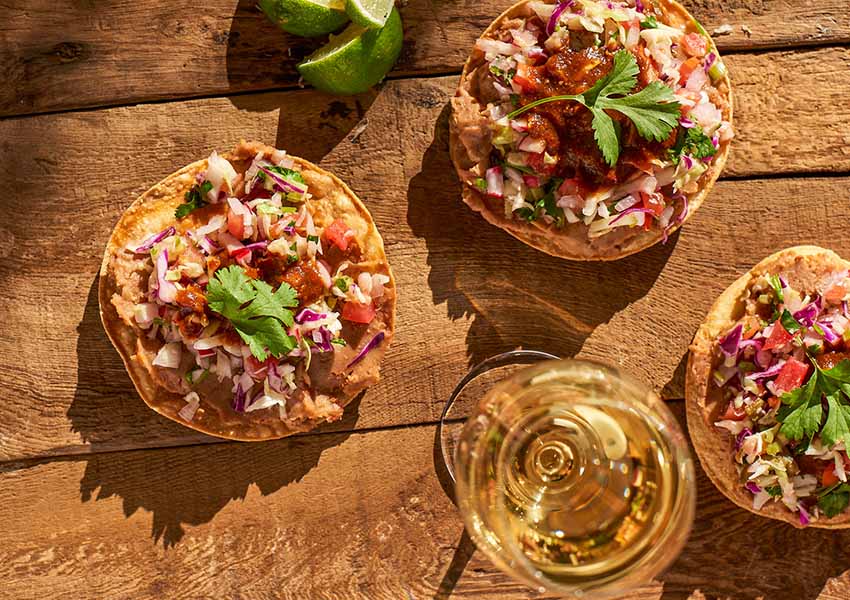
mexican tostadas
(Trop Table)

I’m probably one of very few Mexicans who are not fans of beans. Growing up, I would never eat them — I hated the flavor, the texture and, specifically, the smell.  

But as I grew up and realized how weird that was, I dared to try my grandma’s recipe for beans because everybody praised them. Even my dad would say that no one, not even my mom, could cook frijoles like my grandma. 

I finally tried her frijoles refritos as a teenager, and while I didn’t fall in love with frijoles themselves, this is the only bean recipe that I enjoy eating at home.  

Ingredients:

  • 1 cup of precooked Mexican beans (bayos)
  • ½ chile guajillo with seeds removed
  • ½ chile de árbol with seeds removed
  • 50 g Mexican chorizo (It doesn’t taste the same if you cook the frijoles with Spanish chorizo, but if that’s all you’ve got, go ahead.)
  • 1/3 cup bean stock (the water in which you cooked the beans)
  • 1 Tbsp vegetable or olive oil
  • Salt to taste

Don’t be afraid to play around with the quantities depending on how spicy and liquefied you like your beans.

Instructions:

  • In a hot pan, pour the oil and stir-fry the chiles with the chorizo until brown. 
  • Blend the precooked beans with the chiles, chorizo and bean stock, using a blender or food processor.
  • Pour the blended beans back into the same pan where you stir-fried the chiles, and add salt to taste. Stir with a wooden spoon and heat until the beans begin to bubble. If the consistency of the beans is too thick, you can add more bean stock to thin them out a bit.
  • Sprinkle grated cheese on top (cotija, adobera or cheddar cheese). Enjoy served hot as a side dish with carne asada, scrambled or sunny-side up eggs, on tostadas, on molletes… and beyond. 

Abuelita’s tip:

If you live abroad like me and can’t find Mexican beans, use canned frijoles refritos and mix them with the browned chiles and chorizo for added flavor. 

Enchiladas

(Anbunh Pho/Unsplash)

Unlike beans, enchiladas are my favorite Mexican dish. I could eat enchiladas every day if too many fried tortillas wouldn’t tip the scale!

This recipe is so tasty that, save for a few restaurants I know that make great enchiladas, I rarely order enchiladas when dining out because I know I have the best recipe at home.

Abu Ene’s Enchiladas

Ingredients:

  • ¼ cup water for boiling
  • ¼ cup water for mixing 
  • 2 chiles guajillo with seeds removed 
  • ½ chile de árbol with seeds removed
  • ½ clove garlic, minced 
  • 1 tsp. white vinegar 
  • Tortillas
  • Vegetable oil or olive oil

 For the filling:

  • Boiled, shredded chicken 
  • Mashed potatoes made with salt

Toppings:

  • Lettuce, thinly sliced
  • Shredded cheese (if you’re in Jalisco, have your enchiladas with adobera cheese. Otherwise, use cotija or cheddar cheese)
  • Radish slices
  • Fresh crema

Instructions:

  • In a small saucepan, heat the water for boiling. Once boiling, add in the chiles and lower the heat to medium. Let it boil for two minutes and then transfer to a blender with the other ¼ cup of water.   
  • Add the garlic, vinegar and salt to the blender and mix until you get a smooth consistency. Place the chile mix aside (on a plate is best) and reserve. 
  • Pour the oil into a hot frying pan, making sure it covers the whole surface. Keep the heat at low to medium.
  • Meanwhile, dip your tortillas in the chile mix and fry them one by one in the pan, doing each side for a few seconds and then setting aside. Place 3–5 of the fried tortillas on each of the plates you’ll be using to serve.
  • On the plates, add the filling of your choice to each tortilla and fold it over twice. Repeat until you have at least three enchiladas per plate. 
  • Garnish with the cheese, thinly sliced lettuce, a dollop of crema and a few radish slices before serving.

Abuelita’s tip:

You can add one raw egg to the chile mix if you want the dish to have more protein. The egg also helps the sauce and oil not to “jump” when you place the tortilla in the hot oil. 

Be generous with the oil; it must coat the entire bottom of the pan. The tortilla must float in the oil to prevent it from sticking. 

Chilaquiles

(Fernando Andrade/Unsplash)

If you want to impress your friends and family with a delicious breakfast, nothing is more authentic than this flavorful chilaquiles recipe. Enjoy it with fresh orange juice and sliced bread or bolillos, and you’re in for a true Mexican feast!

Abu Ene’s Chilaquiles

Ingredients:

  • Totopos (tortilla chips, preferably unsalted)
  • 8 plum tomatoes 
  • 1 Tbsp tomato paste 
  • 1 small clove garlic, minced
  • 4 guajillo chiles with seeds removed 
  • 1 chile de árbol with seeds removed 
  • 1/3 white onion (cebolla blanca), chopped
  • 1 cup water
  • 1 Tbsp vegetable or olive oil
  • 1 tsp oregano
  • Salt to taste

For the garnish:

  • Fresh crema
  • Shredded cheddar, adobera or cotija cheese
  • Diced white onion 

Instructions:

  • Place the tomatoes and the chiles in a saucepan, and cover with water. Cook until the skin on the tomatoes begins to split. 
  • Drain the water and place the tomatoes and chiles in a blender, along with the onion, garlic and water. Strain the mix and reserve. 
  • In a hot saucepan over low heat, heat the oil, and then add the tomato paste. Toast for a minute, and then add the reserved tomato sauce. Add the salt and oregano and boil on low to medium heat for 10 minutes, or until the sauce thickens slightly. 
  • To serve, place the totopos on a plate and pour the sauce evenly on top. Garnish with the fresh crema, finely diced onion and shredded cheese and serve. 

¡Buen provecho! I hope you enjoy these recipes with your family and loved ones!

This article was originally published in 2023. It has been lightly edited for updates and clarity.

The short reign of Emperor Agustín I in Mexico

5
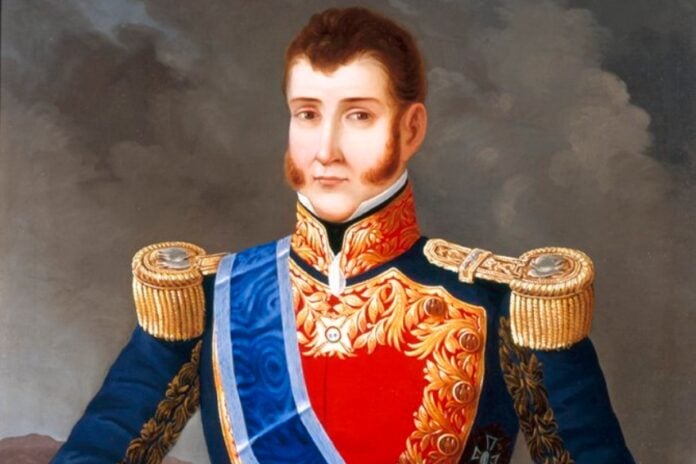
Agustín de Iturbide
Agustín de Iturbide's reign as Emperor of Mexico lasted for less than a year. (Public Domain)

In a recent article, we looked at how Agustín de Iturbide went from soldier to becoming Emperor of Mexico. We now review his short reign.

On July 21, 1822, General Agustín de Iturbide was escorted into Mexico City’s cathedral to be crowned Emperor Agustín I. The young country would go into independence still under a monarchy, but instead of being ruled by the king of distant Spain, they would give their allegiance to a man who had come up through their own land-owning class. The coronation was the grandest ceremony ever staged in the New World. Four bishops attended, one of whom, the Bishop of Puebla, quoted from the Bible’s book of Kings:Surely you have seen him whom the Lord has chosen, that there is none like him amongst all the people.” Even Congress was swept away by the occasion and declared the post would be hereditary, with all of Emperor Agustín I’s family acquiring grand titles.

Emperor for 10 months

The new emperor was 38 years old, Mexican-born of Spanish stock. He was, as any man of his social rank, something of a dandy, and when he sat for portraits, he favoured the braids and bands of a military uniform. The uniform was not just for show, for Emperor Agustín had proved himself the country’s most effective general in the various wars that had eventually brought him to the throne. At this stage, he enjoyed support from the army, the church and a portion of the population who felt that living under a king was what god had always intended for mankind. Yet, within a year, he would be on his way to exile in Europe. What went so wrong so quickly? 

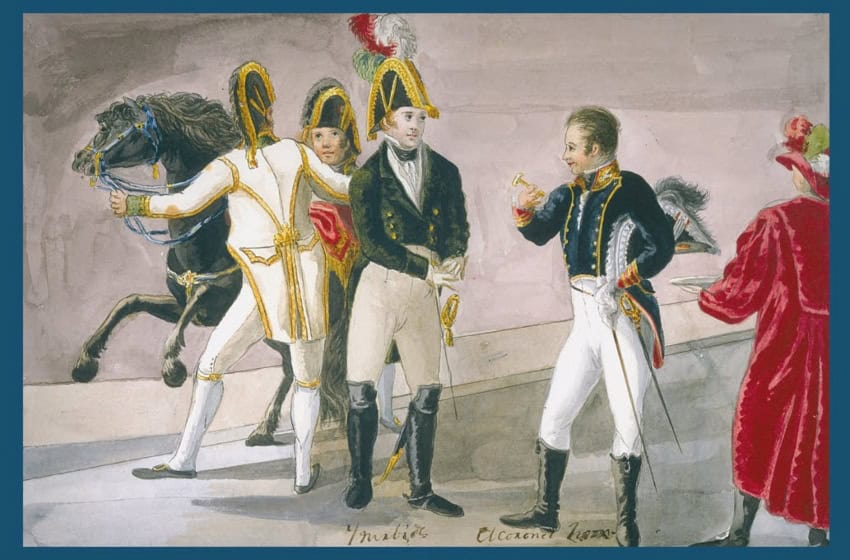
Emperor Iturbide receives the keys to Mexico City
Emperor Iturbide receives the keys to Mexico City from Colonel Ormaechea. Unfortunately, the country at large was bankrupt after achieving independence from Spain. (Dageno/Wikimedia Commons)

A question of money

The problem at the heart of everything was that years of war had left Mexico bankrupt. Even here, on this day of the ceremony, the extravagance of the coronation service was questioned. Then there were grumbles over the establishment of a lavish court, thought necessary to both create the impression of monarchy and to reward those who had helped get the general into this position. Some 130 people, from pages to ladies-in-waiting, to physicians, were placed on the emperor’s new staff. The expectation of favors did not stop there, with every officer who had fought alongside the emperor expecting promotion and reward.

Congress, many of whom were republicans at heart, balked at the cost of the monarchy, which quickly included the lavish refurbishment of several of the emperor’s private homes. This exposed another weakness in the system. This had not been just a change of government, but the end of a colonial period that had lasted three centuries. Nobody had determined exactly how the new monarchy would work, and Emperor Agustín and the Congress clearly had different views concerning the extent of royal power. These differences exposed a second problem. The new emperor responded poorly to criticism, and the press was soon facing censorship.

Three issues came into focus. Did Iturbide have the right to appoint members to the Supreme Court? Could he veto legislation as could the Spanish king? And could he control troublesome provinces by establishing special courts made up of military officers and lawyers, a source of authority that could be easily misused to persecute political opponents. As the grumbling increased, Emperor Agustín took that well-trodden path of dictators and blamed foreign spies for all the problems. 

Suspicions of conspiracy and dictatorial decrees

In his defense, this had an element of truth. Just a few weeks after coming to power, there were rumors of a conspiracy to overthrow the Emperor. This plot (if it existed at all) had been encouraged by the minister from Colombia, his country a center of revolution against Spain and the monarchy. There was a spy embedded in the rebel group, and 66 people were arrested for plotting a coup, including 15 members of Congress. There had to be at least a suspicion that the Emperor had used the incident to imprison some of his critics.

Meanwhile, the financial situation continued to decline. Attempting to bring in money, the government first requested and then forced loans. The property tax was increased, and paper money was printed. Government employees now received one-third of their wages in paper money, which they would be lucky to get any shopkeeper to accept. On Oct. 31, the emperor announced that, as Congress had neglected its duties of writing a constitution, instead putting its energy into attacking him, it would be dismissed and replaced by a new junta. 

Santa Anna races from Xalapa to the city of Veracruz

With the emperor and Congress squabbling and the economy crumbling, the provinces moved towards rebellion. The focus point was Veracruz, where Spanish troops still occupied Fort San Juan de Ulúa, which was situated on a small island off the coast. The local leader of the imperial forces was General Antonio López de Santa Anna. He was at Xalapa when he received a letter from the emperor recalling him to Mexico City. Correctly guessing that the emperor was about to remove him from office, Santa Anna ignored the letter, raced to Veracruz, and declared his support for the republican cause.

The rebellion intensifies

The situation in Veracruz was serious but containable, but on Jan. 3, several generals, including Vicente Guerrero and Nicolás Bravo, rode out of Mexico City to start a rebellion in the south. Large areas of the country had slipped from the emperor’s control, but the majority of the army remained loyal, and on Jan. 13, 1823, imperial forces under José Gabriel de Armijo won a major victory over the southern rebels at the Battle of Almolonga. This stabilized the situation in the south and, with that, the worst of the crisis seemed to have passed. Iturbide now sent the trusted General Echávarri to subdue the small rebel forces in Veracruz. 

However, instead of confronting the rebels, Echávarri and several other imperial officers deserted the Emperor and joined with General Antonio López de Santa in proclaiming the Plan of Casa Mata. This decoration denounced the First Mexican Empire and called for a new Congress. One by one, regional councils in Puebla, San Luis Potosí and Guadalajara declared for the Plan of Casa Mata and a military junta was formed in Xalapa to represent the growing rebel faction.

Mexico was now divided into three power blocks. There was the emperor and his shrinking number of supporters in the capital, members of the disbanded Congress, still influential men but lacking a platform, and the rival junta in Xalapa, with considerable support in the provinces. On March 7, 1823, Iturbide reconvened Congress, but as he addressed the body, he saw from their silence that he lacked their support. Fearing his imminent overthrow, he summoned Congress to an extraordinary session and presented his abdication. The emperor left for Europe, eventually landing in Italy. 

The death of an emperor

Spain still had dreams of regaining its lost colony, and the deposed emperor received a polite but cool reception from Europe’s monarchs. Fearing assassination, he brought his family to England. Back in Mexico, the economy was still floundering, with supporters of centralism, federalism, the surviving monarchy platform, the church and the various secret societies all competing for power and influence. With so many problems, people were looking for somebody to blame, and the Spanish families that had remained in Mexico were becoming the target of public anger.

Iturbide saw an opening. He wrote to the Mexican Congress, offering to return not as emperor, but as a soldier ready to save the country. His proposal was dismissed, and he was declared a traitor in his absence, as was anybody helping him.  However, by July, believing “the people” wanted him back, Iturbide secretly sailed from Southampton. He arrived in Mexico in Tamaulipas, where he met with provincial politicians and dignitaries. They were undecided how to react, and for a while there was some expectation that the monarchists might triumph and that provincial forces put at Iturbide’s disposal. Instead, he was arrested by General Felipe de la Garza, the local military commander, tried and sentenced to death. Agustín de Iturbide, the first Emperor of Mexico, was executed by firing squad on July 19, 1824.

Bob Pateman lived in Mexico for six years. He is a librarian and teacher with a Master’s Degree in History.

Mexico’s week in review: Electoral reform becomes law and a new foreign minister takes charge

3
President Sheinbaum presided over the inauguration of the new Museum of Zapatista Women in Ayala, Morelos, on Friday.
President Sheinbaum presided over the inauguration of the new Museum of Zapatista Women in Ayala, Morelos, on Friday. (Presidencia/Cuartoscuro)

The week opened with highways in gridlock as vacationers returned home from the Holy Week holidays. Truckers and agricultural producers launched a national transport strike on Monday, blockading major roads across at least nine states into Tuesday. By mid-week, the peso made a comeback as Washington and Tehran edged toward a ceasefire deal, a development President Sheinbaum openly welcomed at her Wednesday press conference, citing lower oil prices as a direct benefit to Mexico.

By Friday, Sheinbaum’s landmark electoral reform had cleared its final constitutional hurdle, and a new poll showed her approval rating at a record high of 79.5%. When asked about it at Thursday’s mañanera, she quipped, “Every time a poll comes out, our political adversaries get very angry,” adding that opponents had accused her government of buying up all the polling companies. “Just imagine how much we would have spent,” she joked.

Didn’t have time to catch this week’s top stories? Here’s what you missed.

Sheinbaum’s electoral reform becomes law

The week’s biggest political headline came Friday, when President Sheinbaum announced that her “Plan B” electoral reform had cleared its final hurdle, ratified by 20 of Mexico’s 32 state legislatures — enough to make it constitutional.

Sheinbaum’s hard-fought electoral reform clears its final hurdle: Friday’s mañanera recapped

The reform had already cleared the lower house of Congress earlier in the week and the Senate the month prior. Sheinbaum framed it as a package aimed squarely at dismantling special privileges for politicians, pointing to six key achievements: a ban on consecutive reelection, an anti-nepotism provision preventing relatives from succeeding officials, reduced budgets for state legislatures and the Senate, fewer municipal councilors, the elimination of generous pensions for former officials and slashed salaries for electoral authorities.

The reform will now be certified by the Senate before being published in Mexico’s official gazette.

The peso perks up

The Mexican peso notched seven consecutive days of gains between March 30 and April 9, appreciating more than 4% to close Thursday at 17.36 to the dollar.

The surge was driven in large part by a two-week ceasefire deal reached between the United States and Iran, which weakened the dollar and boosted appetite for higher-risk currencies like the peso. According to Banco Base’s director of economic analysis, the Wednesday gain was the largest single-day appreciation since April 2025, when the Trump administration announced a pause on its highest reciprocal tariffs.

By Friday morning, the currency had strengthened further to 17.26 per dollar. The good news came with a caveat: INEGI reported that annual headline inflation climbed to 4.59% in March, its second straight month above the Bank of Mexico’s 2–4% target range.

Investment and consumption slump

INEGI data also showed that both gross fixed investment and private consumption declined in January, casting a shadow over the domestic economic outlook.

Investment fell 1.1% month-on-month — snapping a three-month recovery streak — and was down 2.2% annually, extending a run of 17 consecutive months of negative annual figures. The main drag came from machinery and equipment, which slumped 8% year-on-year, suggesting companies continued to defer new productive assets amid uncertainty. Private consumption, which accounts for roughly 65% of GDP, fell 1.6% on a monthly basis — its steepest recent drop — though it remained up 2.7% year-on-year. Spending on imported goods led the monthly decline, falling 6.8%. The figures are a sobering contrast to Mexico’s investment boom years of 2023 and 2024, when gross fixed investment grew 19.7% and 3.4%, respectively.

Kearney’s puts Mexico back into the global top 20 for FDI

On a more encouraging note, Kearney’s 2026 Foreign Direct Investment Confidence Index placed Mexico at 19th globally— a jump of six spots from 25th the year before, re-entering the top 20 for only the second time since 2020.

Kearney’s managing partner in Mexico credited the country’s position within the USMCA trade bloc and nearshoring momentum as key drivers, alongside the optimism of senior business executives. The climb was powered in part by a record FDI haul of $40.87 billion in 2025. The United States and Canada ranked first and second, respectively, while Mexico was one of only two countries in the index improving as rapidly, the other being Singapore. Analysts note a significant caveat, however: Mexico ranks at the bottom of the top 25 for technological innovation, which Kearney’s survey identified as the single most important factor for global investors.

Regulatory efficiency and legal certainty on property rights were also flagged as areas requiring attention.

Mexico’s trade advantage over China and Canada widens

U.S. Census Bureau data confirmed Mexico’s dominance as America’s top trade partner in early 2026, with two-way trade reaching $147.32 billion in January and February — up 6.8% annually, even as total U.S. trade with all countries declined 4.5%.

Mexico’s share of the U.S. import market climbed to a record 16.9%, up from 13.8% a year earlier. The contrast with China was stark: Chinese exports to the U.S. fell 45.4% in the period, with China’s share of the U.S. import market collapsing from 12.1% to just 6.6% — the lowest U.S.-China two-way trade figure for the opening months of any year since 2009.

The auto sector was at the heart of that story. Mexico’s 50% tariff on Chinese-made cars, which took effect Jan. 1, sent imports plummeting 45.3% in January compared to a year earlier, and down 82.3% from the November peak.

Mexico went from the world’s top importer of Chinese-made cars to 16th in a matter of weeks. Sales of Chinese car brands in Mexico, however, surged 25.3% in the first quarter of 2026 — likely drawing down pre-tariff inventory — with Geely recording a 272% annual increase and MG selling over 14,500 units. China’s Commerce Ministry warned it reserves the right to take countermeasures against Mexico’s new duties.

Investments and infrastructure announcements

Several significant investment announcements landed during the week:

  • GAC announced its plans to become the first Chinese automaker to assemble vehicles in Mexico, with operations expected to begin in the second half of 2026. No location or investment figure was disclosed, but the move is widely seen as a tariff-circumvention play within the USMCA framework.
  • Kia announced a $600 million investment in Nuevo León to expand its EV production.
  • CFE approved a grid connection for a 130-MW wind farm in Tamaulipas by Vancouver-based Revolve Renewable Power, part of a broader clean energy push by Mexico’s Energy Ministry.
  • Puebla’s airport announced an expansion plan that will include 12 new domestic and international routes, a hotel, bus station and shopping center.
  • Walmart announced plans to reach 99% of Mexican households by 2030 through a US $2.4B regional investment.

Rescue mission continues in Sinaloa

Rescue teams pulled a second miner alive from the flooded Santa Fe mine in Rosario, Sinaloa, nearly two weeks after a tailings dam collapse on March 25 trapped four workers underground.

Francisco Zapata Nájera, 42, was located at a depth of 300 meters surrounded by water and extracted before dawn on Wednesday in an operation that took nearly half a day. Army divers, operating with near-zero visibility, used pumps capable of extracting 34,000 liters per hour to clear a path. Shortly after Zapata was brought to the surface and airlifted to a hospital in Mazatlán, rescuers found the body of a third miner. A fourth worker remains unaccounted for, and officials say operations will continue until all are located.

A new foreign minister takes the reins

Roberto Velasco Álvarez was officially confirmed as Mexico’s new Foreign Relations Minister by the Senate in an 81-30 vote on Wednesday, and held his first working call with U.S. Secretary of State Marco Rubio the following day.

Mexico’s foreign affairs minister steps down

The two discussed migration and security — the defining issues in the bilateral relationship — with Velasco characterizing the exchange as “productive and cordial.” The 38-year-old, who previously managed Mexico’s North America diplomatic portfolio, takes over from Juan Ramón de la Fuente at a pivotal moment, with USMCA review negotiations underway and ongoing U.S. tariff pressure on the agenda.

Good news roundup

🐋 Whales scored a legal win in the Gulf of California! A novel lawsuit naming the marine mammals as plaintiffs against large commercial vessels advanced in court, based on the principle that whales are entitled to a safe and livable habitat.

🏥 Mexico’s universal health service launched, with more Mexicans now able to sign up for cost-free coverage.

🌿 The Border BioBlitz is underway, inviting volunteers to help document biodiversity along the U.S.-Mexico borderlands in an annual citizen-science effort.

🏫 President Sheinbaum announced new education infrastructure investments, directing resources toward school repairs and construction across the country.

✂️ Activists launched a hair donation campaign to help absorb oil damage in the Gulf, using donated hair to create booms that soak up petroleum spills.

🏊 San Luis Potosí’s David Olvera completed a nonstop open-water swim from Cozumel to Cancún.

Looking ahead

President Sheinbaum will make her first trip to Europe as president next week, flying to Barcelona for a one-day gathering of Latin American progressive leaders on April 18.

She will join the presidents of Colombia, Brazil and Uruguay and Spain’s prime minister — a group convened under the “Democracia Siempre” banner originally formed by former Chilean president Gabriel Boric. What the leaders plan to discuss was not disclosed.

Back home, Pemex is shaping up as one of the more stubborn headaches of the weeks ahead. The state oil company’s troubled Dos Bocas refinery on the Gulf Coast suffered its second fire in less than a month on Thursday, this time in a coke storage warehouse, just days after the company had to deny reports of a gas leak at the same site.

And in the Gulf, an oil spill whose cause the government says remains unknown — but which critics are calling a cover-up — is now present in coastal Tamaulipas and could soon reach Texas. Environmental groups insist satellite data shows the leak began in February from a Pemex subsea pipeline, a claim the company denies.

With official investigators still pointing to multiple possible sources and public anger mounting, the Gulf spill is fast becoming one of the most politically charged environmental stories in the country.

Mexico News Daily


This story contains summaries of original Mexico News Daily articles. The summaries were generated by Claude, then revised and fact-checked by a Mexico News Daily staff editor.

Looking for last week’s roundup?