Home Blog Page 510

Mexico City survived ‘Day Zero’ but reservoirs are still low, despite heavy rainfall

0
Family walking toward a marina in the Miguel Aleman reservoir in Mexico state. The lake bed they are walking on is cracked mud with no water.
The Miguel Alemán reservoir in Valle de Bravo, Mexico state, is one of the Cutzalama system's three main reservoirs. According to Conagua, it's currently at 26.5% capacity, even after rains from Tropical Storm Alberto. (Crisanta Espinosa Aguilar/Cuartoscuro)

Day Zero has come and gone, and although the Cutzamala system is still delivering water to Mexico City — albeit at a reduced rate — its reservoirs are at historic lows.

Lingering drought and extreme heat prompted pundits to proclaim June 26 as potential Day Zero —  when Mexico City’s reservoirs would be so reduced that the complex interbasin transfer could stop functioning, leaving Mexico’s capital without water.

A tiered water collection system in the Cutzamala water system for Mexico City
The Cutzamala water system must have a certain minimum amount of water or the pumps that send water up 1,100 meters to Mexico City will no longer function. (ObservaValle/Twitter)

Though the projection was overwrought — the Cutzamala supplies only 28% of Mexico City’s water — the shrinking water supply in the system’s seven reservoirs is a legitimate concern.

It was hoped that rain from Tropical Storm Alberto — which slammed into Mexico’s east coast on June 19 and greatly replenished some of northern Mexico’s drastically depleted reservoirs — would replenish the Cutzamala’s reservoirs somewhat. However, accumulated rainfall in greater Mexico City from Alberto was negligible.

The Mexican National Meteorological Service (SMN) forecast heavy rains across the nation this week, but as the newspaper El Financiero reported on Wednesday, Mexico City’s three main reservoirs remain at critically low levels. 

Those three reservoirs — in México state’s Valle de Bravo and Villa Victoria and in El Bosque, Michoacán, — are currently at an average 26.18% capacity, a slight increase over their 26.09% average level before Alberto. However, these numbers represent historic lows for Mexico City’s nearly 50-year-old reservoir system.

To give an idea of how drought and heat have impacted the system, the reservoir levels’ average capacity was 39.5% in January.

Recognizing the dire situation, the National Water Commission (Conagua) reduced the flow in the Cutzamala from 8 cubic meters/second to 6 cubic meters/second last Friday. Twelve of Mexico City’s 16 boroughs and 14 municipalities in neighboring México state are serviced by the Cutzamala system.

Pipa distributing drinking water in Toluca
Many residents of the greater metropolitan area of Mexico City regularly have limited access to running water and must rely on deliveries from water trucks provided by the city government. (Crisanta Espinsa Aguilar /Cuartoscuro)

Conagua said the reduction is necessary to guarantee water over the medium-term because if water in the reservoirs dips below a certain point, the pumps that send the water up 1,100 meters (3,600 feet) to Mexico City will no longer function.

While rain in greater Mexico City has mildly mitigated the Valley of Mexico’s drought conditions, the reservoirs remain in need of replenishment. 

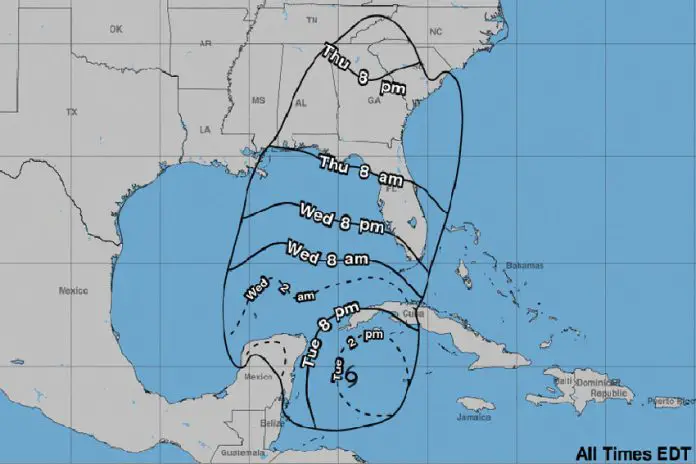
Conagua forecast heavy rains across the country this week, and a tropical disturbance tracking across the Caribbean has a 30% chance of becoming a tropical storm, but it remains to be seen if that weather system — heading toward Chetumal, Quintana Roo — will provide any rain to the Mexico City area.

Although Mexico City’s rainy season is expected to last into September, several studies suggest a genuine Day Zero for the Cutzamala is a real possibility.

A joint investigation conducted by the United Nations and the Autonomous Metropolitan University in Mexico City (UAM) projected that a genuine Day Zero is possible in 2028. 

The Instituto Belisario Domínguez (IBD) — a state-funded research institute — wrote a report indicating that Day Zero talk should go beyond setting a date and instead prompt a discussion about creating a sustainable reservoir system for Mexico City.

The IBD proposed promoting a culture of respect for water (especially via water capture), investing in infrastructure and establishing penalties for wasting water.

With reports from Infobae, El Financiero and Expansión

Claudia Sheinbaum meets with Canada’s Foreign Minister

1
Claudia Sheinbaum and Mélanie Joly
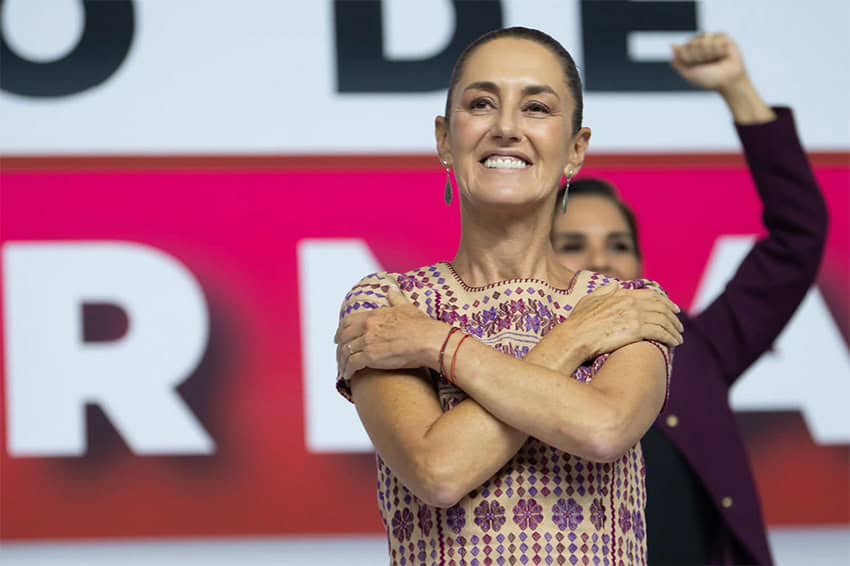
President-elect Sheinbaum met with Canada's Foreign Minister Mélanie Joly on Wednesday. (Claudia Sheinbaum/X)

The USMCA trade pact, which is up for review in 2026, was a key focus of a meeting on Wednesday between President-elect Claudia Sheinbaum and Canada’s Foreign Minister Mélanie Joly.

Sheinbaum, who will be sworn in as Mexico’s first female president on Oct. 1, received Joly at her “transition headquarters” in the Mexico City borough of Iztapalapa. Mexico’s future foreign affairs minister Juan Ramón de la Fuente also attended the meeting.

Juan Ramón de la Fuente, Claudia Sheinbaum, Mélanie Joly and Graeme Clark
Sheinbaum was joined by her future foreign affairs minister, Juan Ramón de la Fuente (left). Canadian Ambassador to Mexico Graeme C. Clark also attended. (Mélanie Joly/X)

Sheinbaum revealed on X that she spoke about “the future” of the Mexico-Canada relationship with Joly and the “importance” of the United States-Mexico-Canada Agreement, the free trade pact that superseded NAFTA in 2020.

“The foreign minister’s main interest is to know our position on USMCA,” she told a press conference on Wednesday.

“We agree with her and the idea of strengthening the agreement,” Sheinbaum said.

The USMCA, the product of trilateral negotiations that began in 2017, is scheduled to be reviewed in 2026. While expressing support for a strengthening of the pact, Sheinbaum said she believed the review would be “minor.”

Signature of USMCA agreement in 2018
Former presidents Peña Nieto and Trump and Canada’s Prime Minister Justin Trudeau signed the USMCA in 2018. (Ron Przysucha/U.S. Department of State)

The president-elect also said she and Joly discussed “the possibility of maintaining and increasing [the number] of work visas for Mexicans” interested in working in Canada.

The two countries collaborate on the Seasonal Agricultural Worker Program, in which tens of thousands of Mexicans travel to Canada to work every year.

Sheinbaum also told reporters that she and Joly discussed Canadian investment in Mexico, and Julian Assange’s release from prison after the Wikileaks founder accepted a plea deal from the United States.

“We acknowledged his fight for freedom of speech and the right to information. We were very pleased that he was finally released,” she said.

For her part, Joly said on X that she and Sheinbaum discussed “how we can continue to strengthen the Canada-Mexico relationship and advance our shared priorities as North American partners.”

The Canadian government said in a statement that the foreign minister congratulated Sheinbaum on “her historic electoral victory that will see her become the first woman president of Mexico.”

The statement also said that Joly, Sheinbaum and other officials “reflected on 80 years of friendship and robust relations between Canada and Mexico.”

“… While highlighting the 50th anniversary of the Seasonal Agricultural Worker Program and its successes, Minister Joly and her counterparts underscored the importance of regular migration pathways for both countries’ economies,” the Canadian government said.

“They agreed to continue to regularly review the broad range of issues affecting mobility, including visa processes, to support safe and orderly migration.”

Among other issues, the Canadian government statement said that Joly and Sheinbaum “discussed the importance of collaborating to advance North American economic competitiveness” and “the need to work together to combat climate change.”

Mélanie Joly and Marcelo Ebrard
Joly also met with soon-to-be economy minister Marcelo Ebrard during her visit to Mexico City. (Marcelo Ebrard/X)

Joly also met with Mexico’s incoming economy minister Marcelo Ebrard, with the former saying on X that they discussed the “importance of working together to advance North American economic competitiveness and how our counties can collaborate to expand trade and investment.”

In an interview with the El Universal newspaper, the Canadian foreign minister weighed in on the proposed judicial reform President Andrés Manuel López Obrador sent to Congress earlier this year.

The proposed reform — which if approved would allow citizens to directly elect Supreme Court justices and other judges — is a decision for the Mexican government, “but at the same time we hope that a country like Mexico respects the rule of law,” Joly said.

She emphasized the need for stability and predictability in Mexico because “it’s difficult to invest in a business environment where there are too many risks.”

Among other remarks, Joly said that Canada, Mexico and the United States have the opportunity to establish a “fully integrated” supply chain and to be “one of the most successful [economic] partnerships in the world.”

With that comes an opportunity “to bring lots of Mexicans out of poverty, increase the middle class in Canada and Mexico, and fundamentally be a hub for talent and innovation,” she said.

“I’m really optimistic, but at the same time we need to do the work. So that’s why I’m here,” Joly said.

With reports from Milenio, Quadratín and El Universal

Claudia Sheinbaum names another 5 members of her cabinet

7
Claudia Sheinbaum at a press event with five newly announced cabinet members
President-elect Claudia Sheinbaum announced five more cabinet appointments on Thursday, including health minister, public administration minister and energy minister. (Cuartoscuro)

President-elect Claudia Sheinbaum announced five additional appointments to her cabinet on Thursday, including new ministers for energy, health and public administration.

Sheinbaum, who will take office on Oct. 1, announced that Luz Elena González Escobar, a former finance minister in the Mexico City government, will be her energy minister, and David Kershenobich Stalnikowitz, ex-director of the National Institute of Medical Sciences and Nutrition, will be her health minister.

Claudia Sheinbaum and new cabinet members
Sheinbaum announced her new picks at a press conference on Thursday morning, a week after presenting six initial appointments. (Cuartoscuro)

Raquel Buenrostro Sánchez, the current federal economy minister, will become public administration minister, a role in which she will have responsibility for the ongoing government fight against corruption.

Sheinbaum also announced that Jesús Antonio Esteva Medina, the current public works and services minister in the Mexico City government, will be her infrastructure, communications and transport minister.

The fifth and final cabinet appointment the president-elect announced Thursday was Edna Elena Vega Rangel as minister of agrarian, land and urban development. Vega is currently a deputy agrarian, land and urban development minister.

Sheinbaum described her new appointees as a “great team,” and noted that Buenrostro, Esteva and Vega will remain in their current government roles for the time being.

“They have double duty because they’ll be participating in all the transition processes,” she said.

Two of the appointees, González and Esteva, were members of Sheinbaum’s government when she was mayor of Mexico City between 2018 and 2023.

The president-elect has now named 12 members of her cabinet.

The day after her landslide victory in the presidential election, Sheinbaum announced that current Finance Minister Rogelio Ramírez de la O would remain in his role after Oct.1, while last Thursday she named five additional ministers and the executive legal counsel.

Claudia Sheinbaum with cabinet members
Sheinbaum named an initial six cabinet appointments on June 20, which included Alicia Bárcena as environment minister, Juan Ramón de la Fuente as foreign affairs minister and Marcelo Ebrard as economy minister. (Cuartoscuro)

Among the key appointments still to be announced are the interior minister, security minister, defense minister and welfare minister roles.

Based on the announcements made to date, Sheinabum’s cabinet — made up of six men and six women — is as follows:

  • Economy minister: Marcelo Ebrard
  • Environment and natural resources minister: Alicia Bárcena
  • Finance Minister: Rogelio Ramírez de la O
  • Minister for science, humanities, technology and innovation: Rosaura Ruiz
  • Foreign Affairs Minister: Juan Ramón de la Fuente
  • Legal counsel to the president: Ernestina Godoy
  • Agriculture and rural development minister: Julio Berdegué
  • Energy minister: Luz Elena González Escobar
  • Health Minister: David Kershenobich Stalnikowitz
  • Public administration minister: Raquel Buenrostro
  • Infrastructure, communications and transport minister: Jesús Antonio Esteva Medina
  • Agrarian, land and urban development minister: Edna Elena Vega Rangel

What are the backgrounds of the new cabinet appointees?

Luz Elena González Escobar

The soon-to-be energy minister served as administration and finance minister during Sheinbaum’s 2018-2023 mayorship in Mexico. She has degrees in economics, law and urban management.

Luz Elena González Escobar
Luz Elena González Escobar will serve as Mexico’s next energy minister. (Cuartoscuro)

González has held a number of other positions in the Mexico City government, including the directorship of the capital’s Passenger Transportation Network in the early 2000s.

She will succeed Miguel Ángel Maciel Torres as energy minister.

Sheinbaum has pledged to invest billions of dollars in a renewables-focused energy plan, but is also committed to continuing support for the debt-ridden state oil company Pemex.

David Kershenobich Stalnikowitz

Mexico’s next health minister is a veteran medical doctor and surgeon with more than 50 years’ experience in the field. The octogenarian has also worked as a professor of medicine at the National Autonomous University (UNAM).

Kershenobich was general director of the National Institute of Medical Sciences and Nutrition between 2012 and 2022.

David Kehren
The next health minister will be David Kershenobich, succeeding Jorge Alcocer. (Cuartoscuro)

He will succeed Jorge Alcocer as health minister.

Raquel Buenrostro Sánchez

The soon-to-be public administration minister was appointed economy minister in 2022 after Tatiana Clouthier resigned. Before that, Buenrostro was head of the federal tax agency SAT for almost three years.

She has served in a range of other government roles, including as a high-ranking official in the federal Finance Ministry. She has degrees in mathematics and economics.

Raquel Buenrostro Sánchez
Raquel Buenrostro will be the public administration minister in the next term. (Cuartoscuro)

Buenrostro will succeed Roberto Salcedo Aquino as public administration minister.

Jesús Antonio Esteva Medina

The future infrastructure, communications and transport minister has been the minister of public works and services in Mexico City since 2018, when Sheinbaum became mayor.

In the late 1990s and early 2000s, Esteva was the Mexico City government’s director of infrastructure projects and subsequently worked as UNAM’s director of planning and infrastructure evaluation.

Jesús Esteva Medina
The next infrastructure, communications and transport minister will be Jesús Esteva Medina. (Cuartoscuro)

He has an undergraduate degree in civil engineering and a master’s in structural engineering.

Esteva will succeed Jorge Nuño Lara as infrastructure, communications and transport minister.

Edna Elena Vega Rangel

Mexico’s next agrarian, land and urban development minister was general director of the National Housing Commission for almost four years before becoming a deputy minister in the ministry she will soon lead in 2022.

Edna Elena Vega Rangel
Edna Elena Vega Rangel will take over as agrarian, land and urban development minister in Sheinbaum’s administration. (Cuartoscuro)

Vega has also held a range of public roles in Mexico City, including head of the capital’s Housing Institute.

She has undergraduate and doctorate degrees in sociology, and a master’s in urban planning.

Vega will succeed Román Meyer Falcón as agrarian, land and urban development minister.

Mexico News Daily 

‘Historic’ rains have drenched Yucatán peninsula as new Atlantic storm forms

1
weather map of the Yucatan Peninsula showing two weather systems approaching land. One is labeled with a 30% chance of becoming a named storm in the next week, while the other is labeled at 80%
Two tropical systems in the Atlantic are currently approaching the Yucatán Peninsula. They both have the potential to become tropical cyclones in the next seven days, according to Mexico's National Meteorological Service, one a much more likely bet than the other. (Conagua-SMN)

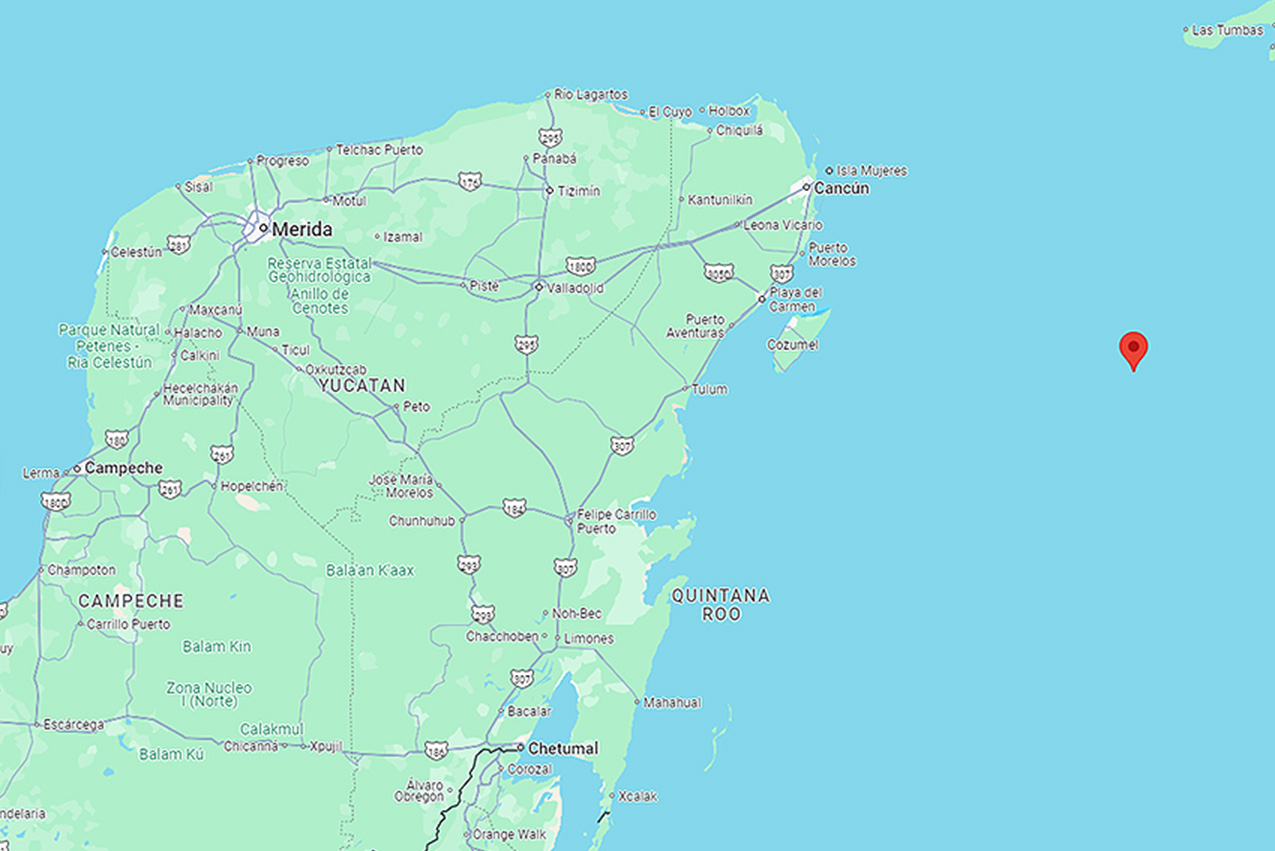
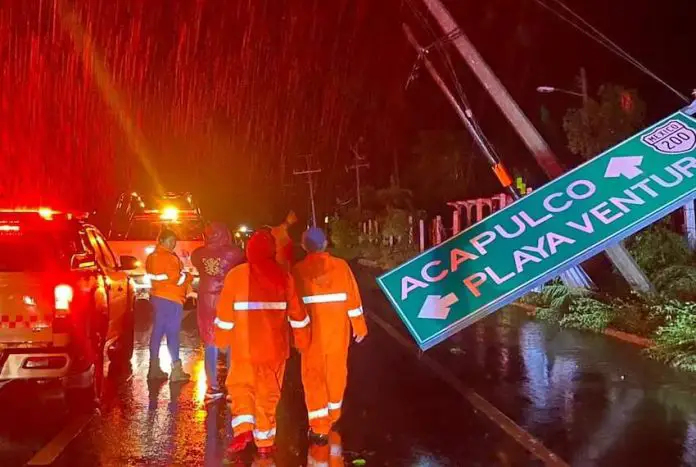
Already battered by more than a week of stormy weather, Cancún and the rest of the Yucatán Peninsula are bracing for more heavy rain this weekend — and the strong possibility of a new tropical system in the Atlantic becoming a tropical storm early next week.

The tropical system could turn into a depression or a tropical storm this weekend as it reaches the southern Caribbean, according to the U.S. National Hurricane Center (NHC). Its path could then continue directly toward southeastern Mexico. 

Man in a Mexican Fuerza Civil uniform watching the liftoff of a rescue helicopter with civilian passengers
Various Mexican states are still recuperating from flood damage brought by Tropical Storm Alberto a week ago. (Cuartoscuro)

As of Thursday afternoon Mexico City time, the tropical system was located about 5,700 kilometers east of the Quintana Roo coast and was moving west at 24 to 32 km/h.

Mexico’s National Meteorological Service (SMN) gave the developing storm “a 60% probability of developing into a cyclone within 48 hours, and 80% [of doing so] within seven days.”

If that happens, the cyclone would be called Beryl, the second named storm of what’s expected to be a busy Atlantic storm season. Experts are saying that the season could see as many as 25 named tropical cyclones this year, 11 more than the seasonal average of 14. 

Of that 25, between eight and 13 could turn into hurricanes.

The season’s first named storm — Tropical Storm Alberto — made landfall in the northeast state of Tamaulipas last Thursday. Although it quickly weakened into a tropical depression, Alberto’s wrath was felt over much of Mexico and southern Texas, with four deaths in Mexico being attributed to associated rains.

The Yucatán Peninsula felt some early effects from Alberto’s outer bands as it moved northwesterly. A different storm system then ravaged the peninsula over the next couple of days, causing extensive flooding and power outages. Parts of Mérida, the Yucatán state capital, were underwater as recently as Tuesday.

Even before Tropical Storm Alberto made landfall in Mexico, Cancún’s streets were already experiencing flooding from rains associated with the storm.

Now a similar, smaller low-pressure system — different from the one currently located 5,700 km east of the Quintana Roo coast — that is associated with a tropical wave, is approaching Quintana Roo, bringing with it “widespread but disorganized shower and thunderstorm activity,” according to the NHC.

As of Thursday afternoon, the smaller system was much closer to the Yucatan, currently passing over the western Caribbean Sea, approximately 575 kilometers southeast of Chetumal, Quintana Roo. Its probability of developing into a cyclone was tabbed at 30% or less, but it is likely to bring intense rain to an already soaked area.

Already on Thursday morning and afternoon, there was scattered rain and showers, along with occasional thunderstorms and heavy fog in the south and southeast of Mexico. This area includes the Yucatán Peninsula, but similar conditions were expected up through Puebla and Mexico City and as far north as Querétaro.

Conagua also was predicting wind gusts of 30 to 50 km/h in Campeche, Yucatán and Quintana Roo, and lightning had been observed from Veracruz to Zacatecas to southern Baja California Sur.

The Riviera Maya News used the word “historic” to describe the recent torrential rains in Quintana Roo, noting that the state capital of Chetumal accumulated 518 mm in one seven-day period — the most rain it had seen in 72 years, according to Conagua director Érika Ramírez Méndez.

The paper also noted that “nearly every municipality [in Quintana Roo] experienced flooding, many more than once.” Many streets and homes were “under meters of water,” the paper added.

Jesús Almaguer Salazar, president of the Hotel Association of Cancún, Puerto Morelos and Isla Mujeres, said that tourist properties took an economic hit, mainly due to many employees not being able to report for work. He said the hotels have been accommodating, but the employee absences have hurt.

Quintana Roo Governor Mara Lezama reported that 1,100 people affected by the storm had registered for assistance in Chetumal and Bacalar. Some suffered flood damage to their homes, and others were affected by blockades that were set up due to rising water levels.

She said the response included the allocation of 37 million pesos (US $2 million), which includes 18 million pesos for the delivery of household goods, 5.5 million pesos for repairs and 2 million pesos for small businesses.

The governor also said there was no impact on tourism and that all the airports in the state remained open. Even on Holbox Island, she added, tourist activity retained “normality” despite the need to use bilge pumps to drain the rising waters on the island.

With reports from CNN Español, Riviera Maya News and El Economista

Marcelo Ebrard talks trade, nearshoring and US-Mexico relations in La Jornada interview

6
Marcelo Ebrard at a press event
Last week, President-elect Claudia Sheinbaum announced six cabinet picks, including former Foreign Affairs Minister Marcelo Ebrard, who will be economy minister in the next administration. (Cuartoscuro)

The United States “will need Mexico to be able to compete” with China.

Mexico’s bilateral relationship with the U.S. is “always difficult.”

“Mexico has immense potential. We just need to open the door.”

They are among the remarks Mexico’s next economy minister, Marcelo Ebrard, made during an interview with La Jornada.

The Mexico City-based newspaper published its interview with the former foreign affairs minister on Wednesday, six days after President-elect Claudia Sheinbaum announced the appointment of her erstwhile rival for the ruling Morena party’s presidential nomination as her economy minister.

Here is a selection of Ebrard’s remarks.

Marcelo Ebrard, who ran against Sheinbaum for the Morena 2024 nomination, is perceived by many as having close ties to business, and his pick as Sheinbaum’s economy minister seems to have reassured foreign investors. (Galo Cañas/Cuartoscuro)

On his appointment as economy minister 

“This was the product of a conversation I had with Dr. Sheinbaum, thinking of the years ahead and the great task for the 4T* – [the construction of] its second story,” Ebrard said.

* The “fourth transformation,” or 4T, is the name of the political project initiated by President Andrés Manuel López Obrador. The term inherently equates the importance of the current “transformation” of Mexico to that of its independence from Spain, the enactment of 19th century liberal laws collectively known as La Reforma, and the Mexican Revolution.

On the United States and its trade relationships and policies 

“The United States is becoming a country on the defensive because it senses growing competition with China and suddenly realized they’re very dependent [on the East Asian country]. The United States will need Mexico to be able to compete [with China],” Ebrard said.

He also said there is “growing protectionism” in the United States and that Mexico is therefore faced with a “a different political position in the U.S. to that we saw some years ago.”

Joe Biden and Donald Trump in side by side photos
Ebrard said there is a protectionist “consensus” in the U.S., implying that regardless of whether Joe Biden or Donald Trump wins in November, the U.S. will continue to learn towards protectionist economic policies. (File photo)

“That is the main risk. There is a kind of protectionist consensus [in the United States]. That’s why the review* of the trade agreement with the United States, and the trade relationship with them in general, could be more complex,” Ebrard said.

* A review of the United States-Mexico-Canada Agreement (USMCA), a free trade pact that superseded NAFTA in 2020, is scheduled for 2026.

On the USMCA review  

Ebrard said that the USMCA’s dispute settlement system* needs to be improved.

“We must strengthen the dispute resolution system, with the panels, where you can present your arguments to avoid unilateral measures,” he said.

Changes are also needed in other areas, Ebrard said. One issue he cited was labor mobility, an apparent reference to a need for workers to be able to move more freely across national borders in North America.

What is needed, Ebrard said, is to “bring a series of regulations into line to favor Mexican companies.”

Woman worker preparing avocados for shipment
Agricultural products, like avocados, are one of the primary exports from Mexico to the United States. A recent pause in USDA inspections caused significant losses to the industry in Michoacán, which Ebrard cited as an example of a “unilateral decision” on the part of the United States. (Cuartoscuro)

“We have to support transport companies, for example, which have always had disadvantageous conditions,” Ebrard said, apparently referring to trucking and rail companies that move goods around the region.

“We have to limit unilateral decisions, like what happened in the avocado case, he added.

“… We should try to limit that as much as possible. That’s what we should seek in the review of the agreement, which, we must clarify, is not a renegotiation, but a review.”

Ebrard also said that, “unlike the [NAFTA] renegotiation in 2018,” which resulted in the creation of the USMCA, a “very important geopolitical factor” will be at play during the 2026 review — “competition between the United States and China.”

* Mexico is currently engaged in disputes with the United States over its energy policies and its stance on genetically modified corn.

On Mexico’s relationship with the United States 

“The bilateral relationship is always difficult” because the two countries have “different interests,” Ebrard said.

Rosa Icela Rodríguez, Marcelo Ebrard and Antony Blinken
Ebrard, seen here at U.S.-Mexico high-level security talks with U.S. Secretary of State Antony Blinken in 2022, said that the two countries have never been closer in economic terms. (SRE)

“But we have a good chance of succeeding because of the conditions I’ve just mentioned,” he said, referring to the growing economic interdependence of the two countries.

Ebrard said that Mexico and the United States have never previously been as close as they are today “in terms of trade, economic and financial exchange.”

Mexico, which is the United States’ top trade partner, “had never been so important for the United States,” he said.

* At bilateral security talks in late 2023, U.S. Secretary of State Antony Blinken said that “more than ever before” in his 30 years of experience in foreign policy, “the United States and Mexico are working together as partners in common purpose.”

On the nearshoring opportunity 

“What North American companies that … import technology from Asia want is to bring [production] to North America in order to not depend [on Asia],” Ebrard said.

As an example, he noted that North American electric vehicle companies (such as Tesla) rely on microprocessors that are made in Asian countries. Those microprocessors should be manufactured in Mexico, the United States and Canada, Ebrard said.

Tesla production line
Manufacturers like Tesla require microchips, which Ebrard said could be manufactured in North America rather than imported from Asia. (Tesla)

“There is a great opportunity” to attract advanced manufacturing companies to Mexico, he said.

Asked what the “pillars” of the Mexican economy will be in the coming years, Ebrard nominated “the relocation” of companies to Mexico, but stressed that foreign investment in Mexico must serve “the country’s interests.”

He also said that Mexico shouldn’t wait around “to see who comes,” but rather “go after the companies we’re interested in having [here].”

Marcelo Ebrard and Claudia Sheinbaum
Ebrard says he and Sheinbaum share the same vision and that Mexico has “immense potential.” (Marcelo Ebrard/X)

Ebrard also mentioned President-elect Sheinbaum’s plan to create “development hubs” and industrial corridors, in which different areas of Mexico, including parts of the historically disadvantaged south, would focus on attracting and supporting investment in certain sectors.

He stressed that “the development, growth and wealth of the country” shouldn’t be concentrated in “just some of its regions.”

“We have to seek to spread out [development and economic growth]. We have to support new companies [in Mexico]. … They’re going to be the pillars [of the economy] in the coming years,” Ebrard said.

“I’m very excited because [Sheinbaum* and I] agree on the ideas. I agree with what the doctor is proposing. Mexico has immense potential. We just need to open the door,” he said.

* Sheinbaum has described the nearshoring trend as a “great opportunity” for Mexico and asserted that it will help drive significant economic growth during the 2024-30 period of the federal government.

With reports from La Jornada 

Chocolate Tres Leches: Your new favorite dessert

2
Pastel de tres leches with chocolate
A great Tres Leches cake is a thing of (moist) beauty. (Aranzazu)

I was always a pie guy before I moved to Mexico. I had found cakes to be miserably dry for my liking, with the generic birthday cake being the most egregious offender.

Cut to my late 20’s when I discovered the antidote — the supremely juicy and indulgent tres leches cake! Tres leches cake is soaked in about a liter of a combination of different milks and I was finally in moist cake mecca. With summer nights and bright mornings on the way, I felt it was finally time to share my chocolate tres leches cake recipe.

Tres leches started life as a marketing campaign for tinned milk. (Nestlé)

The history of this magical cake dates back to the 19th century, during which time recipes for milk-soaked cakes began appearing in cookbooks across Europe, particularly in England. These early versions likely influenced the creation of tres leches in Latin America. Nestlé, believe it or not, played a significant role in popularizing the cake in the 1940s, as part of a marketing campaign to boost sales of evaporated and condensed milk, when they added a recipe for tres leches on the labels of its products distributed in Latin America.

Today, I want to share with you one of my favorite versions of tres leches, a recipe with cocoa powder and a secret weapon, espresso.

Chocolate Tres Leches with Espresso

Ingredients

For the Cake:

1 cup all-purpose flour

1/4 cup cocoa powder

1 tablespoon espresso powder

1 teaspoon baking powder

1/2 teaspoon salt

5 large eggs, separated

1 cup granulated sugar, divided

1/3 cup whole milk

1 teaspoon vanilla extract

For the Tres Leches Mixture:

1 can (12 ounces) evaporated milk

1 can (14 ounces) sweetened condensed milk

1/2 cup heavy cream

1 shot of espresso

For the Topping:

1 cup heavy cream

1/4 cup powdered sugar

1 teaspoon vanilla extract

Cocoa powder, for dusting

A shot of espresso
A shot of espresso will transform your cake from tasty to perfect. (Jeremy Yap/Unsplash)

Instructions

1. Preheat and Prepare:

Preheat your oven to 350°F (175°C).

Grease and flour a 9×13-inch baking dish.

2. Mix Dry Ingredients:

In a medium bowl, sift together the flour, cocoa powder, espresso powder, baking powder, and salt. Set aside.

3. Beat Egg Yolks:

In a large bowl, beat the egg yolks with 3/4 cup of the granulated sugar until the mixture is thick and pale yellow.

Add the milk and vanilla extract and mix until combined. 

4. Beat Egg Whites:

In a separate clean bowl, beat the egg whites until soft peaks form.

Gradually add the remaining 1/4 cup of granulated sugar and continue beating until stiff peaks form. 

5. Combine:

Gently fold the flour mixture into the egg yolk mixture until just combined.

Carefully fold in the beaten egg whites until no white streaks remain.

6. Bake:

Pour the batter into the prepared baking dish and smooth the top.

Bake for 25-30 minutes, or until a toothpick inserted into the center comes out clean.

Let the cake cool completely in the pan on a wire rack. 

7. Prepare the Tres Leches Mixture:

In a large measuring cup or bowl, whisk together the evaporated milk, sweetened condensed milk, heavy cream, and espresso until well combined.

8. Soak the Cake:

Once the cake has cooled, pierce the surface with a fork all over.

Slowly pour the tres leches mixture over the cake, making sure to cover the entire surface. The cake will absorb the liquid. 

9. Chill:

Refrigerate the cake for at least 4 hours or overnight, allowing it to soak up the tres leches mixture.

10. Make the Topping:

In a large bowl, beat the heavy cream with the powdered sugar and vanilla extract until stiff peaks form.

11. Serve: 

Spread the whipped cream frosting over the cake.

Dust with a generous amount of cocoa powder before wowing your guests.

Enjoy your new favorite dessert and let me know what you think of my chocolate tres leches recipe in the comments!

Stephen Randall has lived in Mexico since 2018 by way of Kentucky, and before that, Germany. He’s an enthusiastic amateur chef who takes inspiration from many different cuisines, with favorites including Mexican and Mediterranean.

5 queer-owned businesses in Mexico to check out before the end of June

6
As Pride Month draws to a close, make sure to check out some of these fantastic bars, restaurants and markets, all owned by members of the LGBTQ+ community. (Revuelta Queerhouse)

From pre-Columbian third genders to early 1900s sex scandals, the presence of the LBGTQ+ community is nothing new in Mexico.

So, as Pride month wraps up, here are five under-the-radar, queer owned businesses around Mexico. Each is highly rated and offers a creative twist on its particular business niche. Check them out whenever you get the chance.

Revuelta Queer House, an art gallery and rooftop bar in Mexico City

Culture meets community in Roma’s Revuelta. (Revuelta Queerhouse/Instagram)

Revuelta Queer House is a community space in Mexico City’s Roma Norte neighborhood that offers cultural activities, a queer art gallery and a casual rooftop bar serving food and drink. “We want everyone to feel welcome, to express their identity and connect in community,” the group says.

Revuelta is located in Mexico City’s Roma neighborhood, in two old homes that the group’s five co-founders restored. They host a range of events including guest DJ performances, poetry readings and drag lotería, to name a few.

Location: Puebla 92-94, Roma Norte, Cuauhtémoc, CDMX

Queer Spanish Classes, online

Queer Spanish Classes offers online small-group classes designed specifically for queer women and trans and nonbinary people. “I created Queer Spanish because I know first hand how intimidating it is to learn a new language and how vulnerable we feel when we are part of the LGBTQ+ community,” founder Sandra Romero writes on the Queer Spanish Instagram account. Sandra, who is based in Mérida, moved to Mexico from her native country of Spain in 2018 and has taught Spanish since 2014. 

Sandra teaches all levels of Spanish in sessions focused on speaking skills and tying in grammar, reading and film. She describes her classes as “a safe, welcoming environment where you are allowed to make mistakes.”

Sandra told Mexico News Daily. “I teach aspects of the language that they won’t learn in a traditional class, like for example how to use inclusive language in Spanish, [which is] so important today in the queer community.”

She asks that interested students follow and send her a message on her professional Instagram page, @queerspanishclasses, to schedule an introductory call.

La Celestina in Celestino Gazca, Sinaloa

More than a great seafood spot in Sinaloa, La Celestina is an important hub for LGBTQ+ activism in Northern Mexico. (La Celestina/Facebook)

La Celestina is a seafood restaurant in Celestino Gazca, Sinaloa, a small beach town known for its yearly oyster festival. Oysters feature prominently on the menu, along with other Sinaloan seafood classics like pescado zarandeado.

The owners, Vicky Ibarra and Paola Cázares, married in 2020, just months after the Sinaloa state congress rejected a proposal to legalize same-sex marriage (in defiance of a Supreme Court mandate). In an act of protest, the couple married on the beach on neighboring Nayarit, one meter from the Sinaloa state border. Today, La Celestina is a sponsor of Pride parades in the cities of Mazatlán and Culiacán.

La Celestina is most active on the weekends, when day trippers from the Sinaloan cities of Mazatlán and Culiacán come to sip beers and chow down on aguachile in the shade of its beachside palapas, away from city crowds. On Sunday afternoons, it’s common to find a local female-fronted band playing in the main bar area.

Location: Playa Rosal, Celestino Gazca, Sinaloa

Mercadita Diversa in Monterrey, Nuevo León

Mercadita Diversa provides opportunities for marginalized queer entrepreneurs in Monterrey. (Mercadita Diversa)

Mercadita Diversa is an initiative from nonprofit Queer XP to highlight queer art and entrepreneurs as part of their mission to further the economic well-being of the queer community. The roughly monthly markets feature art, accessories, food, jewelry and more from dozens of LGBTQ businesses, and often take place at the Metropolitan Museum of Monterrey.

“Our goal for the future is to become a network of resources for the economic development of entrepreneurs of all socioeconomic backgrounds and emerging businesses that can benefit from our services,” said Rogelio González of Queer XP’s communications team.

Rogelio invited Mexico News Daily readers to support these queer owned businesses and entrepreneurs by following the social media accounts (Instagram @queerxp.ac y Tiktok @queerxp).

Casa Jacaranda in Mexico City

From left, Jorge Fitz, Emilio Pérez and Beto Estúa, the team behind the high-end cuisine of Casa Jacaranda. (Casa Jacaranda)

Founded by the husband-and-husband team of chefs Beto Estúa and Jorge Fitz, Casa Jacaranda offers traditional Mexican cooking experiences. The classes pick out fresh ingredients at the market then back at the house, chefs (including Beto and Jorge) teach recipes and techniques. The event finishes with a delicious, seasonal meal prepared together by the class.

The project began ten years ago, when the couple was living in a Roma neighborhood home “with one of the loveliest jacaranda trees in the city in front,” Jorge told Mexico News Daily. The house became a social hub for friends who shared a love of cooking. “We were always in the kitchen or hosting.” That experience and their proximity to markets inspired them to develop an experience “representing those childhood days we both spent in the houses of our grandmothers or aunts, cooking as a family to create a feast together,” Jorge said.

Casa Jacaranda offers private and group cooking classes as well as more intense multi-day bootcamps.

Any more queer owned businesses in Mexico that you think are worth visiting? Let us know in the comments.

Rose Egelhoff is an associate editor at Mexico News Daily and a freelance writer. She’s on Twitter and the internet

Sheinbaum receives symbolic ‘women’s baton of command’

0
Claudia Sheinbaum at the meeting with Mexican women
On Tuesday, President-elect Claudia Sheinbaum received a symbolic "baton of command" on behalf of Mexican women. (Cuartoscuro)

In September last year, Claudia Sheinbaum accepted a symbolic “baton of command” from President Andrés Manuel López Obrador, who she replaced as the leader of the so-called “fourth transformation” political project.

Now the president-elect is also in possession of the “bastón de mando de las mujeres,” or women’s baton of command.

Claudia Sheinbaum and Olga Sánchez Cordero
Senator Olga Sánchez Cordero gave the baton to Sheinbaum on behalf of Mexican women. (Cuartoscuro)

On behalf of Mexican women, Senator Olga Sánchez, a former interior minister and Supreme Court justice, presented the handmade symbol of confidence and leadership to Mexico’s soon-to-be first female president at an event in Mexico City on Tuesday.

The event, called “Con Claudia llegamos todas” (With Claudia All Women Arrive), was held at the University of the Cloister of Sor Juana, a former convent where Sor (Sister) Juana Inés de la Cruz — a nun, writer and iconic Mexican woman — once lived.

Sánchez, who served as López Obrador’s interior minister between 2018 and 2021, told Sheinbaum it was an “honor” to present “the women’s baton” to her on behalf of “millions of women who enthusiastically joined our collective cause during these months” and “fought to have this country’s first woman president.”

She noted that the baton was made by artisans from Oaxaca, specifically the southern state’s Mixteca region.

“This baton is an unequivocal sign of the confidence Mexican women place in you — in the woman, politician, mother and grandmother you are,” Sánchez said.

The senator and soon-to-be deputy said the baton is also a symbol of confidence in Sheinbaum’s “vision and commitment to the people of Mexico, especially women.”

Sánchez also read out a list of objectives for the incoming president to pursue in office. They included “guaranteeing a life free of violence for all women,” ensuring equality of opportunities and guaranteeing women’s right to health care.

In an address, the president-elect expressed gratitude for the honor of receiving the “women’s baton of command,” and reiterated her view that she won’t “arrive” in Mexico’s top job on her own, but rather in the company of all Mexican women.

Morena aspirants for presidential candidacy
Sheinbaum defeated five men in the internal presidential candidate selection process for Morena in 2023. (Morena/X)

The former Mexico City mayor also said that the “fourth transformation” political project she now leads is a “feminist” movement.

“It always fights for the recognition of all women’s rights. For the good of all, [the nation’s] Indigenous women, Afro-Mexican women and poor women come first,” said Sheinbaum, who will take office Oct. 1.

She noted that she competed against five men to become the ruling Morena party’s candidate at the June 2 presidential election, and asserted that on the first Sunday of this month, “the people of Mexico said: ‘it’s time for women and time for transformation.'”

Sheinbaum said that her government would seek to close the gender pay gap, increase the representation of women in elected positions, and support girls and young women in pursuing their dreams, no matter the field.

She also highlighted that she is committed to providing financial support to women aged 60-64, in recognition of the household and caring work they have done for their families over a long period of time.

Women from a range of fields attended the event, including renowned writer Elena Poniatowska, academic and feminist Marta Lamas and saxophonist María Elena Ríos Ortíz, survivor of a 2019 acid attack. Sheinbaum’s mother, biologist Annie Pardo, also attended the event, held a day after the president-elect turned 62.

With reports from La JornadaEl Financiero, Expansión and Debate 

Over 40 stranded horses rescued from Nuevo León dam

1
Two horses being guided by ropes attached to a powerboat that is helping them navigate the waters in the Cerro Prieto Dam in Linares, Nuevo Leon.
The horses were trapped on an islet in the Cerro Prieto dam in Linares, Nuevo León. Before Tropical Storm Alberto, the dam had low levels of water. (Samuel Garcia/X)

On Tuesday, Nuevo León Civil Protection officials rescued at least 40 stranded horses on an islet in the Cerro Prieto dam, according to Governor Samuel García.

Heavy rains brought last week by Tropical Storm Alberto had trapped the horses on the dam’s islet, reportedly for five days, after water levels rapidly rose around them.

A officer sits in a Civil Protection rescue boat on the water and touches the head of a brown horse lying in the boat after being rescued.
A Nuevo León Civil Protection officer tends to a horse rescued from the Cerro Prieto Dam in the municipality of Linares. (Nuevo León Civil Protection)

The Cerro Prieto dam, located in the city of Linares, is Nuevo León’s second largest reservoir. 

On social media, García said he had received an alert from residents in Linares regarding the trapped horses, after which he coordinated their rescue with the state’s Civil Protection department.

“After reading your comments about the horses trapped in the Cerro Prieto dam, I immediately contacted @PC_NuevoLeon for their rescue. [The horses] have already been rescued and taken to a safe place,” García wrote on X

García also shared photographs and videos showing some of the rescue maneuvers carried out. 

Linares residents had already tried to save the stranded horses. According to media reports, four horses drowned.

Before Alberto’s arrival — which made landfall in Tamaulipas early Thursday morning and quickly downgraded to a tropical depression — the drought-stricken Cerro Prieto dam’s water levels had been reduced to only 4% of its capacity. As a result, islets began emerging in the dam, which apparently attracted the wild horses to roam new areas in the dam. 

Emergency personnel in waist-deep water coaxing two stranded horses in a dam toward them. One officer already is guiding a horse through the water with a rope.
Some horses had to be coaxed into walking through the waist-deep waters toward rescue personnel so that they could be guided to safety. (Nuevo León Civil Protection)

Alberto, however, brought heavy, rapid rains to parts of Nuevo León in just hours. Post-Alberto, the dam is now at 58% capacity with 175.38 million cubic meters of stored water.

Throughout the week, García has been updating the water capacity levels of the state’s largest dams, including the Cerro Prieto. According to the latest report on Wednesday by National Water Commission (Conagua), the water levels of Nuevo León’s three largest reservoirs are as follows:

  • Cerro Prieto at 62.60% capacity
  • El Cuchillo at 85.92%, and 
  • La Boca at 100.90%

The heavy rains also caused rivers and streams in Nuevo León to overflow, including the Santa Catarina river, which dramatically gushed down the streets of Monterrey.

With reports from El Financiero and Nmás

Mexico City Jedi schools teach chilangos the art of the lightsaber

0
Members of the Jedi Knight Academy Mexico City at night gathered in a circle with each person extending their incandescent lightsabers to touch all together at the circle's center.
Jedi Knight Academy is a Mexico City club that teaches members the art of lightsaber dueling as seen in the Star Wars movie franchise. The club holds training practice Wednesday through Saturday nights in the capital's Coyoacán neighborhood. (JKAMX/Facebook)

For five years, the Jedi Knight Academy in Mexico City has been teaching fans of the “Star Wars” movie franchise and others how to properly wield a lightsaber.

Some of the participants want to learn it just for fun.

Woman posing in a fencing stance with a blue lightsaber in a public courtyard in Mexico City at night.
Mexico City resident and Jedi Knight Academy member Michel Cajigal strikes a pose with her lightsaber. (Jedi Knight Academy Mexico City/Instagram)

Many are members of the Mexican chapter of a Star Wars fan club who want to be at their Jedi Master best when it comes time to conquer the galaxy — or in case there’s another Star Wars Parade in Mexico City like there was in 2022.

And some are sharpening their Jedi techniques in order to compete in lightsaber dueling — an actual sport recognized by the French Fencing Federation in 2019 (as part of an effort to get youngsters up and away from their computer and phone screens, but that’s another story).

So, four times a week, the Jedi Knight Academy turns a public area in Mexico City’s Coyoacan neighborhood into a virtual battle zone, with colorful, luminescent swords slashing through the air and combatants bounding to and fro.

The events frequently attract curious onlookers.

“When students arrive, some of them drop the saber,” Jedi Knight Academy instructor Ulises Vázquez told the Associated Press. “They don’t know how to handle it properly. But with the passing of time, you see them grow.” 

The three-hour classes generally start with meditation and a warmup, after which the students learn different moves that they perform repeatedly in pursuit of Luke Skywalker-style perfection — or that of his father, Anakin Skywalker (a.k.a Darth Vader). More advanced students wear protective equipment that looks like a galactic fencing uniform.

In Mexico City, Star Wars fans prepare to duel like Jedi knights

Four nights a week, Mexico City’s Jedi Knight Academy holds its lightsaber classes outside in a public space in the capital.

The sabers, which are made of ballistic-grade polycarbonate, are illuminated from within by a rainbow of colors.

Many of the lightsabers being used by Jedi Knight Academy padawans are designed and manufactured nearby at KTSR Sabers, a Mexico City company that sells lightsabers and helmets for cosplay and exhibition combat dueling. KTSR Sabers even does repairs and upgrades. 

Some of their products are also used by students at another school teaching lightsaber techniques —and, no, it’s not “in a galaxy far, far away.” 

The multidisciplinary Quetzal Combat Academy, founded eight years ago by Ricardo Jocksan Mejía Malvárez, is also in Mexico City. There, students learn the arts of the Jedi Knights or Sith warriors as seen in the 12 movies of the “Star Wars” franchise.

“I started with tae kwon do, then karate, ninjutsu, kenjutsu, HEMA and Olympic fencing,” Jocksan, 33, told the newspaper El País. “Those are the basis of everything we see in Star Wars. For example, the Shii-Cho form [of Jedi combat ] is based on a two-handed sword, be it a katana [a Japanese sword], a Korean saber, a ninjatō [used in feudal Japan] or a two-handed HEMA sword [the moniker for various weapons used in Historical European Martial Arts].”

On Thursday, Quetzal students will be participating in a lightsaber combat exhibition at a Pride Month Diversity Fair at Plaza Manuel Tolsá in central Mexico City (two blocks from the Palacio de Bellas Artes).

Quetzal’s advanced lightsaber students and instructors — including Jocksan dressed in an outfit inspired by the “Star Wars” baddie character Kylo Ren — also performed a choreographed routine for a “Concierto Galáctico” at the Ollin Yoliztli Cultural Center.

The concert occurred last month one day before International Star Wars Day, which is on May 4, of course. 

Uh, why hold it on May 4? 

Members of the Mexican Garrison of the international Star Wars fan club, the 501st Legion, can certainly tell you why: “May the Fourth be with you.”

With reports from El País, Associated Press and Screen Rant