The director of Guanajuato public media channel TV4 and other officials celebrated on Thursday the creation of the Mineral de Pozos-based production studio TV4 Cine y Series. (TV4)
The state of Guanajuato is taking steps to complete the transformation of Mineral de Pozos from a ghost town into a movie-making mecca.
Guanajuato’s Tourism Ministry is teaming up with the state’s public media agency to build state-of-the-art audiovisual production studios in the former ghost town.
🎬 Guanajuato lanza TV4 Cine y Series ✨ con nuevos estudios audiovisuales en Mineral de Pozos, un proyecto que impulsará el desarrollo local y atraerá talento global 🌍 🎥#LoViEnTV4pic.twitter.com/Osuvh3e0JA
According to the newspaper El Economista, the studios are being designed with the aim of stoking the region’s economy, generating new employment and promoting the city’s thriving cultural tourism sector.
Once a bustling mining town, Mineral de Pozos suffered near desolation as a result of the 1910-1920 Mexican Revolution. Since being declared a Pueblo Mágico in 2012, however, San Pedro de los Pozos (the municipality within which Mineral de Pozos is located) has enjoyed a cultural renaissance.
With a population of no more than 3,000 residents, Mineral de Pozos boasts numerous can’t-miss historical sites while also playing host to the International Mariachi Festival, an International Blues Festival and the Pozos International Independent Film Festival.
The film festival’s stated goal is to promote new talent in the face of challenges in accessing commercial cinema. Held each October, the festival provides an open platform for filmmakers to present a variety of works, with no restrictions on the length or number of submissions, attracting cinema enthusiasts from around the world.
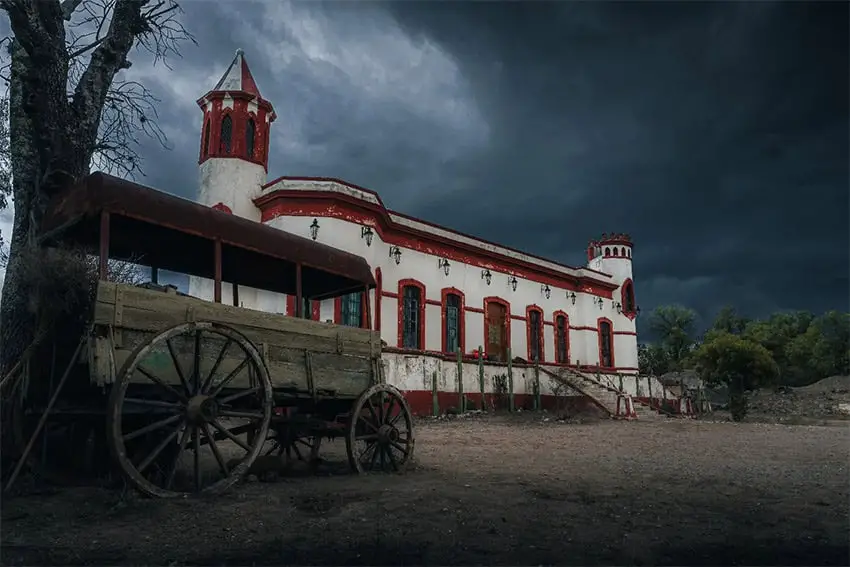
Historic buildings like the abandoned 16th century Hacienda Santa Brígida helped Mineral de Pozos earn its Pueblo Mágico status. (Mineral de Santa Brígada/Facebook)
According to the newspaper El Sol de León, the studios will be built on a 3-hectare plot of land donated to the state public media agency by Mineral de Pozos resident Ignacio Soto Borja.
“I feel very proud. My family is guanajuatense. I believe in the vision expressed by the state government and [state public television network] TV4,” Soto Borja told El Sol de León. “The important thing is the people who can learn to work and support the future growth of the state.”
With its own production studios, Guanajuato hopes to attract filmmaking ventures with the help of its public television network, TV4. The network has fashioned an alliance with the audiovisual department of Spain’s University of Valencia.
“We are looking to cultivate and nourish local talent as well as draw in professional [filmmakers] from Mexico and around the world,” said Juan Aguilera Cid, director of TV4. “But we don’t just want to be a production center, we are eager to play a role in improving the conditions of the industry.”
TV4 is also preparing to establish a training ground that will include landscapes that have featured in more than 50 movies and television series.
Aguilera Cid told El Economista that the network and the state already have seed money of between 20 million and 30 million pesos to build the infrastructure and acquire the technology needed to establish the school.
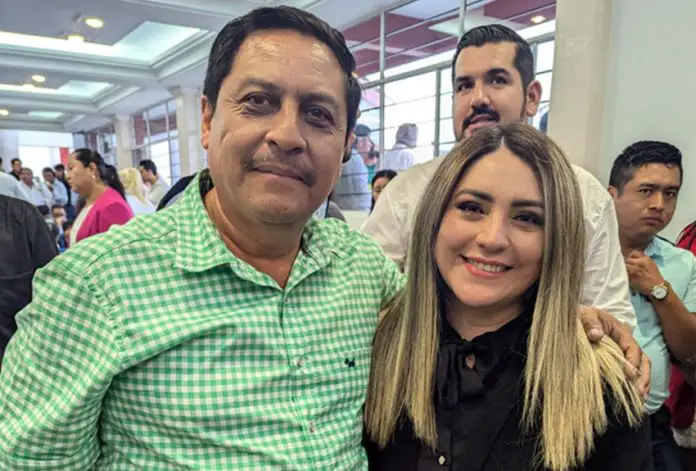
Frontera Comalapa Mayor-elect Anibal Roblero, left, was elected on June 2 and is scheduled to take office on Oct. 1. (Anibal Roblero/Facebook)
The mayor-elect of a Chiapas municipality near the Guatemala border was kidnapped from a cafe in Tuxtla Gutiérrez, Chiapas, on Tuesday, becoming the third politician from the mayor-elect’s besieged municipality to be disappear since last December.
Security video published on social media shows Aníbal Roblero Castillo, mayor-elect of Frontera Comalapa, Chiapas, and at least one companion being forcibly shoved into a vehicle by masked gunmen outside a cafe in the western Tuxtla Gutiérrez neighborhood of San José Terán just before 5 p.m. on Tuesday afternoon.
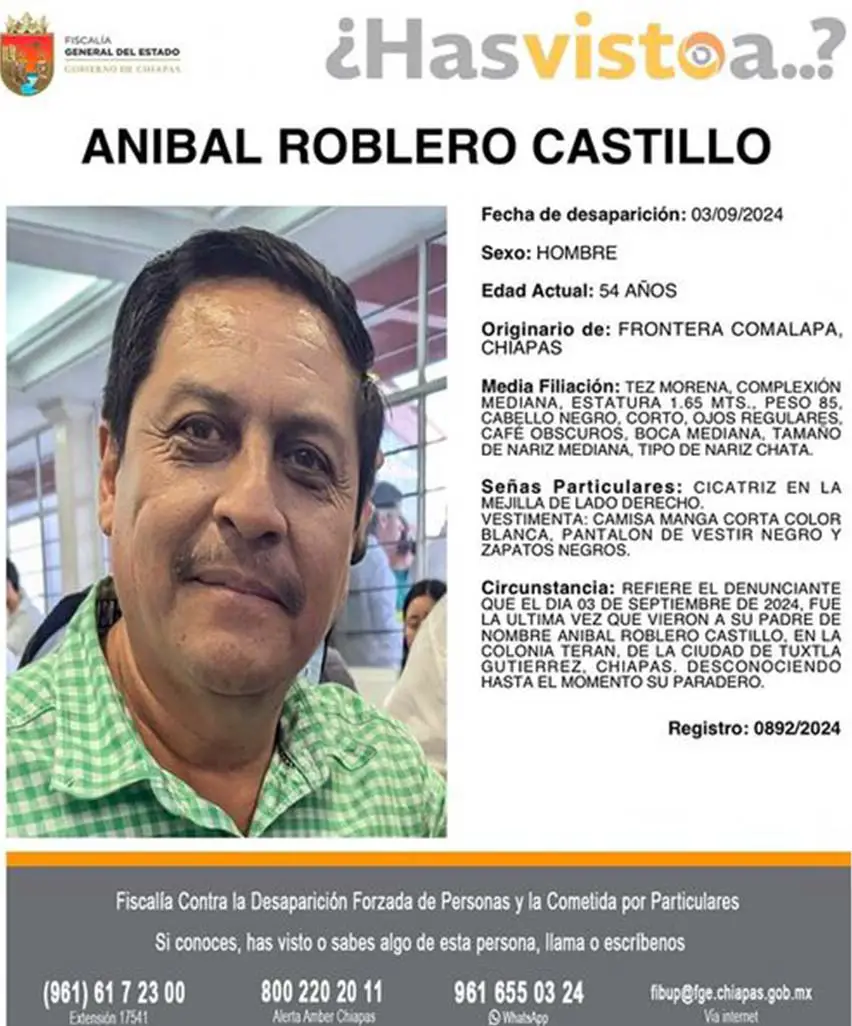
Roblero’s family posted this law enforcement missing persons poster on Roblero’s Facebook Thursday. (Facebook)
Roblero won Frontera Comalapa’s mayoral race for the Ecological Green Party of Mexico (PVEM) on June 2 with 28,776 votes (65%) and is due to be sworn in on Oct. 1.
For at least three years now, residents of the municipality of Frontera Comalapa — population 81,000 — have been victimized by rival criminal organizations battling to control human trafficking and drug routes through southern Mexico. The violence has spiked recently, forcing residents to leave their homes, some forcibly removed by cartels, according to various local and national media reports.
Roblero is the third politician from the same Chiapas municipality to be kidnapped since December. Roblero’s opponent in the June 2 election, Rey David Gutiérrez, left, was kidnapped in April from his home. Former Frontera Comalapa mayor Irán Mérida Matamoros, right, was kidnapped from his ranch in December. Neither have been found. (Facebook/MND)
Although Roblero owns a home in downtown Frontera Comalapa, he — like many Chiapas politicians in municipalities affected by organized crime — has sought refuge in the state capital of Tuxtla Gutiérrez, according to the newspaper El Universal.
Roblero is the third Frontera Comalapa politician to be targeted by alleged drug gangs since December.
On Dec. 14, armed men kidnapped former mayor Irán Mérida Matamoros just outside of his ranch, Santa Polonia, along the border with Guatemala. Mérida was said to be headed for Tuxtla Gutiérrez, where he was the director of Chiapas’ Agriculture and Livestock Development Fund.
Four months later, a video showing Mérida being interrogated by an unidentified man was made public. The former mayor has not been seen since.
On April 27, Rey David Gutiérrez — one of Roblero’s opponents in the mayoral election — was kidnapped from his home in Frontera Comalapa after reports that he had been receiving threats. On May 1, his captors released a video of Gutiérrez, but he has yet to be found.
Despite being disappeared, Gutiérrez came in second in the June 2 election, receiving 8,550 votes.
The Mexican peso fell to 20.15 to the US dollar on Thursday morning following the approval of AMLO's controversial judicial reform bill in the Chamber of Deputies on Wednesday. (Shutterstock)
The Mexican peso depreciated to over 20 to the US dollar on Thursday morning, weighed down by the controversial judicial reform proposal that was approved by the lower house of Congress on Wednesday.
Compared to its closing position on Wednesday, the peso fell more than 1% to reach 20.15 to the greenback early Thursday.
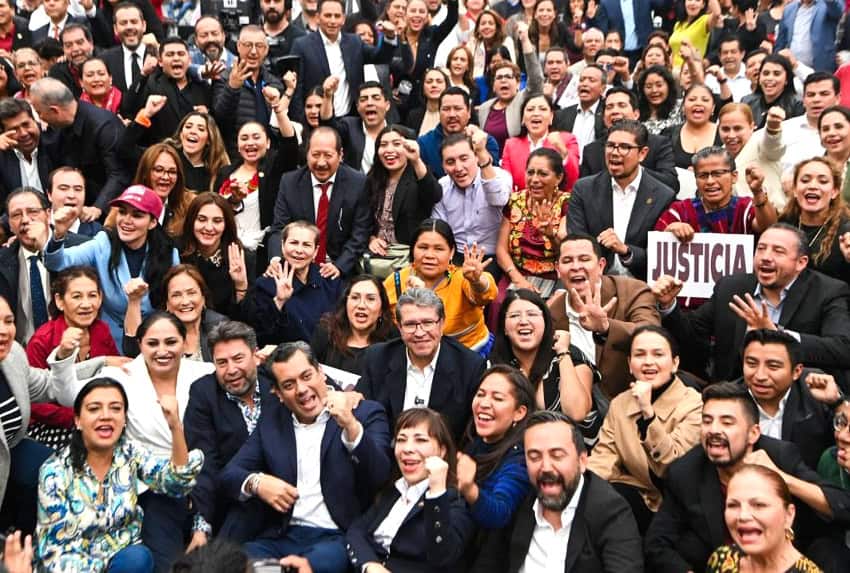
Lawmakers from the Morena party and its coalition celebrated the approval of the reform on Wednesday. (Cuartoscuro)
It subsequently recouped some of its losses and was trading at 19.99 to the dollar at 10 a.m. Mexico City time.
It was the first time since October 2022 that the peso broke the 20-to-the-dollar barrier.
Much of the decline has occurred after Claudia Sheinbaum and the ruling Morena party won comprehensive victories in the June 2 presidential and congressional elections, putting Morena lawmakers in a strong position to approve a raft of constitutional reform proposals that President Andrés Manuel López Obrador sent to Congress in February.
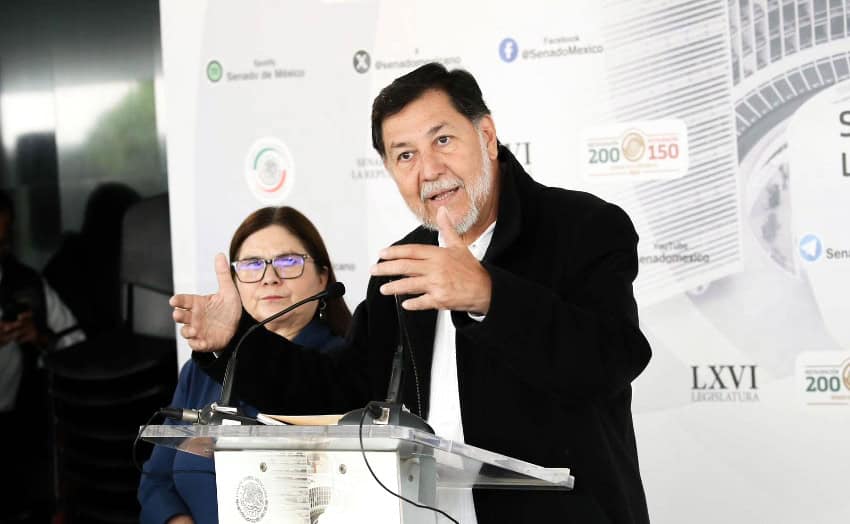
The president of the Senate, Morena party Senator Gerardo Fernández Noroña, speaks to the press about the upcoming Senate review of the judicial reform bill on Wednesday. (Cuartoscuro)
Investors have been especially spooked by the plan to allow Mexican citizens to directly elect Supreme Court justices and other judges. That proposal is now one step closer to reality after lawmakers in the Chamber of Deputies approved it on Wednesday morning.
López Obrador and President-elect Sheinbaum have defended the reform as the peso lost ground over the past two months, asserting that investors have nothing to worry about and that the reform will strengthen — not weaken — Mexico’s justice system and democracy.
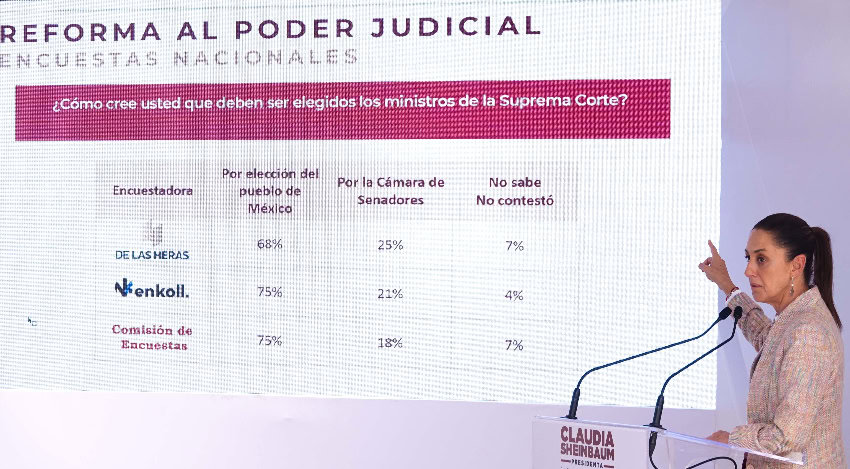
President-elect Sheinbaum, here showing polling on the popularity of the judicial reform proposal, supports the bill but has also urged “caution” from lawmakers. (Cuartoscuro)
Foreign exchange news website FX Street reported Thursday that “the peso is being sold because investors are fretting about the Mexican parliament passing a controversial bill of reforms that critics say will compromise the independence of the judiciary, undermine democracy and damage international trade and foreign investment.”
“… From a financial perspective, the reforms run the risk of leading to a decline in foreign investment. This, in turn, would reduce demand for the peso, leading to a further depreciation of the currency,” FX Street said.
Financial news website Market Watch reported Thursday that investors have “dumped carry trades” involving the peso “amid concerns about political upheaval” in Mexico, and after an interest rate cut in Mexico last month.
The peso “has been buffeted by the prospect of passage of Mexico’s judicial reform…which has overtaken monetary policies and U.S. politics as a source of consternation in recent weeks,” said Thierry Wizman, a foreign exchange strategist at the investment bank Macquarie.
“It is likely to remain a source of worry throughout September,” he added.
Gabriela Siller, director of economic analysis at Banco Base, said on X that it is possible that the peso will trade at 20.50 to the dollar in September due to “greater risk aversion about Mexico and lower attractiveness for carry trades.”
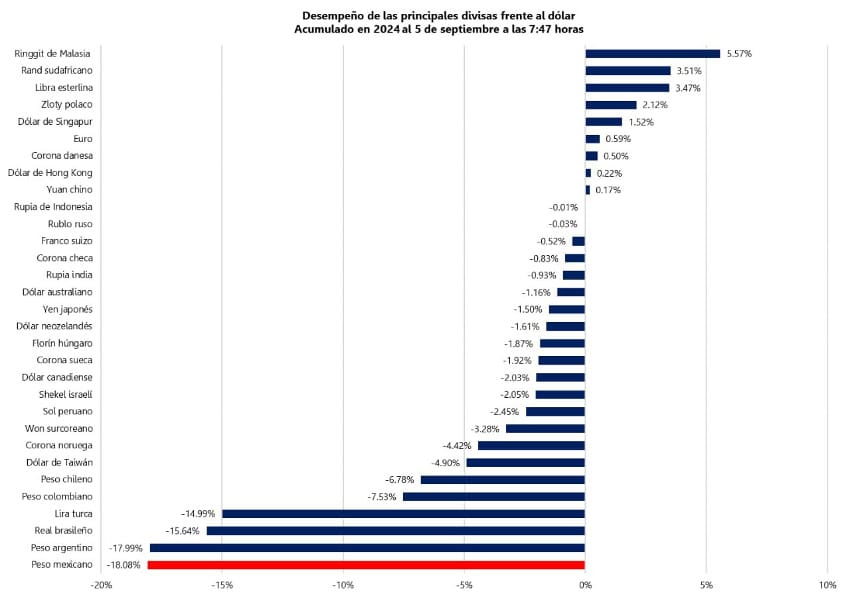
This graph posted to X by Gabriela Siller shows the Mexican peso has depreciated the most of any major currency against the US dollar this year. (Gabriela Siller/X)
She also posted a graph to X that showed that the peso has depreciated more against the US dollar this year than any other major currency.
The peso had been one of the world’s best performing currencies, supported by the significant difference between the Bank of Mexico’s official interest rate and that of the United States Federal Reserve.
Beyond the judicial reform, other factors that could affect the peso in the coming months are monetary policy in Mexico and the United States, the U.S. presidential election, economic growth rates and global geopolitical events.
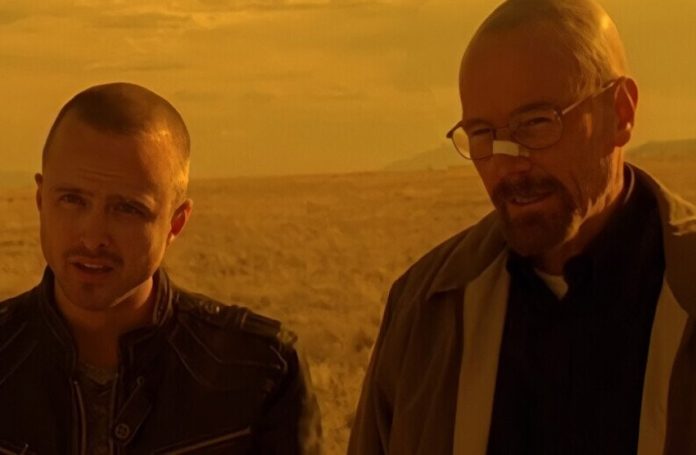
Why is Mexico always yellow on film? For a more authentic selection of great movies set in the country, try this list by Mexico City filmmaker Bettine Mackenzie. (AMC)
In the early 2000s, Mexico turned yellow on screen. From Guadalajaran parking lots to Sonoran deserts, any scene in which tropical heat, air pregnant with danger and lurking baddies congregated got a sepia sheen. Notoriously nicknamed “The Mexican filter”, the wash dominated Steven Soderbergh’s “Traffic” and later appeared in “Breaking Bad” whenever chemist-turned-drug-baron Walter White crossed the border to expand his criminal empire. Mexicans duly added Hollywood’s new favorite trick to their ever-lengthening list of movie clichés, alongside gold-toothed thugs, meek domestic help and live-wire dealers. Movies about Mexico became, in effect, filtered through a strange, yellow lens that dominated the country.
For a place often creatively sieved through a foreign lens, it’s unsurprising that art carves out elements of this vast and varied country and offers a distorted taste of Mexico. But screen entertainment, so easily consumed as an alternate version of reality, should perhaps be held more accountable for its portrayals.
It looks grittier this way, right? (María Ruiz)
So how accurately is the foreigner-in-Mexico character depicted? Do we have the subtle expat equivalents of Sofia Coppola’s “Lost in Translation” or Wong Kar-wai’s “Happy Together”? Certain characters might have lodged in our minds like beloved, unbudgeable roommates, including the tequila-fuelled clowns of “The Three Amigos,” lovesick sirens a-la-”Night of the Iguana” and “Under the Volcano”-style doomed dreamers.
With Luca Guadagnino’s adaptation of William S. Burroughs’ “Queer” now primed for release, I’ve been contemplating lesser-known examples. Here’s a non-exhaustive list of films from the last decade in which Mexico is the loyal host, incomers are troublesome guests and the usual tropes have been disinvited, even if they occasionally gatecrash.
Rotting in the Sun (2023, dir. Sebastián Silva)
ROTTING IN THE SUN | Official Trailer | Now Streaming on MUBI
One to avoid watching with your great-aunt, pet parrot, or anybody who might accidentally relay what they saw at a lunch party, “Rotting in the Sun” sees director Sebastián Silva playing a barely fictionalized version of himself lounging around Mexico City with post-pandemic fatigue and a drug-fueled death wish.
After accidentally rescuing real-life Instagram star Jordan Firstman in a “Baywatch”-style meet-cute in Zicatela, the much paler, more nihilistic protagonists return to the capital, where Jordan relentlessly pursues Sebastián to make him ‘actually famous’ by collaborating on a film. Black comedy morphs into a nudity-filled thriller as Sebastián vanishes, leaving Jordan to play the lead in his own detective noir, assisted and obstructed by scenester friends, a nervous whippet and a paranoid maid.
Savage and explicit, this is Lars Von Trier on a Hitchcockian odyssey loose pun intended). Go to the filming location in La Roma and you might just see the film’s extras wandering around with lattes in hand and dogs on leashes, calling their friends about existential dread.
On MUBI, with a subscription.
Sundown (2021, dir. Michel Franco)
SUNDOWN Trailer (2022) Tim Roth, Charlotte Gainsbourg
Flashing past with the dramatic subtlety of a sunset, “Sundown” is one of Mexican auteur Michel Franco’s best. Tim Roth, with blissful disassociation, plays Neil Bennet, a Brit whose holiday in Acapulco with his sister Alice (Charlotte Gainsbourg) is disrupted by their mother’s death. Pretending to lose his passport to avoid returning to reality, Neil embraces inertia by joining those who, as Robert Frost described, “turn their back on the land.”
Migrating between grimy hotel room and grimy beach with lover Berenice, Neil stares at the ocean while Alice single-handedly manages their family fortune made in pig slaughterhouses. The drama is masterfully underscored by complex undercurrents as everyman Neil suffers the extraordinary, visceral effects of the lineage of traumas that founded his inheritance. Eerie and moving, “Sundown” is like that final hour on the beach, when tan and beer have morphed into burn and dread and evening has arrived far too soon.
On Amazon Prime US, or with a Now subscription.
Sundowners (2017, dir. Pavan Moondi)
Sundowners Trailer #1 (2017) | Movieclips Indie
Discovered, admittedly, while searching for the last film, it’s maybe telling that this low-budget Canadian flick didn’t put Franco off his title choice nor threaten to knock shoulders with the 1960 Western of the same name. “Sundowners” follows thirty-something Alex, a down-and-out photographer sent to Mexico to shoot a wedding, who ropes in equally down-and-out friend Nick to pose as his assistant.
The film meanders as the men navigate the doomed wedding, doomed romances, doomed finances and a slightly doomed plot. But there is something curiously watchable about this indie, with its pretty handheld visuals, improvised dialogue and cast of non-actors. An off-kilter bromance becomes a warming Sunday night watch you don’t turn off, even if you realize halfway through you’ve got the wrong film. There’s something strange, though, about the Cancún-like setting and the taxi driver’s accent. This mystery is swiftly solved when a Google search reveals it was all filmed in Colombia.
$5-9 on Amazon Prime, Apple TV+, YouTube and more.
Eisenstein in Guanajuato (2015, dir. Peter Greenaway)
Eisenstein In Guanajuato - Official Trailer
A film about filmmaking, another with unblinking nudity and — finally — one without the word “sun” in the title. Don’t let that put you off this wacky tale about the godfather of auteur filmmakers, Russian practitioner Sergei Eisenstein, attempting to make his ultimately abandoned 1930 revolution flick “Que Viva Mexico!” It’s got all the flamboyant, motor-mouth hallmarks of British director Peter Greenaway, which prove to be fitting bedfellows alongside Mexican surrealism and Russian zaniness.
Eisenstein, played by Elmer Bäck, is having his first love affair at the age of 33 in this paradisical country that has driven him wild with passion, having been shunned by Hollywood. The film doles out delicious dollops of 19th-century architecture, peering up at Porfirian buildings as though dropped into the middle of a birthday cake, making a great advert for Guanajuato, where the whole film was shot. Like its sometimes-forgotten protagonist, this is a film worth keeping in mind for its risk-taking eccentricity.
$5.99 on Amazon Prime or with a BFI Player subscription.
499 (2020, dir. Rodrigo Reyes)
499 - Official Trailer
Very much a voyage across an unknown land, though whether seen through the eyes of a foreigner is debatable. 500 years after the first Spaniard set foot on Yucatán’s shores, a 16th-century Spanish conquistador makes a pilgrimage through modern-day Mexico. He meets broken families of murdered activists, visits schools where children march uniformly, witnesses clandestine deals in clubs downtown and observes a damaged landscape.
As the blank-faced Spaniard, mustached and armor-clad, paces across the paradise his counterparts crossed half a millennium before, he absorbs the resentment and confusion of its living descendants. Half documentary, half fiction, Reyes infuses his film with beauty and anger in equal measure and plays with our understanding of time and trauma, debating whether the two can ever really be separately processed.
$3-9 on Amazon Prime or Apple TV+, or with a Criterion Channel subscription.
Bettine is from the Highlands of Scotland and now lives in Mexico City, working in film development at The Lift, Mexico’s leading independent audiovisual production company.
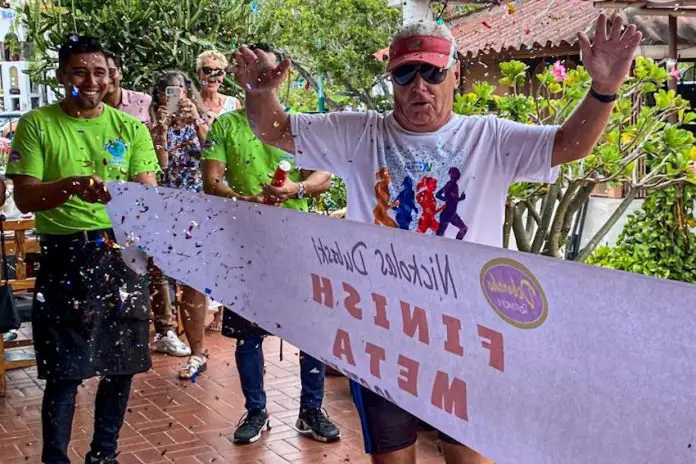
Canadian expat Nick Dubeski has spent the last 25 years running the equivalent of the entire equator - from the comfort of his home in Ixtapa, Guerrero. (All photos by Elisa Ashe)
In 1995, Canadian Nick Dubeski took a bus to Mexico on the first of three occasions and instantly fell in love with the country. On one of his visits to Ixtapa-Zihuatanejo, Dubeski met his now life partner, Nancy Seeley, under a palm tree on a beach on a star-studded night and decided to stay indefinitely.
It was a love story that unfolded under the Mexican stars. I vividly remember watching Nick and Nancy’s romance blossom from the beginning. Now, 25 years and eight months later, they still celebrate their anniversary on the 23rd of every month, a testament to their enduring love.
Wearing his favorite shirt, Dubeski runs towards his goal of running around the equator.
Seeley, a seasoned runner with 47 marathons, planned to run the prestigious 1999 42.2 km marathon in Athens, Greece. Dubeski decided to train and enter alongside her for the very first time.
The pair moved to Mazatlan in 2012, and their love for running continued. Over the years, Dubeski has completed 40 marathons while Nancy, who completed 50, retired from competitive running due to knee issues.
Despite the challenges of age and speed, Nick’s love for running never waned. At 55, he made a bold decision to switch to half marathons, a testament to his perseverance and dedication to the sport.
To date, Dubeski has run 40 full marathons and 40 half marathons. “Most of my runs have been in Mexico, Canada and the USA, while 32 out of 40 of my half marathons are in Mexico. One of my favourite places to run is in Ixtapa, and one of my favourite places to compete is in Guadalajara, where most of the events take place. My fastest time was three hours and twenty minutes in Leon, Guanajuato,” Dubeski explains.
Dubeski is a veteran of the Mexican marathon scene, having run 32 of his 40 marathons in the country.
When COVID-19 hit worldwide in 2020, Dubeski had to find an alternative way to keep up his momentum. Interestingly, from the beginning of his running career, he meticulously logged every time and distance he had ever run. His record-keeping would work to his advantage because it was then that he learned about the virtual marathon movement. Despite COVID restrictions, he could run much as he always had, and it was during this time that he decided to set a goal for himself.
“I already knew that I had run 35,000 km and so I began to research what landmark I could run to. I realized that running to the sun would be impossible, but I saw that I only had 5,075 km left to go to completely run around the equator.”
A lofty goal, but running around the equator takes stamina and perseverance and is not for the faint-hearted. “I used to run six days a week, but now, at 69 years old, I only run two,” he said.
Despite this sheer toll on his body and the dedication and discipline it would take to accomplish such a feat, on July 1, 2024 — which was, appropriately, Canada Day, — Dubeski completed what he set out to do four years ago and ran around the equator. To the cheers of family, friends, and supporters at Deborah’s restaurant in Ixtapa, Dubeski crossed the finish line.
Nick Dubeski celebraing his victory with long-time partnerr, Nancy Seeley.
When asked how it felt to run around the middle of the world, albeit virtually, he said, “It feels wonderful to complete what I set out to do.” So what’s next?
“Well I figure that I have only 10,190 kms left to run to the moon,” Nick says. “All things considered, and if my health continues, I anticipate I’ll be 77 or 78 years old by that time. So that’s my next goal.”
Elisabeth Ashe is a Canadian who has lived and worked in Mexico for many years.
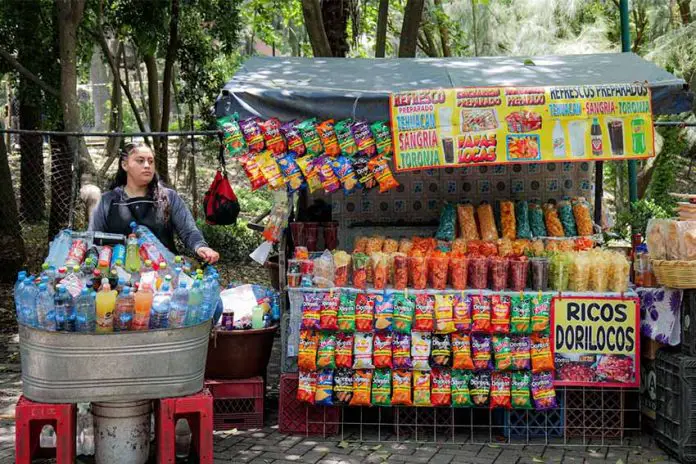
A snacks vendor in Mexico City's Bosque de Chapultepec park awaits customers. According to government data, Mexico saw a historic low last quarter in the percentage of citizens whose income was not enough to feed their families at a minimum level. (Alice Moritz Nigro/Cuartoscuro)
The percentage of Mexicans classed as “the working poor” has declined to the lowest level on record, falling almost six points during the term of the current government.
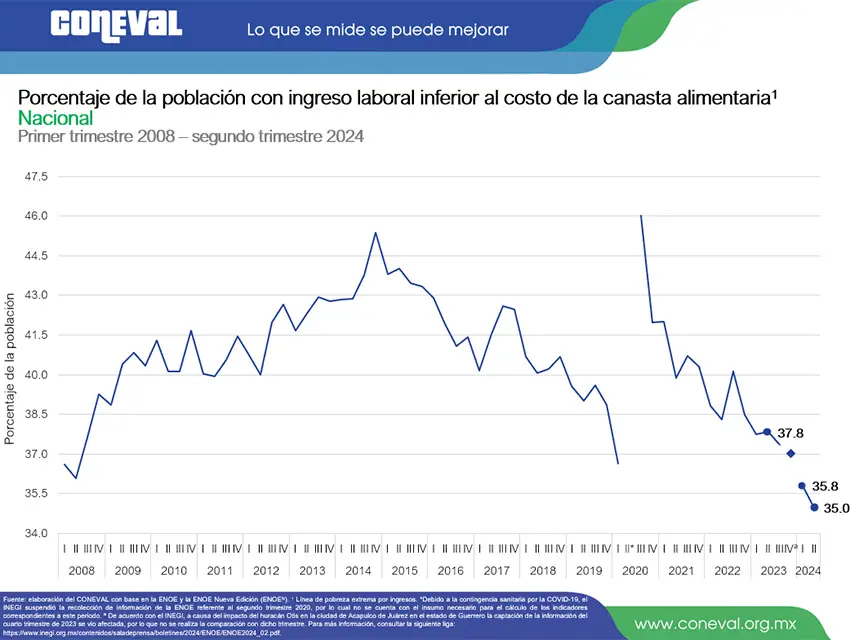
In the second quarter of 2024, the monthly income of 35% of the working-age population was insufficient to purchase a basic food basket for each member of a worker’s family, according to labor poverty data published Tuesday by the National Council for the Evaluation of Social Development Policy (Coneval).
In the second quarter of 2024, only 35% of Mexicans’ incomes weren’t enough to afford the nation’s basic food basket for each member of their family. That percentage is the lowest it’s ever been since records began in 2008. (Coneval)
The percentage has declined 5.7 points since President Andrés Manuel López Obrador took office in December 2018.
Between the second quarter of last year and the second quarter of 2024, the percentage fell 2.8 points to reach its lowest level since comparable records began in 2008.
The López Obrador administration has provided ample monetary support to Mexico’s most disadvantaged people through welfare and employment programs.
The average “real work income” of people in jobs was 7,441 pesos (US $373) per month in the second quarter of 2024.
The average income for men was 8,138 pesos (US $408), while the average for women was 6,450 pesos (US $323). Men earned 8.1% more on average than a year earlier, while women’s salaries rose 8.7%.
The average salary in the formal sector (10,514 pesos per month) was more than double the average in Mexico’s vast informal sector (5,119 pesos).
Coneval also reported that the average “real work income per capita” increased 8.9% annually to reach 3,351 pesos (US $168) per month in the second quarter of 2024.
The number of people in employment increased by 805,200 between the second quarters of 2023 and 2024.
Although Mexico’s overall statistics for the working poor have improved in AMLO’s six-year presidency, the nation still struggles with sharp economic divides: Coneval data found that half of workers living in rural areas were part of the working poor while the percentage of workers living in urban areas who couldn’t afford a family’s basic food basket was just over 30%. (Elizabeth Ruiz/Cuartoscuro)
The urban/rural divide
Just over 30% of the working-age population in urban areas is part of “the working poor” while almost half of those who live in rural parts of Mexico fit into that category.
Between the second quarters of 2023 and 2024, the percentage of “working poor” urban residents declined three points to 30.9%. The percentage of “working poor” rural residents decreased 2.6 points to 47.6%.
Poverty declined in majority of Mexico’s states
The percentage of the population classed as “the working poor” fell in 27 of Mexico’s 32 federal entities between the first and second quarters of 2024.
Durango (-4.3 points), Querétaro (-2.8 points) and Yucatán (-2.8 points) recorded the biggest quarter-over-quarter declines.
Among the five states where labor poverty rose, Guanajuato (+2.9 points), Tabasco (+2.7 points) and San Luis Potosí (+1.7 points) recorded the biggest increases.
The percentage of “working poor” people also increased in Colima and Jalisco.
Despite Guanajuato being in the news repeatedly for attracting foreign investment and thus new jobs to the state, it saw the highest increase in labor poverty in Coneval’s data at 2.9 points. (Diego Sinhue Rodríguez/Twitter)
On an annual basis, unemployment declined 0.2 percentage points.
INEGI said that 1.8 million people out of an economically active population of 62.1 million were unemployed in July.
An additional 4.9 million people — 8.1% of those in jobs — were underemployed in July, INEGI said.
Tabasco had the highest unemployment rate in the country in July (4.5%), while Oaxaca had the lowest (0.6%).
More than half of Mexico’s workers — 54.5% — were employed in the informal sector in July, according to INEGI. That figure declined 1.2 points compared to the same month of 2023.
Carlos Alberto Monsiváis Treviño is believed to be the head or second in command of the notoriously violent Northeast Cartel (CDN), which operates in northern Mexico. (Twitter)
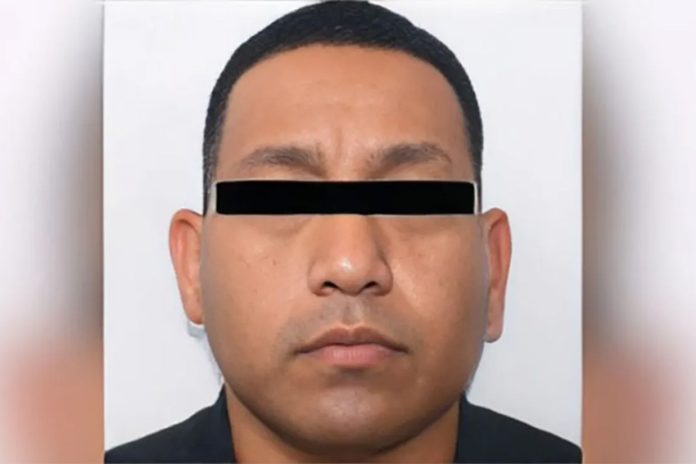
Carlos Alberto Monsiváis “Bola” Treviño, reported by some news outlets as the No. 1 man in the powerful Northeast Cartel, has been arrested in Tamaulipas in a joint operation of the Mexican Army and National Guard.
According to the Attorney General’s Office (FGR), the Monday afternoon arrest took place without incident due to the operation’s secrecy. It reportedly occurred in a neighborhood of Nuevo Laredo, Tamaulipas, 2 kilometers from the U.S.-Mexico border.
The news site Infobae reported that Mexican authorities arrested Treviño on Monday in this Nuevo Laredo neighborhood, known as Pedregal Residencial. (Google Maps)
As of Wednesday afternoon, the suspect was in FGR custody in Mexico City, where he was presented before a public prosecutor at the Specialized Prosecutor’s Office for Organized Crime (FEMDO).
At the time of publication, it is unknown what specifically led to his arrest, but it is speculated he could be charged with crimes such as homicides, kidnappings and extortion.
Meanwhile, U.S. Border Patrol agents in Laredo, Texas, have been bracing for violence following the capture.
A safety alert from the Laredo Sector Intelligence Unit (part of the U.S. Customs and Border Protection Office) said the arrest “may increase the risk of cross-border violence in the form of retaliatory attacks.” An image of the alert was shared on the X account of journalist Ali Bradley.
Border Patrol agents were warned to use caution when encountering “undocumented persons of military age along the border since Cartel del Noreste [Northeast Cartel, or CDN] fighters could try to flee to the United States.”
Nicknamed “Bola Treviño” and “Comandante Bola,” Treviño has been identified by various investigations and journalistic reports as one of the main leaders of the CDN.
NEW: The arrest of a high-ranking member of the Cartel del Noreste (CDN) prompts Border Patrol to alert agents of the potential for an increase in “cross-border violence in the form of retaliatory attacks.”
Journalist Ali Bradley of the media outlet NewsNation posted on her X account an image of what she said was an alert sent to U.S. Border Patrol agents in Laredo, Texas, warning them of possible retaliatory violence along the Mexico-U.S. border due to Laredo’s proximity to Nuevo Laredo and the possibility of Northeast Cartel members fleeing into the U.S.
The newspaper El Universal called him “the second most important man” in the cartel, but Reforma said “he became the leader” after the 2022 arrest of his cousin, Juan Jesús “El Huevo” Treviño Chávez.
The cartel is known for drug trafficking and human trafficking and for the violent tactics it uses to control territory, smuggling routes and operations in its sphere of influence. Over the past two years, CDN has been involved in a violent war with the Gulf Cartel (CDG), which also has influence in the region.
CDN is said to operate in Nuevo León, Coahuila and Zacatecas in addition to Tamaulipas and is allegedly in an alliance with the Jalisco New Generation Cartel (CJNG).
According to Reforma and reports published elsewhere, Treviño gained a level of notoriety when he was identified as the mastermind behind a video in which his cartel (Los Zetas at that time) denied financing President Andrés Manuel López Obrador’s first presidential run in 2006.
Treviño was imprisoned in México state from 2010 to 2022; however, a judge ordered his release because of irregularities during his arrest.
Cars with graffiti stating the abbreviation for the Northeast Cartel. The notoriously violent organized crime group controls cartel territory in four northern Mexico states. (@loma__indomable/X)
Treviño belongs to a lineage with many connections to organized crime. He is the nephew of the brothers Miguel Ángel Morales (alias “Z-40”) and Omar Treviño Morales (alias “Z-42”), two former leaders of the Los Zetas cartel currently imprisoned and with extradition proceedings pending.
CDN is reportedly a splinter group of Los Zetas, which itself originated as the enforcement arm of the Gulf Cartel in the late 1990s. Originally, Los Zetas was said to be composed primarily of former Mexican Army special forces members, and the group became known for its ruthlessly violent tactics.
The split between CDN and Los Zetas reportedly occurred in 2010 after the arrest of key Los Zetas leaders, including the man who was nabbed again this week, Carlos Monsiváis Treviño.
To mark Mexico's upcoming Independence Day, the city government unveiled a huge display of several light mosaics Tuesday, featuring patriotic images. The centerpiece is arguably this image of an eagle with a serpent in its beak, Mexico's national symbol. (Government of Mexico City)
Mexico City is set to celebrate the 214th anniversary of Mexico’s independence on Sept. 16 with a series of enormous lighting displays installed at the capital’s Zócalo.
Mexico City’s Public Works and Services Minister Jesús Esteva explained that the light mosaics for the 2024 national holidays pay tribute to Mexico’s historical memory.
The display also features illuminated images of major figures in Mexico’s independence and revolutionary history. (Government of Mexico City)
“This year, we have 12 luminous mosaics on tricolor bands,” he said.
The light displays include images of leading historical figures, including key figures of Mexico’s independence movement such as Miguel Hidalgo and Josefa Ortiz de Domínguez, revolutionary leader Emiliano Zapata and Latin America’s first Indigenous president, Benito Juárez, among others. The Mexica god Quetzalcóatl is also represented.
But the centerpiece of the light show is a three-dimensional, 16-meter-tall figure of an eagle devouring a snake — one of Mexico’s three national symbols.
“Remembering our past reaffirms our national identity and sovereignty,” Mexico City’s mayor Martí Batres said on X along with a video showing clips from the display’s inauguration.
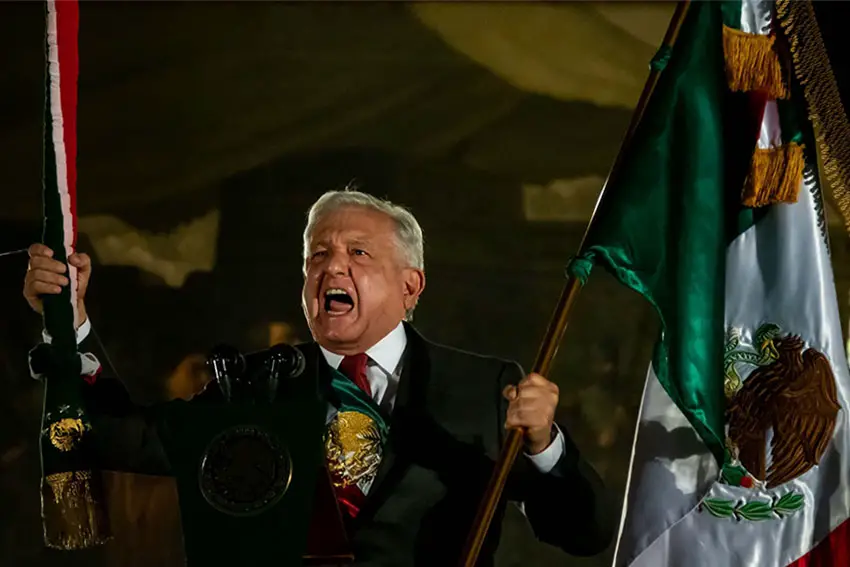
President López Obrador performing “El Grito” or “The Cry for Independence” during Independence Day festivities in Mexico City’s Zócalo in 2023. (Galo Cañas Rodríguez/Cuartoscuro)
Buildings in and around the Zócalo have also been decorated with the luminous images, including the Edificio de Gobierno (the capital’s city hall), the Museo Virreinal (the city’s historic city hall), and the Portal de Mercaderes (a space for merchant businesses that has existed since the Spanish colonial era).
Furthermore, lighting displays have been placed at other iconic locations in Mexico City, including Reforma Avenue, Insurgentes Avenue, 20 de Noviembre Avenue and the side street that connects with the nearby Plaza de la República.
The Public Works and Services Ministry (Sobse) said that for this year’s display, they used 32,000 colored LED lights. Powering the display requires 20,000 meters of power cables, the ministry said.
To mark the occasion, Sinaloa’s Banda MS will perform a free concert in the Zócalo after President Andrés Manuel López Obrador performs the traditional Independence Day ceremony, the Grito de Independenciaor “cry for independence” — frequently referred to as “El Grito” — on the night of Sept. 15. In addition, a Mixe band from Oaxaca will also perform. The whole event will be broadcast on Mexico’s major television stations.
The Grito commemorates the call to Mexicans to take up arms against their colonial Spanish rulers, which was issued in a speech by revolutionary figure and Catholic priest Miguel Hidalgo y Costilla on Sept. 16, 1810 in Dolores Hidalgo, Guanajuato.
One of Mexico’s Independence Day traditions is that the nation’s sitting president publicly recreates Hidalgo y Costilla’s historic speech from the balcony of the National Palace in the Zócalo, ringing a bell like Father Hidalgo did to gather Mexicans. The president also leads citizens gathered in the Zócalo in exuberant proclamations featuring the names of Mexico’s independence leaders, ending with “¡Viva Mexico!”
This year’s Grito will be President López Obrador’s last, as President-elect Claudia Sheinbaum takes office in October.
Earlier this year, the president announced that his last public political act before handing over the presidential sash on Oct. 1 to President-elect Claudia Sheinbaum would be his performance of the Grito. López Obrador has vowed to retire from political life to his home in Chiapas after his presidency ends.
He will present the presidential sash — and the reins of power — to Sheinbaum in a traditional inauguration ceremony at the Palacio de San Lázaro, the seat of the federal Congress.
If the deal were to close, Liverpool and the Nordstrom family would own 49.9% and 50.1% of Nordstrom’s capital stock, respectively. (Shutterstock)
Mexican retail giant El Puerto de Liverpool (Liverpool) has offered a buyout bid to U.S. retailer Nordstrom, seeking to increase its stake in the company to 49.9% with an investment of at least US $1.23 billion.
El Puerto de Liverpool, owner of the department store brands Liverpool and Suburbia, already owns about 9.9% of Nordstrom’s stock. In September 2022, it acquired the company’s shares as part of a geographic diversification strategy.
The move prompted Nordstrom to activate what is known as a “poison pill” in an effort to protect its shareholders from a hostile takeover.
Two years later, Liverpool is now part of a “win-win” plot that would make it a part owner of the U.S. retail chain. Members of the Nordstrom family are teaming up with Liverpool to buy 100% of Nordstrom and take the company – which was taken public in 1971 – private.
Liverpool’s part of the buyout would require an investment of at least US $1.23 billion. (El Puerto de Liverpool)
On Tuesday, CEO Erik B. Nordstrom published a letter to the board of directors stating that the Nordstrom family members own about 33.4% of the company’s outstanding common stock and are willing to offer investors US $23 for each share they own. With around 163.65 million shares outstanding, the buyout bid values Nordstrom at US $3.76 billion.
In a statement to the Mexican Stock Exchange (BMV), Liverpool said, “The transaction is subject to Nordstrom and the negotiating parties reaching a definitive merger agreement.” If the deal were to close, Liverpool and the Nordstrom family would own 49.9% and 50.1% of Nordstrom’s capital stock, respectively.
The offer represents a nearly 35% premium to Nordstrom’s share price since March 18, when media reports of the proposed transaction first emerged. The retailer’s stock has rallied this year and was trading at just over US $23 on Wednesday.
“That the Nordstrom family have made an offer to buy the department store chain comes as no surprise,” Neil Saunders, managing director of the analytics and consulting company GlobalData, told the Associated Press. Nordstrom family members previously bid to buy out the brand in June 2017 for $50 a share.
The buyout would be financed through rollover equity and cash commitments by the Nordstrom family and Liverpool, as well as US $250 million in new bank financing.
“The lack of any real premium would, under normal circumstances, make the offer unattractive,” Saunders continued. “However, as a family-run firm the dynamics are slightly different, and it will be up to an independent committee to determine whether this is in the best interests of the company and its investors.”
As per the details shared by Liverpool, the Mexican company appointed a special committee of independent directors to assess the proposal, which involves a merger between Nordstrom and a U.S. subsidiary of a newly established entity owned by Liverpool and the Nordstrom family.
This isn’t the first time Liverpool has been involved in a commercial operation with a U.S. company. In 2023, Toys “R” Us parent company WHP Global announced it would launch the U.S. toy brand in Mexico for the first time in alliance with Liverpool.
Salazar also said there is "very strong cooperation" between U.S. and Mexican authorities regarding the case of Israel Zambada and "Los Chapitos." (X)
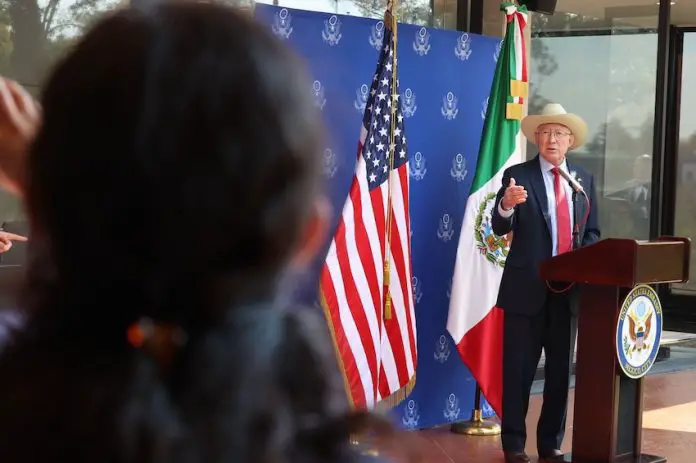
United States Ambassador to Mexico Ken Salazar reaffirmed on Tuesday that alleged Sinaloa Cartel leader Ovidio Guzmán López — one of the sons of convicted drug baron Joaquín “El Chapo” Guzmán Loera — remains in prison in the United States.
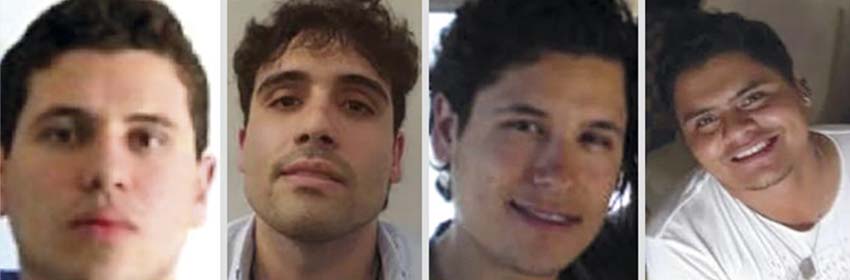
Two of Joaquín “El Chapo” Guzmán’s four sons — collectively nicknamed “Los Chapitos” — are in United States custody. Ivan Guzmán Salazar (far left) and Alfredo Guzmán Salazar (second to right) remain at large.
Publicly available records of the U.S. Federal Bureau of Prisons show that he was released on that date, but Salazar said on July 26 that he was able to “confirm that Ovidio Guzmán López remains in custody in the United States.”
The newspaper Milenio, citing unnamed security sources, said in a report on Tuesday that “a person” — in this case, an accused criminal — can only enter a witness protection program after their criminal case concludes, and after they have been sentenced and served the sentence they were given.
However, according to the U.S. Department of Justice (DOJ), “prisoners in a state or federal institution are eligible for participation in the Witness Security Program provided all other criteria are met.”
Thus, Ovidio, who is accused of drug trafficking, money laundering and other charges, could conceivably be in prison — and in the United States Federal Witness Protection Program.
The DOJ says that “a witness may be considered for acceptance into the Witness Security Program if they are an essential witness” in a range of cases, including drug trafficking ones.
Ovidio, and his brother Joaquín, could testify against Zambada, who founded the Sinaloa Cartel with their father, El Chapo, in the 1980s.
El Universal reports that Ovidio is a ‘collaborating witness’ – and in US custody
An updated version of El Universal’s report states that upon becoming a “collaborating witness,” Ovidio “ceased to appear in the prison’s [computer] system but remains under the custody of a United States justice.”
Salazar didn’t confirm or deny the claim that the 34-year-old suspect had entered witness protection.
In Mexico, Joaquín is accused of kidnapping Zambada and forcing him onto the plane that touched down at the Doña Ana County International Jetport in New Mexico. (Rosa Icela Rodríguez/X)
Her remarks suggested that they both planned to collaborate with U.S. authorities.
However, after Joaquín pleaded not guilty to all charges in a Chicago court on July 30, lawyer Jeffrey Lichtman said his client did not have any prior agreement with U.S. authorities.
In Mexico, Joaquín is accused of kidnapping Zambada and forcing him onto the plane that touched down at the Doña Ana County International Jetport in New Mexico.
Will Ovidio appear in court next month?
El Universal initially reported that Ovidio’s case was classified and that he wouldn’t make any public appearances. However, the newspaper’s updated report noted that he is scheduled to appear in court in Chicago on Oct. 1.
Salazar said Tuesday that investigations into the case involving Zambada, Joaquín Guzmán López (and potentially Ovidio as well) are continuing both in the United States and Mexico.
“We have to respect these investigations, but what I can say is that as ambassador I have had very close knowledge of all the dialogue that [the United States] has had with the [Mexican] Federal Attorney General’s Office,” he said.
Salazar noted that he went to El Paso with FGR officials, who inspected the plane that transported Zambada and Joaquín Guzmán López to the U.S.
There is “very strong cooperation” between U.S. and Mexican authorities, he said.
Zambada and the two Guzmán López brothers have all pleaded not guilty to the charges they face in the United States. It appears likely that Zambada will face trial in New York, while Los Chapitos are answering charges in the state of Illinois.