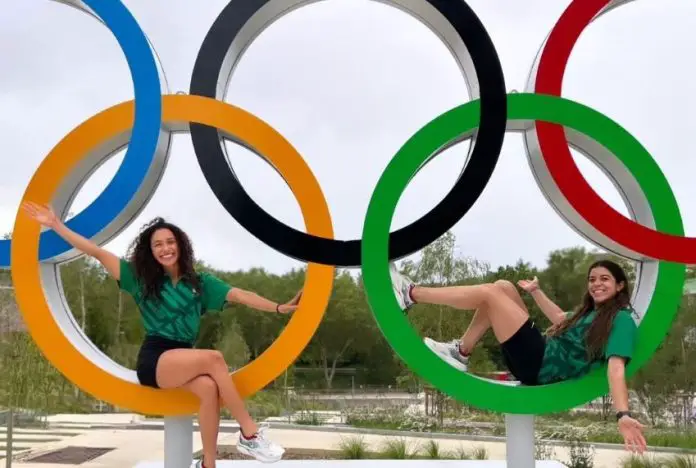
Mexican divers Alejandro Orozco and Gabriela Agúndez pose with the Olympic rings in Paris.(Alejandra Orozco/Instagram)
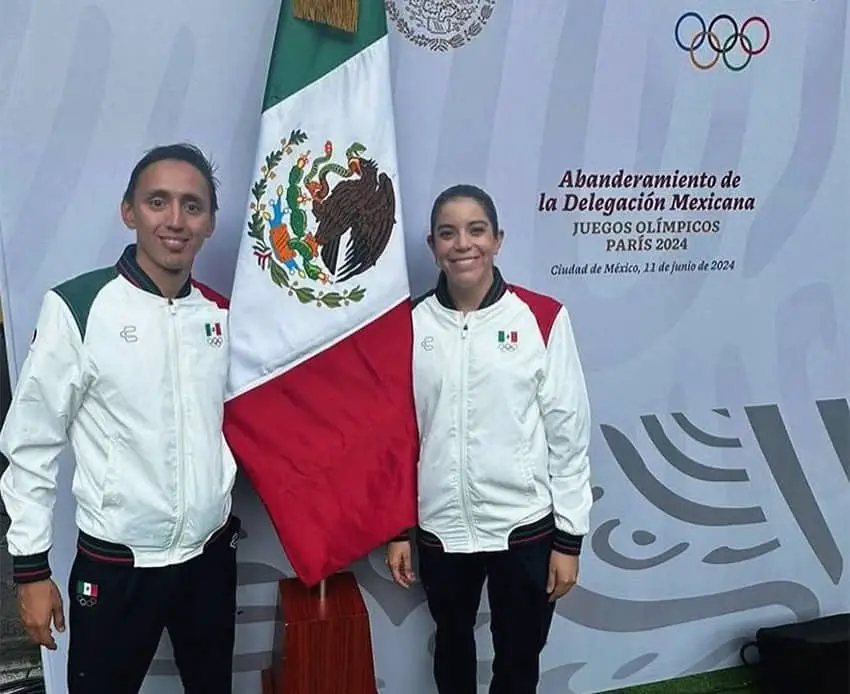
As the 2024 Paris Olympics begin, springboard diver Alejandra Orozco and modern pentathlon athlete Emiliano Hernánez are representing Mexico as flag bearers in the Parade of Nations, part of the Olympic opening ceremony.
A video of the Mexican delegation in Paris on Friday.
The inaugural event takes place Friday on the Seine River, where each country’s delegation is participating in the floating parade. It’s the first time in history that an Olympics opening ceremony will happen in a venue other than a stadium.
Who are the Mexican flag bearers?
Alejandra Orozco, 27, is a two-time Olympic-medal winner originally from Guadalajara, Jalisco.
At 14, she volunteered at the Pan American Games in her hometown and witnessed Olympic divers like Mexican Paola Espinosa compete for a medal. “It felt like an injection of fuel [seeing her] and thinking that one day, that could be me,” she told Olympics.com.
The Mexican government officially designated Orozco and Hernández as flag bearers earlier this month. (Alejandra Orozco/Instagram)
One year later, Orozco earned her first Olympic silver medal at the London 2012 Games in the synchronized 10-meter platform event, diving alongside Paola Espinosa. While she wasn’t able to get to the podium in Rio 2016, she managed to win a bronze medal at the Tokyo Olympics 2020, competing in the synchronized dive with her new partner, Gaby Agúndez.
Orozco is also a double medalist in both the Olympic Games and the Youth Olympic Games, including a gold at the 2014 Youth Olympic Games in Nanjing.
“For me it is an honor to carry the flag, and to represent the Mexican delegation. I know that we will be one that night,” Orozco said after being appointed flag bearer.
In Paris, Orozco will compete in both synchronized and individual springboard dives.
Pentathlete Emiliano Hernández, another Mexican flag bearer
Meanwhile, the second flag bearer, Emiliano Hernández, originally hails from the state of México. Hernández, 26, is making his Olympic debut this year in modern pentathlon, a discipline that combines running, archery, swimming, horse riding and fencing.
In 2023, he won a silver medal in the World Championship in Great Britain and two titles as champion of the 2023 Pan American Games in Santiago.
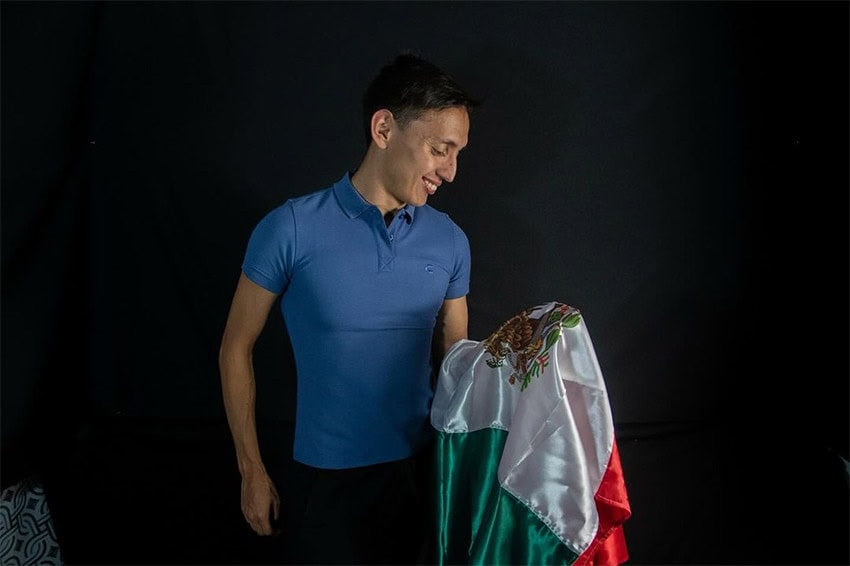
Emiliano Hernández will compete in the 2024 Paris Olympics in the category of modern pentathlon, representing Mexico. (Emiliano Hernández/Instagram)
In an emotional message on Instagram, Emiliano shared how he felt about being a flag bearer in a letter addressing the tricolor banner.
“Since I was a little boy I used to see you in elementary school, and I cry when I see you at soccer games. Even more, I get excited when in my competitions I hear our anthem and I see you in the skies, despite being on the other side of the world. I want to tell you that we will go all out in Paris,” he said.
Where to watch the Olympics in Mexico
In Mexico, Channel 5 and Channel 9 of Televisa will broadcast the Games.
On pay-per-view television, TUDN and Claro Sports will broadcast the events. Claro Sports can be accessed via the streaming apps Claro Video, Prime Video and Samsung.
Other streaming apps broadcasting the opening ceremony include Vix, HBO Max and the Paris 2024 app.
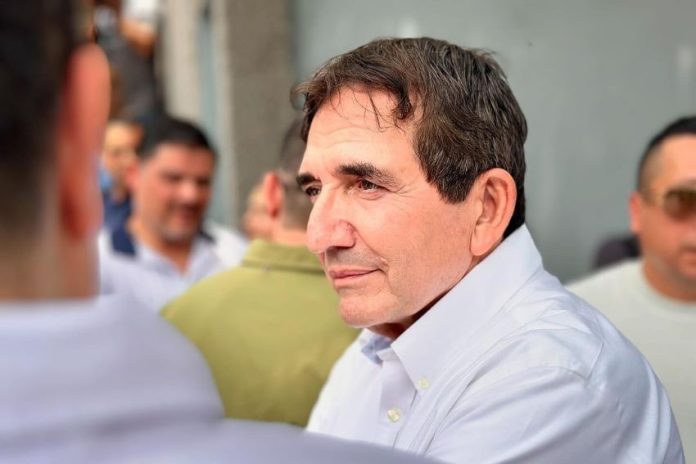
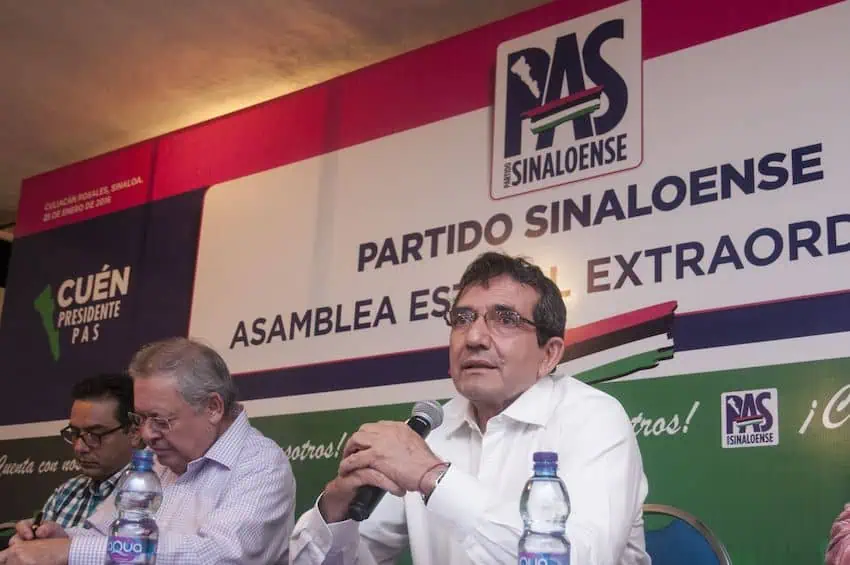
Héctor Melesio Cuén Ojeda, 68, was the force behind the Sinaloa Party (PAS) and former rector of the Autonomous University of Sinaloa. (Héctor Cuen Ojeda/Instagram)
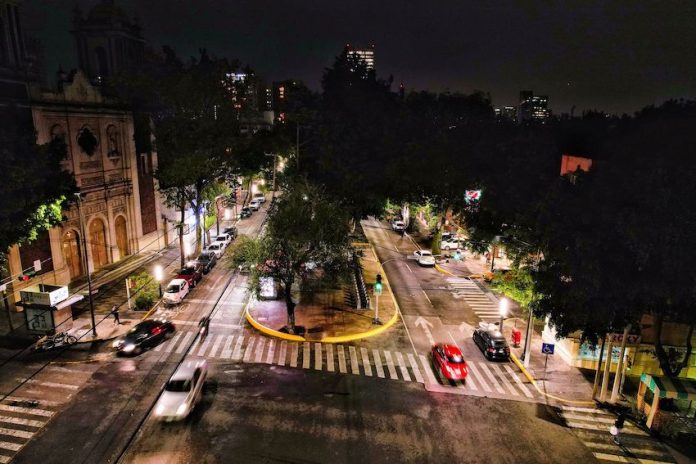
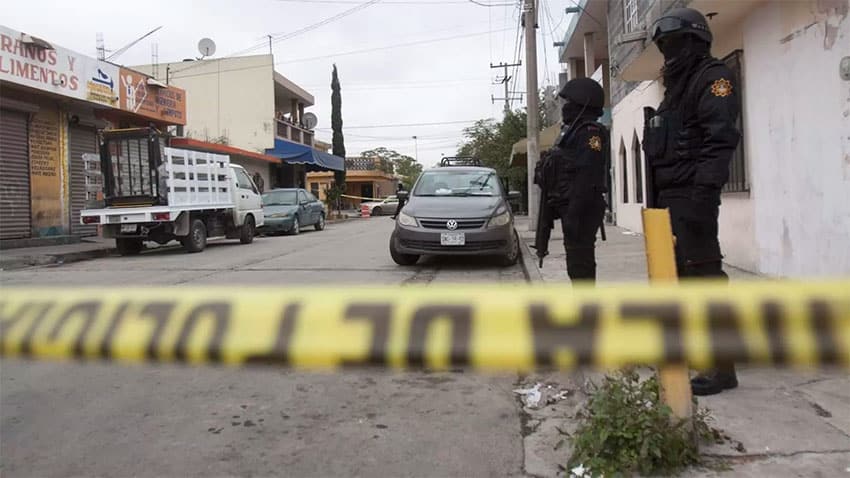
Héctor Melesio Cuén Ojeda, the former mayor of Culiacán, Sinaloa, and the founder of the regionally influential Sinaloa Party (PAS), was murdered Thursday night in his home state.
Cuén Ojeda was shot while driving near La Presita, north of downtown Culiacán, and it was reported that he died 30 minutes later in a private clinic due to a heart attack brought on by loss of blood. He was 68.
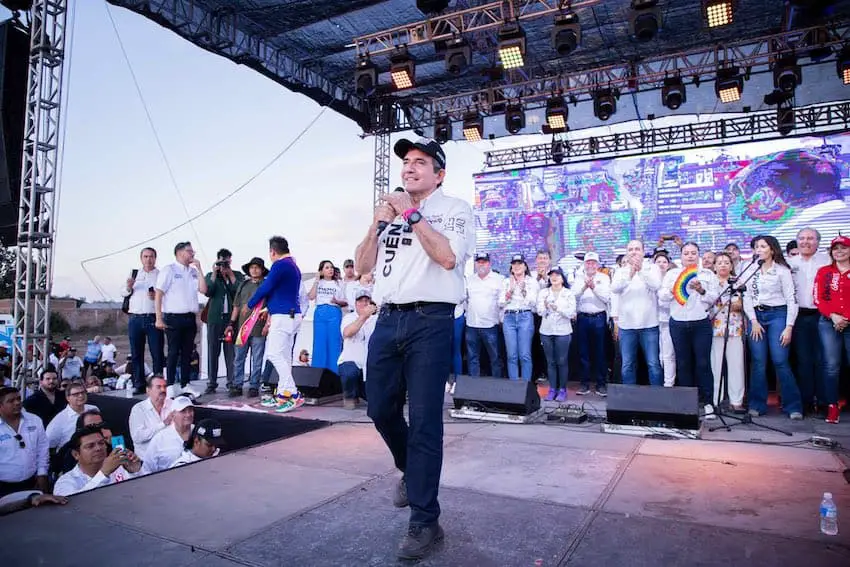
Cuén Ojeda represented the PAN as mayor of Culiacán from January 2011 through February 2012, before founding the Sinaloa Party (PAS) in August 2012. (Carlos Sicairos/Cuartoscuro)
Culiacán, Sinaloa is a stronghold of the Sinaloa Cartel, formerly led by imprisoned drug lord Joaquín “El Chapo” Guzmán. Two of the criminal organization’s top dogs, notorious drug trafficker Ismael “El Mayo” Zambada and Joaquín Guzmán López, son of “El Chapo,” had been arrested earlier Thursday in El Paso, Texas.
An influential politician, Cuén Ojeda was also a businessman, a pharmacobiological chemist by training and from 2005 to 2009, the rector of the Autonomous University of Sinaloa, where he earned a Ph.D.
The mayor of Culiacán from January 2011 through February 2012, Cuén Ojeda was born in 1955 in Badiraguato, Sinaloa — also the 1957 birthplace of “El Chapo” Guzmán. In June, he was elected to represent Sinaloa in Mexico’s Chamber of Deputies starting in September 2024.
“I would like to express my condolences to his family, his friends, the students and teachers of the University of Sinaloa, and the members of his party,” Mexican President Andrés Manuel López Obrador said at his Friday morning press conference. “We are going to investigate how the events occurred. We don’t have much information,” the president said.
The Sinaloa Attorney General’s Office (FGS) reported that it has launched an investigation, which included a forensic examination of Cuén Ojeda’s body in the hours following his death.
In June, Cuén Ojeda had been elected federal deputy with the coalition Fuerza y Corazón por México (Strength and Heart for Mexico). (Cuartoscuro)
Cuén Ojeda is survived by his wife, Jesús Angélica Díaz Quiñonez, three daughters and a son. Díaz Quiñonez is a social activist, a member of several boards and commissions, and a former PAS deputy in the state legislature who has been approved to serve in that same role in the new legislature starting next month.
Cuén Ojeda founded PAS in August 2012, largely to support his run for Sinaloa governor in 2016, which he lost. He had wanted to run for governor in 2010, but the National Action Party (PAN) opted against nominating him — which is why he ran for mayor of Culiacán, instead.
He was mayor for only 13 months, leaving to run for the Senate.
According to the digital media outlet Animal Politico, Cuén Ojeda “amassed a multimillion-dollar fortune, built a profitable local political party and made the highest educational institution in Sinaloa his preserve of power and influence.”
Other sources indicated that Cuén Ojeda acquired his wealth through real estate, laboratories, restaurants and the creation of the PAS.
Recently, he was working as a political adviser to the Institutional Revolutionary Party (PRI) on a national level. That marked a split from his former alliance with current Sinaloa Governor Rubén Rocha Moya of the National Regeneration Movement, or Morena party.
On Friday morning, the PAS posted an emblem on its Facebook account as a sign of mourning.
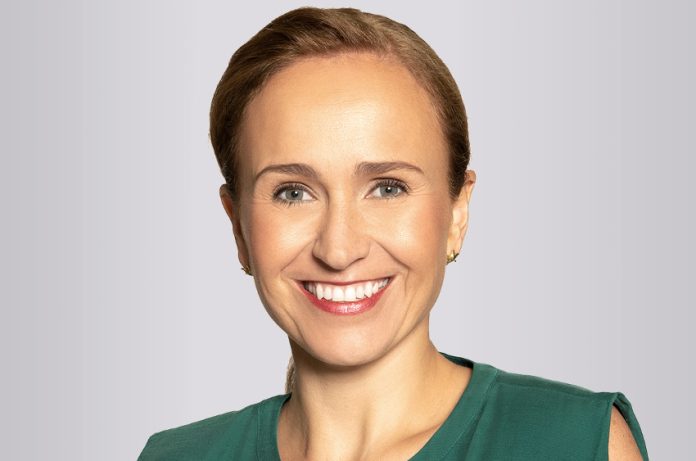
Valeria Moy, an economist, columnist and director of the think tank Mexican Institute for Competitiveness. Follow Moy on X at @ValeriaMoy. (IMCO)
Mexico played a prominent role in the 2016 United States presidential campaign.
Then-candidate Donald Trump essentially pointed to Mexico as a source of problems. From his perspective, the country was not only taking advantage of the free trade agreement that went into effect in 1994, but also sending people to the United States who were stealing jobs from American citizens.
He managed to instill in the public conversation the idea that trade deficits were undesirable — without any nuance — and that he, of course, would reverse the imbalance by renegotiating the treaty.
Despite the continuous threats, Trump’s victory caught Mexico off guard in that discussion. The trade relationship was taken for granted, and there wasn’t even enough information on hand to defend the agreement.
Hastily, a team was assembled that successfully renegotiated the treaty (the US-Mexico Canada Agreement or USMCA), which was signed in November 2018 by the presidents of Mexico and the United States and the Canadian prime minister. It went into effect on July 1, 2020.
The new treaty is very similar to the previous one, but there are some important changes, including the addition of the “sunset clause,” which means that the agreement will be reviewed every six years, with the idea of providing certainty and ensuring that the terms remain relevant.
This idea, which sounds very good in theory, contrasted with the comments of the then-U.S. Trade Representative, who indicated that the clause would help prevent the country from finding itself in an unequal relationship.
The sunset clause will be activated in 2026 leading to a USMCA review, most likely with Trump as president of the United States again. Although the current agreement was signed under his administration, Mexico would do well to be prepared not only for a political bashing campaign, but also for an aggressive U.S. approach to trade.
Some say that Mexico fared well under the Trump administration, and even if we concede that assertion, there is no reason why the same should apply in another Trump term.
The global economy has changed in recent years, adjustments in production methods that began in the years preceding the pandemic have accelerated, and income and consumption patterns have changed. But one thing has remained: the United States is still the largest consumer, and as long as that is the reality, someone will provide the goods the country demands.
Mexico has benefited from the economic growth of its largest trading partner. It’s not just about the relocation, or neashoring, of companies and supply chains; that phenomenon is different. The increase in income, including that derived from the pandemic aid programs in the U.S., has boosted consumption and consequently trade. The trade deficit that so bothered Trump during the 2016 campaign still exists.
But there is an additional ingredient: the growing trade relationship between China and Mexico. And the United States doesn’t like that at all. Trump likes it even less.
Making the assumption that we already know Trump — that we know his ways of negotiating and exerting trade pressure, and therefore we have this scenario figured out — would be naive.
The current disaster of the Democratic Party — despite Biden’s good economic results — has empowered the former president. It won’t be the same Trump if he’s re-elected; it will be a reloaded one.
Will Mexico be ready for that USMCA review in 2026?
This article was originally published in Spanish by El Universal
Valeria Moy has been the director of the Mexican think tank IMCO (Mexican Institute for Competitiveness) since 2020. She is an economist with degrees from the Autonomous Technological Institute of Mexico (ITAM) and the London School of Economics. She is a regular columnist for El Universal and El País newspapers and was named one of the 100 most powerful women in Mexico by Forbes.
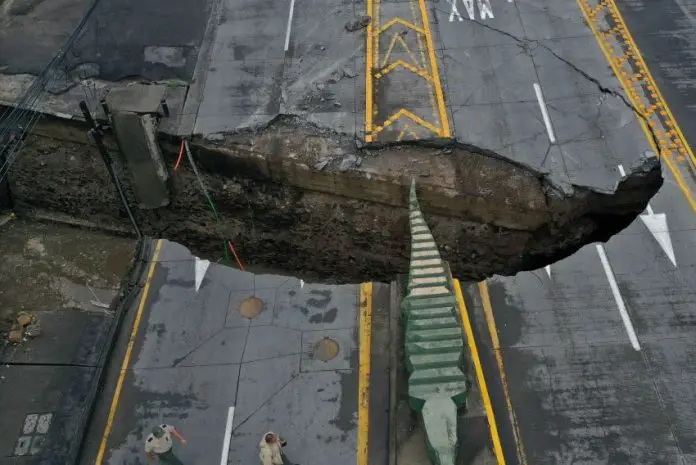
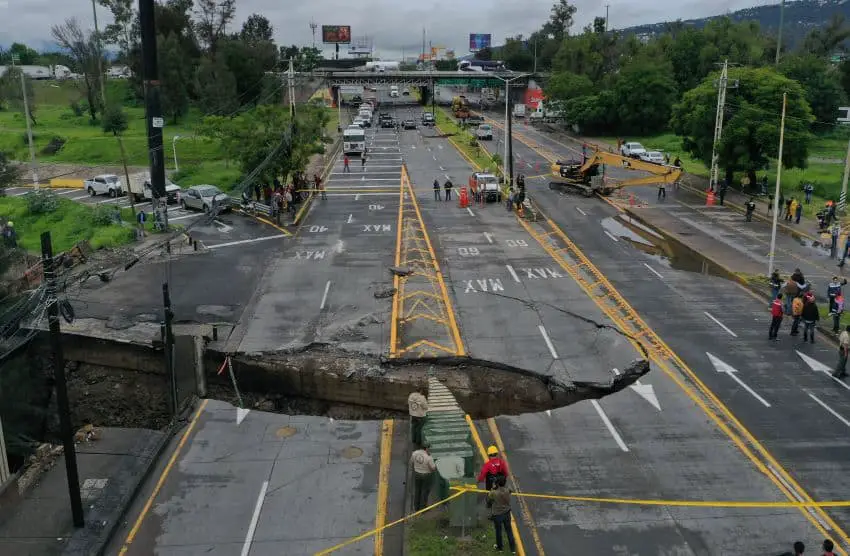
Surprisingly, no injuries or accidents were reported when a massive sinkhole opened up along Guadalajara's main boulevard on Thursday morning. (Cuartoscuro)
Heavy rains wreaked havoc in Guadalajara, causing a massive sinkhole to open up along Avenida López Mateos, the city’s principal north-south boulevard.
The sinkhole — which appeared in southern Guadalajara near the intersection with the Periférico loop road — opened up around 2 a.m. on Thursday. Officials say no injuries or accidents were reported, but the damage caused considerable chaos during morning rush hour as the authorities had to shut down all lanes of traffic in both directions.
David Zamora, the state secretary of infrastructure and public works (SIOP), told reporters it would take at least 10 days to repair the damage. “We will be working around the clock and in conjunction with Zapopan, Tlaquepaque and SIAPA.”
SIAPA is the intermunicipal water system; Zapopan and Tlaquepaque are neighboring municipalities.
The sinkhole is six meters deep, 10 meters wide and four meters across, threatening water pipes and other underground infrastructure and forcing SIAPA to shut down water distribution in the area. Residents of two adjacent neighborhoods — Fracción Cantaluna and Periodistas — were informed they’d be without water until further notice.
The possibility the sinkhole could grow threatened water pipes and other underground infrastructure, forcing SIAPA to shut down water distribution in the area. (Cuartoscuro)
SIOP agents and SIAPA technicians were busy inspecting the damage, searching for clues to what caused the crater to develop, while also examining the terrain to determine the best way to repair the road.
The Wednesday night deluge also destroyed a pedestrian bridge in the area, and a nearby drainage portal.
By Friday morning, SIOP had managed to fashion two northbound lanes and one southbound lane but rush hour was still a slog.
Work on the sinkhole should not be affected by the rain forecast. Scattered thunderstorms are expected across western Mexico tonight and Saturday, but warm temperatures and mostly clear skies are forecast through the end of next week.
Las lluvias de este jueves en Av. López Mateos en Zapopan, nos muestran espectacular cenote, pedimos no insistan en llamarlo socavon
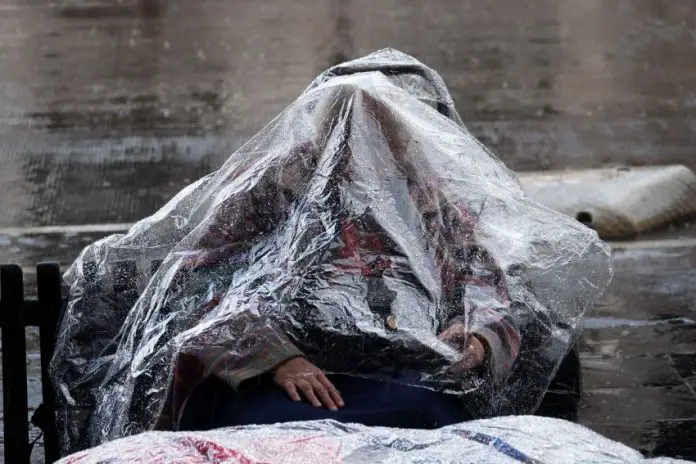
Está lloviendo otra vez, but what does that mean? (Graciela López/Cuartoscuro)
Hello readers! This week we are going to talk about the weather in hopes of helping you pack for your vacation in Central Mexico. Here are some insights about helpful vocabulary words and phrases to use when you talk about the weather in Spanish.
There are two seasons in Central Mexico, the rainy season that used to start in late May, has now become the hottest of the year. As a result of climate change, the showers now arrive in July and last until October. The rest of the year is very dry. So, if you are visiting our beautiful country during the rainy season, make sure you save some space in your bag for your umbrella and some in your head to learn how to say some Spanish.
Umbrella = paraguas [parawas]. Paraguas is an easy word, isn’t it? Let me introduce you to some more useful and complex sentences so you can actually use them with someone on the street or when you want to start a conversation.
Qué calor
This phrase means “it is very hot”. You can use it when you want to express how hot the weather is, you can also exchange it for “Hace calor”.
Example 1
Qué calor, necesito un abanico (It ‘s very hot, I need a fan.)
Example 2
Hace mucho calor aquí, ¿no? (It’s very hot in here, isn’t it?)
Está lloviendo
This means “it is raining”. If you find yourself caught in a sudden downpour, you can say Está lloviendo, hay que correr (It’s raining, we’ve to to run). Or before you come you can text your friend: ¿Está lloviendo en México? (Is it raining down there?)
El clima está loco
“The weather is crazy!”. Given the unpredictable weather patterns due to climate change, this phrase might come in handy. For example: ¿Hace frío o calor? — Ya no se sabe, el clima está muy loco (Is it hot or cold? It’s hard to tell, the weather is crazy.)
Tráete un paraguas
“Bring an umbrella with you.” This is the imperative way to use the verb bring and to speak in second person. You would say this to a family member or a friend. And in case you went out without one or couldn’t fit it in your luggage, you might want to get one at the store, this is how you would ask for it: ¿Tiene paraguas? (Do you have an umbrella?)
Está nublado/está despejado.
Meaning “it’s cloudy/the sky is clear”. Examples of usage: ¿Está lloviendo? — No, solo está nublado. (Is it raining? No, it’s just cloudy.)
Example 1
No creo que llueva, el cielo está despejado. (I don’t think it’ll rain, the sky is clear.)
By learning these phrases, you’ll be better prepared to discuss the weather with locals and make the most of your trip. These expressions will help you get by the ever-changing climate with ease.
Paulina Gerez is a translator-interpreter, content creator, and founder of Crack The Code, a series of online courses focused on languages. Through her social media, she helps people see learning a language from another perspective through her fun experiences. Instagram: paulinagerezm / Tiktok: paugerez3 / YT: paulina gerez
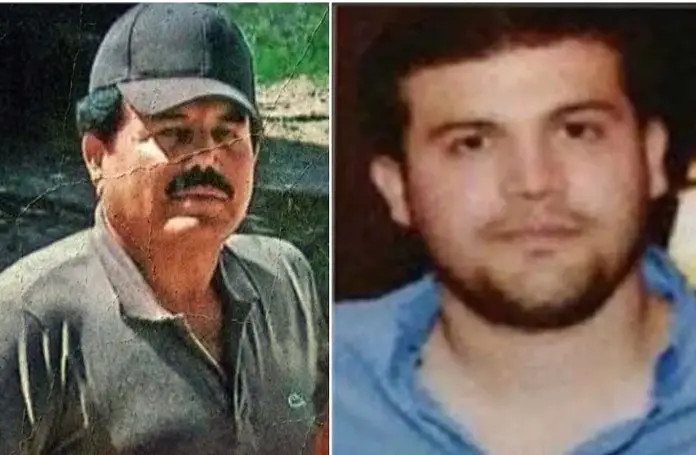
Zambada (left) alleged that rival faction leader Joaquín Guzmán López (right), kidnapped and turned him into United States law enforcement agents. (Archive)
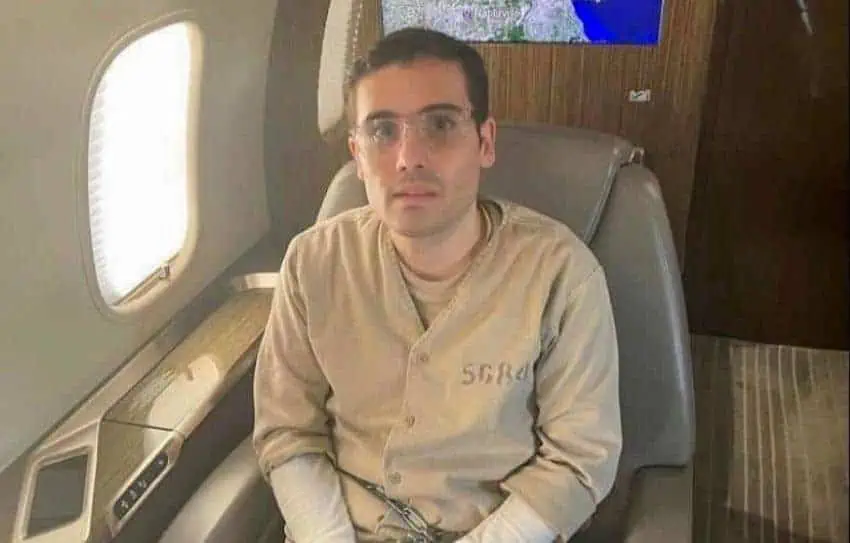
Alleged Sinaloa Cartel leaders Ismael “El Mayo” Zambada García and Joaquín Guzmán López, a son of imprisoned drug lord Joaquín “El Chapo” Guzmán Loera, were arrested in the United States on Thursday, U.S. authorities said.
The two men were detained after flying into an airport near El Paso, Texas, on a private plane.
Zambada, a co-founder of the Sinaloa Cartel and one of the most powerful drug traffickers in Mexican history, didn’t expect to end up in the United States as Guzmán López told him they were going to inspect clandestine airfields in Mexico, according to a Homeland Security Investigations official quoted by The Wall Street Journal.
Several reports said that Guzmán López “tricked” or “lured” El Mayo into going to the United States, where authorities were offering a reward of up to US $15 million for information leading to his arrest.
However, The New York Times initially reported that Zambada had surrendered to U.S. authorities, and Luis Chaparro, a journalist with extensive experience reporting on Mexican cartels, said that El Mayo reached an agreement with U.S. authorities and consequently turned himself in.
“Before one DEA and one FBI agent opened the stairwell of the plane, El Mayo had one last request: he didn’t want to go looking weak,” Chaparro wrote on his Substack site Saga.
“He asked everyone there not to say he turned himself in, but rather that he was either captured, kidnapped or tricked. The agents agreed and helped him and Joaquín down,” wrote Chaparro, who said his reporting was based on information provided by U.S. sources including government officials.
Chaparro also said he was told by a grandson of El Mayo that his grandfather was “very sick” and wanted to see two of his sons — one of whom is detained in the United States — “at least once again.”
Guzmán López was also wanted in the U.S., with a reward of up to $5 million on offer for information leading to his capture.
A worker at Santa Teresa airport, located near El Paso in New Mexico, told Reuters that he saw a Beechcraft King Air plane land on the runway, where law enforcement officials were waiting.
“Two individuals got off the plane … and were calmly taken into custody,” the worker said. “It seemed like a pretty calm, arranged thing,” he added.
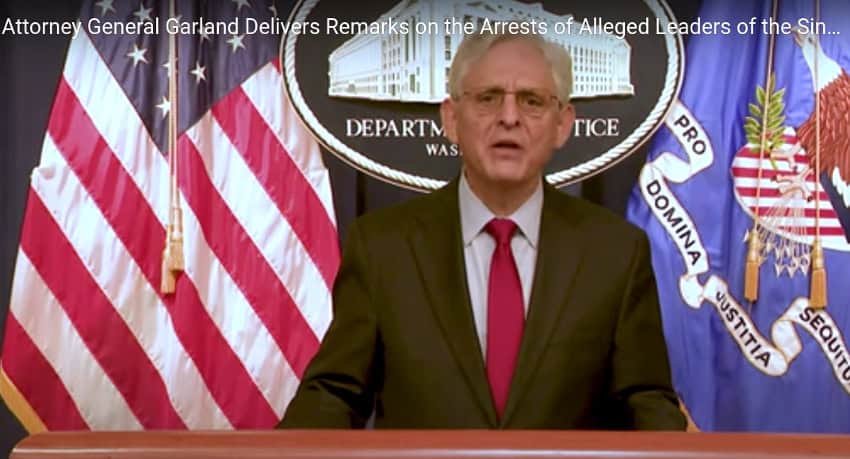
United States Attorney General Merrick B. Garland announced the arrests, saying that the Justice Department had taken into custody “two additional alleged leaders of the Sinaloa Cartel, one of the most violent and powerful drug trafficking organizations in the world.”
The Justice Department said in a statement that both men are facing “multiple charges in the United States for leading the Cartel’s criminal operations, including its deadly fentanyl manufacturing and trafficking networks.”
Merrick Garland said the two men join a “growing list” of Sinaloa Cartel leaders being held “accountable in the United States.” (Screen capture)
“El Mayo and Guzmán López join a growing list of Sinaloa Cartel leaders and associates who the Justice Department is holding accountable in the United States. That includes the Cartel’s other cofounder, Joaquín Guzmán Loera, or ´El Chapo’; another of El Chapo’s sons and an alleged Cartel leader, Ovidio Guzmán López; and the Cartel’s alleged lead sicario, Néstor Isidro Pérez Salas, or ‘El Nini,'” Garland said.
In a statement issued on Friday, United States President Joe Biden called Zambada and Guzmán López “two of the most notorious leaders of the Sinaloa Cartel.”
“They are being charged for leading the Cartel’s deadly drug manufacturing and trafficking networks. I commend the work of our law enforcement officials who made this arrest,” Biden said.
Garland said that Zambada faces charges of “fentanyl trafficking, money laundering, firearms offenses, kidnapping and conspiracy to commit murder.”
Guzmán López — reportedly a Sinaloa Cartel financial operator — faces charges of “trafficking in large quantities of cocaine, heroin and meth, among other drugs,” the attorney general said.
“Both defendants will have their initial appearances in federal court in the coming days. … Fentanyl is the deadliest drug threat our country has ever faced. The Justice Department will not rest until every single cartel leader, member and associate responsible for poisoning our communities is held accountable,” Garland said.
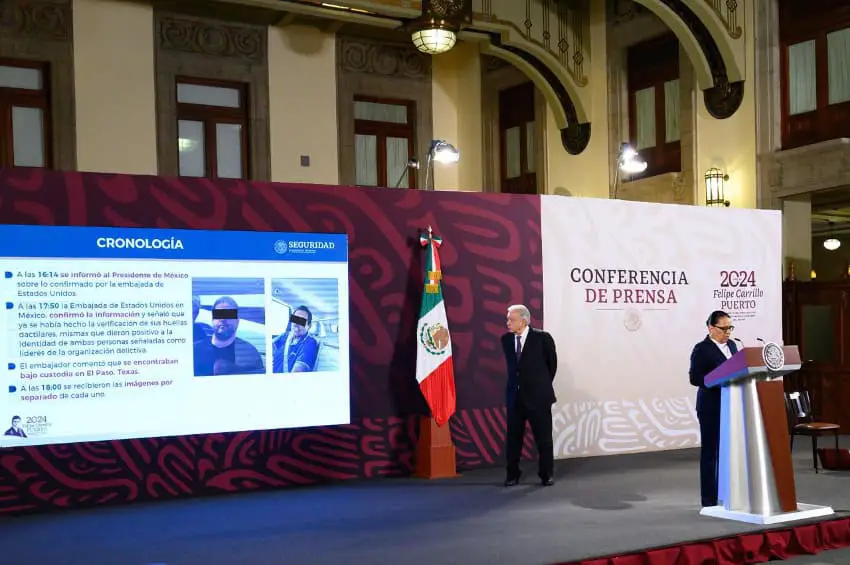
At President López Obrador’s Friday morning press conference, Security Minister Rosa Icela Rodríguez said that the Mexican government did not participate in the capture. (Rosa Icela Rodríguez/X)
A lawyer for El Mayo, Frank Perez, said he had “no comment except to state that … [his client] did not surrender voluntarily; he was brought against his will.”
Mexico and the United States collaborate closely on the fight against fentanyl, but the Mexican government wasn’t involved in the arrests of Zambada and Guzmán López, Security Minister Rosa Icela Rodríguez said Friday.
El Mayo captured for the first time in a long criminal career
Zambada, 76, and El Chapo founded the Sinaloa Cartel in the late 1980s and built in into one of the most powerful criminal organizations in the world.
El Mayo, a former poppy field worker, maintained a lower profile than his co-founder, and had avoided arrest throughout a decades-long criminal career.
In February, the United States government filed a new indictment against Zambada, charging him with “conspiring to manufacture and distribute” fentanyl, knowing that it “would be unlawfully imported into the United States.”
The capture in January 2023 of Ovidio Guzmán of the “Los Chapitos” faction of the Sinaloa Cartel was considered a victory for the López Obrador administration. (Cuartoscuro)
He leads a faction of the Sinaloa Cartel that is regarded as the top smuggler of fentanyl into the United States. His faction has clashed with Los Chapitos, a faction led by the sons of El Chapo.
Reuters reported that if Zambada was betrayed by Guzmán López “it could have major ramifications for the Sinaloa cartel.”
Guzman’s López’s brother, Ovidio Guzmán López, was captured in Culiacán, Sinaloa, in early 2023 and extradited to the United States last September. Publicly available records of the U.S. Federal Bureau of Prisons show that Ovidio Guzmán was released on Tuesday of this week, but Mexican Security Minister Rodríguez said Friday that was “definitely” not the case.
United States Ambassador to Mexico Ken Salazar said in a statement that he could confirm that Ovidio Guzmán remains in custody in the United States.
The percentage of Mexicans who believe the city in which they live is unsafe declined to its second-lowest level on record in the second quarter of 2024. (Cuartoscuro)
The percentage of Mexicans who believe the city in which they live is unsafe declined to its second-lowest level on record in the second quarter of 2024, according to the results of a recent survey.
However, authorities still have a lot of work to do as close to six in 10 survey respondents consider their city unsafe.
59.4% of adults in Mexico have security concerns about the city in which they live. (México state police)
Conducted by the national statistics agency INEGI between May 24 and June 14, the latest National Survey of Urban Public Security (ENSU) found that 59.4% of adults have security concerns about the city in which they live.
The second quarter percentage is just 0.3 points higher than the all-time low of 59.1% in the final quarter of 2023. INEGI first conducted the ENSU in 2013.
The perception of urban insecurity in Mexico reached almost 80% in 2017 and 2018, the final years of the government led by former president Enrique Peña Nieto.
The latest survey found that 65.1% of women and 52.4% of men consider their city unsafe.
For the latest ENSU, INEGI surveyed adult occupants of 27,850 homes in 91 urban areas across Mexico, including the 16 boroughs of Mexico City.
Five Mexico City boroughs reported lower perceptions of insecurity, while the boroughs of Benito Juárez and Azcapotzalco reported increased insecurity. (Archive)
At a press conference on Wednesday, President-elect Claudia Sheinbaum highlighted that ENSU data shows that “Mexicans who live in cities today feel safer than they did in 2018.”
President Andrés Manuel López Obrador took office on Dec. 1, 2018, while Sheinbaum was sworn in as Mexico City mayor four days later.
The president-elect told reporters that Mexico has made progress in reducing insecurity during López Obrador’s presidency, and pledged that her administration will “make more progress” during its 2024-2030 term.
Which cities have the highest and lowest percentages of residents with personal security concerns?
Fresnillo, Zacatecas, once again had the highest percentage of residents who told INEGI that the city was an unsafe place to live. The latest ENSU found that 94.7% of Fresnillo residents consider the city unsafe, a decline of 0.7 percentage points compared to the previous survey.
For the past several years, Fresnillo, Zacatecas has registered the highest local perception of urban insecurity of any city in Mexico. (Adolfo Vladimir/Cuartoscuro)
Located about 60 kilometers north of Zacatecas city, Fresnillo has been plagued by violent crime in recent years. The results of each of the four ENSUs conducted in 2023 also showed that the city of some 240,000 people was considered unsafe by over 90% of residents.
The cities with the next highest percentages of residents with personal security concerns were:
Naucalpan de Juárez, a México state municipality that adjoins Mexico City. Just under nine in 10 residents — 89.2% — consider the municipality an unsafe place to live.
Uruapan, Michoacán: considered unsafe by 86.8% of surveyed residents.
Irapuato, Guanajuato: 84.8%.
Tapachula, Chiapas: 84.7%.
Zacatecas city: 84.7%.
The cities with the lowest percentages of residents with personal security concerns were:
San Pedro Garza García, an affluent municipality in the metropolitan area of Monterrey, Nuevo León. Just over one in 10 surveyed residents — 11.7% — said the municipality was an unsafe place to live.
Piedras Negras, Coahuila: 14.3%.
Los Cabos, Baja California Sur: 16.7%.
Los Mochis, Sinaloa: 18.7%.
The Mexico City borough of Benito Juárez: 18.9%.
Saltillo, Coahuila: 21.4%.
Perceptions of insecurity down significantly in 10 cities, up in 5
Compared to the first quarter of 2024, there were statistically significant changes in perceptions of insecurity in 15 cities, INEGI said. In 10 of those cities — including five Mexico City boroughs — the percentage of residents with security concerns declined significantly, while the percentage increased significantly in five.
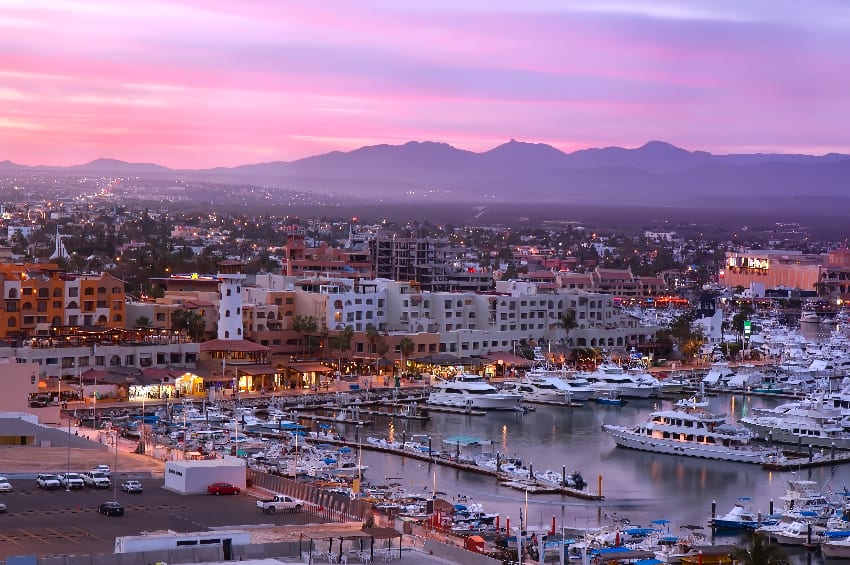
Los Cabos, Baja California Sur, saw a significant decrease in residents’ perception of insecurity. (Shutterstock)
The cities where there were significant decreases were:
Los Cabos, Baja California Sur: 24.8% in Q1 to 16.7% in Q2.
Chihuahua city: 59.3%-49.4%.
The Mexico City borough of Venustiano Carranza: 53.5%-42.8%-
The Mexico City borough of La Magdalena Contreras: 59.4%-49.1%.
The Mexico City borough of Tlalpan: 58.5%-42.2%.
The Mexico City borough of Iztapalapa: 72%-56.9%.
The Mexico City borough of Álvaro Obregón: 65.5%-55%.
Nezahualcóyotl, México state: 69.2%-61.1%.
San Pedro Garza García, Nuevo León: 27.1%-11.7%.
Los Mochis, Sinaloa: 26.1%-18.7%.
The cities where there were significant increases were:
Manzanillo, Colima: 54.8% in Q1 to 63.7% in Q2.
The Mexico City borough of Benito Juárez: 11.1%-18.9%.
The Mexico City borough of Azcapotzalco: 55.3%-67%.
Chetumal, Quintana Roo: 56.2-73.3%.
Tlaxcala city: 46.8%-56.3%.
The places where Mexicans most commonly feel unsafe
Just under 68% of ENSU respondents reported feeling unsafe while using ATMs on the street, while 62.7% expressed security concerns about traveling on public transport.
More than 50% of respondents said they felt unsafe at the bank, on the streets they regularly use and on the highway.
The numbers were higher among women than among men in all those places — and several others, including the home and the workplace.
Crime and anti-social behavior
Among the respondents who reported having seen or heard criminal activity or anti-social behavior near their homes in the second quarter of 2024, six in 10 said they had observed people drinking in the street.
Almost 48% of respondents reported having witnessed a robbery or mugging, and around four in 10 told INEGI they had witnessed homes or businesses being vandalized.
Just under 40% of those surveyed said they had seen people buying or consuming drugs and 36.4% reported having heard frequent gunshots.
Just under one-quarter of respondents said they had witnessed some kind of gang activity in the city in which they live.
Opinions on Mexico’s security forces
The Mexican Navy is the country’s most effective security force, according to the results of the latest ENSU. Almost 87% of respondents said they believe the Navy is very or somewhat effective in preventing and combating crime.
Just under 83% of those polled said the same about the Army, while the figures for the Air Force and the National Guard were 82.4% and 74.1%, respectively.
Almost 57% of respondents said that state police forces are very or somewhat effective in preventing and combating crime, while 48.7% said the same about municipal police.
Citizens’ security expectations
Almost one-third of survey respondents — 32.4% — said they expected the security situation in their city to remain “just as bad” during the next 12 months, while 18.1% predicted a deterioration.
Almost three in 10 of those polled — 28.7% — said they expected security to improve in their place of residence during the next 12 months, while 18.8% anticipated that the situation would remain “just as good” as it currently is.
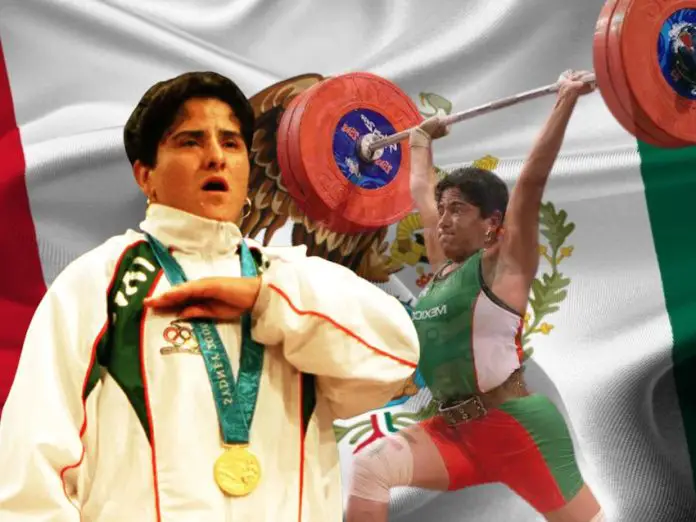
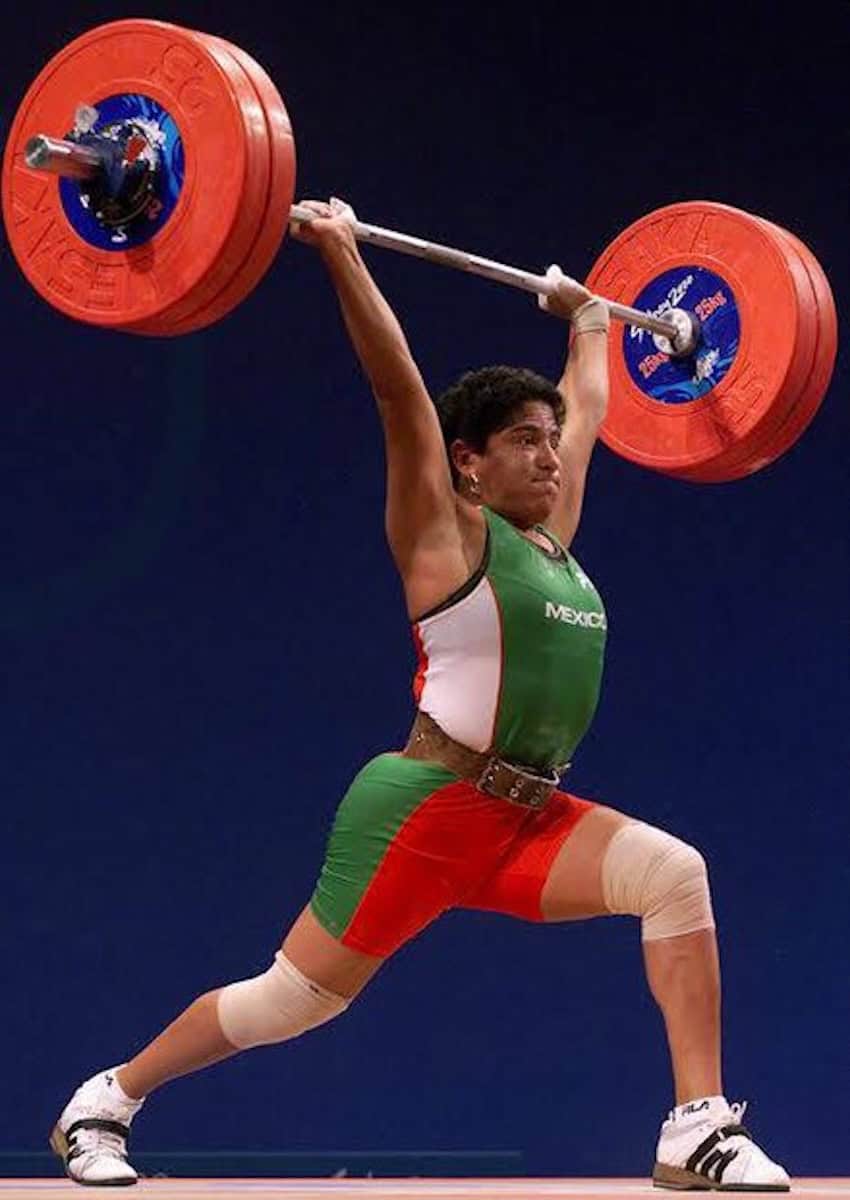
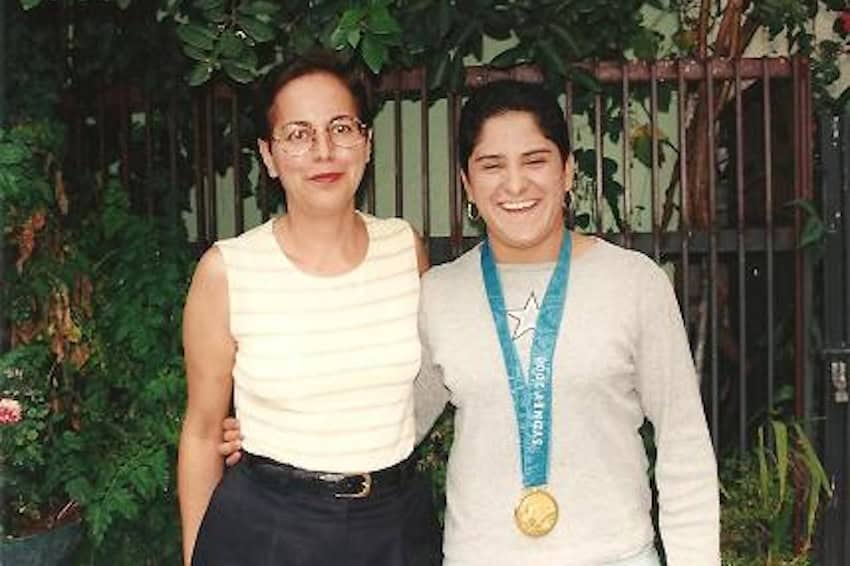
Weighlifter Soraya Jiménez came from humble beginnings in México state. Her endeavors at the 2000 Olympics stunned the world and won her a gold medal. (Mexico Desconocido)
An Olympic medal, even an Olympic title, is not an automatic door to fame and fortune. This is particularly true for the less popular sports; Olympic weightlifting, if it makes TV at all, is likely to be summarized in a 10-second clip of a winning lift or a dramatic tumble. That’s a shame, because those who settle down and watch a competition from start to finish will witness a combination of raw strength with chess-like decision making. The sport has also produced one of the most unlikely victories in Olympic history and a truly golden moment for Mexican sports — the moment that Soraya Jiménez won the women’s lightweight gold medal at the Sydney games in 2000.
Jiménez was born in Naucalpan de Juárez in 1977. She and her twin sister Magalí dabbled in sports at school; the girls were competitive but not outstanding in ability and it wasn’t until Jiménez discovered weightlifting that she found an arena she might excel in. By 16, she was representing Mexico in international competitions, but Mexico was hardly a powerhouse in the sport. Dominance in weightlifting was shifting from Eastern Europe to Asia, particularly in women’s events.
Sydney 2000 was the stage for what was perhaps Mexico’s greatest gold medal performance ever. (Paris Olympics)
In 1996, Jiménez traveled to Poland for her first World Weightlifting Championships, finishing 11th. While 11th in the world appears a respectable achievement there were only 14 competitors, and she lifted 50 kilos less than the winner. Competing in a World Championship could have been a one off for Jiménez; the highlight of a career that might have brought some national and regional success but would have been well short of world class. But she persevered, improving each year as her support team gained a better understanding of what it took to be competitive on the world stage.
In 1999 this experience combined with her new maturity for a breakthrough. At the World Championships in Greece, she climbed to 8th place in a field of over 40, with a combined lift of 197.5 kg — 50 kilos more than she had achieved in her first World Championships just three years earlier. There was also new motivation: women’s weightlifting had just been added to the Olympic program.
While an Olympic medal looked ambitious at this stage, it was no longer an impossible dream. An Olympic title however was another matter, for there were two quite outstanding competitors in this weight category: North Korea’s Ri Song-Hui and China’s Chen Yanqing.
Weightlifting at the 2000 Games was staged in the Convention and Exhibition Center, a building dramatically set on the Sydney waterfront. Even before the women entered the arena there was a shock when Chen Yanqing withdrew from the competition. Jiménez was traveling to Australia with a series of international wins to her credit and, the withdrawal of her Chinese rival brought her one step closer to an Olympic medal.
Soraya Jimenez
In the snatch part of the competition — in which lifters raise the weighted barbell overhead in a single motion — Jiménez started at 90 kg and achieved three successful lifts, finishing at 95 kg. However, she did not look totally comfortable. At 92.5 kg she stumbled around in a quarter circle before completing the lift; while attempting 95 kg she came close to losing control. It had not been classic weightlifting, but it all counted, and Jiménez would go into the clean and jerk in second place.
In the clean and jerk, the lifter first takes the weighted barbell from the ground to their shoulders — the clean — and then jerks it overhead. Ri Song-Hui was leading at this stage and looked outstanding. She had started at 95 kg and then lifted 97.5 kg. This had been a textbook lifting: smooth, fluent and rock steady. Although she had made it look easy, 95 kg had pushed the Korean to her limits and she declined a third attempt. She was 2.5 kg ahead of Sorya, who was her nearest challenger, and the Korean had a lighter body weight. When two weightlifters clear the same weight, victory goes to the lighter competitor.
Jiménez’s clean and jerk was her stronger discipline and she opened with 117.5 kg. With third-placed Khassaraporn Suta of Thailand needing two attempts at this weight, the silver medal was looking increasingly secure for Mexico. Ri came in at 120 kg, once again making it look easy. She now had a 5 kg advantage over Jiménez — surely a decisive margin at this stage of the competition.
Jiménez took a gamble, passing on 120 kg: she wanted 122.5 kg on the bar. She struggled on the clean, but once the bar was up to her shoulders she looked good, confidently jerking the bar up for a good lift. Jiménez had secured the silver medal, with Ri still favorite for the gold. Then the whole competition was turned upside down.
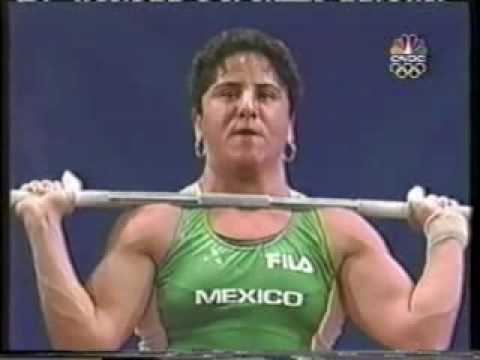
Jiménez during the Olympic final. (Wikimedia)
In weightlifting, a buzzer warns competitors that they have 30 seconds to start their lift. Ri Song-Hui was following Jiménez at attempting 122.5 kg but for some reason, she was still in the waiting area when the buzzer sounded. Nevertheless, she seemed quite unhurried as she came up the steps to the lifting platform. She approached the bar, readjusted it a little, and stepped backward to recompose herself. As the Korean placed her hands on the bar the buzzer sounded: she had timed out and recorded a foul. It was a basic mistake that should never happen at this level.
Ri came up for her second attempt at 122.5 kg and this time there was no mistake, she lifted it with ease. She now had a 2.5-kilo advantage from the snatch, was equal with Sorya in the clean and jerk and had the body weight advantage. “She could be moments away from gold and should be,” one American commentator excitedly noted. “I think that is a virtual lock for the gold.”
But having wasted one of her three attempts, Ri was now finished, while Jiménez still had her third and final attempt left. To steal the gold medal she would have to skip over 125 kg and try for 127.5 kg, a weight far above her personal best. She was lifting increasingly well, with her jerk looking particularly strong, but 127.5 kg would surely prove too much.
The Mexican came forward and cleared the clean with surprising confidence. She jerked the bar up. Jiménez stumbled a few steps, but held it long enough for the judges to signal their approval. It was a clean lift: gold for Mexico.
Sadly, Olympic gold proved to be the high watermark for Jiménez, who died less than 13 years after finding glory. (mujeresnet)
It was a glorious moment for Mexico, for weightlifting and for Jiménez’s years of dedication to the sport. However, there were difficult times ahead. Jiménez entered the World University Championships but was disqualified when it was discovered that her paperwork for UNAM was not in order. In 2002, she tested positive on an anti-doping control and was suspended for six months. Later exonerated, she attributed the positive to medicine she had taken after surgery.
She retired from weightlifting in 2004, prior to the Athens games, and became a sportscaster for Televisa. Weightlifting puts an immense strain on knees and back and over the years Jiménez struggled through numerous operations that took an additional toll. Her immune system was further impacted by several bouts of the flu and a surgery that removed her right lung.
On March 28, 2013, Soraya Jiménez passed away from a heart attack at the age of 35. Perhaps her greatest legacy is the handful of Mexican women lifters who have followed in her footsteps and competed at the highest level. And of course, the memory of that golden night in Sydney.
Bob Pateman is a Mexico-based historian, librarian and a life term hasher. He is editor of On On Magazine, the international history magazine of hashing.
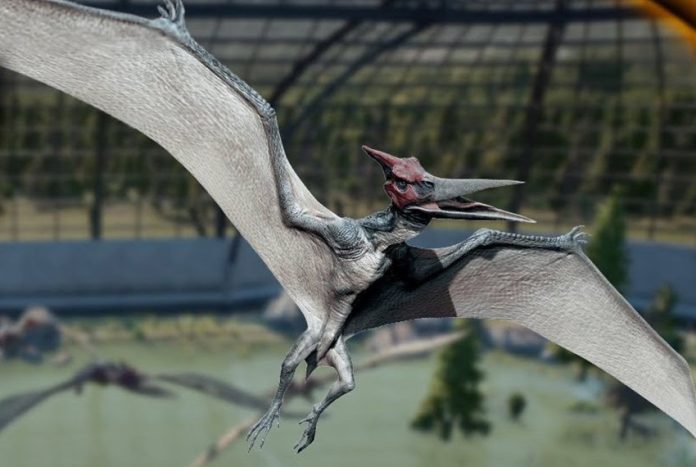
The pilfered pterodactyl is worth over US $100,000. (Jurassic World Exhibition)
Mexico City police announced that they have opened an investigation into the case of a missing dinosaur — a one-of-a-kind motorized pterodactyl worth over US $100,000 — the casualty in a robbery from a traveling “Jurassic World” exhibit in a city mall last week.
The dinosaur, valued at 2 million pesos (US $108,000), was taken from the Perisur Mall in southern Mexico City overnight between July 17 and 18. Confirming the theft, the Mexico City Attorney General’s Office (FGJCDMX) announced on social media that it had begun investigating the robbery, which occurred in the Insurgentes Cuicuilco neighborhood, located in Mexico City’s borough of Coyoacán.
INCREÍBLE… Roban ¡un dinosaurio!
Un pterodáctilo mecánico valuado en casi 2 MDP fue robado de la expo Jurassic World en Perisur, @Alcaldia_Coy.
Nadie tiene idea de cómo lo sacaron. El encargado del resguardo declaró que es pieza única. Ya hay denuncia. pic.twitter.com/rlbopwbOoL
Mexican crime reporter Antonio Nieto first broke the dinosaur robbery story on the social media platform X.
Detectives from the Office of the Prosecutor questioned witnesses and examined video security systems in the exhibit area and the wider mall. Forensic investigators were also reportedly at the scene last week, but the authorities have released no further information.
Crime reporter Antonio Nieto was first to break the robbery story. He posted the news on “X” on Wednesday, writing that no one knows how the pterodactyl was removed from the mall.
Authorities have asked the public to share any information that could help with the investigation. The exhibit’s organizers, meanwhile, are studying the exhibit’s existing security measures to prevent any further incidents.
The traveling “Jurassic World” exhibition — located at the iconic mall through Sept. 29 — opened its doors on July 12, after making stops around the world in other major world cities, including Madrid and Seoul.
Ticket prices range from a hefty 693 pesos (US $37.50) to 990 pesos (US $53.60) for an all-access Fast Pass. For context, the general minimum daily salary in Mexico City is 248.93 pesos (US $13.49).
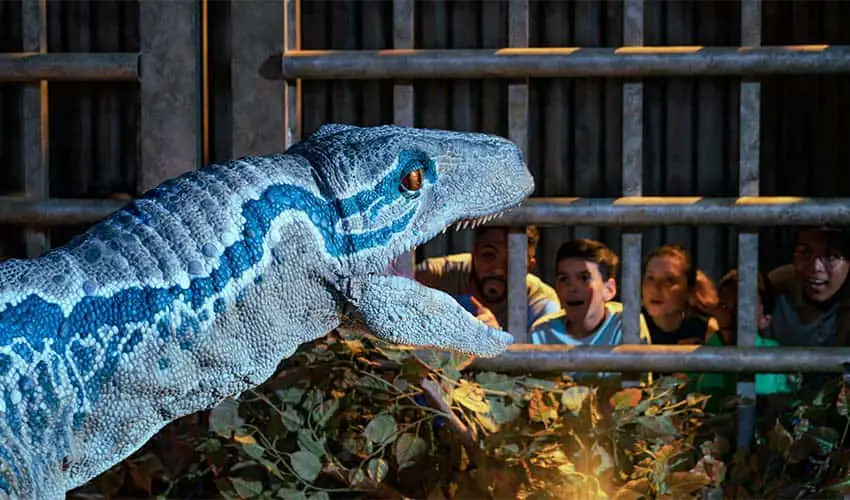
Entry includes a 45-minute show, but visitors can stay as long as they like. The giant mechanical dinosaur replicas are particularly popular with visitors.
The animatronic dinosaurs in the exhibit have reportedly been very popular with Mexico City visitors. (Jurassic World Exhibition)
News of the missing animatronic dinosaur has been trending on social media the past two days, with some internet users making comparisons to the Señor Frog’s caper of October 2023, in which two emblematic “mariachi frog figures” were stolen from the popular Señor Frog’s restaurant in Acapulco, only to be discovered hundreds of miles away in a Mexico City suburb in March.
Two men were seen driving away with the smartly dressed frogs in the back of a pickup truck. Despite the promising lead, law and order in the resort city at the time was focused on recovery efforts in the wake of Hurricane Otis, which had just slammed Acapulco a few days earlier on Oct. 25. Looting was prevalent in the city in the hurricane’s aftermath.
Authorities did eventually arrest a suspect in the case, describing him as the alleged leader of a group that calls itself Resistencia Civil Pacífica, or Pacific Civic Resistance. Prosecutors never offered further details about the organization, the suspect, or his motives, identifying him only as Manuel “N.”
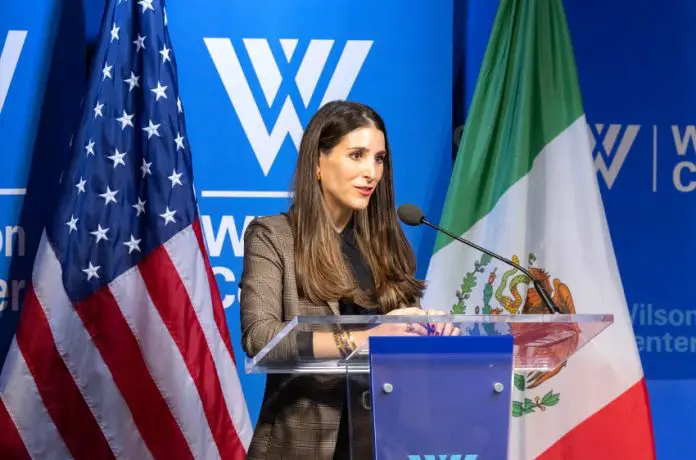
Lila Abed, director of the Mexico Institute at the Wilson Center in Washington, D.C., is an international relations specialist with extensive experience in government and media affairs.
As both Mexico and the United States face presidential and administrative transitions, Abed answered questions from MND Chief News Editor Kate Bohné about this key moment for Mexico-U.S. relations.
Immigration has been a hot topic in this volatile U.S. election campaign, while Mexico is also continuing to see record numbers of migrants and asylum-seekers. How do you think Sheinbaum’s policies might differ from AMLO’s when it comes to migration and border security?
President-elect Claudia Sheinbaum’s 100-point government plan provides few, but important proposals to deal with the waves of migrants that are entering the country with hopes of reaching the United States. One of the fundamental issues on the U.S.-Mexico bilateral agenda is migration, and depending on who wins the White House on Nov. 5, leaders on both sides of the border will have to establish new guidelines on immigration matters.
Current migration trends pose a risk for both nations. Mexico is no longer just a transit country; it has gradually become a destination country for migrants. According to data from Mexico’s Ministry of the Interior and U.N. Migration, in 2022, Mexican authorities registered 444,109 encounters with individuals in an irregular migration situation. In 2023, encounters soared to 782,176, an increase of 77% compared to the previous year and the highest number recorded in the country. In this sense, Mexico and the United States are grappling with similar migration patterns, and both countries will have to deepen bilateral — and regional — cooperation to confront growing migratory flows.
Sheinbaum’s political platform and government plan do not offer a comprehensive strategy to address migration flows in the country. It calls for improving the institutional structure, political coordination, and increasing resources to deal with migrants. It also seeks to create a permanent mechanism that establishes closer cooperation with the countries in the region to address the root causes of migration, with a particular focus on human rights.
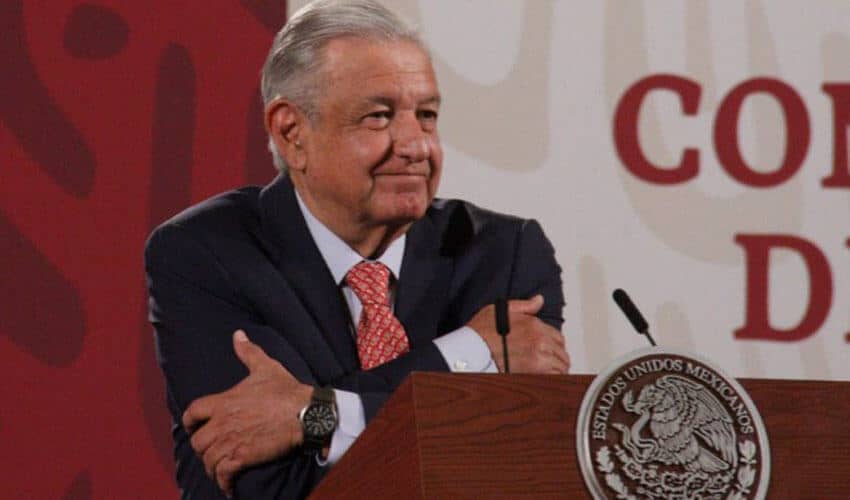
The Sheinbaum administration is likely to maintain López Obrador’s policies on managing migration flows in cooperation with the United States. In various public statements, Sheinbaum has stated that she plans to ask the United States to invest more resources to address the root causes that drive migration. Sheinbaum, like AMLO, believes that poverty is the key driver of migration and plans to ask for more U.S. economic assistance to Central America and others through support of Mexico’s social programs. That said, Sheinbaum’s six-year term will depend greatly on the guidelines set by the next president of the United States on this matter.
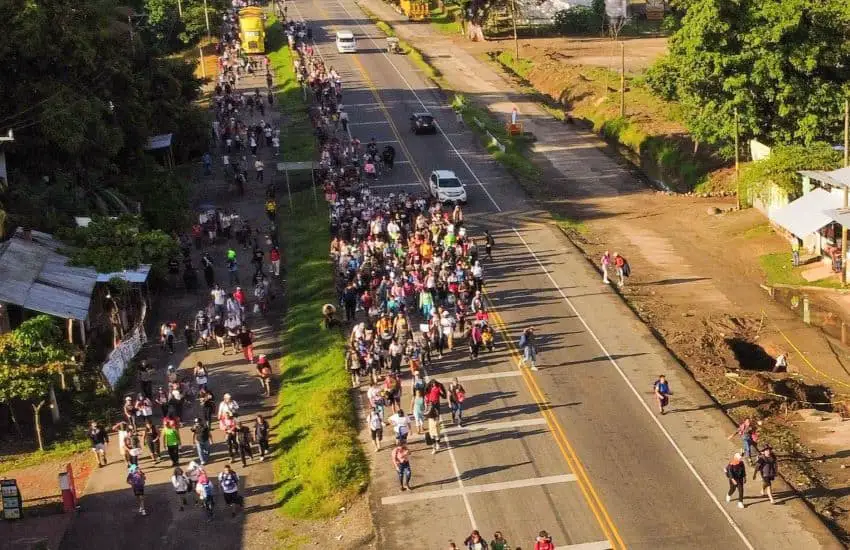
A group of migrants neared the southern Mexican city of Tapachula on Sunday. Sheinbaum, like AMLO, has identified poverty as a key cause of migration and designed policies based on that idea. (Damián Sánchez/Cuartoscuro)
As fentanyl continues to cause an epidemic of overdoses in the U.S., and is also on the rise in parts of Mexico, how do you think Sheinbaum’s administration will differ (or not) from AMLO’s in its approach to security collaboration with the U.S.?
Claudia Sheinbaum’s proposed security strategy could potentially differ from her soon-to-be predecessor’s “hugs not bullets” strategy by strengthening intelligence gathering and better coordination among all agencies responsible for upholding Mexico’s security. Mexico’s first female president plans to combat insecurity through the creation of a National Intelligence System, which hopes to coordinate the military, civilian forces, financial agencies, as well as the judicial branch. It also seeks to enhance the investigation capabilities of local police forces.
Her strategy aims to stop the illicit flow of arms into the country through ports of entry at the U.S. southern border (70% of arms enter through these ports). To combat illicit financing networks, Sheinbaum hopes to combat criminal organizations by having the Intelligence Financial Unit, the Ministry of Public Citizen Security and the Attorney General’s office work closer together.
Essentially, she proposes better coordination between municipal, state and federal security agencies. Her plan also seeks to implement prevention programs for youth that are vulnerable to joining organized crime groups through a program that she implemented during her tenure as Mexico City Mayor called “Youth Unite Neighborhoods,” which focuses on individuals ages 12 to 29 living in communities with high levels of crime and violence.
Sheinbaum may diverge from President López Obrador’s “hugs not bullets” strategy by focusing on intelligence gathering. (File photo)
Despite these changes, Sheinbaum has committed to continue consolidating the AMLO-created National Guard under the Ministry of Defense, potentially deepening what many experts have called the militarization of former civilian security forces and consequently, diminishing opportunities for deeper cooperation with U.S. security agencies.
AMLO’s proposed judicial reform and other constitutional and legal reforms, which he hopes to approve in September, could also prove detrimental to Sheinbaum’s incoming administration.
How do you think Sheinbaum’s cabinet appointments thus far have been viewed by Washington?
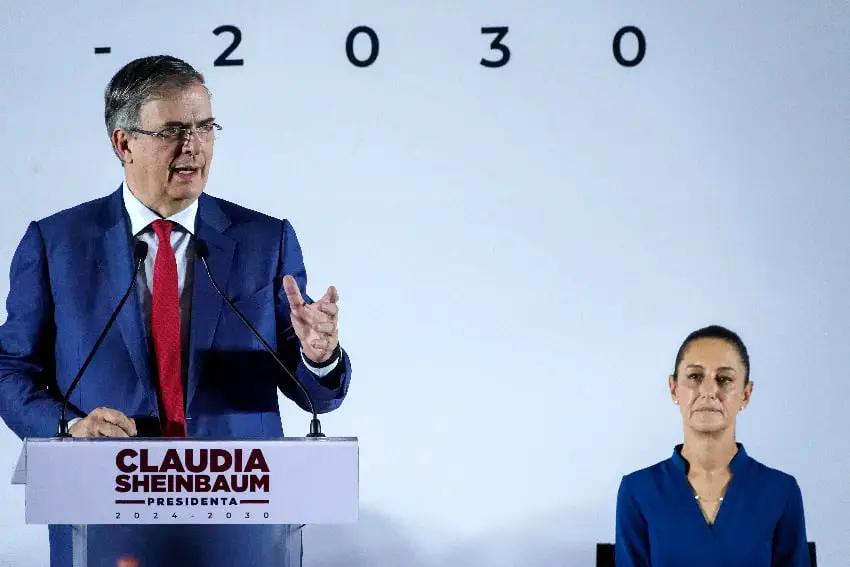
Many of Claudia Sheinbaum’s cabinet appointments have been well-received by Washington. The designation of Marcelo Ebrard as Secretary of Economy and Juan Ramón de la Fuente as Secretary of Foreign Relations sends a positive signal to Mexico’s top trading partner that Sheinbaum’s government is serious about deepening and strengthening trade relations with its North American partners ahead of the 2026 USMCA review.
Both Ebrard and De la Fuente will be tasked with responding to pending trade disputes against Mexico under USMCA, as well as attracting more foreign direct investment (FDI) by taking advantage of the nearshoring phenomenon. A key individual responsible for attracting FDI to Mexico is Altagracia Gómez, who will lead the newly created Council for Regional Development and the Relocation of Companies.
Another key appointment was Alicia Bárcena as Secretary of Environment and Natural Resources, an issue that is of particular interest to U.S. policymakers and U.S. companies. The continuation of Rogelio Ramírez de la O as Secretary of Finance and Public Credit signals stability and certainty for sound economic management.
The appointments of Marcelo Ebrard and Juan Ramón de la Fuente signal that Mexico is serious about strengthening relations with the U.S. and Canada, Lila Abed says. (Cuartoscuro)
What do you see as the biggest challenges for Mexico ahead of the USMCA review in 2026?
According to the USCMA, the governments of Mexico, Canada and the United States agreed to convene six years after its entry into force (July 1, 2020) to assess the effectiveness of the Agreement, consider recommendations of action raised by any of the three parties, and decide how to best address the issues posed.
The USMCA has so far produced remarkable results, with a 50% increase in the trade of goods and services within North America and a 136% growth in investment. It has created and supported millions of jobs and has successfully addressed multiple trade disputes through dispute settlements mechanisms embedded in the Agreement. In 2023, Mexico became the U.S.’ top trading partner, with two-way trade totaling just shy of US $800 billion, surpassing Canada and China. The USMCA’s legal and regulatory framework has instilled certainty, predictability and clear rules for all three parties involved.
The increasing presence of China in Mexico is also a cause of concern for policymakers, legislators and private sector representatives in the United States. Regardless of who wins the White House in November, USMCA issues, including Mexico’s position on labor, energy, and agriculture and Canada’s position on dairy, digital tax, and others, will certainly be points of contention for the next U.S. president.
Canada and Mexico presented a trade dispute against the United States for its strict interpretation of certain automotive rules of origin that was inconsistent with the USMCA. The panel agreed with Mexico and Canada and the U.S. is expected to remedy its position or face suspension of benefits by its North American partners. It is fundamental that all parties comply with the outcomes of USMCA dispute settlement mechanisms to maintain confidence in USMCA rules and provide predictability and certainty to traders and investors. Failure to do so could disincentivize other parties found in violation of the USMCA from adopting measures to reverse non-conformity measures, potentially undermining a sound implementation of the Agreement.
Mexico’s plan to phase out imports of GM corn and it’s national energy policy have triggered disagreements within the USMCA accord, as has the U.S.’ interpretation of automotive rules of origin. (Government of Mexico)
The review process could also serve as a unique opportunity for all three governments to address issues not included in the USMCA, like developing a digital regulation framework for artificial intelligence, cybersecurity [or] expanding the Environmental Chapter, among others. Deepening North America integration is essential to strengthen the region’s competitiveness vis-à-vis other global trading powers.
What are you most optimistic about in U.S.-Mexico relations in the next five years? What are you most concerned about?
The U.S.-Mexico relationship is unique to others around the world as it affects the daily lives of millions of people living on both sides of the border. The scope of bilateral relations between the United States and Mexico is broad and deep, bound by strong geographical, historical, cultural and commercial ties. Strengthening cooperation on all issues on the bilateral agenda, including migration, security, and trade, is essential for advancing the individual and mutual interests of both nations. The U.S. and Mexico are deeply intertwined, interconnected, and interdependent, and only through deeper and broader collaboration efforts will they be able to achieve a stronger bilateral relationship and a prosperous and competitive North America.
As in any relationship between neighbors, disagreements are bound to happen, but the next leaders of both countries will be responsible for working together to resolve their differences. Potential issues of concern, as previously mentioned, are resolving pending trade disputes and China’s investment in Mexico ahead of the 2026 USMCA review, the increasing flow of migrants into Mexico and the United States and rebuilding mutual trust between U.S. and Mexican security agencies.