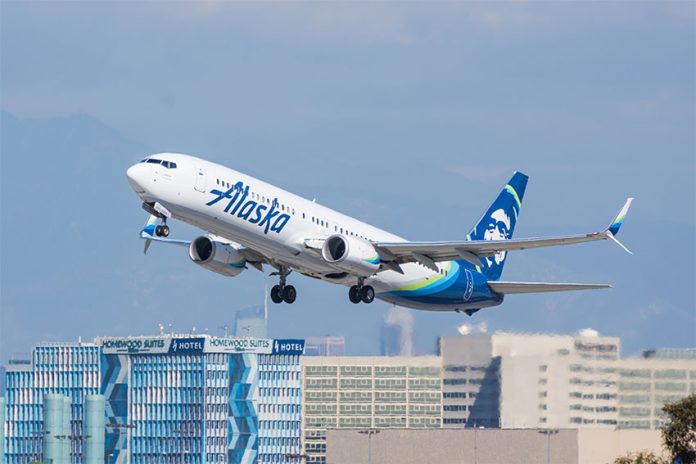
An Alaska Airlines plane leaving Los Angeles International Airport (LAX). The airlines will begin flights two days a week between LAX and La Paz International Airport starting in November. (Minh K Tran/Shutterstock)
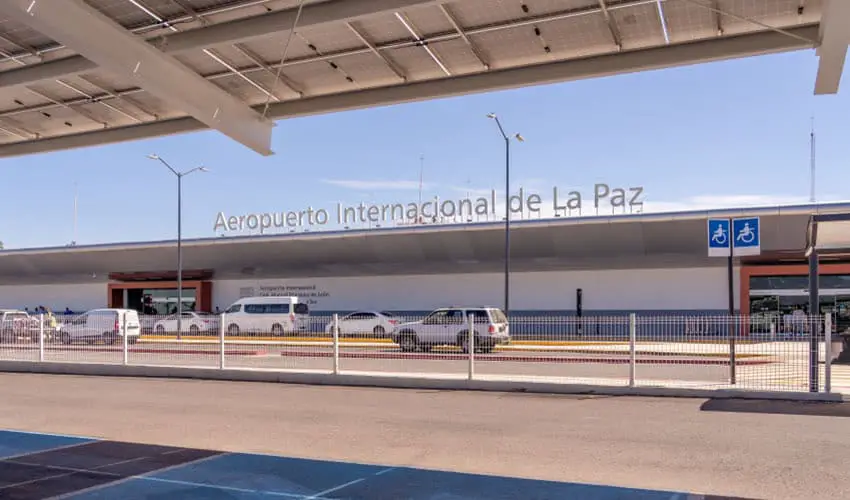
Alaska Airlines is launching a new nonstop flight between La Paz International Airport (LAP) in the Mexican state of Baja California and Los Angeles International Airport (LAX) starting Nov. 20.
Flights will depart on Wednesdays and Saturdays from Los Angeles at 10:45 a.m. and land in La Paz at 2:12 p.m. The return flight will depart La Paz at 3:02 p.m. and land in Los Angeles at 4:41 pm.
The newly announced flight route will be the only direct route offered by a U.S. carrier from a United States city to La Paz. (Fideicomiso de Turismo de La Paz)
Starting in 2025, the service will increase to three weekly flights on Mondays, Fridays and Saturdays.
The new route will make Alaska Airlines the only United States carrier offering direct flights from a U.S. city to La Paz.
“During the winter months, our guests search for warm-weather travel destinations,” Alaska Airlines said in a statement, adding that the new route “caters to that demand by offering our guests the perfect escape to sunny skies, a vibrant city experience and warm hospitality,”
The airline also announced this week the launch of a new direct route between LAX and the northern city of Monterrey, beginning in February.
Baja California Sur Governor Víctor Manuel Castro Cosío celebrated the news of the connection to Los Angeles saying the new flight would boost tourism to La Paz from the United States and other parts of the world.
The La Paz airport has had a busy year so far. According to a report by the Pacific Airport Group (GAP), the airport saw a 19% annual increase in passenger traffic in the first quarter of 2024, with a record number of 275,000 passengers.
“This achievement stems from two important efforts,” head of LAP Blanca Sarahí Castro Araiza said. “First, the consolidation of the city as a relevant tourist and business destination, and the significant investments that GAP is making [to the airport].”
La Paz is a popular destination as a gateway to the Gulf of California, which is home to one of the most biodiverse marine ecosystems in the world.
A vibrant and resilient Black Seminole community continues in Coahuila, descended from families who fled the United States in the 1840s. (Gobierno de México)
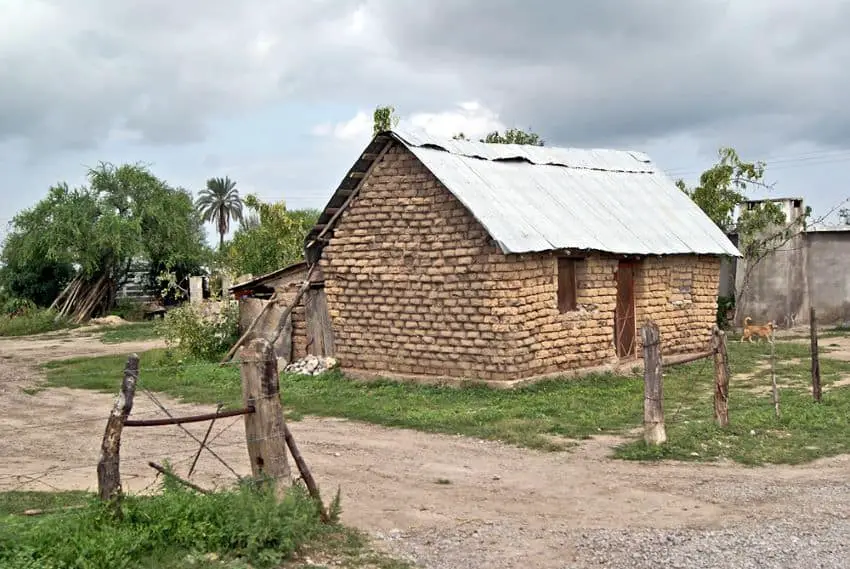
In the arid landscapes of northern Mexico lies a community with a remarkable history. The Mascogos are descendants of warriors who fled slavery in the United States and found sanctuary in Mexico.
The story of the Mascogos begins in what is now the United States, when many enslaved Africans fled to Spanish Florida to escape slavery and live among the Seminole people. This alliance, based on mutual support and shared struggles, gave rise to mixed marriages that eventually produced the Black Seminoles. This unique community combined African and Native American cultural features.
The Seminole Wars
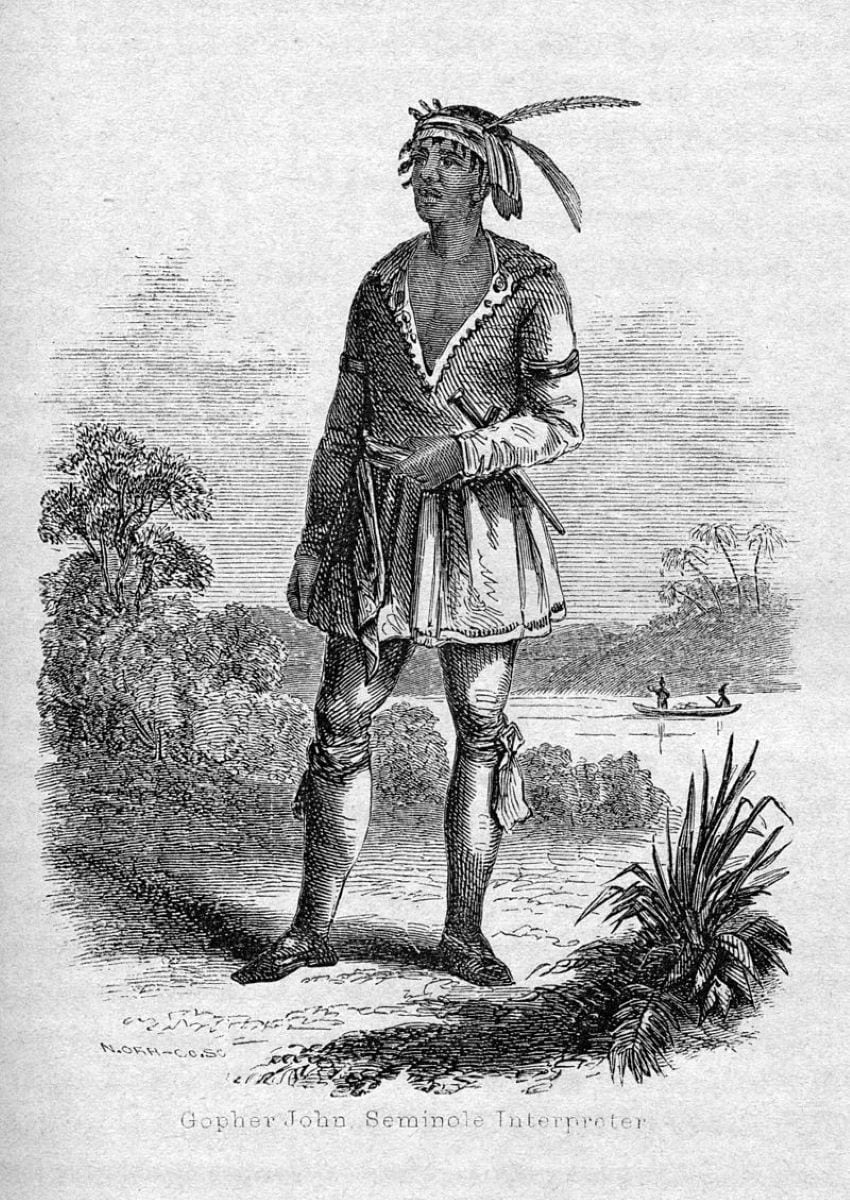
An 1858 depiction of a Black Seminole. (Wikimedia Commons)
The United States’ expansion and acquisition of Florida from Spain in 1821 brought renewed threats for the Black Seminoles. For years, the Black Seminoles and their allies fought valiantly against the U.S. government’s efforts to enslave them. They became known for their fierce resistance during the Seminole Wars between 1816 and 1858, the longest and most costly wars the United States ever fought against Native Americans.
The Indian Removal Act of 1830 demanded that the Seminoles and their Black allies move to Indian Territory in present-day Oklahoma. Faced with relentless military campaigns and the destruction of their villages and crops, many were forced to surrender, while others sought alternative means to survive. The answer to where they could find a safe haven lay just to the south.
The route to peace and freedom
Faced with relentless persecution and the threat of re-enslavement, the Black Seminoles sought refuge beyond U.S. borders. In 1849, they set out on a treacherous journey across the vast and hostile Texas landscape, guided by the hope of finding freedom in Mexico, a nation that had abolished slavery 20 years earlier.
They crossed all of Texas to reach what they called the “river of freedom”: the Rio Grande. After months of hardship and uncertainty, the Black Seminoles finally reached the Sabinas River near Múzquiz, Coahuila.
El Nacimiento de los Negros
The village of El Nacimiento de los Negros, where the Black Seminoles settled in Coahuila. (Gobierno de México)
When the Black Seminoles reached Coahuila, they made a deal with the Mexican government for land in exchange for their military assistance. Mexico welcomed their help in protecting its northern border from the Lipan Apache and Comanche. The Black Seminoles, with their experience in warfare, were seen as valuable allies in securing Mexico’s north. In 1850, they established the community of El Nacimiento de los Negros.
In Mexico, the Black Seminoles came to be called Mascogos. One theory as to why has to do with how the locals may have understood and pronounced “Muscogee,” the term the Black Seminoles used to refer to their Creole English. The Mexican locals adapted this term to “Mascogos,” which became the name by which they are known today.
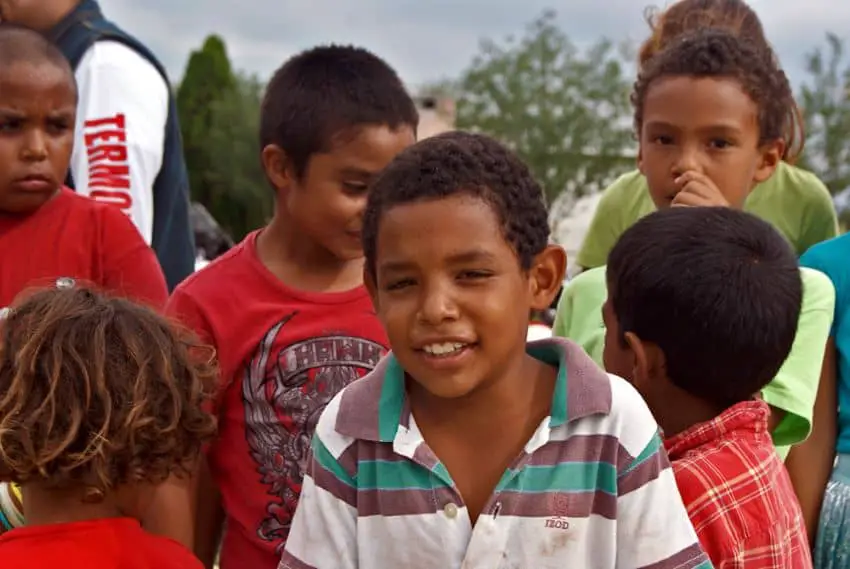
El Nacimiento de los Negros remains a vibrant and enduring community. Home to around 60 families, this village is where the Mascogos continue to thrive. The residents maintain their rich cultural heritage, celebrating traditions and customs passed down through generations. Despite the challenges they face, the Mascogos’ strong sense of community and cultural pride keeps El Nacimiento de los Negros a lively and significant place in Mexico’s diverse cultural landscape.
Keeping their culture alive
Every year, El Nacimiento de los Negros celebrates Juneteenth, also known as Freedom Day, which commemorates the proclamation of slavery’s abolition in Galveston, Texas in June 1865. The entire community comes together to organize and participate in the festivities. They are often joined by relatives and friends from the Black Seminole community in Brackettville, Texas. For the Mascogos, Juneteenth is a vibrant expression of their enduring community spirit.
Challenges and recognition
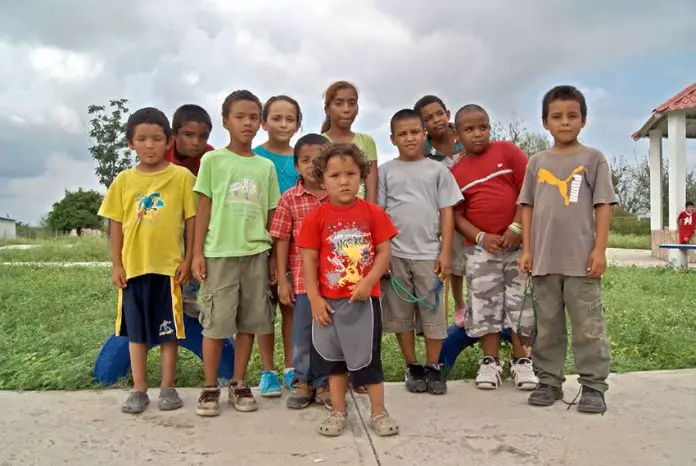
Today, the people of El Nacimiento de los Negros face challenges, but despite this, they have endured for generations. (Gobierno de México)
Despite their long-standing presence and contributions in Mexico, the Mascogos often face social and economic challenges. Their struggle for recognition and equal opportunities continues. Their appearance and unique cultural identity sometimes sets them apart in a society still learning to fully embrace its diverse heritage.
On August 9, 2019, the federal government’s official gazette published a reform to Article 2 of the Constitution which recognizes Afro-Mexican communities as part of Mexico’s pluricultural composition and grants them the same rights as Indigenous communities. This recognition was a significant milestone.
Recognition notwithstanding, economic opportunities are limited, and many community members struggle with poverty and lack of access to essential services. Efforts to preserve their cultural heritage are ongoing, with initiatives to teach the younger generation about their history, language and traditions.
Gertrudis Blues
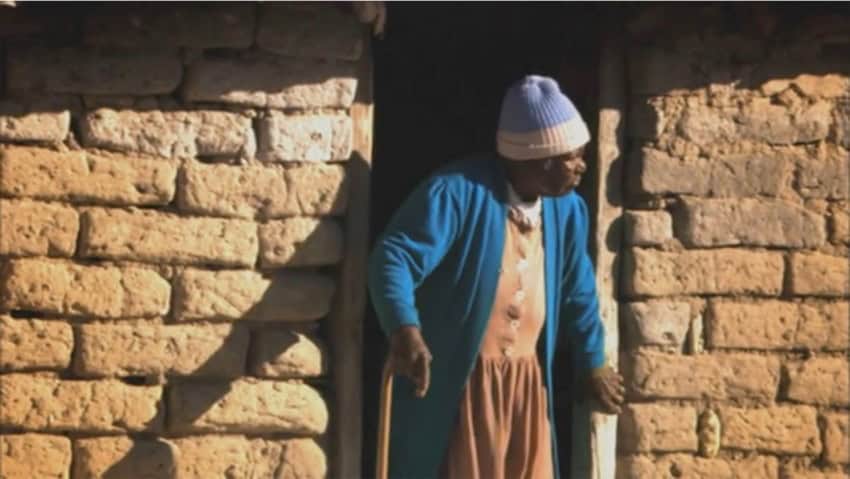
Gertrudis Blues tells the story of an elderly Muscogo woman who continues the traditions of the Black Seminole people in modern Mexico. (Museo Amparo)
The Mascogos are beautifully depicted in the documentary “Gertrudis Blues” by Patricia Carrillo. The film evocatively portrays ‘Mamá Getchu,’ an elderly woman known for her strength, clarity, and kindness. Through her story, the documentary captures the memories and traditions of El Nacimiento de los Negros. “Gertrudis Blues” has garnered 15 national and international awards, including a pre-nomination for an Oscar. The film highlights the imminent loss of Mascogo songs, with only a few women still remembering the lyrics and melodies passed down through generations.
The paradox of migration
The Mascogos’ journey to freedom in Mexico is a powerful narrative of hope. However, this story also highlights a striking paradox. While the Mascogos traveled south to escape slavery and find freedom in Mexico, today, thousands of people are making the reverse journey, crossing the Rio Grande in pursuit of opportunities and a better life in the United States.
This twist underscores the shifting dynamics of migration and the enduring quest for freedom and prosperity. The same river that once symbolized liberation for the Mascogos now represents a daunting barrier for many seeking to escape poverty, violence and instability in their home countries.
The Mascogos’ journey from slavery to freedom in Mexico is a significant chapter in the broader history of human rights and cultural diversity that embodies the complex nature of migration and the universal desire for a better life. The story of the Mascogos is a living example of the resilience and determination that continue to inspire us.
Sandra Gancz Kahan is a Mexican writer and translator based in San Miguel de Allende who specializes in mental health and humanitarian aid. She believes in the power of language to foster compassion and understanding across cultures. She can be reached at: sandragancz@gmail.com
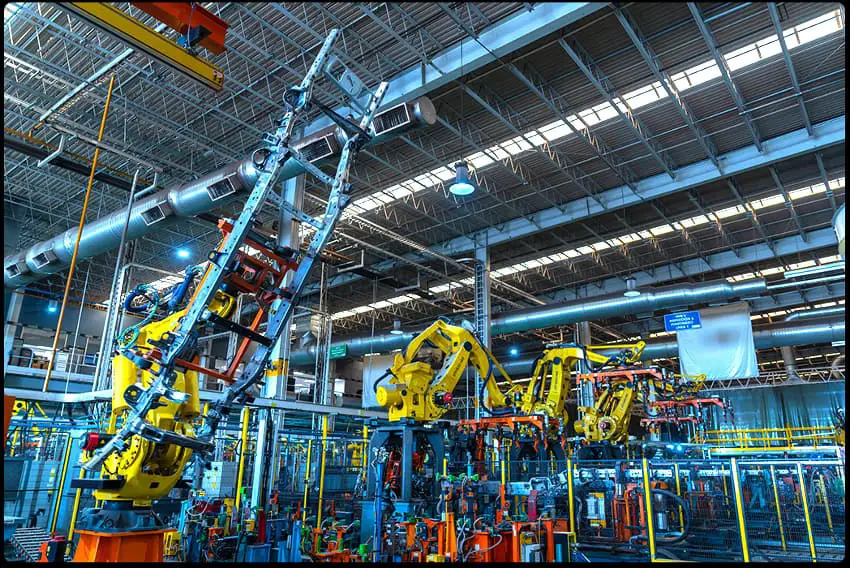
Car bodies at an Audi factory in San José Chiapa, Puebla. (Carlos Aranda/Unsplash)
The Mexican automotive industry is taking in stride the news that investment in Tesla’s planned factory in northern Mexico has been paused until after the U.S. presidential election.
The National Auto Parts Industry (INA) and the Mexican Auto Dealers Association (AMDA) played down any idea of a crisis, asserting that the Mexican automotive sector is strong. Mexico is the world’s No. 4 auto parts producer and the No. 1 supplier of auto parts to the United States.
“The North American industry supply chain is not based on the eventuality of certain things happening,” INA said in a press release. “Mexico is just as fundamental for U.S. competitiveness as is the United States for us.”
INA reiterated its forecast for historic production levels this year, projecting annual production to exceed US $126 billion. U.S. government data shows that the value of exports of Mexican-made auto parts to the United States increased 9.4% annually in the first four months of 2024, reaching a record high of US $28.37 billion.
Regarding the electric vehicle sector, Mexico boasts more than 100 suppliers which export parts to companies including Tesla in California, Lucid Motors in Arizona and Rivian in Illinois.
CEO Elon Musk said Tesla would pause development of its Nuevo León factory, pictured, until after the U.S. election in November. (Samuel García/X)
AMDA president Guillermo Rosales was equally nonplussed, saying Mexico has no reason for alarm over the “pause” in the planned Tesla factory.
“This has more to do with the global electric vehicles market falling below projections made three years ago,” Rosales said. “In addition, with all the competition beginning to emerge from traditional auto manufactures and start-ups as well as Chinese firms, Tesla is seeing its market shrink.”
Rosales noted that there had been no investment beyond surveying and property acquisition on the part of Tesla and a few infrastructure projects completed by the state of Nuevo León.
“How can this be a setback if it didn’t even exist yet?” he said.
Mexican auto parts industry leaders expressed that the pause on development of Tesla’s Nuevo León factory was a non-issue, given the importance of the Mexican auto parts industry. (Metalsa Mexico)
INA president Francisco González seconded Rosales’ observation. “The Tesla plant still is just that, a project,” adding that “companies based in North America — and in many other parts of the world — know Mexico is an auto parts supplier. And we continue to supply the domestic sector, too.”
President Andrés Manuel López Obrador dismissed Tesla’s decision as little more than politics and speculation. “This is not serious,” he said Wednesday, citing the U.S. presidential campaign and speculation that former U.S. President Donald Trump would impose tariffs on auto imports from Mexico if he wins in November.
López Obrador said such a move would be impractical since building automobiles entirely in the United States would result in vehicles that are too expensive for U.S. consumers.
“Let’s remember that [Trump] made these statements while campaigning, which usually means it’s just rhetoric,” he said. “But I’m sure Mr. Musk is very familiar with campaign speeches.”
“[Tesla] probably has another business plan,” he added. “Oftentimes these companies play the market. They make a public statement to boost their share price and then move forward with production plans.”
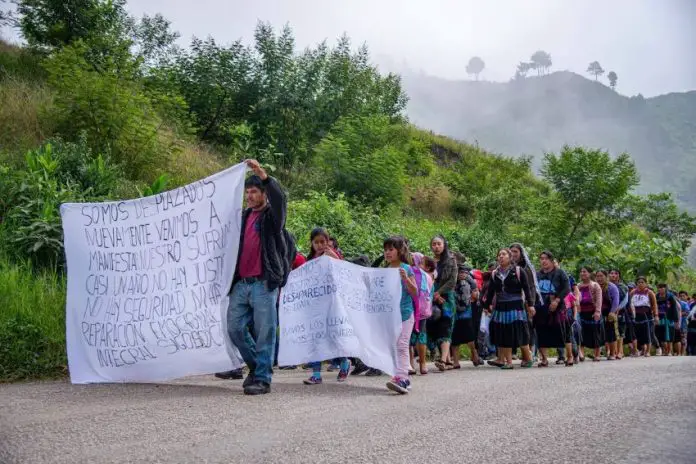
Residents of communities in the Chiapas municipalities of Frontera Comalapa and Motozintla de Mendoza who walked from their towns to the Guatemalan border state of Huehuetenango, according to the Guatemalan news agency Prensa Comunitaria Kilometro 169. (Prensa Comunitaria/Facebook)
Hundreds of Mexican families fleeing cartel violence in Mexico’s southern state of Chiapas have sought refuge across the border in Guatemala, Guatemalan President Bernardo Arévalo confirmed Wednesday.
Reports indicate that more than 500 men, women, children and elderly people crossed into Guatemala from Chiapas, settling in communities within the border state of Huehuetenango.
#Chiapas: Así se cruzan convoy de camionetas esta noche en la región de la Sierra y la Frontera. Reportan enfrentamientos en AMATENANGO DE LA FRONTERA. Familias enteras han quedado atrapados en el fuego cruzado. Esta noche es la pesadilla más larga en mucho tiempo que viven… pic.twitter.com/9EzmwS2Zja
Footage posted by Mexican journalist Isaín Mandujano, reportedly showing a convoy of trucks manned by criminal groups in the Chiapas border region of Sierra Mariscal, just west of Guatemala, on Wednesday night. According to Mudujano, there had also been reports of drone attacks on the area. (Isaín Muandujano/X)
Major Ann Marie Argueta of Guatemala’s Ministry of National Defense said that approximately 180 displaced individuals are being sheltered in a community within the Guatemalan municipality of Cuilco.
Mexican refugees have arrived in at least two other communities, according to media reports. Their number totals approximately 580 people, according to Guatemala’s Executive Secretariat of the National Coordinator for Disaster Reduction (CONRED).
The agency and other institutions have been providing shelter, food, medicine and other care. At least one school was being used as a shelter.
The exodus comes as violent clashes between the Sinaloa Cartel and the Jalisco New Generation Cartel (CJNG) continue unabated in Chiapas’ southern, mountainous areas. Locals say the latest round of violence between the two largest criminal gangs in Mexico, and their local offshoots, dates back approximately three years.
According to the digital media outlet Chiapas Paralelo, a criminal group arrived Tuesday in the Chiapas town of San José de los Pozos — located in the municipality of Amatenango de la Frontera. The group evicted all the town’s inhabitants.
They “had to flee with the little they had on them,” Chiapas Paralelo noted. “They left behind their looted houses, their backyard animals, their crops, and many of them could not even [take] their vehicles.”
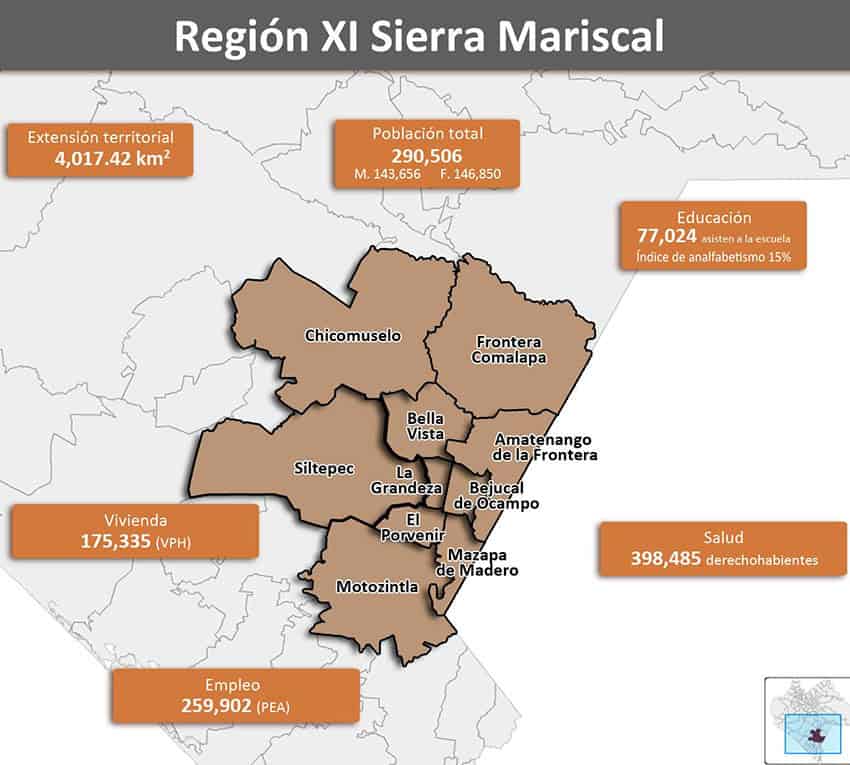
The Sierra Mariscal region. (Chiapas Finance Ministry)
According to CONRED, the refugees then began the long walk to Cuilco, situated just over 30 kilometers from the Chiapas border. Some ended up in two other Cuilco villages — Perla Escondida and El Oaxaqueño.
Guatemala’s Human Rights Ombudsman’s office and its Army estimated the number of displaced Mexicans at around 300, but CONRED put the number at around 580.
“Unfortunately, we are presenting a risk situation for the Guatemalan population,” Huehuetenango Governor Elsa Hernández said. She called on Guatemala’s citizens, NGOs and other institutions to provide humanitarian support, adding, according to Chiapas Parelelo.
“Unfortunately, the Mexican authorities have not taken any action to protect their citizens,” Hernández added.
Mexican authorities had yet to officially comment on the displacement as of Thursday, leaving the exact number of refugees uncertain. However, the Mexican newspaper La Jornada reported Thursday that Chiapas state security ministry officials had told its reporters that they had received no reports of displaced individuals in that area.
President Arévalo, speaking on Wednesday at the opening of a hospital in another part of the country, emphasized the dire circumstances and violence driving the Mexican citizens’ displacements. Guatemala, he added, is mobilizing resources to provide assistance through its Ministry of Defense and through local authorities, as well as deploying its military to provide augmented security in the zone.
Underscoring the precarious conditions faced by the fleeing Mexican families, a 91-year-old diabetic woman died en route to Guatemala due to lack of medication, her fellow travelers told La Jornada. Luckier was the situation of a boy who had been recovering from a recent surgery in his Chiapas community: La Jornada reported that he was receiving postoperative care in Guatemala.
The exodus, while dramatic in its suddenness and in the number of refugees, marks a continuation of migration trends from southern Mexico into Guatemala since early 2024.
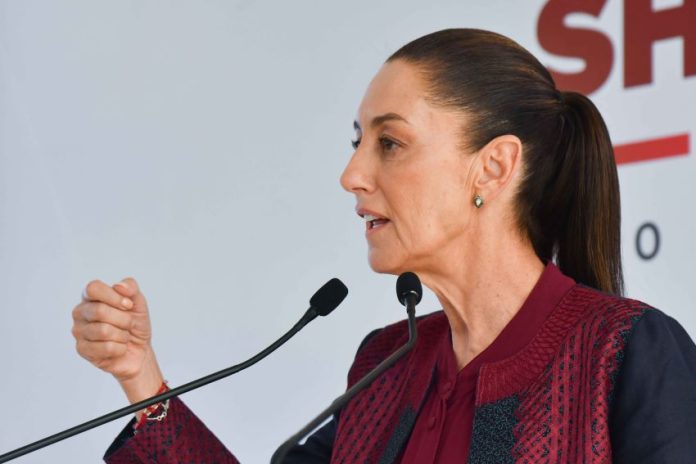
Claudia Sheinbaum spoke to reporters about recent remarks by Donald Trump and Elon Musk. (Mario Jasso/Cuartoscuro)
President-elect Claudia Sheinbaum has rejected Donald Trump’s claim that Mexico is “petrified” of drug cartels.
At a press conference on Wednesday, Sheinbaum also said that it is “very unlikely” that the former United States president will impose tariffs on cars or other products made in Mexico if he returns to the White House next January.
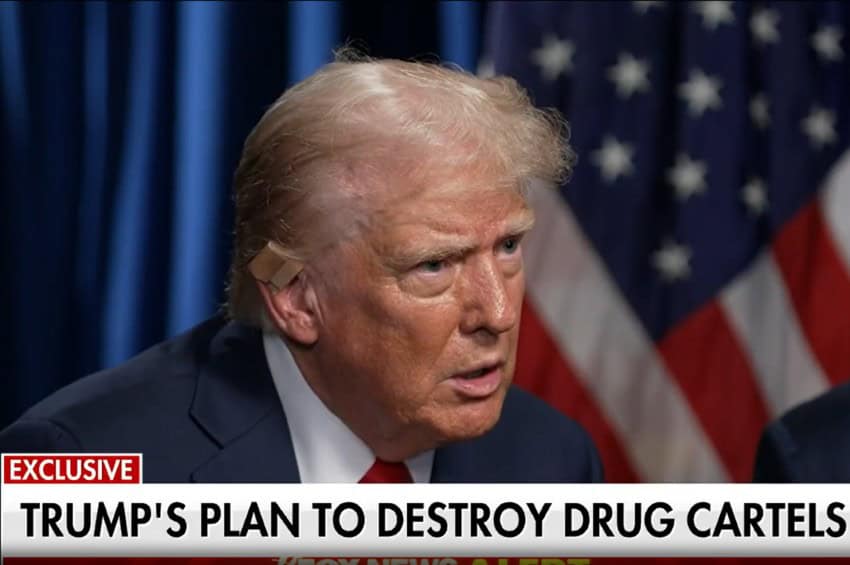
Trump said that U.S. military strikes against Mexican cartels are “absolutely” a possibility if he is elected. (Screen capture)
Trump said in an interview with Fox News that “Mexico is petrified of the cartels because they’ll take out a president in two minutes.” He also said that U.S. military strikes against Mexican cartels were “absolutely” still on the table.
Asked about the former remark, Sheinbaum said she didn’t agree with it.
Sheinbaum said that under her leadership Mexico would continue to engage in high-level security dialogue with the United States, and that the two countries would “work together” on security issues such as drug and arms trafficking wherever they can.
“We’re going to do it, always defending [Mexico’s] sovereignty,” she said.
Sheinbaum dismisses Trump’s tariff threats
Trump said in March that he would impose a 100% tariff on cars manufactured in Mexico by Chinese companies, and asserted last week that the duty could go as high as 200%.
Sheinbaum, who will be sworn in as Mexico’s first female president on Oct. 1, said she considered U.S. tariffs on products made in Mexico “very unlikely.”
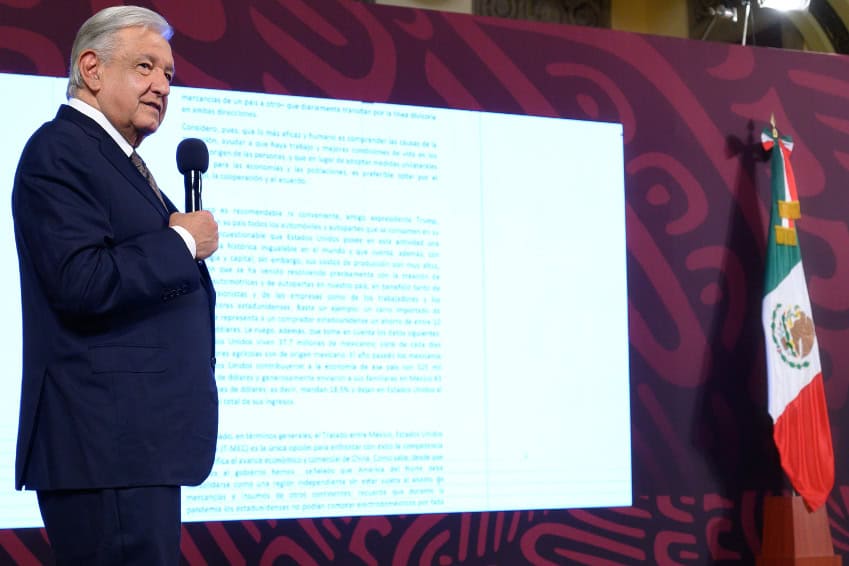
AMLO read out loud his letter to Donald Trump at his Wednesday morning press conference. (Lopezobrador.org.mx)
She noted that President Andrés Manuel López Obrador, in a letter he sent to Trump this week, pointed out that if tariffs were imposed on vehicles and auto parts made in Mexico, consumers in the United States would face higher prices when buying a car “because the cost of production in Mexico is lower than the cost of production in the United States for a variety of reasons.”
What Trump says on the campaign trail is one thing and what he will actually do if re-elected is another, Sheinbaum said.
The president-elect said that both the Republican Party candidate and Kamala Harris, who appears almost certain to be the Democratic Party’s nominee, both know the importance of the USMCA free trade pact to North America as a region.
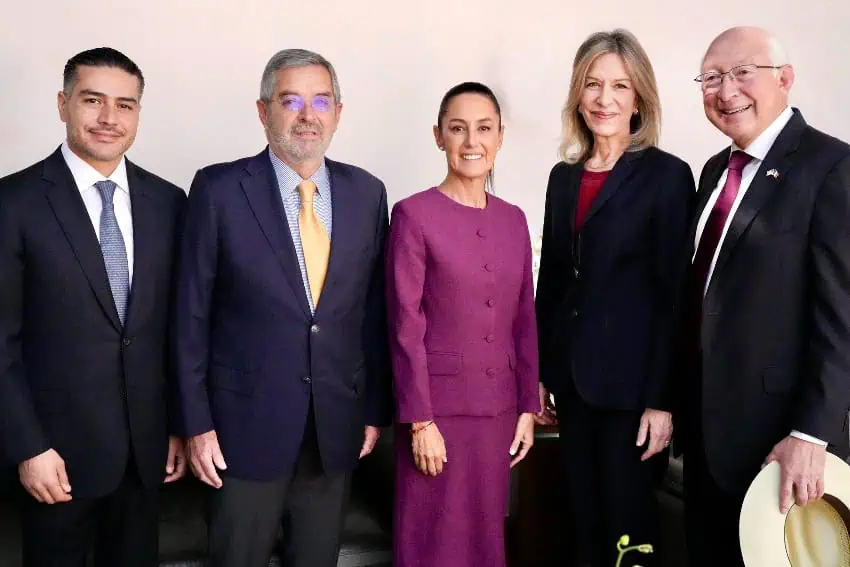
Sheinbaum, seen here with U.S. Ambassador Ken Salazar (far right) and security advisor Elizabeth Sherwood-Randall in June, says she is confident of the trade relationship with the U.S., regardless of the outcome of the presidential election. (Claudia Sheinbaum/X)
She said said she is “convinced” that whoever wins the presidential election in the United States, “the trade relationship between Mexico, the U.S. and Canada will continue because it benefits North America.”
“It benefits the three nations, it benefits the people of the three countries,” she said.
Sheinbaum to review Tesla’s decision to ‘pause’ Mexico plant
Sheinabaum also responded to Tesla CEO Elon Musk’s statement on Tuesday that the electric vehicle manufacturer’s planned “gigafactory” project in Nuevo León is currently “paused” because of the possibility that Trump will impose tariffs on vehicles made in Mexico if he wins the Nov. 5 presidential election.
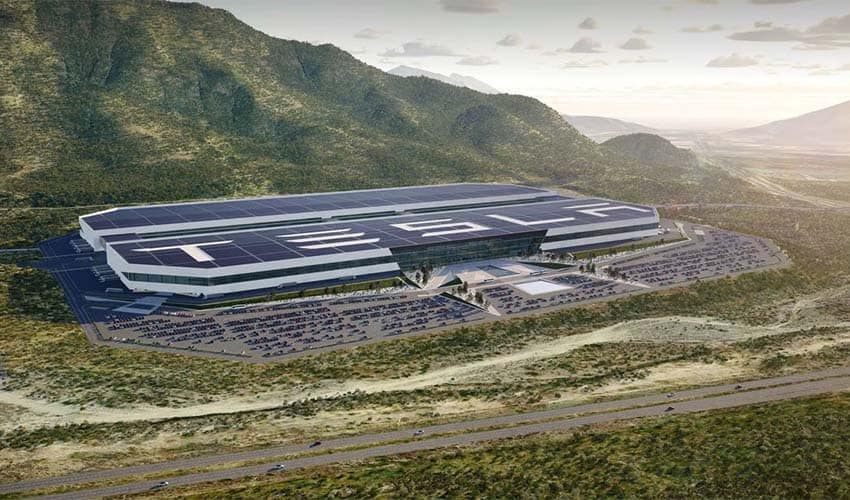
Rendering of the planned Tesla gigafactory in Nuevo León, which the state’s governor has said would bring in over US $15 billion investment. (Tesla)
“We have to look at whether the reason really is the [U.S.] election and what Trump said,” Sheinbaum said. “There could be other reasons,” she added.
López Obrador claimed Wednesday that Tesla “must have another business plan” if it is not planning to go ahead with the gigafactory project in Nuevo León.
“These companies often don’t produce but rather speculate; they make an announcement and do very well on the stock exchanges, the price of their shares goes up and production takes a back seat,” he said.
Mexico City's parks are so much more than just Chapultepec. Find your new favorite urban escape on our list. (Gobierno de México)
Chapultepec Park has it all. At nearly double the size of New York’s Central Park, Chapultepec is home to nine museums, a zoo, a castle and a vibrant history dating far past Moctezuma and the Mexica. But what are Mexico City’s best parks that aren’t Chapultepec?
It’s also a major attraction to an average of 40,000 visitors a day. And sometimes you just don’t want to be around all those people. The good news is that in a city as big as Mexico City, there are alternatives that cater to everyone: meditators, hikers and Zumba experts alike. Enjoy this list of seven fantastic parks in Mexico City that aren’t Chapultepec.
Parque México
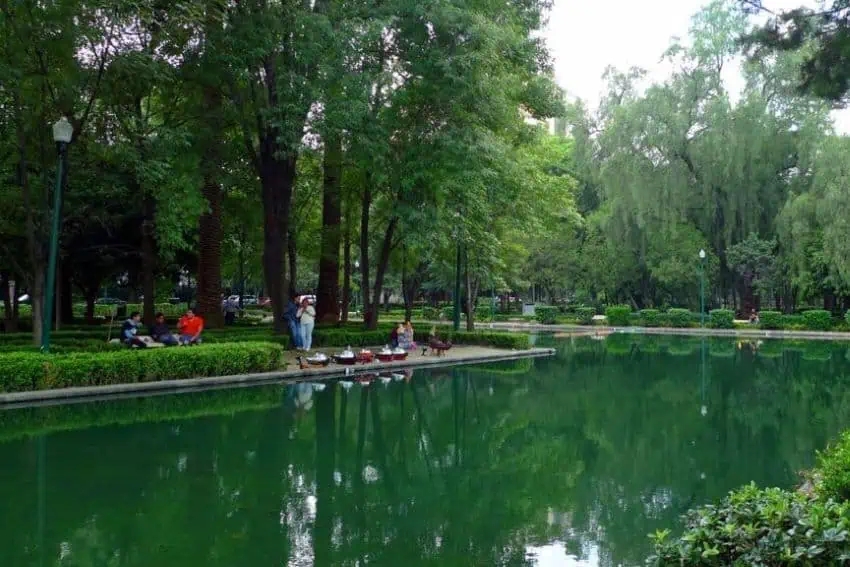
Parque México, the crowning jewel in the center of verdant Condesa. (Gobierno de la Ciudad de México)
The leafy oasis in the center of La Condesa was constructed in 1927. Its oval shape is meant to evoke memories of the former horse race track it was built on. What the park currently lacks in horses is well made up for with a sizable population of neighborly dogs, nearly-domesticated squirrels and graceful swans floating around their manmade pond.
Size: 9 hectares
Hours open: 24 hours
Activities: Walk, run, bike, exercise at the outdoor gym, play at the playground, take a Zumba class, soak up some sun, learn how to properly wield a lightsaber.
Something unique: There is a designated zen zone for meditation and reading, with speakers playing soft music and hammock-style chairs.
Parque La Mexicana
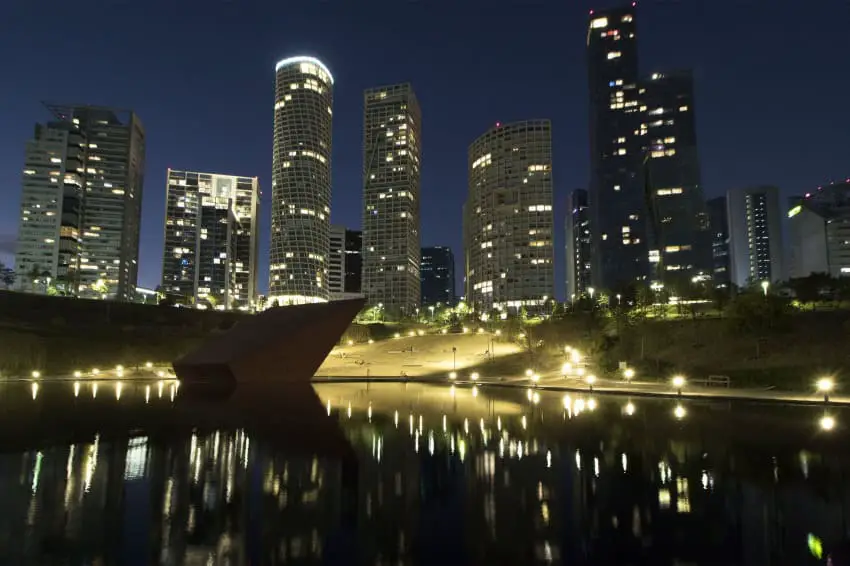
Think Chapultapec, but modern. (Gobierno de la Ciudad de México)
Santa Fe’s answer to Chapultepec Park is studded by high rise apartment complexes that reflect off the lakes that serve much greater a purpose than aesthetics – they trap contaminants and dust particles as well as control temperature and humidity levels.
Size: 20 hectares, 8 currently under construction
Hours: 5:00 AM – 9:00 PM
Activities: Walking and biking paths, fountains, a skate park, sports fields, padel courts
Something unique: In addition to 17 dining establishments, there is an actual Costco onsite so you can stock up on paper towel rolls after a game of padel.
Parque Hundido
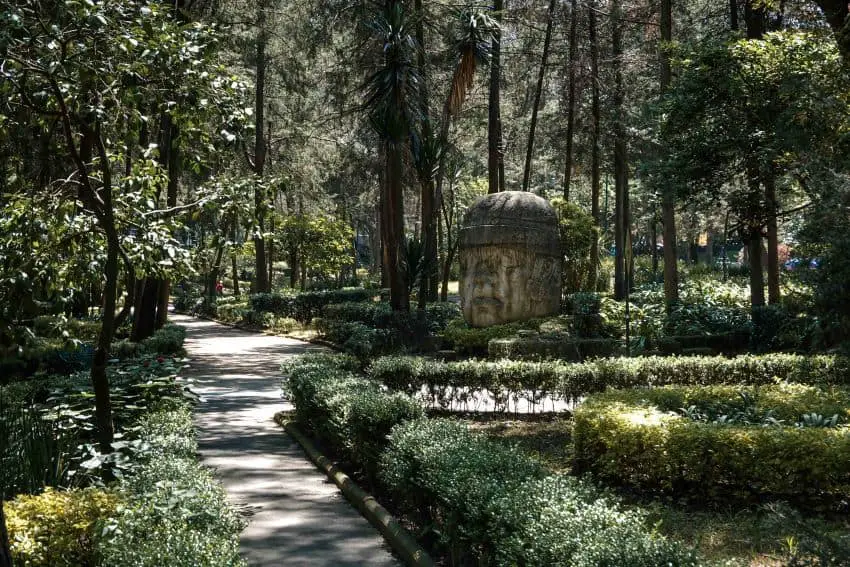
Flower clocks and Olmec heads adorn the Parque Hundido. (Gobierno de la Ciudad de México)
Parque Hundido translates to “sunken park” for a reason. The land it occupies in the Extremadura Insurgentes neighborhood of Benito Juárez was once rich in clay deposits which were extracted for a nearby brick factory, eventually forming a sinkhole. When Avenida Insurgentes was paved and the population swelled around the 1930s, the eyesore was transformed into a park for new, wealthy residents. It’s recognizable today for its giant working clock made of flowers.
Size: 100 square meters
Hours: 24 hours
Activities: Walking paths, an outdoor gym, children’s playground, an audiorama for outdoor concerts and movies
Something unique: There are 51 statue replicas carefully placed along pathways dedicated to Indigenous civilizations such as the Maya, Huastec, Zapotec and Olmec.
Viveros de Coyoacán
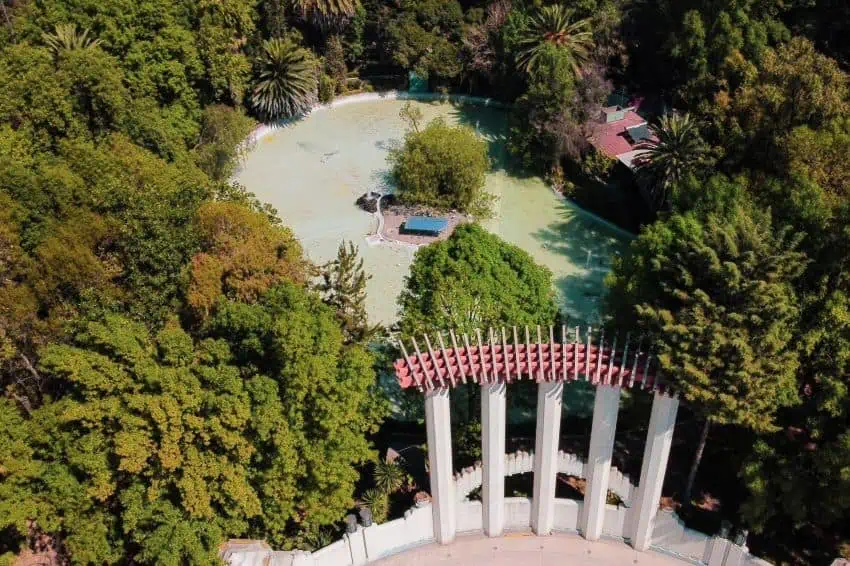
Get lost in an urban forest in the heart of colonial Coyacán. (Gobierno de la Ciudad de México)
Mexican architect and environmentalist Miguel Ángel de Quevedo, also known as the Tree Apostle, dedicated a hectare of his own land for a plant nursery in 1901. By the 1930s, Viveros had become Coyoacán’s largest park. This verdant haven in the city’s south teems with towering trees and peaceful trails, as well as a healthy population of very friendly squirrels.
Size: 39 hectares
Hours open: 6:00 a.m. – 6:30 p.m.
Activities: Walk, run, bike, jump into a yoga class or fencing demo, have a picnic
Something unique: Hidden within the park are the ruins of a small chapel.
Parque Lincoln
Urban chic and urban oasis collide in Polanco’s Parque Lincoln. (Gobierno de la Ciudad de México)
This Polanco park is, as you may guess, named for U.S. President Abraham Lincoln, who famously opposed the invasion of Mexico between 1846 and 1848. Not a place to go jogging but certainly a place to enjoy the outdoors, Parque Lincoln is a quiet space which runs adjacent to some of Polanco’s trendiest restaurants and bars. Within its borders you can find sculptures, a botanical garden, an aviary and several ponds. There is an outdoor theater for live music concerts and festivals, notably the Polanco Jazz Festival in late November.
Size: 12 acres
Hours open: 24 hours
Activities: Strolling, relaxing on a bench, playing on a playground, shopping at the weekly tianguis
Something unique: On Sundays you can rent small motorized boats to race. While it’s meant for children, it always seems to be the fathers having all the fun.
Parque Nacional Los Dinamos
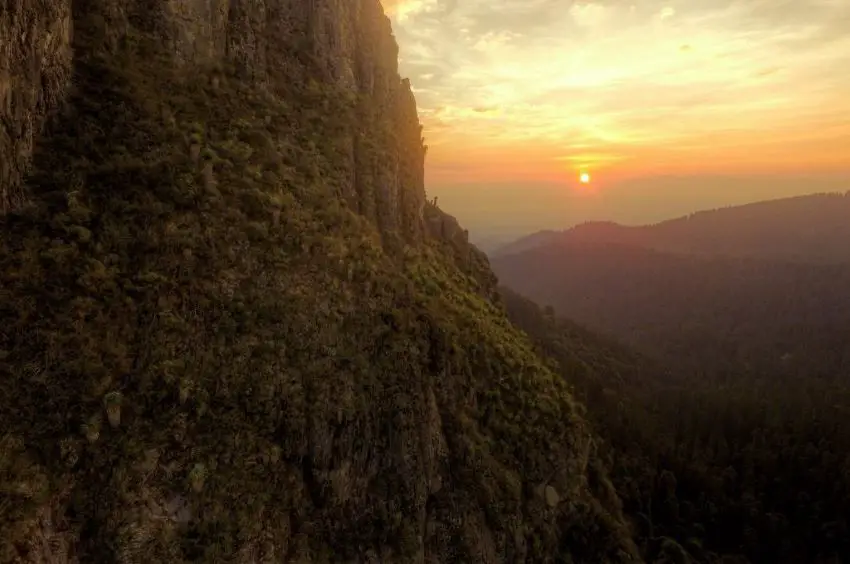
Los dinamos allows you to hike through the wilderness, all within the confines of the city. (Gobierno de la Ciudad de México)
If you want to do some real hiking or mountain biking, this is where you want to go. Explore more than 26 km of trails that cut through waterfalls, over the Magdalena River, past old factory ruins and up towering peaks that grant you snippets of Mexico City’s expanse. There are designated sections for camping if you want to brave an overnight among foxes and rabbits.
Size: 2,429 hectares
Hours open: 6:00 a.m. – 6:30 p.m.
Activities: Hiking, biking, rock climbing, rappelling, camping
Something unique: Climb up a wobbly ladder to Puerta del Cielo for great pictures and spectacular views.
Parque Nacional Desierto de los Leones
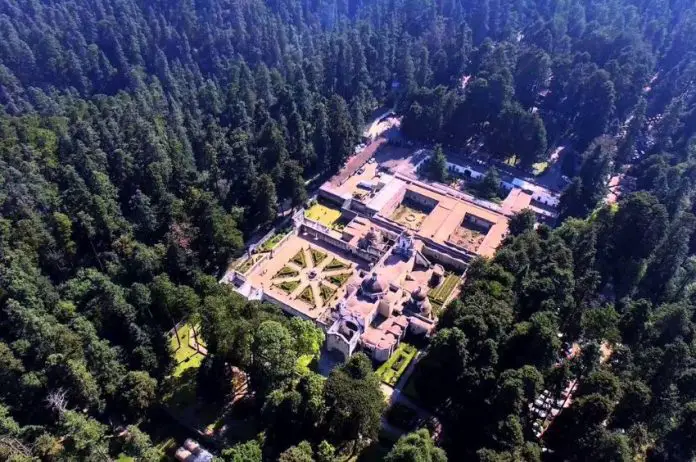
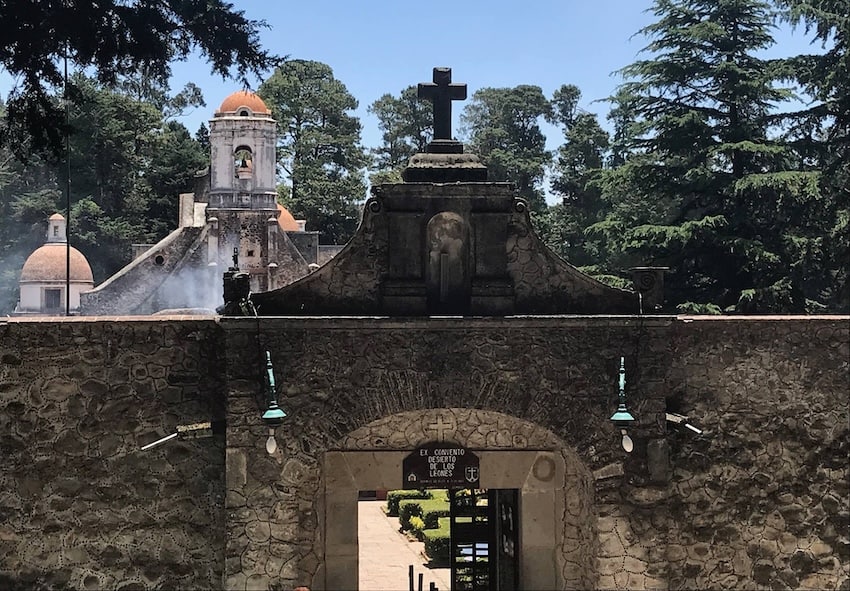
Desierto de los Leones is located on the westernmost edge of Mexico City and is home to nature trails and a convent, which was abandoned in the 19th century. (Sedema)
No, there are no lions. This national park in the borough of Magdalena Contreras, said to be named after the León family, is another alternative for serious hikers as well as history buffs. It’s home to miles and miles of trails that range from easy to challenging, some which lead to the beautifully-preserved Ex-Convento del Desierto de los Leones. The 17th-century Carmelite monastery features monks’ cells and a church.
Size: 1,800 hectares
Hours open: 6:00 a.m. – 5:30 p.m.
Activities: Hiking, biking, rock climbing, picnicking, horseback riding
Something unique: Find the famous secret garden set inside the walls of the ex-convent.
Bethany Platanella is a travel planner and lifestyle writer based in Mexico City. She lives for the dopamine hit that comes directly after booking a plane ticket, exploring local markets, practicing yoga and munching on fresh tortillas. Sign up to receive her Sunday Love Letters to your inbox, peruse her blog, or follow her on Instagram.
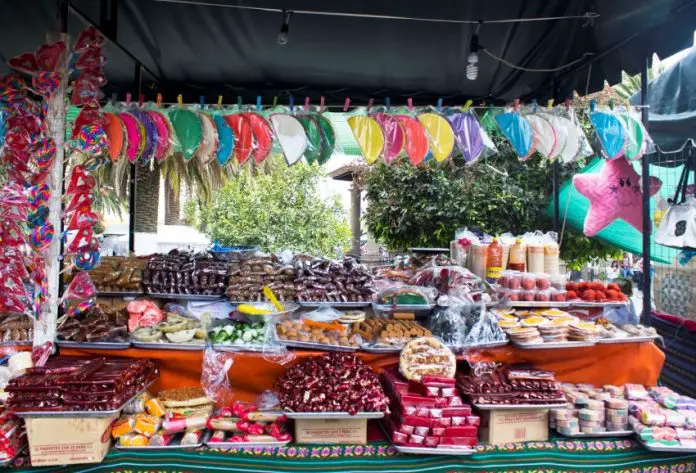
Can you name all of these types of Mexican candy? No? Sounds like you need an explainer. (Paola García/Flickr)
The history of Mexican candy can be summed up in three words: honey, honey and more honey. In ancient Mexico, the population used honey extensively to create traditional sweets. The Nahua word “necuhtli” means honey, and early Mesoamericans had several types of it, including bee honey (miahua necuhtli), maguey nectar (menecuhtli) and aguamiel (iztac necuhtli) — many of which formed the basis for the first types of Mexican candy.
Honey has been a longstanding food source that added a mild flavor to prepared corn cobs and Mesoamerican preserves. Products made of corn and honey were offered to the gods and consumed during celebratory occasions. In ancient times, the Nahua people celebrated the birth of Huitzilopochtli with idols made of roasted and ground blue corn mixed with dark maguey honey.
Pepitorias, perhaps Mexico’s most colorful snack. (directoalpaladar.com.mx)
The renowned Florentine Codex, a manuscript created post-Conquest by Spanish missionary Bernardino de Sahagún and Indigenous Nahua collaborators also mentions the creation of a dough called tzoalli made from burst huauhtli (amaranth) seeds mixed with black maguey honey. This dough was used to make images of deities that were ritually consumed by the faithful in a form of theophagy. To this day, amaranth, a highly nutritious cereal native to Mesoamerica, is mixed with honey to make sweets like alegrías and the famous skulls for the Day of the Dead.
Sugar was introduced to Mexico by the Spanish during the 1520s, but it wasn’t until the 19th century that sugar cane becamewidely used across the country.
What makes Mexican candies different?
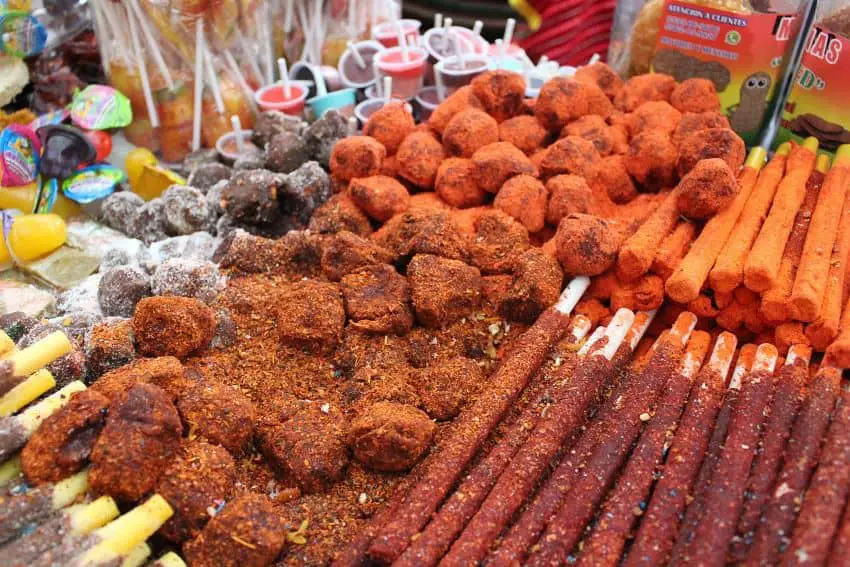
Mexican candies are notably influenced by two key ingredients of the region: chili and tamarind. Even candies meant for children in Mexico often incorporate chili. In fact, many of the top-selling candies in Mexico today would be considered spicy by foreign standards.
Tamarind, on the other hand, is a fruit known for its high content of vitamins B, C, and E, as well as fiber. Its distinctive flavor profile oscillates between spicy and sour, with a touch of sweetness. Mexican sweets often showcase these two unique ingredients.
A basic guide to traditional Mexican candies
Bolitas de tamarindo are about as traditional as Mexican candy can get. (Germán Torreblanca)
Let’s explore some traditional Mexican candies that have been enjoyed since colonial times and are still popular today, often found in traditional markets:
Alegrías: Made with toasted amaranth seeds and bound with sugar honey, this sweet is usually decorated with nuts or raisins.
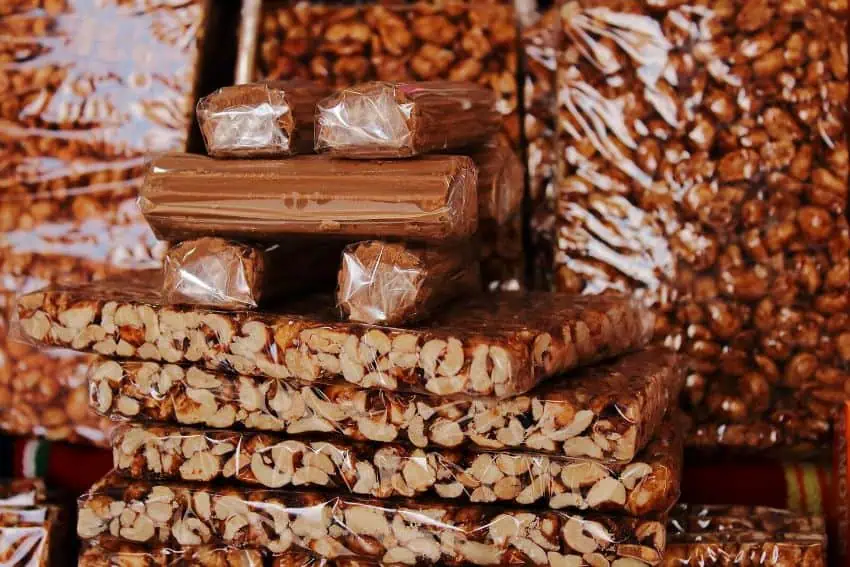
Palanquetas: A bar made of peeled and shelled peanuts combined with piloncillo syrup and other grains like walnuts, amaranth and almonds. It was originally a sweet made from roasted and ground corn, mixed with honey to celebrate Papaquilizilhuitl, the Corn Festival.
Peanut palanquetas were originally created for a religious festival. (Adrián Cerón)
Pepitorias: Folded wafers of wheat or rice flour filled with melted piloncillo and pumpkin seeds, available in various colors.
Bolitas de tamarindo: These balls of tamarind paste are dusted with sugar. Some people make them with dulce de tamarindo, a mixture of tamarind, sugar and chili.
Borrachitos: First invented in Puebla, these creamy sweets are soaked in syrup and liquor like rum or tequila.
Cocadas: A chewy candy made with grated coconut, sugar and milk, cocada is often served in a scooped-out lime.
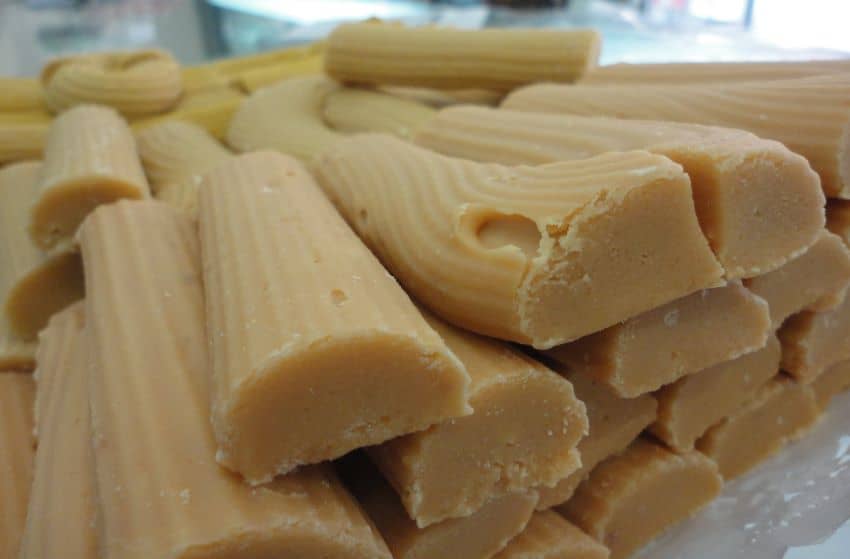
Dulce de leche: Also known as jamoncillo, this sweet is made with milk, sugar and chopped nuts.
Candied fruits: Fruits cooked with lime (similar to how corn nixtamal is prepared). Immersed in a lemon and water solution, they’re sweetened with sugar or piloncillo syrup to preserve them.
Commercial candies
Jamoncillo, better known as “dulce de leche,” is a type of milk fudge. (Macarrones/Flickr)
The world of Mexican candies is vast, and alongside traditional and artisanally produced confectionery are mass produced sweets you can get across the country and around the world.
Mazapán De La Rosa: Mazapán, known in English as marzipan, is a sweet made with sugar and almonds or peanuts. Mexico’s version uses the latter, and De La Rosa is without a doubt the best known mazapán in the country.
Pelón Pelo Rico: A tamarind and chili flavored squeeze candy, Pelo Rico is a favorite with children for the shapes it makes when it comes out of the bottle.
Pulparindo De la Rosa: Another De La Rosa product, Pulparindo is a spicy tamarind bar coated in salt and chili.
Vero Elotes: This corn cob-shaped lollipop is caramel flavored and coated with chili powder.
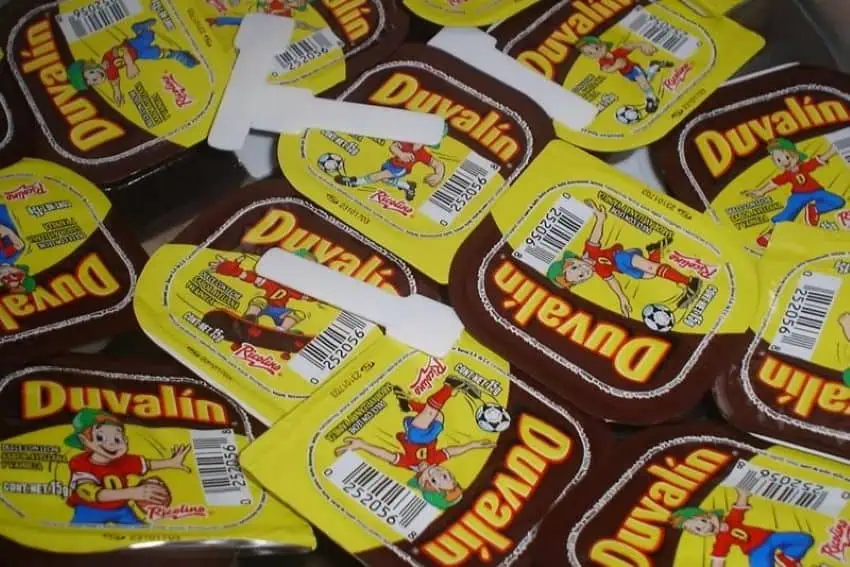
Duvalin: Similar to Dunkaroos, this creamy candy is available in hazelnut, strawberry and vanilla.
Tubs of Duvalin, a sweet dipping candy. (Ricolino)
These candies showcase the diverse and flavorful world of Mexican confectionery, combining traditional ingredients with unique flavors to create delightful treats enjoyed by people of all ages.
Which others would you add?
Ana Paula de la Torre is a Mexican journalist and collaborator for various outlets including Milenio, Animal Político, Vice, Newsweek en Español, Televisa and Mexico News Daily.
Republican presidential nominee Donald Trump and running mate J.D. Vance discussed Mexican cartels in an interview with Fox News on Tuesday. (Fox News/screen capture)
Former United States President Donald Trump has said he could use the U.S. military against Mexican cartels if he is re-elected as president on Nov. 5.
In an interview with Fox News, the Republican Party’s presidential candidate was asked whether “strikes” against Mexican cartels — which ship large quantities of narcotics including fentanyl to the U.S — were “still on the table.”
A clip from the interview of Republican Party nominee Donald Trump and vice presidential candidate J.D. Vance with Jesse Watters.
“Absolutely,” Trump responded.
Fox News host Jesse Watters, who interviewed the 45th president of the United States and his 2024 running mate J.D. Vance, rephrased his question, asking Trump whether he was prepared to use military force against “our biggest trading partner.”
“Absolutely. Mexico’s going to have to straighten it out really fast or the answer is absolutely,” Trump said.
Trump said that “Mexico is going to be given a very short period of time to police their border” and if they don’t do the job effectively, his government will take action.
“I’m sure they’re going to do not well and then you’re going to see the action start,” he said.
Trump asserted that “Mexico is petrified of the cartels because they’ll take out a president in two minutes.”
“They’re petrified of the cartels. The cartels are running Mexico,” he said.
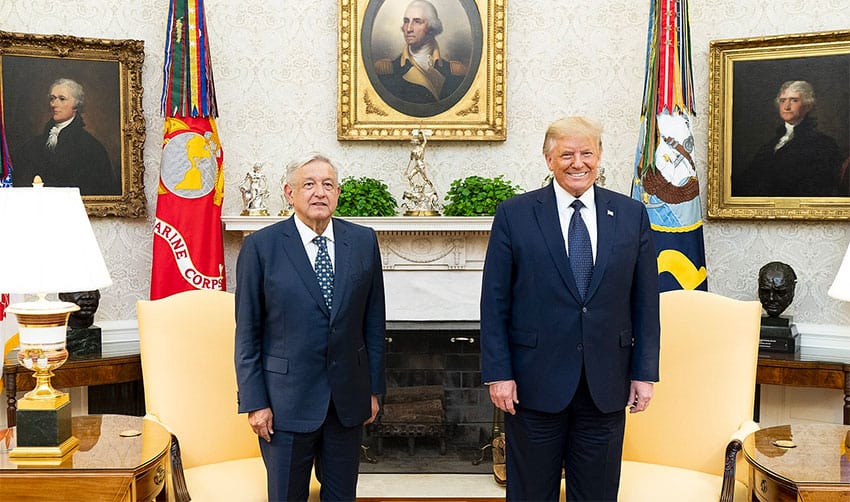
AMLO and Trump in the White House in 2021. (Archive)
The Times also said that “Republican lawmakers have drafted a broad authorization for the use of military force against cartels” and “pushed for designating Mexican cartels as foreign terrorist organizations.”
“… If Mr. Trump returns to the White House in 2025, he has vowed to push for the designations and to deploy Special Operations troops and naval forces to, as he put it, declare war on the cartels,” The Times said in October 2023.
Rolling Stone reported in May that “if he wins a second term in November, Donald Trump wants to covertly deploy American assassination squads into Mexico soon after he’s sworn into office again, according to three people who’ve discussed the matter with the former U.S. president.”
President López Obrador has categorically rejected the idea that the United States military could be used in Mexico. In 2019, he declined an offer from Trump to help Mexico combat organized crime after an attack on members of an extended Mormon family in northern Mexico that killed three women and six children.
Vance: Mexico in danger of becoming a “narco-state”
Senator Vance, unveiled as Trump’s vice president pick last week, defended the plan for United States forces to target Mexican cartels given the damage they inflict on the U.S.
“It’s funny that people accuse us of being bombastic for saying the cartels — we need to go after them. What about American citizens who are losing their lives by the tens of thousands, hundreds of thousands, because we won’t do something serious about the cartels? That is what’s reckless,” he told Fox News.
“… I actually believe that the Mexican government, even though they couldn’t say that, want President Trump to be serious about the cartels because that poison [fentanyl] is destabilizing their country too. Fourteen billion dollars coming into the cartels, and that was a couple of years ago, it’s probably more today,” Vance said.
“They’re not going to be a real country anymore, they’re going to become a narco-state unless we get some control over this,” he asserted.
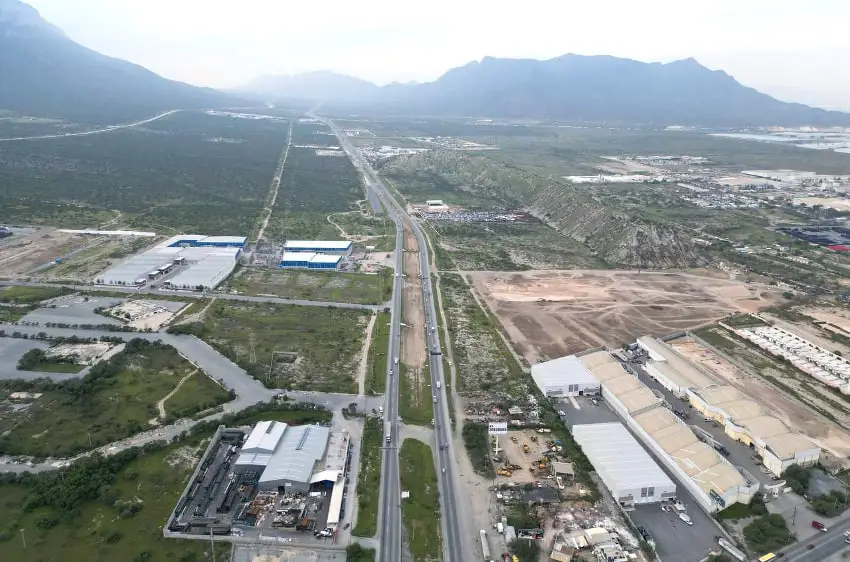
There has been a lot of attention on Chinese companies increasingly investing in manufacturing in Mexico in recent years. (Hofusan Industrial Park NL/X)
Chinese investment in Mexico has increased significantly in recent years, but the East Asian nation is still a long way off matching the outlays of countries such as the United States and Spain.
Economy Ministry (SE) data shows that Chinese foreign direct investment (FDI) in Mexico totaled US $2.073 billion between 2006 and March 2024. Just over 55% of that amount was invested in the country since 2020.
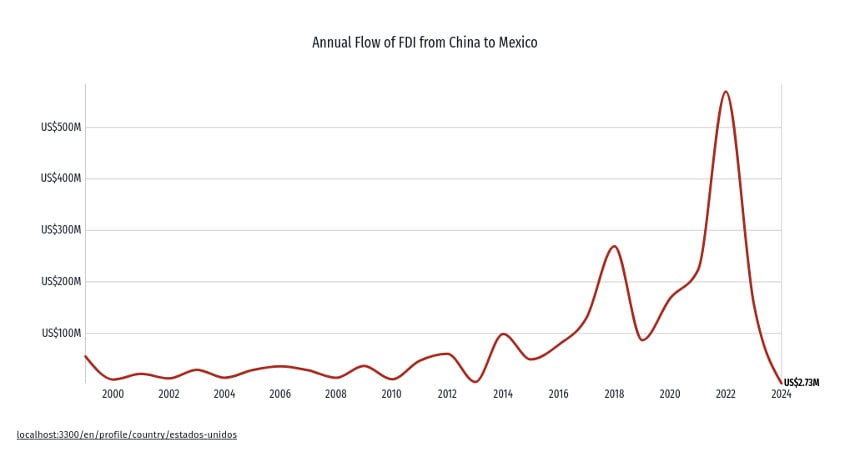
This chart shows the FDI in Mexico from China since 2000. (Data México/SE)
Chinese investment in Mexico peaked in 2022 at $569.7 million, a figure that accounts for 27% of the country’s total FDI in Mexico over the past 18 years.
The amount represented an increase of 335% compared to 2017, 845% compared to 2012, and a whopping 4,534% compared to 20 years earlier in 2002.
China was among the top 10 investors in Mexico in 2022, but its total investment was dwarfed by that of the United States, whose FDI in Mexico totaled $20.2 billion that year, according to the SE.
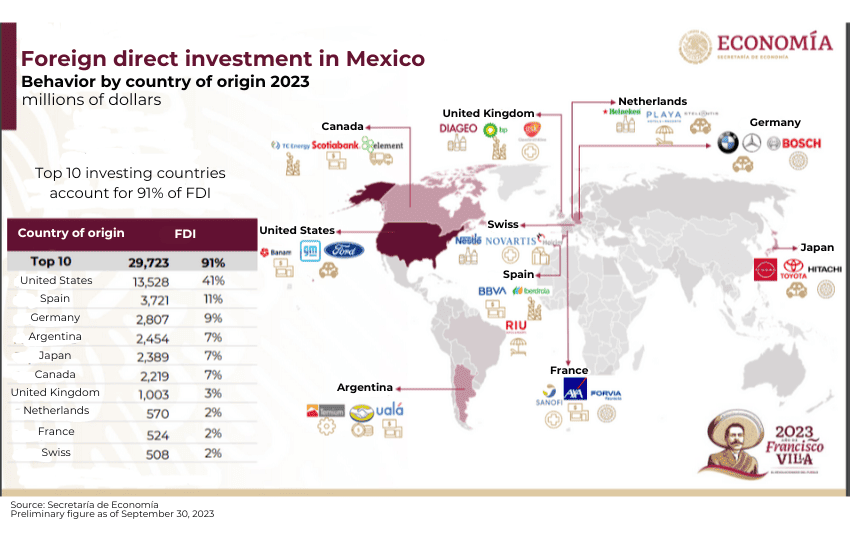
The top 10 countries of origin for foreign direct investment in Mexico in 2023 did not include China. (SE)
China’s total investment in Mexico between 2006 and the first quarter of 2024 represents just a small fraction of the FDI of countries such as the United States and Spain.
The Reforma newspaper reported Tuesday that the United States’ FDI in Mexico between 2006 and the first quarter of this year was just over $239 billion, while Spain’s outlay during the same period was just under $57.5 billion.
Why does the data matter?
There has been a lot of focus on Chinese investment in Mexico lately, with several media outlets, including the BBC and The Economist, reporting that Chinese companies are using Mexico as a “backdoor” to the United States as products made here can be exported tariff-free to the U.S.
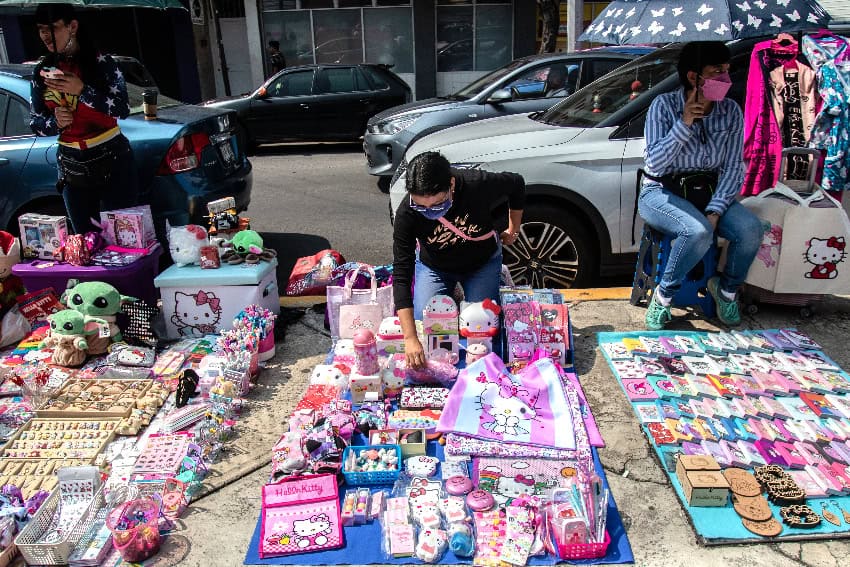
Local retailers in the historic center say they have been pushed out by Chinese businesses that sell cheap products to street vendors. (Cuartoscuro)
The data on Chinese investment in Mexico is important as it indicates that Chinese companies have not yet collectively established an overly significant presence in the Mexican economy, despite claims — or impressions — to the contrary. Companies from the United States, Canada, Spain, Germany and various other countries have invested much more in Mexico than Chinese firms.
Jorge Guajardo, a former Mexican ambassador to China and a close observer of Chinese investment in Mexico, said on X that the data showing much greater investment in Mexico by the U.S. and Spain than China provides “context for those who claim China is using Mexico as a manufacturing base to enter the U.S.”
The reason, according to Enrique Dussel Peters, an economist and coordinator of the Center for Chinese-Mexican Studies (Cechimex) at the National Autonomous University, is that some Chinese investment comes into Mexico via United States subsidiaries of Chinese companies.
The FDI inflow is thus recorded as coming from the United States, when for all intents and purposes the money came from China.
China is not yet a top investor in Mexico, but it could be soon
While China is not yet close to matching the outlay of the top investor nations in Mexico, the situation could change — if Chinese companies act on their investment announcements.
According to the SE, Chinese companies made investment announcements totaling $13.19 billion last year. China was second in the “expected investment” rankings in 2023, behind only the United States.
Two Chinese companies, LGMG and Jetour, made announcements totaling $8 billion last year, or over 60% of the total expected FDI for China. As the $13 billion has only been announced, rather than invested, it has not yet shown up in the Economy Ministry’s FDI data.
According to the Chinese company’s Mexico director, the proposed BYD EV plant would generate 10,000 jobs. (BYD México)
If LGMG, Jetour, BYD and other companies go ahead with their announced projects — which is no certainty — China could shoot up the FDI rankings for Mexico in the near future.
One potential barrier to future Chinese investment in Mexico is Mexican government opposition to it.
While Mexico is currently welcoming Chinese investment, Finance Minister Rogelio Ramírez de la O said last Saturday that the government is “considering” changing its investment policy with regard to China. Without providing specific details, he suggested that Mexico could seek to prevent or limit Chinese investment in some sectors.
Despite tariff uncertainty, the peso hasn't been this strong since November. (Shutterstock)
Tesla CEO Elon Musk’s statement that the company’s planned “gigafactory” project in Mexico is currently “paused” was among the factors that caused Mexico’s peso to depreciate against the U.S. dollar on Wednesday morning, according to Mexican economic analyst Gabriela Siller.
Compared to its closing position on Tuesday, the peso depreciated around 1.5% to reach 18.42 to the greenback on Wednesday morning, according to Bloomberg data.
La depreciación del peso hoy se debe a 1) reforma al Poder Judicial, 2) decisión de Tesla de aplazar hasta después de las elecciones de EEUU la decisión de venir a México y 3) la publicación de la inflación en México que se aceleró nuevamente.
— Gabriela Siller Pagaza (@GabySillerP) July 24, 2024
Banco Base analyst Gaby Siller’s X post in which she cited Elon Musk’s announced decision to pause Tesla’s gigafactory construction in the state of Nuevo León as a factor in the peso’s drop in value.
The currency subsequently recovered slightly to trade at 18.37 to the dollar shortly after 5 p.m. Mexico City time.
Concern about the government’s proposed judicial reform.
Tesla’s announcement that it will “postpone” a decision about the planned Nuevo León gigafactory until after the Nov. 5 presidential election in the United States.
Siller said that the proposed judicial reform — which could be approved by Congress as soon as September — “generates fear because it could damage legal certainty” in Mexico.
Such a scenario, she added, “would considerably affect investment growth in Mexico.”
The reform, if approved, would allow Mexicans to directly elect Supreme Court justices and other judges from candidates that would be nominated by the sitting president. Critics argue that the reform would weaken rather than strengthen the judiciary.
After Morena candidate Claudia Sheinbaum and the ruling Morena party won comprehensive victories in the June 2 presidential and congressional elections, the peso depreciated sharply on concerns that the new Congress could approve the proposed judicial reform and other controversial constitutional reform proposals put forward by President Andrés Manuel López Obrador, including one that aims to disband a range of autonomous government agencies.
Morena Party President-elect Claudia Sheinbaum’s victory on June 2 has reignited concerns that a judicial reform bill coming up for vote in September may pass easily, as the election results also gave Morena lawmakers majorities in both houses of Congress. The Morena-proposed bill would make Supreme Court justices directly elected officials nominated by the president. (Cuartoscuro)
What did Musk say about the Mexico Tesla gigafactory?
During Tesla’s Q2 earnings call on Tuesday, Musk was asked for an “updated timeline” for its proposed US $10 billion Nuevo León gigafactory, which the company first announced in March 2023 but hasn’t started building.
“We currently are paused on Giga Mexico. I think we need to see where things stand after the [U.S. presidential] election. Trump has said he’ll put heavy tariffs on vehicles produced in Mexico,” he said.
“So it doesn’t make sense to invest a lot in Mexico if that is going to be the case. So we kind of need to see the way things play out politically,” the Tesla CEO added.
In an X post on Tuesday, Siller said that if Trump wins the U.S. election on Nov. 5, “it’s possible that Tesla will never arrive in Mexico.”
Mexican national statistics agency INEGI reported Wednesday that Mexico’s annual headline inflation rate increased to 5.61% in the first half of July. In better news, the annual core inflation rate, which excludes volatile food and energy prices, fell to 4.02%, continuing a downward trend that began in early 2023.
Some analysts believe that the Bank of Mexico will cut its key interest rate on Aug. 8 due to core inflation’s continuing decline. Such a move could affect the peso adversely as it would reduce the differential between the Bank of Mexico’s key interest rate (currently 11%) and that of the United States Federal Reserve (5.25%–5.5%), provided the Fed doesn’t cut its federal funds rate next week.
The peso has benefited for an extended period from the significant difference between the two interest rates.