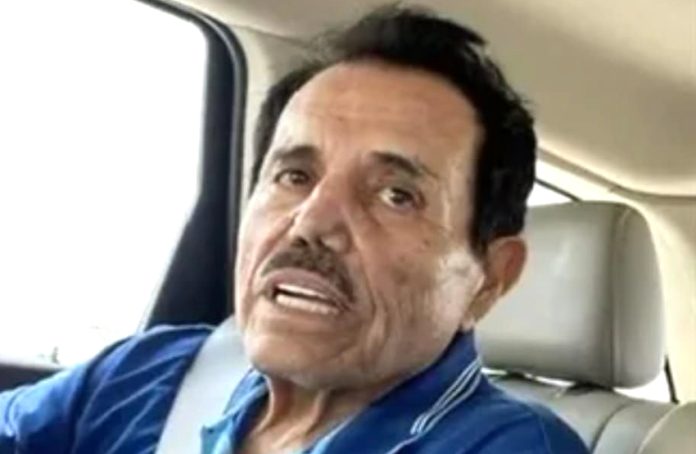
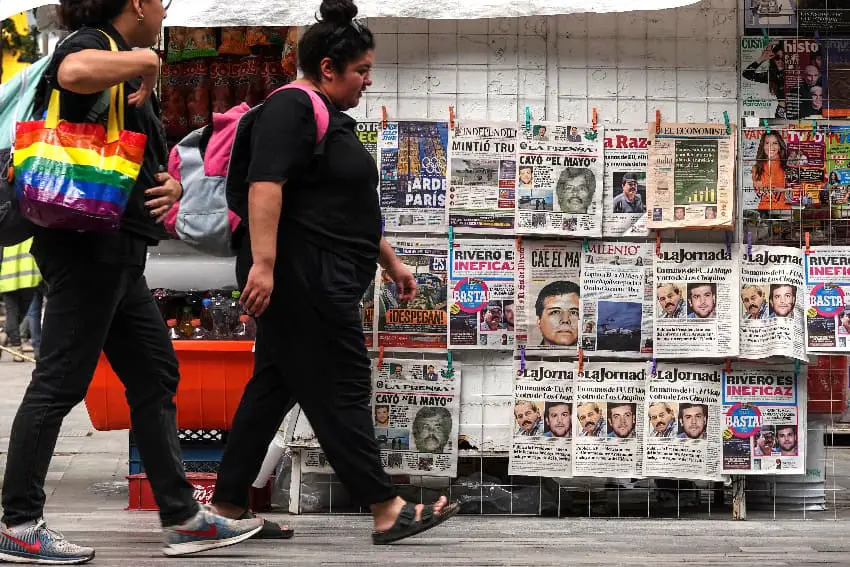
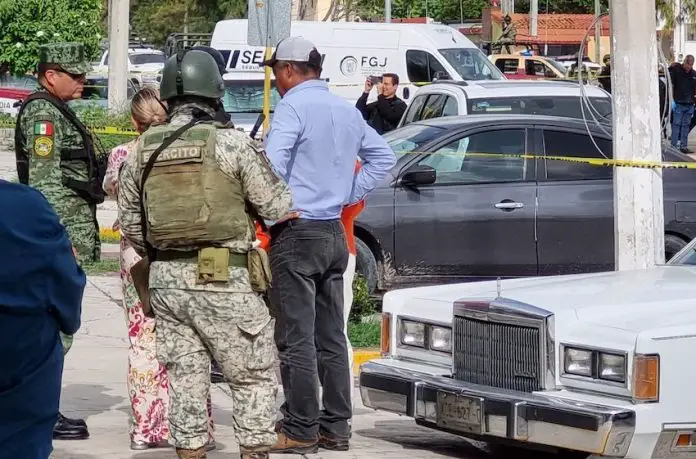
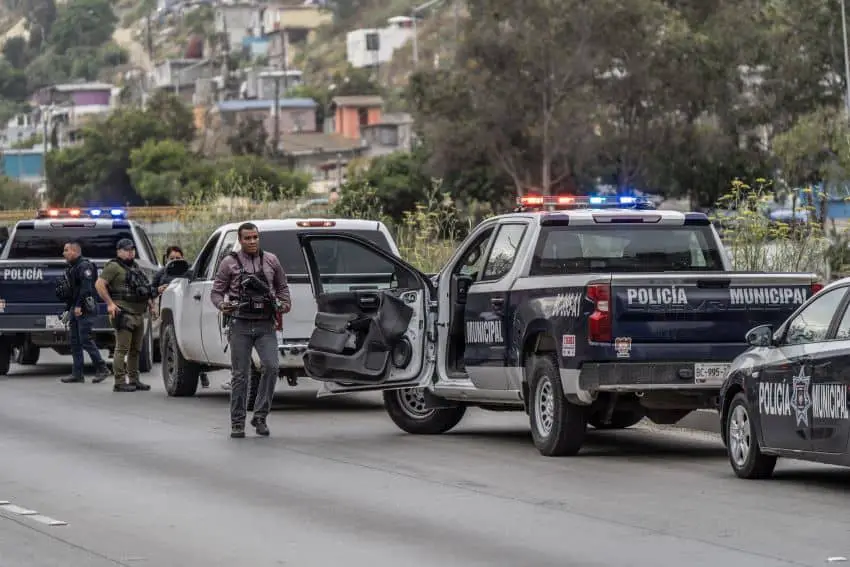
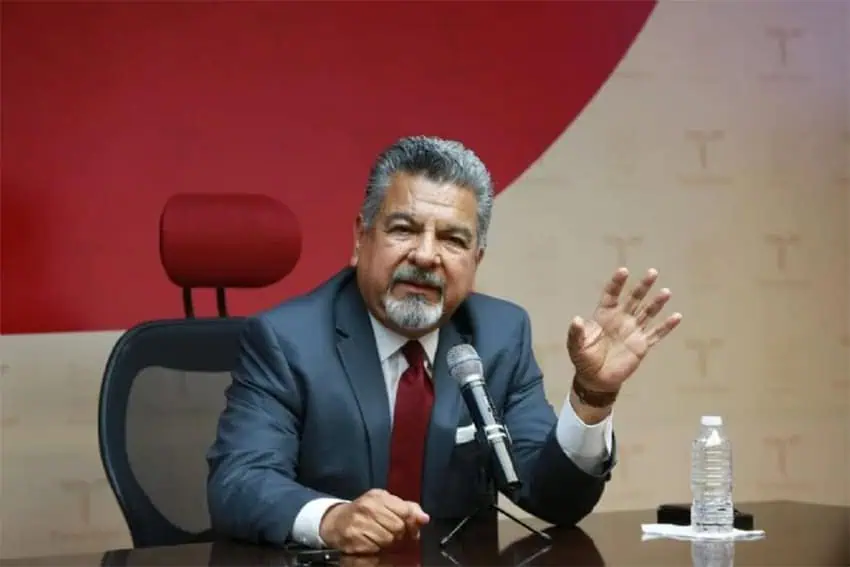
Zambada said he was kidnapped at a meeting near Culiacán and that Cuén was killed at the same location. (Cuartoscuro)
Alleged Sinaloa Cartel leader Ismael “El Mayo” Zambada García may have made a fortune during a lengthy drug trafficking career, but he won’t be able to buy his way out of jail in the United States.
Anne T. Berton, a United States magistrate judge in the Western District of Texas, ruled that Zambada must be detained without bond as the case against him proceeds.
The two alleged Sinaloa Cartel leaders were arrested last Thursday in Texas, though the circumstances of their detention are still unclear. (Cuartoscuro)
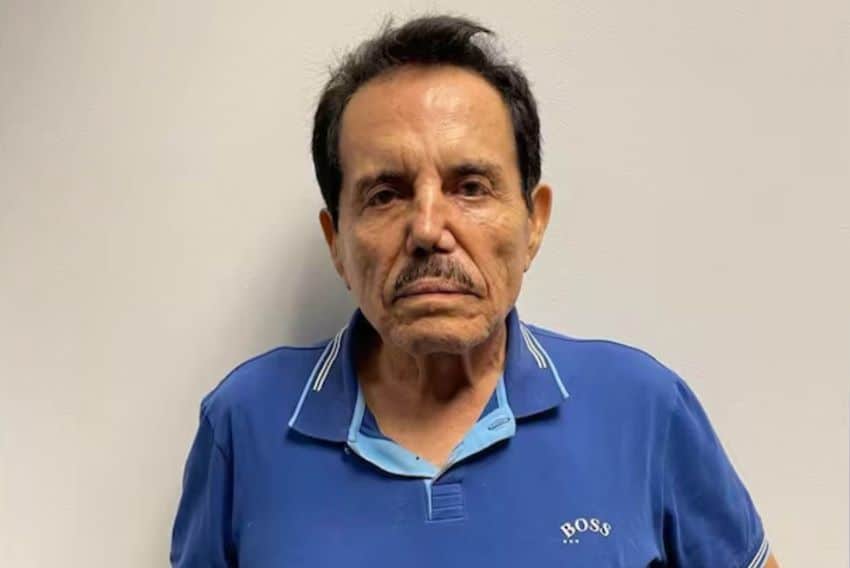
The 76-year-old suspect was arrested last Thursday after flying into a small airport near El Paso with Joaquín Guzmán López, one of the sons of convicted drug lord Joaquín “El Chapo” Guzmán Loera.
Last Friday Zambada pleaded not guilty to charges for a range of crimes including drug trafficking, murder, kidnapping and money laundering.
A United States District Court detention order that was signed by Berton on Tuesday noted that the U.S. government’s “motion to detain defendant without bond” was scheduled for Wednesday.
“Prior to the hearing, counsel for the defendant announced to the court that the defendant did not contest the government’s motion,” the document said.
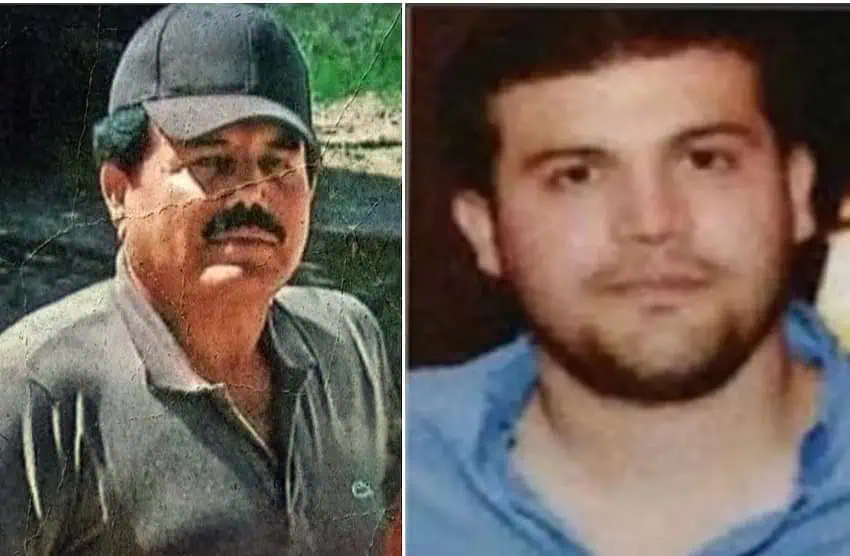
“El Mayo” Zambada (left) and Joaquín Guzmán López are both facing multiple charges in the U.S., including drug trafficking and homicide. Both have pleaded not guilty. (Archive)
“Accordingly, the court finds that there are no conditions or combinations of conditions of release that will reasonably assure the appearance of the defendant or the safety of the community,” the detention order continued.
“It is therefore ORDERED that the defendant be detained without bond and the defendant is hereby committed to the custody of the Attorney General for confinement in a corrections facility separate, to the extent practicable, from persons awaiting or serving sentences or being held in custody pending appeal.”
The document also ordered that Zambada be afforded “a reasonable opportunity for private consultations” with his legal team.
U.S. officials previously told media outlets that Guzmán López tricked Zambada into getting onto the plane by telling him they were going to inspect clandestine airfields or real estate within Mexico.
In an appearance in federal court in Chicago on Tuesday, Guzmán López pleaded not guilty to the drug trafficking and other charges he faces.
His lawyer, Jeffrey Lichtman, “criticized — but did not refute —” the allegation by Zambada’s lawyer that Guzmán López “forcibly kidnapped” El Mayo, according to a Chicago Tribune report.
“He’s not being accused of kidnapping. When the government accuses him, then I’ll take notice. When lawyers who are trying to score points with the media make accusations, then I ignore that because it’s meaningless,” he said.
Lichtman also said that his client doesn’t have an agreement with the United States government, as some media outlets have reported.
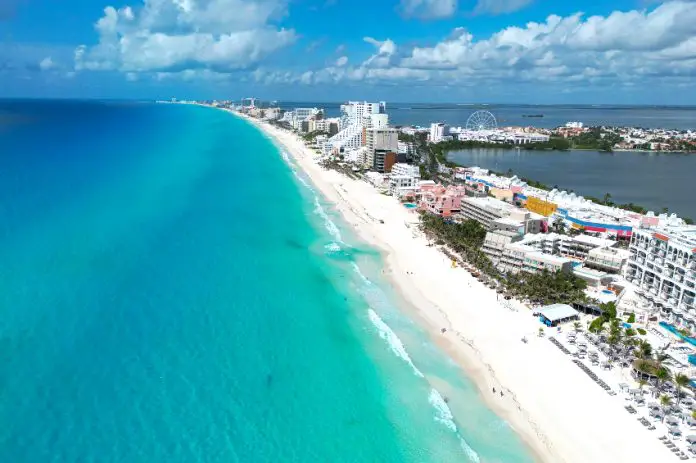
Quintana Roo is known as a tourist magnet, but it was another economic sector that pushed GDP growth in the state in the first quarter. (Mara Lezama/X)
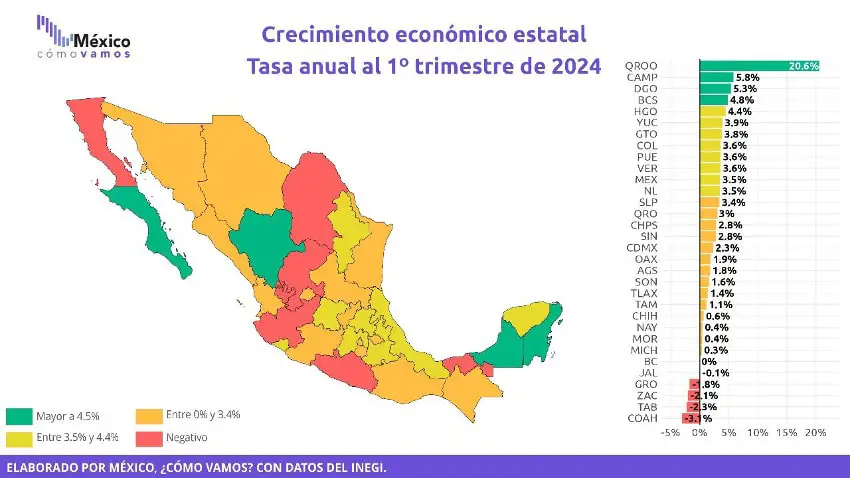
The Caribbean coast state of Quintana Roo easily recorded the highest economic growth among Mexico’s 32 federal entities in the first quarter of 2024, with GDP increasing more than 20% on an annual basis.
Data published by the national statistics agency INEGI on Monday shows that 25 entities recorded annual growth in the first quarter of the year, while the economies of six states contracted. The economy of Baja California was stagnant, with GDP unchanged in annual percentage terms.
This map shows the annual GDP growth by state in Q1 2024. Six states saw a contraction in economic growth, 25 saw growth and one was stagnant. (México ¿cómo vamos?)
The national economy grew 1.6% annually in the first three months of the year.
Secondary sector drives growth in Quintana Roo
Annual data shows that the Quintana Roo economy expanded 20.1% in the first quarter of 2024.
The state’s primary sector recorded growth of 3.4%, while the tertiary sector — which includes Quintana Roo’s large tourism industry — expanded 5.5%.
Quintana Roo’s secondary sector, which includes manufacturing and construction, grew a whopping 125.6% compared to the first three months of 2023.
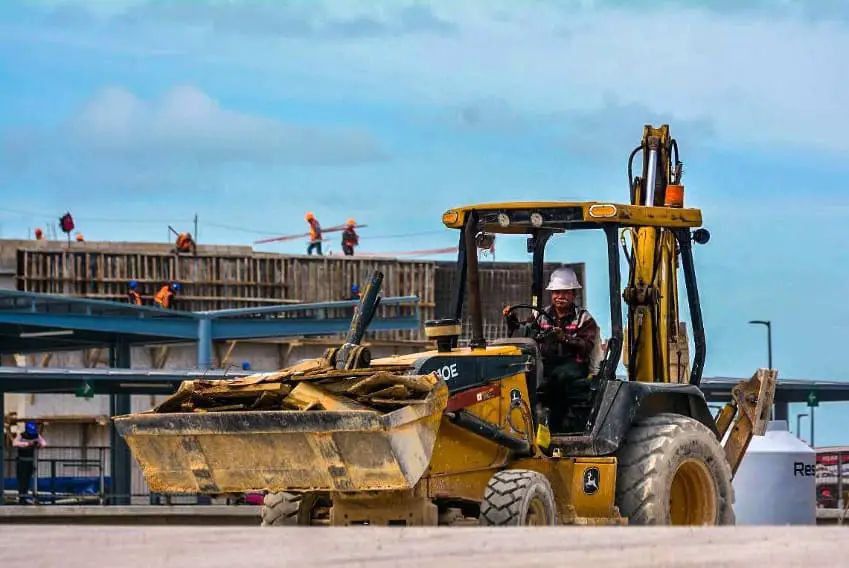
The secondary sector, including manufacturing and construction, led growth in both Quintana Roo and Campeche in the first quarter. (Cuartoscuro)
Governor Mara Lezama celebrated Quintana Roo’s position at the top of Mexico’s economic growth rankings in a video posted to social media.
The INEGI data “positions us as the leading state in economic growth in the entire country,” she said.
“… We continue to work so that all this [growth] is reflected in the social wellbeing of every family in Quintana Roo. [We want] prosperity, but shared prosperity,” said the Morena party governor.
The Quintana Roo economy also performed well in 2023, growing 12% in annual terms.
Which other states recorded strong economic growth in Q1?
Campeche, another state that has benefited from the construction of the Maya Train railroad, recorded the second highest economic growth among Mexico’s 32 federal entities in the first quarter of the year.
The state’s economy grew 5.8% in annual terms between January and March, according to INEGI. Campeche’s secondary sector expanded 89.8% annually in the first quarter of the year.
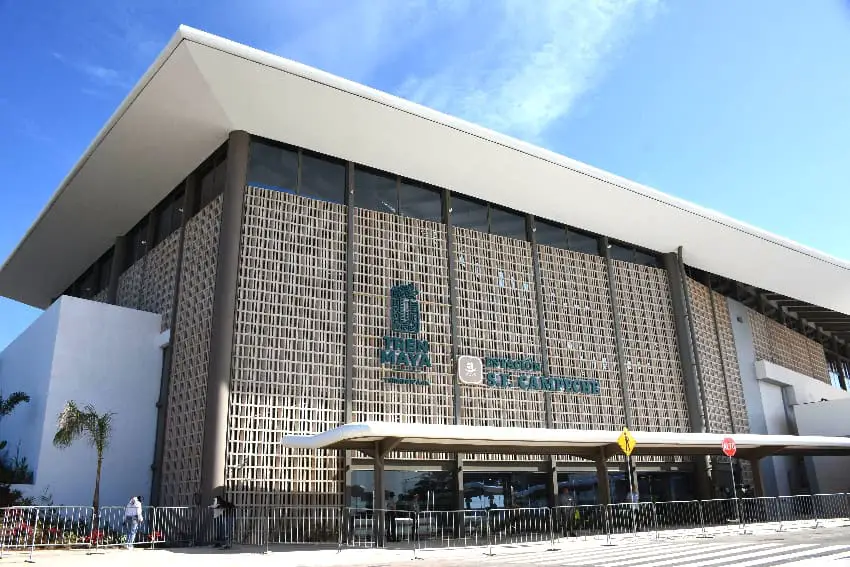
Campeche, like Quintana Roo, has seen explosive growth in the secondary sector in part because of construction of the Maya Train. (Cuartoscuro)
Ranking third to 10th for overall economic growth in the first quarter were:
Durango: annual growth of 5.3%
Baja California Sur: 4.7%
Hidalgo: 3.9%
Sinaloa: 3.9%
Yucatán: 3.9%
Puebla: 3.4%
Veracruz: 2.8%
San Luis Potosí: 2.7%
Guanajuato, México state and Nuevo León all recorded growth above 2%, while the economies of seven states – Querétaro, Sonora, Oaxaca, Morelos, Tamaulipas, Tlaxcala and Aguascalientes – expanded by 1.1%-1.9%.
Nayarit recorded annual growth of 0.4% in the first quarter, while the economies of Michoacán and Mexico City expanded by 0.2%.
Which states recorded economic contractions in Q1?
While the economy of Baja California was stagnant with annual growth of 0.0%, the economies of six states went backwards.
Coahuila recorded the biggest contraction, with GDP declining 3.1% in the northern border state.
The other states that recorded annual economic contractions in the first quarter of 2024 were:
The murder occurred on Tuesday morning outside of the National Chamber of Commerce building in Matamoros. (@MexicoInformo/X)
The murder of a business association leader in Matamoros, Tamaulipas, on Tuesday, prompted another business group to call on authorities to “intensify” security efforts across Mexico.
Julio Almanza, president of the Federation of Chambers of Commerce (Fecanaco) in Tamaulipas and a former candidate for governor in the state, was shot and killed outside the National Chamber of Commerce building in the northern border city.
Almanza, 55, was president of the Federation of Chambers of Commerce in Tamaulipas and a former candidate for governor in the state. (@PamCerdeira/X)
Almanza, who was in his car at the time of the attack, was reportedly shot as many as nine times by assailants who fled the scene on a motorbike.
On Monday, Almanza told the news station Milenio Televisión that Tamaulipas was being held “hostage” by organized crime groups and called on authorities to guarantee security in the state, which borders Texas.
On Tuesday, the influential Business Coordinating Council (CCE) issued a statement expressing “profound regret” over Almanza’s murder, saying that “this terrible occurrence represents a great loss for the business community and all those who worked with him on the promotion of economic development in the region.”
Later in the statement, the CCE expressed its “most profound anger” over “the growing insecurity affecting Mexico, especially businesses and the families that depend on them.”
“… We make an emphatic call to authorities … [to not allow] this act to go unpunished and to intensify the efforts of all three levels of government to guarantee the safety and peace our families deserve,” it said.
“We reaffirm that the development and prosperity of Mexico depends to a large extent on a safe environment, which is essential for economic dynamism and the attraction of new investment,” the CCE said.
“It is imperative that urgent and effective measures are taken to protect all citizens and guarantee a safer and more prosperous future,” it added.
Tamaulipas governor commits to “exhaustive investigation”
Governor Américo Villareal condemned the “cowardly murder” of Almanza and said his government was committed to working “arduously so that security and justice authorities carry out an exhaustive investigation.”
In a post to X on Tuesday, he described the Fecanaco chief as “a brave voice who always stood up against injustices.”
His murder “profoundly affects us as a society and government,” Villareal said.
En #LaMañanera | “Me duele mucho”, dijo el presidente López Obrador sobre el asesinato de Julio César Almanza Armas, presidente de la Fecanaco en Tamaulipas. Dijo que lo “más difícil” cuando se gobierna, es recibir el informe de la muerte de gente inocente, “no tenemos de piedra… pic.twitter.com/nfnCDDQgkh
Asked about the attack on Almanza, President Andrés Manuel López Obrador told reporters at his Wednesday morning press conference that “all murders hurt,” and even more so when the victim is “innocent.”
“… We don’t have hearts of stone, we have feelings,” he said.
López Obrador noted that an investigation into the murder of the Fecanaco leader is underway. No arrests in connection with the crime were reported on Tuesday.
“I send my condolences to the family,” López Obrador said. “It’s very regrettable. We didn’t want this to happen.”
López Obrador’s six-year term in office will go down as the most violent in Mexican history in terms of total homicides, with more than 193,000 recorded since he took office in December 2018.
The relic's tour through Mexico began on Monday. (Andrea Murcia/Cuartoscuro)
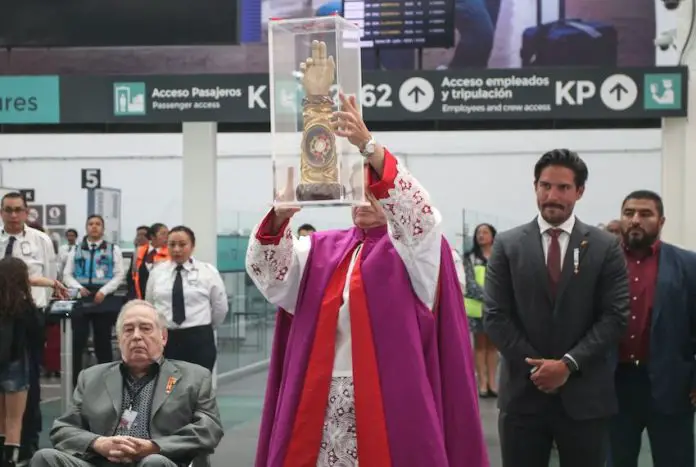
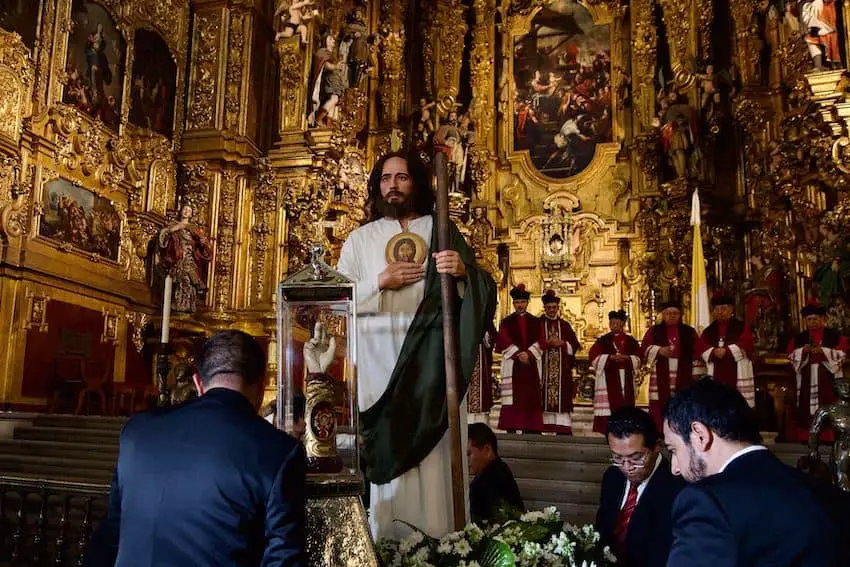
A relic of St. Jude Thaddeus — an arm bone encased in an ornate reliquary — has arrived in Mexico City from Vatican City, following a nearly yearlong tour across the United States.
While on its journey authorized by the Vatican, the relic is a must-see for many Catholics, especially given Mexico’s deep-rooted devotion to St. Jude, the patron saint of impossible cases and lost causes.
Upon arriving at Mexico City International Airport on Monday, the relic was placed in a white van with large windows. (Andrea Murcia/Cuartoscuro)
One of Jesus’ 12 Apostles, St. Jude had the mission of bringing the Christian message to the world. In Mexico, he is celebrated with a feast and veneration every Oct. 28, drawing thousands of people to churches across the country, with many of them praying to him for help in desperate situations.
The relic of St. Jude, often referred to as “the hand of St. Jude,” will be displayed in various parts of Mexico through Aug. 29.
The tour began with a three-day stop at the Metropolitan Cathedral of Mexico City that ends on Wednesday, July 31. There, thousands of people lined up, many of them waiting for two hours or more under a hot sun.
“I think that those of us who are here are here because of the devotion and faith we have in St. Jude,” Ernesto Rosas told the newspaper El Universal while waiting in line. He said looking upon the saint’s hand would be a thrill, even if only for “a few seconds.”
One devotee leaving the church said, “I was able to see the hand for about 40 seconds, and that’s being generous. It was very fast, but it was really worth it.”
The arm bone relic, believed to be a fragment of St. Jude’s own remains, symbolizes the saint’s enduring presence and his role as a helper of the hopeless. It was separated from his skeleton centuries ago, placed into a silver reliquary, and preserved for many years in Armenia, Turkey and Turin, Italy.
In 1949, the Dominicans in Turin presented the relic to the Dominican Shrine of St. Jude Thaddeus in Chicago on the occasion of its 20th anniversary.
For the tour, it was placed in a wooden reliquary carved in the shape of an arm that is making a gesture of giving a blessing.
The relic will make stops at several Mexico City churches before moving onto México state, Tlaxcala and Puebla. (Daniel Augusto/Cuartoscuro)
After its U.S. tour — which started last September in Illinois and went through 28 additional states before ending with two months throughout California — the relic received blessings for its Mexican journey during a special mass in St. Peter’s Basilica in Vatican City.
The relic arrived at the Mexico City International Airport on July 29, where hundreds of people were waiting near the customs office to see it. A delegation from the Mexican archdiocese was there to help place the relic in a white van with large windows that resembled a Popemobile.
The relic was then transported through the streets of Mexico City by motorcade, which included more than a dozen police motorcycles and a helicopter flying overhead for extra security.
The relic’s second stop in Mexico will be Aug. 1-2 at the Temple of San Hipólito in Mexico City. San Hipólito became one of the most important pilgrimage sites in the country for the Oct. 28 feast of St. Jude after an image of the saint was placed on the church’s main altar in 1982.
At many stops, church officials have prepared special events and masses to welcome the relic and accommodate the expected crowds.
After four additional stops in Mexico City through Aug. 11, the artifact will move on to México state, Tlaxcala, Puebla and other locations that have not yet been made public.
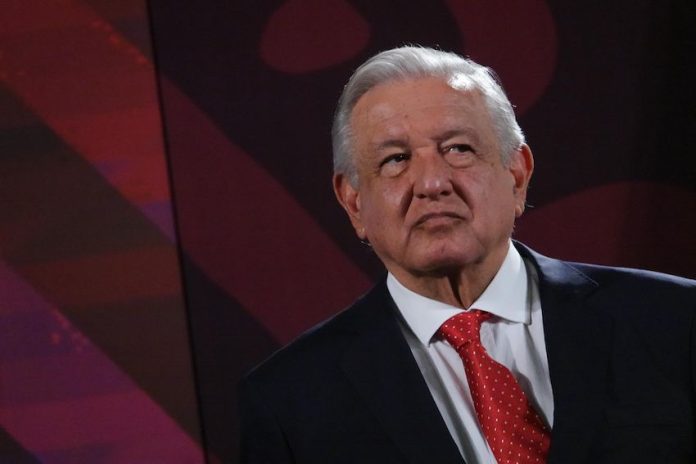
In his morning press conference, AMLO also reiterated that "proof should be presented" of Nicolás Maduro's win on Sunday. (Galo Cañas/Cuartoscuro)
President Andrés Manuel López Obrador said Wednesday that Mexico wouldn’t participate in an Organization of American States (OAS) meeting on Sunday’s allegedly fraudulent presidential election in Venezuela.
“I have information that Alicia Bárcena, the minister of foreign affairs, won’t participate in the OAS meeting [on Wednesday],” López Obrador told reporters at his morning press conference.
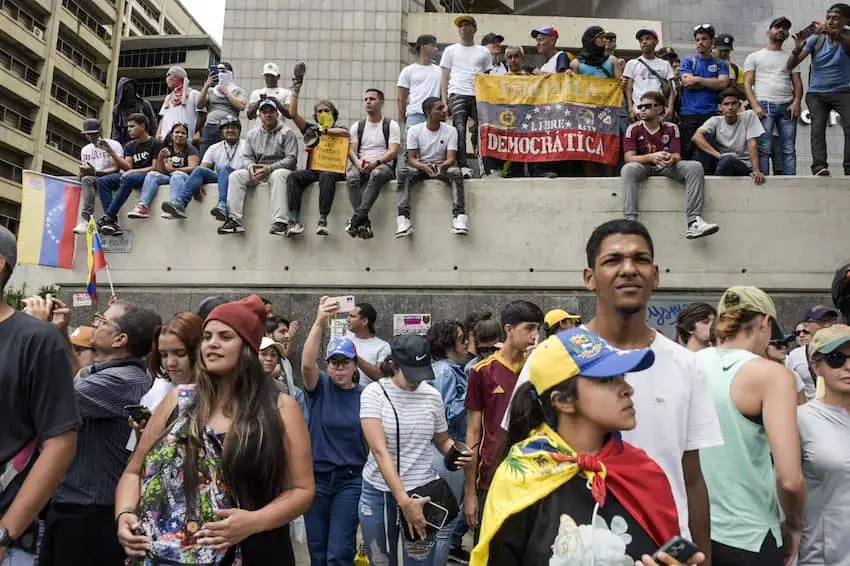
Venezuela ignited in protest on Monday after Nicolás Maduro was declared the winner of the presidential election. (Israel Fuguemann/Cuartoscuro)
“We’re not going to participate because we don’t agree with the attitude of partiality of the OAS,” added AMLO, who has previously been critical of the Washington D.C.-based organization and favored the Community of Latin American and Caribbean States as a forum for regional dialogue during his presidency.
The office of OAS Secretary General Luis Almagro said in a statement on Tuesday that throughout the entire electoral process in Venezuela, “we saw the application by the Venezuelan regime of its repressive scheme complemented by actions aimed at completely distorting the electoral result, making that result available to the most aberrant manipulation.”
Venezuela’s National Electoral Council (CNE) announced on Monday that incumbent President Nicolás Maduro of the United Socialist Party of Venezuela had won a third six-year term in office, triggering protests across the poverty-stricken nation.
On Wednesday, he accused Almagro of having “recognized” one of the candidates — opposition aspirant Edmundo González — as the winner of the election “without any proof.”
“So why go to a meeting like that? This is not serious, it is not responsible, it doesn’t help to find a peaceful, democratic way out of … [this] conflict,” López Obrador said.
“… Enough of this! Enough of the interventionism. Venezuela’s problems have reached a stalemate, a way out hasn’t been found, because there is a lot of interference — they get involved from abroad, not just [foreign] governments, the media [as well],” he said.
Despite that remark, López Obrador voiced an opinion that has been expressed by other world leaders in recent days – that the Venezuela government should release the complete voting records of Sunday’s elections.
“I believe proof [of the election results] should be presented, the voting records,” he said.
So far, however, there is no evidence that electoral fraud was committed in Venezuela, López Obrador said before asserting that he had “a lot of proof” supporting his claim that his defeat in the 2006 presidential election in Mexico was the result of fraud.
In 2006, he added, “no foreign country, no foreign government asked for transparency.”
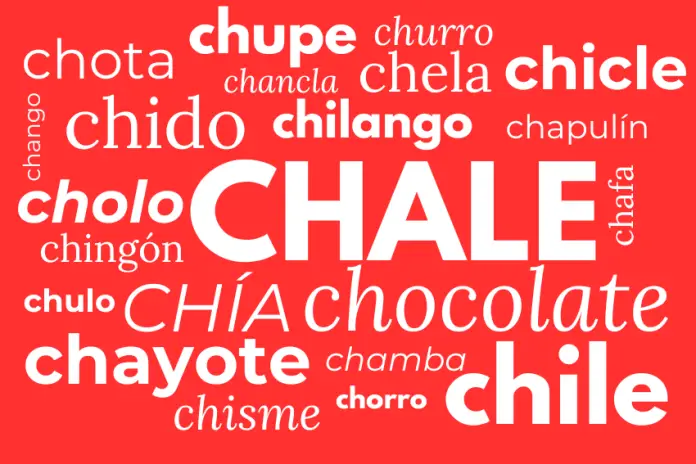
Chale, it's chido how many Mexican words begin with "ch." But why?
Why are there so many Mexican words beginning with “Ch”? “Chela,” “apapachar,” “pachanga,” “carcacha”: if there’s one thing that foreigners visiting Mexico notice about the way we speak, it’s our love for the “ch” sound. The prevalence of “ch” in the way we talk has been paid tribute to in song, by the likes of Café Tacuba’s “Chilango banda.” Even visitors from other Spanish-speaking countries are struck by this feature of Mexican Spanish, which appears in endless words and phrases.
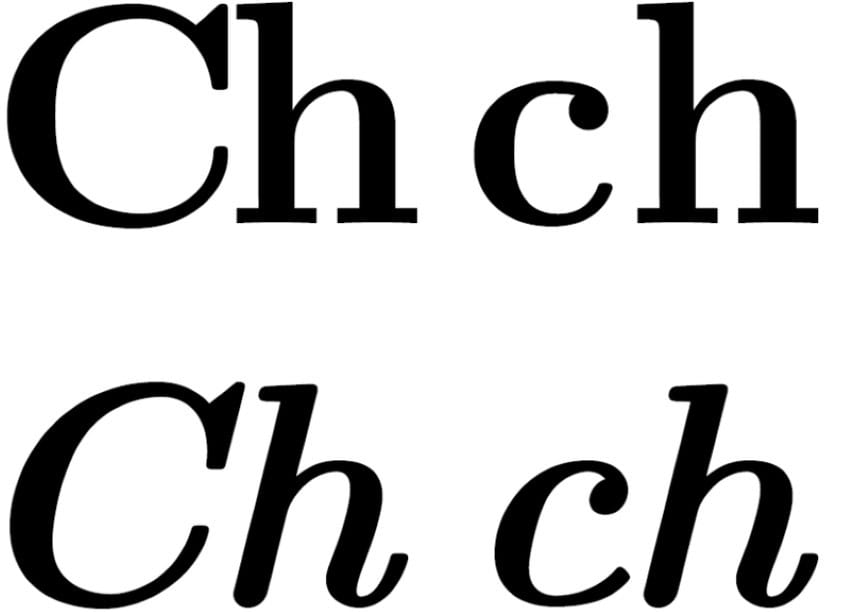
In written Spanish, “ch” is a digraph: a pair of characters used to write a phoneme, or distinct sound. From 1803 and up through 2010, this digraph was actually considered the fourth letter of the Spanish alphabet by the Royal Spanish Academy (RAE). The origins of the use of this letter in Romance languages can be traced back to ancient transcriptions of Greek texts into Latin. The sound represented by the letter “X” did not exist, so scribes began writing it as “ch.” This practice continued into the Middle Ages and was eventually incorporated into Old French.
Mexicans particularly love ‘Ch’ thanks to its ubiquity in pre-Columbian language. (CC 4.0)
In Mexico, the country with the largest number of Spanish speakers in the world, the extensive use of “ch” is a result of the blending of two cultures. “This sound has its origin in Latin, but in Mexican Spanish, it has been reinforced with words from indigenous languages,” explains Concepción Company, a philologist emeritus at the National Autonomous University of Mexico (UNAM) and a member of the Colegio Nacional.
That’s all well and good. But there are almost 500 million Spanish speakers in the world. Why does “ch” appear so much in Mexico?
The ancient Mesoamerican roots of “ch”
While the “ch” sound was already present in medieval Spanish, the prevalence of this phoneme in Mexico has everything to do with the Indigenous languages that were spoken here at the time of colonization. “Ch” is especially prevalent in Nahuatl, still the most widely spoken Indigenous language in Mexico. “Ch” is also present in the Mayan languages, which millions of people speak across Mesoamerica; the most-spoken variety in Mexico is Yucatec Mayan, spoken by about 800,000.
Many of the words these languages gave Spanish describe beings and objects that the Spanish had never encountered before arriving in Mexico, like the Nahuatl “chocolate,” “chile” and “chinampa.” They also describe people, like the “chamaco,” or child, which comes from Yucatec Mayan’s “chaan” and “maák”: small person.
When you’re having a chela on the sidewalk and suddenly the patrol car comes, you tell your friends: “Aguas, ahí viene la chota,” (Omar Martínez/Cuartoscuro)
This pattern is not exclusive to the Mayan or Nahuatl languages and is found in Indigenous languages like Zapotec too.
Some classic words with “ch” that you should learn
“Ch” is ubiquitous, and it even sounds fun. Mexicans know how to play with its phonetics. If you are in Mexico, even on vacation, you’ll be well served by getting familiar with some of the many words in Mexican Spanish that use “ch”:
Chido: Cool.
Chingada: A faraway place where no one wants to go. So, if someone tells you: “Vete a la chingada”, they don’t necessarily wish you well.
Chingón: means something or someone admirable.
Chingo: A lot.
Chingar: To bother or screw someone over.
Chingadera: Something useless.
Chale: An expression of disappointment.
Chole: An expression of being fed up.
Café Tacvba - Chilanga Banda (MTV Unplugged)
Chafa: Something of low quality.
Chela: Beer.
Chupe: A drink, usually alcoholic.
Vocho: Apopular name for the VolkswagenBeetle.
Chiviar: To make someone feel embarrassed.
Chucherías: Knick knacks or tchotchkes.
Chamba: A job.
Cuchichear: talk to someone in a whisper.
Chota: The police.
Pachanga: Party.
Carcacha: An old car in bad condition; a jalopy.
Which Mexican word with “ch” would you add?
Ana Paula de la Torre is a Mexican journalist and collaborator for various outlets including Milenio, Animal Político, Vice, Newsweek en Español, Televisa and Mexico News Daily.
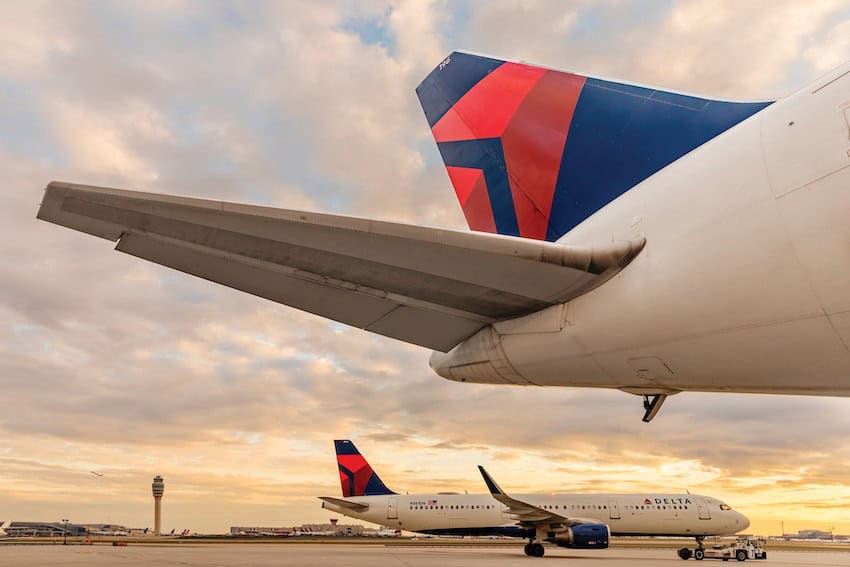
Delta will offer nonstop flights to Mazatlán from Los Angeles and Atlanta starting in late 2024. (Unsplash)
Delta Air Lines and Aeroméxico are introducing new flights between the United States and Mexico beginning this fall, as air connectivity between the two countries continues to expand.
Beginning Jan. 11, snowbirds in Detroit will be able to fly nonstop to the Caribbean resort town of Tulum. With this new route, Delta will operate 50 weekly flights to five Mexican destinations from Detroit, including Cancún, Cabo San Lucas and Puerto Vallarta.
By the end of 2024, Delta will offer 10 weekly flights from the United States to Tulum. (Elizabeth Ruiz/Cuartoscuro)
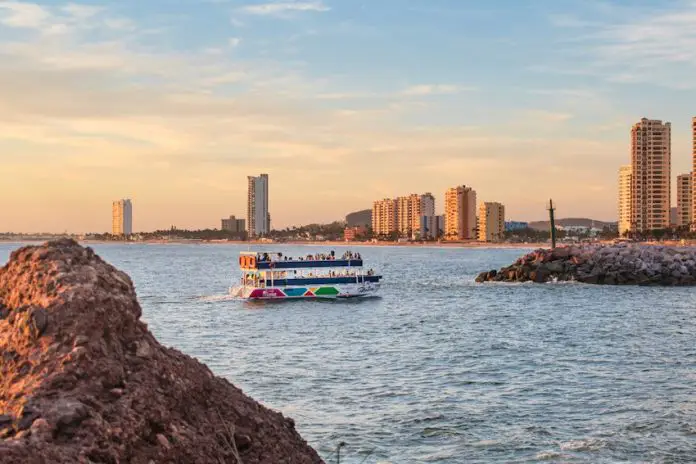
Beginning in November, Delta will also inaugurate a new group of flights to the Pacific Coast cities of Mazatlán, Sinaloa, and Manzanillo, Colima.
Starting Nov. 2, Delta will offer nonstop service from Atlanta to Manzanillo, and on Dec. 21, Delta will operate weekly flights to Mazatlán and Manzanillo from Los Angeles.
While increasing its flights into Mexico, Delta is taking advantage of its Joint Operation Agreement (JCA) with Aeroméxico to expand even further.
Delta’s Joint Operation Agreement (JCA) with Aeroméxico facilitates seasonal routes between the U.S. and Mexico. (Delta Air Lines/Facebook)
Aeroméxico will also start a daily flight to Newark Liberty International Airport from its hub at the Mexico City International Airport (AICM), boosting to 24 the number of U.S. destinations for Mexico’s flagship carrier. This new route — expected to begin operations on Oct. 27 — will increase the JCA’s combined offerings to five daily flights between Mexico City and the New York City market.
In addition, Aeroméxico will open three other seasonal routes. The first will depart from Monterrey, Mexico’s business and industrial hub, to Denver beginning on Dec. 21. This route will be available through April 19, 2025.
Aeroméxico will also operate flights from Manzanillo to Los Angeles from Dec. 21 through April 25, 2025.
Finally, Aeroméxico has announced a new route from Manzanillo to Atlanta that will be offered from Nov. 2 through April 27, 2025.
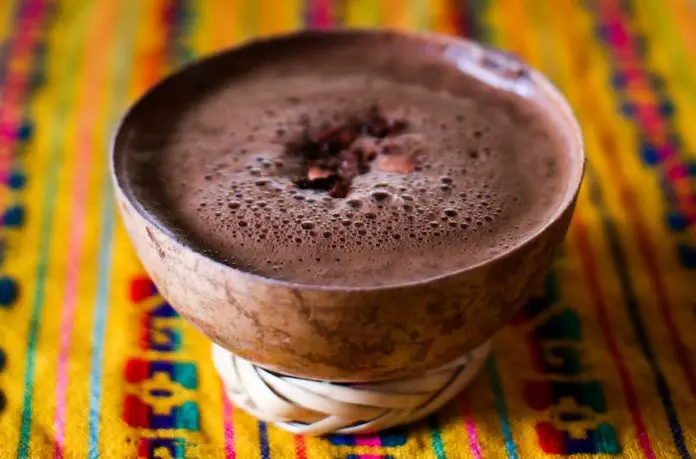
Did you know that the treat we know and love today has religious roots dating back before the Mexica people? (Culinary Backstreets)
What’s the first thing that comes to mind when you think of chocolate? If you ask non-Mexicans, they will probably imagine the staple milk bar we all know and love. But if you ask a Mexican like me, thoughts may turn to a comforting cup of hot chocolate or a traditional Mexican-style chocolate bar. But did you know that chocolate itself is Mexican?
Mexico has its own love story with chocolate — even the word itself comes from the Nahuatl “xocolatl” or “chicolatl.” The story dates back to before the arrival of the Spanish, when ancient cultures revered chocolate as a gift from the gods. With Spanish colonization and the blending of Old and New World traditions, the culture of chocolate expanded to transform into the sweet confection we know today.
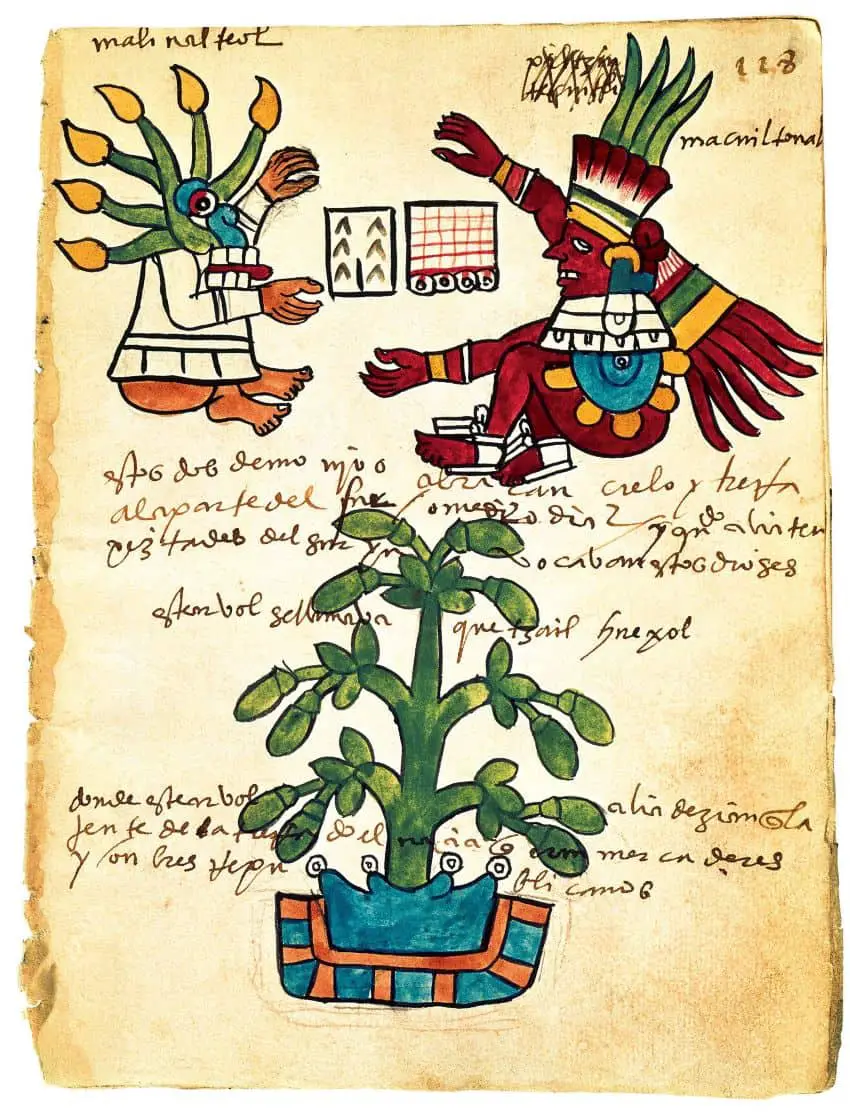
A depiction of a cacao tree from the Tudela Codex. (Noticonquista)
But how did it all start? How did ancient cultures in Mexico use chocolate and how did it evolve to become the world’s most popular sweet treat? From a sacred beverage to an aphrodisiac to a worldwide empire, here are seven surprising facts about the history of chocolate that I’m sure you didn’t know.
1. The Olmecs were the first to turn cacao into chocolate
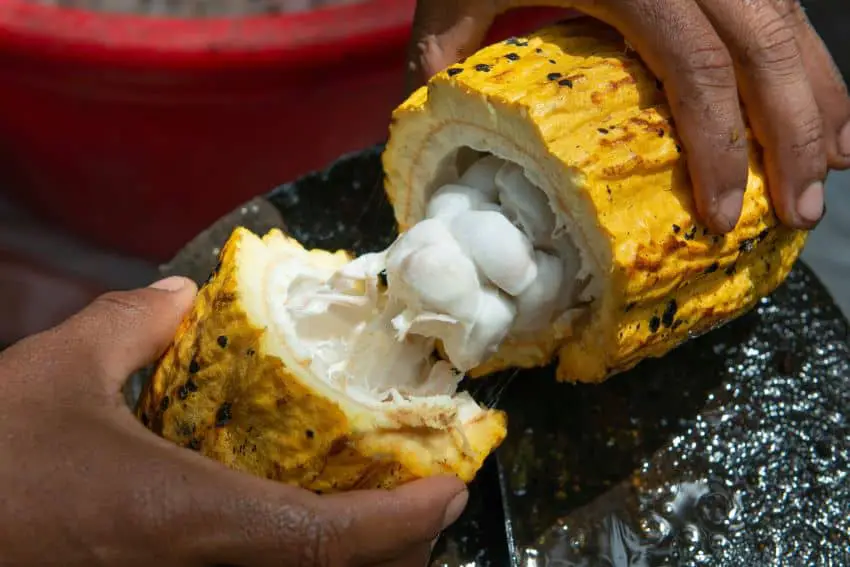
The history of chocolate begins in present day Ecuador, where new research suggests that cacao was first domesticated there around 3,600 years ago. However, researchers also believe it was the Olmec civilization, which flourished in today’s Mexican states of Tabasco and Veracruz from 2500 BC to AD 200, that fully domesticated cacao and discovered how to transform it into chocolate.
There is no written record of exactly how the Olmecs consumed chocolate. However, experts believe they consumed it at home and during religious ceremonies.
2. The Maya expanded the use of chocolate
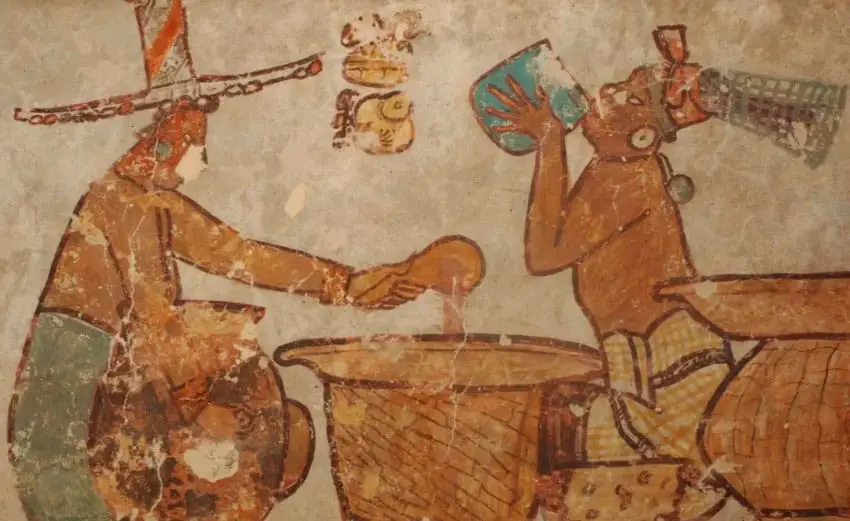
Centuries after the Olmecs vanished, the Maya civilization built upon their knowledge of chocolate. They improved processing techniques, consuming chocolate as a beverage and using it in sacred rituals. Maya people also discovered the technique of fermenting cocoa beans to several types of chocolate beverages.
The Olmecs might have introduced chocolate to Mexico, but it was the Maya who mastered drinking it. (Tierras mayas)
Spanish bishop Diego de Landa, one of the most notable chroniclers of Yucatán during the early years of Spanish colonization, said the Maya used chocolate as an anointment on children during what he perceived as baptisms and as a toasted beverage in engagement and marriage ceremonies — think today’s champagne. Moreover, they cultivated sacred groves of cacao trees and assigned divine properties to chocolate, extensively writing about it in their codices and in the Popol Vuh, the sacred narrative of the Kʼicheʼ Maya people.
3. The perfect cup of chocolate had chili, no sugar and a lot of foam
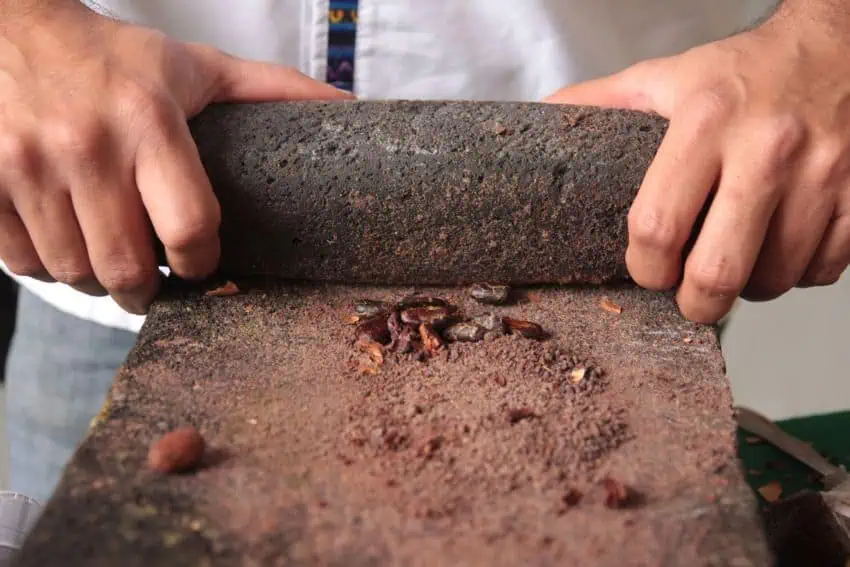
To prepare a good cup of chocolate, women would ground the cocoa beans three times in a metate, or traditional stone hand mill, to ensure they were finely crushed. They would then add washed corn kernels and water, mixing the blend until it had slightly thickened.
The Mexica and Maya added different spices like vanilla and annatto, flowers, seeds and different varieties of chilies. The Maya also added honey.
An essential part of a cup of chocolate was the foam. According to Spanish friar and colonial chronicler Juan de Torquemada, to ensure “a good cacao with a lot of foam,” codices show women pouring the beverage from a high distance to make it frothy.
Traditional chocolate is rolled and milled as part of the preparation process. (Marco Polo Guzmán/Cuartoscuro)
Depending on the season, ancient cultures would drink cocoa as a hot or cold beverage. Recipes varied depending on the time of day and the occasion.
4. The Mexica thought chocolate was a divine gift and an aphrodisiac
Like the Maya, the Mexica (better known as the Aztecs) and other Central Mexican cultures prized chocolate, which had both spiritual and practical significance for them.
In the Mexica capital of Tenochtitlán — today’s Mexico City — only royalty, warriors and traders had access to the glorious beverage. Spanish conquistador Bernal Díaz del Castillo reported that Emperor Moctezuma’s guards drank 2,000 cups of chocolate “with foam” daily.
The Mexica also thought of chocolate as an aphrodisiac. Moctezuma is said to have drunk several cups of chocolate before visiting his many wives.
5. The Mexica used cacao beans as currency
The Mexica gave cocoa an added value as currency. Some records say that the royal coffers of Tenochtitlán held spectacular quantities of cocoa, resembling the modern vaults in today’s banks.
Raw cacao beans were considered a form of currency in early Mexico. (Rodrigo Flores/Unsplash)
Since the Mexica used cacao to measure wealth, it was said that Tlaxcala was a poor region because they didn’t have “cacao to drink.” Many vassals paid tribute to Tenochtitlán in the form of cacao beans.
Historians believe the Mexica used different varieties of cacao beans for currency and for preparing beverages.
The beans continued to be used as currency decades after the Conquest: a 1545 record of market prices from Tlaxcala shows that a turkey hen went for 100 full cacao beans or 120 shrunken ones, a ripe avocado could be had for one full bean and a small rabbit would run you 30 beans.
6. Europe gave sweet chocolate to the world
After learning about the energizing properties of chocolate, Spanish conquistador Hernán Cortés introduced the beverage to his soldiers to sustain them during campaigns when they had access to no other foods. “Just one cup of this drink strengthens the soldier such that he can walk all day without needing any other food,” the conquistador wrote.
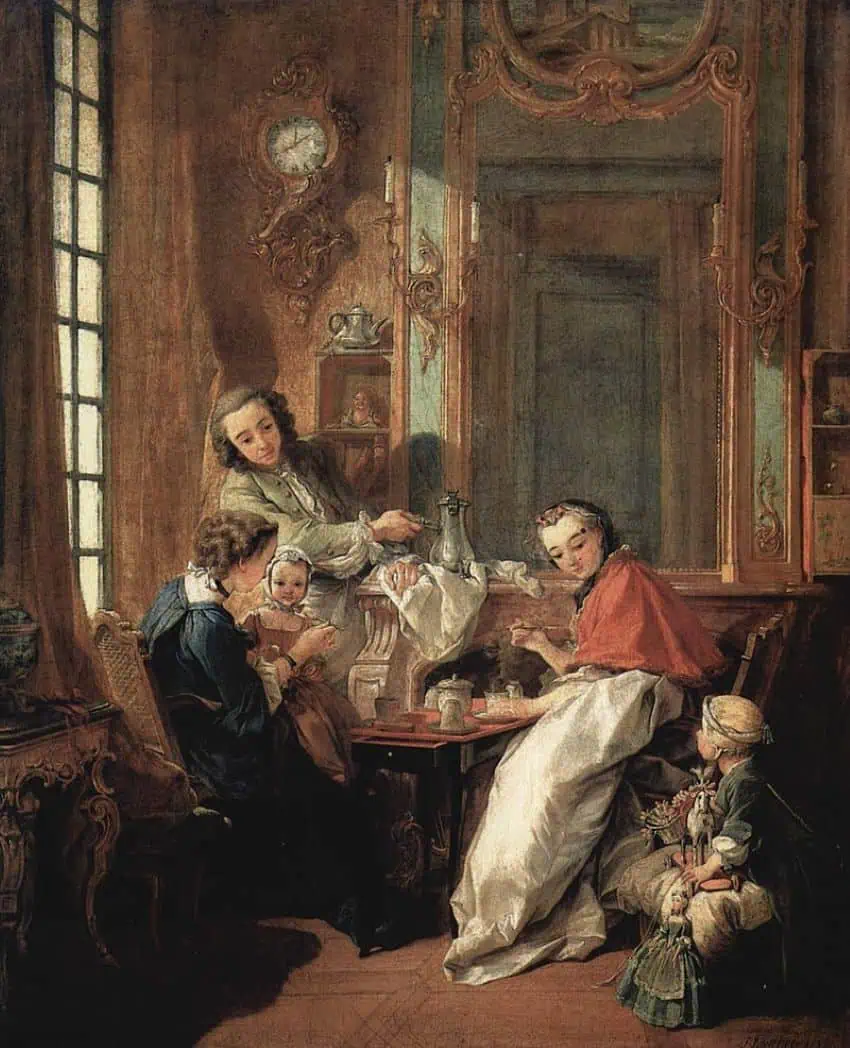
“The Lunch” (1739) by François Boucher. Chocolate became a sensation in Europe, where it rapidly became a symbol of social status. (Wikimedia Commons)
Later, the fusion of cultures turned the cup of chocolate into a sweet and hot beverage by adding ingredients like cinnamon and eggs and replacing chilis with sugar. Besides cacao, vanilla is the only original ingredient that remains in most commercially produced chocolate.
In Spain, the beverage became a household staple and traveled to other parts of Europe until it reached the Swiss, the inventors of the modern-day chocolate milk bar we know today.
Next time you think of chocolate, don’t forget to thank Mexico for the role it played in making this treat what we know today.
Gabriela Solis is a Mexican lawyer turned full-time writer. She was born and raised in Guadalajara and covers business, culture, lifestyle and travel for Mexico News Daily. You can follow her lifestyle blog Dunas y Palmeras.
Joaquín Guzmán López, seen here in this photo taken by US authorities sometime after his arrest, pleaded not guilty in U.S. court to drug trafficking and other charges. He could face the death penalty. (Internet)
Joaquín Guzmán López, one of the sons of convicted drug lord Joaquín “El Chapo” Guzmán Loera, pleaded not guilty to drug trafficking and other charges in the United States on Tuesday.
His appearance in federal court in Chicago came five days after he and accused Sinaloa Cartel leader Ismael “El Mayo” Zambada flew into an airport near El Paso, where they were both arrested.
Guzmán, 38, was arrested in El Paso, Texas, along with another long-sought-after suspected leader in the Sinaloa Cartel, Ismael “El Mayo” Zambada, seen here. Zambada also pleaded not guilty in U.S. court last Friday. (Cuartoscuro)
Zambada — who faces charges for a range of crimes including drug trafficking, murder, kidnapping and money laundering — pleaded not guilty last Friday.
Wearing an orange prison jumpsuit and sporting a goatee, Guzmán López entered his not-guilty plea before U.S. District Judge Sharon Johnson Coleman during a hearing that lasted about 15 minutes. The 38-year-old alleged Sinaloa Cartel operative known as “El Güero Moreno” faces five counts, including drug trafficking and money laundering charges. He could face the death penalty if convicted on one of the counts.
After the hearing, Guzmán López’s lawyer told reporters that his client does not have a deal with United States authorities.
“Take it from me as someone who knows, rather than from someone who thinks he knows or an anonymous source,” said Jeffrey Lichtman, who represented Guzmán Loera at his 2018–19 trial and is also the lawyer for another of El Chapo’s sons, Ovidio, who was extradited to the United States last September.
“We’ve got no agreement with the government. There has never been an agreement with the government with Joaquín Guzmán López. Period,” he said.
Earlier in court, Guzmán answered the judge’s questions in “heavily accented but fluent English,” according to a Chicago Tribune report. He responded to most questions by simply saying “Yes, your honor” or “No, your honor,” Reuters reported.
Judge Johnson ruled that Guzmán López must remain in custody pending trial. A trial date has not been set, but he is scheduled to appear in court again on Sept. 30.
How Guzmán López and Zambada came to be arrested at the Doña Ana County International Jetport last Thursday was not discussed at the hearing in Chicago.
Joaquín López Guzmán arrives in Chicago in U.S. custody after turning himself in near El Paso. Zambada’s attorney, meanwhile, has said that López Guzmán “forcibly kidnapped” his client and forced him to board the El Paso-bound plane with him. (Obtained by NBC)
The United States government told the Mexican government that it was informed on several occasions that Guzmán López was considering handing himself in to U.S. authorities, but it stressed that no deal had been reached with the alleged cartel member before he arrived at the airport.
A lawyer for Zambada said Saturday that Guzmán López “forcibly kidnapped” his client before he was “forced” onto a U.S.-bound plane.
U.S. officials previously told media outlets that Guzmán López tricked Zambada into getting onto the plane by telling him they were going to inspect clandestine airfields or real estate within Mexico.
The Chicago Tribune reported that Lichtman “criticized — but did not refute —” the allegation by Zambada’s lawyer that Guzmán López “forcibly kidnapped” El Mayo and put him on a plane against his will. Lichtman noted that his client is not facing any charges related to that allegation.
“He’s not being accused of kidnapping. When the government accuses him, then I’ll take notice. When lawyers who are trying to score points with the media make accusations, then I ignore that because it’s meaningless,” he said.
Lichtman repeatedly told reporters that he couldn’t answer questions about how his client came to be on a U.S.-bound plane with Zambada.
The story, he said, “seems to be changing every few minutes.”
“Eventually it will all come out. But as a defense lawyer, it’s just noise. I’m here to help the man and get him the best possible result. I’m not here to respond to the internet. … Whatever happened was not done at the direction of the [U.S.] government,” Lichtman said.
The lawyer said that he had spoken only briefly with Guzmán López — who reportedly worked as a Sinaloa Cartel financial operator — and found him to be “intelligent.”
“… He’s happy to be here. That’s all I can really say at this point,” Lichtman said, a remark that seemed somewhat strange given that his client could face the death penalty if convicted.
“I like him already. He’s somebody I can relate to. Just like I related to his father, just like I related to Ovidio,” he said.
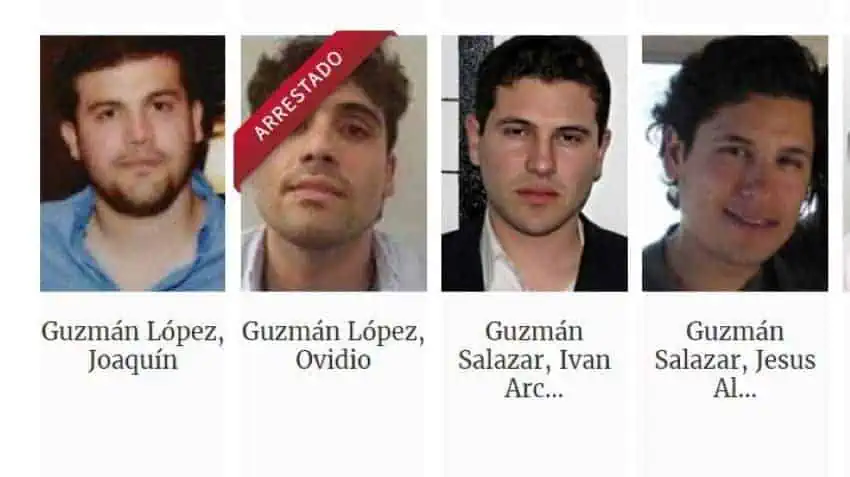
Guzmán López, left, appeared in a U.S. Drug Enforcement Administration (DEA) photo of “Los Chapitos” after U.S. authorities indicted them on major drug trafficking charges in 2023. “Los Chapitos” is a nickname for the four sons of ex-Sinaloa Cartel leader Joaquín “El Chapo” Guzmán Loera. All four have been accused of being major figures in the Sinaloa Cartel. Guzmán López is now the second of Los Chapitos to be in U.S. custody.
The four ‘Chapitos’ were indicted in the US in 2023
“The Chapitos pioneered the manufacture and trafficking of fentanyl – the deadliest drug threat our country has ever faced – flooded it into the United States for the past eight years and killed hundreds of thousands of Americans,” Anne Milgram, head of the Drug Enforcement Administration, said at the time.
The DOJ said that after the arrest of El Chapo in 2016 and his extradition to the United States the following year, the four Guzmán brothers “allegedly assumed their father’s former role as leaders of the Sinaloa Cartel, along with Zambada García and Dámaso López Núñez, aka Licenciado.”
The department said that the Chapitos “are alleged to have repeatedly and consistently transported lethal amounts of cocaine, heroin, methamphetamine, and fentanyl” to the United States.
“The Chapitos allegedly used cargo aircraft, private aircraft, submarines and other submersible and semi-submersible vessels, container ships, supply vessels, go-fast boats, fishing vessels, buses, rail cars, tractor trailers, automobiles, and private and commercial interstate and foreign carriers to transport their drugs and precursor chemicals,” the DOJ said.
“They allegedly maintained a network of couriers, tunnels, and stash houses throughout Mexico and the United States to further their drug-trafficking activities.”
While Joaquín and Ovidio are now in U.S. custody – the latter was captured in Culiacán in early 2023 – Iván and Alfredo remain at large. A fifth brother, Édgar, was murdered in 2008.
President-elect Sheinbaum calls for US to provide more information on cartel arrests
At a press conference on Tuesday, President-elect Claudia Sheinbaum said that United States authorities should provide to Mexico all the information it has about the arrests of Guzmán López and Zambada.
At a press conference Tuesday, President-elect Claudia Sheinbaum called on the U.S. government said that what Mexico knows about the arrest of Guzmán López and Zambada is “limited” and called upon U.S. authorities to be more forthcoming on the matter. (Andrea Murcia/Cuartoscuro)
“… If there is more information, they should provide more information, and not speculate either,” Sheinbaum said, making an apparent reference to the different versions of events anonymous U.S. officials have outlined to the media.
President Andrés Manuel López Obrador said Monday he was confident that the U.S. government would provide “all the information” it has to Mexico.
He reiterated that possible U.S. involvement in the arrests from Mexico could not be ruled out, but stressed that “there is no proof” of that having occurred.
“What we can say is that the government of Mexico didn’t participate,” López Obrador said.
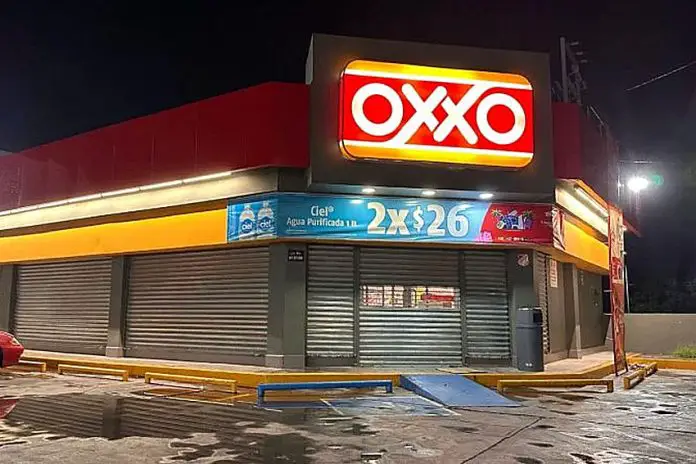
A closed Nuevo Laredo Oxxo with metal security doors in place until further notice. (Mañana de Nuevo Laredo/Twitter)
Oxxo, the convenience store chain owned by the Mexican company FEMSA, has temporarily closed all 191 of its stores in the northern border city of Nuevo Laredo, Tamaulipas, due to what FEMSA calls a crime wave in the area that poses safety concerns for employees.
FEMSA said a wave of violence has made working in their stores unsafe for staff, though specifics were not disclosed. FEMSA also temporarily closed seven Oxxo gas stations in the area.
Tamaulipas state public security ministry spokesperson Jorge Cuéllar Montoya said that authorities are working with FEMSA to install upgraded security measures so the closed stores can reopen. (Government of Tamaulipas)
“At Oxxo and Oxxo Gas, we have suspended operations in Nuevo Laredo due to acts of violence that have compromised the safety of our employees,” the company, based in Monterrey, Nuevo León, said in a statement.
Despite the closures, FEMSA assured employees that their salaries and benefits would remain unaffected.
The conglomerate, which also owns 17 Coca-Cola bottling plants in Mexico, added that it is working closely with relevant authorities — including the National Defense Ministry (Sedena) — to ensure a safe reopening.
A spokesman for the Tamaulipas state public security ministry, Jorge Cuéllar Montoya, ruled out extortion as the cause for the closures, according to the newspaper El Universal.
However, local reports by several other Mexican newspapers indicate that organized crime groups in the region have been pressuring businesses, including Oxxo, with demands related to gas distribution and operational hours.
In one incident that reportedly occurred last week, criminal groups took two Oxxo employees hostage, asking them for information on various topics. According to El Universal, that incident forced Oxxo’s hand.
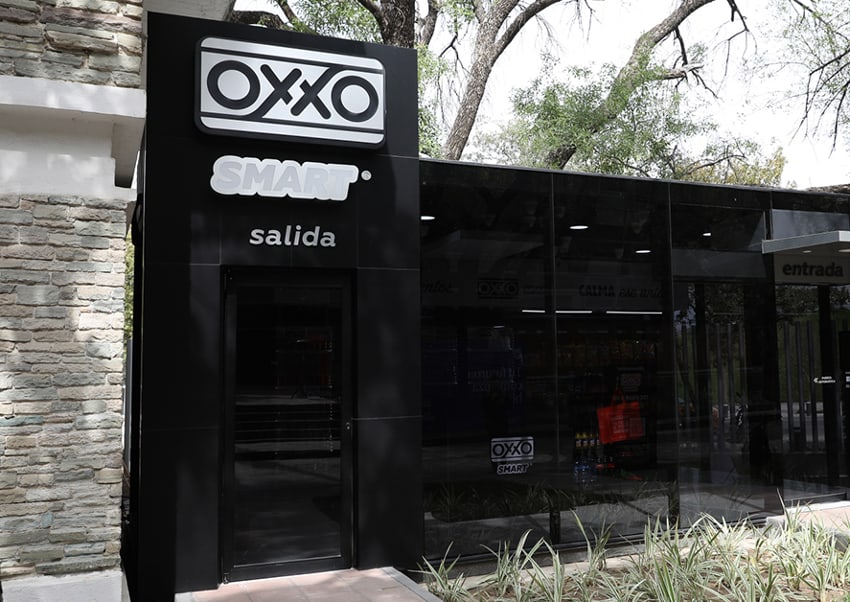
The Oxxo chain’s first 100% digital cashierless checkout store opened in Monterrey in 2024. Oxxo parent company FEMSA says that it’s just the beginning of more innovations in how Oxxos operate that will translate into more convenience for customers and more safety for employees. (Femsa)
Cuéllar highlighted that the Mexican Army had deployed 100 soldiers and other personnel to Nuevo Laredo within the past week. According to a statement from Sedena, these are elite members of the army’s Special Forces Corps who will reinforce the current security measures in Nuevo Laredo.
The state Security Ministry said it plans to install alarm buttons and enhance security measures at the stores and gas stations. However, FEMSA has not specified when operations will resume or commented on the security upgrades.
“We hope the company will be able to resume operations soon,” Cuéllar Montoya said.
The violence in Nuevo Laredo comes amid broader concerns about crime in Tamaulipas, although President Andrés Manuel López Obrador has downplayed the severity of crime in the region and highlighted a decrease in homicide rates.
FEMSA, which operated 21,970 Oxxos in Mexico at the end of 2023, recently reported that its total consolidated revenues for the second quarter of 2024 were 198.7 billion pesos (US $10.6 billion), a 12.2% increase over the same quarter in 2023 but a decline of 9.7% from the first quarter of 2024.