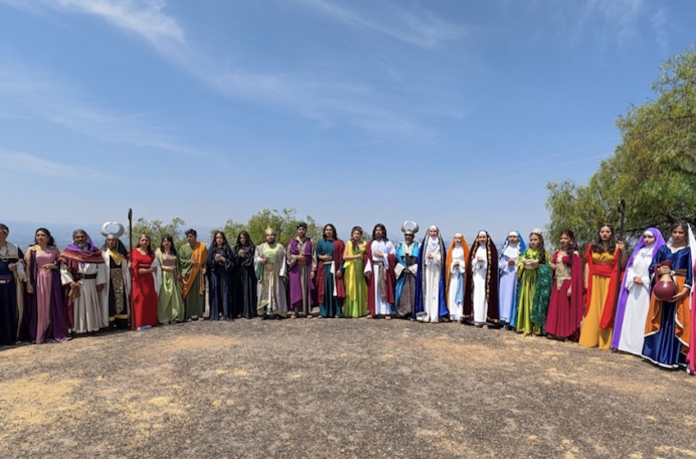
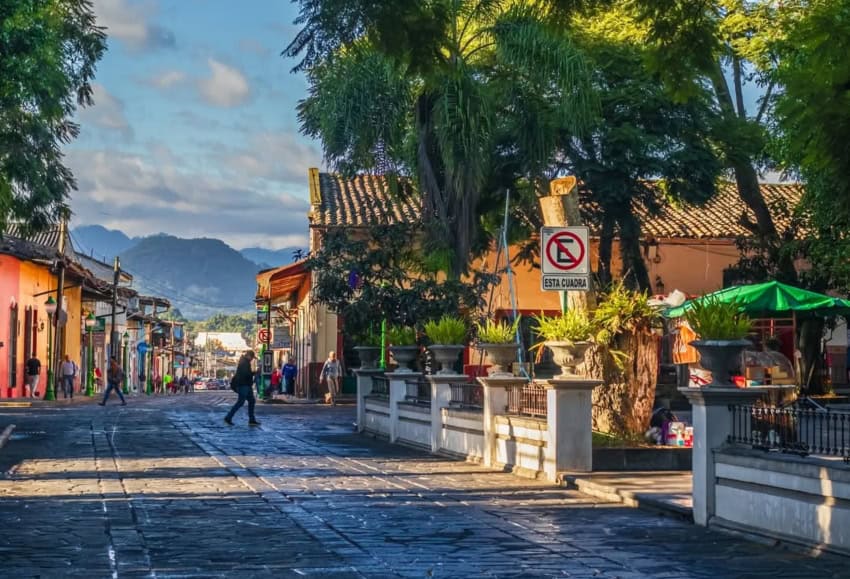
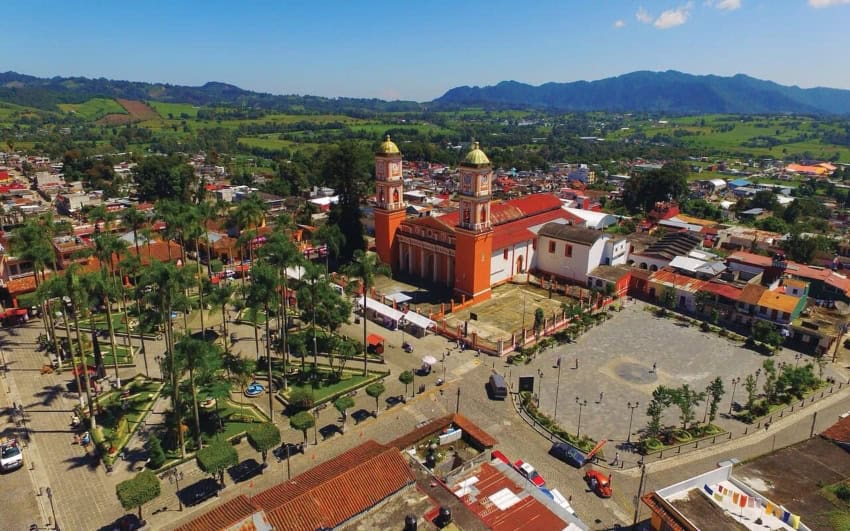
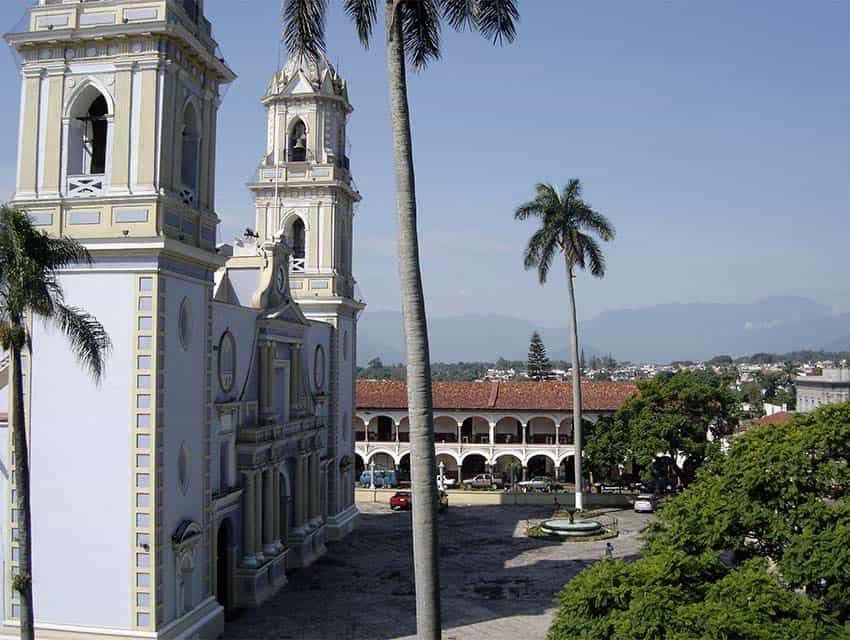
Iztapalapa, Meixico City's largest borough, stages the capital's largest Holy Week spectacle, a locally conceived and performed outdoor Passion Play that has gained international status as a UNESCO Cultural Heritage event. (Cossiac)
Mexico City’s biggest borough turned into a vast open-air stage Friday as Iztapalapa held its famous Passion Play for the first time since winning UNESCO recognition as a piece of world cultural heritage.
“It feels different this year,” local resident Juan López commented. “There are more people coming from outside, as if the news has opened the door to the world.”
The play depicts the passion of Christ, including his bearing of the cross before his death and, according to the Catholic and other Christian religions, his eventual resurrection, both events believed to have taken place during the Holy Week being celebrated today in Mexico. (Mario Jasso/Cuartoscuro.com)
Iztapalapa, a densely populated, working-class area in the city’s east, hosts one of the world’s largest reenactments of Christ’s trial, crucifixion and resurrection.
The Holy Week play, now in its 183rd year, draws crowds that local officials say can top 2 million people over Good Friday.
UNESCO added the “Representation of the Passion, Death and Resurrection of Christ in Iztapalapa” to its Representative List of the Intangible Cultural Heritage of Humanity in December.
The designation recognizes the event as a living community tradition and highlights nearly two centuries of neighborhood organizing, faith and local identity.
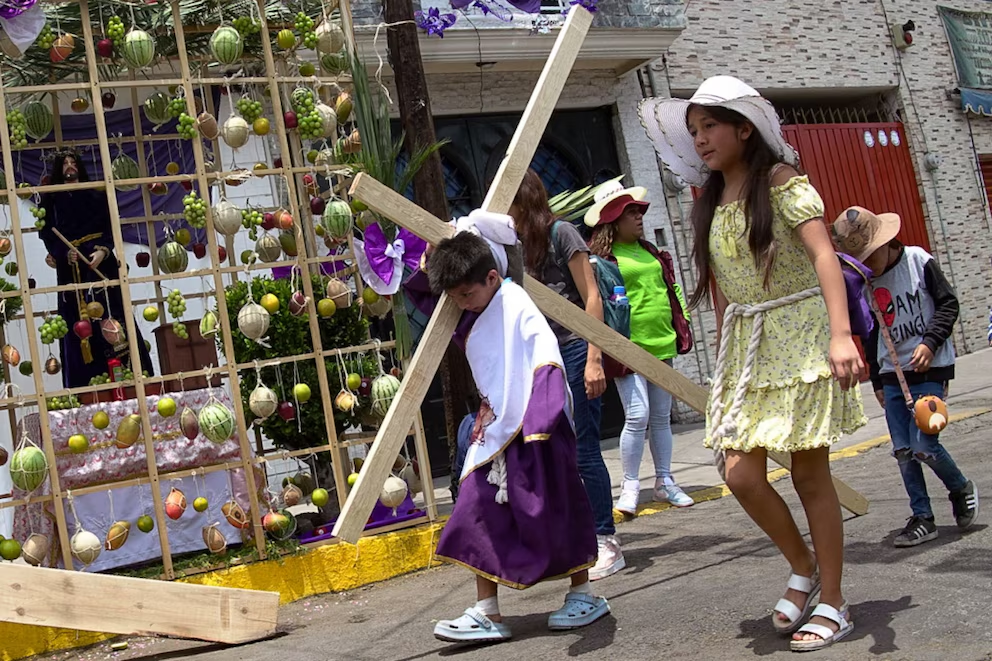
The Passion Play runs across Holy Week, typically beginning on Palm Sunday and peaking on Good Friday with the Via Crucis and crucifixion. (Mario Jasso/Cuartoscuro.com)
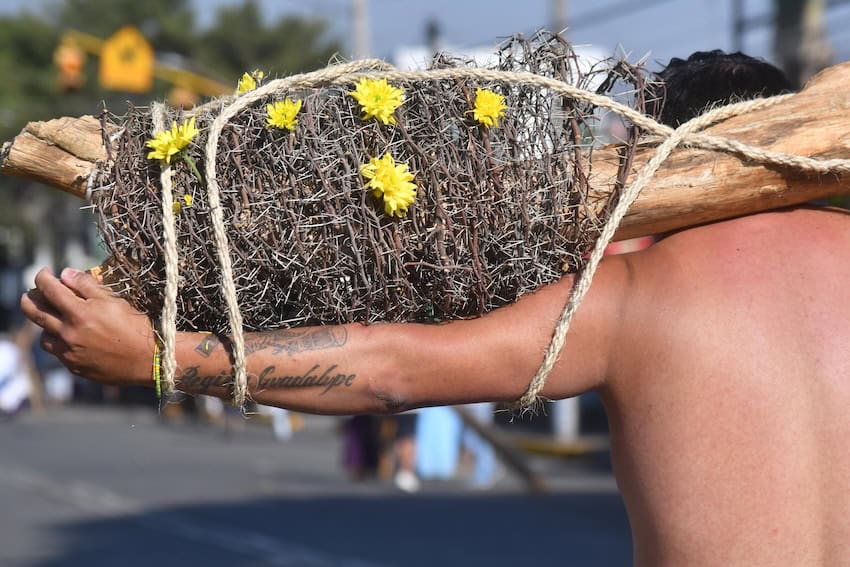
On Good Friday, streets fill with Nazarenes in purple robes, barefoot penitents and costumed Roman soldiers moving in a procession that covers more than 10 kilometers.
The route winds through Iztapalapa’s eight historic neighborhoods before climbing Cerro de la Estrella, a hill overlooking the borough that becomes a symbolic Mount Calvary for the crucifixion scene.
Portraying Jesus this year is 25-year-old Arnulfo Morales Galicia, described by the news source Infobae as a medical surgeon and a graduate of the National Autonomous University of Mexico (UNAM).
He was chosen after a demanding selection process that tests physical endurance, discipline and conduct. On Friday, he is actually bound to the cross for 20 minutes at around 3 p.m., said to be the time at which Jesus was crucified.
The Good Friday procession covers more than 10 kilometers, through Iztapalapa’s eight historic neighborhoods before climbing Cerro de la Estrella, a hill overlooking the borough that becomes a symbolic Mount Calvary for the crucifixion scene. (Cossiac)
Actress Erika Morales Hernández has stepped up to play the Virgin Mary after last year portraying a different character, the play’s “adulterous woman.”
Both actors come from the borough and are part of a cast drawn from local families.
Mexico City authorities have deployed more than 9,000 police officers, along with paramedics, patrol vehicles and helicopters, and shut key avenues around the borough to manage the influx.
For residents, the new UNESCO label adds global prestige, but the core remains local: a promise made during a mid-1800s cholera outbreak that has grown into one of Mexico’s most emblematic Holy Week rituals.
The Passion Play runs across Holy Week, typically beginning on Palm Sunday with Jesus’s entry into Jerusalem, continuing on Tuesday and Holy Thursday, and peaking on Good Friday with the Via Crucis and crucifixion.
The narrative usually concludes on Holy Saturday (also called Black Saturday) with the resurrection and final curtain call — one day before Easter Sunday.
Mexico City Mayor Clara Brugada surprised actor Pedro Pascal on the set of his upcoming movie, "De Noche," on Thursday. (Clara Brugada)
Mexico City has won another high-profile endorsement, this time from Chilean American actor Pedro Pascal.
The actor, who found himself on set in Mexico City’s Historic Center filming for his new movie, “De Noche” (“At Night”), declared Mexico City his “favorite city in the whole world” during a surprise visit from Mexico City Mayor Clara Brugada.
El cine brilla más con el talento latino de actores como Pedro Pascal.
Su trabajo ha trascendido géneros, idiomas y fronteras, e inspira a nuevas generaciones que sueñan con interpretar historias desde su identidad y origen. ¡Desde la Ciudad de México te deseamos éxito en cada… pic.twitter.com/wmbMa1ew6Q
— Clara Brugada Molina (@ClaraBrugadaM) April 2, 2026
Brugada arrived on set to meet the actor and celebrate his birthday, hailing him as “one of the great Latino icons of the audiovisual industry at the international level.”
She also expressed the city’s support for Pascal’s new project, a period drama following the romance between a hardened detective (Pedro Pascal) and a young boarding school teacher (Danny Ramirez) who must flee together to Mexico from Los Angeles in the 1930s.
Pascal replaced actor Joaquín Phoenix — who developed the story along with director Todd Haynes — in the lead role after Phoenix unexpectedly quit in 2024.
“The movie wouldn’t exist if it wasn’t for Mexico, really. Mexico’s beauty, the city — it’s a visual magic that could not happen in any other country,” Pascal said.
During the encounter, Brugada revealed it was Pascal’s birthday and presented him with an artisanal figurine of an axolotl as a gift.
Known for charismatic portrayals of paternal figures, Pascal rose to fame in his early forties after starring in the series “Narcos,” “The Mandalorian” and “The Last Of Us.” His prolific acting career now includes starring roles in recent movies like “The Fantastic Four,” “The Materialists” and “Wild Robot.”
MEXICO CITY — A new study by ocean conservation group Oceana has found that over one third of all seafood sold in Mexico is not the species it claims to be, with researchers describing the findings as “alarming” and marine biologists describing them as “a lot to process before lunch.”
The report’s most striking finding concerns marlin, which was substituted at a rate of 91% and replaced in multiple cases with shark species currently listed as endangered. This means that during Lent, customers who ordered marlin, a large, commercially fished billfish of no particular conservation concern, were instead served — at a markup — a protected animal whose continued existence scientists are actively trying to secure, by restaurants that apparently decided the most efficient response to marine conservation law was to charge extra for violating it.
One Mazatlán restaurant was trying to pass this off as a blue whale. (Christian Mehlführer/Wikimedia Commons)
Red snapper, meanwhile, was found to have been substituted with up to 16 different species — a finding that raises the question of what, precisely, a restaurant means when it writes “red snapper” on a menu. Researchers concluded it means, broadly, “fish.” It may be one of 16 fish; it will not be red snapper.
The menu is, in this sense, less a list of available dishes than a starting point for a conversation the customer does not know they are having.
Perhaps most philosophically troubling is the situation in Mazatlán — one of Mexico’s premier fishing ports. Here, boats leave at dawn and return with fresh Pacific seafood that is unloaded onto the dock, sold to vendors, transported to restaurants and yet somehow arrives on the plate as tilapia — a freshwater species farmed primarily in inland tanks. Its presence in a coastal Pacific seafood restaurant represents either a supply chain of remarkable ambition or a substitution so brazen that it has lapped itself and become something approaching performance art.
Oceana is calling for a national seafood traceability standard. The tilapia was unavailable for comment, possibly because it was busy being sold as something else.
Elderly Xochimilco resident and activist Amalia Salas Casales — better known as "Abuela Amalia" — remembers when the town's chinampas canals were still pristine. Salas, left, has spent 60 years fighting to restore them. (Tracy L. Barnett)
Abuela Amalia carries her 90 years of memories — and more than six decades of resistance — in the baskets of flowers and vegetables she carries through the chinampas of Xochimilco.
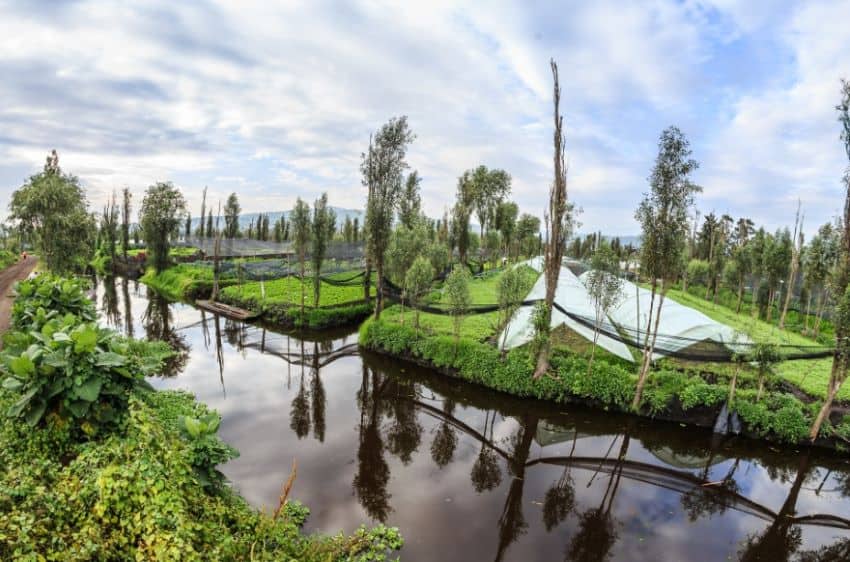
When Amalia Salas Casales was a child, those waters ran clear. She moved through a vast network of canals lined with chinampas — the floating agricultural islands that once fed Mexico City. She learned to cook with native ingredients harvested from the lake system, following recipes passed down through generations — some made with species that have since disappeared. The water was clean enough to drink, the ecosystem abundant with life.
The Xochimilco canal system is contaminated, with iconic wildlife like the axolotl at risk of extinction. (Regeneration International)
Xochimilco today
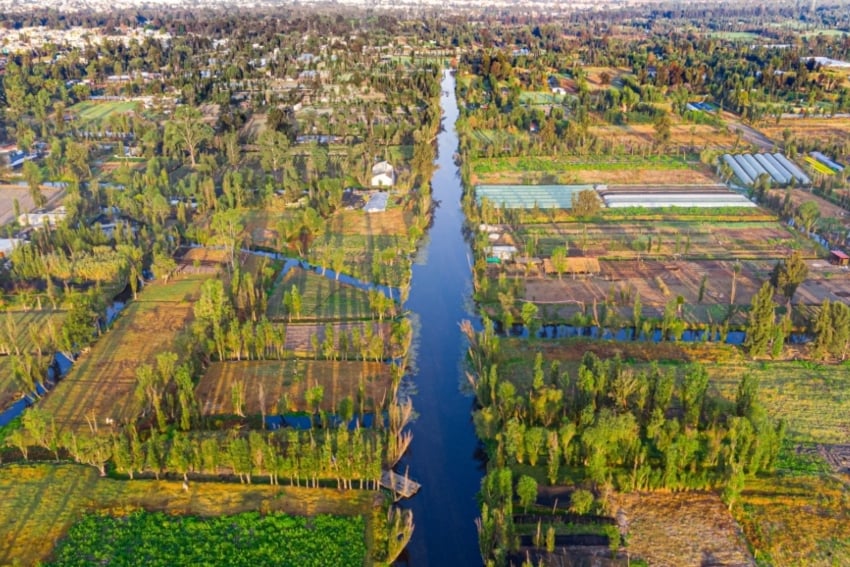
Today, much of that system, the last vestige of the Gran Tenochtitlán that Hernán Córtes and his men encountered, is choked with contamination, shrinking under the pressure of urban expansion, tourism and neglect. The axolotl — a small amphibian found only in these waters — has become a global icon, widely featured in games and toys even as it teeters on the edge of extinction in the wild.
For decades, Abuela Amalia, as she is widely known, has fought to defend what remains of the area, declared a UNESCO World Heritage Site in 1987. Now, after watching the slow unraveling of the landscape she grew up in, she is part of a new effort to restore it — one that brings together ancestral knowledge, science, community and law in an ambitious attempt to rethink how the territory is governed.
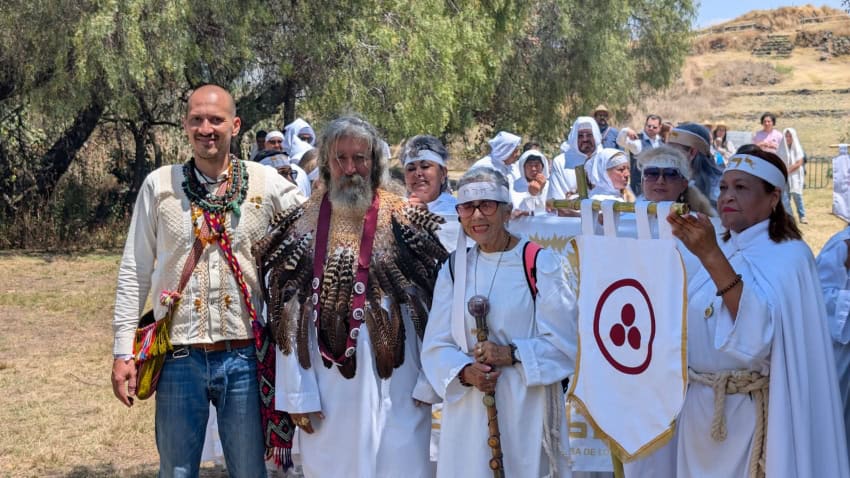
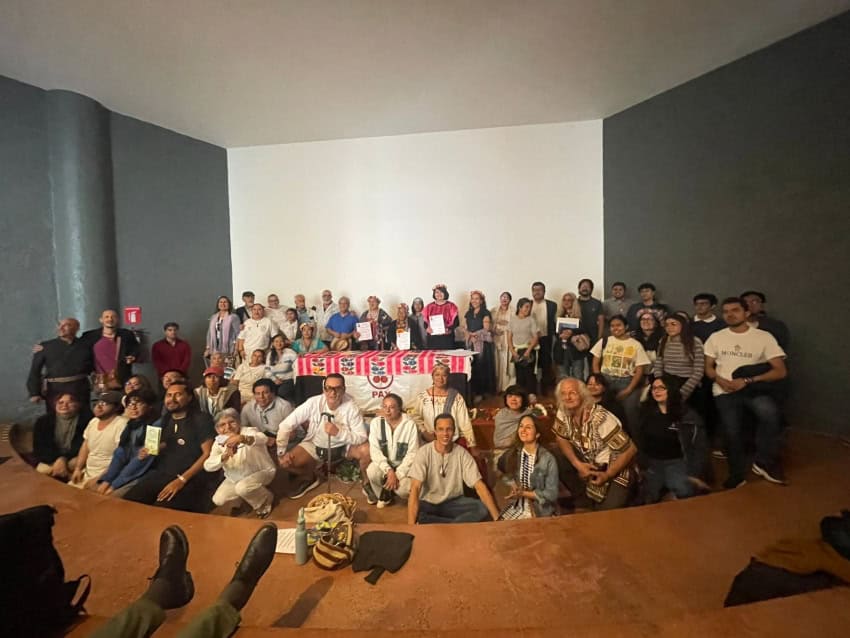
Abuela Amalia’s 60 years of activism reached a high point this month at the Cumbre Internacional Xochimilco Vida y Paz, a four-day summit that brought together around 170 participants from across Mexico and at least five other countries — including Colombia, Argentina, Germany, Chile and the United States — spanning chinamperos — traditional chinampa farmers — Indigenous leaders, scientists, legal experts and policymakers.
The path forward
Held at the spring equinox in Xochimilco’s ecological zone, the summit was designed not only to diagnose the crisis facing the lake system but to propose concrete pathways forward. The Xochimilco summit follows the model of previous gatherings in Palenque, Chiapas and Bacalar, Quintana Roo.
It was Abuela Amalia who traveled to the summit in Bacalar last year, proposing that the gathering be brought to Xochimilco — not as a symbolic gesture, but as a call to defend a living territory under threat. Abuela Amalia traces the turning point back to the early 1990s, when changes to Mexico’s agrarian laws opened communal lands to privatization, accelerating the fragmentation of Xochimilco’s chinampa system. Over the decades, a landscape that once covered an estimated 170 square kilometers has been reduced to a sliver of its original extent — with roughly 2,000 hectares still identifiable today, according to UNESCO.
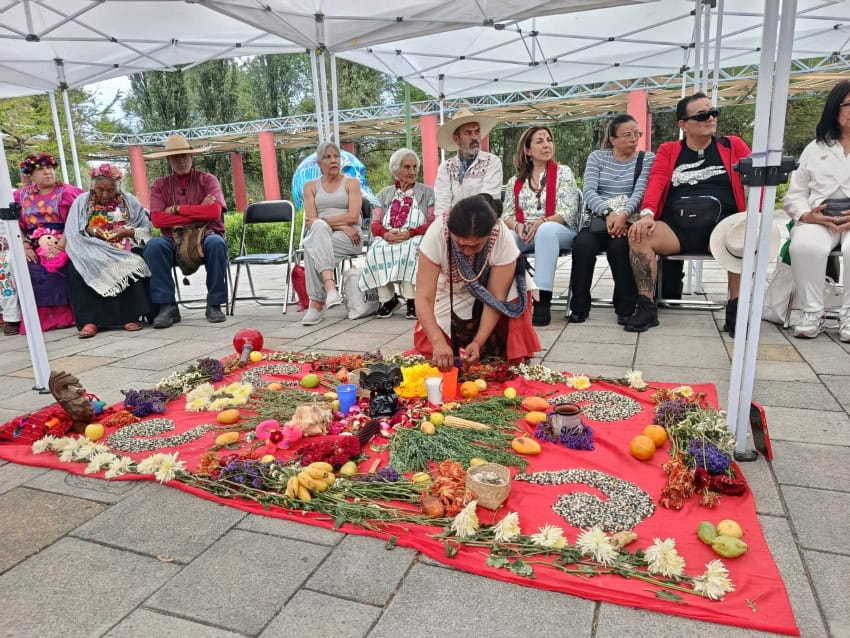
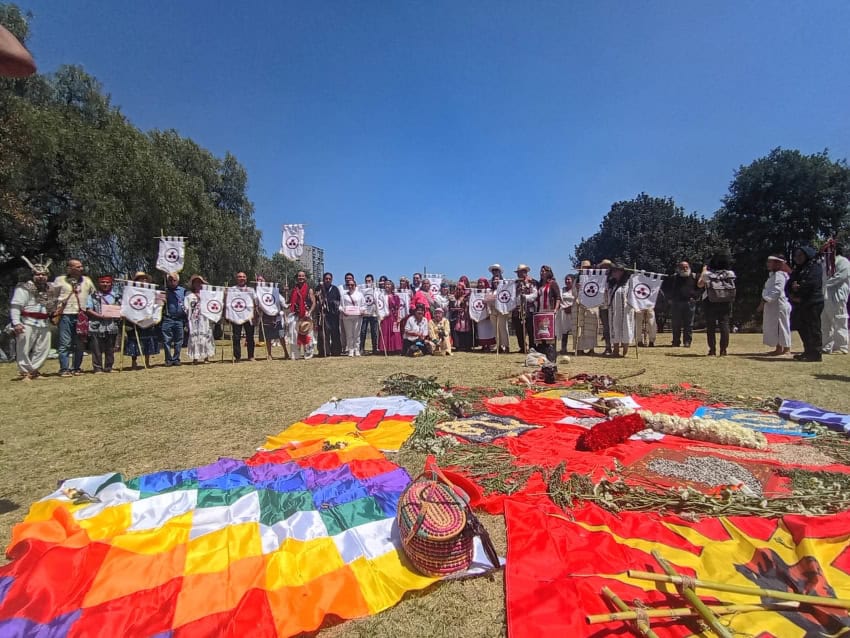
Rich with symbolism rooted in the region’s Indigenous past, the event also moved beyond ceremony to deliver concrete proposals to reverse Xochimilco’s ecological decline.
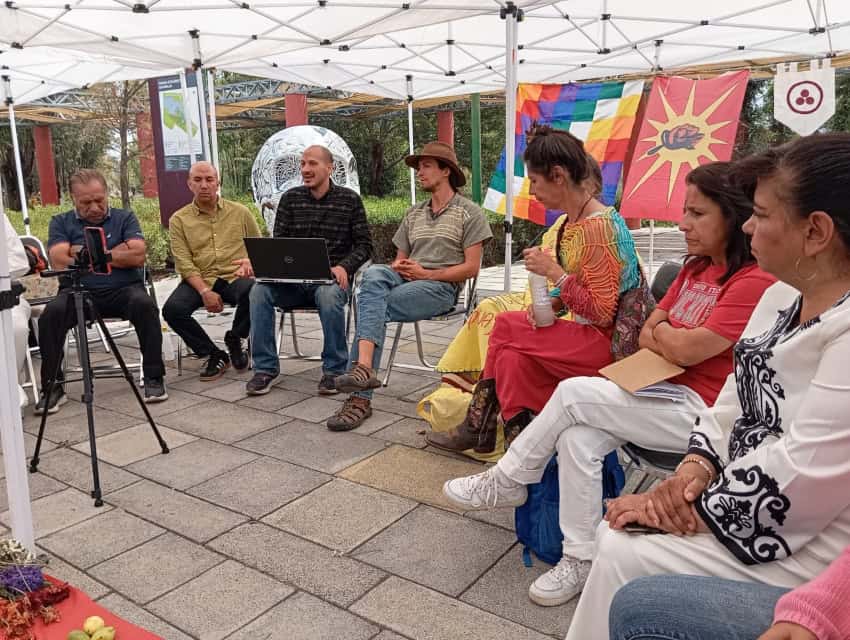
Participants at the Xochimilco summit, Cumbre Internacional Xochimilco Vida y Paz, met to share ideas and to try and find a workable path forward to restoration and sustainability. (Tracy L. Barnett)
Participants outlined a strategy combining ecological restoration, community-led governance and a legal push to recognize the Xochimilco lake system as a “subject of rights.” The goal: to shift from fragmented conservation efforts toward a coordinated model that treats the ecosystem as a living entity with rights — and gives local communities a central role in its protection.
How the summit worked
For organizer Luis Prekoma, bringing the summit to Xochimilco was both symbolic and urgent — grounding global conversations about ecological crisis in a territory where the stakes are immediate and visible.
“This is not just about Xochimilco,” he said, describing the gathering as part of a broader effort to rethink humanity’s relationship with nature. “It’s about generating models that can be replicated in other territories.”
Over four days, the summit unfolded across multiple spaces, combining ceremonial gatherings, policy discussions and working sessions that brought together actors who rarely share the same table — from chinampa farmers and Indigenous elders to scientists, lawmakers and nonprofit organizations.
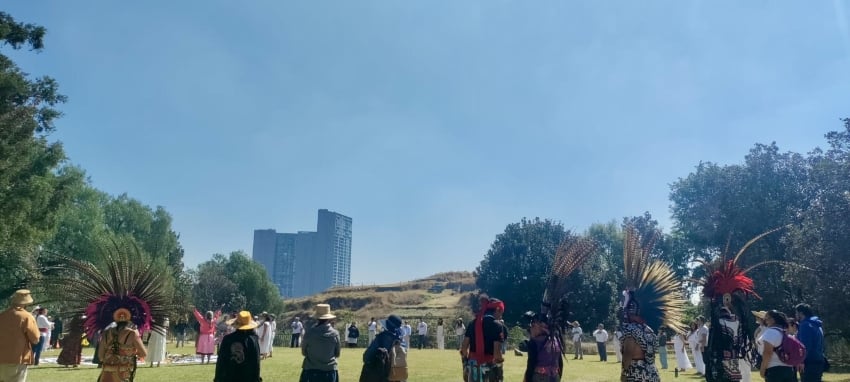
Day 1 opened with a “condecoration” ceremony in the archaeological site of Cuicuilco, honoring defenders of land and water who have sustained the territory across generations.
Day 2 focused on the forum, “Xochimilco Ecosystem Subject of Rights,” where participants from diverse fields exchanged knowledge and developed proposals around activating Rights of Nature jurisprudence in the zone.
Day 3 convened the Community Parliament of Xochimilco, a collective decision-making space where chinamperos and community representatives began shaping concrete pathways for restoration of the ancient agricultural system.
Day 4 culminated in the declaration of Xochimilco as a “Sanctuary of Life and Peace,” formally recognizing the lake system as a living entity and marking the start of a community-driven effort to secure its legal status as a subject of rights.
Where listening happens
Yuluka Kankura of Colombia, who has participated in similar gatherings across the Americas, described the cumbre as a space where different forms of knowledge could meet on equal footing.
A cumbre is a meeting where different kinds of knowledge meet on equal footing. (Tracy L. Barnett)
“These are not just meetings,” she said. “They are processes where relationships are built, where listening happens, and where collective paths begin to take shape.”
One of the most important outcomes, she said, was a commitment to meet again annually and conduct an evaluation process. For her, that commitment marks a shift away from one-off gatherings toward something more sustained and accountable.
“It’s a major commitment, because it ensures there will be continuity.”
Culture and cosmovision
If the summit points toward new forms of governance, its foundation lies in something much older.
For Montserrat López, a member of the organizing committee, the gathering was as much about cultural renewal as it was about policy. Through song, dance and ceremony, participants invoked a worldview in which nature is not a resource but a living system to which humans belong.
“We are the new dawn in movement,” she said, describing a moment of collective singing that framed the gathering as part of the birth of a new cycle — what some participants referred to as the Sixth Sun.
Xochimilco’s chinampas produce a diverse array of high-quality produce. (Tracy L. Barnett)
In that space, López said, the lines between disciplines began to dissolve.
“It’s the point where culture and science meet,” she said — not as opposing ways of knowing but as complementary paths toward understanding and caring for the territory.
Solutions: A legal pathway emerges
Norma Amalia Cerón Sánchez, a constitutional and administrative lawyer and granddaughter of a Xochimilco native, framed the summit’s legal ambitions alongside a more immediate reality: Mexico’s environmental laws, she said, are often strong on paper but weak on enforcement.
To address that gap, participants advanced a proposal to recognize the Xochimilco lake system as a “subject of rights,” part of a broader push to establish legal standing for nature at the federal level. The idea draws on emerging legal frameworks in Latin America, where ecosystems are increasingly recognized as living entities with rights that citizens can defend.
“It’s about giving the territory a voice,” Cerón said. “Not just protecting it on paper, but creating mechanisms so those protections can actually be enforced.”
But for Cerón, the urgency goes beyond legislation.
Beyond the legal framework, she pointed to concrete steps already taking shape. She had invited researchers from the Universidad Autónoma Metropolitana Azcapotzalco — including its rector, Dra. Yadira Zavala Osorio and Dr. Fabiola Sosa — to join the effort to rehabilitate Xochimilco, building on their restoration work at Laguna La Piedad.
Participants at the Xochimilco summit may not change the law (although they’re trying). But what they can change is actions through community activism. (Tracy L. Barnett)
They accepted, she said, and are expected to bring a multidisciplinary team of students and researchers, alongside volunteers, to support restoration efforts on the ground. The goal is to build a bridge between academic knowledge and local practice — with chinamperos themselves helping train incoming teams in ancestral methods, including techniques for restoring canals without harming existing plant and animal life.
Rather than waiting for legal reform, she emphasized, the work is already beginning.
“I don’t know if we’ll achieve the law,” she said. “But what we can achieve are actions.”
A territorial shift
For José Luis Sánchez Campos, one of the forum organizers, the crisis in Xochimilco cannot be understood — or solved — in isolation. What is at stake, he said, is not just the degradation of a single ecosystem, but the unraveling of an entire way of life.
“This is the result of centuries of rupture,” he said, referring to the gradual displacement of Indigenous systems of knowledge and governance by extractive, urban models that treat land and water as commodities.
The chinampa system, he explained, is not simply an agricultural technique but a living expression of that older relationship — one that integrates food production, water management and ecological balance.
What is at stake is not simply the degradation of an ecosystem but an entire way of life. (Tracy L. Barnett)
“You cannot fix this with the same logic that created the problem,” he said. “We have to return to a way of thinking where the territory is alive.”
That shift, he argued, requires more than technical solutions. It calls for a convergence between scientific knowledge and ancestral practices — not as parallel approaches but as part of a single framework for regeneration.
“It’s time to move from diagnosis to action,” he said. “We already know what needs to be done.”
From vision to action
Beyond the language of rights and regeneration, participants pointed to a series of concrete steps already underway.
At the center is the newly formed Community Parliament of Xochimilco, which will serve as the coordinating body to carry proposals forward. Founding members include 22 chinamperos, and it’s organized into thematic working groups — including ecological restoration, legal strategy, education and communication — designed to translate ideas from the summit into ongoing community-led action.
At the summit’s Rights of Nature forum, students, researchers and chinampa producers began outlining applied proposals — from water monitoring and ecological restoration to governance models designed to support chinampa communities on the ground.
Axolotls are native to Xochimilco canals, where farmers have cultivated crops on chinampas (floating gardens) since before the Spanish Conquest. (Sedema CDMX)
Other initiatives focused on rebuilding the social fabric that sustains the ecosystem. Participants discussed organizing tequios — collective work days rooted in Indigenous tradition — to support chinamperos in restoring canals and agricultural plots. Cultural strategies are also part of the effort: community theater and other forms of storytelling were proposed as ways to reconnect younger generations with the territory and its history.
At the same time, organizers underscored a central issue: enforcement. Existing environmental laws, they said, are widely ignored. Proposals discussed at the summit include new mechanisms to hold institutions accountable for compliance — a shift that could prove as critical as any new legislation.
From proposals to implementation
The summit’s proposals were consolidated in a 17-page report outlining a roadmap for the next five years, with the goal of securing legal recognition of the Xochimilco lake system as a subject of rights by 2030.
The document also calls for the creation of an interdisciplinary legal team to advance rights-of-nature legislation and pursue strategic litigation, alongside partnerships with universities to support research, training and technical capacity-building.
Participants also committed to scaling the model beyond Xochimilco through a network of “Sanctuaries of Life and Peace,” while establishing mechanisms to monitor progress and maintain coordination between communities, institutions and nonprofit organizations.
Together, the agreements mark a shift from a one-time gathering to an ongoing process — one that seeks to institutionalize community-led governance while building the legal and scientific infrastructure needed to sustain it.
Can community-led governance be the way forward for Xochimilco? Summit participants are hoping that’s the case. (Tracy L. Barnett)
Back home in Xochimilco, Abuela Amalia reflected on what it meant to see the summit take root in the place where she has spent her life. At nearly 90, she now measures time differently.
“No, two — just two more years,” she said, when asked what she hopes for. “Two more years to do more for the children and the young people … While I still have life, I will keep fighting.”
For Amalia, the effort is not abstract. It is about protecting a way of life she once knew — and ensuring that those who come after her still have a chance to inherit it.
Tracy L. Barnett is a freelance writer based in Guadalajara. She is the founder of The Esperanza Project, a bilingual magazine covering social change movements in the Americas.
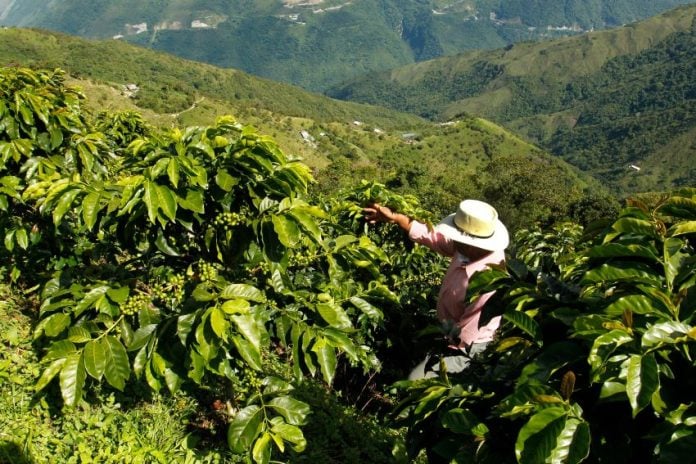
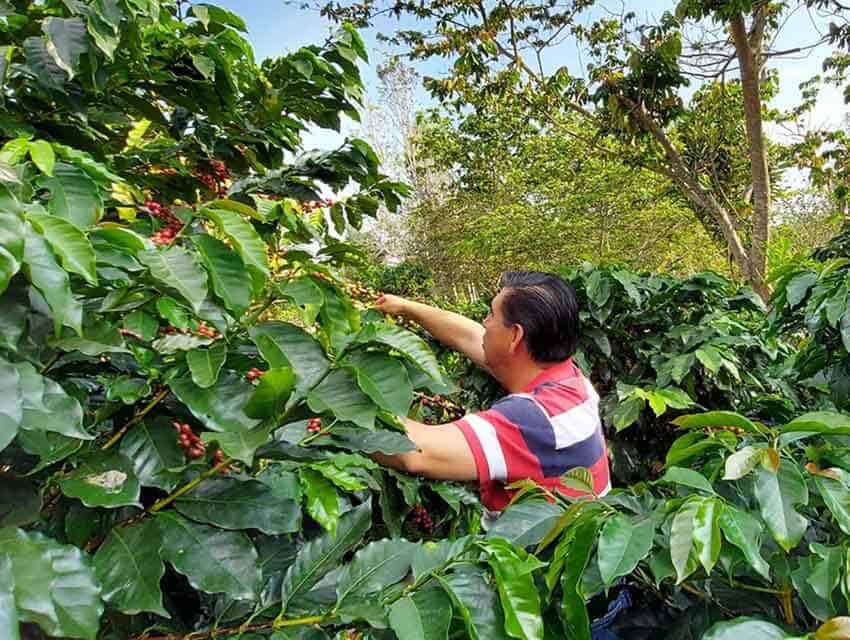
The coffee fields of Coatepec, Veracruz, are part of the oldest coffee route in Mexico. (Shutterstock)
There’s nothing quite like taking it slow while on a road trip through unseen parts of Mexico. In fact, sometimes you have no choice: The roads can be old or poorly paved, the lanes narrow and at times risky, and depending on where you are, you might not have internet reception to navigate your way as efficiently as you might otherwise.
And yet, in taking the less traveled route, you’ll often see some of the most gorgeous scenery that if you had flown by plane or stuck to a paid highway, you’d completely miss out on.
Veracruz’s coffee road
Bola de Oro has been making fine coffees in Veracruz since 1910, originating in Xalapa. (Uber Eats)
This backroad secrecy is best exemplified in Mexico’s oldest coffee trail, which curls and rises along the Sierra Madre Oriental mountain range throughout western Veracruz, separating the Gulf Coast state from Puebla to the west. It’s here — on these rugged, extensively windy country roads — that adventurers will find one of the nation’s most underappreciated histories along a passage that spans roughly three hours and 127 kilometers from Coatepec to Cordoba.
Begin in Coatepec, two hours inland from the port city of Veracruz. The small town is part of a volcanic region in eastern Mexico where coffee once originated in the continental Americas. Despite its minuscule size, Coatepec is historically significant for being the site of the earliest mass cultivation of Arab coffee trees in the mainland Americas, brought over from the Caribbean islands by Spanish conquistadors and French smugglers. They would be grown at La Orduña beginning in the early 1800s.
Initially, the region was prominent for its sugar cane plantations, but those properties would later evolve into coffee haciendas on the route to Mexico City, helping to establish the thriving Mexican capital as a romantic epicenter of world-class cafes.
In Coatepec — an aesthetically quaint and well-maintained town in which the government has designated at least 370 buildings as “historically significant” — you’ll find a robust cafe scene that mixes traditional fincas with modern, trendy hotspots, where both locals and out-of-towners gather along tree-lined avenues and lively plazas.
Assuming you’re in town to partake in the abundantly delicious coffee offerings, the region’s three top coffee-producer cafe chains — Bola de Oro, Don Justo and La Parroquia de Veracruz — are a traditional starting point, which are all conveniently located right across from Parque Hidalgo, the main square, and neighbor one another.
The tree-lined avenues of Coatepec are filled with cafes and commercial coffee companies. (Didier Palomo/Instagram)
For the uninitiated, these three commercial suppliers dominate the area, with multiple branches in every surrounding town and city. Bola de Oro dates back to 1910 and originated in nearby Xalapa, while in Coatepec, Don Justo goes back even further, to 1891. But the literal grandfather of them all is La Parroquia, from the port city of Veracruz. It started as Gran Café de la Parroquia in 1808, making it the oldest still-operating cafe in Mexico.
Try them all: Ask for an espresso at each and compare the three legacy cafes before pivoting to the younger, modern renditions of local coffee traditions at Ofelia Pan Y Cafe (includes an incredible pastry selection and a spacious outdoor patio), Chipi Chipi Cafebreria (a bookstore and cafe whose namesake, “chipi chipi,” is a local word for the mountainously cold and drizzly weather) or Ensambles (a notably cool eatery and cafe with a range of locally grown and fermented beverages and coffee options to go with a delicious brunch menu).
If you’re feeling particularly ambitious, you can also swing by the Museo del Café Coatepec in the center of town for a sampling of the region’s many coffee variations. Or drive a bit further out to Museo Bola de Oro Finca Roma, a massive estate where you can observe and interact with the coffee-growing process from start to finish in an all-ages experience.
Huatusco
Once you’ve filled up your cup in Coatepec — in which it is worth spending a night or two — the road trip truly begins: a breathtaking escape through an old, jungle-dense thoroughfare that is less traveled than the newer and busier highways that most local drivers prefer, even though they offer a far less scenic and peaceful experience.
Twist your way over and around rivers and endless greenery for just under two hours until you hit your first major stop in Huatusco — a city that isn’t as quaint or well-maintained as the others on this trip, but has its charms. With roots that can be traced to the 15th century, the city was once temporarily named the capital of Veracruz in 1847 during the Mexican-American War, and is an ideal afternoon pit stop for — you guessed it — more coffee.
The standout on this part of the trip is Finca Cañada Fría, a coffee bar offering tastings that — unlike some competitors in the area — focus not only on Huastusco-grown beans but also on ones from other coffee-producing states like Chiapas, Puebla and Oaxaca.
Checking the award-winning coffee plants at Finca Cañada Fría near Huatusco, Veracruz. (Finca Cañada Fría)
While you’re there, it’s also worth strolling a few blocks into downtown to the Mercado Benito Juárez, a three-level labyrinth of a market where you can acquire tlatonile (a regionally-specific pumpkin-seed mole that my Mexican relatives have sent me on missions to pick up and bring back whenever I’m in that part of the state).
Huatusco isn’t as outwardly endearing or attractive as other parts of the state, but it was once an important locale that still offers a glimpse into unfiltered Mexican life.
Cosco
Once you’re back on the mountain path, keep heading south for an additional half hour. Your next destination is highly worthy of another night or two: Coscomatepec de Bravo (or Cosco). This majestic Magical Town is ensconced in the cloudy heights of surrounding mountains and features fresh air, cobblestoned roads and a lively, yet miniature, feel.
First things first: coffee. As with everywhere along this journey, you can order a cup of joe on a whim and you won’t be disappointed — though a recommendation is Cafe 88, which has two locations in town and a funkier, updated vibe. Then there’s the local dishes: There’s chilatole de frijol (bean stew), esquimole (a local spin on chicken and chile seco), and white barbacoa (maguey-wrapped lamb with herbs), to name only a few.
Besides that, a stay at La Mansión de las Flores is an absolute must. The family mansion-turned-bed and breakfast is among the most luxuriously dreamy stays you’ll find anywhere in the state. Aside from including a hidden spa — replete with access to a sauna and a masseuse — there’s a garden, multiple library nooks, an area for outdoor yoga, full access to a large kitchen, and a sweet woman tending the premises named Socorro, who might surprise you with fresh tortillas and homemade tea using flowers from the patio.
A short walk from downtown, the stay at this bed-and-breakfast is not to be missed and will elevate an already memorable, caffeine-laced road trip through a naturally surreal and relatively unnoticed part of the country into a top-tier experience.
From cafes to memorable local dishes, Coscomatepec de Bravo (aka Cosco) does not disappoint. (Visit Mexico)
Round out your trip to Cosco with a visit to La Fama Panaderia — which opened in 1924 and is celebrated as the best bakery for miles — and Cervecería Artesanal Sabario, a craft beer lover’s paradise hidden inside Parque Recreativo Cosco, a sprawling outdoor area that’s perfect for families with kids. Every Monday, there is a large tianguis (open-air flea market) that takes over the small town, so you may want to avoid that day as many of the few streets that exist in Cosco get shut down on this day.
Córdoba
Your mountain-trekking on wheels will come to an end in Córdoba, another Pueblo Mágico and historic city with fascinating lore. Besides being the place where Mexico’s treaty of independence was signed in 1821, it’s also — similar to Coatepec — considered a cradle of continental America’s earliest coffee-growing efforts: Hacienda de Guadalupe was founded around the mid-1700s, making it the oldest known coffee plantation in the entire Americas.
Like Coatepec to the north, here visitors can tour nearby coffee farms and museums and take formal coffee routes with a tour guide to get a real sense of the coffee production, process and history here.
At the city’s center — which is actually fairly sized, despite being governmentally deemed a Pueblo Mágico — Museo del Café Córdoba awaits with educational espresso tastings and a variety of music and cultural events.
Important cafe institutions in Córdoba include Calufe, Hêrmann Thômas Coffee Masters, and the coffee museum itself. Just outside of the central square, Isabel Specialty Córdoba specializes in European pastries — as well as the largest cinnamon rolls you’ll ever encounter — which pair nicely with an espresso or Americano made from fresh beans sourced from nearby farms.
An epicurean mecca
The city isn’t overly glamorous, but its coffee history — both past and present — has turned it into an epicurean mecca of coffee-related attractions.
Córdoba is an epicurean delight on the coffee trail through eastern Veracruz. (Radamantis Torres/Wikimedia Commons)
If you enjoy soul-awakening coffee, rich culinary traditions, unique Mexican histories, peaceful towns, and vast mountain roads, there’s arguably no better road trip than this one. The next time you’re getting around Veracruz, ditch the coastal highway and take the swerving backroads. They’re free of tolls — and freeing in every sense — with an inescapably thick coffee aroma that will follow you from start to finish.
Alan Chazaro is the author of “These Spaceships Weren’t Built For Us” (Tia Chucha Press, 2026), “Notes from the Eastern Span of the Bay Bridge” (Ghost City Press, 2021), “Piñata Theory” (Black Lawrence Press, 2020), and “This Is Not a Frank Ocean Cover Album” (Black Lawrence Press, 2019). He is a graduate of June Jordan’s Poetry for the People program at UC Berkeley and was selected as a Lawrence Ferlinghetti Poetry Fellow at the University of San Francisco. His work can be found in NPR, The Guardian, SLAM, GQ, L.A. Times, and more. He is currently based in Veracruz.
Escobilla Beach, on Oaxaca's Pacific coast not far from Zipolite, is a federally decreed sanctuary where all sea turtle species are protected and listed as at risk. (Screenshot)
A viral video of men digging up sea turtle nests in Oaxaca has prompted a federal investigation and fresh outrage over wildlife crime at one of Mexico’s main sea turtle nesting sanctuaries.
The footage, shared widely on social media, shows several young men with white sacks extracting eggs directly from nests in the sand and handling turtles during nesting — with one person seen grabbing and throwing a turtle.
🚨 La Profepa investiga el saqueo de nidos de tortuga en Playa Escobilla, Oaxaca, tras difundirse un video donde varias personas extraen huevos de uno de los santuarios más importantes de México. 🐢🌊 pic.twitter.com/RUy6xEKA83
— Guillermo Ortega Ruiz (@GOrtegaRuiz) April 2, 2026
Mexico’s Federal Attorney for Environmental Protection (Profepa) said via its X account on Wednesday: “Regarding this matter, we inform you that we have already been to the location and have an ongoing investigation.”
Local media sources reported that officials have begun actions to identify those responsible and noted that looting and commercializing turtle eggs is a federal crime punishable by prison terms and fines.
Under Article 420 of the Federal Penal Code, capturing, damaging or killing sea turtles, or collecting their eggs, is punishable by one to nine years in prison and fines of 300 to 3,000 days’ wages, with penalties increased when crimes occur inside protected natural areas.
Experts and conservation groups warn that illegal egg extraction threatens the reproduction and long-term survival of olive ridley turtles that use Escobilla Beach. The strip of sand roughly 7 kilometers long hosts mass nesting events, known locally as arribadas, in which thousands of turtles come ashore to lay eggs.
Social media users have demanded that authorities move beyond investigation to concrete action, calling for constant surveillance, better training for security personnel on the beach and sanctions for those responsible.
Some have accused Profepa’s leadership of negligence and demanded the removal of its chief, Mariana Boy Tamborrell, over what they describe as a pattern of weak enforcement.
The sting shut down 67 properties functioning as fraudulent call centers in México state. (Unsplash)
México state authorities and federal agencies this week arrested 102 individuals and seized 67 properties that were operating as fraudulent call centers while carrying out extortion, fraud, data theft and drug trafficking.
The massive bust, part of the National Strategy Against Extortion, was the result of a month-long sting operation carried out by state, local and federal authorities.
🚨 El “Operativo Desconexión” logra desmantelar una red de fraude y extorsión. 🇲🇽 🚫 Fueron 197 inmuebles asegurados. Hay 107 detenidos, entre ellos 77 personas de nacionalidad extranjera implicadas en esquemas de préstamos “gota a gota” y extorsión telefónica. 🛡️ David Galván… pic.twitter.com/z3QTOXPriz
In addition to the 67 properties operating as call centers, five loan companies, 14 drug sales points and 106 other illicit businesses were seized or shut down.
Of the 102 people apprehended, 77 are foreigners. Fifty have been formally charged and remanded to custody. They include 22 Mexicans, 20 Colombians, six Venezuelans and two Cubans.
In a statement on social media, the state Attorney General’s Office (FGJ) said that the operation, dubbed Operation Disconnection, “lasted 46 days with the objective of combating and inhibiting ‘indirect extortion’ — committed through telephone calls, text messages, web pages and other messaging applications.”
The sting also disrupted abusive loan schemes that utilize those platforms.
The FGJ expressed gratitude for the cooperation of the Defense, Navy and Security Ministries, the National Guard, the National Migration Institute (INM) and the National Intelligence Center (CNI), as well as state police officials
The investigation discovered that financial institutions were being impersonated through mass calls and cloned websites from call centers primarily located in the municipalities of Ecatepec, Naucalpan and Nezahualcóyotl, all three within the greater Mexico City metropolitan area.
Operators relied on detailed scripts in communicating with their targets to generate false alarms about bank transactions, offer non-existent prizes or simulate parcel deliveries to obtain transfers or confidential data from the victims.
As part of the scheme, unregistered lending centers granted loans in cash or in kind (e.g., offering appliances and cell phones) with unclear contracts and interest rates far higher than permitted by law.
When debtors failed to pay, thugs would go to homes or workplaces to intimidate their targets, physically assaulting them at times.
Additionally, the FJG said, drug sales and black money transfers served to diversify income, launder funds and obtain personal data that were later used in new extortions or identity theft. The network was also linked to express kidnapping and human trafficking.
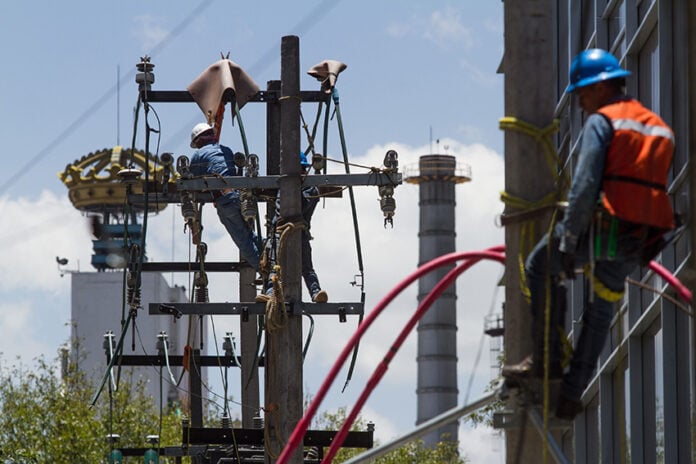
Federal Electricity Commission (CFE) workers take down old cables and electric posts in Mexico City. (Moisés Pablo / Cuartoscuro.com)
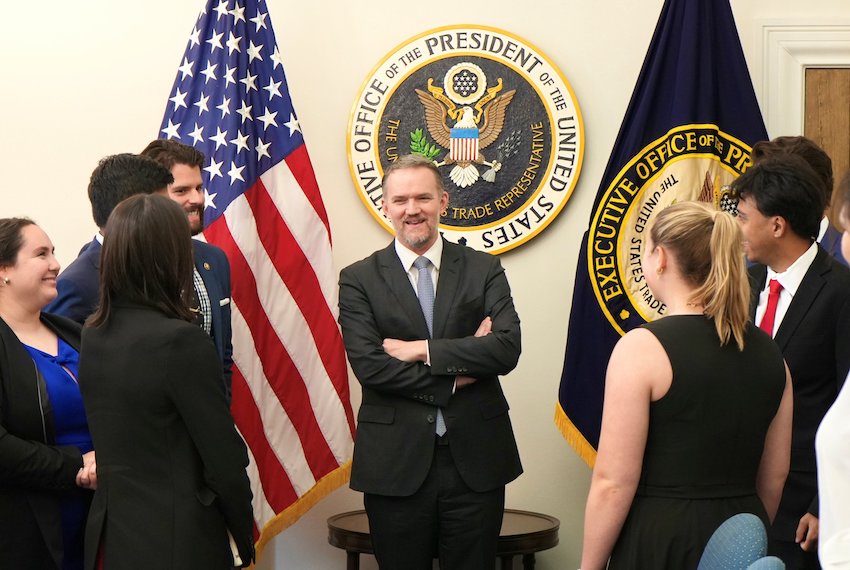
Amid ongoing USMCA talks, the Office of the United States Trade Representative (USTR) has strongly criticized Mexico’s energy sector framework, raising a range of concerns that it says disadvantage U.S. energy companies.
Along with the CFE, the USTR report placed Mexico’s state oil company Pemex in its crosshairs, saying that Mexican law privileges the state-owned companies while effectively limiting the participation of private companies in the market. (Fernando Carranza García/Cuartoscuro)
In a section of the trade barriers report focused on Mexico’s energy sector, the USTR first seeks to offer an overview of Mexican energy policy before making various criticisms.
“Mexican energy policy is centered on reinstating the primacy of its state-owned electric utility, Federal Electricity Commission (CFE), and state-owned oil and gas company, Mexican Petroleum (PEMEX),” the section begins.
“Since 2018, Mexico has undertaken many measures to achieve this aim, culminating in the October 2024 ratification of a constitutional amendment to reclassify CFE and PEMEX as ‘public enterprises’ rather than ‘productive enterprises’ in order to limit the participation of private companies in Mexico’s energy market,” the USTR states.
In addition, the report states that “in March 2025, Mexico published a reform package of new energy laws implementing this constitutional amendment and other measures, which include as a principle a guarantee of CFE’s prevalence and its maintenance of at least 54 percent of the average electricity sent to the grid, require CFE ownership of at least 54 percent in any ‘mixed investment’ electricity generation projects, and set out a preference for CFE over private entities in electricity generation and marketing.”
In 2022, the USTR made clear its discontent with Mexico’s energy sector policies by requesting dispute settlement consultations under the USMCA. Canada subsequently joined the U.S. in seeking dispute settlement consultations with Mexico over energy policies that favor state-owned firms over private and foreign companies. More than three years later the dispute hasn’t been resolved.
Former President Andrés Manuel López Obrador (2018-24) made significant changes to Mexico’s energy policies after his predecessor Enrique Peña Nieto opened up the national energy sector to private and foreign companies. AMLO’s changes — maintained by President Claudia Sheinbaum — altered the rules of operation for foreign companies in Mexico, giving rise to the complaints the USTR sets out in the report it submitted to Trump and the U.S. Congress this week.
The USTR’s criticisms of Mexico’s energy sector
In its report, the USTR asserts that “private companies operating in Mexico are often unable to participate effectively, if at all, in Mexico’s energy sector due to frequent delays, unexplained or unjustified rejections, and inaction regarding applications for new permits or permit modifications.”
While serving as U.S. ambassador to Mexico during López Obrador’s presidency, Ken Salazar acknowledged that U.S. energy companies were having problems securing the permits they needed to operate without encumbrance in Mexico.
The USTR said that “unexplained or unjustified suspensions or revocations of existing permits, as well as other impediments, undermine private companies’ ability to operate energy facilities, import or export electricity or fuel, store or transload fuel, and build or operate retail fuel stations.”
It noted that in 2025, Mexico disbanded its energy regulatory agency and established a new agency — the National Energy Commission (CNE)— under the supervision of SENER [the federal Energy Ministry], further centralizing decision-making authority under SENER.”
The USTR also said that:
In October 2025, Mexico “published implementing regulations for the Hydrocarbons Sector Law that prohibit certain fuel transloading activities, which decreases logistical flexibility and increases operating costs for U.S. companies, unfairly favoring PEMEX.”
“Changes to the regulations also impose new restrictions for fuel permits, reduce the term for new import permits from 20 years to five years, and reduce the term for commercialization permits from 30 years to 2 years” — regulatory changes that “do not apply to PEMEX.”
U.S. stakeholders have “raised concerns about draft regulations previewed in December 2025 that would have placed restrictions on the ability of independent power producers to sell their output and granted CFE the option to acquire the assets at no cost.”
The USTR also said that over the past two years, “U.S. companies supplying the Mexican oil and gas sector have reported an unprecedented challenge with receiving payment from PEMEX for services rendered.”
“As of December 31, 2025, while some U.S. companies have received full or partial payment, others continue to report overdue payments that total over [US] $2.5 billion,” the USTR said.
Other criticisms and concerns
Beyond energy, the USTR outlined various other “non-tariff barriers” to trade with Mexico in its report. They include “technical barriers,” “sanitary and phytosanitary barriers,” and “services barriers.”
The criticisms of Mexico’s energy sector were detailed under the subheading of “investment barriers.”
Under the same sub-heading, the USTR noted that amendments made in 2022 to Mexico’s federal Mining Law “place the exploration, exploitation, and utilization of Mexico’s lithium under the exclusive control of a state-owned company, LitioMx, and exclude private companies from concessions, licenses, contracts, permits, and authorizations to undertake those activities.”
Jamieson Greer, who leads the U.S. Office of the Trade Representative, has accused Mexico of being out of compliance with USMCA free trade deal in areas including energy, telecommunications and more. (@USTradeRep/X)
The USTR also raised concerns about labor law enforcement in Mexico and the environmental impacts of “illegal, unreported, and unregulated fishing by Mexican fishing vessels” and “trade in illegally harvested timber” that “puts U.S. companies that comply with environmental laws at an unfair disadvantage.”
“This could be energy, telecommunications services, agricultural, all kinds of things,” he said.
Despite the United States’ concerns about Mexico’s compliance with the USMCA — and a declaration from Trump that he doesn’t care about the agreement — the Mexican government is confident that it will achieve a good outcome in the review of the free trade pact.
Sheinbaum said last week that Mexico was going “very well” in the USMCA review process, asserting that the fact that formal talks with the U.S. are taking place is “very important.”
“That gives us a lot of certainty,” she said at an event in Nuevo León.
Sheinbaum said that her government retains hope that the United States could lift tariffs on Mexican vehicles, steel and aluminum, and declared that Trump has demonstrated a “good attitude” toward the USMCA review.
“There is certainty for our country and for the future of the trade agreement with the United States and Canada,” she said.
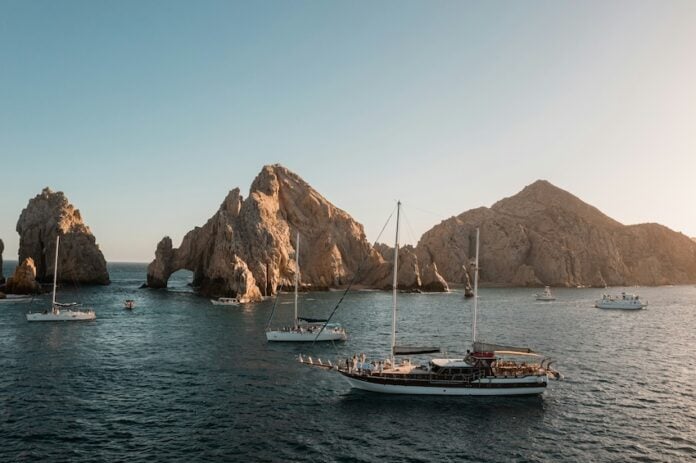
Local tourism officials are feeling upbeat as the Los Cabos spring break season heads into its busiest weekend, with visitor numbers increasing and exit polls at the airport reporting positive experiences from young tourists who say they felt safe and well taken care of. (Unsplash)
“During this busiest weekend, from Thursday to Sunday, we expect to reach an occupancy rate of around 90%,” said AHLC president Lilzi Orci, adding that she has “very high expectations for the numbers … this week.”
The annual occupancy rate in the municipality is 70%.
One new trend driving the increase in occupancy is that parents are tagging along.
Tourism officials said approximately 20% of the arriving students were accompanied by family members.
This demographic shift created a massive secondary economic boom. While students packed into the traditional, high-energy party resorts in Cabo San Lucas, their accompanying family members booked rooms at quieter properties along the Tourist Corridor or in San José del Cabo.
At the same time, authorities with the local Federal Maritime Terrestrial Zone (Zofemat) say they are fully prepared for the influx of tourists, both foreign and domestic.
Zofemat’s 1,700 municipal employees on the ground established protocols to ensure the safety of tourists and local residents last month, and will be working to protect and monitor the beaches.
“We expect 120-150,000 people, many coming and going from the certified beaches, but many camping along the coastal strip, too,” said local Zofemat director Rafael Álvarez.
“Each beach will have at least one toilet and several trash cans,” he said, “and public services personnel will be passing by at the end of each day.”
The primary task during the upcoming week will be ensuring the care of the environment, he said, adding that the equivalent of a month’s worth of trash will be collected from the beaches over the next five days.
Already, local authorities are calling this year’s spring break season a big success.
Results from exit surveys at the Los Cabos International Airport are providing overwhelmingly positive feedback.
Students reported feeling secure whether they were at massive beach concerts, navigating the downtown bar scene at night or attending crowded boat parties in the bay.
Family size has dropped steeply in Mexico since the 1960s, with Mexican women now having just 1.9 children on average. (Shutterstock)
The Mexican Institute for Competitiveness (IMCO), a Mexico City-based think tank, recently published a report titled “Women in the Economy: 100 Years of Data.”
Mexico News Daily selected two pieces of data from the report as the focus of this “Mexico in Numbers” article, the continuation of a series we resumed last week with this piece on Mexico’s most popular airlines.
Mexico’s fertility rate has plummeted since the 1960s
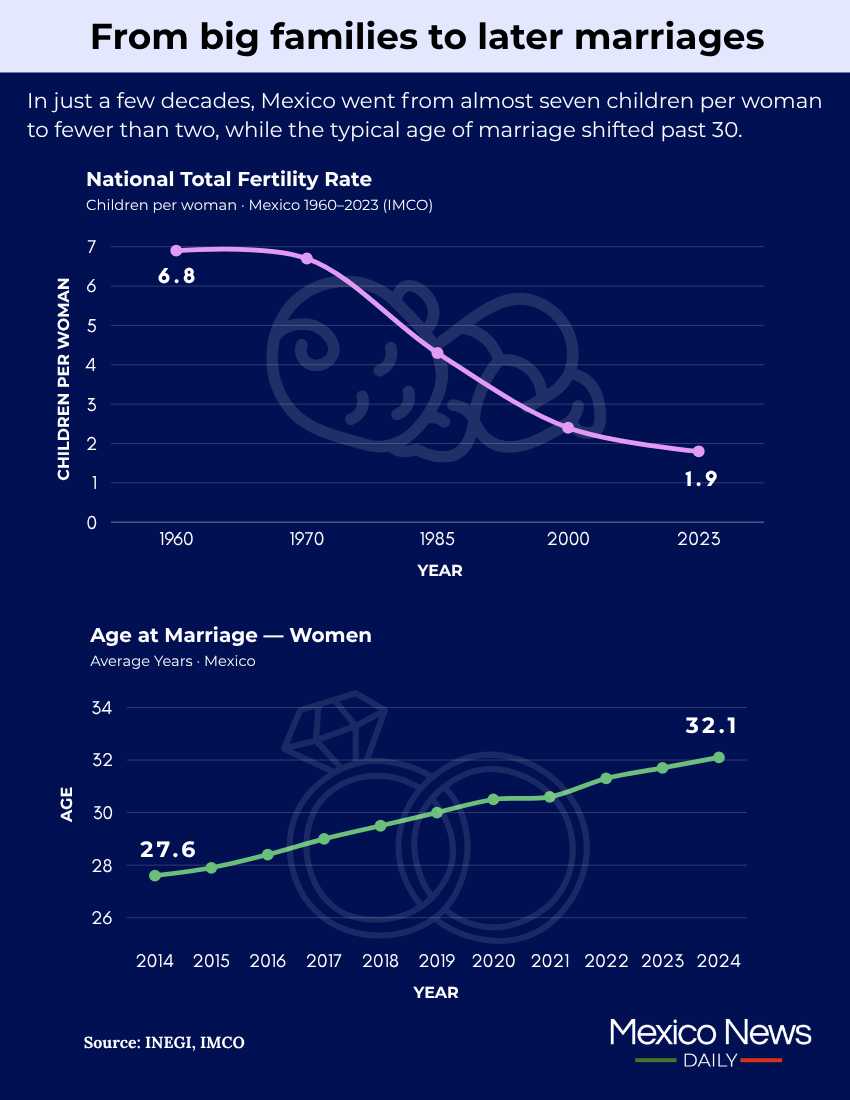
Citing World Bank data, IMCO reported that the fertility rate in Mexico declined from 6.8 children per woman in the 1960s to 1.9 children per woman in 2023.
Thus, a Mexican woman today is having 4.9 fewer children on average than her 1960s counterpart. The decline in percentage terms is 72.%.
In the period between the 1960s and 2023, IMCO reported that Mexico recorded the fourth largest fertility rate decline among OECD countries, behind only Costa Rica, South Korea and Colombia.
The think tank also said that the 1960s were an “inflection point” as before that decade Mexico’s fertility rate was declining by an average of 1.2% per year, but in 1979, the annual reduction reached 4.6%.
IMCO highlighted that during the presidency of Luis Echeverría (1970-76), mass campaigns were run under slogans such as “small families live better” and “let’s make ourselves fewer in order to live better.”
The use of contraception was also heavily promoted during this period.
As things stand, IMCO noted, Mexico’s fertility rate (1.9 children per woman) is below the replacement level fertility rate (2.1 children per woman).
“As a result, Mexico has begun to transition toward a process of population aging with implications for fiscal sustainability, the labor market, and the provision of care,” IMCO said.
Women are getting married later in life
Citing a 2001 academic reported titled “A Century of Marriage in Mexico,” IMCO reported that in 1895, the majority of Mexican women married between the ages of 15 and 19.
Today, the average age of marriage for Mexican women is around 30, according to the think tank. The national statistics agency INEGI provided more specific data last September, reporting that the average age of women who got married in 2024 was 32.1. The average age of men who married in 2024 was 35.
INEGI data shows that the average age of marriage for Mexican women increased every year between 2014 and 2024. The average of marriage for women during each year in that period was as follows:
2014: 27.6
2015: 27.9
2016: 28.4
2017: 29
2018: 29.5
2019: 30
2020: 30.5
2021: 30.6
2022: 31.3
2023: 31.7
2024: 32.1
Thus in the space of a decade, the average age at marriage of a Mexican women increased by 4.5 years, or 16.3%.
IMCO said that increased access to higher education for women and their greater participation in the labor market are factors that have caused an increase in the average age of marriage for Mexican women.
It noted that women with higher levels of education attainment and income tend to marry later than women who studied less and earn lower salaries. The think tank also said that the increase in the average age of marriage among Mexico woman is linked to the reduction of the fertility rate in Mexico.