Home Blog Page 581

Beyond Chichén Itzá: Discovering Mexico’s lesser-known pyramids

0
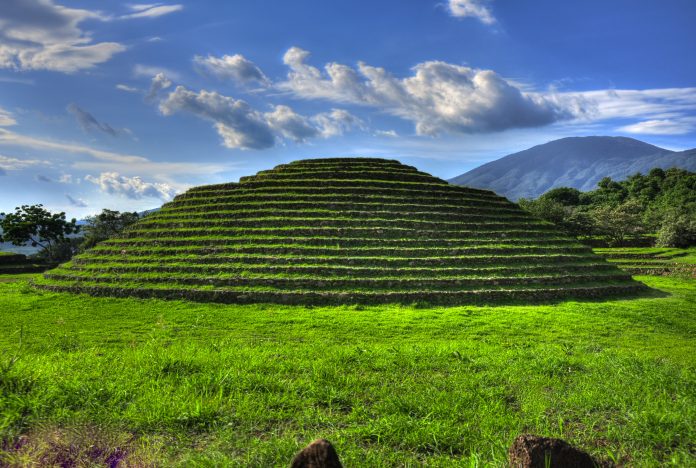
Guachimontones archaeological site
Jalisco's Guachimontones are a short trip from Guadalajara, and a criminally underrated day trip. (Esteban Tucci/Wikimedia Commons)

Mexico is a cultural giant, one that keeps its history reflected all around, like living, breathing museum. Tulum, Monte Albán, Chichén Itzá, Palenque and Uxmal are all names that you have heard before and places you might have even visited. But a lot of people don’t know that there are over one hundred archeological sites and pyramids in Mexico, many of which are unknown. 

For example, you most certainly have heard of Teotihuacán. Its majestic pyramids of the Sun and Moon are just a 40-minute drive from Mexico City. However, most tourists — and even some locals — don’t know that there are nineteen archeological sites in México state alone, with 193 sites spread across the country. 
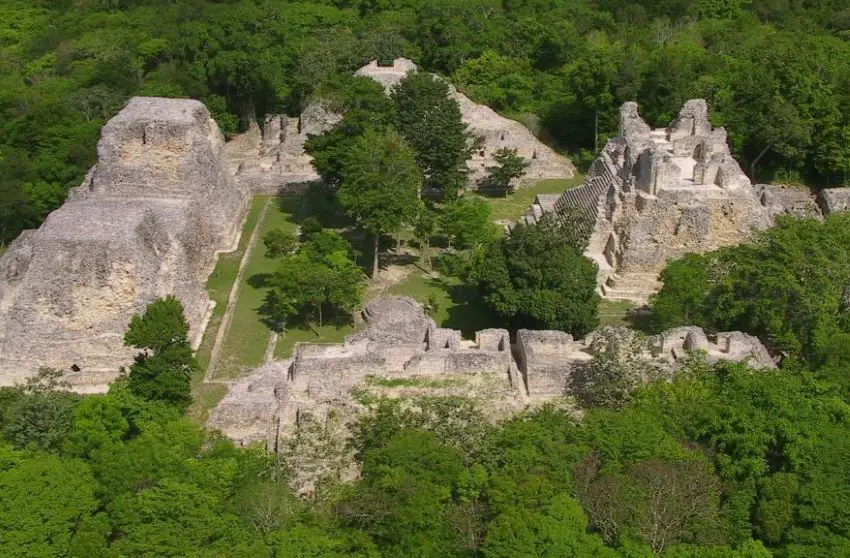
Becan archaeological site
Becán is a Maya city with a unique irrigation system. Located in the middle of the Calakmul reserve, the city is one of Campeche’s lesser known sites.  (Lugares INAH)

187 of these sites are open to the public. That’s 187 opportunities to visit some of the most interesting and beautiful rooms of the museum that is Mexico. 

Here is a list of five archeological sites you probably haven’t heard of, located in Guanajuato, Jalisco, Campeche, Oaxaca and México state. 

Cañada de la Virgen

This site is located only 16 kilometers southeast of the ever popular city of San Miguel de Allende, Guanajuato

The main monuments in Cañada de la Virgen were utilized to study and observe the sky. The site itself was structurally planned to reflect the cosmic cycles of the lives of its Otomi inhabitants. 
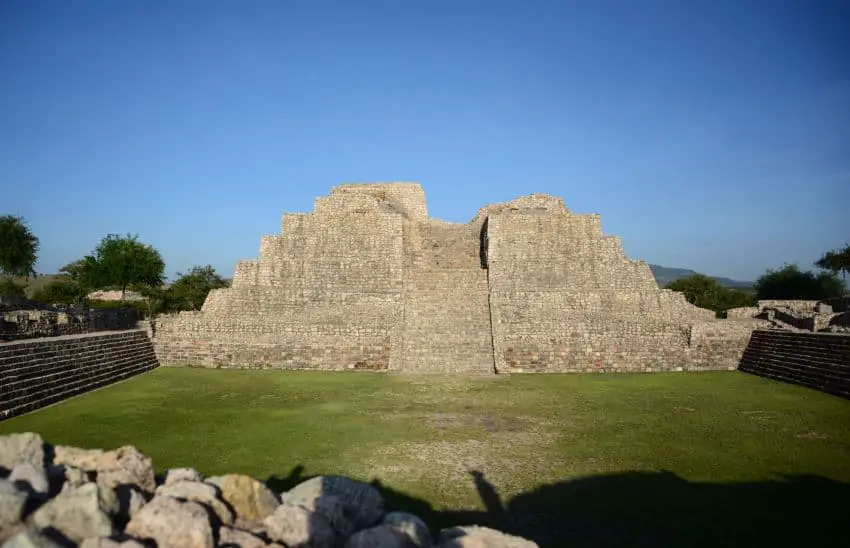
Cañada de la Virgen pyramid
Cañada de la Virgen was an Otomi research and religious center. (Lugares INAH)

The site is interesting as it was not a residential area but instead a place of research and rituals. It has impressive acoustics which lets you communicate from any section of a structure to another without raising your voice. 

A museum in the visitors’ center provides ample information about the activities that took place in Cañada de la Virgen.

You can visit from Tuesday to Sunday, from 10 a.m. to 6 p.m., with the last tour at 4 p.m. Tours last approximately two hours and cost 70 pesos per person and 20 for children under 12 years old. Children under five enter free. 

Tenayuca

Tenayuca, in Tlanepantla, México state, is believed to have been founded in 1250 as the first Chichimeca capital in the Valley of Mexico. This site, whose name means “walled place” in Nahuatl, is home to an extraordinary pyramid crowned by twin temples built for the gods Tlaloc and Huitzilopochtli, surrounded by a wall of snakes. These features make the Tenayuca site the earliest example of the Mexica double pyramid, and it had strong links to the Mexicas of Tenochtitlán until the arrival of the Spanish. 
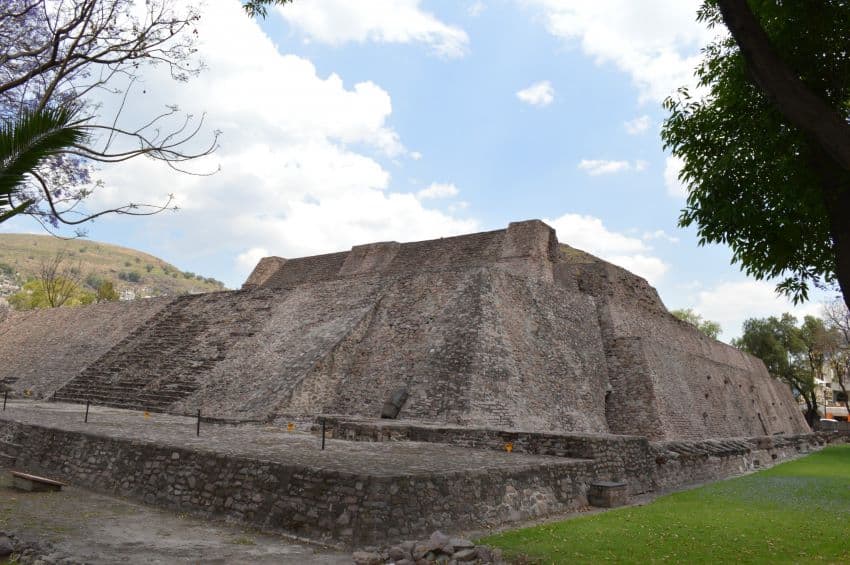
Tenayuca archaeological site
Tenayuca’s double pyramids to Tlaloc and Huitzilopochtli. (Lugares INAH)

Historical records say that the Spanish named Tenayuca the “town of snakes” due to the many sculptured snakes adorning the walls of the pyramids and temples. One of the site’s temples is reported to have had around 600 snake heads adorning its walls. 

Tenayuca is open Tuesday to Sunday from 10 a.m. to 5 p.m. and is conveniently located a short walk from the northern terminus of Line 3 of the Mexico City Metrobus.  It has an entry fee of 70 pesos, with free entry for children under 13, students, teachers and senior citizens. It is also free for Mexicans on Sundays.

Becán

Becán is located in southeastern Campeche, within the Calakmul Biosphere Reserve. In Yucatec Maya, its name means “ravine formed by water.” This site was first settled between 600 and 300 BC, and by 300 – 250 b.C. it was transformed into a villa with a dense population. Its strategic location between the Gulf and the Caribbean gave it control over local commercial routes.

Becán’s buildings distinguish themselves from others by their unique layout and monumental heights. Additionally, they encompass a pit in the middle of the city that was part of an innovative watering system, used to draw the limits of the ceremonial area of Becán. 
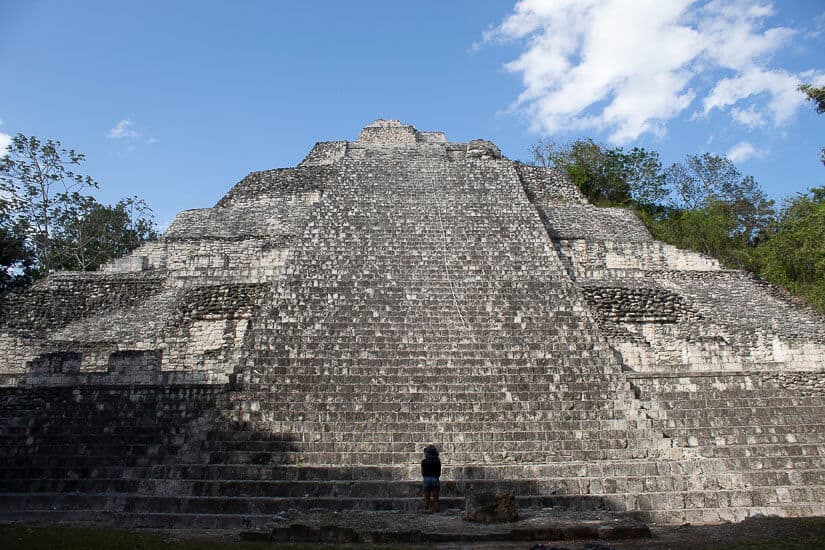
Structure X at Becan site in Campeche
The towering Structure IX at the ancient Maya archaeological site of Becán in Campeche. (Lugares INAH)

Around AD 1000, the city started to disintegrate and was occupied by other communities of greater economic and political strength. It was slowly forgotten and overrun by jungle, creating the remarkable site we see today. 

You can visit this Becán any day of the week. The site is open from 8 a.m. to 4:45 p.m. Entry costs 80 pesos. 

Huamelulpan

Some of Oaxaca’s ruins are also widely known, with Monte Albán and Mitla receiving a wide flow of visitors every year. However, the state has over ten archeological sites open for tourism, many of which are much less known.

The Huamelulpan ruins are located by the town of San Martín Huamelúlpam, around two hours west of Oaxaca City. This pre-Hispanic city dates to 400 BC and was an important urban center until 800 AD. It was principally populated by Mixtec groups, who had ever-changing and complicated relationships with Monte Albán and the tribes of the Oaxaca Valley. 
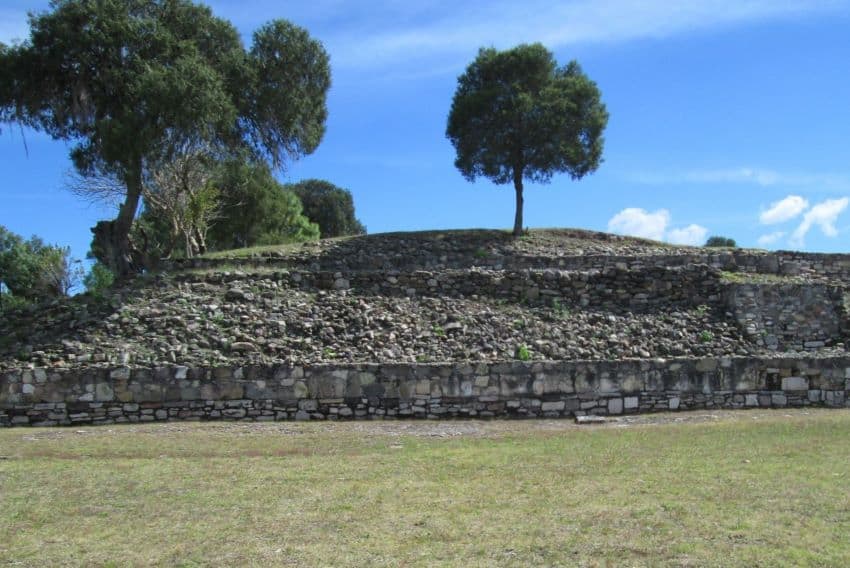
Huamelulpan archaeological site
Huamelulpan doesn’t offer much in the way of facilities, but is still available for the public to visit. (Lugares INAH)

This site is not officially open to the public, meaning it doesn’t have any infrastructure or services. You can still visit it on your own though, every day of the week between 9:00 a.m. and 6:00 p.m. 

Teuchtitlán (Guachimontones)

An hour and a half away from Guadalajara lies one of the most important sites in Western Mesoamerica, and a Unesco World Heritage site.  It is also one of the most architecturally original sites in the country — and according to historians, Mesoamerica as a whole, with round and conic shapes as opposed to rectangular and pyramidal. 

This site is 20 acres wide, and was one of the first big populated centers in the west. Its exact chronology is unknown, but it is estimated that it was populated by 40,000 people of the Teuchtitlán tradition during its peak. It was discovered only 50 years ago, in 1975.

You can visit this highly unique site for a fee of $50 pesos. 

Information about all 193 archeological sites in Mexico can be found on the government’s cultural website

Montserrat Castro Gómez is a freelance writer and translator from Querétaro, México.

What to eat in Oaxaca (and where to eat it)

7
Chefs at Los Danzantes.
Oaxaca is Mexico's most essential foodie mecca, but where are the 'must-eat' spots in the city? (Los Danzantes/Instagram)

For those who love Mexican food, Oaxaca is arguably the best place in the country to explore for a dash of culinary magic. When you’re visiting though, the wealth of options can be overwhelming. This all leads to one, vital question: How do you find the best food in Oaxaca?

I’ve found the only way to get to know Oaxaca is through enjoying their food and embracing their cultural traditions. Whether you prefer eating through Oaxaca via its street food stalls, markets, guided food tours, or at one of its many restaurants, every dish will make you feel like you’re in your grandmother’s home kitchen. 

Ingredients to prepare Oaxacan mole
While many regions of Mexico produce mole, Oaxaca probably has the most famous iterations of the sauce. (Los Danzantes/Facebook)

But the start of every flavorful journey begins with the first bite. If you plan to discover this special part of Mexico, here’s your guide to indulge in the Oaxacan magic!

What food to try when in Oaxaca?

If you’re like me and began learning about Oaxaca’s culinary tradition in shows like Street Food: Latin America, it’s easy to buy into the hype.

But the three main dishes to get you started on this food journey are the following:

Memelas

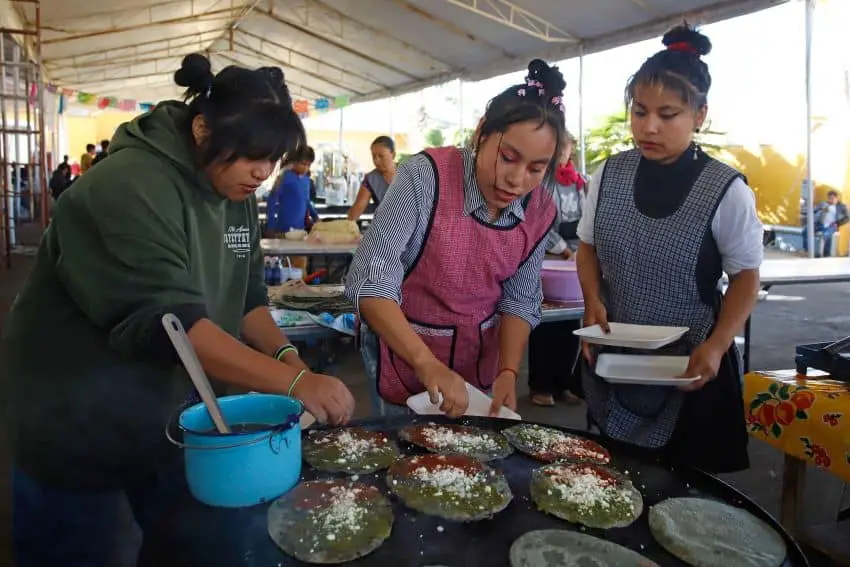
Memelas
Memelas, a personal favourite, are made of beans, cheese and meat in a fried tortilla. (Mireya Novo/Cuartoscuro)

Not to sound biased here, but this is my favorite Mexican street food. It’s a heavenly combination of an oval-shaped tortilla, refried beans, Oaxacan cheese, a little salt, and a choice of chicken, beef, or vegetables. You also can’t forget the salsa.

Different states have their take on this antojito (snack food), but Oaxaca has the most delicious ones.

Tlayudas

Known as the “Oaxacan pizza”, this is the most well-known dish in the region. Not only will you find these in markets and street food stalls, but also in fancy restaurants.

Naturally, it has many variations. I’ve had some innovative tlayuda dishes at modern restaurants in Oaxaca, as well as traditional versions at Mercado 20 De Noviembre.

Tlayudas
A delicious tlayuda, a local speciality that has to be tried at least once during a trip to Oaxaca. (Andrea Murcia/Cuartoscuro)

But in general, it comes in a big tortilla with refried beans, and a healthy balance of Oaxacan cheese (what else, right?), sliced meats, lettuce, tomatoes, and more. 

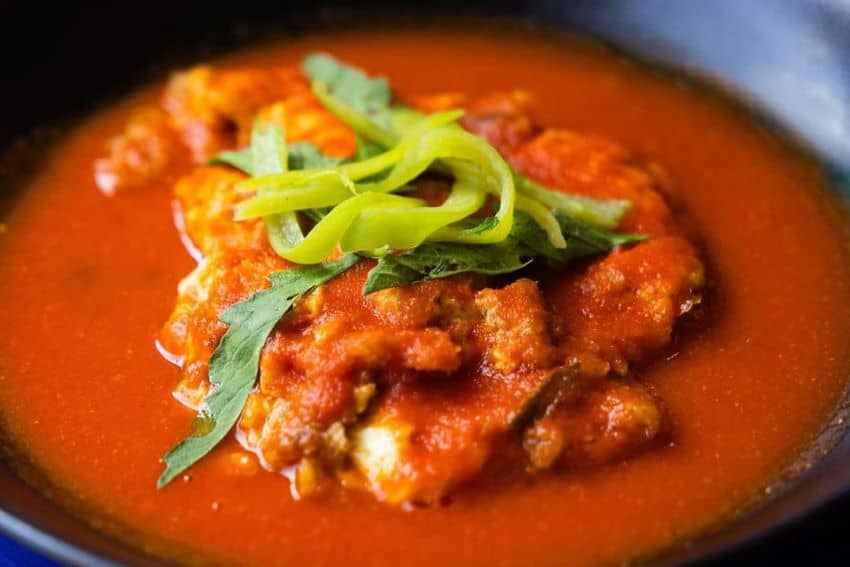
Yellow Mole

This is something you need to try at least once while in Oaxaca. I found a street food stall from the Netflix show Street Food: Latin America that specialized in it and was pleased with the result since it came wrapped in a world-class tortilla.

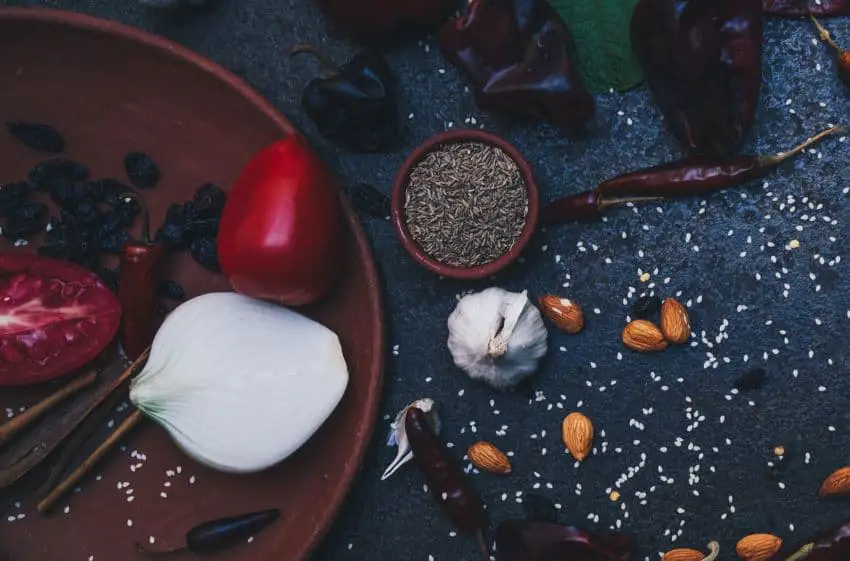
I was one of many people who came to that stall just for the yellow mole. Made with a loving combination of chiles, spices, tomatoes, garlic, onion, and more, this dinner-quality meal is as authentic as it gets.

Mezcal & Tejate

Mezcal is an acquired taste of liquor and isn’t produced anywhere outside Mexico. The spirit has become synonymous with the state and it’s a “welcome to Oaxaca” moment all visitors should try. You can find mezcal anywhere, especially if you’re staying downtown. You can also take a day trip to El Rey de Matatlán and see how the drink is traditionally is made at the source. 
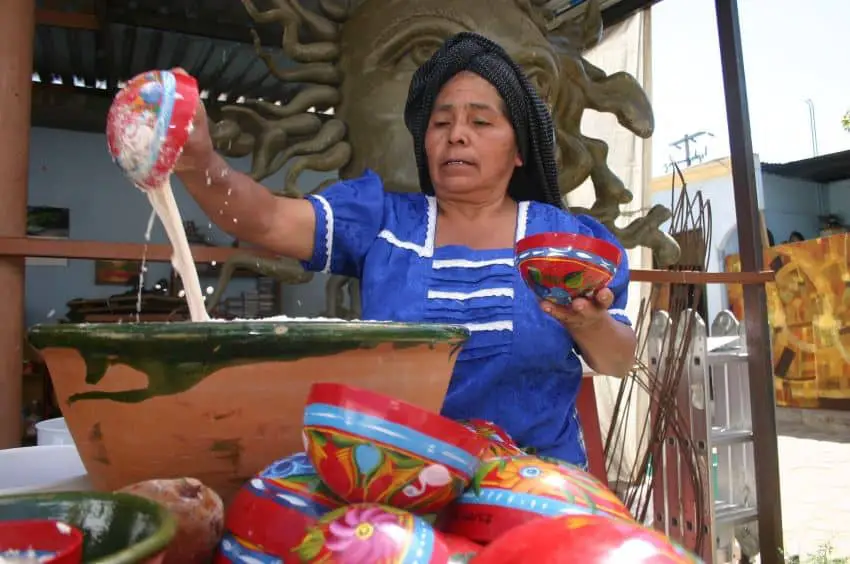
If you’re not big on alcohol, tejate is another fantastic choice. Considered the “drink of the Gods” in Oaxaca, it has a sweet taste that can be enjoyed by all age groups. The most intriguing thing about tejate is its history, tracing back 300 years before the Spanish arrived on Mexican soil. 

Where to find restaurants, markets, and tours

Mexican woman serving tejate
(Max Núñez/Cuartoscuro)

Not that you need to try hard once you’re in Oaxaca to find good breakfast, lunch, and dinner spots, but there are some places you’d be crazy to ignore. 

If you’re a traveler who loves to explore food markets, the two main ones are Mercado 20 De Noviembre and Benito Juarez. Both places boast so many amazing food and drink options that you could spend hours sampling everything. 

The amount of restaurants here is endless if that’s more your thing. Here’s a quick list of wonderful options I can vouch for: 

Los Danzantes 

Los Danzantes is the winner of a Michelin star, and is considered by many to be Oaxaca’s best eatery (although that’s a very bold claim to make in a city like Oaxaca).

Address: C. Macedonio Alcalá 403-interior 4, RUTA INDEPENDENCIA, Centro, 68000 Oaxaca de Juárez, Oax., Mexico.

Catedral Restaurante 

Huevos charros
Huevos Charros (Restaurante Catedral/Instagram)

Address: C. de Manuel García Vigil 105, RUTA INDEPENDENCIA, Centro, 68000 Oaxaca de Juárez, Oax., Mexico.

Casa Oaxaca

Address: Constitución 104-A, RUTA INDEPENDENCIA, Centro, 68000 Oaxaca de Juárez, Oax., Mexico.

If you’re too indecisive on where to eat, don’t fear! Food tours like this one are your best friend. You’ll be introduced to all the best spots and feel more comfortable navigating your surroundings for the rest of your holiday. 

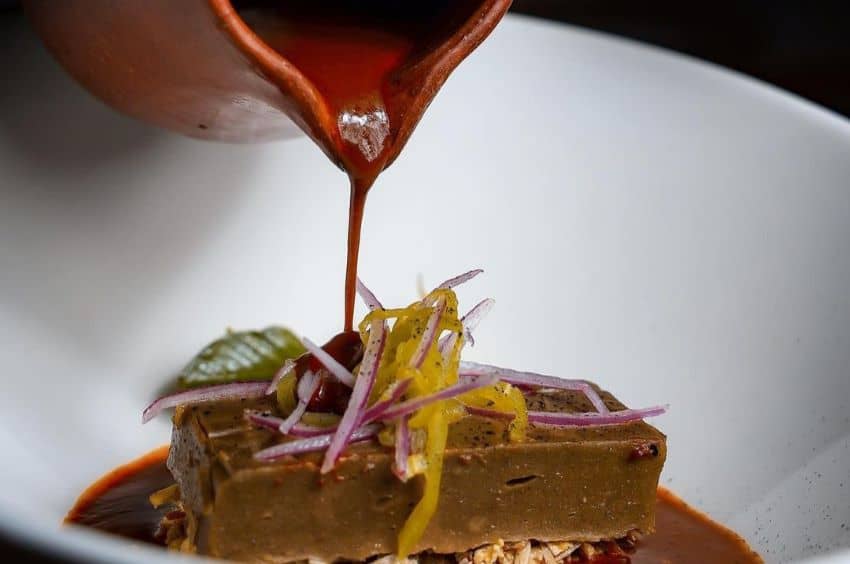
Tamale with Mixe meat and yellow mole with Pitiona.
Tamale with Mixe meat and yellow mole with Pitiona. (Casa Oaxaca/Instagram)

Next stop, Oaxaca!

I could easily write an article double the size of this about the food options you’ll find in Oaxaca. Along with the restaurants, markets, and street food stalls listed here, there’s so much variety that I wouldn’t be surprised if your foodie journey differs from mine. 

Anywhere I’ve missed? Let me know in the comments!

Ian Ostroff is an indie author, journalist, and copywriter from Montreal, Canada. You can find his work in various outlets, including Map Happy and The Suburban. When he’s not writing, you can find Ian at the gym, a café, or anywhere within Mexico visiting family and friends.

US approves 3 new Mexico-US international bridge projects

1
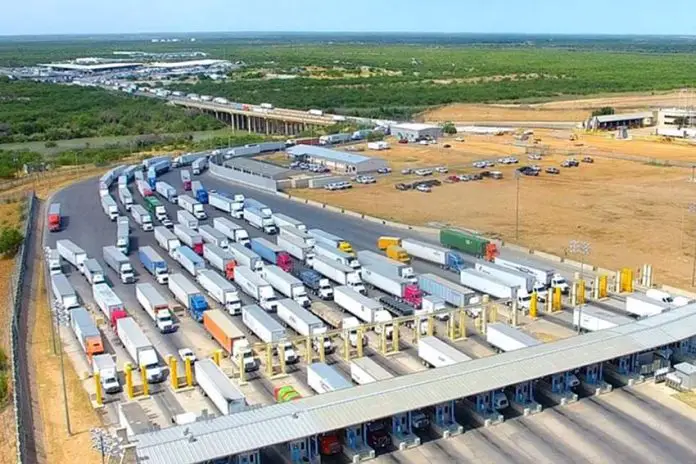
Hundreds of tractor trailers in stopped traffic, waiting to cross an international bridge on the Mexico-U.S. border in Laredo, Texas
The project is the most recent proposal aiming to improve the flow of Mexico-U.S. commercial traffic at the busy Laredo border crossing. (City of Laredo, Texas)

United States President Joe Biden has approved three international bridge projects linking Texas to the Mexican states of Tamaulipas and Coahuila.

Biden told President Andrés Manuel López Obrador about his approval of presidential permits for the international bridge projects in a call on Wednesday, just hours after he issued an executive order that prevents migrants from making asylum claims at the U.S.-Mexico border when crossings between legal ports of entry surge.

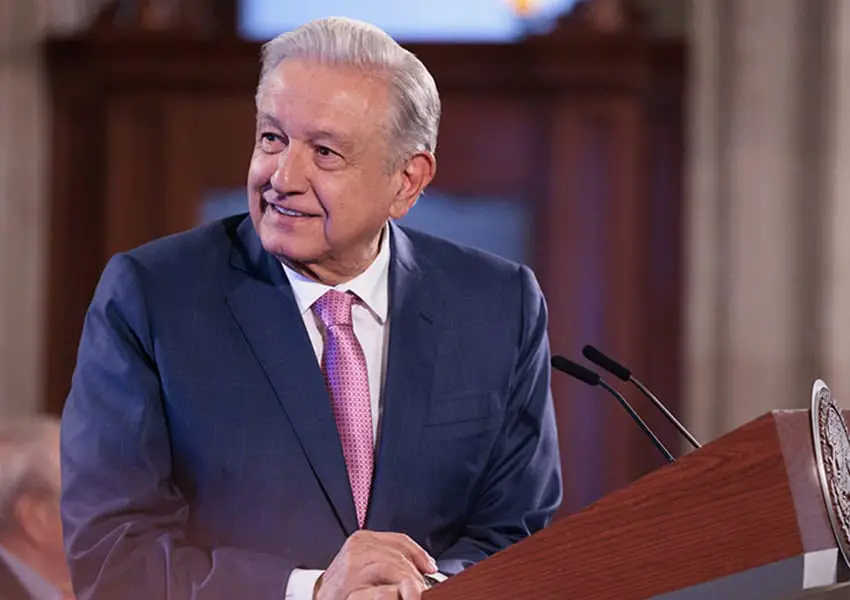
Mexico's President Lopez Obrador in a suit standing at a podium at a press conference in the national palace discussing Mexico-U.S. international bridge projects that were approved Tuesday.
President López Obrador told U.S. President Biden in a phone call Wednesday that the new Mexico-U.S. international bridge projects meant that Biden “would go down in history as the president who builds bridges, not walls.” (lopezobrador.org)

The U.S. president “informed President López Obrador that he has approved three new permits for international bridge projects in Texas that will benefit local communities and strengthen the U.S.-Mexico economic relationship by building infrastructure that promotes increased trade travel,” the White House said in a readout of the call between the two leaders.

López Obrador told Biden that he would “go down in history as the president who builds bridges, not walls,” according to a statement from Mexico’s Ministry of Foreign Affairs (SRE).

At his morning press conference on Wednesday, AMLO provided additional details about the three announced Mexico-U.S. bridge projects.

One is the “expansion” of the World Trade International Bridge between Laredo, Texas, in the U.S. and Nuevo Laredo, Tamaulipas, in Mexico — across which goods accounting for 40% of Mexico-U.S trade pass.

The other two projects involve the construction of new international bridges between Eagle Pass, Texas, in the U.S. and Piedras Negras, Coahuila, in Mexico and between Brownsville, Texas, and Matamoros, Tamaulipas.

López Obrador said that the three projects will “greatly help the economic and commercial development of the entire region.”

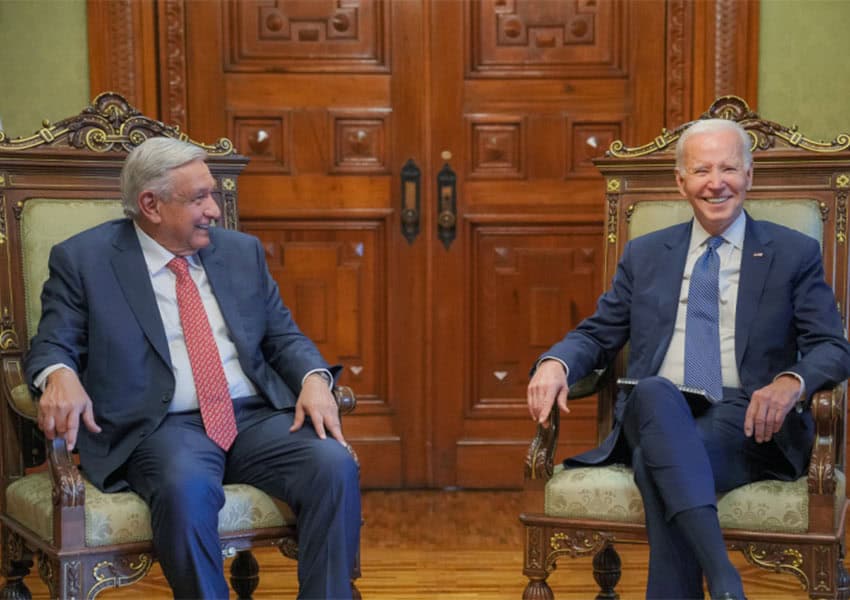
President of Mexico Andres Manuel Lopez Obrador and U.S. President Joe Biden sitting side by side in a formal room in the National Palace. Both are smiling.
Mexico-U.S. collaboration on migration in the region will continue despite a new U.S. policy limiting migrants’ right to seek asylum at the Mexico-U.S. border. President López Obrador told reporters Wednesday that he’s negotiating for a U.S. policy to deport migrants to their home countries, not to Mexico, as happens frequently. (File photo/U.S. Department of State)

Close Mexico-U.S. collaboration on migration continues

According to the SRE statement, López Obrador and Biden “agreed to continue the close collaboration between the two countries to manage migration in the region and to increase their actions to address the structural causes of migration in Latin America and the Caribbean.”

AMLO confirmed on Wednesday that he had discussed the United States’ new asylum restrictions with Biden.

According to a White House fact sheet, the Biden administration’s new actions “will make it easier for immigration officers to remove those without a lawful basis to remain [in the U.S] and reduce the burden on our Border Patrol agents.”

The New York Times described the U.S. president’s executive order as “the most restrictive border policy instituted by Mr. Biden, or any other modern Democrat.”

Asked whether Mexico would be placed in a difficult situation due to an increase in deportations from the U.S. caused by the new executive order, López Obrador dismissed that possibility.

He said that Mexico was seeking an agreement to have the United States deport non-Mexican migrants directly to their country of origin rather than returning them to Mexico.

“We don’t have a problem [receiving migrants]; we treat migrants very well, all of them, but why use an intermediary?” López Obrador said.

Biden congratulates AMLO on “free and fair” elections

The White House statement said that Biden called López Obrador “to congratulate him and the Mexican people on their free and fair electoral process that resulted in the historic election of President-elect Claudia Sheinbaum.”

AMLO himself described the elections as “the cleanest” in history after opposition presidential candidate Xóchitl Gálvez and National Action Party leader Marko Cortés denounced them as being completely unfair.

The White House also said that “the two leaders pledged to maintain their strong cooperation through the completion of President López Obrador’s term in office and to ensure a stable, productive bilateral relationship during the transition to the administration of President-elect Sheinbaum,” who will take office on Oct. 1.

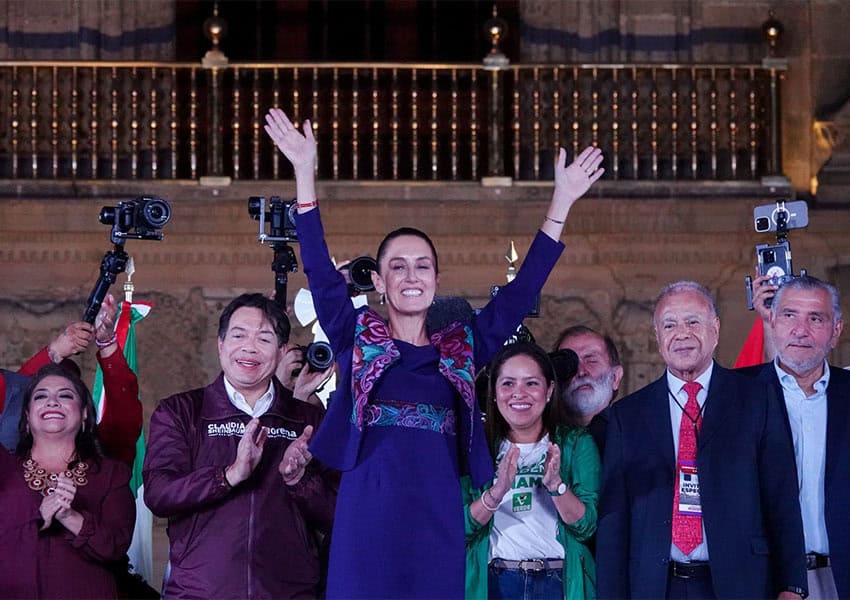
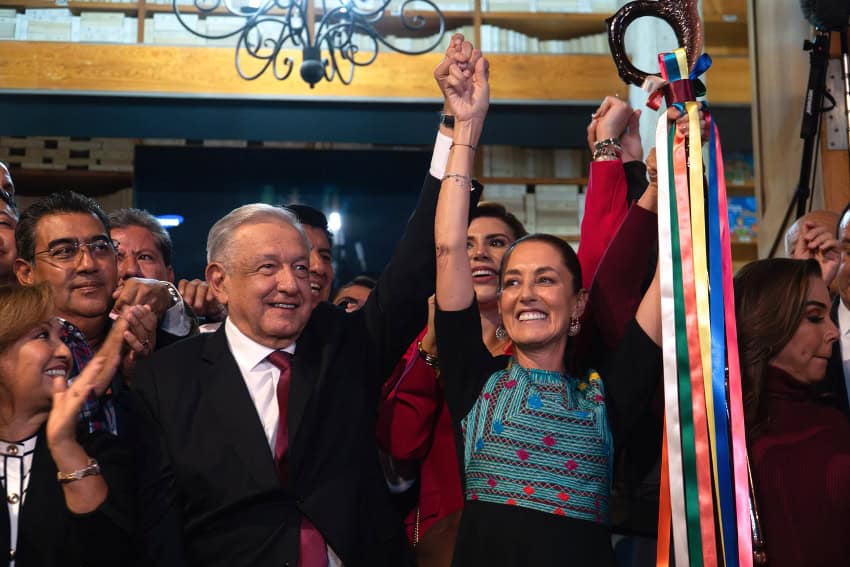
President-elect Claudia Sheinbaum standing with her arms in the air and in front a group of Morena party figures in Mexico City's zocalo main square, saluting crowds of her supporters.
On President Biden’s phone call to inform President López Obrador about the approval of the international bridge projects, Biden also congratulated his Mexican counterpart on the election of President-elect Claudia Sheinbaum on June 2. (Galo Cañas/Cuartoscuro)

Mexican officials to promote Isthmus trade corridor in US

The SRE noted in its statement that López Obrador and Biden came to an agreement during their call “that a high-level Mexican delegation would travel to Washington, D.C. this week to present the Interoceanic Corridor of the Isthmus of Tehuantepec and existing investment opportunities to U.S. officials and business executives.”

The trans-isthmus trade corridor, which includes a modernized train line between Mexico’s Pacific and Gulf coasts, has been touted by Mexico as an alternative to the Panama Canal. It will also include a chain of industrial parks.

Mexican officials said a year ago that the government had received 52 letters of intent to invest in the corridor from Mexican and foreign companies, representing US $4.5 billion.

The SRE said that a Mexican delegation headed by Foreign Affairs Minister Alicia Bárcena and Navy Minister José Rafael Ojeda Durán would discuss with U.S. officials and business executives “opportunities to expand the corridor toward Guatemala.”

Mexico News Daily 

WHO confirms first fatal human case of avian H5 flu strain in Mexico

2
Test tube marked influenza
The World Health Organization (WHO) confirmed that a man from México state who was hospitalized and died in April in Mexico City had the first human case of this influenza subtype. (Shutterstock)

A man died in Mexico City earlier this year after becoming ill with a strain of avian flu virus that had never previously been confirmed in humans anywhere in the world, the World Health Organization (WHO) said Wednesday.

The WHO said in a statement that Mexican authorities reported “a confirmed fatal case of human infection with avian influenza A(H5N2) virus” on May 23.

The infection was detected in a México state resident who was hospitalized in Mexico City, the WHO said.

“This is the first laboratory-confirmed human case of infection with an influenza A(H5N2) virus reported globally and the first avian H5 virus infection in a person reported in Mexico,” the agency said.

“Although the source of exposure to the virus in this case is currently unknown, A(H5N2) viruses have been reported in poultry in Mexico,” it added.

The WHO said that it had assessed the current risk to the general population from the virus as “low.”

The source of the virus in this fatality case has yet to be determined, but avian influenza outbreaks often occur in poultry farms. (Cuartoscuro)The man who died was 59 years old and had “multiple underlying medical conditions,” the WHO said.

He “had no history of exposure to poultry or other animals,” the WHO said, and “had already been bedridden for three weeks, for other reasons, prior to the onset of acute symptoms,” according to the case’s relatives.

“On 17 April, the case developed fever, shortness of breath, diarrhea, nausea and general malaise. On 24 April, the case sought medical attention, was hospitalized at the National Institute of Respiratory Diseases … and died the same day due to complications of his condition,” the WHO said.

It said that no further cases of the same bird flu strain were detected during an epidemiological investigation.

“Of the 17 contacts identified and monitored at the hospital where the case died, one reported a runny nose between 28 and 29 April,” the WHO said.

The agency noted that a “high pathogenicity avian influenza A(H5N2) outbreak was detected in a backyard poultry farm in the state of Michoacán,” which borders México state, in March.

It also noted that two “low pathogenicity” A(H5N2) bird flu outbreaks occurred this year in México state, one in Texcoco in March and another in Temascalapa in April.

“Thus far, it has not been possible to establish if this human case is related to the recent poultry outbreaks,” the WHO said.

United States media noted that the avian flu strain that caused the fatality in Mexico is different from the one currently circulating in cattle in the U.S. that has infected three dairy workers there. That strain is H5N1.

The WHO noted in its statement that “sporadic human cases” of infection with avian influenza viruses “are not unexpected.”

The risk comes from “exposure to infected poultry or contaminated environments,” the agency said, explaining that “the current likelihood of sustained human-to-human spread is low.”

The WHO also noted that “there are no specific vaccines for preventing influenza A(H5) virus infection in humans” but “candidate vaccines to prevent A(H5) infection in humans have been developed for pandemic preparedness purposes.”

Mexico News Daily 

Mexico City Mayor-elect Clara Brugada has a plan for her ‘election trash’

0
Mayor-Elect of Mexico City Clara Brugada at a podium holding an example of a construction brick made of recycled material. Four people next to her hold an example of recycled roofing material
Mayor-Elect of Mexico City Clara Brugada, left, shows reporters examples of green building materials that could be made out of her recycled campaign banners and signs. She urged supporters around the city on Tuesday to collect the "election trash" for her. (Galo Cañas/Cuartoscuro)

Mexico City’s mayor-elect Clara Brugada has urged her supporters to join a massive cleanup to remove her campaign’s “election trash” — i.e., her no-longer-needed electoral campaign materials — from the city’s streets. 

The Morena-party winner said on her social media channels that her plan is to recycle the signs and banners into eco-friendly construction materials — which she referred to in Spanish as “tabiques verdes” or “green bricks.” Brugada said they’ll be used to build the 100 community centers throughout Mexico City that she promised in her campaign. 

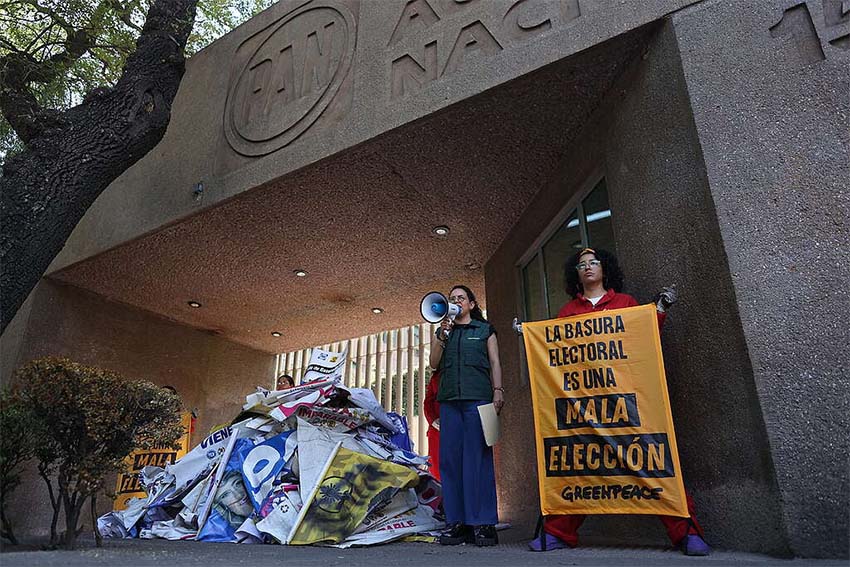
Mexican activists standing with a pile of plastic election campaign banners and posters in front of Mexico's National Action Party headquarters in Mexico City
Brugada’s announcement was likely influenced by a protest last month by Mexico City Greenpeace activists, who tore down campaign banners and signs around the city and brought what they called “election trash,” to the headquarters of the parties that had created them. (Gustavo Graf/Greenpeace México)

“Today we start with this call to all our supporters to take to the streets and remove the campaign materials from public spaces…” Brugada said in a press conference on Tuesday. “We are going to process all the banners and all the propaganda and remove it.”

The recovered materials would also be used to construct public furniture and other city infrastructure, Brugada said.

In May, just weeks before Mexico City’s elections took place on June 2, Greenpeace activists in the capital protested against these sorts of campaign materials posted by candidates for the city’s various local, state and federal elections each election cycle, calling them environmentally unfriendly “election trash” that’s rarely recovered by campaigns post-election, adding to the city’s refuse burden and often becoming street litter.

Brugada’s election trash cleanup campaign began on Tuesday morning, as the mayor-elect took to the streets in the Anzures neighborhood of the city’s Miguel Hidalgo borough. 

News outlet Animal Político contacted Brugada’s communication team twice to request more details about the recycling plan and the technology she would use to re-purpose her campaign materials but reported that Brugada’s team didn’t respond. However, one of the 12 community centers she built in the city’s Iztapalapa borough — the Utopia Libertad center — is constructed with recycled PET plastic and other repurposed materials, according to the Utopia Program website.

Brugada was the borough mayor of Iztapalapa until September 2023, when she resigned to run for Mexico City mayor.

Brugada hasn’t explained how she will collaborate with the local government in collecting the election trash. According to the Mexico City regulations, the General Directorate of Urban Services collects, manages and recycles the city’s solid waste. 

A Mexican boy in swim trunks landing head first in a swimming pool at the end of a blue plastic water slide
A young Iztapalapa resident enjoys the Holy Week vacation period in April with a trip down a water slide at the Utopía Tezontli community center in Iztapalapa. (Graciela López/Cuartoscuro)

What are Clara Brugada’s Utopias?

During her mayoral campaign, Brugada promised to build 100 community centers modeled after the 12 she created during her time as borough mayor of Iztapalapa. 

Called Utopias, the Iztapalapa community centers offer recreational and educational classes and cultural activities to residents in a wide array of areas, ranging from art, digital design and theater to reading circles and film debate groups, therapeutic swimming and team sports.

Some Utopias also host flagship institutions open to the public such as a climate change museum, an aquarium and refuges for turtles and axolotls.

According to Brugada, each capital borough will host one Utopia, which would function “as a model of well-being and transformation of public space,” said the candidate. Each community center’s thematic focus would be different, including ones with environmental and rural themes and a women’s Utopia.

According to Brugada, each Utopia will cost 100 million pesos (US $5.6 million) to build.  

With reports from CNN en Español, Animal Político and El Financiero

Sheinbaum and Finance Minister try to calm markets with economic commitments

8
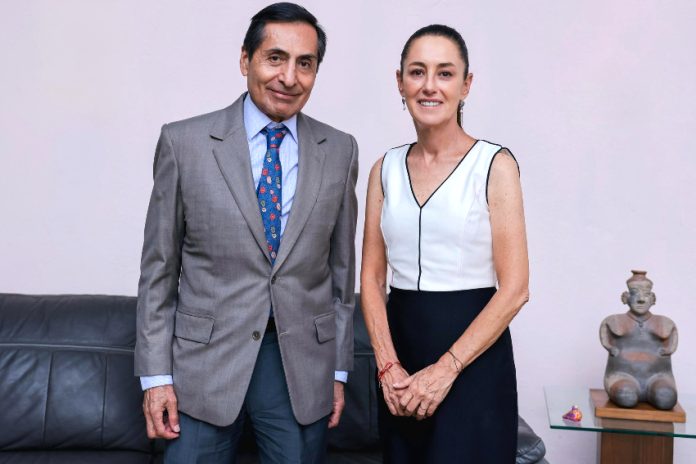
Rogelio Ramírez de la O and Claudia Sheinbaum
Finance Minister Rogelio Ramírez de la O presented the 2025 budget proposal to Congress on Friday. (Claudia Sheinbaum/X)

President-elect Claudia Sheinbaum has endorsed a set of economic commitments outlined by Finance Minister Rogelio Ramírez de la O in an attempt to calm markets after the Mexican peso and the Mexican Stock Exchange (BMV) lost ground following the ruling Morena party’s decisive win in elections on Sunday.

Sheinbaum, who will take office on Oct. 1, said on social media on Tuesday that she had met with Ramírez — who will stay on as finance minister when the new president takes office — and that they “ratified the economic line” he set out.

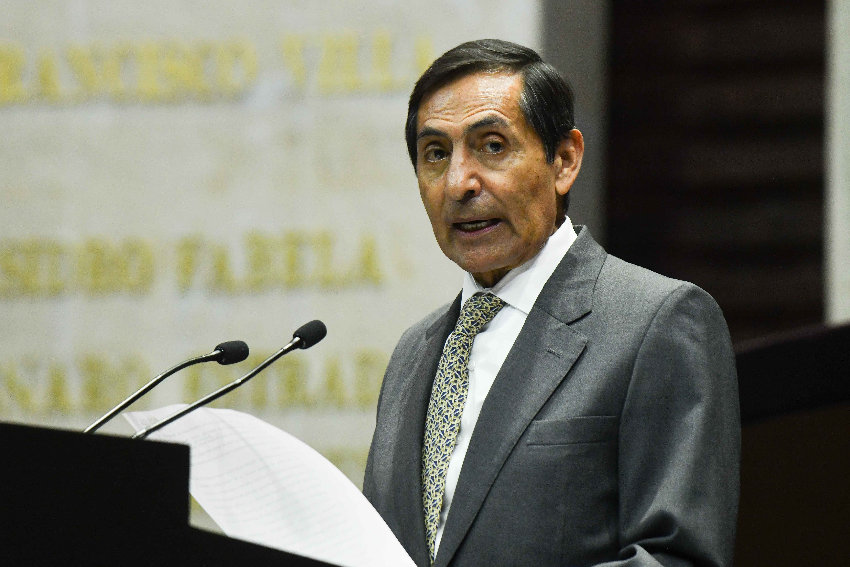
Rogelio Ramírez de la O
Rogelio Ramírez de la O in an appearance before Congress last year. ( MARIO JASSO/CUARTOSCURO.COM)

In a statement on Tuesday, the 75-year-old economist said that as finance minister he would ensure:

  • The reduction of public debt to levels compatible with a sustainable debt-to-GDP ratio “in the medium term.”
  • That “all communication with investors and rating agencies” is updated to “confirm our priorities: macroeconomic stability, fiscal prudence and the viability of our fiscal objectives.”
  • The strengthening of collaboration with (the heavily-indebted) state oil company Pemex, “taking advantage of support in Congress to optimize the good use of public resources.”
  • The confirmation to international organizations and investors that “our project is based on financial discipline, respecting the autonomy of the Bank of Mexico, adherence to the rule of law and facilitating private national and foreign investment.”

Ramírez, finance minister since 2021, also spoke to investors and analysts on Tuesday in what the Financial Times described as a “hastily scheduled call.”

During a two-minute call in which he emphasized the commitments listed above, he didn’t address concerns over proposed constitutional reforms that the Morena party and its allies could approve in Congress thanks to the large majorities they won in the Chamber of Deputies and the Senate in elections on Sunday.

The Morena-led coalition easily won a two-thirds majority in the lower house of Congress and is expected to get close to achieving a super majority in the Senate as well. It could thus approve constitutional reforms that were proposed by President Andrés Manuel López Obrador and which are supported by Sheinbaum with the support of just a few opposition senators.

López Obrador makes a hugging gesture during a political event
On Feb. 5, the president announced a suite of sweeping constitutional reform proposals that, according to some observers, could downgrade Mexican democracy. (lopezobrador.org.mx)

Submitted to Congress in February, those proposals include ones to allow citizens to directly elect Supreme Court justices and other judges; eliminate numerous autonomous government agencies; incorporate the National Guard into the military; and overhaul the pension system.

Concerns over the likelihood that Morena will indeed be able to approve constitutional reforms once the recently-elected lawmakers assume their positions in September caused both the peso and the BMV to take a post-election tumble.

The peso depreciated again on Tuesday, but appreciated on Wednesday to trade at 17.56 to the US dollar shortly after midday Mexico City time. The BMV’s benchmark index rose more than 3% on Tuesday after falling over 6% on Monday.

Aaron Gifford, a sovereign credit analyst at investment management firm T Rowe Price, told the Financial Times that Ramírez’s call with investors had not allayed concerns about the make-up of Mexico’s next Congress.

“It seems like we’ll have to wait for more details around the transition plan, especially given fears of AMLO pushing through some reforms during the month that he overlaps with the new congress,” he said.

For its part, the Association of Mexican Banks said in a statement on Tuesday that the announcement that Ramírez will remain finance minister after Oct. 1 sends a “powerful message” to the global financial community and international markets that “Mexico will continue with a solid and disciplined economic and financial policy oriented toward strengthening economic growth.”

Sheinbaum made that announcement in a video message on Monday, and pledged that her government would “act with dialogue, harmony and a lot of responsibility.”

With reports from MilenioEl Economista and The Financial Times

12 more Mexican beaches to earn Blue Flag certifications for 2024-25

4
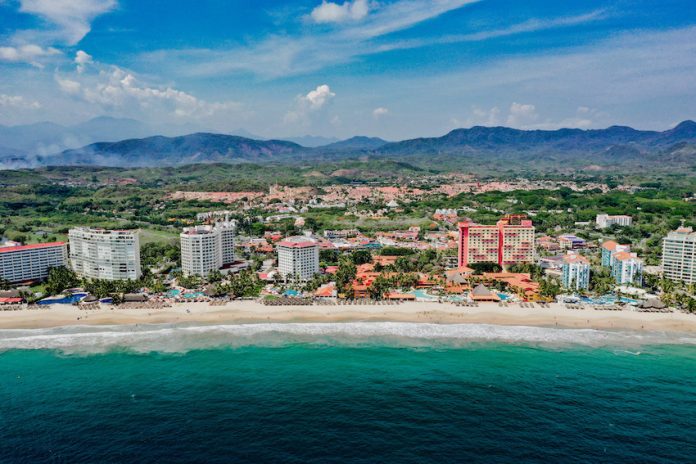
Playa El Palmar I y II, Zihuatanejo, Mexico, became Blue Flag beaches in 2023.
Playa El Palmar I y II, Zihuatanejo, Mexico, became Blue Flag beaches in 2023. (FEE International)

With 12 additional beaches receiving Blue Flag certifications this 2024-2025 season, Mexico will have the largest number of Blue Flag beaches in the Americas — and rank 10th worldwide.  

According to Tourism Minister Miguel Torruco Marqués, as of July 1, Mexico will have 78 beaches, 40 sustainable tourism boats and two marinas awarded the Blue Flag distinction.

Isla Mujeres' Playa Centro is one of Mexico's 78 Blue Flag beaches.
Isla Mujeres’ Playa Centro is one of Mexico’s 78 Blue Flag beaches. (islamujeres.gob.mx)

With over 15,000 kilometers of coastline, Torruco stated that “Mexico’s beautiful beaches” continue to be one of the country’s main draws for tourism from around the world. “This is why we must care for and preserve them, always under a responsible and sustainable vision,” he added.

The international Blue Flag program promotes sustainable development in freshwater and marine areas by incentivizing local authorities and beach operators to achieve high standards in the four criteria required by the Foundation for Environmental Education (FEE): water quality, environmental education, environmental management and safety.

Torruco said that his office continues to promote the Blue Flag program as it helps to raise awareness among tourists and residents about the relevance of ecosystems, particularly coastal ones. It also helps fulfill the current administration’s goal to position Mexico as a “green destination,” he said.  

Torruco also recognized the outstanding work of the FEE’s branch in Mexico, which has ensured compliance with the established standards to maintain excellent beaches, marinas and boats.

The Blue Flag award is earned on a yearly basis, meaning that if a Blue Flag beach does not maintain the required criteria, it can lose its flag. 

For the full list of Mexico’s Blue Flag beaches in 2024, see Blue Flag México’s press release here.

Mexico News Daily

Journalist Denise Maerker’s comments on polarization in Mexico strike a chord

10
Screen capture of journalist Denise Maerker
Journalist Denise Maerker's comments on the topic of political polarization in Mexico during a roundtable discussion have gone viral. (Screen capture)

Like the United States and many other countries, Mexico is politically polarized.

On one hand, President Andrés Manuel López Obrador (AMLO) has maintained high approval ratings throughout his six-year term, and over 33 million Mexicans voted for Claudia Sheinbaum, delivering a landslide victory to the ruling party candidate who has pledged to build on the “transformation” of Mexico initiated by her political mentor. The president has legions of devotees, colloquially known as AMLOvers.

President López Obrador and Claudia Sheinbaum
Claudia Sheinbaum’s landslide victory in the election signals that a majority of the population wants continuity of President López Obrador’s policies, which Sheinbaum has promised to build on. (Lopezobrador.org.mx)

On the other hand, millions of Mexicans loathe AMLO and believe that he — and the president-elect — pose a threat to Mexico and its democratic institutions, in part due to the constitutional reform proposals the president submitted to Congress earlier this year and which Sheinbaum supports. The presidential candidate most of those people supported on Sunday was Xóchitl Gálvez representing the PAN-PRI-PRD coalition, who received more than 15.5 million votes.

One manifestation of the political polarization in Mexico is that “friends and relatives no longer talk politics for fear of worsening unbridgeable divides,” the Associated Press said in a recent article.

On Sunday, while analyzing and discussing the election results during a Televisa broadcast, well-known journalist Denise Maerker weighed in on polarization in Mexico. Her remarks “resonated widely,” El Universal reported, and in this day and age that means they went viral on social media.

During a discussion with other high profile journalists, including Ciro Gómez Leyva and Jorge Ramos, Maerker was asked whether polarization is good, bad or “inevitable,” and whether there could be some kind of “national reconciliation” after the elections.

This clip of journalist Denise Maerker speaking about polarization in Mexico has 1.8 million views.

She began by speaking about the vast economic gulf between Mexico’s poorest people and the middle and upper classes. AMLO’s political base is mostly the former cohort — who have benefited from expanded social programs during the current administration — while more well-off Mexicans are more likely to be critical of the president.

“There is a polarization that is structural and it has to do with a deeply unequal society,” Maerker said.

“What does this polarization mean? The [different] social groups can’t think alike nor can they have common interests or views of the world,” she said, adding that in some cases they are incapable of understanding each other.

“The division between social classes and the immense inequality is a polarization in itself,” Maerker said.

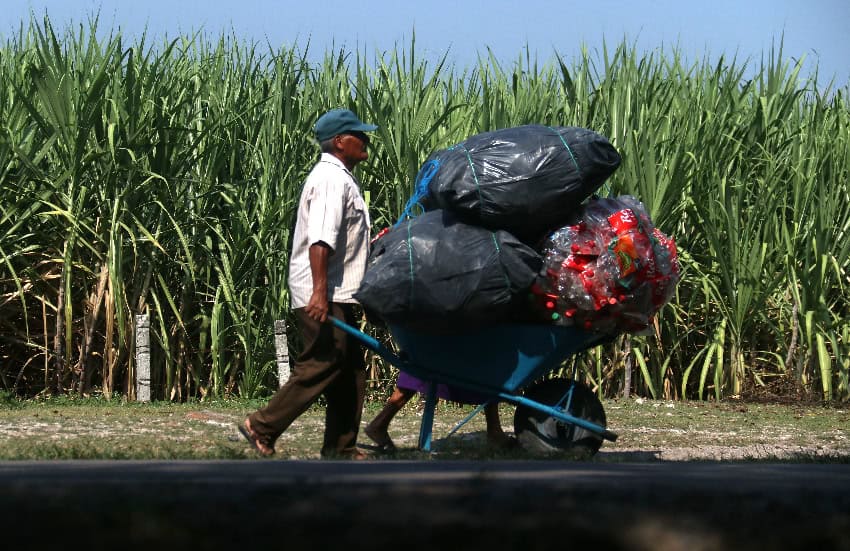
A man with a wheelbarrow of plastic bottles
Mexico is a very unequal society, which Maerker emphasized is part of the structural polarization in the country. (Cuartoscuro)

The journalist asserted that López Obrador has exacerbated that polarization — and made the divide a more deeply political one — with his rhetoric, in which he often pits ordinary Mexican people, el pueblo, against “greedy” elites. He once derided the middle class as “aspirational” and “without moral scruples.”

“What López Obrador did,” Maerker said “was to bring this existing polarization out into the light and throw loads of gasoline on it.”

She asserted that political polarization can be reduced “very quickly” if the “gasoline the president throws every morning” at his press conferences, or mañaneras, is no longer thrown.

“I believe there is a polarization [in Mexico] that is deeply fueled [by López Obrador],” Maerker said, referring to political polarization rather than “structural,” economic polarization.

“I believe that [political polarization] is going to diminish” when López Obrador leaves office, she said.

However, structural polarization won’t diminish until Mexican society becomes “more even,” Maerker added.

Supporters of Xóchtil Gálvez at campaign event
Will there be less divisiveness during the next presidential term? Maerker asserts that political polarization will recede when AMLO leaves power, and Sheinbaum has said she wants to unite Mexican society. (Cuartoscuro)

“It’s obviously structural [polarization] that gives rise … to tremendous differences [between classes],” she said, noting that many Mexicans find it impossible to understand why their fellow citizens voted for Sheinbaum, or why they voted for Gálvez, as the case may be.

“This lack of understanding is because there are places in society that are profoundly different,” Maerker said.

Her explanation of polarization in Mexico was “widely praised” on social media, El Universal said, highlighting comments such as “I completely agree with Denise Maerker” and “while people with money continue living in their bubble and don’t see the reality of the country, this will continue happening.”

One comment beneath a clip of Maerker’s remarks that has been watched 1.8 million times simply said: “Very true.”

It remains to be seen whether Sheinbaum — who has said she wants to unite Mexican society — will be able to reduce polarization with less divisive rhetoric, but one thing that is clear is that combating political division will be one of the key challenges for the incoming president, along with things such as reducing violence, growing the economy, managing the relationship with the United States and lifting even more Mexicans out of poverty.

Mexico News Daily 

10 things gringos do that upset Mexicans (and how to avoid them)

49
Annoying tourist
Don't let this be you. (Depositphoto)

We’re all annoying in our own way. There is always a quirk or personality trait that irritates the masses. Oftentimes those traits span an entire nationality. 

I should know, I’m American. 

Oh Americans. Known the world over as loud, obnoxious, fashionably-challenged, and completely coddled. According to The Times and a 10-year-old article on Business Insider, citizens of the U.S. travel simply to compare everything to the U.S., speak English loud and proud, and make little attempt to learn the local culture. Who is more intolerable than us? 

An angry looking woman
Avoid getting this look by paying attention to our handy guide. (Alev Takil/Unsplash)

I’m happy to say that since moving to Mexico City I’ve found out that we aren’t the only deplorables. At least here in Mexico. (I’m talking to you Canadians, Brits, and Aussies.)

Not to fluff my own feathers, but I have always made a very concerted effort to meld with the local culture as much as possible. Yet, I’m still classified as annoying. Why? I needed answers. So I set out on a very entertaining quest to uncover the most offensive things I, my fellow gringos and selected other nationalities, do to roll both the proverbial-and-physical eye of our Mexican neighbors. 

Through in-depth interviews of six born-and-raised-in-Mexico friends, I found out more than I needed to know about the actions we (often unknowingly) take to offend them.

Here are the top 10, coupled with my personal interpretation of what we’re doing wrong.

A man rides a Yamaha bike on a crowded beach in Acapulco
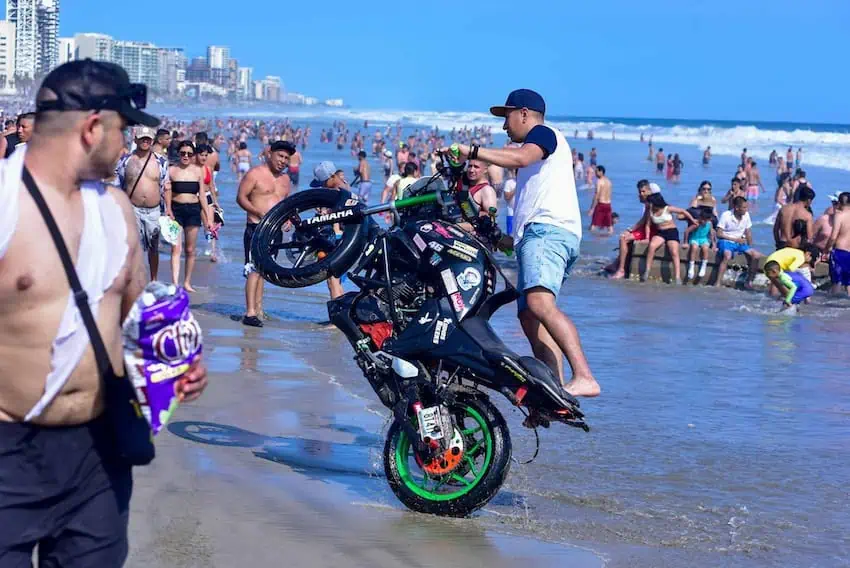
Admittedly, you probably weren’t intending to come to Mexico and do this… but don’t ride your motorbike on a crowded tourist beach either. (Carlos Alberto Carbajal/Cuartoscuro)

Expect English everywhere. It’s true that Mexico City restaurants are handing out English menus to Mexican patrons, much to their chagrin. It’s a double-edged sword. It’s a testament to the country’s accommodation of outsiders, but it’s also preventing English-speaking expats from immersing themselves in the language and, therefore, learning it.

Refuse to drink filtered water.
I understand this from both sides. If you’ve fallen victim to Moctezuma’s rite of passage, just looking at an ice cube will make your stomach turn. However, it likely didn’t come from an ice cube. Dining establishments have no intention of poisoning you, or anyone else, with tap water. No one drinks it here anyway. Filtered is fine.

Talk about how cheap everything is.
This has come up before on Mexico News Daily. Even if it is cheap compared to your home country, it’s not cheap compared to Mexico’s average salary. Delight in the money you’re saving, but keep it to yourself.

Guilt payments and over-tipping.
If your housekeeper gives you a rate, that’s the rate you should pay. Don’t double it because you think it’s too low. It throws off the pay scale for Mexicans who might not be making the same salary you’re raking in from a San Fran-based tech giant. This also goes for tipping. The standard is 10-15%, so unless the service is absolutely spectacular beyond belief, stick with the local customs.

Tipping by card
Tipping is expected, but going above 15% can be seen as problematic. (Blake Wisz/Unsplash)

Not eating like a Mexican.
This is one of my favorites. I’m not referring to Mexican dishes and I’m sure you’re noshing heavily on tlayudas and mole. This refers to Mexico’s traditional dining schedule. Think about it – gringos eat lunch around 1:00 P.M. and dinner around 7:00 P.M. Mexicans eat lunch around 2:00 P.M. and dinner around 8:00 P.M. This means that when a Mexican couple shows up for date night at 8:15 P.M., there are no tables available. 

Crossing the street like a gringo.
The rules here are pretty obvious — pedestrians yield to cars. Yes, it’s opposite to most other countries but trying to change this societal rule will end up getting you squashed. It’s confusing to drivers and safer for you to follow the rule so just do it.

Lack of formalities.
It’s common in the U.S. to skip conversation openers in the interest of saving time and getting to the point. In many cases this is a glorious way of doing business, but that’s not how it works here. Especially when interacting with someone for the first time, take 5 minutes to be Mexican and break the ice. A “How was your trip to Acapulco last weekend?” can go a long way.

Asking about your safety everywhere you go.
Parts of Mexico aren’t safe. Parts of Australia aren’t safe. Parts of London aren’t safe. Safety is an issue everywhere. Do your own research and if you’re really unsure, ask a friend “if they’ve ever driven on their own to Veracruz because you’re thinking about doing just that” and you’ll get the answer you’re looking for.

A burrito
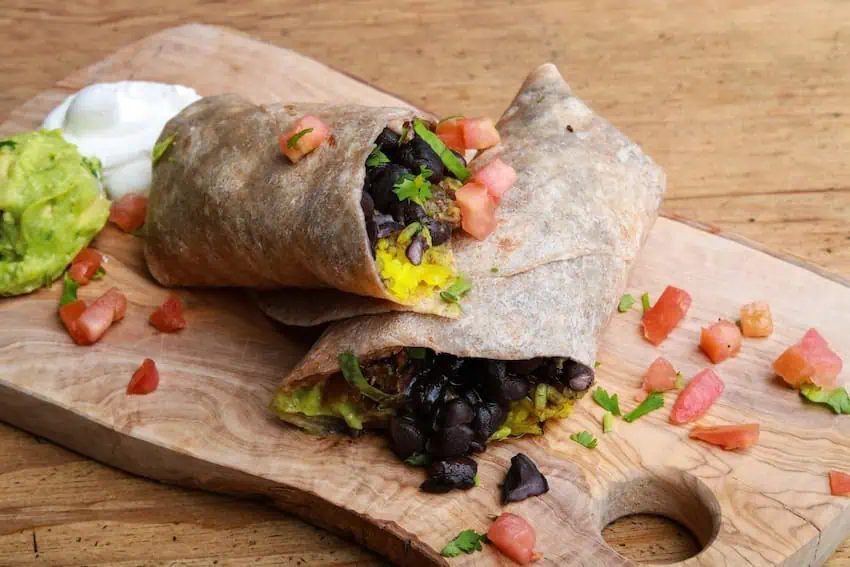
Don’t even think about ordering this. Pretend you’ve never heard of it. (Creative Headline/Unsplash)

You don’t look Mexican.
Very delicate territory here. There has been a long held belief that Mexicans look a certain way, work in certain industries and have a certain style. This is particularly rampant in the United States. And for a country that is so sensitive to class, a statement like this can be really offensive (especially when coming from an American).

Mexicans don’t eat burritos.
This isn’t true everywhere, obviously. The seafood joint up the street from my apartment has a pretty rico seafood burrito on the menu. If you’ve flown into Puerto Vallarta, you’ve probably filled up on a famous smoked marlin burrito at Tacón de Marlin. What is meant by burrito in this case is a lack of research or curiosity about true Mexican culture. Mexico is mole, it’s Tenochtitlan, it’s Quetzalcoatl, it’s Catholicism, it’s copal, it’s mariachi, it’s agave. This country is so rich beyond the edges of a jack-cheese and ground beef burrito from Chipotle. Mexico is simply amazing.

Anything self-deprecating behaviors you want to add? Please let us know, politely, in the comments below.

Bethany Platanella is a travel planner and lifestyle writer based in Mexico City. She lives for the dopamine hit that comes directly after booking a plane ticket, exploring local markets, practicing yoga and munching on fresh tortillas. Sign up to receive her Sunday Love Letters to your inbox, peruse her blog, or follow her on Instagram.

Beat the heat in Guadalajara with these natural swimming spots

1
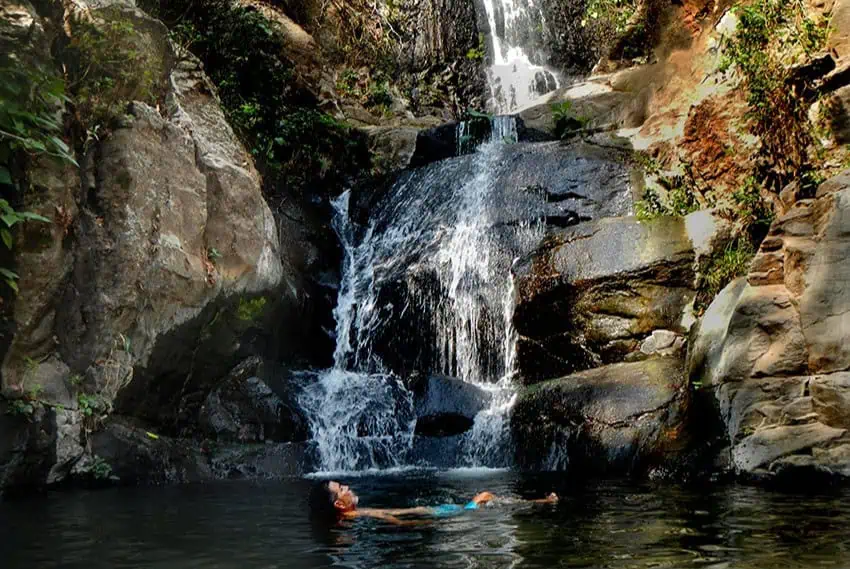
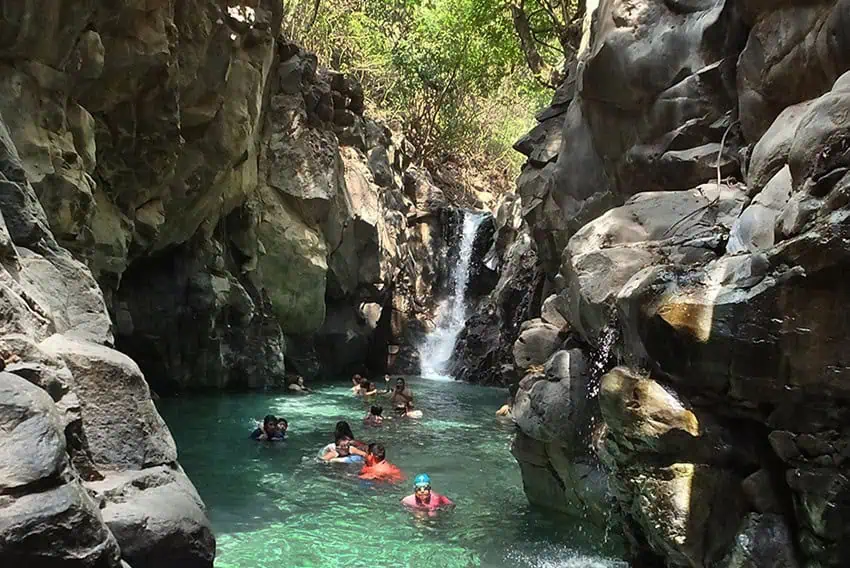
Fun in the water at the Chiquilistlán Falls. Some of the pools are ideal for kids.
Beat the heat with some of the most delightful natural pools that Jalisco has to offer. (All photos by John Pint)

Weather forecasters have been predicting that these first days of June will see the hottest temperatures Mexico has ever known. Hopefully, the annual rains will then set in, bringing with them the cool and comfortable summer weather that Mexican highlanders have been enjoying for as long as anyone can remember. If you’re trying to stay cool in the high temperatures of Jalisco, it might feel like an impossible task.

In the meantime, everyone will be off to crowded beaches and balnearios (water parks) except you, perhaps, should you choose to visit one of the following clean, cool, or cold rivers, easily reachable from Guadalajara.

El Manto waterfall
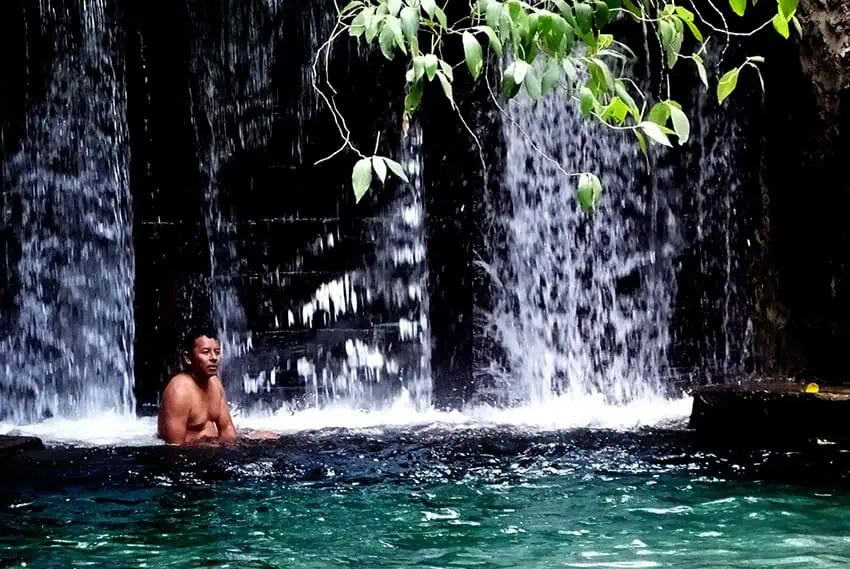
Cooling off in a waterfall at El Manto.

Las Cascadas de Chiquilistlán

This is the latest name for a series of breathtakingly beautiful waterfalls along Jalisco’s Jalpa River. These falls are also known as Las Cascadas de Aquetzalli or Comala. The last name fits best since the most scenic of these falls are located only 1.3 kilometers from the very tiny town of Comala, Jalisco, which, in turn, is located 80 kilometers southwest of Guadalajara.

Each of these falls could serve as a spectacular movie set, only for their sheer beauty, but they also offer better attractions than any water park: high jumps, natural water slides, kiddy pools, and—for the really adventurous—12 ideal falls for canyoneering.

These cascadas well as the other sites listed below may be crowded on a Sunday but normally you can have them all to yourself on a weekday. To get there, ask for ”3335+JF2 Comala, Jalisco” in Google Maps. Driving time is about 90 minutes from the heart of Guadalajara.

The Agua Dulce River

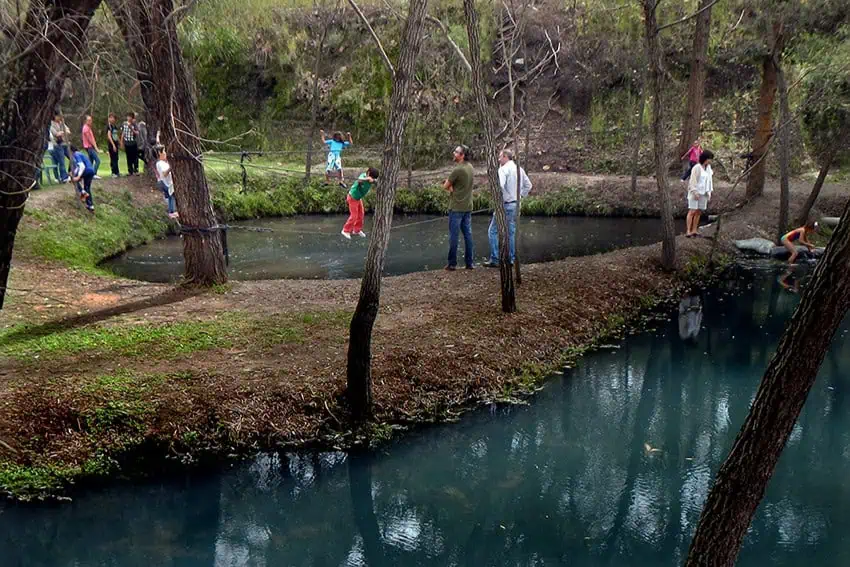
Agua Dulce is a delightful, rustic campsite located inside the Primavera Forest, alongside a natural spring where cool water bubbles out of the ground and becomes a river. On top of that, this water is drinkable and delicious!

The cold spring at Agua Dulce. The water is clean and drinkable.

This campground also offers other attractions like a forest watchtower, ponies, and several short ziplines… and yes, it has clean toilets.

To get there, input: “Rancho Ecoturístico Agua Dulce en Bosque de La Primavera” in Google Maps. Driving time is 32 minutes from the west end of Guadalajara.

Huaxtla Falls

The local people call these the Jaguar Canyon Falls and the height of the dry season is the best time to visit them because the water is very cold and can only be fully enjoyed when the weather is unbearably hot.

For many years, the Huaxtla Falls were accessible only to canyoneers wearing neoprene suits and well-practiced in rappelling.

The wispy second waterfall at Huaxtla

Then a group of local entrepreneurs decided to construct a trail—-nicely sign-posted—-down to the Huaxtla river and three of the falls. The one-kilometer-long trail offers spectacular views of Jaguar Canyon and a fun hike for those who are fit.

If you’d like to spend a night in a place where stars can really be appreciated, you can take advantage of a campsite which has been set up in a wide, flat field at the trail head, offering light snacks and clean toilets. To reach these camping grounds, Google “WJP3+JHQ Huaxtla, Jalisco”

Los Azules

Los Azules is a set of three spring-fed waterfalls located just on the outskirts of the town of Tequila, located 43 kilometers from Guadalajara, on the edge of a steep canyon. The trail leading down the canyon wall to the falls is only 800 meters long, but offers magnificent views that—at several points along the way—might even remind you of Machu Pichu.

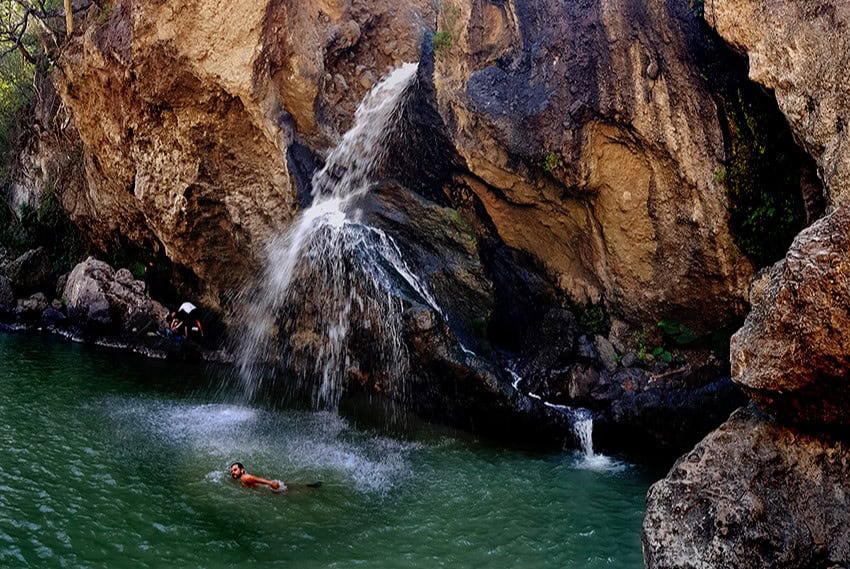
The first fall is around 60 meters high but only operates right after a storm. The second is 40 meters tall, wide and wispy, with a sunlit blue-green pool at its foot—complete with red and blue dragonflies fluttering about to welcome you. The third is 70 meters tall and, like the second, runs all year round. However, at its base you’ll find what is more of a puddle than a pool.

The second waterfall at Los Azules. Watch the dragonflies as you float on your back.

Fall number two is one of the prettiest you are likely to see in all your life and I speak as a globe trotter who has seen many a fine fall, so that is the one I recommend for you.

Fortunately, the pool at the base of this second cascada is deep enough for swimming.

Unfortunately, however, the trail leading down to the waterfall is both rough and steep. So this is a hike only for those who are very fit and fully cognizant that — after a most refreshing swim — they’ll have to clamber back up to the top of the canyon in the heat of the day. 

Finding your way to and from Los Azules is tricky and I recommend scouting up a guide in Tequila town.

In spite of the drawbacks mentioned above, if you live in Mexico and love nature, you really should add Los Azules de Tequila to your bucket list. To get there, I suggest you ask Google Maps to take you to the town cemetery (“Cementerio Mpal Tequila Jalisco”) and there scout up some local person willing to take you to “La Cascada #2 de Los Azules.”

El Manto

El Manto is a beautiful river located 115 kilometers west of Guadalajara, in the state of Nayarit. The river has clean cool water, dotted with small waterfalls, and it flows for some distance along the base of a towering cliff. Floating down this river in an inner tube is an exhilarating experience that will surely make you feel like Huckleberry Finn.

The river head at el Manto in Nayarit.

It is, in fact, a unique place and therefore has become very popular over the years, which means you’d better go there on a weekday.

El Manto has cabins to rent, space for camping, toilets, and two restaurants. Note that the site might be closed once the rainy season begins, so, if you’re going, don’t delay!

To get there, ask Google Maps to take you to “El Manto, Amatlán de Cañas, Nayarit.” Driving time is about two hours from the west end of Guadalajara.

Take your pick, jump in and laugh away el calorón, the heat wave.

John Pint has lived near Guadalajara, Jalisco, for more than 30 years and is the author of A Guide to West Mexico’s Guachimontones and Surrounding Area and co-author of Outdoors in Western Mexico. More of his writing can be found on his website.