Home Blog Page 6

The very best serenades from Mexico’s Golden Age of Cinema

1
Serenade scenes in Mexican cinema
A serenade was often sung by "Golden Age" Mexican movie stars, some of the greatest of whom were not coincidentally also great singers. (Daily Motion)

Picture this: a man walks through the street at night, followed by musicians. He looks at a house’s door, then lifts his eyes to the balcony and starts singing. A light comes on. The balcony door opens to reveal a woman’s face behind the curtain. Surprised but not unpleased, she has just fallen for the one who brought the music. As its name suggests, it occurs in the intimacy of night (the word “serenata” comes from the Latin serenus, meaning the humid environment after dusk).

The tradition of dedicating a song to your significant other dates back centuries. During the Middle Ages, people drew inspiration from troubadour songs and lyrics to create a particular romantic ritual that would travel with Spanish colonizers to the Americas. Once established in our continent, this tradition quickly took root, eventually incorporating Indigenous elements. These influences shaped the way serenatas are played, with mariachi groups becoming their perfect, eclectic performers, ultimately creating the distinct type of serenade we know today.

Nowhere is the emotional power of these serenades more evident than in the movies of Cine de Oro Mexicano (the “Golden Age” of Mexican cinema), one of the greatest periods of the nation’s film history, running from 1936 to 1956. Whenever our main character (usually a man) did or said something wrong, he would come to apologize with a love song. Sticking with revolutionary and post-revolutionary gender standards, serenades became more than just songs — they represented rare spaces where a macho man could show vulnerability. This window of liberation and the romantic lyrics turned serenades into some of the most acclaimed scenes in Mexican cinema, a legacy that persists today.

‘Dos Tipos de Cuidado’

Serenata Dos Tipos de Cuidado (Letra)

This all-time favorite follows two main characters, embodied by the most popular male stars of Cine de Oro: Pedro Infante and Jorge Negrete. Pedro is Pedro Malo, Jorge is Jorge Bueno. The tangled love story becomes a love square rather than a love triangle. Pedro and Jorge, once best friends, become each other’s deadliest enemies. Malo married Bueno’s girlfriend, so the second one tries to get revenge. As the story develops, we get clues about what actually happened between them.

When Pedro and Jorge decide it’s time to open their hearts to the women they love, they simultaneously fill their balconies with music, in an involuntary duet that is a delightful scene for anyone watching “Dos Tipos de Cuidado.”

‘Enamorada’

malagueña salerosa - maria felix - pedro armendariz

“Enamorada” portrays Revolutionary Mexico, set in Cholula, Puebla. General José Juan Reyes arrives with his troops from Emiliano Zapata’s army to take over the city, confiscating land from the wealthy to redistribute to the peasants. The course of events shifts with the appearance of Beatriz Peñafiel, a member of the local elite. The general, never before in love, is captivated by her. After a series of uneasy encounters, he decides one evening to bring a serenade to Beatriz’s home.

The movie’s cast is no accident. The general is played by Pedro Armendáriz, who embodied the ideal revolutionary in Cine de Oro’s films. Beatriz is played by María Félix, celebrated for her beauty and strong character. They create a tension on set that surpasses sweetness. Their scenes feel more like a romantic confrontation — an intimate representation of the war they immerse themselves in.

The film’s magnetic serenade scene is so appealing because María Félix delivers a great performance with her eyes alone. Through them, Beatriz shows she is emotionally conflicted but also gains power over him. She decides not to show up and leaves Reyes waiting for her on her doorstep.

‘El Rey del Barrio’

Tin Tan y Silvia Pinal El Rey del Barrio_Contigo

Almost all Cine de Oro movies feature more than one classic Mexican star. “El Rey del Barrio” is no exception. Silvia Pinal joins Tin Tan (Germán Valdés) in this 1950 film. Like a comic-book Robin Hood, Valdes’ character, Tin Tan, has a double life. By day, he works as a railwayman. He also makes rich women fall in love with him, scams them and gives their wealth to the poor. Pinal’s character, Carmelita, babysits Tin Tan’s son, slowly growing fond of “El Rey del Barrio.” After some drinks, Tin Tan confesses his sketchy occupation. When Carmelita shows no alarm, the serenade begins, suggesting she may be the one. 

Away from the canon of the mariachi serenades, Tin Tan’s drunkard serenata in a vecindad (an old building turned into multifamily dwellings) is yet another of the twists the comedian used to perform on popular culture. Carmelita will become not only his accomplice but also his greatest motivation to change his life.

To stand the test of time

​Although a heteronormative tradition, serenatas have transcended the barrier of time, gender and language, with the genre evolving to feature movies like “Say Anything,” with John Cusack opting for a boombox instead of a guitar — but still waiting for his loved one to see him from her window. Even though it’s not very common, lovers still hire mariachi bands to express their feelings on special occasions. Serenades are, then, an undeniable way to express love (or regret) whenever things get difficult. And, not to spoil the films, but it works almost every time.

Any serenade scenes you think we should have mentioned? Let us know in the comments!

Lydia Leija is a linguist, journalist and visual storyteller. She has directed three feature films, and her audiovisual work has been featured in national and international media. She’s been part of National Geographic, Muy Interesante and Cosmopolitan.
Behind Mexico’s low unemployment rate, a surge in informal work and shrinking formal sector

3
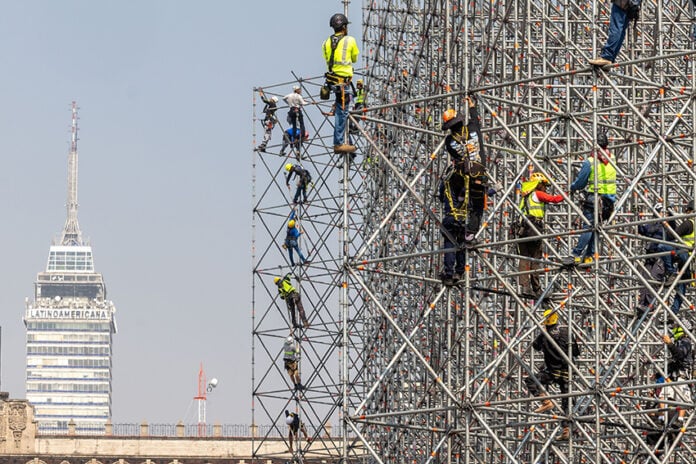
Workers on scaffolding with Mexico City's Torre Latinoamericano in the background
Workers install scaffolding in downtown Mexico City, in preparation for the World Cup. The event is expected to provide a temporary boost to the national economy. (Moisés Pablo / Cuartoscuro.com)

Annual job creation at the end of the first quarter of this year was the third-lowest in 15 years, driven by gains in the informal sector.

Mexico’s active workforce increased by 551,651 people in the first quarter of the year compared to last year, the national statistics agency INEGI reported on Tuesday.That was the lowest positive job creation figure for the same period since the end of Q1 2011, when Mexico added just 534,469 positions over 12 months.

The worst job creation result in the last fifteen years was the annual loss of over 2 million jobs at the end of the first quarter of 2021. The Mexican economy shed a large number of jobs in 2020, when the COVID pandemic and associated restrictions caused a sharp contraction. The second-worst job creation result in the past 15 years was the loss of almost 120,000 jobs between Q1 of 2024 and Q1 of 2025.

Perhaps even more concerning than the most recent year-over-year job creation figure is that the size of Mexico’s formal sector workforce shrank in the 12 months leading up to the end of March.

The net addition of 551,651 people to Mexico’s workforce between the first quarter of 2025 and the first quarter of 2026 was the result of the creation of 583,153 informal sector jobs and the loss of 31,502 formal sector positions.

Mexico has a huge informal sector that employs well over half of all Mexican workers. These workers, including street vendors and many domestic workers, do not have access to formal sector employment benefits, such as paid vacations. They generally don’t pay income tax.

Analyst: ‘Mexico’s labor market continues to show a deterioration’

In a social media post on Tuesday, the director of economic analysis at Banco Base, Gabriela Siller, highlighted that formal sector employment declined during five consecutive quarters between Q1 of 2025 and Q1 of 2026.

The sustained decline, she wrote, amounts to “a negative streak that had historically only been seen in periods linked to economic recessions.”

Siller also said that “Mexico’s labor market continues to show a deterioration consistent with the economic stagnation.”

Mexico’s economy contracted 0.6% on a quarter-over-quarter basis in the first three months of 2026, while annual growth in the same period was just 0.4%. The sequential contraction was the third of its kind in the past six quarters.

Rogelio Gómez Hermosillo, president of the Citizens’ Action Front against Poverty, put things bluntly: “The economy isn’t creating the quality jobs we need.”

Key Q1 employment data 

Among the other key employment data derived from INEGI’s first quarter National Occupation and Employment Survey (ENOE) was that Mexico’s unemployment rate averaged 2.6% between January and March. President Claudia Sheinbaum said on Thursday that Mexico has one of the lowest unemployment rates in the world.

But Siller said that the unemployment rate is only low because the informal sector “absorbs” people who are unable to find opportunities in the formal sector.

While there are limited unemployment schemes in some parts of Mexico, including Mexico City, the federal government doesn’t offer any unemployment benefits, forcing many people without jobs to seek to make ends meet anyway they can. For millions of Mexicans, that means working in the informal sector.

In its first quarter ENOE statement, INEGI also reported that the informality rate between January and March was 54.8%, up from 54.3% a year earlier.

“Over half of the Mexican workforce lacks benefits and social security, which hinders the country’s progress by keeping workers in a vulnerable situation,” said Fernando Bermúdez Pire, director of corporate relations at staffing company ManpowerGroup.

Bermúdez said that “it is imperative to implement more flexible formal hiring mechanisms and labor formalization policies that are in line with current realities.”

INEGI also reported that 6.6% of workers — some 3.9 million people — were underemployed in the first quarter of 2026, meaning they weren’t working as many hours as they wanted to. The underemployment rate remained unchanged from a year earlier.

Informality rate rises further in April 

Two days after publishing first quarter employment data, INEGI released the results of its National Occupation and Employment Survey for April.

While the unemployment rate fell slightly to 2.5%, the informality rate rose to reach 55.2%, an increase of 0.4 percentage points from Q1.

A total of 448,146 new jobs were created in April, but close to 99.9% of those positions were informal sector ones. Compared to the end of March, Mexico’s formal sector workforce increased by just 608 people.

Jobs were lost in both the agricultural and services sectors in April compared to the previous month, but the secondary sector, which includes manufacturing and construction, added over 1.1 million jobs, resulting in the net growth of almost 450,000 positions. While more than 550,000 construction jobs were created last month, many of the positions in that sector are informal ones.

INEGI’s data also show that the year-over-year gain in jobs was 704,051 at the end of April.

Almost 230,000 formal sector job losses in 2026

In the year to the end of last month, 220,991 new jobs were created, increasing the size of Mexico’s workforce to just over 60.6 million, according to INEGI

The net gain of 220,991 jobs this year is the result of the addition of 450,502 informal sector position and the loss of 229,511 formal sector ones. The decrease in formal sector employment this year appears to be linked to the sequential economic contraction in the first quarter.

“The deterioration of the formal sector continue to be evident,” said Siller, who noted that economic growth in April remained low, at 0.3% in both month-over-month and annual terms, according to preliminary data.

“… Mexico remains trapped in a low efficiency cycle while the informality trend is not reversing,” she said.

What will happen in Mexico’s labor market and economy in the remainder of 2026?

The upcoming FIFA men’s World Cup, which Mexico will co-host with the United States and Canada, should give a boost — albeit a temporary one — to economic growth and could help create additional jobs, especially considering that a significant number of tourists are expected to come to Mexico during the six-week-long tournament.

Sheinbaum has said that an increase in infrastructure spending in the second half of the year, including due to the commencement of new public-private projects, will also spur economic growth, although the Bank of Mexico this week cut its 2026 growth forecast from 1.6% to 1.1%.

While new infrastructure projects should contribute to an increase in employment, reducing Mexico’s stubbornly high — and increasing — informality rate remains a major challenge.

Siller said that “structural” informality not only “compromises workers’ wellbeing,” but also places Mexico’s capacity for long-term growth at risk.

With reports from El Economista

Bees need a place to stay, so Durango local officials built them hotels

0
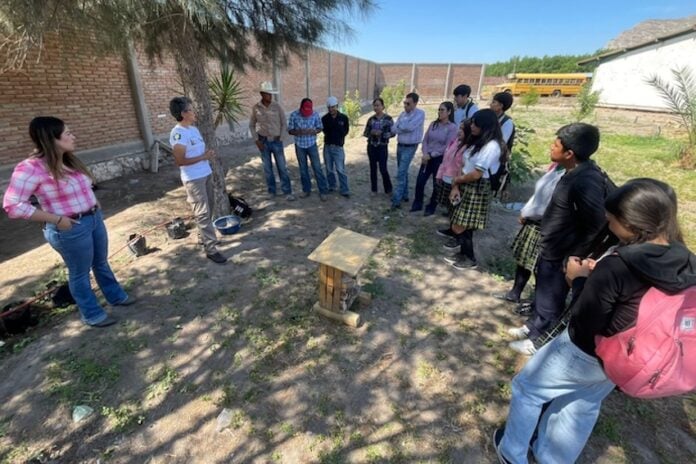
Students and personnel of the agricultural-technical school CBTa 47 observe one of the first bee hotels in the state of Durango. (CBTa 47 León Guzmán)

Bees in the northern state of Durango now have something most insects never get: a place to check in, rest and ride out the weather.

In the city of Gómez Palacio, researchers from the Juárez University of the State of Durango (UJED) and city officials have so far installed about 10 wooden “insect hotels” in parks and schools to shelter bees and other pollinators from heat, cold and rain while they nest and hibernate.

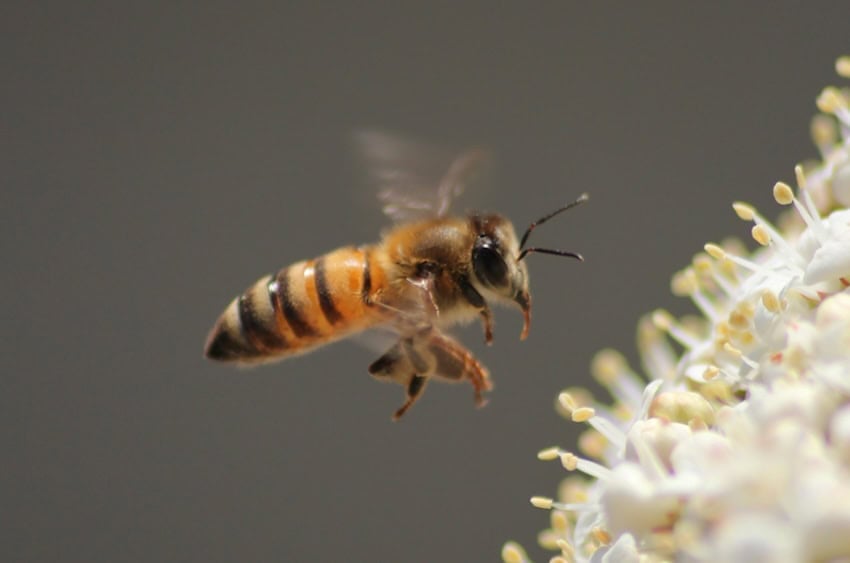
Bees aren’t the only pollinators at work in the environment, but Mexico’s 1,400 bee species are vital to most of the flowering plants in the country. (Oktay Yildis / Unsplash)

With plans to set up even more, the program is responding to what scientists describe as an alarming disappearance of pollinators in northern Mexico, threatening crops and the wider ecosystem.

The structures are built from recycled wood, pallets, reeds and sticks to create crevices where insects can take refuge and reproduce. They can be as small as shoebox-sized to as large as a stack of pallets.

This month, students at one school in the area joined the effort by building the “Pollinator Garden with a Hotel for Insects” for World Bee Day.

The agricultural-technical school CBTa 47 received training and support from three workshops led by biologists from UJED. Their small garden and shelter aims to attract and support bees and other pollinators, the school said on Facebook.

The overall UJED project began about five years ago at the university’s Faculty of Biological Sciences, where researchers placed the first shelter adjacent to an ethnobotanical garden planted with insect‑attracting species.

Their large “hotel” protects its garden “guests” from extreme weather and doubles as a teaching tool.

Ilse Estefanía Segura Zarzosa, Gómez Palacio’s ecology and environmental protection director, has overseen construction of the “hotels” in La Esperanza Park and nearby schools — with students designing and installing many of them.

She recounted with glee how the project’s “first tenant” was a stick insect, sometimes called a walking stick, a 12-centimeter herbivore that had not been seen locally for years.

“There we had live evidence that insects use these spaces and that the project really works,” she said.

Mexico hosts some 1,740 wild bee species, according to the National Biodiversity Information System, and more than 80% of its flowering plants depend on animal pollinators, the international coalition Promote Pollinators reports.

Researchers warn that habitat loss, pesticides, monoculture farming and drought are putting many bee populations at risk — even urban bees in Mexico City.

Officials in Gómez Palacio — a city of 301,500 in the La Laguna metro area of 1.5 million, which includes Torreón, Coahuila — say the next step is to pair every park hotel with a pollinator garden, creating pocket habitats where weary bees can find both shelter and food.

The program also wants to continue expanding into schools.

“What is known is valued, and what is valued is cared for,” said UJED professor Mauricio López, explaining that when a child understands the benefit provided by an insect, a leaf, or a plant, it generates a positive long-term impact.

With reports from Milenio and El Sol de Laguna

16 striking teachers injured after town leaders attack blockade in Oaxaca

7
protesters in Mitla, Oaxaca
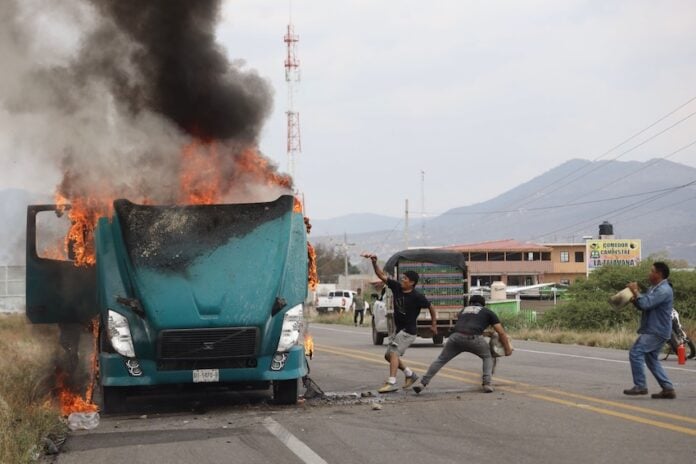
The protesting teachers scattered after being forcibly removed from the barrier they set up in the town of Mitla, Oaxaca, but not before setting fire to a vehicle. (Carolina Jiménez Mariscal / Cuartoscuro.com)

The dissident CNTE teachers union broke off talks with the federal government on Wednesday after protesters were violently removed from a blockade they had established in the town of Villa de Mitla, Oaxaca.

CNTE members were in meetings with the Interior Ministry in the capital attempting to resolve long-standing labor issues when news of the attack prompted the teachers to abandon the negotiating table.

Mitla Mayor Esaú López
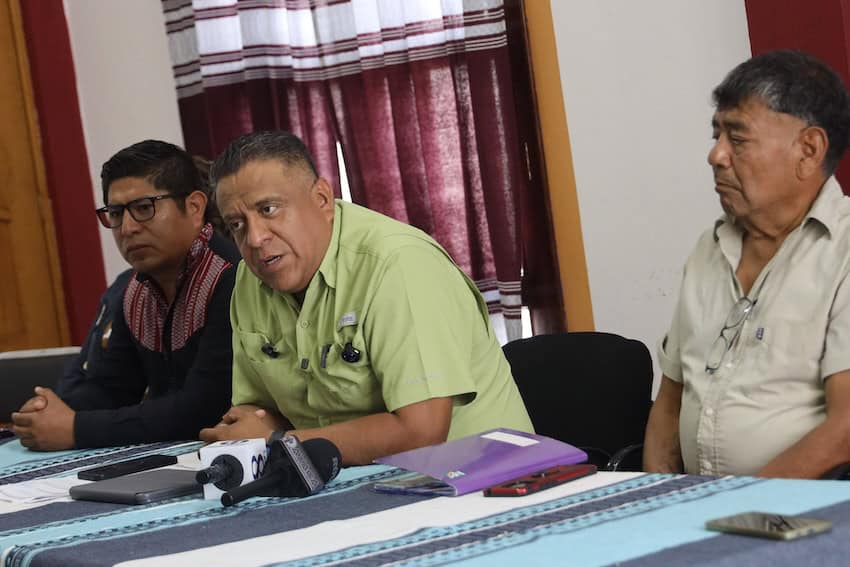
Mitla Mayor Esaú López, seen here at a press conference after the events of Wednesday, said he would gladly accept reponsibility for his actions if they help put an end to the constant disruptive protests by the CNTE in his town and others. (Carolina Jiménez Mariscal / Cuartoscuro.com)

The CNTE — led by Oaxaca-based Section 22 of the union — began new protests this week demanding a better wage package than was offered earlier this month and the abrogation of the 2019 Education Reform Law, among other things.

Hundreds of teachers set up a protest camp at the edge of Mexico City’s Centro Histórico on Monday, while members of Section 22 established similar camps in Oaxaca city and elsewhere in that southern state.

In Villa de Mitla — a Pueblo Mágico about 45 kilometers east of the state capital — Section 22 teachers began blockading Federal Highway 90 connecting Oaxaca city to the Isthmus of Tehuantepec on Wednesday morning. Members of the community immediately objected, brandishing stones and threatening to tear down the barricades.

Around noon, Mitla Mayor Esaú López arrived with a contingent of armed men who after a brief dialogue forcibly evicted the protesters. Shots were fired and at least 16 teachers were hospitalized. 

CNTE blocking ciruito interior
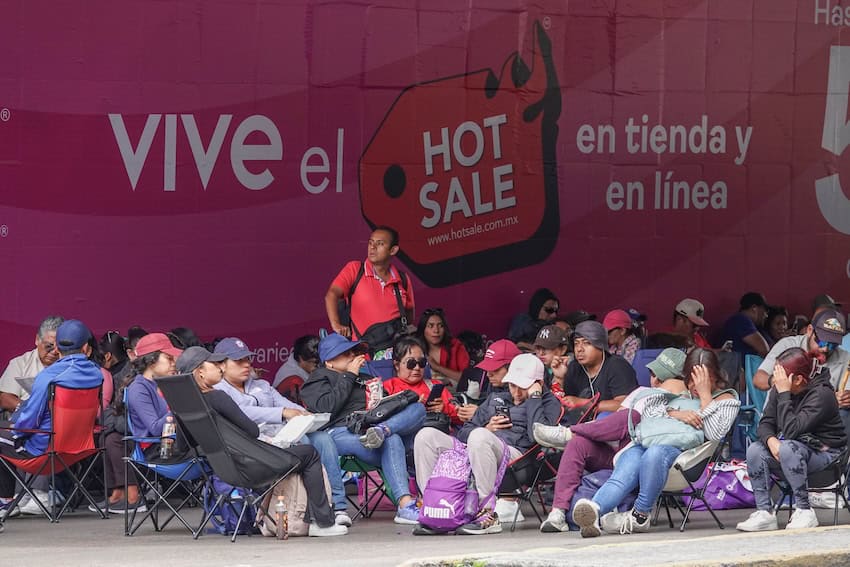
CNTE protesters relax as they block traffic on Mexico City’s Circuito Interior on Thursday. (Rogelio Morales / Cuartoscuro.com).

The protesters in Mitla scattered but not before setting fire to a truck alongside the highway and reinforcing their camp in Oaxaca city’s main square. At the same time in Mexico City, CNTE members walked across Alameda Park and blocked a main intersection of Reforma Avenue, wreaking havoc during Wednesday rush hour. 

Mayor López, a member of the ruling party Morena, on Thursday accepted responsibility for Wednesday’s violence, but said the teachers were the aggressors and roughed up some members of his delegation as well as bystanders before shots were fired. He insisted he was not sure where the shots came from.

López submitted a formal request for a leave of absence on Thursday morning, adding that if his actions helped put an end to the constant Section 22 demonstrations he’d gladly accept the consequences. He was later summoned by prosecutors for questioning.

With reports from La Jornada, La Crónica and Proceso

Pharma companies pledge 21 billion pesos to boost drug production in Mexico

1
The pharmaceutical companies themselves are paying for the ambitious project that envisions a Mexico that is able to produce domestically the medication needs of its population. (Unsplash)

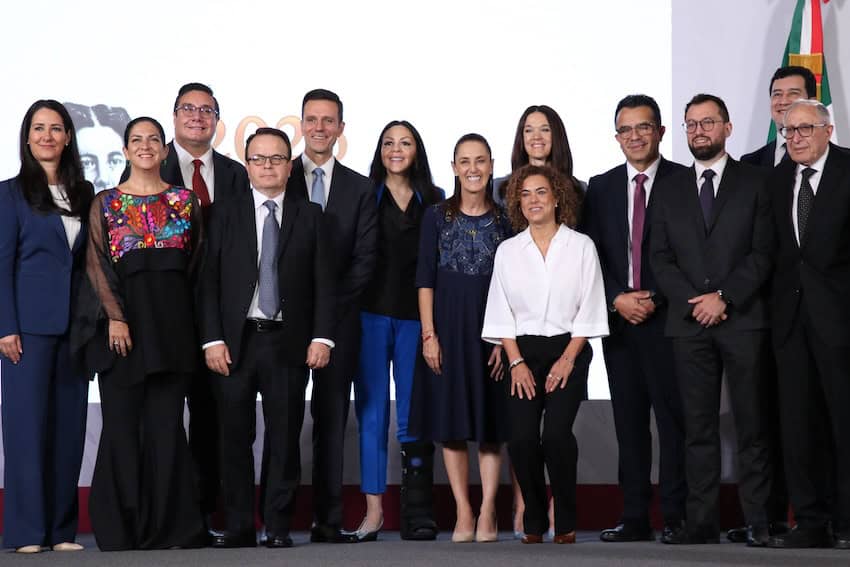
President Claudia Sheinbaum and Health Minister David Kershenobich on Thursday presented the Health Investment Project, which the administration says will lower medicine costs and reduce Mexico’s dependence on foreign sources of medications.

The project will be funded by investments from various pharmaceutical companies totaling 21 billion pesos (US $1.2 billion), which will be used for seven different production ventures. Companies announced Thursday as participants are Abbott, Bristol Myers Squibb, Grupo Neolpharma, Opella, Kener, Liomont, Sanofi and Bayer.

In making the announcement Thursday of the new Health Investment Program, President Sheinbaum was accompanied by representatives of the pharmaceutical companies that are making the investments totaling 21 billion pesos, including Abbott, Bristol Myers Squibb, Grupo Neolpharma, Opella, Kener, Liomont, Sanofi and Bayer. (Daniel Augusto / Cuartoscuro.com)

“We appreciate the confidence [these companies] are showing in Mexico,” Sheinbaum said. “We are seeking greater production in Mexico, so we don’t have to import so much from abroad.”

The Health Investment Project — which will also focus on clinical research — is linked to Sheinbaum’s Plan México, a sweeping economic and industrial strategy designed to stimulate national growth and position Mexico as an independent global production leader. 

Sheinbaum said the project will also play a critical role in establishing health sovereignty, i.e., ensuring Mexico has the capacity to develop and produce the medicines and vaccines its population needs.

Kershenobich said the investment will play a critical role in strengthening the health sector as well as Plan México.

“We have strengthened the investment climate and potential for development in the pharmaceutical industry,” he said. “Having access to production in Mexico will be a key part of continued growth in the pharmaceutical industry.”

What is each investor contributing?

Abbott will invest 3.5 billion pesos (US $202 million) and expects to create 1,200 direct jobs by 2030, while Bristol announced an investment of 1 billion pesos (US $58 million) over the next four years. 

“This project is focused on strengthening Mexico’s health sovereignty through expansion and investment, clinical management, and the implementation of local manufacturing processes,” Oswaldo Bernal, CEO of Bristol Myers Squibb, said.

For its part, Liomont will invest more than 4 billion pesos (US $231 million) over the next five years in order to expand its infrastructure and technological capabilities in Mexico.

Grupo Neolpharma announced a 750 million-peso investment (US $43 million), which it says will create 250 direct and 900 indirect jobs.

Opella pledged an investment of 2.3 billion pesos (US $132.6 million), and expects to produce 50 direct and 450 indirect jobs, while Kener Labs intends to invest 5.36 billion pesos (US $309 million), resulting in 220 direct and 550 indirect jobs.

Bayer Mexico will invest 150 million pesos (US $8.7 million) in clinical studies, while Sanofi has committed to an insulin and technology transfer project in Mexico with a potential investment of over 2 billion pesos (US $115.3 million).

With reports from El Universal, La Jornada and Reforma

Teotihuacán gets its biggest makeover in 30 years ahead of the World Cup

1
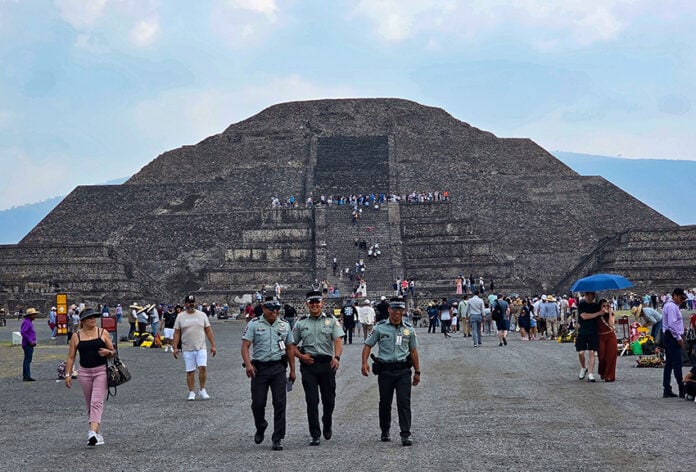
National Guard members patrol near the Pyramid of the Moon in Teotihuacán near Mexico City
After a deadly shooting in April, Teotihuacán has received a permanent security boost, including more National Guard and police patrols and security checks at points of entry. (Rogelio Morales / Cuartoscuro.com)

One of Mexico’s most-visited archeological sites has gotten its biggest makeover in 30 years in honor of the upcoming FIFA World Cup, as well as a boost in security following a deadly shooting in April.

The renovation works at the ancient city of Teotihuacán, a UNESCO World Heritage Site, began in March.

The improvements include updates to access points, ticket booths and pathways and renovated rest areas. 

“Special signage was created, where visitors can also download the tours,” Culture Minister Claudia Curiel de Icaza said, adding that visitors will be able to access a website with helpful information in Spanish and English to plan their visit.

“The website displays the entire map [of the site] and tells visitors the history of everything [within the site] in both Spanish and English,” she said.

Beyond the archaeological areas, the renovation included the revamping of the museums within the archaeological site, which is expected to see a 30% increase in visitors during the month-long tournament.

According to Icaza, the renovation works at Teotihuacán required an investment of 37 million pesos (US $2.1 million), out of a total budget of 398 million pesos (US $23 million) allocated for the Social World Cup Action Program.

Icaza noted that this is the largest investment the site has received in the last 30 years, as it seeks to improve the image of the site and guarantee its long-term conservation.

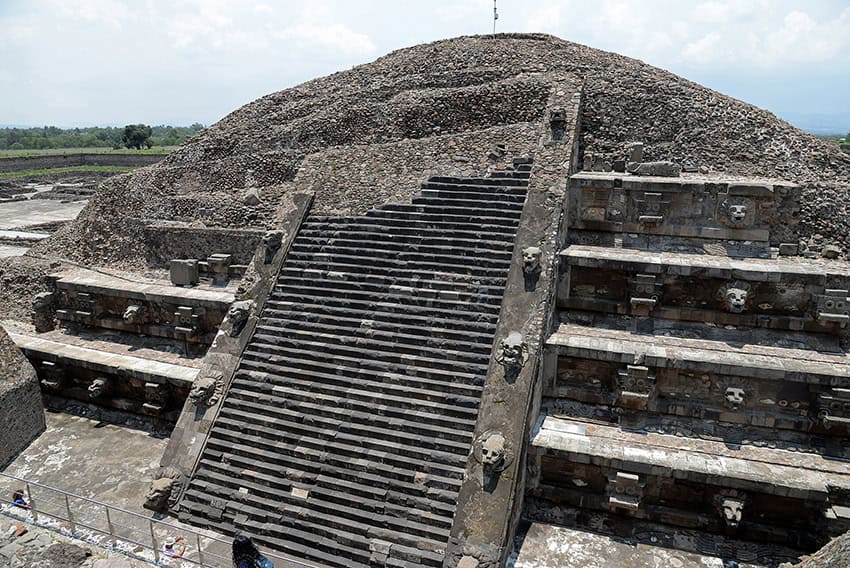
Work will continue after the World Cup, Icaza said, with the Temple of Quetzalcóatl, Teotihuacán’s third-largest pyramid, set to undergo restoration work. The $50 million-peso project has been delayed since 2022.

The maintenance and rehabilitation project is part of a wider national plan dubbed Social World Cup Action Program, which has seen renovation works in museums, archaeological sites and sports fields across the country, particularly in the host cities of Mexico City, Guadalajara and Monterrey.

The pyramid of Quetzalcóatl in Teotihuacán
The renovation of the Temple of Quetzalcóatl, seen here, was announced in September 2022 but has faced a multi-year delay. (Wojciech Kocot CC BY-SA 4.0)

Following the deadly shooting in Teotihuacán on April 20, security has also been tightened at the archaeological site. Antonio Huitrón, coordinator of Institutional Development at INAH, reported that the number of National Guard and Auxiliary Police officers has increased, and security checkpoints have been installed at access points.

The security increase will be permanent, Huitrón said.

“We are not seeing the World Cup as an opportunity to expand [security], but rather we have expanded precisely to create conditions where visitors perceive a safe place to visit,” he said.

With reports from El Informador, El Sol de México and W Radio

Mexico in Numbers: Where did over $60 billion in remittances go in 2025?

4
An ATM accepts a deposit of US dollar bills
Mexican households received more than US $60 billion in remittances in 2025, with most transactions coming from the United States. (Shutterstock)

A total of US $61.79 billion flowed into Mexico in remittances in 2025, a 4.6% decrease compared to 2024, but nevertheless an exceptionally large amount of money.

It is common knowledge that the vast majority of the remittances to Mexico are sent from the United States, but where in the country does all the money go?

How important are remittances to the economies of Mexico’s 32 federal entities?

We answer both those questions in this week’s “Mexico in Numbers” article.

Which states received the most in remittances in 2025?

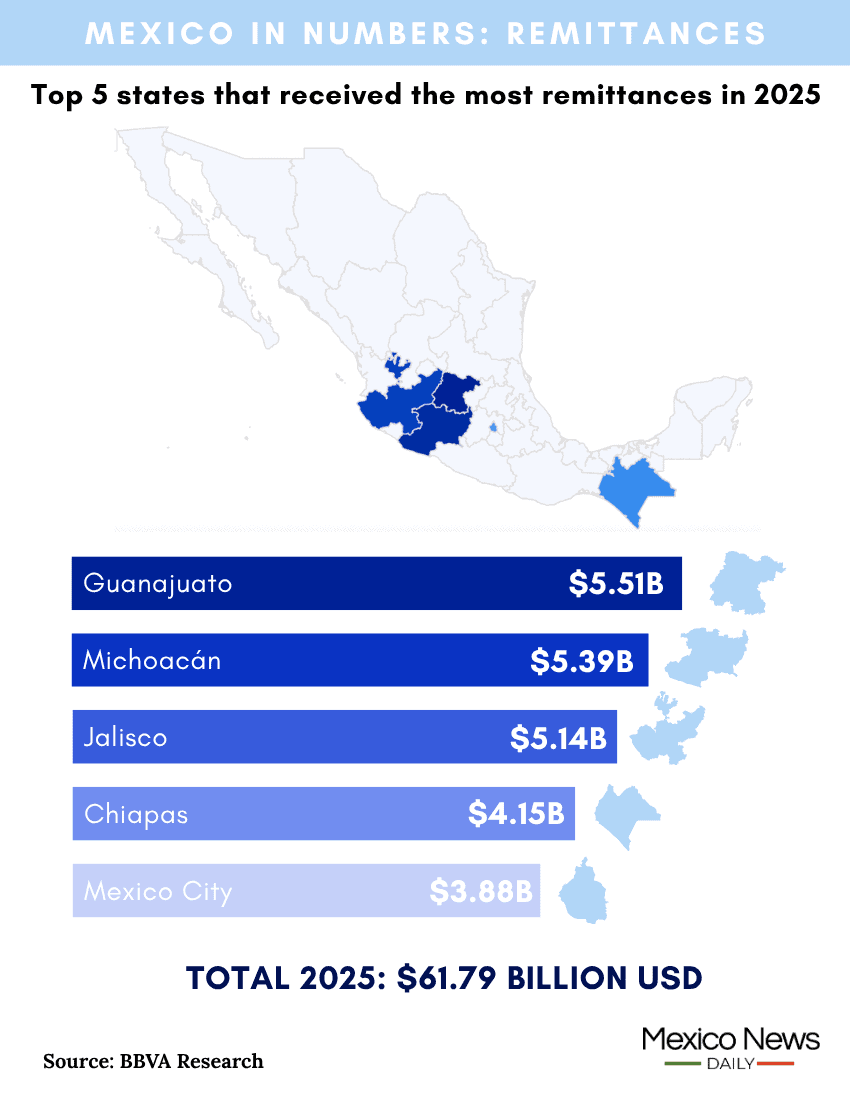
According to data published by the Bank of Mexico, Mexico’s largest recipient of remittances in 2025 was the state of Guanajuato.

A total of $5.51 billion flowed into Guanajuato last year, accounting for 8.9% of the total remittances amount sent to Mexico in 2025.

An infographic showing the top 5 states that receive remittances in Mexico: $5.51 billion to Guanajuato, accounting for 8.9% of the total remittances amount sent to Mexico in 2025. Michoacán, which received $5.39 billion (8.7% of the total). Jalisco, which received $5.14 billion (8.3%). Chiapas, which received $4.15 billion (6.7%). Mexico City, which received $3.88 billion (6.3%).

The next four biggest recipients of remittances in 2025 were:

  • Michoacán, which received $5.39 billion (8.7% of the total).
  • Jalisco, which received $5.14 billion (8.3%).
  • Chiapas, which received $4.15 billion (6.7%).
  • Mexico City, which received $3.88 billion (6.3%).

The five entities listed above together received 38.9% of the total amount of remittances sent to Mexico last year.

The high remittances total each entity received indicates that a significant number of people from those entities are working in the United States.

Ranking sixth to 10th for money received in remittances last year were:

  • México state, which received $3.66 billion (5.9%).
  • Oaxaca, which received $3.5 billion (5.7%).
  • Puebla, which received $3.42 billion (5.5%).
  • Guerrero, which received $3.39 billion (5.5%)
  • Veracruz, which received $2.61 billion (4.2%).

Mexico’s 10 largest recipients of remittances together received $40.65 billion last year. That amount accounts for 65.8% of the remittances total sent to Mexico in 2025.

Almost 9% of all remittances sent to Mexico in 2025 went to the state of Guanajuato, the country’s sixth-most populous state. (Jorge Gardner/Unsplash)

Which states received the smallest portions of the remittances pie?

The Bank of Mexico’s 2025 data shows that Baja California Sur received the smallest amount in remittances among Mexico’s 32 federal entities. The state received $143.9 million in remittances, an amount that accounts for just 0.2% of the 2025 total.

The other four states in the bottom five for remittances receipts in 2025 were:

  • Campeche, which received $175.2 million (0.3% of the total).
  • Tabasco, which received $330.2 million (0.5%).
  • Quintana Roo, which received $355.7 million (0.6%).
  • Tlaxcala, which $407.3 million (0.7%).

The five states listed above collectively received $1.41 billion in remittances last year, an amount that accounts for just 2.3% of the total.

Remittances are equivalent to more than 10% of the GDP of 4 states 

According to BBVA Research, which compiled data from the Bank of Mexico and the national statistics agency INEGI, the total amount in remittances received by Guerrero in 2025 was equivalent to 13.9% of the southern state’s GDP.

The total in remittance Chiapas received last year was also equivalent to 13.9% of that state’s GDP.

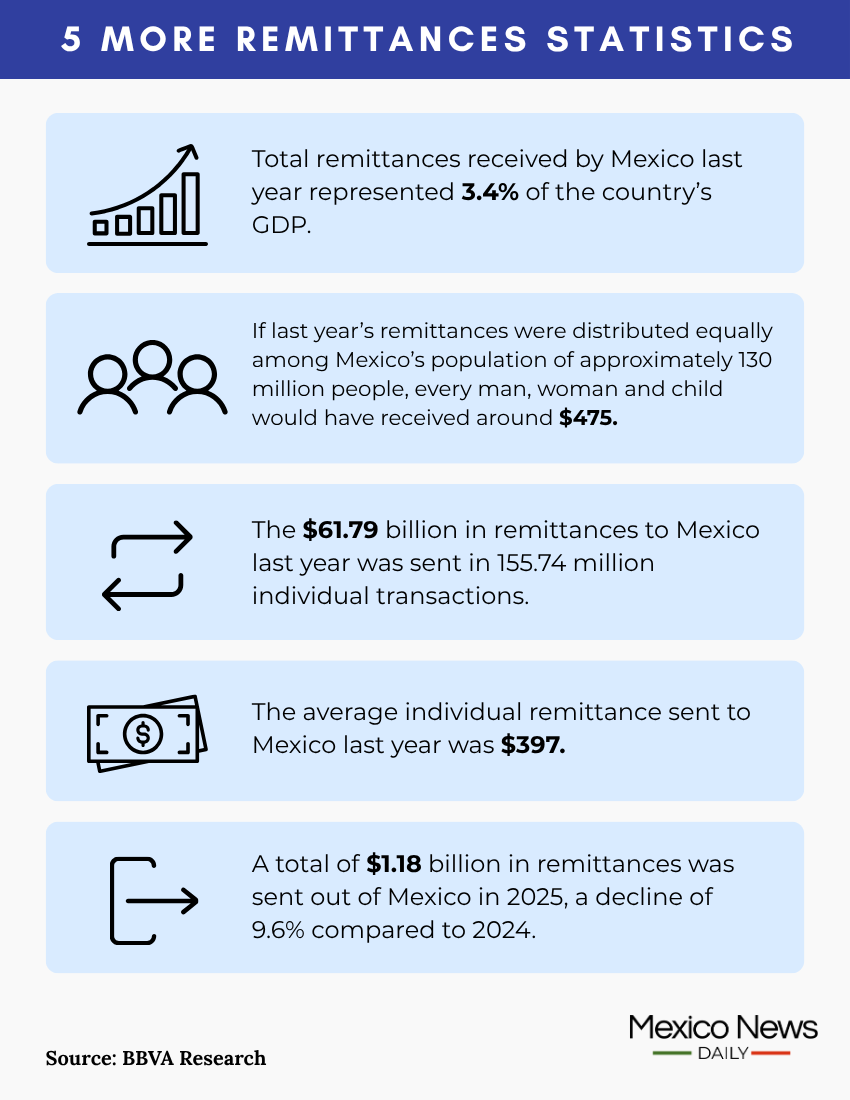
An infographic reading: 5 more remittances statistics The remittances total received by Mexico last year represented 3.4% of the country's GDP, according to BBVA research. If last year's remittances total was distributed equally to Mexico's population of approximately 130 million people, every man, woman and child would have received around $475. The $61.79 billion in remittances to Mexico last year was sent in 155.74 million individual transactions. The average individual remittance sent to Mexico last year was $397. A total of $1.18 billion in remittances was sent out of Mexico in 2025, a decline of 9.6% compared to 2024.

Meanwhile, Oaxaca’s receipt of remittances in 2025 represented 10.7% of its GDP.

The three states with the greatest dependence on remittances, as represented by a percentage of their GDP, are also Mexico’s poorest states based on the proportion of their populations considered to be living in extreme poverty.

The only other state where the remittances total received in 2025 represented more than 10% of GDP was Michoacán. The $5.39 billion in remittances Michoacán received last year was equivalent to 10.5% of that state’s GDP.

Seven other states received remittances amounts last year that were equivalent to more than 5% of their GDP. They were:

  • Zacatecas: 9.9%
  • Guanajuato: 6.6%
  • Nayarit: 6.4%
  • Morelos: 6.0%
  • Hidalgo: 5.5%
  • Durango: 5.5%
  • Puebla: 5.4%

The five states with the lowest intakes of remittances in 2025 as a percentage of their GDP were:

  • Campeche: 0.7%
  • Nuevo León: 0.8%
  • Tabasco: 0.9%
  • Baja California Sur: 1.0%
  • Sonora: 1.2%

Mexico News Daily

Sheinbaum sees risk of foreign interference in Mexican elections: Thursday’s mañanera recapped

2
President Sheinbaum at her morning press conference May 28
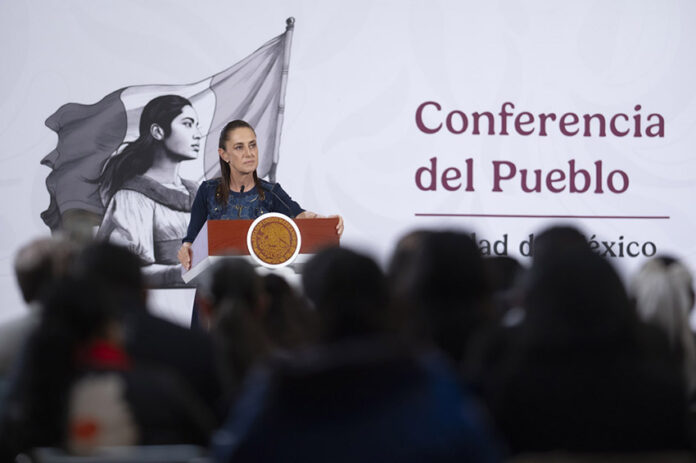
As the Mexican Congress considers a bill to prevent foreign interference in Mexican elections, President Sheinbaum made a case for why the legislation is needed. (Saúl López / Presiodencia)

Sheinbaum’s mañanera in 60 seconds

  • 📊 Sheinbaum touts 12 economic bright spots: Pushing back against pessimism following a 0.6% Q1 contraction and Moody’s downgrade of Mexico’s credit rating, the president listed a dozen indicators she said demonstrate economic resilience, including record Q1 FDI, a 2.5% unemployment rate, declining inflation and a record low labor poverty rate.
  • 🗳️ President speaks of foreign election interference risk: After the Chamber of Deputies approved a bill allowing elections to be annulled in cases of foreign interference, Sheinbaum said “yes, there could be a risk,” and cited U.S. government funding of NGO Mexicans Against Corruption and Impunity as a prior example. She argued that all Mexicans should support the measure passed by the lower house.
  • 🪖 Sheinbaum parses Hegseth’s “war on cartels” declaration: Responding to U.S. Secretary of War Pete Hegseth’s statement that the U.S. is “going to war with the cartels” through the Americas Counter Cartel Coalition, Sheinbaum said his remarks applied specifically to ACCC member states, not Mexico, which she said operates under a separate bilateral security understanding.

Why today’s mañanera matters

Even though the Mexican economy contracted on a sequential basis in the first quarter of 2026 and Moody’s cut Mexico’s credit rating last week, the federal government insists that everything is OK.

That attitude was once again on display at the Thursday morning press conference of President Claudia Sheinbaum, who presented no fewer than a dozen reasons for economic optimism.

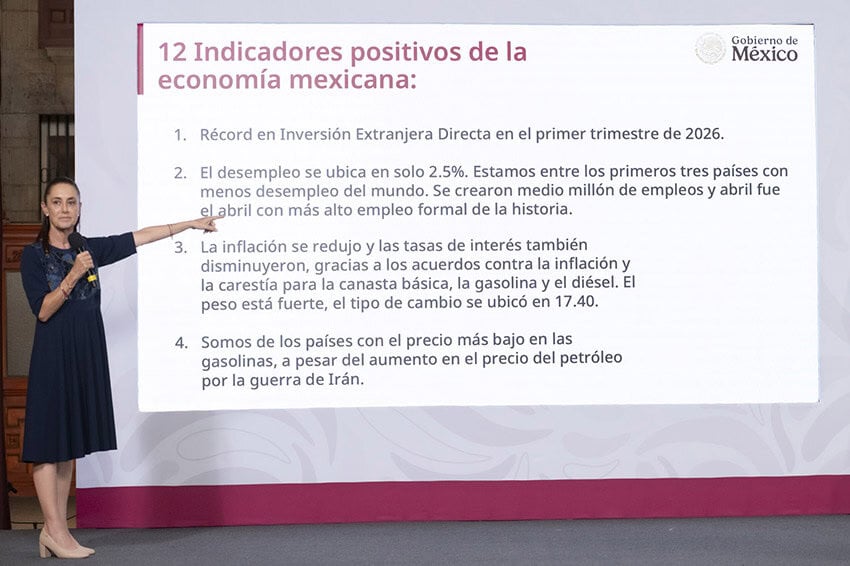
President Claudia Sheinbaum points to a slide reader "12 Indicadores positivos de la economía mexicana"
President Sheinbaum shared 12 pieces of positive news for Mexico’s troubled economy, including record foreign direct investment and low unemployment. (Saúl López / Presidencia)

Also of note at today’s mañanera were Sheinbaum’s remarks about the risk of foreign interference in Mexican elections. That issue is currently in sharp focus due to Deputy Ricardo Monreal’s presentation of a constitutional bill that seeks to allow elections to be annulled in cases of foreign interference.

Toward the end of her press conference, Sheinbaum also took the time to respond to another hawkish comment made by a senior Trump administration official. The U.S. president himself said earlier this month that the United States would “do the job” against cartels in Mexico if the Mexican government didn’t do so itself.

Sheinbaum presents 12 pieces of good economic news  

Two days after she highlighted “two pieces of very good news” — a surge in export revenue in April and record foreign investment in the first quarter — Sheinbaum multiplied the “good news” scenario by a factor of six.

“I’m going to give you 12 pieces of good news that demonstrate the strength of the Mexican economy,” she told reporters.

News has come out that has prompted many people to assert that “we’re doing very badly” in an economic sense, Sheinbaum said.

“But I’m going to give you 12 pieces of news, 12 arguments why we’re doing well amid a difficult international situation,” she said, highlighting “the war in Iran” and “the closure of the Strait of Hormuz.”

The “12 pieces of good news” Sheinbaum presented were:

  1. Record foreign direct investment in the first quarter of 2026. Mexico received a total of US $23.59 billion in FDI in Q1, an increase of 10.4% compared to the same period of last year.
  2. An unemployment rate of 2.5% in April. Sheinbaum said that Mexico’s unemployment rate is among the three lowest in the world.
  3. Inflation has declined. The annual headline rate was 4.11% in the first half of May, down from 4.45% across April. Elaborating on the same “piece of good news,” Sheinbaum said that the Mexican peso is “strong,” highlighting a USD:MXN exchange rate of (around) 17.40.
  4. Gasoline prices are low. Sheinbaum said that gasoline prices in Mexico are among the lowest in the world, “despite the increase in the price of oil due to the war in Iran.”
  5. Mexico’s budget deficit declined in 2025 and tax collection increased.
  6. Public debt was equivalent to 50.3% of GDP at the end of the first quarter.
  7. Mexico’s export revenue hit a record high in the first quarter of 2026. Mexico’s export earnings totaled US $175.58 billion in the period.
  8. The minimum wage has increased (315 pesos per day in most of the country) and Mexico’s labor poverty rate is at its lowest level on record (30.7% of the population in the first quarter of 2026).
  9. Pemex’s debt has declined by US $20 billion since 2018, prompting the state oil company’s credit rating to be upgraded.
  10. Congress recently approved an investment law, paving the way for higher public-private investment in the second half of 2026.
  11. A Presidential Investment Office was created to “facilitate private investment” and cut red tape.
  12. Existing welfare programs have been maintained and new ones have been added.

Sheinbaum’s presentation of the “good” economic news came after Mexico’s economy contracted 0.6% on a quarter-over-quarter basis in the first three months of the year. Last week, credit rating agency Moody’s cut Mexico’s credit score to Baa3, its lowest level of investment grade, citing weak economic growth, among other factors.

Sheinbaum addresses risk of foreign interference in Mexican elections

A reporter noted that the lower house of Congress approved a bill that seeks to allow elections to be annulled in cases of foreign interference. She asked the president whether she saw a “real risk” of foreign interference in Mexico’s 2027 elections.

“Well, there has been financing from abroad,” Sheinbaum said before noting that Mexicans Against Corruption and Impunity, a non-governmental organization, has received funding from the U.S. government.

That funding supported a “male candidate or female candidate in one way or another,” she said, apparently referring to Xóchitl Gálvez, her main rival at the 2024 presidential election.

“In current circumstances, with this offensive we’re seeing from abroad, it’s important that it be made very clear that in Mexico, Mexicans decide,” Sheinbaum said.

New Morena-backed bill seeks to nullify elections in cases of foreign interference

The president dismissed claims that the aim of the law approved by the Chamber of Deputies on Thursday morning was to “guarantee power for Morena,” Mexico’s ruling party.

“There is nothing more false than that,” she said.

“All Mexicans should agree that there shouldn’t be foreign interference in elections in Mexico. Whoever votes against this proposal appears to be in favor of foreign interference in elections in Mexico,” Sheinbaum said.

“I believe that all of us should agree that in Mexico, Mexicans decide who governs us,” she said.

Asked once again whether she saw a “real risk” of foreign interference in Mexican elections, Sheinbaum responded:

“Yes, there could be a risk of a foreign intervention in elections in Mexico. Yes.”

Sheinbaum responds to Hegseth’s ‘we’re going to war with the cartels’ remark

Asked about an alleged “media campaign” aimed at convincing Mexicans that a “foreign” — i.e. U.S. — intervention against cartels in Mexico would be a good thing, Sheinbaum first stressed the importance of defending “the sovereignty of Mexico.”

The president — who has rejected offers from U.S. President Donald Trump to send the U.S. Army into Mexico to combat cartels — then turned her attention to remarks made on Wednesday by U.S. Secretary of War Pete Hegseth.

Sitting alongside Trump and Secretary of State Marco Rubio, Hegseth said “we’re going to war with the cartels through the Americas Counter Cartel Coalition [ACCC],” a reference to a group of Western Hemisphere countries that was established earlier this year.

Sheinbaum said that “the declaration yesterday of the U.S. Secretary of War has to be read well.”

“From my point of view, he referred in particular to the countries that were at the Shield of the Americas … event with President Trump,” she said, using an alternative name for the ACCC.

“We have a different relationship and it’s based on a [security] understanding we have with them,” Sheinbaum said.

The president on repeated occasions has ruled out the possibility of the U.S. taking military action against cartels in Mexico — even after Trump threatened strikes earlier this year — but CIA personnel allegedly participated in a drug lab raid in Chihuahua last month and there were reports earlier this month that the CIA “facilitated” a “targeted assassination” of a drug cartel member in México state in March.

On Thursday, Sheinbaum said, “we have to be very attentive” to the possibility of foreign interference and intervention in Mexico.

“In the face of any greater interference or desire for greater intervention, we cannot allow that because Mexico is a free, independent and sovereign country. We’re not anyone’s protectorate,” she added.

By Mexico News Daily chief staff writer Peter Davies (peter.davies@mexiconewsdaily.com)

MND Local: Scorpion stings surge across Puerto Vallarta

3
A black scorpion sitting on a rock
Check your shoes before you put them on, especially if you live in Puerto Vallarta. (Wolfgang Hasselmann/Unsplash)

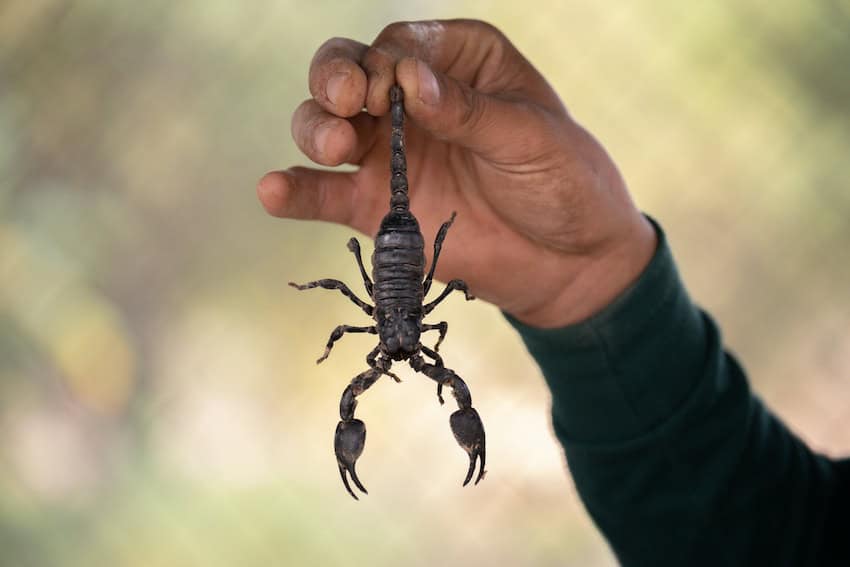
The last thing anyone wants is to be stung by a scorpion, which can result in symptoms that range from mild pain to severe, life-threatening reactions. But according to Mexican officials, scorpion stings have increasingly been reported in Puerto Vallarta in recent months.

Scorpion stings on the rise

Health authorities across the Bay of Banderas region are warning residents to take extra precautions after a sharp spike in scorpion sting incidents during the hotter weeks of spring. Officials say more than 2,000 cases have already been reported this season, with rising nighttime temperatures and dry conditions pushing scorpions into homes, storage areas, gardens and shaded urban spaces.

A hand holding a large scorpion
If something this big stings you, it’s going to leave a mark and maybe even require medical attention. (Sippakorn Yamkasikon/Unsplash)

Medical workers say the majority of incidents involve people being stung inside residences, often after scorpions hide in shoes, towels, bedding or clothing. While most stings are treatable, young children and elderly residents remain the most vulnerable to severe reactions. Clinics and hospitals throughout the region have reportedly increased supplies of antivenom and emergency treatments as temperatures continue climbing toward summer highs.

Public health departments are encouraging residents to shake out clothing and footwear before use, seal cracks in walls and floors and reduce piles of debris or wood around homes where scorpions may shelter. Pest control services have also seen a seasonal increase in demand.

The situation is especially concerning in rapidly growing neighborhoods on the outskirts of Puerto Vallarta, where construction and land clearing can disturb natural habitats and drive wildlife closer to populated areas.

Officials expect sting reports to remain elevated through the rainy season, when humidity and heat typically increase insect and arachnid activity throughout the coastal region.

Environmental closures aim to protect rare turtle habitat

turtle nestlings making their way to the sea
The endangered turtle population in Puerto Vallarta is facing increasing pressure due to urban expansion. (Campamento Mayto/Instagram)

Federal environmental authorities have ordered temporary closures and restrictions to protect the habitat of the endangered tortuga casquito, a freshwater turtle species found only in limited areas of Jalisco and Nayarit. The action comes after inspectors discovered land clearing, vegetation removal and unauthorized activity affecting approximately 5.37 hectares of sensitive habitat used for nesting and reproduction.

According to environmental officials, the affected zones included areas of low jungle vegetation and wetlands across Bahia de Banderas that are critical to the survival of the species, scientifically known as Kinosternon vogti. Inspectors also identified illegal dumping, construction-related debris and brickmaking operations operating within protected sections of the habitat.

Profepa, Mexico’s federal environmental enforcement agency, ordered temporary shutdowns of the activities while investigations continue. Community environmental groups working in the area have welcomed the move, saying the turtle population faces growing pressure from urban expansion, industrial activity and habitat fragmentation throughout the bay region.

The tortuga casquito is considered highly vulnerable because of its extremely limited geographic range. Conservation organizations say preserving wetlands and seasonal freshwater systems is essential to preventing further population decline. Environmental volunteers have additionally helped authorities remove dozens of illegal traps discovered within turtle nesting areas.

The closures also highlight broader tensions developing throughout Bahía de Banderas, where tourism growth and luxury development projects increasingly intersect with environmentally sensitive land. Conservation advocates argue that stronger enforcement will be needed as construction continues expanding along both the Jalisco and Nayarit coasts.

Puerto Vallarta updates Risk Atlas ahead of rainy season

Puerto Vallarta
Puerto Vallarta officials are bracing for potential flooding and landslides during the rainy season. (Unsplash/Miguel Naranjo)

Puerto Vallarta officials are preparing for the arrival of the rainy season with continued updates to the city’s official Risk Atlas, a planning tool used to identify flood-prone zones, landslide risks, infrastructure vulnerabilities and emergency response priorities. Civil Protection authorities say the document is being constantly revised to reflect the region’s rapid urban growth and changing environmental conditions.

The updated atlas is expected to help emergency services coordinate responses more efficiently during storms and tropical weather events that commonly affect the Pacific coast between June and October. Officials say newer data is being incorporated to better track drainage limitations, hillside development, vulnerable roadways and densely populated neighborhoods that may face flooding or evacuation risks.

Meteorologists are also monitoring the first potential heavy rain systems of the season, with forecasters warning that early tropical activity could arrive within the coming weeks. While no major storm threats have yet been confirmed for the bay, authorities are encouraging residents to begin seasonal preparations early, including clearing drains, checking emergency supplies and reviewing evacuation routes in flood-prone areas.

Local officials say the Risk Atlas has become increasingly important as Puerto Vallarta continues expanding into hillsides and previously undeveloped zones. Urban growth, combined with aging infrastructure in some districts, has increased concern about drainage capacity during periods of intense rainfall.

Emergency planners believe updated mapping and risk analysis will improve coordination between municipal departments and help reduce disruptions during what could become another active rainy season for the region.

Growth pressures raise concerns over water access and infrastructure

Men working on a construction site
Rapid development is transforming communities in the Bay of Banderas region, including Puerto Vallarta. (Ryan Donner)

Puerto Vallarta and neighboring communities in Bahía de Banderas continue facing growing pressure on public infrastructure as rapid development transforms the region.

Residents and neighborhood groups are increasingly voicing concern over water shortages and declining service reliability, particularly in areas experiencing heavy residential expansion and new tourism-related construction.

Much of the frustration centers around the perception that water resources are being prioritized for large condominium towers, hotel projects and luxury developments while long-established residential neighborhoods experience reduced water pressure or intermittent service interruptions.

Some residents say shortages have become more noticeable during peak tourism periods and in rapidly growing suburban districts.

Urban expansion throughout the bay has accelerated in recent years as more domestic and international residents relocate to the region. The population boom has fueled economic growth but also intensified strain on roads, drainage systems, utilities and water distribution infrastructure that many argue has not kept pace with development.

Charlotte Smith is a writer and journalist based in Mexico. Her work focuses on travel, politics, and community. You can follow along with her travel stories at www.salsaandserendipity.com.

What to cook in June: Watermelon salad, salsa and avocado ice cream

2
a watermelon smile
Watermelon smiles everyone: summer is here! (Bel Woodhouse)

Is there anything better on a hot summer’s day than a nice cold slice of watermelon? It’s my birthday month, and I love the abundance of fresh summer fruits in June — like Mother Nature is offering up a birthday bounty just for me. 

All the melons are at peak freshness this month. Watermelon, cantaloupe and honeydew, all of which people either love or hate. I think they get a bad rap — all melons are aces in my book. 

Fresh watermelon slices
What’s better on a hot summer day than a fresh watermelon slice? Nothing we can think of! (Prathyush Thomas/Wikimedia Commons)

You’ll also find stone fruits starting to make an appearance. Plums and peaches are appearing at lower prices, which is awesome. A big summer salad with grilled peach is a favorite for me. 

And good news: it’s peak season for my favorite fruit: avocados. So I’ve got a lovely, refreshing way for you to enjoy them that you’ll love, trust me. 

Let’s take a look at some refreshing ways to enjoy these sumptuous summer treats.

Watermelon Salad

Cold straight from the fridge or as a big glass of agua fresca de sandía, watermelon is the perfect way to cool off in summer. And with only three ingredients, who doesn’t love a cheeky watermelon margarita

But have you tried watermelon in a salad? It’s amazing. 

We’re talking sweet watermelon with salty cotija cheese, refreshing mint, tied together with a nice zesty lime dressing. It might sound unusual, but for most, it’s love at first bite. Plus, let’s not forget all watermelon’s health benefits: improved hydration, muscle recovery and heart health. It’s also an excellent source of vitamins A and C and lycopene, which can reduce the risk of heart disease. 

This summer salad is the perfect way to beat the heat of June. 

Watermelon salad ingredients:

  • 8 cups cubed watermelon
  • 1 jalapeño, finely chopped
  • ½ cup of either cojita or feta cheese, crumbled
  • ½ cup red onion, finely chopped
  • 3 tablespoons (tbsp) fresh mint, finely sliced

Dressing:

  • 2 tbsp olive oil
  • 2 limes zested and juiced
  • ¼ teaspoon salt, more if desired

Directions:

  1. Add watermelon, cheese, jalapeño, red onion and mint to a large bowl.
  2. Whisk olive oil, lime juice and zest and salt together. 
  3. Pour the dressing over the salad and gently stir to combine. Serve immediately. 

Avocado ice cream

Avocado ice cream
Avocados are not only delicious but good for you … even in ice cream form. (California Avocados)

Easy to make in 10 minutes, I dare you not to fall in love with avocado ice cream.  If there was ever going to be a healthy-ish ice cream, it’s made from a superfood, right? Creamy and delicious, avocado ice cream is competing for favorite summer treat against mango sorbet in my house. Best of all, no ice cream maker needed! You probably have all the things you need already in the kitchen.

We all know avocados are healthy, full of vitamins and those glorious healthy heart-smart fats, so I don’t feel guilty making them into ice cream. Not one bit. Plus, it’s a win-win; they’re cheaper at peak season, so I can indulge.

Avocado ice cream ingredients:

  • 2 large whole avocados 
  • 1 cup heavy cream
  • 1 cup condensed milk
  • 1 lime, zest and juice

Directions:

  1. An hour before making the ice cream, place a glass bowl in the freezer (this helps the cream get fluffy). Then line a rectangular loaf pan with plastic wrap. 
  2. Slightly smash the scooped-out avocado in a bowl and add the lime juice and zest. Stir to combine. Beat with an electric mixer for a couple of minutes until it has a smooth, even consistency. 
  3. Take the glass bowl from the freezer and pour in the heavy cream. Starting slowly, then increasing the speed, whip until the cream has formed peaks after about four minutes.
  4. With a spatula, gently fold in the avocado mixture until incorporated. Be careful not to lose too much of the cream’s fluffiness. 
  5. Pour the mixture into the loaf tin, cover with plastic wrap and freeze for at least four hours. 
  6. Take it out five minutes before serving so it’s soft enough to scoop and enjoy!

Taquería-style salsa

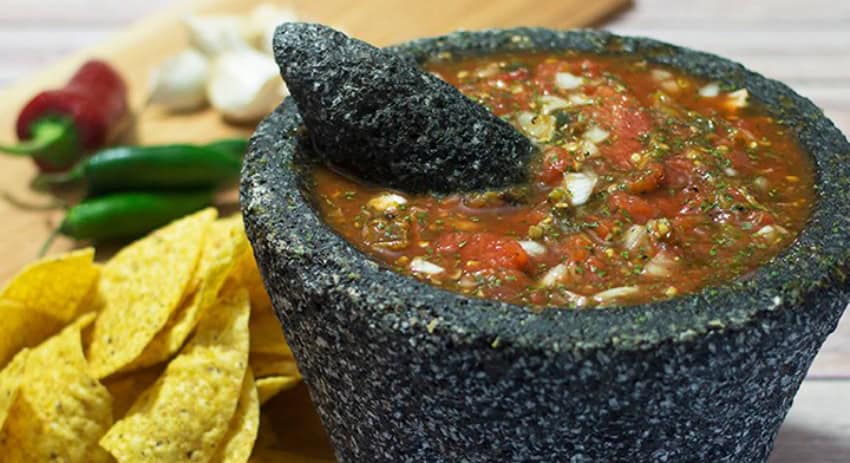
freshly made salsa
Fresh salsas are the perfect complement to any Mexican dish. (Gobierno de México)

Okay, this salsa should come with a warning: It’s addictive. It’s so good, you’ll want to put it on everything, not just your tacos pastor. Best of all, you can roast, fry or boil the ingredients to suit your taste. I like them roasted. 

I love that this recipe has tomato and tomatillos. But then again, I’m a sucker for tomatillo anything. Thankfully, they’re also available year-round. Oh, and this salsa can be spicy. Adjust the heat to your liking by not adding as many chiles arbol. 

Ingredients:

  • 1 large tomato
  • 4 medium tomatillos (or 6 small ones)
  • ⅓ medium white onion
  • 2 cloves of garlic, unpeeled
  • 13-15 dry chile de árbol, dry
  • Salt to taste

Directions:

  1. Heat a heavy skillet over medium heat. Once hot, add the tomatillos, tomato, garlic and onion to roast. 
  2. Cook, turning occasionally, for about eight minutes until everything shows signs of blistering and softening. The garlic will cook faster than everything else, in just a few minutes, so remove it and set it aside. 
  3. Remove everything from the skillet and place it in a blender. Now add the chile de árbol to the skillet and continuously stir to slightly roast them. They can burn fast, so keep an eye on them. 
  4. Add them to the blender with the garlic and blend until smooth. Add a little water if too thick.
  5. Place in a bowl and enjoy!

Mexico Correspondent for International Living, Bel is an experienced writer, author, photographer and videographer with 500+ articles published both in print and across digital platforms. Living in the Mexican Caribbean for over seven years now, she’s in love with Mexico and has no plans to go anywhere anytime soon.