Home Blog Page 60

MND Local: Water infrastructure, new ride-hailing rules and live public transit tracking in Guadalajara

4
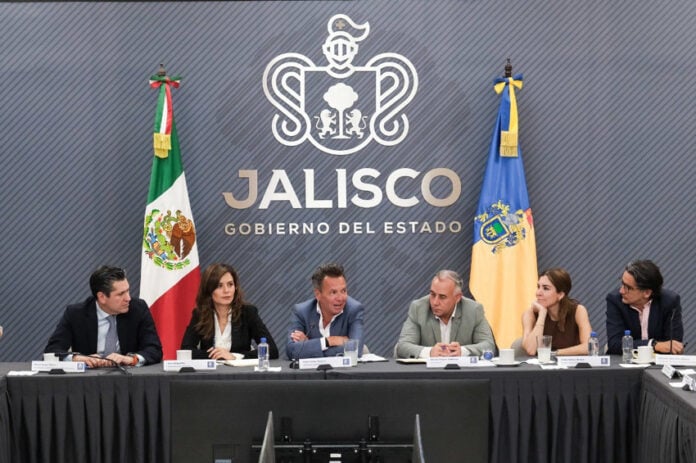
Six government officials seated at a long conference table during a press briefing in Jalisco, Mexico. Jalisco, Mexico, Governor Pablo Lemus is at the center, speaking to another member of the group at his left side. Behind them is a gray wall featuring the Jalisco state government logo and the Mexican and Jalisco flags.
Jalisco Governor Pablo Lemus, center, in an unrelated recent photo, has asked the federal government for US $828.2M for Guadalajara's water infrastructure as a growing number of residents protest shortages and dirty water. (Pablo Lemus/X)

While work around the Guadalajara metro area continues at a feverish pace ahead of the 2026 FIFA World Cup — opening in the city on June 11 — Guadalajara’s water crisis has continued to deepen, with appeals to the federal government and Jalisco Governor Pablo Lemus firing the state’s water director. 

Gov. Lemus requests GDL water infrastructure funds
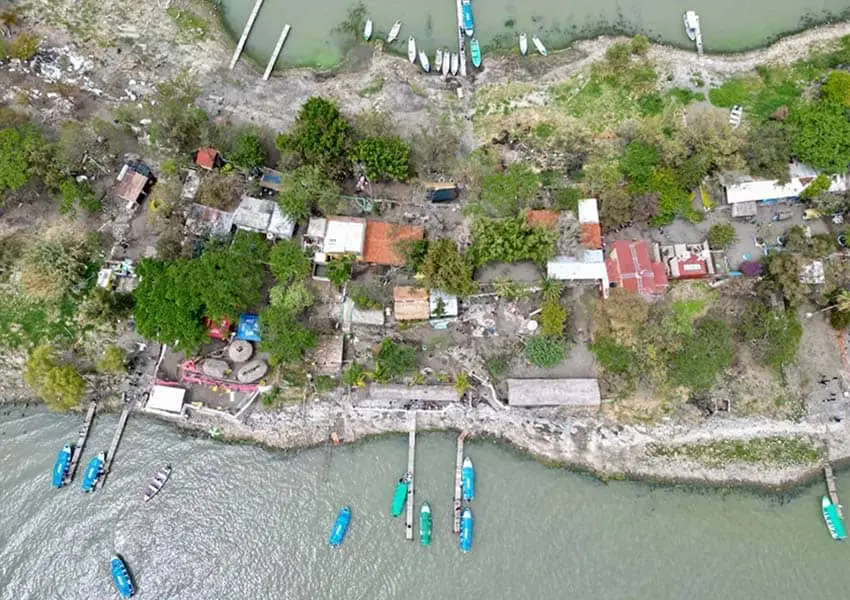
aerial image of Jalisco's Lake Chapala with docked ships on the shoreline and homes on land.
Lake Chapala has long been Guadalajara’s main water source, but according to Guadalajara’s Metropolitan Planning Institute, 26 of every 100 liters of water consumed in the city’s metropolitan zone comes from underground aquifers. (Government of Jalisco)

The water situation across the Guadalajara Metropolitan Area (GMA) continues to deteriorate. Problems with water scarcity, dirty and foul-smelling water and low water pressure have become more widespread this past month, with approximately 400 neighborhoods now reporting issues.

On Friday, Jalisco’s Governor Pablo Lemus Navarro announced that he had requested $15 billion pesos (US $828.2 million) from President Sheinbaum to address urgent water infrastructure needs across the Guadalajara metro area.

If granted, these funds would be used to construct a replacement Chapala-Guadalajara aqueduct (estimated cost $10 billion pesos) and expand Water Treatment Plant No. 1 (estimated cost $4.8 billion pesos).

While the federal government has not yet approved the ask, President Sheinbaum confirmed that technical validation of the projects has begun with Conagua, Mexico’s National Water Commission. 

Soon after taking office in October 2024, Sheinbaum promised to prioritize water infrastructure remediation projects nationwide, as part of her National Water Plan initiative.

Acute water challenges could not have surfaced at a worse time. The city is already hosting World Cup qualifying matches, with FIFA President Gianni Infantino in attendance. 

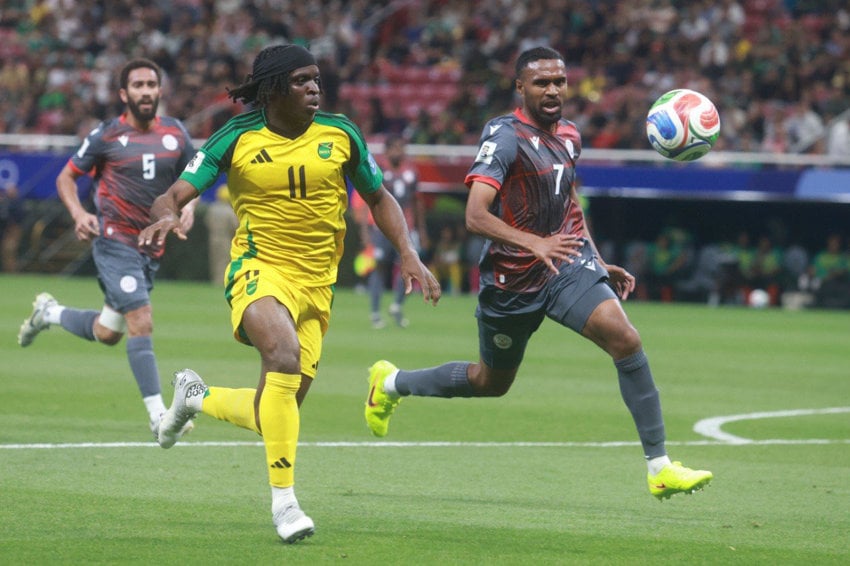
Jamaica national football team forward in a yellow jersey sprinting past defenders during a soccer match in a crowded stadium on March 26 in Guadalajara, a qualifying match for the 2026 World Cup men's competition.
Guadalajara’s water problems are worsening as the city begins to host FIFA 2026 World Cup activities. This World Cup qualifying match between Jamaica and New Caledonia on March 26 is one example. (Pablo Lemus/X)

Last week, Gov. Lemus fired Antonio Juárez Trueba, the Director of SIAPA (as the state’s water agency is called). The agency will now be headed by Ismael Jáuregui Castañeda, who was previously the director of public works and infrastructure for the Guadalajara suburb of Zapopan. 

Local water experts universally applauded the governor’s decision to remove Juárez, but they seemed less convinced that Castañeda was the best candidate for the job. 

Arturo Gleason, a professor and water management expert at the University of Guadalajara, had urged leaders to conduct a nationwide search for a candidate with a proven track record in water management projects, given the gravity of the water challenges SIAPA is facing right now. Castañeda notably lacks such credentials.

“The problem is serious, and we need the greatest expertise and the most advanced technical and scientific knowledge to solve it,” Gleason said. 

Sergio Garibi, a member of the Comunidad Americana council representing the Colonia America neighborhood, popular with expats and tourists, estimates that 824,000 residents in some of the most densely populated urban areas of Guadalajara have been affected by bad water in recent months.

“We have many reports from neighbors with stomach illnesses… rashes, with skin irritation, and we have indications that suggest a connection with the water quality,” Garibi said.

The worsening situation has prompted one local advocacy group, as well as academics at the University of Guadalajara, to urge SIAPA to issue a health alert designating tap water unsafe in areas with known problems, so that residents can take precautions. Thus far, the state agency has declined to do so.

Rideshare apps granted legal status at GDL Airport

A closeup of a smart phone
After ages of legal uncertainty, ride-hailing services like Uber and DiDi will have designated pickup-drop-off spots at Guadalajara International Airport, reportedly in time for the influx of tourists during the 2026 FIFA World Cup matches in Guadalajara in June. (Crisanta Espinoza Aguilar/Cuartoscuro)

After much uncertainty, Jalisco’s Governor Pablo Lemus confirmed earlier this month that ride-hailing apps like DiDi and Uber will be permitted to pick up passengers at the Guadalajara International Airport during the World Cup.

But there is a catch. 

Ride-hailing apps will continue to be prohibited from pulling up to the terminal to collect their passengers. The reason is that these digital services lack the legal authority to operate at the airport terminals, as federal authorities grant this permission exclusively to authorized taxis and tourist services under the Federal Roads, Bridges and Motor Transport Law.

Instead, a dedicated site for DiDi and Uber drivers will be developed somewhere along the entry/exit road prior to ramps leading to the Chapala highway. 

Given the distance from the terminal and the lack of safe sidewalks to reach the pickup and drop-off spot on foot, the airport will launch a new on-site shuttle to ferry riders from the terminal to the rideshare parking lot.

While this isn’t the most convenient solution, it will thankfully eliminate the ambiguity that plagued rideshare services in the past. This included rider uncertainty over the correct meeting location, and rideshare drivers being harassed at the terminal by Mexico’s National Guard patrols when attempting to connect with their riders there. 

This new solution enabling rideshare services to operate at Guadalajara Airport has a price tag of 20 million pesos (US $1.1 million), with the work set to be completed before the 2026 World Cup matches in Guadalajara begin on June 11. As of now, no launch date has been shared by public officials.

Jalisco, Google partner on real-time public transit tracking 
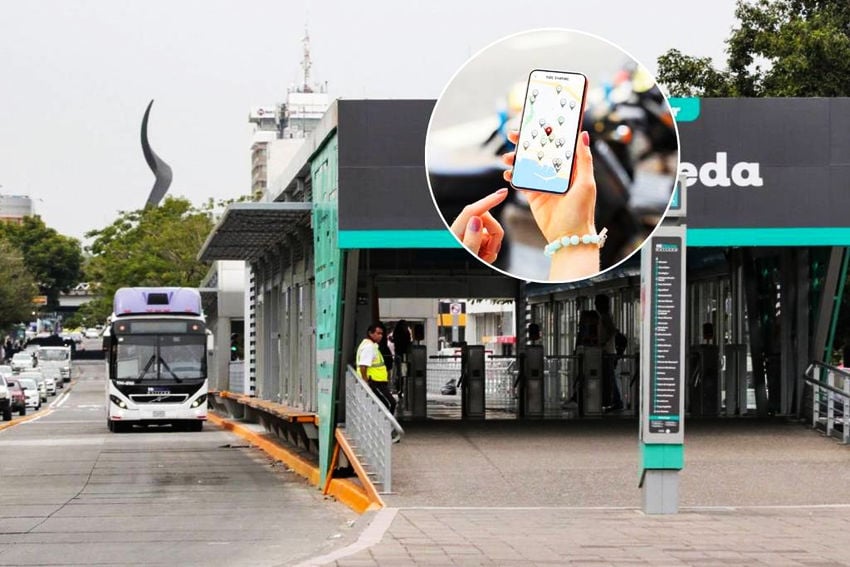
A white and purple bus in Guadalajara approaches a modern station. The photo features a circular inset showing a person holding a smartphone with a transit map app displaying several pins showing locations of public transit vehicles.
Now, thanks to Google, public transit riders in Guadalajara’s metro area will be able to see where their bus, light rail or metro car is in real time. (Jalisco Transportation Ministry)

It’s about to get a little easier to navigate the Guadalajara metro area on public transport, thanks to a little help from big tech. 

With the goal of modernizing the public transportation system and keeping local riders better informed, the city government recently inked a new partnership with Google that will enable mobile apps like Google Maps and Waze to display bus and train locations in real time. The initiative will be executed in multiple phases.

During the first phase, expected to last nearly three months, roughly 100 vehicles will be tracked. Over time, coverage will be expanded to include all 220 routes in the mass transit system provided by light rail and Mi Macro (bus rapid transit).

By year’s end, the program’s goal is to expand coverage to 4,500 vehicles.

In the coming weeks, additional details on the new program are expected to be released via the social media accounts of the Jalisco Department of Transportation and Governor Pablo Lemus.

MND Writer Dawn Stoner is reporting from Guadalajara.
What do Mexico’s latest job numbers tell us about the economy?

3
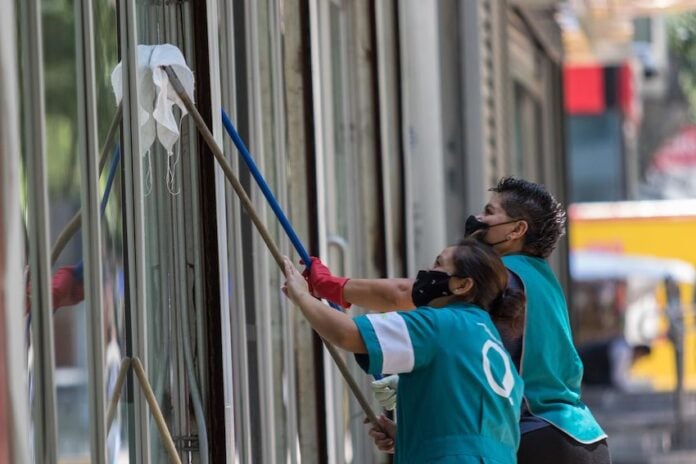
Un par de mujeres trabajan limpiando los cristales de un edificio en Paseo de la Reforma.
Of the 594,288 jobs added in February, 54.9% were formal sector positions while the remainder were informal sector ones. (Cuartoscuro)

Mexico added almost 600,000 new jobs last month, according to official data, but year-to-date employment creation remained in negative territory at the end of February after more than 700,000 job losses in January.

A total of 594,288 jobs were added to Mexico’s formal and informal sectors in February, according to the national statistics agency INEGI.

The size of Mexico’s active workforce thus increased to 60.26 million people.

The addition of almost 600,000 jobs last month came after the loss of 705,427 positions in January.

Therefore, in the first two months of 2026, there was a total of 111,139 job losses in Mexico. Gabriela Siller, director of economic analysis at Banco Base, told the newspaper El Economista that the figure is derived from the loss of some 127,000 formal sector jobs and the addition of around 16,000 informal ones.

Siller said that the data for February shows that “there is a return of people to the labor market,” adding that higher inflation and a reduction in incoming remittances may have precipitated the need for “more family members to work.”

Self-employment drives job growth in February 

Almost six in ten (57.8%) of the new jobs added in February were positions in which people work on their own — i.e., self-employment.

Mexico loses 25,000+ formal employers in record decline

The number of self-employed people increased by 343,584 last month to reach 13.75 million, or 23% of all workers. The total number of self-employed people is the highest since INEGI began conducting its National Survey of Occupation and Employment (ENOE) in 2005.

In addition to self-employed people, INEGI publishes data on the number of people in “subordinate, remunerated” positions (i.e., employees) and unpaid positions. It also publishes data on employers. In February, the following changes occurred:

  • The number of people in unpaid positions increased by 153,673 to 1.91 million in February, representing 3% of the total active workforce. In February, the increase in the number of people in these positions was the second biggest driver of job growth.
  • The number of people in “subordinated, remunerated” positions increased by 66,904 to 41.42 million, representing 68.7% of the total active workforce. In February, the increase in the number of people in these positions was the third biggest driver of job growth.
  • The number of employers increased by 30,127 to 3.13 million, representing 5.2% of the total active workforce. In February, the increase in the number of employers was the fourth biggest driver of job growth.

Of the 594,288 jobs added in February, 54.9% were formal sector positions while the remainder were informal sector ones. Informal sector workers don’t pay income tax and generally don’t have access to benefits such as social security and paid vacations.

Almost 80% of the new jobs added in February were in the tertiary or services sector, while 14% were in the secondary sector, 3% in the primary sector and 2% in unspecified sectors.

Other ENOE results 

Below is a summary of some of the other results of INEGI’s National Survey of Occupation and Employment in February.

  • The unemployment rate was 2.6%, down from 2.7% in January, but up from 2.5% in February 2025.
  • The underemployment rate was 7%, up from 6.1% in January, and 6.3% in February 2025.
  • The informality rate — the percentage of total workers employed in the informal sector — was 54.8%, down from 54.9% in January, but up from 54.5% in February 2025.
  • The number of people in jobs increased 1.8% compared to February 2025.
  • The number of unemployed people increased 5% annually to 1.6 million.
Annual job losses and gains 

In the 12 months to the end of February, jobs were lost in the following sectors:

  • Agriculture, ranching, forestry, hunting and fishing: 113,229 job losses.
  • Mining and electricity: 60,579 job losses.
  • Restaurants and accommodation services: 58,611 job losses.

In the 12 months to the end of February, jobs were added in the following sectors:

  • Government and international organizations: 287,726 jobs added.
  • Transport, communications, mail and storage: 268,101 jobs added.
  • Manufacturing: 235,959 jobs added.
  • Services (various): 183,598 jobs added.
  • Commerce (including retail): 175,226 jobs added.
  • Social services: 84,279 jobs added.
  • Construction: 71,870 jobs added.
  • Profession, financial and corporate services: 15,215 jobs added.

With reports from El Economista

Anti-drug trafficking operations across 6 states result in hundreds of arrests

2
CIUDAD DE MÉXICO. 11ABRIL2025.- Miembros del ejército, la Marina y Guardia Nacional; parte de operativo de seguridad de semana santa que inicio hoy y concluirá el próximo 27 de abril. FOTO: VICTORIA VALTIERRA/CUARTOSCURO.COM
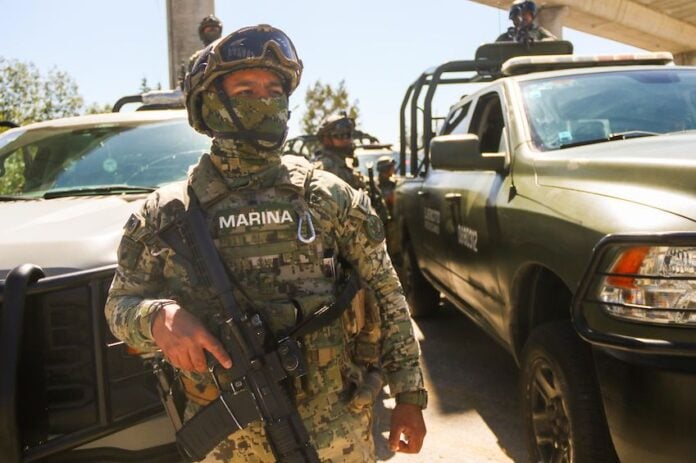
Between March 23 and 29, Semar carried out 147 operations, including 20 raids, as part of the ongoing Operation Sable, which seeks to deter illicit activities such as drug trafficking. (Victoria Valtierra/Cuartoscuro)

In the past week, the Mexican Navy (Semar) arrested 234 people in Puebla, Tlaxcala, Morelos, Mexico City and México state and seized 1,033 kg (one tonne) of methamphetamine, the agency reported on Tuesday

Between March 23 and 29, Semar carried out 147 operations, including 20 raids, as part of the ongoing Operation Sable, which seeks to deter illicit activities such as drug trafficking. 

In addition, Semar seized seven handguns, one rifle, eight magazines and 215 rounds of ammunition across the five states, as well as 38 vehicles and 12 properties.

Bilateral intelligence sharing leads to drug bust off coast of Michoacán 

In a separate operation, Semar announced the arrest of six drug trafficking suspects on Monday, made possible by intelligence provided by the United States Northern Command and the Joint Interagency Task Force. 

According to an official statement, Navy personnel used U.S. intelligence to identify a vessel located around 113 km southwest of the port of Lázaro Cárdenas, in Mexico’s western Michoacán state. On it, agents discovered 14 sack-like packages with 580 brick-shaped bundles of white powder.  

Officials seized the packages, weighing 650 kg, alongside 350 liters of fuel. If the white powder is proven to be cocaine, the value of the goods could be as much as 150 million pesos (US $8.4 million), which would serve a significant blow to the criminal group involved. 

U.S. Ambassador to Mexico Ronald Johnson, who has been complimentary of the bilateral security cooperation under Sheinbaum, took to X to congratulate the mission:

“The seizure of a speedboat by Mexican authorities — made possible thanks to the exchange of information between the United States and Mexico 🇺🇸🇲🇽 — led to the confiscation of 14 packages of cocaine and the arrest of six individuals, demonstrating that transnational criminal organizations cannot hide from justice when we work together.” 

“This action prevented more than 1.3 million doses from harming our communities. The historic cooperation driven by President Donald Trump and President Claudia Sheinbaum is yielding results. Stronger Together,” Johnson added.  

The security strategy of the Sheinbaum administration has focused on making so-called “high-impact arrests” related to crimes such as homicide, extortion, kidnapping, robbery and trafficking. From Oct. 1, 2024, through Feb. 28, 2026, Mexico’s security ministry has reported 46,000 arrests of this type, or approximately 2,700 arrests per month.

With reports from López-Dóriga Digital, Eje Central and Debate

Yucatán cracks open a new market for mamey with first-ever shipment to UK

3
mameys on tree
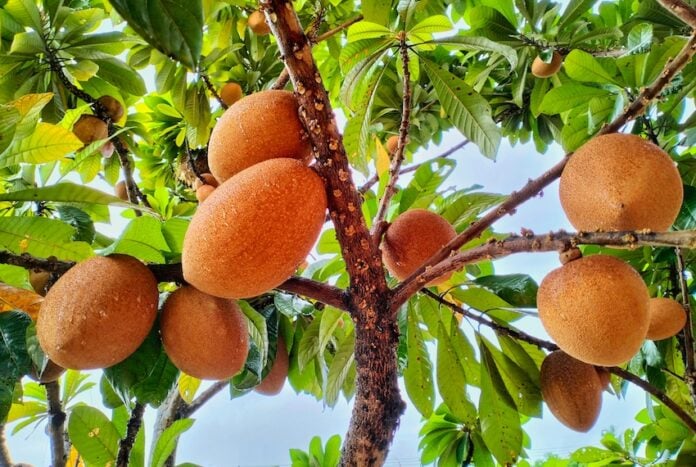
The sweet tropical fruit, native to Mesoamerica and cultivated in half of Mexico's states, has been exported to several countries across continental Europe in the past, but the United Kingdom has only now received its first shipment. (Shutterstock)

Mexico has exported mamey to the United Kingdom for the first time, opening a new European market for the sweet tropical fruit grown in southern Yucatán and elsewhere in Mexico.

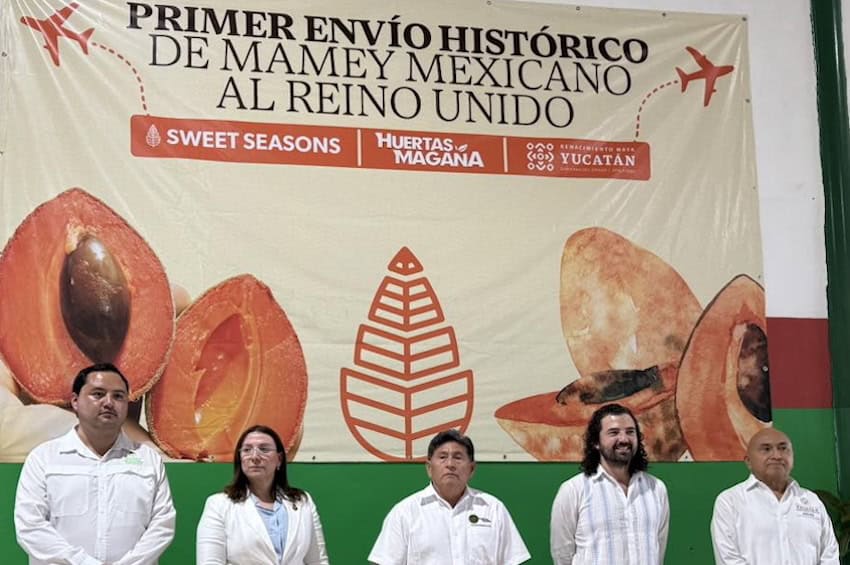
This week’s inaugural shipment — about two tonnes from Huertas Magaña, an orchard in the municipality of Akil, Yucatán — marks the culmination of more than two years of work to meet Britain’s strict phytosanitary requirements. “It’s quite a complicated job,” said Julio Magaña, marketing manager of Huertas Magaña. “Part of it is getting there, which is what has been achieved so far, but now we need to start positioning this product.”

mamey producer
It took a couple of years for the crew at Yucatán mamey producer Huertas Magaña to negotiate and organize the first exportation of Mexican mameys to the United Kingdom, but the historic shipment finally happened last week. (Huertas Magaña)

The achievement secures Yucatán’s position as Mexico’s leading mamey producer and adds the U.K. to a growing list of destinations that includes France, Spain, Germany, the Netherlands, Canada, Hong Kong and the United Arab Emirates.

State officials hailed the milestone as part of a strategy to expand Yucatán’s agricultural reach.

“This shipment represents a historic step for Yucatecan agriculture,” said Roger Góngora García, the state’s deputy minister of investment, commerce and industry. “It is the result of years of work, meeting international standards, and demonstrating that the quality of our products can compete in the most demanding markets.”

Native to Mesoamerica, the mamey (or mamey sapote) thrives in Yucatán’s southern municipalities of Akil, Oxkutzcab, Tekax and Maní, where state officials say more than 5,000 producers cultivate roughly 3,000 hectares. The production season runs roughly from January to June, with peak output around January through March.

With rough brown skin and vivid orange flesh, the fruit is creamy and sweet when ripe but bruises easily, making long-haul shipping a delicate operation.

Exporters say packing houses have had to fine-tune temperatures, cushioning and box design so that each fruit can endure the journey, ripen on schedule and still arrive with unblemished pulp.

Studies describe Mexico as the world’s leading mamey producer, with about 15 states growing the fruit, and Yucatán ranks as the top-producing state by both planted area and yield, according to published data.

Huertas Magaña, a family-run orchard founded more than 50 years ago, markets its exports through an alliance with Sweet Seasons, which also distributes the fruit across Europe, Asia and the Middle East.

The U.K. shipment follows broader federal efforts, led by the Agriculture Ministry and its agrifood department, to expand export protocols for tropical fruits and strengthen the competitiveness of small producers in Mexico’s south.

With reports from La Jornada

Vehicle explodes on highway near Mexico City’s AIFA airport, killing 2

0
Vehicle that exploded near Mexico City's AIFA airport
The México state Attorney General's Office said on Monday that it had opened an investigation into the vehicle explosion. (X)

Two alleged members of the Sinaloa Cartel were killed on Saturday when the vehicle they were traveling in exploded on the Mexico City-Pachuca highway in México state.

Video footage filmed from another vehicle shows that there was an explosion in the rear of a black SUV as it traveled on the Mexico City-Pachuca libre (non-toll) highway in the municipality of Tecámac. The vehicle subsequently veered out of control before coming to a halt on the opposite side of the highway.

The cause of the explosion has not been confirmed. Various media reports pointed to the apparent presence of an explosive device inside the vehicle. It was unclear who may have placed the device in the SUV, or what caused it to detonate.

The two victims were identified as Francisco Beltrán, known as “El Payín,” and Humberto Rangel Muñoz, who was reportedly driving the vehicle. The two men were from Sinaloa and were allegedly Sinaloa Cartel operators, according to media reports.

Rangel is believed to have picked up Beltrán at the Felipe Ángeles International Airport (AIFA) prior to their death. The airport is located in the municipality of Zumpango, which borders Tecámac.

The México state Attorney General’s Office said on Monday that it had opened an investigation into the vehicle explosion. Emergency services and security forces from all three levels of government responded to the incident, the newspaper El Financiero reported. Forensic experts collected evidence from the scene.

For well over a year, rival factions of the Sinaloa Cartel have been engaged in a bloody conflict related to the alleged kidnapping in 2024 of cartel leader Ismael “El Mayo” Zambada by Joaquín Guzmán López, one of the sons of imprisoned drug lord Joaquín “El Chapo” Guzmán Loera. Both men were detained after arriving at an airport in New Mexico on a private plane in July 2024. There was no immediate indication that the vehicle explosion last Saturday was linked to the dispute between the “Los Mayos” and “Los Chapitos” factions of the Sinaloa Cartel.

With reports from El Financiero, La Jornada and UNO TV

World Cup: Sheinbaum meets with FIFA president following Mexico-Portugal ‘trial’ match

2
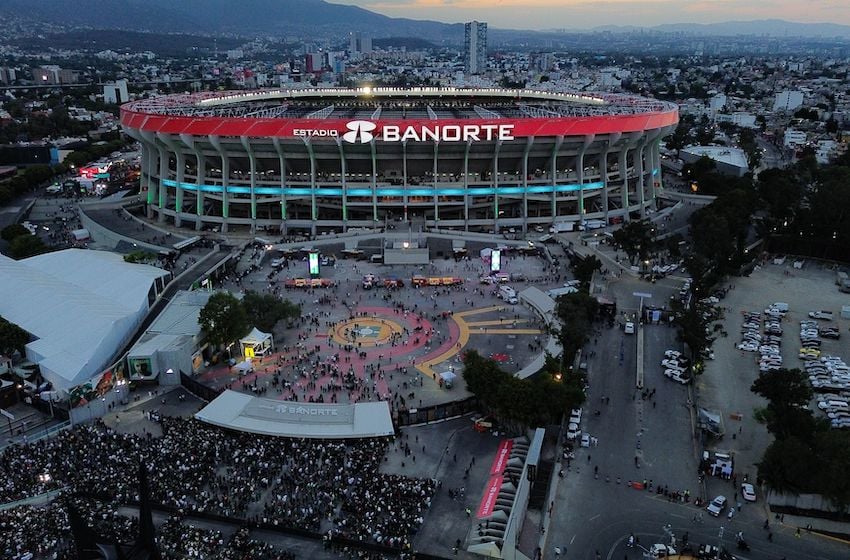
CIUDAD DE MÉXICO, 30MARZO2026.- Claudia Sheinbaum Pardo, Presidenta de México, se reunió con Gianni Infantino, presidente de la FIFA, para seguir trabajando en la organización de la Copa del Mundo 2026, cuyo partido inaugural será en el Estadio Banorte.
The visit was the latest hurdle Mexico had to clear ahead of the World Cup, particularly after the violence that erupted in late February in and around Guadalajara. (Presidencia/Cuartoscuro)

FIFA boss Gianni Infantino on Monday gave President Claudia Sheinbaum — and Mexico — a vote of confidence as preparations for this summer’s World Cup continue apace.

In a video posted to social media, Sheinbaum said, “Everything will go very well during the World Cup,” while Infantino asserted that the tournament would be “a fiesta, a big success for Mexico.” 

Infantino had been in Mexico since last week when he attended two World Cup qualifiers on Thursday — one in Monterrey, the other in Guadalajara — and spent the weekend meeting with Mexican Soccer Federation officials before visiting Sheinbaum at the National Palace.

The visit was the latest hurdle Mexico had to clear ahead of the World Cup, particularly after the violence that erupted in late February in and around Guadalajara.

Of equal concern was Saturday night’s international friendly between Mexico and Portugal (a game that ended in a scoreless draw), which served as the re-opening of the Estadio Azteca, which has been undergoing extensive renovations for nearly two years.

Slow construction progress prompted concerns that the stadium could be stripped of hosting duties, but Infantino expressed satisfaction in an Instagram post after the match.

It was a pleasure to be at the Mexico City (Banorte) Stadium, a true cathedral of football, as it reopens following its modernization,” he said.

Over 80,000 people attended the Mexico-Portugal friendly at Banorte Stadium on Saturday in Mexico City. Another 10,000 watched from the Zócalo in the historic center.
Over 80,000 people attended the Mexico-Portugal friendly at Banorte Stadium on Saturday in Mexico City. Another 10,000 watched from the Zócalo in the historic center. (Rogelio Morales/Cuartoscuro)

Although the game itself went off without a hitch, logistical issues were evident (the parking lots are unfinished, new public transport routes and terminals are not yet ready) at the iconic venue which is slated to become the first stadium in the world to host three separate World Cups.

Still, Sheinbaum praised the traffic control operation that “prevented congestion and facilitated access to the stadium for attendees.” 

Others were less sanguine, with the sports journal Esto describing the scene as chaotic. Some of the mobility problems were caused by protesters who accuse the government of gentrifying the neighborhood trying to block roads south of the stadium.

A large part of the credit for the “success” of the operation must go to the commuters who, Sheinbaum admitted, parked at some distance from the stadium and approached on foot, entering the grounds at controlled access points.

Sheinbaum also said she would talk with Mexico City Mayor Clara Brugada about necessary improvements though she declined to elaborate.

The night was further marred by the death of a fan who fell from box seats in the upper deck before the game began.

“Although this was an isolated incident, security measures will be reviewed and reinforced,” Sheinbaum said.

Monday’s meeting demonstrated that Mexico is on track to carry out its hosting duties beginning with the inaugural World Cup match on June 11 when El Tri takes on South Africa in Estadio Azteca.

With reports from La Jornada, Excelsior, Infobae, Inside FIFA, Esto and ESPN

Mexico eases measles crisis with 17M vaccines: Tuesday’s mañanera recapped

1
Deputy Health Minister Clark reported that health authorities have administered 17.2 million vaccines against measles since Feb. 12.
Deputy Health Minister Clark reported that health authorities have administered 17.2 million vaccines against measles since Feb. 12. (Galo Cañas/Cuartoscuro)

Sheinbaum’s mañanera in 60 seconds

  • 🚆 AIFA’s rail link hits another delay — The train connecting Buenavista in CDMX to the Felipe Ángeles airport has completed testing but is still awaiting certification, pushing the opening back by a few weeks. The line was originally meant to open under AMLO; Sheinbaum had promised it before Holy Week.

  • 🛢️ Gulf oil spill probe ongoing — Investigators are weighing whether natural seeps in the Cantarell Field or a Pemex infrastructure leak caused contamination along roughly 630km of Veracruz and Tabasco coastline. Sheinbaum says the natural seep hypothesis looks most likely.

  • 💉 Measles outbreak turning a corner — 17.2 million vaccines administered since mid-February, and Deputy Health Minister Eduardo Clark says transmission is now declining in all 32 states. New cases have been falling for four consecutive weeks.


Why today’s mañanera matters

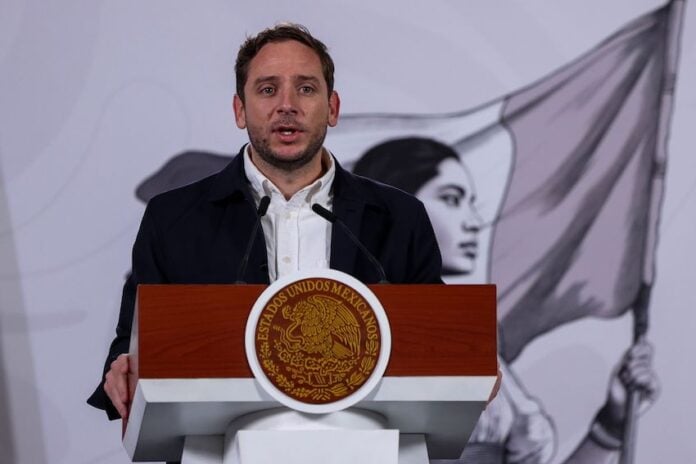
Updates on three matters of great public interest were provided at President Claudia Sheinbaum’s Tuesday morning press conference.

Sheinbaum spoke about the opening of the long-awaited rail link to the Felipe Ángeles International Airport (AIFA) and an investigation into widespread oil contamination in the Gulf of Mexico, while Deputy Health Minister Eduardo Clark gave an update on the national measles situation.

Today’s mañanera served as a reminder why the federal government so highly values the direct, unfiltered communication to the Mexican people that a daily press conference affords. The presser allows the government to get key information to a significant audience of viewers and listeners on mediums including television, radio and social media. At the same time, the mañanera enables the government to largely set the national news agenda.

AIFA has now been open for 4 years, but passengers are still waiting for a rail link 

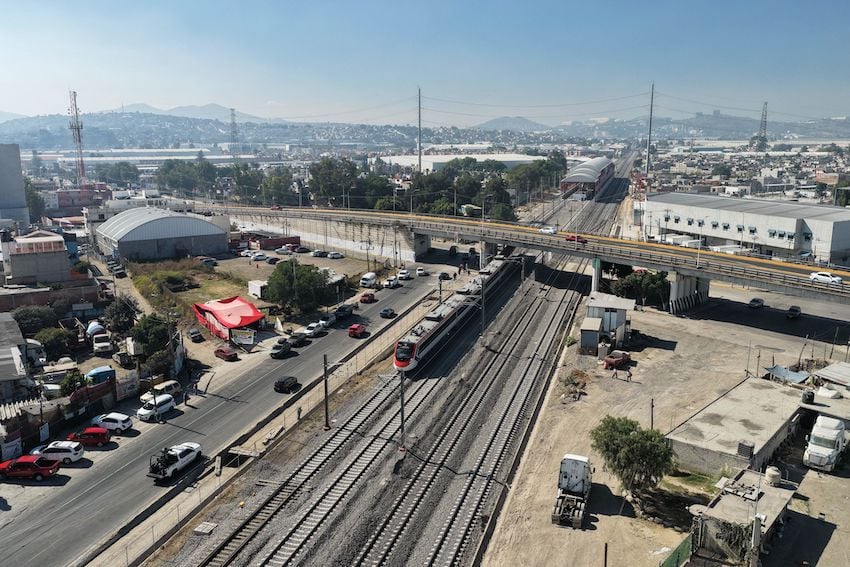
Sheinbaum told reporters that testing of the rail link between central Mexico City and AIFA in México state has been carried out but the related “certification” hasn’t been issued.

As a result, the opening of the train line will be delayed by a few weeks, she said.

“We want it to be certified so that it can operate,” Sheinbaum said.

The train line connecting northern Mexico City and the new Felipe Ángeles International Airport has suffered many delays, keeping transport to and from the airport long and costly. (Presidencia/Cuartoscuro)

The president said earlier this year that the rail link from the Buenavista station to AIFA would open “before Holy Week.” The train line — an extension of the existing Mexico City suburban railroad — was originally expected to open during the presidency of Andrés Manuel López Obrador (2018-24), whose government built the airport.

Just over four years after AIFA opened, Sheinbaum presented an infographic that showed that more than 18 million passengers have used the airport since March 21, 2022. She reported that the top five states for flights to and from AIFA are Quintana Roo, Jalisco, Nuevo León, Yucatán and Oaxaca. The airport is a hub for the state-owned Mexicana airline, which began operations in late 2023.

Investigation into cause of oil spill continues 

Sheinbaum said that the government, in collaboration with scientists, is investigating whether natural oil seeps in the Cantarell Field of the Gulf of Mexico are the cause of the widespread oil contamination along the coasts of Veracruz and Tabasco.

She said that investigators are also considering the possibility that oil leaked from Pemex infrastructure.

“For this they have to inspect all the facilities,” Sheinbaum said.

“So far no leak has been reported,” she added.

oil on a beach in Veracruz
The government’s official hypothesis is that the oil spill resulted from a “natural” seep. Environmental experts and activists say the extent of the damage is too great for that to be true. (Cuartoscuro)

Sheinbaum said that the “hypothesis” that natural oil seeps caused the contamination appears most likely.

Mexico News Daily reported last Thursday that Veracruz Governor Rocio Nahle — a former energy minister with close ties to Pemex — blamed a privately owned vessel operating off the coast of Campeche for the oil spill, but an inspection revealed the ship in question was not responsible. Before she made that allegation, Nahle raised the possibility that a natural oil seep caused the Gulf of Mexico contamination.

On Tuesday morning, Sheinbaum said that the government has done a lot of work to contain the contamination and clean up affected beaches.

“There are lot of people from Pemex working, a lot of people from the Ministry of the Navy, a lot of people from the Environment Ministry working to contain and clean up the contamination through different methods,” she said.

Last week, more than a dozen environmental organizations accused the government of covering up an oil spill that has despoiled some 630 kilometers of beaches along the Gulf coast.

Measles transmission on the decline 

Deputy Health Minister Clark reported that health authorities have administered 17.2 million vaccines against measles since Feb. 12.

“In seven weeks we reached this number and for that reason, the transmission of measles today is on the decline in each and every one of [Mexico’s] 32 federal entities,” he said.

“… This is very good news,” Clark said, adding that new cases have been declining for four weeks.

Mexico has faced a concerning outbreak of measles, with almost 15,000 confirmed cases reported across the country so far this year.

By Mexico News Daily chief staff writer Peter Davies (peter.davies@mexiconewsdaily.com)

Mexico’s eagerly awaited supercomputing program launches

0
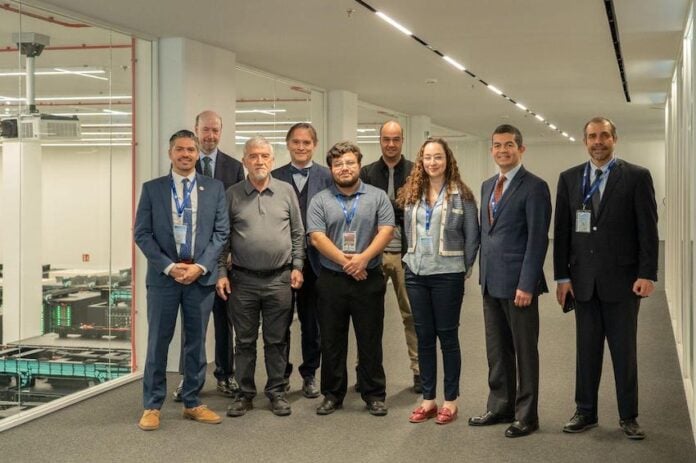
Beyond weather forecasting, the program ultimately aims to put Coatlicue's processing power to work across a range of sectors such as agriculture, energy, customs and anti-corruption. (ATDT)

Mexico’s ambitious supercomputing program — first announced last November — has officially gotten underway, with Mexican researchers now working at the Barcelona Supercomputing Center (BSC) in Spain on a new climatological investigation protocol.

The Mexican Supercomputing Program, a collaboration between Mexico’s Digital Transformation and Telecommunications Agency (ATDT) and the BSC, was unveiled by President Claudia Sheinbaum late last year with the long-term goal of building Mexico’s own supercomputer: Coatlicue, named after the Aztec mother of the gods, which would be the largest in Latin America.

Mexico is less than 3 years away from having Latin America’s largest supercomputer

The program’s first phase is now active. Researchers from Mexico’s National Meteorological Service (SMN) have begun working at BSC facilities to standardize Mexico’s meteorological data, gaining access to the MareNostrum 5 supercomputer — a machine capable of performing 314 quadrillion calculations per second — to process millions of data points that would otherwise take weeks to analyze.

Furthermore, BSC specialists will train Mexican scientists on how to build Coatlicue’s hardware and software in Mexico, thereby retaining Mexican talent. 

Beyond weather forecasting, the program ultimately aims to put Coatlicue’s processing power to work across a range of sectors such as agriculture, energy, customs and anti-corruption.

“Having Coatlicue means that for the first time, we will have the real ability to address problems that, in theory, we already know how to solve, but we have never had access to the technology needed to tackle them,” Jorge Luis Pérez Hernández, the National Coordinator of Digital Infrastructure at ATDT, told Wired magazine in an interview. 

With an estimated investment of 6 billion pesos,  Mexico’s supercomputer will reportedly be seven times bigger than Pegaso — Brazil’s largest supercomputer — and will be among the 10 largest in the world. 

Construction is expected to begin in the second half of 2026 and could take up to two years. 

“Coatlicue will allow Mexico to fully embrace the use of Artificial Intelligence and data processing, which we currently lack the capacity to do because we don’t have sufficient computing power,” President Claudia Sheinbaum said last year. “It will help us tremendously, not only in the development of science and technology, but essentially in the development of the country.”  

The location for Coatlicue is yet to be determined. Mexican authorities are searching for a site with access to water and energy, low seismicity and high connectivity.

With reports from Wired, El Financiero and Agencia de Noticias Científicas

Manufacturing drives Mexico’s export surge in February, even as production stalls

0
TIJUANA BAJA CALIFORNIA, 01JUNIO2018.- Camiones de carga forman largas filas en la garita de Otay, la cual representa el tercer acceso comercial más importante entre México y Estados Unidos con un cruce de 800 mil camiones cada año. Este viernes México y Canadá se unieron en contra de los aranceles impuestos al acero y aluminio por el presidente estadounidense Donald Trump. FOTO: OMAR MARTÍNEZ /CUARTOSCURO.COM
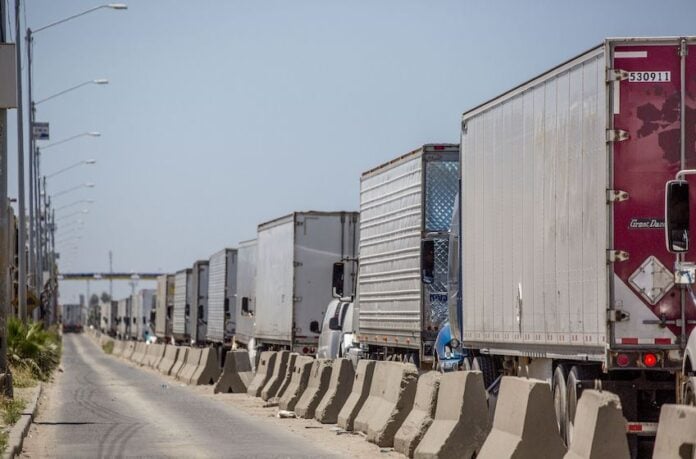
More than 80% of Mexico's export earnings come from goods shipped to the United States. (Omar Martínez/Cuartoscuro)

Mexico’s export revenue surged almost 16% annually in February, the second-highest increase for any month in the past three years.

The national statistics agency INEGI reported on Friday that Mexico’s exports were worth US $56.85 billion last month, an increase of 15.8% compared to February 2025.

The newspaper El Economista reported that the annual increase was the second-highest in the past 37 months after a 17.2% jump last December.

The dollar total was the highest on record for February, but Mexico nevertheless recorded a $463 million trade deficit last month as the value of imports increased 20.8% annually to $57.31 billion.

The export figures contrast with January and February reports that manufacturing output is declining, as U.S. tariffs and weakening employment weigh on the sector.

Mexico’s manufacturing sector has slow start to 2026

According to INEGI, Mexico’s export revenue increased 12.2% annually in the first two months of 2026 to reach $104.85 billion. The outlay on imports increased 15.2% to $111.8 billion in the same period, leaving Mexico with a trade deficit of $6.94 billion.

More than 80% of Mexico’s export earnings come from goods shipped to the United States. The North American neighbors are each other’s largest trade partners.

Manufacturing exports increase 17%, despite drop in auto sector revenue 

INEGI’s data shows that Mexico’s manufacturing exports were worth $51.77 billion in February, a 17.1% increase compared to the same month of last year. That total represents 91% of Mexico’s total export earnings last month.

The value of non-automotive sector manufacturing exports increased 26.7% annually to $38.13 billion, while auto-sector export earnings fell 3.4% to $13.64 billion. U.S. tariffs on light and heavy vehicles made in Mexico have affected Mexico’s auto sector.

INEGI’s data also shows that Mexico’s agricultural export earnings fell 12.8% annually to $1.77 billion in February, while revenue from international oil sales declined 24.2% to $1.48 billion.

Revenue from mining sector exports soared 107.6% annually to $1.8 billion in February. El Economista reported that the value of mining sector exports exceeded revenue from international oil sales for a third consecutive month in February. The federal government is aiming to have more crude refined in Mexican refineries as it seeks to achieve self-sufficiency for fuel.

Mexico’s outlay on imported intermediate goods increases 27%

INEGI’s data on imports shows that Mexico spent $46.24 billion on intermediate goods in February, an increase of 27.2% compared to the same month last year. The outlay on intermediate goods — including raw materials and semi-finished products — accounted for over 80% of Mexico’s total spending on imports last month.

Mexico imported consumer goods worth $7.05 billion last month, a 5.2% annual increase, and spent $4.02 billion on foreign capital goods, a year-over-year decrease of 8.1%.

Of Mexico’s total outlay of $57.31 billion on imports in February, $53.81 billion was spent on non-oil goods, while $3.49 billion was spent on products derived from petroleum, including fuel for motor vehicles.

With reports from El Economista and La Jornada 

Skull found 25 years ago leads scientists to identify new species of ancient sea monster

1
rendering of species
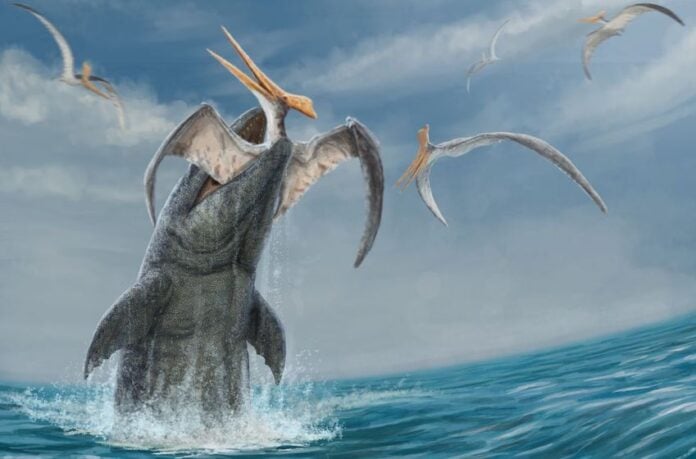
WIth only a skull for information, paleontologists say the Prognathodon cipactli was perhaps 20 feet long with powerful, animal-devouring jaws, and roamed the sea that covered northeastern Mexico some 70 million years ago. (Pavel Galván/MUDE)

A skull dating back to the age of the dinosaurs — pulled from Cretaceous-era rock in northern Mexico 25 years ago — has led to the definition of a new species of marine reptile, scientists announced earlier this month.

The fossil from the newly named species, Prognathodon cipactli, was unveiled by a team of Mexican and British paleontologists as part of a study in the German geosciences journal Neues Jahrbuch für Geologie und Paläontologie.

After 25 years, scientists discovered that the fossilized skull from Nuevo León’s Méndez Formation belonged to a mosasaur, a group of large, extinct marine reptiles related to modern lizards and snakes. (MUDE)

The unveiling occurred on March 17 at the Desert Museum in Saltillo, the capital of the northern state of Coahuila.

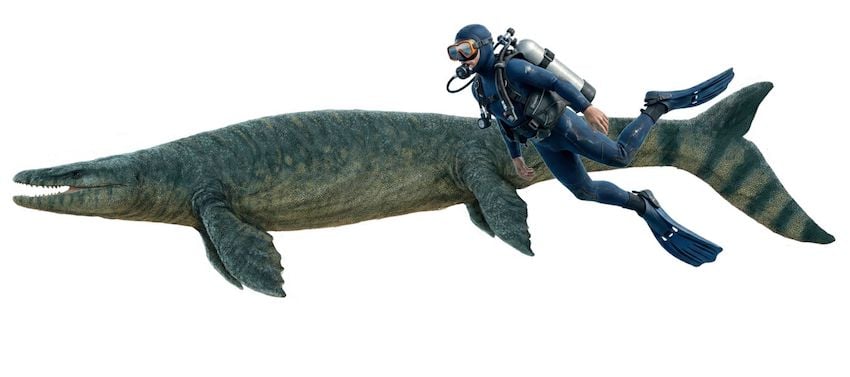
Estimated at 5 to 6 meters (16 to 20 feet) in length with powerful jaws, the prehistoric “sea monster” — so deemed by the Mexican newspaper El País — existed about 70 million years ago, when ocean waters covered much of what is now northeastern Mexico.

The fossilized skull belonged to a mosasaur, a group of large, extinct marine reptiles related to modern lizards and snakes that dominated the oceans near the end of the age of dinosaurs, researchers said.

It lived alongside dinosaurs in the Late Cretaceous period (roughly 100.5 million to 66 million years ago) but is a separate branch of reptiles.

With deep jaws, robust teeth and a short snout, P. cipactli was adapted to crush and seize large, resistant prey such as big fish, other marine reptiles and shelled animals.

The skull was discovered in 2001 in outcrops of the Méndez Formation, a geologic area in northeastern Mexico composed mainly of marine sedimentary rocks (good for preserving fossils). It’s near Linares, Nuevo León.

Only the skull was recovered, and the original site has not been refound, but the fossil is considered relatively complete for a mosasaur skull.

Héctor Rivera-Sylva, chief of paleontology at the Desert Museum, said mosasaurs “dominated the world’s oceans, occupying the ecological role now held by large marine predators such as sharks or orcas.”

He added that the “relatively small size of the animal suggests that adaptations for capturing large prey evolved first, and only later did some species reach gigantic sizes.”

After being described for years as coming from an indeterminate mosasaur, the specimen was reexamined in the new study, which identified features firmly placing it in the genus Prognathodon, known for its powerful bite.

Its new species name has a strong cultural resonance. Cipactli refers to a primordial aquatic creature of Aztec mythology, a half‑reptile, half‑fish being that the gods split to create the Earth and the sky. It is also a Nahuatl word often translated as “crocodile.”

The discovery adds to a growing list of fossils from Coahuila and neighboring states, where land predators such as Xenovenator espinosai and marine hunters like Prognathodon cipactli point to a complex web of top-of-the-food-chain predators in sea and on shore.

With reports from El Universal, Infobae and El Sol de Laguna