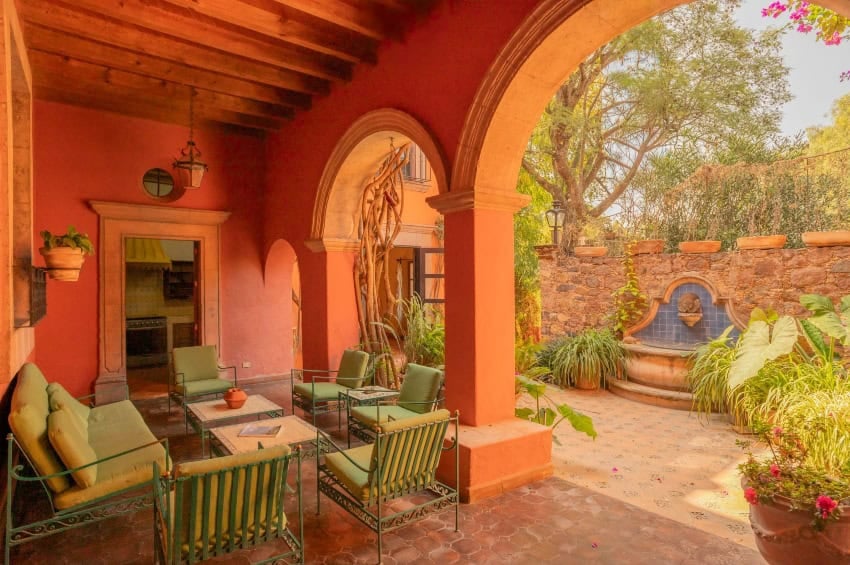
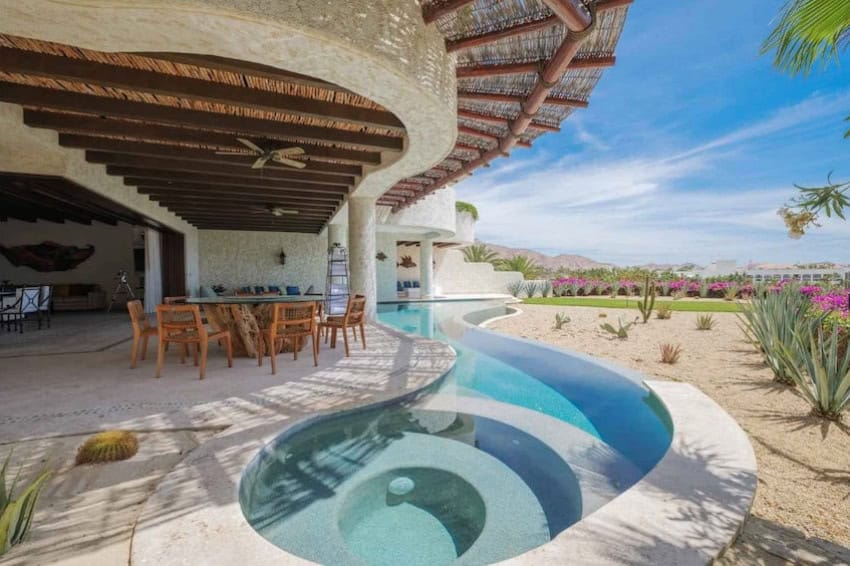
Bodega Aurrera, Walmart Supercenter, Sam's Club and Walmart Express are the four supermarket brands operated by Walmart in Mexico. (Walmart Mexico)
Walmart de México y Centroamérica announced it will invest 43 billion pesos — roughly $2.4 billion — across Mexico and Central America in 2026, a 10% increase over the previous year, as part of an ambitious push to reach 99% of Mexican households within three years.
The announcement, made March 25 at the company’s annual Walmex Day investor event, outlined plans to open more than 1,500 new stores between 2025 and 2029, expand into 135 new cities across Latin America and attract more than 33 million new customers. The company currently reaches about 75% of Mexican households.
“The opening of 1,500 new stores through 2029 and the modernization of branches toward omnichannel models will be key to achieving this goal,” said CEO Cristian Barrientos Pozo at the event.
The investment is divided across four areas: 42% will go toward remodeling and maintaining existing stores, including omnichannel upgrades; 26% toward new store construction, with Bodega Aurrera serving as the primary vehicle for growth; 24% toward supply chain expansion and automation — including two new automated distribution centers planned for Guanajuato and Tlaxcala by 2027 — and 8% toward technology improvements.
New store openings are expected to contribute between 1.5% and 1.7% to total sales growth in 2026, according to the company’s official investment program filing with the Mexican Stock Exchange.
Walmart is Latin America’s largest retailer and operates more than 2,900 stores in Mexico across four formats: Bodega Aurrera, Walmart Supercenter, Sam’s Club and Walmart Express.
Earlier this year, the company began recruiting software developers through Fortnite — marking what it described as the first time a Latin American employer had used the gaming platform for hiring — after relocating its IT hub from India to Mexico in 2025.
Remigio Valdez, known as "Milo," was a "priority target" in Quintana Roo and subject to "an extradition order to the United States for human trafficking and organized crime." (FGR)
Federal security authorities announced on Monday the arrest in Quintana Roo of two alleged members of a “transnational criminal group” that was identified in media reports as the “Cuban-American Mafia.”
One of the men detained by federal and state forces in a residential estate in the Caribbean coast resort city of Cancún was identified as Remigio Valdez Lao, an alleged operational and financial coordinator of the Cuban-American Mafia.
— Gabinete de Seguridad de México (@GabSeguridadMX) April 6, 2026
Security authorities, including the Security, Defense and Navy ministries, said in a joint statement that Valdez, known as “Milo,” was a “priority target” in Quintana Roo and subject to “an extradition order to the United States for human trafficking and organized crime.”
He was flown to Mexico City “to continue the extradition process,” the authorities said.
The other man arrested in Cancún was identified in media reports as Joseline García Biscaino, who also allegedly belongs to the Cuban-American Mafia.
In a social media post, the federal government’s Security Cabinet said that the arrest of Valdez “represents a direct blow to the operational capacity of the criminal group and is the result of international cooperation mechanisms based on respect for sovereignty.” That was an apparent reference to cooperation between Mexican and U.S. security authorities.
The Mexican security authorities said in their statement that the two suspects were arrested in the Residencial Arbolada estate in Cancún. They said that security forces also seized “38 doses of marijuana” and a gray SUV in an operation that followed “intelligence and investigation work” that succeeded in locating Valdez. The authorities didn’t mention the nationality of either suspect.
The Cuban Mafia in Quintana Roo
Mexican and U.S. media reports said that Valdez and García belong to the Cuban-American Mafia (Mafia Cubano-Americano). Cuban-American Mafia appears to be another name for what U.S. authorities have called “the Cuban Mafia in Quintana Roo.”
In October 2023, the U.S. Attorney’s Office in the Southern District of Florida noted in a statement that “an extensive multi-national operation, led by American and Mexican law enforcement authorities,” had been “formed to combat the activities of a violent transnational organized crime group known collectively in Mexico as La Mafia Cubana en Quintana Roo, or the Cuban Mafia in Quintana Roo.”
It said that through the operation, law enforcement officials learned that six Cuban citizens residing in Mexico and two Mexican nationals were “part of an organized crime group that profited from various schemes, including the smuggling and extortion of Cuban migrants held hostage in Mexico for the payment of smuggling fees.”
Neither Valdez nor García were among those mentioned.
The U.S. Attorney’s Office in the Southern District of Florida said that “the members of the migrant extortion racket required the victims to provide contact information of a family member from whom they would later demand a $10,000 USD ransom fee.”
“The men contacted the victims’ relatives, some of whom were in Miami, and threatened to torture, starve, and kill the victims if the relatives refused to pay,” the statement said.
“If a victim’s relative was able to pay the ransom, the organization released the victim and sent them by bus to the United States-Mexico border with instructions to seek political asylum. The victims whose relatives were unable to pay the fee were beaten, threatened with knives and guns, and shocked with stun guns until they were finally rescued by Mexican authorities. Members of the organization also sought to profit from drug trafficking and fraud schemes,” the U.S. Attorney’s Office said.
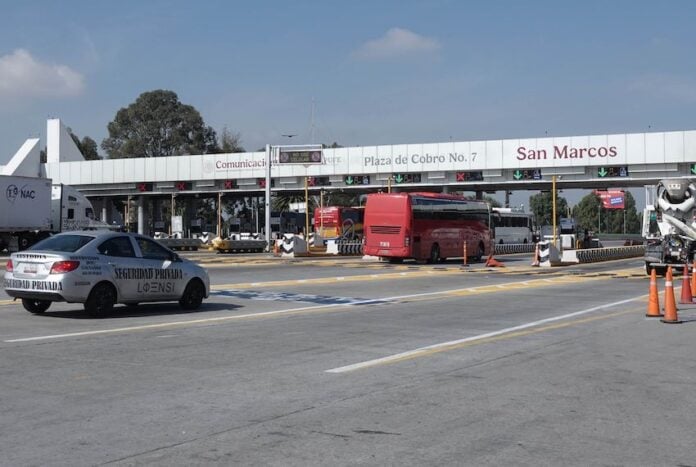
Motorists are advised to consult official information provided by authorities such as Capufe (Mexico’s federal highway agency) and avoid traveling on the indicated roads. (Camila Ayala Benabib/Cuartoscuro)
Truckers and producers, demanding more security on the highways, declared a national transport strike on Monday with plans to establish highway blockades in 20 states after negotiations with the federal government failed to find common ground.
The National Association of Truckers (ANTAC) and the National Front for the Rescue of the Mexican Countryside (FNRCM) confirmed the strike, saying the following highways would be affected:
Mexico City-Queretaro
Mexico City-Cuernavaca (Morelos)
Mexico City-Pachuca (Hidalgo)
Mexico-Puebla
The Northern Arc beltway around Mexico City
Mexicali (Baja California)-San Luis Potosí
Mexiquense Outer Circuit
Mexico City-Toluca
Naucalpan–Ecatepec (México state)
Federal Highway 45 (Querétaro, Guanajuato, Aguascalientes and San Luis Potosí)
Federal Highway 49 (Zacatecas and San Luis Potosí)
Via Corte a Chihuahua (Chihuahua-Parral highway)
Salamanca–Celaya Highway (Guanajuato)
Federal Highway 15D (Mexico City through the Bajío to Guadalajara)
Culiacán–Mazatlán Highway (Sinaloa)
Morelia–Pátzcuaro Highway (Michoacán)
Motorists were advised to consult official information provided by the authorities such as Capufe (Mexico’s federal highway agency) and avoid traveling on the indicated roads.
Early Monday, the federal government acknowledged that 11 of the highways had been blockaded, impacting at least nine states.
The government also managed to convince protesters blocking the Mexico City-Toluca highway to withdraw.
🚨🚧Inician transportistas y agricultores paro nacional en diferentes estados de la República.
Veracruz, Chihuahua, Morelos, Michoacán, Jalisco, Tlaxcala, Edomex, son algunas de las entidades donde ya hay bloqueos 🚨🚧 pic.twitter.com/Yr5jl2yYnY
— ReporterosEnLaZona (@Reporteroszona) April 6, 2026
By mid-day, media were describing chaos and severe delays along many of the roadways specified, though Mexiquense Noticias reported that there was no evident strike action along the Mexico City-Puebla highway.
Previous ANTAC-FNRCM blockades lasted about five hours, although partial blockades lasted several hours longer in some areas.
Truckers have been demanding that the federal government provide greater security on the highways and reduce the number of unregulated checkpoints.
ANTAC claims that there are an average of 40 cargo truck robberies each day with truckers also suffering extortion and threats of murder. They are asking that the National Guard be permanently deployed on specified highways.
The truckers have also complained about massive corruption at the “official” checkpoints.
The protesters also decry what they describe as “unfair and disloyal” agricultural import rules that cause market distortions.
At the same time, truckers are asking that the IEPS tax on diesel fuel be eliminated.
The government’s stance that dialogue is the only acceptable solution is supported by business organizations such as Concamin, Conacar and Canapat). But the truckers say negotiations have failed to gain traction and the violence on the roads continues unabated.
Additionally, the protesters are demanding direct talks with President Claudia Sheinbaum, who has consistently said that the Interior Ministry is the sole interlocutor for the federal government.
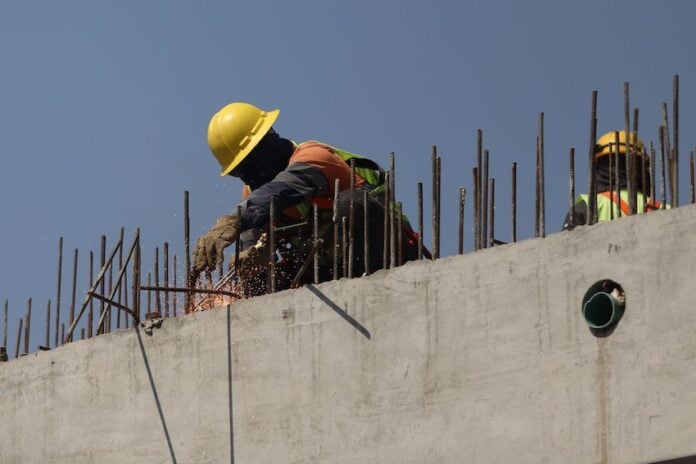
Construction managed to stay in positive annual territory (3.8%), although it also registered a monthly drop of 0.8%, indicating that the observed slowdown in this sector is ongoing. (Daniel Augusto/Cuartoscuro)
The Mexican economy is showing signs of cooling as gross fixed investment and private consumption registered monthly declines in January.
After a promising end to 2025, fixed investment started 2026 with renewed caution, according to INEGI’s Monthly Indicator of Gross Fixed Capital Formation (IMFBCF) which showed a month-on-month decrease of 1.1% in the first month of the year, thus cutting a three-month streak of recovery.
The IMFBCF figures are in line with those of the Global Indicator of Economic Activity (IGAE) for the month of January (published on March 24), which revealed a monthly decrease of 0.9% in the Mexican economy.
It must be noted that the IGAE figures indicate the behavior of economic activity on the supply side, while fixed investment data examine the aggregate demand side.
January’s IMFBCF performance represented the sixth month-on-month decline in the last 12 months, while the year-on-year comparison showed a decrease of 2.2%, marking 17 consecutive months of negative figures in this metric.
The main drag on investment came from the machinery and equipment sector, which fell 8% annually, reflecting fewer acquisitions of productive assets by companies.
In contrast, construction managed to stay in positive annual territory (3.8%), although it also registered a monthly drop of 0.8%, indicating that the observed slowdown in this sector is ongoing.
Private investment fell 4.5% year-on-year, while public investment rose 3.8%. However, overall investment declined 2.2% in January compared to the previous month, according to seasonally adjusted data.
To put the figures in context, Mexico’s gross fixed investment grew 3.4% in 2024 and soared 19.7% in 2023 amid the boom in the nearshoring phenomenon.
INEGI reported that seasonally adjusted private consumption fell 1.6% month-on-month in real terms, its largest recent decline, although it still showed year-on-year growth of 2.7%.
The decline in consumption was concentrated in reduced spending on imported goods, which plummeted 6.8% month-on-month. On the other hand, consumption of national goods and services fell 0.7%, with declines in both goods (-0.9%) and services (-0.5%).
Purchase of imported goods actually increased year-on year by 12.2%, but the monthly decline suggests a loss of dynamism as 2026 begins.
Private consumption is the main driver of economic growth in Mexico, with a share of close to 65% of GDP, so even mild deterioration in its dynamics directly impacts economic activity.
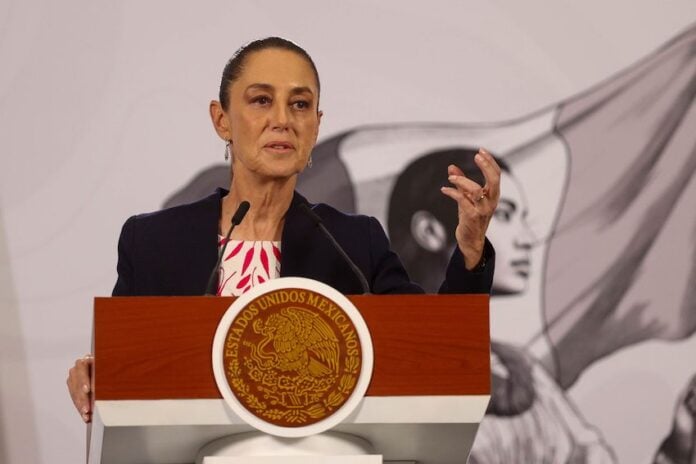
Sheinbaum said that while artworks designated as cultural heritage of Mexico — as is the case with works in the Gelman Collection — cannot be sold abroad, they can be exhibited in foreign countries. (Moisés Pablo/Cuartoscuro)
Sheinbaum’s mañanera in 60 seconds
🖼️ Gelman Collection: Sheinbaum pushed back on critics worried that a trove of Mexican artworks, including several highly valued Frida Kahlo pieces, that are heading to Spain’s new Santander cultural center won’t come back. She insisted the collection returns in 2028 after a two-year loan, and accused opponents of bad faith: “They don’t want to listen.”
🇲🇽🇺🇸🇨🇦 El Mencho & USMCA: Asked whether February’s military operation that killed Jalisco cartel boss “El Mencho” could benefit Mexico in USMCA renegotiations, Sheinbaum distanced herself from Economy Minister Ebrard’s framing, saying security and trade talks “take their own course,” while reaffirming Mexico wants Trump’s tariffs reduced or scrapped.
🚛 Trucker/farmer protests: A threatened nationwide highway blockade by truckers and farmers — over highway insecurity and lack of agricultural support — had yet to materialize by mid-morning Monday, with Sheinbaum arguing there was no reason to protest given the government’s “open door” to dialogue.
Why today’s mañanera matters
At her Monday morning press conference, President Claudia Sheinbaum took the opportunity to address concerns about the planned departure from Mexico later this year of the renowned Gelman Collection of artworks. In effect, she used her mañanera — as she has done before— to push back on a narrative that diverts from the official government line.
Also of note at the first mañanera of the week were Sheinbaum’s response to a question about whether the death of Nemesio Rubén “El Mencho” Oseguera would benefit Mexico in trade talks with the United States and Canada, and her defense of the Interior Ministry’s position regarding highway blockades that disgruntled truckers and farmers planned to set up this Monday.
Sheinbaum: Gelman Collection will return to Mexico after 2 years
Sheinbaum displayed an article published by The Guardian under the headline “Mexican art world protests over plan to send Frida Kahlo masterpieces to Spain.”
The Guardian reported that under a deal with the Spanish bank Santander, the privately-owned Gelman Collection of artworks, “currently on public display in Mexico for the first time in nearly 20 years, will return to Spain this summer where it will become a cornerstone of the bank’s new cultural center, the Faro Santander.”
“In announcing the agreement in January, Santander said it would be ‘responsible for the conservation, research and exhibition’ of the collection. But the ambiguity of the announcement, which did not say how long the works would remain in Spain, sparked concern,” The Guardian reported.
“The concern turned to indignation when Faro Santander’s director, Daniel Vega Pérez de Arlucea, told El País that legislation governing the works was ‘flexible’ and that the collection would have a ‘permanent presence’ at the new cultural center,” the newspaper wrote.
Sheinbaum said that while artworks designated as cultural heritage of Mexico — as is the case with works in the Gelman Collection — cannot be sold abroad, they can be exhibited in foreign countries.
She stressed that the Gelman Collection will be exhibited abroad for two years before returning to Mexico. She said that Culture Minister Claudia Curel de Icaza has highlighted that the collection will return to Mexico after two years on “innumerable occasions.”
“Despite this being explained several times, these people insist that the collection will no longer be in Mexico,” Sheinbaum said of people who have signed an open letter raising concerns about the exhibition of the Gelman Collection in Spain.
She asserted that those people “don’t want to listen,” and declared that “the majority are against our government.”
“They can’t understand that the collection will go [abroad] for two years … and will [subsequently] return to Mexico because it is heritage of Mexico even though it is a private collection,” Sheinbaum said.
She highlighted that Santander said in an April 3 statement that the collection is slated to return to Mexico in 2028.
Sheinbaum: Operation against El Mencho ‘not necessarily linked to USMCA negotiation’
A reporter highlighted that on Feb. 24, Economy Minister Marcelo Ebrard said that the killing of Jalisco New Generation Cartel leader Nemesio Rubén “El Mencho” Oseguera in a Feb. 22 military operation would benefit Mexico in USMCA review talks with the United States and Canada. He asked the president whether she believed that would be the case.
“I don’t know the context in which Economy Minister Marcelo Ebrard made this declaration, [but] let’s say that [the operation against ‘El Mencho’] helps the good relationship we have with the United States on security issues,” Sheinbaum said.
She went on to say that the Feb. 22 operation in Jalisco that resulted in the death of Oseguera is “not necessarily linked to the USMCA negotiation.”
“… The security issue takes its own course and the trade issue takes it own course,” Sheinbaum said.
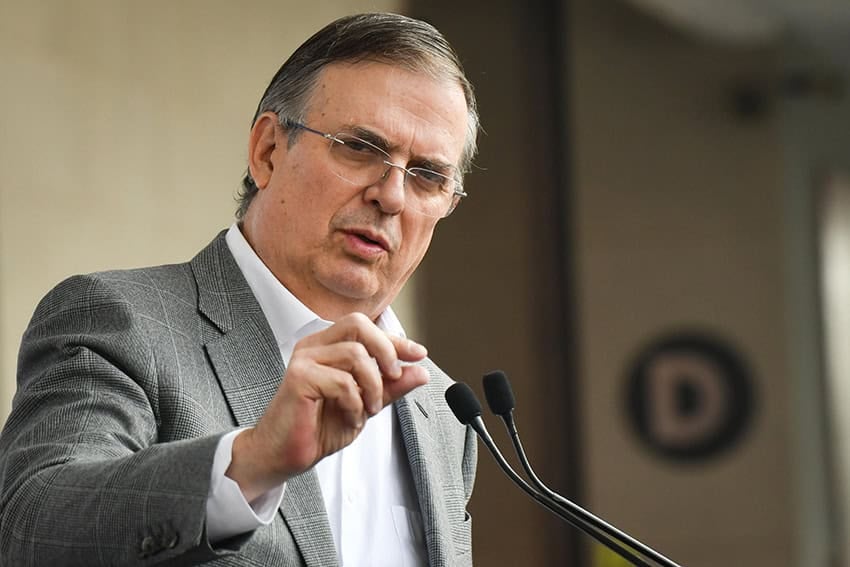
In February, Economy Minister Marcelo Ebrard said, “[The U.S.] has seen what the Mexican government has done in the area of security … this will work in our favor in the coming weeks and months as far as our trade relationship is concerned.” (Mario Jasso/Cuartoscuro)She subsequently reiterated that Mexico favors the continuation of the USMCA and wants the tariffs that U.S. President Donald Trump imposed in 2025 on a range of Mexican products reduced or removed.
Sheinbaum: Government is addressing concerns of truckers and farmers
Sheinbaum highlighted that the Interior Ministry said on Sunday that there is no reason for truckers and farmers to protest this Monday because “the door is open to dialogue, and at the same time” the government has been “addressing the demands they have.”
“So for what reason are they going to protest if there is permanent dialogue?” she asked.
The National Truckers Association and the National Front for the Rescue of the Countryside said last week that a nationwide protest against insecurity on highways, an alleged lack of support for farmers and other problems would take place on Monday, April 6. It was anticipated that the protesters would block highways across Mexico starting early Monday.
However, at 10 a.m. on Monday, blockades hadn’t been set up, according to media reports. Still, it appeared that disgruntled truckers and farmers would block at least some highways on Monday.
By Mexico News Daily chief staff writer Peter Davies (peter.davies@mexiconewsdaily.com)
The Honda XR190 motorcycle is perfect for throttle therapy, Mexico style. (Honda)
The world had been pressing down on me for days. A weight had settled deep in my chest and refused to move. It wasn’t dramatic, just persistent. An accumulation of noise, responsibility and unanswered questions.
That morning, I didn’t want to talk it through or think my way out of it. I needed a task clear enough to occupy my body and mind fully, where attention narrowed and everything else could fall away.
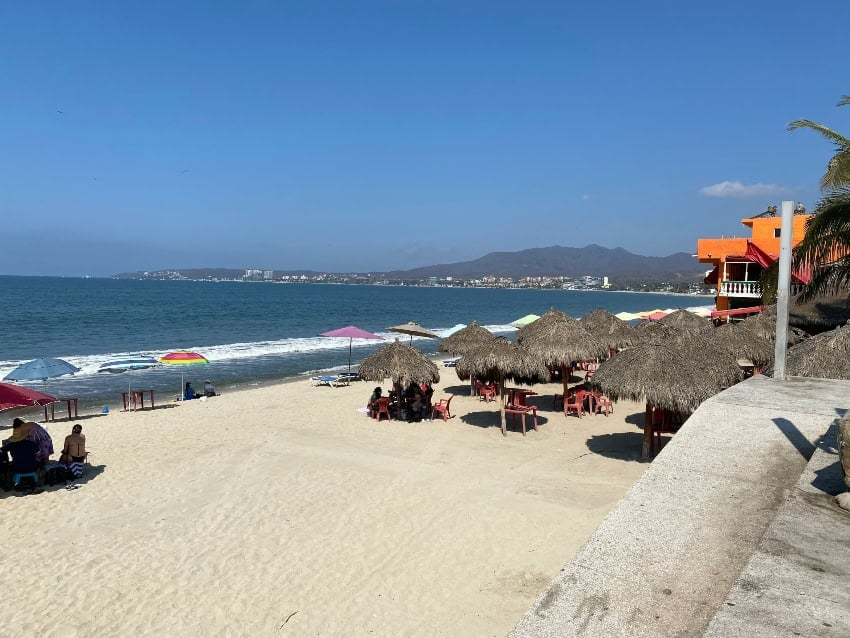
The journey began at dawn in Bucerías, north of Puerto Vallarta, and ended in the same place. (Carolyn Hancox/Unsplash
I needed motion.
Throttle therapy
We left Bucerías just as dawn began to thin the sky. The streets were quiet, washed pale by early light, the air heavy with coastal humidity. He rolled the bike onto the road smoothly, and I settled in behind him. Chest to back. Arms around his waist. Familiar and functional. The engine came to life beneath us, steady and contained.
As we picked up speed, the first rush of cold air cut sharply across my face. It sliced through the fog of my thoughts and demanded a response. I inhaled deeply, filling my lungs, and something in my chest shifted. Not gone, but loosened.
We headed toward Las Juntas. The road was slick from the night air, and I could feel it immediately in the bike’s behavior. Everything was measured. Inputs were clean and deliberate. Each lean into a curve carried intention. The tires held, the suspension absorbed small imperfections, and the machine passed just enough information upward to keep us alert without becoming intrusive.
As he shifted gears, the engine surged cleanly over a slight rise. I leaned with him, letting the pulse of Dora, our Honda XR190, travel through my spine and settle into my limbs.
This wasn’t intimacy in a sentimental sense; it was coordination: two bodies responding to a single set of decisions, one line through the road. Trust built not from words, but from the consistency of predictable braking, smooth throttle and precise timing.
Rolling into Ixtapa
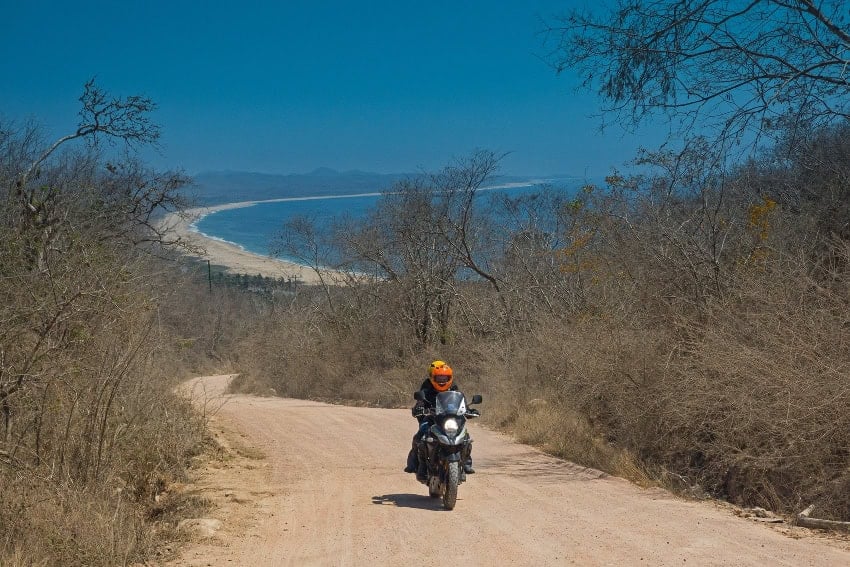
Throttle therapy isn’t about destinations. It’s about the roads in between. (Bike Mexico)
By the time we reached Ixtapa, the road demanded more focus. The switchbacks tightened, arriving more quickly now, and he downshifted fluidly, the engine answering with a deeper, more purposeful note.
I pressed slightly closer, feeling the pull through each turn, force translating cleanly through the frame and into my core. On one corner, a patch of loose gravel hugged the inside line. My grip tightened instinctively, my heart rising for a brief moment before settling again as the tires tracked true.
The air grew colder as we climbed. Each inhale stung a little more, and I welcomed it. The cold narrowed my focus further, and with every kilometer, the weight I’d carried for days receded. Not erased, but pushed to the margins.
Highway 544 unfolded ahead of us, a narrow ribbon threading through El Colorado and Las Palmas de Arriba. Pines and oaks crowded the road, and shadows stretched long across the asphalt.
The surface changed constantly. Rough patches buzzed faintly through the seat, smoother sections let the bike glide. It wasn’t one sensation, but many layered together — rubber meeting road, suspension loading and unloading, posture adjusting with each bend.
Gear changes settled into a steady rhythm. Down to third for tighter corners, back to fourth on gentle climbs. Braking points became predictable. Entry speed felt right.
The mirador outside San Sebastián
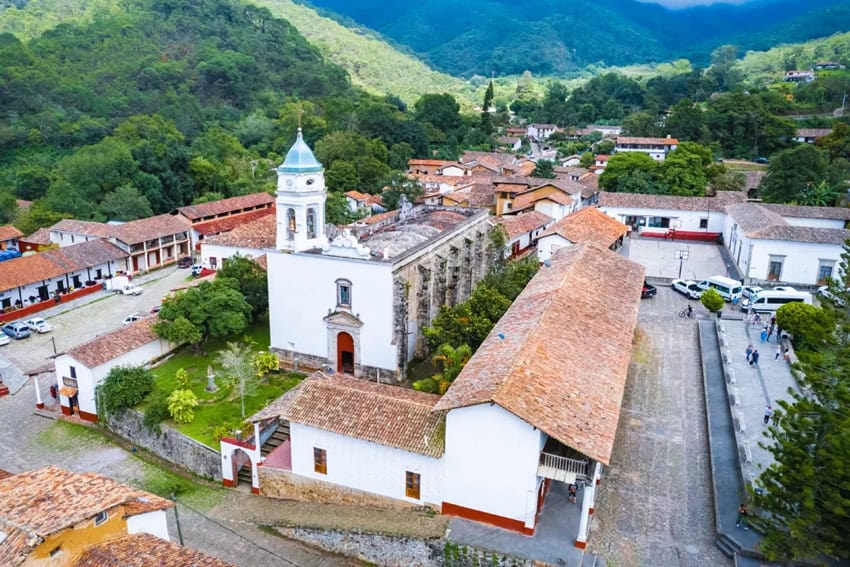
San Sebastián de Oeste, where you can park near a quiet plaza and enjoy the sights. (Vallarta Adventures)
The engine hummed steadily as we gained elevation, neither straining nor lazy, just doing its job.
I inhaled deeply. Pine resin and damp earth filled my lungs, and I realized how much tension I’d been carrying without noticing. My shoulders dropped. My jaw unclenched.
We stopped briefly at the mirador near the bridge outside San Sebastián. The valley dropped away beneath us, layered hills folding endlessly into haze. The wind cut hard across the overlook, tugging insistently at jackets and helmets.
He steadied the bike while I stepped closer to the edge, lifting my chest, letting my muscles uncoil. My legs felt solid beneath me. The ride had already done most of its work.
From there, we continued into San Sebastián de Oeste, parking near the quiet plaza. Red-tiled roofs and cobblestones felt suspended outside of urgency.
The town moved at a different pace. Coffee warmed my hands. Bread filled my stomach. The stillness settled in. Not heavy, just calm, like a held breath released.
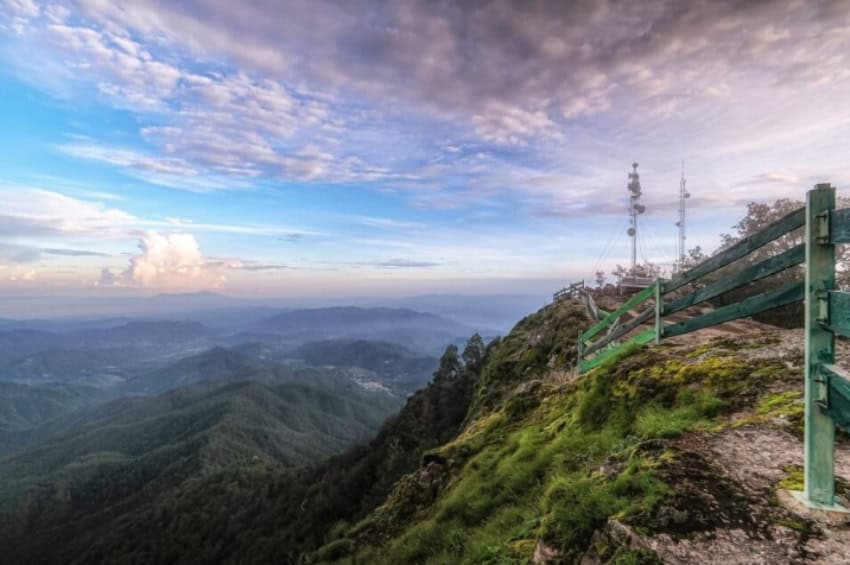
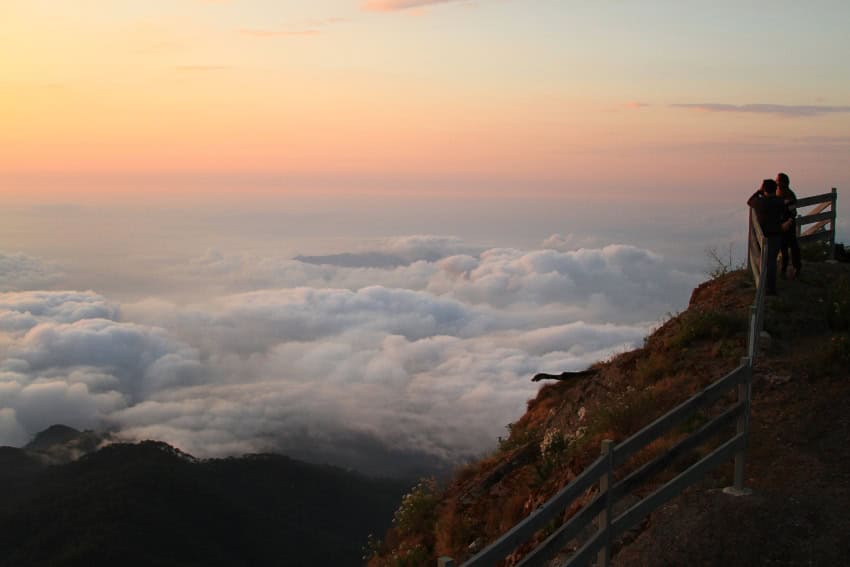
Climbing to the top of Cerro de la Bufa and enjoying the vistas, which stretch as far as the eye can see. (Visit Mexico)
El Cerro de la Bufa was waiting.
El Cerro de la Bufa
The hike began gently, the trail winding through pine and oak forest. The rhythm of walking echoed the ride in its attention to footing, breath and balance. Each step required presence. Rocks shifted slightly underfoot. Roots crossed the trail at awkward angles.
Halfway up, the town below looked impossibly small, folded neatly into the valley. The wind grew stronger as we climbed, crisp and unrelenting, and I leaned into it rather than away.
The final stretch steepened sharply. Loose stone demanded care. Our lungs burned, and our legs ached. My sweat cooled immediately in the cold mountain air, raising goosebumps on my arms.
Standing there, the weight I’d carried felt scaled. Still real, but no longer dominant.
With the Sierra Madre stretching in every direction, there’s no great hurry to begin the climb back down. (Visit Mexico)
The descent required focus. Gravity reasserted itself, reminding us that momentum cuts both ways.
Back on the bike
Back on the bike, he guided us through hairpin after hairpin, braking early, releasing smoothly, rolling on the throttle at the right moment. My body aligned instinctively with the machine’s arc, trusting the process.
The wind whipped hard across our helmets, colder now, sharper. I laughed. Not from joy, exactly, but from the clarity of being entirely, unapologetically present.
By the time we returned to the plaza, my breathing had steadied, my shoulders were relaxed and the internal noise had quieted to a manageable hum.
The ride back to Bucerías followed the same road, now familiar but no less engaging.
The road home
Downshifting into hairpins. Tapping the throttle through long sweepers. Feeling subtle changes in grip as the temperature rose and the elevation dropped. Noticing the scent of pine fade, replaced gradually by warmer air and hints of dust and coastal vegetation. The engine’s steady thrum carried us downhill, reliable and even.
You feel the texture of the asphalt as you head toward home. (Facebook)
Conversation returned in fragments of observations, logistics and half-finished thoughts. But mostly there was the sound of the motor and the wind rushing past. I noticed details I’d missed earlier. The way the light broke through the trees, the texture of patched asphalt, the slight change in engine note as we rolled back toward sea level.
Throttle therapy doesn’t always need an explanation. It exists in throttle inputs, braking points, lean angles, line choices and the constant feedback between road and machine. It asks for attention and rewards it immediately.
By the time we reached the coast, the humidity wrapped around us again, familiar and heavy. The weight of the world hadn’t disappeared; it had simply lost its grip.
And sometimes, that’s enough.
Charlotte Smith is a writer and journalist based in Mexico. Her work focuses on travel, politics, and community. You can follow along with her travel stories at www.salsaandserendipity.com.
At this time of year, visiting a Mexican mercado is like being tossed into a treasure chest full of vibrant jewels. (Pixabay)
April is when my favorite season, mango season, really kicks in. I drool in anticipation each year, and seeing those big, juicy fruits so abundant makes my heart smile and my tummy growl. Of course, as someone who adores cooking, the recipes start to run through my head.
Mango salsa, mango in my guacamole, grilled mango in salads and my favorite … mango sorbet! Incredibly easy to make with only four ingredients, mango sorbet is always in my freezer, ready for me to indulge myself on a hot day — or any other day, for that matter. And don’t worry, I’ve included the recipe for you at the bottom. I would never deny anyone mango sorbet!
Mangoes and avocados — two great tastes that taste great together — who knew? (Rebecca Hansen/Unsplash)
I also love April for cooking because spring is here, and with it all the delicious spring vegetables: artichokes and asparagus, fava beans and snap peas. Plus, there are the lovely milder members of the onion family like leeks and spring onions; sometimes I even find fennel, which I love to bake into breads.
Let’s take a look at some wonderful ways to include these fresh fruits and veggies in your meals this April.
Asparagus
Made into delicious soups, baked into a frittata or thrown in a primavera risotto, asparagus is a versatile vegetable. One of my favorite ways is to bake it in the oven using traditional Mexican flavors: chile and lime. Enjoy as a snack, side or appetizer.
There’s nothing like tender April asparagus. (Christine Siracusa/Unsplash)
Roasted Asparagus with Chile and Lime
Ingredients
1 lb. (about 500 g) of asparagus
2 tbsp. olive oil
1 tbsp. lime juice
1 tbsp chili powder
2 tsp lime zest
1/4 tsp. garlic powder
1/4 tsp. fine sea salt
Instructions
Preheat the oven to 450 F (230 C).
Rinse the asparagus and trim the ends, then pat dry. In a bowl, mix the olive oil, garlic powder, chili powder, lime juice, zest and salt.
Spread the asparagus on some parchment paper and pour the seasoning mixture over the top. Toss lightly and lay the spears flat.
Roast for 12 minutes or until bright green and browned slightly.
Enjoy hot out of the oven.
Habas (fava beans, broad beans)
While fava beans — known here as habas — may have a bit of an unsavory reputation where you come from, in Mexico, they are beloved in soups, salads and more. (kaboompics/Pexels)
Deliciously creamy, habas are most popular in soups. But my favorite way to enjoy them is fresh, with only a few ingredients. Especially when they are at peak freshness, in season, and cheap. This salad is refreshing and light, tossed with feta, lemon and parsley. Best of all, add toasted almonds for crunch.
Haba Salad
Ingredients
1 pound (about 500 g) fresh habas (fava beans) without the pods
75 g almonds toasted
½ cup parsley
50 g feta cheese
Lemon/lime juice to taste
Instructions
Remove habas from pods. Half fill a medium-sized saucepan with water and bring to a boil. Add the habas and cook for five minutes, drain and set aside to cool.
Dry fry the almonds in a frypan over medium-low heat until small dark brown spots begin to form. Set aside to cool.
Peel the habas. When cool, the outer skin wrinkles. Cut one end and pop the fresh green bean out into a large bowl. It’s kind of fun, but be sure to have a bowl waiting, as I’ve had them shoot out and end up on the floor, much to my kitties’ delight. Cats like them, too!
Chop the parsley and crumble the feta.
Add everything to the bowl and season with lemon juice to taste.
Mangoes
Spring is the time for mangos in Mexico — when they’re at their cheapest and their juiciest! (Desirae Hayes/Unsplash)
Ataulfo mangos, also known as champagne, or honey mangos.
Mango season kicks off early in Oaxaca and Chiapas, with peak production in the southern regions at the end of March and April. Mexico enjoys a second peak in May and June as the harvest moves up Mexico’s coast.
And I’ve included my mango sorbet recipe at the end for you as well. It has been a staple in my house for years. I still can’t get enough and it never lasts long. Actually, I may pop to the market for some mangos and make some right now!
Along with these favorites … use any mango variety you like. They’re all delish!
Mango Sorbet
Some believe that sorbet dates back as far as 550 B.C. in Persia, but whenever it made its way to Mexico, mango definitely gave it an upgrade! (Maria Petersson/Unsplash)
This mango sorbet is easy and quick to make. A total crowd pleaser, you may want to double the recipe as it’s nearly impossible to resist! And best of all, the whole family can enjoy it. It’s vegetarian and vegan-friendly.
Ingredients
2 large ripe mangos
100 ml canned coconut milk
2 tbsp. maple syrup (or agave)
½ lime, juice only
Instructions
Line a baking tray with parchment paper.
Cut the mango around the stone. Cut the two halves criss-cross and use a spoon to scoop out the chunks. Cut up the rest into chunks and put them on the tray. Place in the freezer for 4 hours minimum, or overnight.
Add mango chunks, coconut milk, maple syrup, and lime juice to a food processor and blend until smooth.
Enjoy straight away, or put in a freezer-proof container to thicken further in the freezer.
Mexico Correspondent for International Living, Bel is an experienced writer, author, photographer and videographer with 500+ articles published both in print and across digital platforms. Living in the Mexican Caribbean for over seven years now, she’s in love with Mexico and has no plans to go anywhere anytime soon.
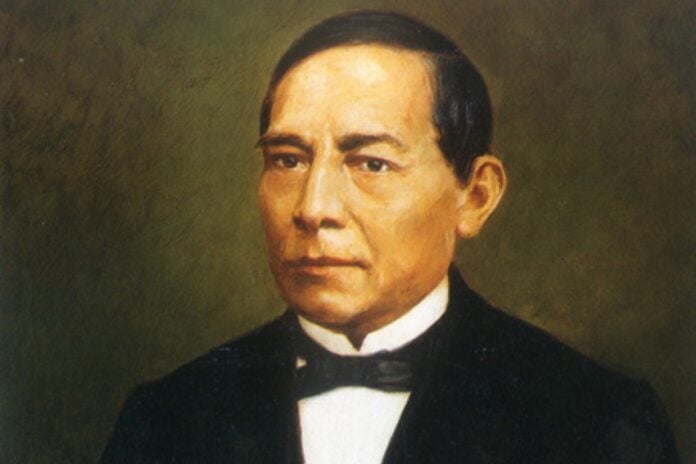
Benito Juárez's time in exile in New Orleans is explored in a new historical fiction novel. (Pelegrín Clavé/Wikimedia Commons)
This is the third installment of our Mexico Well Read series. To catch up on the first two entries, click here and here.
In “Season of the Swamp,” Yuri Herrera, one of contemporary Mexican literature’s most distinctive voices, explores a tantalizing silence in the historical record: the 18 months that future president Benito Juárez spent in exile in New Orleans in the early 1850s. For a figure whose life has been so thoroughly memorialized, this gap is striking. Juárez himself barely mentions the episode in his autobiography. Herrera seizes on that absence not to reconstruct it with documentary certainty but to imagine it, treating the historical void as a creative opening to consider the impact this fascinating but cruel city may have had upon Juárez.
The premise of “Season of the Swamp” (Translated by Lisa Dillman, Graywolf Press, English edition: 2024) is historically plausible. In 1853, Juárez, a prominent liberal from Oaxaca who had served as governor and judge, was forced into exile during the dictatorship of Antonio López de Santa Anna, who moved swiftly against his liberal enemies after his return to power. Juárez eventually made his way to New Orleans, where, amid fellow Mexican exiles and conspirators, he awaited the political moment that would allow the liberals to return and challenge Santa Anna’s rule. Herrera’s novel imagines this interlude not as a mere pause in Juárez’s political life but as a formative crucible.
Before he was Mexico’s most impactful president, Benito Juárez was at loose ends in New Orleans
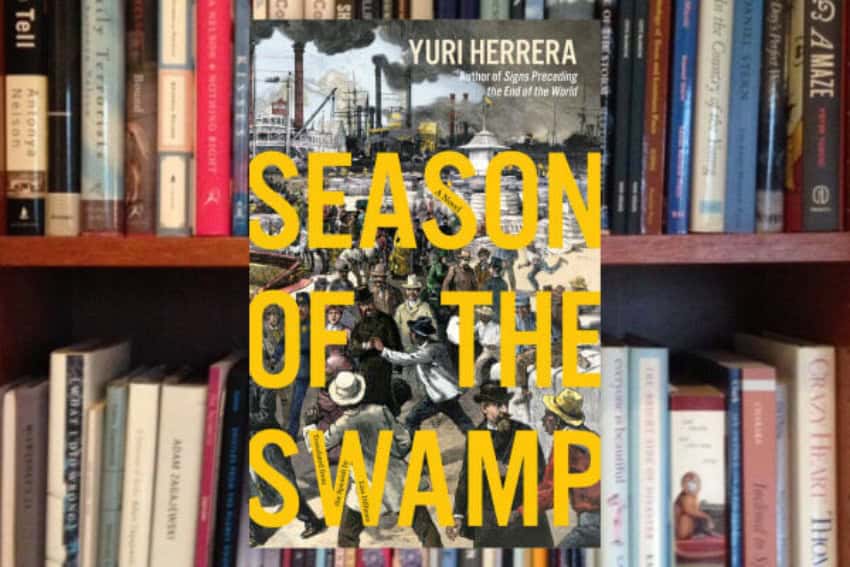
Yuri Herrera’s “Season of the Swamp” was published in English translation in October 2024. (Inprint Houston)
Herrera’s protagonist is not yet the man known to history as the architect of the liberal reforms that separated church and state, curtailed ecclesiastical privilege and asserted the sovereignty of the republic. He is merely a political exile wandering a foreign city, trying to earn money, learn the language and understand the strange republic in which he has temporarily landed. The narrative frequently withholds even his name, referring to him simply as “he,” a stylistic decision that underscores both his invisibility and the provisional quality of his identity during this period. Herrera’s prose, well translated to English by Lisa Dillman, is characteristically spare.
To be in exile is, in part, to be in suspension, and the novel’s rhythms honor that. One could see Mexico itself as suspended during these years — Santa Anna’s dictatorship stalled the country in a political holding pattern before the cataclysm of the Reform War, the Intervention and the long liberal reconstruction that Juárez would eventually lead.
Opressive heat and relentless spectacle
Yet Herrera is careful not to allow the historical hindsight available to his readers to inflate the figure of his protagonist beyond what the moment can bear. For example, the Juárez of “Season of the Swamp” does not speak in the aphorisms that will later be attributed to him; the famous formulation that “between individuals, as between nations, respect for the rights of others is peace” belongs to a later version of the man. Here he is more tentative, floating through an alien world.
Herrera’s New Orleans is vividly rendered as a place of oppressive heat and relentless spectacle: opera houses and brothels, exuberant parades and coffeehouse debates, and newspapers filled with reports of crime and politics, equally lurid. Herrera delights in the sensory density of the setting: the smell of sewage and jasmine, the rhythms of street music, and the babel of Spanish, English, French, and Creole that surround the bewildered exile. “Season of the Swamp,” said Rien Fertel of The Times-Picayune, “is an impressive tribute to a man, a city and their shared history. I can’t think of a recent New Orleans-set historical novel that better captures the city’s vibe.”
How exposure to the brutality of slavery may have shaped this reformer
Among the book’s most powerful passages are those in which Herrera imagines Juárez confronting, with growing horror, the vast machinery of the American slave economy. Mexico had abolished slavery decades earlier. Herrera portrays the commerce in human beings with unflinching clarity: traders hawking enslaved women as reproductive investments, crowds treating auctions as entertainment, and a printer paid to run ads for escaped slaves rationalizing his role in the system. These observations are rendered without melodrama, which only makes them land harder. Herrera trusts his readers, as well as his protagonist, to understand what they are seeing without editorial amplification.
In Herrera’s telling, these scenes precipitate a moral revelation for Juárez. They place the Mexican liberal project within a broader hemispheric struggle for liberty. The novel does not claim that Juárez’s later reforms, such as the Ley Juárez and the Ley Lerdo, emerged directly from this encounter with American slavery, as that would be historically simplistic. But Herrera does suggest that witnessing the brutality of the slave system clarified something essential about power for Juárez: how institutions normalize cruelty, and how law can either legitimize oppression or dismantle it.
Yuri Herrera, seen here in 2015, is one of Mexico’s most respected contemporary novelists. (Moquijano/Wikimedia Commons)
Juárez comes to know a Black woman named Thisbee, who, while selling coffee, secretly aids enslaved people seeking freedom. In Herrera’s fictional universe, she is an important moral counterpoint: a figure of resistance who embodies the possibility of action within a corrupt system.
Lingering in the space where history has not yet hardened into inevitability
Herrera, author of the acclaimed “Signs Preceding the End of the World,” is known for a distinctive prose style: compressed, lyrical and full of linguistic experimentation. “Season of the Swamp” continues that tradition. The sentences often carry a dreamlike quality, and feverish episodes punctuate the narrative, reflecting both the literal threat of yellow fever and the psychological disorientation of the exiles.
The novel’s episodic structure can feel rather fragmentary, and the digressions occasionally blur the central thread of Juárez’s development. Juárez’s interior life remains somewhat elusive; the man who will later guide Mexico through civil war and foreign invasion appears here as a quiet observer.
Yet this restraint is deliberate. Herrera seems less interested in providing a definitive psychological portrait than in capturing a moment of transition. Herrera’s Juárez does not undergo a single epiphany that transforms him into a liberal hero. Instead, he accumulates impressions: the brutality of slavery, the chaotic pluralism of New Orleans, the precariousness of political exile. These experiences, Herrera implies, contribute to the moral imagination that will later sustain Juárez through tumultuous decades of resistance and reform.
Moments of uncertainty in a strange land
Herrera reminds us that even the most iconic figures once inhabited moments of uncertainty. Before the statues and textbooks, before the title of “Benemérito de las Américas,” there was a man far from home, walking the humid streets of a foreign port. “Season of the Swamp” lingers in that liminal space where history has not yet hardened into inevitability.
Herrera has written a novel about waiting that does not feel static, a story about a foreign city that provides much more than atmosphere, and a work about a great man that does not read as hagiography. “Season of the Swamp” is a small book but a sizable achievement.
Ann Marie Jackson is a book editor and the award-winning author of “The Broken Hummingbird.” She lives in San Miguel de Allende and can be reached through her website: annmariejacksonauthor.com.
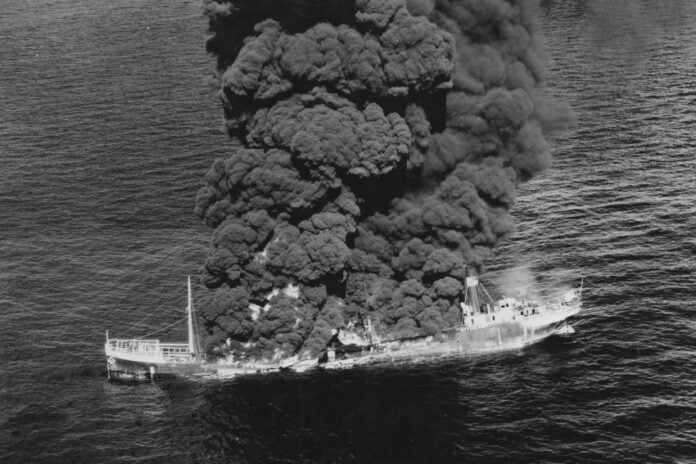
The sinking of the Potrero del Llano oil tanker by German U-boat hastened Mexico's entry into the Second World War. (U.S. Navy)
On May 14, 1942, the Potrero del Llano, a Mexican oil tanker, was sailing from Tampico to New York City, a journey of five to six days. With the U.S. at war, there was a hungry market for Mexican oil, and the 30-year-old ship was carrying 6,132 tons of petroleum. She had been built in Britain, sold to a company in Belgium, and then purchased by Società Italiana Transporti Petroliferi.
In June 1940, she had been in Tampico, where she was first interned and then, after Pearl Harbor, seized by the Mexican government and renamed the Potrero del Llano. Now she was sailing along the coast of Florida on what should have been a routine delivery. As the sun came up, the crew was unaware that they were being followed by a German submarine, the U-564.
The sinking of the Potrero del Llano
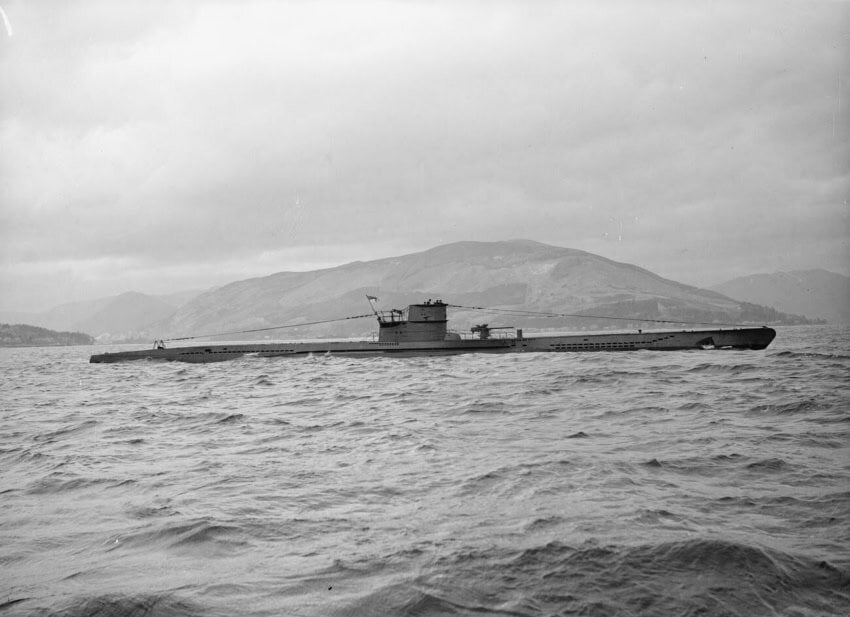
A German U-boat similar to the type that sank the Potrero del Llano. (Public Domain)
The U-564 was a Type VII submarine, the workhorse of the German Navy. The boat was based in Brest, giving easy access to the Atlantic Ocean, but sailing to the Gulf of Mexico took her to the very edge of her range. Given the right conditions, a skillful captain could use the boat’s electrical engines on the surface to save fuel, and it was sometimes possible to rendezvous with a U-tanker, a large submarine that set off ahead to refuel the attack submarines in the Mid-Atlantic. A captain might even ration how much water they carried, which allowed for extra fuel.
Making the long journey west was worth the hardships. By early 1942, the North Atlantic had become a dangerous place for German U-boats, but here, off the coast of America, the defenses were thinly spread. It became the “Happy Time” for German submarines, which sank 609 ships and lost “only” 22 U-boats.
The commander of the U-564 was Reinhard Suhren, still only 26 but already a veteran captain. U-boat crews were noted for being the mavericks of the navy, with officers and men mixing far more informally than on a bigger surface ship. Nicknamed “Teddy” from his training days, where a colleague had once said he looked like a teddy bear when marching, Suhren combined a sense of humor with a professional approach to his work. It was a good combination for a U-Boat captain, and he was popular with his crew.
A U-boat attack for which Mexico demands satisfaction
As Captain Suhren stalked this small tanker off the Florida coast, there was some initial confusion. To advertise her neutrality, the Mexican flag had been painted on her hull, and Suhren mistook this for the Italian flag. As it seemed inconceivable that an Italian ship should be in these waters this late in the war, Suhren ignored the flag and identified the ship as a legitimate target. His torpedo ran true, striking below the captain’s cabin and causing a large explosion that split the vessel in two.
Twenty-two of the crew were pulled from the burning water, one of whom would later die. The Captain and 12 others were killed. News of the attack reached Mexico the same day, May 14, and President Manuel Ávila Camacho dispatched a letter to Berlin, Tokyo and Rome demanding compensation for the ship and assurances that no such event should occur again. If they did not receive an acceptable response, he warned, “The Republic will immediately adopt the measures required by national honor.”
The case for war in Mexico
The fact that a reply was demanded within a week (the deadline would run out on Thursday, May 21) has led historians to argue that the President was, at this point, already set upon Mexico entering the war. Feelings within the country, however, were mixed. The political left, including the trade unions, was pro-Russia and had already been calling for a declaration of war. The center and right were more concerned with the U.S. If Mexico entered the war, the U.S. was likely to request bases on Mexican soil, particularly in Baja California, where it was feared Japanese submarines might rest up along the deserted stretches of coast. Given recent history, many Mexicans were uncomfortable with the idea of having American troops on Mexican soil.
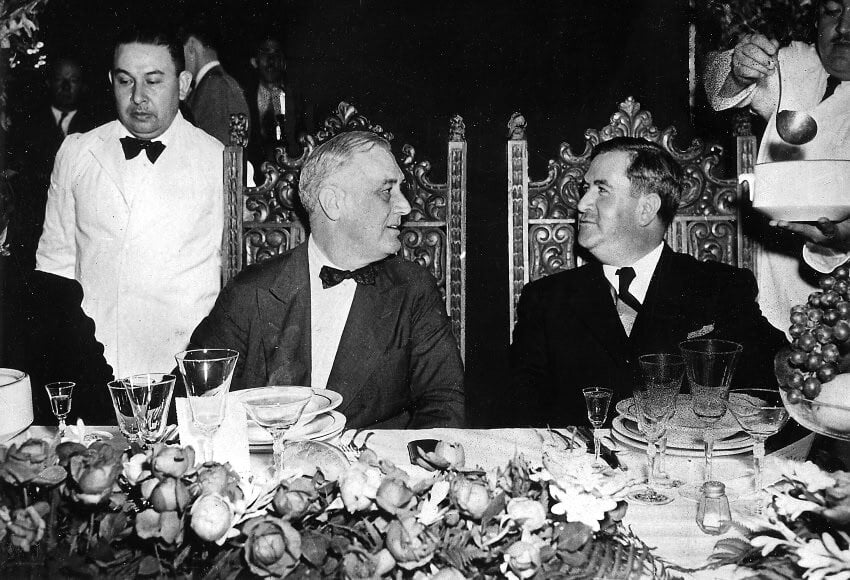
Mexican President Manuel Ávila Camacho with U.S. President Franklin D. Roosevelt in 1943, a year after Mexico entered the Second World War. (Public Domain)
Apathy among average Mexicans
For the average Mexican, with no strong political beliefs, the main response to the sinking appears to have been apathy. There was a fear that young Mexican soldiers would be used as cannon fodder, and a rumour went around that the U.S. had sunk the ship to drag Mexico into the war. When the Potrero’s survivors, along with the body of Engineer Rodolfo Chacon Castro, who had died of wounds in a Miami hospital, arrived in Mexico City’s Zocalo, a crowd of 100,000 had been anticipated. In fact, no more than 15,000 turned out.
Seeing no passion for war amongst the general population, politicians were unusually quiet. Some believed there might be benefits to Mexico in supporting a war that the Allies looked increasingly likely to win. Others thought that participation would be a hollow gesture that would just show how weak the country was. Even Senator León García, leader of the Upper Chamber, who initially took a militant stance, toned down his rhetoric as, like everybody else, he waited for direction from President Camacho.
A second oil tanker is sunk
On May 20, 1942, a second Mexican tanker was attacked and sunk, this time by U-106. It too had been seized by the Mexican government while docked at Tampico, gifted to Petróleos Mexicanos, and renamed the Faja de Oro. The Faja de Oro was sailing south on her return trip to Mexico and was empty of fuel. She was spotted by Kapitänleutnant Hermann Rasch off Key West. He fired two torpedoes, one of which hit, and the ship was finished off 20 minutes later. Ten of the crew were killed, and 27 were rescued.
News of this second sinking reached Mexico on May 21 and was headline news the following day. By then, the date for receiving a reply to the Mexican ultimatum had passed. Japan and Italy had not sent an answer, and Germany had not even acknowledged the letter. On the evening of May 22, there was an emergency cabinet meeting, and it was clear from the beginning that the ministers were there to listen, rather than to debate the issue.
Camacho declares, or at least acknowledges, war with the Axis powers
After the opening speech, President Camacho handed the floor to his Secretary of Foreign Affairs, Ezequiel Padilla, who outlined the case for war. At the end of the meeting, the press was informed that the President had summoned a special session of Congress to authorize a formal statement that a state of war now existed between Mexico and the Axis powers.
The wording was important. Mexico did not declare war on the Axis but acknowledged that “a state of war existed.” This would give them considerable powers, such as seizing Axis property, spying on suspects, monitoring communications and suspending constitutional guarantees. However, such wording did not necessarily commit Mexico to sending young boys to fight. This wording might well have been adapted to pacify General Lázaro Cárdenas, who objected to troops being sent abroad. As a popular former President, his word carried considerable weight and, more importantly, President Camacho had penciled him in to be his Minister of War.
And so Mexico entered the war. More ships would be sunk, the United States would send weapons to upgrade the Mexican army, and, eventually, a small group of Mexican airmen would see active service in the Philippines.
Bob Patemanlived in Mexico for six years. He is a librarian and teacher with a Master’s Degree in History.
Selling your property in Mexico doesn't have to be difficult. You just have to get the details right. (CDR San Miguel)
Selling a home in Mexico can feel daunting at first. There are tax rules, documentation requirements and timing considerations that may not be obvious. But with preparation, organization and solid professional guidance, the process is entirely manageable.
In recent years, tighter tax enforcement, stricter documentation requirements and shifting market conditions have made preparation even more important. Homeowners considering a sale — whether next month or in a few years — would be wise to understand a few key elements of the process.
The importance of representation
Finding the right representation for the property you want to sell is a crucial first step. (CDR San Miguel)
One of the first decisions a seller faces is representation. In most parts of Mexico, serious agents work under exclusive listing agreements. The word “exclusive” sometimes makes sellers uneasy. The instinct is to think that more agents mean more exposure. In practice, the opposite is often true. When an agent has an exclusive agreement, they are far more likely to invest real resources in marketing the property. That may include professional photography, video and drone footage, digital advertising, international listing platforms and coordinated promotion through other broker networks. Marketing costs money, and agents are understandably more willing to spend it when their efforts are contractually protected. An exclusive listing also creates clarity in the marketplace. When multiple agents independently advertise the same property, inconsistencies in price, photos or descriptions can appear online. Buyers notice these discrepancies, and they can undermine confidence. A single, coordinated marketing strategy usually presents a stronger and more professional image. Equally important — and often more sensitive — is pricing.
The importance of accurate pricing
It does not matter how much a seller hopes to receive for a home. What matters is its economic value in the current marketplace. Buyers base their offers on recent comparable sales, current inventory and broader market conditions. Emotional attachment, renovation costs or long-held expectations do not determine value.
Pricing your home correctly is a very important part of the selling process. (Pacaso)
Homes priced accurately from the beginning tend to generate more activity and stronger offers. Homes introduced above market value often sit, accumulate days on market and ultimately require price reductions. By that stage, the property can develop a stigma that affects negotiating leverage. Realistic pricing from the start is important. Beyond representation and pricing, a significant issue for many sellers is capital gains tax.
Capital gains strategy
Mexico does offer a primary residence exemption, but it is not automatic. Sellers cannot have claimed the exemption on another property within the previous three years. They must also be able to demonstrate that the property is their primary residence. If two individuals appear on the deed, each owner may qualify individually for the exemption amount allowed under current tax law. In practical terms, that means two separate calculations may apply, which can substantially reduce or eliminate capital gains tax when structured properly. The final determination rests with the notary overseeing the transaction. However, sellers should discuss their eligibility well before accepting an offer. Discovering issues at the closing table is never pleasant.
A good real estate agent will also help you think ahead about a capital gains strategy. While the final tax calculation is determined by the notary, experienced agents understand how different ownership structures, documentation and timing decisions can affect the outcome. Addressing capital gains early in the process — rather than at closing — can save sellers significant money.
The detail to get right
Getting your paperwork right, including making sure your RFC corresponds to your property and is on a utility bill, is essential. (www.susimacdonald.com)
In recent years, one administrative detail has become particularly important: the seller’s RFC, or Registro Federal de Contribuyentes. To qualify for the primary residence exemption, the RFC must correspond to the property address and appear on a utility bill associated with the home. Typically, that means the CFE electricity bill. The water bill generally does not satisfy the requirement. This seemingly minor rule has created significant complications. Many homeowners never updated their utility accounts to include their RFC. When the omission is discovered just before closing, it can delay the transaction or jeopardize the tax exemption entirely. For that reason, property owners — even those not planning to sell immediately — should confirm that their RFC is properly registered and appears on their CFE bill. Updating the account usually requires a current Constancia de Situación Fiscal that is no more than three months old. Handling this in advance is far easier than trying to resolve it under deadline pressure.
Even when a full exemption is not available, certain selling expenses can reduce the taxable gain. Real estate commissions and the IVA paid on those commissions are typically deductible. In some cases, documented improvements and acquisition costs may also factor into the calculation. Organized records make a measurable difference when taxes are being determined.
How to prepare your home for showings
Make sure you have your home ready to show before putting it on the market. (Quivira Cabo)
Legal and tax preparation, however, are only part of the picture. Presentation still matters.
Buyers respond to homes that feel orderly and well-maintained. It doesn’t matter if a property is luxurious or not, but it should be clean, uncluttered and easy to show. Small repairs, fresh paint or improved lighting can influence how quickly and how strongly buyers respond. The goal is not perfection. It is accessibility — making it easy for someone else to imagine living there.
Getting the paperwork right
Administrative readiness is equally important. Sellers should expect to provide identification such as a passport, residency card if applicable and sometimes a driver’s license if an escrow company is involved. A current CFE bill and an updated Constancia de Situación Fiscal are increasingly essential. Delays are most often caused not by disputes but by missing paperwork. It is also worth noting that this overview applies to properties held in direct ownership. Sales involving properties in restricted zones that require a bank trust, or fideicomiso, involve additional procedures and documentation beyond the scope of this discussion. Coastal and border transactions can introduce another layer of coordination. Ultimately, selling property in Mexico is manageable — but it is not casual. Representation, pricing, tax planning and documentation all intersect. The sellers who approach the process thoughtfully tend to navigate it with far less stress. In many cases, the most important work happens before the “for sale” sign ever goes up.
Glenn Rotton is a real estate agent with eight years of experience in San Miguel de Allende. Originally from Seattle, he has lived in Mexico for twelve years with his husband, Kiang Chong Ovalle, and their dog, Angus. Read more about Glenn here.