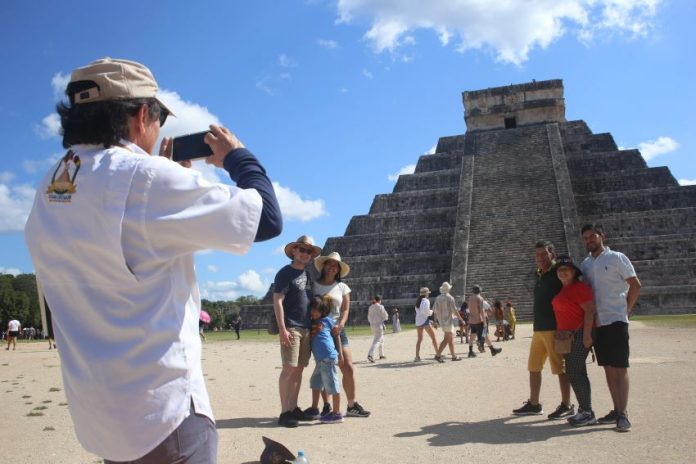
The tourism sector continues to boost the Mexican economy, with revenue reaching new heights in 2023. (Martín Zetina/Cuartoscuro)
International visitors spent a record high of US $30.8 billion in Mexico in 2023, federal Tourism Minister Miguel Torruco reported Monday.
The figure represents a 10% increase compared to 2022 and a 25.4% spike compared to 2019, a year now considered a benchmark because it was the final year of the pre-COVID era.
Tourism revenue is up more than 25% since before the start of the COVID-19 pandemic. (Carlos Carbajal/Cuartoscuro)
“The historic result in foreign exchange earnings from international visitors confirms that the tourism policy implemented by President Andrés Manuel López Obrador is the right one,” Torruco said in a statement.
Data published by the Tourism Ministry (Sectur) showed that 75.02 million international visitors came to Mexico last year, a 13.7% increase compared to 2022, but 23% short of the 2019 total.
The term “international visitors” refers to international tourists — foreigners who stay in Mexico for at least one night — as well as cruise ship passenger on shore excursions and day-trippers who enter the country via the borders with the United States, Guatemala and Belize.
International tourists the biggest spenders, numbers up by 10%
Data derived from the International Travelers Surveys conducted by national statistics agency INEGI showed that 42.15 million international tourists spent $28.68 billion in Mexico — a figure equivalent to 93% of the $30.8 billion outlay of all international visitors.
The total number of international tourists rose by 10% compared to 2022 while their collective expenditure increased 8.9%. Tourist numbers were 6.4% below 2019 levels, but their total outlay was 28.3% higher.
Each international tourist spent an average of $680 in Mexico, while the figure for all international visitors was significantly lower at $411.
Around 50% of all international tourists in Mexico arrived via air in 2023. (Unsplash)
Just over half of all international tourists in 2023 — 22.83 million — flew into Mexico. Air arrivals were up 7% compared to 2022 and increased 16.3% compared to 2019.
International tourists who arrived by air collectively spent $25.7 billion while in the country, a 9% increase compared to 2022 and a 30.7% jump compared to 2019. On average, those tourists spent $1,126 dollar each while in the country, a 1.8% increase compared to 2022.
The tourism outlook for 2024
Torruco said that Sectur is forecasting that 42.46 million international tourists will come to Mexico this year, a figure that would exceed last year’s mark by 0.7%. Those who arrive by air are expected to spend an average of $1,155 each, which would be a 2.6% increase compared to 2023.
Total spending of all international visitors is forecast to reach $31.14 billion, which would be a 1.1% annual increase.
Torruco said that 9.33 million cruise ship passengers are expected to visit Mexico this year, which would be a 2.7% increase compared to last year.
Thomas Kole has recreated a virtual Tenochtitlán, the ancient Mexica (Aztec) metropolis that is now Mexico City. (Thomas Kole)
A 29-year-old man from the Netherlands who created a mesmerizing digitized representation of Tenochtitlán, the one-time capital of the Mexica Empire, has finally set foot in Mexico for the first time.
The virtual reconstruction that technical artist Thomas Kole worked on for 18 months in his apartment is “the most faithful portrait to date” of the once-thriving metropolis, says the Mexican newspaper El País.
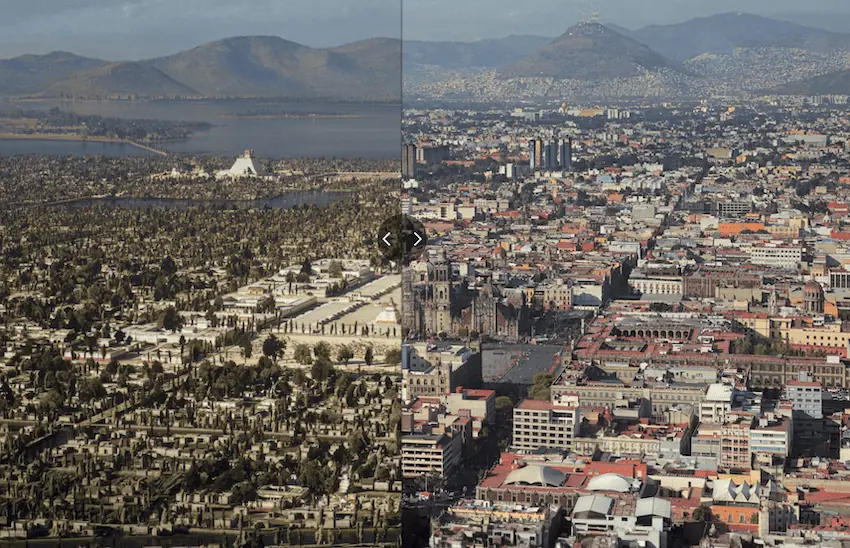
Koles website allows users to switch between ancient and modern Mexico, and compare the Mexica capital with the city of today. (Thomas Kole)
“It was totally unexplored territory for me,” Kole told the paper. “I don’t even know how I found the topic. There is no catalyst. But I think once you read something about it, you’re hooked.”
Tenochtitlán, upon which Mexico City was built, was founded by the Mexicas, aka the Aztec people, around 1325 on an island in Lake Texcoco.
It was estimated that 200,000 to 400,000 people lived there by 1500, making it one of the most populous cities in the world at the time — four or five times as large as early 1500s London. Among its many features were three major causeways that ran from the “mainland” to the island city.
Kole attempted to recreate the city exactly as it was in 1518 — just before the Spanish conquest of the Aztec Empire, also known as the Conquest of Tenochtitlán, began in February 1519.
Kole is in Mexico to give a talk on his project. (Thomas Kole)
Kole, who will be giving a presentation on Friday — “I’m finally visiting Mexico City!” he posted late last week on the social media site X — said he first got interested in Tenochtitlán when walking virtually through the streets of Mexico City.
Looking at his computer, he realized that nothing he observed was telling him anything about the city buried beneath. “The idea settled in my head and it was impossible to get it out,” he said.
A history buff, he kept clicking away in an attempt to find out more about Tenochtitlán, part of which is featured on Mexico’s 50-peso note.He then turned to archaeological and historical sources, such as writings and old maps (“I soon realized that no one agrees on anything,” he lamented).
A year and half later, he finished his project — without ever crossing the Atlantic or even leaving home. His painstaking, detailed, colorful work is free for the public to view online. Prints made in Mexico are also available.
Kole’s renderings show the city at different times of day and different seasons. (Thomas Kole)
“Tenochtitlán surprised me in many aspects: its size, its organization, its structure,” he said. “Very beautiful things have been written about her. Its natural condition, on a lake and surrounded by volcanic mountains. Really summons the imagination.”
Kole is employed by a company that develops installations and interactive games for museums and other venues, but he worked on this project in his free time from his home in Amersfoort, Netherlands.
He said his work and his knowledge of video games helped keep things within manageable parameters.
“The result is an impressive journey through time,” writes El País.
Mexico City’s stunning volcanic backdrop is also captured in the renderings. (Thomas Kole)
Images in “A Portrait of Tenochtitlan” include the city and neighborhoods laid out in grids, the causeways, the Sacred Precinct at the center of the city, the imposing Templo Mayor, the palace of Moctezuma, plus other temples, schools, gardens and a zoo.
The volcanoes Popocatépetl and Iztaccíhuatl can be seen clearly, as well, unobstructed by the modern scourge of pollution.
“The year is 1518. Mexico-Tenochtitlan, once an unassuming settlement in the middle of Lake Texcoco, now a bustling metropolis,” Kole writes on the website, which can be accessed in Spanish, English and Nahuatl, an Uto-Aztecan language spoken today by about 1.5 million people in Mexico. “It is the capital of an empire ruling over, and receiving tribute from, more than 5 million people.”
Kole will provide much more insight during his talk at 6 p.m. Friday in the Jaime Torres Bodet auditorium at the National Museum of Anthropology in Mexico City. Entry is free, but seating is limited to about 350.
This year's San Miguel Writers' Conference & Literary Festival will be held from February 19 to 23, 2024. The festival attracts major writers from around the world every year.
I recently sat down with Tina Bueche, executive director of the renowned San Miguel Writers Conference & Literary Festival, to learn how this event continues to attract top-flight literary talent to central Mexico year after year.
Founded in 2006, the bilingual, tricultural conference has hosted an impressive collection of literary stars, including Sandra Cisneros, Gloria Steinem, Naomi Klein, Barbara Kingsolver, Valeria Luiselli and Paul Theroux, among many other notable writers. This year’s lineup of keynote speakers continues in the event’s tradition of excellence, promising an unforgettable and inspiring experience for attendees.
Hollywood actress-turned-author Molly Ringwald is one of the keynote speakers at the festival. (San Miguel Writers’ Conference/Facebook)
“What this year’s keynoters tell us — and what we always hear — is that our conference has a unique reputation for being particularly fun, intimate, lively and content-driven,” explained Bueche, who is in her second year of running the famed conference. “For speakers and conference attendees alike, it’s all about building community while they’re here, a high-level literary community that they can be quite proud to be a part of.”
“Of course,” she added, “San Miguel de Allende itself is a major draw as well.” Bueche credits the conference’s perennial popularity to the charming setting, world-class faculty, consistently high-quality headliners, highly relevant and contemporary programming and great networking opportunities.
“I also want everyone to know that this year will be even better than last year,” Bueche continued, “even more inclusive with additional opportunities for dialogue and interaction. We continue to experiment and refine the experience.” Those opportunities include post-presentation Q&A sessions, workshops, master classes, individual consultations, local author readings, a late-night poetry slam, open mic sessions and a storytelling night, as well as informal social gatherings throughout the week.
This year’s keynote speakers include Molly Ringwald, actor, singer and author of “When It Happens to You: A Novel in Stories”and “Getting the Pretty Back.” Ringwald is also the translator of Philippe Besson’s novel “Lie With Me” and the memoir “My Cousin Maria Schneider” by Vanessa Schneider, both originally written in French. This icon of 1980s teen films will share her unique perspective and storytelling prowess.
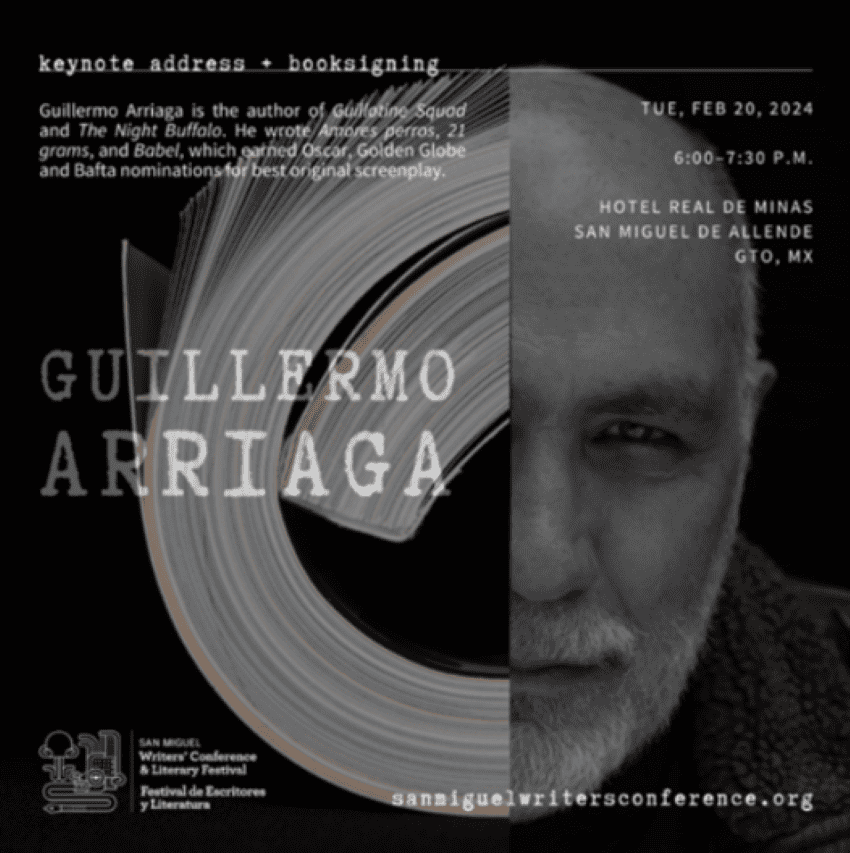
Mexican screenwriter Guillermo Arriaga will discuss the role of experience in creating autobiographical work. (San Miguel Writers’ Conference/Facebook)
Guillermo Arriaga is the author of “Guillotine Squad” and“The Night Buffalo.” He wrote the scripts for “Amores perros,” “21 grams,” and “Babel,” which earned Oscar, Golden Globe and BAFTA nominations for best original screenplay. In his keynote address, “Narrating Experience,” thiscelebrated screenwriter and author will discuss how experiences, reading and imagination give rise to fictitious elements that allow the reader to find structures through which to confront their own life experience.
A #1 New York Times bestselling author of eight novels including “The Exiles,” “Orphan Train” and “A Piece of the World,”Christina Baker Kline has been published in 40 countries. She has captivated readers worldwide with her poignant and emotionally resonant novels. Her keynote address, “Rewriting the Past,” will focus on using fiction to illuminate hidden historical narratives.
Chris Pavone is the author of five thrillers, including “The Expats,” which won the Edgar and Anthony awards, and most recently “Two Nights in Lisbon,” an instant New York Times bestseller. With his pulse-pounding, intricate plots, Pavone has established himself as a master of suspenseful storytelling. His keynote address will explore using the expat experience as inspiration for writing.
The Thursday of the conference, Bueche noted, will offer a special emphasis on the Canadian contingent, with Canadian authors SilviaMoreno-Garcia and C.S. Richardson serving as keynote speakers. “Both are truly spectacular, illustrating the creativity and diversity of literature currently coming out of Canada,” said Bueche. Representatives of the Giller Foundation, which administers the Giller Prize, will join the conference’s impressive number of Canadian participants. The Canadian Ambassador to Mexico also hopes to attend.
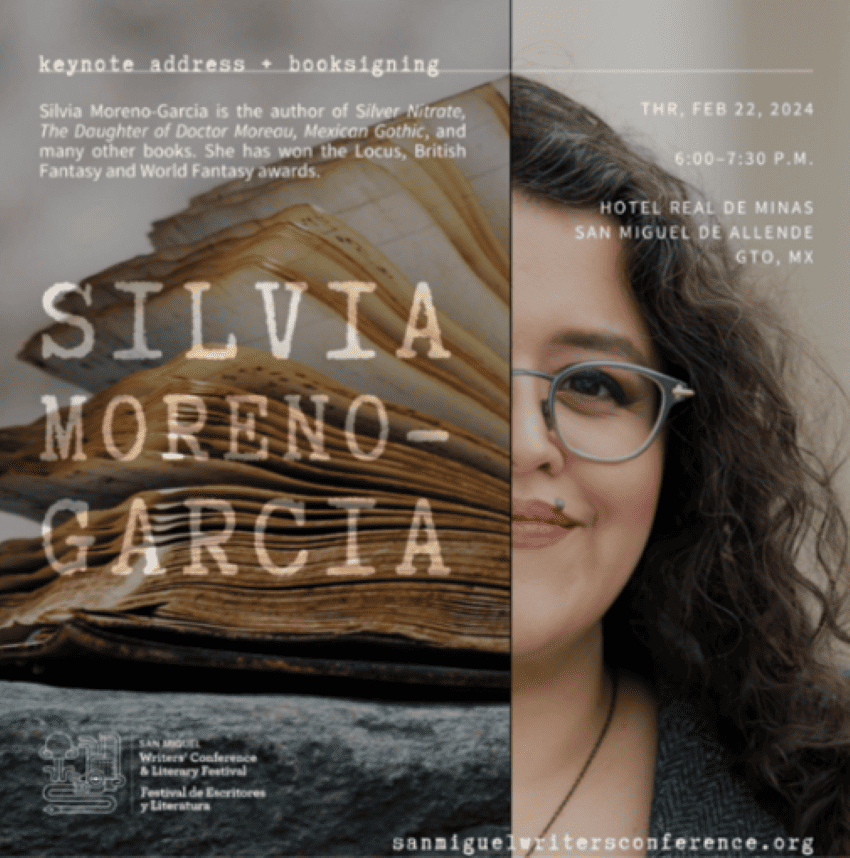
Silvia Moreno-Garcia, a Mexican-Canadian author has seen her novel, Mexican Gothic, selected as a highlight of the festival. (San Miguel Writers’ Conference/Facebook)
Moreno-Garcia is the author of “Silver Nitrate” and “The Daughter of Doctor Moreau,”among many other books. The Mexican-Canadian writer has won the Locus, British Fantasy and World Fantasy awards. Known for her genre-defying narratives, Moreno-Garcia’s keynote address is appropriately titled “The End of Genre.”
Moreno-Garcia’s book “Mexican Gothic” was selected as this year’s conference“Big Read,” with book clubs and individuals around the world invited to participate. Bueche noted that readers who both joined the Big Read and purchased a ticket to the author’s keynote will receive special fan seating.
C.S. Richardson’s novel “All the Colour in the World” was shortlisted for the 2023 Scotiabank Giller Prize. “The End of the Alphabet” won the 2008 Commonwealth Writers’ Prize for Best First Book, Canada & the Caribbean and his second novel, “The Emperor of Paris,” was long-listed for the 2012 Giller Prize.
The Spanish-language track of the conference is directed by Armida Zepeda, who also coordinates with the San Miguel de Allende Literary Festival and Book Fair (FELISMA). This year, FELISMA will take place the week before the San Miguel Writers Conference & Literary Festival, treating San Miguel residents to two consecutive weeks of extraordinary literary events.
The second member of the Canadian delegation is Giller Prize nominee C.S. Richardson. (San Miguel Writers’ Conference/Facebook)
“We are proud to increase the number of scholarships we can offer to local high school and university students to attend the Spanish-language track of the conference this year,” said Bueche, “thanks to the notable generosity of local businesses and other patrons.”
Tim Weed, award-winning author of “Will Poole’s Island”and “A Field Guide to Murder & Fly Fishing,”will be this year’s master of ceremonies. Conference packages and individual tickets are still available at the conference’s website, and the Hotel Real de Minas offers rooms at special rates. Bueche expressed her deep appreciation for the warm welcome given to the conference by the hotel and the San Miguel government.
Based in San Miguel de Allende, Ann Marie Jackson is a writer and NGO leader who previously worked for the U.S. Department of State. Her award-winning novel “The Broken Hummingbird,” which is set in San Miguel de Allende, came out in October 2023. Ann Marie can be reached through her website, annmariejacksonauthor.com.
Two separate incidents occurred on Monday at the Pemex refinery in Tula, Hidalgo. (Pemex/X)
Four Pemex workers were hospitalized after sustaining injuries in an incident at a refinery in the state of Hidalgo on Monday afternoon.
Media outlets initially reported that there had been an explosion at the state-owned oil company’s Miguel Hidalgo Refinery, near the city of Tula, but Pemex told the Hidalgo government that wasn’t the case.
In a statement, the Hidalgo government said it was informed that there was a “spontaneous release of high-pressure stream from an automatic valve” in the refinery’s diesel hydrodesulfurization plant
Workers were checking the valve when it suddenly opened, “releasing high-pressure steam onto the turbine, which broke and flung pieces of metal,” according to the statement.
Four workers were apparently hit by the metal shards. They were taken to hospital to receive treatment for non-life-threatening injuries, the Hidalgo government said. Four other workers sustained minor injuries that didn’t require treatment in hospital, according to reports.
Pemex employees said on social media that the situation at the refinery was brought under control, but the company itself has not publicly commented on the incident.
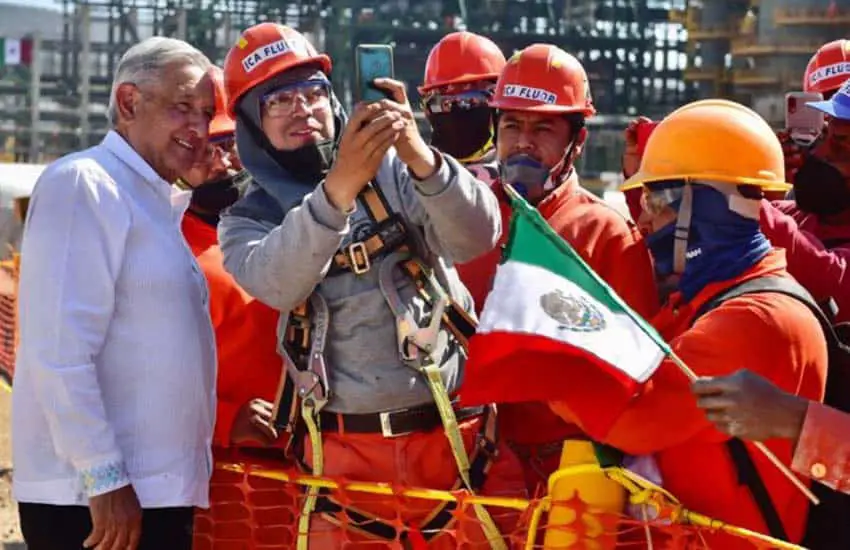
President López Obrador with workers at the Tula refinery in 2022. (Lopezobrador.org.mx)
Later on Monday, a second incident occurred at the Tula refinery. Municipal Civil Protection authorities reported an explosion at around 6:35 p.m. in the refinery’s waste hydrodesulfurization plant.
They said that the explosion — whose cause was not specified — did not pose a risk to the general population. Authorities said they weren’t aware of any injuries.
As of early Tuesday afternoon, Pemex hadn’t commented publicly on that incident either.
The Tula facility is the company’s second largest refinery. Pemex — which has debt in excess of US $100 billion and received billions of dollars in tax relief this week after its credit rating was downgraded by Moody’s last Friday — operates seven refineries in Mexico, includingthe new Olmeca Refinery on the Tabasco coast, as well as one in Texas.
The National Meteorological Service (SMN) has announced five predicted heat waves for the first half of 2024. (CONAGUA)
Brace yourself for a hot spring and summer this year in Mexico.
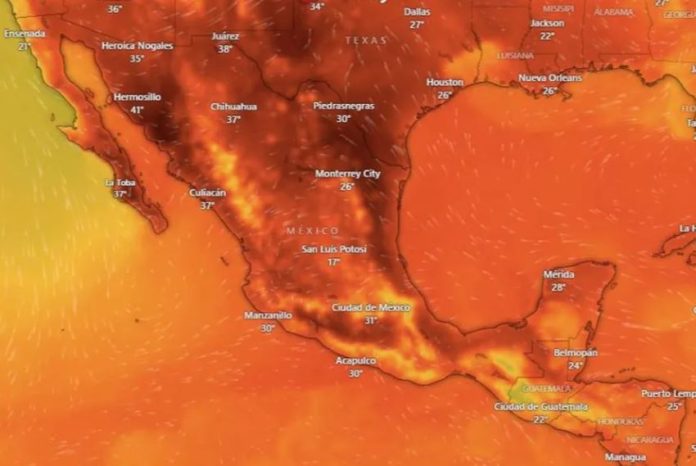
The National Meteorological Service (SMN) has predicted that Mexico will experience five heat waves between March and July, which are likely to exacerbate the ongoing drought conditions in various regions.
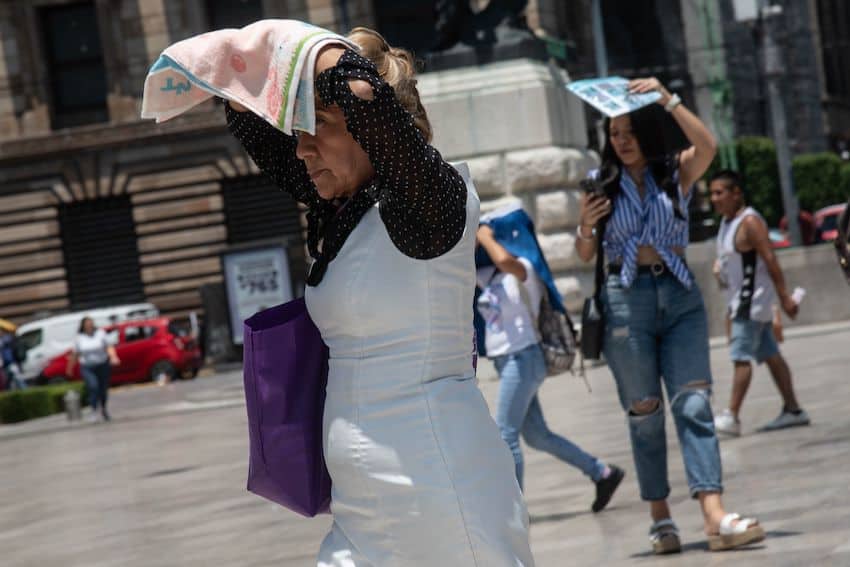
According to meteorologists, Mexico could see its first heat wave as soon as March this year. (Mario Jasso/Cuartoscuro)
Furthermore, the meteorological agency expects 2024 to be hotter than 2023 — when Mexico saw four heat waves — with temperatures potentially exceeding 40 degrees Celsius (104 F) in certain areas.
According to the SMN’s forecast, Mexico could experience one heat wave in March, two in April, one in May and one in June. While all states in Mexico will be affected by the scorching temperatures, the northern states of Sonora, Baja California, Coahuila and Nuevo León could experience even stronger ones, while the Yucatán Peninsula could experience higher levels of humidity.
Meanwhile, according to the Environmental Commission of the Megalopolis (CAMe), an intergovernmental coordinating agency which oversees environmental protection in Mexico City and neighboring states, the capital could see between three and eight environmental alerts in 2024 due to heat waves and atmospheric ozone.
“We find the highest concentrations [of ozone] in April and May; during this ozone season elevated particle levels are also registered, above all PM10 particles as a result of drought conditions in the environment,” said CAMe director Víctor Hugo Páramo. Mexico City experienced six such environmental alerts in 2022 and three in 2021.
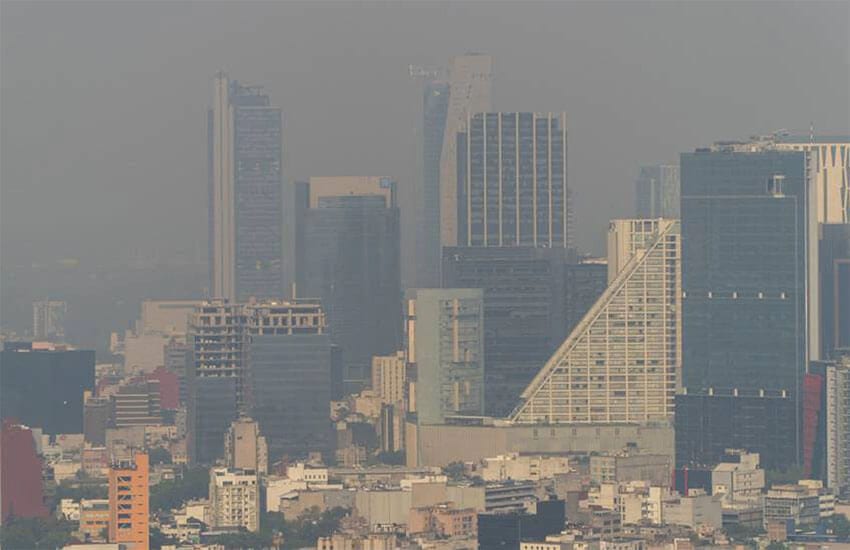
Ozone pollution is high during springtime in the capital, as the weather warms but the rains have yet to arrive. (Archive)
A heat wave is a period of at least three consecutive days of above-average temperatures, defined according to location. This phenomenon occurs when very warm masses of air enter or stay in an area for an extended period of time. Heat waves can impact agriculture, forest fire incidence and drought.
Overall, weather conditions in the first part of the year may be drier and hotter than usual due to the last remnants of the El Niño phenomenon, a naturally occurring weather pattern that causes higher-than-average sea surface temperatures in the tropical Pacific region. It occurs every two to seven years with varying intensity.
A strong El Niño can lead to warming of the atmosphere and changes in circulation patterns around the world. According to the National Oceanic and Atmospheric Administration (NOAA) in the United States, El Niño will likely finish by April, giving way to La Niña between June and August.
While El Niño is the warm phase of a climate phenomenon called the El Niño-Southern Oscillation (ENSO), La Niña is the cold phase. Historically, El Niño tends to appear before La Niña; both affect climate all over the world and can cause intense storms and other extreme weather events.
Analyst Luis Rubio asks is Mexico's current relative stability sustainable? (Courtesy)
Problems pile up when the capacity to respond diminishes. Even more so when those responsible appear utterly unwilling to respond.
It comes as no surprise to anyone these days that problems such as insecurity, criminality, corruption, racketeering and electoral conflicts continue to mushroom while candidates for office are assassinated, journalists are disappeared, land is expropriated without the least bit of a warning and attacks are made on anything contrary to the message put forth by the president. These are all examples of the contentious environment characterizing Mexico today, and evidence of a complete absence of governance.
To the latter, one must add the day-to-day governmental affairs that do not function as they should, from schools to the supply of drinking water or medicines, to cite three obvious examples. The same may be said of the extraordinary budgetary and financial imbalances taking place this year that will inevitably impact the finances of the next government.
If one accepts the definition of governance by the United Nations Development Program (UNDP) (“governability comprises the mechanisms, processes and institutions that determine how power is exercised, such as decision-making with respect to issues of public concern and how citizens articulate their interests, exercise their rights, comply with their obligations and mediate their differences,”) the country is in effect not being governed; nor does there exist the minimal understanding of governance in order for it to occur. Considering that governance includes the planning and anticipation of future needs and challenges, Mexico maintains stability truly by a miracle. And miracles are always put to the test during the election cycle, during which the outgoing government loses its capacity for action, and the incoming government has not yet begun to focus on and organize itself for the same.
A sensible government that recognizes its limitations would seek out ways to decentralize decision-making to reduce risk and increase its problem-solving capacities. Mexico’s, however, has put all of the decisions not just in the hands of the federal government, but in the hands of the president. The institutional scaffolding constructed during the past decades has proven insufficient to stop this authoritarian onslaught, but it was at least an attempt to prevent this cardinal problem. Today, the only decentralization happening is that of transferring an increasing number of decisions to the army.
Resorting to the army is practical due to the vertical nature of the institution, which confers upon it a capacity for action even beyond that of an authoritarian government. However, the breadth of the activities entrusted to this institution have rendered the attainment of its goals impossible. I do not mean to undermine the work done by the army in this administration. Rather, I seek to acknowledge a simple fact: no one institution can take on the construction of mega infrastructure projects, administer airports and airlines, respond to natural emergencies (such as earthquakes or floods) and provide for national security.
The diversity of responsibilities bestowed on the army is such that their performance is always poor. It is not by chance that nations in which the government absorbed everything (like the former Eastern Bloc) ended up decentralized so as to raise the population’s standard of living. In other words, it is impossible to control everything and, at the same time, comply with the essential aim of any government, which is the physical safety of the population and to create the conditions for economic progress.
It is clear that these factors have not been a priority (or even an objective) of the current government, but their absence constitutes a major challenge for the current electoral year and for the incoming government. It is easy to lose sight of this while the president entertains high levels of popularity at the same time that economic variables (such as the peso-dollar exchange rate and the price of gasoline) remain stable.
But anyone who has observed the country’s evolution over the past decades knows that this is unsustainable. In other words, the absence of governance not only creates a risk for the outgoing government, but also for the country in general — precisely at the most delicate moment of the sexenio: that of the transition of power.
Max Weber, the early 20th-century German sociologist, wrote that there are three types of legitimate authority: the charismatic, the rational-legal and the traditional. Mexico has lived through five years of a charismatic exercise of power, the most unstable of the three according to Weber. Upon abandoning the responsibility of governing, the president has ceded the state to criminals and to chance, therefore guaranteeing that any stability we see today is exceedingly precarious.
Luis Rubio is the president of México Evalúa-CIDAC and former president of the Mexican Council on International Affairs (COMEXI). He is a prolific columnist on international relations and on politics and the economy, writing weekly for Reforma newspaper, and regularly for The Washington Post, The Wall Street Journal and The Financial Times.
Disclaimer: The views expressed in this article are solely those of the author and do not necessarily reflect the views of Mexico News Daily, its owner or its employees.
Getting the perfect Mexican home is better - and cheaper - when you buy from local traders and artesans. (Rashmi Kamath/Instagram)
Moving expenses can add up quickly. Between deposits, transportation fees, and relocation costs, the thought of designing your new Mexican home might feel overwhelming.
You could hire an interior decorator. You could order from Amazon or Ikea. You could go shopping at Walmart or Sam’s Club.
Why go to Walmart when you can find better items in your local area? (Roberto Carlos Roman/Unsplash)
Or, you could design your new home with quality, affordable items made right here in Mexico.
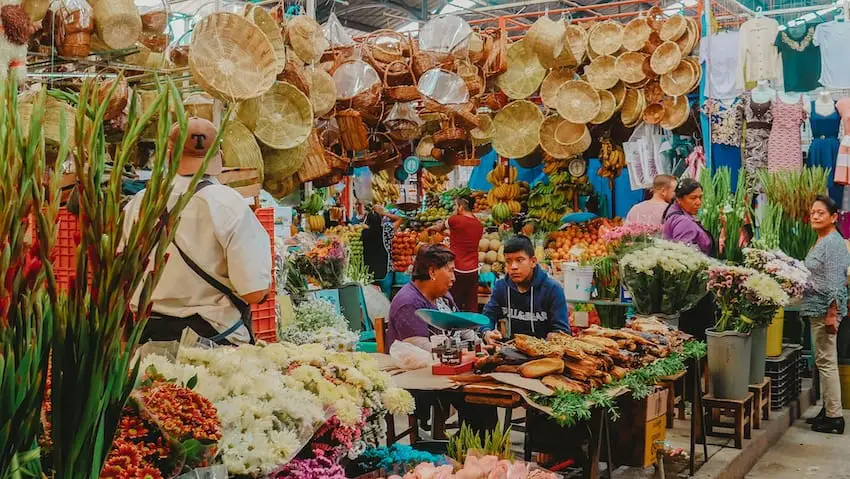
From storage to cleaning, artisan-made solutions abound and can be found at your neighborhood market. Buying small business products isn’t just a show of support for the economy, it’s also a subtle way to immerse yourself into your new community here in Mexico.
So instead of stocking up that virtual Ikea cart, head to your weekly tianguis and shop these quality products that will transform your space into the stylish Mexican home of your dreams.
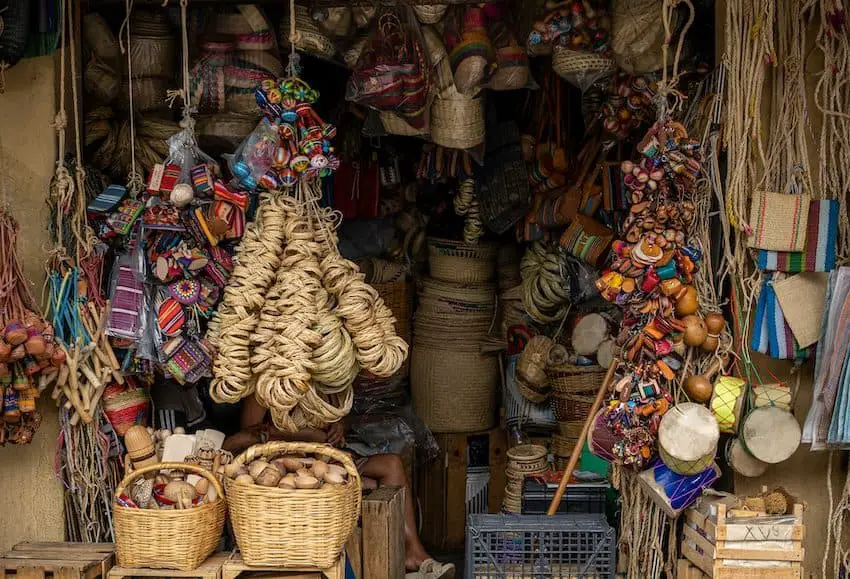
Hand-woven baskets
Hand-woven baskets bring a splash of traditional Mexico into your new home. (Alexandra Tran/Unsplash)
Baskets come in various sizes and can be used as hampers, plant pots, storage boxes, and closet organizers. The prices will vary depending on where you buy them — for example, in Mexico City, baskets are sold on the street of Roma for about three times the price of a shop in Centro Histórico. Still, they’re generally cheaper and much more authentic than plastic storage containers from Ikea, with prices starting around 100 pesos for a 20 cm x 30 cm basket.
Cleaning rags
Mexican-style cleaning rags are works of art. In fact, I often have a hard time using them because they’re so pretty. Some are the size of a washcloth and others a bath towel.
Most are made of cotton and they come in all sorts of colors, usually with a stripe down the middle. Prices vary, but I’ve yet to be quoted more than 40 pesos for any size. I hang them on hooks in my kitchen as decor and for easy access.
Pillows, blankets, and rugs
Loom-woven blankets, pillows, and rugs, made of cotton or wool, are as Mexican as it comes. I just bought an eggshell-colored (known here as bone, or hueso) cotton blanket for my full-sized bed for 1,800 pesos. The two matching throw pillows I splurged on cost 600 pesos and my bed looks like it came straight out of a Mexican Architectural Digest.
Your closest crafts market will sell these items in droves, so look for anything called El Mercado de Artesanías, which you can find in every city from Oaxaca to Querétaro.
Local art
Brightly-painted Mexican-style art isn’t cheap, per se, but it isn’t outrageous either. Here in Mexico City, there are weekly outdoor markets for local artists to showcase their latest masterpieces. Prices are really all over the place, but the satisfaction that you’re supporting the community while also making your home a bit more cozy is the best investment there is.
If what you want is art but you don’t want to necessarily invest in the next Rufino Tamayo, beeline directly to your town or city’s main square and ask about the mercado del arte. Some artists sell their work on the street every day of the week, like they do in Oaxaca City, while others follow a weekly location rotation as they do in CDMX.
Plants
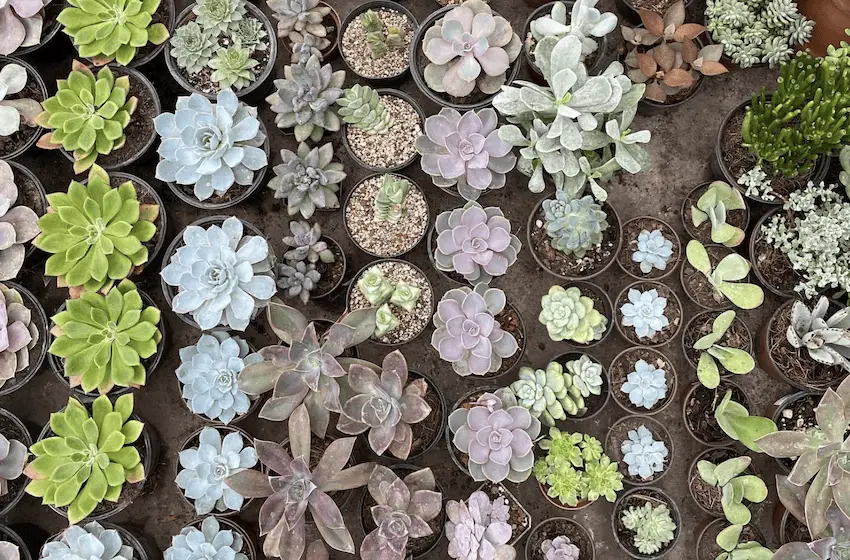
A visit to your local vivero can net you some colorful plants to brighten up your Mexican home. (Chris Havler-Barrett)
The last potted plant I bought in Miami was a simple rubber plant in a blue clay pot. It cost me US$75, and that was before inflation.
The first potted plant I bought in Mexico City was an indoor palm tree double that size, and it cost me 200 pesos. Needless to say, I now live in an indoor garden. My home feels comfortable, aesthetically Mexican, and clean.
Instead of Home Depot, buy plants at a vivero — a greenhouse that sells all species of live plants. Many cities construct viveros in the center according to season. For example, orchid vendors filled Mexico City’s Avenida Reforma over the weekend.
Dishware
I’m lucky enough to live around the corner from a bus that takes me to Puebla anytime I want. When I get there, I stock up on Talavera plates, drinking cups, and vases. My latest purchase was a set of four blue-and-white cups for which I paid a whopping 500 pesos.
Are they real, authentic, one-of-a-kind Talavera? Doubtful. But they look the part, they’re made in Mexico, and they match perfectly with the similarly designed dishes and bowls I had bought a month prior. Not to mention, the color contrast looks gorgeous on the off-white cotton tablecloth I bought in Oaxaca City for 1,200 pesos.
If multicolored dishes aren’t your style, terra cotta ceramic dishes and cookware are beautiful, sturdy, and affordable almost everywhere. Shop these items at the artisanal market closest to you, like Mercado de Artesanías in San Miguel de Allende or El Parián in Puebla.
Mirrors
The plastic full-length Ikea mirror 40cm x 150cm starts at 1,200 pesos. For the same price or better, you can get a sturdy, wooden mirror in the hue of your choice, including glittering gold.
Smaller mirrors for decorative purposes start at 100 pesos and are a great way to bring light to a room that doesn’t get much sun. Mix and match them on the wall with framed pictures for a unique, artsy look.
Mirrors are usually sold wherever framed art is on display, so check out your neighborhood art market. CDMX’s Colonia San Rafael famously hosts a mercado del arte every Sunday where you can purchase mirrors of all sizes.
Vases
Cut flowers are significantly more affordable than I was accustomed to in the States, so I religiously buy a bunch of lilies every other Sunday because they’re lovely and aromatic. For this, I need vases, which I’ve collected in a handful of places including an antique street market, the El Parián artisan market in Puebla, and on Avenida Reforma in Mexico City.
If you do plan to buy a vase from a street vendor, flip it over to make sure it has been made in Mexico, as Chinese knock-offs have been known to sneak their way to the local tianguis on occasion.
Look for your city’s local ceramics store for beautifully crafted vases, like Tradición Bernabe in Guadalajara’s Tonalá section or Mercado De Artesanías La Ciudadela in Mexico City.
Placemats
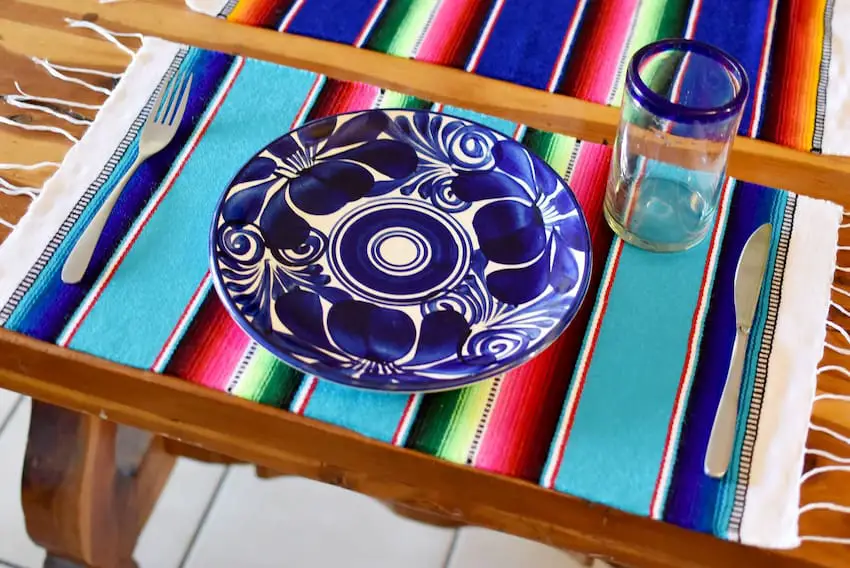
Traditional placemats can brighten up any dining table. (Etsy)
These are such a fun and easy way to bring pizazz to your dining area. They are made of palm fiber, woven in the shape of circles or ovals and are dyed all colors of the rainbow. If, say, you buy terra-cotta ceramic dishware, you can liven things up with an orange or yellow placemat, which shouldn’t run you more than 200 pesos for a set of four.
Artisanal markets are full of crafts like placemats. Scope out the weekly art tianguis or find the closest fixed mercado de artisanaría, like the one in Coyoacán, CDMX or Lucas de Galvez Market in Mérida.
Did I miss anything? Leave a comment below! Let other readers know what bargain purchases you’ve made that have livened up your Mexican home.
Mexico's agricultural and manufacturing exports both increased in April, driving up export revenue. (Cuartoscuro)
¡Buen provecho y salud! (Bon appétit and cheers!)
Mexico’s agricultural and agro-industrial exports brought in more revenue in 2023 than any previous year, according to preliminary data from the Bank of Mexico.
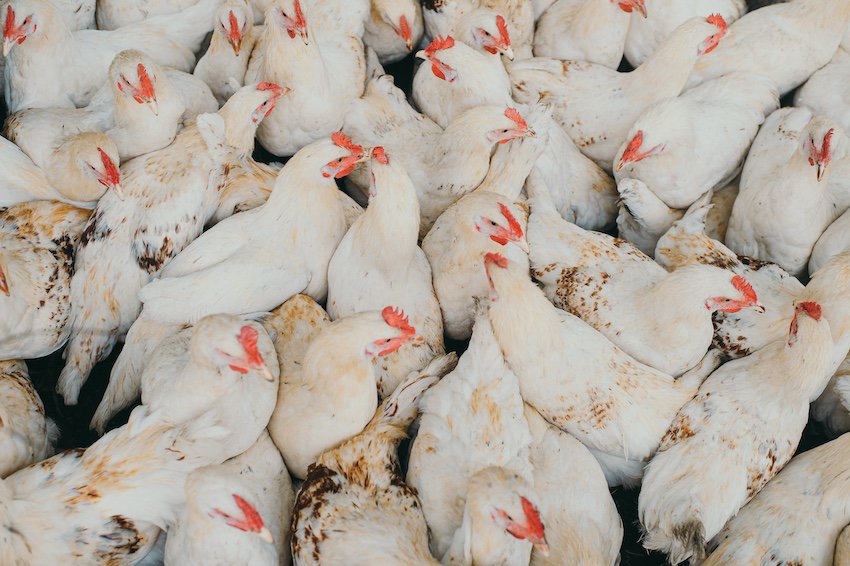
Poultry was amongst Mexico’s top agri-food imports in 2023. (Egor Myznik/Unsplash)
The value of agri-food exports — a category that includes big-earning beverages such as beer and tequila — hit a record high of US $51.87 billion in 2023, a 3.9% increase compared to 2022.
Meanwhile, agri-food imports declined ever so slightly (0.07%) to $44.29 billion, leaving Mexico with an agri-food trade surplus of just under $7.58 billion in 2023, a 35.3% increase compared to the 2022 surplus. It was the ninth consecutive year that Mexico had an agri-food trade surplus.
Agriculture Minister Víctor Villalobos Arámbula noted in a statement that 2023 was the first year that Mexico’s agri-food exports exceeded $50 billion. A decade earlier in 2013, agri-food exports were worth $24.4 billion, meaning that they increased 113% in the space of a decade.
Villalabos said that agri-food exports contribute to economic dynamism in Mexico as they stimulate job creation and generate foreign currency earnings.
Which agri-food products brought in the most revenue?
It’s no secret that Mexican beer is popular among consumers all over the world.
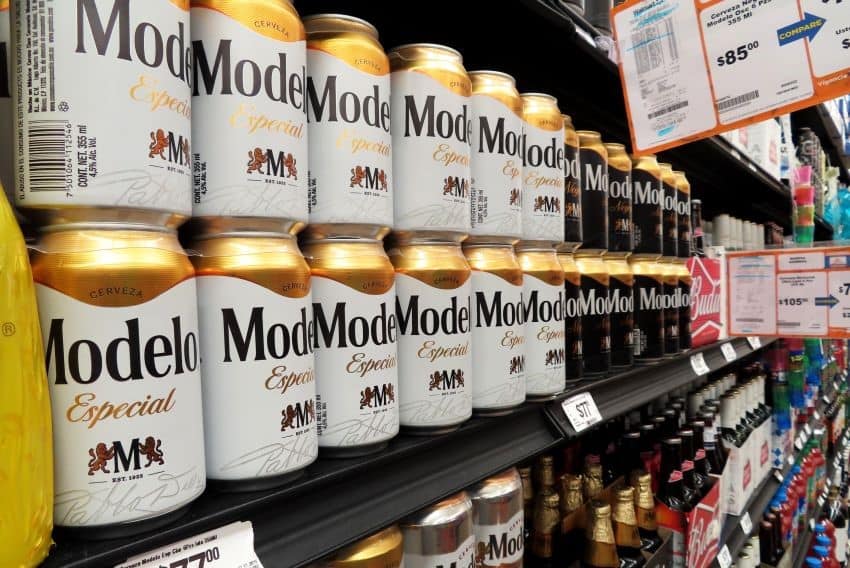
That fact is clear to see in the agri-food export data, as cerveza mexicana generated revenue of $6.16 billion in 2023, more than any other product in the category. The value of beer exports rose 2.2% compared to 2022.
Beer was Mexico’s largest agri-food export, raking in more than US $6 billion. (Edgardo Moya/Shutterstock)
The next biggest earner was tequila/mezcal with the two agave spirits — lumped together in the Bank of Mexico data — bringing in just under $4.3 billion in export revenue, an increase of 1.6% compared to the previous year.
Rounding out the top five were:
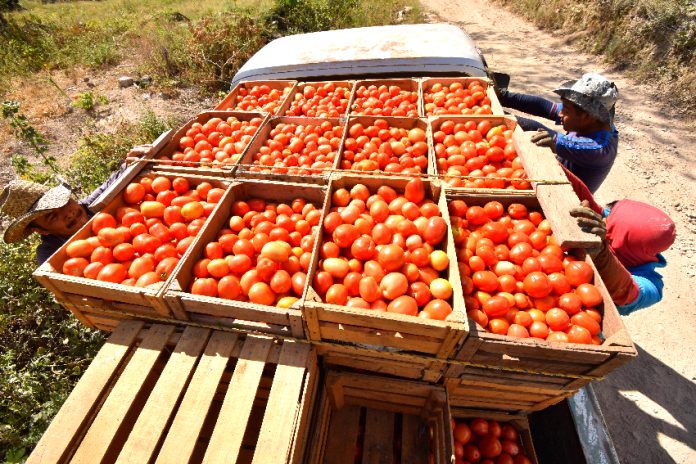
Tomatoes: $3.04 billion (up 13.5% compared to 2022).
Avocados: $3.03 billion (down 8.8% in annual terms).
Bakery products: $2.64 billion (up 13%).
The Ministry of Agriculture and Rural Development noted that the value of live beef cattle exports rose 63.1% in 2023, the highest percentage terms increase of any agri-food product. The total value of such exports was $1.11 billion.
The next biggest percentage term increases were for:
The biggest market for Mexican agri-food exports is the United States, but Mexico sends its products all over the world. Corona beer, for example, is exported to 180 countries, according to AB InBev, the Belgian multinational that owns the brand.
What were Mexico’s top agri-food imports?
In 2023, Mexico imported yellow corn worth US $5.87 million, an increase of 1.3% compared to 2022. Most of the yellow corn – which is widely used in Mexico as animal fodder – came from the United States, Mexico’s top trade partner.
Mexico’s next biggest agri-food imports were:
Soy beans: $3.65 billion (down 11.5% from 2022).
Pork: $2.76 billion (up 4.2% in annual terms).
Wheat: $1.8 billion, (down 14.9%).
Poultry: $1.59 billion (8.2%).
Agriculture consultancy Grupo Consultor de Mercados Agrícolas (GCMA) said in late December that Mexico imported a record high of 37.44 million tonnes of grains and oil producing plants in the first 11 months of 2023, an 8.8% increase compared to the same period of 2022. Widespread drought in Mexico was the main reason for the increase.
Mexican fans bought 3% of Super Bowl tickets sold on StubHub this year. (Shutterstock)
Fans in the United States, of course, bought the most tickets to Super Bowl LVIII on Sunday in Las Vegas, but guess which country was No. 2?
According to StubHub, NFL fans in Mexico purchased 3% of the seats that the ticket resale giant sold to the game at Allegiant Stadium — where a sellout crowd of 61,629 watched the Kansas City Chiefs subdue the San Francisco 49ers 25-22 in overtime.
StubHub’s report that Mexico was second only to the U.S. was picked up by several Latin American media sources.
One of them, Latinus, declared proudly that Mexicans had surpassed Canadians in ticket sales and were going to be the “segunda fuerza” (second force) in Las Vegas.
“Super Bowl LVIII in Las Vegas will be painted tricolor,” the media outlet hyperbolized in allusion to the green, red and white Mexican flag.
ESPN Deportes declared with similar brashness that the Chiefs-49ers game “will be, in part, a Mexican fiesta.”
Mexican American pro wrestler Rey Mysterio at Allegiant Stadium on Sunday. (WWE Español/X)
Though no reports specified how many 2024 Super Bowl tickets overall were purchased by Mexicans, the media outlets generously concluded that Mexicans were the largest foreign fan base at the game.
StubHub did provide the statistic that the number of Mexicans who purchased its resale tickets was 47% higher this year than it was for the Super Bowl in 2020 (in which the Chiefs and 49ers also faced off).
CBS News reported the average price of a resale ticket to this year’s game at US $8,600, based on information from StubHub. The cheapest face-value tickets this year, sold directly by the NFL, were about US $2,000 each.
The attendance in Las Vegas of 61,629 was the lowest attendance in 57 of the 58 Super Bowls to date. Only the Super Bowl played on Feb. 7, 2021 in Tampa, Florida, had a lower attendance (24,835), but that was due to restrictions put in place because of the COVID-19 pandemic.
The Mexican ticket sales news was good news for the NFL, which in recent years has been putting a lot of effort into recruiting and maintaining its Latin American fan base.
The league says that Hispanics in the United States are the NFL’s most rapidly growing fan base, with an increase of 11% over this time last year.
Forbes México reported that the Mexican band Los Tigres del Norte declared themselves last week to be diehard 49ers fans — and that during their concert on Sunday in Chicago they would be wearing red 49ers underwear to support the team.
A Mexican fan proudly represents his home town at the Super Bowl on Sunday. (Juárez Ahora/Facebook)
The Mexican Association of Travel Agencies said airline ticket purchases from Mexico to Las Vegas last week increased by 20% over airline tickets to last year’s Super Bowl site in a Phoenix suburb (a 38-35 victory for the Chiefs over the Philadelphia Eagles).
For this year’s game in the U.S., the Spanish-language network Univision hosted its first Super Bowl telecast ever. Owned by Mexican American media giant TelevisaUnivision, the network also broadcast the game in Mexico on Televisa.
TV viewership numbers will come more into focus on Tuesday; preliminary reports showed the broadcast in the U.S. could likely beat last year’s record Super Bowl viewership of 115.1 million viewers.
The Spanish-language telecast didn’t miss its opportunity to comment on the romance that, for some viewers, eclipsed the sporting event. The commentary when singer Taylor Swift and Chiefs tight end Travis Kelce kissed after the game was, “¡Viva el amor!” (Long live love!).
The Cancún-Tulum section of the Maya Train will be open by the end of the month, says President López Obrador. (Elizabeth Ruiz/Cuartoscuro)
President Andrés Manuel López Obrador confirmed on Sunday that the Cancún to Playa del Carmen stretch of the Maya Train (Tramo 5 Norte) will open as scheduled on Feb. 29.
In a post on social media platform X the president said that he carried out an inspection of the Maya train over the weekend, along with various members of his cabinet and the governor of Yucatán, Mauricio Vila.
President López Obrador shared an image of a working group reviewing progress at the railroad project. (Andrés Manuel López Obrador)
“Yesterday and today, we supervised work on the Maya Train. On Feb. 29, we will inaugurate the section from Cancún to Playa del Carmen, in the heart of the tourist area, bearing in mind the need to improve transport for the [tourism] industry’s employees,” he wrote.
While Feb. 29 had previously been announced as the date for completion of the entire railroad — which crosses the states of Yucatán, Quintana Roo, Campeche, Tabasco and Chiapas — López Obrador said in January that the inauguration of the remaining sections (the southern part of Section 5, as well as Sections 6 and 7) would be postponed, likely until after the June 2 elections.
During the president’s Monday morning press conference, Maya Train director General Óscar David Lozano Águila said that the Tramo 5 Norte would offer an early morning service for regional workers at 6 a.m. and 7:30 a.m. from Cancún to Playa del Carmen. For tourists, the train will open at 9 a.m. and offer six daily departures. However, he said that the frequency of the schedules would depend on user demand.
The Cancún-Playa del Carmen section covers almost 50.57 km and comprises three stations: Cancún-Airport, Puerto Morelos and Playa del Carmen.
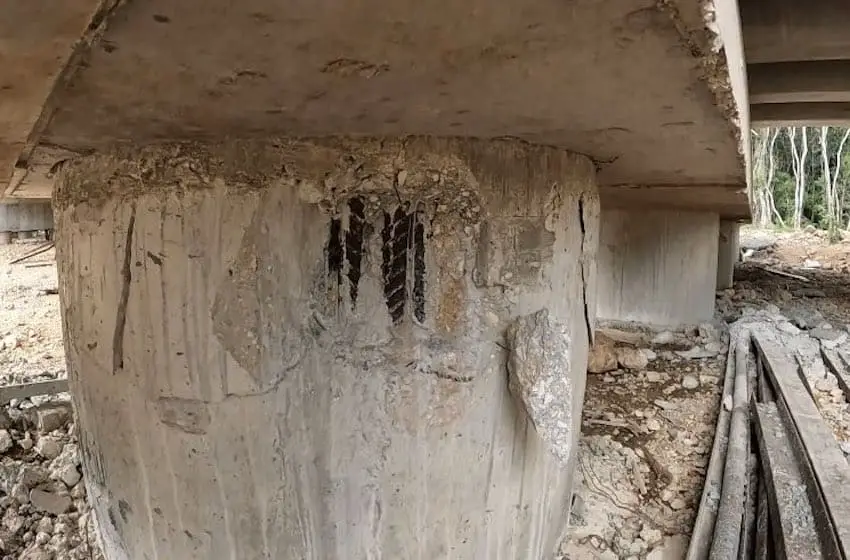
Maya Train pilings shown penetrating the roofs of underground caves. (gchristy65/X)
Environmentalists have repeatedly raised concerns about the potential damage to the environment and subterranean water systems caused by construction of the massive infrastructure project, while the government says it will be key to economic development in the southeast.