Home Blog Page 69

The AI fake news tsunami is upon us — what does this mean for kids? A perspective from our CEO

5
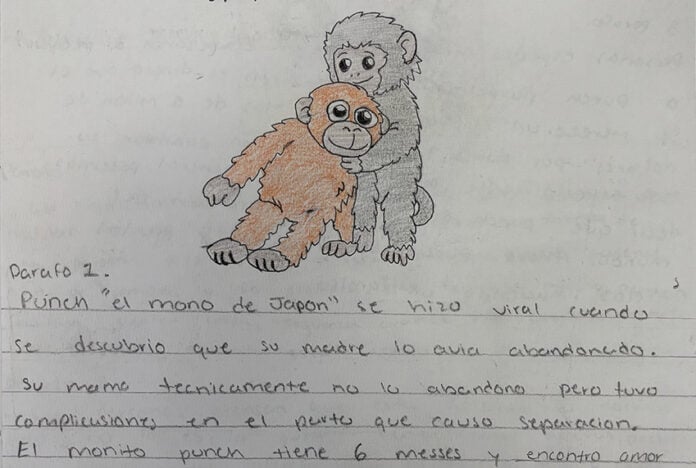
MND Kids reader Nathalie of Aurora, Illinois, recently wrote this article, titled "Punch, the Japanese monkey" as part of a school assignment to write a news article in style of MND Kids. (Courtesy photo)

Many people, including myself, have been thinking about the state of media a lot lately and people are increasingly asking me for my take on things. We all have had our “bunnies on the trampoline” moment, in which we were completely tricked by an artificial intelligence video on social media for the first time; mine was with that very video just a few months ago. What once felt like a novelty seemingly overnight has turned into a daily threat. Over the past few years, we have sadly become accustomed to seeing false content on social media, but now this content is often accompanied with a realistic-looking (but fake) video. This makes it even harder to distinguish what is real and what is fake.

The pace at which this is accelerating should alarm all of us. Just a few weeks ago, in the aftermath of the “El Mencho” killing in Jalisco, MND reported on the amount of fake news that was being produced, shared, and most troublingly, believed by people around the world. No, cartels were not running through the Puerto Vallarta airport shooting people. No, there wasn’t a passenger airplane lit on fire at the Puerto Vallarta airport. No, the Puerto Vallarta Costco wasn’t burned down. And no, President Sheinbaum didn’t have to spend the night on a Mexican Navy ship at sea to secure her safety.

Fake fires, real fear: Debunking the lies that went viral after ‘El Mencho’ fell

Yet these clickbait stories and videos “worked” well — devastatingly well. In a world of scrolling images that we often look at for just a second, they worked to create misinformation and misunderstanding, frighten people, and ultimately resulted in massive cancellations by visitors to Mexico. I have talked to people in the tourism and real estate sectors from across the country — Oaxaca, the Riviera Maya, Mexico City, San Miguel de Allende, Los Cabos and Puerto Vallarta — who have all lamented the significant shock to their businesses that were suffered as a result of the “post-Mencho” fake news media circus. Real livelihoods, real financial losses — all caused by fake content created and spread in minutes.

If that wasn’t enough to make you stop and think, just weeks later, we are seeing it happen again on an even larger scale on the war with Iran. On March 14, the New York Times ran a comprehensive article titled, “Cascade of AI fakes about war with Iran causes chaos online.” The paper shared 37 fake images and videos falsely depicting active war, 5 fake images and videos falsely depicting war preparation, 8 fake images and videos falsely depicting war destruction, 43 memes made with AI, and on and on and on.

Which brings me to why I have been thinking so much about the media lately. Can you imagine if we did not have sources like the New York Times, the Wall Street Journal, and Mexico News Daily? (Yes, I am a bit biased on that last one.) This has nothing to do with being on the right or left side of the political aisle and this isn’t about opinion pieces that we agree or disagree with. This is about having trustworthy sources that help us make sense of the cesspool of misleading and fake AI-generated content flooding our feeds every single day. The misuse of AI is no longer a future concern — it is the defining information challenge of right now. In a world where actors are increasingly and deliberately trying to sow chaos and confusion (often for nefarious purposes), how will we know what to believe? This was a question just beginning to be asked not too long ago that is now an urgent, daily reality with real-world consequences.

Fortunately, us adults can turn to trusted sources that can help make sense of it all. Many of us know what “reliable” looks like and we search these sources out to help us understand what is going on. That’s why people are subscribing to media outlets like the NYT, WSJ, and MND faster than ever. But what about kids? How will they learn to differentiate what is real news from what is fake? How will they learn the importance of understanding the difference? How will they understand the gravity and implications of getting it wrong? How will they learn what media sources to turn to for clarity, for objectivity, for honesty?

It is with that backdrop that we created MND Kids last year and why we are further doubling down on this initiative today. Since the launch of this platform over 6 months ago, thousands of kids of all ages in both Mexico and the United States have used MND Kids to improve their media literacy. Both educators and parents are now using it to help their kids learn how to read the news, have conversations about fake versus real news, and to reinforce the importance of reading real, unbiased, apolitical news to help them learn how to think critically about things. Equally as important, our content has allowed kids to learn about the good things going on in Mexico that are so often missing from many media sources. MND Kids isn’t about clickbait; it’s about building media literacy, instilling a comprehensive understanding of Mexico, and being proud of Mexico’s historical and current accomplishments.

Today, we are taking our efforts even further. We just started a new pilot program called “MND Young Journalists.” This program encourages kids inspired by MND Kids content to write their own news articles. The program helps make reading and writing non-fiction content more accessible and relevant. It encourages active learning. It teaches kids the power of the pen.

Each week, the editors at MND will review the submissions from MND Kids readers and publish one of them on our MND Kids site under the “Young Journalists” tab. We believe — with conviction — that it has never been more urgent for the next generation to learn critical thinking, media analysis, and the ability to form and express an educated, thoughtful opinion about the world around them. The importance of learning to read to review the facts, form an educated opinion, and share that opinion in a thoughtful, logical way is one of the most important things we can teach our kids. It may also be one of the most important defenses we have against the AI misinformation epidemic bearing down on all of us.

The team at MND is very proud to help motivate and inspire the next generation of thinkers and leaders. We won’t pretend that it has been easy. Navigating the politics and bureaucracy of school systems is not something we have experience in. In truth, it has been painfully slow. But the urgency of what is happening in the world right now does not allow us to wait for the system to catch up. With that said, we continue to aggressively invest and grow this initiative as we feel that it is as important as anything else that we do.

You have a role to play in this too:

If you think your kids, grandkids, nieces, nephews or friend’s kids would benefit by reading MND Kids, you can check out the site here: mndkids.com.

You can also add MND Kids to your MND subscription by upgrading to a family plan that includes MND Kids here: Upgrade – Mexico News Daily.

And if you know of a school district or after school program that would benefit from MND Kids, please email us at: kids@mexiconewsdaily.com.

You can learn more about MND Kids here: About MND Kids.

And by the way: The lead photo of this article shows a story written by MND Kids reader Nathalie of Aurora, Illinois, who wrote a recent news article about “Punch the Japanese monkey” as part of a homework assignment in class to write an article in style of MND Kids. Damn, that’s inspiring!

Travis Bembenek is the CEO of Mexico News Daily and has been living, working or playing in Mexico for nearly 30 years.
The rollercoaster relationship between Trump and Mexico

23
Donald Trump
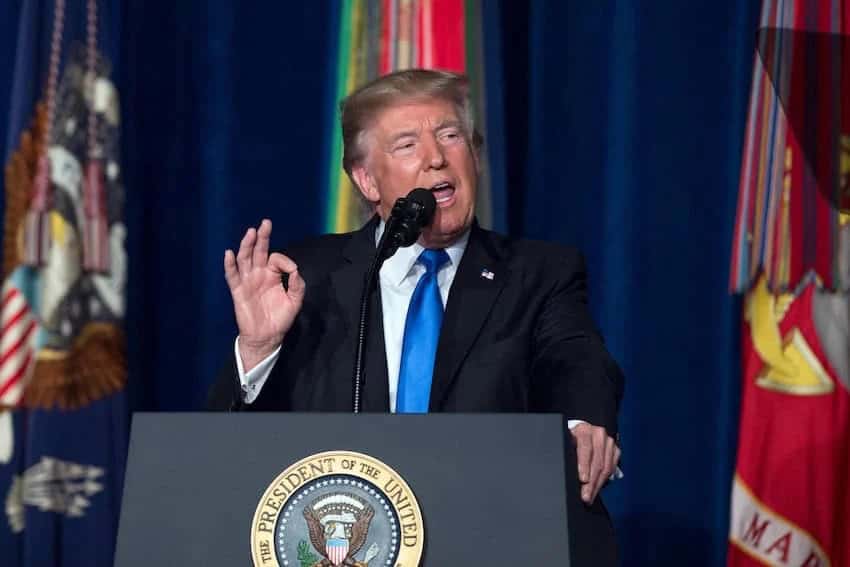
From the perspective of Mexico, Trump's second term has been loony, erratic and yes, scary. (U.S. National Parks Service)

In Texas, where I’m from, we just had two primaries for the U.S. Senate: Republican and Democrat. Turnout was surprisingly good for the Democrats’ primary, which gives me hope. Might we finally get a Texas Democrat in the Senate?

Everyone, of course, is after “the Latino vote.” Because Latinos make up over 40% of the population in Texas, it makes sense: Get them on your side and you’ve nearly cinched the election.

Trump and the Latino vote in Texas

ICE activity in Texas
Trump did well with Latino voters in Texas in the last presidential election but is now deporting four people a day in the state on average. (Rice University Kinder Institute for Urban Research)

Much to my disappointment, Trump in particular and Republicans in general did just that in the last election. In my own opinion, a vote for Trump is a vote against one’s own self-interest… unless you happen to be a billionaire Scrooge McDuck-type whose mouth waters at the prospect of infinite tax breaks and zero social responsibility.

So on its surface, it’s a mystery. Didn’t he call them all “rapists and murderers”? Isn’t he directing untrained ICE thugs in masks to indiscriminately stop people who “look” like immigrants (i.e., Brown people)?

And while some are beginning to turn against him — mostly because prices haven’t gone down as he promised they would — plenty still say he’s doing “a great job.”

Oh, brother.

Trump and Mexico

In Mexico, the people I’ve met who like and admire Trump are pretty few and far between. But there’s a certain subset, on both sides of the border, that really seems to admire him.

It’s an enigma until you remember how many Latinos on both sides of the border are actually pretty socially conservative. I know several people who were won over to his side as a result of trans panic, convinced that unqualified people were getting jobs they didn’t deserve. (For that, of course, look no further than literally all of his political appointees.)

U.S. President Donald Trump
Trump has ratcheted up pressure on Mexico to catch the cartel kingpins supplying U.S. demand for drugs, and armed with U.S. weapons. (U.S. State Department)

And like it or not, the perception currently is that conservatives “own” God and religion. Plenty of people also believe that immigration can and does go too far and perhaps aren’t paying much attention to the specifics. There have also been many people perfectly happy to pull the ladder up behind them on the other side of the border.

Honestly, I’m sure plenty of us living in places where more and more of our own countrymen are showing up can relate.

Those who like Trump and those who don’t

The fact that men overwhelmingly approve of him also points to a real admiration for “tough guy” types. We may have a woman president and an active feminist movement in Mexico, but machismo has by no means died.

As you can see, I’ve thought a lot about what has inspired Latinos in the U.S. to vote for this guy.

But I’m proud to say that Mexicans, for the part, see the writing on the wall with this dude. They have resisted the seduction of the macho man up north, as Mexico often has.

Interestingly, Mexico seems to be becoming more liberal, while the U.S. becomes more conservative.

President Sheinbaum speaks into a microphone at a press conference
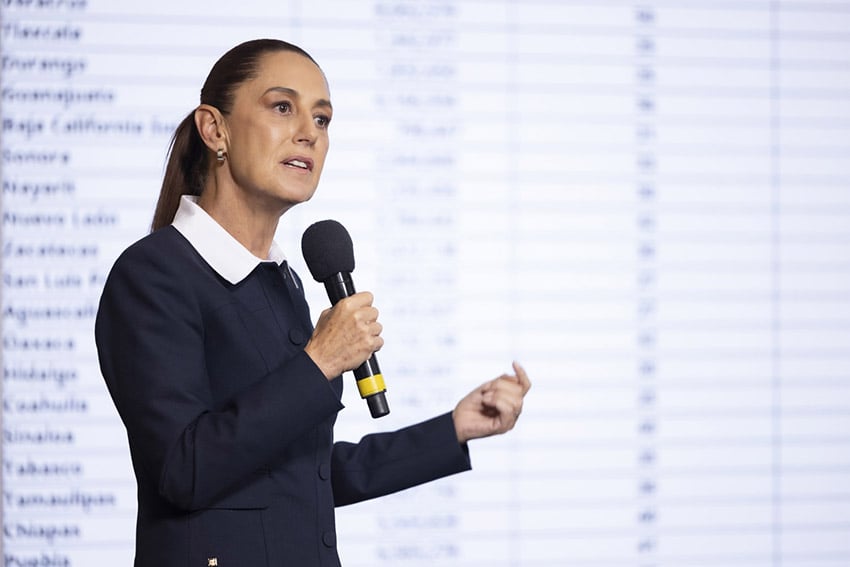
Trump’s definitely got his eye on Mexico, as much as Sheinbaum has expertly kept his worst actions at bay. So far, anyway. (Gabriel Monroy / Presidencia)

Seeing the writing on the wall is not hard, of course, if you’ve been paying even minimal attention. Let us count the ways!

Trump’s beef with Mexico

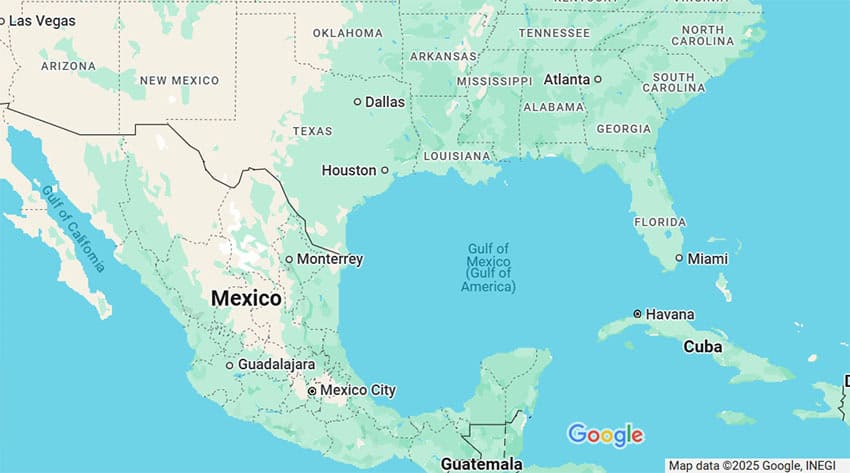
One of the first indications that he was ready to start poking was the petty name change from “Gulf of Mexico” to “Gulf of America.” (Supposedly, Google Maps in Mexico still calls it “Gulf of Mexico,” but on my own phone it says “America.” Maybe because I have the OS set up in English?)

Fine. A little too silly to take seriously, but a poke nonetheless.

The truth is, though, that everything that happens in the United States affects Mexico. As of this writing, I even see the peso losing value as a result of uncertainty regarding the war with Iran. 

And Trump’s definitely got his eye on Mexico. As much as Sheinbaum has expertly kept his worst actions at bay, it’s hard to deny that the flip side of the coin of never assuming blame for anything is blaming others.

In Mexico, he’s done it quite a bit. How has Mexico “screwed over” (not my words) the U.S.? Let him count the ways.

A google maps screenshot showing the Gulf of Mexico
Whether it’s still the Gulf of Mexico depends on where and in what language you access your information. (Google Maps)

His main complaint, of course, is the passage of drugs from Mexico into the US. Obviously, no blame is accepted regarding the U.S. demand for drugs, or the fact that the weapons narcos use to run the show are primarily from the U.S.

Then there are the narcos. In his mind, he could wipe them all out in one fell swoop. “Just say the word, and we’re there!” he tells President Sheinbaum.

And, of course, the tariffs, where he could do real damage. His failure to grasp basic economic concepts has convinced him that everyone is cheating the U.S., and his use of the threat of excessive tariffs has incredibly real-world consequences down here.

How is Mexico (mostly) escaping Trump’s ire?

For one, we have a president who couldn’t be more different than her northern counterpart. To his bombastic posturing, Sheinbaum’s speeches are steady and measured. By comparison, she sounds downright sleepy.

She’s also good at giving him just enough of what he wants to placate him. As I’ve written before, Mexican politicians are experts at dealing with gangsters. And Trump is definitely a gangster.

So far, she’s doing great with her handling of him. And people are mostly happy with this “leftist” government. In Mexico, living conditions are improving and most of the ruling party’s policies are popular. Things are getting better, not worse.

A loony, erratic and scary presidency

sad, unhappy Trump
Mexico is on Trump’s list for a variety of reasons. (Shutterstock)

Alas, Mexico knows it’s on Trump’s list. He looks at us and licks his lips, surely fantasizing about being single-handedly credited with eliminating the narcos.

He’s claimed victory in Venezuela and is drooling over Cuba (citizen suffering be damned). He’s distracted now with Iran, but no doubt he’ll set his wolf eyes on us again soon.

Can Sheinbaum hold the line while we run out the clock on his loony and erratic presidency?

So far, so good. But let’s all keep our fingers crossed extra tight just in case.

Sarah DeVries is a writer and translator based in Xalapa, Veracruz. She can be reached through her website, sarahedevries.substack.com.

Casa Holtz: The obsessive Art Nouveau dream hidden in Lomas de Chapultepec

1
Casa Holtz in Mexico City
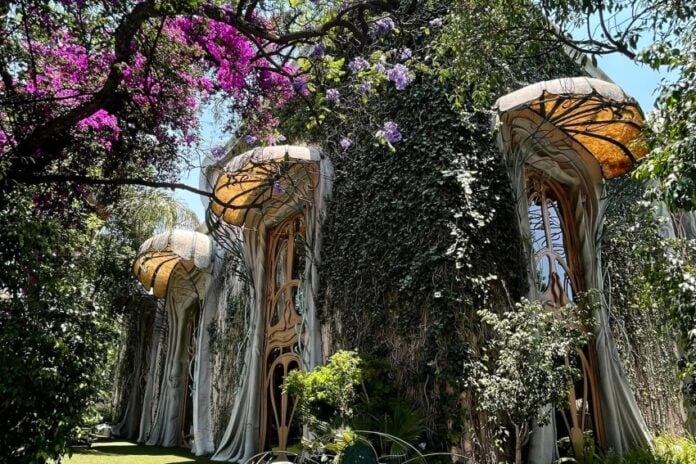
Casa Holtz in Mexico City was built for Ignacio Holtz and his wife Beatriz Mendívil. (Facebook)

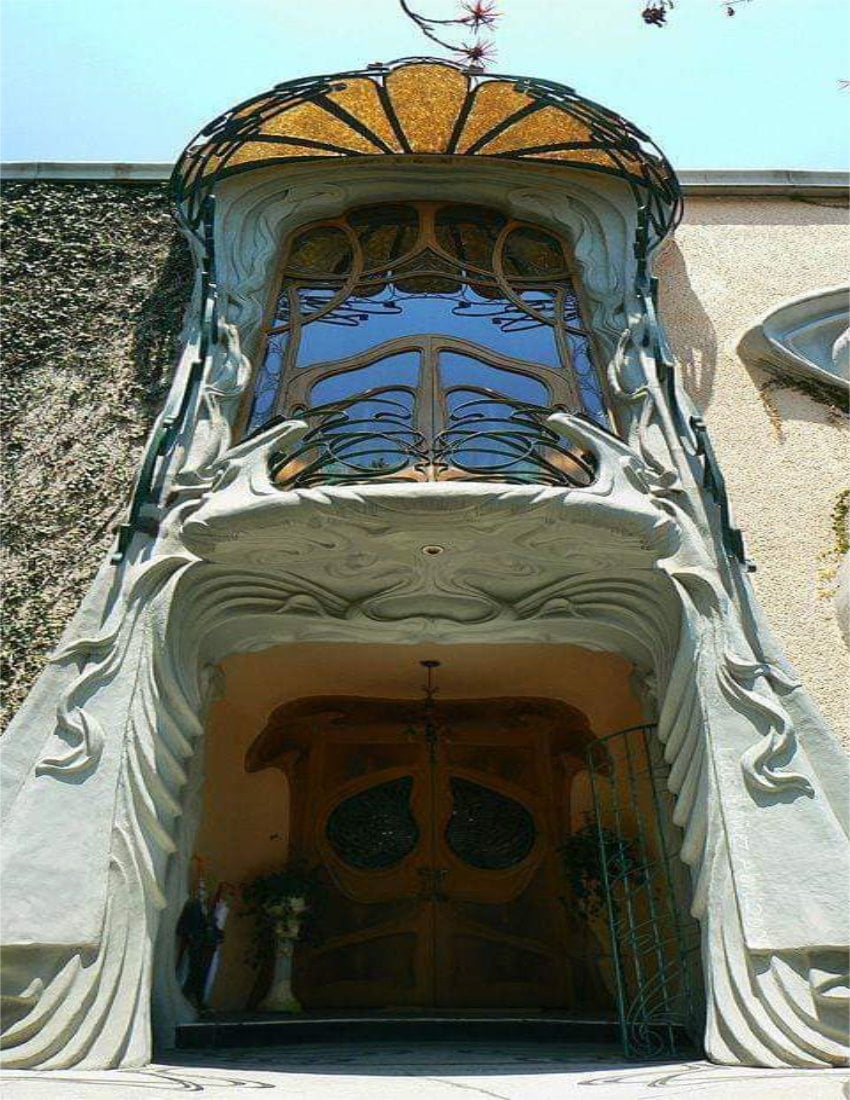
On the corner of Mexico City’s Cerrada Monte Ararat, just one block off Paseo de las Palmas in Lomas de Chapultepec, is a house — but it’s not just any house. It’s a whimsical masterpiece of Art Nouveau design, with a honey-colored facade draped in ivy and curvaceous windows rising two stories. Rounded iron gates dwarf the entrance, the sidewalk undulates and bougainvillea and palms line the approach. 

The house doesn’t seem to make sense in this part of town, in this city, in this country — but somehow, it fits because Mexico is full of surprises.

How Art Nouveau came to Mexico City

A lavishly decorated n interior of Casa Holtz, done in the Art Nouveau style, in Mexico City
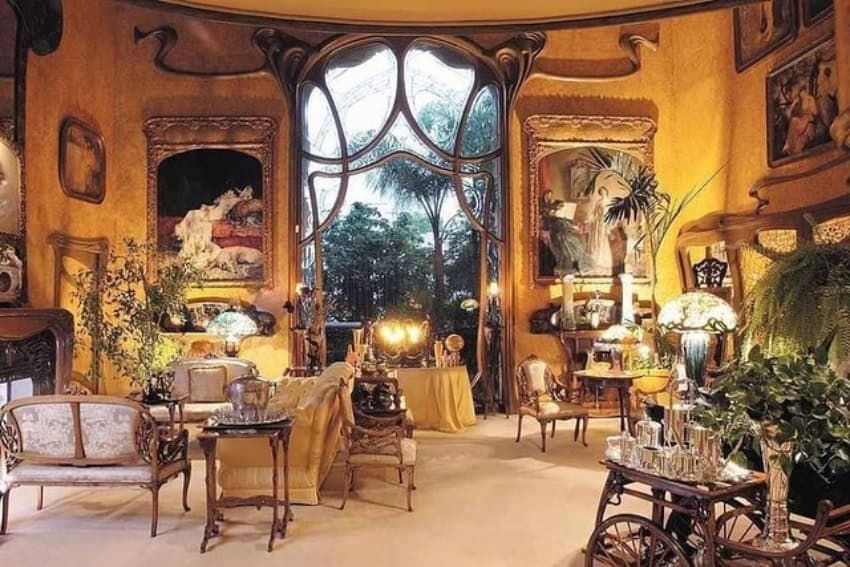
The interior of Casa Holtz in Mexico City is awash in Art Nouveau objets d’art and furnishings. (Instagram)

Art Nouveau arrived in Mexico City at the end of the Porfiriato, a moment when the capital was reinventing itself as a modern, cosmopolitan city — a formidable rival to Paris and Brussels. The elite classes quickly embraced European-style architecture, commissioning mansions and apartment buildings designed by the finest architects of the day.

For a brief but dazzling moment, from Mexico City to Chihuahua, everything was flowing lines and floral ironwork. Mexico’s architecture had arrived on the world’s stage.

Casa Holtz: Mexico City’s most extraordinary Art Nouveau home

It would take almost 80 years for the most spectacular Art Nouveau creation of them all to come to fruition. The story begins, as many great collections do, with a single object. According to local lore, Ignacio Holtz and his wife Beatriz Mendívil — an art and antiques dealer — fell in love with an Art Nouveau vase they found at CDMX’s La Lagunilla flea market (tianguis) in the late 1960s. This would be the first of hundreds, perhaps thousands, of stylistic pieces they collected.

Two decades later, they had so much Art Nouveau paraphernalia that they needed somewhere to put it all. In 1985, they bought a corner lot in Lomas de Chapultepec and built their very own private museum.

Holtz, a Mexico City-born civil engineer who spent his career calculating seismic systems for high-rise buildings, handled the structural concept and reportedly produced more than 3,000 drawings for the house. He hired — and fired — dozens of metalworkers, carpenters and upholsterers until he found craftspeople skilled enough to execute a true Art Nouveau curve. It’s said he set up workshops in the basement so he could supervise every line himself.

If building the most magnificent home on the block was the goal, Ignacio and Beatriz certainly succeeded.

Inside Casa Holtz: A private Art Nouveau collection

Interior shot of Casa Holtz, decorated in lavish Art Nouveau style with multiple early 20th century traditional figurative portraits of owners Ignacio Holtz and his wife Beatriz Mendivil.
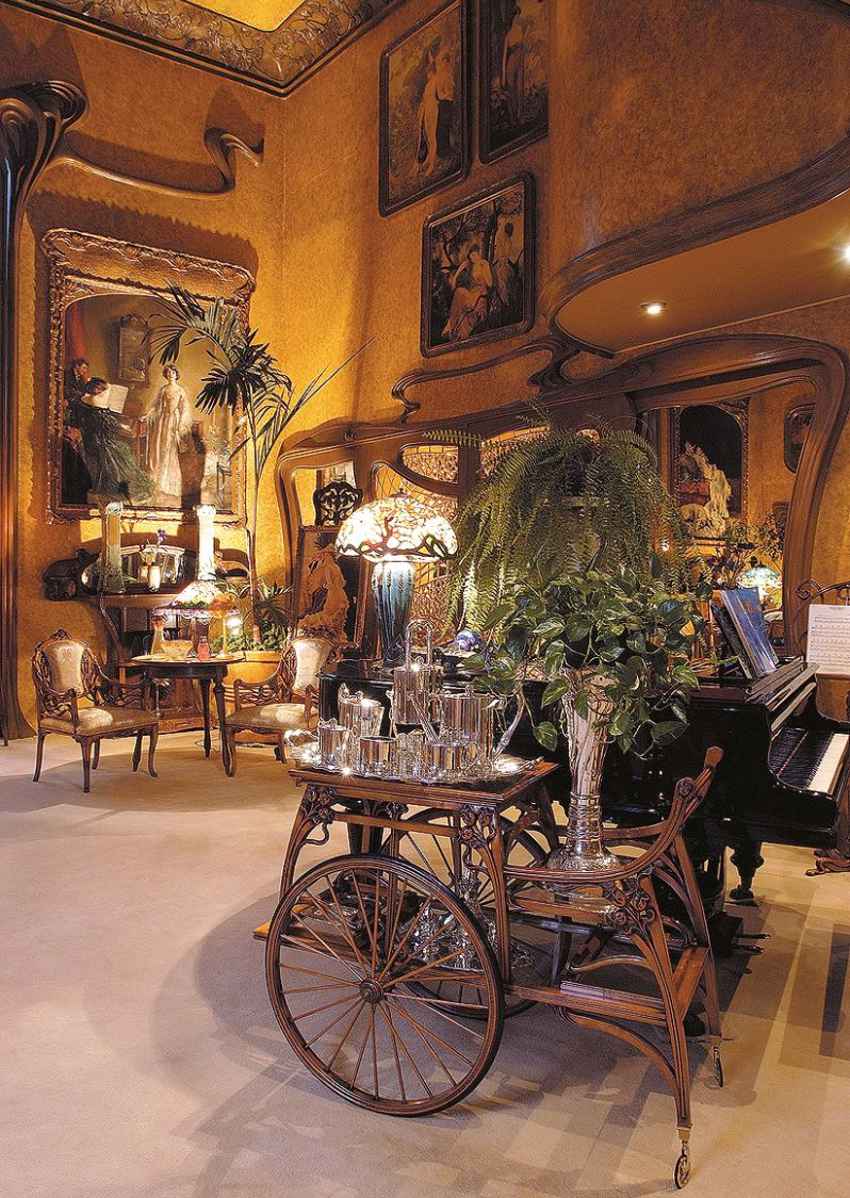
The one-of-a-kind house is no longer the home of the late engineer Ignacio Holtz and his wife Beatriz Mendívil, but it is still a private home, so be respectful when visiting it. There are no tours. (Webcams de Mexico)

The house remains privately owned and can only be viewed from the outside. Thanks to Grandes Casas de Mexico, we have a sense of what’s inside — and it’s exactly as flamboyant as you’d expect.

Inspired by European Art Nouveau masters like Victor Pierre Horta, Henry van de Velde and Hector Guimard, rooms are filled with customized furniture, Tiffany-style table lamps, Jean Béraud canvases and pieces of Albert Mayer silver. New pieces commissioned from local craftspeople reflect the signature “whiplash line” of Art Nouveau, so every corner participates in the couple’s original vision.

Art Nouveau in Mexico City beyond Casa Holtz

Aerial view of the Palacio Bellas Artes in Mexico City with the skyline of the city in the background
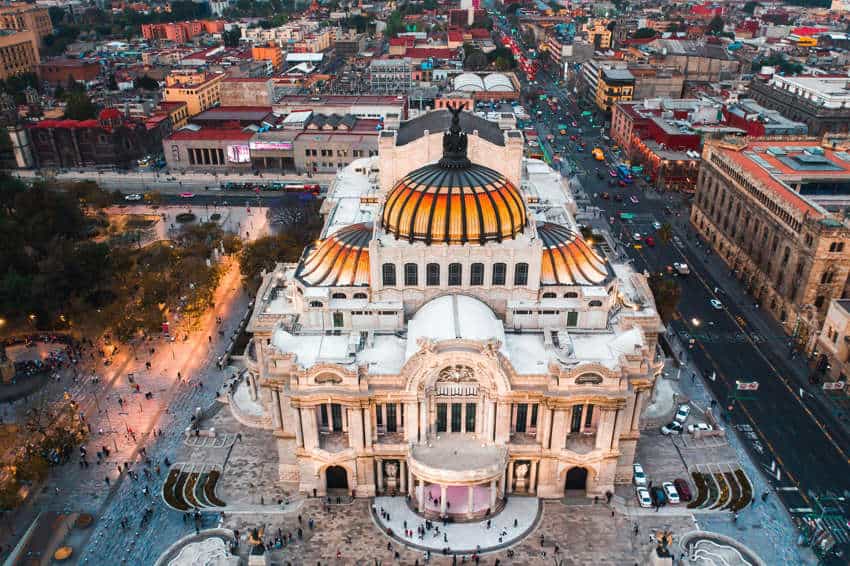
The Palacio Bellas Artes in Mexico City is an Art Nouveau masterpiece. (Carlos Sánchez/Pexels)(Mikhail Nilov/Pexels)

Casa Holtz may be the pinnacle, but Art Nouveau left its mark across Mexico City in many other ways.

The most obvious example is Palacio de Bellas Artes, built over the course of 30 years starting in 1904.

Italian architect Adamo Boari, known for Beaux‑Arts and neo‑medieval style, incorporated Art Nouveau details by wrapping the main doors and windows in floral garlands and female figures that morph into plant forms.

The project was stalled multiple times due to the Revolution, funding shortages and a famous sinking foundation; that’s why you’ll find Art Nouveau on the exterior and Art Deco inside. 

More must-see architecture

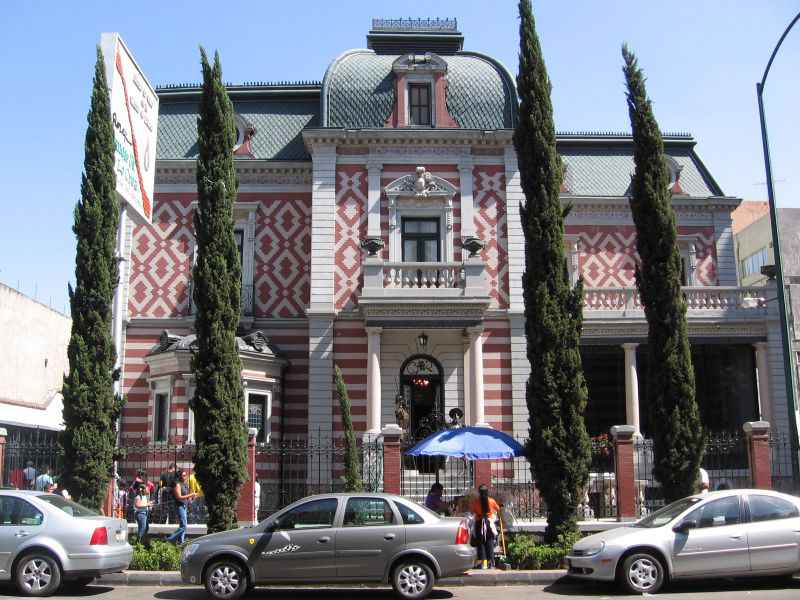
Mexico City Wax Museum's Art Nouveau facade with pink and white cantera stone and tiling done in stripes and in Arab-style mosaic diamond patterns. The museum is right in front of a Mexico City street.
Mexico City’s Wax Museum is in a former home that is one of the few buildings left standing by renowned Art Nouveau architect Antonio Rivas Mercado (1853-1927). (Wikimedia Commons)

In Colonia Juárez, the building that now houses the Wax Museum is worth a stop for the architecture alone. It’s a turn-of-the-century Art Nouveau casona designed by Antonio Rivas Mercado, the same architect behind Mexico City’s Ángel de la Independencia monument.

The building nearly met its demise in the 1970s; it was slated for demolition, saved only when it was purchased and converted into a museum in 1979. Today, it’s recognized as part of the city’s historic heritage, and walking through its galleries means walking through one of the few intact residences designed by Rivas Mercado.

Head north to Santa María la Ribera and you’ll find Art Nouveau at an entirely different scale. The Museo Universitario del Chopo, known to locals as the Palacio de Cristal, is an iron-and-glass hall with twin towers designed in the German Jugendstil by architect Bruno Möhring. Prefabricated for a 1902 fair in Düsseldorf, it was later shipped to Mexico City and reassembled on Calle Dr. Enrique González Martínez, where it still stands today. In the middle of the century, the masterpiece was nearly abandoned, but it was thankfully restored in both the 1970s and 2000s by the National Autonomous University of Mexico (UNAM) and is today one of the city’s liveliest contemporary art spaces.

Visiting Casa Holtz: What you need to know

An intricate stone carved art nouveau window facade of the historic Casa Holtz building in Mexico City.
Although the house is private property, even passing by the outside is worth the trip. (Leminerai)

Details about Casa Holtz circulate widely on social media and in online architecture forums, but the building remains a private family residence in a quiet corner of Lomas de Chapultepec. There are no tours or visiting hours. You can glimpse the facade and ironwork from the sidewalk — and, honestly, that’s enough to make the trip worthwhile — but respect the privacy of the people who live there.

The story behind the house

The story of Casa Holtz doesn’t end there. Years after completing the house, Ignacio Holtz developed severe kidney disease. Beatriz donated one of her kidneys, allowing her husband to live a vibrant life for another 25 years.

The experience moved her to dedicate her time to kidney-transplant philanthropy, work that earned her Mexico’s Pro-Conciencia medal for helping facilitate more than 1,500 transplants.

“I always say that if God had given me more kidneys, I certainly would have given them all,” she once said in an interview with Conexión Hispanoamerica.

Holtz died in 2022 at age 86. His wife survives him. 

Bethany Platanella is a travel planner and lifestyle writer based in Mexico City. She lives for the dopamine hit that comes directly after booking a plane ticket, exploring local markets, practicing yoga and munching on fresh tortillas. Sign up to receive her Sunday Love Letters to your inbox, peruse her blog or follow her on Instagram.

The MND News Quiz of the Week: March 21st

0
News quiz
(Mexico News Daily)

What's been going on in the news this week? Our weekly quiz is here to keep you on top of what’s happening in Mexico.

Get informed, stay smart.

Are you ready?  Let’s see where you rank vs. our expert community!

Mexico sent humanitarian shipments of food, medical supplies and solar equipment to which Latin American government this week?

Which wild animal of environmental concern has seen a reported 60% increase in population this year in Mexico?

In what Mexican city was Ecuardorian Ángel Aguilar arrested this week in relation to the assassination of an Ecuadorian presidential candidate?

Which popular musical act did President Sheinbaum say this week she wants to give a free concert in Mexico City's Zócalo?

Thanks to a new agreement brokered this week, what export will Canada now be able to send to Mexico for the first time in 20 years?

What animals did U.S. Customs and Border Protection agents this week find 39 of being illegally transported into Mexico from the U.S.?

According to President Sheinbaum this week, nearly how many Mexicans in total have been repatriated to Mexico by the U.S. since Donald Trump took office?

Which world leader recently apologized to Mexico for its history of "abuses" and "moral controversies" toward the nation?

Negotiations between the governments of Mexico and the U.S. formally began in Washington this week on what topic?

Foreign ridership on the Maya Train was up in January compared to January 2025. By how much?

MND Tutor | Colonialismo

0

Welcome to MND Tutor! This interactive learning tool is designed to help you improve your Spanish by exploring real news articles from Mexico News Daily. Instead of just memorizing vocabulary lists or grammar rules, you’ll dive into authentic stories about Mexican culture, current events, and daily news.

During a visit to an exhibition on Indigenous Mexican women at Madrid’s National Archaeological Museum, King Felipe VI of Spain publicly acknowledged — though stopped short of formally apologizing — that the Spanish conquest and colonization of the Americas involved “significant abuses” and “moral and ethical controversies,” marking the first time a Spanish monarch has directly addressed the subject.

What happened in Mexico during the Spanish colonial period has long been a point of contention between the two nations and Felipe’s admission of wrongdoing is important.

Find out about all this and more in this week’s edition of MND Tutor. To read the original article, click here.


Let us know how you did!

Check out our complete MND Tutor archive here!

Protecting an endangered cloud forest on the edge of Mexico City

1
Blanco Pitaya
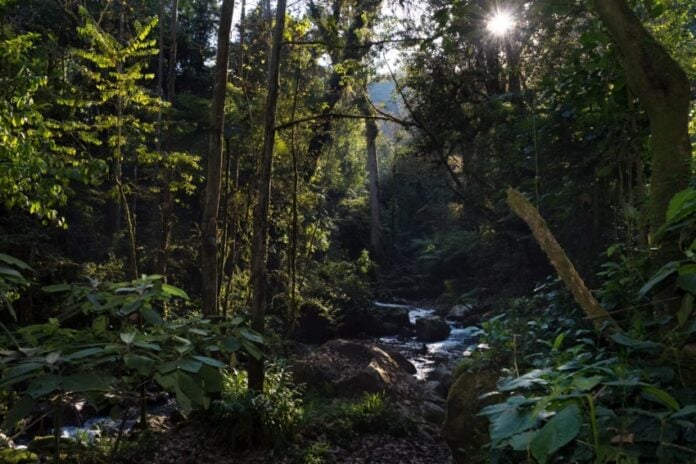
Blanco Pitaya, a natural cloud forest reserve with cinematic and unique landscapes is located in Teziutlán, Puebla, just four hours away from Mexico City. (Tamara Blazquez Haik)

Cloud forests make up just 1% of Mexico’s territory. They contain nearly 10% of the country’s plant species and shelter a remarkable range of wildlife species. These ecosystems are known for their foggy environments caused by the wet and rainy weather that prevails in regions such as the Sierra Madre Oriental, Sierra Madre del Sur and Sierra Norte de Chiapas, where some of the last remaining cloud forests survive. The weather tends to be warm but humid, with nights becoming cooler, especially when the mist envelops the area.

Despite their ecological importance as biodiversity hotspots and for capturing water and carbon, helping regulate regional weather, Mexico’s cloud forests are sadly endangered. Illegal logging, cattle ranching and urban expansion continue to drive deforestation and place these fragile habitats at risk. As such, any action that seeks to protect these forests is of utmost importance.

@tamarablazquezhaik Únanse a los esfuerzos de conservación de Blanco Pitaya. Pueden encontrarlos en FB e Ig con ese nombre, “Blanco Pitaya”. La reserva está en Teziutlán, Puebla. #naturaleza #fotografía #animales #fyppppppppppppppppppppppp #conservación ♬ swatting at flies – ethan mcneal

The effort to save Blanco Pitaya

One grassroots effort is Blanco Pitaya, a natural reserve founded by Ignacio Castillo in 2021 in Teziutlán, Puebla (just four hours away from Mexico City). The 16.5-hectare (40-acre) reserve preserves an almost pristine stretch of cloud forest where towering tree ferns rise above a dense understory. Bromeliads and other epiphytes blanket the trees, creating shelter for species such as the small-eared tree frog (Rheohyla miotympanum), countless insects, birds and mammals like ocelots that depend on the forest canopy to survive.

Blanco Pitaya protects the forest through low-impact ecotourism. Ignacio’s vision was to first create a small hotel-boutique in the area. However, after going through some intense personal situations and thinking about leaving a livable planet to his young son, he decided on a different future. Thus, Ignacio now aims to attract visitors through camping and spiritual retreats, bird and wildlife watching, and river cleanups along the Xoloatl River that runs through the reserve. The goal is to foster a connection strong enough that visitors leave caring deeply about these forests that are often overlooked or mistaken for generic rainforests or tropical jungles.

Ecotourism at Blanco Pitaya

With tree ferns evoking a prehistoric landscape, recalling an era when dinosaurs roamed the planet, visitors can enjoy open meditation spaces, marked hiking trails, spring pools, waterfalls and the river that cuts across the property. The reserve is equipped with a working toilet and hot showers as well as spacious camping tents. There’s also a kitchen and dining area designed to bring together travelers who share a love for the outdoors.

Ignacio’s guided experiences combine hiking with meditation, encouraging visitors to slow down and reconnect with the present moment. The trails take visitors to several waterfalls and a beautiful basin known as the “Poza de los sueños” where encounters with the local frogs are not uncommon.

Community-based conservation 

Blanco Pitaya’s conservation work extends beyond tourism as well. Over the years, Ignacio and his team have recovered a significant amount of plastic waste and debris, like old tires, plastic bottles, and old remotes, just to name a few examples from the Xoloatl River. As nearby communities expand, untreated waste continues to reach the waterways that feed the forest.

Although a treatment plant exists near Teziutlán and the neighboring San Juan Acateno, it remains nonfunctional. allowing polluted runoff to flow directly into the river and threaten the forest’s long-term survival. This threatens both the local biodiversity and the long-term survival of Blanco Pitaya’s cloud forest. Local authorities have expressed interest in addressing the problem and supporting cleanup efforts. As have some universities like the Universidad de las Américas, which has participated in restoration activities.

Ignacio’s broader vision also includes supporting local communities by donating supplies to rural schools and involving the local children in environmental stewardship, thus ensuring that conservation becomes a shared community responsibility, with Blanco Pitaya representing a model for community-based conservation. Ignacio believes that through ecotourism, environmental education and collaborative projects, the reserve can become financially sustainable while supporting surrounding communities and safeguarding what remains of the cloud forests along the Puebla–Veracruz state line.

 Tamara Blazquez Haik is a writer and photographer.

Activists’ victory means IMSS now offers public hospital abortion services in 25 states

1
Abortion activists
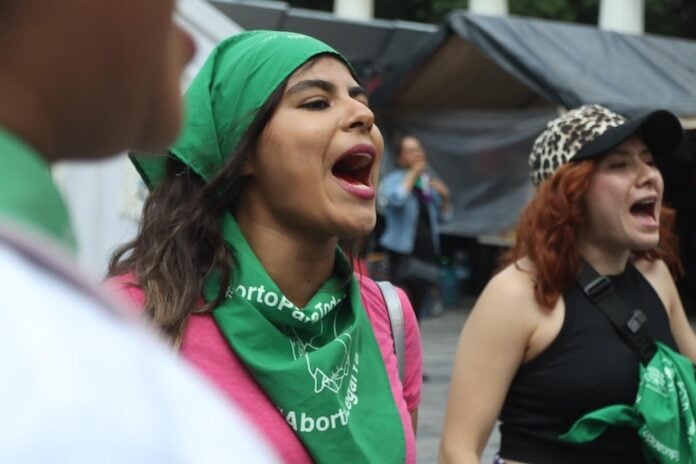
After the Supreme Court's landmark decision decriminalizing abortion, activists turned their attention to gaining access to abortion in the public health system. (Graciela López/Cuartoscuro.com)

The Mexican Social Security Institute (IMSS), which provides public health care for workers and their families, is now required to guarantee elective abortion services in the states where abortion has been decriminalized.

This new mandate follows a legal victory for activist groups who promoted at least 14 amparo lawsuits (judicial actions to protect individuals from acts of authorities) in favor of almost 300 pregnant IMSS beneficiaries.

Three key rulings, two in Chihuahua and one in Oaxaca, formally ordered the IMSS to implement elective abortion services for its beneficiary population. These rulings require the IMSS to adjust its budget accordingly, train staff, and organize the service network to ensure the right to elective abortion where local law already permits it.

These rulings have general effects, meaning that they not only protect those who filed the lawsuits, but also anyone entitled to benefits from IMSS. 

As a first step to comply with the resolutions, the IMSS developed a Technical Guide for elective abortion aimed at its staff. It also created a WhatsApp chatbot to provide information about the procedure and the states where it is legal. Both the chatbot and informational materials aim to ensure that users know where to go and what they can request within the IMSS network of units.

The IMSS guide and chatbot indicate that elective abortion is legal up to the 12th week of pregnancy (first trimester) in 24 states. In Aguascalientes, the limit is the sixth week.

Currently, elective abortion is legal in 25 states plus Mexico City, the outliers being Guanajuato, Durango, Morelos, Querétaro, Nuevo León, Tamaulipas, and Sonora. In those six states, elective abortion remains criminalized, meaning beneficiaries in these states can’t access the guide. 

The organization Abortistas MX, one of the several organizations that promoted the lawsuits, called the developments a collective achievement in which actions from civil society to promote reproductive justice in the country played the key role.

“We celebrate this progress resulting from the injunctions we won collectively in 2024,” the organization wrote in its official X account. 

 With reports from Verificado

Spring arrives and brings scorching heat across Mexico, with 12 states passing 105 F (40 C)

0
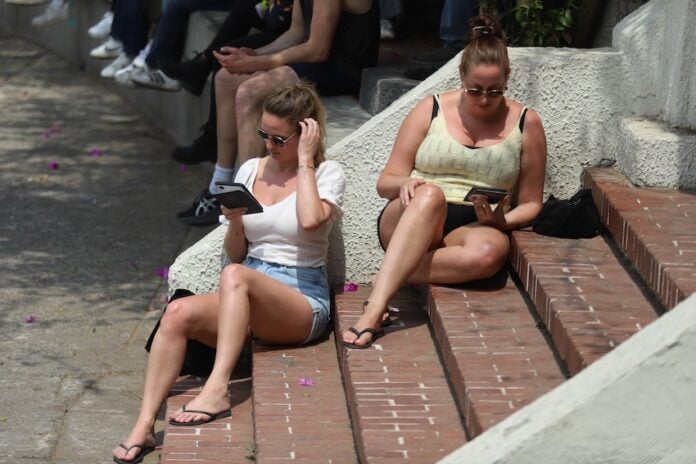
Sun lovers may be tempted by the sunny skies, but caution is urged about prolonged exposure to the extremely high temperatures across much of the country. (Graciela López/Cuartoscuro.com)

The calendar may have barely turned to spring, but residents of 12 states might consider  skipping ahead to their summer clothes going into the weekend.

The National Meteorological Service (SMN) forecast extreme heat in several northern and western states for Friday and into the weekend, advising residents to stay well-hydrated, to avoid prolonged exposure to the sun and to wear long-sleeved, light-colored clothing during the day.

weather map mexico 20MAR2026
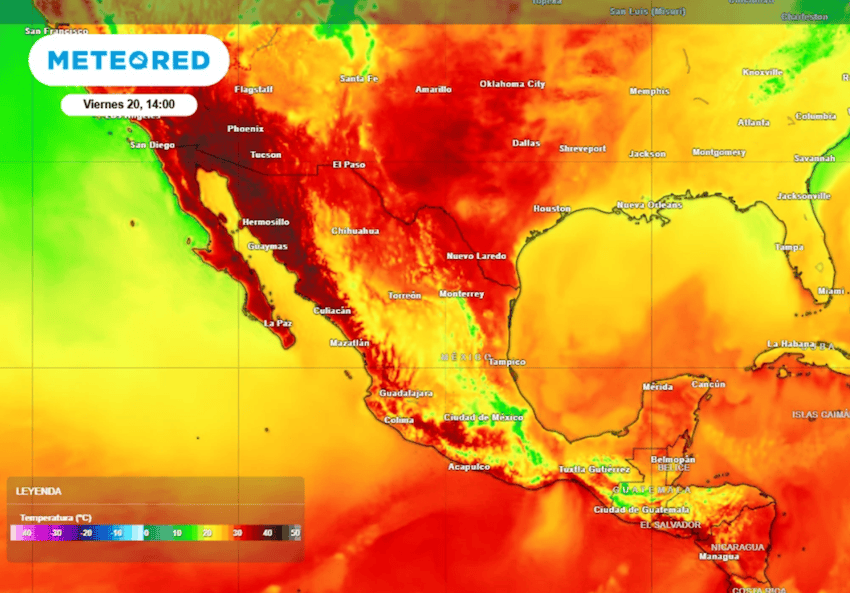
This temperature map of Mexxico released Friday by the meteorological site Meteored Mexico gives a convincing picture of the hot weather across Mexico on this first day of spring. (Meteored Mexico)

With temperatures expected to soar above 105 F (40 to 45 C) in Baja California, Sonora, Chihuahua, Sinaloa and Guerrero, the SMN is urging residents to pay special attention to children, the elderly, the chronically ill and vulnerable groups.

Temperatures of 95 F to 104 F (35 to 40 C) are expected in Baja California Sur, Durango, Zacatecas, Nayarit, Jalisco, Colima, Michoacán, Morelos, Puebla, Oaxaca and Chiapas, while Coahuila, Nuevo León, Tamaulipas, San Luis Potosí, México state, Campeche, Yucatán and Quintana Roo will see highs of between 86 and 95 F (30 to 35 C).

The heat wave in the north is expected to begin weakening by Monday, but that does not imply a significant drop in temperatures. On the contrary, the SMN warned that a possible increase in humidity could lead to muggy mornings that lead to warm afternoons.

Climatological recordings show that meteorological springs in Mexico have become increasingly warmer and drier over the last decade, according to Meteored México

“The beginning of March now presents temperatures that were previously typical of mid-April, bringing forward water stress in sensitive ecosystems,” it said.

The National Water Commission (Conagua) reported that a progressive increase in solar radiation and a decrease in the influence of cold fronts will produce an increase in temperatures during the second half of March and through April.

May is typically the hottest month across Mexico and Conagua has predicted persistent heat waves throughout the year, projecting that several Mexican cities could see record-breaking temperatures in 2026.

Hermosillo, the Sonora state capital, and Mexicali, capital of Baja California, have already done that.

On Wednesday, Mexicali set a new record for March when the temperature topped out at 105.6 F (40.9 C). In Hermosillo, the mercury hit 108 F (42.5 C), a new record for March, on Thursday.

The SMN recorded five heat waves in 2025, with the highest temperatures concentrated in mid-May.

With reports from N+, La Jornada, La Prensa, El Sol de Sinaloa and Yale Climate Collections

Looking to an all-digital future, Sheinbaum plans to eliminate cash at the pump and the toll booth

17
Pemex station
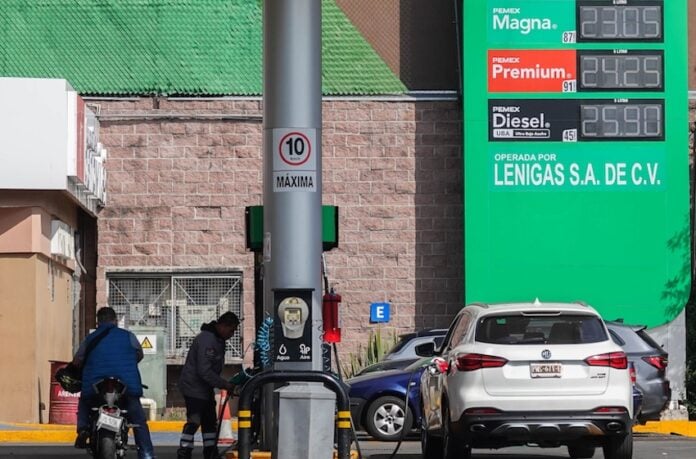
For how long will your cash be good at the pump? According to President Sheinbaum's ambitious timetable, digital payments at gasoline stations will be mandatory before the current year is up. (Camila Ayala Benabib/Cuartoscuro.com)

As part of her goal of digitizing the Mexican economy, President Claudia Sheinbaum said on Thursday that cash payments at gas stations and highway toll booths will be eliminated starting this year.

Sheinbaum said her administration is working with the the banking sector to standardize digitized payment procedures nationwide to promote their use, and especially with Banco de Bienestar to facilitate digital payments for all Mexicans.

Sheinbaum at ABM
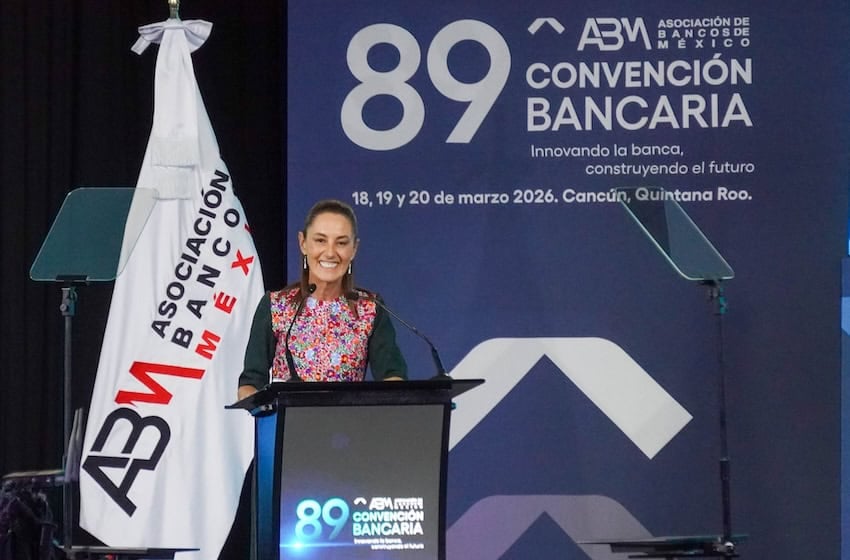
President Claudia Sheinbaum announced her digitized payment plans as she addressed the 89th
Banking Convention of the Mexican Banking Association in Cancún Thursday. (Presidencia / Cuartoscuro.com)

“Our goal this year is to make digital payment of gasoline and tolls mandatory,” the president said. “This will allow us to move forward with the digitization of the country through other schemes.”

Delivering the inaugural address at the 89th Banking Convention, Shienbaum also praised recent improvements to the CoDi system which can now be accessed through cell phones with zero commissions. CoDi (Cobro Digital) is a free, real-time digital payment platform developed by the Bank of Mexico, Mexico’s central bank, often called Banxico.

Also speaking at the convention, Banxico President Victoria Rodríguez said the central bank will stage a public consultation on reforms that would standardize the procedures for electronic fund transfers through mobile devices —  another step toward universal digitization.

The government is also preparing to include the Banco del Bienestar in the digitization process by allowing certain government payments to be made digitally. Banco del Bienestar is a state-owned development bank aimed at providing financial services and promoting financial inclusion, especially for beneficiaries of federal social programs and residents in remote or marginalized communities.

The banking sector has also been lobbying for digitization policies to further reduce the use of cash, especially payments for public services. Cash is used for roughly 80% of transactions in Mexico.

The economic state of the nation

Sheinbaum’s speech also touched on the economic situation of the country, emphasizing a historic reduction in poverty, a strong currency, an increase in the minimum wage, a healthy financial system and a solid domestic market.

At the same time, she encouraged the banking sector to do more, especially by expanding credit and facilitating access to financing. Among Latin American nations, Mexico offers the least amount of credit for small and medium-sized enterprises.

“The banking sector still has much to offer the country,” she said, while also recognizing the Mexican Banking Association’s commitment to raising the level of credit from 38% to 45% of Gross Domestic Product (GDP) by 2030.

“The sector is stepping up, but we need it to give even more,” she said. “That’s why the best news … is that it is going to increase credit.”

Sheinbaum said her administration’s priority is to establish an economic climate conducive to sustainable growth in order to improve Mexicans’ quality of life. 

The government’s historic 5.6 trillion-peso (US $313 billion) public and private mixed investment program can be the foundation for this growth, she said. The investments will target projects in eight strategic sectors, including energy, trains, highways, ports, health and water.

Other elements of economic policy mentioned by Sheinbaum include investment in the energy sector (to generate 30,000 MW of electricity by 2030, boost renewable energy and reduce dependence on natural gas) and new financing for technological and scientific innovation. 

With reports from El Economista, Timer Noticias and El País

As the World Cup nears, migrant kids in Mexico City train for their own soccer tourney in April

0
migrant youth soccer practice
Migrant children in Mexico City sport their tournament uniforms while participating in group activities. While the kids want to do well in their soccer tournament, organizers say the event is focused less on the final score than on offering safe spaces to children who have fled violence and poverty. (ACNUR)

With the World Cup’s opening match in Mexico City less than three months away, migrant children in the capital are lacing up for a smaller but important tournament of their own.

Since late February, hundreds of migrant, refugee and local children living in inner-city shelters have been training on improvised fields for “Goals for Inclusion,” a European Union–funded project that uses soccer to promote integration, protection and coexistence.

The initiative was launched this month by the EU Delegation in Mexico alongside the Mexico City government, the United Nations refugee agency UNHCR and the International Organization for Migration.

It youth soccer program will run through next month and culminate with a big tournament in Mexico City at the end of April.

Organizers say the focus is less on the final score than on offering safe spaces to children who have fled violence, poverty and political turmoil and who now face hostility, bureaucracy and exploitation in Mexico.

Around 300,000 migrants remain stranded in the country as tougher U.S. border policies in Donald Trump’s second term as U.S. president have sharply reduced crossings and left many families unable to move forward or go home, according to humanitarian groups.

“Sport has no borders. The ball is round here or there,” Venezuelan migrant Joel Orta told Reuters as his 8-year-old son, Matías, practiced in the courtyard of a shelter in Tepito, a Mexico City neighborhood.

“Goals for Inclusion” will take place at fields in two inner-city areas considered dangerous, Tepito and Vallejo, both north of central CDMX.

​At CAFEMIN, a shelter in Vallejo where the project was officially unveiled, EU Ambassador Francisco André said, “In the European Union, we are convinced that all girls and boys have the right to grow up in safe spaces where they feel respected and included. And sport creates precisely that: a community where they learn about camaraderie, solidarity, generosity and respect.”

​Mexico City officials say sports can bridge tensions between residents and new arrivals.

“Projects like ‘Goals for Inclusion’ demonstrate that sports can become a real bridge between people in situations of human mobility and host communities, generating environments of coexistence, protection and shared social responsibility,” said Temístocles Villanueva, the city’s coordinator of attention to human mobility, in a United Nations statement.

“Goals for Inclusion” will include 18 community clinics that blend drills with socio-emotional support and human rights education. The clinics at migrant shelters and city-provided facilities are framed as “safe spaces.”

“Sport is a tool for change, a tool for peace,” said Perla Acosta, director of Más Sueños, a nonprofit that focuses on using sports to better society. “It helps us build community, it helps us connect.”

The 2026 FIFA World Cup will begin June 11 in Mexico City with a Mexico–South Africa match and conclude July 19 in New Jersey. Matches will be played in Mexico City, Monterrey, the Guadalajara metro area and in 11 cities in the U.S. and two in Canada.

With reports from Reuters and United Nations Mexico