Héctor Bonilla speaks at an event in 2013. Francisco Rodríguez / Cuartoscuro.com
Highly acclaimed in Mexico and Latin American, the Mexican actor Héctor Bonilla died on Friday of kidney cancer at age 83. The Ministry of Culture has recognized him as one of the best actors the country has produced in recent decades.
“He died at home, peacefully, without pain and surrounded by his closest circle,” his youngest son, Fernando Bonilla, shared on social media.
Born on March 14, 1939, in Tetela de Ocampo, Puebla, Bonilla studied at the National School of Theater of Mexico’s National Institute of Fine Arts and Literature (INBAL). His first acting debut was in the movie “Jóvenes y Bellas” (“The Young and Beautiful Ones”). Several other films and theater productions followed during the 1960s and ‘70s.
But it wasn’t until 1989 that he got international recognition with the movie “Rojo Amanecer” (“Red Sunrise”). In the film, he plays the role of a father of two university students who participated in Mexico’s student movement of 1968.
A portrait of actor Héctor Bonilla taken in the 1970s. Cineteca Nacional de México
In 2003, he made his directorial debut with the feature film “Mónica y el profesor,” starring his son Sergio Bonilla.
Other film credits include “Patsy, mi amor” (1969), “Yo amo, tu amas, nosotros” (1974), “La leyenda de la máscara” (1990), “El bulto” (1992), “Serpientes y escaleras” (1992), “Ámbar” (1994) and “Crónica de un desayuno” (2000).
Finally, in 2016 he starred as Don Servando in the popular comedy film “Un padre no tan padre” (“A not-so-great father”) and later reprised his character for the sequel “Una Navidad no tan padre 2″ (“A not-so-great Christmas”), which was his last film.
In 2019, INBAL recognized him with the Remarkable Trajectories of the Arts in Mexico award for having participated in more than 140 productions over his 50-year career in theater, film and television. That same year he also received the Golden Ariel, the highest award given to an individual in the Mexican film industry by the Mexican Academy of Cinematographic Arts and Sciences.
In an epitaph Bonilla wrote for himself several years prior to his death, and that his family shared with the news, he said: “Se acabó la función, no estén chingando. El que me vio, me vio. No queda nada,” meaning, “The show is over, no BS. He who saw me, saw me. Nothing’s left.”
One thing the writer is grateful for about living in Mexico is that it's given her daughter a better life than she probably would have had in the U.S. UNICEF
It’s Thanksgiving once again! And once again, I’ve gathered with my hodgepodge of family and family-like people for a Mexican Thanksgiving celebration.
This year is extra special, as my sister came to spend the holiday with us. It’s our first one together in over 20 years, and even though we’re in Mexico without all the original ingredients, I think we did a pretty good job at recreating some our mom’s old recipes.
My partner, my child, my best friend and a handful of fellow Mexican and foreigner friends joined us to make for a lovely meal that, hours later, I’m still stuffed from.
Though the roots of Thanksgiving are questionable at best, it’s still one of my favorite holidays, a time to celebrate our bountiful gifts and to bask in the glow of the people we’ve convinced to hang out with us, either once in a while or all of the time.
And though it’s a bit cliché, I like writing an annual “what I’m thankful for” article, the Mexico News Daily version, of course, with a focus on México lindo y querido.
Family near and far. This month, I’ve been able to see more of my U.S. family than usual: I spent the first two weeks helping my dad move to another house, and this week, my sister came for both Thanksgiving and my daughter’s birthday — apparently eager to not miss out on a single potluck, my kid was born on Thanksgiving 2013). Mercifully, most of my family is still in Texas, so a three-hour plane ride will usually do it. I’m happy we can get to each other easily.I also recently celebrated two and a half years with my partner, who along with my daughter always makes this place feel like home. He’s been a good sport about all things Thanksgiving: sitting through a screening of “Planes, Trains, and Automobiles;” helping to prepare food and the house; and being present for hours and hours of food and conversation with more than 10 people even though he’s an extra-introverted introvert.
Good local friends. Especially when you’re a first-generation immigrant, you have to get creative when it comes to forming a group of friends and family-like people around you. In Mexico, it’s all about the family. Though members of a family might not always like each other, they tend to be unflinchingly loyal, there for each other in ways they’re not accustomed to being for friends. So what happens when you don’t have your family here? Well, things can get a little lonely, especially if you’re a woman (I’ve seen many lone men be rather easily “adopted” into families. I have several theories, but not for this particular article). Part of the trick, I’ve found, is to find other “orphans” — Mexicans and foreigners alike who live far away from their own families. It’s a situation that few seem to understand unless they’ve gone through it themselves, so it’s important to find at least a few people you can count on. I have found these people and am so grateful to have done so!
Chivalry and educación (manners). Being in the U.S. always makes me appreciate the politeness of Mexicans. It’s not that people back home aren’t, it’s just that Mexicans are so extreme in their politeness that they’re just really hard to beat.It’s not just about opening doors. If I’m seen struggling with something heavy, here someone will inevitably rush to help me. If someone sees you coming, they politely step aside, making sure you can pass by on the safer side. If I’ve gone to someone’s house, I’ll always be offered something to eat and drink. Extreme measures are taken to ensure my comfort, and the sweet way Mexicans say “in your house” when they’re talking about their house (everyone knows that phrase “mi casa es tu casa,” right?) melts my heart every time.
Safety. I know this one probably seems like a strange point. And it’s true; Mexico’s record on safety is not stellar. So what is it that makes me feel safe here? My own city is crowded enough that there are usually at least a handful of people in any given space but rarely so crowded that people become one annoying lump, easy to ignore. While I, of course, take reasonable precautions, I also take comfort in the idea (perhaps erroneously, I’ll admit) that if something were to happen, the people around me would come to my aid. And as scary as narco boogeymen are, I’ve noticed myself feeling much more nervous in public in the U.S., knowing that any random doofus with a real or imagined vendetta or hero complex can be walking around with a semiautomatic weapon.
Ease of movement. I don’t have a car. I want a car, but I don’t need a car the way I would were I living in the United States; the house I’m currently renting is close to downtown and to bus stops. I can walk most places I need to go and get a bus or a taxi to most others. While getting my kid to and from school can be a little inconvenient, for the most part, my movements aren’t restricted by not owning an expensive piece of machinery.
A great place to raise my kid. Mexico — at least my little corner of it — has been good for my child — likely better than the U.S. would have been. As a whole, Mexicans like children, and they are welcomed and accommodated virtually everywhere. Kids and parents alike are mostly spared the exasperated sighs and dirty looks of strangers when children are not being literal angels — and let me tell you: it’s a relief.
This is, of course, a short list (articles can’t go on forever, but I certainly could fill up several pages more). Feel free to add more in the comments! And wherever you happened to be this week, I hope you’ve had a wonderful holiday.
Sarah DeVries is a writer and translator based in Xalapa, Veracruz. She can be reached through her website, sdevrieswritingandtranslating.com
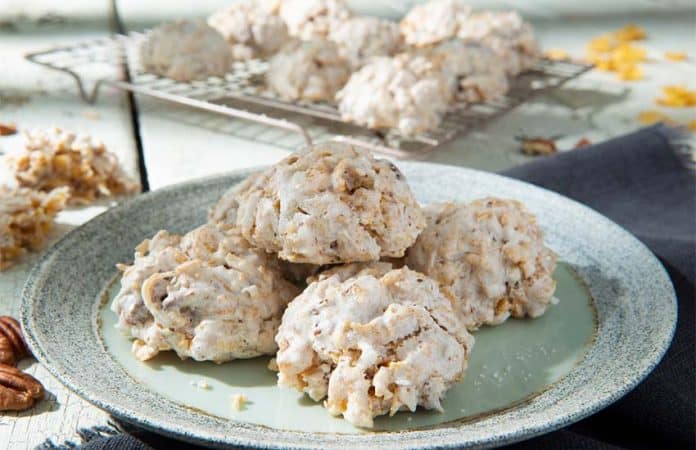
Different than regular macaroons, these add cornflakes and pecans for more crunch and flavor.
I know a lot of you don’t bake anymore (or never have) but for those of us who do, this is the start of our busiest season. We’ve been stockpiling butter and pecans, flours and spices for a while now, and visions of sugarplums (and other assorted cookies!) are definitely dancing in our heads.
Baking is a science; when a recipe says to, for example, “chill the dough for two hours,” it behooves you to do just that. Besides making a sticky dough easier to work with, chilling before baking yields a cookie that will hold its shape better.
Don’t eyeball your ingredients — you want to measure exactly the correct amounts of both wet and dry ingredients. A pinch too much or too little baking powder will make a big difference! My mom showed me how to use the flat side of a butter knife to level off dry ingredients for accurate measuring, and I still do that to this day.
You also don’t want to overmix the ingredients; when a recipe says “gently fold in,” that’s what it means. Overbeating or overworking the dough will change the formulation, causing problems like cookies that rise and then collapse or overspread while baking. And always, always whisk dry ingredients together thoroughly before combining with the creamed butter and sugar or eggs, which are often added alternating with each other.
When making cookies, measure carefully and follow recipes precisely to get the results you’re aiming for.
Oven temperature is crucial; I struggle with my oven, which doesn’t hold high temperatures or, really, any temperatures very well. (So frustrating!) If you don’t already have one, an inexpensive oven thermometer can be a godsend and give you a true reading of what’s going on in there. Speaking of temperature, if a recipe says to use room temperature eggs or butter, take the time to do so. Those ingredients will combine better and emulsify into the dough if they’re not straight out of the cold refrigerator. And in order for eggs to fluff up and add volume to the dough, they need to be at room temperature.
I always encourage you to use the best ingredients you can afford, and in baking, this advice still holds. For the best flavors, use “good” butter — i.e., real, most likely imported — high-quality dark cocoa and fresh, active baking powder and baking soda.
Chocolate chip, Snickerdoodles, “Mexican wedding cookies” and oatmeal cookies (crisp and crunchy or soft and chewy) are all perennial favorites, and I’ll leave it to you to find those classic recipes online. I’ve included recipes here for other big-batch cookies. These recipes yield enough cookies to give as gifts, whether to friends, neighbors or whomever you want to share a little holiday cheer with. And don’t worry; none of them require special equipment or ingredients. Provecho!
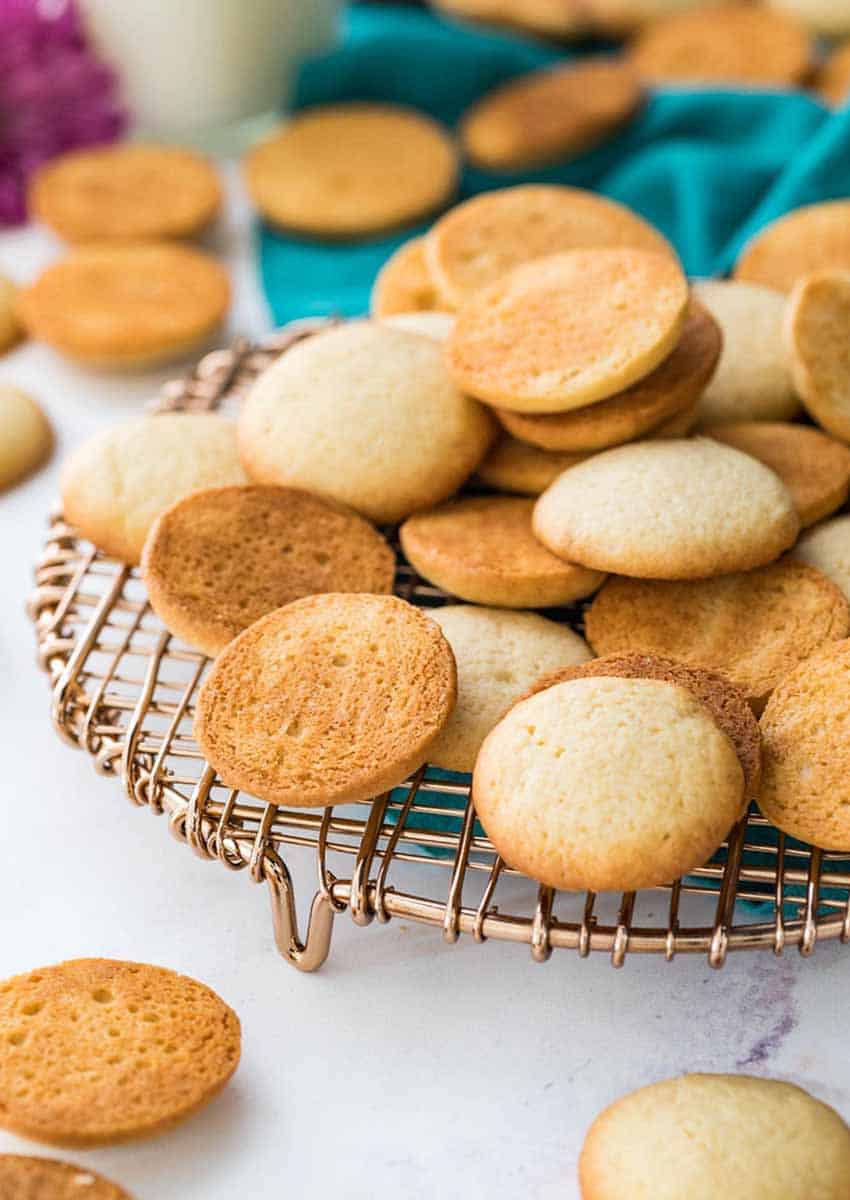
Vanilla Wafers
¾ cup butter, softened
1 cup sugar
1 egg
1 Tbsp. vanilla
2 Tbsp. cold water
1 cup flour
½ cup cornstarch
¼ tsp. salt
Preheat oven to 400 F (200 C). No need to grease the pans. Beat butter and sugar until creamy. Add egg, vanilla and water; beat well. In another bowl, mix flour, cornstarch and salt; add to butter mixture and combine well.
Drop batter by rounded teaspoonfuls about 1½ inches apart onto cookie sheets. Bake about 8 minutes, until edges are lightly golden. Remove from oven and carefully transfer to racks to cool. Yields about 80 cookies.
Refrigerator Spice Cookies
This dough can be kept 2–3 weeks in the refrigerator and baked as needed. If need be, substitute pumpkin pie spice for the individual ones listed here.
½ cup butter or margarine
½ cup grated piloncillo or brown sugar
1 Tbsp. water
1½ cups flour
¼ tsp. baking soda
¼ tsp. salt
1 ½ tsp. cinnamon
1 tsp. nutmeg
½ tsp. ground allspice
½ tsp. powdered ginger
Optional: ½ cup chopped pecans, ½ cup chopped dates
Cream butter and sugar; add egg and water. Beat until light and fluffy. In another bowl, mix flour, baking soda, salt and spices. Add to butter mixture; beat till combined. Stir in dates and nuts, if using.
On a lightly floured worksurface, shape dough into a roll or rolls about 1 ½ inches in diameter. Wrap in parchment or plastic wrap and chill until firm.
You can never have enough of these classic vanilla wafers!
When ready to bake, preheat oven to 350 F (175 C) and grease cookie sheets. With a thin, sharp knife, cut dough into rounds about 1/3-inch thick. Place 1 inch apart on pans. Bake about 10 minutes until lightly browned. Cool on racks. Yields 50 cookies.
Cornflake Macaroons
1 cup unsweetened shredded coconut
1 cup chopped pecans
4 egg whites
1-1/3 cups sugar
1 tsp. vanilla
1/8 tsp. salt
3 cups cornflakes
Grease cookie sheets or line with parchment paper. With an electric mixer, beat egg whites until foamy; mix in vanilla. Gradually add sugar, beating until stiff and glossy. Fold in pecans, coconut and cornflakes. Drop by rounded tablespoons onto prepared baking sheets.
Bake at 325 F (165 C) about 15 minutes, until lightly browned. Remove immediately from baking sheets; cool on wire racks. Store in airtight container. Yields 48 cookies.
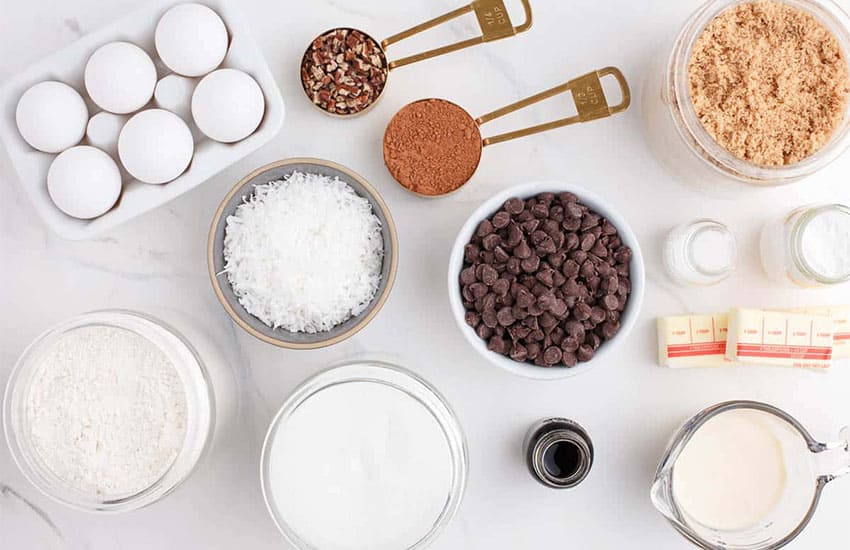
Chocolate Crinkle Cookies
1 cup cocoa
4 eggs
2 cups sugar
½ cup vegetable or coconut oil or a combo
2 tsp. vanilla
2 cup flour
2 tsp. baking powder
½ tsp. salt
½ cup or more confectioners’ sugar
Mix cocoa, sugar and oil. Beat in eggs one at a time; add vanilla. Sift together flour, baking powder and salt; fold into cocoa mixture. Mixture will be sticky. Cover and chill for 2 or more hours.
Preheat oven to 350 F (177 C). Line cookie sheets with parchment. Roll dough into 1-inch balls, then roll in confectioners’ sugar. Place on pans about 1 inch apart. Bake 10–12 minutes. Remove from oven and cool on rack. Yields about 60 cookies.
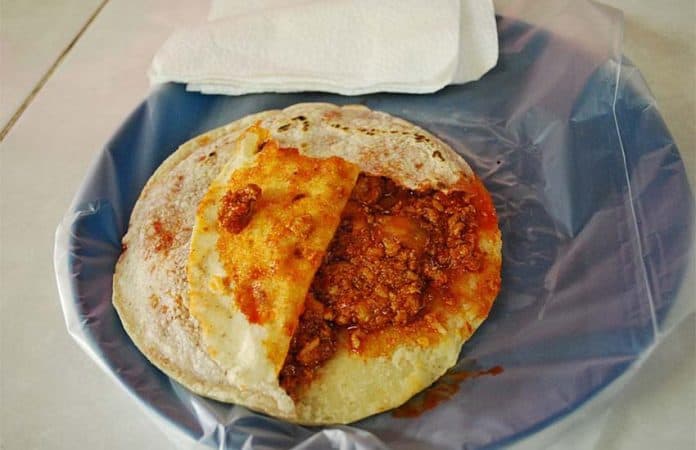
Red picadillo-filled corn gordita in Canatlán, Durango.
Despite the vast number of articles and books on Mexican food, the gordita is one Mexican preparation that’s relatively overlooked.
This may be why they came under scrutiny recently in the media and the internet by those who interpreted the food’s name as the derogatory “little fat woman.” But there is controversy about this interpretation because gordita makes sense as a feminine word: the dish is indeed a little, fat tortilla; the word “tortillas” is feminine in Spanish; and Spanish adjectives match the gender of the noun they’re describing.
Nevertheless, one suggestion for renaming has been masa con relleno (dough with stuffing), which actually nails why gorditas are distinct from tacos and other antojitos (street food).
Traditionally, gordita preparations are made by shaping larded corn dough over some kind of filling, then pressing them somewhat flat. The resulting disk is fried, with varying amounts of fat of some kind. The cooked gordita is then split into pockets to add one or more other ingredients, raw or precooked. Fillings, both before and after cooking, vary immensely based on region and on the cook and the diner’s preferences.
Gorditas de nata at a stand in Oaxaca city. Cristina Zapata Pérez
In Mexico’s central highlands, savory gorditas are always made with corn dough, and almost always deep-fried. The three most common fillings are chicharron prensado (bit of pork, mostly skin, fried and pressed into blocks — also called gorditas demigajas), requesón (which is like ricotta cheese) and refried beans. After cooking, salsa is always added, but the type and quantity of vegetables and grated cheese varies from simple onion and cilantro to nopal cactus, tomatoes and more.
Similar gorditas can be found in southern Mexico, but they are nowhere near as popular. An exception is in the Yucatán, especially Mérida, where they are called polcanes, a Maya word that means “serpent’s head.” The traditional fillings for these include white beans, onions and squash seeds.
Where you find gorditas everywhere is in the northern Altiplano between Durango, Chihuahua and Nuevo León. Clients order them with dough made from corn or wheat flour. The masa is cooked sans filling on a comal/griddle, then filled with classic Mexican dishes such as chicken stew (tinga), ground beef in sauce (picadillo) or even eggs. They are so popular that recent articles in regional newspapers have bemoaned the country’s inflation that has raised their prices.
“Gordita” is also applied to similar preparations: gorditas de horno (baked) are popular in places like Zacatecas (their probable origin), Jalisco and Durango. With sweet or savory fillings, the most traditional are made in wood-fired, adobe ovens. Wheat flour “gorditas” in central Mexico are really sweet breads. They appear as puffy gorditas de nata (cream), looking somewhat like an English muffin, and as a flat, crispy version called a gordita de azúcar (sugar).
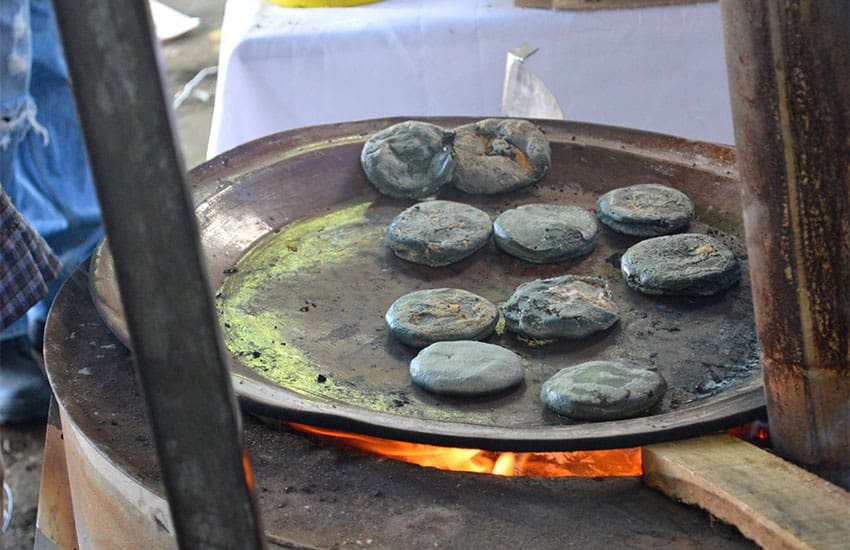
Blue corn gorditas cooking on a comal pan in Patzcuáro, Michoacán. Alejandro Linares García
The concept of a fat, stuffed tortilla appears outside of Mexico too: in El Salvador, they are called papusas and in Venezuela and Columbia, arepas. They appear in the U.S. as well, especially the southwest. The most traditional seem to be a simple combination of corn dough with refried beans and lots of salsa, but there are some unusual twists — such as one made with a buttermilk corn cake batter.
Taco Bell, of course, has its own “gordita,” but, well, I’ll leave it to you to decide if it deserves the name.
Leigh Thelmadatter arrived in Mexico 18 years ago and fell in love with the land and the culture in particular its handcrafts and art. She is the author of Mexican Cartonería: Paper, Paste and Fiesta (Schiffer 2019). Her culture column appears regularly on Mexico News Daily.
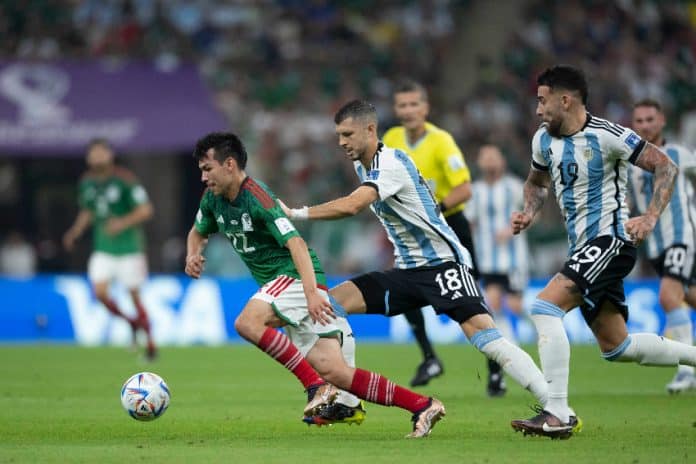
"El Tri" have one more chance to advance in the World Cup after their 2-0 defeat by Argentina today. Selección Nacional Twitter
Mexico’s chances of advancing to the knockout stage of the FIFA World Cup are diminished – but not extinguished – after El Tri lost 2-0 to Argentina in Qatar on Saturday.
After a scoreless first half, Argentine captain Lionel Messi broke the deadlock in the 64th minute with a low shot that eluded the outstretched arms of Mexican goalkeeper Guillermo Ochoa to sneak inside the right post.
Midfielder Enzo Fernández added a second goal to the scoresheet in the 87th minute when he curled a shot past Ochoa into the top right corner of the goal.
It was a disappointing day for the Gerardo Martino-coached Mexican team, which only managed to get one shot on target during the encounter, played at the Lusail Stadium north of Doha.
Legendary Argentine forward Lionel Messi scored the first goal of the game in the second half. FIFA World Cup Twitter
That shot was a free kick taken just before half time by Alexis Vega. The 25-year-old Mexico City native drilled a rapid shot at the top left corner of the Argentine goal, but goalkeeper Damián “Dibu” Martínez made a clean save to stop El Tri from taking the lead.
Mexico has now played two matches at this World Cup without finding the back of the opposition’s net, as El Tri’s first group match against Poland ended in a 0-0 tie. La Selección Mexicana is now in fourth place among the four teams in Group C with a single point thanks to its tie last Tuesday.
Poland is on top with four points after its 2-0 win over Saudi Arabia earlier on Saturday, while Argentina and Saudi Arabia both have three points after a win and a loss apiece.
El Tri can still make the round of 16 – the top two teams from the eight groups advance to the knockout stage – but will have to defeat Saudi Arabia on Wednesday to have any chance.
A win against Saudia Arabia would allow Mexico to leapfrog the Middle East Kingdom and finish the group stage with four points. If that occurs, and Poland beats Argentina on Wednesday, El Tri will move on to the round of 16.
If Mexico defeats Saudi Arabia and Argentina beats Poland, both Mexico and Poland will finish on four points behind Argentina on six. In that scenario, the team with the superior goal difference will advance. Thus a convincing victory over Saudi Arabia would benefit El Tri’s cause.
If Mexico beats Saudi Arabia and the Argentina-Poland match ends in a tie, Mexico and Argentina will both finish on four points behind Poland on five. As in the previous scenario, the team with the superior goal difference will progress.
More details about World Cup tiebreakers and advancement scenarios are available in this Washington Post article.
In a press conference following Saturday’s defeat, Martino – an Argentine who coached the Argentina national team between 2014 and 2016 – acknowledged that El Tri still has a chance to reach the next round and play a fourth match.
“While there is a possibility, you always have to try,” he said. “[Saudi] Arabia needs to win and we do too. I have no doubt we’ll do everything [we can] to beat [Saudi] Arabia,” the 60-year-old director técnico said.
Out of the 241 dogs stolen, 210 have been recovered, one journalist reported. Police continue to search for the rest. SSC
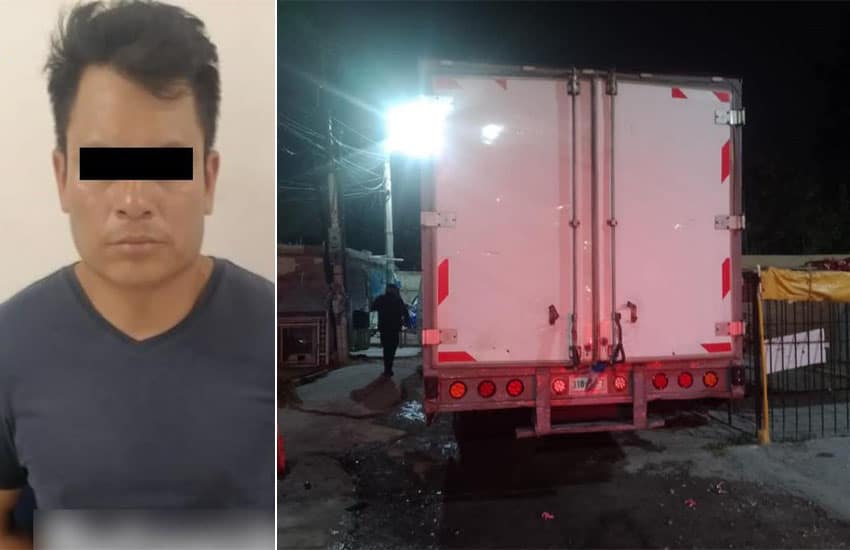
Police in Mexico City have arrested a man who allegedly stole a truck carrying over 200 dogs that recently flew into the country from Colombia.
The Mexico City Ministry of Citizen Security (SSC) said in a statement Friday that a 37-year-old man who “possibly” stole the truck was arrested in the northern borough of Gustavo A. Madero.
The ministry said police were alerted to the truck’s location by staff at the city’s northern Command and Control Center.
When officers reached the vehicle, “an individual was unloading cages, inside which there were dogs of breeds such as husky and bulldog, among others,” the SSC said.
Un cargamento con 210 perros de raza con alto valor económico fue robado saliendo del aeropuerto capitalino, sin embargo, policía de la CDMX recuperó el camión robado procedente de Colombia y recuperó a la mayoría. Serían entregados a sus dueños en México y EUA. pic.twitter.com/JzXOT7nRDJ
Journalist David Ordaz shared video of the confiscated pups on Twitter.
A woman “responsible” for the vehicle subsequently arrived at the location and “explained that the truck was transporting dogs and left customs at the Mexico City International Airport to head to her corporate offices,” the statement said.
“However, they soon lost contact with the driver,” the SSC said, adding that the truck was subsequently located by GPS and that the woman responsible for it “asked to proceed legally against the individual.”
“In a quick action, SSC personnel recovered the truck and all the dogs and arrested a 37-year-old man, who was informed of his legal rights and … presented to the agent of the Prosecutor’s Office, who will determine his legal situation,” the statement concluded.
According to a Milenio newspaper report, the dogs were brought to Mexico from Bogotá, Colombia, by Truca, a freight company. It was unclear whether the man detained on Friday had any connection to that company or knowledge of its import and export business.
The suspect and the stolen truck were located in Gustavo A. Madero borough. SSC
The news website La Silla Rota reported that the truck was carrying 241 dogs and was stolen when leaving the Mexico City airport on Thursday night.
Jorge Becerril, a journalist, said on Twitter Friday afternoon that 210 dogs were recovered by police, meaning that 31 were still missing.
“The company that transported the dogs from Bogotá to Mexico City proved ownership and that they are legally in the country, so the dogs were already returned. The Mexico City Attorney General’s Office is continuing an investigation to locate the rest [of the dogs],” he wrote.
David Ordaz, another journalist, said on Twitter that the “high economic value pedigree dogs,” among which are puppies, would be “delivered to their owners in Mexico and the United States.”
The Mexican aviation industry got top marks in this years Air Transport Competitiveness Index for Latin America and the Caribbean. Gobierno de Querétaro
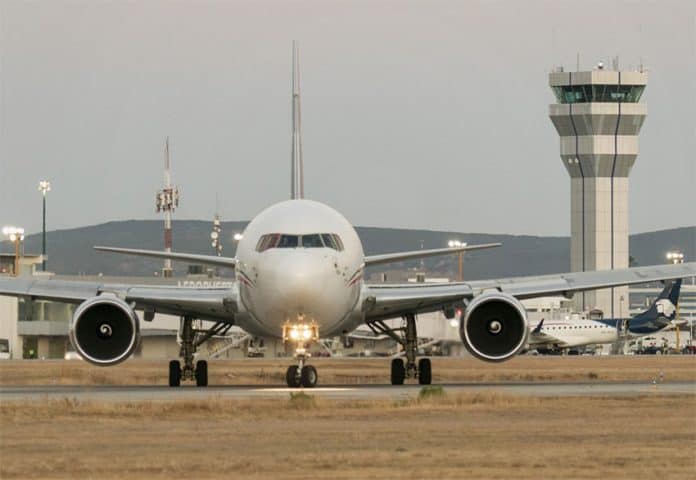
During the pandemic, the Mexican airline industry became the most competitive in Latin America, according to an index created by the firm Amadeus and the Latin American and Caribbean Air Transport Association (ALTA).
The second edition of the study, known as the Air Transport Competitiveness Index in Latin America and the Caribbean, found that Mexico stands out for high levels of connectivity, air transport policy, and for the wide variety of destinations accessible to its citizens without a visa.
Brazil ranked second, with high levels of competitiveness due to the low airport operating costs, followed by Panama, with high levels of international connectivity and the third best score for aviation authority governance.
In terms of connectivity, Mexico has 100 international destinations, surpassing Panama with 80 and the Dominican Republic with 57. In the first half of the year, Mexico had also registered more than 111,000 international operations — far ahead of the runner-up, Colombia, with 34,000.
Mexico’s top position in the index corresponds to the country’s open border policy during the pandemic. With some of the world’s loosest border restrictions since COVID hit, Mexico managed to maintain and even increase its passenger flow by 14% compared to pre-pandemic levels. The Dominican Republic and Colombia have also surpassed their 2019 levels.
Similarly, Mexico ranked No. 1 for post-pandemic promotion of aviation, in line with the country’s, followed by Costa Rica and El Salvador.
Mexico is also home to the largest number of airlines in the region, with 52 national and foreign companies, a fact which was reflected in its index score
However, the country’s good ranking in terms of connectivity and competitiveness contrasts with the elevated airport costs and the limited market to acquire jet fuel.
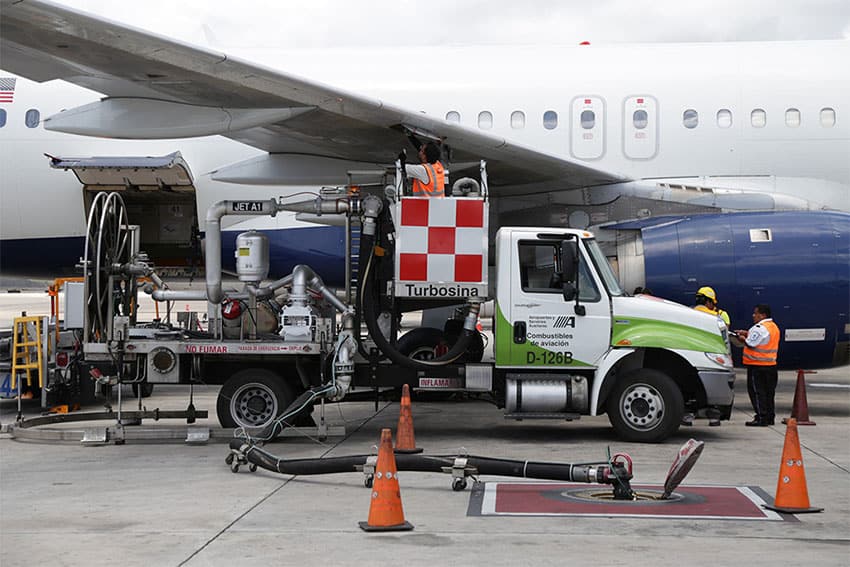
The partially state-owned company ASA controls most of the market for airplane fuel. Gobierno de México
The airports of Monterrey and Mexico City reported the highest airport fees in the region with an Airport Use Fee (TUA) of US $61.70. In the overall ranking, Mexico has the highest airport charges just behind Argentina, Haiti and Curaçao. It also charges the most airport fees and taxes in the region after the Bahamas and Ecuador.
In terms of fuel, the analysis ranked Mexico as “uncompetitive.” According to the media outlet Expansión, this is due to the virtual monopoly that the partially state-owned company ASA has on the supply of jet fuel.
Although the index analyzes the elements “considered to have an immediate impact on the operation of airlines and on the well-being of the industry in general,” it does not rate safety. The responsible institution to do so is the International Civil Aviation Organization (ICAO), which is set to audit Mexico’s aviation industry in 2023.
However, the United States’ Federal Aviation Authority has already rated Mexico’s safety when it downgraded the country from Category 1 to Category 2, preventing Mexican airlines from opening new routes to the United States.
The downgrade reflects the domestic airline industry’s recent infrastructure and organizational struggles. Just this week on Wednesday, thieves cut the Mexico City internet cables after mistaking the fiber optic cables for valuable copper wiring. This provoked an internet outage that forced immigration authorities to return to using slow paper forms and led to passengers missing flight connections.
Just one month ago, the aviation and transportation authorities were forced to suspend medical, physical and license renewal exams for the rest of the year because the transportation authority had been hacked. What’s more, authorities recently revealed the sinking of one of the airport’s main terminals shortly after a near-miss between two planes at the Mexico City airport on May 7.
Although Mexico’s ranking in the Amadeus and ALTA index is good, the current problems faced by Mexico City’s airport could affect its position when the ICAO evaluates the national aviation industry. As Amadeus and ALTA stress in their index, “Safety is the industry’s number 1 priority and therefore should be considered as a factor for the competitiveness of countries.”
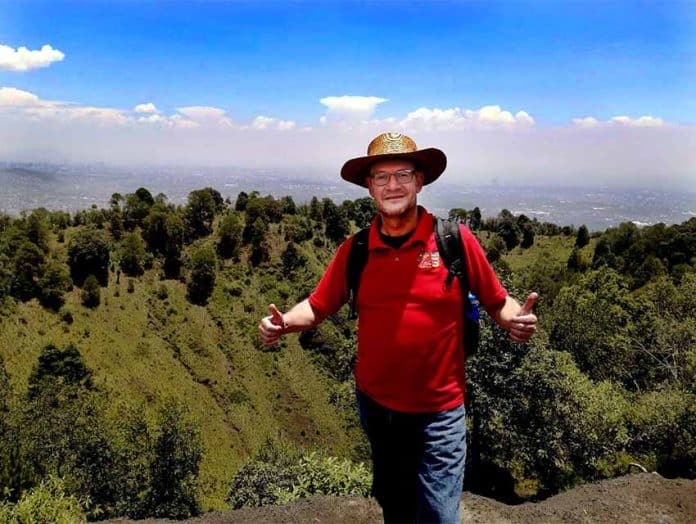
Mexico City might seem utterly urban, but over 13 years, Peter Winckers, seen here at the rim of the Xitle volcano, has found plenty of impressive nature hikes.
Ciudad de México is the most populous city in North America, teeming with around 21 million inhabitants.
There couldn’t be much green there, you’d think, but, according to Peter Winckers of the Aztec Explorers hiking club in the capital, that assessment would be dead wrong.
“Believe it or not, 51% of Mexico City is still green, and nine of our favorite hikes are entirely inside the city limits,” says the Dutchman, who’s been living in the capital for over a decade.
Whether or not you are a hiker, Winckers claims that Mexico City is much more interesting than many other big metropolises.
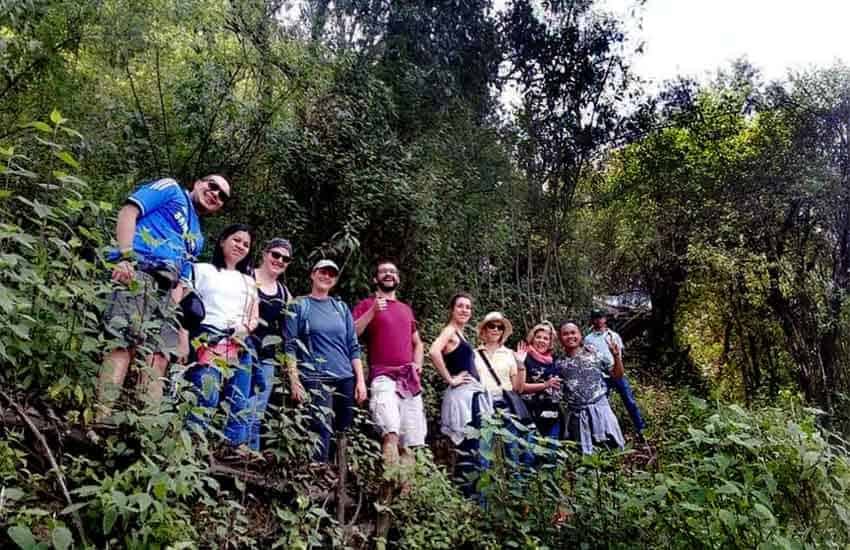
Mexicans and foreigners on a hike organized by Aztec Explorers. Aztec Explorers
“Originally, it started out as 21 little villages, which all grouped together into the monster that is now Mexico City, ” he said. “In fact, you could say we have 21 Barrios Mágicos inside the city limits [Magical Neighborhoods]. So our group started out doing walking tours inside the city. Then we got into hikes, and finally day trips.”
Winckers is the quality manager of a call center as well as the owner of a small travel agency in the capital.
More than 13 years ago, he came to Mexico as a consultant, met his wife Lidia and never left. Lidia is a certified guide and organizes hikes for small groups of up to 12 people.
Below is a sample of their favorite caminatas (walks/hikes) in and around the big city.
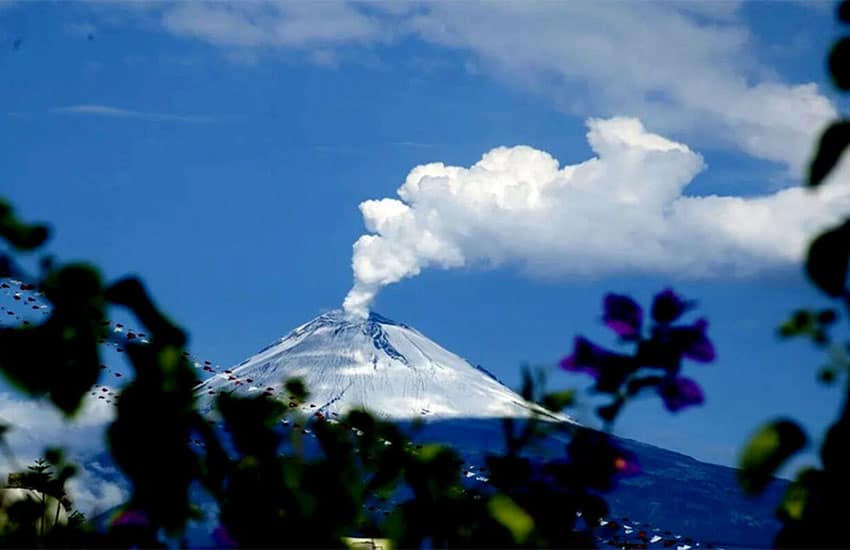
Getting within Mexico’s 7 km of Mexico’s famous active volcano Popocatepetl is illegal, but hike its dormant sister volcano Itzaccíhuatl and you’ll get a great view of “Popo” at a safe distance. México Ruta Mágica
Izta–Popo National Park
This park encompasses Mexico’s second highest peak, the active Popocatépetl volcano, along with the nation’s third-highest peak, Iztaccíhuatl volcano, which is dormant.
Popocatépetl’s peak, understandably, has a 7-kilometer-wide no-go zone surrounding it. But trekkers might spend two days on the trail that will take you atop Iztaccíhuatl. Winckers likes to drive from the city about two hours to Iztaccíhuatl and make a photo stop at Paso de Cortés, the pass between Popo and Itza named after conquistador Hernán Cortés.
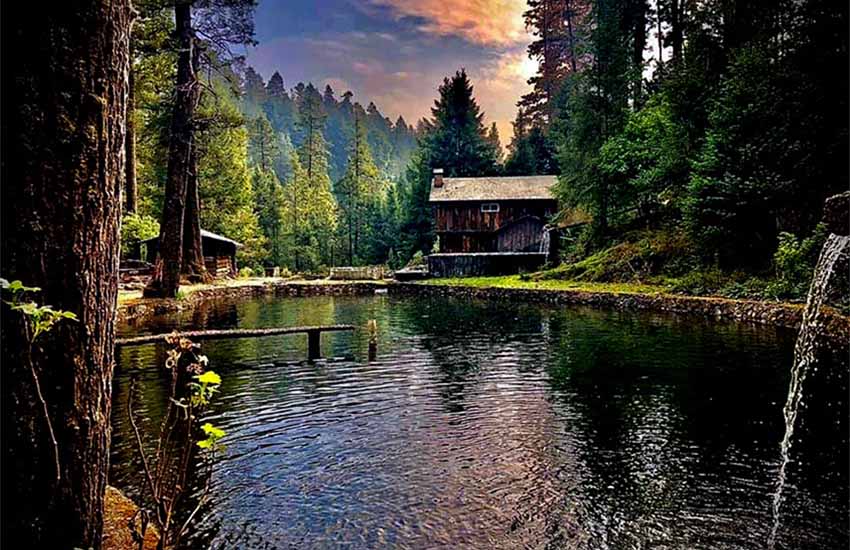
“Once you’re up here,” says Winckers, “you can do an easy hike of about one hour to get to a place where they have some of the best quesadillas in Mexico, which are made with blue-corn tortillas. So, normally, we have a light breakfast here and then we walk two to three hours up Iztaccíhuatl. It’s really amazing because it’s always different, and sometimes, of course, you’ll be walking in the snow. There’s a waterfall in this area, a small lake and a restaurant serving the freshest trout imaginable, and there are beautiful cabins up there for people who want to spend the night. It’s one of my favorite places.”
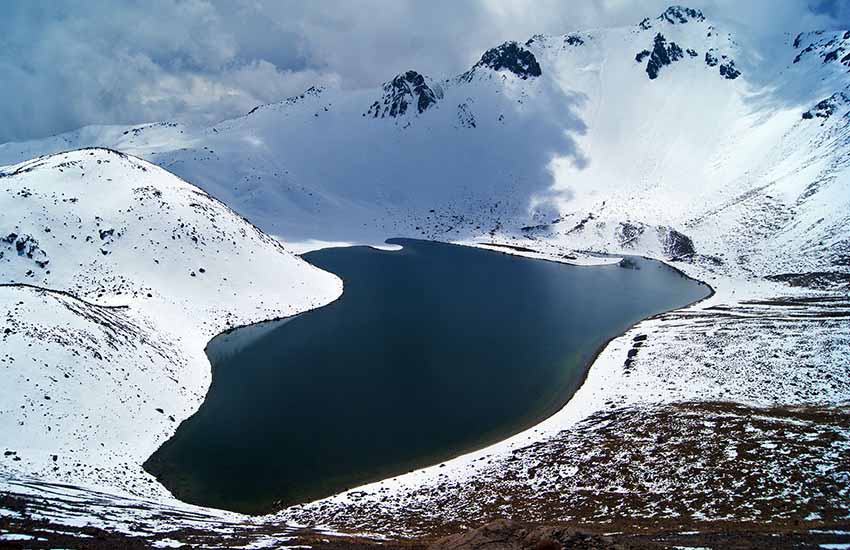
La Laguna del Sol, one of two lakes inside the crater of el Nevado de Toluca. Ana Paula Tello
Note that you can reach the Cortés Pass in a normal car. Because this is a very big park, having wheels is a big advantage.
“You have to plan your trip well,” adds Winckers. “You need to go on a nice, sunny day, otherwise you won’t even see the volcano. But on a cloudless day, you have beautiful views of Popocatépetl.”
Nevado de Toluca
This is Mexico’s fourth highest peak and another national park. It’s a three-hour drive from Mexico City right up to the rim of the 1.5-kilometer-wide caldera at the top. “You are at around 4,000 meters altitude,” says Winckers. “There are two beautiful lakes, Laguna del Sol and Laguna de la Luna, inside the crater and you can hike around them.”
Los Dinamos Park is an oasis inside Mexico City where you can hike, camp and cycle in a woods surrounded by enormous walls of basalt rock. Jorge Mh. Muciño
Cumbres del Ajusco National Park
This is another dead volcano, situated towards the south end of Mexico City, which rises to a height of 3,930 meters. The word ajusco means “source of waters.” Its springs are said to be the source of the Lerma River.
“Here you can have a delightful walk of about six hours,” says Peter Winckers, “and all the time you are completely inside the city limits. So, if someone asks what’s the highest point in Mexico City (trivia question), here you have the answer.”
Ajusco has two peaks you can climb: Pico del Águila and la Cruz de Márquez.
Mexico City is still 51% green, says Winckers.
“The trails leading to both are beautiful,” says Winckers, “with amazing views. On one side you see the sprawl of Mexico City, and on the other side, beautiful views of the hills and volcanoes to the south.”
Teuhtli Volcano
This is a shield volcano located at the southern edge of the city. You start your walk on flat land surrounded by farmers’ fields.
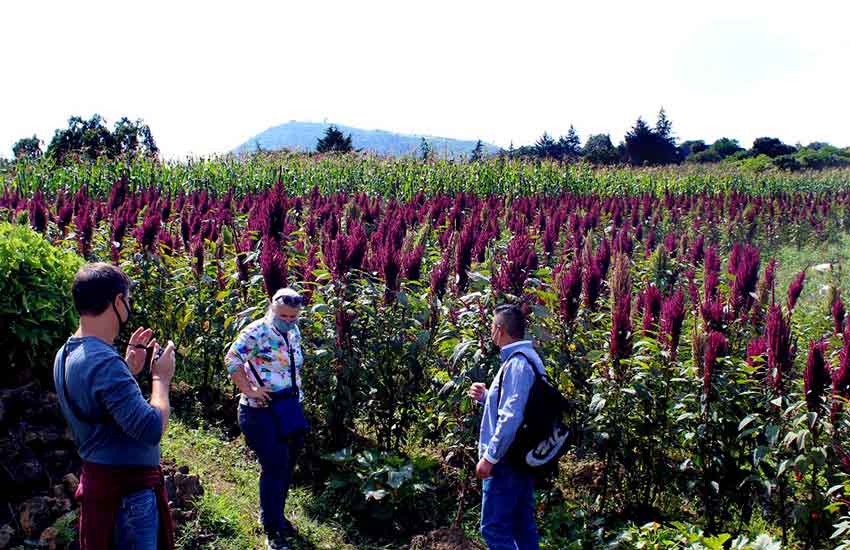
“In October or November, you will see lots of amaranth: beautiful, high, red plants with yellow flowers,” says Winckers. “We have a local guy who lives there. He knows all about processing the amaranth into little bars containing chocolate, called alegrias [happiness].”
Stately amaranth plants growing on Teuhtli volcano, from whose peak you have a magnificent view of Mexico City.
In bright contrast, the other side of Teuhtli volcano is completely covered with nopal cacti. Reaching the top is an unforgettable experience.
“You are walking up a steep slope covered in very loose volcanic ash, so you tend to move one meter up and two meters down, but our guide shows you his technique for managing this without slipping back,” says Winckers. “Once you get to the top, you can walk all around the crater rim, where you will realize just how big Mexico City is.”
“At this point,” he says, “you are 2.5 hours south of the zócalo. In the distance, you can see the canals of Xochimilco, and on the other side, a patchwork quilt of agricultural fields: 4,000 different shades of green.“
Los Dinamos
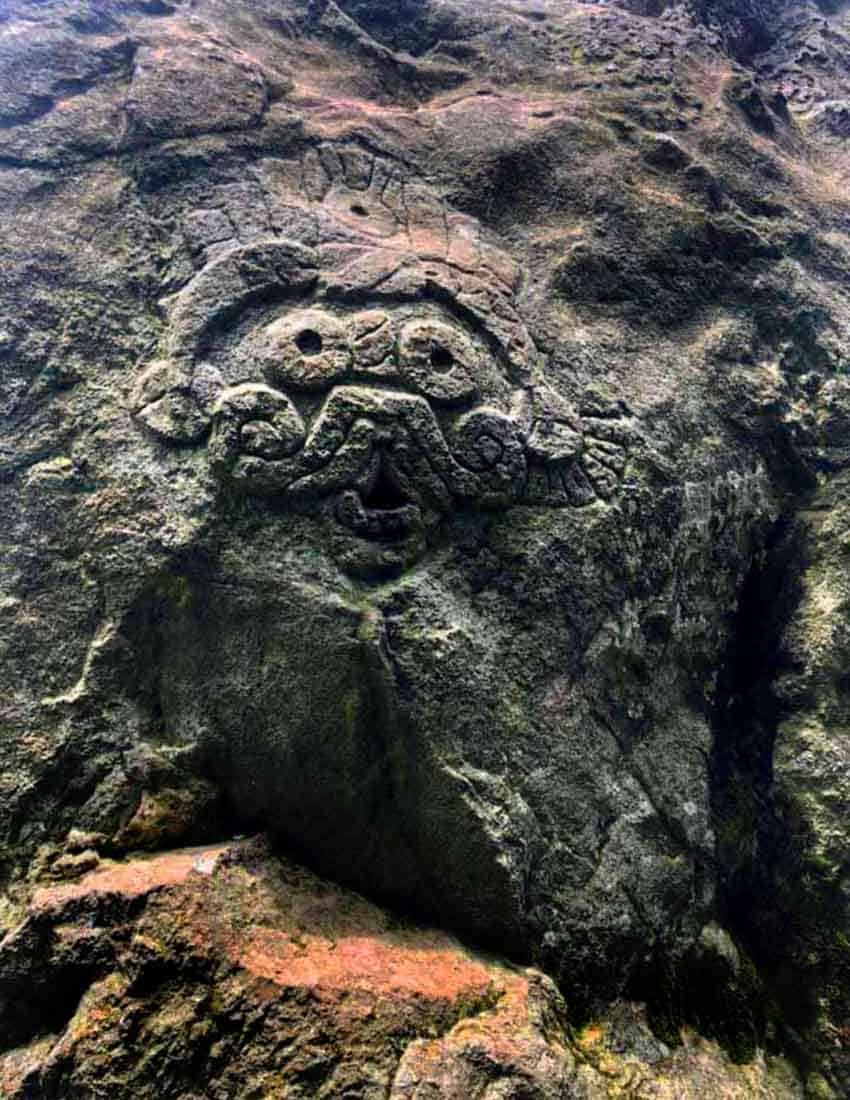
With Mexico City’s long history, a hike can take you past artifacts of pre-Hispanic civilizations, like this engraving of the rain god Tlaloc at Los Dinamos Park. Aztec Explorers.
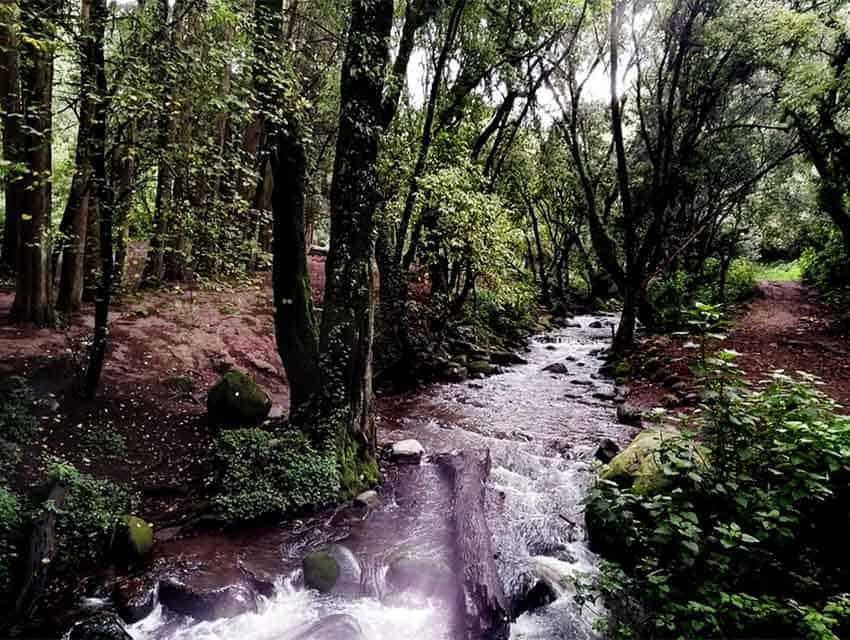
Here you’ll find Mexico City’s only living river. This area is called Los Dinamos because in the past, there were factories along the stream, with dynamos generating electricity.
Today, the factories are gone and it’s a beautiful walk along the river up to a great lookout point. Winckers recommends you go with a guide: “There are quite a few trails in this area, and you don’t want to miss the best ones. Also, if you have a guide, he can take you to a cave here with pre-Hispanic petroglyphs depicting snakes and the [Mesoamerican] god Tlaloc.”
The writer has lived near Guadalajara, Jalisco, since 1985. His most recent book is Outdoors in Western Mexico, Volume Three. More of his writing can be found on his blog.
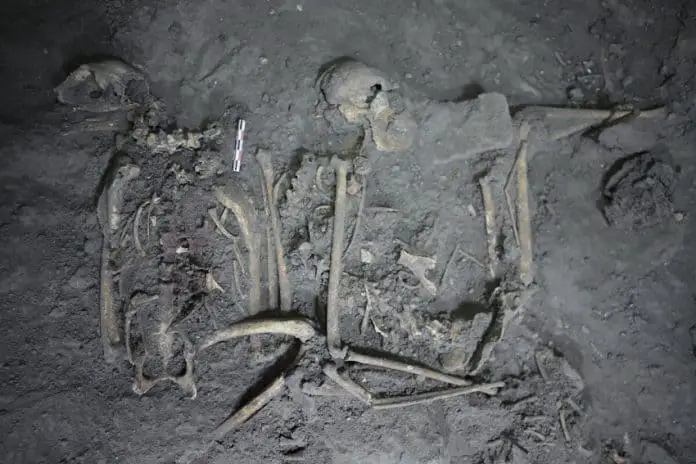
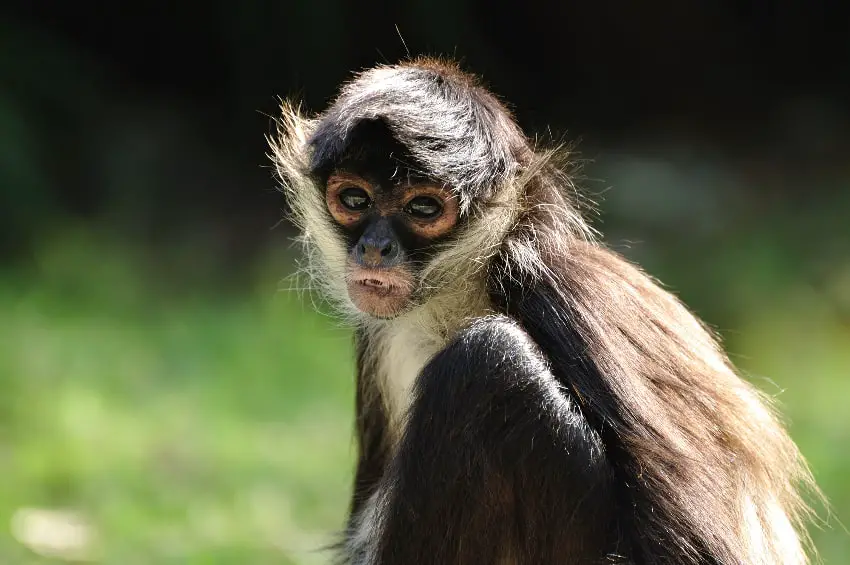
The 1,700 year-old skeletal remains were found under the ruins of a pyramid at Teotihuacán. N. SUGIYAMA/PROJECT PLAZA OF THE COLUMNS COMPLEX
A dead spider monkey from 1,700 years ago has bolstered theories that there were diplomatic relations between the Maya and the leaders of another pre-Hispanic civilization in Teotihuacán.
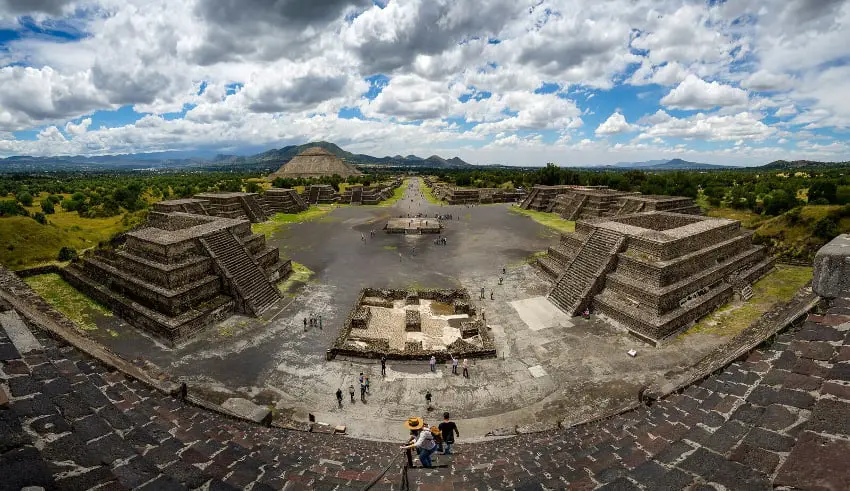
Located about 40 kilometers east of Mexico City, Teotihuacán was one of the world’s largest cities between 1 C.E. and 550 C.E. Its metropolis featured pyramids, markets and an estimated 100,000 residents.
But spider monkeys, or monos araña in Spanish, were not endemic to the dry plateau of Teotihuacán.
About 1,000 kilometers away were the Maya, living in a patchwork of cities in the tropical rainforest, where spider monkeys flourished.
Panoramic view of Teotihuacán complex, which at one time was one of the largest cities in the world. Wikimedia Commons
The two empires — as far apart as San Francisco and Phoenix — traded goods and communicated with each other, but this one spider monkey is offering a peek at Mesoamerican geopolitics a century before the two powers clashed, according to reports in the U.S. journal Proceedings of the National Academy of Sciences and Science Magazine this week.
Arguing that Mayan dignitaries brought the monkey to Teotihuacán as a gift, the researchers contend it’s further evidence of friendly relations between Teotihuacán and Maya elites around 300 C.E.
“Amazing stuff,” Barbara Arroyo was quoted as saying in Science. She is an archaeologist and Mesoamerica expert at the Dumbarton Oaks research library in Washington, D.C. “I have been very skeptical sometimes when people talk about these connections between the Maya and Teotihuacán. But in this specific case, it’s so well documented and so well proven that this animal was from the Maya area and was moved and transported [to Teotihuacán].”
The monkey’s bones and skeletons of other animals were discovered alongside an opulent cache of figurines, jewelry and obsidian knives in the archaeological zone of Teotihuacán. The monkey’s hands and feet were bound, suggesting it was sacrificed, and it was said to have been buried alive.
But how was it determined that the animal was a diplomatic gift from the Maya?
In part by analyzing its teeth and bones. In doing so, according to the report, researchers determined that the female monkey was likely captured around age 3 in a balmy habitat, where she had eaten forest foods such as figs and other wild fruits, nuts, seeds and various parts of plants. She was then moved to a dry environment, where her diet switched to human-grown crops such as maize, chili peppers and arrowroot, the report said.
The report also said researchers found tooth wear suggesting the monkey gnawed on a wooden cage, and that it lived at least two years in captivity before its ritual sacrifice between 250 C.E. and 300 C.E.
Nawa Sugiyama, one of the study’s main researchers, pointed out that it is a “rare find” with great significance because until now there was no evidence of an exchange between these civilizations at that early stage.
The Mexican spider monkey is critically endangered today due to habitat loss. deposit photos
“Spider monkeys do not develop naturally in that place,” said the zooarchaeologist, who has been working in Teotihuacán for more than a decade. “It was [like] nothing I’ve seen before in highland Mexico.”
While there are other explanations on how that monkey could have ended up there — perhaps Teotihuacán warriors who visited Maya cities caught it and brought it back, or perhaps Mayan who owned a monkey were captured as hostages — the researchers feel otherwise. They point to Mayan iconography that was found on the walls near the monkey’s remains, along with non-portable Mayan art and jade ornaments from the Motagua Valley in Guatemala that were there.
Therefore, the research team wrote, “Mayan dignitaries may have been staying [there] at least temporarily.”
“From the amount of Mayan cultural remains and objects and the context in which they were found, we concluded that it was a [diplomatic] gift rather than a commercial exchange,” Sugiyama added.
Science interviewed Ashley Sharpe, an archaeologist with the Smithsonian Tropical Research Institute in Panama who wasn’t involved in the study. “I know this is just one monkey,” she said, “but this is an indication that it seems their early interactions were somewhat peaceful and amicable.”
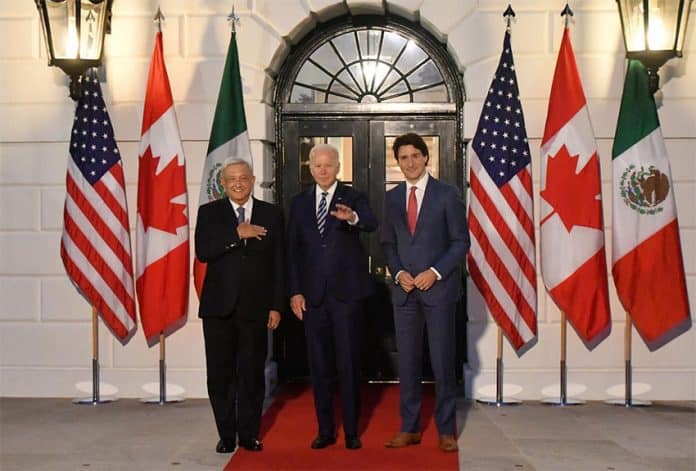
The 'three amigos' at last year's leadership summit. LopezObrador.org.mx
United States President Joe Biden and Canadian Prime Minister Justin Trudeau will travel to Mexico City in January for the North American Leaders Summit (NALS), President López Obrador said Friday.
The meeting, colloquially called the “Three Amigos Summit,” had been scheduled to take place in December, but has been pushed back to early 2023, according to AMLO.
Speaking at his regular news conference, López Obrador indicated that he would hold bilateral meetings with Biden and Trudeau before a two-day NALS commences on January 9.
“Both are coming, but it’s being suggested that there be a bilateral meeting first … with the United States, who are the ones asking for this meeting and then … another bilateral [meeting] with Canada. And then the summit, here, the host will be Mexico City,” he said.
Both the U.S. and Canada requested consultations under the USMCA free trade pact, arguing that companies from those countries that operate in Mexico are not being treated fairly.
López Obrador didn’t offer any indication as to what will be on the agenda at the upcoming summit, but predicted that Biden will fly into the new army-built airport north of the capital rather than the main Mexico City airport.
“As the president’s plane is very big, it will land at the Felipe Ángeles airport. The Mexico City airport also has the capacity, but heads of state, presidents, are now choosing to arrive at Felipe Ángeles,” he said.
The new commercial airport was built on an Air Force base some 50 kilometers north of central Mexico City after López Obrador canceled the previous government’s airport project following a legally questionable vote held before he took office.