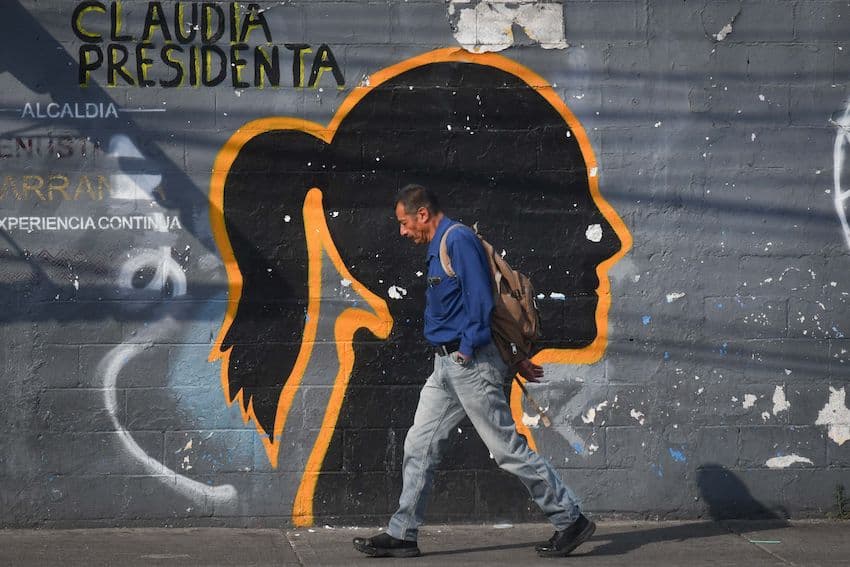
As Mexico entered the second week of January, President Claudia Sheinbaum navigated a relentless back-and-forth with U.S. President Donald Trump while marking the first anniversary of Plan México, her ambitious economic development package.
From Monday’s proactive diplomatic outreach following Trump’s threats of military strikes to Wednesday’s defense of the USMCA trade pact, the week showcased the delicate balancing act between managing U.S. demands and defending national sovereignty — a skill Sheinbaum has demonstrated on numerous occasions.
Breakthroughs in the murder of Uruapan mayor Carlos Manzo and the takedown of a Tren de Aragua outpost offered tangible evidence of her security cabinet’s competence, which is becoming more critical by the day for the continued stability of the United States relationship.
Didn’t have time to read this week’s top stories? Here’s what you missed.
National security strains and accomplishments
Mexico opened the week on the defensive after President Trump declared on Jan. 8 that the United States was “going to start now hitting land” regarding cartels, asserting that “the cartels are running Mexico.”
Sheinbaum rules out US military action in Mexico after Trump call

In response, President Sheinbaum proactively reached out to Trump on Monday morning for what she characterized as a “very friendly” 15-minute call. Sheinbaum firmly ruled out U.S. military intervention in Mexico, telling reporters that Trump “understood” Mexico’s constitutional opposition to foreign military operations on its soil. She said she informed Trump about her government’s concrete security achievements, including the arrest of over 40,000 suspects and the dismantlement of almost 2,000 drug labs over the past 15 months.
The week then brought further evidence of Mexico’s security efforts. The Navy announced the destruction of three clandestine methamphetamine laboratories in Michoacán, Durango and Sinaloa, seizing over 700 kilograms of finished drugs along with 12,000 liters and two tonnes of chemical precursors. Additionally, authorities arrested six members of Tren de Aragua in Mexico City and four alleged Jalisco New Generation Cartel members in Jalisco and Nayarit.
These arrests drew public praise from U.S. Ambassador to Mexico Ron Johnson, who posted twice on social media Tuesday acknowledging Mexico’s efforts. Johnson’s recognition provided a diplomatic boost for Sheinbaum’s government amid mounting pressure, though tensions remained. By week’s end, The New York Times reported that the U.S. continues to pressure Mexico to allow American troops to fight cartels, even as some U.S. lawmakers seek to block such actions.
On Friday, Sheinbaum defended her government’s security record, pushing back against characterizations of narcoterrorism while acknowledging ongoing challenges.
Economic pressures build for Mexican households
Mexican households are feeling the squeeze as data revealed that the cost of the basic food basket rose 4.4% in urban areas in December 2025, outpacing the nation’s overall inflation rate of 3.69%. The basket, which includes 24 essential items from oil and rice to tortillas and soap, now costs approximately 2,467 pesos per month in urban regions versus 1,855 pesos in rural areas. The increase adds pressure to household budgets already strained by broader economic uncertainty.
In a surprising turn, capital flight that had plagued Mexico since April 2025 showed signs of slowing at year’s end. Foreign investors purchased $1.322 billion worth of Mexican bonds in December, though this barely dented the $7 billion that exited throughout 2025. Analysts attributed the outflows not to a financing crisis but to global risk aversion and portfolio rebalancing, noting Mexico still maintains relatively solid macroeconomic fundamentals.
The World Bank projected Mexico’s economic growth would slow to under 1% for 2026, citing uncertainty surrounding tariffs and the upcoming USMCA review rather than immediate policy changes. The projection underscored how Mexico’s economic trajectory remains tightly bound to North American trade dynamics and U.S. policy decisions.
Uncertainty deepens over USMCA
By Wednesday, Sheinbaum again had to respond to inflammatory comments by Trump, but this time about USMCA. During a Michigan factory tour, President Trump declared he doesn’t “even think about USMCA,” calling the trilateral free trade pact “irrelevant” and claiming it provides “no real advantage” to the United States. Trump’s dismissive comments stood in stark contrast to his 2019 assertion that USMCA would be “the best and most important trade deal ever made by the USA.”
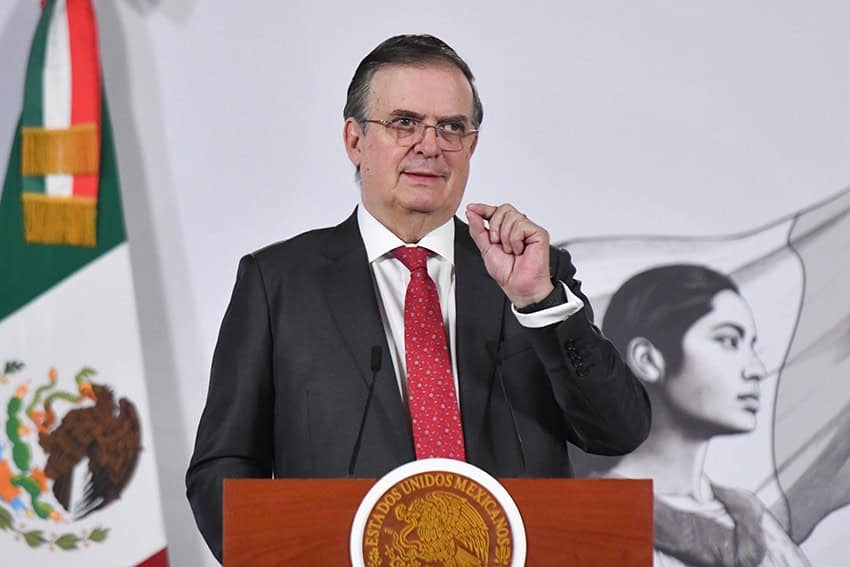
President Sheinbaum responded by emphasizing the deep integration of North American economies and noting that U.S. businesses are among the strongest defenders of the trade agreement. She expressed conviction that Mexico’s trade relationship with the United States would continue despite Trump’s rhetoric.
At Thursday’s morning press conference, Economy Minister Marcelo Ebrard reinforced Mexico’s position, stating that the country is ready to negotiate and expressing confidence that the U.S. will ultimately value the relationship. Major automakers, including Tesla, Toyota and Ford, have urged the Trump administration to extend USMCA, highlighting its crucial role in enabling regional competitiveness.
The uncertainty around USMCA negotiations had real consequences for Mexico’s heavy-duty vehicle industry. Production fell nearly 29% and exports are down 28.6% compared to 2024, marking the sector’s worst year since the pandemic.
The peso continues to defy all odds
Against expectations of continued volatility, the Mexican peso hit its strongest level against the dollar in over a year, closing Thursday at 17.65 to the greenback.
The currency marked its fifth consecutive day of gains, appreciating nearly 2% over that period and continuing its defiance of analyst predictions. Experts attributed the strength to dollar weakness globally, favorable interest rate differentials for carry trade operations, and rising silver prices. Notably, the peso strengthened even as Trump questioned USMCA’s future, with analysts suggesting markets recognize that dismantling the trade pact would carry significant costs for U.S. competitiveness.
Mexico’s creative and athletic spirit flourishes
Mexico celebrated multiple achievements in culture, sports and academics this week. Mexico City’s National Museum of Anthropology broke its all-time attendance record, welcoming over 5 million visitors in 2025 compared to 3.78 million the previous year. The surge solidified the museum’s status as one of Latin America’s most-visited cultural venues, though it comes alongside a 119% increase in admission fees for 2026.
On the athletic front, President Sheinbaum led a flag-bearing ceremony for four Mexican athletes heading to the Milan-Cortina 2026 Winter Olympics. Figure skater Donovan Carrillo returns for his second Winter Games, while cross-country skiers Allan Corona and Regina Martínez prepare to compete, with Martínez making history as the first woman to represent Mexico in her event. Alpine skier Sarah Schleper will make her seventh Olympic appearance.
The week also brought recognition for Mexican talent in emerging fields and the performing arts. Veracruz student Valeria Palacios, 19, won the World Education Medal for using artificial intelligence and robotics to address social and environmental problems in her community. Meanwhile, Macario Martínez, the former Mexico City street sweeper who became a viral sensation with his song “Sueña lindo, corazón,” announced his first major solo concert at the León State Fair on January 28, sharing the bill with Latin Grammy winner Paloma Morphy.
Looking ahead
Tourism data continued to reflect positive trends for Mexico’s hospitality sector, with the National Museum of Anthropology’s record attendance mirroring broader increases in international visitors. In November 2025, the number of international tourists increased by 15.6% compared to the same month in 2024, totaling 8.7 million foreign tourists for that month alone. Aeroméxico, the nation’s leading air carrier, actually called for a third terminal at Mexico City International (AICM) due to increasing congestion.
The momentum suggests Mexico’s tourism industry remains resilient despite global economic uncertainties and ongoing security concerns in certain regions. Looking ahead, Mexico enters the latter half of January with key diplomatic and economic challenges on the horizon, including bilateral security negotiations with the United States and continued uncertainty about USMCA’s future.
Looking for Mexico’s previous week in review? Read about it here.
Mexico News Daily
This story contains summaries of original Mexico News Daily articles. The summaries were generated by Claude, then revised and fact-checked by a Mexico News Daily staff editor.