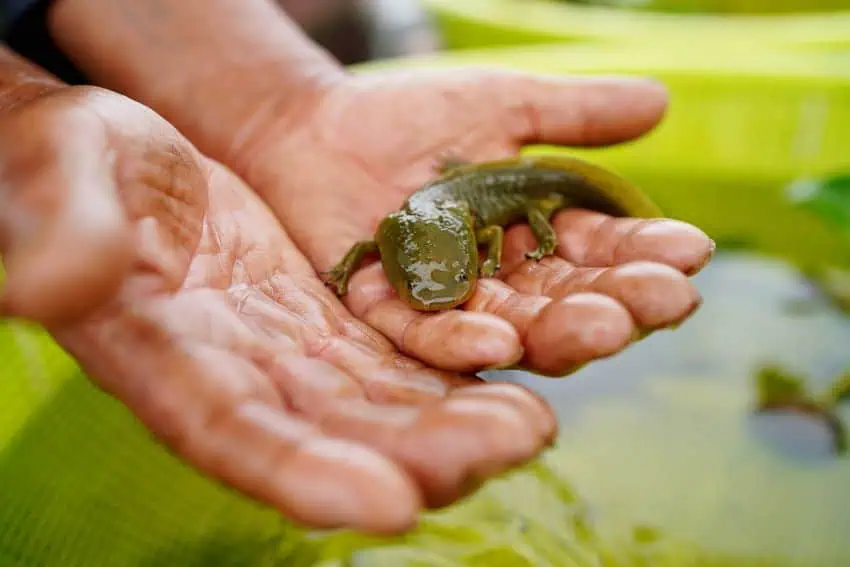
Local fishermen and scientists in the central state of Michoacán are mounting an urgent effort to save the achoque, a critically endangered salamander that’s the cousin of the famous axolotl.
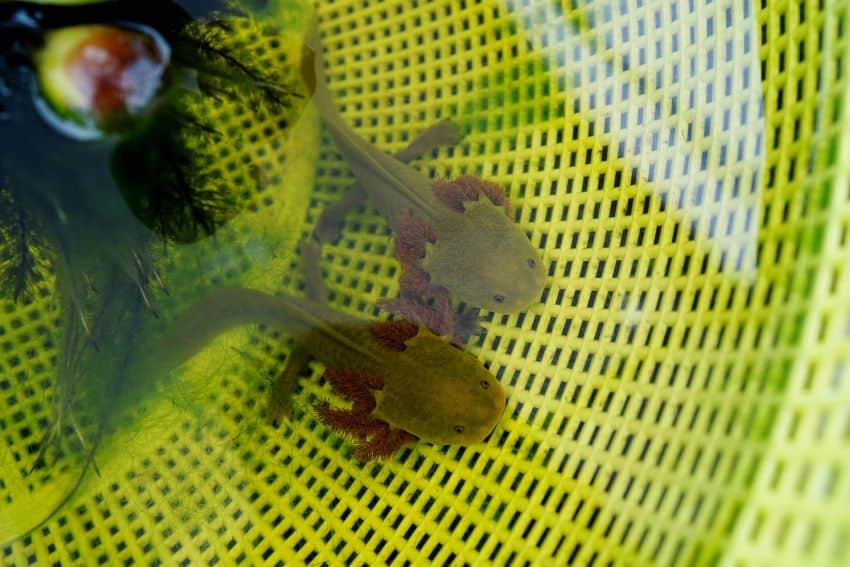
Recognized by their lion-like gills, achoques have remarkable regenerative powers and a cultural significance that have captivated both the public and the scientific community.
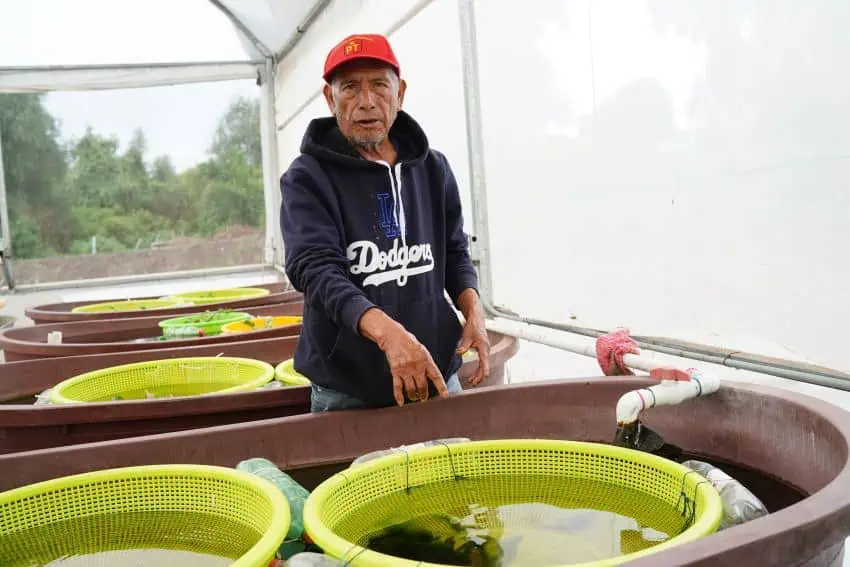
Froylán Correa, who spent decades harvesting fish from the high-altitude waters of Michoacán’s Lake Pátzcuaro, now dedicates himself to collecting amphibian eggs as part of a collaborative project to keep the achoque from vanishing forever.
“There used to be a lot of achoques,” Correa recalled. “Nowadays, the new generation doesn’t even know about them.”
The achoque is endemic to Lake Pátzcuaro, about 50 kilometers southwest of the state capital, Morelia.
However, overfishing, pollution and dwindling water levels at Lake Pátzcuaro have pushed the species onto the International Union for Conservation of Nature’s Red List of Threatened Species, with approximately 80 to 100 individuals estimated to survive in a narrow zone of the lake.
That’s “much lower than it was 40 years ago,” said Luis Escalera, a biologist at the nearly 500-year-old Michoacán University of San Nicolás de Hidalgo (UMSNH).

Researchers attribute the amphibian’s rapid decline to habitat loss and local traditions, as the salamander has been used since pre-Columbian times as both food and a folk remedy for respiratory illness.
Biologists, led by Rodolfo Pérez of UMSNH have partnered with the Indigenous Purépecha community of San Jerónimo Purenchécuaro, offering compensation in exchange for their labor in collecting eggs, raising hatchlings and ultimately re-releasing them into the wild.
“It’s been a lot of work,” Pérez said, noting that “the biggest challenge is finding money to compensate the fishermen, since achoques require constant care.”
The effort has produced initial stability for the population, with hatchlings protected in community reserves before being returned to the lake.
Yet, for those on the front line like Israel Correa — a relative of the aforementioned Froylan Correa — the commitment remains unwavering.
“We can’t miss a day without coming because otherwise they’ll die,” he said. “Rain or shine, party or not, we have to be here.”
The battle to save the achoque is a delicate race against extinction, echoing the larger plight of Mexico’s endangered amphibians, most notably the axolotl.
With reports from AFP and México Desconocido