Home Blog Page 1240

Lottery agency keeps mum after hackers claim to have accessed servers

1
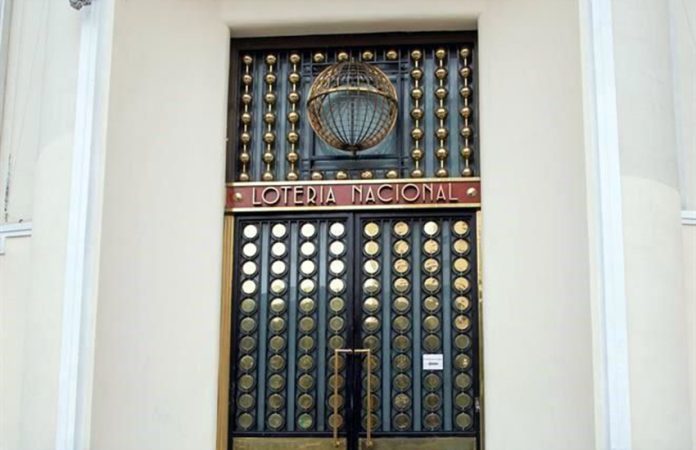
Lotenal building
A criminal group claims to have accessed the servers of Lotenal, Mexico's national lottery. The group is asking for an unknown ransom amount.

A group of hackers that claims to have infiltrated the computer servers of the National Lottery (Lotenal) has threatened to reveal confidential information if the agency refuses to cooperate with it.

A criminal group claims to have accessed Lotenal’s servers last Thursday using Avaddon ransomware, malicious software (also known as malware) that has been used in numerous cyberattacks in several countries.

The group demanded the payment of a ransom within 10 days in exchange for not leaking information it stole. The amount it is asking for is unknown.

“… We have data such as all contracts and agreements from 2009 to 2021, legal documents, correspondence, finance, notarial data, outsourcing, and much more,” the group said in a statement published online. “Also remember that data cannot be decrypted without our general decryptor. And your site will be attacked by a DDoS [distributed denial of service] attack,” it said.

Lotenal has neither confirmed nor denied that it was the victim of a cyberattack. It said on Friday that it was updating its systems and that this was causing some interruptions to its online services. On Saturday, the criminal group published another statement.
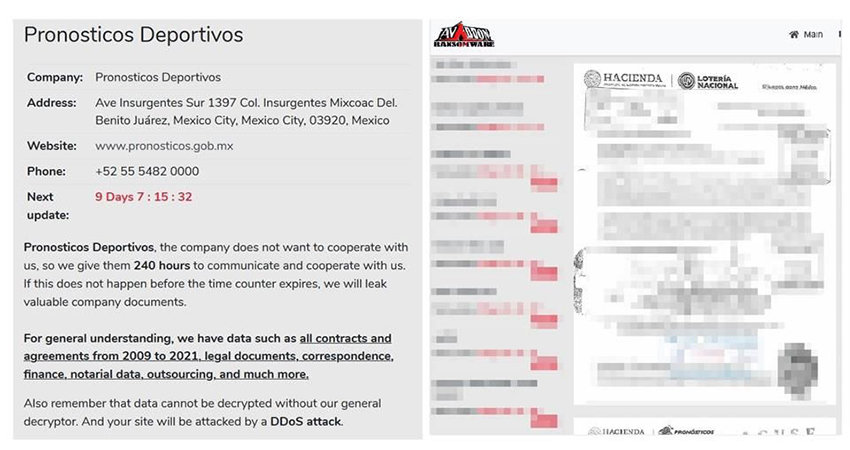
loteria nacional hackers message
Message published Saturday online by hackers claiming to have hacked the National Lottery’s servers. The group is threatening to leak confidential documents.

“Apparently the [agency] does not quite understand the seriousness of this situation and wants to hide the fact that they were hacked and we stole data from their servers,” it said.

“… What if we say that we have a lot of confidential data (see photo below), such as sexual harassment in the workplace, unpleasant incidents and a lot of dirt associated with your [agency]? If you continue to lie to everyone and do not contact us on this fact, then we, in turn, are ready to surprise all who follow the news related to our blow to your companies with very interesting documents that we have.”

The group published an image of a redacted federal government document about a case in which a Lotenal cleaner was a victim of sexual harassment.

According to Hiram Caramillo, co-founder and director of information security at the cybersecurity consulting firm Seekurity, groups that use ransomware such as Avaddon are “criminals that earn millions of dollars” through extortion.

He said that Lotenal should be working to ensure that Avaddon ransomware is no longer being used to infiltrate its systems. Caramillo also said the lottery agency must identify what information has been stolen.

“It’s not the first time that a company that has been hacked denies the attack,” he said, referring to Lotenal’s decision not to publicly acknowledge the cyberattack.

Rocio Nahle Garcia, Mexico energy minister
Hackers targeted Pemex in 2019 for US $5 million, which Energy Minister Rocio Nahle said would not be paid. File photo

Nor is it the first time that ransomware groups respond to companies that refuse to cooperate, he said. “The same situation has already happened several times,” Caramillo said.

According to the United States Federal Bureau of Investigation (FBI), Avaddon ransomware was first advertised on Russian-language hacking forums as a ransomware-as-a-service, or RaaS, product. Raas refers to the sale of malware to would-be hackers via a subscription model. Hackers that do not have the skills to write and deliver their own ransomware code to victims can do so by buying Raas products on the dark web. The ransomware developers typically get a cut of the victim’s payment.

According to the cybersecurity research company Group-IB, almost two-thirds of ransomware attacks worldwide that it analyzed during 2020 came from cybercriminals operating on a RaaS model.

The FBI said in a statement issued earlier this month that it had received notifications of unidentified online criminals using Avaddon ransomware against U.S. and foreign companies, manufacturing organizations, and healthcare agencies.

“Avaddon ransomware actors have compromised victims through remote-access login credentials. … After [they] gain access to a victim’s network, they map the network and identify backups for deletion and/or encryption,” the FBI said.

“… The actors threaten to leak the victims’ data to The Onion Router (TOR) network unless their ransom demand is paid in virtual currency within days of infection. Avaddon’s extortion tactics progress from a warning to a partial data leak and, finally, to a full data leak of all exfiltrated files,” it said.

There have been Avaddon attacks in the United States, Europe as well as in Latin American countries such as Brazil, Chile, Peru and Costa Rica.

The cyberattack on the National Lottery is the second on a federal government agency since President López Obrador took office in late 2018. The state oil company Pemex was targeted in a 2019 attack in which hackers demanded the payment of about US $5 million in bitcoins.

Source: El Universal (sp), Reforma (sp), El Financiero (sp), ZDNet (en)
Mexico now leads world in papaya exports with 44% of the market

0
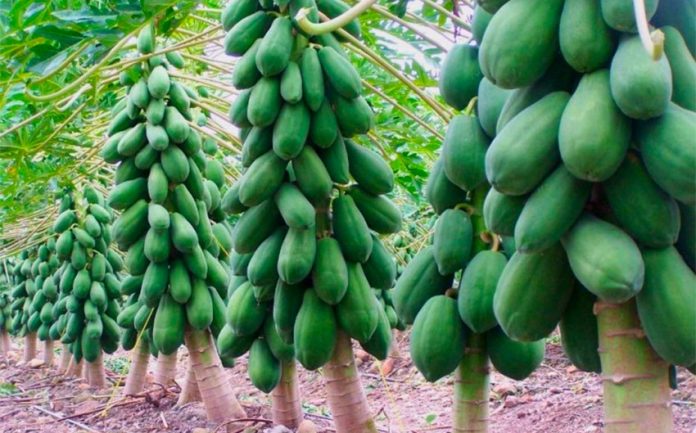
papaya plants
Oaxaca, Colima and Chiapas are the principal papaya-growing states.

Mexico is now the world’s biggest exporter of papaya and sits in third place in terms of volume produced, which grew 3.2% last year.

The country has 44.7% of the global export market, followed by Guatemala and Brazil, and became the third biggest producer in 2019, and is now growing 7.6% of the world’s total.

Growing international demand has driven the rate of export, which brought in more than US $86 million last year from the United States alone.

Based on figures from the Agriculture Ministry, last year’s yield showed 3.2% growth, to 1,118,000 tonnes. Papaya production averaged 984,000 tonnes between 2015 and 2019, with an average annual growth rate of 5.2%.

The area designated for papaya production in 2019 was 19,865 hectares, which increased 1.2% to 20,100 hectares in 2020.

Preliminary data for 2020 shows Oaxaca to be the main producer with 31.2%, Colima in second place with 17.6%, followed by Chiapas 14.1%.

A member of the Caricaceae family, the papaya is native to Central America and tropical areas of Mexico, and flourishes in warm, humid environments. One of the most popular Mexican variants is the maradol.

The fruit is rich in vitamins A, C and B-complex, and contains minerals such as potassium, magnesium, fiber, folic acid and small amounts of calcium and iron.

It is valued for as a tool for slimming, tanning and to remove skin blemishes. It is also used in the food industry to tenderize meat, in manufacturing to tan leather and in textiles to treat wool and cotton fibers.

In Mexico, the annual consumption of papaya per person is 7.3 kilograms.

Sources: Diario Marca (sp), Al Momento (sp)

The mananeras: from a love-in with the president of Argentina to swipes at the media

0
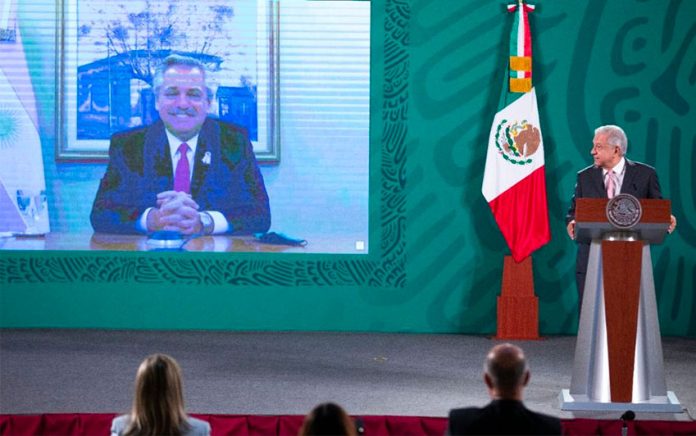
AMLO and the president of Argentina enjoy a chat.

President López Obrador can’t be faulted for his enthusiasm. Every weekday he has put sleepy journalists to shame and kept his cabinet on their toes with his rise and shine, mammoth press conferences.

AMLO’s mañaneras (as they are known in Spanish) have been ridiculed, denounced and celebrated in a similar vein to Donald Trump’s Twitter feed. However, while the former U.S. president can be imagined tweeting from a golden sofa in a bath robe, López Obrador is on stage at the National Palace every day at 7:00 a.m., looking sprightly. Contracting Covid-19 has been the only disruption to his routine.

Like a compere at a wedding, the 67-year-old will invite a speaker with just a single word, or the casual wave of a hand. Like an absorbed history professor he responds to journalists with an eloquent ramble, and sometimes a parable or two.

Sessions of two hours or more or 10,000 transcripts would be enough to test anyone’s patience, so here are some of the highlights from this week’s morning conferences.

Monday, May 24

The week began with news of a completion date for the construction of the Santa Lucía airport — March 21, 2022, and a positive economic figure: the first quarter broke the record for foreign investment. Drugs, of the legal kind, were next on the list. The president accused his adversaries of sabotaging the government’s efforts to secure medicines, claiming they were sour that the rules had been changed.

Land distribution featured, and Oaxaca’s egalitarian model was celebrated. “To this day, 85% of the land in Oaxaca is communal … 5% is private … How is it that in Oaxaca they maintain their customs, their traditions, their cultures? Because they have also conserved the communal land, it belongs to everyone.”

The mañanera ended earlier, or perhaps later, than the president expected. He wasn’t entirely sure. “I forgot my watch and I don’t know what time it is. Let’s go. Well, see you tomorrow, have a good day,” he announced, striding away to attend to the nation’s business.

Tuesday, May 25

The president of Argentina, Alberto Fernández, dropped in via video link for a chat and expressions of mutual admiration on Tuesday.

“What a joy to see you, my dear friend, president of Mexico, Andrés Manuel, dearest friend. How are you? How is everything?” Fernández began.

“You know that today we celebrate in Argentina on May 25, for us it is a very important date, because it is the day that began the path of Argentine Independence from the Spanish Crown …” he related.

The pair discussed the two countries’ cooperation to produce the AstraZeneca vaccine, before Fernández relaunched the charm attack. “It’s the admiration and respect that I have for you, and you know what a friend I consider you to be. It is almost the perfect image, two twinned peoples … that value honesty,” he versed.

AMLO responded in kind. “Personally, Alberto, I have a very special appreciation for you. I consider you a man with principles, with ideals, a good president, what the people of Argentina deserve.”

The call ended, and the Mexican president pondered the next item. “Great. So let’s go to … oh sorry, Carlos.”

Latin America’s richest man, Carlos Slim, had waited patiently for his turn. The Carlos Slim Foundation has been central to the Mexico-Argentina vaccine project.

Wednesday, May 26

Black gold was the focus on Wednesday as Pemex directors joined the meeting to discuss the imminent acquisition of the Deer Park oil refinery in Texas.

“During the entire neoliberal period, 40 years, a new refinery was not built in Mexico … we sold oranges and bought orange juice: we sold raw materials, crude oil and we bought gasoline. Completely absurd,” said the president.

“Only a traitor delivers his country to foreigners,” he added, reinforcing his position with a quote from former leader Adolfo López Mateos.

However, when asked whether debt was attached to the purchase, AMLO and Pemex’s top brass were caught off guard.

“The plant hasn’t had any losses, it’s had profits,” he affirmed.

“Last year there were no profits,” interjected the head of Pemex, Octavio Romero.

“And what is the value of the debt.”

“Excuse me?”

“What is the value of the debt?”

“The debt totals around US $980 million,” Oropeza conceded.

AMLO then assured all concerned that the nation’s pockets were plenty deep enough, and the investment would be recuperated in two to three years.

Thursday, May 27

Health Minister Jorge Alcocer opened Thursday’s conference with a well scripted tale of the administration’s reform to make medicinal drugs free, despite obstructions.

The president was quick to highlight the virtuous force of his administration. “When a just, noble cause is involved, when it comes to honesty, you have to act firmly and not take a step back,” he said.

However, one word was enough to change his mood. “Propaganda” featured in a question from the floor, relating to the official denunciation of his March 30 mañanera.

“What was it, what was it …? What? Violation of the constitution? … There is the right to information, the right of the people to be informed by the authority,” he retorted.

A similar reaction followed an inquiry about whether the U.S. downgrade of Mexico’s air safety rating would affect flights from the new Santa Lucía airport.

“No, no, no. It is dry grass for the bonfires of our adversaries in the media, who want to magnify everything,” he rebutted.

Friday, May 28

The final conference of the week opened with a vaccination update, including the news that the 40-49 age group would begin to receive their first jabs.

The Maya Train was next on the agenda: Rogelio Jiménez Pons, director of the National Tourism Promotion Fund, was joined by executives from the Alstom-Bombardier consortium, which has won a hefty infrastructure contract. Local partnership will be higher under their proposal, which made it the most attractive, Pons said, adding that once the service is operational trains should depart from Cancún every 15 minutes.

The president found an opportunity to have his say on the the latest edition of The Economist newspaper, which branded him “Mexico’s false messiah.”

“They were dedicated to applauding neoliberal policies … so, they put out this cover, stupid, very rude, and dishonest, calling me ‘the false messiah’ … All those who participated or kept quiet when Mexico was being looted are now annoyed because the people said ‘Enough,’” the president affirmed, shortly before calling time on the week.

Mexico News Daily

Siglo 21 highway collapses where crack appeared Wednesday

0
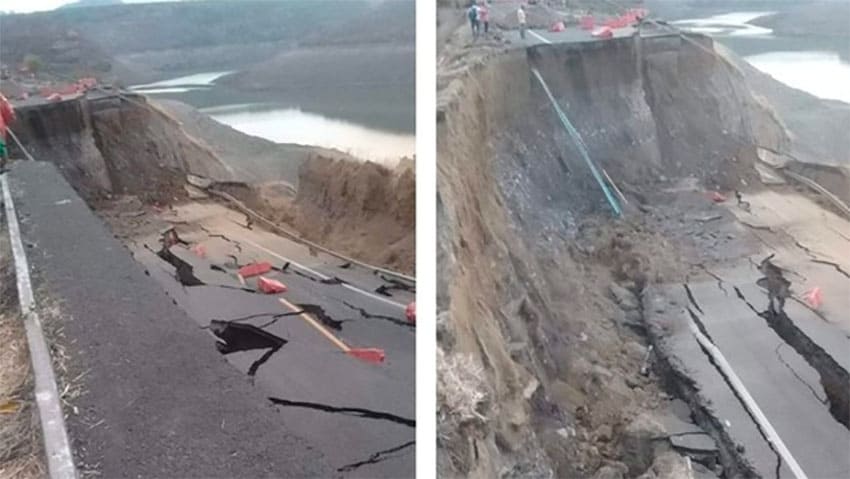
The section of highway that collapsed on Saturday.

It began as a narrow but long crack in the Siglo 21 highway in Michoacán on Wednesday. On Saturday, the 150-meter-long crack expanded, causing a section of the highway to collapse entirely.

Authorities suspect the collapse may be due to excessive moisture in the soil, caused by its proximity to the Francisco Mujica dam.

The highway was closed Wednesday between Santa Casilda and the Cuatro Caminos junction with the expectation that repairs would take up to 15 days. The extent of the damage today suggests the closure will be for a much longer period.

The federal Ministry of Transportation said in a Tweet Saturday afternoon that technical studies are being conducted to determine the cause of the collapse but offered no further details.

highway collapse
Part of the highway dropped several meters today.

Source: Milenio (sp)

Diverse Baja migrant community finds pride, identity, connection in murals

0
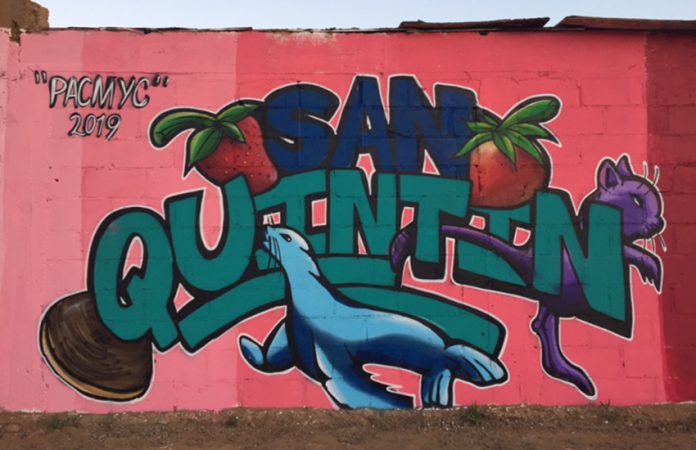
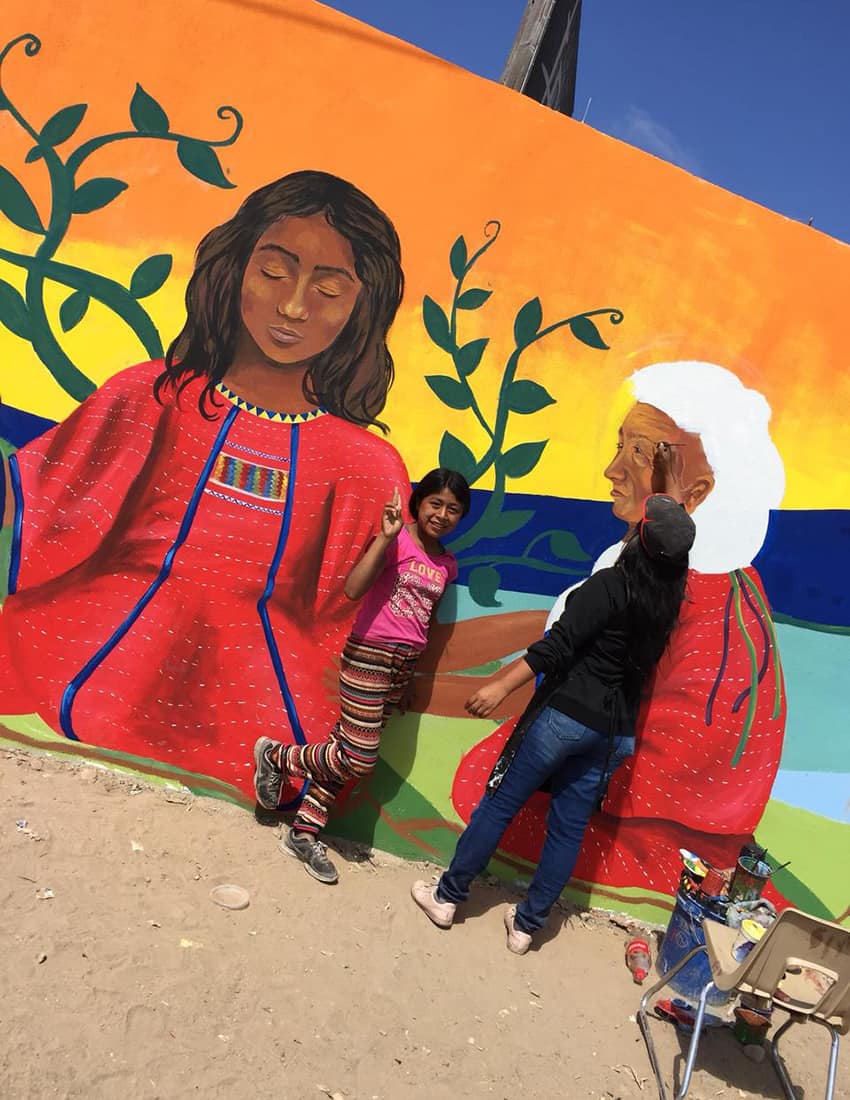
Mural promoting San Quintín by Rogelio Santos
San Quintín attracts a diversity of indigenous migrants from other parts of Mexico to work on vegetable, fruit or fish farms and in border factories. Rogelio Santos

It is definitely a case of “great minds think alike.”

Julia Celeste and Rogelio Santos are both artists dedicated to using murals to improve community ties in San Quintín, a poor rural farming valley that is near Ensenada but also a world away from it. Separately, they saw the beauty and problems that surround them and came up with the same idea.

San Quintín is highly representative of the migration north into Baja California, not only by those hoping to get to the United States but by those attracted to Baja’s large industrial farms and border factories.

In San Quintín, farming is king, especially tomatoes, strawberries and, to some extent, seafood.

Large farms need large quantities of manual labor, and as is the case north of the border, these businesses look to impoverished areas to bring in less expensive help.

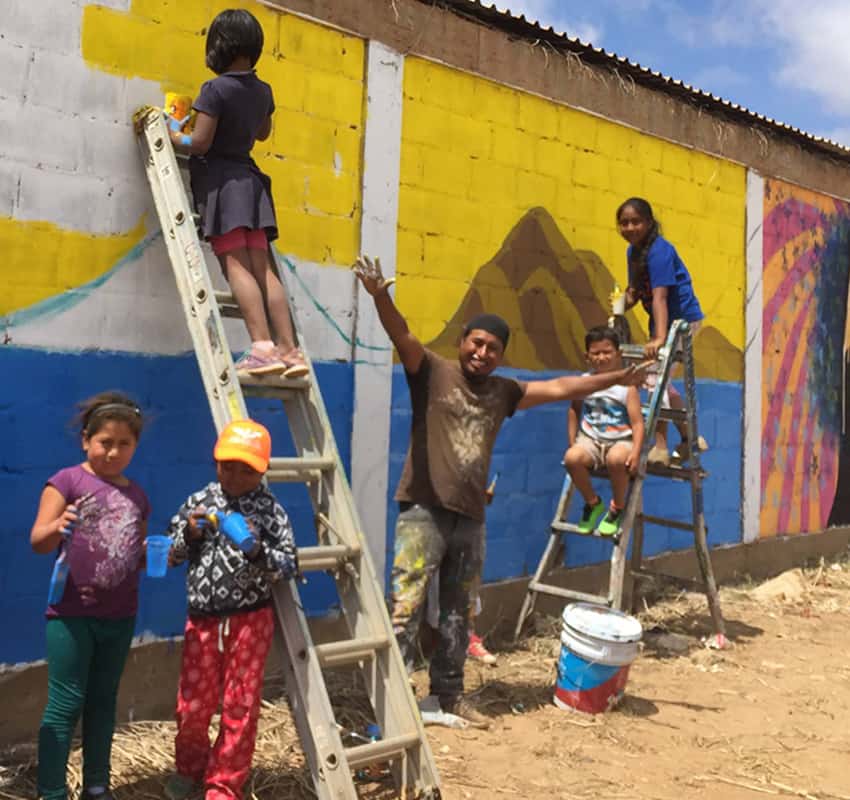
Rogelio Santos making mural in San Quintín, Baja California
Rogelio Santos and local children working on a mural in San Quintín, Baja California. Rogelio Santos

That help comes from many parts of Mexico but particularly from the indigenous groups from the states of Oaxaca, Guerrero and parts of Puebla.

These migrants are working legally within their own country but still share many of the same problems that those further north face: poverty, discrimination, drugs and violence. But perhaps the most important issue is that of identity. No matter where they were born, in many ways they are neither from Baja nor their states of origin.

San Quintín’s deputy minister of culture, Yohanna Jaramillo, says it is not easy to run cultural programs here as most residents have little free time and are dispersed over a wide area. However, such efforts are considered important — but not to “give” residents culture, since they already bring rich artistic cultures with them, she says. “The programs look to promote and find new ways to express these various heritages.”

Community inspired and executed murals have been on the rise in Mexico. In San Quintín, the overriding focus of this work has been on the migrant experience. Celeste and Santos in particular have been instrumental in such efforts.

Celeste’s family moved to Baja California in the 1960s, when her mother was just 4. Celeste showed a strong interest in art from a very young age but did not take any formal classes until she was 15.

Her lack of a degree did not stop her from starting an art school for children in her family’s garage. Over the years, the classes she taught formed a small artistic community in her part of San Quintín.

She became involved with the municipality’s culture ministry, which added mural work to an existing program, Culturas Comunitarias (Community Cultures), which documents the different ethnicities in the valley.

Through this work, Celeste managed to get two 30-square-meter murals done with government financial support before the pandemic put the program on hiatus.

Santos’ life is representative of the indigenous Mixtec experience in Baja: born in Juxtlahuaca, Oaxaca, he migrated there when he was 5, but he and his family have maintained ties to their hometown.

Like Celeste, Santos’ talent and interest emerged early, with an added plus: he found in art a way to get beyond discriminatory attitudes among other kids at school.

He went on to study art at the University of Baja California in Ensenada, then at the School of Fine Arts in Oaxaca. He believes that both experiences are an important part of who he is.

Santos had a more traditional career trajectory with individual and collective exhibits from 2011–2017, but since then he has become dedicated to community-based art projects both in Baja California and Oaxaca.

Julia Celeste mural in San Quintin, Baja California
One of Julia Celeste’s two murals completed with the help of community volunteers recruited from San Quintín’s migrant population.

The first project, Colores de mi entorno: Muralismo sobre la transculturalidad (Colors of my Environment: Muralism about Transculturalism), took place in 2018. With federal funding, he began with a workshop in muralism and identity, then created murals in various parts of San Quintín. He had to rely on personal connections at first for volunteers to paint with him, but once word went out about the project, more people came.

Santos considers the project a huge success not because it got significant local media coverage but because it involved young people of various ethnicities and even those marginalized because of drug use.

He has since done two other projects called Memoria de mi Valle (Memory of my Valley), and Pintura Experimental con el Centro Cultural de Tijuana (Experimental Painting with the Cultural Center of Tijuana) both in 2019.

Celeste and Santos created their programs separately, but their work shares important elements.

Both focus on themes of migration, farm work, natural beauty and indigenous cultures. Both integrate the faces of real people in the valley — in some cases using murals to honor specific people, such as one indigenous Triqui woman working to preserve her people’s weaving traditions and another who has spent years keeping a local park clean.

Both design their projects to allow maximum participation from the public, relying on brushes and acrylics instead of spray paint. The artists get the sketch on the wall, and volunteers fill in the lines, coloring-book style. In some cases, Santos adds more advanced touches like shadowing.

Santos says the murals are a form of “cultural resistance” that allows migrants to conserve as much of their original heritage as possible. It also works to get youths from different ethnicities working together, “in harmony,” as Celeste puts it. This is important because there are inter-ethnic rivalries that contribute to violence in San Quintín.

Despite his good fortune in getting government funding for his efforts, Santos admits it is not enough, especially in the long run. He is looking to create fundraising campaigns related to his projects that could be sold, such as calendars.

• Julia Celeste can be reached on Facebook at or through Instagram.

• Rogelio Santos can be reached via email or on Facebook or through Instagram.

Leigh Thelmadatter arrived in Mexico 18 years ago and fell in love with the land and the culture in particular its handcrafts and art. She is the author of Mexican Cartonería: Paper, Paste and Fiesta (Schiffer 2019). Her culture column appears regularly on Mexico News Daily.

Dining out in Mazatlán: breakfast and brunch by day, Thai by night

0
La Olivia Mazatlan chia pudding
La Olivia's chia pudding is a luxury breakfast, made with Greek yogurt, house-made granola, fresh fruit and coconut cream.

Let’s start with the cinnamon rolls: Fat and fluffy, with a just-thick-enough drizzle of creamy icing on top that’s not too sweet. They’re irresistible all the way to that last tight twist of sugary cinnamon goodness tucked deep inside — a perfect storm of all the right elements.

Nonetheless, it’s surprising to me that these are what La Olivia is known for when the menu holds so many intriguing, delicious and consistently well-prepared items to choose from. If you’re a breakfast or brunch fan like me, this is a place worth visiting — more than once.

Although you’ll find some traditional Mexican dishes, often with a healthy twist, more notable are the vegan, vegetarian and gluten-free dishes. There’s an exciting wave of eateries opening in Mazatlán run by a new generation of locals who dare to look beyond the traditional, and La Olivia is definitely one of them.

Being the breakfast fan that I am, I’m always torn between my favorites or something new. Usually, I order the Cazuela — a bowl of black beans, salsa tatemada, velvety jocoque cheese, fresh spinach, avocado and pickled onions topped with two eggs on a crispy tostada — or the breakfast sandwich: house-made whole wheat brioche grilled with a trio of goat, Gouda and American cheeses; or sometimes the Chia Pudding, made with Greek yogurt, house-made granola, fresh fruit and coconut cream.

Then there’s the Toast with Beet Hummus — chef and owner Bárbara Gutiérrez’s personal favorite — which sounds basic yet is anything but. Pretty and satisfying, its super-fresh ingredients and creative flavors are perfectly balanced in a way that’s, well, hard for us home cooks to duplicate.

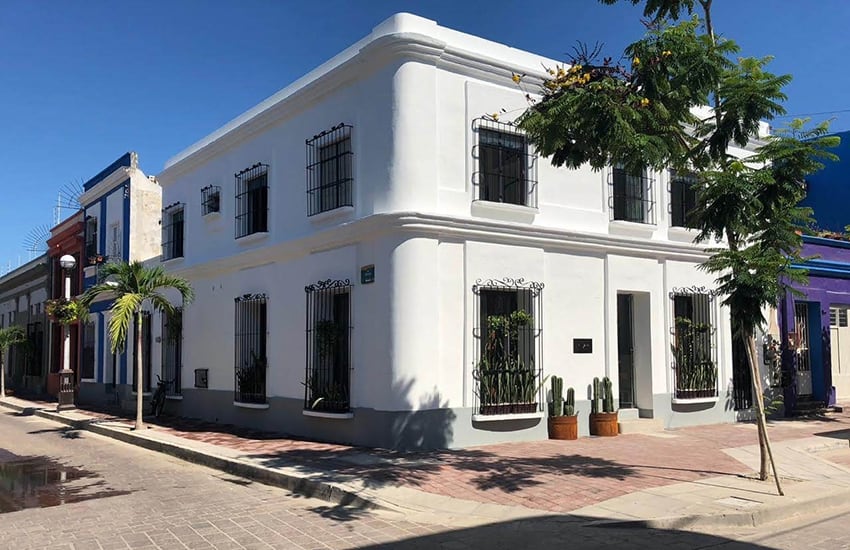
La Olivia restaurant Mazatlan
La Olivia sits in a renovated turn-of-the-century building and features floor-to-ceiling windows.

“I want to share the food I love,” said Gutiérrez, who uses all her own recipes. “I love the feeling of pleasing people.”

Drawing on an extensive culinary education (including an immersive cooking school in Thailand and a degree from New York’s International Culinary Center), she has filled the menus with foods she likes to eat, sourcing locally and organically whenever possible. La Olivia is her dream realized, and with her husband Kurt Heimpel, they’ve turned one of the Centro Histórico’s iconic colonial buildings into an oasis of good taste in every sense of the word.

The charming restaurant attracts the eye first as you come upon the beautifully renovated turn-of-the-century building, painted an elegant soft grey. Floor-to-ceiling windows are filled with plants and gauzy curtains; a sandwich board on the cobbled sidewalk announces the day’s specials or that there’s fresh bread.

Three small dining rooms (one in a cozy courtyard) are delightfully decorated in what I’d call French country meets Old Mazatlán. Original tile floors, mismatched white-painted wood chairs and a variety of table sizes are welcoming, and the friendly staff is fluently bilingual and familiar with the menu.

Bárbara trained as a chef but then segued into baking after discovering she loved the chemistry of bread and the science of baking. That means rolls, breads, pastries are all made in-house. They formed the foundation of the restaurant, which originally opened three years ago.

Then the pandemic happened, and after months of closure and restrictions, the couple finally reopened for breakfast to an overwhelming response.

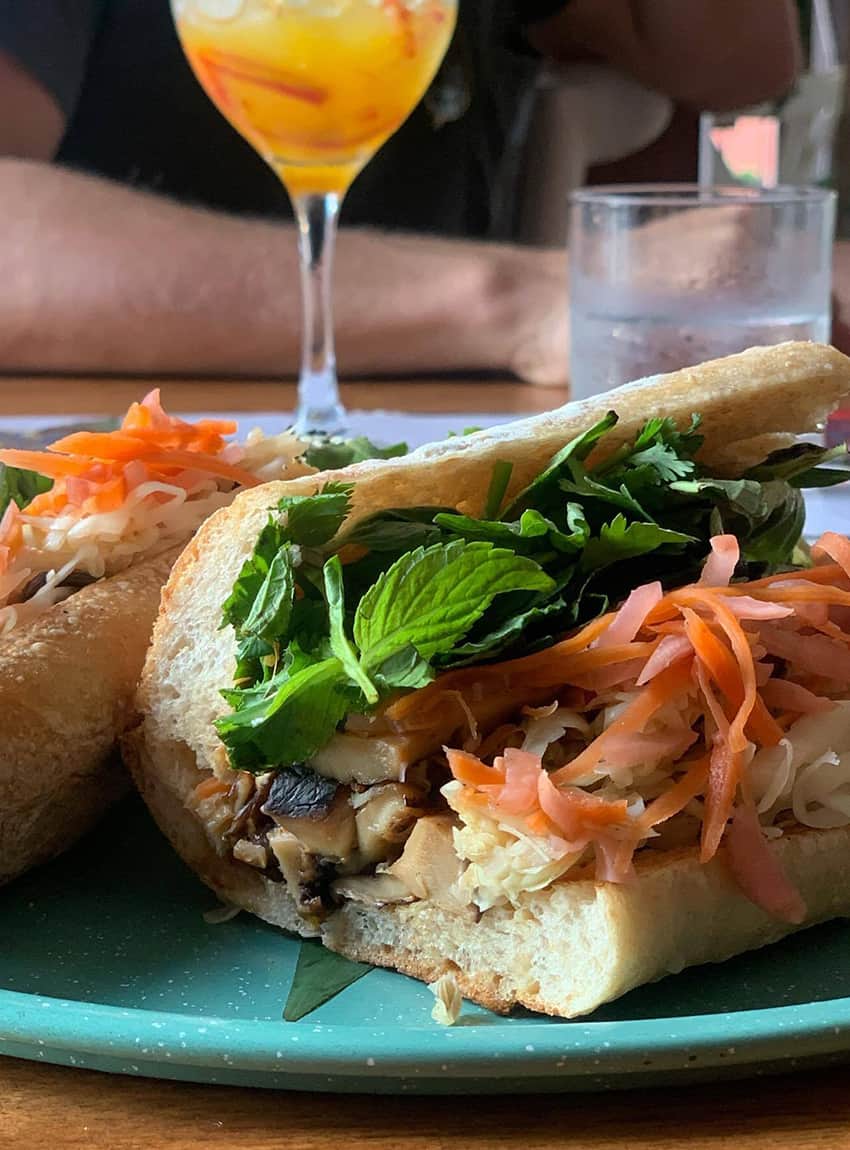
Banh Mi sandwich, Olibong restaurant
Olibong uses La Olivia’s kitchen to offer Thai and Vietnamese-inspired cuisine like this Banh Mi sandwich.

“Customers are equally locals and expats, and now, more and more, there are tourists coming to Centro Histórico, walking the streets and looking for a culinary experience,” Gutiérrez said. “I think Mazatlán is at a point that it’s growing, and it’s a good time to do new things.”

Another result of the pandemic was that longtime friends Lis Maíz and Luis Rochín — who ran a Thai restaurant in Mexico City for more than 20 years — decided to move to Mazatlán. It didn’t take long for the two chefs to start Olibong, offering Thai and Vietnamese-inspired cuisine, first from a to-go window a few nights a week, and now with evening dinner service as well.

Using her suppliers from Mexico City, Lis creates what Gutiérrez calls, “Really good, simple street food.” Fascinated by the many similarities between Mexican and Thai cooking — things like the abundant but different use of chiles, spices and fresh herbs, and the reliance on grains and flours other than wheat — she is excited by the new partnership.

Olibong’s menu offers about a dozen Thai classics like Banh Mi (with chicken or shiitake mushrooms) and Pad Thai, as well as drinks and desserts.

La Olivia is named after the couple’s dog Olivia, an adorable black-and-white shih tzu who pre-pandemic could often be found in the café.

“We didn’t want the restaurant name to reflect any specific type of food,” explained Gutiérrez. “But to put la or el in front of someone’s name is a very Sinaloa thing, and that reflects who we are and where we are.”

La Olivia Mazatlan
La Olivia is part of a new wave of locals opening eateries in Mazatlán who look beyond traditional menu offerings.

What: La Olivia

Where: Belisario Domínguez 1216, Centro Histórico, Mazatlán

When: 8 a.m.–1:30 p.m., Thursday–Tuesday (closed Wednesday)

How: 669.985.0642 / Facebook @laoliviamzt

And: breakfast and brunch menu daily. Wine, cocktails. Salsas, kombucha, hummus, organic eggs and peanut butter, breads and baked goods available for purchase.

What: Olibong

When: Dine-in or takeout, Thursday–Sunday, 3–10 p.m. (Sunday till 9 p.m.), Monday and Tuesday takeout only, 3–9:30 p.m. Closed Wednesday.

Where: inside La Olivia

How: 669.240.5232 / Facebook @Olibong

And: Free delivery all over Mazatlán. Catering available.

Janet Blaser is the author of the best-selling book, Why We Left: An Anthology of American Women Expats, featured on CNBC and MarketWatch. A retired journalist, she has lived in Mexico since 2006. Janet also writes The Tropical Table, a food column that appears every Monday on Mexico News Daily.

3 injured after mayoral candidates attacked by gunmen in three states

0
Two people were wounded in an attack Puerto Morelos candidate Blanca Merari.
Two people were wounded in an attack against Puerto Morelos candidate Blanca Merari.

Three candidates for mayor were attacked Friday in the states of Quintana Roo, Puebla and México in the lead-up to next week’s elections.

In México state, Citizens’ Movement (MC) Party candidate Israel Amador knew that he was at risk. There had already been death threats against himself, his father and his children by callers who demanded he drop out of the race for mayor of Tlalnepantla. Then on Friday, as he traveled to a meal with his campaign staff, he was attacked by two men on a motorcycle.

“One of them stopped in front of us and began to shoot at the place where I was sitting [in the car]. Luckily we are all OK, my team and I,” Amador told the newspaper Milenio in a television interview shortly after.

In Quintana Roo, Green Party (PVEM) candidate Blanca Merari was the target of a gunman in her home in the town of Leona Vicario. Two security personnel were injured in the attack. Merari is running for mayor of Puerto Morelos.

The attack occurred just hours after the arrest of the Yazmin “N,” a suspect in the assassination of Ignacio Sánchez, who was the Green Party’s pre-candidate for mayor and Merari’s ex-husband. Yazmin “N” is the sister of another candidate for mayor.

The shooting was the second attack on Merari this month. On May 4, an attacker opened fire on the her security team but there were no injuries.

Meanwhile, in Puebla a Morena candidate in Santa Clara Ocoyucan was attacked after a working meeting in a nearby town. Francisco Cortés was shot in the hand by a person whom he stopped to greet after the meeting.

Puebla Governor Miguel Barbosa had previously warned of violence against candidates in the area, saying that criminal groups there are known to pressure political candidates for their own ends.

“There are criminal groups trying to control public and private life in those municipalities, we can see that clearly. Santa Clara Ocoyucan has always been a complicated municipality.”

As of Friday afternoon 89 politicians have been murdered so far this election season, according to the risk analysis firm Etellekt Consultores; 35 of them were candidates.

Source: Milenio (sp), El Economista (sp)

Netflix series inspired by story of 2011 massacre in Allende, Coahuila

0
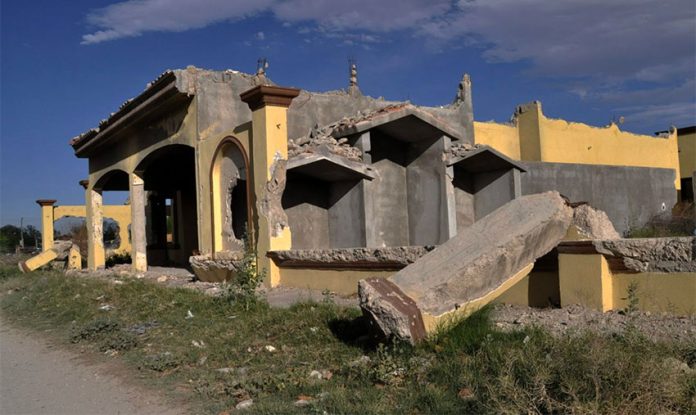
One of the homes destroyed in Allende in 2011.

This story was originally published by ProPublica.

Netflix will release a series next month inspired by a story that revealed the U.S. Drug Enforcement Administration’s role in setting off a massacre in northern Mexico in 2011, leaving dozens of people dead or missing.

“How the U.S. Triggered a Massacre in Mexico” was published in 2017 by the investigative news agency ProPublica.

The series, called Somos., which means “we are,” was created by award-winning screenwriter and producer James Schamus, who assembled an almost entirely Mexican crew of writers, researchers, cinematographers, editors, actors and extras. It was written and filmed in Spanish, on sets located primarily in the Mexican state of Durango, not far from Allende, in the neighboring state of Coahuila, which was the scene of the tragic events on which the series is based.

Schamus, an Oscar nominee and former CEO of Focus Features who previously produced widely acclaimed films including Crouching Tiger, Hidden Dragon, Brokeback Mountain, and Lust, Caution, said that after reading ProPublica’s reporting on Allende he was struck by the complex story behind what had happened there and the fact that the tragedy was not more widely known, largely because systemic impunity made it dangerous for those affected to speak out about it.

He said he immediately started reflecting on ways the story could be told through a fictional narrative that centered on the experiences of the victims — and could potentially reach a wider audience. The period at the end is meant to make the title more of a universal assertion that means, “This is us.”

Somos. will give a third life to ProPublica’s “How the United States Triggered a Massacre in Mexico.” The online story, which was co-published with National Geographic, was an oral history that reconstructed a 2010 DEA case that had targeted the leaders of a vicious Mexican drug cartel.

Somos. | Tráiler oficial | Netflix

The operation erupted in violence when it was compromised by corrupt members of a DEA-trained Mexican police unit. The story relied heavily on testimonies from people responsible for the attack and those who were its victims, including law enforcement agents, cartel members, local officials and relatives of the dead and missing.

After the story was published, Audible used some of the recorded testimonies to produce a podcast featuring well-known film actors, including Cheech Marin and Danny Trejo.

It was important to Schamus that Somos. be both authentic and unconventional. Because he’d never worked in Mexico and didn’t speak Spanish, he knew he’d need to rely heavily on a team of Mexican artists to achieve his vision. Among those he enlisted as writers were Monika Revilla and Fernanda Melchor, whose earlier work had also grappled with humanity’s darker side.

They and others on the team immersed themselves for three years in the history, lives, culture and language of the northern region of the country, which has been shaped, for better and worse, by its proximity to the United States.

The pandemic and other security concerns prevented the crew from traveling to Allende, but they used Google maps, Instagram and Facebook to get to know its streets and people. Melchor said that it was by watching social media accounts of Allende’s youth football team that they learned some of the players were girls, which inspired them to create such a character in the series. Before long, Revilla said, “We knew the names of the most popular bars in town and what nights they had karaoke.”

The team also set out to make Somos. different from so many other television series about drug violence, which tend to focus on law enforcement agents and traffickers. “Instead of the narco or the cop with the gun,” Schamus said, “we turn the camera around on the extra in the corner. The people who hover around the borders of the screen, those are the people at the center of Somos.”

Revilla, whose previous work includes the popular Netflix series La Casa de las Flores (The House of Flowers), said, “As someone with a background in television, I’ve seen series after series that glamorize the traffickers, and that tell what it’s like to live in the midst of a war against drugs, but not from a point of view that has anything to do with us.”

Melchor, who is best known for her highly regarded novel Temporada de Huracanes (Hurricane Season), said that turning real people who’d suffered unspeakable atrocities into television characters without trivializing or retraumatizing them was perhaps the crew’s toughest challenge. She said that she, Schamus and Revilla wanted their characters’ stories to be realistic, but not real, out of respect for the massacre’s victims and their relatives. “We didn’t want those people to feel aggrieved,” Melchor said, “but at the same time we wanted them to feel their experiences were represented.”

Somos. stars a large collection of professional and amateur actors. One young man, Jesús Sida, who plays a central character named Paquito, was discovered working after school as a mechanic in his father’s garage.

The series is scheduled for worldwide release on June 30. Melchor said she hopes it will “start a conversation, not only about Allende, but about all the Allendes that there have been in other parts of Mexico, and the massacres that continue everywhere.”

Schamus, who has learned a considerable amount of Spanish in the last three years, said he had similar hopes for the series, but that they can only happen if viewers like it. He said that the early response has been glowing.

“I think the series could have the chance to shift discourse in Mexico and elsewhere about what has been the structural impact of the violence of the drug war,” he said. “But the reason it has any chance of having that impact is because the work by this team is awesome.”

Mexico News Daily

Cartels burn vehicles, block highways in 5 Michoacán municipalities

0
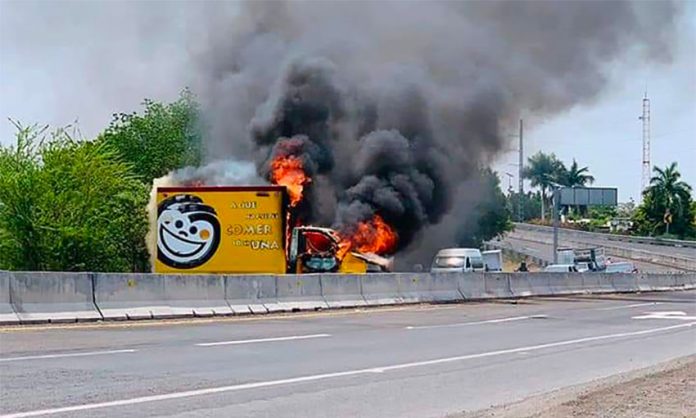
A truck burns on a highway in Michoacán Friday.

After a confrontation with members of the National Guard in Aguililla, warring cartels in Michoacán burned vehicles and blocked highways in five municipalities.

Authorities reported 11 roads blocked by vehicles, some of which were set on fire, in the Tierra Caliente region on Friday. The municipalities affected were Apatzingán, Buenavista, Parácuaro, Tepalcatepec and Aguililla.

The 11 blockades were removed and the roads reopened, authorities said. Authorities added that they were the cartels’ response to security operations carried out by state police.

The confrontation in Aguililla involved a shootout between the National Guard and members of the Jalisco New Generation Cartel (CJNG), and led to the CJNG burning two vehicles to prevent more security forces from entering the area, the newspaper El Universal reported. It is not yet known if there were any casualties.

National Guard and state police were also attacked with sticks and rocks by residents of El Terrero, a community in Buenavista. Then around midday, groups of presumed cartel members began to blockade the roads connecting Apatzingán to Buenavista, Parácuaro, Tapalcatepec and Aguililla.

Se registran enfrentamientos, bloqueos y queman vehículos en Tierra Caliente

CJNG rival Cárteles Unidos blocked roads in seven places in Apatzingán, Buenavista and Parácuaro. In Apatzingán, a store was burned by a group of armed individuals who threatened to burn more commercial buildings.

Later in the day the violence spread to the state capital of Morelia, where three cars were reported burned including a police vehicle.

The Tierra Caliente region has become the epicenter of a cartel turf war in recent months, forcing families from at least a dozen communities in the municipalities of Aguililla and Buenavista to flee the violence.

Sources: El Universal (sp)

Contract worth 36.6bn pesos awarded for Maya Train rolling stock

0
Maya Train design
The Mexican subsidiary of Bombardier Inc. will provide the Maya Train project with 42 trains and infrastructure.

The federal government announced this week that a consortium led by the Mexican subsidiary of Bombardier Inc. was the successful bidder in an international tendering process for the acquisition of rolling stock and rail systems for the Maya Train railroad in Mexico’s southeast.

The National Tourism Promotion Fund (Fonatur) said in a statement that the consortium submitted a bid of 36.6 billion pesos (US $1.84 billion) to supply rail systems and 42 trains. Thirty-two trains will be electro-diesel, and 10 will run solely on diesel.

The winning bid was 890 million pesos (US $44.6 million) lower than the second-lowest offer, and the consortium that submitted it achieved the highest score among seven participants in the process, according to Fonatur, which is managing the construction of the 1,500-kilometer tourist, public transit and freight railroad.

Fonatur said the consortium will design and manufacture 42 trains and build infrastructure including train control centers, maintenance workshops and depots. Testing of the trains will begin in 2023.

Fonatur chief Rogelio Jiménez Pons said Friday that the government will later acquire 57 more trains from the same consortium. They will be purchased as demand for travel on the railroad increases, he told reporters at the president’s press conference, adding that it will begin operations in December 2023.

Maya Train
The different trains that operate on the railroad will have Maya names.

President López Obrador said a lot of the work to manufacture the trains will be done in Ciudad Sagahún, Hidalgo.

“This is good news because it’s an investment of about 36 billion pesos and a lot of jobs will be created,” he said.

Jiménez said the different trains that operate on the railroad will have Mayan names. Trains offering short, regular services for locals will be called xiinbal, which means “walk,” special “restaurant trains” will be known as janal, which means “eat” and trains covering long distances will be called p’atlal, which means “stay,” he said.

“… It’s estimated that in the first years [of operation] a [regular service] train will be leaving Cancún every 15 minutes and later the number of wagons and frequencies will increase,” Jiménez said.

“… This is the type of train that will have a restaurant,” the Fonatur chief said as images of the janal were projected on a screen behind him.

“… There is great gastronomic wealth in the southeast, imagine … 10 restaurant trains, which is the number being ordered, offering food from Yucatán, Campeche, Chiapas, Tabasco …”

Maya Train
An artist’s conception of the dining car.

López Obrador says the construction and operation of the US $7.8-billion railroad will spur economic and social development in Mexico’s southeast but the project is not without its critics. Several indigenous communities have filed legal action against the project on environmental grounds, while some Maya oppose it because they believe it will bring few economic benefits to impoverished residents.

“It’s not planned for us, the common people. It’s a tourism project that will only benefit the wealthy and foreigners. We, the owners of the land, will only see the train pass by because there will be no stations in the majority of our towns. … Our communities will only see the destructive part of the project,” a collective of indigenous groups said.

The same collective also challenged the name of the project, declaring that “there’s nothing Mayan about it.”


Maya Train design
One of the trains whose designs were revealed today.

Mexico News Daily