Home Blog Page 202

Who was the greatest Mexican boxer of all time?

1
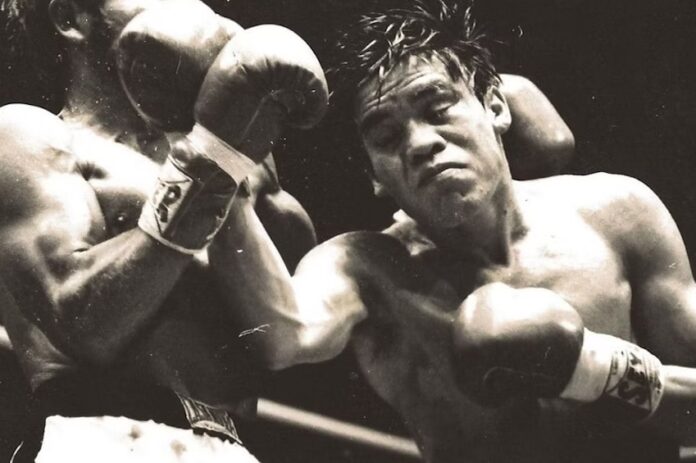
Ruben Olivarés boxing
When it comes to Mexican boxers, one name stands above the rest. This is the story of Rubén Olivares. (TBL Training)

When lists of all-time great boxers are made, Rubén Olivares is usually included. Either he’s ranked as one of the best five men to have boxed at bantamweight or one of the best five world champions that Mexico has ever produced. His career spanned 24 years and 109 fights, and caused an immeasurable amount of excitement. Olivares was, above all, a fighter who excelled at knocking his opponents out, sometimes having to get off the canvas himself to do so. 

Born in the coastal state of Guerrero, his family moved to the Bondojito area of Mexico City in 1947. It was a time when thousands of Mexicans were leaving the countryside, and the slum areas around the city were expanding faster than the government could provide adequate housing or services. Olivares became a tough boy on tough streets. Siblings died, his father left to find work in the U.S. and he was thrown out of school for fighting. According to boxing folklore, the headmaster once offered to present his graduation diploma early, on the condition that Olivares never come back to the school.

Rubén Olivares clapping in front of a group of suited men
Olivares was destined for stardom from a young age, after leaving school early to continue his training. (TBL Training)

How Rubén Olivares began his boxing career

He tried his hand at carving wooden figures, a career for which he had little talent. Then, he and a friend decided the one thing they could do was fight, so they walked down to the local gym. Many boxers start as amateurs for fitness, or to toughen up, and then find they are good enough to turn professional. The day Olivares first entered the gym, he already had a professional career in mind.

He built up a reasonable record in the amateurs, including a Mexico City Golden Gloves title. But having missed his chance to compete in the 1964 Olympics, he saw no point in continuing to fight for free. At just 17 years of age, he had his first professional fight, beating Isidro Sotelo in Cuernavaca. It was the first of 24 consecutive knockout wins. Apart from his winning record, Olivares had that special star quality. While many boxers wear out their opponent, slowly mastering them until you sense a knockout is coming, from the moment Rubén stepped into the ring, you knew a knockout punch could come at any moment. Whatever else might happen, fans were not going to get a dull fight. 

With money coming in from fights, Olivares did not slow down when he left the ring. He was noted for his love of tequila and women. However, this lifestyle only made his fans love him more. As the wins accumulated, Ruben started to get attention beyond Mexico. The Los Angeles Times once described him as having “a smile that stretched from ear to ear and thunder in both hands.”

The man with thunder in both hands

Another young Mexican bantamweight catching headlines at this time was Chucho Castillo. He was noted for his quiet, almost shy approach to life, working ruthlessly in the gym but then quietly slipping away. He was one hell of a boxer and in December 1968 traveled to Inglewood, California, to fight World Champion Lionel Rose. The 10th round saw Rose knocked to the canvas, a moment that convinced the many Mexicans in the audience that their man had done enough to win the title. However, when at the end of 15 rounds, the referee raised the Australian’s arm in victory. There was first surprise and then anger. The riot that followed put 14 fans and the referee in the hospital. Five months later, Olivares came to Inglewood, where he beat Olympic champion Takao Sakurai of Japan in a title elimination bout. 

He was now set to meet Rose for the world title, which would once again be fought in California. The first round was even as the two men sized each other up. This was followed by an action-packed second that started with the fighters exchanging blows. Slowly but steadily, the brawl turned in the Mexican’s favor, and close to the bell, Rose was knocked to the canvas. The Australian got to his feet and fought on, but from this point it was a case of not who would win, but how long Rose could last. It ended in the fifth, Olivares becoming world champion at the age of 22.

The trilogy of fights with Chucho Castillo

All of Mexico now wanted to see Olivares fight Castillo. The former delayed the showdown by taking a few easy fights, but in April 1970, the two Mexicans stepped into the Inglewood ring for what would be the first of three fights that would define their careers. Olivares won the first clash on points, but it was close enough to justify a return. This time, he received a badly cut eye in the first round, a wound he claimed was from a clash of heads, something the Castillo camp denied. The referee kept checking the cut and finally stopped the fight in the 14th. It was Olivares’ first defeat in five years and 63 fights.

Ruben Olivares vs Chucho Castillo I

It is possible that by then, he was already in decline. Olivares notoriously hated training, and one reason his management team kept him fighting so regularly was to keep him occupied and away from parties. Not that the management had to push him into the ring. The money Olivares got from each contest quickly disappeared, lost in rip-offs, taxes, bad investments, and gifts to his relatives and friends back in the barrio. His bank balance always needed one more fight.

The end of Olivares’ career

By now, he was no longer putting the same effort into the gym work, while his party lifestyle meant he was increasingly struggling to make the weight limit. Yet Olivares was so talented and so proud in the ring that at first the decline didn’t show. In April 1971, he fought Castillo for the third time, surviving an early knockdown to win on points. He seemed back on form and won his next six fights. However, those around him were increasingly worried about his attitude and his playboy lifestyle. In March 1972, he met Rafael Herrera. It was a fight neither man wanted. Olivares was out of shape, and Herrera had been sick. When Herrera later won with an eighth-round knockout, Olivares was still surprisingly upbeat.  He had not, he announced, lost the bantamweight title, but had started his pursuit of the featherweight title. 

However, his life was growing increasingly wild. There is a story that while he was preparing for one fight, he and his opponent passed each other in the street. His rival was going out for an early training run just as Olivares was coming in from a disco. It was also at this point that the boxer started to get into movies, starring in “Nosotros Los Feos” and getting numerous other smaller parts. Despite all the distractions, Olivares won three more world titles. He beat Bobby Chacon for the NABF featherweight title in 1973, Zensuke Utagawa for the WBA featherweight title in 1974, and Chacon again for the WBC featherweight title in 1975. He finally left the ring in 1981, having lost three and drawn two of his last five fights.

Life after boxing

His life since then has had its ups and downs. On the downside, there was a marijuana-related arrest. In contrast, there was his induction into the International Boxing Hall of Fame. There were some television roles, but financially, his post-boxing career brought tough times. In his later years, Olivares was a regular in the Mexico City mercado, selling boxing memorabilia and autographs. There are children and grandchildren, and at 74, he is still active, still has that captivating smile, and still has the respect of the people who recognise him in the street.

Bob Pateman is a Mexico-based historian, librarian and a life term hasher. He is editor of On On Magazine, the international history magazine of hashing.

MND Local: Los Cabos news roundup

2
(Visit Los Cabos)

Los Cabos beaches are a year-round attraction, but summer is the slowest season. Thus, it’s the optimal time for government officials to inaugurate new programs, replace equipment, or revamp existing services. There’s a little of all three going on right now in Los Cabos and La Paz, along with the floating of trial balloons to judge public sentiment on new initiatives. 

Is La Paz getting a nude beach?

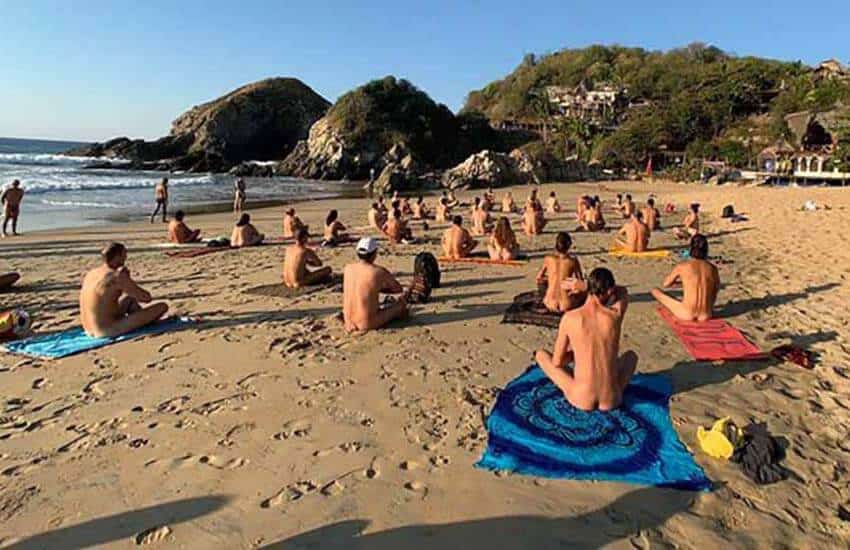
Zipolite nude beach Oaxaca
Zipolite, Oaxaca’s beach allows nudity, but not sex, according to a newly passed law that comes with fines and required community service for violators. (Jorge Maldonado Campos/YouTube)

The ultimate trial balloon was recently let loose in La Paz regarding nudity. Nude beaches, of course, are a rarity in Mexico. Outside Zipolite in Oaxaca, there aren’t any, although Playa del Carmen in Quintana Roo used to have one, and the Riviera Maya does have some adults-only resorts where clothing is optional. Tourists have also been known to occasionally take some liberties on the nation’s beaches, but as far as legal recognition goes, Playa Zipolite remains the only officially sanctioned nude beach in Mexico.

However, there might be a possibility for one in La Paz. Well, the municipality of La Paz, anyway. It would have to be an area with little traffic so as not to offend the sensibilities of locals, and indeed, the area proposed by the La Paz comptroller, Jorge Pável Castro Ríos, in an interview with Diario El Independiente, is about as low traffic as it gets: between Playas El Saltito and El Carrizalito.

He noted that no formal requests have been made to date, and that permits would have to be acquired from the appropriate authorities. But the fact that it was brought up at all does seem to suggest that La Paz might be amenable to the tourism dollars and media interest generated by such a proposal.

Vendor access is being limited on Los Cabos beaches 

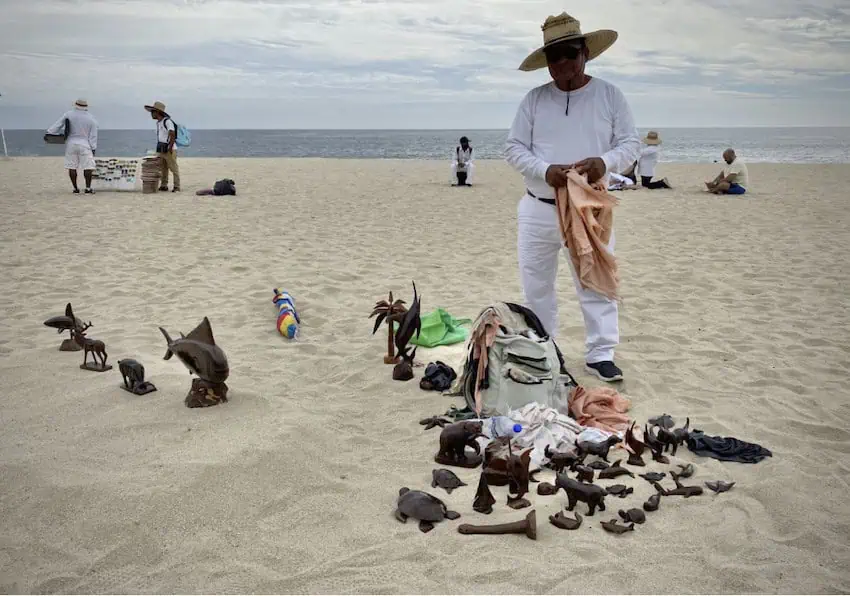
A man selling products on a beach
Vendors are ever-present on many Los Cabos beaches, but there should be fewer moving forward. (Sharon Hahn Darlin)

Life is good on Los Cabos’ beautiful beaches. But if there is a complaint, particularly on the more popular playas, it’s that there are way too many vendors. Local business owners, who have heard the complaints from tourists for years, have been vocal in pushing the local government to crack down on the many unauthorized vendors found on beaches like Playa El Médano in Cabo San Lucas, some of whom come from other states during the high tourist season.

It appears their voices, on behalf of innumerable harried tourists, have finally been heard. Over 300 vendors have been swept from local beaches by authorities, and moving forward, only those who are properly permitted and wear the official uniform—a long-sleeved white shirt—will be allowed to sell their wares. New uniforms are expected to be issued to the 698 paid-up vendors this summer. ID cards will also be issued to those who ponied up the 1,200 pesos to renew their permit, and an additional 600 pesos for the shirt. 

That still seems like an awful lot of vendors pestering tourists, but at least it’s easy to see them coming.

Los Cabos has the only two A+ Blue Flag beaches in Mexico 

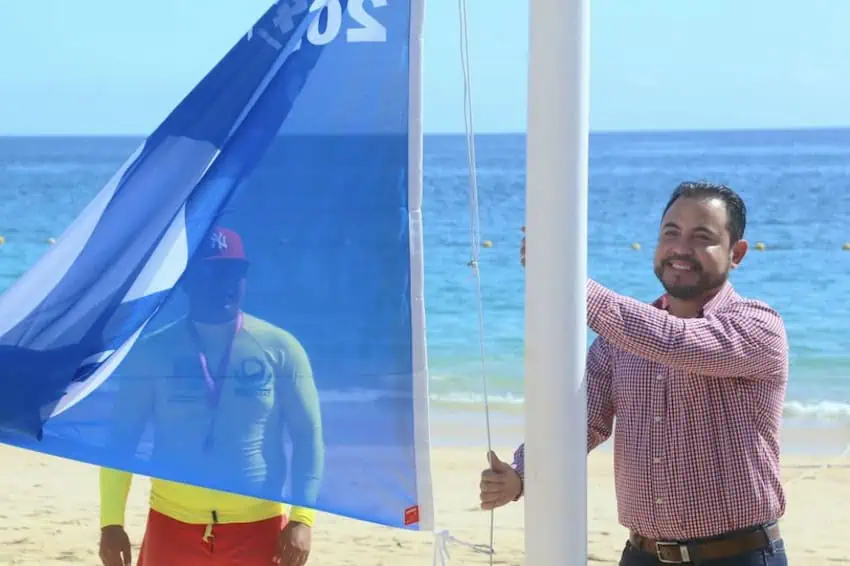
A man raising a blue flag on a Los Cabos beach
Los Cabos has more Blue Flag beaches than any municipality in Mexico, including the only two with an A+ grade. (Ayuntamiento de Los Cabos)

When the Foundation for Environmental Education (FEE) announced its Blue Flag beaches for 2024 – 2025, Los Cabos had 25 of Mexico’s 78 awarded beaches, the most of any single municipality. However, even among beaches heralded for their cleanliness, sustainability, and services, there are levels.

For example, there is an A+ designation that signifies the very highest achievement obtainable under the Blue Flag banner, meaning not only does a beach meet all 33 international criteria for water quality standards, safety, services, and environmental management and education, but it maintains cleanliness at a truly exceptional level (no mean feat given the amount of garbage regularly hauled from local beaches).

These standards are so stringent that to date, only two beaches in Mexico have ever qualified: Playas Palmilla and Santa María in Los Cabos. The two A+ awardees were recently announced after a two-week audit, bringing attention to just how pristinely maintained these coastal stretches are, in addition to their aesthetic beauty. 

Naturally, that means the other local beaches aren’t operating at A+ levels. Blue Flag awardee Playa El Chileno, notably, appears to be struggling to maintain even the basic standard. For example, there have been reports of activities prohibited under Blue Flag rules, including unlicensed food and alcohol sales, and the unauthorized renting of beach chairs to tourists. Vendors without permits, of the kind mentioned earlier, have also allegedly been harassing beachgoers there.

Play El Chileno, it should be pointed out, is a very popular beach, particularly among locals. It’s also very beautiful, with excellent swimming and snorkeling. However, despite being a perennial Blue Flag winner and one of the first five beaches ever to achieve the honor in Mexico (dating back to 2014), it could be in danger of losing that status. 

It wouldn’t be the first. The thing about Blue Flag beaches is that the quality has to be consistently maintained, which is sometimes hard to do. But Los Cabos’ government has shown a commitment to keeping its beaches in excellent condition, resulting not only in its record number of Blue Flag playas, but also 17 newly minted Platinum ones. This honor, like the Blue Flag, is premised on cleanliness, services, and sustainability. But it’s administered not by FEE, but rather by the domestic Instituto Mexicano de Normalización y Certificación.

New signs delivered to popular Los Cabos beaches

New signs should make local beaches safer than ever. (Ayuntamiento de Los Cabos)

New signage is also being delivered to some Los Cabos beaches this summer, as part of a Zofemat (Zona Federal Marítimo Terrestre) initiative to promote self-care and safety. The signs will showcase plenty of useful information, including an explanation of the flag system used to update the water conditions for swimming or other aquatic activities. 

No, this has nothing to do with the aforementioned blue or platinum flags. Rather, it refers to color-coded flags like the green, yellow, and red ones that are occasionally flown, and which, like the colors of a stop light, tell you whether you can swim because conditions are safe, you should take caution, or avoid getting in the water altogether. White flags, meanwhile, mean there are jellyfish in the water, while black flags indicate beach closure.

The signs weren’t installed at all beaches, but only at those that see the most traffic. 

Chris Sands is the Cabo San Lucas local expert for the USA Today travel website 10 Best, writer of Fodor’s Los Cabos travel guidebook and a contributor to numerous websites and publications, including Tasting Table, Marriott Bonvoy Traveler, Forbes Travel Guide, Porthole Cruise, Cabo Living and Mexico News Daily. His specialty is travel-related content and lifestyle features focused on food, wine and golf.

Will the new bilateral security agreement permit US military intervention? Tuesday’s mañanera recapped

6
Sheinbaum 5 August 2025
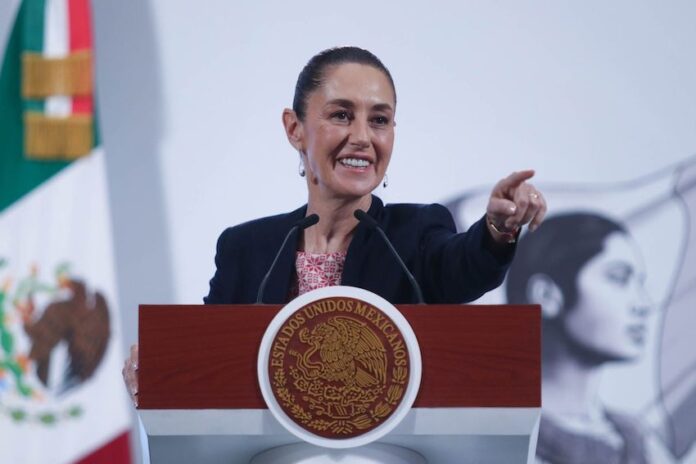
Sheinbaum said that a new security agreement between Mexico and the United States is "ready" for both parties to sign. (Graciela López/Cuartoscuro)

The presentation of a new government plan for state-owned oil company Pemex took up a significant portion of President Claudia Sheinbaum’s Tuesday morning press conference.

Sheinbaum declined to respond to some questions about issues not related to Pemex, but did speak about a new Mexico-United States security agreement that is expected to be signed soon.

Mexico-US security agreement is ready, says Sheinbaum 

Sheinbaum said that a new security agreement between Mexico and the United States is “ready,” but won’t be signed this week.

She said that she would present the new agreement at a future press conference in order to be “very transparent.”

In late 2021, during the governments of Andrés Manuel López Obrador in Mexico and Joe Biden in the United States, the two countries entered into the Bicentennial Framework for Security, Public Health and Safe Communities, which superseded the Mérida Initiative.

Last Thursday, Sheinbaum said that she believed that the new bilateral security agreement would be signed this week.

However, she claimed on Tuesday that her remarks were misunderstood and that she didn’t say that at all.

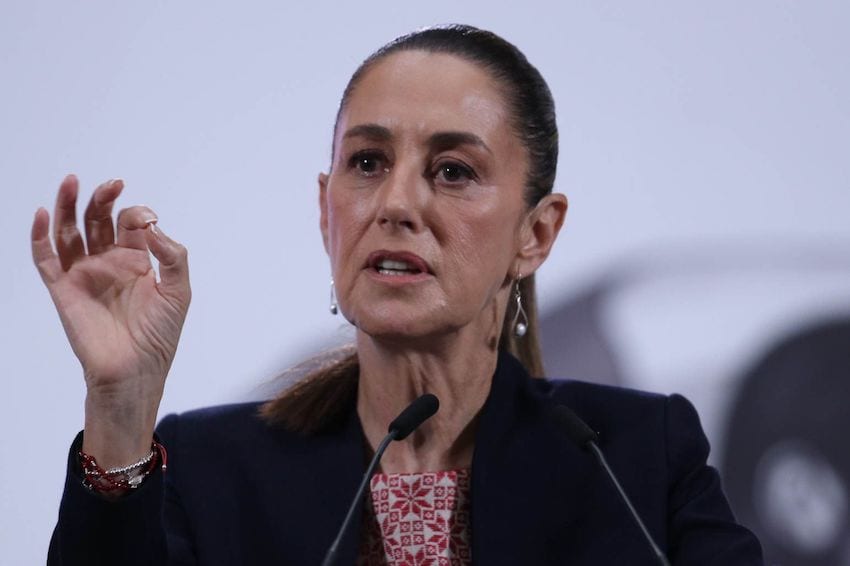
The president said that she would present the new bilateral security agreement at a future press conference in order to be “very transparent.” (Graciela López/Cuartoscuro)

“… The wording [of the agreement] is practically finished, [but] it still hasn’t been decided when it will be signed,” Sheinbaum said.

She said that the agreement is governed by four key principles.

  • Respect for sovereignty.
  • Respect for each other’s territory.
  • Mutual trust.
  • Collaboration and cooperation between Mexico and the United States “within that framework.”

The Trump administration has been pressuring Mexico — including through the threat of tariffs — to do more to combat drug cartels in Mexico and stop the trafficking of narcotics to the United States, especially fentanyl.

A violent start to the week 

A reporter asked the president whether recent acts of violence such as the murder of a prosecutor in Tamaulipas and the murder of a union leader in Quintana Roo as well as the discovery of dismembered bodies in Veracruz and the discovery of 32 bodies in a clandestine grave in Irapuato, Guanajuato, could be “used” by the United States in negotiations over the security agreement.

Federal prosecutor fatally attacked in Reynosa

“There is an agreement of collaboration and cooperation,” Sheinbaum said, apparently reiterating that the pact has already been drawn up.

“… We’re a sovereign country, we make decisions as a sovereign country,” she added.

“And with the United States, we collaborate and cooperate and that collaboration and cooperation is very important, but with [respect for each other’s] sovereignty,” Sheinbaum said.

Pushed as to whether acts of violence in Mexico could “raise the price of the negotiation” with the United States, “so to speak,” the president effectively brushed off the question, only responding, “Why?”

A US military intervention in Mexico is ‘not on the table,’ says Sheinbaum

After Sheinbaum’s aforesaid response, a different reporter abruptly asked the president about the possibility of a U.S. military intervention against criminal groups in Mexico.

Sheinbaum reminded the press corps that she had previously rejected an offer from U.S. President Donald Trump to send the United States army into Mexico.

“They can insist again, but that issue is not on the table,” she said.

“… There are other ways of collaborating and coordinating with each other. There is information they can provide us, information we can provide them in a scheme of collaboration without subordination and respecting our sovereignty,” Sheinbaum said.

By Mexico News Daily chief staff writer Peter Davies (peter.davies@mexiconewsdaily.com)

Mega barbacoa returns to Hidalgo, with enough for 15,000 hungry visitors

0
barbacoa
On Monday, Aug. 11, a free tasting for an estimated 15,000 visitors will begin at 11 a.m. (Juan Pablo Zamora/Cuartoscuro)

A small town in the central highlands state of Hidalgo is set to sizzle this weekend when it attempts to break its own record for the largest barbecue in Mexico.

The barbacoa feast of 100 sheep (lambs) and more than 2,000 chickens will be slow-cooked underground in two enormous, custom-built ovens as part of the annual Dajiedhi Fair, a six-day festival starting Wednesday.

State by Plate: Barbacoa of Hidalgo

The popular fair will feature church services, fireworks, dancers, music, carnival rides, craft sales and food — like other patron saint festivals in Mexico. But this event, like many others across the country in early August, pays homage to El Divino Salvador (the Divine Savior, aka Jesus).

Much of this year’s focus is on Sunday, when the large ovens will be ignited by local barbocoyeros (pitmasters) to begin the barbecuing process. On Monday, a free tasting for an estimated 15,000 visitors will begin at 11 a.m.

“It’s just a tasting, so we ask for your understanding that there should be enough for everyone,” emphasized Alex Santiago Mejía, a member of the fair committee.

For those wanting more, barbacoa will also be available for purchase for about 650 pesos (US $34.50) per kilogram.

Last year’s event featured the cooking of 68 sheep and more than 200 chickens, though organizers opted against trying to obtain a Guinness World Record due to costs.

Like last year, this year’s barbecue will be prepared in a traditional manner that dates back to pre-Hispanic times.

Sheep and chickens donated by Dajiedhi residents and farmers in neighboring towns will be prepped and seasoned by the barbocoyeros and volunteers.

The meats will then be cooked in stone pits that are lined and topped with maguey leaves to protect ingredients from the dirt and to seal in flavors from vegetables and mesquite branches placed in the pits.

Dajiedhi, population 2,400, is located in the municipality of Actopan, Hidalgo, about 30 kilometers north of the state capital, Pachuca. Its unique name is almost certainly Indigenous, likely of Otomí-Hñahñu origin, but its precise meaning is unknown to scholars.

In Actopan and other areas of the Mezquital Valley, barbecued meats have been prepared in earthen ovens since 1518, according to Mexico’s Ministry of Culture. The newspaper Milenio referred to Dajiedhi as “the birthplace of barbacoyeros.”

At the Barbacoa Fair in Actopan in early July, the community reportedly set a Guinness World Record for the longest line of barbacoa tacos — more than 12,000 placed side-by-side in a single row. Vendors made about 300 tacos each, and when the tacos were lined up, no overlapping was allowed, according to the on-site Guinness adjudicator.

With reports from Milenio, N+ and Central Hidalgo Irreverente

More than one-third of Mexico’s schoolchildren are overweight or obese

1
Three schoolboys drinking sugared drinks
A ban on junk food in public schools, including sugary drinks, has been in force for several months, but an ongoing survey of schoolchildren's health shows that the ban's desired results may take a while. (Rodolfo Angulo/Cuartoscuro)

Four months after the start of a ban on junk food at schools across the country, an ongoing Mexican government health study revealed that more than one-third of the nation’s school-age children are overweight.

Mexican Social Security Institute (IMSS) director Zoé Robledo presented the preliminary results during President Claudia Sheinbaum’s daily press conference on Monday. 

Overweight child ettngmeasured
The survey is ongoing but the current results are alarming: Not only are more than a third of Mexican schoolchildren overweight, but 18% of them qualify as obese. (Rodolgo Angulo/Cuartoscuro)

“Of the 4 million public school children who have undergone [the screenings], 18 percent are obese,” President Claudia Sheinbaum said on Monday. “And if we consider both overweight and obesity, the number rises to nearly 37 percent.”

Robledo said that 1,986,117 of the children screened between March and July as part of the government’s Healthy Living (Vida Saludable) program have received referrals for free medical attention.

The study found that more than half of the school-age children in three states — Campeche (56%), Quintana Roo (52%) and Tabasco (51%) — were either overweight or obese.

The study also found that the problem increased with age. While 33% of first-graders were assessed as overweight, the prevalence for sixth-graders was found to be 45%.

Additional results showed that 55% of the children screened had cavities and 35% had impaired vision.

The objective of the government’s program, Sheinbaum said, is to assess students’ health, offer referrals to clinics for checkups as needed and to promote a healthy lifestyle, featuring a nutritious diet and exercise.

“The program is very important because, in the end, it’s not just about providing healthcare when someone gets sick, but about prevention, about being able to build a healthy life,” she said.

The program is being managed by IMSS and the Education Ministry.

A Gringa’s take on the Mexican childhood obesity crisis


Four million schoolchildren underwent health screenings in the final months of the school year that ended in July. The screenings will continue during the upcoming school year until 12 million children have been evaluated.

“Our goal is to help families and teachers demonstrate how to eat right, how to exercise properly in order to lead a healthy life,” the president said, adding that the nationwide ban on junk food at public and private schools is a key part of this strategy.

The junk food ban, approved last year, went into effect on March 31.

Schools were required to phase out food and beverages displaying one or more black warning logos identifying the product as high in salt, sugar, calories or fat. These banned items include donuts, carbonated drinks, French fries, chips and snacks, candy, ice cream and flavored milk.

School administrators who violate the ban risk fines of up to 5,450 pesos (US $290).

With reports from La Jornada Maya, Excelsior and El Universal

Mexico’s exports to the US increased 6.3% in the first half of 2025

0
Mexican and USA flags, side by side
The differential in Mexican exports and imports caused Mexico’s trade surplus with the United States to increase by 16.7% to $96.21 billion. (Canva)

Mexico’s exports to the United States during the first half of 2025 reached US $264.38 billion, a 6.3% increase over the same period last year, the U.S. Census Bureau reported Tuesday.

However, Mexico’s share of the U.S. market fell from 15.9% in the first six months of 2024 to 15% from January through June 2025 as U.S. imports rose at the global level. 

President SHeinbaum with microphone
President Sheinbaum has been praised for responding calmly but firmly to U.S. President Trump’s tariff threats aimed at Mexico. The result after half a year is that despite those threats, Mexican exports to the U.S. have increased. (Graciela López/Cuartoscuro)

Mexican exports to the U.S. climbed despite U.S. President Donald Trump’s threat to introduce new 30% tariffs on non-free-trade agreement (USMCA) goods — a plan that has been put on hold for 90 days following a month of negotiations with Mexican President Sheinbaum’s cabinet.

Meanwhile, Mexico’s imports of U.S. products rose by a significantly lower rate of 1.1% year-on-year in the first half of 2025, totaling $168.17 billion.

The differential in Mexican exports and imports caused Mexico’s trade surplus with the United States to increase by 16.7% to $96.21 billion, edging closer to that of China, which fell 12.4% year-over-year, to $111.48 billion. That surplus has been one of Trump’s pretexts for his aggressive trade stance toward Mexico.

One of the takeaways from the recent trade negotiations between the United States and Mexico was President Sheinbaum’s appearance of abidance to Trump as regards the trade surplus, even to the point of Mexico encouraging its nation’s companies to “buy American.”

In recent months, Trump has imposed 50% tariffs on steel, aluminum and copper imports and 25% on automobiles and certain auto parts from Mexico. He also introduced 25% tariffs on non-USMCA products, which could increase to 30% unless Sheinbaum can convince the U.S. president not to raise the tariffs by the October deadline.

After another round of successful negotiations, what is Mexico doing to achieve permanent tariff relief?

Overall, U.S. export and import levels both increased in the first half of the year, despite the imposition of tariffs on several countries, which encouraged many states to introduce reciprocal tariffs. U.S. global foreign purchases climbed by 12.7% to almost $1.8 trillion. Conversely, exports increased by 5% to reach $1.08 trillion.

Even with its reduced market share, Mexico remained the U.S.’s largest trading partner in the first half of 2025, followed by Canada (13%) and China (7.9%).

With reports from El Economista

Inside Pemex’s plan to reach fiscal solvency by 2027

2
Pemex
The Sheinbaum administration has identified energy sovereignty as a strategic priority, though this objective is significantly hampered by the $100 billion debt burden carried by state oil company Pemex. (Pemex/Facebook)

Financial self-sufficiency starting in 2027 is among the objectives of a 10-year strategic plan for the heavily indebted state oil company Petróleos Mexicanos (Pemex).

Among the other goals of the Comprehensive Capitalization and Financing Strategy are to significantly reduce Pemex’s debt and increase the domestic production of natural gas, a fuel that the United States currently supplies to Mexico in large quantities.

Federal officials presented the plan at President Claudia Sheinbaum’s morning press conference on Tuesday, four days after Fitch Ratings upgraded Pemex’s long-term issuer default ratings and a week after the Finance Ministry announced the placing of US $12 billion in a debt offering to support the state oil company.

Sheinbaum told reporters that the government has carried out a “meticulous revision” of Pemex and created a “vision” for the future of the company, which last week reported debt of around $99 billion.

“What we have is a comprehensive vision,” said the president, who asserted that by 2027, Pemex won’t require any financial support from the federal Finance Ministry.

Finance Minister: Pemex’s debt to decline 26% below 2019 level by 2030

Finance Minister Édgar Amador Zamora noted that the Finance Ministry, the Energy Ministry, Pemex and federal development bank Banobras worked on the plan for the state oil company.

He presented data that showed that Pemex’s debt increased from $43.3 billion in 2008 to $105.8 billion in 2018, the final year of the administration of former president Enrique Peña Nieto.

Amador said that by the end of this year, Pemex’s debt is forecast to have declined to $88.8 billion, 16% lower than in 2018.

He said that the Comprehensive Capitalization and Financing Strategy, “through a series of efforts” and “operations,” will allow Pemex to reduce its debt by 26% compared to 2019, the first full year of the presidency of Andrés Manuel López Obrador.

The forecast Amador presented showed Pemex’s debt at $77.3 billion in 2030.

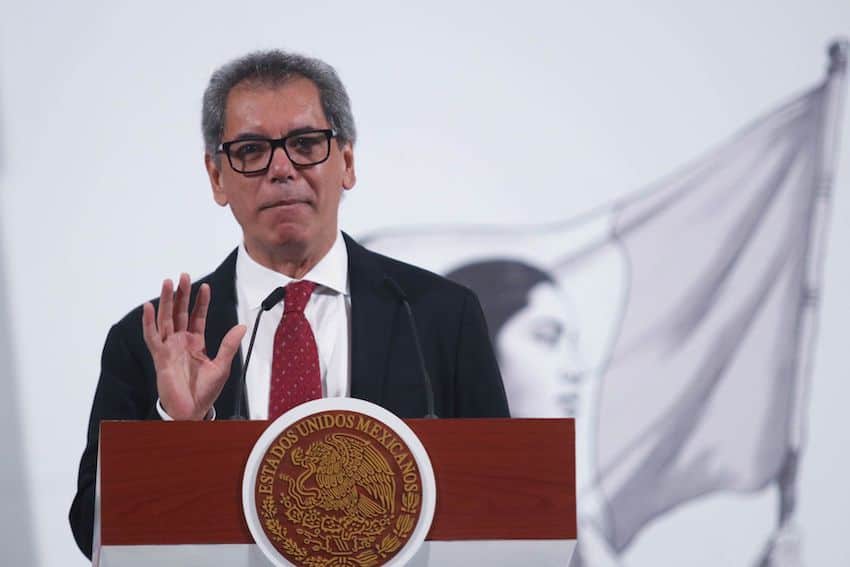
Amador
Mexico’s finance minister said on Tuesday that his ministry will continue to provide Pemex support this year and next, but cease in 2027. (Graciela López/Cuartoscuro)

He said that the government’s plan, which includes supporting Pemex to make significant debt repayments this year and next, will enable the state oil company to reach a “very sound” liquidity position that will allow it to finance its own operating expenses starting in 2027.

Amador highlighted that the previous federal government, under López Obrador, (gradually) reduced Pemex’s Shared Profit (DUC) levy from 65% to 30%.

“That has contributed to a very significant improvement in the liquidity position, the financial strength … of Petróleos Mexicanos,” he said.

The name of the levy was changed by the Sheinbaum administration to Derecho Petrolero para el Bienestar — a tax on oil for “well-being.”

Sheinbaum stressed that the “well-being” tax on non-associated natural gas is just 12%, and asserted that the low rate “allows Pemex to capitalize.”

She said that in 2025 and 2026 Pemex has to pay “very high amortizations of its debt” as well as interest payments and will therefore require Finance Ministry support in the short term.

“But in 2027, thanks to all the work the Finance Ministry has done, Pemex will go out on its own; it won’t need support from the Finance Ministry,” Sheinbaum said.

Reuters reported that $5.1 billion of Pemex’s bond debt is due for repayment this year, followed by $18.7 billion in 2026 and $7.7 billion in 2027.

The 3 main pillars of the Pemex plan  

Amador said that the Pemex strategy has three main “ejes” (pillars or central tenets).

  • The “determination” of the Derecho Petrolero para el Bienestar, set at a rate of 30% for oil and 12% for non-associated natural gas.

Amador said that the lower levy rates “optimize” (i.e. reduce) Pemex’s tax burden and incentivize the company to carry out “a very efficient productive investment strategy in the long term.”

  •  Support from the Finance Ministry that allows Pemex to reduce its debt.

Amador noted that the government has already supported the state oil company to pay down its debt, including with last week’s debt offering and cash injections. He indicated that additional support will be provided this year and next, but will cease in 2027.

  •  Monetary support to finance “productive investment.”

Banobras general director Jorge Mendoza Sánchez said that a 250-billion-peso (US $13.3 billion) investment vehicle has been created to fund oil sector projects in 2025 alone.

He said that the “investment fund” will be financed by state-owned development banks, commercial banks and “the investment public in general.”

“… It’s important to mention that this action reaffirms the commitment we have within Banobras and [Mexico’s other] development banks to continue supporting Petróleos Mexicanos,” Mendoza said.

“… It will be an attractive [investment] vehicle and, in addition, it will have a guarantee from the federal government, which will make its financing cost very low,” he said.

Energy minister outlines ‘clear objectives’ of Pemex plan 

Energy Minister Luz Elena González Escobar enumerated a list of “clear objectives” of the 2025-35 plan for Pemex. They include:

  • Guaranteeing “stable” oil production of 1.8 million barrels per day.
  • Increasing production of “high-value” oil products (gasoline, diesel, jet fuel) in support of the aim of achieving self-sufficiency for fuel.
  • “Relaunching” Mexico’s petrochemicals industry and increasing the production of fertilizers “to support food sovereignty.”
  • Increasing natural gas production.
  • Supporting renewable energy initiatives in order to reduce greenhouse gas emissions.

González asserted that the government’s plan will resolve Pemex’s “structural challenges” and set it up for a successful future.

She also said that “energy sovereignty” is “at the center of the second story of the fourth transformation” — i.e., achieving energy sovereignty is a key priority of the Sheinbaum administration, which says it is continuing the “transformation” initiated by the 2018-24 López Obrador government.

Mexico’s gas production falls short as US imports surge to record levels

Pemex CEO outlines ‘operational plan’ for state oil company

The strategy for Pemex over the next 10 years is “fundamentally” aimed at “increasing the revenue, reducing the costs and improving the financial profile” of the state oil company, said CEO Víctor Rodríguez Padilla.

He said that Pemex would do a range of things to achieve those goals. They include:

  • Developing two large Gulf of Mexico oil fields, namely Zama and Trion.
  • “Reactivating” oil production at fields that still have “potential.”
  • Increasing natural gas production by taking advantage of the “resources we have both in the south and north” of the country.
  • “Rebuilding the entire petrochemicals system.”
  • Building three new gas pipelines that connect to economic development hubs.
  • Resolving gas supply problems on the Yucatán Peninsula.
  • Building “four cogeneration plants” in Hidalgo (Tula), Oaxaca (Salina Cruz), Veracruz (Cangrejera) and Tabasco (Nuevo Pemex).
  • Improving the “marketing of the products we sell” in order to “have better sales.”
  • Developing renewable projects, including solar and wind ones.
  • Exploiting lithium resources.

Rodríguez said that Pemex “is and will continue to be a key player in the well-being and sustainable development of the country.”

The state oil company has seven refineries in Mexico, including the recently built Olmeca Refinery on the Tabasco coast. It also owns a refinery in Texas, and operates gas stations across Mexico.

Last week, Pemex reported its first quarterly profit in a year, even as crude and natural gas production declined in annual terms between April and June. An appreciation of the Mexican peso against the US dollar allowed Pemex to overcome a drop in revenues and record a profit in Q2 of 2025.

With reports from El Economista, La Jornada, Milenio, El Universal and Reuters 

Southern Copper in talks with government to unlock US $10B+ in stalled mining investment

2
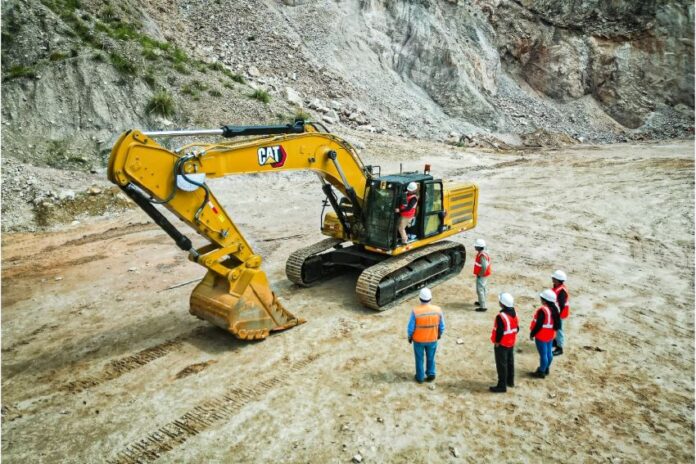
Earth moving machne at mine site
The Southern Copper Company, with operations in Mexico and Peru, already mines more copper than its Mexican smelters can handle, but is looking to add more facilities in four Mexican states. (Southern Copper/Facebook)

Southern Copper Corporation (SCC) has confirmed talks with the Mexican government to free up stalled mining investments that could surpass US $10 billion. The planned investment is on hold while permits and licenses are being processed.

In its second-quarter earnings report issued last week, SCC, a subsidiary of Grupo México, one of the largest copper producers in the world, said ongoing negotiations are designed to secure environmental and operational approvals needed to move forward with several key projects in the country.

Round holding tanks at ine site
Southern Copper’s parent company, Grupo México, is one of the leading copper miners in the world, and the fourth-largest company of any kind in Mexico. (Southern Copper/Facebook)

“We are in talks with the current administration to continue SCC’s US $10.2 billion investment in Mexico,” it said in the report.

SCC identified several Mexican projects it hopes to develop, including mines in Angangueo (Michoacán) and Chalchihuites (Zacatecas), as well as the El Arco copper deposit (Baja California) and the El Pilar project (Sonora), which is a conventional open-pit mine with an annual production capacity of 36,000 metric tons of copper cathodes. 

The company also hopes to revisit plans to invest in a copper smelter project in Sonora.

SCC’s mines in Mexico produce more semi-processed copper, or concentrate, than its plants can handle, forcing the company to rely on offshore smelters. Before Mexico’s latest mining reforms in 2023, the company was considering spending US $1 billion on a new smelter in Sonora.

The reforms significantly altered Mexico’s mining regime, emphasizing enhanced environmental and social protections. The reform included modifications to mining concessions (reducing them from 50 years to 30 years, among other changes), water rights and obligations for concession holders.

Regarding fracking and open-pit mining (the latter being of interest to Southern Copper), the reform authorizes contracts and concessions at the discretion of the president, “due to their strategic nature for national development.”

BCS legislators call on Baja California to reject copper mining mega-project

Mining.com magazine reported that as of late 2024, “there were 116 pending environmental approvals with [the Environment Ministry] and 107 awaiting clearance from [the National Water Commission] Conagua.”

Southern Copper, with operations in Mexico and Peru, said its investment plans include an immediate expenditure of more than US $600 million by the end of 2025 in both open-pit and underground operations in Mexico. 

The company said it would spend roughly half of that to modernize infrastructure and ensure long-term viability. It would also target “water efficiency, tailings management and operational improvements to boost productivity and sustainability,” according to the industry platform Mining Reporters, which focuses on mining in Latin America.

The planned investments would go a long way in strengthening SCC’s position as a fully integrated copper producer, it said in its earning report.

With reports from El Economista, Mining Reporters and Mining.com

Federal prosecutor fatally attacked in Reynosa

3
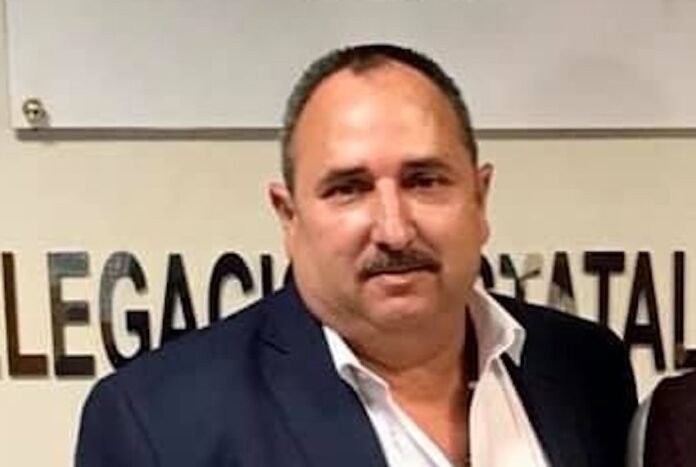
Ernesto Cuitláhuac Vázquez focused on investigating and prosecuting federal crimes in Tamaulipas and coordinating the activities of the Attorney General's Office in the state. (X)

The Tamaulipas state delegate of the Federal Attorney General’s Office (FGR) was murdered on Monday in the border city of Reynosa.

Ernesto Cuitláhuac Vázquez Reyna came under attack on Monday evening while traveling alone in a black Cadillac SUV on the Miguel Hidalgo Boulevard in Reynosa.

The attackers set fire to Vázquez’s vehicle, forcing him to abandon the driver’s seat in the middle of Reynosa’s Miguel Hidalgo Boulevard, where he was executed. (X)

Attackers reportedly threw a grenade at his vehicle, causing it to catch fire.

Video footage indicates that Vázquez, apparently injured, subsequently got out of his vehicle and sat, or slumped, down next to its rear left wheel.

As smoke emanated from the vehicle, a gray SUV pulled up behind it and gunshots subsequently rang out. Video footage also shows a man dragging Vázquez’s body away from his vehicle, which was engulfed in flames at the time.

The newspaper La Jornada reported that the attack occurred near the FGR delegate’s office in Reynosa, located opposite the city of Hidalgo, Texas.

La Jornada also reported that gunmen “simultaneously blocked streets and avenues” in Reynosa and stole vehicles from “civilians unconnected to the events.”

The attackers were not immediately identified and no arrests in connection with the murder were reported. The Gulf Cartel and the Northeast Cartel are among the criminal groups that operate in Tamaulipas.

The Tamaulipas Attorney General’s Office said on social media that it “established coordination” with the FGR “to collaborate on the investigations into the events in which a person presumed to be a federal public servant lost his life.”

Tamaulipas Governor Américo Villareal condemned the crime against the FGR delegate, which occurred during rush hour in Reynosa.

“We stand in solidarity with his family and reiterate our complete willingness to cooperate with the Attorney General’s Office and the government of Mexico in the quest for justice and the construction of peace,” he wrote on X.

On Tuesday morning, President Claudia Sheinbaum said that the federal government’s security cabinet had been in contact with the Tamaulipas Attorney General’s Office and the FGR, and was supporting the efforts to “achieve justice in this case.”

Tamaulipas is known for violent, cartel-related crime, but the security situation in the state has improved in recent years.

In the first half of 2025, there were 110 homicides in the state, according to federal data.

In terms of total murders, Tamaulipas ranked as the 10th least violent state out of Mexico’s 32 federal entities between January and June.

The victim

Vázquez had been the FGR delegate in Tamaulipas since 2019, according to media reports.

His work focused on investigating and prosecuting federal crimes in Tamaulipas and coordinating the FGR’s activities in the state, the news outlet N+ reported.

In Tamaulipas, Vázquez Reyna “coordinated and supervised” investigations into organized crime activity, electoral crimes, drug trafficking and other federal offenses, N+ said.

He also represented the FGR in legal cases related to federal crimes committed in the northern border state.

The news outlet Infobae reported that Vázquez wasn’t widely known outside security and justice circles. “However, his name appeared repeatedly in public activities related to the institutional relationship between the three levels of government,” Infobae said.

The newspaper Milenio reported that Vázquez attended a ceremony with the Tamaulipas governor on July 22 after the FGR donated a helicopter to state authorities to assist their security work.

Milenio also reported that the FGR carried out an operation in Reynosa on July 26 that resulted in the seizure of more than 1.8 million liters of fuel.

With reports from La Jornada, Reforma, MilenioN+, and Infobae

Canadian budget carrier Flair to offer US $102 flights from CDMX to Vancouver

7
Flair airlines
Flair is a Canadian ultra-low-cost airline founded in 2005 and headquartered in Edmonton, Alberta. (Flair Airlines/Facebook)

Canadian low-cost airline Flair announced new non-stop flights between Mexico City (AICM) and two major Canadian cities: Toronto (YYZ) and Vancouver (YVR), starting late October 2025.  

With these routes, Flair will become the first low-cost airline to offer direct connections between Canada and Mexico City, competing directly with Aeroméxico and Air Canada, but with considerably lower prices. 

According to the carrier’s press release, prices start at CAD $160 (US $116) for the Mexico City-Toronto route, and CAD $141 (US $102) for the Mexico City-Vancouver route.  

“For too long, flights to Mexico City have been out of reach for too many,” said Maciej Wilk, CEO of Flair Airlines, in the press release.

“We’re changing that. Flair is the only value airline in Canada, making it possible for customers to explore the capital of Mexico, and for Mexicans to discover all that Toronto and Vancouver have to offer.”

Both routes are set to operate three times a week per the following schedules:

YVR – AICM 

Start: Oct. 27, 2025

Frequency: Mondays, Fridays and Sundays 

Departure from YVR: 4:10 p.m. Arrival at AICM: 11:45 p.m.

Return from AICM: 12:45 a.m. Arrival at YVR: 4:55 a.m. 

YYZ – AICM 

Start: Oct. 28, 2025

Frequency: Tuesdays, Thursdays and Saturdays 

Departure from YYZ: 7:15 p.m. Arrival at AICM: 11:45 p.m.

Return from AICM: 12:45 a.m. Arrival at YYZ: 6:25 a.m.


View this post on Instagram


A post shared by flair airlines (@flairairlines)

Acting Consul General of Mexico in Canada Luis Hernandez celebrated the news, saying that “Mexico and Canada have long enjoyed a close and dynamic relationship, connecting families, businesses and curious travellers who explore each other’s rich cultures,” adding that the new routes strengthen the link between the two nations.

These new routes add to Flair’s existing routes from Toronto and Vancouver to Cancún, Guadalajara and Puerto Vallarta. According to CEO Maciej Wilk, these routes have been “highly successful” and have not been negatively impacted by the new visa requirements that went into force in 2024 for Mexican visitors to Canada.

“The visa requirement is what it is but we do not have problems with filling up our aircraft in and out of Mexico. I’m not concerned,” he stressed. 

Flair is a Canadian ultra-low-cost airline founded in 2005 and headquartered in Edmonton, Alberta. Initially operating charter and cargo flights, since 2017 it has focused on scheduled passenger flights, primarily within Canada and to destinations in the United States, Mexico, the Caribbean and Central America.  

With reports from Business Intelligence for B.C.