Home Blog Page 205

Sheinbaum talks US organized crime: Friday’s mañanera recapped

6
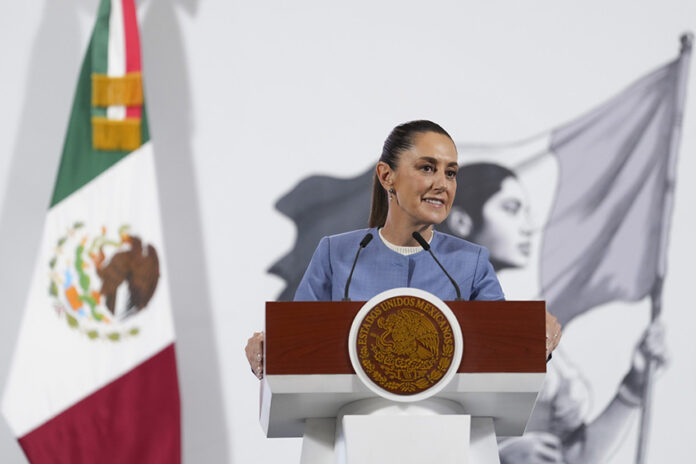
president SHeinbaum at podium
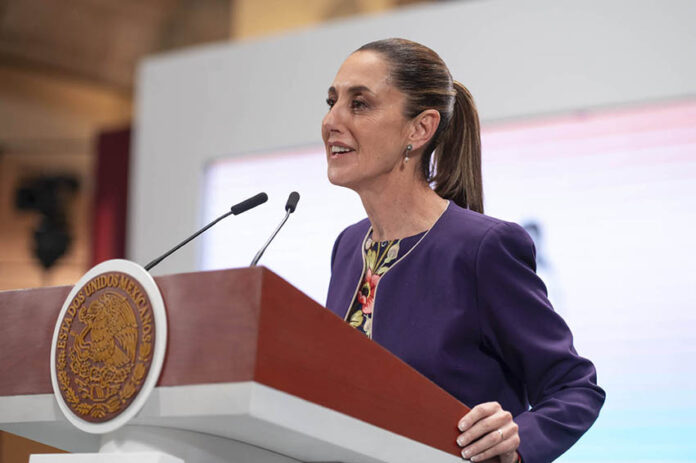
President Sheinbaum's Aug. 1 press conference fell on the ten-month anniversary of her swearing in as president. (Presidencia)

Friday marked 10 months to the day since Claudia Sheinbaum’s inauguration as Mexico’s first female president.

On Sept. 1, she will present her first informe del gobierno, or government report, to the Congress, and in a major speech.
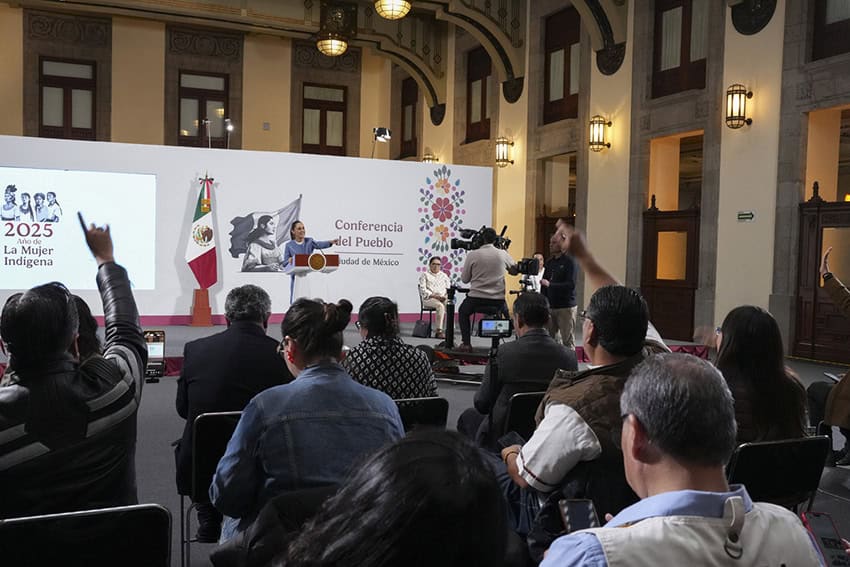
press members seated at press conference
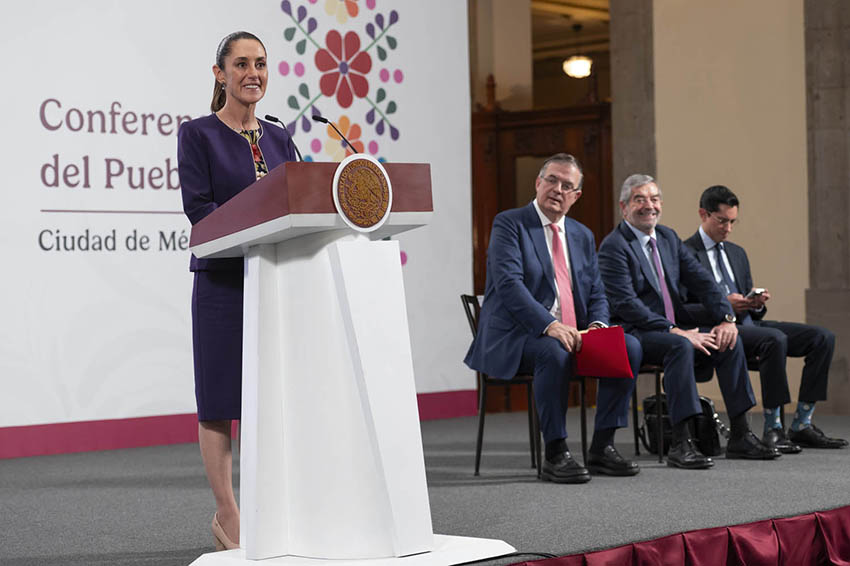
One of the reporters assembled at the press conference brought up the subject of how little attention the role of criminal gangs in the United States is receiving in discussions of the drug trade. The preseident stressed that both the U.S. and Mexico have to take responbility for solving the problem. (Presidencia)

Former President Andrés Manuel López Obrador delivered his sixth and final informe speech last September in front of a large crowd in Mexico City’s Zócalo a month before he finished his six-year term.

Sheinbaum said earlier this week that she has begun preparing her inaugural informe, but she has not yet decided where she will deliver her speech.

On Friday, she presided over her regular morning press conference, a day after reaching a deal with U.S. President Donald Trump that allowed Mexico to avoid a 30% tariff that was scheduled to take effect this Friday Aug. 1.

US has a ‘very big responsibility’ to combat narcotics  because that’s where drug use occurs  

A reporter highlighted that a number of U.S.-based organized crime groups, including the Border Brothers, the Crips, Florencia 13 and the New Mexico Syndicate, are mentioned in the non-fiction book “Los cárteles gringos” by J. Jesús Esquivel.

“However,” the reporter added, “we don’t see significant seizures of drugs” in the United States or the imprisonment of “narco leaders on the other side.”

“Do you think that the fight against drug trafficking is asymmetrical between Mexico and the United States?” the reporter asked the president.

Sheinbaum first stressed that it is up to Mexico to tackle the drug problem in its own territory and the responsibility of the United States to do the same north of the border.

“And we collaborate and coordinate; that’s why there are extradition treaties and other mechanisms for cooperation,” she added.

“… But I’ve mentioned here that the United States, in general, dedicates itself to talking about organized crime in Mexico. They have the right to mention it, but on the other side of the border, who sells the drugs?” Sheinbaum asked.

“Who launders the money?” she asked. “That part has to be investigated.”

Sheinbaum subsequently asserted that the United States has a “very big responsibility” to combat drug use, drug trafficking and associated criminal activity because use of narcotics primarily occurs “on the other side” of the border.

She said that in her call with Trump on Thursday, she and the U.S. leader spoke once again about Mexico’s anti-fentanyl campaign.

“And I told him that we were going to start a campaign against the use of methamphetamine and the harm it causes to young people and to health in general,” Sheinbaum said.

“And he asked me: ‘Do you think these campaigns have helped to keep young people away from drugs?’ And I said, ‘Yes,'” she said.

“I told him about the work we’re doing in schools. And he agreed that, in addition to targeting criminal gangs, there must be attention to the causes [of drug use] and addiction, in particular,” Sheinbaum said.

Is there a ‘we’re going to wipe the cartels off the face of the earth’ clause in the new Mexico-US security agreement? Sheinbaum says no

A reporter noted that U.S. border czar Tom Homan spoke on Thursday about the United States’ intention to “wipe the cartels off the face of the earth.”

“Under Biden the cartels made more money than they ever made — smuggling aliens, sex trafficking of women and children, smuggling dope across the border. Now we have a secure border the cartels are going bankrupt. And President Trump, through all his efforts and his leadership, we’re going to wipe the cartels off the face of the earth, which makes not only this country safer but Mexico safer,” Homan said.
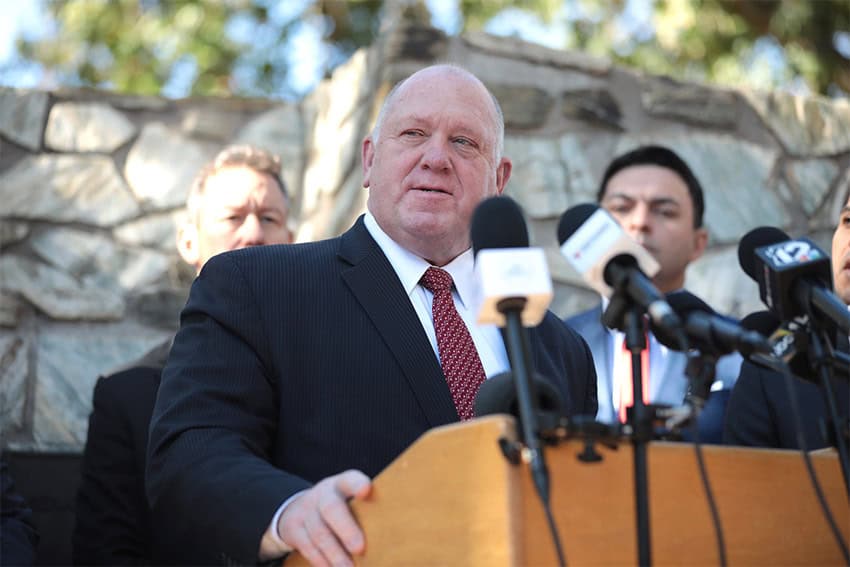
Trump's newly appointed 'border czar' Tom Homan speaks at a microphone
Sheinbaum characterized U.S. border czar Tom Homan’s statements on cartels as just “their way of talking.” (Gage Skidmore/Flickr)

The reporter asked the president whether the intent to “wipe the cartels off the face of the earth” is included in any sense in the new bilateral security agreement Mexico and the United States are set to sign soon.

“It’s their way of talking, right?” said Sheinbaum, who has said on several occasions that Trump has his own unique “way of communicating.”

She said that her government, “within the framework of the law and our constitution,” does what it has to do to prosecute crime.

Sheinbaum subsequently assured reporters that “these words” spoken by Homan “are not established in the agreement” on security that Mexico and the U.S. are set to sign soon.

Sheinbaum happy that Mexico will soon have a new judiciary

On Sept. 1, the same day that Sheinbaum will present her first informe, the candidates elected as judges, magistrates and Supreme Court justices in Mexico’s first (and controversial) judicial elections will assume their positions.

Sheinbaum reiterated on Friday that she will attend the swearing-in ceremony for the new Supreme Court justices, if she is invited.

“Of course we’re very happy about this popular election process for the Supreme Court,” said the president, who argued that judicial elections were needed to rid the nation’s courts of corruption and other ills.

Sheinbaum expressed her belief that the incoming chief justice of the Supreme Court, Hugo Aguilar Ortiz, is “an honest and knowledgable person.”

She also noted that Aguilar, an indigenous lawyer from Oaxaca, has worked to defend indigenous people’s rights during his career.

“Of course we are pleased that the new judiciary is coming in,” Sheinbaum said.

By Mexico News Daily chief staff writer Peter Davies (peter.davies@mexiconewsdaily.com)
Post-AMLO, Mexican household income is up and inequality is slightly down

0
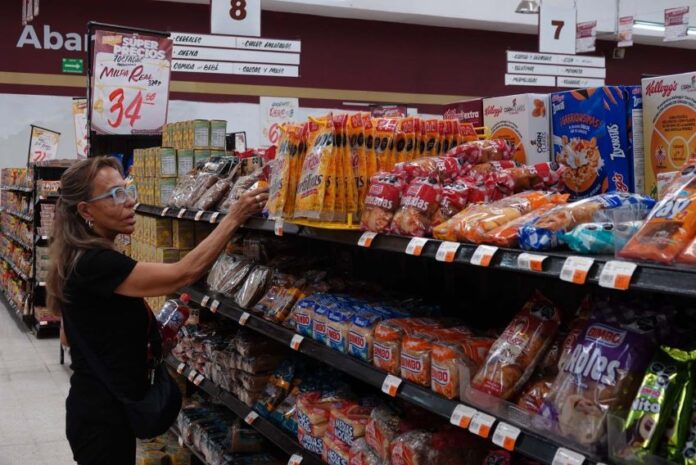
A woman takes a product off a grocery store shelf
Between 2022 and 2024, average household income in Mexico increased more than 10%. (Graciela López/Cuartoscuro)

Mexican household income has grown significantly since 2016, according to a report by the National Survey of Household Income and Expenditure (ENIGH) 2024.

The report, which covered the years 2016-2024, revealed that these changes in income were driven primarily by increases in the minimum wage, the expansion of formal employment and the strengthening of social programs. The survey covers Andrés Manuel López Obrador’s presidency as well as the last two years of former President Enrique Peña Nieto’s term.

Published in July by the National Institute of Statistics and Geography (INEGI), the survey reveals that between 2022 and 2024, the average quarterly household income reached 77,864 pesos, up 10.6% compared to the survey’s 2020-2022 edition.

Notably, the poorest 10% of households saw a substantial income increase since 2016 — over 35% — while earners in the top 10% saw their income drop by 8%.

Income inequality has slowly and steadily diminished since 2016, the survey showed. However, a significant income gap still remains between the highest and lowest brackets: In 2024, while the lowest-income households reported an average quarterly income of 16,795 pesos, those in the highest decile earned 236,095 pesos per quarter — roughly 14 times more.

Gender and regional inequality also persist. Between 2022-2024 women on average earned 34% less than men, meaning that for every 100 pesos a man earned, a woman earned 66 pesos. Disparity is also seen regionally, with households in the northern state of Nuevo León earning almost three times as much on average as those in Chiapas, a southern state that historically has lagged in various economic indicators. After Nuevo León, Mexico City concentrates the highest household income.

The main source of household income continues to be labor income (66%), followed by transfers (18%), which is household income that does not come directly from work activities or rental properties. It can include remittances, private or public scholarships, gifts from other households and social programs, among others.

According to INEGI, transfers recorded the greatest growth as a source of income between 2016 and 2024, with an increase of 26.5%.

As income grows, households are shrinking and getting older 

The survey reported an 8.5% reduction in household size between 2016 and 2024. During this period, the number of household members under the age of 15 decreased by 24.8%, while the number of members aged 15 to 64 decreased by an average of 5.2%.

In contrast, the number of household members aged 65 and over increased by 21.3%. During this same period, the country saw a 10.2% drop in the number of income earners per household. Furthermore, among employed household members, there was a 3.4% decrease during the same period.

Mexico News Daily

Cox Energy buys departing Iberdrola’s Mexican assets for US $4.2 billion 

1
Letters spelling Cox
The Spanish company's acquisition of 15 functioning power plants will be followed by a US $4 billion investment in new energy assets in Mexic. (COX)

Madrid-based Cox Energy has agreed to acquire Iberdrola México in a deal valued at US $4.2 billion including debt, the two companies announced on Friday.

President Claudia Sheinbaum called the acquisition “a sign of certainty in our country, of confidence and of a desire to keep investing,” at her Friday morning press conference.

Windmill
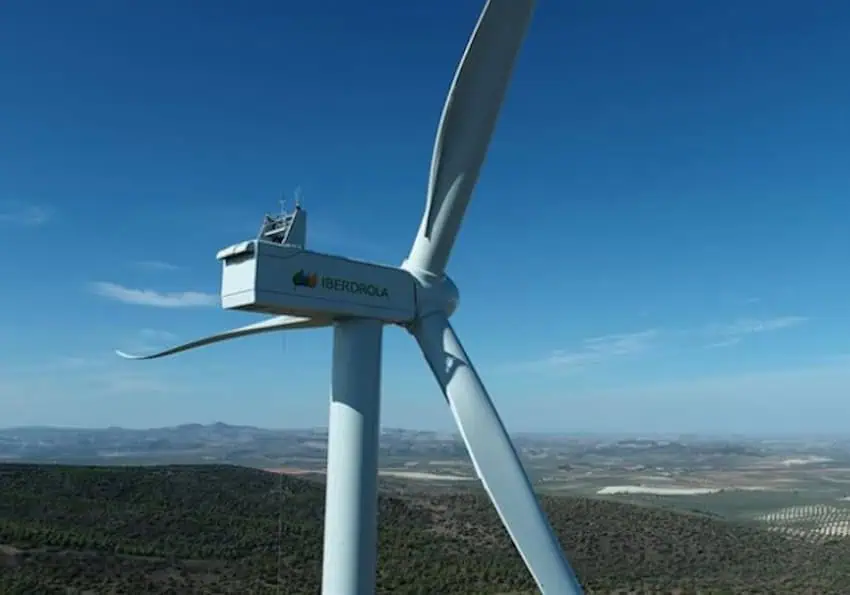
Part of the Mexican assets that Iberdrola is leaving behind for Cox are five wind farms.
(Bolsamania.com/on X)

“I have spoken to Cox management and they are very committed to investing in Mexico and to the development of various projects,” Sheinbaum said.

Cox, an 11-year-old water and renewable energy company with a market capitalization of around US $958 million, will buy Iberdrola’s 15 power plants. The news agency Reuters said 75% of the deal will be funded with debt and the remainder with equity.

Reuters said closing is expected by the first quarter of 2026. Approval is virtually assured since shareholders representing 84% of the company’s capital have already expressed support for the acquisition.

In a statement, Cox said it will invest more than US $10.7 billion in Mexico between 2025 and 2030.

The company defined the deal as a landmark acquisition, adding that it “aims to leverage [our] established presence and in-depth knowledge of the Mexican market, reinforcing its position in high-growth strategic markets.”

The company said it sees Mexico as a strategic market “thanks to its strong legal certainty” under the new energy regulatory guidelines in the government’s Plan México.

Cox referred to Mexico as the second most-important electricity market in Latin America (only Brazil has a larger consumer market). It highlighted the country’s “solid macroeconomic fundamentals and an investment-grade economy underpinned by a responsible fiscal policy.” It also lauded Mexico’s banking system as “sound and stable.”

The acquisition of Iberdrola’s platform offers vast potential for increased penetration and growth in Mexico’s power sector, Cox believes, especially due to “a rising demand for energy” that is driving investment.

The company’s five-year investment target not only includes the Iberdrola acquisition, but also “more than US $4 billion in new energy assets, up to US $1.5 billion in water concession assets and the development of a hub focused on Mexican welfare.”

Cox said it also hopes to co-invest in new energy projects alongside Mexico’s Federal Electricity Commission (CFE), the state-owned electric utility.

The company says the deal creates “significant synergies within its strategy to make Mexico one of its key business hubs in Latin America by integrating water and energy solutions.”

Iberdrola, a Spanish multinational electric utility which has operated in Mexico since 1999, announced its intention to sell its remaining Mexico assets last week, hiring Barclay’s Investment Bank to manage the sale. At the time of that announcement, the assets for sale were valued at US $4.7 billion.

The 15 power plants being sold — six wind parks, three solar parks and six gas and cogeneration plants — have a combined 2.6 gigawatts (GW) of capacity..

The acquisition also includes a pipeline of 11.8 GW of various renewable energy sources. Cox says 1.4 GW of the renewable energy projects in the pipeline are at an advanced stage of development and may start commercial operations in 2027-28.

Iberdrola began divesting its assets in Mexico, including a US $6 billion sale to the government in 2023, as it became a frequent target of then-President Andrés Manuel López Obrador’s attacks. 

The Cox sale will complete Iberdrola’s exit from the country. 

With reports from El Economista, El Financiero, La Jornada and Reuters

What’s next for Mexico’s growing rail system? Officials share advances in Nuevo León, Guadalajara, SLP, Sinaloa and more

9
A red, white and green train speeds through a field.
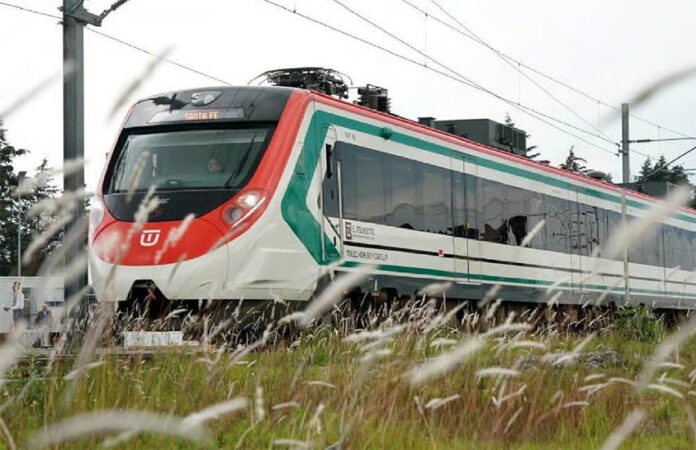
Work is currently underway to extend the Valley of Mexico Suburban Train to AIFA airport then on to Pachuca, Hidalgo. The final result will be the Mexico City-Pachuca passenger rail line. (Presidencia)

President Claudia Sheinbaum’s ambitious railroad plans will get under way in earnest this month with construction beginning on sections of two trunk lines: one connecting Querétaro to Irapuato and another from Saltillo to the U.S. border via Monterrey.

Contract bidding for three other tranches and the provision of more than 60 trains is well advanced, and studies are underway for new lines connection to Guadalajara, San Luis Potosí, Mazatlán and more.

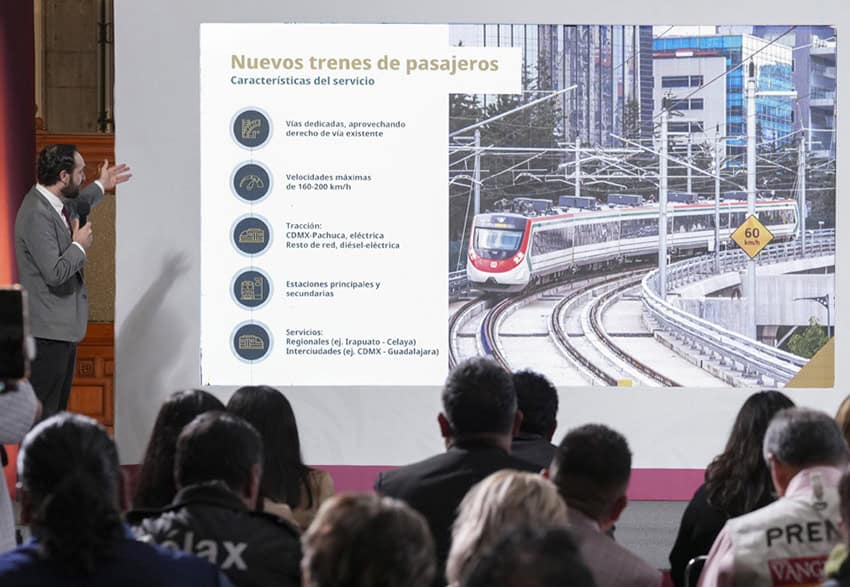
The Mexico City-Pachuca train will be electric while Mexico City-Querétaro and the rest of the rail network will use diesel fuel, director Andrés Lajous said. (Presidencia)

Sheinbaum opened her Wednesday morning press conference by introducing the three men responsible for meeting an ambitious goal: that of building more than 3,000 kilometers of railway track for passenger trains before her term ends in 2030.

Andrés Lajous, director of Mexico’s Rail Transport Regulatory Agency (ARTF), provided a brief update on progress on the Mexico City-Querétaro and Mexico City-Pachuca lines, before turning his attention to the Querétaro-Irapuato line, construction of which is expected to begin this month.

Lajous said the Querétaro-Irapuato line will be built in two sections: from Querétaro to Apaseo el Grande (a distance of 33 km) and from Apaseo el Grande to Irapuato (78 km). Construction contracts will be announced in mid-August and October respectively.

The Mexico City-Querétaro and Querétaro-Irapuato lines are tranches of the Mexico City-Guadalajara-Nogales line that aims to serve 6 million passengers a year upon completion.

A map of under-construction and proposed train routes around Mexico
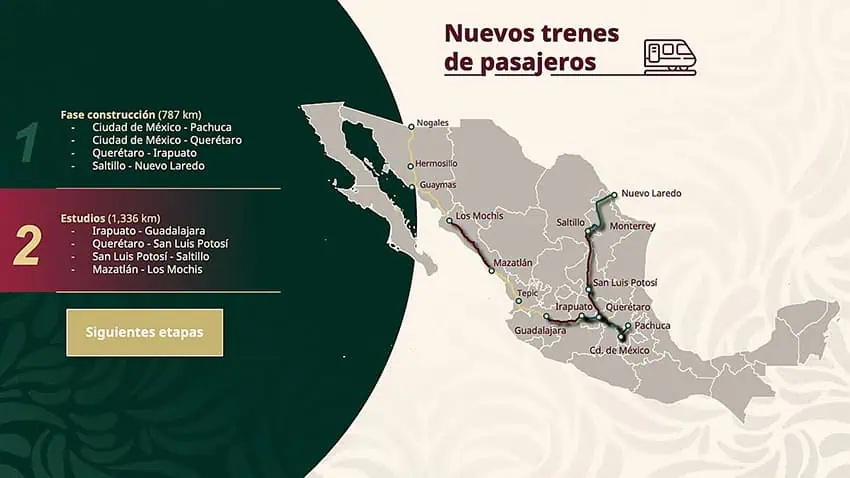
Nearly 800 km of passenger rail lines are currently under construction, with studies underway for over 1,300 km of rail lines. The proposed routes would allow passengers to travel by train from Guadalajara to Mexico City or from Mexico City to Nuevo Laredo, among other routes. (Presidencia)

Another section of track that could see construction begin this month is the Unión San Javier to Arroyo El Sauz tranche of the Saltillo-Monterrey-Nuevo Laredo train. The winning bid for this 100-kilometer section in the northern state of Nuevo León will be announced this month.

With regards to the remainder of the Saltillo-to-Nuevo Laredo line, the Saltillo-Santa Catarina section (70 km) tender will be published on Sept. 18 and the Arroyo El Sauz-Nuevo Laredo tranche (133 km) will be determined on Oct. 3.

Larous said that four other lines — Irapuato to Guadalajara; Querétaro to San Luis Potosí; San Luis Potosí to Saltillo and Mazatlán to Los Mochis — are entering the study phase. The call for proposals for environmental assessments was published on Wednesday.

Also this month, the ARTF will award contracts for trains for three lines: Mexico City-Pachuca, Mexico City-Irapuato and Saltillo-Nuevo Laredo.

General Gustavo Ricardo Vallejo, commander of the Army engineers overseeing the construction of the Mexico City-Pachuca line, said construction there will generate more than 60,000 direct and indirect jobs.

“There are already 6,000 people employed in building embankments, compacting track platforms, excavation and pouring of piles and foundation footings,” he said.

Additionally, Vallejo said, the Mexico City-Querétaro job is expected to create employment for roughly 200,000 people. More than 5,000 people have already found jobs on this route.

Sheinbaum interjected that her passenger railway project has two purposes — better communication across the country and economic benefits for the communities along the routes.

“The objective … is to benefit communities during and after construction, not just provide a means of transportation,” she said, adding that another goal is to ensure safe, rapid and high-quality transportation.

Infrastructure, Communications and Transportation Minister Jesús Esteva was also present, but his comments were limited to progress on the Amado Nervo Bridge that will connect the Pacific Coast resort cities of Puerto Vallarta, Jalisco, and Bahía de Banderas, Nayarit. The bridge is scheduled to be completed in November 2026.

With reports from Infobae and Milenio

Mexican diver Osmar Olvera ends China’s run with a 3m springboard gold at the World Aquatics Championships

1
swimmer showing medal by a pool
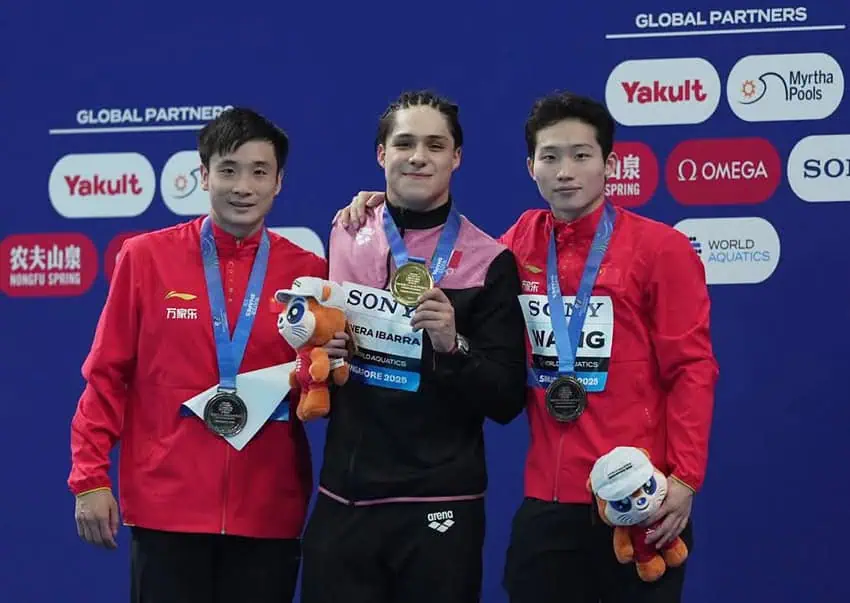
Osmar Olvera Ibarra's first-place finish in the 3-meter springboard event brought Mexico its first gold and sixth overall diving medal at this year's World Aquatics Championships, which runs through the weekend in Singapore. (Conade)

Mexican diver Osmar Olvera ended nearly two decades of Chinese dominance to claim the gold medal in the men’s 3-meter springboard competition at the World Aquatics Championships in Singapore on Friday.

Olvera, 21, overcame a poor third dive to surge past his two Chinese rivals with his next three dives, including a fifth dive of 102.60 points, and a flawless finish. 

The Mexico City native finished with 529.55 points over six dives, edging four-time Olympic gold medalist Cao Yuan (522.70) who is also an 11-time World medalist, and three-time reigning World champion Wang Zongyuan, who scored 515.55.

Olvera became the first non-Chinese diver to win this event since Canada’s Alexandre Despatie won in 2005.

“I feel amazing,” Olvera said. “It’s a dream come true, to be a world champion … in an Olympic event.”

Olvera said he’ll now focus on maintaining his gold-medal form in order to continue battling the Chinese divers who have dominated these events, including a gold medal sweep at the Paris Olympics last year and taking seven out of eight golds at the two previous Olympics.

The Mexican diver’s victory is by no means a surprise. He won the 1-meter springboard competition at the 2024 World Championships in Doha and has eight career Worlds medals, including four this year in Singapore

Olvera also won bronze in the 3-meter springboard event at the Paris Olympics last year as well as a silver in the 3-meter synchronized springboard competition.

Olvera’s gold on Friday was the sixth diving medal for Mexico at the Worlds, behind only China’s 14 and well ahead of the rest of the pack, including the USA’s one.

The path to gold for Olvera at the Worlds was not easy. 

Wang was first and Cao was second in every round of the semifinals. But, according to Swimming World Magazine, Olvera leaped ahead in the finals with the best dive in each of the first two rounds.

Two Chinese divers in red jackets flank champion Mexicandiver Osmar Olvera. All three hold medals
To get to the top of the podium, Olvera had to beat 11-time World medalist Cao Yuan (left) and three-time reigning World champion Wang Zongyuan (right). (Conade)

Olvera wobbled in Round 3 and was in third place after four rounds. Then came what Swimming World Magazine called “the best dive of the final and maybe the meet writ large.”

The Mexican nailed a forward 4 1/2 somersault dive in a pike position to move a half-point ahead of Cao. He clinched the gold medal with the best dive of the final round — a forward 2 1/2 somersault dive with three twists, performed in a pike position . It earned 97.50 points.

“I felt a lot of pressure [on the sixth dive],” Olvera said afterward. “I knew I needed a great dive, so I just focused, controlled myself and did my job.”

During her daily morning press conference, President Claudia Sheinbaum showed reporters a video of the event and applauded Olvera’s triumphant performance.

In a chat with El Universal newspaper afterward, Olvera thanked Mexican fans who followed his performance despite the time difference with Singapore, sharing an emotional message with them.

“Thank you to all those who supported me, to all of Mexico who stayed up all night to cheer me on, thank you for sending the best vibes,” he said. “And to those of you who didn’t, I ask you to support me too, because Mexico isn’t just about soccer.”

With reports from ESPN, El Universal and Swimming World Magazine

Mexican peso loses ground following a weak US jobs report

0
Mexican peso bills, coins and a calculator
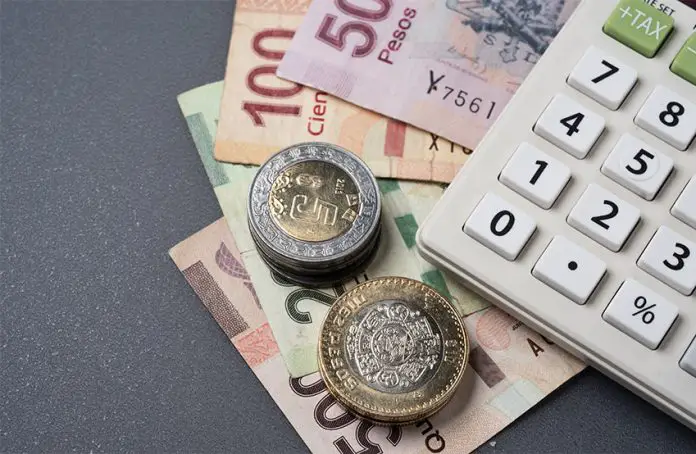
It's been a rough week for the peso, which has lost roughly 2% of its value since last Friday. (Shutterstock)

The Mexican peso depreciated on Friday morning to trade at close to 19 to the US dollar, a weakening of more than 2% compared to its position a week ago.

After closing at 18.87 to the dollar on Thursday, the peso fell to as low as 18.98 to the greenback early Friday.

At 11:15 a.m. Mexico City time, the USD:MXN exchange rate was 18.94, according to Bloomberg.

The depreciation of the peso in early trading on Friday came after the publication of weaker-than-expected employment data in the United States.

Data showing that non-farm payrolls in the U.S. increased by 73,000 jobs in July — well below the 110,000 jobs economists polled by Reuters had predicted — raised expectations that the United States Federal Reserve will cut its federal funds rate in September.

In Mexico, the Bank of Mexico published data on Friday that showed that incoming remittances declined 16.2% annually in June to US $5.2 billion.

At 18.94 to the dollar at 11:15 a.m., the peso was around 2.2% weaker than its closing position on July 23, a day on which Mexico’s currency reached 18.53 to the greenback, its strongest position of 2025.

The 18.98 rate to which the peso depreciated early Friday represented a 2.3% depreciation for the currency compared to its closing position of 18.54 to the dollar last Friday.

As the peso lost ground against the dollar early Friday, the greenback depreciated against a basket of six major foreign currencies, as shown in a decline of the U.S. Dollar Index.

A bad week for the peso 

The peso depreciated on Monday to close at 18.76 to the dollar before appreciating slightly on Tuesday to end the day at 18.75, according to the Bank of Mexico.

On Wednesday, the peso declined to 18.85 to the greenback. It fell again on Thursday to close at 18.87.

The depreciation on Thursday and Friday morning occurred despite President Claudia Sheinbaum reaching a deal with U.S. President Donald Trump on Thursday that allowed Mexico to avoid the implementation of a 30% tariff that was scheduled to take effect today.

Most US trade remains duty-free after Mexico secures a 90-day extension on Trump’s most recent tariff threat

The peso depreciated in July, ending a 6-month streak of gains 

The peso depreciated 0.6% in July, according to Bank of Mexico data.

Its closing position at the end of the month — 18.87 — was 11 centavos above the 18.76 USD:MXN rate at the end of June.

The depreciation in July came after a six-month streak of gains for the peso.

Here are the Bank of Mexico closing USD:MXN rates for the final trading day of every month since December.

  • December 31: 20.88
  • January 31: 20.69 (peso appreciated 0.9% in one month)
  • February 28: 20.58 (peso appreciated 0.5%)
  • March 31: 20.46 (peso appreciated 0.6%)
  • April 30: 19.61 (peso appreciated 4.3%)
  • May 30: 19.39 (peso appreciated 1.1%)
  • June 30: 18.76 (peso appreciated 3.3%)
  • July 31: 18.87 (peso depreciated 0.6%)

Even with the depreciation of the peso to above 18.90 to the dollar on Friday morning, Mexico’s currency has gained more than 10% against the greenback this year.

The peso, however, is significantly weaker than its strongest position of 2024, which was 16.30 to the greenback on April 8 of last year.

With reports from El Financiero and Excélsior 

What’s on in Mexico City in August 2025?

0
A photo of a shirtless man wearing white shorts stood on a beach
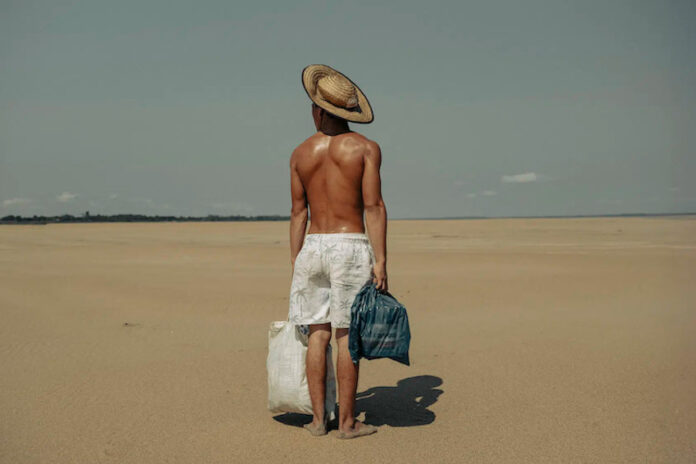
Never mind the rain! As summer’s last stand, August arrives in Mexico with world-class photography and the best of Japanese culture. (Museo Franz Mayer)

 After a very rainy summer in the capital, August arrives in Mexico City with a mélange of world-class documentary photography and emerging artists from Tepito. If you’re not much into art or photo exhibits, do not fret! Kids’ summer courses in the chinampas and the best of performative arts will be up this month to enjoy with the whole family. So pack your umbrellas and sunscreen! Here’s what’s on in Mexico City in August 2025.

World Press Photo 2025

(Victoria Valtierra Ruvalcaba/Cuartoscuro)

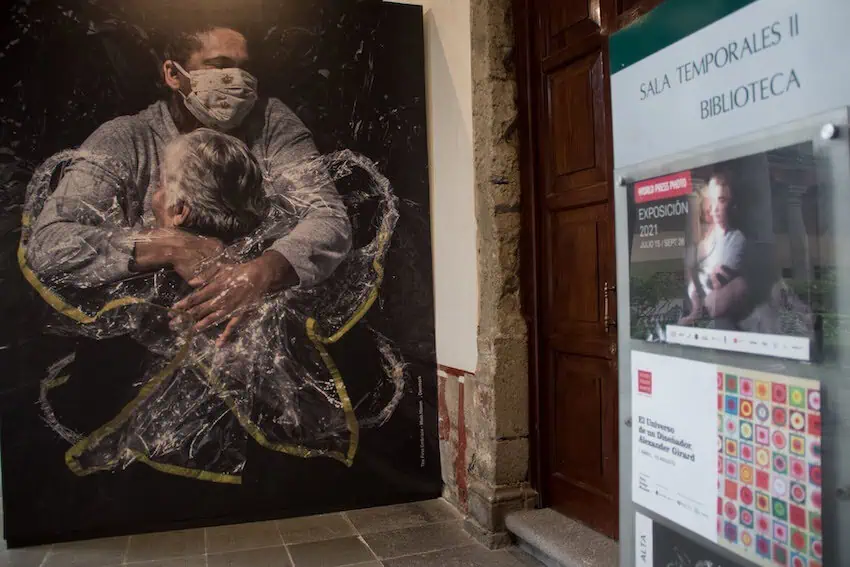
The world’s leading international photojournalism competition returns once again to its home venue, the Franz Mayer Museum. For the 68th edition, the awarded photographers from around the globe were tasked with addressing several political, cultural, and climate-related conflicts. Out of roughly 59,320 documentary photographs, only 42 works were selected this year.

Date: Aug. 1 to Sept. 28
Location: Franz Mayer Museum. Av. Hidalgo 45, Centro, Cuauhtémoc.
Cost: 100 pesos for adults; 60 pesos for students, teachers and seniors

Gabriel Orozco: Politécnico Nacional

A red car
(Museo Jumex)

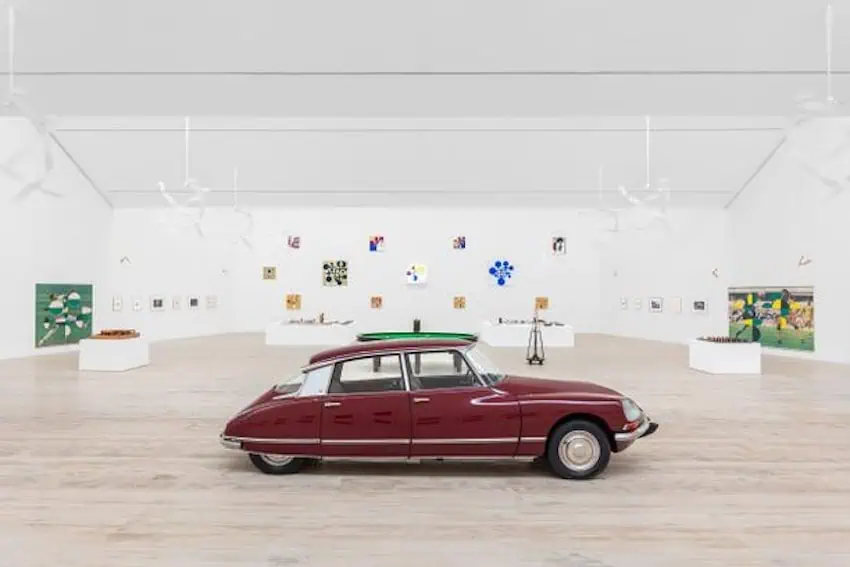
For the first time in almost 20 years, the Jumex Museum brings together an ambitious solo exhibition by Mexican multidisciplinary artist Gabriel Orozco. Born in Xalapa, Veracruz, Orozco has always been fascinated by objects and materials of everyday life, which confer “the possibility of giving materiality to time.” The exhibition features 300 works from throughout Orozco’s artistic career, “from small sculptures to complex installations, between photography and drawing, accompanied by painting, sculpture, assemblages and games.” 

Date: Runs until Aug. 3
Location: Museo Jumex. Blvd. Miguel de Cervantes Saavedra 303, Granada, Miguel Hidalgo.
Cost: Free of charge 

From the heart of the barrio. Tepito: deep roots, resonant voices

A graffiti mural that reads 'Tepito' surrounded by skulls
(INBAL)

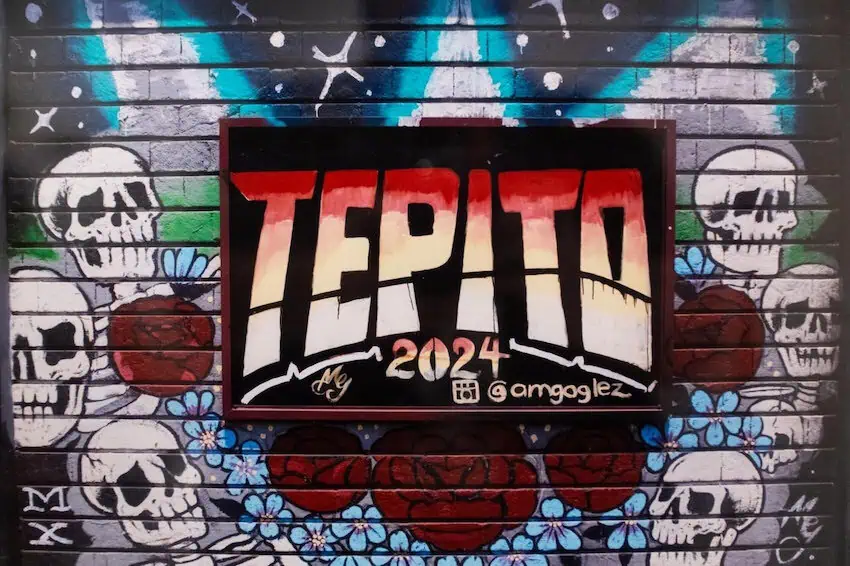
Beyond being a “barrio bravo,” Tepito is one of Mexico City’s most emblematic cultural districts — and it resonates with the voices of its emerging artists. This comes to show in “Desde el corazón del barrio,” a group exhibition that brings together more than 20 artists “who live, create, or maintain close ties to the Tepito neighborhood.” With over 80 pieces in various formats, the exhibition aims to highlight artistic practices linked to a historically stigmatized community, reclaiming its heritage and present through art.

Date: Runs until Aug. 3
Location: Galería José María Velasco. Peralvillo 55, Morelos, Cuauhtémoc.
Cost: Free of charge 

Mayotzincuepa circus festival

A circus performer spinning a hoop on his leg
(Andrea Murcia/Cuartoscuro)

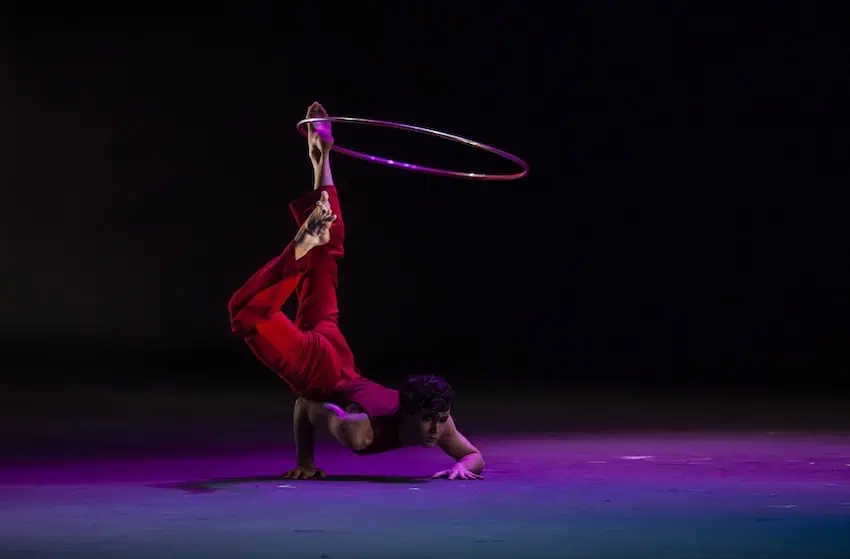
Le Monastère, a cabaret company based in Montreal (Canada), starred in the opening show of the Mayotzincuepa Circus Festival. Spectators will enjoy aerial dance performances, clown acts and thrilling circus shows in several locations across town. As the inaugural event, the program has created high expectations among theater connoisseurs and performance artists as one of the largest performing arts programs this year.

Date: Runs until Aug. 4
Locations: Teatro de la Ciudad Esperanza Iris, FARO Cosmos and open-air theaters in the Iztacalco, Magdalena Contreras and Tlalpan boroughs
Cost: Free of charge

A summer among chinampas

A child dressed in traditional Mexican clothing in a field of marigolds
(Eduardo González/Pexels)

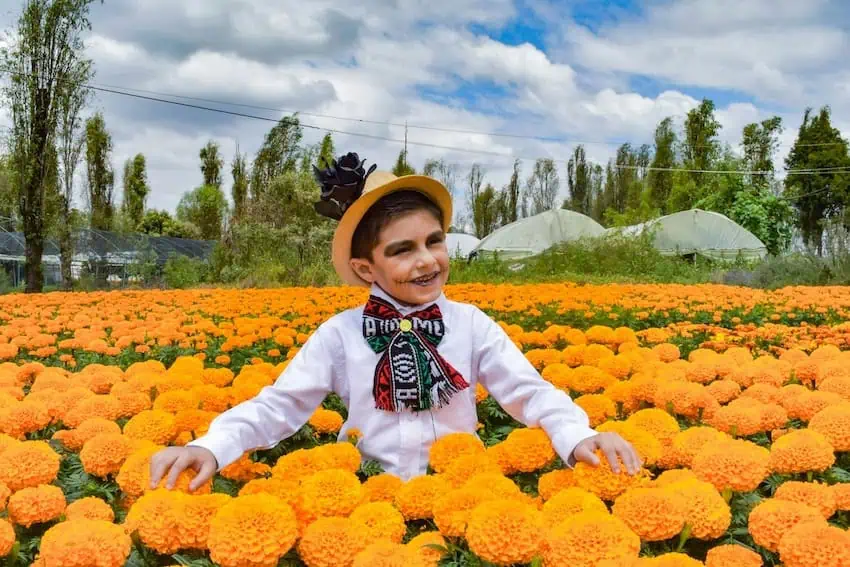
In an effort to preserve the chinampera tradition in Xochimilco, over 500 years old, the Chinampaxóchitl Museum will host a summer course for children. Designed for ages 7 to 13, kids will learn about “the natural and cultural importance of the Xochimilco lake area and the chinampa zone,” said the museum in an Instagram post. The course includes four sessions, in which children will enjoy fun activities as they learn about the history and cultivation techniques used in the chinampas today. 

Date: Aug. 5-9
Location: Museo Chinampaxóchitl at Parque Ecológico de Xochimilco. Periférico Oeriente 1, Ciénaga Grande. Xochimilco.
Cost: Free of charge

Watch Itatí Cantoral’s ‘Juicio a una zorra

A cabaret performer on stage
(Edgar Negrete Lira/Cuartoscuro)

Mexican actress and cabaret performer Itatí Cantoral returns to the theaters with one of the “most challenging performances of [her] career,” according to TimeOut México. Staged and directed by Alonso Íñiguez, this provocative monologue portrays Helen of Troy, the eternally condemned woman from Homer’s Iliad, with a new voice. Inspired by gender struggles and critically examining how the Trojan princess has historically been condemned, Juicio a una zorra rewrites the myth from a female voice filled with fury and dignity.

Date: From July 20 to Aug. 31
Locations: La Teatrería. Tabasco 152, Roma Norte, Cuauhtémoc.
Cost: Entrance fees may vary

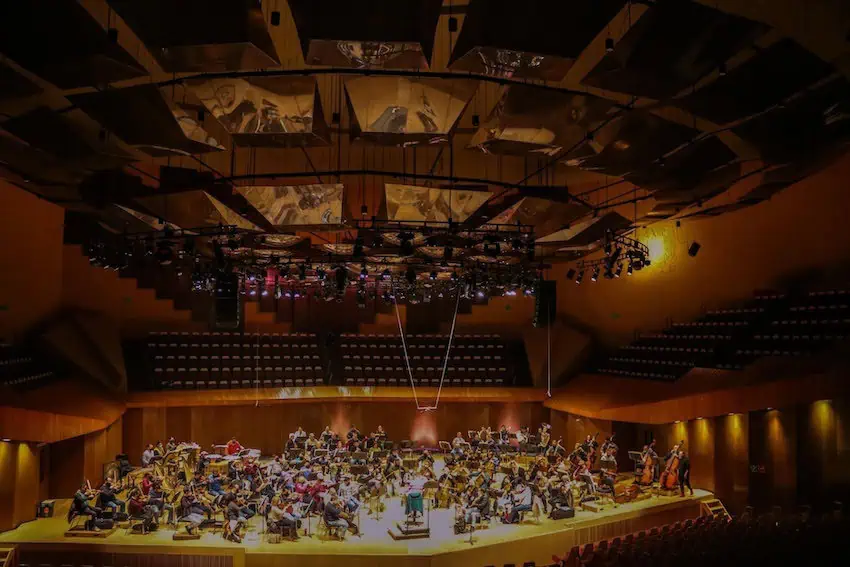
Cri Cri symphonic concert

The UNAM Philharmonic orchestra
(Victoria Valtierra Ruvalcalba/Cuartoscuro)

“El Ratón Vaquero”, “La Muñeca Fea” and other fan favorites will fill Sala Nezahualcóyotl concert hall this August. Performed by the Minería Symphony Orchestra, this concert will be an opportunity to hear the classics of maestro Francisco Gabilondo Soler, a Mexican composer and singer known for his children’s songs, as actor Mario Iván Martínez, nationally renowned for his children’s books readings, sings iconic Cri Cri pieces. 

Date: Aug. 9 & 30
Location: Sala Nezahualcóyotl. Insurgentes Sur 3000, Ciudad Universitaria, Coyoacán.
Cost: Tickets starting at 400 pesos

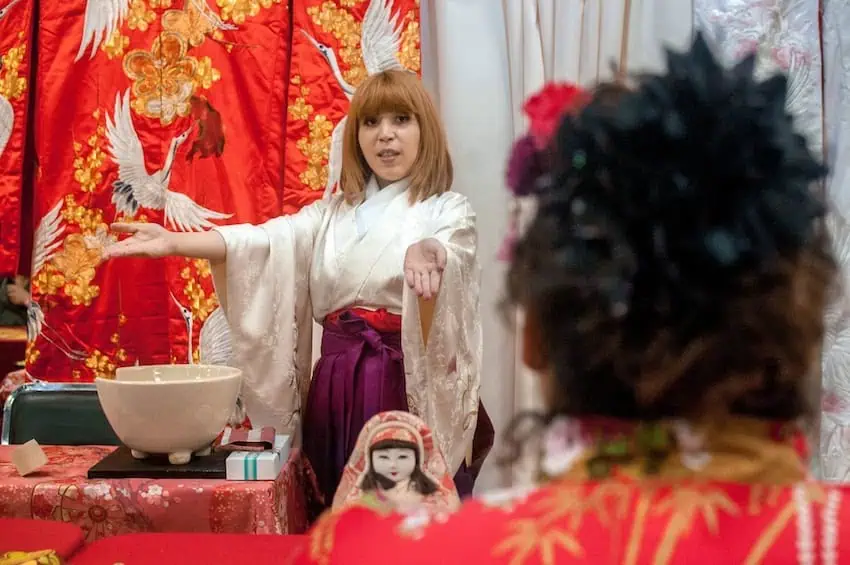
Natsu Matsuri Festival 2025

(Juan Pablo Zamora/Cuartoscuro)

Organized by the Mexico-Japan Association (AMJ), the Natsu Matsuri Festival is the capital’s yearly opportunity to taste genuine ceremonial matcha and try regional street food. Translated from Japanese as “summer festival,” the event features fashion runways, a culinary bazaar and tea ceremonies.

Massive drums and yukatas, Japan’s iconic ceremonial suit, will prance across the Natsu Matsuri Festival runway this year. Sipping on a delicious sample of traditional jasmine tea or Sapporo beer, spectators will enjoy a display of Bon Odori, the traditional dance of Japan. So, fetch your best kimono and stroll across Fujiyama Street to live your geisha fantasy at the Natsu Matsuri Festival. 

Date: Aug. 16-17
Location: Fujiyama 144, Águilas, Álvaro Obregón.
Cost: Workshop fees may vary

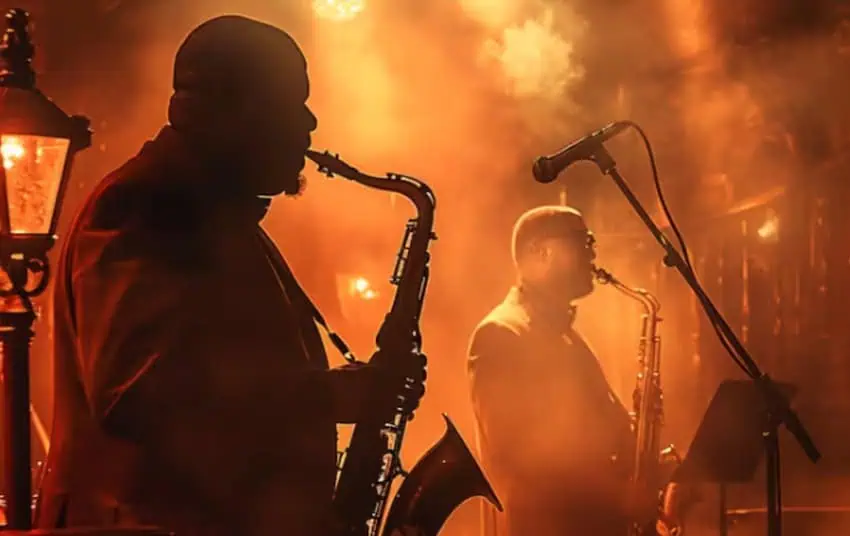
The Jazz Room: Journey to the Heart of New Orleans

Two men playing saxophone on a smoky stage
(Fever/The Jazz Room)


Ella Fitzgerald and Louis Armstrong in CDMX?! Not exactly. Some excellent interpreters will come, though. Along with some cocktails and improv sessions, The Jazz Room comes to town after being a hit in Madrid, Barcelona and Santiago City. The ensemble will take us straight to the 20s in NOLA, birthplace of this iconic genre, to bring back the golden age of jazz.

Date: Aug. 16
Location: Hilton Santa Fe. Antonio Dovali Jaime 70, Santa Fe, Cuajimalpa.
Cost: Entrance fees vary

42nd Mexico City Marathon

Two runners are captured mid-stride as they race past the iconic Palacio de Bellas Artes in Mexico City. The runners, wearing athletic gear, are crossing what appears to be a designated race route marked on the pavement. Behind them stands the Palacio with its distinctive Art Nouveau and Art Deco architecture, featuring a prominent golden dome and ornate facade. To the left of the frame is a bronze monument with winged figures. The scene is bustling with spectators, race officials, and colorful banners
(Cuartoscuro)

As August comes to an end, runners from across the country will compete to beat their personal records on the Telcel Mexico City Marathon. As one of the major sporting events in the capital this year, the event is expected to attract thousands of runners. As stated by the Mexico City Government, the 2025 route will start on Avenida Insurgentes Sur, between the Central Library and the Olympic Stadium, and finish in the capital’s Zócalo.

Runners will enjoy iconic landmarks of Mexico City, including UNAM’s Olympic Stadium, the Angel of Independence, the Diana the Huntress roundabout and the Monument to the Revolution, among others.

Date: Aug. 31
Location: Follow the official route here
Cost: 800 pesos for Mexicans and residents and US $110 for foreign athletes

Andrea Fischer contributes to the features desk at Mexico News Daily. She has edited and written for National Geographic en Español and Muy Interesante México, and continues to be an advocate for anything that screams science. Or yoga. Or both.

The artists behind Oaxaca’s global art fame: 10 visionaries you should know

3
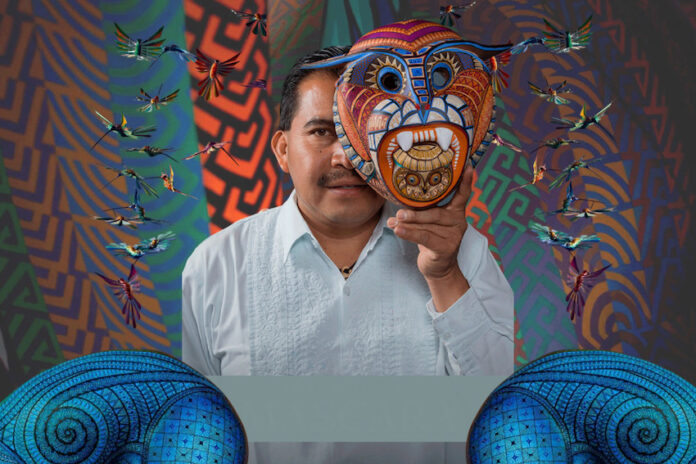
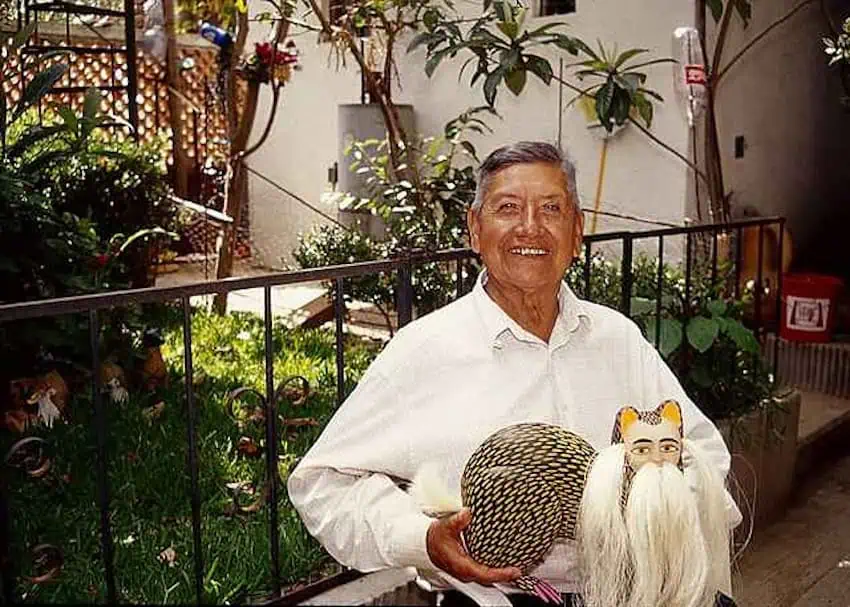
Artist Jacobo Ángeles holding a traditional Oaxacan folk art mask in front of his face.
Oaxaca artist Jacobo Ángeles and his wife built the Taller Jacobo y María Ángeles, a cultural hub where traditional Zapotec weaving and carving techniques blended with cutting-edge design.(Amigos MAP)

Oaxaca’s intricate weave of color, culture, cuisine, and creativity attracts Mexican folk art collectors and cultural travelers from far-flung corners of the globe. From Nelson Rockefeller, who fortified his extensive collection with hand-crafted artisan pieces while traveling through Oaxaca in the 1960s, to Janice Hatfield, who dedicated a significant portion of her amassed collection to the Smithsonian Institute, Mexico’s most colorful state stands as a leader in artistic innovation.

Who can we thank for putting Oaxaca on the creative community map? The 10 artists below represent just a fraction of the region’s visionary prowess, each contributing to the development of Oaxacan expression in a powerful way.     

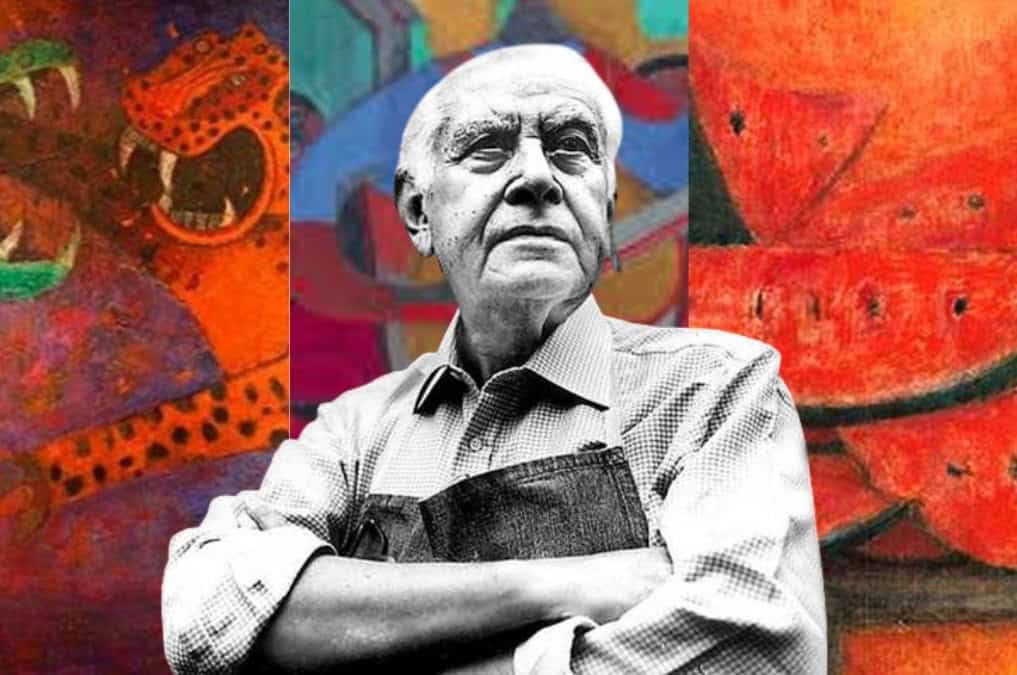
Rufino Tamayo (August 26, 1899 – June 24, 1991)
Painter, modernist visionary 

A collage of Rufino Tamayo and his work
(Chilango)

Rufino Tamayo was orphaned by age 12. Born in Oaxaca, his father abandoned the family and his mother died of tuberculosis. He moved to Mexico City to live with an aunt, helping run her family’s fruit stall. This experience would profoundly impact his artistic journey, inspiring the legendary watermelon motifs for which he is so well known. Fiercely independent, Tamayo rebelled against the art scene which, at that time, was largely a series of political statements by the likes of Diego Rivera and David Alfaro Siqueiros. Instead, Tamayo chose to focus on a unique blend of European modernism and Mexican roots. He would eventually found two museums: Museo Tamayo in Mexico City, and Museo de Arte Prehispánico de México Rufino Tamayo in Oaxaca.

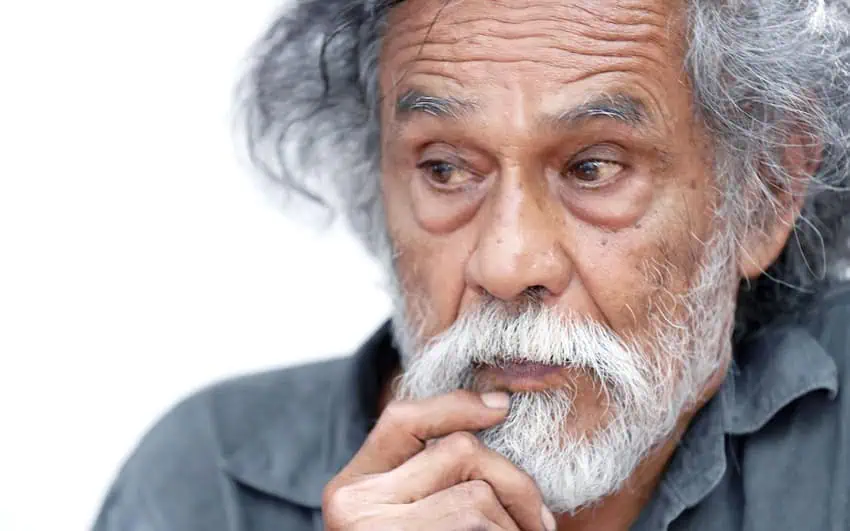
Francisco Toledo (July 17, 1940 – September 5, 2019)
Painter, sculptor, cultural activist 

A portrait of Francisco Toledo stroking his white beard
(Christies)

Oaxaca’s landscape and culture laid the groundwork for Toledo’s surrealist, at times fantastical, paintings, known for their rough lines and rich textures. Thanks to a rural upbringing in a Zapotec family, he was immersed in legend, myth, and the region’s wild nature from a young age. After his parents sent him to high school in Oaxaca City in the hopes he would become a lawyer, Toledo went on to study art, spending time in Mexico City, New York, and Paris, where he would befriend Rufino Tamayo. A tireless advocate for Oaxacan heritage and social justice, Toledo founded the beloved Instituto de Artes Gráficas de Oaxaca (IAGO). Perhaps his most famous work came in the form of activism — in 2002, the artist organized a protest against a proposed McDonald’s in Oaxaca City, handing out tamales at the potential site and generating the slogan “Tamales sí, hamburguesas no.”

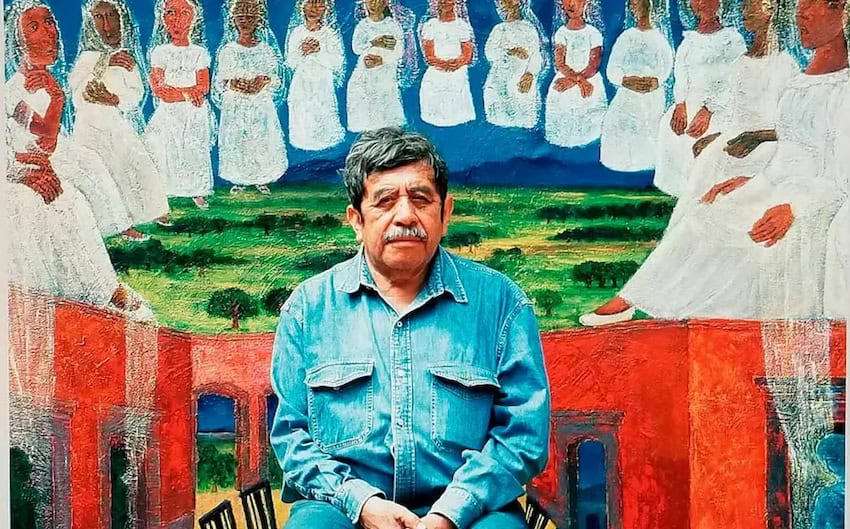
Rodolfo Morales (May 8, 1925 – January 30, 2001)
Painter, surrealist, restorer 

Rodolfo Morales sat in front of a large painting
(Ariel Mendoza)

Morales grew up in a small Oaxacan village in a working-class family. A solitary child, he often turned to drawing to pass the time. While his parents recognized early on that Morales had artistic talent, it was his Aunt Petra who fostered his imagination and encouraged his creative side. Though his education was interrupted, Morales would later attend the Academy of San Carlos in Mexico City to study art. His style, magical realism centered on the resilience of Oaxacan women and the matriarchy, can be found on canvas and the walls of important buildings, notably the Municipal Palace of Ocotlán, which showcases a colorful depiction of local village life. Morales dedicated his latter years to restoration, bringing back to life Oaxaca’s most historic churches and convents, including the 16th-century Convent of Santo Domingo.

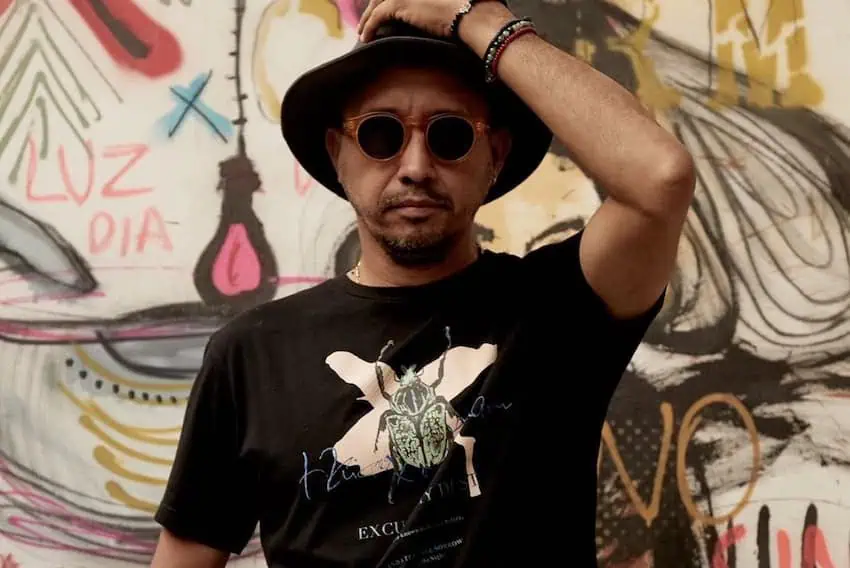
Amador Montes (June 16, 1975 – )
Painter, curator, boutique hotel creator 

Amador Montes wearing a black hat and sunglasses standing in front of his work
(Amador Montes/Instagram)

Amador Montes is one of Oaxaca’s most celebrated contemporary artists. He’s presented his paintings locally and globally, each piece inspired by dreams, memories, and emotions, evoking feelings of nostalgia. His luminous color palette—which reflects the full spectrum of hues ranging from bold to neutral—often features black lettering, notably the name Carmen. Much of his work is dedicated to his mother, and her name graces everything from Montes’ paintings to the two boutique hotels he opened in Oaxaca City, both named Casa Carmen. Beyond creating, Montes is also a curator, passionate in his support of young Oaxacan artists and known for hosting local exhibitions and creative dialogue.

Manuel Jiménez Ramírez (June 9, 1919 – March 4, 2005)
Alebrije pioneer and healer 

Manuel Jiménez Ramírez holding a pair of alebrijes while standing in a garden
(Wikimedia)

Manuel Jiménez Ramírez is credited as the originator of the Oaxacan alebrije, the state’s vibrant tradition of fantastical, hand-carved wooden animals and mythical creatures. As a child, he began by molding animals in clay, later discovering his true passion was in woodcarving. Known locally as “el divino,” Jiménez Ramírez believed himself to be the reincarnation of an artist, and his neighbors often regarded him as a spiritual healer. Beyond art, he worked as everything from a cane cutter to a bricklayer, basket maker, and community leader during Holy Week celebrations. Today, his children and grandchildren carry on the family legacy, shaping the artistic identity of Oaxaca at large.

Jacobo Ángeles (March 14, 1973 – )
Master alebrije carver and Zapotec cultural advocate

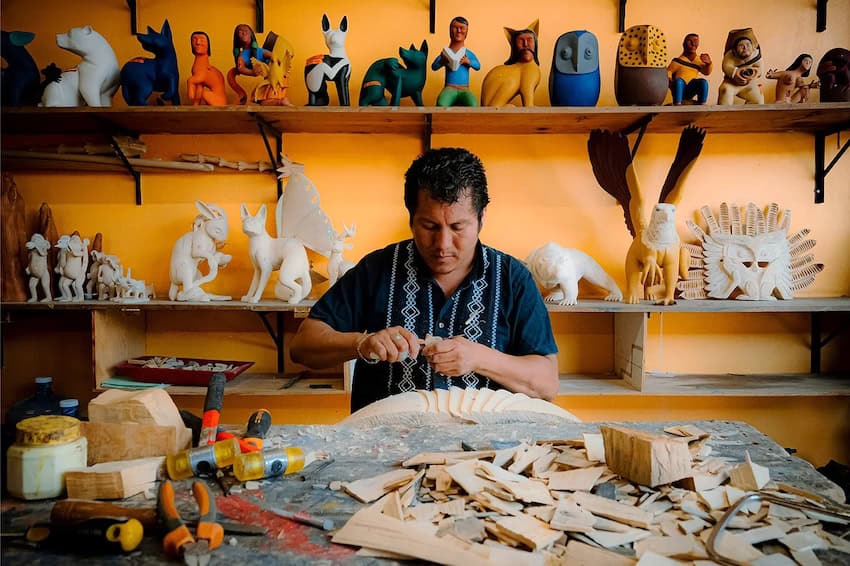
Jacobo Ángeles carving wood in his workshop
(Jacobo Ángeles)

Jacobo Ángeles’ creative spirit was nurtured by growing up in a Zapotec household surrounded by woodcarvers and artisans. After the sudden loss of his father when he was just 12, the young creator took charge of the family workshop, teaching the craft of carving to his younger siblings and supporting the household.

He later married María del Carmen Mendoza, and together they built the Taller Jacobo y María Ángeles, a cultural hub where traditional Zapotec weaving and carving techniques blend with cutting-edge design. His alebrijes are notable for their intricate patterns — inspired by Zapotec symbols and ancient mythology — and frequently combine mythical creatures with human features. In 2014, Jacobo was invited to meet Pope Francis and exhibit 1,200 hand-carved nativity scene figures and Christmas ornaments at the Vatican Museums.

Josefina Aguilar (February 22, 1945 – )
Iconic potter and figurine artist 

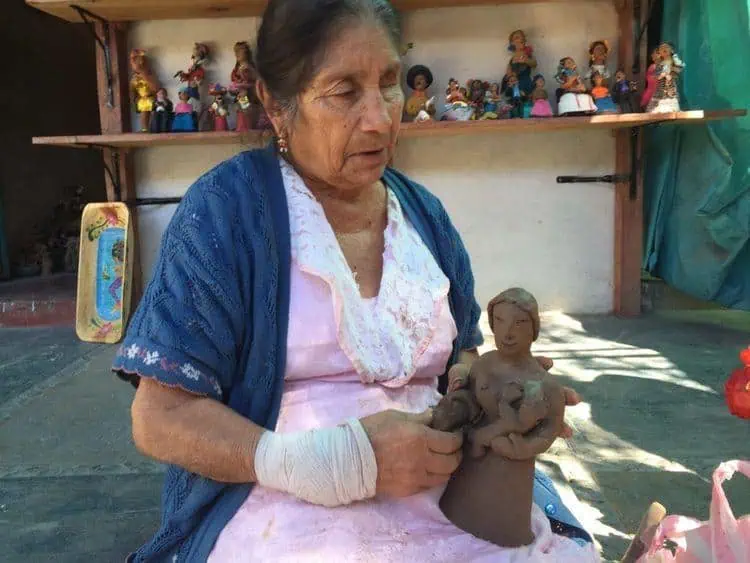
Josefina Aguilar
(Alchetron)

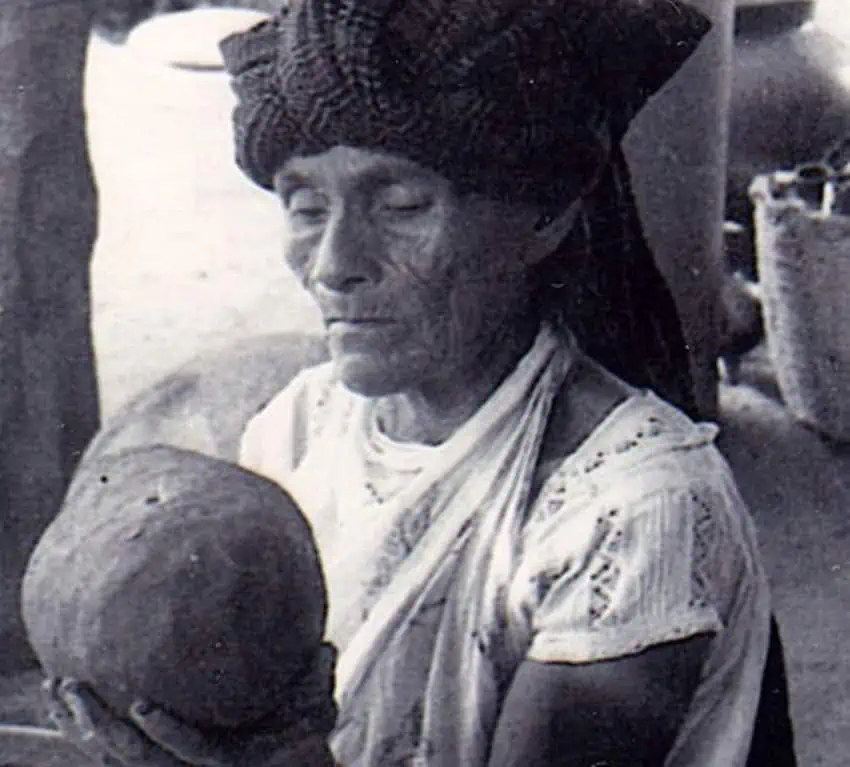
Hailing from the same town as Rodolfo Morales, Josefina Aguilar is internationally lauded for her vibrant, molded clay figurines representing Mexican rural life, festive traditions, saints, historical figures, and community rituals. Taught by her mother and grandmother from the age of six, Josefina began gaining attention in her youth, and her works would eventually be collected by connoisseurs like Nelson Rockefeller. Despite losing her sight in 2014, Josefina continues to shape her whimsical muñecas (dolls), relying on touch while her children help her paint. Her home and studio are a beacon for folk art collectors, and her family remains a central force in the evolution and global adoration of Oaxacan ceramics.

Pastora Gutiérrez Reyes (dates not publicly confirmed)
Revolutionary weaver and women’s advocate 

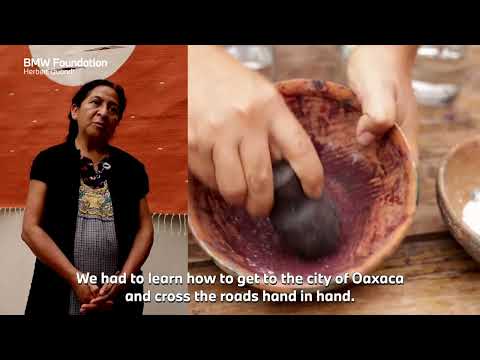
Economic Empowerment through Collaboration

BMW Foundation

Pastora Gutiérrez Reyes is a Zapotec leader and weaving artist from Teotitlán del Valle. In 1997, driven by the lack of opportunities for women in her traditional community, she cofounded Vida Nueva, the village’s first all-women’s weaving cooperative.

Together with her mother, grandmother, and friends, she guided the co-op to economic independence, education, and social change. Through Vida Nueva, Pastora helped bring public health education, workshops on domestic violence and support to further educate local women. Her impact is as much about advocacy as artistry: Today, the cooperative’s Mexican textiles are recognized for blending Zapotec tradition with the group’s innovative designs, and the co-op empowers women in rural Oaxaca.

Doña Rosa (September 4, 1900 – July 12, 1980)
Legendary innovator of Barro Negro 

Doña Rosa's discovery led artists like Carlomagno Pedro to explore new possibilities
(File photo)

In the 1950s, Doña Rosa — born Rosa Real Mateo de Nieto in San Bartolo Coyotepec — dramatically transformed the fate of Mexican pottery with a single discovery. Traditionally, the region’s barro negro (black clay) was matte and gray, relied on for its broad utility rather than its aesthetic. Doña Rosa found that by burnishing the clay with a quartz stone and firing it at a lower temperature, she could create a deep, lustrous black sheen.

This technique made Oaxacan pottery famous throughout the world. Doña Rosa’s descendants continue to run the family workshop to this day, and for art collectors serious about Mexican folk art, it’s a must-visit. Doña Rosa’s ingenuity not only upended an entire craft it also inspired a wave of creative and economic activity that continues to reverberate in Oaxaca’s Central Valleys.

Enedina Vásquez Cruz (1963 – )
Contemporary terracotta sculptor 

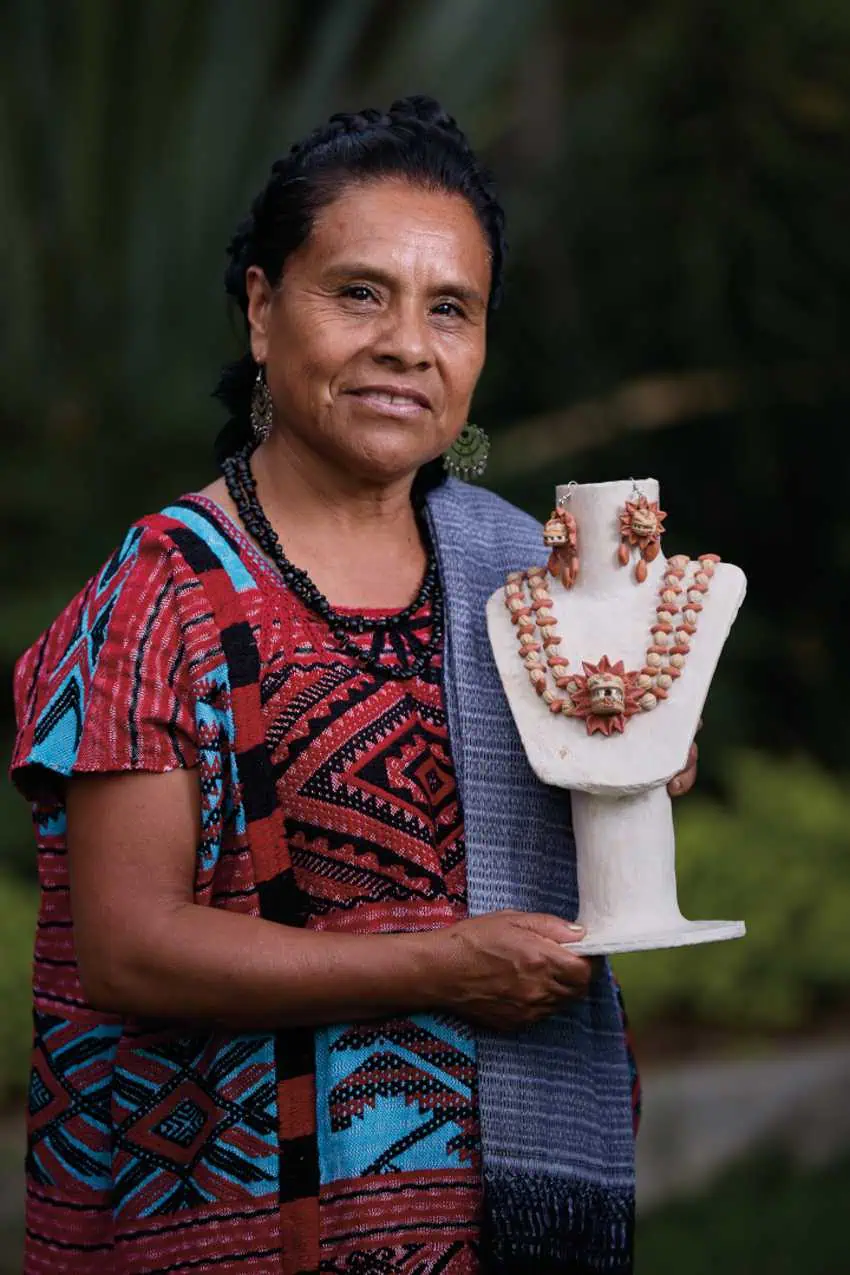
A Mexican woman with dark skin and braided hair, wearing a traditional red and blue Indigenous embroidered dress and a dark beaded necklace, stands smiling while holding a white jewelry display bust featuring a light-colored traditional handmade necklace and matching earrings adorned with small carved faces. A blue shawl is draped over her left shoulder, and a leafy green background is blurred behind her.
(Ministry of Culture)

Enedina Vásquez Cruz carries the centuries-old tradition of Oaxacan ceramics forward with her award-winning terracotta figures and jewelry. Trained in her family’s workshop from a young age, Enedina innovated the art when she recovered ancient slip recipes revealing a method to create an earthy palette.

In fact, the recipes uncovered over 80 natural colors, all derived from traditional sources. Her detailed works are generally centered on Indigenous women in regional dress, as well as double-sided pieces depicting religious icons and historic narratives. Her ability to connect Oaxaca’s pre-Hispanic past to contemporary beliefs has garnered Cruz a number of major national prizes, making her a major force in the region’s artistic landscape.

Bethany Platanella is a travel planner and lifestyle writer based in Mexico City. She lives for the dopamine hit that comes directly after booking a plane ticket, exploring local markets, practicing yoga and munching on fresh tortillas. Sign up to receive her Sunday Love Letters to your inbox, peruse her blog or follow her on Instagram.

How Sheinbaum closed the deal on this week’s tariff reprieve: Thursday’s mañanera recapped

7
President Sheinbaum at the podium of her morning press conference
President Sheinbaum started her Thursday presser later than usual, after a call with U.S. President Trump. (Saúl López Escorcia/Presidencia)

President Claudia Sheinbaum started her Thursday morning press conference at the later time of 10 a.m. as she had a telephone call with U.S. President Donald Trump earlier in the day.

The outcome of the call? A 30% tariff Trump threatened to impose on imports from Mexico won’t take effect as scheduled this Friday.

President Sheinbaum at the podium of her morning press conference with Ebrard and other officials
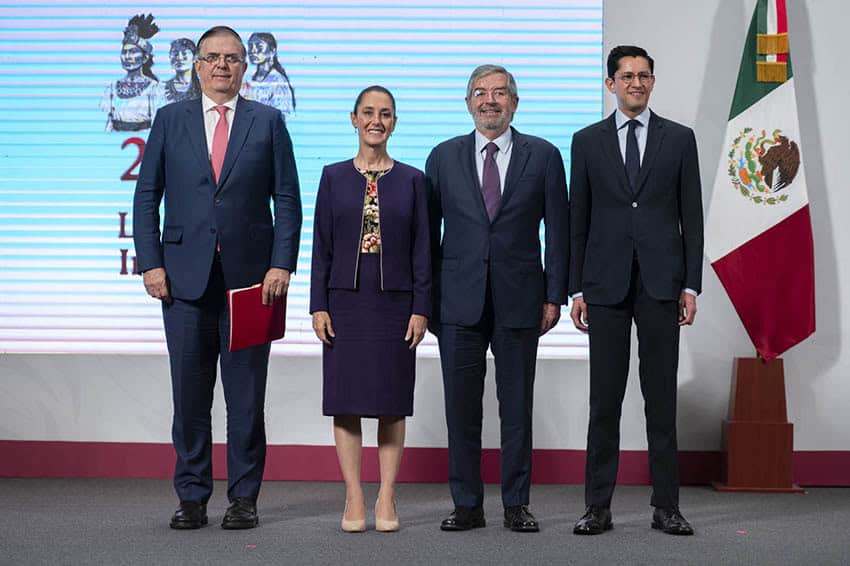
Economy Minister Ebrard and Foreign Minister de la Fuente accompanied Sheinbaum Thursday to report on the progress of tariff negotiations. (Saúl López Escorcia/Presidencia)

At the beginning of her press conference, Sheinbaum said that Mexico “achieved a good agreement” that “protects the USMCA,” the North America free trade pact that is scheduled for review in 2026.

Most Mexican products that comply with the rules of the three-way trade pact currently enter the U.S. tariff-free, while non-USMCA compliant goods face a 25% duty. That situation won’t change as Mexico and the United States seek to come to a longer-term agreement on trade during the next 90 days.

Economy Minister Marcelo Ebrard said this week that 84% of Mexico’s trade with its northern neighbor complies with the USMCA and is therefore tariff-free.

Trump told Sheinbaum in a letter earlier this month that he intended to impose a 30% tariff on imports from Mexico because Mexico wasn’t doing enough to combat the trafficking of fentanyl to the United States.

It was unclear whether the 30% duty would have applied to all imports from Mexico or just those that don’t comply with the USMCA.

Mexico didn’t commit to any ‘additional action’ to win tariff reprieve, says Sheinbaum

A reporter asked the president whether Mexico offered anything specific to the United States that allowed it to win a reprieve from the tariff that was scheduled to take effect on Friday.

Sheinbaum said that Mexico “made various propositions” to the United States, including one on how to reduce the trade deficit the United States has with Mexico.

She said that Mexican officials also spoke to their U.S. counterparts about “significant investments” of United States companies in Mexico.

“But they remained on the table,” Sheinbaum said of Mexico’s proposals.

“The agreement we have didn’t involve any additional action on Mexico’s part,” she said.

Most US trade remains duty-free after Mexico secures a 90-day extension on Trump’s most recent tariff threat

On social media, Trump said on Thursday morning that “Mexico has agreed to immediately terminate its Non Tariff Trade Barriers, of which there were many.”

Asked about that statement, Sheinbaum responded:

“In the USMCA, there are a number of agreements — many of them — related to labor issues, investment issues, and many other issues. So, there are always complaints from Mexico or complaints from the United States toward Mexico.”

Asked which non-tariff trade barriers Mexico would terminate, Sheinbaum referred the question to Ebrard.

The economy minister said that Trump was referring to “trade regulation issues,” but didn’t cite specific barriers that Mexico would eliminate.

“There are a series of questions that aren’t just: ‘What tariff am I going to impose on you?’, but rather ‘How will our trade work in the years to come?’, and that is what we are working on,” Ebrard said.

What will Mexico seek to achieve in the next 90 days?

In a social media post on Thursday morning, Sheinbaum said that Mexico had secured “90 days to build a long-term [trade] agreement through dialogue” with the United States government.

That agreement will be separate from the USMCA.

Sheinbaum said that the “most important thing” for Mexico is to continue to have the best possible trading situation with the United States — one that places the country in an advantageous position compared to the rest of the world.

“That’s what we’re seeking,” she said.

‘Mutual respect’ key to reaching deal to avoid 30% tariff, says Sheinbaum

Asked what the key was to achieving Thursday’s agreement with Trump, Sheinbaum cited “mutual respect.”

“We have to say it, President Trump has treated us with respect in all the calls we’ve had,” she said, noting that she has spoken to the U.S. leader on various occasions.

She added that she and her government also treats Trump with respect.

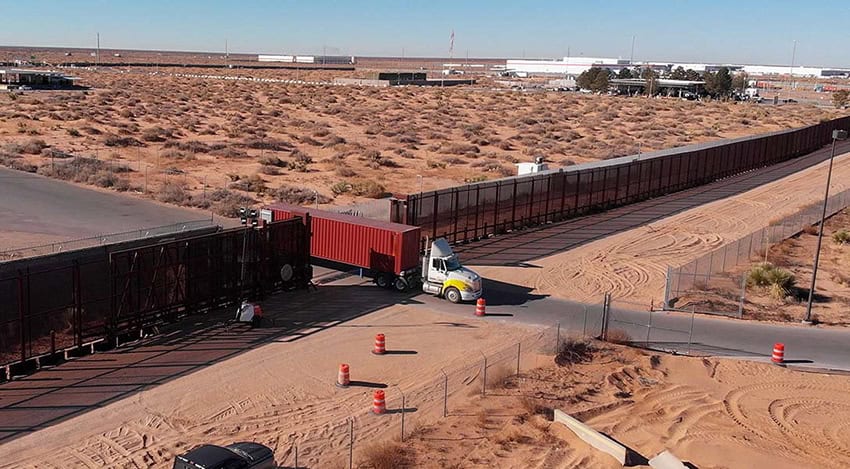
A semi truck crosses through a gate along the US-Mexico border
Sheinbaum said Mexico’s close trade relationship with the U.S. has helped Mexico secure favorable treatment. Pictured: A trailer of merchandise crosses the Mexico-U.S. border. (Federal Reserve Bank of Dallas)

Sheinbaum said that another factor that allowed Mexico to avoid the 30% tariff is the importance of the country to the United States.

“Mexico represents a lot for the United States. We are their main trade partner, and they’re aware of that,” she said.

In addition, Mexico has made progress in the fight against fentanyl, seizing large quantities of the synthetic opioid during the Sheinbaum administration and dismantling more than 1,000 clandestine lab where that drug and others were made.

No in-person meeting between Sheinbaum and Trump is planned 

Sheinbaum said that no arrangements had been made for her to meet face-to-face with Trump.

“We simply said goodbye to each other very cordially and he said: ‘Well, I hope to speak to you in around 90 days,'” she said.

Mexico to continue negotiating on steel and auto tariffs 

Sheinbaum noted that existing U.S. tariffs on steel, aluminum, vehicles and tomatoes will “remain as they are.”

“But that doesn’t mean that will be the case … [during the next] 90 days. We’re still working on that,” she said, referring to efforts to have the duties eliminated or reduced.

Sheinbaum stressed that Ebrard has “a lot of contact” with United States Commerce Secretary Howard Lutnick and U.S. Trade Representative Jamieson Greer.

President Sheinbaum and other officials stand on stage at a press conference
Economy Minister Ebrard (left) and Foreign Minister de la Fuente (center right) have close working relationships with U.S. counterparts, Sheinbaum said. (Saúl López Escorcia/Presidencia)

She also said that Foreign Affairs Minister Juan Ramón de la Fuente has a “very good relationship” with U.S. Secretary of State Marco Rubio.

Mexican steel and aluminum currently face a 50% tariff when entering the United States, while vehicles are subject to a 25% duty, although U.S. content is exempt from the tax. A 50% U.S. tariff on copper products will take effect on Friday.

Fresh Mexican tomatoes face a 17% tariff, imposed by the United States earlier this month after it withdrew from a 2019 agreement with Mexico that suspended an antidumping duty investigation.

Ebrard: Sheinbaum’s capacity to persuade Trump is ‘remarkable’

Ebrard told Sheinbaum’s press conference that “as a witness of the call” the president had with Trump, he was able to say that her “handling” of the discussion with the U.S. president was “splendid.”

“This is a result that is due to that,” he said.

“… Without any intention of flattery, I can tell you that the management the president has of her conversations, her manner, the firmness with which she defends the interests of Mexico and her capacity to persuade President Trump, is remarkable,” Ebrard said.

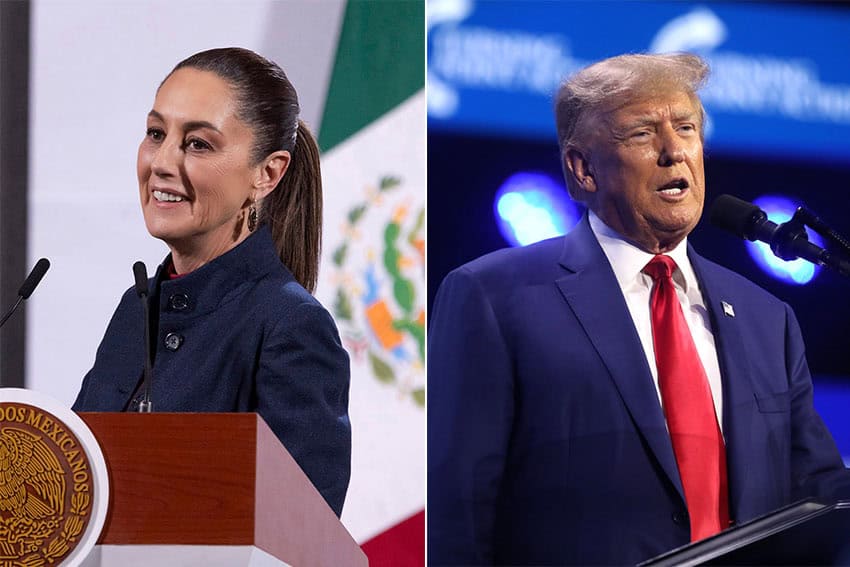
Two photos, one of Mexican President Claudia Sheinbaum and another of U.S. President Donald Trump, who said Sheinbaum inspired his new anti-drug campaign
Despite her status as ‘the world’s leading Trump whisperer,’ President Sheinbaum and U.S. President Trump have no plans to meet in person. (Presidencia, Gage Skidmore)

Earlier this year, The Washington Post described Sheinbaum as “the world’s leading Trump whisperer.”

Ebrard said that Mexico remains in a “much better” position than “the rest of the countries of the world” in terms of trade with the United States.

He highlighted, once again, that 84.4% of Mexico’s trade with the United States is tariff free thanks to the USMCA.

“No other country has that, with the exception of Canada,” Ebrard said.

De la Fuente also lauds Sheinbaum

Foreign Minister de la Fuente, who was also present during Sheinbaum’s call with Trump, was also effusive in his praise for the president.

He lauded Sheinbaum’s “leadership and her extraordinary capacity for dialogue” with Trump, who he described as “a world leader who has been very explicit in his propositions and points of view.”

De la Fuente also praised Sheinbaum’s “firmness in the defense of the interests of our country and her intelligence in conducting a conversation that provides enormous advantages to Mexico.”

By Mexico News Daily chief staff writer Peter Davies (peter.davies@mexiconewsdaily.com)

Mexican photographer Rodrigo Moya, who famously photographed Che Guevara, dies at 91

2
Rodrigo Moya
Moya's passing elicited espressions of praise from the top ranks of Mexican culture, including a statement from the Culture Ministry: "Moya captured historical processes that today are part of an essential legacy of memory and truth." (Isaac Ezquivel/Cuartoscuro)
Rodrigo Moya, the photographer best known for the iconic image known as “Melancholic Che,” has died, aged 91.

Moya, a naturalized Mexican, passed away at his home in Cuernavaca on Wednesday after a long illness, surrounded by his family and his partner of 43 years, Susan Flaherty.

Mexico’s Ministry of Culture lamented Moya’s passing on social media, writing that “[h]is work acutely portrayed the social inequalities, popular struggles and revolutionary movements of the 1950s and 1960s. Author of the famous portrait ‘Melancholic Che,’ Moya captured historical processes that today are part of an essential legacy of memory and truth. May he rest in peace.”

Numerous institutions and journalists paid tribute on social media as well, including the Museo del Palacio de Bellas Artes, the National Institute of Anthropology and History and Jenaro Villamil, the director of Mexico’s Public Broadcasting System.

The Coordination of Cultural Diffusion at the National Autonomous University of Mexico (UNAM) said Moya “leaves us a lucid and profoundly honest legacy: a mirror where history still breathes.”

Moya, whose work has been compared favorably to Henri Cartier Bresson and Manuel Álvarez Bravo, photographed political unrest throughout Latin America during the 1950s and 1960s, including the guerrilla movements in Guatemala and Venezuela, the U.S. invasion of Santo Domingo, and the Cuban Revolution. 

He captured the human cost of civil and military uprisings and the people who lived through those turbulent times, and memorably described photography as “the most intense approach to life, to the nature of the world, to the beings and things that entered through my lens and remain there.” 

Moya referred to his subjects as “populating memory and the small surface of photographic paper, refusing to die, looking at me with the same eyes they looked at me with decades ago.”

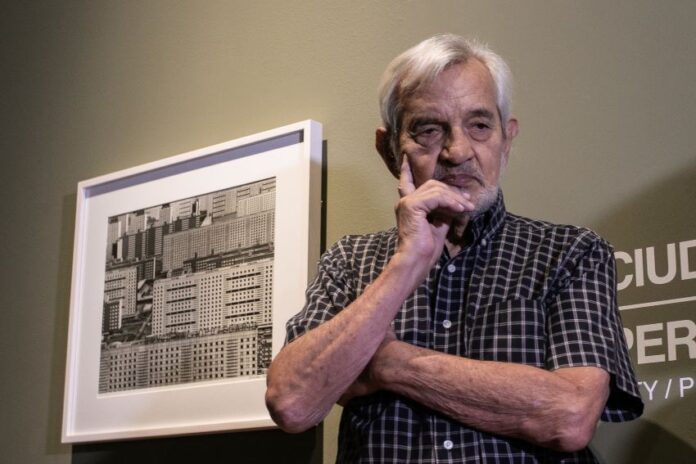
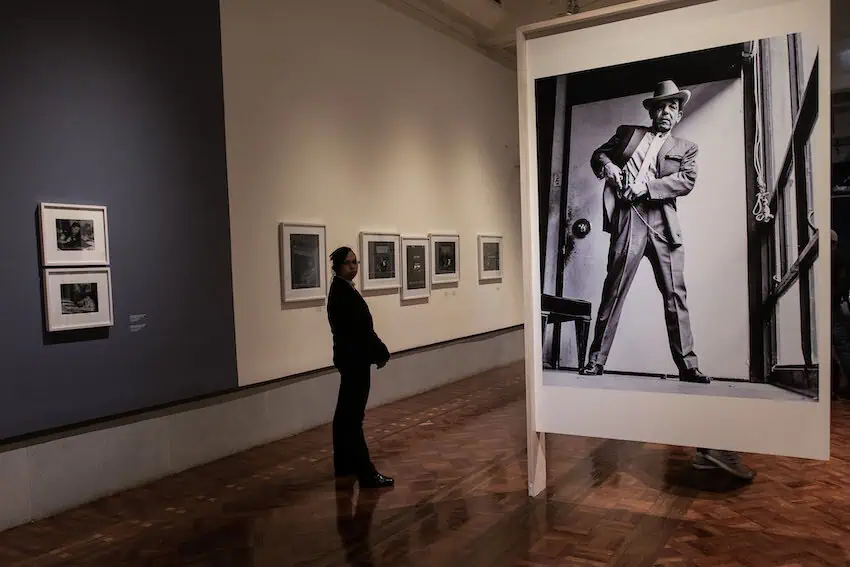
lone figure at an art exhibit
Moya was honored at the age of 85 by an exhibition titled “Rodrigo Moya, Photographic Testimony of Mexico,” at the Museo del Palacio de Bellas Artes in Mexico City.
(Isaac Esquivel/Cuartoscuro)

He abandoned the profession of photography in 1968 to focus on print journalism and produce documentaries, although he continued to take photographs.

Some of his images from this later period were featured at The Wittliff Collections at Texas State University in 2015, billed as the first retrospective of Moya’s career to be exhibited in the United States.

They featured subjects such as the sea and residents of fishing communities, as well as the countryside, the streets of Mexico, religious processions and portraits of both anonymous people and celebrities.

Wittliff curators wrote that images by Moya published in eminent Latin American news magazines such as Impacto, El Espectador, Sucesos and Siempre! documented newsworthy events, “while providing an insider’s view, suggesting that his subjects were waiting for his camera.”

He said of himself: “I think my photos did have a constant search, but more than a seeker of images, I was a seeker of social contrasts, I was a seeker of the physiology of Mexico and the economic physiology of our countries.”

In a pamphlet explaining the exhibit “Eyes Wide Open” featuring photos by Moya, The Etherton Gallery in Tucson, Arizona, described him as “part photojournalist, part street photographer.” 

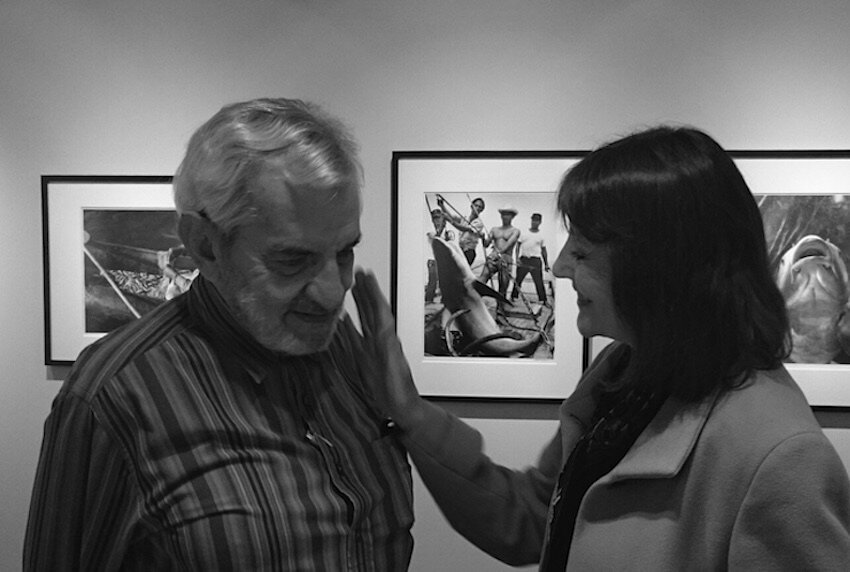
couple at an art exhibit
Rodrigo Moya and his domestic partner of 43 years Susan Flaherty share a moment at an exhibition of his work in San Marcos, Texas in 2015. (Wikimedia Commons)

“The photographer renders timeless, the sweet, ordinary moments of life, like a girl looking out a train window in “La Muchacha.” His affecting portraits afford the same dignity to renowned artist Diego Rivera as to an agricultural laborer in “La vida no es bella”  (“Life is not Beautiful”).”

Moya was born in Medellín, Colombia, on April 10, 1934. His father was Mexican.

Moya took his famous photo of Che in July 1964 as part of a project to produce a book about the Cuban Revolution that was never written. On the last day of the visit to Cuba, he did a series of 19 portraits of the revolutionary, including the image of Guevara smoking a cigar, with a sad expression.

In 1997, Moya won Mexico’s National Short Story Award for his book “Cuentos para leer junto al mar” (“Stories to read by the sea”). 

With reports from La Jornada and El Economista