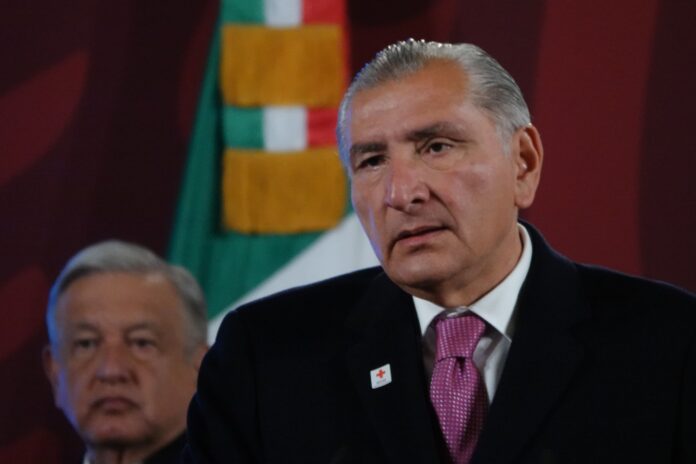
Adán Augusto López, seen here at a 2022 press conference, served as federal interior minister to former President López Obrador. (Galo Cañas/Cuartoscuro)
A political scandal that has been brewing since the beginning of the year is shining a spotlight on high-ranking members of the ruling Morena party — most notably Mexico’s former interior minister and ex-governor of Tabasco, Adán Augusto López. Allegations of illegal activity have now led opposition leaders to file a criminal complaint against López, even as ruling party lawmakers block attempts to discuss the case in Congress.
The Institutional Revolutionary Party (PRI) on Wednesday formally requested that the Federal Attorney General’s Office (FGR) investigate López, currently a Morena party senator, for criminal association while also demanding that he resign from office.
The accusation stems from López’s relationship with Hernán Bermúdez, the former state security minister of Tabasco. Bermúdez, who is under investigation for ties to organized crime, fled Mexico in January.
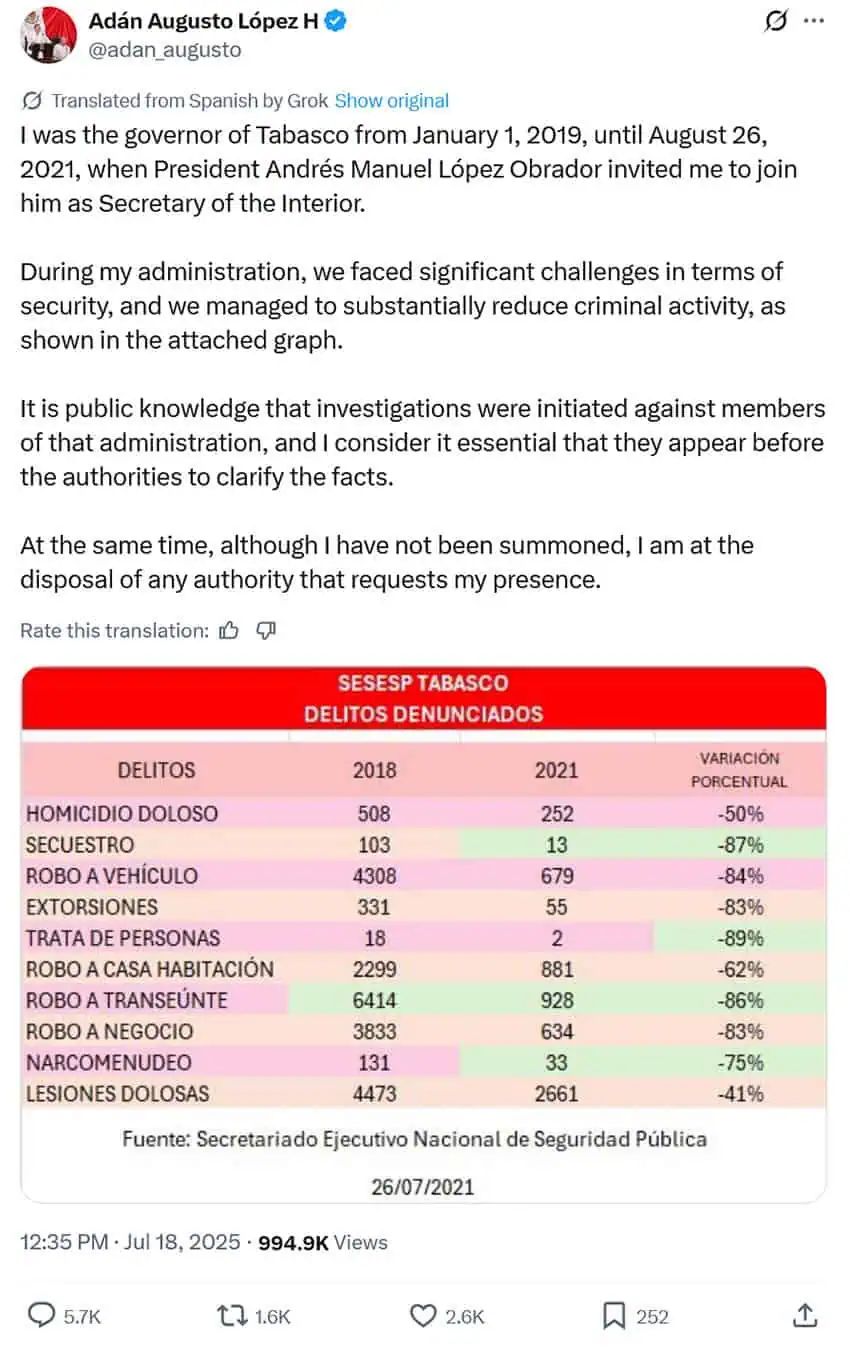
López has not spoken publicly about the scandal, limiting his comments to a July 18 post on X in which he said he was willing to submit to questioning if so required.
Bermúdez allegedly used his position as security minister to establish ties with the notorious Jalisco New Generation Cartel (CJNG) and oversee an extortion racket and fuel-theft ring in Tabasco.
López also faces allegations that, in his capacity as notary public, he helped Bermúdez and his brother set up shell companies utilized to carry out these illegal activities as well as earn millions in state-issued contracts.
Bermúdez remained in charge of the Tabasco Security Ministry after López left the governor’s mansion to become interior minister in 2021, finally stepping aside late last year. He reportedly fled the country in January, just two weeks before an arrest warrant was issued.
Word of the arrest warrant was confirmed in mid-July by Gen. Miguel Ángel López, who said Bermúdez was identified as the leader of the criminal gang known as “La Barredora.” Gen. López said that Interpol has issued a “red notice,” alerting police worldwide that Bermúdez is a fugitive.
Shortly after taking office in October 2024, Tabasco Gov. Javier May identified Bermúdez as the leader of La Barredora. May, a member of Morena, also criticized his predecessors, including López, saying they needed to answer questions about their knowledge of Bermúdez’s activities.
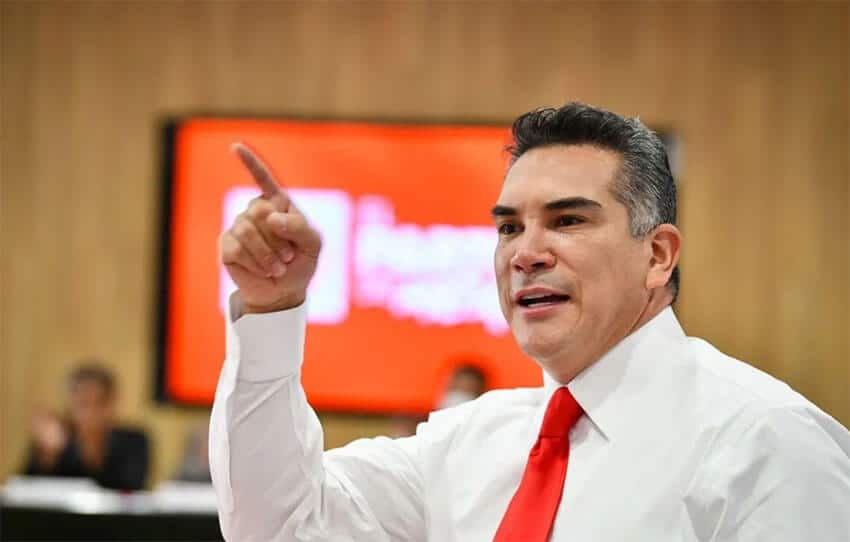
PRI Senator Alejandro Moreno submitted the motion to force López to resign. It was the third time the opposition has sought to open debate on the scandal, but members of the ruling party Morena have repeatedly blocked the topic from being placed on the legislative docket.
Senator Alejandro Moreno is the national leader of Mexico’s PRI party, which ruled the country from 1929 to 2000. (File photo)
Morena lawmakers closed ranks around López on Wednesday, insisting there is no legal foundation for López to resign. “There is no formal investigation of López and the accusations are nothing more than a media-driven smear campaign,” said Morena Senator Imelda Castro.
In its petition to have López removed from office, the PRI cited Senate regulations that define honorability, political responsibility and public ethics as conditions for exercising popular representation.
The PRI party also revealed that it had filed a second complaint with the FGR, requesting an investigation of eight prominent Morena party members, including former President López Obrador, Education Secretary Mario Delgado and five governors. The PRI alleges that the Morena politicians are involved in “a treasonous cover-up of organized crime activities.”
Later Wednesday, the National Action Party (PAN) also demanded a formal investigation into López’s ties to Bermúdez. “This is not an isolated case,” said PAN Senator Ricardo Anaya. “This suggests a pattern of complicity between Morena and organized crime.”
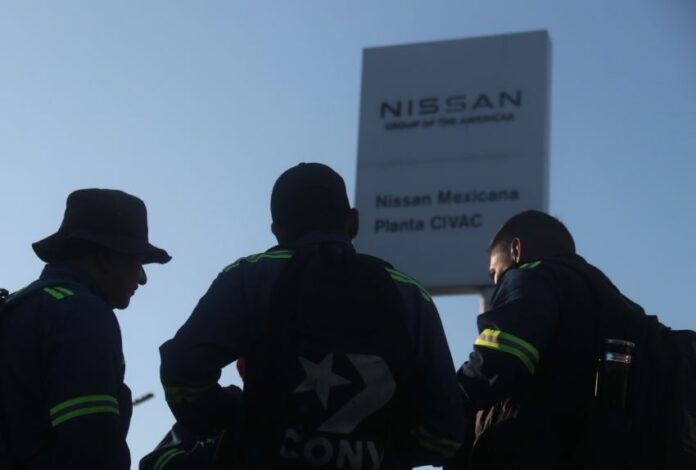
The announcement of Nissan's factory closure in Morelos marked the end of an era. Production will be moving to the more modern and efficient Aguascalientes plant. (Margarito Pérez Retana / Cuartoscuro)
Nissan has officially announced the closure of its plant in the state of Morelos after nearly 60 years of operations, leaving the fate of thousands of employees up in the air.
The Cuernavaca Valley Industrial City (Civac) plant, located in Jiutepec, Morelos, just outside Cuernavaca, was Nissan’s first production facility outside of Japan. However, beginning in March 2026, the end of the Japanese fiscal year, production of all models currently assembled at Civac, including the NP300, Frontier and Versa, will be transferred to the more modern Aguascalientes automotive complex.
😔🏭 Así fue el momento en que la directiva de Nissan anunció a los trabajadores el cierre de la planta de Jiutepec tras 59 años de historia ⏳ La producción se traslada a Aguascalientes 🚚⚙️https://t.co/XN1BFkm9hC
This Spanish-language video, possibly taken clandestinely and posted on X, captures the moment when employees of Nissan’s 59-year-old Cuernavaca plant first learned that they will soon be out of a job.
“Today, we have made the difficult but necessary decision that will allow us to become more efficient, more competitive, and more sustainable,” CEO of Nissan Motor Corporation Ivan Espinosa said, adding that relocating production to Aguascalientes, the capital of the central state of the same name, will ensure the continuity of key models in a facility with greater technological capacity.
This decision is part of the global “Re:Nissan” restructuring plan, which seeks to consolidate production and optimize the company’s efficiency worldwide. According to the newspaper El Universal, Nissan plans to reduce its non-China global production capacity from 3.5 million units to 2.5 million units yearly.
The Cuernavaca plant accounted for approximately 11% of Nissan’s total production in Mexico and had produced more than 6.5 million vehicles since its opening in 1966, marking the beginning of the brand’s international expansion outside of Japan. Over the years, its vehicles have not only been distributed in Mexico but have also reached international markets, including Japan. The Nissan Tsubame was exported in 1993, marking the first model manufactured in Mexico and sold in the Asian country.
Since its opening, Civac has boosted development for the local community and acted as a benchmark for the Mexican automotive industry, which is why the move has raised concerns about the future employment of the plant’s direct employees. The company did not mention in its announcements how many employees will be affected, but the newspaper El País reported that figures from Nissan itself put the number of Civac workers at 4,800 in 2016.
Nissan says it is committed to ensuring a respectful transition for affected employees. However, it has not announced any specific plans about severance, relocation or retirement plans, leaving workers feeling uncertain.
Morelos Governor Margarita González Saravia and state Minister of Economic Development Víctor Sánchez Trujillo announced plans to meet with Nissan representatives to ensure compliance with labor rights and to facilitate a fair transition. The action plan includes placement of employees in other automotive companies in the state, a special program through the National Employment Service (SNE) for new job opportunities, and support for entrepreneurship, leveraging employees’ technical skills.
In an interview, González added that her government will seek to bring in another automotive company to replace Nissan.
As summer winds down, Puerto Vallarta stays hot with a lineup of concerts, comedy shows, theater and music talks that range from the hilarious to the heartfelt.
Whether you’re drawn to the bohemian sound of singer-songwriters or the beat of Chicago house, August offers plenty of ways to stay connected to the culture of this coastal city. Here’s what’s on this month.
La Noche de la Guirnalda
(Grupo de Teatro Dionisio/Facebook)
Grupo de Teatro Dionisio is back with a new original production that reflects the voices and stories of the people who actually live in Puerto Vallarta year-round. “La noche de la guirnalda” (The Night of the Garland) is a tapestry of vignettes inspired by current events, whispered neighborhood rumors and the quiet resilience of everyday life. The play offers a thought-provoking and heartfelt portrayal of Vallarta’s identity beyond tourism.
Dates: August 2 at 8 p.m. Location: Plataforma 322 Cultural Center, Alondra 103, Los Sauces Cost: Tickets via Facebook: Grupo de Teatro Dionisio
Mesmo Rollo Tour 2025
(Mesmitas Oficial CF/Facebook)
If you’ve laughed at them on TikTok, now’s your chance to see them live. The Mesmo Rollo Tour brings together four of Mexico’s most viral comedy groups — Los Mesmos Show, K Rollo Show, Los Wapayasos and Horripicosos — for a night of hilarious sketches, slapstick antics and outrageous costume comedy.
It’s a fast-paced, laugh-out-loud event perfect for anyone who appreciates over-the-top humor and doesn’t mind a few ridiculous surprises.
Dates: August 3 at 5 p.m. Location: Teatro Vallarta, Perú 1105-C, 5 de Diciembre Cost: From 330 pesos
House Rules: The Rise of House Music
(Joint. Boutique Hotel and Cowork/Facebook)
Take a break from the dance floor and learn how house music became one of the most influential genres in the world. Local PV personality Paco Ojeda hosts this immersive presentation that charts the genre’s roots in Chicago’s underground scene to its explosion in global clubs. Featuring iconic tracks and stories from the LGBTQ+ and Black communities who shaped the movement, this session will have you grooving in your seat.
Longtime fans of José Madero and newcomers alike are in for an intimate evening of raw emotion and powerful vocals. As the former frontman of Mexican rock band Panda, Madero has since carved out a deeply personal solo career with an introspective sound that merges rock, poetry and vulnerability. His Sarajevo tour features new material alongside fan favorites in a concert that promises intensity, connection and a whole lot of feels.
Date: August 8 at 8:00 p.m. Location: Teatro Vallarta, Perú 1105-C, 5 de Diciembre Cost: From 2,100 pesos. Tickets via Ticketmania and the Teatro Vallarta box office.
Strings of Light: The Musical Journey of Pat Metheny
(Joint. Boutique Hotel and Cowork/Facebook)
In this beautifully curated listening session, Paco Ojeda dives into the life and music of Pat Metheny, one of modern jazz’s most prolific and genre-defying artists. From his early guitar work to his expansive compositions that mix classical music, folk and fusion, this talk is a deep dive for jazz lovers and curious listeners alike. It’s a warm and enriching evening at the Joint. that explores what makes Metheny’s music so timeless and moving.
Dates: August 21 at 7 p.m. Location: Joint Boutique Hotel and Cowork, Insurgentes 108, Zona Romántica Cost: 300 pesos, cash only; tickets available at Joint’s front desk
Elías Medina’s La Experiencia Tour
(Elías Medina)
With a soulful voice and a knack for writing viral Regional Mexicano hits, Elías Medina brings his signature blend of ballads, humor and storytelling to Vallarta for the first time. Known for penning songs performed by artists like Grupo Firme and Pesado, Medina’s live show goes beyond music — it’s a relaxed, bohemian-style experience filled with emotion, laughter and sing-along moments.
Dates: Aug. 29 at 9 p.m. Location: Teatro Vallarta, Perú 1105-C, 5 de Diciembre Cost: Tickets start at 550 pesos
Hermanos de Leche Comedy Show
(Hermanos de Leche)
Podcasters, online influencers and comedy duo Iván “La Mole” Fematt and Adrián Marcelo are kicking off their world tour in Vallarta with Hermanos de Leche, a high-octane standup show that blends soccer fandom with sharp satire.
The two are known for their viral banter and unfiltered takes on everything from sports to pop culture, with a focus on hilarious and often absurd life lessons. This adult-only Spanish-language show is a must for fans of edgy, sports-laced humor.
Date: August 30 at 9 p.m. Location: Teatro Vallarta, Perú 1105-C, 5 de Diciembre Cost: From 400 pesos. Tickets via Arema and the Teatro Vallarta box office
Meagan Drillinger is a New York native who has spent the past 15 years traveling around and writing about Mexico. While she’s on the road for assignments most of the time, Puerto Vallarta is her home base. Follow her travels on Instagram at @drillinjourneys or through her blog at drillinjourneys.com.
What attracts most people to San Miguel de Allende is challenging to put into words. And yet, the ephemeral charms of its jacarandas in spring and gilded 17th-century Baroque mural work splashed across the ceilings of sanctuaries earned the Bajío town a UNESCO World Heritage Site designation and the local pride of being celebrated as the “Best City in the World” by Travel + Leisure magazine once again this year.
As a hospitality lifer and former Top 10 in America restaurant owner with a live-in James Beard Award-nominated chef for a mother, I wasn’t looking at San Miguel’s restaurant scene through rose-colored glasses when I got here four years ago. I arrived pregnant with twins and I was constantly starving. Eating for three and on the hunt for comfort meals, I was mainly disappointed by the mediocre dining options downtown.
(Pablo Velasco)
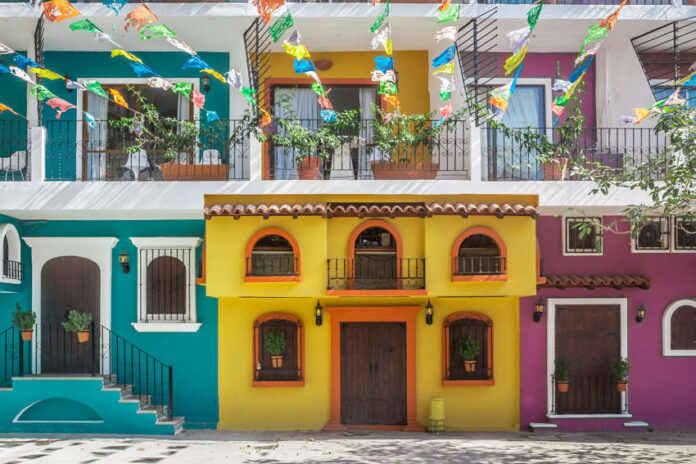
Most “where to eat in San Miguel de Allende” searches will steer you to overpriced rooftop bars, where jaw-dropping pastel panoramas form the backdrop for exquisitely plated, nonspecific international fare. But Centro’s feast-for-the-eyes dishes are woefully lacking in sazón and soul, despite their aesthetic overtures. Regrettably, San Miguel’s relatively walkable, densely concentrated city center is where many of its most-read city guides start and end.
Having lived in five different homes and neighborhoods since giving birth here, I — alongside my Burmese American chef-mama, Mexican foodie husband and Bur-Mexi gourmand toddlers — have tirelessly combed the city in search of memorable meals for our multicultural palates. If you’re taking your cues from “best of” roundups, you might miss the chance to experience an elite culinary tour of the world on a plate, and I don’t want you to have to wait four years like we did before discovering it.
Spoiler alert: You’re not going to find any of our neighborhood gems on the 50 Best Bars list or in the Michelin guide yet, but you’re guaranteed to become a repeat customer, complete with bragging rights to confidently say you didn’t fall prey to tourist traps on all the “it” lists written by people just passing through. Whether you’re in town for a visit or here for the long haul, I beg you: Don’t spend all your time in Centro’s 60-block radius. Instead, head down San Miguel’s main thoroughfare, the Salida a Celaya, leading toward the nearby city of Celaya, famed for regional delicacies like artisanal cajeta, or goat’s milk caramel. Should you dare to venture south of Centro just five minutes by car — or a 20-minute walk — I’ll show you where the industry locals go to eat along what we can call the Salida a Celaya strip.
A massive copper espresso machine shines at the entrance of Café Quería, a beacon lighting the way inside a temple to Mexico’s carne asada heritage, filled with some of the city’s best espresso drinks, made with Tatemado’s locally roasted specialty coffee. On the back patio, light and shadows wind through the roofing’s bamboo slats, dancing over humble metal trays filled with a half-dozen housemade condiments. And if the bone marrow oozing over dichromatic layers of hand-nixtamaled, grill-kissed tortillas and the cloudlike microfoam on your flat white feels like they’ve been blessed, that’s because, well, they have been.
Since 2023, co-owners Andrix Oropeza, 28, and Tim Vanderwerf, 29, have consciously created a speakeasy sanctuary through their revolutionary, faith-based vision of hospitality where, as Oropeza puts it, “no one is disposable.” Just a few years before opening Quería, the pair met at Andrix’s family taco cart, Los Tiznados. Realizing they shared a vision that began in their adolescence, Café Quería only hires local youth from underserved populations in partnership with the Christian nonprofit Young Life. Staff members, who Oropeza calls the “arms and legs” of the operation, generally join the team with no prior restaurant experience, then rotate through all service stations, front and back of house, in hopes of finding their niche and being promoted from within. Many, like the current 16-year-old manager who gleefully greets guests at the start of every visit, do just that.
While Vanderwerf is the Querétaro-born, Puebla-raised son of Michigan missionary parents with no prior restaurant experience, much of Oropeza’s paternal lineage has been dedicated to making Hidalgo-style barbacoa and pollo ximbo, a dish traditionally associated with the Hñähñu (Otomí) people of Hidalgo’s Mezquital Valley. Like barbacoa, pollo ximbo is marinated in chili and spices, then wrapped in maguey leaves and cooked overnight in an earth oven.
Unintentionally planting seeds for his future endeavor during the Covid-19 pandemic, Oropeza followed his mother’s patient guidance in the kitchen, with Mamá Oropeza giving her son specific instructions for how to make traditional home-cooked meals from her childhood. In 2022, after shuttering Kab’an, the family’s first seasonally-inspired comida de origen Mexican restaurant, Oropeza’s time at Los Tiznados proved not only inspirational but foundational for the recipes Quería now serves: crispy enchiladas dedicated to his dad, comforting chilaquiles he hopes his mom will approve of and saucy enfrijoladas prepared the way his sister likes them.
The menu reflects the culmination of both owners’ teenage dreams, a sacred tribute to Hidalgo family-style memories, homestyle Mexican fare and the team’s daily prayer. With every visit, the Quería crew aims to restore something in you. “Isn’t that the whole point?” Oropeza asks. “Restaurants are about restoration through hospitality.”
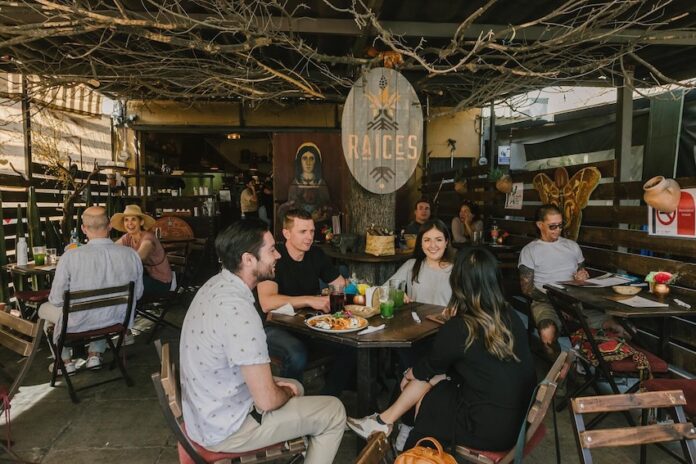
Chef Vanessa Romero and her mostly female cooking crew embody everything about being chingona (badass). The breakfast-all-day menu retains the authentic essence of old classics while innovating florally adorned, futuristic takes on them. Better still, Romero’s no-frills, all-flavor approach to upgrading Mexican morning staples like stuffed chilaquiles embarazadoswith pressed pork rinds, dusted with black chili ash and floating in a morita salsa alongside smoky-sweet café de olla served in canteen cups is more reminiscent of a backyard barbecue than sitting down at a restaurant.
Don’t leave without ordering the corn and cottage cheese hot cakes, drizzled with pure agave honey and fresh berries. Avocado water may sound like an oddly savory finish, but its creamy texture and sweet-salty balance offer guilt-free indulgence to wash it all down. On weekends, Raíces stays open until 10 p.m., with seasonally rotating dinner specials.
Before my kids were born, they were somersaulting in my belly as their dad and I spun around to live salsa rhythms at this modern Peruvian joint’s former rooftop location. Once our children were old enough to join us at Lima, we were thankful for the high chairs that were slid tableside even before us having to ask for them, the cheerful waiters who made our little diners feel special by carrying them on their hips to high-five Chef Sebastián Soldevila in his open kitchen and the speedy service of generous portions.
Hailing from Cusco, Soldevila delights with unexpected textures in his Peruvian share plates and the most inventive sushi rolls in town. Some might wonder, “Why serve sushi?” Far from being a gringo-bait marketing strategy, Asian-Peruvian cuisine is as authentic to the modern Peruvian culinary canon as is ceviche. That’s because it evolved with generations of of Chinese and Japanese migration to Peru dating back to the 1800s.
On a rainy summer afternoon, nothing beats slurping a bowl of chupe de camarones, a classic soup from Arequipa, Peru, with massive shrimp swimming in a spicy, herbaceous broth. It’s a bewildering pairing that hits your nose before your tongue can figure it out: huacatay (Peruvian black mint) meets strings of melted cheese and a delicate poached egg, with the option to add more seafood to the mix — and I recommend you do.
In 2024, Italian-born Chef Davide Giribaldi of Cien Fuegos and local restaurateur-darlings, the brothers Toño and Andrés Aranda Lavalle, joined forces to launch Fari, boldly replacing their previous grab-and-go torta shop at the same address. Building on the longstanding successes of their other culinary concepts — the inventive tostada mecca Tostévere and the elegant, Mediterranean-inspired Bocaciega, among others — the family legacy continues at this sleek yet casual roadside hub. Here, you can people-watch and soak in street performances on the covered terrace, or nestle cozily into one of the few tables inside for a more intimate evening.
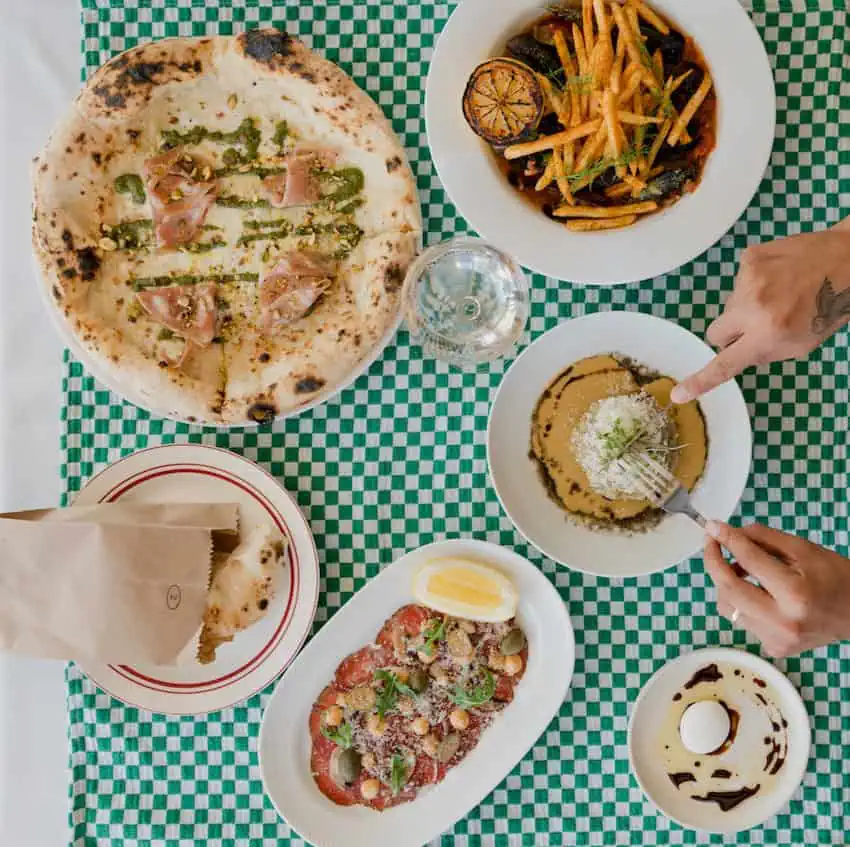
Don’t let the white tablecloths or brick oven-facing bar fool you; the real showstopper is the carciofi al formo, an artichoke a la leña slathered in porcini mushroom hollandaise with a mountain of parmesan hiding a sensuous runny egg that bursts into the heart’s center at first poke. No visit to Fari is complete without a classic cocktail; the Negroni and Aperol Spritz rival those being stirred and poured in New York City’s best bars.
For starters, order the white wine sautéed mussels, dunked in a garlicky parsley broth, accompanied by paprika-seasoned shoestring fries and a torched lemon wedge. Save room for a simple wood-fired margarita pizza that does Italy’s finest bistros justice. The whole experience is pause-worthy. Enjoy la dolce far niente as hand-cut noodles, offered in eight distinct sauce baths, transport you closer to the Bel Paese with each satisfied twist of your fork.
In another Salida a Celaya redemption story, owner Daniel Merkel and his interior architect fiancée Regina Lauxterman gutted Mikka, their fast-casual sushi concept, in 2024 to give it a sexy minimalist design and Asian-inspired menu makeover. The switch to Nudol is paying dividends in local patronage. One of San Miguel’s few late-night dining options that doesn’t demand you quickly wolf down tacos streetside while standing or balancing atop plastic bar stools, Nudol features a crew of rotating DJs spins sets of jazz, funk and rock vinyl from the 1960s to the ’80s, attracting a hipper and more mature local ’30s-to-40s crowd after hours.
Standout dishes include the triple-fried, Korean-ish gojuchang wings, farm-fresh smashed cucumber salad and shio ramen with a chicken-dashi blended broth, a thick slab of flame-torched pork belly and a jammy soy egg. San Miguel’s retirement-age patrons prefer frequenting Nudol’s L-shaped bar or quieter outdoor patio while the sun’s still out. After dark, an unforgettable night of dumplings and drinks could carry on as late as 2 a.m., “if we vibin’,” says Merkel.
Simone Jacobson is a Burmese American cultural connector, toddler twin mama and writer based in San Miguel de Allende. By day, she is the Content Director for Well Spirit Collective. In all other moments, she strives to raise compassionate children who never lose their curiosity, tenderness and radiant light. Read more by Simone here.
Foreign Affairs Minister Juan Ramón de la Fuente and Economy Minister Marcelo Ebrard accompanied President Sheinbaum in her morning call with U.S. President Trump. (Mario Jasso/Cuartoscuro)
Mexico has avoided the implementation of a 30% tariff on its exports to the United States that was scheduled to take effect this Friday Aug. 1
President Claudia Sheinbaum and United States President Donald Trump announced that the proposed duty wouldn’t take effect on Friday after they spoke by telephone on Thursday morning.
“We had a very good call with the president of the United States, Donald Trump. We avoided the tariff increase announced for tomorrow and secured 90 days to build a long-term agreement through dialogue,” Sheinbaum wrote on social media.
On his social media site, Truth Social, Trump said that his call with Sheinbaum was “very successful in that, more and more, we are getting to know and understand each other.”
“The complexities of a Deal with Mexico are somewhat different than other Nations because of both the problems, and assets, of the Border. We have agreed to extend, for a 90 Day period, the exact same Deal as we had for the last short period of time, namely, that Mexico will continue to pay a 25% Fentanyl Tariff, 25% Tariff on Cars, and 50% Tariff on Steel, Aluminum, and Copper,” he wrote.
“Additionally, Mexico has agreed to immediately terminate its Non Tariff Trade Barriers, of which there were many. We will be talking to Mexico over the next 90 Days with the goal of signing a Trade Deal somewhere within the 90 Day period of time, or longer,” Trump said.
Tuvimos una muy buena llamada con el presidente de Estados Unidos, Donald Trump. Evitamos el aumento de aranceles anunciado para mañana y logramos 90 días para construir un acuerdo de largo plazo a partir del diálogo.
— Claudia Sheinbaum Pardo (@Claudiashein) July 31, 2025
He also said that “there will be continued cooperation on the Border as it relates to all aspects of Security, including Drugs, Drug Distribution, and Illegal Immigration into the United States.”
Status quo maintained; most trade with US is tariff-free
The “25% fentanyl tariff” Trump referred to is a duty on non-USMCA compliant goods that took effect in March.
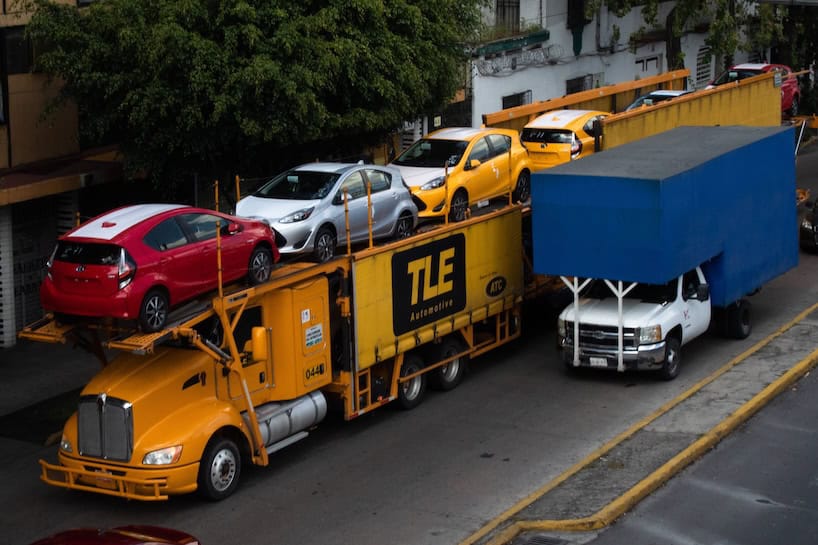
U.S. content in vehicles made in Mexico is exempt from the United States’ 25% auto tariff, lowering the effective duty on Mexican cars to 15% on average, according to Ebrard.
It was uncertain whether the 30% duty proposed by Trump would have applied to all imports from Mexico, or just those that don’t comply with the rules of the USMCA, the three-way free trade pact that includes the United States, Mexico and Canada.
The U.S. president didn’t provide any clarity on the issue in his Truth Social post on Thursday morning.
Trump’s letter announcing the 30% tariff threat did not specify whether goods covered by the USMCA free trade agreement would be exempt. (Gage Skidmore CC BY-SA 2.0)
Trump informed Sheinbaum of his plan to impose a 30% tariff on imports from Mexico in a July 11 letter. A common interpretation of his remarks in that letter was that the proposed duty would only apply to non-USMCA compliant products, and would have thus increased the current rate by five percentage points.
In recent days, Sheinbaum expressed confidence that her government would reach an agreement with the Trump administration to stave off the 30% tariff.
It appears that such an agreement is likely to be reached sometime in the next 90 days.
‘We achieved a good agreement’
“We achieved a good agreement,” Sheinbaum said at the start of her Thursday morning press conference, held at the later time of 10 a.m. due to her call with Trump.
She said that she spoke to her U.S. counterpart for around 40 minutes, and was accompanied by Ebrard, Foreign Affairs Minister Juan Ramón de la Fuente and Deputy Foreign Affairs Minister for North America Roberto Velasco.
Sheinbaum highlighted that the United States existing tariffs would remain in place and noted that there is a period of 90 days to continue engaging with the U.S. government in order to a establish a “longer-term agreement.”
She said that the deal struck with Trump on Thursday morning is “important” because existing tariffs won’t rise, at least in the short term.
Sheinbaum also said the deal “protects the USMCA” as the majority of Mexico’s trade with the United States will remain tariff-free.
Despite a patchwork of tariffs affecting cars, steel and non-USMCA-compliant goods, most Mexican exports to the U.S. remain duty-free. (Cuartoscuro)
“That is very important,” she said, highlighting that the current 25% tariff — the so-called “fentanyl tariff” — only applies to products made in Mexico that don’t comply with the USMCA.
Sheinbaum said that “within the new trade world order” established by Trump’s protectionist agenda, Mexico has “the best agreement possible.”
“… Investing in Mexico continues to be the best option. We have a very good situation in the face of this new international order,” she said.
” …Our strategy worked,” Sheinbaum said, referring to her government’s trade negotiation strategy, which included a commitment to work to reduce Mexico’s large trade surplus with the United States while cracking down on the production of fentanyl in Mexico and ramping up efforts to stop the drug reaching the U.S.
She said that her government maintained a “cool head” in those negotiations, which were led by Ebrard, who has made frequent trips to Washington since Trump’s second term as president began on Jan. 20.
While central and southern states received vast quantities of rain in June, precipitation remained scarce in northwestern states. (Rogelio Morales/Cuartoscuro)
Mexico received more rain in June than any other month on record, according to data from the National Meteorological Service (SMN).
The SMN, part of the National Water Commission (Conagua), reported that average accumulated rainfall across Mexico in June was 155.5 millimeters (6.12 inches).
That is the highest average national total for any month since Conagua began recording monthly rainfall totals in 1941. Last month superseded June of 2024 as the rainiest month on record in Mexico.
In contrast, June of 2023 was an extremely dry month, with an average accumulated national rainfall of just 39.2 millimeters, 60.7% below the average precipitation in the month of June between 1991 and 2020.
The national rainfall total in June this year was 55.7 millimeters, or 55.8%, higher than the average over that three-decade period.
Rain brought by Hurricane Erick, which made landfall in Oaxaca last month, and other storms, contributed to the high levels of precipitation in Mexico in June.
Sheinbaum also celebrated the resilience of Mexico's economy on Wednesday, remarking that major banks "said the economy was going to collapse ... and from here we said you are wrong." (Mario Jasso/Cuartoscuro)
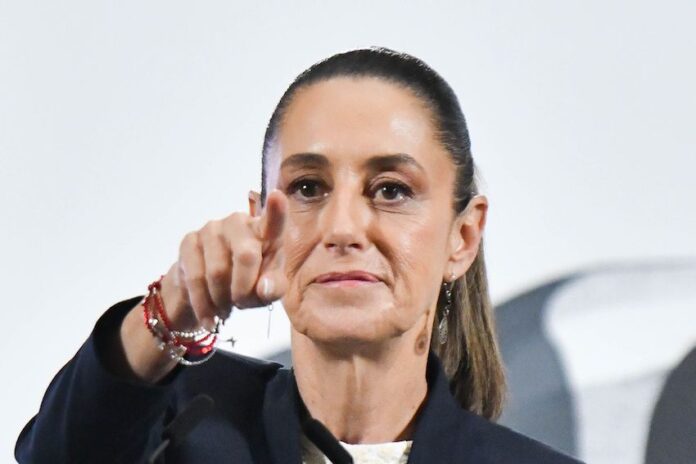
At her Wednesday morning press conference, President Claudia Sheinbaum spoke about the strong demand for a government bank card in the United States.
Among other topics, she also discussed the Mexican economy and the almost 11-year-old Ayotzinapa case involving the disappearance of 43 students in Guerrero.
Here is a recap of the president’s July 30 mañanera.
50,000 Mexicans in US have requested government bank card to avoid new remittance tax
Earlier this month, Sheinbaum promoted a government bank card that can help Mexicans living in the United States avoid the new 1% remittance tax on cash transfers that will take effect on Jan. 1, 2026.
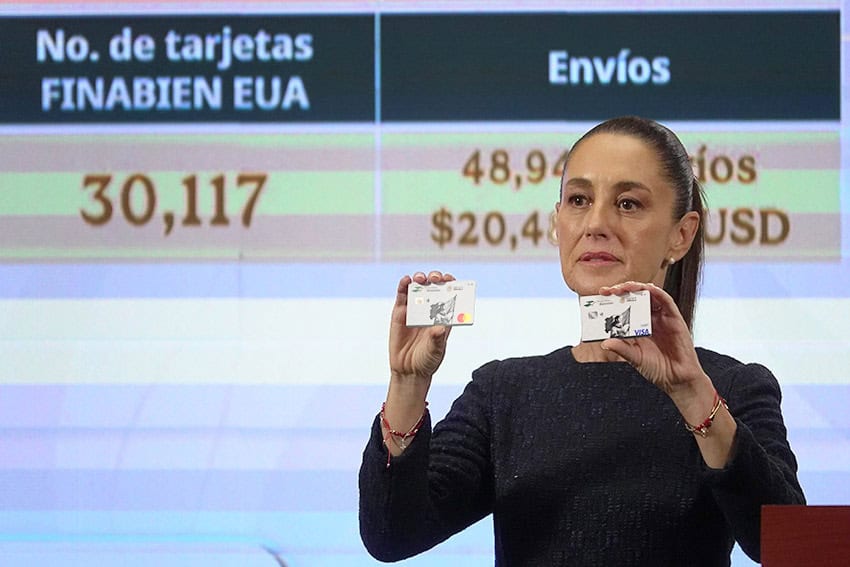
On Wednesday, a reporter asked the president how many Mexicans already have the Finabien bank card.
Sheinbaum said that about 50,000 Mexicans have requested the card “by mail,” but didn’t specify how many people have already received it. Distribution of the card began a week ago.
President Sheinbaum recommended Finabien cards — Mexican government bank cards linked to a U.S. bank account — as a way for Mexicans in the U.S. to send funds without paying the remittance tax, which goes into effect in 2026. (Rogelio Morales/Cuartoscuro)
Sheinbaum said that the government has the capacity to supply Finabien cards to all Mexicans in the U.S. who want one.
The card can be acquired at 53 consulates in the U.S., by mail or via digital application at miconsulado.sre.gob.mx.
Sheinbaum said that around 70% of remittances from the United States to Mexico are sent electronically by Mexicans who have a bank account in the U.S. or “some kind of card” that allows them to transfer money to their families.
She said that around 30% of remittances are sent via “these tienditas [small stores] that there are in different places in the United States.”
Sheinbaum was apparently referring to shops, including grocery stores and convenience stores, where people can transfer money to Mexico using services such as Western Union.
“They pay in cash and … say: ‘Please send this remittance to such and such place’ … and their families pick it up there,” she said.
“So, for that 30%, we’re giving them the option to do it in an easier way, electronically through the Finabien card,” Sheinbaum said.
‘The economy of Mexico is strong, it’s solid,’ says Sheinbaum
She also acknowledged that the International Monetary Fund (IMF) raised its forecast for the Mexican economy in 2025.
“They said the economy was going to collapse, that it was going to be a 0.3% contraction … and from here we said you are wrong,” Sheinbaum said.
“The economy of Mexico is strong, it’s solid,” she added.
The IMF is now forecasting that the Mexican economy will grow 0.2% in 2025.
Referring to U.S. President Donald Trump’s protectionist agenda, Sheinbaum conceded that “the issue of tariffs” has caused economic uncertainty, not just for Mexico, but for the “whole world.”
“And particularly for Mexico due to the economic integration we have with the United States. But the plan we developed is producing results and it will be even more effective next year,” she said, referring to the Plan México economic initiative.
Sheinbaum subsequently said while GDP growth is “one way of measuring the economy,” it shouldn’t be the only one “because the growth of the economy doesn’t necessarily reflect good salaries, well-being of the people and the reduction of inequalities.”
“And in Mexico, there has been a reduction in poverty, a reduction in inequality and more well-being for the people of Mexico,” she said.
Sheinbaum said that the Federal Attorney General’s Office, supported by the federal Security Ministry, is working with “new investigation tools” and “new methods” as it it seeks to locate the students, of whom the remains of just three have been found.
“I think they will provide new ways to find the young men and learn the whole truth,” she said.
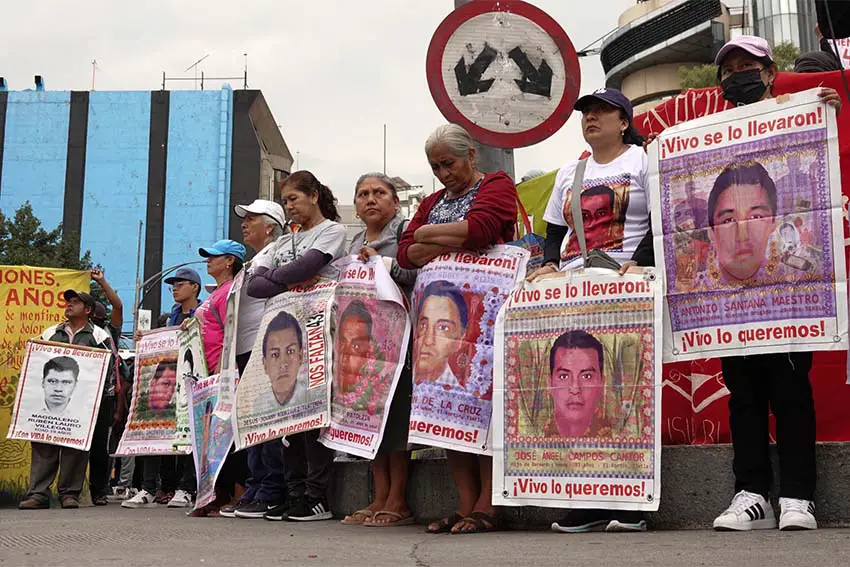
Parents of the 43 missing Ayotzinapa students continue to advocate for the resolution of the case. (Graciela López/Cuartoscuro)
“… I understand the situation of the fathers and mothers who … are always looking for their sons, and answers, as well,” Sheinbaum said.
“Of course we understand their pain and their situation,” she said.
Sheinbaum said that she hoped to be able to provide an update on the investigation in early September, when she is scheduled to meet once again with the parents of the students, who were abducted in Iguala, Guerrero, on the night of Sept. 26 2014, and presumably murdered.
Over 100 people, including army personnel, have been arrested in connection with the case, but no one has been convicted of the crime.
By Mexico News Daily chief staff writer Peter Davies (peter.davies@mexiconewsdaily.com)
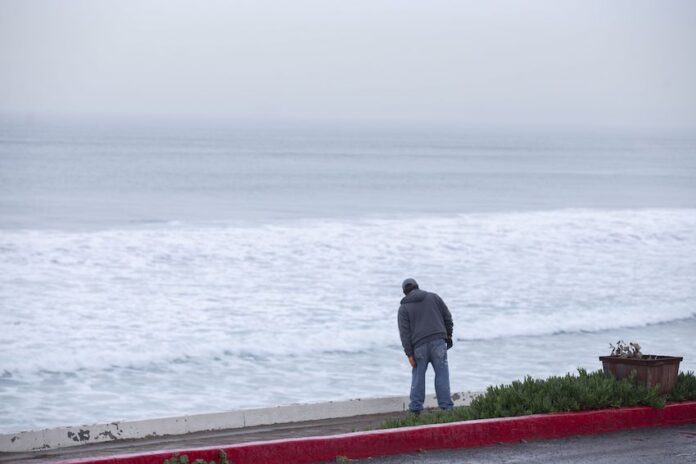
Ensenada, Baja California, recorded wave heights of 0.70 meters at 6:15 a.m. on Wednesday. (Cuartoscuro)
Mexican President Claudia Sheinbaum has ruled out damages following the 8.8-magnitude earthquake that struck Russia’s Kamchatka Peninsula on Tuesday. Yet, she warned of rising sea levels along Mexico’s Pacific coast.
Mexico, along with the United States and Chile, had issued a tsunami warning soon after the earthquake.
[Hilo] Comienzan a registrarse en México los efectos del #Tsunami producido por el sismo de magnitud 8.8, ocurrido el día de ayer en la península de Kamchatka, Rusia. La primera de nuestras estaciones en registrar el fenómeno fue Manzanillo, Colima, a las 11:24 UTC… pic.twitter.com/kDjWJXQFh7
— Servicio Mareográfico Nacional UNAM (@SMareograficoN) July 30, 2025
The Mexican Navy (Semar) had reported at a Security Cabinet meeting that Wednesday morning would be the likeliest time for any concern, due to a slight rise in sea level in certain areas of the eastern Pacific Ocean. However, it reiterated that the information did not imply major risks.
Earlier, the Tsunami Warning Center (CAT) of the Semar issued an alert bulletin to update sea level fluctuations at various points along the Mexican Pacific coast. Mexican authorities recommended that the population stay away from beaches and coastal areas and exercise extreme caution in maritime activities, noting that the alert remained active only as a preventive measure.
In the advisory, Semar mentioned the variations in wave heights at key cities along Mexico’s Pacific coast. These include Ensenada, Baja California, which recorded a height of 0.70 meters at 6:15 a.m. (12:15 GMT), and Salina Cruz in Oaxaca, with a height of 0.25 meters at 6:14 a.m. (12:14 GMT).
Also mentioned were Clarión Island (one of the Revillagigedo Islands off the Colima coast), with a height of 0.25 meters at 6:20 a.m. (12:20 GMT), and Manzanillo, Colima, with 1.15 meters at 6:15 a.m. (12:15 GMT).
No material damage or injuries were reported at these sites.
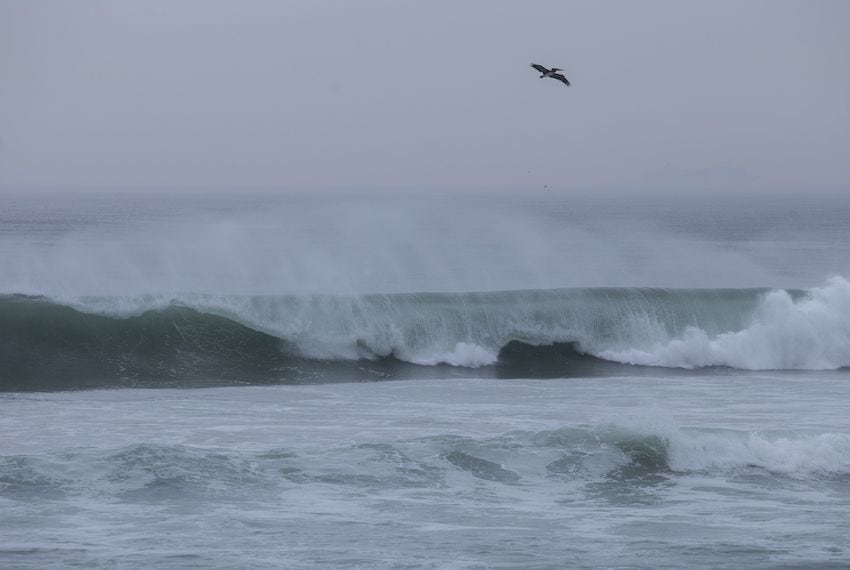
Wednesday at dawn was the likeliest time for concern due to a slight rise in sea level in certain areas of the eastern Pacific Ocean. (Cuartoscuro)
During the tsunami warning, dozens of people, including locals and tourists, crowded the Mazatlán promenade to watch the sea, ignoring official warnings to stay away from the coastal area for safety reasons. The warnings urged people not to approach the beaches or the seawall, due to the risk of sudden currents and changes in sea level.
Despite these warnings, on Tuesday night and early Wednesday morning, groups of families and friends could be seen sitting and walking along the boardwalk. The atmosphere was festive, according to images shared on social media.
The Semar temporarily closed several Pacific Ocean ports as a precautionary measure in response to the tsunami warning. These include:
Closed to large vessels:
Zihuatanejo, Guerrero
Puerto Peñasco, Sonora
Puerto Chiapas, Chiapas
Closed to small vessels:
Cabo San Lucas, Baja California
Puerto Peñasco, Sonora
Zihuatanejo, Guerrero
Chacala, Nayarit
Puerto Chiapas, Chiapas
The U.S. Geological Survey (USGS) reported that the quake struck at a depth of 19.3 kilometers (12.2 miles) and occurred 126 kilometers (78 miles) east-southeast of Petropavlovsk-Kamchatsky, a city of 165,000 people on the coast of Avacha Bay, Russia.
The USGS said it was one of the 10 most powerful earthquakes on record.
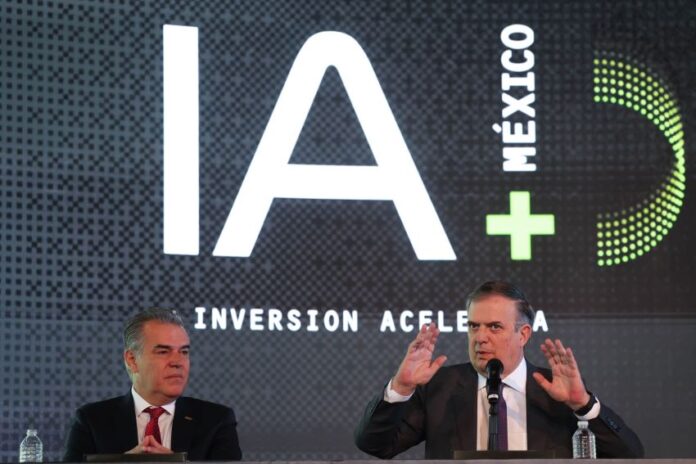
The artificial intelligence project announcement came during a preview of the Mexico IA+ Accelerated Investment international event, scheduled for November. (Moisés Pablo/Cuartoscuro)
Mexico is working on an artificial intelligence (AI) language model to help the country integrate into the new data-based global economic order, Economy Minister Marcelo Ebrard announced on Tuesday.
The announcement came during the presentation of the upcoming Mexico IA+ Accelerated Investment international event, scheduled to take place in Mexico City on Nov. 12 and 13.
Marcio Aguiar, Latin America director of the tech giant Nvidia, confirmed his company’s collaboration in the Mexican AI project. (Moisés Pablo/Cuartoscuro)
Backed by the giant technology company Nvidia, the event will serve as the primary launch platform for Mexico’s artificial intelligence project, including the presentation of its large language model (LLM).
“AI is the modern alphabet,” Ebrard said. “Either we hurry up and master that alphabet, or it’s going to be a huge disadvantage [for us] in the new world arrangement we’re seeing emerge today.”
This AI initiative follows President Claudia Sheinbaum’s announcement regarding the upcoming launch of the National Artificial Intelligence Laboratory as one of the 18 actions outlined in Plan México. Sheinbaum has stressed that investment and scientific and technological development are a fundamental part of her administration.
Meanwhile, Marcio Aguiar, Nvidia’s director for Latin America, confirmed the company’s collaboration in the Mexican AI project through training to develop specialized talent.
“It is essential for the country to train people so that it can be more competitive globally and, obviously, position Mexico as one of the main players,” Aguiar said. He also explained that the model will draw data from Mexican culture and history.
According to Ebrard, Mexico has two key advantages for the global technology sector: a young workforce eager to enter the industry, and 5.5 million economic units that can connect with this talent, according to data from the National Institute of Statistics and Geography (INEGI).
The government’s ambition is to make its AI project accessible to over 5 million university students and more than 5 million businesses, with the expectation of seeing “visible and tangible results” in two years’ time, Ebrard said.
However, adequate infrastructure is needed to support this initiative.
According to the Business Coordinating Council (CCE), investment in data centers could reach US $9.2 billion, potentially generating up to $27 billion in indirect economic impact. Adriana Rivera Cerecedo, director of the Mexican Data Center Association, told news agency EFE that this means installing more than 70 data centers offering colocation or cloud services.
Currently, the large language models (LLM) sector is dominated by companies like OpenAI, Google and Microsoft, all based in the United States. Other countries have developed their own LLMs, including France with Mistral, China with DeepSeek and Chile with LatamGPT.
LatamGPT is intended as a collaborative regional project developed by the National Center for Artificial Intelligence in Chile (CENIA) and also supported by Mexico and Nvidia.
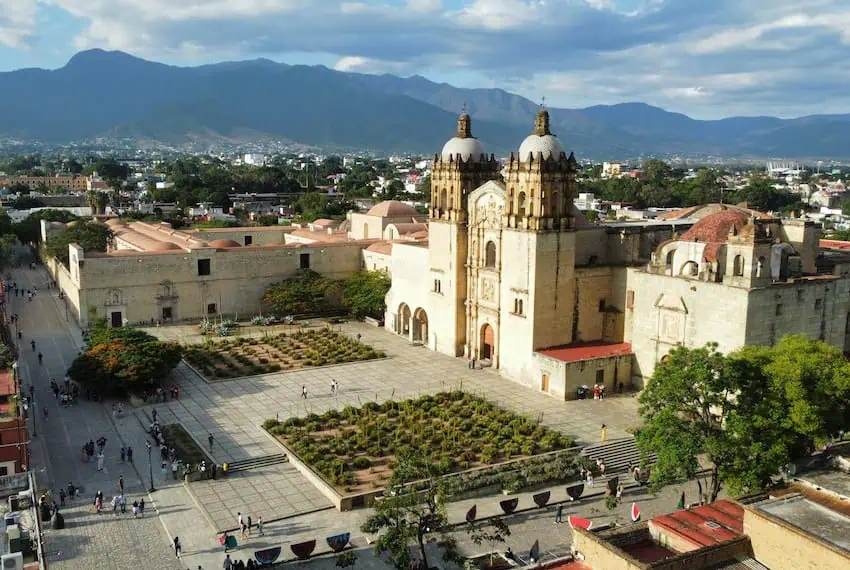
Oaxaca is following in the footsteps of Mexico City, whose aerial tram lines have been a popular success. (Victoria Valtierra/Cuartoscuro)
Aerial tram lines will be developed in the Oaxaca City metropolitan area to enhance local transportation, ease congestion on the ground and boost tourism, state Governor Salomón Jara announced on Sunday.
The project will include a large-scale cable car line, like that of México state’s Mexicable, and a “cablebús” system, similar to that of Mexico City, which seats 10 passengers in each unit.
Oaxaca’s planned aerial tram lines are aimed at providing convenient transportation for its residents, but, as Mayor Raymundo Chagoya points out, “As an added attraction, we will really enjoy seeing the city from above.” (Ryan Doyle/Unsplash)
The plan has the full support of Oaxaca City Mayor Raymundo Chagoya. “I really like the idea,” Chagoya said. “Oaxaca will shine much more with a cable car.”
The mayor also alluded to the aesthetic appeal of aerial transport over one of Mexico’s most beloved cities. “As an additional attraction, we will really enjoy seeing the city from above,” he said.
Although the route is not yet finalized, one possible route would connect two favorite tourist attractions — the Cerro del Fortín, where the annual Guelaguetza festival takes place, and the Álvaro Carrillo Theater.
However, Governor Jara stressed that the principal aim of the cable car system is to improve urban mobility by connecting strategic points within the city.
Another aim is to connect Oaxaca’s city center with the mountainous suburbs. One route under assessment would link the city with the Monte Albán archaeological site, around 10 kilometers away.
Governor Jara said the state plans to finance the project without relying on debt.
5 new Cablebús lines are coming to Mexico City
While on Sunday, Governor Jara was presenting the aerial tram plans for Oaxaca, in Mexico City President Claudia Sheinbaum and Mayor Clara Brugada were announcing the construction of the Tlalpan-Coyoacán Cablebús Line 4, which is expected to be the longest in the world.
The new line will be paid for using federal funds and is expected to transport 65,000 people per day over 11.4 km, which is further than the existing Iztapalapa line (11.2 km).
¡Impulsamos el progreso desde las alturas! 🚡⚡
La Línea 4 del Cablebús Tlalpan-Coyoacán será una realidad, y en la CFE estaremos orgullosos de ser parte fundamental de este proyecto que transforma la movilidad en la Ciudad de México.
On the ground, moving between Los Pedregales to the University City of Mexico’s National Autonomous University (UNAM) can take up to two hours in rush hour traffic, compared to the 40 minutes expected via Cablebús, noted Sheinbaum.
Line 4 will consist of eight stations: Universidad, Cantera, Perisur, Mercado Hidalgo, Reforma, Parque Morelos, Cultura Maya and Pedregal de San Nicolás.
It will also connect more than 30 neighborhoods in Tlalpan and nine in Coyoacán and will have connections to other public transportation modes, such as the Metro, allowing commuters to travel between the north and south of the city, according to Mexico City’s Transport Minister Ulises García.
Five Cablebús lines are expected to be completed during Brugada’s six-year term, with construction on the Álvaro Obregón-Magdalena Contreras and Milpa Alta-Tláhuac lines commencing this year, and the Cuajimalpa-Xochimilco line in 2026.